




Abstract
Objective
This exploratory qualitative study examines the perceived impacts of using dementia-friendly videos as a digital assistive technology to support the psychosocial needs of people with moderate to severe dementia in care settings.
Methods
The study was conducted in a hospital and a long-term care home in Vancouver, Canada. Data were primarily collected through interviews and focus groups with 19 healthcare providers, supplemented by observational interviews with 15 patients/residents. The person-centred care approach guided the analysis.
Findings
Seven key themes emerged: (a) providing comfort, (b) connecting with the person's interests and backgrounds, (c) building relationships, (d) promoting engagement and interaction, (e) facilitating activities of daily living, (f) having a sense of community, and (g) facilitating the impacts using appropriate technological equipment.
Conclusion
The themes reflected the five psychosocial needs suggested by the person-centred care framework: comfort, identity, attachment, occupation, and inclusion. Our findings extend this framework by highlighting the importance of cultural connection as an integral part of identity to enhance the impact of the videos. Additionally, this study highlights the significance of using appropriate technological equipment to amplify the impact of the videos, which may require organizational support. This study sheds light on research and practice for further development and use of dementia-friendly videos in care settings.
Introduction
Interest in using digital assistive technologies – digital technologies that support people's different aspects of life and enhance their overall well-being 1 – with people living with moderate to severe dementia in care settings has grown in recent years, such as virtual reality, 2 digital games, 3 and social robots. 4 This is particularly since the COVID-19 pandemic, which brought societal attention to the well-being of this population and the benefits of using technologies to support care in a context of staff shortage. 5 Dementia-friendly videos are one of these technologies.
Research on video use with people living with dementia began in the late 1980s and early 1990s.6,7 However, studies from the 1990s to early 2000s often criticized videos as passive, lacking stimulation and interaction, and sometimes causing distraction, confusion, or aggression.8–11 Over the past decade, however, there has been a shift towards developing videos specifically designed for people with dementia, now often referred to as dementia-friendly videos. 12
Dementia-friendly videos are designed to tailor to the cognitive abilities of people living with dementia, which feature more simplified content, shorter durations, and slower pacing than conventional videos. 12 These videos incorporate visual and auditory cues intended to stimulate cognitive functions like memory and offer a high-quality, immersive viewing experience. Some examples of topics of the videos include nature, animals, and festivals. These videos are accessible across various devices, including televisions, tablets, and projectors. Emerging studies suggest that these videos have positive impacts on residents. For example, the quantitative study by Reynolds et al., 13 which measured residents’ behaviours before, during, and after using videos, showed that the videos improve residents’ memories. A mixed-method study by Bjørnskov et al. 14 which conducted a cross-sectional survey and focus groups with healthcare providers about the impacts of using the videos, and the qualitative study by Breckenridge et al., 15 which observed residents during the use of videos and interviewed healthcare providers and residents about the impact of the videos, found that the videos enhanced residents’ self-expression and interpersonal interaction. A mixed-method study by Francis et al., 16 which included a survey of healthcare providers about residents’ behaviour before, during, and after using videos, as well as interviews with them about the use of videos, found that the videos reduce residents’ behavioural agitation.
Despite this progress, the literature on dementia-friendly videos remains relatively limited compared to other dementia-related digital assistive technologies. Moreover, existing studies tend to focus on functional outcomes such as memory and behaviour, with less attention to psychosocial needs.14–16 Yet, understanding psychosocial needs is essential to capturing the holistic impact of these interventions on quality of life for people living with dementia.
To address gaps in the literature, we conducted the current qualitative exploratory study to examine the perceived impact of dementia-friendly videos on meeting the psychosocial needs of people living with moderate to severe dementia in care settings. The study occurred in Vancouver, Canada: a hospital and a long-term care home. Our research question was: ‘What are the perceived impacts of dementia-friendly videos in meeting the psychosocial needs of people living with moderate to severe dementia in care settings?’ We primarily gathered data through interviews and focus groups with 19 healthcare providers who used the videos with their patients/residents living with moderate to severe dementia, complemented by observational interviews with 15 of their patients/residents. We adopted the person-centred care approach by Kitwood17,18 and the person-centred care and practice framework by McCormack and McCance19,20 to guide our further understanding of the findings.
Methodology
The larger study and its previous phase
This study is part of a larger project examining the use of dementia-friendly videos to support the psychosocial needs of people living with moderate to severe dementia in care settings in Vancouver, Canada.21–23 Before this phase, our research team conducted a focus group study (March to May 2022) with healthcare providers to explore their perspectives on how such videos might be used and what considerations should guide their implementation. 21 Providers suggested the videos could: ‘(a) calm individuals in emotional distress, (b) foster connections, (c) bring people together, (d) support activities of daily living, and (e) help individuals connect with their past’. 21 They emphasized the importance of considering (a) cognitive abilities, (b) personal interests and backgrounds, and (c) cultural and linguistic relevance. 21 Additionally, it highlighted the relevance of the person-centred care approach to understanding the use of dementia-friendly videos. However, their insights were speculative, based on imagination rather than direct engagement with the videos. The current study fills the gap by understanding the perspective of healthcare providers on the perceived impact of the videos after their use.
Research team
Our research team comprised of four patient partners at an early stage of dementia; four family partners with experience caring for people living with dementia; two study site champions, who are frontline staff (a nurse and a rehabilitation professional) of each of the study sites; four industry partners from Zinnia TV, the technology company in which their videos are used in this study; one academic researcher, who is also the principal investigator of the study; and four research trainees. The research team members were not study participants; participant details are described below. Each team member has a unique strength. For example, patient and family partners, who had lived expertise on dementia, provided their insights during team data analysis. Study site champions, who were familiar to other healthcare providers and patients/residents of the study sites, helped promote the study at the sites. Industry partners with technology expertise provided, adapted, and created the videos, and troubleshoot when needed.
Intervened videos: Zinnia TV videos
The videos used in this study were developed by Zinnia TV, 24 a technology company specializing in dementia-friendly content. Each video was about 10‒20 minutes long. Zinnia TV was selected because, in addition to covering common topics found in other dementia-friendly videos mentioned above, their library included videos focused on activities of daily living. Prior to the study, Zinnia TV had already produced a range of such videos. In collaboration with our research team, which included healthcare providers, people living with early-stage dementia, and family caregivers, Zinnia TV adapted existing videos and created new ones based on feedback regarding video topics, language, and pacing.21–23,25
Study sites
Our study was conducted at two sites in Vancouver, Canada: a hospital-based geriatric unit and a dementia care unit within a long-term care home. The hospital geriatric unit served older adults living with moderate to severe dementia and complex mental health and behavioural challenges. The setting was multicultural, with patients and healthcare providers from diverse cultural backgrounds. The dementia care unit, located in a long-term care home, also served older adults with moderate to severe dementia. This facility was ethnocultural, specifically designed for residents of Chinese background, one of the largest ethnocultural minorities in both Vancouver and Canada. In the Vancouver context, an ethnocultural care facility refers to a home tailored to the needs of a particular ethnocultural group, including having staff who speak the residents’ language and offering culturally appropriate food and activities. While ‘culture’ can be broadly defined, this paper refers specifically to race, ethnicity, and language. Both study sites employed interdisciplinary healthcare teams, including nursing, rehabilitation, and recreation professionals. Leadership at both sites supported the use of technology in care, for example, by allocating funding for technological equipment, having policies to encourage staff to use technology to enhance care, and partnering with universities to engage in technology-focused care research.
Data collection
The two study site champions promoted the use of the videos among healthcare providers and patients/residents with moderate to severe dementia. The dementia stage of patients/residents was assessed based on the clinical judgement of these champions. Before the study, some healthcare providers had used, and some patients/residents had watched, videos in care. However, those videos (e.g. from YouTube) were not specifically designed for people living with dementia.
Our research team discussed whether to standardize the timing, duration, frequency of video use, and topics of videos. Ultimately, we adopted a flexible approach, allowing healthcare providers and patients/residents to determine these. This decision reflected the fluctuating attention spans of people living with dementia, their varied choices of videos, and the shifting priorities of healthcare providers. Our team was concerned that setting rigid protocols might place pressure on participants.
The dementia-friendly videos were used by healthcare providers and watched by patients/residents between July 2022 and December 2023. Subsequently, data were collected through interviews and focus groups with 19 healthcare providers who had used the videos.
Considering the limited representation of the voices of people with moderate to severe dementia in the literature,13–16,26,27 we supplemented the study with observational interviews with 15 patients/residents. We made every effort to capture their voices – both verbal and non-verbal. Despite these efforts, due to the cognitive challenges faced by patient/resident participants, this research still primarily relies upon the reporting by service providers as observers of their perceived impacts of the videos on these patients/residents.
For interviews and focus groups with healthcare providers, inclusion criteria required that participants: (a) were healthcare providers working in hospital or long-term care home settings, and (b) had used the dementia-friendly videos with patients/residents at least once per week for a minimum of 3 months. A research trainee facilitated the interviews and focus groups.
An interview/focus group guide was used (see Table 1). Sample questions included: ‘Can you tell me about your experience using videos with residents/patients living with dementia?’ and ‘What kind of impact do you think the videos had on the residents/patients?’ All sessions were audio-recorded and transcribed verbatim. Depending on participants’ availability, interviews and focus groups lasted between 20 min and 1 h and were conducted on-site or via Zoom, based on participant preference. Focus groups consisted of three to six participants.
Interview/focus group guide.
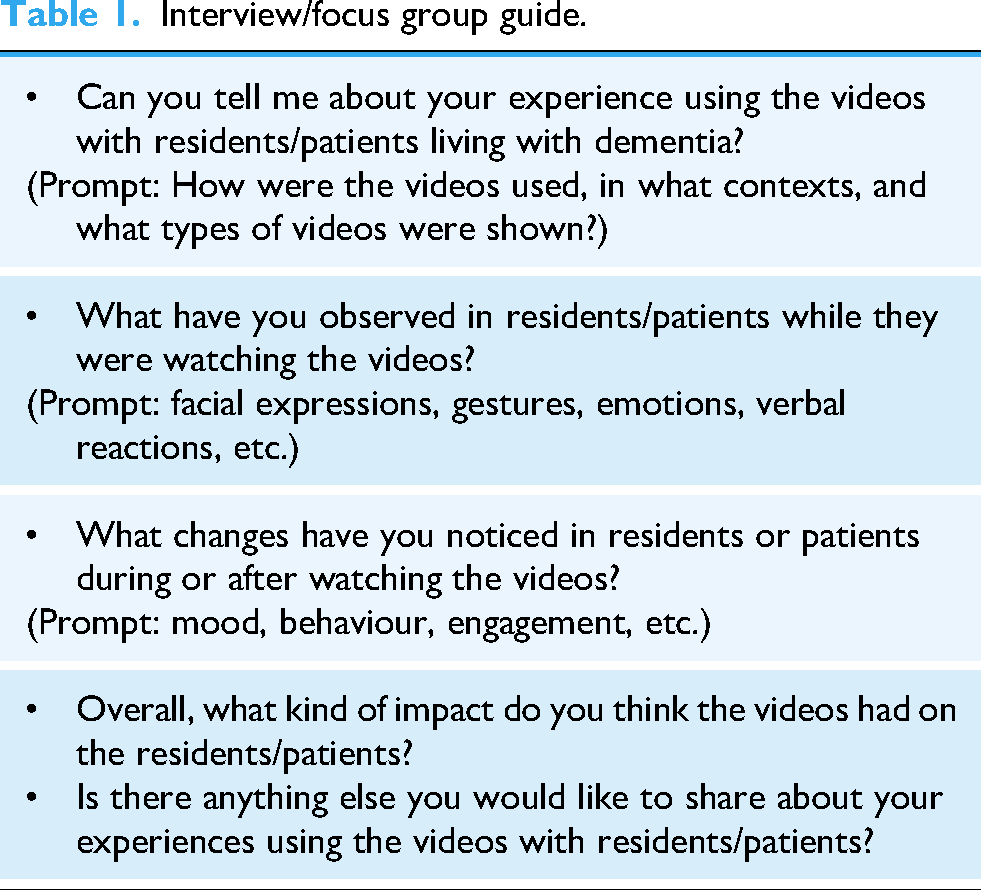
As mentioned earlier, a prior phase of the larger study involved a focus group exploring healthcare providers’ speculative perspectives on using dementia-friendly videos. Approximately one-third (seven) of the participants in the current study also took part in that earlier phase. However, not all previous participants were available for the current phase due to changes in work schedules, job roles, locations, and availability.
For observational interviews with patients/residents, inclusion criteria required that participants: (a) be patients/residents in hospital or long-term care home settings and (b) have watched the dementia-friendly videos at least three times. During each observational interview, one research trainee observed the participant while they watched the videos and asked brief questions, while another trainee recorded the process on video. Although this was not an inclusion criterion, all patient/resident participants were under the care of the healthcare providers who participated in the study.
In preparation for each observational interview, we consulted with site champions to identify the usual days and times participants watched the videos, their preferred viewing methods (e.g. smart television, projector, or tablet), and their favourite videos. On the day of the observational interview, we confirmed this information with each participant and presented the videos accordingly. We then conducted the observational interview. An observational interview guide was adopted (see Table 2). Participants were observed before, during, and after watching the videos, with attention to both their verbal and non-verbal cues. The guide included questions guiding us on the cues to pay attention to during observation, such as ‘What are the person's facial expressions?’. Participants were also asked brief questions before, during, and after the viewing, such as ‘How did you find the videos? Why?’ We regularly checked in with participants to see if they wished to continue or switch videos and monitored their ability to maintain attention. Each observational interview lasted 5‒20 minutes, depending on the participant's attention span. With the assent of participants and consent from their family caregivers (as substitute decision-makers), the sessions were videotaped. The recordings were subsequently transcribed into detailed observation notes.
Observational interview guide.

Considering that the cognitive abilities of patient/resident participants might affect their abilities to participate in the study fully, or their abilities to reflect on their experience fully, we adopted different measures/best practices for data collection, such as conducting the observational interviews at the times which the participants are more alert (according to consultation with the study site champions and checking in with the person before the observational interview), videotaping the interviews with consent and ascent to capture both verbal and non-verbal expressions, and asking questions in accessible language.
Data analysis
We transcribed all interviews and focus groups with healthcare providers and generated observation notes based on the observational interview recordings with patients/residents. Guided by Braun et al.,
28
we conducted a thematic data analysis, following the steps outlined below. Table 3 provides an illustrative example how this combined approach was applied in our thematic analysis.
The transcripts were coded inductively and independently by both research trainees. The research trainees continuously compared the codes, grouping them into categories. The research trainees presented the categories to the research team at three meetings held via Zoom or in person between October 2023 and February 2024. Team members discussed the findings, each lasting approximately an hour. Drawing on their expertise, team members refined the category labels, grouped related categories into themes, and labelled these themes. The final themes will be presented in the ‘Findings’ section. The selection of quotes was based on a discussion among team members, considering which ones best support the themes. Through discussions, team members further conceptualize the themes by referring to two theoretical frameworks – Kitwood's five psychosocial needs of the person-centred care approach and McCormack and McCance's person-centred practice framework, which will be presented in the ‘Discussion’ section. We did not reference the frameworks earlier to ensure the data could speak for itself without being shaped by them. An early emphasis on frameworks can sometimes limit the ability to see emergent findings in the data, as suggested by Collins and Stockton.
29
An illustrative example of thematic analysis.

Theoretical frameworks
We referred to Kitwood's17,18 person-centred care approach and McCormack and McCance's19,20 person-centred practice framework to provide us with lenses for further conceptualizing the findings. Kitwood's approach serves as the primary framework, as it centres on understanding the psychosocial needs of people living with dementia, which aligns with the research question. McCormack and McCance's framework, built from Kitwood's approach, is used as a complementary lens to enrich the analysis by accounting for the broader contextual and structural factors that shape the practice of person-centred care of healthcare providers.
Kitwood17,18 introduced the person-centred care approach as a response to the dominance of the biomedical model in dementia research and care. The biomedical approach focuses on the disease, often reducing the individual to their diagnosis. In contrast, the person-centred approach emphasizes that people living with dementia retain personhood and should be recognized as whole persons with different psychosocial needs. Kitwood identified five core psychosocial needs – comfort, attachment, inclusion, occupation, and identity – which are unified by the overarching need for love. These needs uphold the personhood of those living with dementia and form the foundation of person-centred care. Although introduced in the 1990s, the person-centred care approach still has significant implications for today's dementia research and care.
Building on Kitwood's work, McCormack and McCance19,20 emphasized the importance of considering multiple factors, including structural influences, in delivering person-centred care. To address this complexity, they developed the person-centred practice framework, which outlines five interrelated domains that shape the practice of person-centred care: (a) person-centred outcomes – the results of care as experienced by the individual, such as satisfaction with care; (b) person-centred processes – care interactions that respect and respond to the person's values and beliefs; (c) care environment – the setting or context that supports or hinders person-centred care; (d) prerequisites – the qualities and capacities required of healthcare providers, such as commitment and competence; and (e) macro context – broader structural influences, including healthcare policies and system-level factors. Each domain includes specific constructs that further define the conditions necessary for effective person-centred practice.
Rigour
We employed several measures to ensure the credibility of our findings. First, we practiced reflexivity as a research team during data analysis. 28 Acknowledging that our social locations influenced our assumptions, we actively reflected on these assumptions and critically challenged each other's perspectives when understanding the findings. Second, we used different qualitative research methods, including interviews and focus groups with healthcare provider participants, and observational interviews with patient/resident participants. This facilitated data triangulation, which enhanced our findings’ credibility. Finally, we ensured transferability by providing detailed information about the study (e.g. study sites, participants, and data collection and analysis procedures), which allows readers to consider to what extent our findings are applicable in their contexts.
Ethics
This study has received approval from the Ethics Board of University of British Columbia (approval number: H22-02089). Informed consent was obtained from all healthcare provider participants prior to study initiation. Given the potential challenges in fully understanding the study details among patient/resident participants, we sought consent from their substitute decision-makers (i.e. legally authorized representatives), who were all family members in this case, before study initiation. Additionally, we obtained the assent of the patient/resident participants. Anonymity of participants was maintained to protect their confidentiality.
Results
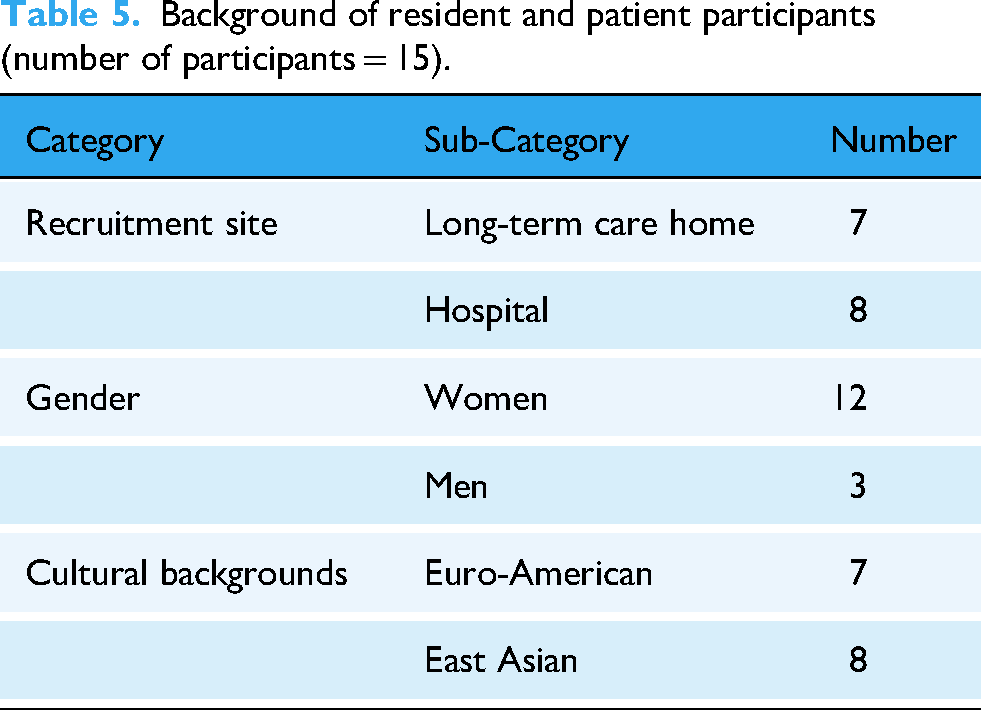
Table 4 summarizes the backgrounds of the 19 healthcare provider participants: seven worked in long-term care and 12 in hospitals; 12 were women and seven were men. Roles included nurses (six), care aides (eight), rehabilitation staff (three), and recreation staff (two). Table 5 summarizes the backgrounds of the 15 patient/resident participants: seven were from long-term care and eight from hospitals; 12 were women and three were men. Culturally, seven were identified from European-American background and eight from East Asian background. All participant names have been pseudonymized to protect identity. The following will present themes identified from the findings: (a) providing comfort, (b) connecting with the person's interests and backgrounds, (c) building relationships, (d) promoting engagement and interaction, (e) facilitating activities of daily living, (f) having a sense of community, and (g) facilitating the impacts using appropriate technological equipment.
Background of healthcare provider participants (number of participants = 19).

Background of resident and patient participants (number of participants = 15).
Providing comfort
A common theme that emerged was that the videos provided a sense of comfort to patients and residents. For instance, Jenny, a patient at the hospital where we had an observational interview, showed noticeable calmness and ease while watching a video tailored to her interests. She engaged with the video as she pleased. Jenny's attention is transfixed on the screen, playing a video of kittens alongside tranquil music. Her eyes do not leave the screen, holding a serene smile, and her body is relaxed and open towards the screen. She only briefly looks at others moving in the room before immediately returning her eyes to the screen, leaning forwards at least two separate times towards the screen in interest. (Notes from an observational interview with patient Jenny, hospital) The hospital environment can be highly stimulating, and it stresses many patients. So, I guess just having this zone of peace and quietness [referencing the area where the videos were projected on the screen] for the patients is useful. There is a lot of shouting and stimulation, and they get very stressed out, so to have that time for themselves is really useful. (A quote by nurse Imelda from a focus group with healthcare providers, hospital)
Connecting with the person's interests and backgrounds
Watching the videos gave patients and residents a meaningful way to connect with their personal interests and backgrounds. For instance, videos featuring flowers, dogs, and natural landscapes resonated with the interests and backgrounds of various patients in the hospital, capturing their attention and promoting a sense of familiarity and enjoyment. During interviews, hospital patients expressed various preferences for video content, which often reflected their interests and backgrounds. Oliver, an avid gardener, shared that the video featuring flowers “calms me down.” Terry, who enjoyed animals, described the dog video as “fun” and the accompanying music as “relaxing”; he was so engaged that he wanted to watch it again and did not want to switch to another video. Evelyn said she liked the nature-themed videos because she was “outdoorsy.” (Notes from observational interviews with patients Oliver, Terry, and Evelyn during a site visit, hospital) I think the Chinese version of the “drinking water” video [referencing a video providing visual and verbal cues to drink water] was really useful. It was really good for the Chinese residents to see a Chinese face, someone who looks like them, looks like their age, drinking water. They felt more culturally connected than the other videos. (A quote by care aide Kelly from a focus group with healthcare providers, long-term care home)
Building relationships
Some healthcare providers noted that videos featuring topics of personal interest to patients and residents served as valuable conversation starters, helping to foster meaningful connections. For instance, Henry, a rehabilitation professional in the hospital, shared that he showed a soccer-themed video to a patient known to enjoy the sport. This sparked a lively discussion about soccer between them, creating an opportunity for relationship building beyond routine care. One of my patients living with depression and moderate to severe dementia liked soccer. We would watch topic-based videos on soccer together and talk about soccer. (A quote from an interview with rehabilitation staff Henry, hospital) There were things I learnt after these videos started that I didn’t know before of the residents… I didn’t know, for example, that one resident really liked watching sea creatures, and then now I know she likes sea creatures. I had another resident who is often aggressive, but when he saw the baby video, he started showing his softer side and talking about babies in his life before… and that was something we could talk about… If it weren’t for these videos, I wouldn’t have understood these different sides of the residents. They wouldn’t have thought before to mention these interests of theirs, but these videos finally triggered these interests. And now we have more to talk about with them. (A quote from an interview with care aide Robin, long-term care home) The resident knows another resident like watching the videos. She invites her every day when it is the video watching time. They build a friendship through watching the videos together…Residents have short attention spans, but watching as a group can help them pay more attention. (A quote from nurse Hailey from a focus group with healthcare providers, long-term care home)
Promoting engagement and interaction
Patients and residents were observed to have active engagement when watching the videos, sometimes even without the help of healthcare providers or family caregivers. For instance, resident Andrew in the long-term care home usually needed the help of healthcare providers or his family members to make meaningful engagement. However, he was observed being able to do this without their help when watching a video. Andrew, who lives with severe dementia, was observed watching a video of birds and mimicking their calls with enthusiasm. As the birds appeared to fly across the screen, he pointed and commented that the birds were “coming.” His responses were spontaneous and lively, reflecting his deep engagement with the content. Sitting beside him, Andrew's family expressed joy, commenting that it had been a long time since they had seen him so meaningfully engaged, especially without their assistance. (Notes from an observational interview with resident Andrew, long-term care home) I like the idea that the video is very stimulating at the same time, very relaxing; it caters to the needs of the residents. It is not just a whatever video… There is a resident who always wanders the hall… but when she saw the video, she decided, “Oh, I want to sit down and watch,” and then actually started engaging with the speaker in the video, and the babies, and the facts and stuff. (A quote from an interview with rehabilitation staff, Judy, long-term care home)
Facilitating activities of daily living
Videos showing daily living activities, such as cleaning, showering, eating, and drinking, were found to support and enhance patients’ and residents’ ability to carry out the tasks. By providing visual cues and step-by-step demonstrations, the videos served as gentle prompts that helped guide individuals through the activities. For example, Wilma, a care aide in the long-term care home, shared that playing a video about eating on the large television screen in the dining hall encouraged one of her residents to begin eating by herself. There's a really big improvement in so many residents … We can see after watching these videos, they’re able to focus, follow along, and do better daily routines. Usually, they can’t focus. They can’t focus on other videos before. But when we have these helpful videos on the big TV screen (in the dining hall), they can follow along, and the big screen is very comfortable for them … For one resident, I had never seen her eat on their own before… but then, after a video was shown of eating, she picked up a fork and started eating! Before, she just played with food and never ate it themselves. That means your videos about eating help! (A quote by care aide Wilma from a focus group with healthcare providers, long-term care home) Using videos to visually represent certain activities, such as showering, aligns with the need for a sense of security. Showing patients what to expect can help reduce anxiety and create a familiar and predictable environment. (A quote from an interview with care aide Jacob, hospital)
Having a sense of community
The findings revealed that showing the videos in shared areas of the care settings encouraged patients and residents to leave their rooms and spend time together, helping foster a sense of community among them. Care aide Noah from the long-term care home and recreation professional Liam from the hospital observed that individuals who typically did not engage with the videos on their own were more likely to join others watching when the videos were shown in communal settings. Residents have short attention spans. If they watch the video on a tablet one-on-one, they tend to look away. However, watching as a group via TV makes them feel that “everyone is watching, and I have to pay attention too.” (A quote by care aide Noah from a focus group with healthcare providers, long-term care home) Ruby [referencing a patient] doesn’t watch the videos on the smart TV much but will sit beside other patients when they are watching. (A quote from an interview with recreation staff Liam, hospital)
Facilitating the impacts using appropriate technological equipment
The themes from the findings highlight the videos’ perceived impact on meeting the different psychosocial needs of patients and residents. The final theme, with the following quotes from healthcare providers in both the hospital and long-term care home, underscores the importance of using appropriate technological equipment, such as projectors or smart televisions with large screens and high-quality speakers, to enhance the impact of the videos. This ensures that the videos meet the specific needs of patients and residents, including considerations for eyesight, head mobility, and hearing. A projector allows for a large screen to give an immersive experience, which calms aggressive patients and reduces the need for medical intervention. (A quote from an interview with nurse Ida, hospital) When the smart TV screen is bigger, Samantha [referencing a patient] can better follow along with the videos, as it is more comfortable for her head. (Notes from an observational interview with resident Samantha, long-term care home) Good-quality speakers are instrumental in reducing a patient's anxiety and increasing their comfort, part of creating an immersive, calming environment. The speakers here are of better quality. There are Bose speakers on the ceiling. (Quote from an interview with rehab staff, Jayden, hospital)
Discussion
The research question is: ‘What are the perceived impacts of dementia-friendly videos in meeting the psychosocial needs of people living with moderate to severe dementia in care settings?’ The findings identified several key themes in response to the question: (a) providing comfort, (b) connecting with personal interests and backgrounds, (c) building relationships, (d) promoting engagement and interaction, (e) supporting activities of daily living, (f) fostering a sense of community, and (g) enhancing impact through appropriate technology. To further conceptualize the findings, we referred to the five psychosocial needs of Kitwood's person-centred care approach17,18 and McCormack and McCance's person-centred practice frameworks.19,20
Reference to the person-centred care approach
As mentioned, according to the person-centred care approach,17,18 people living with dementia have five core psychosocial needs: comfort, identity, attachment, occupation, and inclusion. The followings suggest that dementia-friendly videos have the potential to support the fulfilment of these needs, as the findings of this study generally reflect aspects of this approach. However, some findings are less mentioned by this approach, highlighting opportunities for further research to substantiate and expand upon the approach when applying it to understand the perceived impacts of emerging digital assistive technologies, such as dementia-friendly video.
The need for ‘comfort’ is described as ‘a kind of warmth and strength which might enable them [referencing people living with dementia] to remain in one piece when they are in danger of falling apart’. 17 The theme ‘providing comfort’ demonstrates how dementia-friendly videos may offer soothing experiences, even within care settings that are often perceived as stressful or disorienting. The need for ‘occupation’ is defined as ‘being involved in the process of life in a way that is personally significant and which draws on a person's abilities and powers’. 17 This is reflected in the themes ‘promoting engagement and interaction’ and ‘facilitating activities of daily living’. The videos are found to have the potential to encourage these abilities of patients/residents, which are significant to everyone: a person needs engagement and interaction abilities to involve the world meaningfully and needs abilities in activities of daily living to maintain a certain degree of self-independence. The need for inclusion refers to ‘being part of the group’. 17 The theme ‘having a sense of community’ addresses this. The videos are shown to potentially provide patients/residents with an opportunity to watch them in a group with other patients/residents.
The need for ‘identity’ refers to ‘know[ing] who one is’. 17 The findings in the theme of ‘connecting with the person's interests and backgrounds’ indicate that the videos might facilitate patients’/residents’ connections with their interests and backgrounds, essential for patients/residents to know who they are. However, one aspect that is less mentioned in the conceptualization of identity in the person-centred care approach, but found in our findings, is culture. Our findings show that acknowledging the cultural connection as a part of the patients’/residents’ identity was crucial for the dementia-friendly videos to have an impact. For example, care staff observed that residents were more likely to drink water when watching a culturally adapted video about this topic, possibly because they could relate more personally to the content. Terkelsen et al. 30 and Mitchell and Agnelli 31 suggest that this gap in the person-centred care approach is probably because Kitwood, who coined the approach, developed it primarily within a White British context, which might not fully capture the experiences of individuals from diverse cultural backgrounds. In contrast, our study was conducted in multicultural care settings.
The need for ‘attachment’ refers to the ‘forming of specific bonds’. 17 Findings under the theme ‘building relationships’ show that the videos have the potential to facilitate bond formation between patients/residents and healthcare providers, often serving as conversation starters. While the person-centred care approach primarily examines relationships between people living with dementia and family caregivers or healthcare providers,32–35 our findings reveal an additional dimension: the videos might foster peer relationships among patients/residents who watched them together.
Reference to the person-centred practice framework
The theme ‘facilitating impact through appropriate technological equipment’ of our findings highlights how access to appropriate technological equipment enhanced the impact of dementia-friendly videos in addressing the psychosocial needs of patients and residents. Since Kitwood's person-centred care approach focuses on the individual, we drew on McCormack and McCance's person-centred practice framework19,20 to further conceptualize this theme, as this framework emphasizes the broader contextual factors shaping person-centred practice. In particular, the construct of ‘supportive organizational systems’, within the ‘care environment’ domain of the framework, provides a helpful lens. Implementing dementia-friendly videos requires various types of equipment, such as televisions, tablets, projectors, and speakers, according to the needs of people with dementia. The two study sites’ organizational support in using technology in care, as mentioned, in terms of finance and organizational policy, enabled healthcare providers and patients/residents to access and utilize the equipment. This organizational support amplified the videos’ impact by allowing flexible, personalized implementation. However, this level of support is not universal. As Wong et al.'s 12 scoping review notes, a lack of leadership commitment to providing adequate and quality technology remains a common barrier in many care settings.
Comparison with existing literature
The current study aligns with more recent literature from the past decade that suggests a positive impact of dementia-friendly videos on people living with moderate to severe dementia in care settings. 13 This is a shift from earlier criticisms in the 1990s and early 2000s that viewed videos as passive and potentially causing negative effects.8–11 The findings that videos have the potential to provide comfort and reduce agitation, which echoes findings from studies suggesting that dementia-friendly videos can have a calming effect and reduce behavioural agitation. 16 Additionally, similar to emerging studies, this research found that dementia-friendly videos can potentially promote engagement and interaction.14,15
However, this study also contributes to the existing body of literature in the following ways. Unlike much previous research, which primarily focused on functional outcomes like memory and behaviour,13,16 this study specifically examined the perceived impact of dementia-friendly videos on meeting the psychosocial needs of people living with moderate to severe dementia. The emergence of seven key themes from the findings contributes to addressing this gap in the literature. Additionally, the current study revealed that the potential of the videos to facilitate residents’ engagement and interaction might be more than healthcare providers had anticipated in a previous phase of the larger study. 21 For example, a resident was shown to be able to engage and interact with the videos directly without additional support from a healthcare provider or a family member. This suggests that the benefits observed through direct use surpassed initial expectations, possibly due to underestimating the patients/residents’ abilities, as unintentional stigma against people living with dementia, especially their capabilities, is not uncommon among healthcare providers.36–38
This study contributes to the existing literature on video as an assistive technology for older adults living with or without dementia in the community. Like research on older adults living with moderate to severe dementia in care settings, much of this work has focused on functional impacts.39,40 Studies exploring psychosocial impacts show both overlap and contrast with our findings. Horie et al. 41 examined older adults, including those with dementia, watching videos tailored to their interests (e.g. music, sports, travel). Interest was assessed through facial expressions (mouth width, eyebrow height) and a post-viewing question. They found stress reduction was linked to video relevance, aligning with our finding that interest-based videos can provide comfort. While Horie et al. focused on two facial indicators and one question, enabling in-depth analysis, our study included broader observations (e.g. body movement) and input from healthcare providers. Their approach offers a focused method that future studies might adopt when evaluating impacts directly from older adults. De Maio Nascimento et al. 42 studied older adults without dementia, watching videos related to physical and social activities they were interested in. Their participants, being more verbal, reported their reduced agitation and depressive symptoms, as well as increased engagement in the videos, which is like our finding that videos bring comfort and promote engagement. However, unlike our participants, who relied on staff to operate videos, they had greater autonomy to choose the videos they wanted to watch, showing different levels of cognitive abilities.
Strengths and limitations of the study
A strength of the study is the inclusion of research team members from diverse backgrounds, notably the involvement of patient and family partners with lived experience of dementia, as well as study site champions who are frontline staff, throughout all research phases, especially data analysis. Their involvement enhances the real-world relevance of the findings. Nonetheless, this study has several limitations. First, the study, which consists primarily of interviews with healthcare providers and is supplemented by observational interviews with patients/residents, may give a methodological example for future qualitative research interested in understanding the perceived impact of assistive technologies on people living with moderate to severe dementia in care settings. However, the study acknowledges the need to consider methods which better incorporate the voices of people living with dementia in future studies. Researchers may consider exploring innovative methods to capture their voices more fully. Second, while reflecting real-world conditions, the study's flexible approach to video use may limit the generalizability of the findings. Future research may consider reducing some timing, duration, frequency, and video content variations. Third, this exploratory study involved a small number of participants and was conducted at a single hospital and one long-term care home due to existing institutional affiliations, which may limit the generalizability of the findings. Future research may consider involving more participants and sites to strengthen the evidence.
Implications for research and practice
This study has several implications for research. This study contributes to the limited literature on dementia-friendly videos by focusing on understanding their perceived impact on meeting psychosocial needs. This is an area that has received less attention compared to functional outcomes like memory and behaviour. Future research may continue to explore the holistic impact of dementia-friendly videos. Moreover, the findings extend Kitwood's person-centred care framework by highlighting the importance of cultural connection as an integral part of identity when using dementia-friendly videos. Future research could further investigate the role of culture in the effectiveness of digital assistive technologies for people living with dementia in multicultural care settings. Furthermore, one finding is the emergence of the role of appropriate technological equipment in enhancing the impact of dementia-friendly videos. Future research could investigate the specific features of technologies most beneficial for people with different needs and in various care environments.
This study also has several implications for practice. First, the study provides evidence that dementia-friendly videos could be a promising digital assistive technology that has the potential to address various psychosocial needs of people living with moderate to severe dementia in care settings. Second, the findings suggest the importance for healthcare providers to personalize the use of video to align with individual interests, backgrounds, cultures, abilities, and more of patients/residents to ensure their effectiveness. Additionally, the findings suggest the significance for technology developers to strive to develop, adapt, and create more videos that reflect the diverse backgrounds of patients/residents. Third, the findings provide ideas for healthcare providers to use the videos to enhance the quality of life of patients/residents in their practice. For example, the study demonstrates that dementia-friendly videos can be a valuable tool for enhancing interactions with patients/residents by providing conversation starters and helping them better understand patients’/residents’ interests and personalities. The finding that videos depicting activities of daily living can potentially facilitate patients’/residents’ ability to perform these tasks has implications for improving or maintaining patients’/residents’ independence. Finally, the study highlights the significance of having appropriate technological equipment, such as large-screen televisions and quality speakers, to enhance the impact of dementia-friendly videos. Care settings need to ensure healthcare providers have access to suitable technology to implement the videos effectively. This may require organizational support and investment in technology.
Conclusion
To conclude, this exploratory qualitative study examined the perceived impacts of dementia-friendly videos as a digital assistive technology in meeting the psychosocial needs of people living with moderate to severe dementia in care settings. Seven themes were found. The person-centred care approach was used to further conceptualize the findings, and these themes reflected the five psychosocial needs of people living with dementia suggested by the approach. One thing that was less mentioned in the person-centred care approach but found in our study was the importance of the videos’ cultural connection to the person's identity. This study also found the importance of using appropriate technological equipment to enhance the impact of the videos. Referring to the person-centred practice framework19,20 support from the organization is required to have the equipment in place. This study also suggests research and practice implications that shed light on the further development and use of dementia-friendly videos with people living with moderate to severe dementia in care settings.
Footnotes
Acknowledgements
The authors would like to thank all research team members and participants.

Author contributions
LH is the principal investigator of this study. LH was involved in study design. KW, CW, DP, and DL were involved in data collection. KW, LH, CW, DP, DL, LR, and AB were involved in data analysis. KW, CW, and DP were involved in writing. LH and AB were involved in review and editing.
Ethical approval
This study was approved by the Ethics Board of the University of British Columbia (approval number: H22-02089).
Funding
The authors disclosed receipt of the following financial support for the research, authorship, and/or publication of this article: This work was supported by the Mitacs under Accelerate Fund (number IT27862).
Declaration of conflicting interests
The authors declared no potential conflicts of interest with respect to the research, authorship, and/or publication of this article.