




Abstract
Objective
This study aimed to present and evaluate an innovative evidence dissemination competition based on Cochrane evidence through participants’ perceptions, barriers, and feedback about evidence dissemination.
Methods
We evaluated competition participation, the submissions and their dissemination on social media. An online questionnaire was also conducted to analyze participants’ perceptions, barriers, and feedback about the competition and evidence dissemination. Microsoft Excel and IBM SPSS (26.0) were used to analyze the data.
Results
A total of 80 text-graphics and 14 short videos submissions in 10 dissemination formats were created by 173 participants. Once disseminated on WeChat, submissions received considerable attention. Questionnaires received revealed the most chosen motivations for participation in personal skills development, including “furthering studies in EBM” (60.7%, 105/173). Previous works (64.2%, 108/173) and social media information (53.2%, 92/173) were the main sources of inspiration. Lack of knowledge in clinical trials was the most prevalent barriers. Only few participants (medical background: 12.9%, nonmedical background: 18.3%) could understand the original English version without translation. Suggested improvement for the competition included “increase competition impact,” while expectations for future evidence dissemination included “disseminate through more social media platforms.”
Conclusions
The third Cochrane Dissemination Competition provided a valuable opportunity for participants to demonstrate their creativity while deepening their understanding of medical evidence, representing a successful attempt to disseminate high-quality Cochrane evidence to the public via Chinese social media. Key elements identified provide valuable insights for evidence dissemination to the public by health professionals via social media.
Keywords
Introduction
In evidence-based medicine (EBM), healthcare decision making should be based on up-to-date synthesis of high-quality research evidence. 1 However, a significant gap remains between health evidence and its application in clinical practice, which has long been recognized as a critical challenge. To bridge this gap, knowledge translation (KT) was introduced as a strategy to enhance stakeholders’ awareness of, and capacity to apply research evidence in their health and healthcare decision-making processes. The Canadian Institutes for Health Research (CIHR) have recognized dissemination as one of the four key elements in the process of KT. 2 Evidence dissemination requires identifying the appropriate audience and tailoring the message and medium to suit their needs. 3 However, traditional dissemination methods—such as workshops, brochures, and posters—have notable limitations in terms of efficiency and reach. 4 The increased use of online social media platforms offers a rapid, accessible, and cost-effective means of disseminating evidence to healthcare professionals compared with traditional dissemination approaches. 5 While there are examples of medical evidence dissemination on Western social media platforms (e.g. X (formerly Twitter) and Facebook),6–9 similar practices on Chinese social media remain scarce.
China has a huge demand for disseminating reliable medical evidence to the public in an efficient and extensive approach.10,11 WeChat 12 is the dominant social media platform in China, with an estimated 1.671 billion monthly active users in 2023. 13 With its high popularity and multifunctionality, WeChat has increasingly been used as a medium for information about health interventions.14–17 Yet, the quality of health information disseminated on the platform has varied, and there has been a lack of systematic efforts to engage the public. Despite great progress in medical evidence production in China over the past 20 years, disseminating and implementing evidence-based practices (EBP) still faces complex challenges. Key barriers to EBP implementation include a lack of resources and incomplete procedures, 18 underscoring the need for collaborative efforts to support dissemination and implementation.
Cochrane systematic reviews are internationally recognized as the gold standard of medical evidence in evidence-based healthcare. 19 Members of the Cochrane Collaboration from around the world have been actively engaged in KT activities, adapting Cochrane systematic review findings for diverse audiences through a variety of formats. 20 In China, the Cochrane China Network, which includes the Cochrane China Centre and eight affiliates, serves as a collaborative network where leading institutions in evidence-based healthcare work together to disseminate reliable evidence and enhance its use in improving citizens’ health and wellbeing. 21 Our research group, the Simplified Chinese Translation and Dissemination (SCTD) working group based in the Beijing University of Chinese Medicine, an affiliate of the Cochrane China Network, has long been dedicated to translating Cochrane Systematic Reviews and disseminating them to the public.22,23 Over 500 volunteers have been trained and are actively involved in the Simplified Chinese translation of Cochrane reviews. As a vital part of KT, disseminating the high-quality evidence effectively is of high importance once the translation is done, 2 and we are starting to explore how to train and support volunteers to become pioneers in evidence dissemination. While previous research has examined strategies for improving evidence dissemination to healthcare professionals, 24 efforts to disseminate evidence to the public via Chinese social media remain very limited. Moreover, although numerous research projects have evaluated the needs and expectations of stakeholders involved in evidence dissemination,25–27 there is a lack of research focusing on the experiences, barriers, and needs of evidence dissemination developers, with most studies concentrating on the dissemination of research findings by public health researchers.
Recognizing the current research gap, the SCTD working group initiated the Cochrane Knowledge Dissemination Competition to promote participation and innovation in the dissemination of Cochrane evidence in China. The competition invited Simplified Chinese users—regardless of age or geographic location—who were interested in the dissemination and implementation of high-quality medical evidence, to showcase their talents by submitting their Cochrane evidence dissemination works. In 2021 and 2022, the first and second competition were successfully held, 28 attracting significant participation and generating innovative submissions. However, to date, no studies have evaluated the implementation of the competition and assessed participants’ perceptions, barriers, and feedback about evidence dissemination. This gap led to the implementation of the present study, which focuses on the third Cochrane Knowledge Translation and Dissemination Competition held in 2023. The objectives of this study are to: (1) systematically present and evaluate the implementation of the third Cochrane KT and Dissemination Competition from various KT perspectives and (2) assess participants’ perceptions, barriers, and feedback regarding the dissemination of evidence to the public.
Methods
The third Cochrane evidence dissemination competition
The Third Cochrane Evidence Dissemination Competition was held in September 2023 for a period of roughly 1 month. The competition was split into six main phases (Figure 1).

Overview of the third Cochrane evidence dissemination competition.
Competition organization and publicity
The Third Cochrane Evidence Dissemination Competition was organized and prepared by the Centre for Evidence-based Chinese Medicine of Beijing University of Chinese Medicine, the Cochrane China Network Affiliate which acts as the Translation and Dissemination Working Group responsible for Simplified Chinese Cochrane review translation and dissemination. It was also co-organized by five other members of the Cochrane China Collaboration.
One month before the competition, official notifications were posted on the website of the Cochrane China Network 21 and the competition was publicized in the Cochrane China Network. Meanwhile, notifications and rules of the competition were also posted on social media.
Competition participants
All Simplified Chinese users interested in the dissemination and implementation of high-quality medical evidence, regardless of age and region, were welcome to submit their works. A participating team was composed of not more than three participants, regardless of age, region, or profession. Each participating team could submit more than one submission (textbox 1).
Production of evidence dissemination works using Cochrane evidence
Two separate categories were set up for text-graphic submissions and short video submissions. Participants were able to choose from all systematic reviews published on the official Cochrane Library website 29 from 1 January 2021. Participating teams were encouraged to select any topics they were interested in and considered suitable for the production of dissemination formats. This year, one of our co-organizers offered to encourage contestants to focus on novel clinical research in oncology.
Social media dissemination activities
All valid submissions were disseminated on the official WeChat account of the Centre for Evidence-based Chinese Medicine, Beijing University of Chinese Medicine (BUCM Evidence-based Perspectives), which offers official accounts for text-graphic submissions dissemination and a separate video platform for short video submissions dissemination. From September 1 to September 15, we posted daily six submissions on the official WeChat account (Figure 2). Participants were encouraged to share and disseminate their works to the best of their abilities to raise the profile of their submissions. Number of views, likes, and shares within 7 days from the start of dissemination were calculated to evaluate the dissemination effects of the submissions.

Case study process.
Assessment of submissions by judges
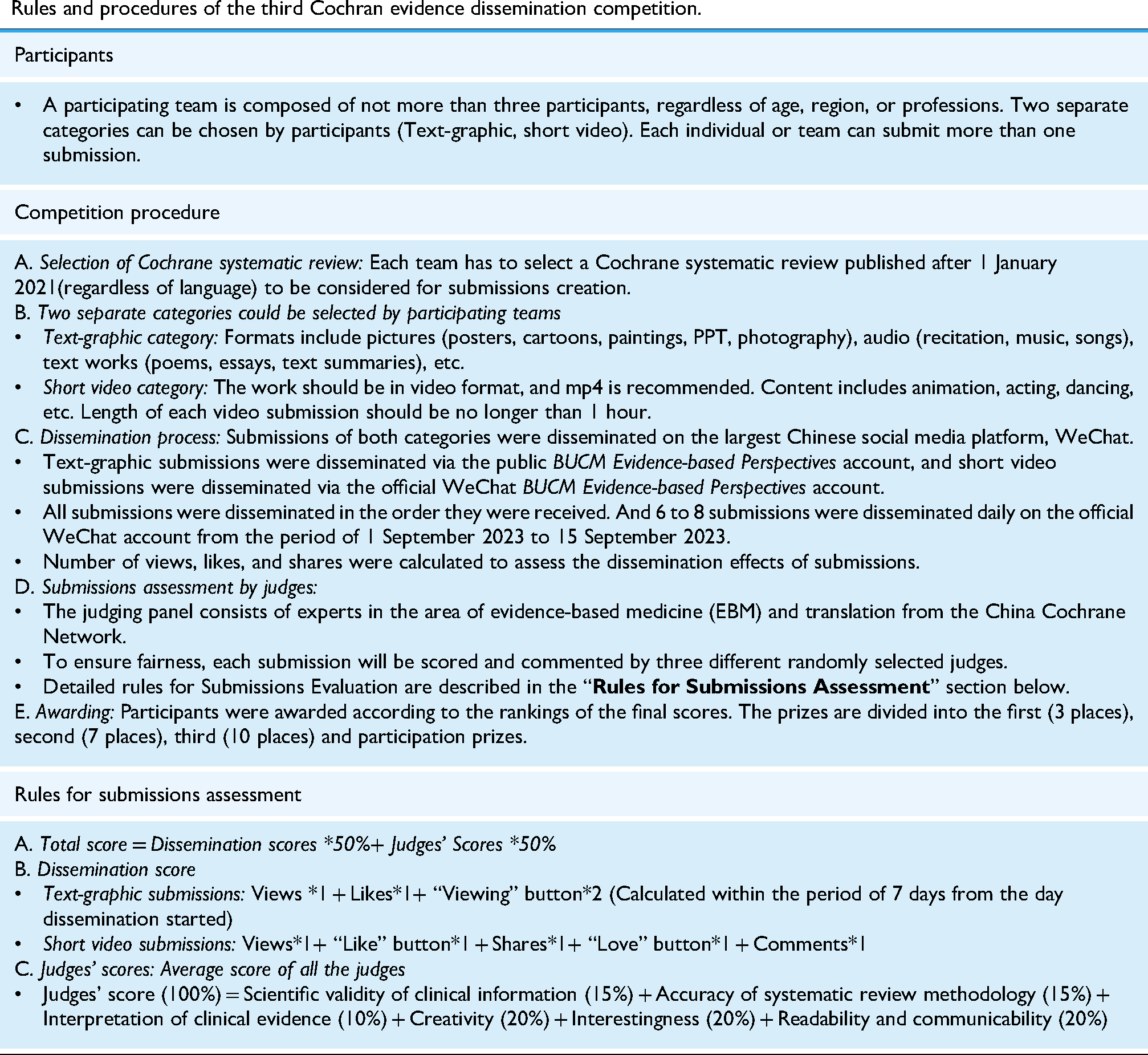
Experts specialized in EBM and English translations were invited from member institutes of the Cochrane China Network to assess the quality of the submissions. To ensure the fairness of the competition, each submission was scored by three different randomly selected judges from six domains (Textbox 1, Table S1in Supplemental material 1).
In addition, the dissemination effects of submissions on social media were also considered, using views, likes, and shares as social media metrics. The total score of submissions was calculated using 50% of the dissemination scores and 50% of the average scores given by the judges.
Case study
We conducted a case study on the third Cochrane Evidence Dissemination Competition, which included an analysis of the competition participation and submissions from various KT aspects, and a questionnaire completed by the competition participants (Figure 2).
Competition participation and submissions analysis
Competition participation
The demographic information of participants was collected. We also analyzed the participants’ knowledge and experience of systematic reviews and evidence dissemination before the competition, and the reasons for their participation in the competition.
Competition submissions
Submissions topics and use of Cochrane systematic reviews
We conducted a detailed analysis of the Cochrane systematic reviews used in the submissions, including their topics and publication year, topics, and research group of the systematic reviews. Distribution of key elements of systematic reviews, PICO (Participants, Interventions, Comparisons, Outcomes), were calculated and summarized. Diseases, age, and sex were used to categorize the participants. Considering the varied categories of target diseases, we classified similar target diseases as the same groups according to the International Classification of Diseases 11. In addition, we also conducted a detailed analysis of the interventions and primary outcomes involved in different disease categories of systematic reviews. The numbers of times systematic reviews were used for evidence dissemination works production were calculated, and systematic reviews more often used by evidence dissemination works were summarized.
Dissemination formats
The dissemination formats of submissions of both text-graphic and short video categories were evaluated and demonstrated using a pie chart to visualize the forms of expressions chosen by participants in the dissemination of Cochrane systematic reviews.
Dissemination effects
After dissemination of the submissions, dissemination effects were evaluated based on three main aspects: audience interactions with the public WeChat account, reach and engagement of submissions, and Cochrane original publication data. Specific metrics were selected for each aspect. Number of followers and daily traffic (visitors, views, and shares) to the public WeChat account were used to evaluate audience interactions with the account. Total and average number of views, likes and shares within 7 days were adapted to assess the submissions’ reach and engagement. 30 Regarding original publication data, we intended to obtain article download data from the publisher based on previous research,31,32 but were informed that only quarterly information was available. Thus, quarterly translation page views of Simplified Chinese and total number of visits to Cochrane.org by Simplified Chinese browsers were used instead.
Questionnaire survey
In order to understand contestants’ perspectives on the competition and different aspects of KT, a structured online questionnaire was conducted with all competition participants using So-jump, a secured Chinese web-based survey platform that can administer surveys via WeChat (18 August 2023 and 1 September 2023).
The questionnaire was a structured 22-items survey (Supplemental material 2). Demographic information was collected first, followed by questions analyzing participants’ experience in Cochrane systematic reviews and evidence dissemination prior to the competition, as well as their reasons for participating in the competition. The survey mainly focused on analyzing participants’ perceptions on different aspects of dissemination works production (topic selection, forms of expression, sources of creativity, and perceived difficulties), and reflections on evidence dissemination postproduction (suitable dissemination formats for systematic reviews, potential audiences for evidence dissemination works and potential benefits of Cochrane systematic reviews). Finally, we asked participants to provide comments and suggestions on the competition and Cochrane evidence dissemination.
The questionnaire was reviewed by qualified experts, and based on their feedback, modifications were made for clarity and content. The validated online questionnaire links were attached to the submission materials and all participants were asked to submit the application forms with the completed questionnaires, so that their instant feedback could be recorded as much as possible.
Statistical analysis
The statistical analyses were conducted using Microsoft Excel and IBM SPSS (26.0). Descriptive statistics were presented as percentages, means, and variances, and numerical statistics were presented as means ± standard deviation. T-test is used to compare whether there is statistical difference between two groups of data with normal distribution.
Ethics approval
This study was approved by the Ethics Committee of Beijing University of Chinese Medicine (2023BZYLL1210). All participants in this research gave informed consent before taking part.
Results
Competition participation and submissions
Competition participation
Demographic data
A total of 173 participants made up of 91 teams from universities and hospitals participated in the competition (Table 1). The majority of participants were students (85.8%, 148/173) with medical-related backgrounds (83.8%, 145/173). Among nonmedical participants, those with an English-related background (5.8%, 10/173) were the most common. Only one team (out of 91) was made up of participants from different professional backgrounds.
Participants demographic data.

Participants’ experience in systematic reviews and evidence dissemination before the competition
Before the competition, 67% (116/173) of participants had read about systematic reviews (Table 2) and the majority of participants (70%, 121/173) had heard of or had learnt about Cochrane systematic reviews but had not participated in their production.
Participants’ experience in systematic reviews and evidence dissemination before competition.

Regarding evidence dissemination, more than 60% of participants had heard of evidence dissemination (62%, 108/173) but had not yet participated.
Reasons for participation
In terms of reasons for participating in the competition (Figure 3), the most commonly chosen motivations were related to personal skills development, including “furthering studies in EBM” (60.7%, 105/173), “improving personal abilities” (50.3%, 87/173), and “future career development” (11.6%, 20/173). Only a small number of participants took part to “win prizes” (6.9%, 12/173), “because of teachers’ recommendations” (2.3%, 4/173), or “out of pure interest” (1.7%, 3/173).

Participants’ reasons for competition participation (choose top 3 reasons).
Competition submissions
A total of 94 valid submissions (80 text-graphic and 14 short video submissions) were received from the participants. These submissions focused on systematic reviews on a wide range of topics, and were presented in a rich variety of formats.
Submissions topics and use of Cochrane systematic reviews
Topics
Across different topics, the vast majority of submissions focused on disease treatment (73.2%, 71/97) (Table 3). Over 50% (54.6%, 53/97) of systematic reviews that were selected for the submissions were published in 2023. Thirty-seven Cochrane research groups were covered, and the six most frequently mentioned groups were summarized in Table 3.
Summary of submissions’ topics, publication years of included systematic reviews, and included Cochrane research groups.

Social health issues include: psychosocial and pharmacological interventions to reduce harmful alcohol use in low- and middle-income countries, environmental interventions for preventing falls in older people living in the community.
Use of Cochrane systematic reviews
A total of 71 Cochrane systematic reviews were used 97 times in all 94 submissions. Key features of the six most frequently selected systematic reviews (≥3 times) by participants were summarized in Table S2 (Supplemental material 1).
The analysis of PICO can reveal critical components of clinical questions in the selected systematic reviews (Table S3 in Supplemental material 1). Interventions, comparisons, and outcomes distribution were also summarized.
Table S4 (Supplemental material 1) summarizes the intervention and primary outcomes in Cochrane systematic reviews in different disease categories.
Dissemination formats
Eighty (85%, 80/94) text-graphic submissions and 14 (15%, 14/94) short video submissions were received (Figure 4).

Dissemination formats distribution of submissions.
Text-graphic submissions included seven different dissemination formats (samples shown in Figures S1 in Supplemental material 3). Most participants selected the text and background images (45%, 42/94) and text and illustrations (6%, 5/94) formats (Figure 4). Power Point (PPT) slides (21%, 20/94), a more academic dissemination mode, also accounted for more than 20% of submissions. Furthermore, some participants experimented with more innovative dissemination formats, such as H5 (HTML5) (3%, 3/94) and comics (4%, 4/94), to display the evidence more vividly.
As for short video submissions, roughly 2 of 3 of the videos (5/14) lasted over 3 minutes, mainly with forms of animation (10/14, 71%) and vocal presentation for PPT slides (4/14, 29%).
Dissemination effects
Audience interactions with WeChat account
At baseline, the official BUCM Evidence-based Perspectives WeChat account had 10,415 followers. During the competition (from competition announcement till dissemination of all submissions completed), the account gained 1241 followers (12% increase) to a total of 11,656 followers.
Table 4 summarizes the average daily visitors, views, and shares to the official BUCM Evidence-based Perspective WeChat account.
Average daily visitors, views, and shares to the official BUCM evidence-based perspectives WeChat account.
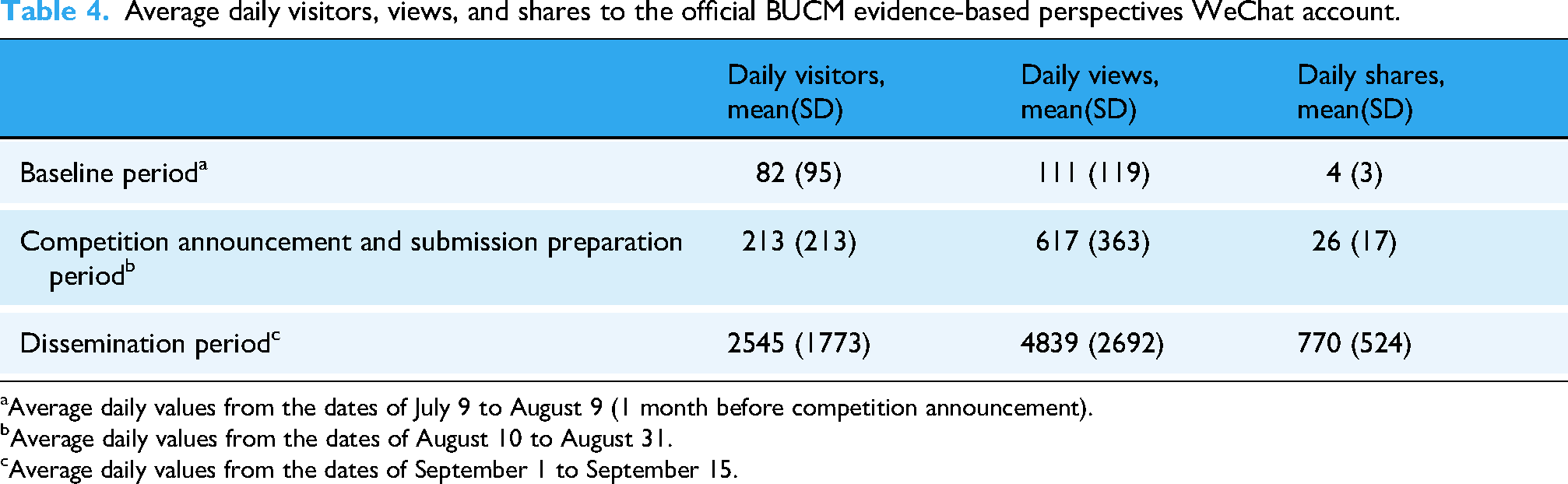
Average daily values from the dates of July 9 to August 9 (1 month before competition announcement).
Average daily values from the dates of August 10 to August 31.
Average daily values from the dates of September 1 to September 15.
Dissemination effects of submissions
On average, 79 text-graphic submissions received a mean (SD) of 630 (941) views, 191 (304) likes and 121 (28) shares (Table 5). Compared with the regular Cochrane Plain Language Summary (PLS) translations dissemination, average views of submissions increased roughly two times, and average likes and shares rose from just 0 to 5 likes/shares per work to 191 likes and 121 shares.
Summary of social media metrics of text-graphic and short video submissions within 7 days.
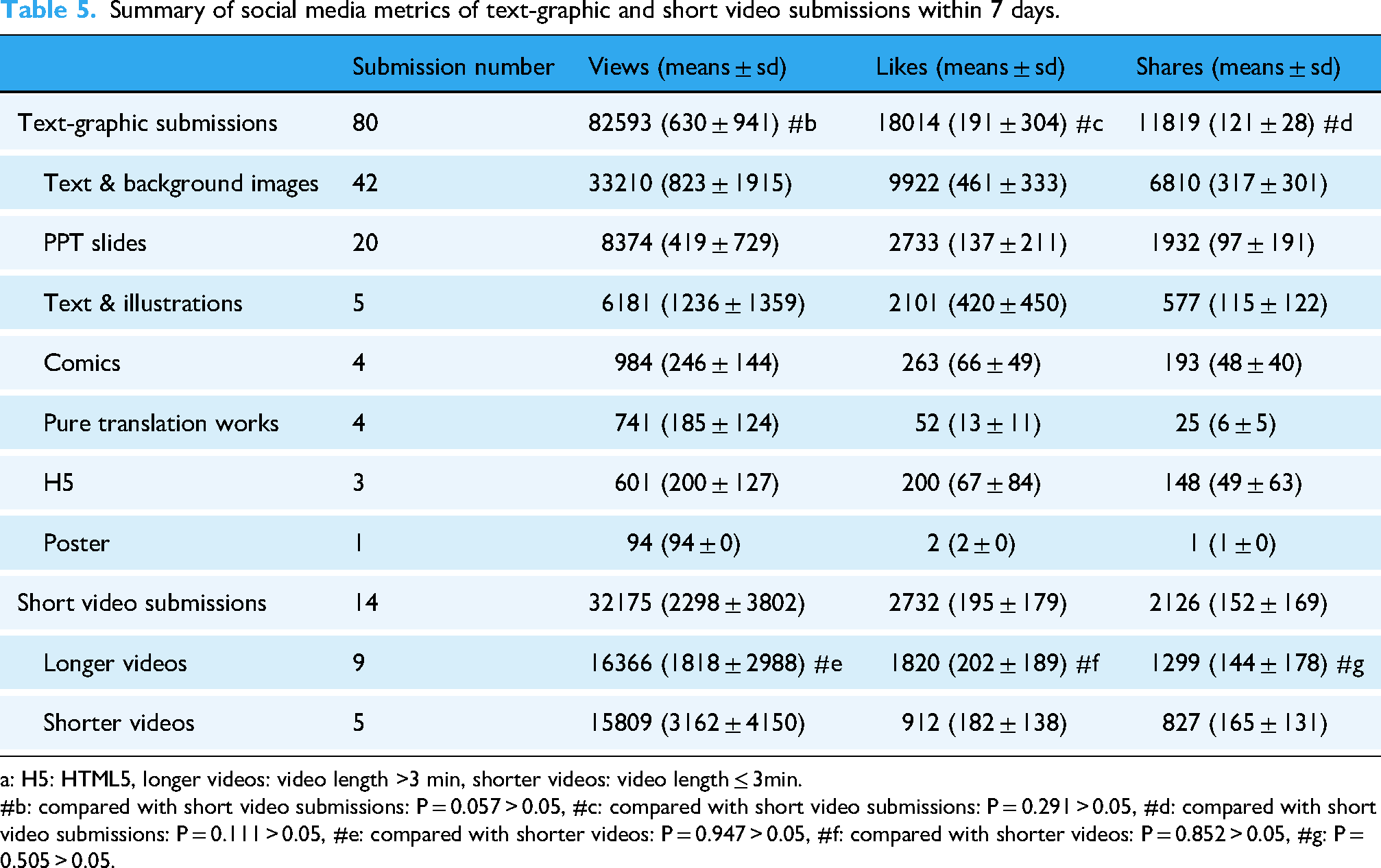
a: H5: HTML5, longer videos: video length >3 min, shorter videos: video length ≤ 3min.
#b: compared with short video submissions: P = 0.057 > 0.05, #c: compared with short video submissions: P = 0.291 > 0.05, #d: compared with short video submissions: P = 0.111 > 0.05, #e: compared with shorter videos: P = 0.947 > 0.05, #f: compared with shorter videos: P = 0.852 > 0.05, #g: P = 0.505 > 0.05.
We found no statistical differences of views (P = 0.057 > 0.05), likes (P = 0.291 > 0.05), and shares (P = 0.111 > 0.05) between text-graphic submissions and short video submissions.
Accessing Cochrane publications
During the competition production and dissemination period from August to September 2023, the translation page views for Simplified Chinese language content on Cochrane.org increased from 123,039 views in the second quarter of 2023 (April to June) to 165,944 views in the third quarter (July to September) (representing a 35% increase, 42,905/12,039) (Supplemental Figure S2). This increase persisted in the fourth quarter (October to December), where page views continued to increase to 200,137 views (representing a 21% increase, 34,193/165,944).
Assessment of submissions by judges
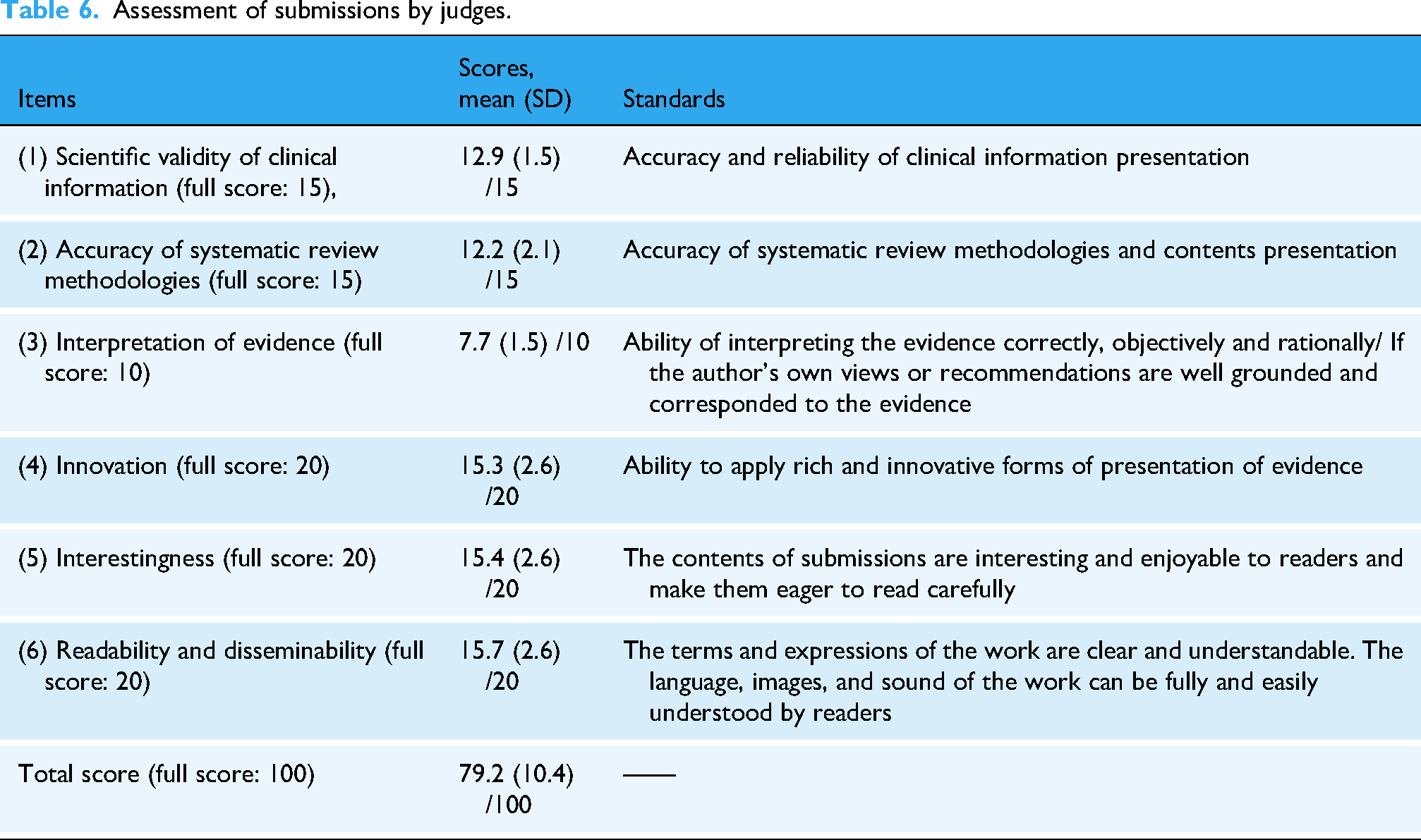
The submissions were assessed by judges on six different aspects, and the total scores of submissions were also calculated (Table 6). When analyzing the professionalism of submissions, the submissions received an average of 12.9 (total 15) points in terms of scientific validity of clinical information and 12.2 (total 15) points in terms of accuracy of systematic review methodologies. In terms of the interpretation of evidence, the submissions received an average of 7.7 (total 10) points. Furthermore, the submissions received an average of 15.3 (total 20), 15.4 (total 20), and 15.7 (total 20) points in terms of innovation, interestingness, and “readability and disseminability.”
Assessment of submissions by judges.
Participants’ views on evidence dissemination: results from the questionnaire
The online questionnaire was delivered to all 173 participants who submitted their works in the competition. All participants completed the survey (return rate: 100%).
Means to be informed about medical evidence in daily work
Participants’ means to be informed about medical evidence were shown in Figure 5A), with the internet (83.2%, 144/173) being the most chosen option.

(A) Means to be informed about medical evidence in daily work (choose top 3). (B) Most frequently used online platforms for medical evidence acquisition.
Additionally, participants’ medical evidence acquisition involved academic databased and nonacademic social media (Figure 5B).
Evidence dissemination works production
Considerations
Participants’ considerations for producing evidence dissemination works were analyzed across three main domains: source of inspiration, topic selection, and considerations for dissemination format (Table 7).
Considerations for evidence dissemination works production (top three).

Sources of inspiration
Previous works (64.2%, 108/173) and social media information (53.2%, 92/173) were the two most selected sources of inspiration by participants. Around 30% of participants also referred to professional books and essays (32.4%, 56/173) and online discussion platforms (26.6%, 46/173) to search for ideas. Additionally, consulting professionals with communication backgrounds (19.7%, 34/173) and online video platforms (15.0%, 26/367) were also options for some participants. Only 2.9% (5/173) of participants created their works based solely on their original ideas.
Topic selection
Participants have provided a great variety of aspects they considered when selecting the topics of their dissemination works. Personal interests (83.2%, 144/173) and relevance to their own professions (45.7%, 79/173) were major considerations. Apart from topics chosen out of personal interest, more than 55% of participants (60.1%, 104/173) also refer to social issues. Other reasons for topic selection were shown in Table 7.
Considerations for dissemination format selection
When asked about their considerations for selecting the dissemination formats, the two most frequently chosen factors were the suitability for disseminating evidence (78.0%, 135/173) and personal areas of specialization (67.1%, 116/173). Other considerations included whether the dissemination formats were suitable for a competition (38.1%, 66/173) and easy to make (26.6%, 46/173), their attractiveness to the audience (11.6%, 20/173), and recommendations from supervisors (7.5%, 13/173).
Perceived barriers
Regarding levels of difficulties in understanding Cochrane evidence, the majority of participants with both medical and nonmedical backgrounds (med: 64.5%, non-med: 62.0%) could understand the translated Chinese version of systematic reviews, while only a very small proportion of participants (med: 12.9%, non-med: 18.3%) could understand the original English version without translation (Figure 6A).

(A) Difficulties in acquiring and understanding Cochrane evidence. (B) Perceived barriers in acquiring and understanding Cochrane evidence.
Additionally, we conducted a more in-depth analysis of perceived barriers with participants. Lack of knowledge in clinical trials was the most prevalence barriers among medical and nonmedical participants (Figure 6B).
Reflection on evidence dissemination postproduction
Potential benefits of evidence dissemination activities
Feedback in terms of potential benefits of participating in evidence dissemination activities had revealed potential motivations of participants (Supplemental Figure S3). Most participants acknowledged the significance of evidence dissemination activities in getting updated with latest research results.
Potential audience to consider during evidence dissemination
When asked about potential audiences for their dissemination works, medical students were the most selected audience (84.4%, 146/173) (Supplemental Figure S4). This was followed by nonprofessionals/the public (75.1%, 130/173), researchers (69.4%, 120/173), and clinical doctors (64.2%, 111/173). Moreover, some participants (4.0%, 7/173) mentioned that their submissions were tailored for specific audience types, including patients with specific diseases, maternal, etc.
Suitable dissemination formats for evidence dissemination
Regarding suitable dissemination formats of clinical evidence, posters (85.0%, 147/173) and videos (64.7%, 112/173) were the most popular (Supplemental Figure S5). There were also 8 other formats shown in Supplemental Figure S5.
Furthermore, we asked participants about their considerations for selecting suitable dissemination formats of clinical evidence. The most mentioned consideration was that the dissemination format was “vivid” (26.0%, 45/173) or “readily comprehensible” (22.0%, 38/173).
Feedback on the competition and evidence dissemination
Feedback in the open-ended questions regarding the Cochrane Evidence Dissemination Competition was provided by 48 out of 173 participants (27.7%). This feedback primarily fell into three categories: comments, suggestions for the competition, and personal takeaways from the competition (Supplemental Table S5). One third of the comments received (6/18) considered the competition to be “innovative,” and around one-fifth of the comments highlighted the meaning of the competition (3/18) and expected future competitions (4/18). Additionally, a great variety of suggestions were provided from the contestants. The most mentioned suggestion was to “increase competition dissemination and impact” (10/24), and other suggestions included increasing the number of team members (3/24) and diversity of competitors (2/24). Additionally, in terms of gains from the competition, competitors reported they had increased their knowledge in EBM (2/6), about the Cochrane Library (1/6), systematic reviews (1/6), and improved translation skills (1/6).
Moreover, a considerable number of responses on evidence dissemination were also received (39/173, 22.5%) (Supplemental Table S6). The most mentioned feedback focused on ways of facilitating evidence dissemination (10/39). Other feedback included increasing evidence dissemination formats (9/39), increasing evidence dissemination channels (7/39), increasing rewards for participation (4/39), expanding collaboration (4/39), providing guidance (2/39), and integrating technologies (1/39).
Rules and procedures of the third Cochran evidence dissemination competition.
Discussion
Principal results
To our knowledge, this is the first study to analyze the facilitation of evidence dissemination in Simplified Chinese and on Chinese social media from various KT aspects, drawing on the insights gained from our previous experience. Using China's mainstream social media platform, WeChat, Cochrane evidence was translated and disseminated to a significant number of Simplified Chinese users. Additionally, our study incorporated a competition strategy to facilitate the process. Overall, the results showed that the competition served as a platform for participants to apply their expertise and creativity, which in turn enhanced their professional knowledge and skills. However, we identified areas for improvement, particularly in participant support and guidance, including professional knowledge, English translation, and social media design.
Comparison with prior work
Competitions are an innovative and effective approach to promoting student engagement by encouraging the practical application of professional knowledge.33–35 Our competition creatively adapted this strategy to the field of evidence dissemination. The participants, primarily students, were mostly motivated by the desire to “further the studies in EBM.” This could be attributed to our promotional efforts within the Cochrane China Network, highlighting the educational functions of our competition. Our findings align with previous research, which suggests that, compared to traditional educational methods, competitions foster teamwork, creativity, and engagement, thereby enhancing interaction, creativity, and making the learning process more enjoyable.36,37 Most of our participants had medical-related backgrounds, which is particularly relevant, as Cochrane evidence is most applicable to this group. Following the competition, we received extensive feedback indicating an improvement in participants’ knowledge of EBM, Cochrane evidence, and evidence dissemination and translation—findings that are consistent with outcomes from similar competitions in EBM and other medical fields. Collectively, these results suggest that the potential of competitions can be an effective tool for facilitating EBM learning and evidence dissemination.
Social media has become an influential tool for disseminating knowledge to medical professionals, 38 patients, and the public. 39 In particular, WeChat—China's most popular platform—has proven to be especially effective in reaching audiences who use Simplified Chinese, surpassing the reach of other platforms. Although previous studies have explored the use of WeChat to share health information and evidence,17,24,40 few have examined the innovative design of text-graphic and short video formats. In this study, we observed that participants utilized a wide variety of dissemination formats. The submissions predominantly focused on text and background images as well as PPT slides which are more often used in academic settings. Such formats can be produced conveniently using platforms like Xiumi. 41 However, participants also considered many other dissemination formats, including posters, paintings, and animations. We found that practical factors, such as “personal specializations” and the level of “competitiveness” were crucial in selecting dissemination formats, alongside considerations of suitability for disseminating evidence and dissemination effects (“vividness,” “conciseness,” etc.). These findings suggest that while most participants, who came from medical backgrounds, may have innovative approaches to interpreting medical evidence, they lack expertise in social media design and management. Similar conclusions were drawn in another study, which highlighted that medical researchers typically rely on traditional academic methods and lack dissemination design skills. 42 Managing social media platforms and utilizing videos or animations are essential professional skills for evidence dissemination. 5 Providing supervision on social media design or collaborating with social media experts could help bridge these gaps in the future.
In this competition, dissemination effects were evaluated in detail, along with a quality assessment of the submissions, based on previous research.24,32 The dramatic increase in audience interactions and social media metrics compared to the regular dissemination of Cochrane abbreviated abstract translations underscored the effectiveness of social media in disseminating evidence. No statistical difference in reach and engagement was observed between the text-graphic and short video submissions. Studies by Chen et al. 43 indicated that WeChat short videos facilitate faster consumption of information compared to text-with-graphic formats. In contrast, our findings did not show significant differences in the engagement metrics between short videos and text-graphic submissions, likely due to the disparity in submission numbers. Original publication data from the second to the third-quarter (when the competition was held) and the fourth-quarter (postcompetition) revealed that viewers were likely to revisit the original publications after engaging with the submissions. Their interest in Simplified Chinese translations of Cochrane evidence persisted even after the competition ended. Collectively, these statistics provide an objective and comprehensive assessment of the dissemination effects of the submissions, offering evidence that the competition successfully attracted significant audience attention to both our submissions and Cochrane evidence.
Despite the successes achieved, our strategy of using a single dissemination platform had limitations. Feedback from our participants indicated that expanding the number of evidence dissemination channels—specifically by incorporating additional social media platforms—was necessary, particularly those with a higher proportion of younger users. Dyson et al. 32 have shown that using multiple web-based platforms for evidence dissemination can improve both accessibility and communication effectiveness. In addition to WeChat, Chinese social media platforms such as Weibo also offer great potential in evidence dissemination. Weibo facilitates the aggregation and instant dissemination of various media formats (e.g. images and videos), and enables active interaction between content creators and recipients through the comment sections and private messages. 44 Similarly, platforms like Chinese TikTok, 45 Xiaohongshu, 46 and Bilibili, 47 which are popular for graphic and video content, foster strong user interaction, particularly among younger audiences as the main user group.48–50 Explorations of evidence dissemination on these platforms in the future could enhance the reach of our submissions and improve the competition.
Ensuring quality control in the dissemination of medical evidence via social media is essential for preventing the spread of misinformation and misconceptions.31,51 To assess the quality of submissions, we invited expert judges from the Cochrane China Network to evaluate the submissions from the aspects of professionalism (scientific validity of clinical information, accuracy of systematic review methodologies), interpretation of evidence, innovation, interestingness, readability and communicability. These criteria encompass not only EBM but also artistic and communication elements. Zhao et al. 52 identified relevance, esthetics, readability, findability, credibility, and usability as key attributes to consider in dissemination, based on their analysis of previous practices. These attributes align closely with the criteria used by our judges, though we did not explicitly incorporate relevance and usability as standards in our study. Future research could benefit from incorporating feedback from readers, gathered through comments or questionnaires, to further refine the evaluation process.
Our cross-sectional survey delved into various aspects of evidence dissemination among participants. In terms of how participants get informed about medical evidence, academic literature databases and professional journals/materials were identified as the most common sources. Our results were consistent with previous surveys of health specialists, which similarly found that academic journals were the preferred information sources for health professionals.26,53 When it comes to selecting topics for dissemination, participants most frequently cited personal interests, relevance to social issues, and the connection to their professional fields as key considerations. There is limited research on what professionals should consider when selecting evidence for public dissemination. A study suggests that early assessments of target audience's needs and current knowledge levels can inform the dissemination process.54,55 Similarly, our participants considered the public's needs with reference to social issues. Regarding perceived barriers to acquiring and understanding Cochrane evidence, we found that language was a significant challenge. Over 60% of participants, regardless of professional background, reported that they could only understand Cochrane reviews if they were available in Chinese. A lack of medical knowledge and familiarity with clinical trials were also prominent barriers for both medical and nonmedical participants. These issues were not highlighted in previous surveys, which primarily focused on researchers and clinicians. However, a scoping review conducted in China, which included health professionals from diverse backgrounds, has identified a lack of knowledge and skills as a major barrier. 18 Given that over 85% of our participants were students, there is a clear demand for support in medical and EBM knowledge and English terminology translation support. Encouraging the formation of multidisciplinary teams could also help, as it would allow participants from different backgrounds to collaborate and support one another. Notably, only 1 out of 91 teams in our competition was composed of participants from diverse backgrounds.
Implications for future research and practice
Our study represents a novel approach to integrating competitions into evidence dissemination via Chinese social media. Several lessons can be drawn to guide the organization of future competitions. Firstly, providing training in EBM and medical knowledge is essential for overcoming language and professional barriers, thereby improving the quality of submissions. Based on our experience, such trainings may focus on basic knowledge of clinical trials and English medical terminology translations, and include search strategies for Cochrane systematic reviews. Secondly, it is necessary to offer guidance on social media design. This can be achieved by collaborating with social media experts and audiovisual technicians as demonstrated in previous practices, 32 or by providing relevant trainings for participants. Thirdly, promoting our submissions on more platforms will expand its reach and foster greater participation. Additionally, understanding audience's needs and evaluating their feedback are vital for ensuring effective evidence dissemination.
Moreover, findings from our studies can also help to guide or support medical professionals in disseminating medical evidence to the public. We identified several key aspects of support and evaluation that are critical for effective implementation in practice:
Limitations
Our study also has limitations: (1) This study was not designed to include the evaluation of the audience's views and feedback. Although social media metrics such as number of followers, likes or shares can provide relevant information, more direct methods including surveys or interviews should be incorporated to provide a more comprehensive evaluation. (2) Although the survey for participants in this competition has reached a certain sample size, the results represent the perspectives of participants with predominantly medical backgrounds. Thus, results specifically pertaining to the content analysis may not be representative of all groups developing evidence dissemination works. Future studies to assess creators from more diverse backgrounds can increase the representativeness of the conclusions. (3) No specialized scales were applied in our study to provide a rigorous measure of the validity of the competition's implementation, and of the participants’ difficulties.
Conclusions
Our competition provides a valuable platform for medical students and professionals to further study EBM and evidence dissemination, while also using their expertise and creativity to deliver the evidence to the public. Our strategy of using the WeChat platform for dissemination was successful in bringing attention to the dissemination works and original Cochrane publications. Nevertheless, future practice needs to improve support in professional knowledge, translation, and social media design for participants. Lessons learned from our study can inform future explorations of evidence dissemination to the public by health professionals.
Supplemental Material
sj-docx-1-dhj-10.1177_20552076251357396 - Supplemental material for Exploration for a knowledge translation model in public dissemination via social media: Insights from an innovative Cochrane evidence dissemination competition in China
Supplemental material, sj-docx-1-dhj-10.1177_20552076251357396 for Exploration for a knowledge translation model in public dissemination via social media: Insights from an innovative Cochrane evidence dissemination competition in China by Yifei Song, Yusi Suo, Huikai Hu, Judith Deppe, Yanling Shen, Duanhong Yang, Ruoying Cai, Xuefeng Wang, Jin Zhang, Yutong Fei, Jianping Liu and Xun Li in DIGITAL HEALTH
Supplemental Material
sj-docx-2-dhj-10.1177_20552076251357396 - Supplemental material for Exploration for a knowledge translation model in public dissemination via social media: Insights from an innovative Cochrane evidence dissemination competition in China
Supplemental material, sj-docx-2-dhj-10.1177_20552076251357396 for Exploration for a knowledge translation model in public dissemination via social media: Insights from an innovative Cochrane evidence dissemination competition in China by Yifei Song, Yusi Suo, Huikai Hu, Judith Deppe, Yanling Shen, Duanhong Yang, Ruoying Cai, Xuefeng Wang, Jin Zhang, Yutong Fei, Jianping Liu and Xun Li in DIGITAL HEALTH
Supplemental Material
sj-docx-3-dhj-10.1177_20552076251357396 - Supplemental material for Exploration for a knowledge translation model in public dissemination via social media: Insights from an innovative Cochrane evidence dissemination competition in China
Supplemental material, sj-docx-3-dhj-10.1177_20552076251357396 for Exploration for a knowledge translation model in public dissemination via social media: Insights from an innovative Cochrane evidence dissemination competition in China by Yifei Song, Yusi Suo, Huikai Hu, Judith Deppe, Yanling Shen, Duanhong Yang, Ruoying Cai, Xuefeng Wang, Jin Zhang, Yutong Fei, Jianping Liu and Xun Li in DIGITAL HEALTH
Footnotes
Abbreviations
Acknowledgements
The authors would like to express their sincere acknowledgments to affiliates of the Cochrane China Network, for helping them co-organize, publicize, and participate in the competition.
ORCID iDs

Ethical considerations
This study was approved by the Ethics Committee of Beijing University of Chinese Medicine (2023BZYLL1210).
Author contributions
XL contributed to the conception and supervision of the study. YS (Song) was responsible for conducting the study, collecting and analyzing the data, and writing the manuscript. YS (Suo), HH, YS (Shen), DY, XW, and JZ contributed to assistance of conducting the research. JD, YF, and JL designed the competition and revised the manuscript. All authors contributed to the article and approved the submitted version.
Funding
The authors disclosed receipt of the following financial support for the research, authorship, and/or publication of this article: This research was funded by Fundamental Research Funds for Beijing university of Chinese medicine (Reveal the list and take command project) (No. 2022-JYB-JBRW-013); 2023 Cochrane Simplified Chinese-language activities agreement (No. BUCM-2023-JS-FW-083); Research on medical English translation teaching strategies integrating evidence-based medical knowledge transformation practice under the background of “new liberal arts” and “new medical science.” Education Research Program of Beijing University of Chinese Medicine. No. XJY22020.
Declaration of conflicting interests
The authors declared no potential conflicts of interest with respect to the research, authorship, and/or publication of this article.
Informed Consent
All participants in this research gave informed consent before taking part.
Gurantor
XL and YS (Song) take responsibility for the integrity of the work as a whole, including data accuracy, study compliance, and the reliability of the conclusions. YS (Suo), HH, YS (Shen), DY, XW, JZ, JD, YF, and JL have confirmed their agreement with this statement.
Peer Review
This manuscript have underwent the peer review process (May 2025). The peer review requested subtle changes regarding the scientific rigor and language of the manuscript, which were completed and addressed in the revised submission. We would like to thank the anonymous reviewers for their insightful comments, which significantly improved the clarity of the manuscript.
Supplemental material
Supplemental material for this article is available online.
References
Supplementary Material
Please find the following supplemental material available below.
For Open Access articles published under a Creative Commons License, all supplemental material carries the same license as the article it is associated with.
For non-Open Access articles published, all supplemental material carries a non-exclusive license, and permission requests for re-use of supplemental material or any part of supplemental material shall be sent directly to the copyright owner as specified in the copyright notice associated with the article.
