




Abstract
Objective
The enabling and derailing factors for using artificial intelligence (AI)-based applications to improve patient care in the United Arab Emirates (UAE) from the physicians’ perspective are investigated. Factors to accelerate the adoption of AI-based applications in the UAE are identified to aid implementation.
Methods
A qualitative, inductive research methodology was employed, utilizing semi-structured interviews with 12 physicians practicing in the UAE. The collected data were analyzed using NVIVO software and grounded theory was used for thematic analysis.
Results
This study identified factors specific to the deployment of AI to transform patient care in the UAE. First, physicians must control the applications and be fully trained and engaged in the testing phase. Second, healthcare systems need to be connected, and the AI outcomes need to be easily interpretable by physicians. Third, the reimbursement for AI-based applications should be settled by insurance or the government. Fourth, patients should be aware of and accept the technology before physicians use it to avoid negative consequences for the doctor–patient relationship.
Conclusions
This research was conducted with practicing physicians in the UAE to determine their understanding of enabling and derailing factors for improving patient care through AI-based applications. The importance of involving physicians as the accountable agents for AI tools is highlighted. Public awareness regarding AI in healthcare should be improved to drive public acceptance.
Keywords
Introduction
The improvement of patient outcomes in the United Arab Emirates (UAE) is on the priority list of the UAE government. One of the UAE's 2031 vision objectives is to be among the top 10 nations with the highest human development index (HDI). 1 Life expectancy is one of the main parameters for measuring the HDI. 2 The UAE government is working on multiple themes to improve life expectancy in the nation. The UAE is an important country in the Middle East as it accounts for almost 26% of the healthcare expenditure in the Gulf Cooperation Council (GCC). The country has positioned itself as a leader in adopting advanced technologies including artificial intelligence (AI) in various sectors, such as healthcare. 3 This focus offers a unique context for examining the integration of AI into medical practices and its implications for healthcare delivery. The UAE's health regulators are increasingly contemplating embracing new intelligent technologies. The country is expected to add USD 182 billion to its economy by 2035 owing to accelerated AI adoption. 4 Digital health solutions around telehealth covering remote consultations were introduced in Quarter 2 of 2019, when private healthcare operators nationwide started offering telehealth services to patients. The Dubai Health Authority presented its AI policy in healthcare on 15 September 2021. 5 The policy has in-depth governmental and monitoring frameworks for using AI services and solutions in health and research. The policy aims to improve the level of collaboration, communication, and support among government health agencies, the private sector, and the scientific community on the applications of AI to accelerate the development of health services. The policy's scope extends to include all AI solutions related to healthcare services used by medical facilities, specialists, drug manufacturers, health insurance companies, public health centers, and researchers within the jurisdiction of the Dubai Health Authority. The attractiveness of the UAE as a technology hub in the Middle East is based on its leaders’ technological leadership and their commitment to advance in technology and innovation and healthcare. 3 The Emirates of Abu Dhabi has invested in developing a pioneering project, Malaffi, launched by the Department of Health in partnership with private technology firms to become the region's first health information exchange platform, which will enable healthcare providers to securely access and share patients’ medical information. Malaffi uses AI and machine learning to improve healthcare delivery and drive improved patient outcomes. 6 The efforts of the UAE government highlight the need to determine the level of understanding of UAE physicians regarding the potential benefits of AI, as well as their views on current AI-based applications and their usefulness in daily healthcare practice.
Despite the availability of some research on challenges of AI adoption in UAE from Information technology managers, 7 and the availability of survey insights from medical students and physicians from the Gulf Cooperation on how their attitude and perception toward AI and some of the perceived disadvantages. 8 A deeper insights into practicing physicians in UAE on the AI applications and their benefits were not investigated.
The main objective of this research was to understand the factors affecting the use of AI-based applications in improving patient care in the UAE from physicians’ perspectives.
Three research questions were formulated to achieve the objectives of this study: RQ1: What are the perceived advantages of AI in healthcare from a physician's perspective? RQ2: What derailing factors, if removed, could help to facilitate the use of AI-based applications to improve patient care in the UAE? RQ3: What are the enabling factors that could increase the use of AI-based applications to improve patient care in the UAE?
Insights were obtained using data from qualitative interviews with practicing physicians, and a thematic analysis was conducted to identify the perceived advantages of AI-based applications, the enabling factors that increase their usage, and the limitations hindering their adoption.
Despite favorable AI policies, physicians in the UAE have limited experience with AI-based applications for enhancing patient outcomes. This study highlights a lack of awareness among physicians, emphasizing the need for improvement. The absence of integrated data systems remains a significant barrier to leveraging AI's full potential. While awareness of AI's benefits is growing, government, hospital management, and insurance sectors are crucial in facilitating its adoption. Recommendations include mandatory AI-supported patient interactions, public education on AI's benefits and limitations, and unified healthcare data systems to improve outcomes and trust.
The remainder of this paper is structured as follows. The second section presents a literature review related to AI use in the UAE and the rising trends in the field. In the third section, we describe our research methodology through a brief literature review and by building upon insights from 12 interviews with practicing physicians in the UAE, in which the factors affecting the use of AI-based applications to improve patient care in the UAE are evaluated. We present and discuss the findings regarding the three research questions mentioned above in the fourth and fifth sections, respectively. In the sixth section, we provide recommendations for government officials and healthcare executives that may facilitate the increased use of AI-based applications in the UAE and conclude with a summary of limitations and avenues for future research.
Background
AI is a field of science and technology that allows computers to perform tasks that previously required human intellect through algorithmic design. 9 Hence, a critical appeal of AI lies in its capability to execute tasks akin to those performed by humans, learn from experiences, and adapt to new inputs and environments. AI is a broad term encompassing both hardware and software computerized systems that can execute tasks or engage in reasoning processes comparable to human intelligence.10,11 To achieve superior performance for specified tasks, AI uses relevant information sources such as big data. 12 Integrating AI into healthcare holds great promise in addressing the hurdles that healthcare systems encounter globally.
AI in healthcare encompasses a range of technologies with diverse applications, such as diagnosis and treatment, patient involvement and adherence, and administrative tasks. 13 Understanding the potential of AI adoption in healthcare can lead to significant automation in many medical and administrative services, which can transform established healthcare facilities into more patient-centric services. 14
Enabling factors to increase the adoption of AI-based applications in healthcare
The adoption of AI-based applications in the UAE could be increased by ensuring that the system is sound, possesses performance-enhancing features, and is preceded by a proper communication plan to ensure positive social influence from peers and healthcare management. 15 A case study was conducted by the Clemenceau Medical Center, Dubai, to investigate whether AI can provide a competitive advantage for healthcare organizations. 16 The results of the case study emphasized three primary outcomes influenced by applying AI in organizations: clinical, financial, and technological outcomes. First, AI allows hospitals to achieve decent clinical outcomes and enhance patients’ overall experience. Second, AI also aids healthcare facilities in improving their financial performance. Finally, despite the significant investments required, AI represents a core source of profit for healthcare ecosystems and a means to reorganize the distribution of capital and internal organization. 16 Additional research on policymakers in the UAE has shown that the challenges in adopting AI in the UAE are owing to limitations in accuracy, privacy, and security criteria. 7
In UAE, research in dentistry showed some key factors to improve the integration of advanced technologies in dentistry, education and training must be prioritized for both current professionals and students. Partnerships between dental societies and academic institutions can help develop specialized programs, with technology education incorporated into undergraduate and postgraduate curricula. Continuous professional development should also be encouraged, and organizational readiness assessments conducted to ensure healthcare institutions are prepared to adopt and utilize these innovations effectively. 17 In radiology, to drive the integration of artificial intelligence in radiology practice, key factors include education and training, as well as awareness and acceptance. Radiographers should receive education and training to build essential skills and knowledge, with AI instruction integrated into both undergraduate and continuing education programs. Additionally, fostering awareness of AI's role in radiology and promoting its acceptance as a valuable tool in the field is crucial for successful implementation. 18
Derailing factors to increase the adoption of AI-based applications in healthcare
The challenging factors for the adoption of AI-based applications in the UAE include the accuracy of the outcomes, privacy and security of information and data of patients, ethical barriers for employees, and verification of data and repeatability. Moreover, The level of interpretability of AI models aid in the decision process such as diagnosis and treatment in healthcare with the large volume of data generated during healthcare delivery. 19 However, research on AI-based applications that covers the management, systems integration, government enablement, and physicians’ and patients’ views on AI-based application adoption in the UAE is limited. Additionally, based on research done on information technology managers working at UAE hospitals, some challenges affecting AI adoption in UAE healthcare are accuracy, privacy, security, bias and discrimination, interpretability, ethical barriers, and control. 20 That research prioritized challenges based on criteria and sub-criteria such as accuracy, privacy and security, ethical barriers, interpretability, and control and assessed the challenges using the analytic hierarchy process method. The challenges include ensuring high accuracy in diagnosis, protecting patient data privacy, addressing biases in AI systems, understanding the reasoning behind AI decisions, managing ethical issues, and controlling AI systems to avoid undesired outcomes; however, the study did not discuss any actual usage of AI in the UAE. 7 Additionally, views from radiologists, radiographers, and nurses from across the Middle East including the UAE were considered to build capabilities to fill the skills gap, knowledge and information sharing, AI education, and tools for healthcare settings specific to the specialty.18,21
A broader understanding based on information from other countries can guide which challenges those countries faced. Three main themes were identified in the challenges of implementing AI in healthcare in Sweden: (i) external conditions related to healthcare systems, (ii) the capacity for strategic change in management, and (iii) the transformation of healthcare professions and healthcare practice. 22 In Canada, a qualitative study identified five main themes after interviewing primary healthcare and digital health stakeholders: (i) the mismatch between envisioned users and current reality, over-estimation of available AI tools, and limited usage in primary care; (ii) the mechanics of AI do not matter; instead, focusing on what value AI applications should bring to the practice is more important; (iii) uncertainty exists regarding the accuracy and readiness of AI in primary care practice; (iv) there are concerns regarding ethical, legal, and social implications; and (v) key element facilitators of AI exist from the availability of data, quality, and continuous assessment. 23
Advantages of AI-based applications in healthcare
AI applications in healthcare have been shown to improve patient care; for example, in radiology, through improving the quality of image recognition, caption generation, and speech recognition. 24 AI has shown promise in precision medicine, such as in the oncology field through risk stratification, the automated detection and segmentation of lesions, characterization, grading and staging, and the prediction of the prognosis and response rate for the treatment. 25 Various studies have identified advantages of AI-based applications, such as the accurate diagnosis of various diseases,24,26–34 the assistance of AI-based applications in supporting clinical decisions,35–37 importance of AI for data analysis, particularly in cancer and orthopedic surgeries,38–42 the importance of AI-based applications in assisting in clinical research such as that of the coronavirus disease 2019 (COVID-19), identifying vaccines and treatment selection,43–47 and the use of AI to increase efficiency in healthcare settings.48–50
In the UAE, healthcare authorities are actively promoting the use of AI through the implementation of policies and the introduction of preliminary applications within the Dubai Health Authority,1,5 Previous research from other GCC countries, such as a survey of physicians and medical students in Oman, showed positive thoughts and readiness to learn about AI applications in healthcare. The survey concluded that introducing AI-related courses into the medical curriculum would help to equip physicians with the needed skills for an AI-augmented healthcare system. 8 At present, research on the usage and outcomes of AI-based applications in the UAE remains lacking despite the foundational policies laid down by the government.
Methods
Research design
A qualitative method was developed to collect the views of practicing physicians in the UAE. Insights and contexts were established from the collected data, while providing an opportunity to explore the subject of AI in healthcare further during the follow-up interviews. A grounded theory approach was used to analyze the qualitative data for two reasons. First, this research design is appropriate for generating new evidence and may lead to new theories.51–54 Second, it was important to understand the process, perception, and interactions of physicians with AI applications in UAE through a process that offers flexibility to further study their experience with AI.
The grounded theory approach ensured rigorous research. The analysis structure followed Gioia's method for qualitative research, which is a systematic approach that structures in a hierarchical model that links first-order concepts (direct quotes from participants) and second-order themes (more abstract, relevant categories) and finally, aggregate dimensions (theoretical constructs).55,56 The interviews were stopped after the 12th interview as no new themes or categories emerged after the 11th interview.
Data collection
The data consisted of 12 semi-structured interviews with physicians practicing in the UAE over the past 10 years (Table 1). The interviews were conducted between 25 March and 30 August 2023 after obtaining ethical approval. Recruitment was primarily performed by contacting a network of physicians using LinkedIn. An introductory message was sent, outlining the research objectives and an invitation to participate. Eight participants signed a written consent form, four digitally signed the consent form, and all agreed to participate in the study voluntarily. Four interviews were completed online and eight interviews were completed face-to-face in the clinic. All recordings and notes from the interviews were collected and integrated into the analysis. Each interview lasted between 45 and 60 min.
Participant profiles.

Data analysis
Data analysis was conducted after each interview using the NVIVO software. The first-order concepts were generated and refined throughout the study to identify second-order themes (categories) and aggregate dimensions (themes). Comparisons between interview codes were implemented and continuously assessed with emerging categories to refine and develop the emerging themes.54,55
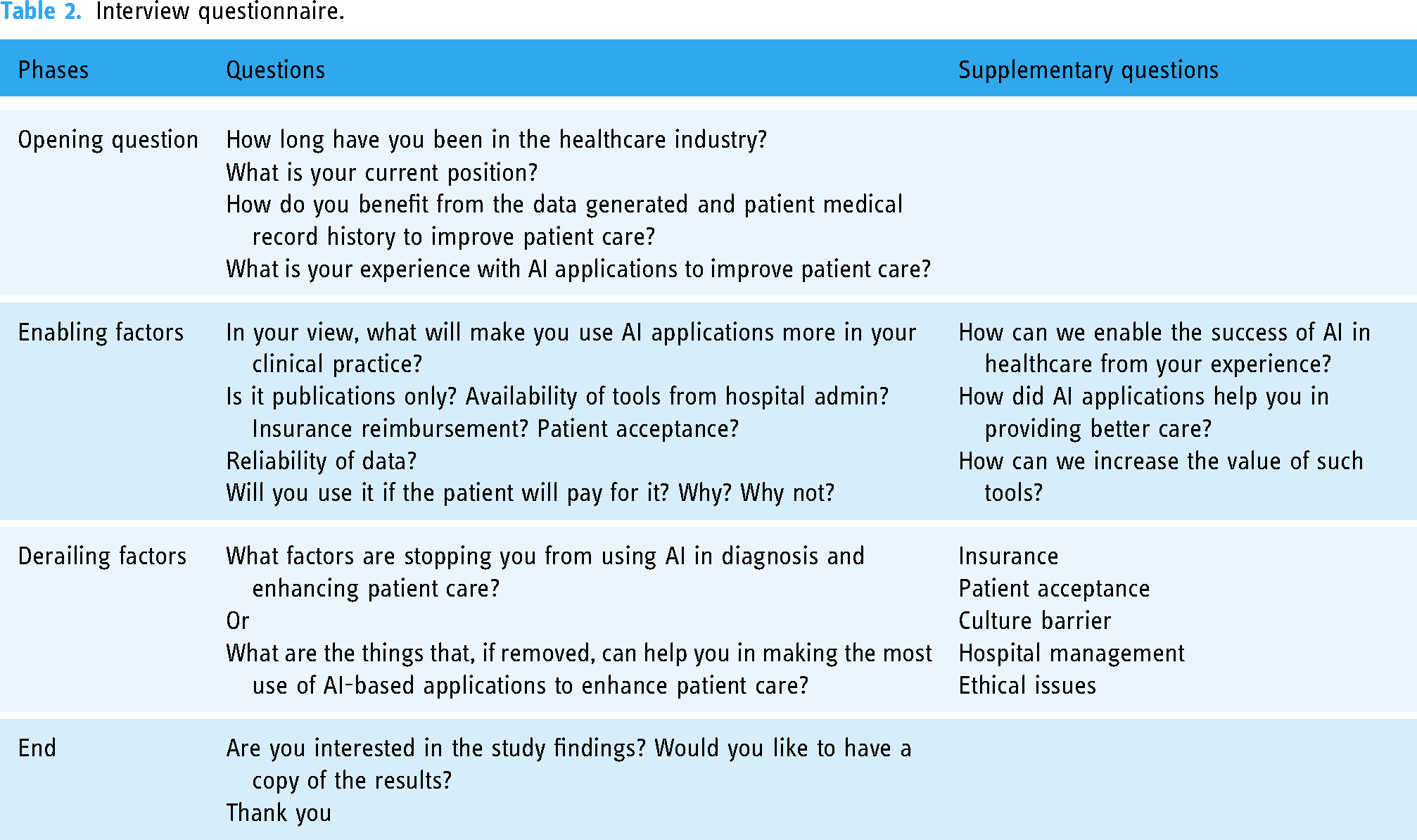
The questionnaire (Table 2) was developed based on the current literature review to assess the physicians’ knowledge, perception, and experience with AI. The questions helped to guide the participants in sharing their experiences with AI-based applications and their perceptions on what will enable the success of AI in healthcare in the UAE.
Interview questionnaire.
Sampling strategy
As shown in Table 1, eight participants were male and four were female, which aligns with the UAE gender ratio. 57 The specialities of the physicians were considered to cover as broad disciplines as possible. The study targeted physicians from Dubai and Abu Dhabi for two reasons: (i) the two emirates account for nearly 60% of the UAE population, and (ii) the Dubai and Abu Dhabi health authorities have implemented policies and initiatives for AI in healthcare.5,6 In terms of specialities, four physicians were cardiologists, three were primary care physicians, three were endocrinologists, and two were radiologists. Six participants worked in the private sector and six in the government sector. Six participants were based in Dubai and six in Abu Dhabi. The reason for selecting different specialities, geographies, and sectors was to ensure that the data represented the views of physicians in the two main emirates of the UAE with AI policies or programs implemented.
Results
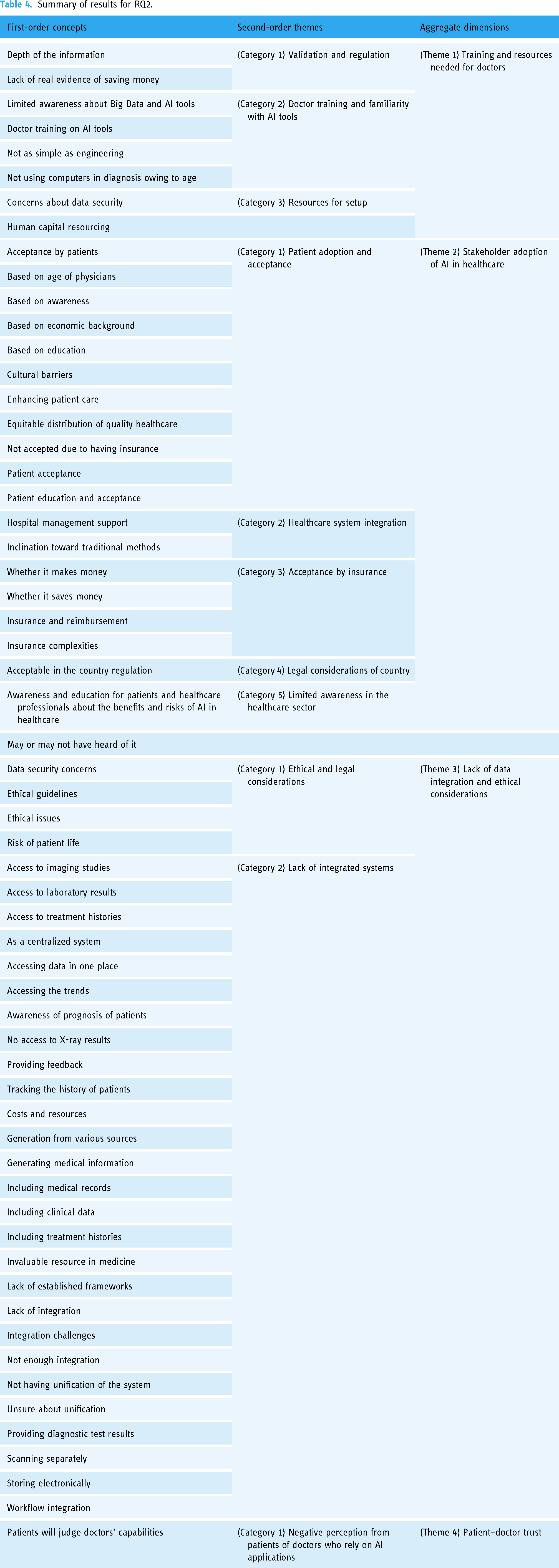
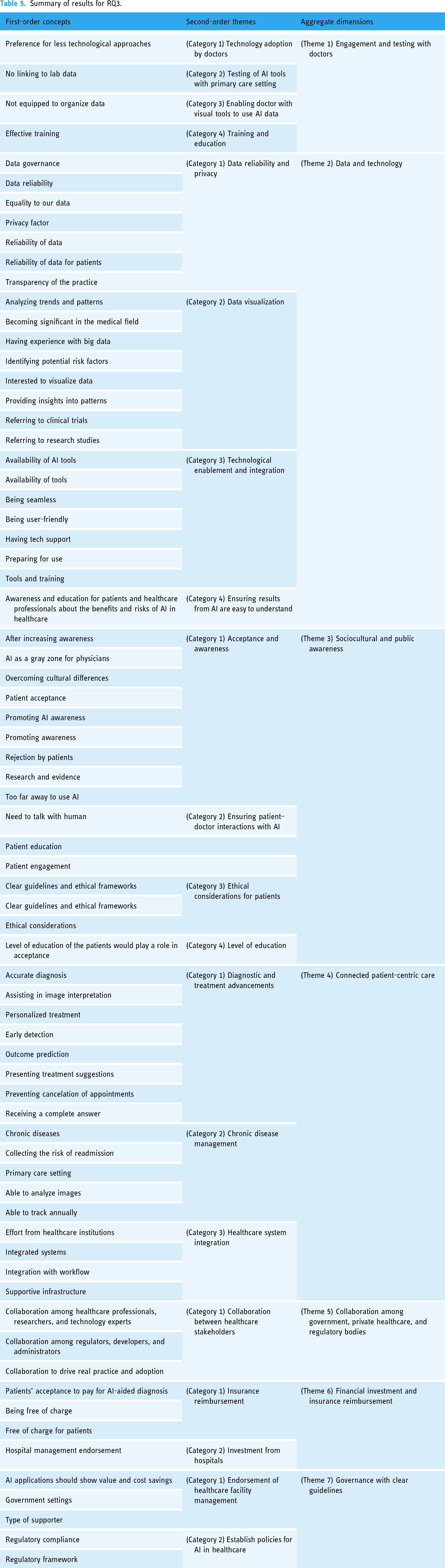
The three research questions are interlinked to reveal the benefits of AI applications in healthcare in the UAE Table 3, through factors that require acceleration and enablement of factors in Table 4 and factors that require diminishing in Table 5. The relationship between the results is illustrated in Figure 1.

Illustrates the interlinked relations among RQ1, RQ2, and RQ3.
Summary of themes for RQ1.

Summary of results for RQ2.
Summary of results for RQ3.
The results are presented in three subsections based on the insights and themes generated from the qualitative interviews.
Perceived advantages of AI in healthcare
This subsection discusses the results of RQ1 and the perceived advantages of AI in healthcare. The analysis provided two themes: improving patient cases through early diagnosis and prediction and clinical decision support through efficiency.
Theme 1: improving patient care through early diagnosis and prediction
The first theme has four categories Table 3: accurate diagnosis, better interpretation than human, early diagnosis, and predicting potential outcomes. Participant 10 (P10) stated, “analyzing outcomes and complications across a large patient population can help us identify areas for improvement in our practice and protocols,” and P4 said, “then finally, what treatments they have been taking in the past. So, these four areas of the data of every single patient are significant for that consultation that we go through.” These were categorized and coded for accurate diagnosis. Both statements reflect that physicians consider AI useful for obtaining the treatment history and improving ongoing practices, which is the valuable information that physicians expect to obtain from the use of AI. Validating AI recommendations before using them as a solution for clinical assessment is critical. Multiple discussions focused on the risk factors and the importance of identifying trends. For example, P4 stated, “having said this, we also like this historical data to give us the trend that the treatments that are being given now, what is the trend?” AI-based applications with high confidence levels of data accuracy can rapidly and efficiently assess and identify the early risk for patients with noncommunicable chronic diseases.
Predictive potential outcomes are an exciting category. P5 said, “By analyzing data from similar cases, we can predict potential outcomes and adjust treatment plans accordingly.” P8 said, “AI algorithms can sift through vast amounts of data to identify subtle trends and predict outcomes.” Thus, some physicians, despite their limited use of AI applications, acknowledged the potential of predictive AI applications in healthcare. Early predictive risk calculators based on simple algorithms can provide risk assessments, and professional organizations recommend that physicians or healthcare practitioners use them.
The first theme that emerged was “improving patient care by early diagnosis and prediction.” That is, AI-based applications can support clinical decisions by driving efficiency. Some participants discussed how AI can accelerate clinical research and improve trial designs. P10 said, “Big data can contribute to identifying suitable candidates for clinical trials and improving trial design by selecting participants more accurately.” Some participants discussed the importance of having AI-based applications under the control of physicians to complement their work. P8 stated, “Moreover, the ability to track patient progress over time helps in assessing the effectiveness of interventions and adjusting treatment strategies accordingly.” P2 said, “that it is under the control of human beings.” The idea of progressively tracking patients over time can be promising for the early identification of diseases if patient data are updated in the system, and the system automatically provides recommendations to caregivers or physicians.
Theme 2: clinical decision support through efficiency
The second theme that emerged in RQ1 was clinical decision support through efficiency, which had five categories. The first was accelerating clinical research, and as P10 mentioned, “Big data can contribute to identifying suitable candidates for clinical trials and improving trial design by selecting participants more accurately.” The participant understood the importance of clinical data but lacked the differentiation between big data and AI-based applications. P9 stated, “Access to comprehensive datasets facilitates research collaborations and the development of new treatment approaches, medications, and medical technologies.” Regarding the second category (assessing interventions under physician's control), P12 mentioned, “personalized interventions under my supervision.” P2 stated, “I believe that the computerized system is more accurate, with the remark that it is under the control of human beings.”
The third category (assistance in decision-making) arose from the participants’ comments, such as that of P11: “These technologies can serve as valuable tools in making informed decisions,” and P5: “I appreciate the potential benefits these technologies can bring to patient care, such as faster and more accurate image analysis, assistance in decision-making, and improved efficiency.” P12 said, “Moreover, by analyzing outcomes from different treatments, I can make informed choices through the recommendations of the AI tool that are likely to yield the best results for my patients, and accordingly, better outcomes.”
The fourth category (efficiency and workflow improvement) was identified based on the comments of P11: “AI algorithms can process vast amounts of data quickly,” and P2: “it will save my time of thinking or I as a human factor may forget something to be looked at,” and “Because it saves the doctor time. So what? We are paying the doctor a lot of money. Let them work.”
The last category (personalized treatment planning) was identified based on the statements from various participants, such as: “Data-driven insights can optimize clinical workflows, resource allocation, and patient scheduling, leading to more efficient patient care” (P10). P9 said, “Analyzing patient medical records and historical data can help identify patterns, predict disease progression, and tailor treatment plans to individual patient needs.” Personalized treatment planning is beneficial in treatment-related scheduling and behavioral changes; in particular, adherence to how medications or lifestyle changes advised by physicians can help to build behavioral change models for patients to improve outcomes.
Factors preventing physicians from using AI-based applications to transform patient care
Four themes in Table 4 emerged from discussing the derailing factors (RQ2) in using AI-based applications to transform patient care with physicians. Theme 1 is the training and resources required for doctors, Theme 2 is stakeholder adoption of AI in healthcare, Theme 3 is the lack of data integration and ethical considerations, and Theme 4 is patient–doctor trust. The following subsections explore the four themes in detail.
Theme 1: training and resources needed for doctors
The participants discussed the importance of information and its depth for AI algorithms. The depth should cover the resources that are used, guidelines for different diseases, the library on which the AI is based, peer-reviewed journals, textbooks, current patient cases, confirmed diagnosis versus websites, forums, and general web information. In addition, the level of accuracy of the algorithms for AI-based applications is critical to understand the consistency of the results. Examples of statements from the participants are as follows: “Validation and regulation: The need for rigorous validation of AI algorithms and regulatory approval creates a barrier to swift adoption,” said P12. There is a “lack of real evidence to prove that this tool will help you reduce, save, save money and time,” stated P3. These statements are part of the first category (validation and regulation). In the second category (doctor training and familiarity with AI tools), some of the participant quotes were: “Limited awareness: Both healthcare professionals and patients need more awareness and education about the benefits and risks of AI in healthcare,” (P12), and “And unfortunately, we are maybe a generation who were not brought up in the computers or with the computers. We are in the pre-computer age. So, we had to learn and adapt, which is still an ongoing struggle for us,” said P4. In the third category (resources to setup), P12 discussed “Resource allocation: In a smaller healthcare setting, our human resources are often stretched thin. When staff are pulled away for AI training, it can impact our capacity to provide patient care, even if it is temporary.” These comments reflect the critical challenges in physicians’ training, improving patient care, and investing the available resources in upgrading technologies, training, and human capital in healthcare facilities.
Theme 2: stakeholders’ adoption of AI in healthcare
The first category of this theme concerns patient adoption and acceptance of AI. The participants discussed whether the level of education, demographics, and socioeconomic standards play a role in patient acceptance of technology. For example, P1 said, “And then there are more educated people, you know, who are financially well-to-do. And, you know, they would be like, sure, like, um, but even still, as I would say, it is tough to give an analysis based on the fact that the population is so diverse. Everybody comes from different economic backgrounds and beliefs.” P10 stated, “Sensitivity to cultural differences in patient preferences and perceptions can influence the adoption of AI.” The second category concerns healthcare system integration. Many participants shared their experience of a lack of hospital management support to adopt new technologies. P7 said, “Having clear hospital management policies can all contribute to the successful integration of AI based on big data analytics in enhancing patient care,” and P5 said, “If hospital leadership is actively invested in adopting these technologies and provides the necessary resources, it would encourage their implementation.” In the third category (acceptance by insurance), the participants discussed the role of AI-based applications with respect to reducing costs or increasing profits, reducing complexity, and driving efficiency by reducing the number of tests required. P4 stated, “But the insurances are skeptical of the doctors, that doctors are making unusual and unnecessary diagnoses and tests,” and P3 said, “No, solutions like insurance like to save money.” The fourth category was not mentioned frequently; only P2 spoke about the importance of the legal considerations of a country: “That means it should be, first of all, recognized and acceptable in the country regulations.”
Regarding the fifth category (limited awareness of AI in the healthcare sector), P4 said, “And unfortunately, in the case of human beings like this recent COVID pandemic, the profession became very exposed with not knowing so many things about human beings and illnesses. So, there is so much to learn and get to know.” P6 stated, “Both healthcare professionals and patients need more awareness and education about the benefits and risks of AI in healthcare.” 4.2.3 Theme 3: Lack of data integration and ethical consideration Many participants mentioned the lack of data integration: P2 stated, “It lies in different systems. The integration is not there. And the decision-making of the system is not there yet.” P8 said, “Seamlessly integrating AI tools into existing clinical workflows can be complex and requires IT support.” P1 said, “So the blood tests and things like that were scanned separately” and “And I think another important thing is that we do not have system unification, right? So, it is not possible to know who did what test elsewhere, right? So that is also a big barrier. I feel the system is not unified, but I think they are trying to change that in UAE.” P3 said, “We have computerized medical records now. So, we have the whole patient history. We have the patient's lab records. And even now, we have the lab records from different hospitals, patients going to hospitals like Al-Noor.”4.2.4 Theme 4: Patient–doctor trustThree participants were concerned about how patients will assess doctors’ competencies as healthcare professionals. As P2 mentioned, “But the customer or the client here is a patient, he will just look to you and what you are doing for him.” P3 said, “I do not think they will accept that. Okay. They will. They will think. They will think. You are lacking confidence. Okay.” P4 said, “So, the individual patient and we are in private practice, so every single patient who visits us has identified the practitioner or us like me to be the in a way, from their point of view, to be the right person to make the diagnosis, give them the remedy, or at least guide them to the right way about the problems that they have.”
Physicians’ thoughts on what would increase the use of AI-based applications to transform patient care in the UAE
Eight themes in Table 5 emerged from the interviews with the participants.
Theme 1: engagement and testing
In the theme of engagement of physicians and testing, the participants discussed their personal preferences regarding adopting technologies in daily practice. P5 said: “In my daily practice as a radiologist with a preference for less technology-intensive approaches.” P12 and P6 were concerned about the lack of physician experience with AI-based applications. P12 stated, “While I see the importance of big data and AI applications in healthcare, their practical use in my clinical practice has been limited.” Three participants discussed the importance of the data being connected and visually easy to follow. P1 said, “So, there is no real way of actually blending the two and being able to visualize the data.” Regarding the final category (training physicians using these tools), P2 said, “Okay. And to be used now, the end user or the end person, who is the doctor, will be okay accepting the idea. He should just be trained and use it.” P10 said, “Offering training to healthcare professionals on using AI tools effectively is essential.”
Theme 2: data and technology
Four categories emerged for this theme. The first category (data reliability and privacy) was mentioned by 12 participants. P10 stated, “Assurance of data accuracy, security, and privacy is paramount for medical applications.” P11 said, “Ensuring the accuracy and security of patient data is essential for building trust in AI systems.” As part of the second category, the participants discussed the importance of visualization and ease of use in decision-making. P4 asked, “So, how would this individual fit in that group in terms of their risk factors as well as their treatment?” The third category relates to the technological support for AI tools. P1 said, “You should have good tech support, um, because I think that's one thing that I face over here, um, that we are not able to, we do not have a good, you know, the physicians are one, you know, in one corner and the technologists or whatever, like the, the computer people are in a different corner all together, right? And there is no cross-talk.” P11 said, “User-friendly AI tools integrated into electronic health record systems can encourage usage among healthcare providers.”
Theme 3: sociocultural and public awareness
Public awareness among physicians and patients is important for enabling the use and acceptance of AI-based applications. Four categories were identified, with acceptance and awareness being the first. P2 opined, “But the concept of what can help medicine is still like a gray zone, to my knowledge. Yeah. We will face it sooner or later, but I think soon. And we have to be prepared for that technologically and educationally. And awareness.” Regarding the second category (importance of patient–doctor interactions), P2 said, “A human being. He wants somebody to talk with him.” P3 said, “because the patients need some output from the interaction and value. Patients also need what they call the patients and the doctor to confirm its importance before they pay.” The third category emphasizes the ethical considerations that should be addressed regarding patient data and consent collection under clear government regulations. According to P10, “Addressing ethical concerns, like patient consent and data sharing, is necessary to ensure responsible AI integration.” Regarding the final category (level of education), P2 stated that the patients’ education level would play a role in their acceptance of AI-based applications: “This is an important point because the level of education of the patients would play an important role here.”
Theme 4: connected patient-centric care
The first category relates to the importance of integrating systems to improve diagnoses for patients with various diseases. P12 said, “Enabling more accurate diagnoses and personalized interventions.” In the second category, the participants discussed chronic disease management. P1 stated, “Okay. Like number one is, let us say, in a primary care setting, not a hospital. Right. Primary care setting. Somebody comes with type two diabetes. You want to check retinopathy. And there are retinal scanners. I think the AI is lovingly able to analyze these fundus images and give an interpretation.” P4 said, “the information is essential. So, what I tend to do, or I like doing, let me put it this way, that because these individuals are then coming, again and again, to see us for their prescriptions or lab tests and annual health checks.” The final category is integrating AI-based applications with healthcare systems, and according to P7, “Data analytics tools need to seamlessly integrate with clinical workflows to provide relevant insights without adding administrative burden.”
Theme 5: collaboration among government, private healthcare, and regulatory bodies
This theme focuses on enabling AI-based applications and technologies to extend to various stakeholders beyond users and beneficiaries. According to P10, “The collaborative efforts of healthcare providers, administrators, technology developers, and regulatory bodies will pave the way for a future where AI and big data contribute significantly to improving patient outcomes and the overall healthcare landscape.” P6 said, “Foster collaboration between healthcare professionals, researchers, and technology experts to develop and validate AI applications.”
Theme 6: financial investment and insurance reimbursement
The first of the two categories in this theme encompasses insurance acceptance to pay for a service. According to P11, “If insurers recognize and reimburse AI-supported diagnostic and treatment practices, it can further incentivize adoption.” P2 said, “He would accept it, but he will assume, or he will expect it to be free of charge.” P4 said, “It depends on what the problem is that the patient is being treated for because there are so many things insurance does not cover, and patients still accept. And there are many more things that the doctors advise the patient on, and they still do not get. Okay. So, it is a spur meet at the end of the day. It is need-based and also cost-based. Yes.” This area requires further research because whether patients or insurance companies should pay for AI services was not clear from the discussion among the participants.
The second category relates to the importance of hospital management investments in the utilization of AI-based applications. P2 stated, “So, this needs a lot of effort, investment, and a clear objective to make it happen,” and P7 said, “Hospital administration's support in providing necessary resources and infrastructure is crucial.”
Theme 7: governance with clear guidelines
The final theme consists of two categories. The first relates to the importance of endorsing healthcare facility management in investing and implementing governance policies for AI-based applications. According to P10, “Hospital administration's commitment to investing in AI infrastructure and supporting its implementation is crucial.” P2 said, “Each organization or health authority will look to that. How much benefit I will save.”
The second category is the importance of government policies and regulations for AI usage in healthcare. P12 stated, “Clear guidelines and regulations for utilizing AI in clinical practice would instill confidence in its safety and efficacy.” P10 said, “Adhering to medical regulations and standards ensures the safe and effective use of AI.”
Discussion
Perceived advantages of AI in healthcare from a physician perspective
According to physicians in the UAE, implementing AI in healthcare has strong potential, which is a finding similar to that reported in the associated literature from other countries. Interestingly, although AI-based applications can aid in diagnosing various diseases, such as cancer 58 and diabetes,29,30 there was no explicit mention in the databases searched of assessing whether the AI intervention should be under the control of physicians. Including physicians as the final decision-makers is crucial because they are ultimately accountable for diagnosing and treating patients. This insight is essential for physicians to understand their perception of AI-based applications. Physicians should welcome AI-based applications in their practice and ensure that they make the final decision regarding treatment and diagnoses. This aligns with the regulatory framework to ensure accountability regarding patient care and outcomes from a legal perspective.
Multiple studies have discussed the predictive use of AI applications,58–60 and several participants mentioned this. As the participants did not use AI-based applications in their daily practice, this finding confirms that they see immense potential in using AI technology in healthcare in the UAE. Further research and confirmation of the predictive value of AI-based applications in healthcare should be conducted.
Derailing factors that, if removed, could help physicians to use AI-based applications to transform patient care in the UAE
The findings from the analysis of RQ2 align with the current literature and are summarized in Table 4 (Summary of results for RQ2). Some studies reported interesting insights regarding medical students’ and physicians’ understanding of AI 8 in the healthcare field; they also asked for training courses to elevate their AI capabilities and understanding. Training is important for younger physicians as well as senior physicians who have been practicing for more than 10 years (e.g., the participants of this study) because according to previous studies, familiarity with AI tools among them was low. Regarding decision liability, the participants confirmed that the physician rather than AI should have the final accountability and judgment; however, a literature review based on a survey of 82 physicians and 211 medical students in the GCC countries reported that 36.7% of the respondents believed that both the physicians and manufacturers of AI-based applications should be liable for any legal consequences, which is consistent with the views of the participants of this study.
The second theme (stakeholder adoption of AI in healthcare) identified vital stakeholders who should be involved in successfully implementing AI-based applications in healthcare. Patient acceptance, which is based on physicians’ insights, is essential. Healthcare administrators help with technology usage; insurance companies pay for the service and care; government authorities approve the technology for medical usage; and physicians as technology users need to be trained, confident, and accountable for its use and outcome.
Concerns were raised by the physicians in terms of the fifth theme (patient–doctor trust). The participants believed that if they use AI-based applications in front of their patients, the patients may view them as less competent, which may affect their long-term relationship. This is an essential factor because many key performance indicators for physicians in the private sector pertain to retaining patients and offering the best care, and physicians in the government sector are evaluated by patients on every visit (54).
Enabling factors that could increase the use of AI-based applications to transform patient care in the UAE
The critical factors for successfully implementing AI-based applications are twofold: testing them with physicians and their early application to the project. Moreover, training in AI-based applications and their use must be ensured. Data visualization is essential to enhance physicians’ experience and interpretation of AI tools. Raising public awareness about AI-based applications, including their benefits and limitations, can increase their adoption and acceptance by patients. AI-based applications should be used to support physicians and maintain their control to help to build trust and ensure clear legal accountability for patients. Who should pay for AI services should be determined; from the physicians’ perspective, insurance can pay if the value is clear, yielding cost savings in the medium and long term. However, the physicians were skeptical about whether patients would be willing to pay if the services were out of pocket. Finally, hospital administrators should invest in and support facilities with AI-based applications because implementing these technologies in hospitals is beyond the scope of physicians.
Conclusions
Physicians in the UAE have limited experience in using AI-based applications to improve patient outcomes. Despite favorable AI policies in the UAE, awareness among physicians is lacking and must be improved. The lack of data system integration in the UAE is a pivotal barrier to maximizing the benefits of AI in improving patient outcomes. AI awareness is on the rise in the UAE and physicians expect this to aid their practices in the future. Government, hospital management, and insurance are central to integrating AI-based applications into healthcare facilities. This study confirmed that authorities should mandate patient–doctor interactions while using AI applications to enable the use of AI-based applications in the UAE. Second, public awareness of the benefits and limitations of AI applications in healthcare should be raised. Third, the integration of nationwide systems between the private and government sectors should be ensured to improve patient outcomes. Finally, changing the patient perception of physicians using AI-based applications is vital to drive patients’ trust and doctors’ confidence, and unifying healthcare systems ‘electronic medical records across the UAE is necessary to acquire patient history and data and build a seamless experience with AI-based applications in the UAE.
Research implications
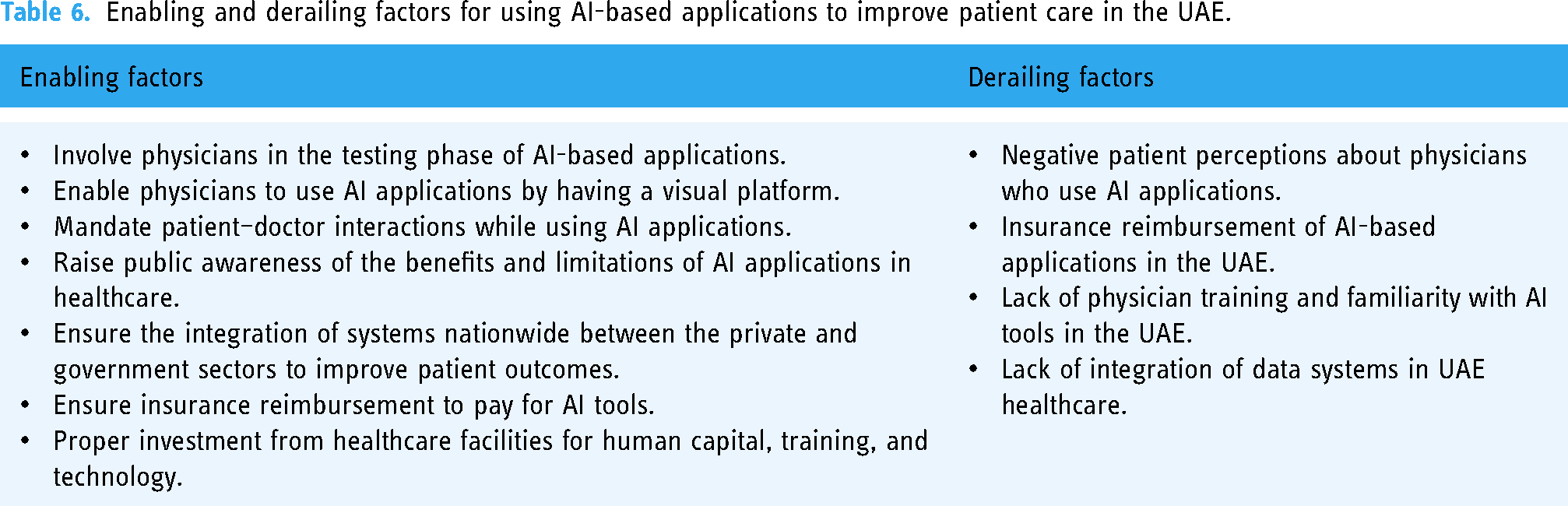
The implications of this research are specific to the UAE and build upon previous research on enabling AI-based applications in UAE healthcare. The enabling and derailing factors listed in Table 6 can be used by government officials and senior healthcare management to facilitate the implementation of AI-based applications in healthcare facilities in the UAE.
Enabling and derailing factors for using AI-based applications to improve patient care in the UAE.
This research identified factors that can be explored further for the adoption of AI-based applications in the UAE, such as patients’ willingness to pay for AI services, patient trust in the results provided by AI, and measuring the correlation between patient trust and disease (e.g., differences in trust between cancer vs. flu patients for AI-based applications). Research must be conducted on formulating the best protocols to improve symptoms and control the disease for the broader nature of the diseases.
Research limitations
The findings of this study are based only on the physicians’ subjective understanding of AI, without considering the actual clinical use of AI models. The enabling and derailing factors were identified based on physicians’ perspectives. The views of other stakeholders in the healthcare system, such as government regulators, insurance companies, patients, and the healthcare industry, must be considered for a comprehensive understanding of the enabling and derailing factors in the UAE (Table 7).
Suggested research agenda for identifying means of increasing the use of AI-based applications in the UAE to improve patient care.

The questionnaire was developed based on the literature review to guide the participants in an exploratory manner with open-ended questions. The questionnaire was tested and refined twice to ensure a proper understanding of the study objective; however, two revisions may not be sufficient to capture diverse perspectives.
The study included 12 practicing physicians in Dubai and Abu Dhabi from both the public and private sectors; the other emirates from the UAE were not included in the study owing to the absence of public information on the use of AI-based applications in healthcare. Consequently, this study provides insights and views of only a subset of physicians, which may not generalize to all physicians across the UAE.
Footnotes
Acknowledgments
We thank SAGE Author Services (languageservices.sagepub.com) for the English language editing.
Consent to participate
Written consent was obtained from all participants to participate in this study.
Consent for publication
Written consent was obtained from all participants to publish the analyzed results of the research.
Contributorship
MB: idea, methodology, and review and editing. TM: conceptualization, formal analysis, interviews, investigation, software analysis, and writing original draft and editing.
Data availability
The transcribed interviews and NVIVO analysis are available with the primary author.
Declaration of conflicting interests
The authors declared no potential conflicts of interest with respect to the research, authorship, and/or publication of this article.
Ethical approval
The Ethics Committee of the ESCP Business School approved the application of the study on March 24, 2023 (application number: 2022028). All participants signed a consent form. Eight participants signed a written consent form, four digitally signed the consent form, and all agreed to participate in the study voluntarily.
Funding
The authors received no financial support for the research, authorship, and/or publication of this article.
Guarantor
MB.
