



Abstract
Objective
In recent years, social media platforms, such as TikTok and RedBook, have emerged as important channels through which users access and share medical information. Additionally, an increasing number of healthcare professionals have created social media accounts through which to disseminate medical knowledge. This paper explores why users obtain their medical information from social media and how the signals transmitted by social platforms affect use behaviours.
Methods
We combined the elaboration likelihood model and signal theories to construct a comprehensive model for this study. We used simple random sampling to investigate users’ behaviours related to social media usage. A total of 351 valid questionnaires were completed by people in Mainland China. The participants were enthusiastic about social media platforms and had searched for health-related information on social media in the past three months. We analysed the data using partial least squares structural equation modelling to investigate the influence of two pathways and two signals (objective and subjective judgement pathways and positive and negative signals) on social media use behaviours.
Results
When seeking medical information on social media, users tend to rely on subjective judgment rather than objective judgment, although both are influential. Furthermore, in the current era, in which marketing methods involving big data algorithms and artificial intelligence prevail, negative signals, such as information overload, have a more pronounced impact than positive signals.
Conclusions
This study demonstrates that the subjective judgment path has a greater impact on users than the objective judgment path. Platforms are encouraged to focus more on users’ emotional needs. The paper also discusses the negative impact of information overload on users, sounding an alarm for enterprises to control their use of homogeneous information resulting from the excessive use of big data algorithms.
Keywords
Introduction
People form social media use habits that are no longer limited to sharing and delivering entertainment, and they now frequently search social media for professional information on health and wellness. 1 Since the traditional boundaries of medical treatment have been disrupted by science and technology, many qualified medical professionals have started to use platforms, such as TikTok and Doctor Dingxiang, to transmit popular health information. Moreover, there has been explosive growth in short medical and health-related videos, and they surpass other content in terms of views, shares, and stay rates. In early March 2023, TikTok released the TikTok Health Science Data Report, which revealed that medical and health content had become one of the top concerns for TikTok users. In China, the platform witnessed the addition of 21,000 new health-related items daily, and approximately 200 million users watched health science videos on TikTok each day. Moreover, according to a report issued by China.com in March 2024, a group of health-related topics on the RedBook platform based in China received 210 million views and 17.6 thousand notes. Hence, it is clear that social media platforms are extensively used to exchange health-related information.2,3 The medical field's involvement with social media has garnered increasing attention.4–6 For instance, platforms such as Twitter have been used to track public mental and physical health issues related to electronic cigarettes. 7 Social media platforms foster interactive virtual communities that allow patients, doctors, and individuals, both within and beyond their normal social circles, to connect synchronously, unrestricted by time or distance. 8 Supported by big data algorithms and artificial intelligence, social media platforms—particularly short-video platforms—are able to accurately capture users’ preferences. 9 The sharing of information on social media also fosters a sense of collective identity among users, providing them with emotional value and thereby supporting their use behaviours. Furthermore, social media platforms further promote efficiency and matching, 10 thereby increasing user visits and retention rates on these platforms. 11
However, the excessive use of big data algorithms and artificial intelligence may negatively affect users by generating an information explosion. As trust increases, users transition from being mere recipients of information to becoming transmitters and disseminators of content, resulting in a proliferation of peer-to-peer communication and a network-like pattern of high-speed, large-scale, uncontrolled information dissemination. The issue of information overload is becoming an increasing concern, since it affects people's psychological states and behavioural intentions. 12 Highly relevant recommendations and frequent updates inundate users with vast amounts of information daily, overwhelming them and leading to declining intentions to continue using disseminating platforms. 12 Furthermore, big data algorithms cannot confirm the authenticity of the information they distribute. Thus, the rapid and widespread dissemination of information on social media leads to a significant amount of ‘noise’ information, users’ subsequent transmission of which causes additional information distortion. 13 These factors greatly affect the quality of the information provided, not only accelerating the spread of misinformation but also burdening users’ brains and impairing their ability to weigh and understand important information. The negative effects of information overload and distorted information disadvantage users when it comes to information acquisition and judgement, causing feelings of boredom and anxiety. Users become fatigued by their efforts to evaluate issues objectively and rationally, which weakens their evaluations of the truthfulness of information and prompts them to rely on their subjective perceptions and judgements.
User behaviour in relation to social media has already attracted academic attention. Existing research has tended to focus on three aspects when explaining the impact of relevant factors on user behaviour: individual factors, information factors and social relationship factors. Through further exploration, scholars have identified information dissemination as a key function of social media, while other factors, such as information quality, source credibility, 14 information delivery format and content type, 15 have also been shown to have a significant impact on use behaviour. Among the various information-related factors, information quality and information ‘fit-to-task’ are widely recognised as the most important factors influencing use behaviour. For example, in tourism information-sharing scenarios, tourists’ perceptions of social media information quality positively influence the importance they place on the content shared. 16 Similarly, in terms of accommodation choice, information matching, together with other dimensions of information quality, will predict users’ information adoption behaviour. 17 In addition, social media not only provides users with a vast amount of information but also enables them to derive social value from community interactions. Many studies have demonstrated that social relationship factors influence user behaviour. Variables such as group affiliation, 1 trust perception 18 and interpersonal dependence 19 have frequently been examined by scholars in this field. As more and more users form connections on social media, and within the context of explosive growth in the quantity of information offered, some researchers have noted that information overload can precipitate switching behaviours in users, leading to their loss as social media users. 20
The studies mentioned have provided a solid theoretical foundation for understanding users’ behaviour regarding the acquisition of healthcare information. The ongoing emergence of new situations has prompted the updating of relevant research. However, few have examined shifts in user behaviour paths in relation to these three factors and provided explanations for such shifts. In the current development of big data algorithms and artificial intelligence, the sole focus on objective judgment paths, such as information fit-to-task and information quality, is insufficient to fully explain social media use behaviour. Moreover, with the thriving growth in internet marketing techniques, the factors that influence users’ social media usage have undergone significant changes. By examining social media platforms, as represented by TikTok and RedBook, we observed that users’ use behaviours are also significantly affected by emotional factors. While existing research has, to some extent, addressed both subjective and objective information judgments, few scholars have explored the combined effect of the two. In addition, in the context of big data algorithms, it remains unknown whether positive and negative signals impact users’ use behaviour through subjective or objective pathways. Based on these observations, we propose the following research questions:
RQ1: How do internal and external factors motivate users to utilise social media to search for medical and health information?
RQ2: How does the medical information dissemination system, based on the social media context, change the way users process information?
The remainder of this paper is organised as follows. First, based on the elaboration likelihood model (ELM) and signal theory, the framework for the study is proposed, and the corresponding research hypotheses are expounded. Then, a review of the relevant literature is presented and the research methodology described. The Results section reports that 351 valid data sets were collected through online questionnaires. The research model and hypotheses were evaluated and tested using partial least squares structural equation modelling (PLS-SEM). Finally, the corresponding research conclusions, theoretical implications and practical implications are discussed, and limitations and possible future research directions are presented.
Theoretical framework and hypothesis development
Theoretical basis
To solve the previously mentioned problems, we combined ELM and signal theories to explain users’ social media use behaviours. The ELM was developed by Petty and Cacioppo 21 in 1986 and has been widely employed in consumer information processing research. The ELM posits that individuals follow two distinct routes when they receive and process information: a central route and a peripheral route. 21 The former enables individuals to actively evaluate information, persuading them to form or change attitudes towards high participation; the latter route has the opposite effect on attitude change. 22 The ELM's important role in information transfer has been richly demonstrated in existing studies.23–25 In this paper, we used the ELM to explain people's use behaviours when seeking medical information on social media. When obtaining information, users rely on both subjective and objective judgement pathways for analysis. However, when information is extensively homogenised and delivered in large quantities, users are likely to experience information overload and become bored, thus relying more on the subjective judgement pathway, according to which they rely on affective and non-content-based cues when making decisions. 26 At this point, the likelihood of fine processing is low, and the peripheral route of persuasion becomes effective. 27 Conversely, via the objective judgement pathway, individuals engage in more active and detailed information processing when making decisions. Due to their high motivation and ability, these individuals tend to make rational choices, making persuasion via the central route especially effective. 27 Accordingly, we considered that the objective judgement pathway reflects the way in which user behaviours change due to the objective attributes of the information they process. In this paper, we further divide the objective judgement pathway attributes into fit-to-task information, information quality, and information overload while defining the fitness of information to tasks as the relevance of the medical information obtained by users on social media to their specific needs. Subjective judgement mainly reflects the process by which users rely on subjective perceptions to form judgements, which then affect their use behaviours. We divide the subjective judgement pathway attributes into three categories: trust perception, collective identity, and usage habits. Trust perception and collective identity are derived from groups of people and are thus classified as social-level factors. Usage habits are derived from users’ personal preferences and are thus considered individual-level factors.
The signal transmission model originally emerged in economics, where signals are sent by the signal sender to the signal receiver, and the feedback received is influenced by environmental factors. It was first proposed by Spence 28 in 1973. Signal transmission aims to address the issue of information asymmetry and convey positive information. 29 However, not all signals are positive and favourable. Noisy signals can cause distress to the signal receivers, undermining the credibility of the signal creator and generating uncertainty about the quality of the signal in the mind of the receiver. 30 The nature of external signals affects a user's judgment process. Signals can generally be divided into positive and negative signals. Positive signals will involve a platform's use of big data recommendation algorithms, and they will suggest highly relevant and interesting content to users, thus positively affecting their perceptions of trust. Negative signals relate to the side effects of information overload, also brought about by a platform's big data algorithms, and can lead to anxiety and negative emotions in the user. Negative signals act as a ‘pushing’ force, inhibiting users from using their objective judgment paths, while positive signals act as a ‘pulling’ force, prompting users to utilise their subjective judgment paths. Under the combined effect of these two forces, when using social media, users’ behavioural judgment paths gradually shift away from the objective and towards the subjective. In this study, we consider information overload and trust perception to be crucial signals that influence users’ judgments and, consequently, their behaviours in using social media (as shown in Figure 1). The positive signals transmitted by a platform enable it to gain perceived trust. This is a positive incentive experienced by the user and is based on the information transmitted by the platform. However, information overload results in negative information being transmitted by the platform, and users may develop negative emotions towards the platform due to noise interference. By capturing all the information transmitted by the platform, the user perceives two-way signals, experiencing both the pushing force of the negative signals and the pulling force of the positive signals.
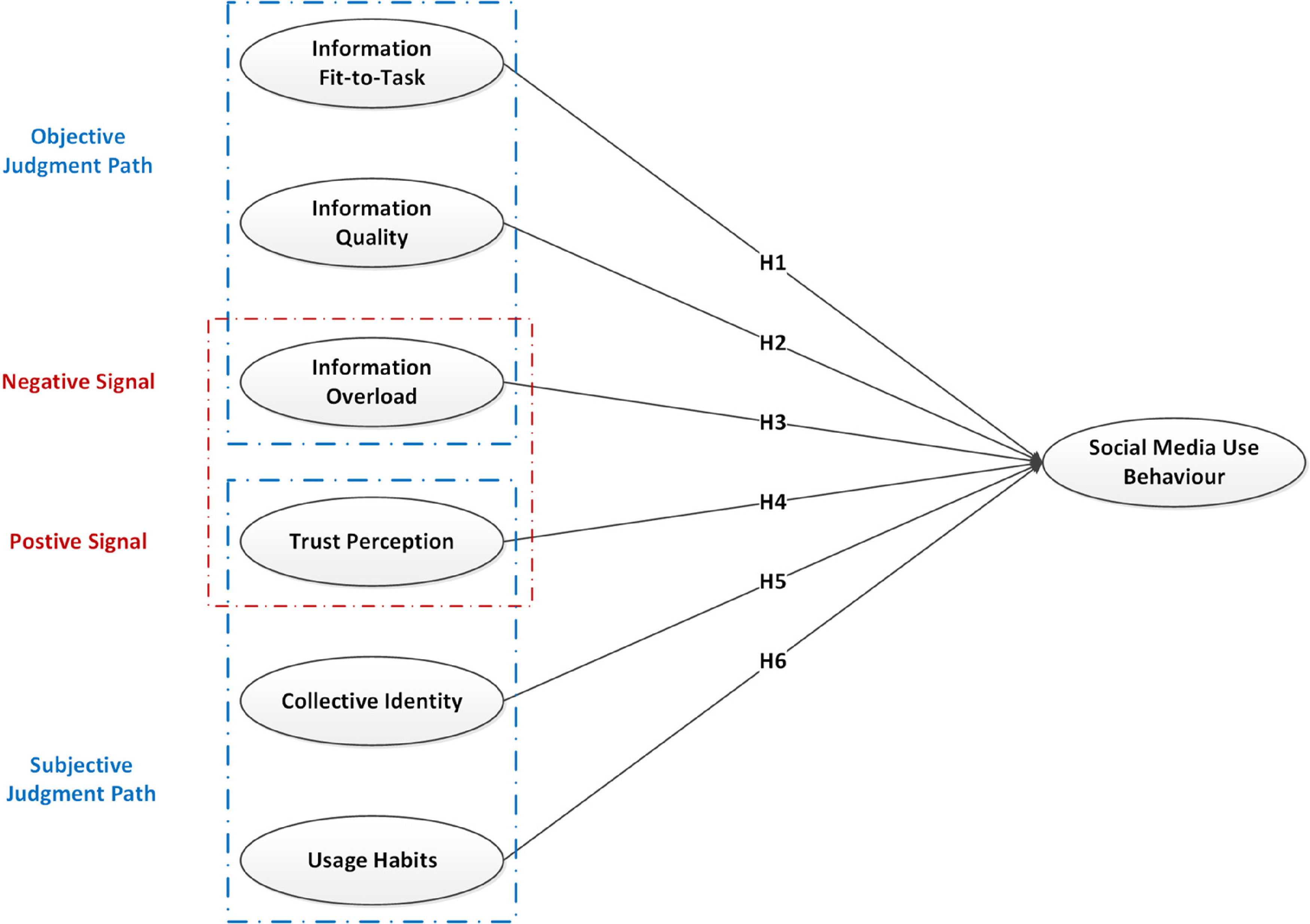
The research model.
Based on ELM and signal theory, this study explores the influences of the objective judgment path and the subjective judgment path on users’ social media use behaviour. To address the gap, the study comprehensively considers the impact of variables such as information fit-to-task, information quality, information overload, trust perception, collective identity and usage habit on users’ healthcare information acquisition behaviours. These factors are classified as either objective or subjective judgment paths. In addition, the paper proposes a trend by which user behaviour shifts away from the objective towards the subjective judgment path, highlighting the roles of information overload and trust perception as a negative and a positive signal, respectively, in driving this path shift. By taking a comprehensive perspective and considering new contexts, this paper explains users’ social media use behaviour more fully.
Hypothesis development
Scholars generally consider information fit-to-task to be the extent to which information matches a specific task. 31 Existing research indicates that information fit-to-task is a crucial factor influencing user information adoption and social media use behaviour. For instance, a study by Nguyen et al. suggests that a higher level of information fit-to-task on social media helped older adults to adopt the information, which in turn increased their awareness of risks such as COVID-19 and enhanced crisis-prevention behaviours. 32 Information fit-to-task has also been shown to have a significantly positive impact on users’ information acquisition behaviour. 33 As users develop the habit of using social media, the phenomenon of searching for medical information on social media platforms has become increasingly widespread. Advancements in network technologies, such as artificial intelligence, enable social media to deliver targeted information to users based on their search and browsing behaviours, as well as on the keywords they provide, thus increasing the degree to which the information matches their need. This saves users time and allows them to find the medical information they require most efficiently. Based on this, the present study posits the following hypothesis:
H1: Information fit-to-task is positively correlated with users’ social media use behaviour.
Information quality refers to the subjective judgments people make about the worth and usefulness of the information in a specific context, based on their expectations of the information or other available information. 34 In many studies, information quality has been recognised as an important factor affecting user adoption behaviour,35,36 while the multidimensional perceptions of information quality by users have been analysed and summarised in detail.37,38 Studies from different fields have further proved that information quality has a positive impact on users’ behaviour when using a platform: in scenarios with hospital information systems, the information quality as perceived by doctors will positively affect their willingness to continue using the platform. 39 In the social recommendations of products on a platform, the quality of the information, as perceived by consumers, will significantly affect their satisfaction, thereby positively affecting their willingness to use the platform. 40 This study contends that, with the ongoing advances in social media's push functions, the information received by users increasingly aligns better with their needs. Consequently, users perceive higher information quality, which enhances their perception of the benefits of the relevant information and their intention to adopt it. As a result, users are increasingly inclined to utilise social media to search for health information. Building upon previous research, this paper proposes the following hypothesis:
H2: Information quality is positively correlated with users’ social media use behaviour.
With the increasing popularity of social media, it is easy for people to express their opinions on a platform, and this contributes to the large quantity of information that is accumulating on social media. 41 Users tend to receive too much information, which results in a problem of information overload. Although the push algorithms of social media have become more sophisticated and increasingly cater to personalised user needs, the homogenisation of the information users receive can trap them within an information bubble, making it challenging to access the differentiated information they require. 42 As a result, users are required to invest more and more effort in searching for personally relevant information. Nevertheless, individuals have a limited capacity to process and accept information within any given time frame.43,44 Existing studies have shown that boredom and psychological anxiety occur when individuals receive too much information, which goes beyond their ability to understand and accept.45,46 Information overload can suppress users’ willingness to use social media due to the negative emotions they experience. 12 Although personalisation has been shown to reduce information overload, 47 the homogeneous nature of social media push information requires users to invest more time and effort or to engage in deeper interactions or in paid services to access personalised information. To some extent, this affects users’ intentions to continue using the platform for search purposes and leads to a result in which most users encounter redundant and repetitive information. Therefore, this study posits the following hypothesis:
H3: Information overload is negatively correlated with users’ social media use behaviour.
Trust perception is a key factor in determining individual engagement. 48 In this context, trust perception refers to users’ subjective perceptions of the value of online health information. 49 It has long been suggested that users’ perceived trust in social media should be given greater attention. Lim and Kim 50 found that higher levels of trust in information on social media platforms leads to a greater willingness among users to self-disclose, thereby promoting users’ information seeking and sharing behaviours on social media. 51 Based on an analysis of teenagers’ social media use behaviour, 52 concluded that teenagers tend to interact online with individuals they trust. All these descriptions indicate that trust in information significantly influences users’ intention to search for information and has a significant impact on users’ social media-sharing behaviour. 53 Therefore, trust management is an important factor in improving user retention on social media, 54 where higher perceived trust will enhance users’ continued use behaviour. Therefore, we propose the fourth hypothesis:
H4: Trust perception is positively correlated with users’ social media use behaviour.
Collective identity involves the interaction and sharing behaviour of a group, which creates an emotional connection between group members. 55 Some scholars have suggested that, in a cluster context, collective identity stimulates participation in collective behaviours 56 and that people tend to behave like the group with which they identify. 57 The sentiments around group identity also apply to digital platforms; for example, information about sexism in social media will inspire a feminist group identity, which will increase the group's collective behaviour. 58 Existing research generally indicates that people build consensus about collective identities on social media with others who have similar backgrounds and experience, and that this contributes to collective action. 59 Although most of these studies are based on political and corporate governance scenarios, we believe that similar characteristics pertain in the exchange of medical and health information. When users identify with medical information presented on social media, it increases their participation in social media. Based on the above discussion, this paper hypothesises the following:
H5: Collective identity is positively correlated with users’ social media use behaviour.
In the context of social media, usage habits are considered to be automatic, involving the subconscious use or consumption of social media, often accompanied by repeated visits, resulting in interactive behaviours and the deriving of satisfaction from such behaviours. 60 Health actions that occur as a result of habits are performed in a specific sequence without the need for the objective regulation of consciousness. 61 Moreover, usage habits involving social media can promote stronger social media use dependency through sensitisation. 62 Nowadays, with the widespread application of big data algorithms and artificial intelligence, social media platforms can accurately capture user preferences, 63 delivering content of interest and enhancing users’ dependency and intention to use. Usage habits not only directly impact users’ behaviour, but indirectly, they also influence their behavioural intention. 64 Overall, the influence of usage habits on use behaviour is significant. Building on existing research, we propose the following hypothesis:
H6: Usage habits are positively correlated with users’ social media use behaviour.
Research methods
Measurements
The purpose of this study was to analyse the impact of changes in the signal transmission mechanism in a macro-level context. We found that the speed and breadth of people's migration from professional medical forums to social media platforms increased. Thus, we conducted an exploratory study to provide guidance for future research on information governance and information access mechanisms. The design of the questionnaire utilised in this paper was based on mature scales published by other scholars and was then adjusted according to the research questions and the characteristics of the research scenario of this paper. In the questionnaire, apart from the basic instructions and the demographic information for the interviewees, all questions were measured using a 7-point Likert-type scale. The numbers 1–7 indicate the degree of agreement, where 1 indicates complete disagreement and 7 indicates full agreement. The questionnaire consisted of three parts.
The first part was a basic description of the survey, including the purpose of the research and an ethics statement (ethics approval reference number: CC-2023-1-0002-0485-SOM-ZJUT). The ethics statement consisted of the following four parts: (1) information would be recorded anonymously, (2) data privacy would be protected, (3) the research purpose would be disclosed with transparency to respondents in advance, and (4) gratitude would be expressed to the participants for their involvement in the study. The second part of the questionnaire covered the measurement of the variables used in the model, include information fit-to-task, information quality, information overload, trust perception, collective identity and usage habit. There were 23 questions in this section to explore respondents’ social media use of searching for health-related information. The third part collected the respondents’ basic demographic information, including gender, age, and education, and there were three questions in this section.
After completing the initial questionnaire design, a small pilot test was conducted. A total of 50 questionnaires were completed to check whether the expression of the options in the questionnaire was easy to understand and whether reliability and validity met the required standards. At this point, following feedback received from the respondents, some of the questionnaire statements were modified. Finally, a formal questionnaire was created. See Appendix for details.
Data collection
For this study, participants will read their right and they can decline to participate or withdraw their participation at any stage of the online survey. The informed consent was obtained from all the subjects prior to study initiation. The data for this study were collected using the online sampling service to deliver the online questionnaire, which resulted in a random collection of 583 completed questionnaires from Mainland China. There were many social media users, and they frequently used platforms such as TikTok and RedBook. Although social media platforms are popular in other countries and regions, they are mainly used to communicate about non-health-related products and were therefore not relevant to our study. Before the survey began, to help respondents immerse themselves in the experience of using social media while answering the questions, we asked them to recall and imagine their daily use behaviours and inner thoughts while using platforms such as TikTok and RedBook.
To ensure the reliability of the findings, the subjects had to meet the following criteria: First, they had to be at least 18 years old and mature enough to sign the ethics statement. Second, they had to have at least one social media account and be able to use smart devices skilfully to browse social media and retrieve health-related information. We excluded respondents who had not searched for health-related information on social media in the past 3 months. Moreover, we recorded the participants’ response times and removed questionnaires with response durations of less than 3 min or longer than 15 min. Additionally, we eliminated questionnaires with highly concentrated or patterned responses. We also eliminated false answers to polygraph questions and questionnaires from the same IP address. After this screening process, 351 valid questionnaires were obtained, yielding an effective response rate of 60.21%.
Based on ELM and signal theory, this study constructed a model of factors influencing changes in users’ social media use behaviours. The sample data for the 351 participants were analysed using PLS-SEM to test the model's hypotheses. For this study, SmartPLS 3.3.9 was used to test the reliability and validity of the model, and a t-value significance test was performed.
Results
Sample characteristics
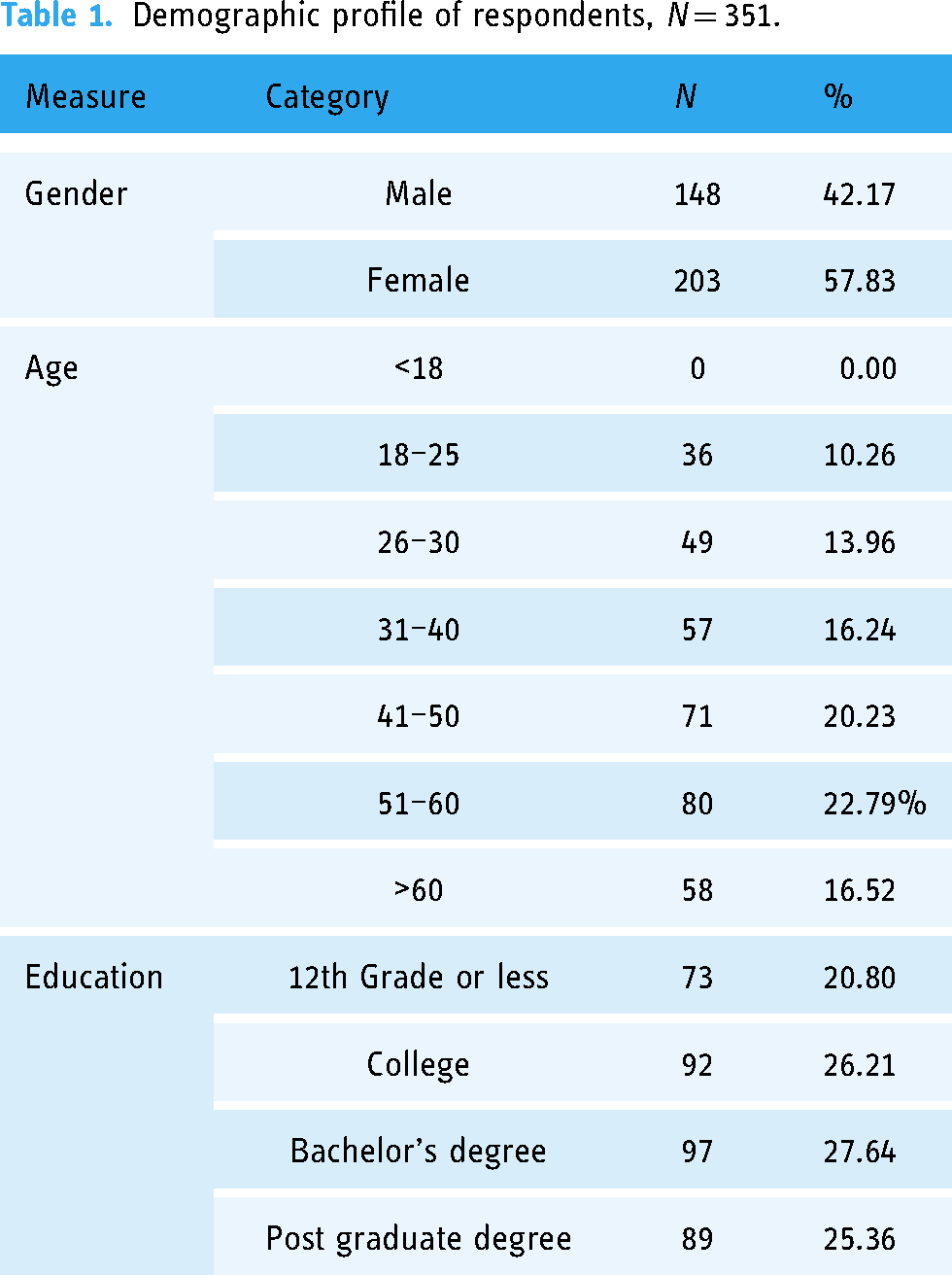
We conducted a brief analysis of the demographic characteristics of the respondents. Among the 351 valid questionnaires collected, in relation to gender, female respondents accounted for 57.83%, while male respondents accounted for 42.17%. Regarding the age dimension, respondents were relatively balanced across different age groups, with the 40–60-year age range having the highest representation at 43.02%. The distribution of the basic information for the questionnaire sample was in line with the actual user structure and was therefore suitable for further statistical analysis. The specific demographic data of the respondents are presented in Table 1.
Demographic profile of respondents, N = 351.
Measurement model
In this paper, SmartPLS 3.3.9 was used to test the reliability and validity of the measurement model. The calculation results are shown in Tables 2–4. In this study, Cronbach's alpha (CA) and composite reliability (CR) were used to test the reliability of the scale and to measure its internal consistency. From Table 2, it can be seen that the CA value of each variable was greater than 0.812, and the CR values were greater than 0.890, indicating that the internal consistency of the developed scale was high. 65 To evaluate the effectiveness of the model, the study tested the convergence effectiveness and discriminant effectiveness of the research model. Convergence effectiveness is usually assessed by average variance extracted (AVE). It can be seen from Table 2 that the AVE values for all variables were greater than 0.729 and therefore greater than the minimum requirement of 0.5, indicating that the scale had good convergence validity. 65 For discriminant validity, cross-loading was used with the measurements. If the standard external load of each measurement is greater than the cross-load of the other measurements, the measurement model has good discriminant validity. As shown in Table 3, the standard external load for each measurement was greater than the cross-load of all other measurements; therefore, the measurement model had good discriminant validity. At the same time, the Heterotrait-Monotrait ratio (HTMT) is shown in Table 4, and the ratio of the mean as related to the index between different facets is small compared to the mean associated with the same inter-facet indicators, and it is below the maximum threshold of 0.85, thus reflecting good discriminatory validity for the scale. 66 The variance inflation factor (VIF) of this study was less than 3.3, and when combined with the analysis results shown in Tables 2–4, it is evident that both the reliability and the validity of the model constructed for this study were good.
Descriptive statistics for the constructs.
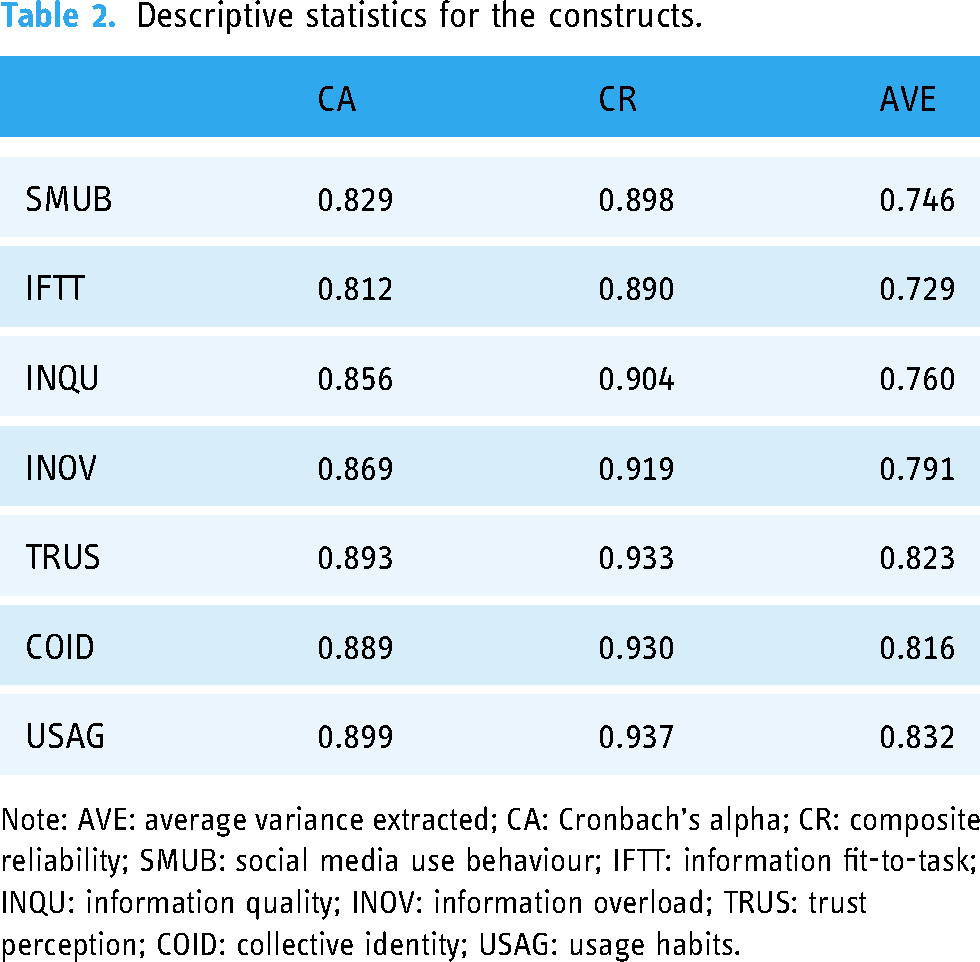
Note: AVE: average variance extracted; CA: Cronbach's alpha; CR: composite reliability; SMUB: social media use behaviour; IFTT: information fit-to-task; INQU: information quality; INOV: information overload; TRUS: trust perception; COID: collective identity; USAG: usage habits.
Factor loadings, cross loadings and VIFs.

Note: Bold number indicate outer loading on the assigned constructs. SMUB: social media use behaviour; IFTT: information fit-to-task; INQU: information quality; INOV: information overload; TRUS: trust perception; COID: collective identity; USAG: usage habits; VIF: variance inflation factor.
Heterotrait-Monotrait ratio.

Note: SMUB: social media use behaviour; IFTT: information fit-to-task; INQU: information quality; INOV: information overload; TRUS: trust perception; COID: collective identity; USAG: usage habits.
Structural model
In this study, the path coefficient was tested for t-value significance in SmartPLS 3.3.9 by bootstrapping. The original sample size was 351, and the results, as shown in Figure 2, indicate that all six hypotheses passed the significance test. Usage habits had the most significant impact on users’ social media use behaviours, and information overload had a significant negative impact on users’ use behaviours. Although the path coefficients for information fit-to-task, information quality, trust perception and collective identity were slightly lower than the first two, they still passed the significance test. In this paper, R2 was used to evaluate the explanatory strength of the model. R2 reflects the degree to which exogenous latent variables explain endogenous latent variables. According to the existing literature, scholars generally believe that when R2 is less than .19, the model's explanatory power is poor; an R2 greater than .33 indicates that the model's explanatory power is average; and an R2 greater than .67 indicates strong explanatory power. 67 In the model discussed in this paper, the R2 of users’ social media use behaviours was .553, indicating that the model had average explanatory power in relation to our research and data. In addition, this paper used Q2 to test the model. If Q2 is between 0 and 0.25, the prediction correlation is small; if Q2 is between 0.25 and 0.5, the prediction correlation is medium; and if Q2 is greater than 0.5, the prediction correlation is large. The Q2 in this paper was 0.403, indicating that the prediction correlation was medium. We also examined whether demographics encompassing gender, age and education affected dependent variables. As a result, none of these three control variables were found to have a significant effect on users’ social media use behaviour.
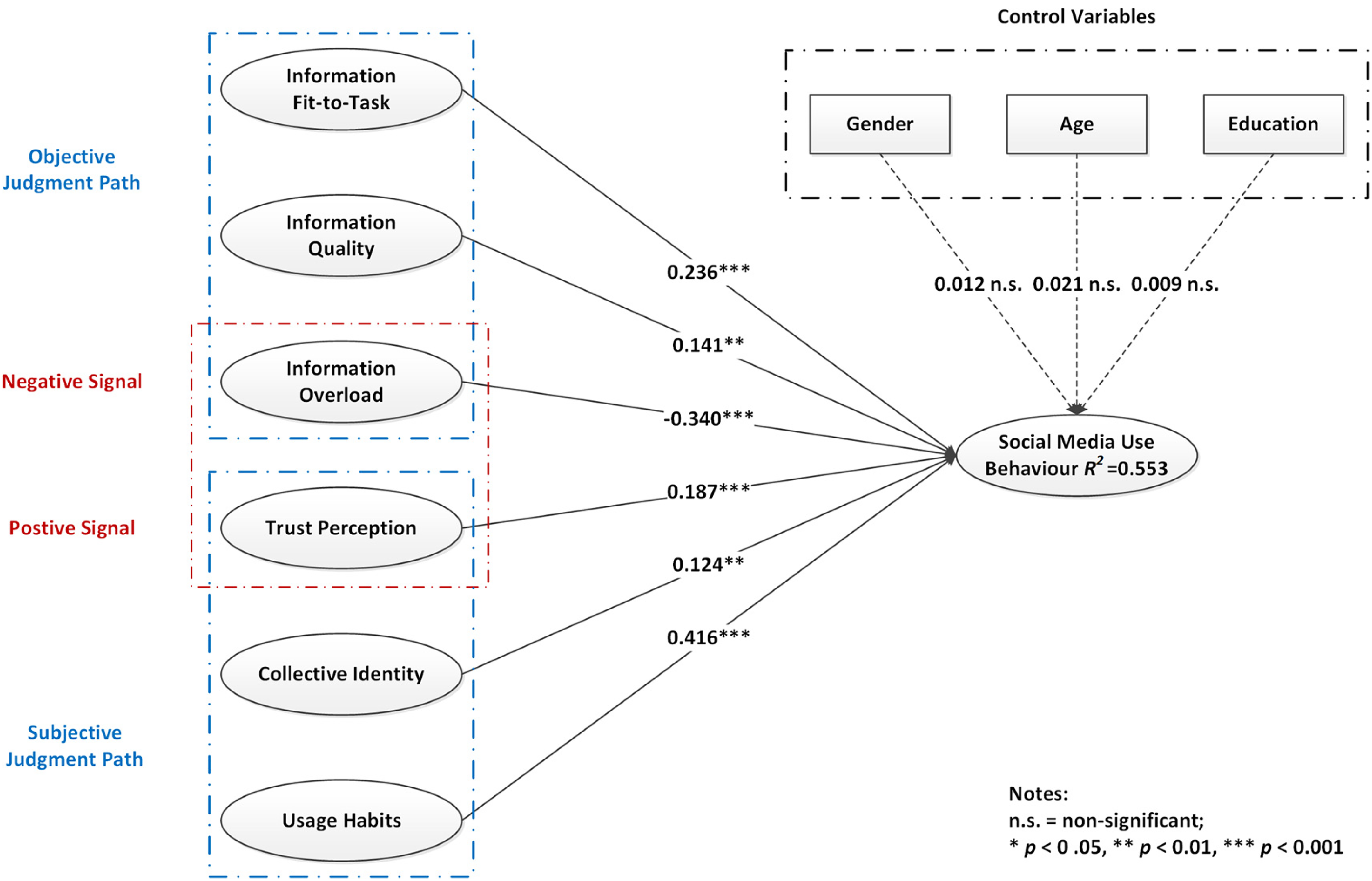
Statistical significance test results at research model.
Discussion
Findings
This study examined the relevant factors that influence the two pathways by which users use social media to access health information, and it also confirmed the impact of both positive and negative signals on use behaviours. Regarding the first research question, we confirmed that both objective and subjective judgment paths have an impact on users’ use behaviours. The second finding revealed that, in this era of thriving internet marketing methods, the influence of negative signals on users’ social media use behaviours is more pronounced than that of positive signals. This study expands our understanding of the potential effects of dual pathways and dual signals on users’ social media use behaviours and provides valuable insights for future research by other scholars in the field.
Although both the subjective judgment path and the objective judgment path have an impact on the user's use behaviour, the subjective judgment path exerts a more significant influence. We posit that, when users find themselves in a cluttered and overwhelming information environment, information overload can lead to user fatigue, causing them to rely less on objective reasoning and, instead, to depend more on their subjective judgment.
User behaviour is frequently subject to the influence of different signals, and this study suggests that negative signals have a stronger impact on users’ social media usage. The updated iterations of big data technology and innovations in marketing methods have endowed social media platforms with the ability to capture user preferences more accurately, but this change needs to be viewed in two ways. First, it is undeniable that high levels of fit-to-task information and high information quality can enhance users’ perceptions of trust, which are therefore transmitted as a positive signal and have a positive impact on usage. However, the development of technology has also had negative effects. Technological progress can have negative repercussions, such as homogenisation of content, which lead to perceived information overload and a negative signal. This research confirms that a negative signal from information overload profoundly affects user behaviour.
In addition, we found that the impact at the individual level was more significant in the subjective judgment path. Trust perception, collective identity and usage habits all have significant and positive effects on use behaviour. Higher levels of trust, a stronger sense of collective identity and users’ pre-existing habits of using social media all contribute to motivating their continuous engagement with social media. These findings align with those of a study on collective identity conducted by Schulte and Bamberg. 68 However, this paper delves more deeply and finds that any variable that has a high correlation with usage habits at the individual level will have a greater overall impact. We speculate that the socialisation function of social media is becoming increasingly pronounced and that users pay greater attention to their ideas and habits in a highly socialised environment.
Theoretical significance
This study focused on the impact of both the subjective judgment path and the objective judgment path on users’ behaviours in using social media, thus expanding the scope of research on social media use behaviour. Previous studies have primarily focused on examining either the subjective or the objective paths, separately, but without combining them.17,18 When considering the influence of various signals on user behaviour in the era of big data, we considered it necessary to conduct a more comprehensive analysis of these two path factors. Only a few scholars have used signalling as an important factor influencing behaviour in the context of medical platforms, 69 and there is insufficient research discussion of social media scenarios. The study confirms that both positive and negative signals have an impact on users’ behaviour when using social media, and it thereby deepens our understanding of the determinants of social media usage. Against the background of the development of internet marketing methods, this paper also discusses the influence of positive and negative signals on users’ social media use behaviours in relation to subjective and objective paths. Therefore, this paper addresses some gaps in existing research into social media use behaviour, it enriches the level of the research, and it adds a perspective based on signal transmission.
Practical significance
In recent years, with the rapid development of big data algorithms and artificial intelligence, the marketing methods of social media have changed, and homogeneous information has flooded every social platform, resulting in changes in the perceptions and behaviours of users faced with the new marketing model. It is urgent that in-depth research into user behaviour be conducted. Currently, social media not only has social attributes, but it also assumes other functions, such as the communication of medical information, and it serves to promote the dissemination of health information in the digital era. 69 In this context, this study explored relevant factors influencing users’ social media use behaviours, and this has rich practical significance.
The research findings indicate that the subjective judgment path significantly affects user behaviour. Therefore, it is vital for enterprises to establish a meaningful connection with users at the emotional level, emphasising the co-creation of value and involving users in the platform's construction process. This approach should enhance user trust and emotional identification. However, companies should also pay attention to the impact of objective factors by exercising careful control over their information sources and ensuring information authenticity. If necessary, they should promptly disrupt the dissemination of potentially harmful information, aiming to foster a social media environment that is environmentally friendly, emotional health-promoting and transparent. Additionally, considering the significant influence of negative signals on user behaviour, companies should reduce the extent to which artificial intelligence monitors users’ personal preferences and intrudes on privacy. They should also alleviate the burden on users of receiving excessive quantities of homogeneous information. They should enhance the richness and diversity of tweets and videos and gain a deeper understanding of users’ fundamental emotional needs and, in this way, provide users with a higher-quality service.
Research limitations and future research
Against a background in which there is explosive dissemination of medical information via social media, this paper discusses users’ social media use behaviour. This explains why users are increasingly inclined to rely on social media for accessing medical information, and it confirms the role of dual paths and dual signals in influencing users’ social media behaviour. However, this study has some limitations. First, technologies such as recommendation algorithms and artificial intelligence are constantly evolving, and future advancements may cater to user needs better. This dynamic nature requires ongoing research and monitoring. Second, the data sample came primarily from China, where internet technology is advanced, and social media behaviours may vary across different countries. Less-developed countries and regions may exhibit different characteristics. Varying degrees of internet development and usage habit will influence research outcomes. Additionally, the study does not explore the potential impact of social-cultural factors, ideologies or disparities in medical expertise. Therefore, future research could build on this study to further investigate these aspects, while we intend to continue to expand the applicability of our findings.
Conclusion
This paper confirmed that both the subjective judgment path and the objective judgment path have a significant impact on users’ behaviour when they search for medical information through social media. However, under the conditions of this study, the subjective judgment path demonstrated greater influence. The study also verified the mechanisms of both the subjective and objective judgment paths and provided a more comprehensive explanation for users being increasingly inclined to use social media when searching for medical information. Furthermore, the study identified negative signals as important factors influencing users’ social media use behaviours when faced with a proliferation of marketing techniques such as big data algorithms and artificial intelligence. These findings highlight the need for platforms to go beyond information relevance and quality and to focus on addressing users’ emotional needs and enhancing their emotional connections.
Footnotes
Acknowledgements
The authors thank all the respondents who participated in the study.
Contributorship
Conceptualisation, S.Y. and Y.G.; Methodology, S.Y.; Validation, S.Y.; Formal Analysis, Z.L.; Investigation, Y.G. and Z.L.; Resources, C.C.; Data Curation, S.Y.; Writing – Original Draft Preparation, S.Y., Y.G. and Z.L.; Writing – Review & Editing, S.Y. and C.C.; Visualisation, S.Y.; Supervision, C.C.; Funding Acquisition, C.C.; all authors approved the final manuscript to be submitted.
Declaration of conflicting interests
The authors declared no potential conflicts of interest with respect to the research, authorship, and/or publication of this article.
Ethical Approval
Ethical approval for the involvement of human subjects in this study was granted by Institutional Review Board of School of Management, Zhejiang University of Technology, China, Reference number CC-2023-1-0002-0485-SOM-ZJUT.
Funding
This research was supported by the National Social Science Foundation of China, grant number 22BGJ037; the Fundamental Research Funds for the Provincial Universities of Zhejiang, grant number GB202301004; the Zhejiang Provincial Federation of Social Sciences, grant number 2023N009; the Humanities and Social Sciences Research Project of Zhejiang Provincial Department of Education, grant number Y202248811; and the Zhejiang Province University Students Science and Technology Innovation Activity Program, grant number 2023R403013.
Guarantor
C.C.
Informed Consent
This article obtained prior consent from all human participants in the pre-test and formal survey.