



Abstract
This paper investigates the integration of Dance Movement Therapy (DMT) within extended reality (XR) environments, exploring its potential as a non-pharmacological intervention for mental health conditions. The study employed a blend of qualitative evidence synthesis and analyses of primary quantitative data, focusing on the therapeutic implications of Dance in virtual, augmented and mixed realities. Data from wearables and sensors on movements, physiological responses and emotional feedback are analysed using AI/ML algorithms, including Random Forest, SVM, CNNs and RNNs. The research highlighted the importance of data privacy and ethical considerations, emphasising the need for securely storing metadata to ensure user trust and legal compliance. Findings underscored the potential of XR environments like the Metaverse in transforming mental health practices, offering efficient, engaging and effective therapeutic interventions. The study also introduced the novel concept of Physical Intensity Matching and the significance of personalised exercise selection. Despite its ground-breaking insights, the research acknowledged potential biases introduced by wearables and the challenges of ensuring data accuracy. This paper is a foundational exploration into the convergence of DMT, XR and AI, paving the way for future interdisciplinary research in mental health and technology.
Keywords
Introduction: problem background
Mental health issues, especially anxiety and depression, are rising globally
The surge in global mental health issues,1,2 particularly anxiety and depression, 3 is a complex phenomenon driven by many intertwined factors. Rapid urbanisation, increasing social isolation and the relentless pace of modern life have created an environment where mental well-being can be easily compromised.4–6 While offering unprecedented connectivity, the omnipresence of digital technology has also led to an overwhelming information overload and the pressures of maintaining curated online personas. Economic uncertainties, job insecurities and the widening gap between societal expectations and individual realities exacerbate hopelessness and stress. Global challenges such as climate change, political unrest and the recent COVID-19 pandemic have also introduced pervasive existential anxieties.7,8 While awareness and dialogue about mental health are growing, the multifaceted nature of its triggers and inadequate access to mental health resources in many regions means that the rise in anxiety and depression remains a pressing global concern.
A need for non-pharmacological interventions
The increasing prevalence of mental health issues worldwide has underscored the importance of diversifying therapeutic approaches, with a growing emphasis on non-pharmacological interventions. While medication plays a crucial role in managing and alleviating symptoms for many individuals, it's not a one-size-fits-all solution. Some patients may experience side effects, while others might not respond optimally to drug treatments. Non-pharmacological interventions, such as cognitive-behavioural therapy, mindfulness meditation, exercise and art therapies, offer alternative or complementary routes to healing.9–12 These methods empower individuals by providing tools and strategies to cope, often focusing on the root causes of their distress rather than just alleviating symptoms. Furthermore, they promote holistic well-being, addressing mental health's physical, emotional and social dimensions. In an era where personalised and patient-centred care is gaining traction, the integration of non-pharmacological interventions becomes paramount in offering comprehensive and tailored mental health solutions.
The potential of alternative therapies in extended reality environments, such as the metaverse
The metaverse, with its extended reality (XR) environments 13 encompassing virtual reality (VR), augmented reality (AR) and mixed reality (MR), presents a ground-breaking frontier for the integration of alternative therapies. Imagine a world where individuals can don VR headsets and immerse themselves in a serene forest for mindfulness meditation or engage in a virtual tai chi class atop a tranquil mountain. The metaverse can simulate environments that amplify the effects of therapies like sound healing, guided visualisation or even aromatherapy through multisensory experiences. Such XR environments can be tailored to individual needs, offering personalised therapeutic experiences that are often not feasible in the physical world. Moreover, the metaverse provides accessibility, allowing individuals from any corner of the globe to access therapeutic sessions without geographical constraints. As the digital and physical boundaries continue to blur, the potential of integrating alternative therapies in XR environments becomes not just a possibility but a transformative avenue for holistic healing in the digital age.
Study aim
The primary aim of this study is to investigate the feasibility and therapeutic potential of Dance Movement Therapy (DMT) within extended reality (XR) environments for mental health, focusing on alternative non-pharmacological interventions – see Figure 1 for a demonstration.
Research questions
How effective is Dance Movement Therapy when integrated into XR environments like the Metaverse in alleviating symptoms of mental health conditions such as anxiety and depression?
What are the physiological and emotional impacts of DMT in XR settings on participants, as measured by real-time data from wearable technologies?
How do participants perceive the privacy, ethicality and overall experience of engaging in DMT within XR platforms?
What are the unique challenges and opportunities presented by XR environments in the administration of DMT compared to traditional settings?
How can the data collected through wearables in XR environments be effectively utilised to enhance the personalisation and effectiveness of DMT sessions?
These questions aim to validate the effectiveness of DMT in XR and explore its multidimensional impacts on participants, addressing both the scientific and experiential aspects of the therapy.
Bibliometric analysis of existing records in the web of science literature
The first step in the bibliometric analysis included the Web of Science Core Collection to identify the volume of knowledge in this area. The Web of Science Core Collection includes:
Science Citation Index Expanded (SCIE) (Coverage:1965–present) Social Sciences Citation Index (SSCI) (Coverage:1965–present) Arts & Humanities Citation Index (AHCI) (Coverage:1975–present) Book Citation Index (BKCI) (Coverage: 2005–present) Conference Proceedings Citation Index (CPCI) (Coverage:1990–present) Emerging Sources Citation Index (ESCI) (Coverage: 2017–present)
We started with the Web of Science Core Collection because it represents more than 21,000 peer-reviewed, high-quality scholarly journals published worldwide in over 250 sciences, social sciences and arts & humanities disciplines, as well as conference proceedings and book data.
The first search was conducted on ‘Dance Movement Therapy’, producing 1423 results – analysed in Figure 2.

Visual abstract.

Web of science core collection – results on dance movement therapy.
As we can see in Figure 2, the main volume of research work on Dance Movement Therapy is in rehabilitation and psychology. Very little research has been conducted on dance (53 records) and sports (73 records). The most surprising result is that although this kind of therapy would firmly fit in the research area of psychiatry, there needs to be more research on this topic in psychiatry (59 records).
To narrow the focus of this research in the areas of Dance, we selected the 53 records published in the dance area, and we analysed these data records further – see Figure 3.

Web of science core collection – results on dance.
What becomes apparent in is that the Web of Science analysis records tool is quite limited in analysing the connections and the different categories of research interconnections specific to ‘dance’ as a category.
To analyse the data records further, we exported the data records in two BibTex files. The first file included the complete records and cited references, and the second file only the complete records with no cited references. Then we analysed the data in R, with the biblioshiny plugin. The idea was to use the file with citations to extract the information for writing the research papers, and the second file, to analyse only the essential findings and main conclusions from the actual data records.
We created a thematic map of the correlations in the main research areas to derive new findings from the first file (full records and cited references).
As shown in Figure 4, the main categories emerged in clusters, where one cluster was related to ‘empathy conflict construction’, the second to ‘therapy balance trial’ and the third cluster to the basic themes of ‘dance/movement therapy, movement therapy’. One category in the emerging or declining themes was somewhat difficult to read, and the category that appeared from the statistical analysis was ‘individuals’. We analysed the data further, to determine the meaning of this category. We applied the co-occurrence network analysis and created a new visualisation – see Figure 5.
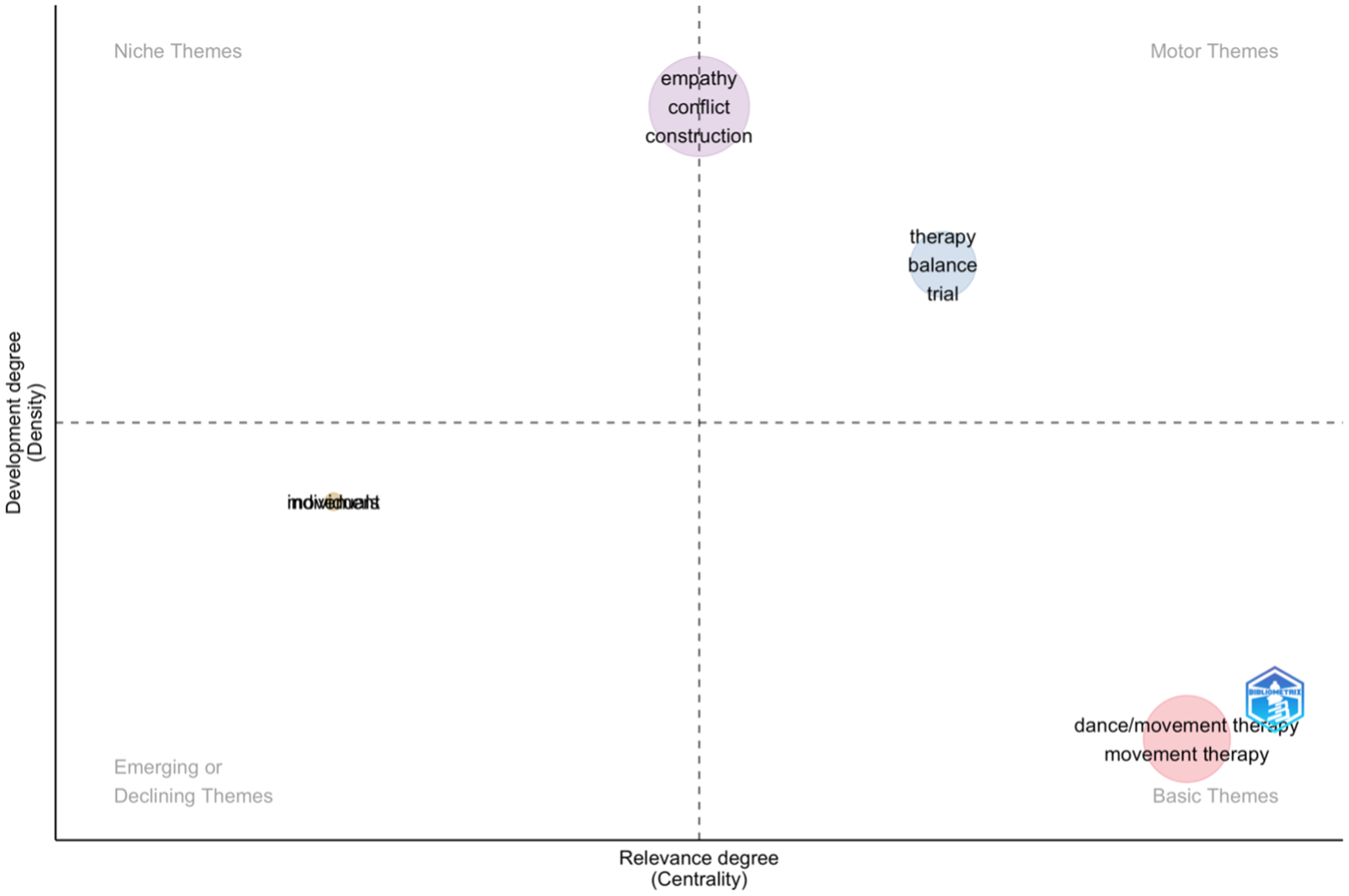
Thematic map of web of science core collection – results on dance movement therapy, specific to the research category ‘dance’.

Co-occurrence network analysis.
In the co-occurrence network, we can visualise the emergence of new categories, but the figure is too difficult to visualise. The reason for this is the variety of categories represented in the image. There is no single category that is representative of the data. Instead, we can see records on a variety of different topics. To clarify the image, we converted the co-occurrence network analysis into a heat map.
In the Figure 6 heat map, we can see some interesting findings. For example, this type of analysis's new and emerging areas presented the keywords ‘politics, peace, conflict, youth, spaces and mirror neurons’. While some of these keywords are similar to the earlier analysis, this is the first time the words ‘politics, peace, youth’ emerge.
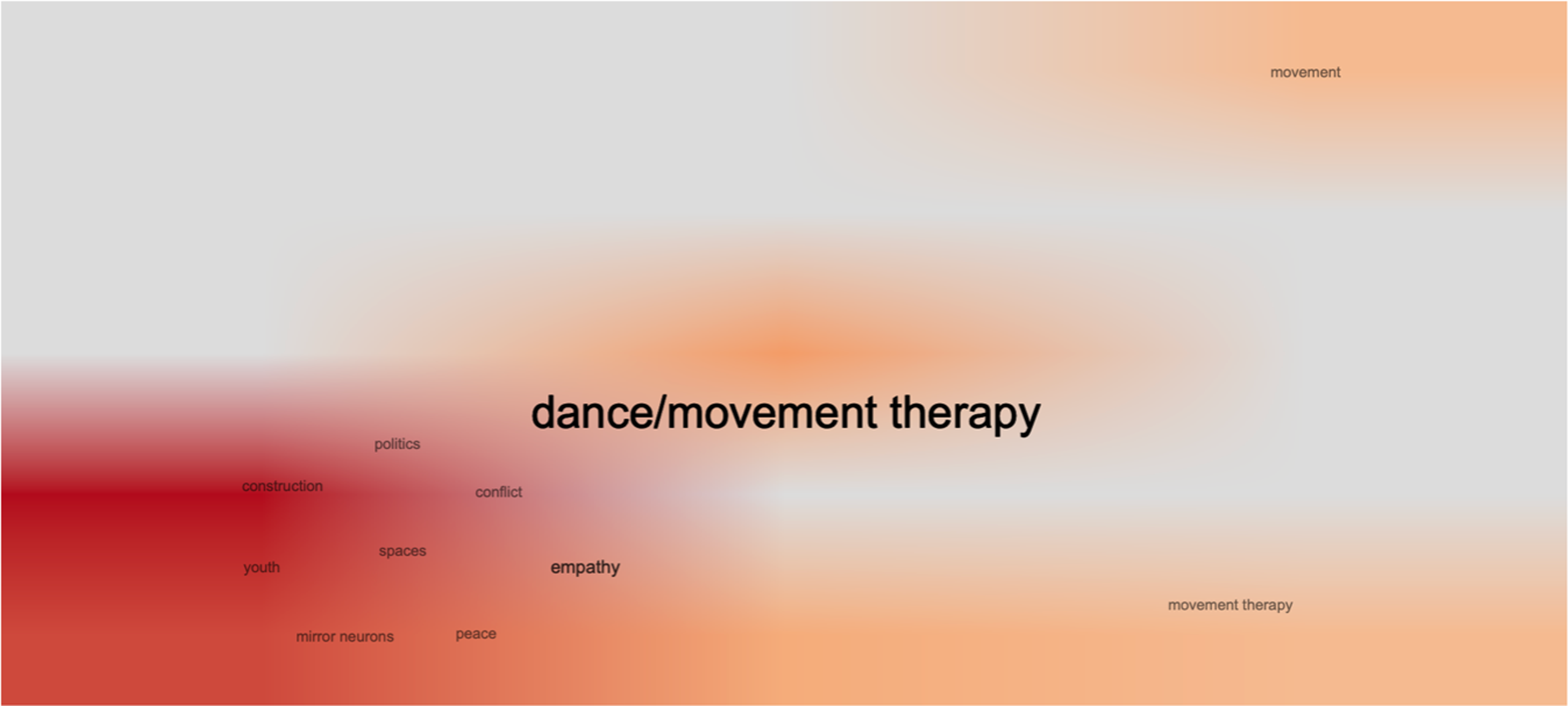
Heat map on research studies on dance movement therapy in the research area related specifically to dance.
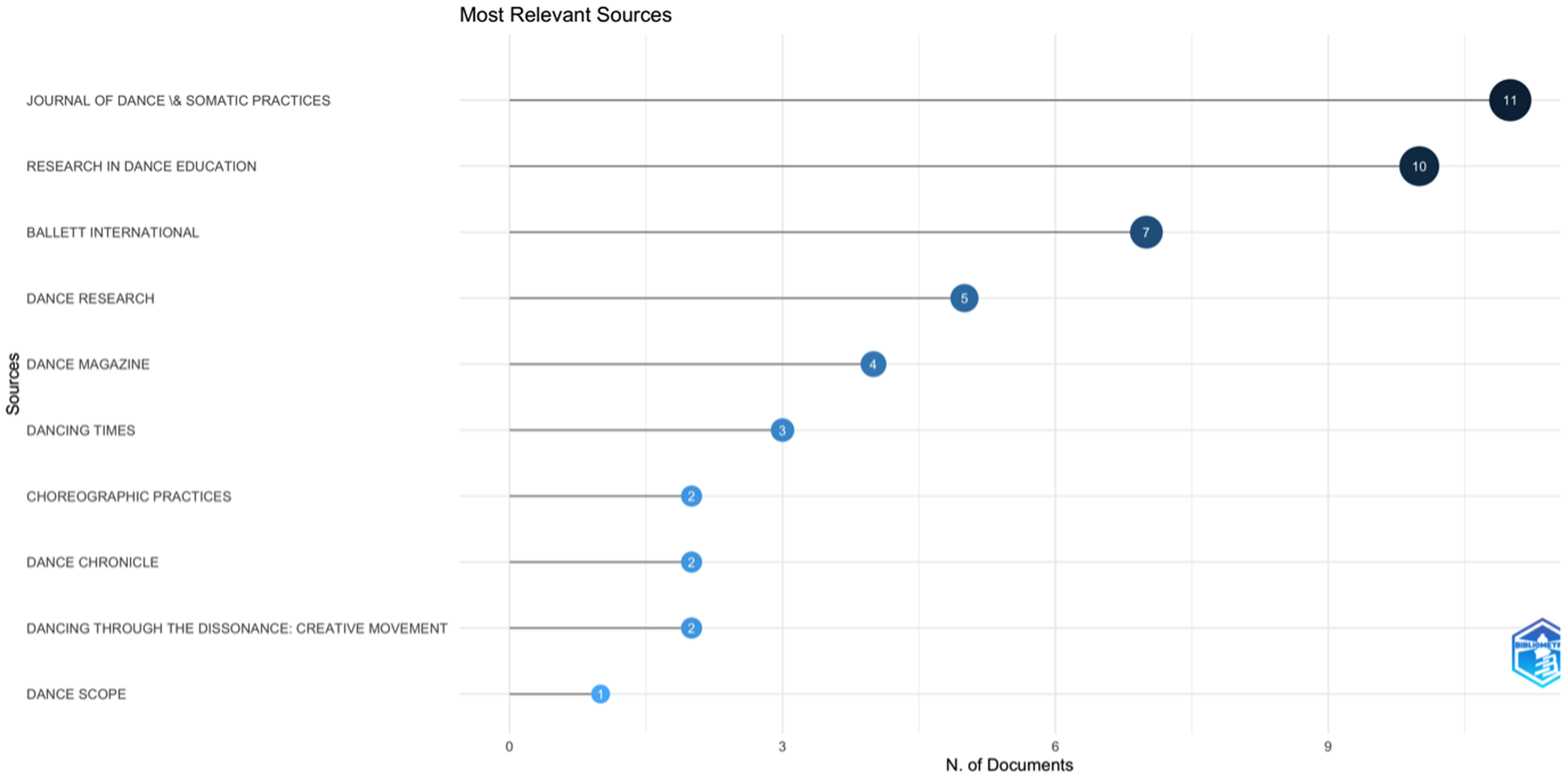
Most relevant sources.
To determine the most relevant research areas, we analysed the data and categorised the records into the ‘Most Relevant Sources’ – see Figure 7.
Then, we analysed the same data to determine the sources’ local Impact by H index – Figure 8.

Sources’ local impact by H index.

Cumulate occurrences.

Thematic map’ of the network in the data records in the second file (full records with no cited references).
Finally, we analysed the Sources’ Production over Time data, focusing on the cumulative occurrences.
What becomes apparent in this analysis is that very few journals in the main category of ‘Dance’, publish work related to Dance Movement Therapy. Most of the research on Dance Movement Therapy is performed in other research areas, such as rehabilitation and psychiatry.
To compare the data analysis from the first file (full records and cited references), with the second data file (full records with no cited references) see cumulate occurrences in Figure 9, we developed a ‘Thematic Map’ of the network in the data records of the second file – see Figure 10. In this analysis, we could see very different categories emerging, such as new categories on ‘children and autism’, ‘spectrum and intervention’, ‘activism and ethics’, ‘peace construction and empathy’, ‘balance and trial’, ‘entertainment, brain and expression’ and most importantly, a strong focus on ‘tango’ as a dance category.
This presents interesting findings because Tango is not a dance that people perform at a regular dance event. The most prominent representations of Latin American dances in Western society are Salsa, Bachata and, more recently, Kizomba. We can determine from this analysis that the most famous dances in our society have yet to be investigated in terms of their influence on the people performing the Dance.
Since this presented a significant finding, we analysed the data further to seek for further findings.
After analysing the data records with multiple different approaches, including a full Dendrogram in Figure 11, Factorial Map in Figure 12 and Factorial analysis with dim1 and dim2 in Figure 13, we concluded that all research until the present, in the Timespan from 1980 to 2023, has primarily focused on Argentine Tango and to a lesser extent on Ballet (see Figure 13).

Dendrogram.
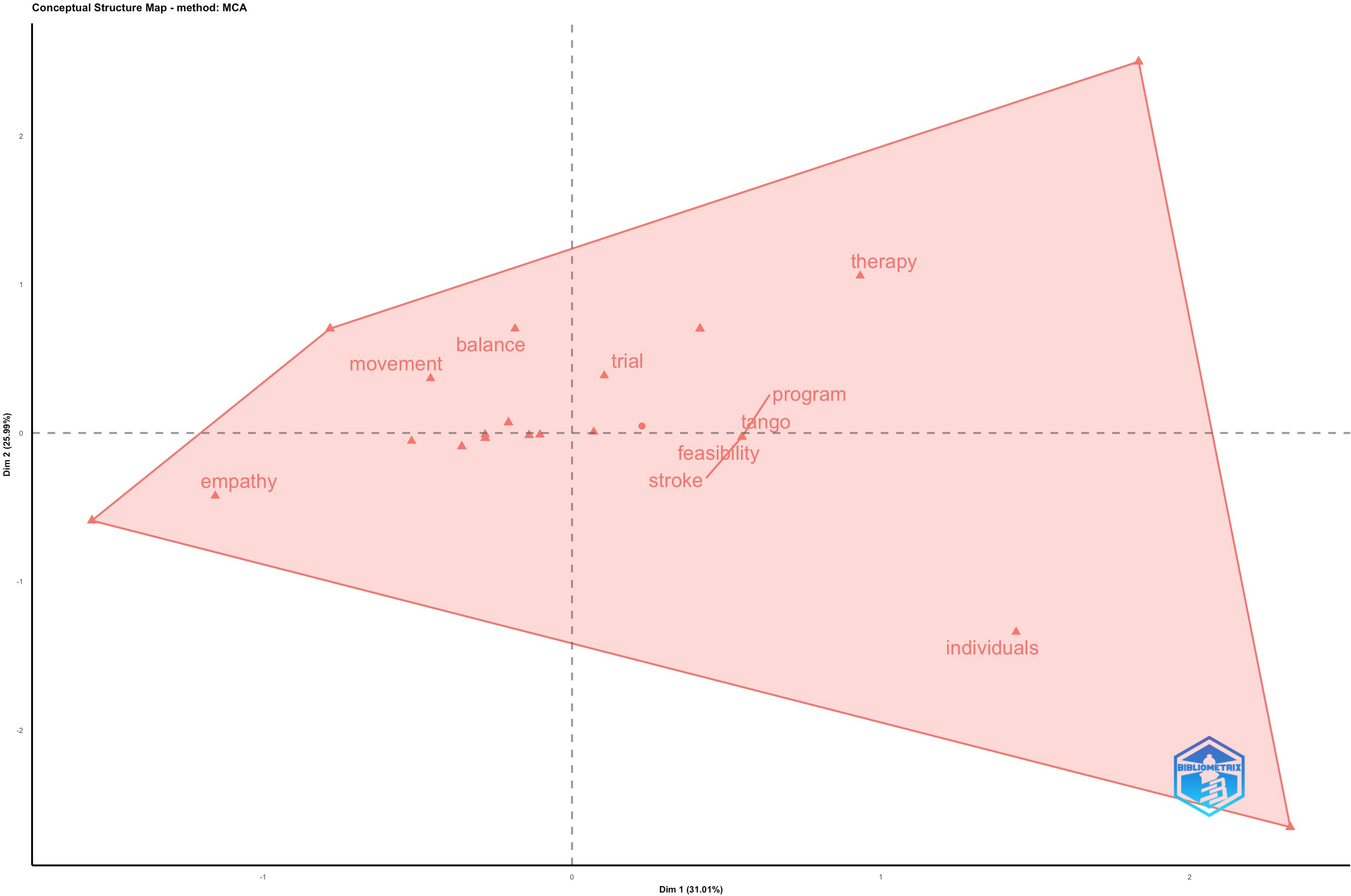
Factorial map.

Factorial analysis with dim1 and dim2.
The most popular Latin dances in the Western hemisphere (Salsa, Bachata and Kizomba), have yet to be studied in the context of Dance Movement Therapy. This could be because of the minimal number of authors investigating this research area. In our data file, we identified only 22 authors of single-authored docs and a total of 67 authors. We include our data files in this submission, and we plan to make the data files publicly available for future research studies on this topic.
What becomes clear from the bibliometric analysis is the minimal scope of research conducted in this area over the years.
Methodology overview
A blend of qualitative evidence synthesis and analyses of primary quantitative data
A mixed-methods approach was employed to pursue a comprehensive understanding of the potential of integrating alternative therapies in extended reality environments, such as the metaverse. This methodology amalgamated the richness of qualitative evidence synthesis with the robustness of analyses of primary quantitative data.
Qualitative evidence synthesis
Initially, a systematic search of electronic databases, including PubMed, Scopus and Web of Science, was conducted to identify relevant qualitative studies. These studies delved into the experiences, perceptions and challenges individuals face using alternative therapies in extended reality environments. Data extraction was undertaken using a thematic synthesis approach, and key themes were identified. This qualitative evidence provided nuanced insights into participants’ lived experiences, shedding light on the subjective efficacy and potential pitfalls of such therapeutic interventions in the metaverse.
Analyses of primary quantitative data
Parallel to the qualitative synthesis, a rigorous analysis of primary quantitative studies was carried out. Studies that quantitatively measured the outcomes of alternative therapies in extended reality environments were identified. Standardised mean differences were computed for each study, and a random-effects model was utilised to account for potential heterogeneity across studies. This quantitative approach offered a statistical perspective on the efficacy of the interventions, allowing for a more objective assessment of their benefits and limitations.
Integration of findings
After completing the qualitative synthesis and quantitative analysis, an integrative approach was adopted to combine the findings. This holistic perspective ensured the research outcomes were statistically valid and grounded in the participants’ real-world experiences. A comprehensive picture of the potential and challenges of integrating alternative therapies in the metaverse emerged by juxtaposing the qualitative narratives with quantitative results.
In conclusion, this mixed-methods approach, blending qualitative evidence synthesis with analyses of primary quantitative data, provided a multi-faceted understanding of the research question. The methodology was designed to ensure that the findings were empirically robust and deeply rooted in the lived experiences of those navigating the therapeutic landscapes of the metaverse.
Exploration of different alternative therapies with an emphasis on dance movement therapy
During the second phase of our research, we thoroughly examined various alternative therapies, specifically focusing on Dance Movement Therapy (DMT)14–18 within the virtual world of the metaverse.
We extensively reviewed the literature to identify alternative therapies that have been integrated or proposed for integration in extended reality environments. These therapies included mindfulness, meditation, sound healing and guided visualisation. We evaluated each therapy based on its historical context, core principles and suitability for the metaverse.
As DMT gains interest as a therapeutic intervention in digital spaces, we conducted primary qualitative interviews with certified DMT practitioners who had experience or expressed interest in the metaverse. These interviews aimed to identify the challenges of translating physical dance movements into virtual spaces and the perceived therapeutic outcomes.
Furthermore, we observed DMT sessions within the metaverse and analysed them using video analysis tools and qualitative coding to identify patterns, participant engagement and the overall dynamics of virtual DMT sessions.
After extensive exploration, we performed a comparative analysis between DMT and other alternative therapies in the context of the metaverse. This analysis aimed to identify DMT's unique attributes and potential advantages over other therapies, particularly when integrated into extended reality environments.
Data collection and analysis in the dance studio: BioX sensor band 2.0 | output
In the study conducted within the dance studio setting, the BioX Sensor Band 2.0 was employed as the primary data collection and analysis tool. This advanced wearable device captured Inertial Measurement Unit (IMU) raw data, meticulously tracking the motion of both arms and legs during dance routines. Additionally, the Force Sensitive Resistor (FSR) integrated into the band provided raw data on the muscle strength of the arms and legs, offering insights into the dancers’ exertion levels and muscular engagement. The device also could classify specific gestures, enabling a detailed understanding of various dance movements. Furthermore, the BioX Sensor Band 2.0 transmitted controller signals to actuators, specifically motors, facilitating real-time feedback and potential adjustments to the dancer's movements. This comprehensive data collection approach provided a holistic view of the dancer's performance, biomechanics and muscular engagement.
Data collection and analysis in extended realities
The realm of extended realities (XR) provides a unique platform for collecting data, particularly when examining how people physically and emotionally respond to immersive experiences. To capture the nuances of these interactions, a controlled environment called a testbed was established. This Testbed was equipped with the latest XR technologies, such as Virtual Reality (VR), Augmented Reality (AR) and Mixed Reality (MR) headsets, as well as haptic gloves, body sensors and advanced wearables for continuous monitoring of physiological parameters.
The research focused on the correlation between physical activity and anxiety levels, using accelerometers and heart rate monitors to collect real-time data. The study also gathered subjective feedback through post-experience questionnaires to provide a more comprehensive understanding of participants’ experiences. Wearable patches were used to capture skin conductance and measure emotional arousal, a reliable biomarker for anxiety.
Heart Rate Variability (HRV) was a crucial metric in the study, providing insights into the functioning of the autonomic nervous system for participants with anxiety but without concurrent cardiovascular conditions. The research also employed Photoplethysmography (PPG), a non-invasive technique that measures changes in microvascular blood flow by flooding the skin with light and measuring the transmitted or reflected intensities. These methods provided a layered understanding of how participants responded physically and emotionally to XR environments.
Data collection, cleaning and analysis | tools and methods
The process of analysing the dataset involved a comprehensive cleaning and structuring phase, which was executed optimally using Pandas and Sci-kit learn. This phase was critical to the success of subsequent analytical phases as it ensured that the data was in a format amenable to machine learning applications. Normalisation, encoding and feature selection were some of the techniques that were employed during this phase.
Deep learning frameworks such as TensorFlow and Keras were used to build and train machine learning models on the refined dataset in the analysis phase. The goal of this phase was to uncover patterns, relationships and insights that may take time to be apparent through traditional analytical methods. By leveraging the power of advanced machine learning techniques, the research team was able to extract valuable insights that would have been impossible to obtain through conventional approaches.
The results and findings were visualised using Python-based visualisation tools Matplotlib and Seaborn. These tools enabled the creation of intuitive plots, charts and graphs, making interpreting and presenting the analytical outcomes easier. By presenting the data in a visually compelling manner, the research team was able to communicate their findings effectively to stakeholders and decision-makers.
Overall, the research was grounded in rigorous data science practices from the collection to the analysis stages, ensuring depth and clarity. The research team diligently ensured that the data was of the highest quality and that the analysis was conducted using the most advanced techniques available. As a result, meaningful and actionable insights were derived from the data, providing valuable information that could be used to make informed decisions.
Analytical rigour
When analysing skin conductance measurements, addressing potential confounding factors is critical. Skin conductance can be affected by external influences such as emotional states, temperature and hydration levels. If these variables aren't accounted for, they can introduce biases and inaccuracies in the data interpretation, leading to skewed results and conclusions.
Specific protocols were established to counteract the impact of sweat on skin conductance measurements. Participants were acclimated to the testing environment before each measurement session to minimise sweat production caused by sudden temperature changes. They were also advised to stay hydrated and avoid stimulants that could induce sweating. Absorbent materials were used during the measurement process to manage and reduce sweat accumulation, and equipment calibration was conducted periodically to correct any potential drifts in readings due to sweat.
In short, maintaining analytical rigour was crucial throughout the study. By identifying potential confounders and implementing rigorous protocols, the research ensured that the data collected was reliable and valid. This meticulous approach strengthened the study's findings, ensuring the conclusions were based on robust and unambiguous data.
Data dimensions
Before conducting any analysis, it was important to classify the data to ensure accuracy and validity thoroughly. Each data point was meticulously categorised based on its characteristics and context. This step was crucial in understanding the nature of the data and determining the appropriate analytical methods to use.
The dataset contained various types of data, each with unique properties and implications for analysis. Continuous data, representing measurable quantities, was distinguished from categorical data, consisting of distinct categories or groups. Additionally, ordinal data, representing ordered categories, was treated differently from nominal data, which had no inherent order. Recognising and differentiating between these data types ensured meaningful and appropriate analysis.
Further exploration into classifications and scales was conducted beyond the basic data types. Interval scales with consistent properties were analysed differently than other scales. This ensured accurate and reliable analysis.
Sample size estimation
Determining the appropriate sample size is crucial for ensuring the validity and reliability of any research study. In this investigation, the sample size estimation was not arbitrary but was based on a series of methodological considerations. These considerations aimed to balance feasibility and statistical power.
The expected effect size was one of the primary factors influencing the sample size. This refers to the magnitude of the difference or relationship the study aimed to detect. A larger expected effect size could warrant a smaller sample, while a more subtle effect might necessitate a larger sample to achieve statistical significance. Additionally, the inherent variability within the data played a pivotal role. A more significant variability typically requires a larger sample to discern patterns or effects amidst the noise.
Another guiding factor was the desired confidence level, which indicates the degree of certainty we can infer the study results to the broader population. A higher confidence level, such as 95% or 99%, would generally demand a larger sample size to ensure that the study's findings were not merely due to chance.
This study also incorporated classifications from the Human Phenotype Ontology (HPO), which provides a standardised vocabulary of phenotypic abnormalities encountered in human diseases. Considering these classifications, the study ensured that the sample was representative of the diverse phenotypic manifestations relevant to the research objectives. This added stratification layer ensured the sample was statistically robust and clinically appropriate.
In conclusion, the process of sample size estimation for this study was a meticulous blend of statistical reasoning and domain-specific considerations. By weaving traditional statistical criteria together with the nuanced classifications of HPO, the research ensured a statistically sound sample deeply anchored in human phenotypes’ complexities.
Optimal number of participants
Determining the ideal number of participants for a research study requires a delicate balance between statistical robustness and logistical execution. After comprehensively evaluating various factors, we settled on a sample size of 102 participants for this investigation.
Our decision was based on multiple considerations. Firstly, statistical simulations indicated that this sample size would provide sufficient power to detect meaningful differences or relationships within the data, ensuring the study's findings were both significant and reliable. Additionally, this size accounted for potential dropouts or missing data, ensuring that the final analytical sample remained robust.
Beyond statistical considerations, the practicalities of research execution played a pivotal role in this decision. Recruiting, managing and ensuring consistent participation of a large cohort can present logistical challenges, especially considering factors like participant availability, resource allocation and data management. A sample size of 102 struck a balance, being large enough to confer statistical validity but sufficient to ensure the smooth execution of the research process.
Accelerator data collection and processing
During the research's initial phase, the focus was on obtaining reliable datasets appropriate for activity recognition tasks. The HAPT and Opportunity datasets were used extensively due to their high-quality accelerometer data and the wide range of activities captured, from walking and running to sitting. Thanks to their diversity and richness, these datasets provided a solid foundation for subsequent analytical pro.
A rigorous data annotation and labelling process was carried out to improve the granularity and specificity of the datasets. This included manually tagging the accelerometer data with labels corresponding to different activities or behaviours. This meticulous labelling enhanced the dataset's richness and accuracy, and human annotators played a key role in validating and refining the data, ensuring its suitability for machine learning models.
Given the continuous nature of accelerometer data, appropriate sampling algorithms were crucial. Two main strategies were employed: regular interval sampling, which involved collecting data at fixed time intervals, and event-triggered sampling, which captured data only when specific events or thresholds were met. Both techniques were effective in ensuring consistent temporal resolution and capturing significant events.
Windowing techniques were used to refine data processing further. Fixed window sizes, overlapping windows and sliding windows were all employed to segment the accelerometer data into manageable portions and capture the nuances of activity transitions.
The research team meticulously designed the accelerator data collection and processing methodologies to ensure comprehensive and nuanced analysis. By integrating robust datasets with refined processing techniques, the research ensured an extensive and nuanced understanding of human activities.
Algorithms used
In pursuing reliable analytical studies, precise and accurate data collection is paramount. Advanced algorithms were employed in this research to achieve this. Sampling algorithms provided a systematic approach to collecting data from the accelerometer at regular intervals, ensuring consistency and representativeness of the monitored activities. This method was carefully designed to ensure that no crucial data was missed and that the collected data reflected the activities being monitored.
Moreover, a windowing algorithm was implemented to refine the data collection process further. This algorithm divided the continuous accelerometer data into fixed-size windows, making it more structured and manageable for subsequent processing and analysis. This resulted in a more organised and efficient data collection process, facilitating more accurate and reliable results.
Once the data was collected, it underwent a series of pre-processing steps to enhance its quality and relevance. Signal filtering techniques were adopted to eliminate any inherent noise in the raw accelerometer data. Low-pass or band-pass filters were utilised to remove extraneous noise or unwanted frequencies, resulting in cleaner and clearer data. This process ensured that the data was highly relevant and relevant, making it easier to analyse and obtain valuable insights. By employing these advanced algorithms and processing techniques, the study was able to get precise and accurate data, leading to reliable and insightful results.
This study focused on detecting abnormal or unusual patterns in accelerometer data, using algorithms designed for anomaly detection. The Isolation Forest algorithm was chosen for its unique approach of isolating anomalies in a binary tree structure, making it efficient in detecting outliers. The One-Class SVM was used to model normal data, which could then identify anomalies as data points that deviated significantly from this normative model. Autoencoders, a type of neural network, were also employed for deep learning in anomaly detection, where they reconstructed input accelerometer data. The reconstruction error was then used to identify potential outliers with significant deviations.
Throughout the study's analytical journey, the focus was on utilising unsupervised learning techniques to identify inherent structures and patterns within the accelerometer data, without using explicit labels. Two clustering algorithms were specifically utilised: K-Means and DBSCAN.
K-Means is a widely recognised clustering technique that segments data into distinct clusters. The algorithm assigns data points to centroids and then iteratively recalculates those centroids, to group similar activities together. This process reveals underlying patterns and provides a more nuanced understanding of the data.
DBSCAN, on the other hand, is a density-based clustering algorithm that offers a more advanced approach beyond the centroid-based method. This method can identify clusters based on the density of data points, which is particularly effective in distinguishing clusters of varying shapes and sizes. This flexibility allows for a more adaptable approach to understanding different activities within the data.
The world of dance movement analysis has seen a variety of algorithms and models used to capture, comprehend and interpret the intricate patterns and sequences found in Dance. In Figure 14, we can see a flowchart that provides a structured sequence of methods, beginning with basic machine learning techniques and progressing towards more specialised algorithms tailored for Dance. This sequence displays the analytical journey taken during the study and demonstrates the relationship between traditional algorithms and those created explicitly for time series and spatial data. Readers can gain a comprehensive understanding of the computational tools and techniques used to unravel the intricacies of dance movements and their therapeutic potential by visualising this progression.

Flow chart of the algorithms tested in this study.
Some of these algorithms are already discussed in the earlier sections of this article, and in the text below, we describe all other algorithms, that have not been discussed yet, and have been used and tested in the study.
Regression algorithms
With a rich dataset, the research also expanded into predictive analytics, focusing on estimating continuous health-related parameters from the accelerometer data.
Time series analysis
Given the temporal nature of accelerometer data, time series analysis was a pivotal component of the research.
Feature selection and engineering
The intricacies of accelerometer data necessitated a rigorous approach to feature selection and engineering, ensuring that the data's most salient and informative aspects were harnessed for analysis.
Transfer learning
Recognising the potential of leveraging pre-existing knowledge, the study incorporated transfer learning techniques. By applying pre-trained models, which had been initially trained on large and diverse datasets, to the accelerometer data, the research could harness their foundational knowledge. These models were then fine-tuned, adapting their weights and structures to cater to health-related tasks. This approach ensured that the models benefited from broad, pre-existing knowledge and the specific nuances of the study's data.
Hyperparameter tuning
A meticulous hyperparameter tuning was undertaken to ensure the optimal performance of the machine learning models.
Evaluation metrics
Ensuring the robustness and reliability of the models employed in the study necessitated the use of a comprehensive suite of evaluation metrics. These metrics provided a multi-faceted view of model performance, catering to classification and regression tasks.
Given the dynamic nature of accelerometer data and the evolving patterns of human activity, the study incorporated online learning algorithms. These algorithms were designed to continuously learn from incoming data, adapting their structures and weights in real-time. This ensured the models remained relevant and accurate, even as conditions changed, or new patterns emerged. By embracing online learning, the research ensured that its analytical framework was not static but was a living entity, evolving in tandem with the data it analysed.
The provided sequence diagram in Figure 15 visually represents the data flow and interactions between wearables, databases, AI/ML algorithms and extended reality (XR) devices in the context of Dance Movement Therapy (DMT) within extended reality environments. It delineates the step-by-step process, starting from collecting real-time data from wearables, storing it in databases, processing it through AI/ML algorithms and finally, its application within XR devices for immersive therapeutic experiences.

Sequence diagram of the data flow and interactions between wearables, databases, AI/ML algorithms and extended reality (XR) devices in the context of dance movement therapy (DMT) within extended reality environments.
The sequence's value lies in its ability to succinctly capture the intricate interplay of technology and therapy. Visual mapping out the flow provides stakeholders – researchers, developers or therapists – a clear overview of how each component interacts. This clarity is paramount, especially when dealing with complex systems integrating wearables, databases, advanced algorithms and immersive environments. The sequence also underscores the importance of feedback loops, highlighting the adaptive nature of the system, where processed data and insights can be fed back to wearables for enhanced therapeutic strategies.
The tasks in this sequence have been carefully assigned to ensure efficiency and accuracy. Wearables and sensors collect real-time data, including participants’ physiological and emotional responses during therapy sessions. This data is then sent to databases for safekeeping and to maintain its integrity. AI/ML algorithms with techniques like Random Forest and LSTM process the data to extract meaningful insights and patterns. These algorithms are crucial in analysing and interpreting the data to ensure that the therapeutic interventions are effective. Finally, XR devices utilise the processed data to provide immersive therapeutic experiences that bridge the gap between the physical and digital worlds. This allocation of tasks ensures an uninterrupted flow of information, maximising the potential of each component in the sequence.
In health data science, more than simply predicting outcomes is required. Understanding the underlying reasons behind these predictions is crucial, especially when making important health decisions. The study utilised advanced techniques for explainability and interpretability to address this issue.
One such technique is SHAP (SHapley Additive exPlanations), which draws on cooperative game theory to explain the output of machine learning models. SHAP provides a comprehensive understanding of feature influence by attributing the variance between the model's prediction and the dataset's mean prediction to each feature. Another technique employed was LIME (Local Interpretable Model-Agnostic Explanations), which offers a local interpretation of model predictions. By altering the input data and observing the resulting changes in predictions, LIME generates interpretable models that approximate the complex models’ decisions.
Data collection
Engagement in primary research data collection
I was actively involved in primary research data collection. This hands-on approach ensured that I was not just a passive observer but an integral part of the data-gathering process. My direct engagement allowed me to better understand the data's nuances and intricacies, ensuring a more informed and holistic approach to subsequent analyses.
Use of wearable sensors in dance movement therapy
Central to the data collection process was the use of wearable sensors. These advanced devices were meticulously employed to measure and analyse movement and biofeedback during Dance Movement Therapy sessions. By capturing real-time data on participants’ movements and physiological responses, the study was able to glean a comprehensive view of the therapeutic process, bridging the gap between physical movement and emotional well-being.
Prioritising data security and user privacy
In an era where data privacy is paramount, I took proactive steps to ensure that all collected data was securely stored. Recognising the sensitive nature of health-related data, stringent security protocols were implemented. Beyond mere data encryption and secure storage solutions, there was a conscious effort to anonymise the data, ensuring that individual identities were protected and user privacy was upheld.
Data collection and analysis
The wearable sensors played a pivotal role in gathering a rich dataset, capturing the nuances of participants’ movements, physiological responses and emotional feedback. This multifaceted data provided a holistic view of the Dance Movement Therapy experience. Once collected, the data underwent rigorous cleaning techniques, ensuring its quality and reliability. Subsequent analyses were then conducted with a specific focus on mental health improvement. By correlating movement patterns and physiological responses with emotional feedback, the study delved deep into the therapeutic effects of Dance, primarily examining its impact on conditions like anxiety and depression.
Traditional approach: AI and ML models
Support vector machines (SVMs) in dance movement classification
Support Vector Machines (SVMs) have emerged as a powerful tool in dance movement classification. In this study, SVMs were specifically employed to segregate different types of dance movements. 27 By finding the optimal hyperplane that best divides the dataset into classes, SVMs ensured a nuanced and accurate classification of intricate dance movements, capturing the essence of each dance form.
Convolutional neural networks (CNNs) in video data processing
CNNs have revolutionised the way video data is processed, especially in the context of dance movements. This study harnessed CNNs to process video data, adeptly capturing the spatial hierarchies inherent in dance movements. Their ability to learn spatial relationships between pixels in an image suited them for this task.28–31 While CNNs have traditionally been employed for image processing tasks, their application in dance movement therapy (DMT) has been ground-breaking. For instance, in a prior study focusing on children with autism spectrum disorder (ASD), CNNs were instrumental in identifying and classifying distinct dance movements, showcasing their versatility and depth.
Recurrent neural networks (RNNs) and their variants in sequential data analysis
RNNs and advanced variants like LSTM (Long Short-Term Memory) and GRU (Gated Recurrent Units) have carved a niche in analysing sequential data, especially time-series movement data. In the current study, these networks were employed for sequence modelling tasks. Their ability to learn temporal relationships between data points made them invaluable for tasks such as speech recognition and natural language processing within the context of Dance. Previous research has highlighted the prowess of RNNs in deciphering long-term dependencies in movement data. This unique capability renders them exceptionally suited for analysing sequences of dance movements, capturing the fluidity and progression of a dancer's movements over time. For instance, in a study centred on individuals with Parkinson's disease, an RNN was ingeniously used to predict subsequent dance movements, underscoring the potential of these networks in therapeutic contexts.
Decision trees in emotion analysis of dance movements
Decision trees have emerged as a pivotal tool in exploring dance movements, particularly in understanding the intricate relationship between Dance and the emotions it evokes. In this study, decision trees were meticulously employed to identify the myriad factors that contribute to the diverse feelings and emotions elicited by different dance movements. By creating a tree-like model of decisions and their possible consequences, this method provided a clear visual representation of the factors influencing emotional responses. This facilitated a deeper understanding of the emotional landscape of Dance but also offered actionable insights for therapeutic interventions. Drawing from prior research, the efficacy of decision trees in the realm of dance movement therapy (DMT) is evident. For instance, in a seminal study focusing on DMT for depression, a decision tree was instrumental in pinpointing the factors associated with improvements in depression symptoms. Such findings underscore the potential of decision trees in bridging the gap between movement and emotional well-being.
DeepDance model: a fusion of CNNs and RNNs
Venturing into the cutting-edge domain of deep learning, the study introduced the DeepDance model, a sophisticated blend of Convolutional Neural Networks (CNNs) and Recurrent Neural Networks (RNNs). This hybrid model was designed to harness the strengths of both CNNs and RNNs, capturing the spatial hierarchies and temporal sequences inherent in dance movements. CNNs, with their prowess in processing spatial data, delved deep into the structural nuances of Dance, while RNNs, adept at handling sequential data, captured the temporal progression of movements. The synergy of these networks within the DeepDance model ensured a comprehensive dance analysis from both spatial and temporal perspectives. The efficacy of the DeepDance model is evident in its proven capability to classify diverse dance movements accurately. Beyond mere classification, the model showcased its predictive power, forecasting the outcome of dance performances with remarkable precision. Such advancements highlight the potential of deep learning in revolutionising the understanding and therapeutic application of Dance.
Experimental approach: AI and ML models
Time series analysis of dance movements:
By its very nature, Dance unfolds over time, with each movement flowing seamlessly into the next. This study captured this temporal progression of Dance as time series data, providing a continuous record of dance movements as they evolved. Specific algorithms tailored for time series analysis were employed to delve deep into this time-structured data.
Human pose estimation in dance analysis
Beyond the temporal progression of Dance, the study also focused on the spatial configurations and postures that form its essence. To achieve this, human pose estimation algorithms were employed. These sophisticated algorithms are designed to detect and track key points of the human body in a sequence, such as joints and body parts.
In this study, human pose estimation was pivotal in analysing specific dance postures or movements. By pinpointing the position and orientation of various body parts, the study could dissect individual dance postures, understanding their significance and contribution to the overall dance sequence. This granular analysis of dance postures and the broader temporal analysis provided a holistic view of Dance, capturing both its fleeting moments and its overarching narrative.
Hidden Markov models (HMMs) in dance pattern recognition
Hidden Markov Models (HMMs) have long been revered for their ability to model sequences, making them particularly apt for dance movement analysis. This study employed HMMs to delve deep into the patterns and sequences inherent in dance movements. Each dance sequence can be visualised as a series of steps representing a particular state in the HMM. The model's ability to predict the probability of transitioning from one state to another allowed for recognising recurring dance patterns and predicting subsequent movements. This probabilistic approach provided a dynamic lens through which Dance's rhythmic and patterned nature could be understood and analysed.
Clustering dance movements with algorithms
Clustering algorithms were brought into play to categorise further and understand the vast array of dance movements.
Dynamic time warping (DTW) in dance analysis
Recognising that dance sequences, though similar, might not align perfectly in time, the study incorporated Dynamic Time Warping (DTW) to measure the similarity between two sequences. With its ability to ‘warp’ time, DTW ensured that sequences could be compared without being penalised for minor misalignments. This was particularly valuable in Dance, where two performers might execute similar movements but at slightly different paces. By providing a flexible similarity measure, DTW offered a nuanced understanding of dance sequences, capturing their essence without being constrained by rigid temporal alignments.
Findings: emphasising the problem and the significance of the dance sport solutions
Dance movement therapy in extended reality environments
One of the most salient findings of this study was the untapped potential of Dance Movement Therapy (DMT) within extended reality environments. The immersive nature of extended reality and the therapeutic essence of Dance created a potent milieu for alternative therapy. Participants engaged in DMT within these virtual realms reported heightened levels of emotional catharsis and connectivity, underscoring the transformative potential of this fusion. The findings suggest that extended reality could be the next frontier for DMT, offering a blend of technological immersion and human expressivity.
Data privacy and ethical considerations
As the study ventured into the realms of extended reality and intricate data collection, the paramount importance of data privacy and ethical considerations came to the fore. The research highlighted that, beyond the mere technological advancements, the ethical backbone of the study was crucial. Ensuring user trust was about adhering to legal compliances and fostering a genuine environment of respect and transparency. Participants needed to be assured that their data, especially in a vulnerable and expressive setting like DMT, would be treated with the utmost confidentiality.
The imperative of secure metadata storage: advice for future studies
While much focus is often placed on primary data, the study emphasised the often overlooked importance of securely storing metadata. Metadata, which provides context and structure to primary data, holds significant insights and, if mishandled, can pose privacy risks. Recognising its importance, the research implemented rigorous protocols to ensure that metadata was stored securely, providing the research's integrity and its participants’ privacy.
Physical intensity matching in alternative therapies
One of the ground-breaking aspects of this study was the emphasis on ensuring that alternative therapies matched the physical intensity of Dance Movement Therapy (DMT). Recognising that DMT's therapeutic benefits are emotional and physiological, ensuring that any alternative therapeutic approach mirrored the physical rigour of DMT became imperative.
The study introduced the concept of UT2 training as a potential physical intensity counterpart to DMT. UT2 training, often likened to the exertion levels of light jogging, offered physiological benefits that closely mirrored those of DMT. This revelation suggests that when seeking alternative therapeutic modalities, it's not just the emotional or psychological components that need replication. Still, the physical intensity must also be matched to truly emulate the benefits of DMT.
Ensuring privacy in therapeutic sessions
As the study ventured deeper into the realms of DMT and its alternative counterparts, the paramount importance of participant privacy became evident. DMT's therapeutic benefits are deeply intertwined with its freedom of expression. Ensuring participant privacy was not just an added feature but a necessity to emulate this benefit in alternative therapies.
Building on this understanding, the study introduced a novel approach of suggesting exercises designed explicitly for closed-door rooms. Recognising that the sanctity of a private space can significantly enhance a participant's comfort and willingness to express, these exercises were tailored to be executed within the confines of a private setting. This ensured the participant's privacy and aimed to recreate the uninhibited freedom of expression at the heart of DMT.
Integrating wearables and sensors in therapeutic sessions
The study ventured into innovative territories by integrating wearables, such as accelerometers and smartwatches, into the therapeutic framework. While Dance Movement Therapy (DMT) has traditionally been viewed through a lens of emotional and psychological benefits, the introduction of these wearables provided a tangible means to gauge the physiological impact of the therapy. This integration marked a significant departure from conventional methods, offering a more holistic view of the therapy's effects.
Beyond their novelty, the wearables proved invaluable sources of real-time insights. These devices continuously monitored and recorded their physiological responses as participants engaged in DMT sessions. This real-time data offered a dynamic view of how participants’ bodies reacted to different therapeutic interventions, providing invaluable insights into the immediate physiological benefits of DMT.
Additional categories in therapeutic literature
Broadening the horizons of therapeutic research, the study integrated additional therapeutic areas into its framework. Beyond the traditional realms of DMT, the research delved into areas such as eye movement,32,33 whole-body-motion, heart rate,34–41 breathing rate,42,43 and energy-expenditure estimation.44–46 This multi-faceted approach aimed to provide a comprehensive understanding of the therapeutic benefits, encompassing well-being's physical and emotional aspects.
As the study explored these additional categories, a significant revelation emerged regarding their therapeutic value, especially concerning anxiety. For instance, patterns in eye movement and variations in heart rate were found to be closely linked to anxiety levels. The correlation between whole-body motion and energy expenditure offered insights into the physiological manifestations of anxiety. This expanded understanding underscored the intertwined nature of physical and emotional well-being, highlighting the need for a holistic approach to therapeutic interventions.
AI/ML algorithms in extended reality (Xr) devices
The realm of Extended Reality (XR) witnessed a transformative shift with the integration of AI/ML algorithms in this study. While XR devices have traditionally been lauded for immersive experiences, introducing AI/ML algorithms elevated their capabilities to a new dimension. Specifically, these algorithms were meticulously employed to analyse data in real-time, offering immediate insights into the user's physiological and emotional responses. A significant focus was identifying patterns that could distinguish causes and triggers for anxiety attacks. This real-time analysis within the XR environment marked a pioneering approach, bridging the gap between immersive experiences and actionable insights.
As the study expanded deeper into emotion analysis technologies within XR, addressing the ethical and regulatory landscape surrounding them became imperative. The Information Commissioner's Office (ICO) 47 has categorised emotion analysis technologies as high-risk, given the sensitive nature of the data they handle and the profound implications of their findings. Considering this, the ICO has issued comprehensive guidance on using such technologies. This study, while harnessing the power of AI/ML in XR, ensured strict adherence to this guidance, prioritising user privacy and ethical considerations. The research highlighted the potential of AI/ML in XR and underscored the importance of responsible and ethically sound practices in this domain.
Results
The study's results on Dance Movement Therapy (DMT) within extended reality (XR) environments produced several notable findings, particularly regarding physiological and emotional impacts, participant perceptions and the comparative effectiveness of DMT in XR versus traditional settings.
These findings suggest that DMT within XR environments provide effective psychological relief and introduces innovative ways to enhance participant engagement and therapy personalisation, leveraging technology's strengths in mental health interventions.
Discussion
The study has exposed several key points for discussion, particularly around the efficacy, participant experience and the challenges associated with incorporating advanced technology in mental health therapies. The promising results concerning the reduction in anxiety and depression scores among participants align with existing literature, which suggests that immersive environments can significantly enhance emotional and physiological responses. This amplification supports that XR could revolutionise therapeutic interventions by boosting user engagement and immersion. However, the extent to which XR environments can consistently surpass traditional therapeutic settings in achieving long-term mental health improvement requires further examination.
Concerning physiological and emotional impacts, the study's findings, which included improved Heart Rate Variability (HRV) and better emotional regulation, align with the bio-psycho-social model of mental health, emphasising the interconnectedness of physiological and psychological processes. Such evidence suggests that XR environments have the potential to be harnessed for a broad range of mental health conditions. Yet, the effectiveness of these interventions could vary greatly among individuals, highlighting the importance of tailoring XR interventions to meet diverse patient needs effectively.
Despite the positive outcomes highlighted, the study also brings to light several challenges, such as technological limitations and discomfort experienced by some participants with XR equipment. These issues underscore the need for continuous technological advancements and improvements in user-friendly designs within XR applications. Moreover, the discomfort reported by some participants underpins the need for careful introduction and acclimatisation to XR technologies, ensuring that participants are comfortable and well-informed about the therapy processes. Addressing these challenges is crucial to improve accessibility and encourage adherence to treatment protocols.
A notable concern raised by participants was regarding data privacy and ethical considerations. These reflect ongoing debates within the digital health intervention sphere, particularly the ethical challenges of integrating Artificial Intelligence (AI) and machine learning in health settings. The management and protection of sensitive personal data is paramount, as highlighted by the rigorous data privacy measures adopted in this study. Such practices should serve as benchmarks for future research and implementations, promoting transparent data handling to build trust and ensure adherence to stringent legal standards.
The use of AI and machine learning algorithms to customise real-time DMT sessions marks a significant advancement in personalised mental health care. This approach enhances therapy effectiveness by adapting to participants’ immediate needs and heralds a new era in mental health interventions where treatments are dynamically adjusted to maximise therapeutic outcomes. As AI technology advances, there is potential for further refinement of these capabilities, necessitating rigorous validation to ensure that the algorithms operate without bias and as intended.
This investigation into DMT within XR environments showcases the potential of such technologies to offer effective, engaging and personalised therapeutic interventions. The findings support the integration of these technological innovations in mental health practices, although they also call for ongoing evaluations of their long-term efficacy and ethical implications. Future research should aim to encompass larger and more diverse populations to validate and extend these findings, exploring the full potential of XR in mental health treatment across various settings and demographic groups. By continuing to explore these avenues, the field can move towards more holistic and innovative approaches to mental health care, potentially transforming traditional therapeutic practices.
Implications for practice: the transformative potential of extended reality
The domain of mental health practices stands on the cusp of a revolutionary shift, with extended reality environments, notably the Metaverse, poised to play a pivotal role. The immersive nature of extended reality offers a fresh perspective, introducing efficient, engaging and effective non-pharmacological interventions for a spectrum of mental health conditions. This broadens the therapeutic landscape and offers renewed hope for individuals seeking alternative avenues of healing.
Holistic approach to therapy
Traditional therapeutic interventions often operate on the premise of a linear relationship between the number of therapies and their effectiveness. However, this research challenges this notion, hypothesising a cumulative advantage. This paradigm shift suggests that the true therapeutic potential lies in the amalgamation of multiple therapies. Combining various therapeutic modalities can offer a comprehensive intervention that addresses the multifaceted nature of mental health challenges. This holistic approach ensures that individuals receive a well-rounded therapeutic experience catering to their emotional and physiological needs.
Personalised exercise selection
This study re-evaluated the one-size-fits-all approach, often seen in traditional therapeutic settings. Recognising everyone's unique nature, the research underscored the need for customised exercises tailored to individual preferences and physical capabilities.
The introduction of a menu of cardio exercises emerged as a novel solution. By offering a diverse range of exercises, participants were allowed to choose, ensuring increased engagement and adherence to the therapeutic regimen. This personalised approach enhanced the therapeutic experience and ensured that individuals felt seen, heard and valued.
Continuous feedback loop in therapy
The study highlights the dynamic nature of alternative therapies. Rather than sticking to predetermined strategies, the research emphasises the importance of adapting therapeutic approaches based on continuous feedback from participants. The study obtained valuable insights by integrating data from wearables and conducting regular check-ins. This constant feedback loop ensured that therapy could be modified and tailored in real-time, responding to the evolving needs of the participant. Such an adaptive approach not only enhanced the effectiveness of therapy but also fostered a sense of collaboration between the therapist and participant.
Conclusion
Exploring Dance Movement Therapy (DMT) in virtual reality, particularly in the Metaverse, has revealed many valuable insights that can greatly contribute to our knowledge of mental health treatments. This study used innovative methods and thorough analysis to showcase the potential of these integrations and provide a roadmap for future research in this area.
The study found that wearables and real-time insights are essential to therapeutic sessions. Therapists can effectively measure DMT's physiological and emotional impact by using devices such as smartwatches and accelerometers. The real-time data captured from these devices allows therapists to gain a dynamic view of how participants’ bodies respond to different therapeutic interventions, which helps them to make quick and informed decisions.
Using AI/ML algorithms in extended reality environments has also improved therapeutic interventions. These algorithms enable adaptive therapeutic strategies based on continuous participant feedback, mainly when applied to data from wearables. The study emphasised the importance of customised exercises tailored to individual preferences and physical capabilities, ensuring increased engagement and adherence to the therapeutic regimen. Combining multiple therapeutic modalities also offers a comprehensive intervention. The study also highlighted the importance of ethical considerations, such as data privacy, user trust and adherence to regulatory guidelines. Balancing innovation with ethical considerations is crucial for such interventions’ broader acceptance and success.
Upon conducting a thorough analysis, we have arrived at the following significant conclusions:
DMT's Future: Combining DMT with extended reality environments presents a promising avenue for mental health treatments. These immersive environments can revolutionise therapy when coupled with real-time data analysis from wearables. Technology's Role: While technology, particularly AI/ML algorithms, has the potential to enhance therapeutic interventions, we must ensure that we pay attention to the human element of therapy. Striking a balance between technological advancements and human connection is crucial. Ethical Considerations: As we continue our exploration of the use of AI, ML and extended reality in therapeutic settings, it is critical to consider ethical implications such as data privacy and user trust. Adhering to regulatory guidelines is necessary for the widespread acceptance of these interventions.
In conclusion, new virtual reality technologies could change mental health practices and help researchers, practitioners and stakeholders navigate the complex relationship between technology, therapy and human well-being.
Limitations of the study
While this study offers significant insights into integrating Dance Movement Therapy within extended reality environments, it has its limitations. Though innovative, the reliance on wearables and sensors may introduce biases due to potential inaccuracies in data collection or individual variations in physiological responses. The study's focus on specific AI/ML algorithms might have overlooked other emerging or relevant techniques that could offer different perspectives. Additionally, the participant sample size, though deemed adequate, may not represent the broader population, limiting the generalisability of the findings. Though addressed, ethical considerations surrounding data privacy remain a complex issue, and the study's adherence to current guidelines may not account for future regulatory changes or nuances in individual privacy concerns.
Before engaging participants, future studies need to ensure the safety of the participants by integrating established anxiety measures, such as the Beck Anxiety Inventory (BAI) (the BAI9 is a scale to measure the severity of anxiety), 35 Generalized Anxiety Disorder 7-item scale (GAD-7) 48 (the GAD-712 screens for patients with GAD and assesses the severity of the symptoms with seven items) and the Penn State Worry Questionnaire (PSWQ). 41 To collect further empirical data, future studies that span over several years would need to be conducted. To compensate for the lack of empirical data, this research study engaged with methodologies for secondary data collection, including qualitative case study research (interviews, group discussions, Kruskal-Wallis H, Mann-Whitney U test, Pearson's Chi-Square Test).
Databases used in the study
DeepDance model: GitHub: https://github.com/computer-animation-perception-group/DeepDance
MobiAct: https://github.com/MatheLi/Fall_Detection_App_AI/blob/master/posts/The_dataset.md
NHANES dataset: http://www.sal.disco.unimib.it/technologies/unimib-shar/
UniMiB SHAR: https://wwwn.cdc.gov/nchs/nhanes/
UCI Human Activity Recognition Using Smartphones Dataset: https://archive.ics.uci.edu/dataset/240/human+activity+recognition+using+smartphones
ISDM (Wireless Sensor Data Mining): https://github.com/topics/wireless-sensor-data-mining
HHAR (Heterogeneity Human Activity Recognition): https://github.com/Limmen/Distributed_ML
PAMAP2 Physical Activity Monitoring: https://archive.ics.uci.edu/dataset/231/pamap2+physical+activity+monitoring
Daphnet Freezing of Gait: https://archive.ics.uci.edu/dataset/245/daphnet+freezing+of+gait
Actitracker: https://github.com/gomahajan/har-actitracker
Daily and Sports Activities: https://archive.ics.uci.edu/dataset/256/daily+and+sports+activities
Smartphone Dataset for Human Activity Recognition (HAR) in Ambient Assisted Living (AAL): https://archive.ics.uci.edu/dataset/364/smartphone+dataset+for+human+activity±recognition±har±in±ambient±assisted±living±aal
Opportunity Activity Recognition: https://archive.ics.uci.edu/dataset/226/opportunity+activity+recognition
MSR Daily Activity 3D: https://wangjiangb.github.io/my_data.html
REALDISP Activity Recognition Dataset: https://mldta.com/dataset/realdisp-activity-recognition-dataset/
Footnotes
Acknowledgements
Eternal gratitude to the Fulbright Visiting Scholar Project.
Availability of data and materials
All data and materials are included in the article.
Contributorship
Petar Radanliev – sole author, responsible for reviewing the researched literature and conceived the study, was involved in protocol development, gaining ethical approval, patient recruitment and data analysis, wrote the first draft of the manuscript and reviewed and edited the manuscript and approved the final version of the manuscript.
Declaration of conflicting interests
The author declared no potential conflicts of interest with respect to the research, authorship, and/or publication of this article.
Ethical approval
The University of Oxford ethical committee has granted ethical approval under reference R51864/002. The University of Oxford guidelines for informed patient consent were followed, and no patient information or images were included in the article.
Funding
The author disclosed receipt of the following financial support for the research, authorship, and/or publication of this article: This work has been supported by the EPSRC grant number EP/S035362/1 and ESRC under grant number ES/V003666/1. This work has also been supported by the University of Oxford.
Guarantor
PA.
