



Abstract
Objective
This study analyzed the popularity of TikTok health knowledge popularization accounts with the objective of creating a template for accounts suited to widely disseminating information, thereby enhancing the public's access to health knowledge on a broader scale.
Methods
This study is based on 40 Chinese TikTok short video accounts that were active from February to April 2022 and were engaged in health science popularization. Data were validated by structured calibration using three qualitative anchors. It employs the “content–context” and the elaboration likelihood models as the theoretical framework. A qualitative comparative analysis is used to explore the factors affecting the popularity of this type of account mechanism.
Results
Among the nine variables involved in the calculation, one reached 0.909091, demonstrating that the number of followers was both a necessary factor and a condition for the popularity of short health science video accounts. There were 16 paths in the complex solution with a consistency of 1, and their overall coverage reached 0.878788, indicating that approximately 87% of the cases could be explained. From the spread of the content and communication situation, professional medical knowledge, current hot topics, professionals, and serious issues were the most likely combinations for rapid spread. From the perspective of the central and edge paths, “likes” exceeding 100,000 and fans exceeding 1 million were essential combinations.
Conclusions
The dissemination of medical knowledge has gained significant traction, especially with regard to trending and popular topics. When it comes to the tone of communication, a serious style proved effective in fostering what can be termed “hot communication.” From the standpoint of central and peripheral paths, it is crucial that the number of likes in the past month and the total number of fans surpass 100,000 and one million, respectively.
Introduction
Background
As COVID-19 rapidly engulfs the world, prevention and control measures in countries worldwide continue to shift, creating an unprecedented need for rapid and effective means of disseminating scientific information via communication that can engage the global public on a large scale to effect behavioral change. 1 Media plays an important role in public health emergencies, such as disease outbreaks. Most people learn about diseases and related events through the news media, social media, and other online sources. Information provided by various media may influence how audiences perceive the risks posed by emergencies and whether they act accordingly. 2 Media is the gateway for communication between the government, health agencies, and the public, and plays a fundamental role in the public response to epidemic diseases. 3 Recently, social media has become an indispensable tool in the global fight against COVID-19. 4 However, social media can also play a general role in the dissemination and diffusion of health-related information and is not limited to COVID-19-related information.
Since the world entered the Web 2.0 era, the production of media content has gradually developed via two trends: 1) from professional media content to user content production and 2) from text to visual performance. 5 Web 2.0 corresponds to the mobile Internet, where users are no longer only content receivers but can read, comment, and create content online, become content providers, and communicate with other users. The network platform that provides services becomes the central and dominant platform and gathers a huge amount of network data. Simultaneously, in the Web 2.0 era, information transmission is no longer limited to text; pictures, videos, and multimedia productions are used, which makes information transmission more penetrating.
Mobile social communication has developed rapidly. Its relaxed and entertaining style and content, infused with personality and creativity, has transformed people's mobile social lives from simple texts and pictures to videos. While online video-sharing platforms (e.g. YouTube and Instagram) have achieved great success, the increase in the use of mobile devices has caused video traffic to shift from wired terminals to wireless devices. With this change, the video-sharing industry has been forced to undergo a transformation, the most notable of which is the sudden emergence of short videos. 6 Short videos are a form of online content dissemination that generally does not exceed 5 min in length. Owing to their rich content and expressive personalities, short videos can meet users’ social needs and are becoming increasingly popular among netizens. 7
Health problems caused by modern life are becoming increasingly serious, especially after COVID-19, and people are generally aware of health's importance. Therefore, efficiently obtaining knowledge about health is particularly important. The emergence of the short video software TikTok, which is particularly popular among middle-aged and older adults, has provided solutions for improving public health knowledge. The Population and Development Research Center of Renmin University of China and TikTok jointly released a survey on the use of short videos by middle-aged and elderly individuals. According to the report, short video applications, such as TikTok, provide new tools for contemporary older people to acquire knowledge, socialize, and be entertained; strengthen their social connections; and enhance their social adaptation and participation after exiting the labor market. As of April 2021, TikTok creators over the age of 60 have cumulatively created more than 600 million videos and received more than 40 billion likes. TikTok data show that the top 10 most popular video topics for older people aged 60 and above are as follows: news and information, health, cute babies, dinners, food, wedding photography, street interviews, real-life cute pet emoticons, celebrities, and legal literacy. 8 Simultaneously, excessive use of short video platforms such as TikTok can affect the time spent on outdoor activities, and even daily life, such as work and study, causing unnecessary harm to the body. 9
Health communication
Over the last 50 years, the relationship between health and communication has become a field of great interest to many scholars, eliciting diverse views and opinions. Moreover, health communication and related technological revolutions are gaining relevance in the current international environment of deepening globalization. The relationship between health and communication can be traced to ancient Greece. The famous physician Hippocrates quoted the nonmedical principles of health in the Proverbs: “Some patients, though conscious that their condition is perilous, recover their health simply by their contentment with the goodness of the physician.” For the ancient Greeks, physical and mental health was the ideal of the entire city state. However, in Hippocrates’ perspective, only the tradition of one-way communication was expressed, and this one-way communication remains widespread in health communication today. 10
Research on the relationship between health and transmission, once relatively scarce, gradually increased after the 1970s, when research interests were mainly focused on maintaining health or preventing disease through communication.11,12 The research method for health communication was first proposed in a communication yearbook published in 1977, and the world's first research on doctor–patient communication was published in 1978. In 1986, the largest and most prestigious international communication organization, the Language Communication Association, established the Health Communication Committee, the first academic journal dedicated to research in this field. The field of health communications was established in 1988. In the 21st century, research on health communication has gradually shifted to exploring media, and the research focus has gradually shifted to discussing the relationship between media and health. “Health communication” is a broad term defined as the use of communication technologies to improve the health sector. 13 The use of integrated strategies and the direct or indirect delivery of messages and attitudes are designed to inform, influence, or persuade target audiences to change or maintain healthy behaviors.
Channel of healthy communication
For health communication researchers, the relationship between media and health communication has become an intriguing field because the media is a powerful vehicle for disseminating health education. 14 The earliest channels through which people accessed health information originated in their interpersonal networks. With the advent of mass media, access to health content has become increasingly convenient, spanning the early days of newspapers and magazines to radio and television. 15 In the 21st century, the internet's rapid growth has made new media an inextricable part of people's lives, 16 with forums and blogs becoming important channels for health communication.
Research on short videos and health transmissions has benefited from the COVID-19 pandemic. Owing to COVID-19's prevalence, some scholars have found that short videos serve as a new tool for disseminating health information. Social media has played an extremely important role throughout the pandemic, causing a dramatic increase in non-educational screen time among young people, because it has become increasingly impractical for them to communicate with the outside world using traditional means. All age groups used social media; however, the tendencies differed among the different age groups. Young people prefer short video social media platforms, such as TikTok, Instagram, and Snapchat. TikTok, a short video-creation software program launched in 2017, has more than one billion users in more than 150 countries and regions. During the COVID-19 pandemic, a propaganda video from Vietnam (“Do not touch your face, wash your hands, and when you greet your friend, do the Namaste”) went viral and became an effective promotional tool that encouraged patients to follow the medical advice of clinical doctors. 17 A study of 100 videos tagged with “COVID-19” in TikTok revealed that TikTok not only functions as an important health information tool but also has the potential to distribute COVID-19 information to the public. 18 However, similar to traditional social media, short videos can spread false information and rumors. Although this was not TikTok's original intention, it had certain consequences. For example, among the various face coverings that can reduce the spread of the virus, 19 N95 masks are the best. Although a large amount of data confirms that medical surgical masks and reusable 12–16-layer cotton masks are effective, related false information stating the opposite continues to spread on TikTok. 20 To combat this disinformation, health officials must gain a better understanding of the transmitted information and investigate the platforms that spread it. The existing literature has examined platforms such as Instagram and YouTube; however, research on other platforms (e.g. TikTok) is currently lacking.
Effect of health communication
The relationship between the media and health communication can be both positive and negative. Although newspapers, magazines, radio, and television are used to promote healthy habits, these forms of mass media do not necessarily affect behavioral changes. The most persuasive channel, the interpersonal channel, is more successful in eliciting attitudinal and behavioral changes 21 as information deviation is more likely to occur in media communication, resulting in the proliferation of rumors or misinformation. This is particularly true with the emergence of social media, which has transformed laypeople from passive information receivers into active information producers and communicators, allowing anyone to post health information through social media. Such misinformation is considered “cases in which people's beliefs about factual matters are not supported by clear evidence and expert opinion.” 22 Most misinformation spreads rapidly through social media, with little or no audience confirmation. 23 Many Americans believe that certain carcinogens are associated with vaccines, autism, and dangerous genetically modified (GM) foods.24–26 Alternatively, some scholars have found that during the outbreak, the efficiency of vaccination was affected by misinformation disseminated through TikTok in the Philippines, which created a hesitant and even fearful attitude toward vaccines. 27 This also demonstrates that social media can be weaponized to counteract government decisions and that the government can use it as a means to get individuals to comply with official initiatives and agreements. 28 In addition, studies have investigated patient confidence in drug benefits and compliance when individuals are exposed to health information through mass media. The results showed a negative correlation between the two; health communication negatively affected patient confidence in GM foods. 29 In an environment filled with unsubstantiated information, rumors can be either misinformation (information that is not intentionally misleading) or disinformation (information that is intentionally misleading). 30 Although media may convey erroneous health information, this can be corrected. The media is extremely rich in information and users, including “scientific literature, pseudo-scientific research, medical personnel, government medical representatives, etc.,” and correct information and users can be utilized to correct misinformation. 31
Currently, in the era when the new COVID-19 epidemic has not yet ended and other epidemic diseases are recurring, health has become an extremely important topic in people's lives. From the perspective of the general public, acquiring greater health knowledge will help them live a healthier life. From the communicators’ perspective, it is especially necessary to understand the kind of health content that can be produced using short video platforms that disseminate it to the audience more quickly and widely. Therefore, this study aimed to provide a template for governments, organizations, and relevant institutions to quickly establish accounts that can rapidly spread information. The goal is to achieve an in-depth understanding of how health science popularization accounts spread. It is hoped that this template will help relevant parties convey high-quality health knowledge to the public and reduce public health risks. The question at hand revolves around how communicators can establish and shape a template for disseminating health knowledge effectively on the TikTok short video platform. This study analyzes the characteristics and communication logic of TikTok health communication account creation (TikTok here refers to Chinese TikTok) and uses qualitative comparison methods to explore its internal popular communication mechanism.
This study offers several innovations. First, the literature contains some studies that examined the content of health knowledge popularization accounts; however, no research has analyzed how an account gains popularity. Additionally, no research or analysis exists regarding TikTok, which is the most popular short video software related to health science popularization. Third, no research has applied the qualitative comparative analysis (QCA) method to health knowledge dissemination. Existing research has expanded the theory of health communication and provided new ideas and paradigms for related research by adopting the QCA method and deducing reasons from the results.
Methods
Research design
Qualitative comparative analysis was proposed by Charles Larkin. 32 QCA originated in comparative politics and macrosociology; it aims to solve the problem of comparative historical development. The QCA method determines the configuration of the necessary and sufficient conditions for the results to explore the relationship between the conditions and outcome. QCA is a non-additive and non-linear method that emphasizes diversity, acknowledging that different paths can lead to the same outcome; it is useful for evaluative studies in complex systems. 19 QCA is based on the basic principles of Boolean algebra and uses the idea of set theory to investigate the cause combination path and influence mode of complex social phenomena, integrating the respective advantages of traditional quantitative and qualitative research, and developing a hybrid approach. 33 This study focuses on the influencing factors, mechanisms, and combination paths regarding the popularity of short health popularization videos on TikTok; that is, which factors increase the popularity of short videos, and which effects different factor combinations produce. Therefore, QCA can appropriately represent different factors and their combinations.
The QCA method can not only effectively distinguish the characteristics of different cases, but also observe the commonalities between different types of cases. Compared to traditional quantitative analysis, the number of cases in QCA usually ranges from 10 to 80, which makes it suitable for analyzing small- and medium-sized case samples. Simultaneously, the QCA method can be employed to analyze research whose causal factors are complex, multivariate, and nonlinear. Current QCA technologies include (cs) QCA, (mv) QCA, and (fs) QCA. Among these, cs QCA has a clear set of advantages for variable binary assignment and is the most widely used. In contrast, fs-QCA is only applicable to the study of multiple binaries.
Case sample selection
Because TikTok does not clearly distinguish between different video creators, it is difficult to classify health science creators among the large number of accounts. Here, sample selection was completed using Qingbo Intelligence, which is China's new media big-data platform. The platform offers many core products, such as the Qingbo Index, Qingbo Public Opinion, and Community Managers, which represent China's public opinion reports, data visualizations, and software service providers. The Qingbo Index categorizes short video creators in different fields, including the health sector, and covers four areas: hospitals, medical care, healthcare, and psychology. Qingbo is a data monitoring company limited to monitoring fluctuations in data related to all TikTok accounts. It does not target selected accounts or involve promotion. Therefore, it is impartial.
The logic of TikTok's algorithm is as follows. First is the principle of progressive recommendation, which primarily uses the quality of creation and feedback to decide whether to continue spreading the content; therefore, a link exists between rapid spread and excellent quality and feedback. Second, the algorithm examines the completion of the broadcast rate; that is, it detects the users’ viewing time and uses this data to decide whether to continue pushing. In addition, it reviews whether legal violations or video content must be reported. Finally, it controls the release of events by pushing a large number of videos during periods when most users are online. In this study, the top 50 creators from the health sector in the Qingbo Index from February to April 2022 were followed using Larkin's approach of “ensuring sufficient homogeneity of the case population and maximum heterogeneity within the case population.” Network-link-related information was obtained using random sampling, 40 case samples, and a sample account ID (Supplementary Tables 1 and 2). All randomly sampled accounts were health knowledge popularization accounts, and the content was health knowledge. Accounts with paid content, advertising, promotions, or other content were excluded. In addition, based on theory and practice, structured calibration was performed using three qualitative anchors: fully affiliated threshold, fully unaffiliated threshold, and intersection point, with calibration quartiles of 95%, 50%, and 5% and 75%, 50%, and 25%, respectively. Calibration was performed using the software algorithms to verify that the data were real and valid.
Many factors affect the dissemination of short videos from the disseminator to an audience, thereby forming a continuous chain of dissemination. Peng Lan summarized the reasons for the persistence of short videos as a technical foundation, production threshold, scene adaptation, emotional arousal, user cost, and social capital. 34 Pu Xinzhu established six main framework types—technical interpretation, fact presentation, nature definition, attribution and imputation, countermeasures and suggestions, and emotional mobilization—to explain the inner logic of short video content production. 35 Following existing research, Liu et al. analyzed the constituent elements of knowledge-based short videos at Bilibili by using the “heuristic system” model and found that the production mechanism is mainly divided into two major types of content: communication content and communication context. 36
Because the dissemination of short health-related videos depends on whether 1) the audience can accept and process the information sent by the communicator, and 2) the audience being regarded as a consumer of short videos, the elaboration likelihood model (ELM) of consumer behavior explains how consumers process information. The ELM, proposed by Cacioppo and Petty, seeks to explain how people evaluate and judge the central and peripheral paths in processing and receiving information to form optimal behavioral decisions. 37 It is also commonly used in psychology, as it mainly explores the formation and change in an individual's attitude. Specifically, the model emphasizes that changes in an individual's attitude occur through two paths. The central path focuses on the intrinsic attributes of others. The direct influence between the two leads to a change in attitude toward the object, finally forming a decision. The second is the peripheral path that changes an object's attitude through external migration, factor inference, and information processing, leading to changes in consumption decisions. These two paths mostly act on the object simultaneously, resulting in the migration of consumer decision making. When people have strong motivation and abilities, they usually choose a central path with a high possibility of fine processing. At this time, people are relatively rational, pay attention to the core and essence of a problem, focus on the informational content's rationality and logic, and require greater recognition. Knowledge effort 38 occurs when people are unwilling or lack sufficient resources. As such, they tend to take marginal paths with a low possibility of fine processing, often making rough judgments based on simple, non-core information clues instead of focusing on perceptual and formal factors. From the perspective of information adoption and processing, short videos in health science also require the audience to think rationally according to their own motivation and ability; decide whether to “like,” forward, or engage in other processing behaviors; and finally disseminate the information. Therefore, the ELM model is suitable for research on the popularity of short videos on health science popularization using TikTok.
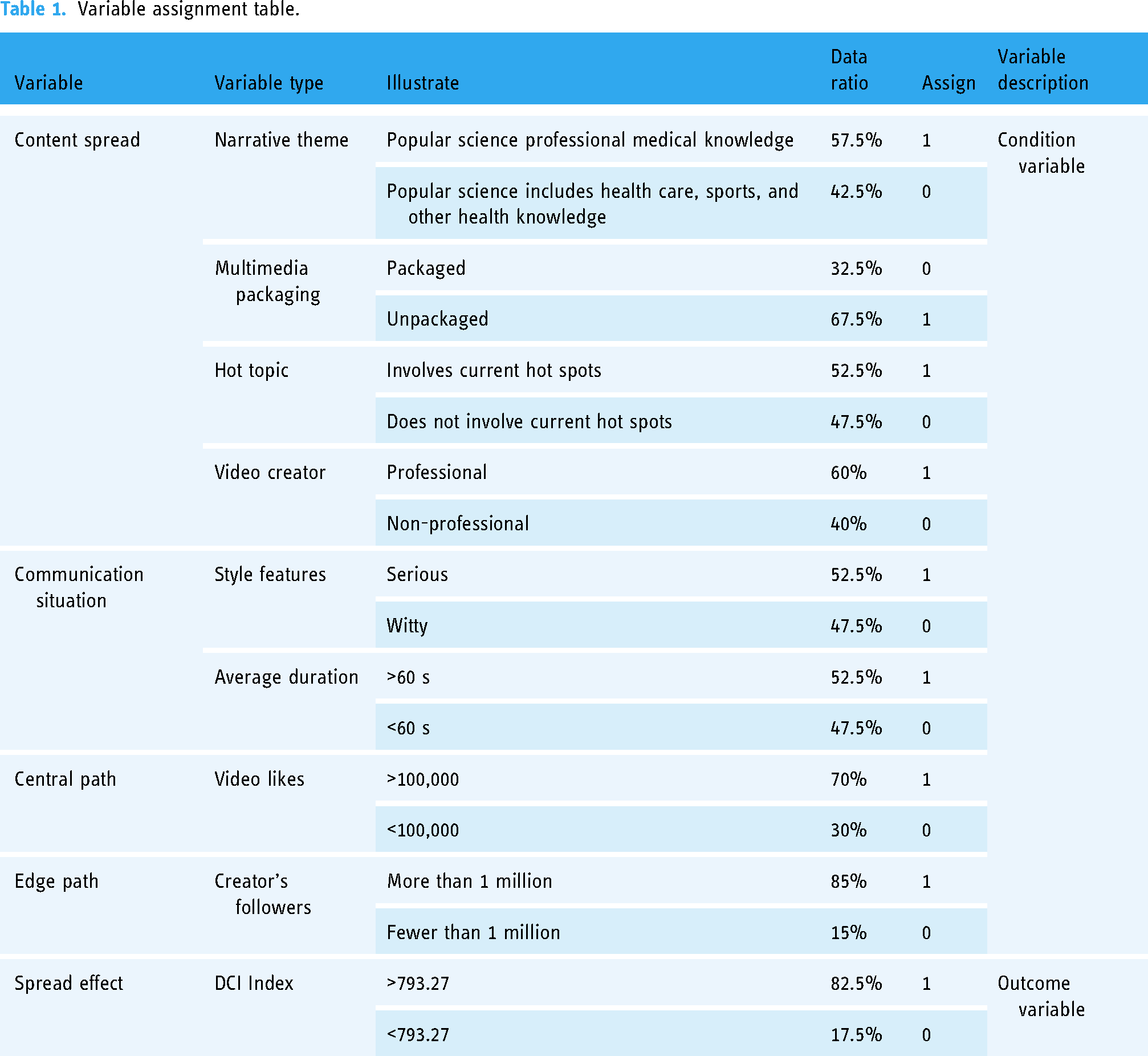
By summarizing and combining this related research, this study analyzed the popularity of TikTok short health science videos according to the four frame dimensions of dissemination content, dissemination context, and central and edge paths, deriving the following conditional variables:
Narrative theme
The classification standards for scientific knowledge differ, and after the integration of short videos, the classification of popular science videos has become more complicated. The same short popular science video may involve multiple types of knowledge, and the knowledge points can be attributed to different backgrounds within that category. As TikTok is a professional short-video social media platform, it does not have any clear section classification. It primarily uses big data to detect user preferences and push content and thus cannot intuitively demonstrate a specific presentation form for health science videos. Thousands of related users were identified by searching TikTok using keywords, such as health, health knowledge, and medicine. The primary related institutions are hospitals and doctors, and the themes of popular science include medical knowledge, health nutritionists, fitness coaches, health lovers, sports, diet, and a healthy lifestyle.
Multimedia packaging
The development of modern technology has been deeply reflected in video creation, particularly the progress of multimedia technology, which has given new life to short video creation. Throughout TikTok's development from 2016 to 2022, its creative form has undergone significant changes. From early simple nonlinear editing to a combination of various special effects, sounds, texts, and animations, short videos lasting approximately 1 min now contain as much rich content as longer videos. The packaging of this multimedia method also exists in health-science videos. Therefore, from a multimedia perspective, this study divides short videos according to whether they are packaged as special effects, animations, or texts.
Hot topic
The “hotness” of a topic can be categorized using two aspects: 1) whether the topic is triggered by a focal event, and 2) whether it develops from a major event. According to Birkland, “focus events are natural disasters and man-made accidents that are sudden, rare, and cause great social concern and lead to political consequences.” 39 Maurice Roche's discussion of major events in Major Events and Modernity is widely recognized. He believes that major events are best understood as “large-scale cultural events with dramatic tension, mass appeal, and international influence.” 40 The hotness of a topic mainly depends on whether it discusses a current focus or a major event. Short videos in health science contain discussions on either a current focus or major events in the field of medical health. In China, the current benchmarks for health-related hot topics are diseases causing substantial harm (such as COVID-19 and AIDS), chronic diseases related to the human body (e.g. high blood pressure and diabetes), and some mental diseases (e.g. depression).
Video creator
The traditional intellectual elite resulted from a scarcity of media resources. A few elites monopolize the channels of knowledge production and add class value to the diffusion of knowledge that the public can only passively accept. However, accompanying the popularization of media tools and network technology, a small number of elites are no longer at the center of knowledge dissemination. The relationships among knowledge-imparting parties have changed, and the boundaries between knowledge producers, disseminators, and recipients have blurred. Professional knowledge can be disenchanted through various knowledge-sharing platforms, and reproducers are born into the professional field. Reproducers, in turn, develop key nodes during knowledge production and dissemination and build a wider knowledge network through recentralization. The credibility of knowledge sources is one of the bases by which users judge content, as it relates to whether the knowledge producer possesses cultural capital, such as a professional field, academic influence, and social status. In information processing, experts are generally believed to be authoritative and reliable” and “their opinions are correct.” Therefore, this study divides video creators into professional knowledge workers (represented by hospitals and doctors) and nonprofessional knowledge workers (represented by others).
Style features
Short video creation demands that creators have a short time period to attract the audience's attention; thus, they must form unique expressions and creative styles. This stylized expression can deepen audience perception. Health science videos usually present two types of expressions: serious and non-serious. Whether the content is serious primarily depends on the style of the language expression. If the expression was mostly oral and humorous, it was regarded as non-serious; if the expression was mostly written or conveyed in professional terms, it was regarded as serious. As popular science, serious content is recognized by TikTok as professional and high-quality and pushed more.
Average duration
The length of a video event is closely correlated with content richness. Generally, the longer the video, the richer the knowledge content. However, because of its short video creation time, TikTok has made breakthroughs in terms of duration. Videos are usually limited to 60 s and are divided into two types: videos <60 s and videos >60 s.
Video likes
According to ELM, the factors affecting the popularity of short videos can be divided into central and edge paths. The central path is related to the video itself, and the most intuitive and measurable item is the number of likes. The higher the number of likes a video receives, the more popular the video and the greater its spread. In general, according to TikTok user habits, creators with more than 100,000 likes per month are called “high-quality creators,” meaning that the videos they create are popular.
Creators’ followers
The content related to the creator is called the marginal path; the creator's number of fans and published videos best reflect whether the creator has potential high popularity. These effects are typically additive. When comparing the habits of TikTok users, creators with more than one million fans are usually called “excellent creators.” The promotion level continues to be superimposed based on algorithmic logic. This method was reproducible. As long as other accounts create high-quality content, they will have the opportunity to expand their dissemination based on the algorithm and become the next most popular dissemination account.
Spread effect
The popularity of short TikTok videos relates to their dissemination. Measurement of the dissemination effect is the result of a combination of factors. In this study, ferment spread was considered as the result variable for studying high popularity dissemination. It refers to the centralized manifestation of the intuitive dissemination effect of the platform's communication content, which can be comprehensively measured by the number of indicators of likes, comments, and shares. 41 In the related literature, many scholars have also used the outcome variable termed “ferment spread.”42–44 Referring to calculating the TikTok communication index (DCI), the Qingbo index reflects the communication influence of TikTok in terms of the number of short videos, interaction status, and user coverage. The specific calculation method is as follows: DCI = Release Index (10%) + Interaction Index (76%) + Coverage Index (14%). This study used the DCI average of the monthly rankings of TikTok video accounts in February as the effect index. For this study's 50 subjects, the overall average was 793.27. If the value is higher than the average, the communication effect is superior and facilitates hot spread.
The first author independently transcribed from video to text. The first and second authors first made decisions using subjective variables, while objective variables do not need to be decided, and then cross-referenced; those that agree are passed, while those that do not agree are referred to the corresponding author for the final decision to arrive at the results. Because this study selected cs QCA as the analytical method, a dichotomy principle was adopted. As shown in Table 1, a proportion greater than 50% was identified as 1, and a proportion less than 50% was identified as 0. The percentage refers to the percentage of accounts belonging to a specific code relative to the total number of accounts.
Variable assignment table.
Results
After coding the condition and outcome variables, this study constructed a table reflecting the hotness of an account's spread, as shown in Supplementary Table 3. We used fs-QCA software to perform operations, including single-factor and path analyses of the combined factors.
Necessity and sufficiency analysis of a single factor
During the fs-QCA software univariate analysis, consistency and coverage are key indicators for measuring the necessity and explanatory power of explanatory variables. Consistency refers to the extent to which all cases included in the analysis share a given condition or combination of conditions that lead to a result. Coverage refers to the extent to which these conditions or combinations of conditions explain the results. This study tests the consistency and coverage of the explanatory variables of a TikTok account to identify the explanatory power of each variable. If the consistency index of the explanatory variable X relative to the result variable Y is greater than 0.8, then X is a sufficient condition for Y; when it is greater than 0.9, X can be regarded as a necessary condition for Y. That is, the set corresponding to Y is a subset of the set corresponding to X. The coverage is between 0 and 1, indicating the extent to which the explanatory variable X can be guaranteed to be the only explanation path for the outcome variable Y; the closer the value is to 1, the closer X is to the only explanation for Y. By substituting the truth table into the software operation, we obtained the results shown in Table 2.
Single factor test results.

Table 2 shows that among the ten variables involved in the calculation, only one reached 0.9 or more (0.909091), indicating that the number of fans is both a necessary factor and condition for the popularity of health-related short video accounts. The coverage rate reached 0.882353, indicating that the number of fans explains approximately 88% of cases. The rest of the factors were less than 0.8, indicating that these factors cannot be used as necessary or sufficient conditions affecting the final result. In the era of short video, flow is primary. The core of spread's hotness is people, including attracting additional fans to ensure a wider spread. Therefore, the number of fans is a necessary condition of the capacity for hot spread. Simultaneously, the number of fans also stimulates creator enthusiasm, thus causing additional creations and forming a virtuous cycle. Other factors, by contrast, are subjective to an extent, and therefore cannot be a necessary condition.
Although some factors do not affect the results as a single factor, they may affect the results in combination. This requires analyzing the combination paths of related variables.
Path analysis of combination factors
Typically, three solutions are obtained after substituting a truth table into a software operation: complex, general, and simple. Among these, the complex solution had the highest consistency value and the strongest explanatory power. Therefore, this study selected a complex scheme to analyze the action paths of combined factors. Figure 1 and Table 3 present the operational results.

Action path of complex solution combination. xszt: narrative theme; dmt: multimedia packaging; ht: hot topic; czz: video creator; fgtz: style features; sc: average duration; dz: video likes; fsl: creator's followers; and ∼: contrary(not).
Interpretation of combination action paths of complex solutions.

Figure 1 shows that 16 paths exist in the complex solution with a consistency of 1. The overall consistency is 1, indicating that these paths have a high degree of necessary explanation. The overall coverage of the 16 paths reached 0.878788, indicating that approximately 87% of the cases were explained, which is a high level of coverage. Path 1 (other non-medical health knowledge*involving current hot topic*non-professionals*witty and humorous*more than 100,000 likes*more than 1 million followers); Path 2 (medical expertise*involving current hot topic*professionals*serious*more than 100,000 likes*more than 1 million followers) and Path 3 (medical expertise*professionals*serious*more than 60 s*more than 100,000 likes*more than 1 million followers) had the highest coverage and consistency. This study therefore focused on parsing these three paths. (* indicates “and”).
In summary, the causal path under the complex scheme adopted here reveals the role of each factor in the spread of the popularity of short TikTok health video accounts. However, because many factors exist, this study uses a simplified scheme and focuses on a more stable factor combination. The following discussion points were obtained:
The factors affecting the spread of account popularity on Path 1 include the following: From the perspective of spreading content, with improvements in living standards, people are paying increasing attention to their physical health and have begun to enhance related connotations and self-cultivation methods, such as maintaining health and sports participation. For instance, in Europe, nearly half of surveyed adults reported having problems with health literacy and not having the necessary competencies to manage their health as well as that of others. 45 Moreover, owing to current high-speed information transmission, people closely seek to stay abreast of trends and not be eliminated. For example, during the COVID-19 pandemic, people sought to acquire relevant knowledge and adjust their behaviors 46 ; thus, subjects involving current popular topics spread with greater facility. Regarding content and context, owing to the more humorous discourse of nonprofessionals, people attain knowledge while being entertained. In the current era of fragmented information, such creators are more likely to be accepted by the main groups of social media users, such as young people. The analysis of the center and edge paths shows that if the number of likes exceeded 100,000, and the total number of fans exceeded one million in the past month, the content was considered popular, and the audience was large, which made it easy to spread information.
The factors affecting the spread of account popularity on Path 2 are as follows: From the perspective of the disseminated content, medical knowledge is relevant to the lives of all people and is urgent and time-sensitive because everyone will eventually become infected. Preventing or curing illness is a characteristic of such knowledge. Studies have shown that weblogs and answer portals primarily address diseases and medications. In particular, Wikipedia provides detailed information on anatomy and procedures. 47 Moreover, because many diseases are seasonal or constitute public health emergencies, such as COVID-19, medical knowledge involving current hotspots is more likely to spread quickly and “go viral” because doctors are deemed to be the most reliable and accurate source of medical information. 48 Only when professional doctors create popular science content can they establish credibility; and residents are willing to believe in and accept their attempts to spread and promote this information. Because they are professionals, doctors who use humorous language will appear frivolous and informal. Using popular knowledge causes them to appear unprofessional. The style of such accounts therefore tends to be serious, based on convincing the audience of facts. Serious video styles have attracted considerable attention because they are likely to lead to trustworthy and subjective judgments among the public.
Hovland introduced experimental psychology into the field of communication science and conducted persuasive communication research. He proposed that persuasion is an effective way to change people's attitudes by offering certain requests to guide the recipient's attitude and behavior toward the persuader's intended direction. The persuader's credibility is an important factor impacting effectiveness and is based on two decisive factors: 1) the audience's trust in the disseminator and 2) the audience's understanding of the professional level of the communicator. 49 A serious video style can enhance the recognition of the creator or persuader, thereby significantly increasing the likelihood that the audience will accept their viewpoint. A serious video style also increases the reliability of the information source. For the public, the greater the source's credibility, the greater its persuasive effect. The center and edge paths were the same as those in Path 1, indicating the necessity of these two factors.
The factors influencing account popularity in combination with Path 3 are as follows. Paths 2 and 3 are essentially identical; however, the difference consists of the lack of hotpots in the content, which is replaced by a context duration requiring more than 60 s. Because TikTok is a short video creation platform, its short duration does not allow for full expression. Thus, TikTok has extended the maximum duration to approximately three minutes, which allows creators to better express creative content, especially health content. For short videos involving knowledge popularization, extending the time limit results in richer information, easier acceptance, and dissemination to many viewers. 50
Discussion
Social media can serve as an effective tool for advancing governmental objectives, and public health is undeniably a significant responsibility of the government. However, in the present scenario, despite the government's efforts to promote health knowledge, it primarily relies on conventional approaches like news, which can be less engaging for the public. The government has yet to explore the potential of short video platforms like TikTok to create more engaging and lively content, which could result in broader public acceptance of accurate information. For example, during the COVID-19 pandemic, the European Council's discussion regarding efforts to find common solutions to emergencies calmed people's fears. 51 This demonstrates that governments can use social media to more effectively disseminate health knowledge.
Simultaneously, one of the major feats of spreading health knowledge using TikTok was to counter the growing number of health rumors on social media, with some studies showing that rumors about viruses being man-made bioweapons during the COVID-19 pandemic were formed during constant changing narrative expressions and audience groups using social media. 52 In addition, the creation of additional social media rumors degrades the work of the government and creates a negative image of government inaction among the public. 53 In confronting this situation, the government must construct correct channels for health information and knowledge dissemination, creating a popular dissemination form to counter rumors and restore its authoritative image. This is in line with this study's purpose, which is to provide a template for governments, organizations, and relevant institutions to quickly establish accounts that can rapidly spread relevant information through an in-depth understanding of how popular health science accounts spread. Specifically, this template will help relevant parties convey high-quality health knowledge to the public and reduce public health risks.
The above path shows that creating a health knowledge popularization account that can spread widely in China remains a challenging task. From the perspective of communication content and context, this study presents a model for professional doctors that focuses on popularizing medical knowledge. However, if this model succeeds, numerous difficulties will exist. First, how will work and accounting be balanced? Because the creators are doctors, it is extremely difficult to form fixed updates in terms of time. Therefore, teams are becoming the mainstream creative method used for such accounts. By hiring a team to shoot, edit, publish, and maintain short videos, the creators only need to express their opinions on camera. Second, expression becomes an issue. Owing to the regulatory review of TikTok, many content releases must be strictly reviewed; therefore, the content created should be carefully considered. Finally, understanding hot topics requires creators to pay long-term attention to current issues, understand medical care, and make accurate judgments.
From the perspective of the central and edge paths, it is difficult to reach 100,000 likes and one million fans. Therefore, TikTok often needs to push the stream, increasing expenses. In turn, this may ill-advised some creators and often requires a strong support team. Therefore, it is currently almost impossible for TikTok's health science content to spread by relying on personal creation; it must be completed through teams. Such a team, which consists of the government or an organization with official backing (mentioned in the previous path analysis), has the goal of shooting, editing, post-production, packaging, promotion, and other means together with the superposition. This must be completed using a team collaboration. The government, as the country's most professional and largest team, is the most suitable to complete this work and also the institution necessary to complete the task. The government, as the largest professional team in the country, is most suitable for accomplishing this work.
Specifically, both national and local health departments must create dedicated TikTok accounts and complete organizational authentication. The health department should establish a media group specifically responsible for production. Specific productions can be completed independently or outsourced. Such production should revolve around the template mentioned here, which will generate popularity, including language, humor, and multimedia packaging. This model is suited to governments and institutions in creating their account platforms. In addition, considering the popularity of the research results and the number of fans, it is advisable to rapidly release a few short videos, use the TikTok streaming mechanism to increase fan numbers, and then create additional sophisticated videos enhancing government's the popularity of the health knowledge accounts and their videos. In the future, we believe that similar accounts will appear on TikTok, greatly enhancing people's acquisition of health knowledge.
Limitations
This basic investigation of the popularity of short TikTok videos shows that they account for the popularization of health science. However, this study had certain limitations that must be addressed. First, we focused only on the popularization of the health sciences. Owing to sample selection, and the research on short video accounts, the results are often context-specific and can only be applied under certain conditions. Second, this study used a qualitative comparative analysis method. Owing to limitations regarding the number of samples and research duration, only TikTok software was selected, which does not represent the characteristics of all social media software. In addition, only 40 popular health science accounts registered on TikTok were selected. Although they represent the characteristics of this account type to an extent, they cannot be analyzed individually, given the enormous number of TikTok accounts; therefore, the results may not be generalizable to all accounts. Finally, because a time difference existed during the sample selection, the samples selected at different times may or may not cause alterations in the results; therefore, the results here only represent the period of February to April 2022. Importantly, owing to the similarity of the creative concepts, content, and audience, the results are universally applicable to a certain extent. Some variables were subjective judgments; therefore, the results may also include certain subjective factors affecting the coding effect.
Recommendations
Regarding future research, first, in addition to focusing on the popularization of health knowledge, studies can also focus on psychology, sports, and other topics. Second, regarding platform selection, it is advisable to extend research to other platforms, such as Kwai and Instagram, to form a consensus regarding the whole Internet. Again, it is recommended to increase data collection over a longer data collection cycle to maximize the results’ applicability. Finally, research methods should be expanded, particularly the use of objective variables, to increase the results’ legitimacy.
Implications
People's desire for health knowledge has never been more urgent, partly because of changes in the social environment, especially in public health, and partly because of the rise in desire resulting from an improved quality of life. In such a diverse environment, the emergence of short video platforms such as TikTok provides another platform for information dissemination, especially health knowledge, which has vastly improved speed and content. For governments, the emergence of such platforms provides for more effective management. By constructing replicable communication templates, health knowledge can be disseminated and people's health can be improved. These are all favorable aspects.
However, it is also necessary to be deeply aware of unfavorable aspects of TikTok and other short-video platforms. These can not only aid the government but also become a tool of lawless elements to spread rumors, attack the government, and cause social unrest. For this reason, the government should introduce more complete policies, and the platform should strengthen its supervision.
Conclusions
With the popularity of short health science video accounts in broadcast content, medical knowledge has become increasingly popular, especially that addressing current hot topics that resonate with the audience. When a person is suffering from a certain disease, the most urgent need is to know the cause. Diseases have seasonal characteristics; therefore, time-sensitive medical knowledge can spread rapidly and go viral. From a communication perspective, a serious video style can easily create hot content. If this style matches the content, relevant health knowledge can be explained by professionals in a serious manner, which enhances the communication effect. Medical knowledge often involves the use of advanced theories. Using a more humorous style will create an impression of informality with the audience and will not spread effectively. Here, the requirements for both the number of likes and fans were relatively high from the perspective of the central and marginal paths. The number of likes and fans in the past month should exceed 100,000 and one million, respectively. Both people and content quality account for spread. Therefore, the greater the number of followers, the higher the probability of knowledge spreading.
Moreover, TikTok, as a short video dissemination platform, offers advantages in terms of rapid production, efficient dissemination, and broad reach. However, it also comes with certain drawbacks, including the potential for less detailed or in-depth content, which may lead to aesthetic fatigue. Consequently, the selection of a platform should be approached with a dialectical perspective.
Supplemental Material
sj-doc-1-dhj-10.1177_20552076231219116 - Supplemental material for Clearness qualitative comparative analysis of the spread of TikTok health science knowledge popularization accounts
Supplemental material, sj-doc-1-dhj-10.1177_20552076231219116 for Clearness qualitative comparative analysis of the spread of TikTok health science knowledge popularization accounts by Yu Tian, Shuaishuai Liu and Desheng Zhang in DIGITAL HEALTH
Footnotes
Acknowledgments
N/A.
Contributorship
Conceptualization: Y.T. and D.Z.; methodology: Y.T.; software: Y.T.; validation: Y.T., S.L. and D.Z.; formal analysis: Y.T. and S.L.; investigation: S.L.; resources: D.Z.; data curation: Y.T., S.L. and D.Z.; writing—original draft preparation: Y.T. and S.L.; writing—review and editing: D.Z.; visualization: Y.T.; supervision: D.Z.; project administration: D.Z.; and funding acquisition: D.Z. All authors have read and agreed to the published version of the manuscript. All authors approve of the version to be published and agreement to be accountable for all aspects of the work.
Data availability statement
All data generated or analyzed during this study are included in this published article and its supplementary information files.
Declaration of conflicting interests
The authors declared no potential conflicts of interest with respect to the research, authorship, and/or publication of this article.
Ethical approval
As the article does not involve animal and human experiments, there is no need for ethical approval.
Funding
The author(s) disclosed receipt of the following financial support for the research, authorship, and/or publication of this article: This article was funded by the National Social Science Fund of China, Project Title: Research on the Construction of Sports All-Media Communication Pattern in the New Era, grant number: 21&ZD345.
Patient consent
As the article does not involve human experiments, there is no need for patient consent.
Guarantor
D.Z.

Supplementary material
Supplemental material for this article is available online.
References
Supplementary Material
Please find the following supplemental material available below.
For Open Access articles published under a Creative Commons License, all supplemental material carries the same license as the article it is associated with.
For non-Open Access articles published, all supplemental material carries a non-exclusive license, and permission requests for re-use of supplemental material or any part of supplemental material shall be sent directly to the copyright owner as specified in the copyright notice associated with the article.
