



Abstract
Registration
CRD42023408091
Disparities in cancer care contribute to higher cancer mortality rates. 1 Online information can be a valuable resource to guide cancer patients worldwide and a first step towards providing better and broader access to cancer healthcare services. However, factors hindering or facilitating online information-seeking behaviours among cancer patients produce inconsistent results and remain questionable. Therefore, the current systematic review is aimed at gaining a greater understanding of cancer patients’ barriers to and facilitators of online health information-seeking behaviours.
In recent years, the interest in the use of the Internet as a means of delivery of online health information has rapidly grown in the general population 2 as well as in the cancer context. 3 Findings from the first Health Information National Trends Survey (HINTS) indicated that cancer patients often search for online cancer-related information before talking with their healthcare professionals. 4 Reasons for searching online information span from the need to understand and manage disease symptoms, to finding the best treatment options, and preparing for patient-doctor communication. 5 Generally, searching for information online produces advantages for cancer patients. For example, online information has enormous potential to improve individuals’ health by overcoming barriers of time and space. Moreover, positive attitudes towards searching the Internet for health information often make cancer patients informed and actively involved in the decision-making process, which are all key factors for person-centred care. 6 However, online information-seeking behaviours are not always present and they differ according to personal, socio-demographic and contextual factors, determining disparities and inequalities in accessing information. 7 For instance, online health information seekers tend to be better educated and wealthier than those who do not seek online health information. 8 Cognitive abilities, such as information processing skills and health literacy, are also considered major facilitators of online information seeking. 9 Moreover, the use of the Internet for online health information seeking is greater among Caucasians than among ethnic minorities 10 and among the urban population than among people living in rural areas.11,12 Also, not being employed full-time, having good digital literacy and being female have been identified as consistent influences of higher Internet health information searching. 13 On the other hand, other studies focussing on cancer information have found mixed results on the influence that demographic characteristics such as age, gender, education and income can have on online information seeking. 14 For example, younger patients were found to seek more online health information than older ones15,16 whereas, in other studies, older adults were the ones seeking more information online 13 or no correlation was found between age and online information seeking. 17 Moreover, there is a wide range of psychosocial factors that produced controversial findings. For instance, psychological distress was found to lead to either apprehension or avoidance of information, specifically cancer-related anxiety and beliefs have been found to be associated with decreased online information-seeking behaviours 18 as well as greater information-seeking behaviour. 19 Lastly, patients may look for online information because they are not satisfied with what is reported by their healthcare professionals; however, there are cases when patients look for online information to complement what they have been told by their healthcare professionals. 20
Therefore, there is a need to systematise existing literature in order to highlight where there is room for further investigations and clarify in which situations results are mixed in terms of barriers to and facilitators of online cancer information-seeking behaviours. Identifying barriers and facilitators is important for a number of additional reasons. First, it is widely accepted that patients have better healthcare outcomes when they are more informed about their disease, further involved with their treatment choices and more invested in their healthcare pathways. Therefore, online informative materials can produce positive outcomes for cancer patients in terms of a better quality of care, but also in terms of prevention. 14 Secondly, understanding the factors associated with health-related Internet use would be useful in designing strategies aimed at reducing the digital divide. The digital divide is defined as the gap between people who have access to technology and those who do not have access to it. 21 Many factors might contribute in reducing the digital divide, including socio-demographic access (e.g., age, education, race/ethnicity, residence and health outcome) 22 as well as psychological responses (e.g., trust and self-efficacy) and physical access to technologies (e.g., Internet access, eHealth literacy). 23 Thirdly, broader knowledge of which factors facilitate or, on the contrary, hinder the use of the Internet for cancer-related information, might inform web-based education and digital information tools as well as guide the development of innovative and personalised eHealth interventions for cancer patients.24,25
In line with the Comprehensive Model of Information Seeking (CMIS 14 ) the current systematic review aims to identify, apprise and synthesise evidence of patients’ barriers to and facilitators of online health-related information-seeking behaviour among cancer patients to shed light on the potential disparities in accessing online health-related information and support. The CMIS was developed to investigate the predictors of health information-seeking behaviour based on the characteristics and perceptions of information seekers; the model was originally developed for information in a traditional media context; however, the current systematic review refers to an expansion of the CMIS advanced by van Stee & Yang (2017) 14 which considers the variable of the online/Internet use.
Methods
The guidelines of the Preferred Reporting Items for a Systematic Review and Meta-analysis (PRISMA 26 ; see Supplementary Material 1) were followed in conducting the current review. Moreover, the protocol of the present systematic review was registered in the PROSPERO international Prospective Register of Systematic Reviews database in advance of the review being conducted (registration ID = CRD42023408091). Finally, the PICOS tool was implemented to highlight the aim of the current review, although it was not feasible to include the comparison element due to the objective of this review 27 (see supplementary material 2).
Eligibility criteria
Participants
The population comprehended adult cancer patients at any stage of the disease or cancer survivors. The studies that counted only minors (<18 years old), healthy subjects, patients’ relatives, informal caregivers or healthcare professionals in the sample were excluded; mixed sample studies were also excluded.
Phenomenon of interest
The phenomenon of interest of the present review is online cancer information-seeking behaviours and health-related Internet search among cancer patients or cancer survivors. The main focus was on the behaviour, not on the source of the search, thus, studies with evaluations of web pages or apps were excluded. The studies that targeted, mentioned or evaluated offline sources of information seeking, such as pamphlets or television, and telemedicine were excluded too. Any other type of digital intervention was excluded as well in order to better observe the factors influencing the active behaviour of online information seeking. Finally, where Internet use was related to only seeking support, not information, and social media support groups, studies were excluded.
Outcome
The studies were included when the main outcome provided information on barriers to and facilitators of the online information-seeking behaviours in cancer patients or survivors. Barriers and facilitators suitable for inclusion consisted of socio-demographic characteristics, illness-related characteristics, lifestyle, psychological factors, but also external factors such as culture, social norms, financial factors, broader social environment and interpersonal relationships.
Study design and publication type
Studies with qualitative, quantitative and mixed methods designs were included. Single-case studies were not included due to lack of generalisability. The current systematic review included all the studies that were published in the English or Italian language. Reviews, protocols, conference abstracts, editorials and other types of publication considered as grey literature were excluded.
Information source and search strategy
The search sources and online databases used to identify the studies for the present systematic review were PubMed, Scopus and EMBASE. No restrictions were applied regarding the year of publication, and the search was conducted from database inception to March 2023. The search strategy was developed in consultation with a librarian at the European Institute of Oncology. The search strategy was designed in PubMed and then translated to the appropriate MESH/thesaurus terms and formats for the other databases. The literature search was constructed based on terms related to the following PICOS criteria: (1) cancer patients or survivors (e.g., neoplasms, cancers, tumours, oncology, malignant, metastasis), (2) online cancer information-seeking behaviours (e.g., information-seeking behaviour, health information exchange, access to information, health literacy, Internet access, Internet use, online, social media, web) and (3) barriers and facilitators contributing to information-seeking behaviours (e.g., digital gaps, attitude to health, health beliefs, fear, anxiety, shame, social support system, emotional wellbeing, psychosocial factors). The complete search strategy is detailed in supplementary material 2. Apart from conducting the initial search, we also performed backward and forward reference searches on the included studies. However, these additional searches did not yield any new studies beyond what was already retrieved through the database search.
Study selection process
The studies retrieved from the search were uploaded to the Rayyan software 28 in order to facilitate the study selection process. The Rayyan software performed an initial identification of duplicates, which was then checked manually. Next, the studies were sorted into alphabetical order by the author's name to facilitate independent screening of all records by the reviewers (GF, VC, LC). Each reviewer evaluated the eligibility of the studies by title and abstract, reporting decisions to Rayyan in the blind-on mode to avoid influencing the evaluation of the other authors during the Inter-Observer Agreement (IOA) assessment phase. 29 In order to ensure greater reliability in the selection of the studies, those evaluated by each reviewer (e.g., GF or VC) were independently re-evaluated by another reviewer (LC or SP). The percentage of IOA was 85%. After switching to blind-off mode, conflicts, if present, were resolved by discussion, and a third reviewer (DM) was consulted as needed. The reconciliation process was performed after calculating the percentage of agreement. 29
Data extraction
All data were extracted by one reviewer (VC) and confirmed to be accurate and complete by another reviewer (GF, LC, or DM, or SP) in the same Excel sheet. The authors discussed with each other daily in order to ensure a coherent data collection methodology and accurate data extraction. Data from the included studies related to country, study design, objectives of the study, sample size, age range, mean and standard deviations, ethnicity, diagnosis and data collection type were extracted using an Excel sheet (version 2016; Microsoft Corporation), as reported in Table 1. The scope of Internet use was collected, separately as reported in Table 2. Barriers and facilitators were organised in Table 3.
Results of included studies.

Scope of Internet use in the included studies.

Note: The Study ID numbers refer to the ID of the included studies reported in Table 1.
Themes and subthemes as barriers and facilitators in the included studies.

Note: ID numbers refer to the ID of the included studies reported in Table 1 and in the Results section.
Quality assessment
The methodological quality assessment of the included studies was evaluated using the Mixed Methods Appraisal Tool (MMAT 30 ) suitable for assessing the quality of different categories of studies. Specifically, for the current systematic review, the quality of qualitative and quantitative studies was assessed. For each method five closed questions regarding the approach, the sampling, the data collection and the analysis and interpretation methods were answered by two independent reviewers (GF and VC) that assigned zero point if the answer was ‘no’ and one point if the answer was ‘yes’, as prescribed in the MMAT guidelines (Table 4). Discrepancies were discussed, and consensus was reached.
Quality assessment of the included studies following the criteria from the mixed methods appraisal tool.
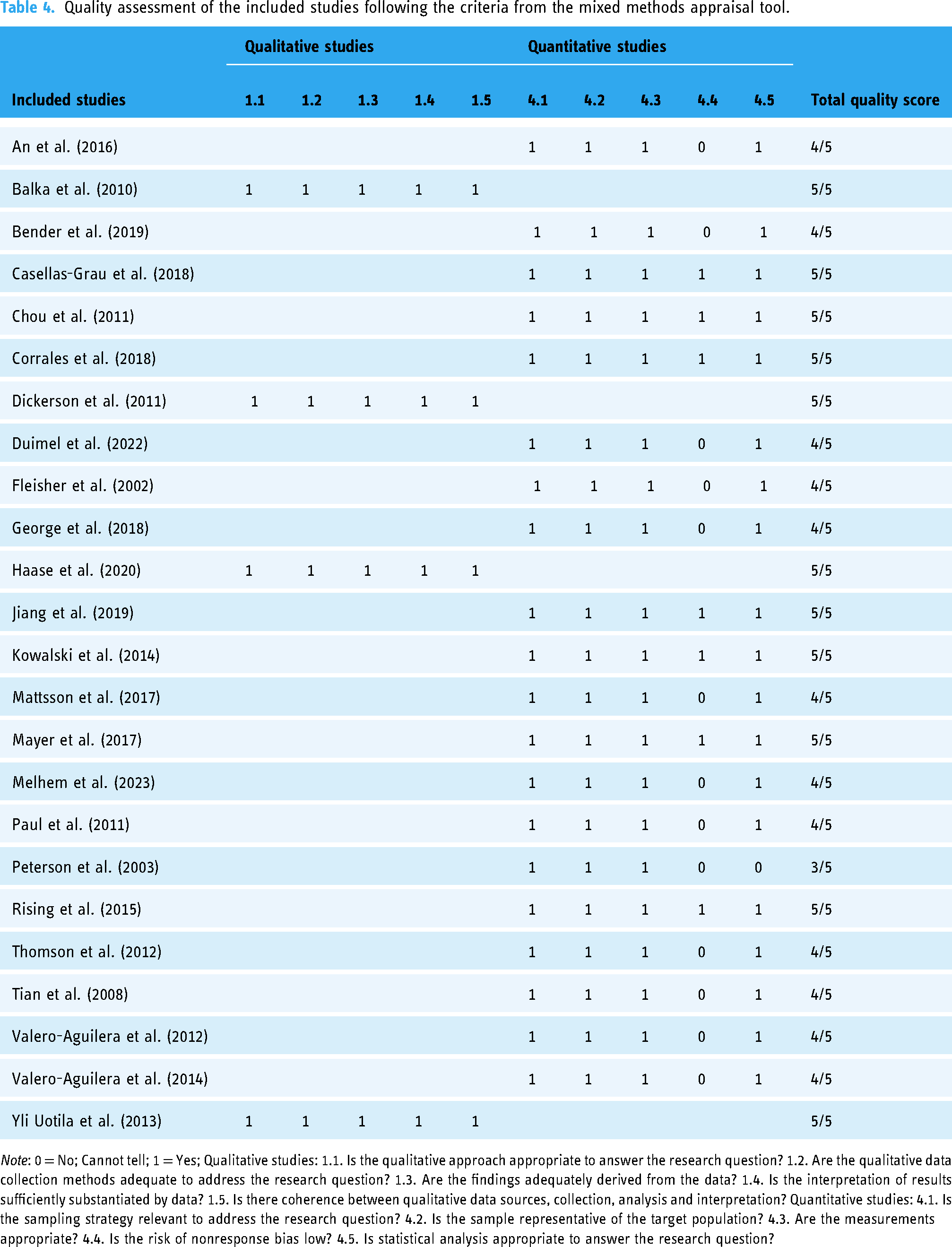
Note: 0 = No; Cannot tell; 1 = Yes; Qualitative studies: 1.1. Is the qualitative approach appropriate to answer the research question? 1.2. Are the qualitative data collection methods adequate to address the research question? 1.3. Are the findings adequately derived from the data? 1.4. Is the interpretation of results sufficiently substantiated by data? 1.5. Is there coherence between qualitative data sources, collection, analysis and interpretation? Quantitative studies: 4.1. Is the sampling strategy relevant to address the research question? 4.2. Is the sample representative of the target population? 4.3. Are the measurements appropriate? 4.4. Is the risk of nonresponse bias low? 4.5. Is statistical analysis appropriate to answer the research question?
Data synthesis
The thematic analysis of data was conducted to identify and synthesise themes of barriers to and facilitators of health-related online information-seeking behaviours. 31 Data related to information-seeking behaviours were primarily deductively coded referring to the CMIS. 14 However, data that did not fit within the above-mentioned model were inductively coded. Qualitative data on barriers and facilitators were integrated by creating narrative summaries and reported in an Excel spreadsheet. Quantitative data extracted from quantitative studies underwent a conversion process, turning them into ‘qualitatively described data’ for seamless integration with qualitative information. 32 This step involved translating numerical findings into textual narratives and interpretative descriptions. Subsequently, a thematic analysis was executed as a means of integration. During this stage, the ‘qualitatively described’ data were amalgamated and merged with the outcomes from qualitative studies to identify common barriers and facilitators based on similarity.
Included studies were independently coded by two reviewers (GF and VC). This was followed by a discussion between more reviewers (GF, VC, DM, LC, SP, RG, GP) to reach a shared understanding of the themes. Similar barriers or facilitators were grouped together in descriptive sub-themes in order to avoid repetition and overlapping (e.g., finding the amount of information overwhelming was associated with finding the amount of information to be stressful or confusing33,34). As reported in Table 3, themes were listed with reference to each article in which the barrier or facilitator was detected, this allowed the authors to assess the frequency of each subcategory and, theme permitting, a more accurate analysis and interpretation of the results.
Results
Study selection
The search from the databases PubMed, Scopus and EMBASE resulted in 2379 studies. Duplicates (n = 593) were removed and a total of 1786 studies were screened by title and abstract. Out of these, 1663 were subsequently excluded; at last, the full-text analysis of the remaining 123 studies was conducted. Out of these, 99 were excluded, as they did not meet the eligibility criteria. A total of 24 studies were finally included. Figure 1 shows the flow chart of the selection process in detail, together with the reasons for exclusion.

PRISMA 2020 flow diagram for new systematic reviews which included searches of databases and registers only.
Quality of the studies
The majority of the studies obtained four (n = 12) and five (n = 11) points out of five points and only one study gained three points. The quality assessment results for each study are reported in Table 4.
Study characteristics
The studies included in the current review cover the last 20 years, being published between 2002 and 2023 (Figure 2); most of the studies (62%) were carried out in the USA and Canada,22,33–46 just two of them were performed in Jordan and Australia,47,48 and the remaining 33% were conducted across different European countries.24,44,49–54 The preponderance of the studies (n = 20)22,24,34–36,38,39,41–53 was quantitative (16 cross-sectional, 4 longitudinal), and the others were qualitative (n = 4).33,37,40,54 The sample sizes of the studies ranged from 15 37 participants to 27,491.22,50 The age of the participants ranged from 18 to 95 years, but most of the studies indicated, approximately, a mean age of 59. The most common diagnosis among the included studies was breast cancer (58%),24,33,35,38,40–42,47,50,51,53,54 followed by urological cancer (predominantly prostate cancer; 45%)24,34,37,38,40–42,44,51–53 and colorectal cancer (20%).39,40,42,45,47 Further information of the study characteristics can be found in Table 1.
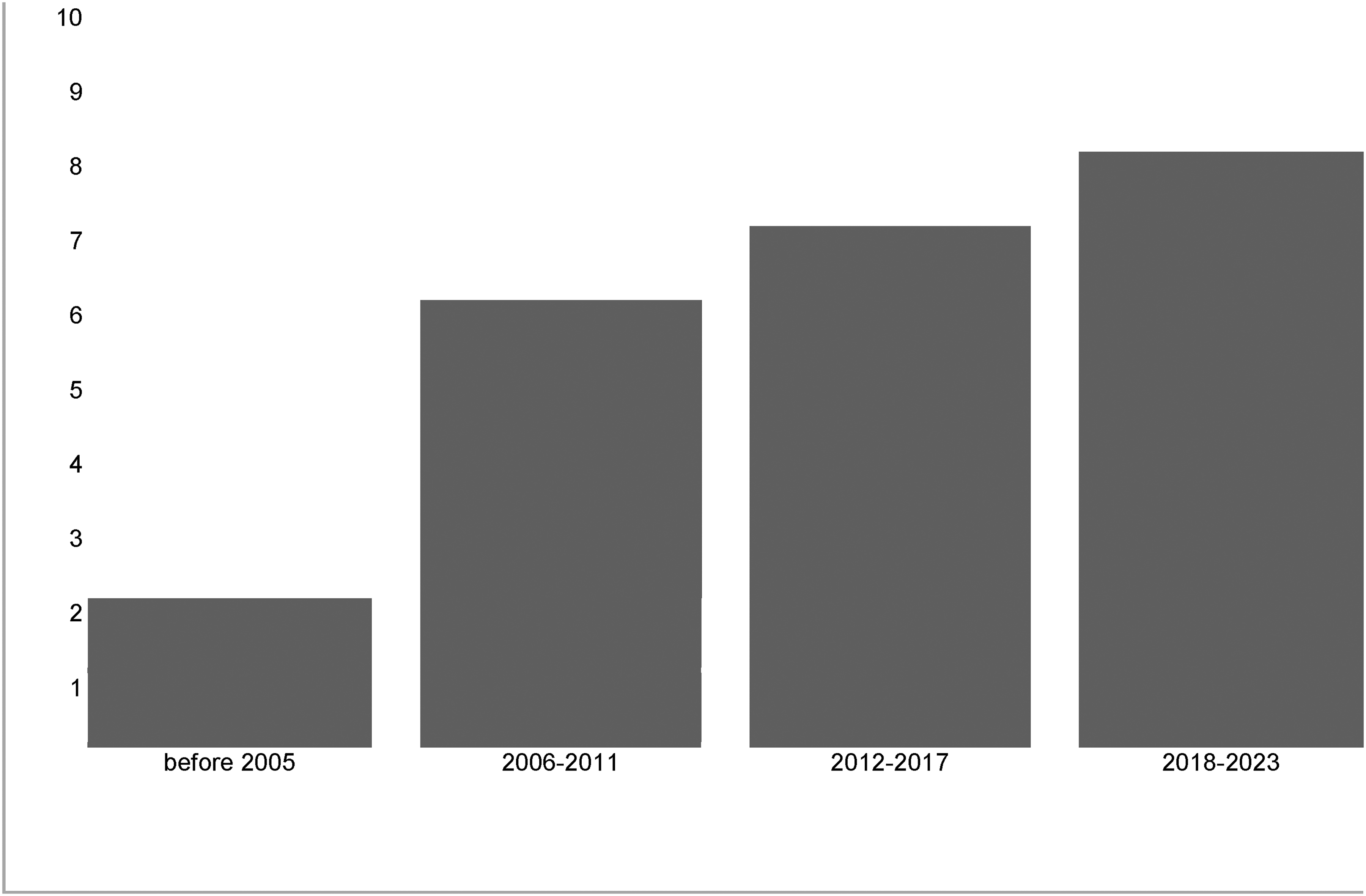
Publication years distribution of the included studies.
The scope of Internet use was predominantly to obtain information regarding cancer and health in general (70% of the studies),22,33–36,40–43,46–52,54 followed by the search for the best treatment options and the subsequent implications (50%)33–40,44–46,53 and for the coping mechanisms and experiences of other patients (25%).24,33,35,44,49,54 Information regarding prognosis and likelihood of survival was researched by cancer patients participating in five studies33,36,37,44,53; clinics, hospitals and best medical experts were sought by the participants of four studies35–37,51 and, lastly, the Internet was used in order to buy medicines and schedule appointments39,41,51 (see Table 2).
Synthesis of results
In the current review seven different themes of barriers and facilitators were established: socio-demographic characteristics (mentioned in 75% of the studies), psychosocial aspects (75%), accessibility (37%), quality and quantity of information (37%), cancer stage and symptoms (37%), aspects related to healthcare professionals (29%), and digital literacy (12%).
Barriers
Socio-demographic characteristics. Socio-demographic characteristics were the most recurrent barriers, being reported in 62% of the included studies. Older age was (approximately above 59) the most frequent barrier when it comes to Internet use and online information-seeking behaviour.22,35,39,41–46,48,50–53 Lower education and lower income, respectively addressed in six22,35,41,48,51,53 and five39,41–43,53 studies, have also been evaluated as relevant barriers. For example, Jiang and colleagues (2019), 41 noted how less than 8 years of institutional education and income between 0 and $9999 a year were strongly related to less frequent online information-seeking behaviours. The absence or low frequency of online information-seeking behaviour was occasionally associated with belonging to an ethnic minority group (e.g., Hispanic in the USA 22 ) and speaking a foreign language (e.g., other than German in Germany 50 ), as reported in four studies.22,41,47,50 At last, male gender,35,48 being unemployed 53 and not having insurance coverage 45 were also mentioned as possible barriers in cancer patients.
Psychosocial aspects. Feelings of anxiety, confusion and overwhelmedness led to avoidance and discouraged the participants from seeking online information.39,44,49 Post-traumatic stress-related symptoms (e.g., re-experiencing, avoidance/numbing and hyperarousal following the diagnosis) were also detected as barriers influencing patients’ psychological wellbeing. Moreover, patients with post-traumatic stress symptoms were found to avoid seeking any type of information due to high levels of perceived distress while looking for online information. 33 Another barrier to online information seeking was found in breast cancer patients who reported the need for face-to-face contact with friends, family and doctors, instead of the consultation of online sources. 33 Another psychosocial barrier was the perception that searching for online information is not necessary or essential. Often patients stated not having time for it or not being interested or motivated.22,36,42 Lastly, lack of a social support system, as being unmarried and not having any friends or relatives, also played a role in three studies.48,50,51
Accessibility. In three studies,22,52,53 cancer patients living in rural areas were less likely to search for information on the Internet in comparison to those living in other areas, especially for health information search purposes. Having no or limited access to a computer or the web was found to be a barrier as cancer patients could not access the Internet and, hence, information.24,36
Quality and quantity of information. Participants of the included studies addressed the complex matter of the legitimacy and reliability of the health-related information that one can find online as potential barriers to online information seeking.33,34,37,38,42,43,47 Cancer patients were overwhelmed, stressed, anxious and depressed, not only by the quantity and the complexity of the information available, but also by the fact that often online information conflicted with one another and was not tailored to the individual. For example, Bender and colleagues (2019) 34 reported that some patients were confused on how and what information applied to them, others reported having difficulties in finding clear and understandable information.
Cancer stage and symptoms. In relation to patients’ health conditions, three studies reported higher cancer stage being associated with the absence, or lower frequency, of online information-seeking behaviours.22,44,50 However, not perceiving any symptoms, was also associated with lower frequency of searching for information online in colorectal cancer patients. 45
Aspects related to healthcare professionals. Barriers to online-seeking behaviours were found in cancer patients who expressed their preference for consulting directly with healthcare professionals instead of searching for cancer-related information online. 36 Whilst in another included study patients with various types of cancer reported being discouraged by healthcare professionals themselves who referred to not looking up anything under ‘Dr Google’ because it ‘gets one's mind going’. 40
Digital literacy. A connection between lower digital and eHealth literacy, together with limited computer skills, was found to be a strong barrier to online information seeking. Indeed, breast and colorectal cancer survivors with low or none digital and eHealth literacy were found to be less likely to acquire information online and to receive technology-enabled cancer care. 47
Facilitators
Socio-demographic characteristics. Similarly to the identified barriers, age played a crucial role also as a facilitator. Indeed, younger age was mentioned as a facilitator of online information seeking in 15 studies.24,34–36,39,41,42,44–48,50,51,53 Comparably higher education and greater income also seemed to be facilitators, being reported, respectively, in 1324,34–36,41,43,45,47,48,50,51–53 and 10 studies34,36,39,41–43,45.,47,52,53 Moreover, having insurance coverage22,45,50 and being employed,47,48,53 again, showed to be more cited as facilitators. Belonging to an ethnic majority and being native speakers in the country of residence was not as present as a facilitator the way it was as a barrier; however, it contributed to online information seeking of the participants of two studies.22,41 Lastly, two studies mentioned the female gender as a facilitator of online information seeking in patients with various types of cancer and cancer survivors as well.35,42
Psychosocial aspects. For cancer patients, self-efficacy and low psychological distress resulted to be facilitators of searching for health-information online and for making treatment decisions.22,34,37,38,41,44,53 For example, in Fleisher and colleagues’ study (2002), 38 participants reported feeling empowered by having easy access to information and not finding it confusing or overwhelming. Moreover, the need to be in control of all the decisions regarding general health and treatments, 33 together with having anxiety and emotional or informational needs, represented notable facilitators.33,34,36,37,51,54 For example, in Yli-Uotila and colleagues’ study (2013), 54 breast cancer patients expressed the need for emotional support as a result of negative feelings and lack of peer support, which encouraged them to look for further online information and support. Moreover, their needs for informational support were not adequately met by public healthcare systems, which, in turn, resulted in increased online information seeking. Consistently, another prevalent facilitator in the included studies was the presence of social support systems. Indeed, being married, and having a partner, family and friends were detected as facilitators of online information seeking.36,38,48,50–52 Colorectal cancer patients participating in one included study reported searching for information online due to experiencing embarrassing symptoms (e.g., digestive and different elimination symptoms) and being ashamed to talk about such symptoms with someone else. 45 Lastly, post-traumatic stress symptoms, such as Internet rumination and consequent post-traumatic growth (e.g., personal strengths, appreciation of life and spirituality) were also cited as facilitators in patients with breast cancer.44,49
Accessibility. Living in urban areas22,34,52,53 and having broadband Internet access, with the possibility to access the web from multiple devices,34,41,42,54 represented important facilitators for cancer patients.
Quality and quantity of information. In relation to the quality of the health-related information available online, cancer patients in four studies had the perception that the Internet was useful for health-related information and social support.35,37,42,44 For example, prostate cancer reported using eHealth to read/listen to other men's prostate cancer stories, to offer their own and to get personal opinions for help in making a treatment decision. 44
Cancer stage and symptoms. Lower cancer stage and having just been diagnosed were detected as facilitators.22,36,38,51 Having a comorbid condition (e.g., hypertension, diabetes, cardiovascular disease or other chronic illnesses) or undergoing aggressive treatments, were reported as facilitators in patients with breast, colorectal and urological cancer.47,53 Such patients often searched the Internet for information regarding risks, consequences and benefits of treatment in the short and long term.
Aspects related to healthcare professionals. The concern with knowledge limitation of the health care professionals (e.g., nurses, doctors, physicians and clinical centre's staff) or not having access to a healthcare professional were observed as facilitators to Internet search in four studies.24,37,40,54 On the other hand, having a regular healthcare professional, good patient task behaviours (e.g., participation with doctors, question asking behaviours, information gathering prior to a doctor appointment and good relationship with doctors 38 ) or family members that search for information online were also considered facilitators in three studies.36,38,42 Moreover, being referred to trusted websites by healthcare professionals and being guided in learning which information is reliable and up to date or not, were also spotted as facilitators of Internet use. 40
Digital literacy. Good computer skills together with eHealth literacy were found to be facilitators of online information seeking for patients with urological and breast cancer.24,34
Discussion
The current systematic review identified 24 studies that investigated cancer patients’ barriers to and facilitators of online health information-seeking behaviours. Identified themes are coherent with those highlighted in the CMIS, 14 although reported in slightly different terms. Indeed, we identified both ‘health-related factors’, namely socio-demographics, cancer stage and symptoms and ‘information-carrier characteristics’, namely accessibility and quality and quantity of information, possibly contributing to online information-seeking behaviours. Differently from the model, we did find less information about cognitive evaluations (e.g., beliefs and salience) but we retrieved other potential factors contributing to seeking behaviours such as the role of healthcare professionals and various psychosocial factors (e.g., distress and social support) as well as the seekers’ digital literacy levels.
In line with the existing literature, socio-demographic characteristics were reported both as barriers and facilitators in most of the included studies. Generally, older age, lower income, lower education levels, belonging to a minority ethnicity group and being male were often associated with limited or no engagement in online information-seeking. 2 While the connection between lower income and reduced online information-seeking behaviour may seem logical due to the costs associated with devices and Internet access, the link with age may be less clear. Specifically, age emerged as a recurring theme across many of the included studies, with 54% of them mentioning older age as both a barrier and a facilitator in the information-seeking process. This finding underscores the ongoing age-related debate in the existing literature on online health information seeking, affirming conflicting viewpoints in previous studies.55,56 Some studies suggest that age can be a barrier because older individuals may face challenges or resistance to using the Internet due to limited familiarity with technology or physical impairments such as vision problems or motor difficulties. 56 Conversely, recent publications23,47 did not identify older age as a barrier to online information seeking, suggesting a potential shift and increase in Internet usage among older adults. 57
Another relevant result that emerged from the current review is the role of psychosocial aspects on online information-seeking behaviours. It is interesting to note that, equally to age, also psychosocial aspects were reported both as barriers and facilitators (mentioned respectively in 45% and 66% of the included studies). On one hand, coherently with the existing literature, 58 negative emotions (e.g., anxiety, stress, confusion and need for control) were found to act as defensive mechanisms or as avoidance strategies in various cancer patients for not searching for further online cancer-related information. As suggested by another study, 59 such negative emotions could discourage cancer patients from seeking information online by negatively affecting their self-efficacy and trust in their health-related and digital skills. On the other hand, having anxiety and a need for control was found to lead cancer patients to search for as much information as possible. 36 In this case, online health information seeking represents a strategy to cope with negative emotions and feelings. 18 Perhaps, the latter result can be further supported by the literature on a phenomenon known as ‘cyberchondria’. 60 Cyberchondria refers to the excessive or repeated online searches for health-related information associated with anxiety-related pathologies and symptoms. Such behaviour has the function of reassuring one's unrealistic health concerns or confirming one's convictions on what is happening to them regarding health conditions, thus promoting the continuation or increase of the searching behaviour as well the anxiety levels, in a vicious circle. 61 Emerging evidence draws attention to various vulnerability factors that could lead to cyberchondria, including personal characteristics such as female gender, younger age, as well as engagement in particular forms of online behaviour 62 and these findings are certainly coherent with the factors that emerged from our results.
Regarding social support, the current review highlights the significance of marriage or having a close social network as a facilitator for seeking health-related information online. However, prior studies have presented conflicting findings on the role of social support.63,64 It's possible that when a partner, family member or friend expresses concern about a loved one's cancer diagnosis, this concern may extend to the patient, prompting increased online information seeking. 55 This aligns with the concept of ‘worry’ proposed by Van Stee & Yang (2018), 14 which identifies cancer-related worry as a catalyst for seeking health information online.
Direct interactions with healthcare professionals were found to be highly significant for cancer patients. The need for face-to-face contact was found to discourage cancer patients to rely on the Internet for cancer-related information. 32 Cancer patients often report being reassured and supported by direct and open communication with healthcare professionals to the extent that, in many studies, a face to face contact is preferred over online support and information. This confirms the relevance of the doctor–patient relationship, often providing social and emotional support beyond medical advice.65,66 However, the current review also detected a certain degree of distrust and concern with the knowledge of the physician, thus contributing to facilitating online information-seeking behaviours. 67 Moreover, in some studies, healthcare professionals were the ones who discouraged patients from searching for online information. This result is in line with the existing literature, as many healthcare professionals do discourage their patients and the general public from health-related Internet use because the shared information is often inaccurate or promotes unproven treatments. 68 Nevertheless, there are some patients that reported being referred to trusted websites by healthcare professionals, in fact, there are credible sources that can be addressed if advised by a professional. 69 The role of the doctor is therefore a strong influencing factor, able to either facilitate or hinder online information-seeking behaviours among cancer patients.
While doctor–patient communication is typically crucial for patients, there are instances in which cancer patients opt to seek online information instead of directly discussing their symptoms related to their colorectal cancer diagnosis with healthcare professionals. This choice may arise from feelings of embarrassment or discomfort in explaining their symptoms. 44 Embarrassment and stigma are actually frequently reported in the literature, not only with respect to colorectal cancer, but also regarding mental health problems, 70 cervical cancer 71 and sexually transmitted diseases. 72 The fact that the patients were ashamed of talking to someone (e.g., family, friends or healthcare professionals) incentivised them to search for information online.
Another relevant and interesting result that emerged from the current review was the effect of Internet accessibility and the digital literacy. Surprisingly, low access to the Internet and low digital skills, whilst apparently considered as crucial factors contributing to online information seeking, were the less frequently mentioned barriers. 73 Consistent with this perspective, McCloud and colleagues (2016) 74 observed that despite unrestricted Internet access and no limitations on devices, disparities in online information-seeking behaviour persist. This suggests that accessibility-related barriers might be less significant than commonly assumed.
Aspects related to cancer stage and health condition in general were also found to be correlated with diverse online information-seeking behaviours. For example, a higher cancer stage was detected as a barrier in 12% of the studies, while having just received the cancer diagnosis has shown to be a facilitator (16%).36,38,51 These findings emphasise the dynamic nature of cancer patients’ information-seeking behaviours, which can be influenced by their unique circumstances and emotional states. 75 Perhaps, individuals diagnosed with cancer at an earlier stage may exhibit higher levels of curiosity and a desire for information, as they are at the outset of their journey and seeking guidance on the best course of action. Conversely, those facing more advanced stages of cancer may experience increased anxiety, which can sometimes deter them from actively seeking information online. In fact, some individuals at advanced stages of cancer might become more anxious precisely because of the information they encounter online. 76 The abundance of information, especially concerning the potential challenges and outcomes associated with advanced cancer, can be overwhelming and distressing. Patients need assistance in navigating the vast sea of online resources, discerning between reliable and misleading information and managing the emotional toll that a cancer diagnosis can bring.
Indeed, strongly connected to the association between cancer stage and seeking behaviours, the quality and quantity of information found on the Internet emerged as barriers to and facilitators of online information-seeking behaviour in 37% of the included studies. Factors related to the information, such as stressfulness and usefulness, reliability, complexity and amount were determinants of the frequency of online information seeking in the included studies and in other literature. 77 For example, cancer patients were inhibited from searching for information online when they found great amounts of information and did not have the right tools to discern what was reliable and useful for their specific condition. In addition, the information was often difficult to understand.42,43 Conversely, perceived usefulness, clarity and self-efficacy motivated the patients to search the Internet for health-related information. 14
Study gaps identified
The included studies provided a wide variety of possible barriers to and facilitators of online health-related information-seeking behaviour; however, several gaps in the literature emerged. There is a need to further explore mechanisms that can explain how a specific factor could influence online information seeking in cancer patients. For example, older age was the most frequent barrier; however, processes behind the associations between age and online information-seeking behaviour were not meticulously elaborated in the included studies. Also, to gain a comprehensive understanding of how age influences online health information seeking, further research is needed to include diverse populations and health contexts. Research that encompasses a broader spectrum of age groups, health conditions and socio-demographic backgrounds will help us discern the nuanced factors that impact individuals’ tendencies to seek health information online. Additionally, regarding the cancer stage and symptoms, no explanation or hypothesis was provided on why a higher cancer stage is often associated with absent or lower online information seeking. Moreover, evidence synthesised in the current review highlighted affective (i.e., anxiety) and relational (i.e., social support) components contributing to seeking behaviours. It is important to consider the complex interplay between objective (e.g., socio-demographics and sources), cognitive (e.g., beliefs), affective (e.g., anxiety) and social (e.g., family, friends and healthcare professionals) components. 14
Therefore, further studies should explore the impact of health conditions, relationship with healthcare professionals and digital literacy on seeking behaviours. The interest in factors influencing online information-seeking behaviour seems to be growing in more recent years, 56 but the focus appears to be on socio-demographic aspects, which are less likely to be directly modified, instead of accessibility and the role of healthcare professionals. Further research should aim at investigating barriers and facilitators that are modifiable or could be influenced by some kind of intervention such as psychosocial ones. For example, Admiraal and colleagues (2017) 78 proposed a web-based tailored psycho-educational intervention for breast cancer patients aimed at improving their self-efficacy and control over their condition and observed that the program increased optimism and control in 41% of the patients for a period of 12 weeks longer than for the patients that did not receive the intervention. In addition, further investigations into barriers and facilitators of online information seeking could be of great value when guiding and encouraging the empowerment of the population. Correct and functional Internet use and appropriate digital skills and literacy could enhance general knowledge regarding health, cancer prevention, treatment and support. While many included studies did not extensively address Internet accessibility, it is essential to explore structural and technological solutions to improve Internet infrastructure. A better Internet connection can overcome accessibility barriers in rural or developing regions where poor infrastructure conditions hinder online access. 79 By understanding the unique challenges faced by underserved populations and implementing targeted interventions to address these challenges, it might be possible to achieve health equity and improving the health outcomes of all individuals, regardless of their race, ethnicity, income or other social determinants of health.
Lastly, further research is needed that focuses on closing the existing digital divide.80,81 Actually, it could be relevant to provide certain guidelines to healthcare professionals in order for them to be able to suggest reliable websites to patients who have access to the Internet or provide pamphlets or printed literature to patients who cannot access or use the Internet for various reasons. In addition, healthcare professionals could tailor the intervention and communication to the individual patient in order to enhance one's self-efficacy and confidence in searching for health-related information online.82,83
Limitations and strengths of the current review
The current systematic review presents itself with various limitations related to the search strategies and sources. As mentioned in previous literature, 56 online information seeking is a complex construct which is related to a wide variety of aspects. Thus, finding relevant keywords that are accurate and specific is quite difficult, hence it is probable that some literature is unfortunately missed. Another plausible limitation could be the criterion of including studies with only adult patients. As younger age was found to be associated with more frequent online information-seeking behaviour, the studies that included minors could have provided maybe a wider or more consistent range of factors related to the health-related Internet search. Moreover, it is important to acknowledge the temporal aspect of the included studies, many of which date back approximately two decades. Although we did not explore whether barriers/facilitators have evolved over time or remained stable, future empirical studies might assess changes in the digital divide and the reasons behind the increased digital literacy of older adults today compared to 20 years ago. Reflecting on the diversity of publication years in the included studies can provide insights into the evolving nature of cancer patients’ digital-seeking behaviours. Lastly, it is important to mention that the included studies were held in a limited geographic area, completely neglecting several countries such as China, Japan, India and others.
The strengths of this review are reflected, first, the inclusion of both qualitative and quantitative studies. Secondly, another strength of the review is the adoption of a theoretical framework (i.e., the CMIS) to guide the review process and systematically synthesise the existing literature on barriers to and facilitators of online information-seeking behaviours. Moreover, most of the included studies were of high quality and used validated and standardised measures. Evidence synthesised in the current review highlights the importance of making Internet use and digital literacy more accessible in the direction of reducing the existing, and relevant, cancer care disparities among cancer patients. 84 Lastly, the current review entails an additional strength in being pre-registered in PROSPERO beforehand. 85
Conclusions
Evidence synthesised in the current review underscores the pressing need to address disparities in Internet access and its use for health information, especially among younger, wealthier and better-educated cancer patients. Digital innovation holds promise for reducing these disparities, but further research is required to bridge the digital divide, improve treatment access, enhance digital literacy, raise awareness and enable early cancer intervention. Notably, limited Internet access often overlaps with difficulties in accessing cancer care, affecting individuals facing challenges like advanced age, rural residence, low income and education levels. However, factors such as social support, psychological aspects and healthcare professional involvement can serve as valuable resources, potentially reducing disparities, even among vulnerable populations. Thus, promoting Internet use for health-related purposes is crucial in reducing disparities in cancer care and information access.
Supplemental Material
sj-docx-1-dhj-10.1177_20552076231210663 - Supplemental material for Barriers to and facilitators of online health information-seeking behaviours among cancer patients: A systematic review
Supplemental material, sj-docx-1-dhj-10.1177_20552076231210663 for Barriers to and facilitators of online health information-seeking behaviours among cancer patients: A systematic review by Giulia Ferraris, Dario Monzani, Veronica Coppini, Lorenzo Conti, Silvia Francesca Maria Pizzoli, Roberto Grasso and Gabriella Pravettoni in DIGITAL HEALTH
Supplemental Material
sj-docx-2-dhj-10.1177_20552076231210663 - Supplemental material for Barriers to and facilitators of online health information-seeking behaviours among cancer patients: A systematic review
Supplemental material, sj-docx-2-dhj-10.1177_20552076231210663 for Barriers to and facilitators of online health information-seeking behaviours among cancer patients: A systematic review by Giulia Ferraris, Dario Monzani, Veronica Coppini, Lorenzo Conti, Silvia Francesca Maria Pizzoli, Roberto Grasso and Gabriella Pravettoni in DIGITAL HEALTH
Footnotes
Acknowledgements
We would like to acknowledge the technical support provided by the librarian of the European Institute of Oncology, Edu Samuel William Russel, to generate the search string for this review.
Declaration of conflicting interests
The authors declared no potential conflicts of interest with respect to the research, authorship, and/or publication of this article.
Ethics approval and consent to participate
NA.
Funding
The authors disclosed receipt of the following financial support for the research, authorship, and/or publication of this article: This work was supported by ‘Beacon Cancer Care’ funded by the European Union's EU4Health Programme (EU4H) under Grant Agreement Number: 101080005.
Guarantor
GF.
Contributorship
GF created the search string with the help of the IEO librarian and undertook the search in the electronic database for the relevant articles. GF, VC and LC screened the relevant articles for eligibility based on the inclusion criteria. GF, VC, LC, SP and DM conducted the thematic analysis to synthesise the data for both qualitative and quantitative studies. GF and VC drafted the article. RG and GP edited the subsequent drafts. All authors contributed to the article and approved the submitted version.

Supplemental material
Supplemental material for this article is available online.
References
Supplementary Material
Please find the following supplemental material available below.
For Open Access articles published under a Creative Commons License, all supplemental material carries the same license as the article it is associated with.
For non-Open Access articles published, all supplemental material carries a non-exclusive license, and permission requests for re-use of supplemental material or any part of supplemental material shall be sent directly to the copyright owner as specified in the copyright notice associated with the article.
