



Abstract
During midlife (ages 40–60), women experience myriad changes that elevate their risk for cardiovascular disease (CVD), including decreased physical activity (PA). Women cite lack of social support for PA and lack of active peers who can serve as role models as key barriers. Digital tools such as web applications can provide exposure to these social inputs; they are also accessible in daily life and require modest time investment. However, as few tools have been designed to meet the unique needs of women in midlife with CVD risk, our research team previously built a web application that is tailored for this population. In the present study, we used a convergent mixed methods design to develop a deep understanding of the feasibility, usability, and acceptability of this web application in a sample of identified end users. Participants (N = 27, MAge = 53 years, MBMI = 32.6 kg/m2) used the web application at the start of each day for 7 days and completed a 1-hour qualitative interview at the end of this test period. Integration of findings from two-level multilevel models (quantitative) and thematic analysis (qualitative) indicated support for the feasibility, usability, and acceptability of the new web application among women in midlife with CVD risk conditions and identified critical opportunities for improving the user experience. Findings also speak to the utility of options for content selection that can meet women's needs in daily life and highlight women's desire for PA resources that prioritize their perspectives.
The midlife period (ages 40–60 1 ) presents a range of transitional experiences for women, including the onset of menopause and shifting social roles and responsibilities. 2 Biological aging and menopause confer hormonal changes that promote weight gain and cardiovascular risk (e.g. hypertension).3–5 In addition, women in midlife are often primary caregivers for members of their own nuclear families (which may continue to involve young children) as well as caregivers for aging parents or other loved ones, and have to balance caretaking duties with professional commitments.6,7 For these reasons, midlife often introduces unique physical and psychosocial stress for women, as well as opportunities to reflect on their values and priorities.
Engaging in regular physical activity (PA) can buffer against the unique stresses of midlife, including risk for cardiovascular disease (CVD).8,9 However, the gender disparity that favors men across the lifespan only widens during midlife.4,10,11 as women decrease their PA engagement at a time when it can be particularly helpful. Women in midlife are aware of PA's many benefits and often express guilt for not maintaining an active lifestyle, though they also contend with guilt for taking time away from other activities (e.g. caregiving tasks) to engage in PA. 8 Despite (or perhaps, because of) this tension, women represent a large proportion of participants in PA promotion trials8,11,12 and many PA promotion programs and tools exist that are ostensibly tailored specifically for women experiencing this transitional period.13,14 Yet, existing PA programs are only modestly effective for this population15,16 and their PA engagement has further declined since the onset of the COVID-19 pandemic.17–19 Consequently, there is a critical opportunity to develop innovative PA resources that can effectively address women's needs during midlife.
A primary subset of these needs is social. In line with several theoretical models of health behavior, a sense of social connectedness around PA can promote adoption and maintenance.20,21 Specifically, learning about peers’ PA behavior and associated challenges can create positive norms for PA engagement, 22 offer direct or indirect social support for PA, and provide PA-relevant social comparison targets. 23 Considerable evidence shows the correlational and causal links between positive social influences and women's PA behavior, particularly social support and comparison.12,24 Women in midlife cite their lack of connectedness, positive role models, and social support as key barriers to PA engagement 25 —despite the purported availability of these resources in existing PA programs 13 —pointing to a specific set of needs to be addressed more effectively.
A key limitation of existing PA promotion programs is that they often fail to account for differences in preferences for and responses to distinct types of social stimuli, both between women and for the same woman at different times. 26 Further, women who have already developed CVD risk conditions such as high cholesterol, hypertension, and type 2 diabetes may benefit from exposure to women who understand the additional challenges of managing these illnesses.27–29 Resources that provide such relevant exposure, are available in women's daily lives, and are responsive to these individual and contextual demands are most promising for fully meeting women's social needs during midlife.30–32
As an initial step toward better understanding and meeting these social needs, our research team built a personalized, adaptive web application (app) based on feedback from women in midlife with elevated risk for CVD. 33 This was one of many steps in a larger program of research called Project WHADE (Women's Health and Daily Experiences), 34 and we refer to the tool as the Project WHADE web app. This application is accessible via web browser from any internet-connected device and allows women to select and view social support and social comparison content that is tailored to their life stage and personal characteristics. Specifically, women can select to view social support messages in one of three categories, identified by the research team to activate distinct types of support (i.e. informational, emotional, and accountability support35,36). They can also select to view profiles of peers (i.e. other women at or near their age with similar racial/ethnic identification) who are described as very active, somewhat active, or not very active. Their selection triggers the display of a profile for a woman whose activity is higher than their own (activating upward comparison), similar to their own (activating lateral comparison), or lower than their own (activating downward comparison), respectively.37–40 Other behavior change techniques built into the application include PA goal setting, self-monitoring of and self-reflection on PA behavior, and formalizing PA intentions for the day 41 ; these techniques were selected for their demonstrated efficacy for promoting PA, particularly among women.42,43 Employing a user-centered design approach, peer profiles and support messages were developed with input from women in midlife with one or more CVD risk conditions and were tested iteratively to establish the web application's functionality and preliminary acceptability. 33
For a fuller understanding of web application usability (e.g. functionality, navigability) and acceptability to the relevant population of end users, employing multiple methods is recommended, to assess a range of aspects of the user experience. 44 Thus, multimodal or mixed methods research designs are most popular for understanding the usability and acceptability of web and other digital tools 45 ; these approaches can capture behavioral data on user navigation of an application and ratings of subjective experience (quantitative) as well as rich explanations of their rationales and responses (qualitative). Specifically, qualitative methods such as interviews in combination with a test of the tool can uniquely reveal areas of opportunity for improving the end user experience and offer insight into their perceptions and thought processes (in response to content, usability problems, etc.).46,47 A mixed methods approach offers the advantage of generating inferences from quantitative and qualitative data separately as well as meta-inferences identified by systematically combining these data sources. 48
For these reasons, our research team employed a mixed methods approach to the second stage of user testing with our PA support web application that is tailored for women in midlife with elevated CVD risk. As described in detail below, our quantitative design used seven consecutive days of assessment and a multilevel approach to modeling outcomes. 49 Our qualitative design combined inductive and deductive approaches: our semi-structured interview and initial set of codes were primarily guided by existing theory and our research questions, with flexibility for exploring additional aspects of participants’ experiences (during both interviews and the coding process).33,34 We attended to the guiding principles of reflexive thematic analysis throughout the qualitative data analysis process, 50 and we include a researcher positionality statement to give context to our interpretations.
Aims of the present study
Our overarching goal of this study was to more fully understand the feasibility, usability, and acceptability of our new Project WHADE web application (app), which was designed to address the social needs of women in midlife with elevated CVD risk. We used the Word Health Organization's definitions of these terms 51 : we determined whether the web app could be used as intended in a daily, real-world context (feasibility) by the target end-users (usability), and whether these end-users were satisfied with the web application (acceptability). We also gathered their feedback for ongoing improvements to the web app. This study employed a convergent mixed methods design: each woman tested the web application for seven consecutive days (one use per day) and completed a subsequent 1-hour qualitative exit interview. Each web app use episode collected quantitative data on users’ content selections (i.e. support messages, peer profiles) as well as their PA goals and intentions for the day. Exit interviews collected retrospective qualitative data describing participants’ overall experience with the web application and recommendations for modifications.
To address questions about feasibility and usability (Aim 1), we describe the rates of participant retention and successful web app uses over 7 days (including successful adaptation to users’ recent PA level); descriptive information about PA goals, specific intentions, and satisfaction with PA; the frequencies of content selections and exposures; qualitative perceptions of navigation logistics and ease of use; and reported technical issues such as error messages and repeated content. To address questions about acceptability (Aim 2), we describe women's content selections and exposures, their overall perceptions of the application and its utility for supporting their PA in daily life, and their interest in future PA programming. Here, we integrate elements of our feasibility and usability data that also address acceptability (e.g. retention, content selections). For each aim, we draw insights from quantitative and qualitative data in turn and use their integration to draw meta-inferences, particularly as they relate to how women's overall perceptions of their experience with the application develop over the course of their use.
Methods
Recruitment and participants
As part of a larger program of research focused on developing tailored PA interventions with input from women in midlife, women were recruited to participate in this phase of evaluation using purposive sampling. Specifically, we focused on maximizing heterogeneity with respect to age (within the range of 40–60, inclusive), racial/ethnic identification, and socioeconomic status. Women were recruited using prior participant databases (to attract returning participants) and electronic advertisements posted to social media (to attract those who had no prior experience with the supporting research program). Women ages 40–60 were eligible if they reported a diagnosis of one or more conditions that confer risk for CVD (i.e. hypertension, type 2 diabetes, high cholesterol, metabolic syndrome, or reported current smoking or quit within the last 3 months), regularly used an internet-connected device, and were interested in testing a new digital PA tool for women. Of the 76 women contacted initially, five explicitly declined (due to time constraints); 39 were screened for eligibility and 28 were scheduled for orientation sessions. The remaining 32 women did not respond after initial contact. One woman who attended an orientation indicated that she was already extremely active (i.e. training for a triathlon) and did not elect to continue, leaving 27 who enrolled in the study (MAge = 53 years, MBMI = 32.6 kg/m2). Meaningful subsets of these participants identified with a marginalized racial/ethnic group (40.7%), endorsed a household income ≤$75,000 per year (51.8%), indicated that they care for young children (44.4%) or other loved ones (18.5%), and reported achieving less than a bachelor's degree (18.5%; see Table 1 for additional participant demographics).
Participant demographics (N = 27).
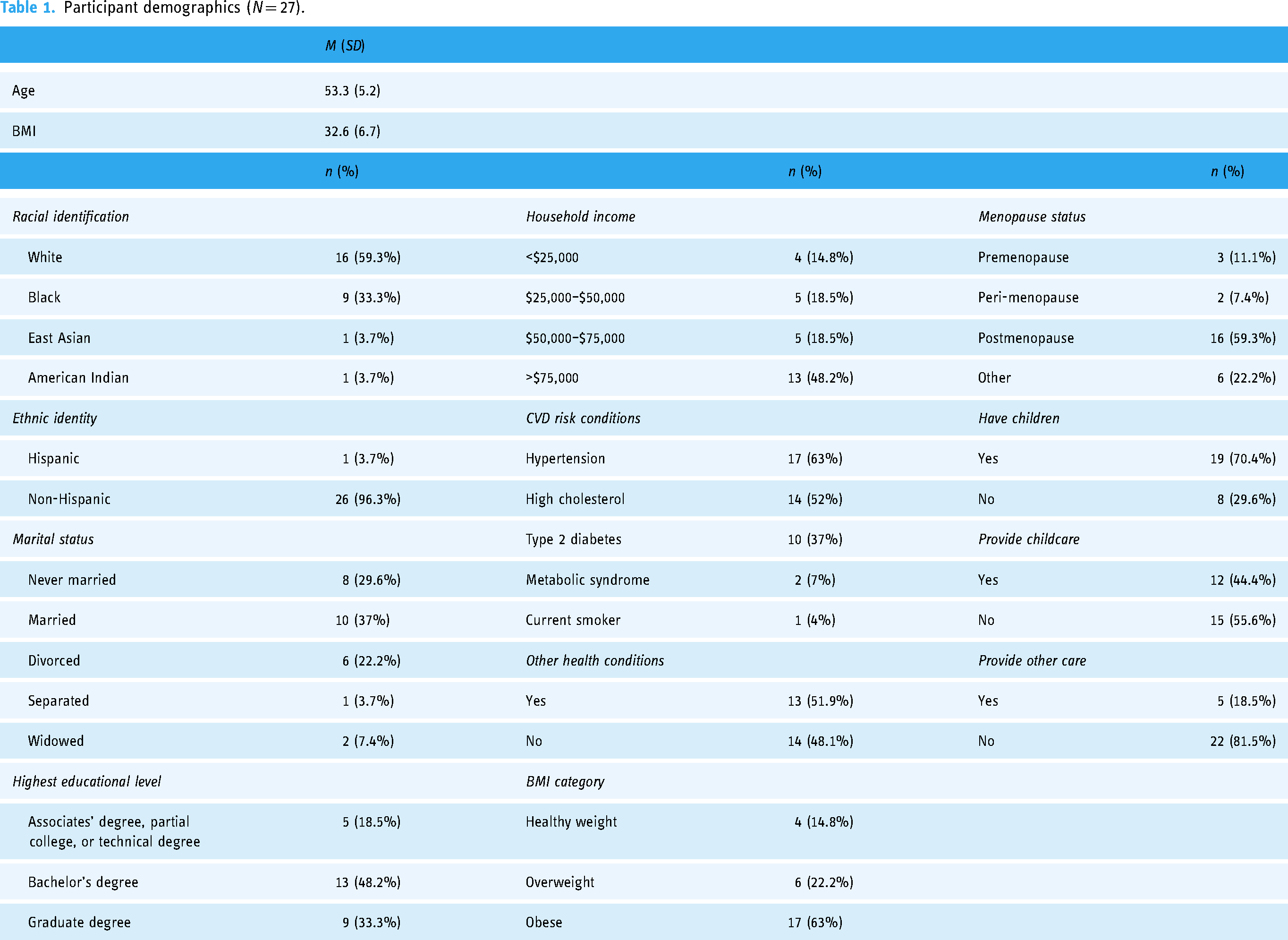
Of those who enrolled, three were unable to report their daily minutes of moderate-to-vigorous-intensity PA (MVPA), as their activity monitors did not track this metric. Data reported from participants’ PA monitors showed that, on average, participants took 6344 steps per day (SE = 3855). Among those who were able to track their active minutes, they engaged in an average of 36.49 minutes per day (SE = 29.42); this included all individual minutes of higher-intensity activity throughout the day, which is known to be meaningfully higher than MVPA in sustained bouts of 10+ minutes among women in midlife with CVD risk. 52
Web application description
Users accessed the Project WHADE web app through a unique link generated from an individual profile for the user, which contained their age and racial/ethnic identification. The first page of the app provided instructions for use, including reminders to access the app once per day for approximately 10 minutes and about web app content (i.e. PA support messages, peer profiles (social comparison targets). Users were then prompted to report their PA goals for the day and to select a support message and a peer profile to view; they also had the option of choosing to view a second profile or message (options for encouragement, tips, accountability, another peer, and no preference). Users were asked to reflect on the profile and message each day using rating scales and brief narrative responses, for which data are not used in the present report; we determined that these data and associated findings warrant their own report, to preserve space here for in-depth analysis of the overall user experience. The final prompt on the app asked users to describe their intentions to be active for the current day (i.e. plans for how they will achieve their PA goals that day).
Support messages and peer profiles were generated by the research team using guidance from our and others’ prior work,33,53 the Physical Activity Messaging Framework, 54 and existing digital PA tools.55,56 Several messages were tailored to address the needs of the target population (e.g. noting common PA barriers such as caregiving, weight change, and menopause2,8,57). Peer profile options showed an image and a brief description of a woman in midlife who is very active (representing an upward comparison target), somewhat active (representing a lateral comparison target), not very active (representing a downward comparison target), or users could indicate no preference—choose for me. For no preference, the app selected from the participant's least recently used category. In all cases, profiles in the present study were generated by the app through random selection of an image and a description from an initial database of 33 images and 29 descriptions (see Figure 1 for an example). The average daily activity per week for each peer profile was adapted to the user's activity level on the previous day, which was reported via survey and entered into the web app manually by a research team member each evening. Very active peers showed 130% of the user's activity from the previous day (with respect to average steps and minutes of MVPA per day), somewhat active peers showed 95–105% of the user's activity from the previous day, and not very active peers showed 68% of the user's activity from the previous day. Profiles were also personalized for each user to align with their self-reported age and racial/ethnic background.

Example of a peer profile shown on the web app, selected from very active, somewhat active, not very active, and no preference—choose for me options.
Users then viewed brief social support messages; they chose from encouragement (i.e. emotional support, validation; “Encouragement to help me stay on track”), tips (i.e. informational support; “Tips for being more active”), accountability messages (“Holding myself accountable”), or selected no preference—choose for me (specific message from the participant's least recently used category was randomly selected). The message database included 7–9 messages per category (see Figure 2 for an example). The web app prevented the user from viewing the same peer profile or message more than once in the same session and from selecting the same category of message more than once in the same session. The version of the app tested in this study also prevented users from accessing it more than once per day; once a user's link was activated after 12:00 a.m. on a given day, they received an error message if they tried to activate it a second time. Participants were asked to contact the research team using a study-specific email address if they received an error for what they perceived to be their first link activation of the day. The first author then manually reset the participant's link to allow her to use the app that day.

Example of a support message shown on the web app, selected from encouragement, tips, accountability, and no preference—choose for me options.
Measures
Participant familiarity with the research program and retention over the study period
We determined whether participants had previously participated in a study with the supporting research team. Women who were participants in a previous study were coded as 1; women for whom this study was their first experience with the research team were coded as 0. We also recorded whether participants completed their 7 days of use and the exit interview (yes = 1, no = 0), as evidence of retention.
Successful use episodes, use as intended, and time spent in each use episode
Use was determined by web app database records of participants navigating through to the last page of the application (yes = 1, no = 0). Similarly, intended adaptations to users’ daily PA levels were based on recorded entries prior to use the following day (yes = 1, no = 0). The web app database also recorded the number of minutes spent in each web app use episode, from the time the participant clicked on their link to the time that they reached the final page of content.
PA goals, intentions, and satisfaction
Participants reported their PA goals at the start of each web app use as steps per day and/or minutes of MVPA (i.e. exercise) using numeric values. Intentions for achieving these goals (i.e. specific plans for activities) were reported as text at the end of each web app use. Participants had the option to enter 0 for each type of PA goal and N/A, none, etc. for intentions. The first author reviewed all intention entries and categorized them as specific intentions to be active (1) or vague/no intentions (0). Participants also rated their satisfaction with their steps and minutes of MVPA on the previous day, using separate rating scales of 1 (very dissatisfied) to 6 (very satisfied). Ratings of 1, 2, and 3 indicated dissatisfaction (somewhat, mostly, and very dissatisfied, respectively) and ratings of 4, 5, and 6 indicated satisfaction (somewhat, mostly, and very satisfied, respectively).
Web app content selections and exposures
The system recorded the types of peer profile and message selected and shown each day, including whether a second profile of message was selected (yes = 1, no = 0). As noted, peer profile categories were very active, somewhat active, and not very active; message categories were encouragement, tips, and accountability. A fourth type for each was no preference—choose for me, for which the system randomly selected specific content from the participant's least recently used category. The unique profile image, profile text, and message shown to users were also recorded, specified with numeric identifiers (e.g. 3.11). A team member manually coded for any profile images, profile text, or messages that were shown to the same participant more than once across their 7 days of participation.
PA behavior
Participants used either a study-issued pedometer or their own personal PA monitor (e.g. Fitbit, Apple watch) to record their PA throughout each day of participation. Parameters of interest were steps per day and total minutes of MVPA (unbouted; i.e. “active minutes”). Participants received a prompt to complete a brief survey each night before going to bed, where they entered their steps and minutes of MVPA as read from their PA monitor. These values were used to estimate their average PA engagement and to adapt peer profiles on the web app to their PA each day.
Exit interview responses
As described below, participants’ open-ended responses to prompts during exit interviews were recorded, transcribed, and coded for units of meaning. The research team also coded for participants’ interest in future programming to promote PA for this population (yes = 1, no = 0).
Procedures
Procedures were entirely remote and were approved by the relevant Institutional Review Board. All participants provided written informed consent using Adobe electronic signature, including separate documentation of consent to record exit interviews. Women who expressed interest in participating were asked to complete an electronic survey of global self-report measures and to schedule an initial orientation session with research staff. Those who requested to use a study-owned pedometer were sent a device via the US postal service, to arrive prior to their orientation session, which included prepaid postage for returning the device. The orientation session was conducted via Zoom; participants were introduced to study procedures and were invited to ask questions. They also received a written list of instructions and frequently asked questions, for reference during the study period.
For the following seven consecutive days, participants engaged in three tasks per day. First, they wore the study-issued pedometer or their own activity monitor during all waking hours, to capture their steps and minutes of MVPA. Second, they used the Project WHADE web app in the morning, before beginning their work or other activities for the day. Web app use was intended to set a positive tone for PA each day and provide an opportunity for participants to set PA intentions and receive support for follow-through. Finally, participants completed an end-of-day survey within 1 hour of going to bed each night. As noted, the end-of-day survey included space for participants to enter their total steps and minutes of MVPA for the day, as recorded by their activity monitor. These totals were collected from end-of-day surveys and entered into the web app by research staff prior to the participant's next use, to inform activity totals presented in peer profiles (i.e. adapted to align with participants’ recent PA behavior; see above and Arigo et al. 33 ). Participants earned up to $50 for completing the study ($10 for orientation, $30 for 7 days of web app use, $10 bonus for completing ≥80% of daily activities).
Exit interviews
At the end of 7 days of web app testing, each participant engaged in a semi-structured qualitative exit interview, conducted via Zoom. Interview questions were developed by the first author based on her knowledge of existing literature and her prior work with women in midlife.34,52,58–62 The second and last authors provided iterative feedback and suggestions for maximizing insights to be gained from interviews, based on their experience with qualitative methods.63–65 The first and third authors served as interviewers (DA, KB); the interviewer generated a memo of their impressions immediately after each conversation. Interviews were an average of 50.41 minutes long (SD = 7.08, range 34.01–60.03 minutes). Transcription occurred automatically in the Zoom platform; the interviewer downloaded both the video recording and transcript as soon as these materials were available. A research assistant not involved in the interviews then reviewed each recording and transcript and made corrections to transcripts as needed.
Analytic approach: quantitative data
We first determined the rate of successful use episodes out of the expected 189 (27 participants × 7 days of use), as evidenced by web app records of participants navigating through to the last page of the application (coded as 1, rather than 0). Similarly, we determined the rate of successful adaptations to users’ daily PA levels, using the number of recorded end-of-day survey entries prior to use the following day (out of the number of successful use episodes). We then examined descriptive statistics for web app use time per day, participants’ daily goals (steps and minutes of MVPA per day), and participants’ satisfaction with their PA the following day (steps and minutes of MVPA): indicators of interest were estimates of averages (presented as B, SE), ranges for each value, and stability versus variability within-person across days (intraclass correlation coefficient [ICC]). We used multilevel models with restricted maximum likelihood estimation methods to address the nested structure of daily web app uses (i.e. days nested in participants). We also identified frequencies for setting specific intentions to achieve PA goals (vs. not; coded as 1 vs. 0). Descriptive statistics were calculated for the raw frequency of primary content selections (i.e. support messages, peer profiles), including no preference—choose for me. Similarly, frequencies were calculated for the content categories viewed, indicating which categories were used when participants selected no preference—choose for me. Finally, frequencies of second message selections were calculated, to determine the rate of interest in additional content.
Analytic approach: qualitative data
Positionality statement
The qualitative analysis team (DA, DAJ, KB, and JML) is a diverse group. DA, the team leader, is a licensed clinical psychologist with specialties in health psychology and behavioral medicine, as well as 10 years of experience working with women in midlife who have heightened risk for CVD. DA identifies as a white American heterosexual woman; she is primarily informed by a positivist quantitative approach, though the ontological stance for the present qualitative analysis aligned with a critical realism perspective. DA selected the study team to prioritize diverse perspectives and fill in potential gaps in expertise. DAJ, a doctoral student in clinical psychology (service-focused), is an African American heterosexual woman who was socialized in predominantly white communities and institutions. She possessed novice theoretical understanding and hands-on skills related to qualitative methodology, approaching the project with sharpened intentionality and attention to detail during the analysis phase.
KB, a doctoral student in clinical psychology (research-focused), approached this study from a professional background in software development and marketing. She identifies as a white American heterosexual woman and possessed novice understanding and skills related to qualitative methodology. She acknowledged being open to learning and a feeling of similarity between herself and some participants, which facilitated comfort during the interviewing phase. JML, a Black American same-gender-loving man, is a health equity researcher with 10+ years of experience conducting qualitative studies using a variety of methodologies including (codebook and reflexive) thematic analysis. He noted feeling like an outsider who does not fully understand the participants, which contributed to his approach being more bottom-up than top-down and contextual. Overall, team members used best practices (i.e. memos and reflexivity journaling) throughout the project to track subjectivities and distinct perspectives and worked to maximize transparency and harmony in our collaboration. We did not attempt to eliminate biases but to highlight and use them as a strength in data analysis and reporting. Specifically, we sought to bolster the trustworthiness of findings by including thick descriptions of the research process that are logical, traceable, and clear.
Rationale for choice of methods
Qualitative data were analyzed using thematic analysis, which is a robust data method for identifying, analyzing, and describing patterns of meaning across a dataset in rich detail. 50 We used a hybrid approach to thematic analysis by combining elements of codebook66,67 and reflexive 50 approaches. Use of a codebook allowed the researchers to determine and define meaningful units of information as codes in our data (i.e. individual interview transcripts), and to track the decision-making process and consistency of each coder and decisions about what qualified as meaningful units of information. The codebook also gave us a referent tool through which we could track, discuss, and resolve coding differences across coders.
The reflexive approach allowed us to acknowledge and track our subjectivity as researchers (and thus, as analytic tools) and the decisions and interpretations we made during the data analysis process. 50 The reflexivity of the research team took place using memos (i.e. notes describing cognitive and emotional processes) during the interviewing and data analysis phases of the study. Team members also engaged in structured, intentional conversations about our known and possible biases, our roles as researchers, and how our personal and professional backgrounds influenced our participation in the study. This combination of approaches allowed for an understanding of the phenomena under study as based in reality yet only knowable through each participant's contextualized, limited (by their backgrounds and lived experiences) perspectives, as filtered through the researchers’ contextualized, limited perspectives. 50 We highlight this as a strength to enhance rigor and meaning in our study.
Codebook development
The codebook was developed using both deductive and inductive approaches. The first author (DA) developed a codebook of a priori codes and their definitions based on a reading of the extant literature about PA intervention science and social processes. Codes were refined with input from the second, third, and fourth authors (JML, KB, DAJ). These four team members coded interview transcripts according to the codebook, with two coders assigned to each transcript. Discrepancies between coders were resolved by consensus among all team members for the first 10 transcripts and then by DA according to the precedents set in the initial resolution discussions. The codebook provided a list of codes that included a label, abbreviation, definition, and illustrative quote from the transcripts. Inductive codes were discovered during the coding process using the codebook and were discussed in team meetings; those deemed relevant were added to the codebook and were coded in subsequent transcripts. Discrepancies related to emergent codes were discussed until a consensus was reached. After resolving discrepancies, DA refined coding for all transcripts and applied emergent codes throughout, to maximize consistency. Coding continued until all transcripts were analyzed.
Data analysis
Each coder followed the steps outlined by Braun and Clarke 50 : they familiarized themselves with the data by reading and re-reading each transcript before coding it using the codebook. Once all transcripts were coded, those units of data were copied and pasted into a spreadsheet. DA began the process of generating themes by re-reading the code labels and exploring similarities in meaning among them. Then she clustered together potentially connected codes based on these similarities into candidate themes. These candidate themes were recorded and discussed with the other team members, which contributed to refinement. Specifically, team members read the candidate themes and the excerpted quotes coded under each theme to ensure that they fit together and coherently represented distinct central organizing concepts in the data. There were four iterations of this process with the team, including TG (who offered a more distal perspective, as he did not participate in coding). After themes were solidified, DA led the team in naming and defining the themes. Initial names and definitions for the themes were discussed with the entire data analysis team and a final list of five themes and two subthemes were constructed through consensus. Illustrative quotations were selected by DA and JML and pseudonyms were selected to protect participants’ identities in this report.
Trustworthiness
To ensure the trustworthiness of our findings, we focused on four criteria specified by Nowell and colleagues 68 : credibility, transferability, dependability, and confirmability. We established credibility through member checking and peer debriefing. For member checking, we sent our themes, definitions, and illustrative quotations to all 27 participants with a request for their feedback. We asked whether our themes accurately reflected their overall experience with the Project WHADE web app (and overall study), whether any aspects of their overall experience were missing, and whether they recommended any changes. Participants received an original request and two reminders over 5 weeks. A total of seven participants responded and confirmed that the themes accurately reflected their overall experience. With respect to peer debriefing, a researcher with extensive experience in qualitative methods completed an independent review of our themes and supporting evidence (i.e. coding process and relevant quotations). Peer debriefing generally aligned with the research team's identified themes and rationale, and themes were further refined based on peer feedback.
Mixed methods analysis
As noted, a particular advantage of a mixed methods design is the opportunity to generate meta-inferences, or “conclusions that connect or integrate claims” from quantitative and qualitative findings. 69 To generate meta-inferences, our mixed methods analysis focused on integrating the two sets of findings using a qualitative frame. 70 This allowed us to use insights identified from our qualitative approach as anchors for participants’ experiences, with specifics from our quantitative approach offering additional information. 71 We used side-by-side joint displays to facilitate integration by identifying convergence, extension, and divergence between the two sets of findings. 72 Specifically, we listed our themes from qualitative analysis on the left hand side of these tables and added relevant quantitative findings in succession; findings were arranged and rearranged iteratively with input from the research team, to build a coherent narrative. 73 This process allowed us to draw overarching conclusions that extend beyond those identified with qualitative or quantitative data alone.
Results
Web app feasibility and usability: Does the new tool work as intended in context for the end user?
Past participation and retention
Of the 27 women who participated, 17 (63%) had prior experience with the supporting research program. In prior studies, women did not use the new Project WHADE web app or set PA goals or intentions for achieving them. All 27 women who enrolled in the present study (100%) completed 7 days of web app use and qualitative exit interviews.
Navigation and use logistics
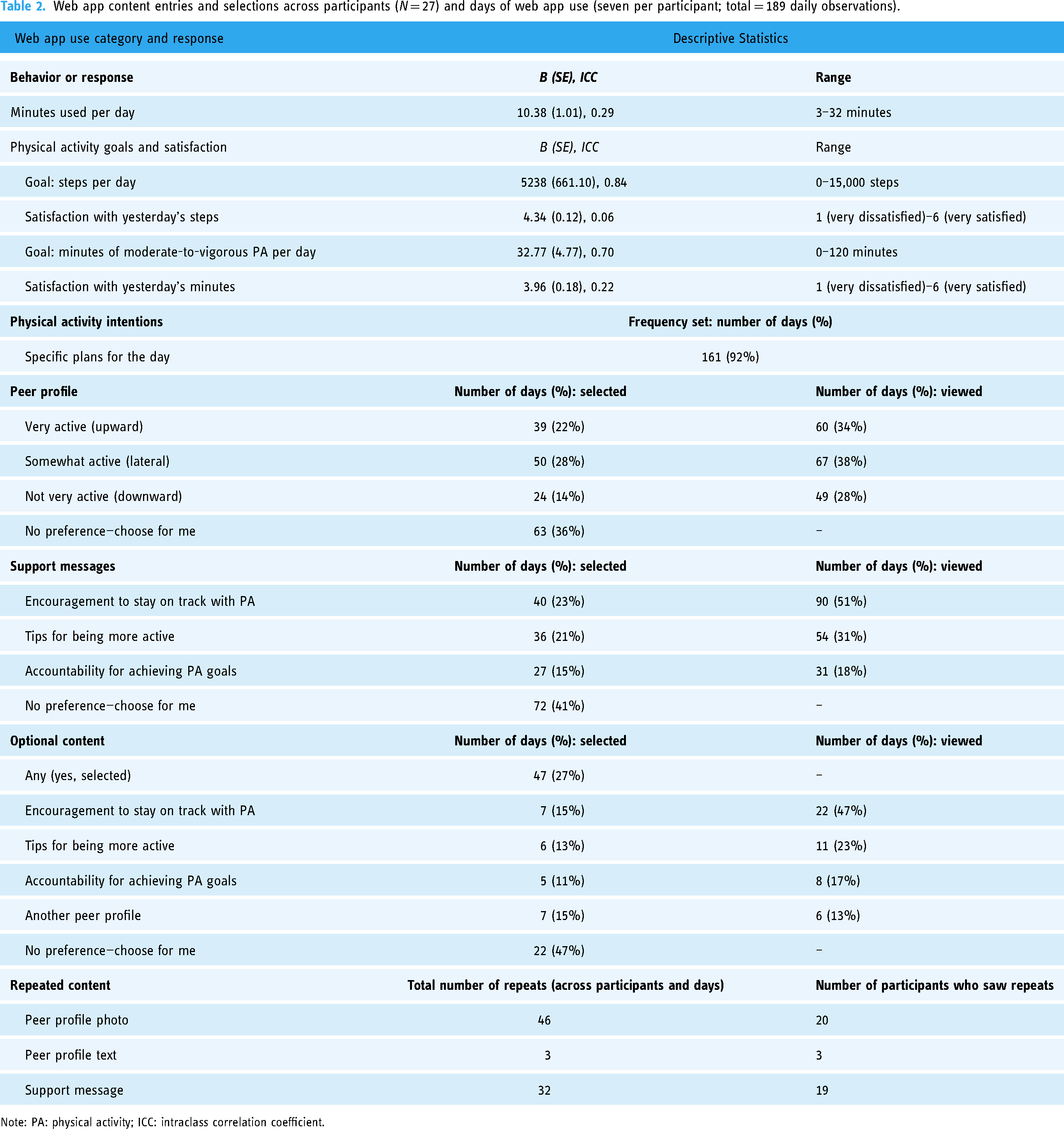
Of the expected 189 web app use episodes, 175 were successfully completed (93%), and 173 of these uses were adapted to participants’ PA the previous day, as intended (99%). Unsuccessful uses were the result of technical difficulties (e.g. the web app locking out participants who had previously activated their link that day and research staff were unable to resolve quickly; 36% of missed days) or failure to initiate use due to competing demands on participants’ time (64% of missed days). Lack of adaptation stemmed from participants not completing the relevant end-of-day survey (38%) or completing them much later than expected (62%). In the latter case, the research team was not able to enter the participant's PA data before their subsequent web app use. Participants’ compliance was high overall, ranging from 79% to 100% of intended web app uses and end-of-day survey completions (out of 14 total; person-level M = 96%, SD = 7.30%).
The first 10 participants did not receive reminders to complete their web app use in the morning and were encouraged to set their own reminders (e.g. via calendar or smartphone). For these participants, web app use was missed on two total days (2.6%). The remaining participants (n = 17) received calendar reminders from the research team. Interestingly, the rate of missed days was slightly higher for these participants, who missed on five total days (4.5%). Time spent per web app use episode ranged from 3 to 32 minutes per day, with an average of 10.38 minutes (SE = 1.01) and a mode of 5 minutes. Two days showed much longer times (i.e. 46 and 464 minutes); these reflected participants pausing their use for other activities and returning later, which was unintended. The ICC of 0.29 showed that <30% of the variability in time spent per use was due to between-person stability, indicating that participants’ use time varied considerably within-person across days.
Finally, the web app was designed to prevent exposure to repeated content in the same use episode. However, our review of the web app database showed that 25 of 27 participants (93%) saw at least one peer profile image, peer profile text, or support message that appeared more than once across their days of web app use. As shown in Table 2, peer profile photos repeated most often (46 instances across 20 participants).
Web app content entries and selections across participants (N = 27) and days of web app use (seven per participant; total = 189 daily observations).
Note: PA: physical activity; ICC: intraclass correlation coefficient.
PA goals, intentions, and satisfaction with achievement
Participants’ step goals for each day ranged from 0 to 15,000 steps, with an average goal of 5238 per day (SE = 661.10; see Table 2). Their MVPA goals for each day ranged from 0 to 120 minutes, with an average of 32.77 minutes per day (SE = 4.77). Both types of goals were consistent across days: ICCs were 0.84 and 0.70, respectively, indicating that 84% and 70% of the variability in specific daily PA goals was attributable to between-person stability across days. Participants set specific intentions for how they would achieve their goals on 92% of days with successful web app uses; common plans for being active included walking (including walking with dogs), gardening, dancing, shoveling snow, and using an exercise video. Participants listed very vague PA intentions or explicitly stated that they did not have intentions on the remaining 8% of days, and most often qualified these with indications that the day was particularly busy or unusual (e.g. spending 6+ hours in a car while traveling). On the following day, participants expressed satisfaction with both their steps and MVPA minutes from the previous day (average estimates = 4.34 and 3.96 out of 6, respectively), with the 6 (very satisfied) as mode rating for both PA types. Overall, participants indicated at least some satisfaction with steps on 72% of days and with active minutes on 60% of days. Satisfaction with both types of PA were highly variable within-person, however: ICCs were 0.06 (steps) and 0.22 (minutes of MVPA).
Qualitative findings
The research team generated a total of five themes from the interview data, as well as two subthemes of an overarching theme; themes and their definitions are presented in Table 3, along with illustrative quotations. The first theme, range of experiences to support physical activity, was most relevant to feasibility and usability. This theme captures participants’ overall experience with the Project WHADE web app: they described having a range of quick, easy, and enjoyable experiences that supported their PA. Several participants indicated that the app was straightforward and simple, which they liked. In addition to the quotations provided in Table 3, this theme may be best exemplified in the following (from Georgia, 60 years old, identified as white): I liked it, it was easy to use, I felt like it moved at a pretty good pace…there didn’t seem to be any technical issues with it. I liked…the little stories. You know the little snapshots of people, and then also the inspirational messages. I like that I didn’t have to log in for one. I’m not a fan of logging in with passwords and all that I know that's kind of a minor thing. But it's a big thing for me.
Themes identified in qualitative interviews, definitions for each theme, and illustrative quotations for each theme (in addition to those reported in text).

The most challenging technical problems occurred for Beth, a 40-year-old woman who identified with a mixed racial heritage. After 4 days of successful web app use, her devices showed errors each time she attempted to use her personalized link, and neither resetting her link nor receiving a new link corrected the problem. She was unable to use the web app during the last 3 days of her participation and during her exit interview, she attributed this to her own difficulties with technology more generally: I’m not a tech person… (I had no problems) other than the technical issues which I thoroughly believe…are my problem, not yours. So I was the right person for that to happen to.
We identified two subthemes of range of experiences, related to usability: reminders and disappointment with repeats. First, a subset of participants had difficulty remembering to use the web app each morning. Throughout data collection, participants noted that having reminders was (or would be) desirable, as it helps to prompt web app use at or soon after the intended time. This referred to reminders that they set (first 10 participants) and calendar reminders we sent (last 17 participants; see Table 3 for illustrative quotations). Chrissy (55, identified as Black) noted that: I just wrote down about the reminder, (you said I had to) go back to the email every day, remember (to do that) in the morning it was like…confusing…So I think if you sent that out (a calendar reminder), that would be helpful. Certainly you wouldn’t want to see the same message you know, in the same week, at least… for the week I thought that was a little disappointing seeing the same message again. When I say disappointing, again, I think, like because it was only for a week I wanted to see more new material.
Summary of feasibility and usability meta-inferences (see Table 4)
Together, findings relevant to web app feasibility and usability indicated that the end users were interested in the new digital PA resource, that the web app worked as intended overall, and that users perceived its functionality positively. However, even with (multiple) reminders, women in midlife experienced challenges fitting quick, easy-to-use, and available PA support into their day. As described further below, and consistent with existing work in this population, these challenges were not largely due to lack of interest or negative experience with the web app. Instead, they were due to structural barriers such as persistent stress from caregiving, illness self-care, and work responsibilities, and a lack of novel ideas for being active in the midst of this stress. Further, we identified clear opportunities for improvement in web app design and user experience. The first priority is to identify a different process for prompting web app use each morning, as calendar and email reminders were suboptimal. The second is to reduce repetition, to ensure that the same user is not exposed to content more than once during participation. Finally, from a logistics perspective, adaptation of peer profiles worked as intended. As this process is labor-intensive for researchers, however, there is need for adjustment to enable scaling up for wider access.
Joint displays of qualitative and quantitative evidence that led to associated meta-inferences.

Overall experience and acceptability: were end users satisfied with their web app experience?
As noted, all 27 participants who began the study continued through 7 days of use and completed the 1-hour follow-up interview. Of these women, 17 (63%) had prior experience with the research team. All but one participant (26/27, 96%) indicated that they would be interested in future programming or resources designed by the research team, to support their PA engagement. One participant was already consistent with achieving her PA goals and did not perceive a need for additional resources, though she acknowledged that these might be helpful for other women in her age range.
Web app content selections and exposure
As shown in Table 2, of the four options for initial peer profile selections (i.e. potential social comparison targets), participants selected no preference—choose for me most often (36%). This was followed by somewhat active (28%), with not very active selected least often (14%). Of all the targets presented after initial selection, 38% were somewhat active (lateral), 34% were very active (upward), and 28% were not very active (downward). Similarly, participants selected no preference—choose for me most often of their four initial support message options (41%), followed by encouragement (23%). Accountability was selected least often (15%). Of all the messages presented after initial selection, 51% were encouragement, 31% were tips, and 18% were accountability. No preference selections led to viewing encouragement messages 51% of occasions, indicating that the system assigned encouragement messages somewhat more often than expected. Participants elected to view a second peer or message on 27% of use days (47/175). Again, the most popular selection overall was no preference—choose for me (47%); all other categories were selected on 11–15% of days (see Table 2). Of all the messages presented after the second selection, encouragement appeared most frequently (47%), followed by tips (23%) and accountability (17%).
Qualitative findings
Regarding Project WHADE web app experience overall, we generated the theme there was something for (almost) everyone: the web app offered a range of content that provided something useful for (almost) everyone, and the option to select no preference for messages and profiles offered an opportunity to explore. Martha (45, identified as white) stated: I liked that they showed a variety of people that were, you know, from the less active to the more active so that gave me some things to think about and then, (what would be good) for me at the current phase of my health journey… I liked the quotes – I thought it was nice I really I mean I really the whole time I thought it was great I thought just being able, just to kind of reflect. You get what you need when you need it. In this study, some of the people that I was matched with (profiles) gave me what I needed. There's always something from each part (of the web app) that I could take from and learn. I did ‘no preference’ every day… You never know where the inspiration is going to come from… I picked no preference every day because I feel like the one that's meant that I’m meant to read that they will appear that's what I meant to hear in that day. So I just thought that maybe whatever I needed would come. Anything that would help would be good… Because I figured that, um, it was already zoned for me, for my age group, so I figured anything you could offer would be good. I didn’t find anybody who was unemployed or working part-time or just more similar to me that I felt like I could really relate to and…I guess it just sort of got in the way. (I would like to see) a person that has experienced asthma or is asthmatic maybe. Somebody who knows how it feels, not be able to breathe when you’re walking, that would be better for me.
With respect to PA social support messages, we constructed the theme message content was not new, but still helpful (see Table 3). Messages offered suggestions and material that were familiar to participants, though exposure to it in the moment was often helpful for PA motivation and committing to intentions. For example, Nikki (52, identified as Black) indicated: Because you know a lot of (the messages) I like because they’re reminders… So it's good, just to read something else that I know, but actually had to read it versus just knowing. Content was pretty, you know. Pretty I don’t want to say obvious but it wasn’t anything earth shattering but then I didn’t expect anything earth shattering I just expected a positive, you know, keep it up message. I like that it gave you the option to have another (message) if you really, really didn’t like yours the first time. I think there was one time, I really didn’t like the one they gave me and I’m like yeah like give me a different one. I liked the fact that I could relate to the people, for the most part that were that we’re doing 2000 steps their goal was 2000 steps a day, even though some of them had kids and grandkids but, for the most part, I could relate to them… Yeah based on their activity level and them wanting to do more, but not having time or feeling like they’re, you know, too busy to do more than what they wanted to do. I’m not busy, I just can’t seem to just get up and do it. (Peer profiles were) not so much for me. I mean I didn’t have as much, but it was good, you know it, it did make me think a bit. I think, maybe, on a more subconscious level, but that wasn’t my favorite one, although I would imagine it did help somehow. I want to tell you that…it's been helpful. I’ve enjoyed… my time participating. So I’m excited to see what it comes out to be (next) because I feel like I want to be one of the participants… Thank you, thank you. I’m impressed with what you guys are doing…I think it's really good. I appreciate you doing this, you know it's really important for women. We go through so much we always look at ourselves as being important. This, this is really great… I just love being a part of it, so thank you again.
Summary of acceptability meta-inferences (see Table 4)
Findings related to participants’ overall experience and satisfaction with the web app indicated that they found the tool acceptable, with noteworthy caveats. To our surprise, the no preference—choose for me option for both support messages and peer profiles was extremely popular and highly valued. Selections of no preference—choose for me for messages led to exposure that favored encouragement messages; this worked well for some participants but not for others. Reminders about familiar information at times when they can be put into action appear to be helpful (i.e. during daily life, rather than at a set time during a PA skills workshop). However, an opportunity for improving the web app is to offer less-familiar ideas in messages, to promote engagement and to also satisfy those who wanted something new or different. Selections of no preference—choose for me for peer profiles (i.e. social comparison targets) led to comparable exposure across profile types, with slightly more for exposures to downward targets than others. As these were selected least often, the system balanced exposure across profile types by showing users a profile from their least recently used category (as intended). Women in this study indicated that they appreciated the profiles for offering the opportunity to learn about other women's challenges and what they do to fit PA into a busy lifestyle. However, consistent with prior work in this area, some participants were skeptical about the value of social comparison for promoting their PA.74,75
More broadly, our findings highlighted interest in resources to bolster PA that are tailored to the needs of women in midlife. Lack of education or knowledge about the importance of PA for health, or even about ways to be more active, is not a primary barrier in this population. A larger issue is setting concrete, manageable intentions and the ability to follow through, and women want resources that can help them in these ways. Women in midlife also need different types of resources at different times, to address their immediate context in the midst of many barriers (and also, many possible facilitators). Finally, this population wants to be seen and valued; they perceive that this is not always the case and describe a sense of being overlooked by others. Resources made for them, that give priority to their perspectives and challenges, are desired and greatly appreciated.
Discussion
Women in midlife, particularly those who already experience heightened risk for CVD (e.g. type 2 diabetes), decrease their PA at a time when it can be especially cardioprotective, 76 and existing PA resources are only minimally effective. 16 Our research team previously developed and conducted preliminary testing of a new web application designed to address the needs of this population. 33 In the present study, our goal was to better understand the feasibility, usability, acceptability, and overall experience of using the new web app, for which we employed a convergent mixed methods research design. This approach allowed us access to quantitative information about whether use attempts were successful, what participants selected and viewed on the web app, and how long their use episodes were, while also affording access to their narrative experiences of use and recommendations for improvements. Perhaps most importantly, integration of these data sources allowed us to generate meta-inferences, which highlight a number of valuable implications and next steps.
First, our findings showed that the new web app is generally feasible and acceptable to women in midlife. Both initial access to the app and adaptations of peer profiles showed high success rates and 100% of participants were retained through the full study period. Both recorded use times and women's narratives indicated that the web app was quick to use (≤10 minutes per day, as expected). Women's subjective descriptions of their experience were quite positive and all but one participant expressed interest in related PA promotion programming. In particular, women liked the range of different content available on the app, the opportunity to select what they wanted or needed in the moment, the opportunity to reflect on their goals and intentions at the start of each day, and suggestions for small ways to be active throughout the day. As these were features that we intentionally designed for the web app, the present findings suggest that we correctly gauged end users’ preferences (via a user-centered design approach 33 ).
Of note, women in the present study often indicated that they rarely (if ever) have time to engage in sustained bouts of exercise during a typical day, such as going to the gym or for a walk outside, and weather often interferes with (motivation for) these activities. Thus, it seems impossible to adhere to PA guidelines, which emphasize bouts of MVPA that last 10–30 minutes. 77 Considerable evidence now shows that health benefits can be achieved with shorter bouts of MVPA 78 and that activity at any intensity has meaningful benefits for cardiovascular health.79,80 The most recent version of the US PA guidelines reflects this change by highlighting the importance of overall movement, in addition to bouts of MVPA. 77 In the present study, women's acknowledgement of learning smaller ways to be active via the web app (e.g. walking up and down the stairs during commercial breaks, using furniture to support strength or flexibility movements) represents a key success, as a broader perspective on PA may overcome barriers such as limited time, motivation, or self-efficacy for exercise.8,30,57,81
Indeed, although women's PA goals were consistent across days, their PA behavior and satisfaction with their behavior were highly variable across days, and they cited interference from daily responsibilities as impediments to PA engagement. These findings are consistent with Midlife Women's Attitudes Toward Physical Activity theory (MAPA) 30 in that they underscore the importance of daily context in women's PA. Importantly, however, the present findings extend MAPA theory by enhancing the role of the social environment; this theory notes the role of the social environment but suggests that it is less influential than other PA determinants (e.g. menopause status, perceived barriers). Consistent with our rationale for components included on the web app, women identified the positive tone of social support messages and the opportunity to learn about other women's challenges (via peer profiles) as positive aspects of their experience with the app. As noted, lack of social support and positive role models for PA are critical barriers for women, 17 and those in midlife cite social influences among the most important motivators of their PA. 82 The present findings provide strong support for the potential utility of brief messages and peer profiles to address these barriers.
Opportunities for web app improvement
Although overall responses to the web app were positive, we observed considerable variability in women's perceptions. Particularly noteworthy were impressions that some women were not well represented on the app—those with limited financial resources, more debilitating symptoms of chronic illness (CVD-related and other, such as asthma), and low caregiving or professional burden (i.e. no children/partner, out of work due to disability). A strength of this study was representation from women who identified with a range of racial/ethnic, socioeconomic, and social environmental backgrounds. Although the research team took care to create content that addressed heterogeneity across these situations, findings show that these were not substantial enough for the wide range of experiences that participants brought to the study. Thus, as in previous work to develop new digital tools tailored for a particular population,83–85 participants appreciate precise personalization, revealing an opportunity to improve the user experience of the Project WHADE web app by creating content that represents the diversity of this population.
Creating additional content will also help to address the repetition observed using both quantitative and qualitative methods, which participants found disappointing. From the time that data collection ended in 2022, our team has prioritized this next step and generated considerable additional content—much of which is directly informed by participants’ experiences in this study. We have also built a function that allows users to restart their use episode if the system recognizes their link as activated on a particular day, addressing a subset of technical issues observed in this study. Other problems accessing the web app in the present study were isolated and were typically rectified quickly, though their resolution required timely intervention from the research team. Similarly, although adaptations to anchor peer profiles to participants’ PA behavior from the previous day were successful (and likely contributed to positive responses), these required considerable human effort on a daily basis. Finally, automating reminders to complete morning web app use were meant to both help participants engage with the system and reduce required effort from the research team, though these seemed to be less successful than reminders participants set up themselves.
Implications and future directions
Together, our findings indicate that our current system for promoting web app use may be feasible on a small scale, but that making the web app available more widely would require substantive changes to our approach. Women who were interested in support and resources for PA found it difficult to use the web app for 10 minutes (or less) each day for only a week, even with reminders and a (small) financial incentive. These findings underscore how busy and unpredictable women's daily lives are during the midlife period and echo previous findings to indicate that they rarely follow through on their PA intentions. 86 They “get busy with…so many other things” that emerge throughout the day (see Table 3) and their PA is put aside to prioritize other responsibilities; in particular, women in midlife often struggle to prioritize their own needs over those of others. 8 Identifying a smoother process for helping women build available support for PA into their lives—and ideally, building a consistent habit of both PA behavior and accessing resources as needed87,88—is a priority for our future work. Tailored efforts that focus on promoting behavioral follow-through on PA intentions may be especially useful.
We have not yet tested the utility of the Project WHADE web app for promoting PA adoption or maintenance, and it is not clear how often or for how long women would need to use this app to experience meaningful effects on their PA (if it is effective). Importantly, the web app is not designed to provide standalone intervention. Although a small subset of women in midlife with elevated CVD risk may find this low-intensity resource useful on its own, its primary utility may be in helping women prepare for a larger, more concerted effort to adopt PA (e.g. prior to engaging in a formal PA promotion program). Alternatively, use of the web app may be most beneficial for helping to sustain increased PA after an adoption effort or getting back on track after a lapse in PA.89,90 Any of these applications of the new web app may be beneficial for different women, and future testing with a variety of approaches may reveal a range of uses for the web app to support women's PA.
Perhaps most surprising about our findings was women's reliance on (and appreciation for) the no preference—choose for me option, with respect to support messages and peer profiles. As Loreen so aptly put it, “you get what you need when you need it”: women were able to defer to the universe (i.e. the research team, a higher power) to show them what would be most helpful in the moment. The option not to choose also may have alleviated some of the cognitive effort or burden associated with using the web app, 91 without limiting women's autonomy (as would happen with fully randomized exposure to content). Women who are busy and stressed may not know how to choose content that matches their needs in the moment, particularly those who have never achieved higher levels of PA 92 ; opting to let the system choose may facilitate learning about what works best (and worst) for their goals. Women in this study noted that letting the system choose for them also provided satisfying variety and let them experience a range of content available on the web app, contributing to their perception that there was something for (almost) everyone.
Strengths and limitations of the present study
This study had several strengths. In line with recommended practices for the development of digital health tools,44,45 we employed a mixed methods design to understand end-user experiences in both breadth and depth, with the ability to identify convergence and divergence in our findings (across methods). We used a purposive sampling approach to maximize the diversity of our sample, which led to success in enrolling women from marginalized and underserved backgrounds (e.g. with respect to racial identification, caregiving responsibilities, and socioeconomic status). Our sample size of 27 women who each used the web app for 7 days also led to confidence in our achievement of saturation for qualitative analysis, 93 and for providing useful estimates of the range in women's experiences across days in multilevel quantitative analyses. We combined the use of a codebook and reflexive approaches to thematic analysis, with continued reflection and discussion on our perspectives, to maximize the richness of our qualitative analysis. We also engaged in both member checking and peer debriefing to enhance the validity of our qualitative methods, and both techniques confirmed high validity. Our research team brought varying levels of experience with data analysis (quantitative and qualitative), which introduced a range of perspectives to the process of identifying meaning in our findings. Although we consider this a strength, we note that such a range of experience also has limitations (e.g. need for training and different levels of uptake 94 ).
Additional limitations are noteworthy. First, we relied exclusively on joint display tables to examine the convergence and divergence of our findings. Although joint displays were selected to facilitate the identification of meta-inferences (i.e. a primary goal of the study), other approaches to integration may have yielded different or more nuanced results. Second, we did not request a full peer audit, and our peer debriefer did not review consistency in the use of our codebook. This information may have allowed us to revisit our analyses and strengthen them if discrepancies were found. Third, although we were able to represent several aspects of women's experiences in this study, we did not reach some subgroups of women who are potentially highly vulnerable and in need of PA support (e.g. mothers raising children and providing care to others without a partner 95 ).
Finally, we acknowledge that re-engaging participants from previous studies early in recruitment has some drawbacks; those returned may have had especially positive perceptions of the research team and (re)selection bias may have influenced their perceptions. 96 However, we included a mix of participants who were familiar with and naive to the research program, which helped ensure representation of diverse perspectives. In our experience, building community and longstanding relationships with research participants has valuable benefits: participants see that their early efforts and feedback lead to tangible resources that could be beneficial for them and for other women like them. Our work shows that this process can promote trust in the scientific enterprise, which has waned in recent years, 97 and can maintain interest in accessing current (and future) resources among populations with elevated health risks.
Conclusions
Findings from this study add valuable insight to our understanding of the feasibility and acceptability of digital tools to promote PA among women in midlife, 98 and further demonstrate the utility of mixed methods for this purpose. Women in this population with a range of risk factors for CVD are eager for access to tailored, digital PA resources and want to have their voices heard in the process of resource development. Further, offering the option not to choose content was highly valued, as women could elect to trust the process and maximize variety, if and when that was desirable to them. Future efforts to design digital PA tools for women in midlife with elevated CVD risk should include opportunities to select (rather than force) randomization to categories where possible, as this may promote acceptability and engagement. Regardless of specific functionality, however, it is critical that PA resources for this at-risk group be easy and quick to use in their busy and unpredictable daily lives.
Footnotes
Acknowledgments
The authors would like to thank Kristen Pasko, MA, Kristen Edwards, BA, and Sofia Gular, BA for their support of data collection and management. The authors would also like to thank Martha Abshire Saylor, PhD for providing peer debriefing feedback.
Contributorship
DA, JML, AL, and TG conceived the study. DA and AL designed the new web application and AL programmed it for use. DA and KB facilitated participant sessions, including informed consent discussions and qualitative interviews, and conducted quantitative analyses. DA, JML, KB, and DAJ coded interview transcripts and identified themes, with contributions from TG. DA, JML, KB, and DAJ wrote the first draft of the manuscript. All authors reviewed and edited the manuscript and approved the final version for submission.
Declaration of Conflicting interests
The authors declare that there is no conflict of interest.
Ethical approval
The Institutional Review Board at Rowan University approved this study (PRO-2021-422).
Funding
The authors disclosed receipt of the following financial support for the research, authorship, and/or publication of this article: This work was supported by the U.S. National Institutes of Health (National Heart, Lung, and Blood Institute; Grant No. K23 HL136657, principal investigator: DA).
Guarantor
DA
