



Abstract
A smart healthcare application can be judged as sustainable if it was already widely used before and will also be prevalent in the future. In contrast, if a smart healthcare application developed during the COVID-19 pandemic is not used after it, then it is not sustainable. Assessing the sustainability of smart healthcare applications is a critical task for their users and suppliers. However, it is also a challenging task due to the availability of data, users’ subjective beliefs, and different perspectives. In response to this problem, this study proposes a multi-perspective fuzzy comprehensive evaluation approach to evaluate the sustainability of a smart healthcare application from qualitative, multi-criteria decision-making and time-series perspectives. The proposed methodology has been used to evaluate the sustainability of eight smart healthcare applications. The experimental results showed that the sustainability of a smart healthcare application evaluated from different perspectives may be different. Nevertheless, another technique can be used to confirm the evaluation result generated using one technique. In other words, these views compensate for each other.
Keywords
Introduction
Sustainability is a method of consuming resources to meet the needs of the present without compromising the ability to meet the needs of the future.1,2 Sustainability includes three dimensions: economic, environmental, and social. 3 The sustainability of a technology usually means that it contributes to economic growth and its use consumes little energy, does not cause any harm to the environment, and does not deprive others (including future generations) of available resources. 4 However, such a definition is based on a prerequisite that the technology must be used continuously for a long time.2,4 Otherwise, there is no need to discuss the sustainability of a technology.
This study aims to assess the sustainability of smart healthcare applications. The motivation is that some smart technologies believed to have great potential for healthcare have proven ineffective during the COVID-19 pandemic,5,6 raising the question of whether some smart healthcare applications are sustainable and others are not.4–6 This question is important for the following reasons:
For healthcare service providers, if they do not distinguish the changes in the acceptance of different smart healthcare applications during the COVID-19 pandemic, their investment will be blind and not necessarily return.7,8 For users, they should choose sustainable smart healthcare applications. Otherwise, it will be difficult to seek support from smart healthcare providers in the future.9,10
Chen
4
proposed a fuzzy geometric mean (FGM)–alpha cut operations (ACO)–fuzzy weighted average (FWA) approach to evaluate the sustainability of a smart healthcare application, where FGM was used to aggregate the opinions of multiple experts, ACO was used to derive the fuzzy priorities of criteria, and FWA was used for evaluation. Tat et al.
11
evaluated the sustainability of smart textiles, a potential smart healthcare application, in terms of energy harvesting and conservation and personalized temperature regulation. Several studies
12
assert that the market size for related smart healthcare applications continues to grow significantly. However, after the COVID-19 pandemic, some people have lost interest in relevant smart healthcare applications, as such applications were far less effective than physical contact tracing methods.
13
Chen and Lin
6
considered the multiple viewpoints that a decision maker might hold on the relative priorities of criteria and proposed an FGM decomposition-based fuzzy technique for ordering preference by similarity to ideal solution (FTOPSIS) approach to assess the sustainability of smart healthcare applications. The fuzzy judgment matrix of the decision maker was decomposed by solving a multiobjective fuzzy integer-nonlinear programming problem14,15 to discover his/her multiple viewpoints. The most effective smart healthcare applications during the COVID-19 pandemic included robots, smartphone apps, wearable sensors and devices, and remote temperature scanners, while wireless medical sensor networks were less practical, which was different than expected.16,17 Therefore, Chen and Wang
17
proposed a calibrated FGM (cFGM)–FTOPSIS method to assess the sustainability of smart healthcare applications after the COVID-19 pandemic. By improving the accuracy of deriving fuzzy priorities using cFGM, the evaluation results were more convincing.
18
Chen and Chiu
19
proposed a hybridizing subjective and objective fuzzy group decision-making approach with explainable artificial intelligence to reassess the sustainability of smart healthcare applications based on the evidence gathered during the COVID-19 pandemic, in which a fuzzy nonlinear programming problem was solved to combine subjective judgment and objective evidence in deriving the fuzzy priorities of criteria.
Existing methods have the following problems:
Most existing methods are from a multi-criteria decision-making (MCDM) perspective.6,11,17,19–21 Methods from other perspectives are lacking and may yield different evaluation results. Existing methods have not considered all possible factors affecting the sustainability of a smart healthcare application.22,23 It would be more flexible if a method could evaluate the sustainability of a smart healthcare application based on various data types and availability.24,25
In response to these problems, this study proposes a multi-perspective fuzzy comprehensive evaluation method to evaluate the sustainability of smart healthcare applications. The proposed methodology consists of three fuzzy techniques from qualitative,8,10,26–29 MCDM,6,11,17,19–21 and time-series perspectives,28,30 respectively. Fuzzy techniques are considered suitable because they can easily and naturally deal with the uncertainty of sustainability and incorporate experts’ subjective judgments on it.31–34 Furthermore, applying various fuzzy techniques simultaneously can deal with problems when data types and availability vary.
The differences between the proposed methodology and some existing methods in this field are summarized in Table 1. A total of 23 relevant references were found by searching Google Scholar using the keyword “sustainability smart healthcare.” After excluding references that are less relevant (e.g. IT-intensive, financial, etc.)35–38 or have not proposed any method for assessment,39,40 the methods mentioned in seven references were compared. In addition, in this table, only the properties of these methods are compared based on explicit facts, without subjective judgments.
Differences between the proposed methodology and some existing methods in this field.

MCDM: multi-criteria decision-making; IoT: internet of things.
Literature review
According to Demirkan, 41 cost-effectiveness and low risk are the key factors for the sustainable development of smart healthcare applications. To this end, he established a system framework to conceptualize data-driven, mobile, and cloud-enabled smart healthcare systems to improve cost-effectiveness and reduce the risk of related applications.
A similar view was also held by Lin et al. 42 However, sometimes effectiveness far outweighs cost-effectiveness, especially when smart technologies are applied for medical purposes. Furthermore, the cost of smart healthcare applications is determined by their supply and demand, both of which are highly stochastic. Furthermore, the cost-effectiveness of smart healthcare applications cannot be directly assessed. For example, a remote temperature scanner can be used to monitor the body temperature of thousands of customers visiting a department store; therefore, the more customers that visit the store, the more cost-effective the remote temperature scanner will be.
A smart healthcare application is sustainable if it can provide value-added services based on vaccination information or recovery status from the COVID-19 pandemic. In the view of Wu et al., 43 although the demand for vaccination information is now declining, providing different services to travelers with unequal vaccination status can still minimize health risks. Additionally, post-pandemic travel is no longer as convenient and flexible as it used to be due to hotel staff shortages and in-house facilities to be restored. Smartphone apps, such as apps for recommending travel destinations or outdoor recreation, can help people organize relaxing activities that are good for their physical and mental health. However, travel destination or outdoor recreation recommendation apps are less relevant for healthcare, but become stronger due to consideration of vaccination, infection, and regulatory information to address inconvenience and achieve sustainable development during the COVID-19 pandemic.
A similar review was performed by Ramírez-Moreno et al., 44 who argued that the sustainability of cities lies in the transition to smart cities, where sensors play an important role. Furthermore, in smart cities, sensors should be widely used to collect information on energy, health, mobility, security, water, and waste management.
Theoretically, methods for assessing the sustainability of smart healthcare applications can be divided into three categories6,11,12,17–19,28:
Qualitative methods: In a qualitative method, the requirements for sustainable smart healthcare applications are listed. The more requirements that a smart healthcare application meets, the stronger the sustainability of the smart healthcare application becomes. MCDM methods: In an MCDM method, the criteria for assessing the sustainability of smart healthcare applications are established. The performance of a smart healthcare application is then evaluated against each criterion. Subsequently, the evaluation results of all the criteria are aggregated to represent the sustainability of the smart healthcare application. Time-series methods: The time-series method considers the growth of the market size as a time series, thereby predicting the market size in the next few years based on the past. If the market for a smart healthcare application maintains growth in the foreseeable future, the smart healthcare application can be said to be sustainable.
Proposed methodology
The proposed methodology jointly uses three fuzzy techniques to assess the sustainability of a smart healthcare application. Three fuzzy techniques cover all the previously mentioned categories and are applied according to the availability of various types of data (see Figure 1).

Applications of the three fuzzy techniques according to the availability of various types of data.
Qualitative technique
The sustainability of smart healthcare applications can be assessed by considering the following criteria19,23:
If a smart healthcare application can provide value-added services, then it will be sustainable.19,23,45 Smart healthcare applications are sustainable if they are cost-effective.19,23,46 Smart healthcare applications are sustainable if they can promote healthy mobility for the public.10,19,23,47,48 A smart healthcare application is sustainable if it is necessary or irreplaceable.10,19,42,49 Smart healthcare applications are sustainable if they can be combined with other applications to achieve synergies.10,19,42,50,51 Smart healthcare applications are sustainable if they are easy to implement and maintain.10,19,42
as illustrated in Figure 2.
Based on these criteria, the sustainability of smart healthcare applications is assessed based on the subjective beliefs of decision makers, who can be developers of smart healthcare applications, market analysts, or medical or healthcare professionals seeking opportunities to leverage smart technologies to enhance healthcare delivery. However, smart healthcare application developers care about the wide application of smart healthcare applications. Market analysts consider the sales and profits from the use of the application to provide healthcare services. Healthcare professionals, on the other hand, highlight how the application facilitates healthcare delivery to patients. Their focus is biased toward a few specific aspects of sustainable development, risking imprecise assessments.

Sustainability of a smart healthcare application.
The more criteria a smart healthcare application meets, the more sustainable it is. However, to increase differentiability, it is better to specify the degree to which a smart healthcare application satisfies each criterion with a linguistic term, as shown in Table 2.
Assessing the sustainability of a smart healthcare application.

Subsequently, these linguistic terms are mapped to triangular fuzzy numbers (TFNs) (in Figure 3) to be aggregated.

Triangular fuzzy numbers (TFNs) for modeling the satisfaction degree.
A TFN 
All fuzzy operations in the proposed methodology are based on the arithmetic of TFN. For this reason, some arithmetic operations on TFNs are introduced below:
Fuzzy addition: Fuzzy subtraction: Fuzzy multiplication: Fuzzy division: Sustainability is “very high” if Sustainability is “high” if Sustainability is “moderate” if Sustainability is “low” if Sustainability is “very low” if
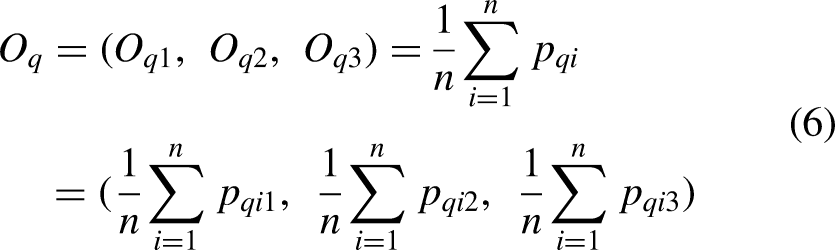
Let the performance of smart healthcare application q in optimizing criterion i be indicated with 


MCDM technique
Many MCDM methods have been to this field, for example, FWA,4,55 fuzzy analytic hierarchy process (FAHP),4,6,17,56,57 FTOPSIS,6,17,58 fuzzy Vise Kriterijumska Optimizacija I Kompromisno Resenje (fuzzy VIKOR),56,59 fuzzy combinative distance-based assessment, 57 fuzzy inference systems,60,61 fuzzy measuring attractiveness by a categorical based evaluation technique (fuzzy MACBETH), 62 etc. In the proposed methodology, FAHP and fuzzy VIKOR are used. However, other methods can also be applied for similar purposes.
The first step is to derive the fuzzy priorities of criteria for evaluating the overall performance of a smart healthcare application. To this end, the decision maker compares the relative priorities of the criteria in pairs, and constructs a fuzzy judgment matrix 



Subsequently, the derived fuzzy priorities of criteria, as well as the performances of smart healthcare applications to be compared, are fed into the fuzzy VIKOR method. In the fuzzy VIKOR method, the overall performance of smart healthcare application q is evaluated as56,59: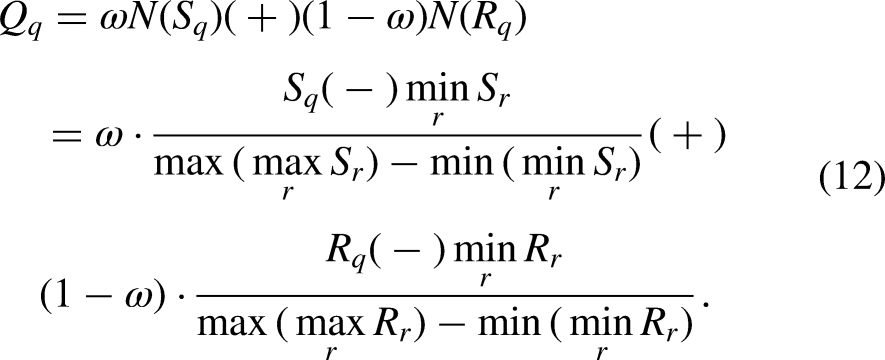


Time-series technique
The time-series approach considers the growth of the market size of a smart healthcare application as a time series,
69
thereby predicting the market size in the coming years based on the past. To this end, stochastic, fuzzy, and gray methods70–72 can deal with inherent uncertainties. Among them, fuzzy methods are particularly suitable due to their ease of understanding and calculation.
73
The time-series technique used in the proposed methodology attempts to fit the relationship between the deseasonalized market size and time with a fuzzy linear regression equation74–76:

Parameters in equation (16) can be derived by solving a quadratic programming (QP) problem79,80:





where d∈
Case study
Background
To illustrate the applicability of the proposed methodology, it has been used to evaluate the sustainability of eight smart healthcare applications (shown in Table 3). These smart healthcare applications were repeatedly mentioned in the literature as the most popular smart healthcare applications before, during, and/or after the COVID-19 pandemic.2,19,83–86 Whether these smart healthcare applications are sustainable is worth studying.
Smart healthcare applications to be evaluated.

Application of the proposed methodology
In this case study, the decision maker was a market analysis manager for a healthcare-oriented company that imported and sold wearable devices. First, the qualitative technique was applied to assess the sustainability of the eight smart healthcare applications. To this end, the decision maker filled out the evaluation form (i.e. Table 2) based on his beliefs. The evaluation results are shown in Table 4.
Evaluation results using the qualitative technique.

After aggregating the TFNs for representing these linguistic terms, the overall performance (i.e. sustainability) of each smart healthcare application was derived. The results are summarized in Table 5.
Sustainability evaluation results of smart healthcare applications.

Second, to apply the MCDM technique, the decision maker compared the relative priorities of criteria in terms of the following fuzzy judgment matrix:

Approximated fuzzy priorities of criteria using calibrated fuzzy geometric mean (cFGM).
The performances of smart healthcare applications in and optimizing the various criteria were evaluated and converted into TFNs within [0, 5]. The evaluation results are summarized in Table 6.
Performances of smart healthcare applications.

The sustainability of each smart healthcare application was then evaluated using fuzzy VIKOR. The evaluation results are summarized in Table 7. After defuzzifying 
Sustainability evaluation results using fuzzy Vise Kriterijumska Optimizacija I Kompromisno Resenje (VIKOR).

The sustainability of smart healthcare applications was ranked.
Third, to apply the time-series technique, the global market size of smart watches, in terms of global shipments of organic light-emitting diode smart watches by panel suppliers, 88 was used as an example (see Table 8). There was seasonality in the data. The seasonal relatives were derived. The data after removing seasonality is shown in Table 9.
Market size of smart watches.

* approximated in terms of global shipments from O’Brien. 88
Market size after removing seasonality.

The QP problem was formulated and solved using Lingo based on the data after removing seasonality. The data from the first eight quarters were used to build the forecasting model, and the remaining data were left to evaluate the forecasting performance (d = 10). The optimal solution was


Subsequently, the seasonal relatives were multiplied by the corresponding fuzzy forecasts. The forecasting results are shown in Figure 5.

Forecasting results.
Discussion
Based on the experimental results, the following discussion was made:
As expected, when the qualitative technique was applied, the smart healthcare application achieving the highest sustainability was healthcare apps/smartphones. Remote temperature scanners took second place due to their success during the COVID-19 pandemic. In contrast, despite the success of healthcare robots in the same period, the decision maker subjectively believed that they would not be very sustainable. Both the qualitative and MCDM techniques suggested that healthcare apps/smartphones were the most sustainable. Smart watches were also recommended by the MCDM technique, which gave a reason to use a third technique, the time-series technique, to confirm the sustainability of smart watches. In time-series techniques, the fitted linear regression model had a positive slope, indicating continued growth in market size. However, the slope was essentially low ( The sustainability of smart watches evaluated using various techniques (from different perspectives) were different:
Qualitative viewpoint: high (the fourth); MCDM viewpoint: highest; Time series: positive but highly uncertain. The fuzzy market size forecast for each period in test data was defuzzified using the COG method, and then compared with the actual value to evaluate the forecasting accuracy in terms of mean absolute error (MAE), mean absolute percentage error (MAPE), and root mean squared error (RMSE): The evaluation result is MAE = 3.61 (millions) MAPE = 12% RMSE = 4.59 (millions)



Conclusion
Applying smart technologies to healthcare has become a trend, and various new smart healthcare applications have been launched one after another. After the COVID-19 pandemic, some smart healthcare applications have been shown to be ineffective or inefficient. The sustainability of a smart healthcare application thus becomes an issue. Several studies have been devoted to assessing the sustainability of a smart healthcare application. However, most existing methods are from an MCDM perspective. Methods from other perspectives are lacking and may yield different evaluation results. In addition, it would be more flexible if the evaluation method could handle various data types and availability. For these reasons, this study proposes a multi-perspective fuzzy comprehensive evaluation method to evaluate the sustainability of smart healthcare applications from qualitative, MCDM, and time-series perspectives.
The proposed methodology has been applied to evaluate the sustainability of eight smart healthcare applications. According to the experimental results, the following conclusions were drawn:
The sustainability of a smart healthcare application evaluated from different perspectives may be different. For example, smart watches were assessed as the most sustainable from an MCDM perspective, but far less sustainable from a qualitative perspective than healthcare apps/smartphones, remote temperature scanners, and smart bracelets. Nevertheless, the evaluation results generated using a technique can be confirmed using another technique. For example, both qualitative and MCDM perspectives evaluated healthcare apps/smartphones as the most sustainable smart healthcare applications. The correlation coefficient between the ranking results from the two perspectives is 0.50, which was not necessarily high enough so different viewpoints should complement each other. The qualitative technique required the least amount of data (only the subjective evaluations of decision makers), while the MCDM technique required the largest amount of data (including both the performances of smart technology applications and the subjective evaluations of decision makers). In addition, the data required by the time-series technique was dynamic and one-dimensional, while the data required by the MCDM technique was static and multi-dimensional. Decision makers should base their selection on available data and their own requirements.
There are many methods from every perspective. Choosing different methods to evaluate the sustainability of smart healthcare applications for each perspective is a future research topic. In addition, when there are multiple decision makers, whether the evaluation results from different perspectives will diverge further or not needs to be investigated. These issues constitute suggestions for future research.
Footnotes
Contributorship
All authors contributed equally to the writing of this paper.
Declaration of conflicting interests
The authors declared no potential conflicts of interest with respect to the research, authorship, and/or publication of this article.
Ethical approval
Not required.
Informed consent statement
Not applicable.
Funding
The authors disclosed receipt of the following financial support for the research, authorship, and/or publication of this article: The publication fee of this paper was supported by National Science Council, Taiwan.
Guarantor
Not required.
