



Abstract
Background
Universal access to health information is a requirement for all global health strategies in the era of pandemics. Getting health information from the internet is a great concern for the quality of patient healthcare. This study aimed to determine the association between digital health literacy and information-seeking behavior among physicians during COVID-19.
Methods
An institutional-based cross-sectional study was conducted from December to February 2021 with a total sample size of 423. A pretest was performed among physicians before the actual data collection. After the data collection, the data were checked, cleaned, and exported into STATA v. 14. Descriptive statistics, binary logistic regression, and multivariable logistic regression analysis were applied. Then a 95% CI and a p-value of less than 0.05 were used to declare statistical significance.
Results
The study revealed that 53.81% of physicians had high digital health literacy and 52.46% had high information-seeking behaviors. Health information-seeking behaviors were determined by digital health literacy, which was 2.25 times more likely than those who had low digital health literacy (AOR = 2.25, 95% CI: [1.11–4.57]). Health-related websites (67.5%) were the most common sources of health information, and 63.30% of physicians find digital health literacy easy or very easy to learn. However, 206 (50.92%) find it difficult or very difficult to decide if the information is reliable, verified, and up-to-date. Internet access (AOR = 1.90, 95% CI: [1.16–3.12]), frequency of searching for information (AOR = 5.35, 95% CI: [2.01–14.29]). All were discovered to be significantly associated with physicians’ health information-seeking behaviors.
Conclusions
Digital health literacy is a key to seeking health information online for appropriate decision-making. Increasing internet access, and providing ICT training, and integrate it into the health information revolution agendas, helping to disseminate health information and provide timely, reliable, and relevant news and genuine information needed for their work.
Introduction
Universal access to health information is a requirement for all global health strategies. Medical doctors have a vital role in achieving the health goals of a given country by updating their knowledge with relevant information to deliver quality and sustainable health care services to their patients. 1 However, most professionals especially in Ethiopia, have limited access to health information as a result of the problem of scarce resources infrastructure. 2
Accessing and use of health-related information in medical practices is significantly important to providing high-quality services for various health issues. Most physicians experience specific information needs, of which precision, reliability, and promptness are fundamental aspects. 3 Satisfying their need with the right information at the right time is mandatory to deliver health services. 4
Searching for information on COVID-19 helps in preventing the spread of the virus, reducing medical errors, and ensuring quality health care services that require information to solve the day-to-day challenges of the virus spreading.5,6 In the modern healthcare system, seeking healthcare information is a means of healthy living. 7 The scholars defines; the health information-seeking behaviors are the understanding of how and why individuals reside in health.8–10 However, disinformation and misinformation about preventive, diagnostic, and curative measures have spread through the internet, social media, and other digital sources in the era of COVID-19 pandemics.1,11 The main concerns are about the users’ ability to access, understand, and apply information to make informed decisions about health. 12
According to a study from Europe, more than one-third of healthcare professionals lacked basic health literacy, 13 The risk of COVID-19 infection has been associated with a decline in protective behavior, information, and awareness of the pandemic.14,15 Additionally, some experts argue that a crucial issue in COVID-19 would be how clinicians incorporate knowledge into their health behaviors. Critical health literacy is required, particularly in light of the dissemination of false information online, which poses a serious risk to patient's safety and their health. 16 However, having a digital health literacy is a solution and a critical tool in the public health emergency to counteract the effects of the pandemic and to provide valid and reliable health information about COVID-19.6,16–20
Seeking, finding, understanding, and appraising health information from electronic sources and applying the knowledge gained to prevent, address, or solve a health problem has been defined as digital health literacy. 12 Digital technology has been considered a mechanism to track the virus’ spread and share information to deliver healthcare services across a distance. 21 Physicians practicing evidence-based communication helps to provide valid and reliable health information concerning the pandemic to promote quality healthcare. 22
In response to COVID-19, several preventive measures have been implemented to limit the virus's spread by the ministry of health23,24 such as gathering COVID-19-related information through digital technologies and disseminating information to the community, and health facilities, and giving training to health professionals to find health information to their patients.25–28
The scholars argued that having a good digital health literacy helps to access high-quality, cost-effective healthcare service delivery by increasing their communication skills, which improves the skills needed to search, select, appraise, and apply online health information. 29 However, the barriers affected the successful adoption of digital technology advancements, particularly in resource-limited settings. 30
Many challenges in mainstreaming of digital health have been happed during the pandemic and are still being observed. 31 The technology users in various parts of developing countries have been hesitant to incorporate innovations and manage new cases into the healthcare system.32,33 However, it requires staff to be aware of the concept of digital health and to have the relevant skills to share health information between physicians within their or across health facilities.34,35
Even though the level of physicians’ digital health literacy and health information-seeking behaviors hasn't been researched in Ethiopia, especially concerning during the COVID-19 pandemics and in others communicable disease epidemics, respondents’ motivation to use digital health, internet access, computer training, knowledge about perceived usefulness, and perceived ease of use all influence on their digital health literacy.19,33,36,37 Through social media, cell phone conversations, text messages, news media, email, and other channels, the physician may be able to share health information about disease prevention and control with other health professionals and patients in the healthcare facility. 6 Therefore, this study aimed to examine the association of digital health literacy and information-seeking behaviors of physicians working in referral hospitals during the COVID-19 epidemic.
The following research questions were incorporated into this study:
What is the level of digital health literacy among physicians working at referral hospitals during the COVID-19 pandemic? Are there any associations between digital health literacy and health information-seeking among physicians? What are the main sources of COVID-19 information during the pandemic for physicians?
Methods and materials
Study design, setting, and period
An institutional-based cross-sectional study design study was conducted at a governmental health facility among physician in Addis Ababa started from December 2020 to February 2021. The study area has a population of more than 4 million. It has ten sub-cities, the capital city of the country, and the AU, and has more than 80 government health facilities in the city and 50 private health facilities.
Sample size determination
The sample size was calculated using single population proportion formula: n = ((Zα/2)2 *pq)/ d2, and by included assumptions: n = the required sample size, Z = the value of standard normal distribution corresponding to α/2 = 1.96, p = 50.4% and 55% from the similar study of health professional's digital health literacy, information-seeking behaviors respectively, q = 1-p, d = the margin of error 5% (0.05), With 10% none response rate, n1 = ((1.96)2 *0.504*0.496)/ (0.05)2 = 384.12, and n2 = ((1.96)2 *0.55*0.45)/ (0.05)2 = 380.32%. Adding 10% to the calculated sample size the final sample was 423.
Study participants were selected from referral hospitals within the Addis Ababa Administration, with a proportionate allocation from each hospital based on the hospitals’ previous human resource records in the Administration, while health professionals were selected using simple random sampling techniques by a lottery method after being stratified according to their respective professions.
Inclusion and exclusion criteria
Physicians working at referral hospital in Addis Ababa and available during data collection time were included in the study. Physicians who were seriously ill, unable to respond, and positive for COVID-19 were excluded from the study.
Data collection tools and procedures
A structured administrative questionnaire was adapted and modified from various literatures. The questionnaire was prepared in English and included socio-demographic characteristics of the respondents, ICT exposure, organizational factors, and digital health literacy.1,38,39
It was pre-tested for reliability before the conduct of the actual data collection. Four Health informatics professionals collected the data after receiving one-day training on the research's objective, purpose, and how to conduct the data collection and were guided by a supervisor. Both the data collectors and study participants used COVID-19 protective equipment like masks and sanitizers, keeping a 2-m distance.
Measurement
Data quality control
Properly designed, structured, and pre-tested questionnaires were used to collect the data. The 1-day training was given for data collectors and an explanation of the study objective and study variables was given. The missing values and errors were cleaned and checked. A pretest was performed at Tibebe Ghion referral hospital among 10% of the study participant before the actual data collection. A Cronbach's alpha of > 0.72 was used to assess the internal reliability of the tool. Moreover, amendments were made to the questionnaire based on the feedback received from the participants during the pretest.
Data management and analysis
The data were collected using the Kobo collect tool and the collected data were checked, cleaned, and exported into Excel to reduce error and incompleteness. Then, the analysis was performed using STATA 14. The descriptive statistics results were expressed as mean, standard deviation, percentage, and frequency. Binary logistic regression was employed to identify factors associated with health information seeking. Those variables with a p-value less than or equal to 0.2 from the bivariable analysis were included in multivariable analysis. The multivariable logistic regression analysis was used to control potential confounders and to identify significant factors associated with DHL. Moreover, the magnitude of the association between different independent variables to dependent variables was measured using adjusted odds ratios. The Hosmer–Lemeshow goodness of fit was used to test the model's fitness. Multi-collinearity between independent variables was assessed by checking their tolerance and Variable inflation factors (VIF). A 95% CI and a p-value of less than 0.05 were used to declare statistical significance.
Results
Socio-demographic characteristics
Four hundred six (96.7%) of the study participants were written consent, and completed all the questionnaires. Among the study participants, 240 (59.1%) respondents were male. The mean age of the participants was 31.22 + _7.43 SD years, and the majority of the respondents were within the age group of fewer than 30 years. In terms of educational status, most of the respondents were GP 172 (42.3%). The mean working experience was 5 + _3.3 SD years and 183 (45.1%) of the respondents were within the range of 1–5 years (Table 1).
Socio-demographic characteristics of the physician (N = 406).

Exposure of physicians to ICT to seek healthcare information
The majority of the respondents 332 (81.8%) accessed computers, laptops, or smartphones for their work; 282 (69.5%) of the respondents had internet access within their hospitals; and 62.3% of the participants visited the medical field on the internet. The majority of study participants (64%) looked for health information on the Internet (Table 2).
Exposure of physicians to ICT to seek healthcare information (N = 406).

Information seeking preferences and topics
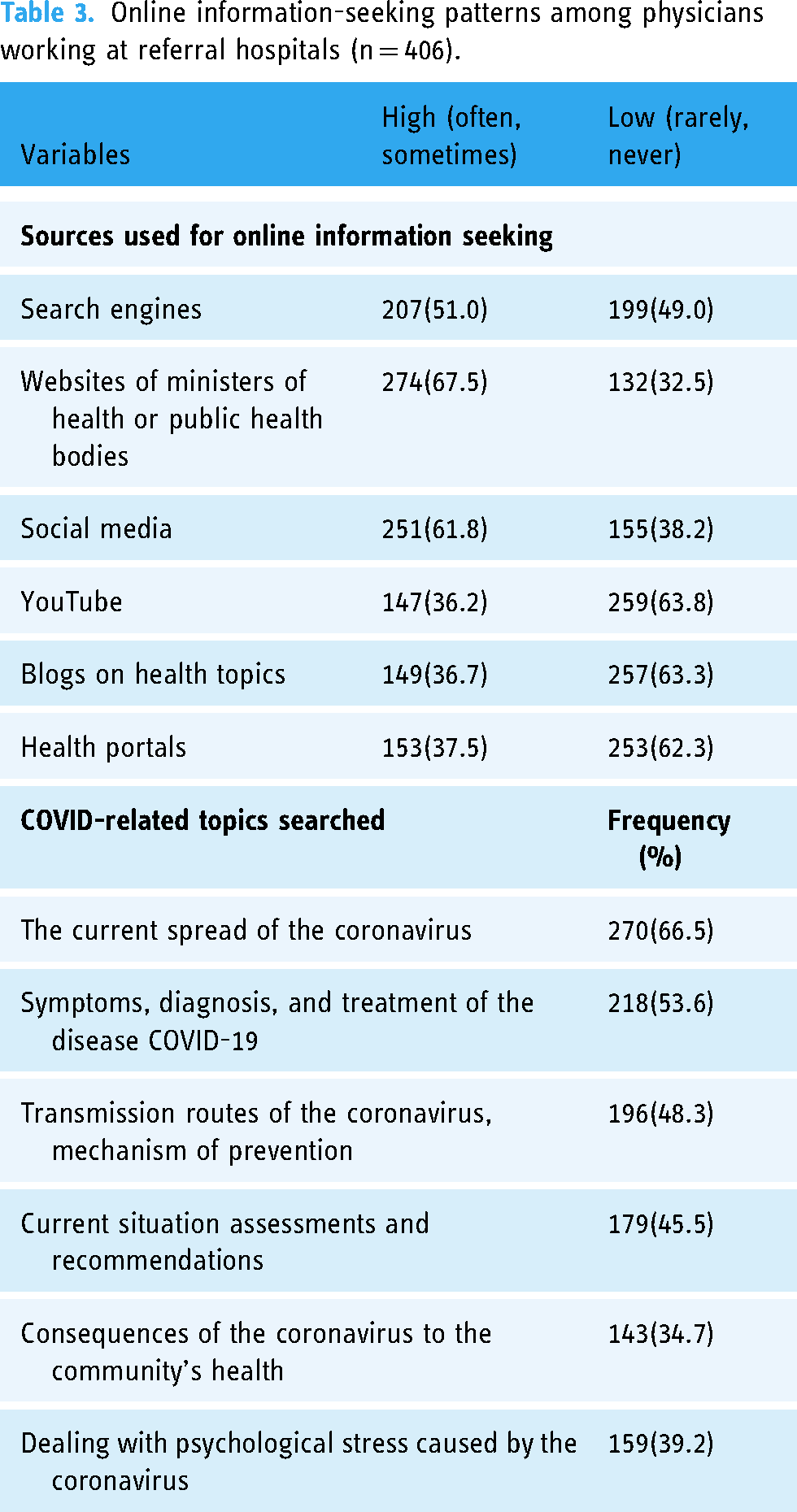
The preferred sources of information for physicians were websites of the Ministry of Health or other internal health-related websites, but the blogs on health topics were the lowest sources of information 274 (67.5%), and 257 (63.3%), respectively. In addition to the source of information, more than two-thirds (66.5%) of physicians’ searches were about the current spread of corona virus-related topics (Table 3).
Online information-seeking patterns among physicians working at referral hospitals (n = 406).
Digital health literacy of study participants
The study revealed that 53.81% of physicians had high digital health literacy (Very Easy/Easy), more than half of physicians find it easy or very easy to use the proper words (63.30%) to find information, but 147 (35.43%) physicians find it difficult or very difficult to find the exact information. Of the total of 154(37.9% find it difficult or very difficult to choose between all the information. More than one-third of the study participants were satisfied with the information they found online about coronavirus. The study participants find it easy or very easy to express opinions, thoughts, or feelings in writing (221; 54.59%) or write messages that are understood (200; 49.08%). However, 206 (50.92%) find it difficult or very difficult to decide if the information is reliable, verified, and up-to-date and comes from official sources. More than half of physicians couldn’t apply information about the coronavirus in their daily life (Table 4).
Digital health literacy for each subscale among physicians in hospitals (N = 406).

Bivariate and multivariable analysis factors affecting physicians’ health information seeking during COVID-19 (N = 406).
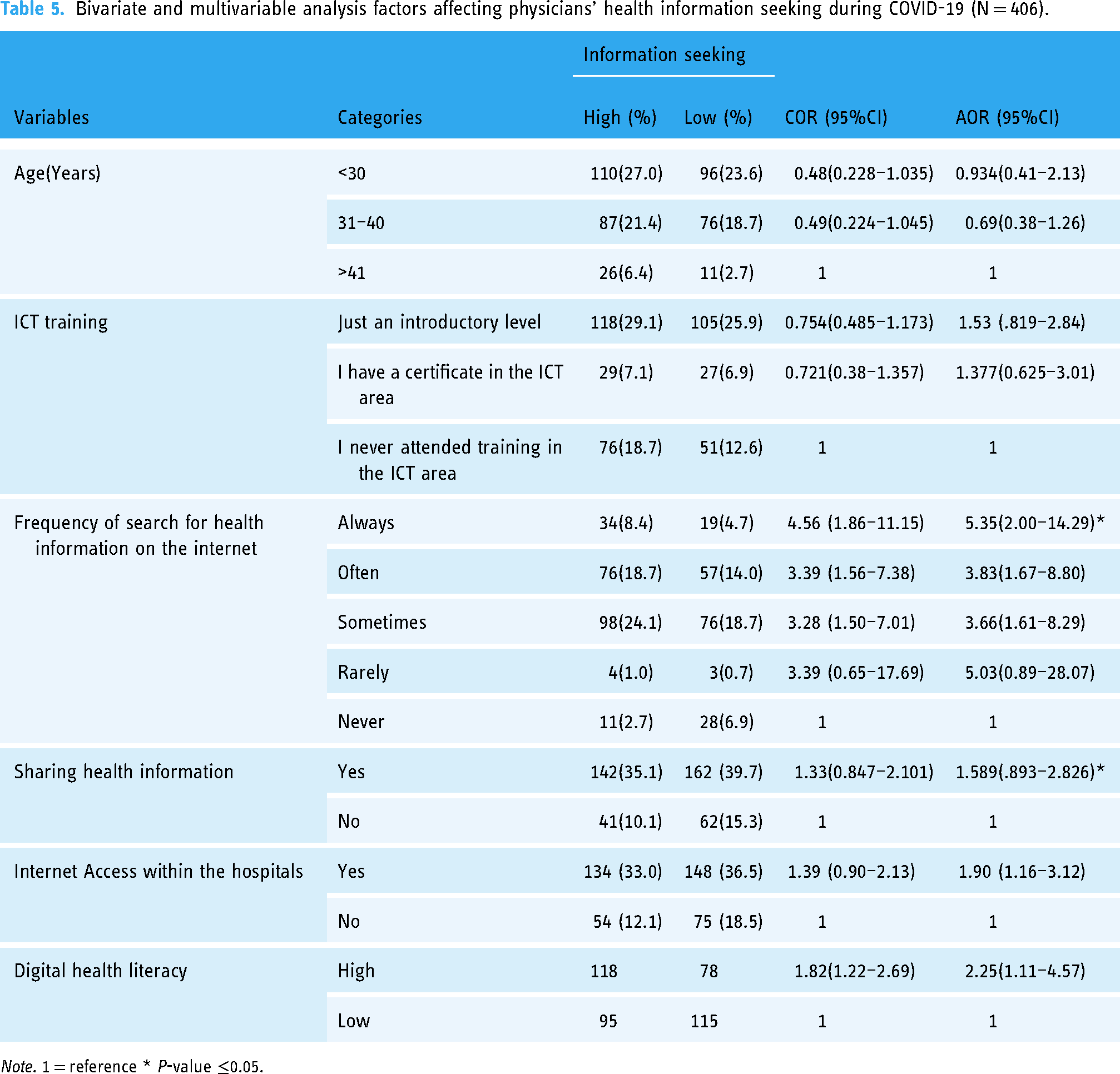
Note. 1 = reference * P-value ≤0.05.
The inhibitors factors for digital health literacy
According to the findings, 318 (78.32%) physicians were unaware of digital health platforms and how to share health information with their colleagues, while 283 (69.7%) of study participants said a lack of ICT support staff impeded seeking health information digitally (Figure 1).
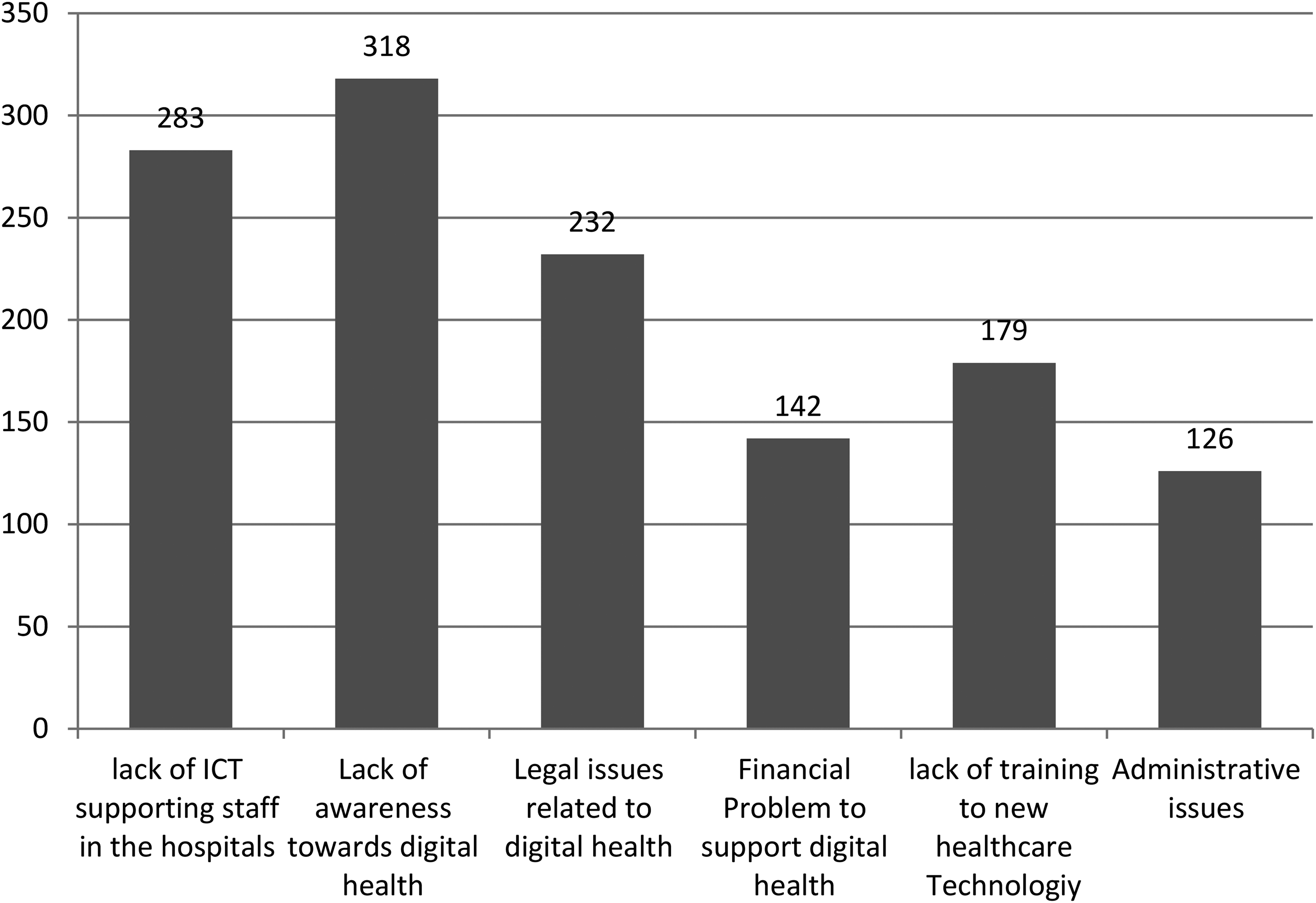
Inhibitors factor for digital health practice during COVID-19 among physician (N = 406).
Factors associated with the health information seeking among physicians
The study revealed that 52.46% of physicians had high information seeking behaviors. Internet access, frequency of searching for information, and digital health literacy were all found to be positively associated with the health information seeking of physicians. Those who had internet access within their hospitals were 1.9 times more likely to seek health information than those who did not (AOR = 1.90, 95%CI: [1.16–3.12]).
Similarly, the frequency of searching for information on the internet was found to be significantly associated with physicians’ health-seeking behaviors. Participants in the study who always searched for information on the internet were 5.35 times more likely than those who never searched (AOR = 5.35, 95% CI: [2.01–14.29]). Another factor influencing physicians’ health information-seeking behaviors was digital health literacy, which was 2.25 times more likely than those who had low digital health literacy (AOR = 2.25, 95% CI: [1.11–4.57]) (Table 5).
Discussion
Accessing and disseminating healthcare information was difficult during the COVID-19 pandemic, especially in developing countries. Sharing health information to provide health care services by aiding healthcare technology has been a potential solution to responding to the current health care crisis and scaling up the health care system for disease control and prevention. 30 This study examined the association between a physician's digital health literacy and health information seeking using Web search engines, websites, social media, and different health portals.
According to the study, physician health information seeking was affected by internet access; the frequency of searching for information was also positively predicted by their digital health literacy. The finding is comparable with a study in Nigerian among physicians, the overall electronic health literacy was reported to be medium. 1 The scholars indicated that the COVID-19 pandemic had a high psychological impact on medical professionals. 43 However, the frequency of searching for strategies to manage psychological stress among physicians was low, It could be explained by the fact that this survey was conducted during the early stages of the pandemic. 44
As a result, there is a need to consider improving the dissemination of information to professionals about potential health consequences and resilience strategies. 45 In the era of technology, health literacy has extended to include digital health literacy. 40 The findings also revealed the importance of developing skills to add user-driven health content to web-based media. The provision of training to the professionals helps to improve their ability to add self-generated content and might be beneficial to gaining reliable information in the era of COVID-19. 41 Search engines may also provide both reliable and unreliable information.46,47 Mindful consideration should be taken in selecting search engines when adding self-generated content. We found that determining relevance and evaluating reliability was high for information sources about COVID-19. Evaluating information on the internet concerning its reliability and consistency across different websites needs essential skills for digital health.41,48
Regarding information-seeking behavior, half of the physicians seek health information by using search engines and social media, but the level of digital health literacy is one of the main factors in combating the infodemic, which could help to avoid the negative consequences of dis and misinformation.49–52 The researcher indicated that the role of information seeking has had a significant impact on all kinds of jobs. 53 Especially in healthcare settings where a physician provides patient care or helps to oversee hospital administration.8,54 In addition, seeking health information supports making evidence-based decisions in health facilities.34,55 However, the source of information may interact with it manually or with computer-based systems such as the Internet.56,57
This study also revealed physicians had high health information seeking as compared with other studies, the skill of accessing health information by using technologies to handle the necessary medical procedures and treatment of patients on time.2,58,59 Nowadays, the information needs of the public health workforce have become more mandatory due to the emergence of new infectious diseases like COVID-19. 60
The study indicated that information needs in developed countries doctors needed information on clinical care, continuing professional development, and patient information.10,61,62 On the other side, information needs in developing countries are associated with specific medical details, which include information about disease prevention, treatment, and information that deals with disease emotionally.35,63
During the COVID-19 pandemic, the source of information was the internet, mainly the websites of the ministry of health and public bodies; even it depends on their accessibility, affordability, and dependability. Other studies revealed that the main source of information was colleagues’ information. 58 However, in the era of technology, our finding is in line with the study conducted in Nigeria. 1 It might be internet or electronic resources have become popular sources of information for physicians in medical practice. Similarly, a study conducted in England on the information-seeking behaviors of health and social care professionals showed that the Internet main source of information. 64
Health information helps for a better understanding of the causes of illnesses, how to prevent disease, and how to cure patients of disease.65,66 However, the physicians encountered numerous barriers to fulfilling the information needs of their patients. According to the finding, the major barriers that limit health information seeking were lack of basic IT supporting staff, awareness of digital health platforms, and lack of time. This study is in line with a study conducted in Uganda, 9 that inhibited physicians from seeking information related to time constraints, insufficient access to resources and irregular supply, and inadequate search skills of physicians.
This research uniquely identified physicians’ digital health literacy as being associated with health information-seeking behaviors. In the investigation, information-seeking activities during the COVID-19 pandemic were significantly predicted by their digital health literacy. This result is supported by Vietnam and Iran studies.67,68 In the midst of pandemics and infodemics, providing timely, relevant, and accurate information and promoting digital health is a way to get reliable information, 5 and other scholars have also suggested that digital health literacy helps to access, comprehend, and appraise online information, which is critical for physicians’ lifestyles and future endowment to their patients.
Conclusion
This study revealed that digital health literacy is a key to seeking health information online for appropriate decision-making and more than half of the physicians’ health information-seeking behavior was medium level from different online sources
Improving the digital health literacy and information-seeking behaviors of physicians during the pandemic will limit the virus's spread and communicability and help with future preparedness for the outbreak. By providing timely, reliable, and relevant news and genuine information need for their work. Therefore, increasing doctors’ access to the internet, providing them with better training, and providing them with ICT support personnel will enable them to utilize dependable information sources for COVID-19.
Footnotes
Acknowledgment
We would like to acknowledge the Ethiopia Ministry of Health, Ethiopia Midwife Association, Addis Ababa administration health Bearua, and head of health facility administrators for their permission, data collectors, and study participants for their support in the process of data collection.
Authorship contributions
Availability of data and materials
All major data have been presented in the manuscript.
Declaration of conflicting interests
The author(s) declared no potential conflicts of interest with respect to the research, authorship, and/or publication of this article.
Ethics approval and consent to participate
Ethical clearance was obtained from the Ethiopian midwife association's ethical review committee on behalf of MOH, and support letters from the Addis Ababa health bureau and MOH were obtained with approval number EMwA-IRB/001-2020. Written consent was obtained from each study participant. The data was gathered anonymously, and the participants’ privacy was respected. All of the information gathered was kept private and solely utilized for research purposes.
Funding
The author(s) received no financial support for the research, authorship, and/or publication of this article
Strengths and limitations
This study contributed as a baseline study and will be used as a future intervention in the areas of digital health and the health information revolution. However, the study was not supported by a qualitative study to make a triangulation, and the outcomes could be influenced by confounding variables.
