




Abstract
Objective
This study explored the information women want to know about HPV and cervical cancer, and the enablers or inhibitors that may contribute to, or prevent, seeking online health information.
Methods
Two focus groups were conducted with women from the general public, followed by interviews with 12 physicians practicing in Saudi Arabia. The data was analyzed by using a thematic analysis approach.
Results
Researchers of this study identified six topics of information that were need-related, ten that were enabling, and six inhibiting subthemes related to online information seeking about HPV and cervical cancer.
Discussion and conclusion
In accordance with the identified themes and sub-themes, we offer recommendations to optimize the health information-seeking task related to HPV and cervical cancer through eHealth educational solutions. User- and expert-based feedback can both strengthen and inform the design, development, and implementation of eHealth interventions.
Introduction
Cervical cancer is a global health issue faced by many societies, including the Saudi society. Cervical cancer is reported to be the third most common gynecological malignancy among Saudi women, 1 and it is ranked the 8th most common leading cause of women's mortality in Saudi Arabia. 2 HPV types 16 and 18 are responsible for approximately 70% of all cervical cancer cases in Saudi Arabia and represent the most common genotypes of HPV. 3 Having a weak immune system, several sexual partners, and age are some risk factors for HPV. 4 In most cases, HPV is asymptomatic. 5 Women with normal immune systems take from 15 to 20 years to develop invasive cervical cancer (ICC) compared to women with weak immune systems, for whom this may take 5 to 10 years. 5 Prevention strategies are crucial given that cervical cancer is a slow-growing malignancy and that it typically has no symptoms until its late stages. Thus, screening and vaccination can assist in the prevention and early detection of cervical cancer. 5 Some of the signs and symptoms in its advanced stages may include vaginal bleeding between periods, after sexual intercourse, and/or at postmenopausal age, and increased vaginal discharge. 5
As most cases of cervical cancer are attributed to HPV infections, preventing such infections aids the prevention of cervical cancer. This is evident from the reduction in cervical cancer rates after the introduction of HPV vaccinations. 6 In fact, vaccination is estimated to “…protect against more than two-thirds of cervical cancer cases in Saudi Arabia.” 7 In 2010, the Saudi Food and Drug Administration approved HPV vaccines — Cervarix and Gardasil — for females aged 12 to 28 years. 8 In 2019, the Saudi Ministry of Health incorporated HPV vaccines into females’ routine immunization schedules. 8 A 2022 cross-sectional study of 609 Saudi females explored the uptake rate of the HPV vaccine among these women and found that only 3% of the participants had been vaccinated against HPV. This low percentage of vaccination was due to the lack of knowledge and awareness among these women about HPV vaccinations. 8 This highlights the need for intervention efforts to improve HPV knowledge and the uptake of HPV vaccination among females in Saudi Arabia.
Regular screening for cervical cancer is an important prevention strategy that can help reduce cancer-related mortality. The implementation of invasive cervical cancer screening programs (known as Pap smears/Pap tests) has resulted in a decrease of about 70–80% in the incidence and mortality rates of cervical cancer in developed countries. 9 Thus, the Pap test is recommended globally for all sexually active women. 9 Yet, despite the well-known benefits of such a screening test and HPV vaccines, and despite the availability of these interventions in Saudi Arabia, knowledge and awareness of HPV and cervical cancer remain poor. 7 A cross-sectional study of women living in the western region of Saudi Arabia reported that 84.9% of the surveyed women were not aware of HPV and that 95% of them had never heard of a Pap smear test 10 Another study that investigated the awareness levels of Saudi women about cervical cancer and HPV reported the lack of awareness and knowledge among Saudi women about HPV, cervical cancer, and the HPV vaccine. 11 Poor knowledge on this subject has been associated with low cervical cancer screening performance. A cross-sectional study conducted among 335 women revealed that Pap smear performance was significantly higher among women who had more knowledge about cervical cancer and Pap smear. Knowledge about cervical cancer and Pap smear was found to be a predictor for Pap smear performance, while inadequate knowledge was found to be a barrier to it. 12 Therefore, it can be inferred that a key obstacle to cervical cancer screening and HPV vaccination is the public's lack of knowledge and awareness regarding HPV, its vaccines, and cervical cancer screening tests. Most Saudi women who have cervical cancer are diagnosed with advanced-stage cervical cancer, which requires extensive therapeutic services and is associated with lower survival rates. 13 This dire outcome can reasonably be attributed to the lack of knowledge about, and preventative care for, HPV and cervical cancer. Thus, finding ways to improve the levels of knowledge and awareness is essential to improving the health and well-being of women living in Saudi Arabia.
Developing and implementing electronic health (eHealth) solutions represent a valuable opportunity for disseminating health information that combats the lack of knowledge about HPV and cervical cancer. The development of technological solutions, coupled with the evolution of the Internet, have changed health information-seeking behavior. The Internet is now a ubiquitous part of health information acquisition. With the Saudi population increasingly using different types of online applications and/or platforms to obtain health information, 14 one possible action that IS/IT researchers may take is to use these technologies to educate women about HPV and cervical cancer. The design and development of IS/IT solutions that address the need for Saudi women to educate themselves regarding HPV and cervical cancer is an emerging study that requires additional research. The information needs and factors that affect the use of technological solutions for information seeking about HPV and cervical cancer should be explored. This research contributes to the design requirements for eHealth education interventions to optimize their utility.
To support online health information-seeking task satisfaction, eHealth technological solutions should fit the context in which they are implemented and the needs of the users. Understanding the information needs, inhibitors, and enablers to the technology use of Saudi women can provide insights into appropriate ways of introducing such technological solutions to this population. Culture is inherent in health behavior and health communication. 15 Thus, empirical findings generated from western socio-cultural contexts may not necessarily be applicable to countries with different cultures such as Saudi Arabia. Considerable efforts have been made by scholars to understand online health information seeking in the US (e.g.,16–18) and Europe (e.g.,19, 20), yet little is known about Saudi Arabia. This indicates the need to understand the various perspectives of potential users’ design preferences and information needs that exist among women living in Saudi Arabia.
With the above in mind, this research was conducted to explore and understand the information needs of women living in Saudi Arabia, as well as the enablers and inhibitors that may contribute to, or prevent, their use of eHealth education interventions in relation to HPV and cervical cancer information seeking. Through a thematic analysis of data collected from focus groups and semi-structured interviews, three main themes and 19 supported sub-themes were identified. In accordance with the identified themes and subthemes, we offer recommendations to optimize the health information-seeking task related to HPV and cervical cancer through eHealth educational solutions.
This study adds to the growing body of knowledge on women's health education, with a specific focus on intervention development and prevention. This research has the potential to improve the health of women by clarifying the information needs and preferences of users in relation to online health information seeking. These findings could inform the development of technological solutions designed to increase the knowledge and awareness of HPV and cervical cancer. Specifically, it addresses the research gap by supporting the development of consumer-focused, technological interventions for cervical cancer control among Saudi women. It also offers website developers consumer-focused design recommendations to enhance the acceptability and usability of eHealth tools, which could then be used in any eHealth technology that focuses on women's health education. This paper can serve as a foundation for future investigators of women's health and health education, an area where technology and information systems have a critical role to play.
Methods
Sample
Over a three-month study period, from November 2020 to January 2021, two focus groups of women from the general public were conducted (six in each group), followed by one-on-one interviews with 12 physicians practicing in Saudi Arabia. The study was approved by the Institutional Review Board at Claremont Graduate University. A total of 12 women from the general public and 12 physicians from Saudi Arabia completed the pre-survey and signed the consent form to participate in the study. All participants were recruited using convenience and snowball sampling techniques. The convenience sampling technique allowed the researchers of this study to invite accessible, available, and willing participants. 21 The snowball sampling technique was applied since it is usually used as an “auxiliary means” that aids researchers in increasing their sample size and accessing new participants. 22
For the focus groups, women living in Saudi Arabia were recruited via WhatsApp and announcements in undergraduate classes at King Abdulaziz University. Two focus groups were created and were sufficient to reach data saturation. This is consistent with the recommendations of a commonly cited methodological paper. 23 It suggests that the use of two to three focus groups can identify up to 80% of prevalent themes, and it recommends six to 12 participants per focus group session. 23 The participants had to meet the following criteria to be eligible to participate in the study: identify as female, be from the general public, currently live in Saudi Arabia, and be age 18 and over. Physicians were recruited for interviews via text and e-mail invitations. To qualify for participation, physicians had to currently practice family medicine, gynecology, or internal medicine in Saudi Arabia.
Procedure
This study had two main phases: In phase one, two focus groups were run with women from the general public; then, in phase two, 12 practicing physicians were interviewed. In view of the physicians’ demanding and busy schedules, one-on-one interviews were used to increase the likelihood of them responding.
In the first phase, the focus group participants were asked questions about their preferences in relation to the content and design of eHealth education interventions. For example, the participants were asked what type of information they wanted to learn and their preference regarding the presentation of that information (the interview questions are in Appendix A). Each focus group lasted approximately 60 min, was conducted in Arabic, and employed a semi-structured, in-depth interview format. There were six participants in each focus group. Before starting the focus group sessions, the first author contacted the participants, assigned each participant a random number to protect their anonymity, and then asked them to use that number during the focus group session. After all the participants had joined the session, the focus group moderator started the session by introducing herself and the research team members and stating the guidelines for the focus group session. The focus group sessions were conducted online through the Blackboard platform. Both sessions were audio-recorded, transcribed, reviewed by the first author, translated into English by an expert translator, and reviewed again by the first author for accuracy and completeness for analysis.
In the second phase, the co-author conducted one-on-one semi-structured interviews with 12 physicians using Zoom and FaceTime. The interview guide was pilot tested with one interview, and minor revisions were made (see Appendix A for interview questions). Prior to interviews, all participants provided a signed digital informed consent and completed a demographics form. Interviews were conducted in English, since the physicians were fluent in English, and lasted between 45 and 60 min. All interviews were audio recorded with the consent of the interviewees and transcribed verbatim with all possible identifiers removed. The transcripts were compared to the audio recordings for accuracy.
Data analysis
The transcribed discussions, field notes, and interviews were analyzed thematically to generate a list of content topics and design preferences. 24 The transcripts were coded and grouped into themes and sub-themes, developed as the analysis proceeded. All audio-recorded sessions and interviews were transcribed verbatim. The transcripts and field notes were coded and reviewed independently by the first and second authors. More specifically, each transcript was repeatedly read and coded by two researchers independently to increase reliability. To reach a consensus between the two members, a meeting was held to discuss and compare codes.
Results
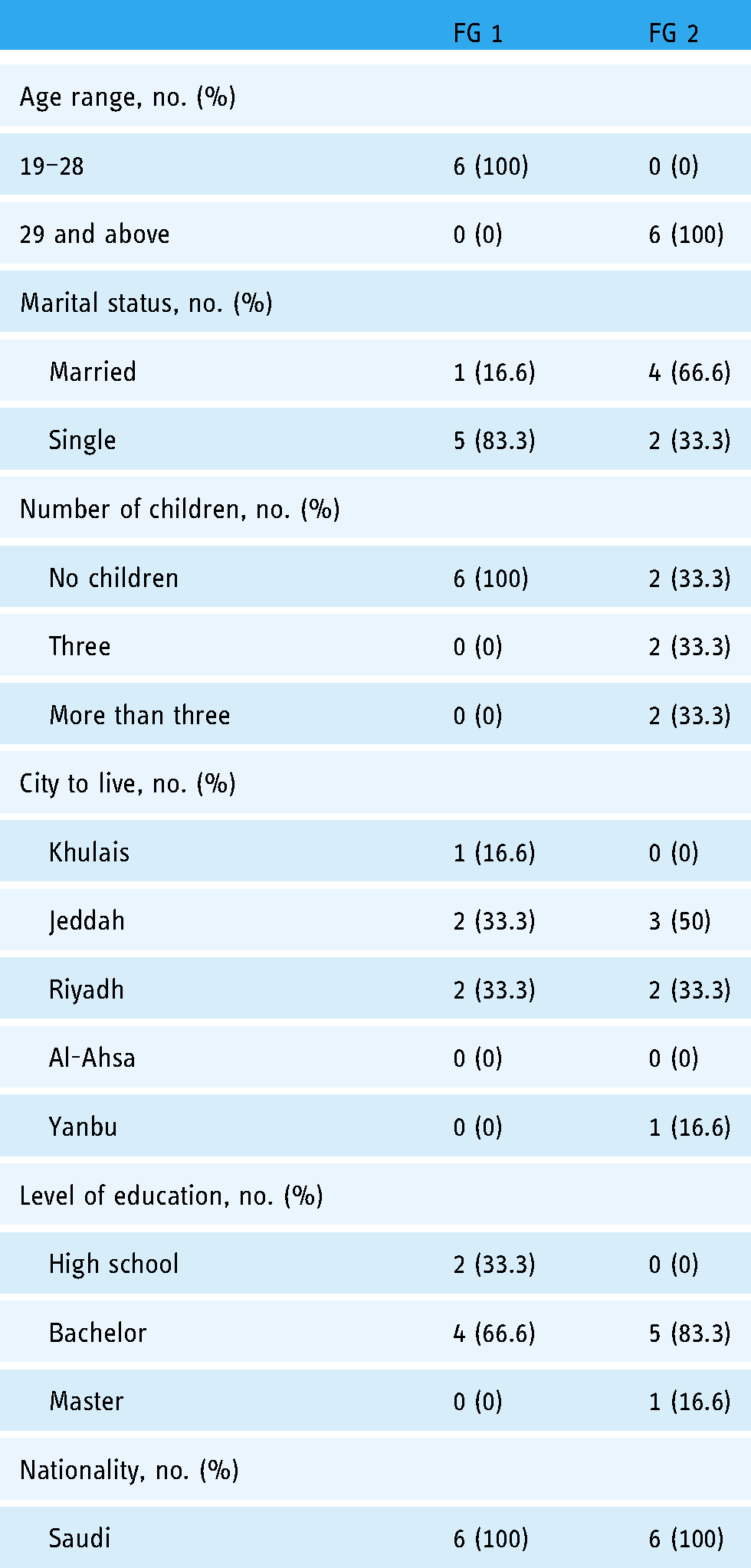
The participants’ characteristics of the women who took part in the focus groups (conducted during phase 1) are shown in Table 1. The physicians’ characteristics are shown in Table 2.
Characteristics of women from the focus groups.
Physicians’ characteristics.

There were three main themes and 19 supported sub-themes that emerged from the analyzed data (see Table 3). The main themes are information needs, enablers, and inhibitors. We proceed by explaining each theme and its supported sub-themes.
The finalized themes and sub-themes from both women from the general public and physicians with an example quote.

Three main themes emerged commonly and consistently from both participant groups: physicians and women from the general public. However, some of the sub-themes under the enablers theme evolved from one group but not from the other. Three enabler sub-themes evolved from physicians but not from women from the general public, one evolved only from women from the general public, and 15 evolved from both (see Table 4).
The finalized themes and sub-themes.

Theme 1: information needs
For the theme of information needs, this study adopted Ormandy's 25 definition that refers to an individual recognition of a gap in their knowledge within a specific context and time. Six main topics that women desired to know more about, concerning HPV and cervical cancer, emerged from the data analysis. These topics/sub-themes are explained in detail below.
HPV and its types
The interviewed participants from both groups (i.e., women from the general public and physicians) agreed on the importance of increasing knowledge about HPV and its types. For instance, when physicians were asked about what kind of information women must know about HPV and cervical cancer, one of them, a gynecologist, stated “They [women] should know that it is one of the common STDs that they might face” (Physician 3). Another gynecologist added, “I think you should just mention what HPV is and the types of it…” (Physician 5). Some women from the general public who participated in the focus group sessions also expressed these informational needs. For example, one woman highlighted her need to learn scientific facts about the disease, whereas another stated her interest in learning about “the causes” of cervical cancer (Woman 15). This reflects the need to increase Saudi women's knowledge about the infection itself and its type.
Link between HPV and cervical cancer
Almost all the interviewed physicians stated that most Saudi women lack knowledge about the link between HPV and cervical cancer. A gynecologist stated, I think that they [women] do understand that there is cervical cancer, but there is no level of understanding about the connection between HPV and cervical cancer.… they do not understand that HPV is associated with it [cervical cancer]. (Physician 11)
Similarly, some of the interviewed women expressed their need for information regarding the causes of the disease and the consequences of contracting the infection. For instance, one woman asked, “What is the consequence of it [HPV]…?” (Woman 6), and another female added, “What caused it [cervical cancer]?” (Woman 9). These questions reflect the need to know the link between HPV and cervical cancer since cervical cancer is one of the consequences of HPV.
The importance of prevention and screening
The participants supported the need to include information about the importance of prevention and screening during online information seeking. For instance, a family physician stated, Another thing that I found very, very useful, for example, is that when I was doing the breast cancer screening for females, I would say to them, ‘You know what, a mammogram can detect a very, very, very tiny region. And we can take it away. And this really prevents your chance or likelihood of getting breast cancer.’ So, I would add here some information to address why you are telling the people to do their Paps? … I feel sometimes this is the main point that you have to deliver: early detection, early treatment, early eradication, no spread of cancer, and decrease the chance of death. Because that is exactly what people want. (Physician 7)
Accordingly, two women from the focus groups supported this sub-theme as follows: “About the early detection, are there specialized clinics for this infection?” (Woman 5); and “How can I prevent myself from contracting the infection and having cervical cancer?” (Woman 9). The women's questions demonstrated their desire to understand more about where they can access clinics and how to prevent themselves from getting infected or developing cervical cancer, which supports the need for prevention and screening information.
HPV vaccination and its availability
HPV vaccination and its availability have also emerged as a topic many participants believe must be covered. A family physician stated, “They need to know that the vaccine is available… because it plays a role in preventing cervical cancer…” (Physician 7). This was also discussed during the focus group sessions. After having the participants informed that there are available vaccinations to prevent them from having HPV, one woman asked, “How often should this vaccine be given? Every two years or what?” (Woman 15) while Woman 12 asked about the importance of vaccinations, and the availability of vaccination centers. The women's concerns about access and availability of the vaccine support the need for publicly available information about the availability of the HPV vaccine in Saudi Arabia directed toward women in the general public.
Risks
Participants interviewed from both the group of physicians and the group of women from the general public emphasized the importance of knowing the risks of participating or not participating in medical interventions such as vaccination programs and screenings. An internal medicine specialist mentioned, “the risks of not doing it [screening] and the general idea of cervical cancer” (Physician 1) as essential information for women to have. Accordingly, a gynecologist stated, “It is also important that they [women] know the potential risks of this infection [HPV]” (Physician 9). The physicians’ views were supported by the women in the focus groups. For example, one woman asked, “What are the risks of not being vaccinated?” (Woman 9), and another said, “I would like to know more about the risks of getting the virus and cervical cancer” (Woman 8). Illustrating the importance of communicating the risks associated with HPV, the two groups of participants both emphasized the consequences of not being vaccinated and not participating in regular screenings.
Symptoms
Participants also shared the necessity of being familiar with the symptoms related to HPV and cervical cancer. A few examples are as follows: A family physician stated that women should know “what HPV symptoms are…” (Physician 6). Similarly, a woman from the focus group wondered about “the symptoms …” (Woman 16), and another added, "It would be useful to know the symptoms of such a virus" (Woman 9). Knowing the symptoms of HPV and cervical cancer is an important topic that emerged in conversations with both physicians and women's focus groups. Providing education about symptoms can help minimize the potential consequences associated with HPV and cervical cancer.
Theme 2: enablers
The term enablers refers to factors that facilitate an individual's engagement in performing a task. Based on the analyzed data, nine enabler subthemes emerged that could facilitate an increased use of eHealth interventions for women to seek information and educate themselves about HPV and cervical cancer. The subthemes of simplicity, identity, and government/third-party endorsement arose from the interviews with physicians. The community context subtheme emerged from discussions with focus groups comprised of women from the general public. The remaining five subthemes —promotion, information presentation modes, online medical consultation, credible references, and ease of use—came up in discussions with both groups. Each of these subthemes is explained below.
Simplicity
There was a unanimous agreement among the interviewed physicians about the importance of simplicity in eHealth interventions. They highlighted the importance of using simple language and providing information in ways that allow the general public to understand and use it. For example, a gynecologist stated, “I think you need to know your target audience and I would love if a simple housewife without [a] college education could understand the provided information” (Physician 2). Similar points were made by an internal medicine specialist (Physician 1) and a gynecologist (Physician 3). The former stated, “Keep it simple, do not get into providing so much detail with technical or medical jargon.” Using straightforward, layperson communication in HPV and cervical cancer education materials will guarantee that the broadest possible range of women can access and understand the information.
Identity
According to several physicians, creators’ identity should be explicitly noted in eHealth educational technologies, as it is important to know who endorses the interventions. For example, a family physician stated, It is important to mention who is behind such a website or app because keeping that anonymous may build barriers for users to use a website or accept the provided information. So, having an ‘about’ page or ‘who we are’ would definitely help. (Physician 7)
Similarly, a gynecologist said, “I think knowing the group, organization, or association behind a health information web application or mobile app can impact users’ judgment on the credibility of the provided information and their behavioral responses” (Physician 4). These quotes show how the acceptability of health interventions may be improved by making the identity of the creator(s) known to users. Knowing who stood behind eHealth interventions would strengthen the trust of users to accept and use them.
Government/third-party endorsement and support
Several physicians communicated the importance of having such an eHealth intervention being supported by a governmental entity such as the Saudi Ministry of Health (MOH) or a third-party organization such as Mayo Clinic. This resulted in another subtheme under enablers. For example, an internal medicine specialist stated, “I think if you can get a website approved by governmental agencies such as MOH, this will enhance its acceptability for users and build some form of credibility” (Physician 1). Similarly, a gynecologist added, “Having such a tool approved or under the supervision of a health entity or health association would have a positive impact on users” (Physician 5). Such endorsements can acquire public support and/or approval by building a perception of credibility or legitimacy of an intervention's usefulness.
Community context
The community context sub-theme refers to the function of providing the general public, particularly women, with local, community-focused healthcare information such as vaccine availability and screening locations, clinic locations, hours of operation, and physicians’ names. Several women asked for this information, and one woman listed some elements that she desired to make available, including “Detection centers, the benefits of vaccination, methods of prevention… places of vaccination, [and] where inquiry service is available, which can be made accessible through mobile phones and computers” (Woman 12). Designing interventions with clearly distinguished geographical or local information content is necessary, as these community-based elements can increase the relevancy of eHealth information for users.
Promotion
The importance of promoting online educational interventions was highlighted by a group of targeted participants, including a gynecologist that stated, I think the challenge is how to promote these tools, such as a website, that reaches both physicians and women from the public. If physicians are familiar with the information that is available online, then they can refer patients to appropriate sources. (Physician 5)
Accordingly, some physicians stressed the importance of promoting access by leveraging high-traffic sites using social media platforms, as an example. Below are some illustrative quotes from the physicians who were interviewed: It is all about promotion. If a website is out there but reaches no one, it will not be that beneficial. But if good promotion happens on social media platforms, and this is just an example, that will be better. (Physician 1)
I think it is a great idea to have such a website. But also having it linked to a place like Twitter would make it more accessible … like putting it somewhere with high traffic where people are able to find out about the website. (Physician 10)
Some of the women who were interviewed also supported this recommendation. One woman who was interviewed raised the issue of cervical cancer and said, “Breast cancer is a well-known issue that we hear and read about, and we get the appropriate examinations, but cervical cancer is something that is rarely discussed, and there is little information available” (Woman 16). Another woman added, “That is right. The awareness campaigns are always about breast cancer” (Woman 22). Accordingly, one woman agreed, “Right. Once we know about it [HPV], we can read about it” (Woman 23). These quotes suggest that awareness is usually required to initiate information-seeking behavior. Thus, promoting the public awareness of HPV and cervical cancer is a necessary first step to soliciting interest in targeted information about HPV and cervical cancer.
Information presentation modes
Displaying information in different formats was another sub-theme of the analysis. Most of the physicians and non-physician women who were interviewed said they preferred to have the information presented in different modes, including text, short videos, and/or infographics. When asked about what type of presentation would be best for eHealth applications, a gynecologist answered, “Maybe infographic images, such as diagrams” (Physician 3). Another gynecologist answered, I think a video that shows the cervix, where the cervix is located …and it would be ideal if the video was in Arabic…Also, having some written information would be beneficial. (Physician 4)
Women from the focus groups gave similar responses. One woman said, “To understand medical information and explanations, I prefer watching videos” (Woman 21) and another commented, “I like infographic images because they contain simple information and pictures that attract attention…” (Woman 6). Developing multimodal formats such as infographics and videos for distributing health information will better serve a broader spectrum of women seeking information about HPV and cervical cancer.
Online medical consultation
Providing an online medical consultation is also another element that arose from the analysis. A gynecologist supported this by reporting the following: “Offering an online consultation through chat or video is good to have to address those who have questions …” (Physician 5). When asked about features desired in an eHealth intervention, one woman answered that she preferred “an online consultation with a specialist…” (Woman 21). The provision of online medical consultations can assist in addressing women's questions on demand, adding an interactive component to online health education.
Credible references
The provision of credible references also emerged as a sub-theme from both groups. A family physician stated: It is also important to add the references from which you built the content, and those references should be from credible and reliable sources because for example, if you had references from blogs, I would question the credibility of the content and may not be interested in reading it. (Physician 7)
Similarly, one woman mentioned the importance of listing the sources of educational information: “I always look at the information sources when I Google for certain diseases because sometimes I would go into a health website to read about a disease, but then when I scroll down I do not find reliable references that are cited…” (Woman 9). Citing credible references throughout the content would help increase user confidence and acceptability of the provided information.
Ease of use
Participants indicated an interest in a user-friendly design of eHealth educational interventions. Both groups, the interviewed physicians and the interviewed women, highlighted the importance of an easy-to-use eHealth intervention and offered examples of simple and intuitive features. One physician mentioned that “Adding a search bar is a bonus so that if someone is busy and does not have the time to explore the different pages, she can just write what she is looking for” (Physician 6). Another physician added, “Labeling the main information on a home screen… and having such information presented in an appealing way is highly recommended” (Physician 9). Similarly, one woman suggested, “A simple design. Or quick search for certain information on the website” (Woman 1). Developing a user-friendly intervention will maximize accessibility by meeting the diverse needs of users with varying levels of technical skills, competing priorities, or disabilities.
Theme 3: inhibitors
The theme of inhibitors refers to factors that disengage individuals from performing a task. Four sub-themes under inhibitors emerged that may prevent women's use of eHealth interventions to seek information and educate themselves about HPV and cervical cancer. Each of these subthemes are explained below.
Prevailing misconception of HPV and cervical cancer
The result of the analysis showed that most participants from both the group of physicians and the group of women from the general public identified prevailing misconceptions about HPV and cervical cancer. Most of the interviewed women think that since HPV is a sexually transmitted disease (STD), they believe that living in an Islamic community in Saudi Arabia, where monogamous sexual relationships are the norm, reduces the risk of contracting STDs. For instance, one woman stated, “Since it is a sexual disease, and since our religion is Islam…, surely we do not have any sexual disease like AIDS…” (Woman 15). This thought was also reported by an internal medicine specialist: “There is this misconception that we do not have as many cervical cancer cases as Western countries because we have monogamous sexual relationships. This is one of the stereotypes that we face” (Physician 1). The prevailing misconception that the number of incidents is low was demonstrated in the focus groups. A clear example was provided by one woman who said that “…in Saudi Arabian community there is a small percentage of it… It is not spread here as outside the country because of the openness they have and the sexual relations they have…” (Woman 15). Accordingly, a family medicine specialist stated that: There is this notion that HPV is rare or extremely rare, which is not necessarily true based on our studies. Yes, it does not match what is happening in the West because HPV is the most common STD in the West In our country, the rate is much lower than what is happening in the West, but it is higher than what many healthcare professionals think. (Physician 6)
Shifting the connotation of HPV away from STDs can help disrupt the prevailing misconception that it is tied to sexual relations and promote widespread awareness of the likelihood of contracting HPV. Providing accurate information can promote preventative practices among women in Saudi Arabia.
Suboptimal knowledge and awareness
Most of the interviewed women were neither aware of HPV and cervical cancer, nor of their respective causes. For example, five of the women simply stated, “I do not know about it….” This supports the perception among almost all of the interviewed physicians that there is a lack of knowledge and awareness regarding HPV and cervical cancer among Saudi women. For instance, a family physician stated, “Our patients are not fully aware about HPV. They do not have enough information or are not fully aware of it…That is what I face with my patients” (Physician 10). These quotes demonstrate the necessity of eHealth educational interventions targeting women to advance knowledge of HPV and cervical cancer in Saudi Arabian communities.
Culture
Participants from both groups talked about how religion informs cultural norms in Saudi Arabia. Some of the interviewed physicians stated that Saudi women tend not to talk about their sexual health. A gynecologist talked about the cultural norms: “I think the culture pressures people to avoid speaking about private things like woman's health” (Physician 5). In addition to pressures to avoid discussing women's health or taboos around STDs, the conservative sexual behaviors in Saudi Arabia might dissuade women from seeking information about STDs such as HPV. One woman discussed how Islam affects sexual behavior and said, “Because our religion is Islam, there is a low rate of sexually transmitted diseases like AIDS. In Saudi Arabian communities, it does not spread the way it does in other countries because of our conservative attitudes towards sexuality” (Woman 15). These quotes indicate the importance of tailoring or framing the educational content and design of eHealth interventions to make them palatable will help information-seeking behaviors rather than deter women from learning more due to conflicts with their cultural beliefs.
Materials/resources availability
One of the inhibitors resulting from the analysis is the availability of materials and resources. Several participants from both groups communicated the lack of accessible and available Arabic educational technologies concerning HPV and cervical cancer. Consequently, the perceived lack of resource availability would affect the women seeking health information, particularly those who lack English proficiency. A family physician reported: I only have 10–15 min to discuss all this with the patient. So, I cannot explain everything, and I cannot go into details with every single patient due to the time constraint and workload. We do have a lack of Arabic materials and resources, like if I am going to play a video for patients, it is going to be in English. The patient will not understand anything… Unfortunately, I do not refer patients to a resource they can use to learn more after the visit. (Physician 6)
Moreover, one woman mentioned: “I have searched for it mostly in English so that I can get organized information. In Arabic, you will only find unorganized websites…” (Woman 6). The lack of available resources in the Saudi women's spoken language creates an additional barrier for them in regard to seeking health information about HPV and cervical cancer.
Discussion
Through interviews and focus groups with women from the general public and physicians, this study explored the information about HPV and cervical cancer that women want to know, including the enablers and/or inhibitors that may affect whether women seek out health information online. The results of this qualitative study showed that the participants experienced unmet information needs regarding HPV and cervical cancer and Arabic eHealth educational tools. A need for six information topics were identified from the data analysis: HPV and its types, the link between HPV and cervical cancer, the importance of prevention and screening, HPV vaccination and its availability, risks, and symptoms. Participants expected that eHealth educational tools could help satisfy these unmet informational needs. Nine enablers for the use of eHealth educational tools emerged from data: simplicity, identity, government or third-party endorsement, community context, promotion, information presentation modes, online medical consultation, credible references, and ease of use. Accordingly, there were four inhibitors to the use of eHealth educational tools for seeking information about HPV and cervical cancer: prevailing misconceptions of HPV and cervical cancer, suboptimal knowledge and awareness, culture, and the availability of material and resources. The focus groups and interviews allowed for the exploration of participants’ views and perceptions. Moreover, they revealed possible gaps in current eHealth educational solutions concerning HPV and cervical cancer. User- and expert-based feedback can both strengthen and inform the design, development, and implementation of eHealth interventions. To the best of our knowledge, this is the first study to empirically explore potential users’ views and preferences about eHealth solutions aimed at increasing knowledge and awareness of HPV and cervical cancer among Saudi women.
The information needs identified in this study act as motivational elements 26 for users who are seeking health information, and these needs must be further investigated in future research. However, health information needs can be deemed situational and subjective to a specific time and context. Health information needs and preferences are likely to change as women gain awareness of issues that are relevant to them. For example, a piece of information may be perceived as useful for one woman but not for another. 27 Similarly, a woman may perceive information as relevant in one situation (relevance judgment), but the same woman may not see its relevance in another situation. Knowing the information needs of women regarding HPV and cervical cancer will aid researchers, developers, and healthcare practitioners as they design the content of eHealth educational interventions.
When women do not have prior knowledge about a certain infection or disease, in our case HPV and cervical cancer, the most commonly sought-after information can be encapsulated into the six topics identified in this study. These topics align with those identified in prior studies.28,29 The applications of the results of this study can be informed by some of the key messages women need to know about HPV and cervical cancer that were identified by Tristram. 28 These issues include the prevalence of HPV, the association between HPV and cervical cancer, certain HPV types that cause cervical cancer, cervical cancer screening, and some risks and symptoms related to HPV. The information needs identified in this study were similar to results reported in studies conducted in England,29,30 Canada, 31 and Malaysia. 32 The overlapping results support the need to provide women with information about HPV, its connection with cervical cancer, and prevention strategies. A recent scoping review 33 identified a range of information needs among Internet users and underscored the importance of providing tailored web-based resources to match varying individual needs. The provision of accurate and non-judgmental information in a web-based resource and context can also address common stigmas associated with STDs 28 in a user-friendly, private, and approachable way.
Our study demonstrated that seeking online information about HPV and cervical cancer can be assisted through the provision of simple and easy-to-use eHealth educational tools that use different presentation modes. Factors such as simplicity and ease of use can promote users’ acceptance of online health information. This finding is in line with that of prior research conducted by Tao and colleagues, who investigated factors that affect consumer acceptance of online health information. 34 Simplicity and ease of use have also been found to be key in the design and use of eHealth technologies, particularly in the context of HPV. A study conducted in the southeastern United States by Brandt et al. reported that the use of social media platforms, such as Facebook, helped increase the awareness of HPV vaccination. 35 Given that social media platforms are simple and easy to use, 35 these platforms can be leveraged to increase awareness about HPV and cervical cancer.
The sub-themes uncovered in this study, as well as the findings of prior research, highlight that both the design and content of an eHealth intervention must present information concisely to ensure that it meets the needs of users with limited HPV and cervical cancer knowledge and limited health literacy. The eHealth educational interventions should be designed in a user-friendly manner, and content should be written in lay terms to encourage and facilitate online health information seeking. The lack of user-friendly Arabic educational tools creates a user experience that discourages women from seeking health information online. The development of simple and easy-to-use eHealth educational tools is likely to maximize the satisfaction of women seeking information about HPV and cervical cancer. In addition, these will serve as handy educational tools for physicians to use during and/or after medical consultations.
Participants interviewed in this study varied in their information presentation style preferences. The majority preferred the use of visual components, such as videos or infographics. Our findings are aligned with cognitive literature, specifically dual coding theory. 36 Studies of dual coding theory demonstrate that combining two visualization modes benefits both recognition and recall of health information in both student (e.g., 37 ) and medical instruction 38 comprehension contexts. The extent to which memory and recall are enhanced by a multimedia presentation of information was found to be influenced by personal characteristics, where people with lower levels of literacy, prior knowledge, and education further benefited when the information was presented both verbally and visually. 39 In fact, when complex language was supplemented with visuals, user satisfaction and comprehension of website content increased. 40 This implies that visual-to-text ratios can possibly enhance ease of use and simplicity; therefore, both need to be considered in the design of eHealth educational solutions. Additionally, designing multiple options that account for individual needs and information presentation preferences would enhance equity, particularly when dealing with stigmatized diseases, which would be beneficial in this case.
Another enabling sub-theme that reflected the needs of information seekers was the beneficial addition of an online medical consultation feature that, along with the other website content, accounts for the community context. Designing eHealth educational interventions with community context in mind can enhance relevancy through consideration of the community. Information should be presented in a way that is relevant to and representative of the target population and its users, such that users can identify themselves in the educational materials. Inclusivity and social identity of potential users—in our case, women— should be considered in the design and content of eHealth education interventions. Content should not alienate users by the use of irrelevant references.
One way to increase relevancy and incorporate information into the community context would be the provision of an online synchronous video- or chat-based consultation feature to address questions from users (see also 41 ). This would allow individual- and community-level tailoring and maximize the perceived privacy and relevance of the search process for women seeking answers to sensitive medical questions.
Within the theme of enablers, the remaining subthemes are also supported by the results of previous studies on eHealth, including identity, 42 government/third-party endorsement and support, 28 promotion, 43 and credible references. 42 The promotion of eHealth interventions should be coupled with endorsement by a socially approved authority to maximize their perceived trustworthiness, accessibility, and acceptability among users. This aligns with Tristram's 28 recommendation that HPV vaccination awareness programs should collaborate with governmental agencies. Our results extend this recommendation and suggest that making the identity of the eHealth intervention explicit to users and citing the content with credible references can foster its acceptability and credibility. The inclusion of markers of expertise (e.g., authors, including citations and references) can serve as a key element of credibility. 42 In addition, the attribution of content references is part of the evaluation criteria for website quality (as per JAMA benchmark criteria 44 ) and website trustworthiness. 45 The enabling subthemes provide guidance for the design of effective eHealth education tools. However, we also determined four inhibiting subthemes that must also be taken into consideration to ensure the maximum effectiveness of online health information.
Most of the focus group participants were unaware of HPV and its association with cervical cancer. This underscored the importance of increasing awareness about HPV and its role as a causative agent in nearly all cervical cancers among sexually active women. Our result is consistent with that of, 46 who found that only 36.6% of 1116 Saudi females aged between 18 and 58 years had knowledge of cervical cancer and only about 24% knew about the screening processes. In addition, a cross-sectional study investigated the knowledge and awareness concerning HPV and its vaccines among females in different Arab communities. The results showed poor levels of knowledge and awareness regarding HPV, its vaccine, and causative links between it and cervical cancer, highlighting the importance of national public education campaigns. 47
Discrepancies were found among women regarding the perceived necessity of HPV vaccines and cervical cancer screenings. Some believed they are not at risk for HPV or cervical cancer, and so the vaccines and screenings are unnecessary. These beliefs are rooted in cultural traditions. To address these misconceptions, some physicians highlighted the importance of “framing” eHealth solutions/interventions by focusing on cervical cancer prevention rather than on the fact that HPV infection is a sexually transmitted infection. On the other hand, other physicians mentioned the debatable nature of framing the messages around HPV as an STD. Both viewpoints are summarized below: I do not think we should focus on the fact that HPV is a sexually transmitted disease. I know that it is most likely sexually transmitted, but if we make that the focus of the virus, you will find some resistance and their attitude may be a bit defensive against taking the vaccine or against being screened for the HPV … I think this is the most important thing because otherwise it will be stigmatized, or they will feel that they are not at risk. (Physician 4)
Stating that it is sexually transmitted … those who think that they are in a monogamous relationship may think that they are 100% protected. (Physician 8)
For sure, it [HPV] is a sexually transmitted disease. Whether this should be the focus in our society or not is probably debatable. If you ask me, I would say no. This should not be the focus because it will raise many issues and add barriers, although it is a fact. (Physician 6)
In addition, some of the interviewed physicians noted that many women in Saudi Arabia tend not to get routine screenings or schedule preventive health appointments. For instance, a family medicine specialist stated, “I think this is a prevalent thing in our culture, that women lack preventive health, so they will not book an appointment and see a doctor unless they have something visible on them or they experience symptoms” (Physician 7). This may be due to a lack of knowledge and awareness about the benefits of prevention and early diagnosis and the risks of late or no diagnosis.
Our study showed some commonalities between the conveyed perspectives and needs of women in the general population and the physicians who were interviewed. Both groups we interviewed viewed the Internet as a potentially valued source of health information. However, our findings suggest there is a lack of Arabic eHealth materials that meet the needs of Saudi women. The majority of participants noted a lack of Arabic educational videos and organized structured websites. Considering the language as a contextual influence on online information seeking, both groups cited the unmet need to find relevant and high-quality Arabic health information, particularly for those who lack English proficiency. This emphasizes the need for greater availability of Arabic eHealth educational solutions. This finding is in line with previous studies (48,49). Househ et al. 49 evaluated and compared two leading Saudi health websites with highly ranked English-language international websites. More work needs to be done to increase the trustworthiness and credibility of Saudi health websites to match those of English-language websites that excel in the quality of information, coverage, currency, and design. This also suggests the importance of involving potential users (target population) and experts in designing, developing, and evaluating eHealth solutions.
An eHealth solution should reflect and consider the contextual influences that are likely to affect women's knowledge and awareness (e.g., culture and language). Our findings suggest the existence of a mismatch of context, content, and technology. The occurrence of such a mismatch would reduce the likelihood that women would benefit from such a technological solution to be aware and educate themselves about HPV and cervical cancer. The cooperation between end-users, health experts, and information technology engineers would decrease the likelihood of mismatch occurrence between the developed technology, content, end users, and use context.
We developed a list of recommendations and mapped them with the emerging themes and subthemes. Figure 1 depicts how the emerging themes and subthemes connect through different pathways to one or more recommendation(s). These recommendations can be used by researchers, developers, and healthcare authorities to develop and/or evaluate potential eHealth educational solutions relating to educating women about HPV and cervical cancer.
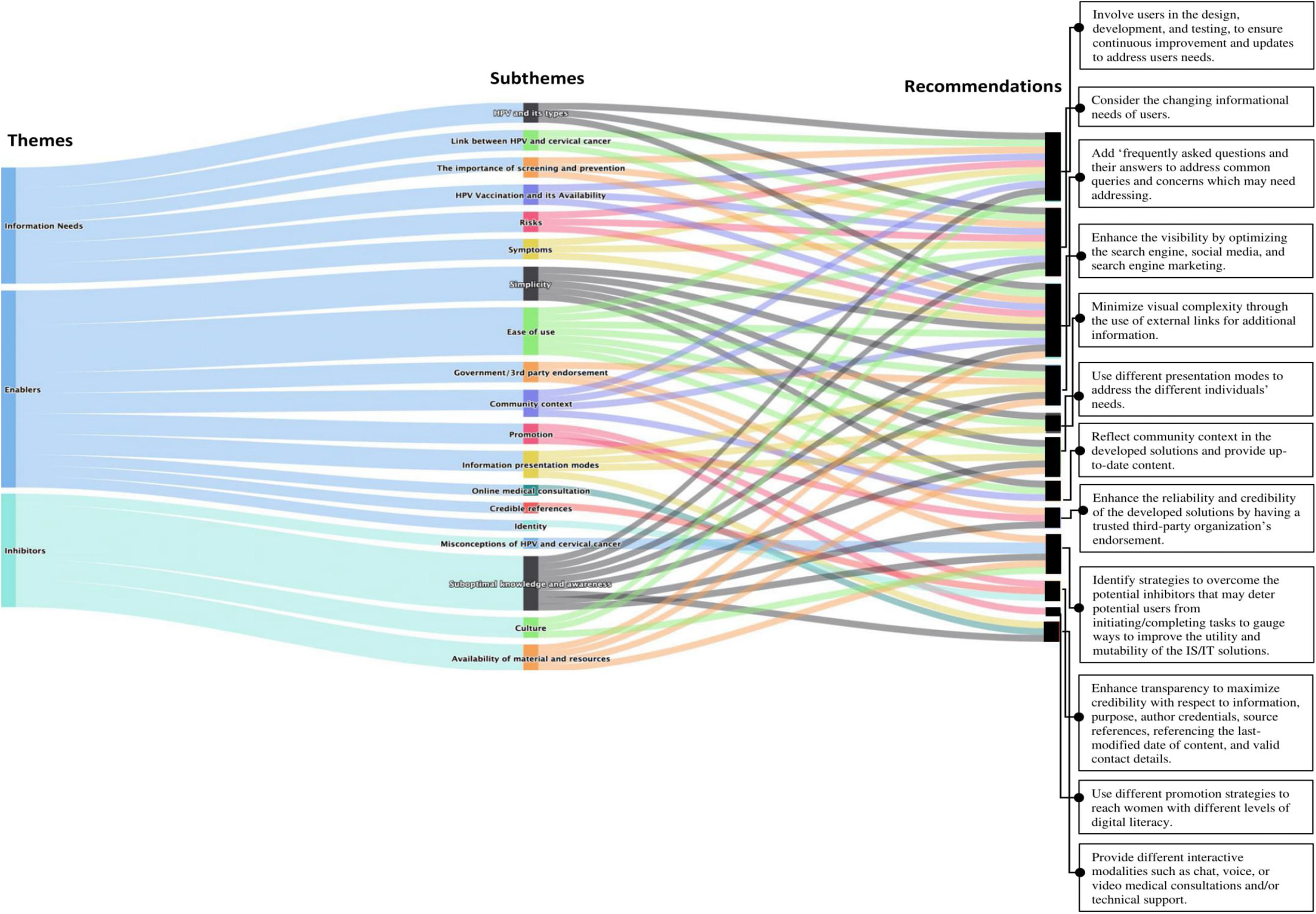
Pathways of emerging themes, subthemes, and recommendations.
Limitations and future work
Although the focus groups and interviews provided a significant amount of detailed data given the explorative nature of this study, it has some limitations that deserve attention. First, we utilized a qualitative methodology with convenience and snowball sampling; thus, findings are specific to the participants in this research study and cannot necessarily be generalized to the broader population. The intent of this study is not to infer, but rather to gain a deeper understanding of women's preferences in online information seeking surrounding HPV and cervical cancer in terms of content and design. Qualitative methodology revealed more nuanced insights. In addition, selection bias may have been introduced due to the voluntary nature of participation in this study. In other words, those who volunteered to participate may have given different responses than those who did not volunteer to take part in this study, or those who were not approached about participating.
Data obtained in this study can be informative and useful in guiding future research on Saudi women's content and design preferences of online health information concerning HPV and cervical cancer. It can also be used to inform healthcare providers as well as public health authorities about how to optimize online health information seeking. For instance, data obtained from this study can be used to devise survey instrument items in a large follow-up quantitative study. This data could also be used to prioritize informational content and to enable categories identified in this study, as a step in developing consumer-focused health education technological solutions concerning cervical cancer control. Furthermore, preference data generated from women from the general public as well as physicians, can also be used to evaluate current HPV and cervical cancer websites.
Conclusion
The development and implementation of eHealth solutions is a valuable opportunity to disseminate health information to increase the public's awareness and knowledge of HPV and cervical cancer. Understanding the information needs, inhibitors, and enablers of using technology for online health information-seeking practices among Saudi women can provide insights into appropriate ways of introducing such technological solutions to this population. The findings of this research, along with our recommendations, could assist in the development of technological solutions aimed at increasing the levels of knowledge and awareness regarding HPV and cervical cancer.
Footnotes
Acknowledgment
This project was funded by the Deanship of Scientific Research (DSR), King Abdulaziz University, Jeddah, under grant no. (G:179-612-1442). The authors, therefore, acknowledge with thanks DSR technical and financial support.
Contributorship
All authors contributed substantially to all stages and helped draft and revise the manuscript. All authors approved the final version to be published.
Declaration of conflicting interests
The author(s) declared no potential conflicts of interest with respect to the research, authorship, and/or publication of this article.
Funding
The author(s) disclosed receipt of the following financial support for the research, authorship, and/or publication of this article: This work was supported by the King Abdulaziz University, (grant number G:179-612-1442).
Guarantor
HB
