




Abstract
Objective
Smartphone cancer-related apps have been shown to meet some of the needs of adolescents and young adults (AYAs) during their cancer trajectory. However, there is a lack of apps evaluated by AYAs; thus, the quality of many of these apps has been contested. The aim of this study was to investigate the usefulness of a cancer smartphone app called Kræftværket. The AYA participants reflected on their first experiences of the app and whether it was a relevant and useful tool during and after their cancer trajectory.
Methods
A total of 20 AYA cancer patients aged 16-29 years (n = 10 on treatment, n = 10 in follow up) were provided with a prototype of the Kræftværket app during a 6-week test period (April-May 2018). After the test period, n = 17 participated in focus group interviews, which were analyzed thematically.
Results
The following themes were found: Sharing personal information (anonymity, safe communication, tough topics, videos and YouTube clips, tracking statistics); Normalcy (Seeing oneself reflected in in others, not alone, general and specific communities); Need for interaction (response from the app, information provided by the app, the app should give more back); and An everyday tool (integrating the app into daily routines, competition between app and Facebook group, temporary needs).
Conclusions
The app was perceived to be most relevant at disease onset. During the treatment period, both diagnosis-specific information and communities were requested. There was a call for a clearer distinction between the purpose of the app and other Facebook communities and for a notification function.
Keywords
Introduction
Normal life changes significantly for adolescents and young adults (AYAs) who are diagnosed with cancer. In Denmark, approximately 550 AYAs (aged 15–29) are diagnosed with cancer each year. 1 It can be extremely challenging for these AYAs to struggle with a life-threatening disease, at a time of life that involves the development of an individual identity (sense of self, sexual identity), independence (employment, autonomy from parents, decision making about the future), and peer relationships (intimate relationships, social support networks). 2 A cancer disease can slow down or delay AYAs’ biological, psychological and social development and affect their self-confidence, self-perception, educational plans and social relationships. 3 The health care system has often lacked focus on AYA cancer patients’ special needs; however, in recent years there has been increasing attention on AYA cancer patients as a group with special treatment and support needs. 4
It has become more and more common over the last decade to meet the unique psychosocial needs of this group by way of electronic health (eHealth) tools.5,6 Research shows that eHealth apps that involve virtual communities, symptom tracking and disease-specific information appeal to AYAs with chronic illness and meet their specific needs and wishes.7–10 Virtual communities vary from live chats, forums, and blogs to online peer support groups on websites and apps.11,12 Virtual communities meet a wish among AYAs with cancer to socialize and form communities with like-minded people, and for shared understanding and support.3,13 Generally, AYAs with cancer have reported a lack of peer social support and have expressed a need for interventions to provide social support.14,15 This makes sense, given that online support groups among cancer patients have been shown to increase the feeling of empowerment, and reduce depression, cancer‐related trauma, and perceived stress.16–18 Research has furthermore shown that AYAs with chronic illness are often pleased to share thoughts and experiences with like-minded people via app chat features. 10 Moreover, support between AYA members of online cancer forums may have a psychosocial impact, for example in terms of a strengthened sense of normalcy and identity. 19
As for symptom tracking, patients often perceive personal health data tracking to be of benefit, because it is both easier and more reliable than having to use a paper diary or relying on one’s memory, which often lead to recall bias. 20 Also, tracking may improve the understanding of frequency and intensity of symptoms. 21 Symptom and pain trackers in apps have been positively evaluated by AYAs with cancer, who found that these features functioned well and were easy to use.22,23
Regarding cancer information, AYA cancer patients have called for trustworthy and understandable information about their illness and treatment, as they often feel under-informed.24,25 They have requested youth-tailored information before, during and after treatment about diagnosis, treatment, illness trajectory, side effects, late effects and psychological and physical help and support opportunities. 3 In particular, AYAs have experienced a lack of information about cancer recurrence, long-term health effects, fertility, and sexuality. 26 Having access to information is crucial to cancer patients in general, as adequate information is related to increased satisfaction, feeling in control, and improved quality of life.27,28 Additionally, receiving comprehensive information has been shown to reduce anxiety and depression among AYAs with cancer. 29
The past decade has seen an explosive growth in the mobile health (mHealth) apps market. 30 To date, most available apps – including cancer-related apps aimed at AYAs – have never been evaluated through clinical trials, and there are no guidelines on quality criteria or standards to ensure usability, accurate content or evidence-based knowledge.31,32 Additionally, the quality of many of the apps aimed at AYAs has been contested since they have rarely been developed and evaluated by the target group; thus, their content and design do not always appeal to them, and there is a risk that they remain unused.32–34 There has also been a lack of evidence-based knowledge accessible in the apps, as experts in the cancer field are often not validating the content.32,35
The aim of the study was to investigate how AYAs with cancer assessed a prototype of an app called Kræftværket after 6 weeks’ use. The AYA test users consisted of ten on treatment, and ten in follow-up. They all reflected on their initial experiences of using the app and the extent to which they considered it a relevant and useful tool during and after their cancer trajectory. The AYAs were asked to evaluate the three main parts of the app: a symptom and activity tracker, an information bank, and a community (Table 1). The Kræftværket app was developed by and for AYAs in a co-creation process with health professionals and eHealth app developers. The co-creation process has been previously described.36,37 The current study addresses a major gap in both practice and research, as AYAs have rarely before been involved in the evaluation and testing of cancer apps developed for their own target group. The results of this study were used to improve the final version of the app, complemented by the results of a usability think-aloud-test. 38 The final Kræftværket app is expected to be ready to be launched in 2020.
Content of the Kræftværket app.
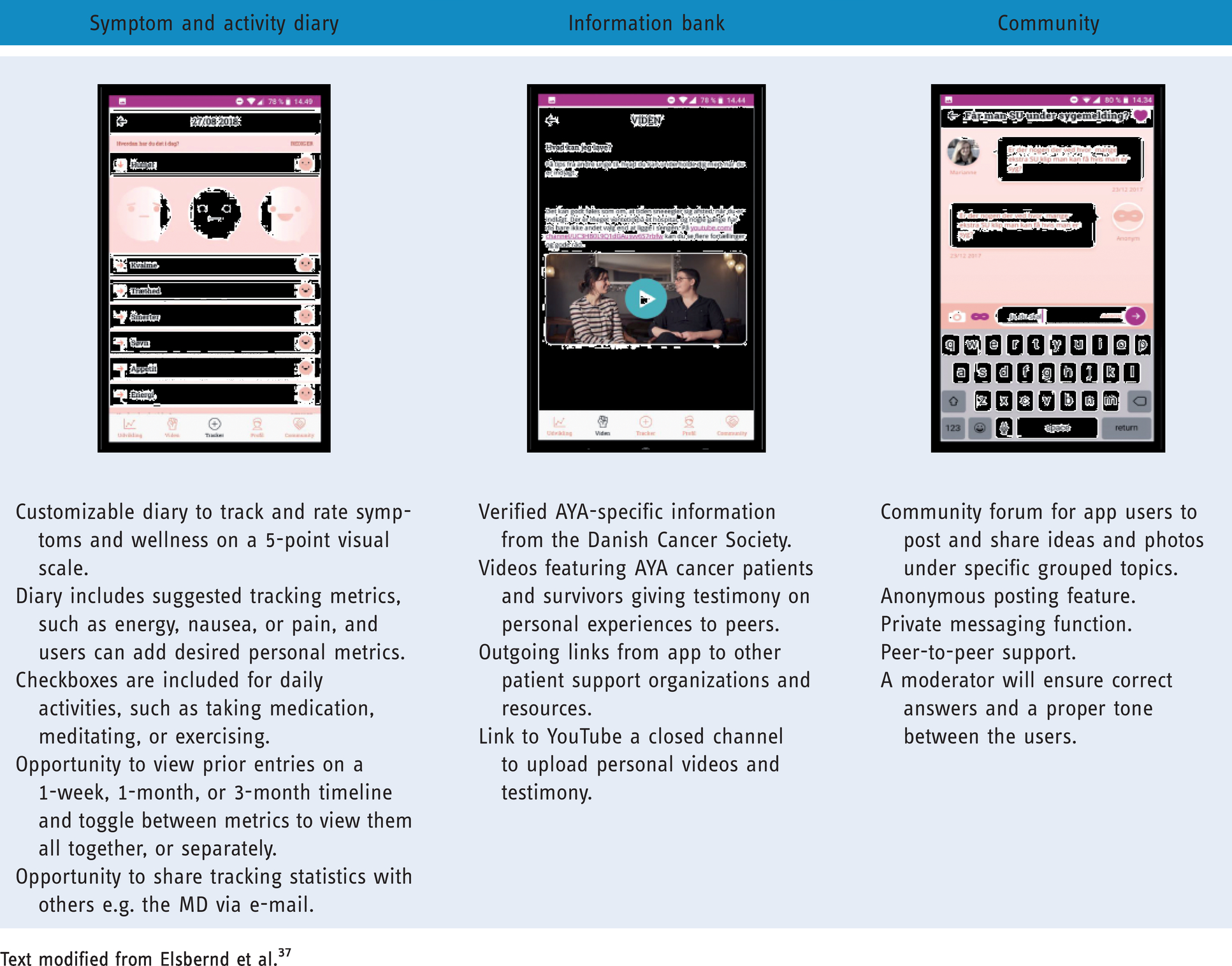
Text modified from Elsbernd et al.37
The Kræftværket app
The current study was based on a larger co-creation project involving the development of an app, at Kræftværket, which is a youth support center and social organization for AYAs with cancer aged 15–29 at the Copenhagen University Hospital Rigshospitalet in Denmark. The center comprises a common room and six wards. The common room is intended for relaxing; meeting peers and where various events are held. Members of Kræftværket have a closed Facebook group, where they can post events and communicate with peers.
The idea of creating an app arose among AYAs at Kræftværket. The app was developed during a series of workshops with current and former AYA cancer patients, health professionals from Kræftværket (the authors HP and MH) and an eHealth solution company.36,37 The idea behind the app was to give AYAs with cancer the chance to “carry Kræftværket with you in your pocket”, thereby bringing the strong real-life community from Kræftværket into a virtual space. Thus, those AYA cancer patients in isolation due to treatment or those living far away from the Copenhagen University Hospital Rigshospitalet and therefore unable to use the Kræftværket support center, would be given the opportunity to join this community. The purpose of the app was to:
strengthen disease understanding and management (through a symptom and activity tracker) inform AYAs about cancer (through an information bank) create a community and reduce loneliness (through an app community) gather data and knowledge for research
The hypothesis was that use of the app could increase quality of life and experience of empowerment, which is investigated in a related article. 39
Methods
Participants and recruitment
The participants for the 6-week test of the app were recruited from the youth support center – Kræftværket – by a youth coordinator (author MH). Inclusion criteria were: Users of Kræftværket who were AYAs between 15 and 29 years of age with access to smartphones and internet, either by cellular data or Wi-Fi. Exclusion criteria were AYAs who had participated in the app co-creation development process (n = 17) and those unable to read and write in Danish. At the initial stage of the app design process it was decided to involve 20 AYAs: Ten AYAs currently receiving cancer treatment and ten in follow-up after completed cancer treatment. Three people dropped out, e.g., due to acute illness (Table 2).
Participants.
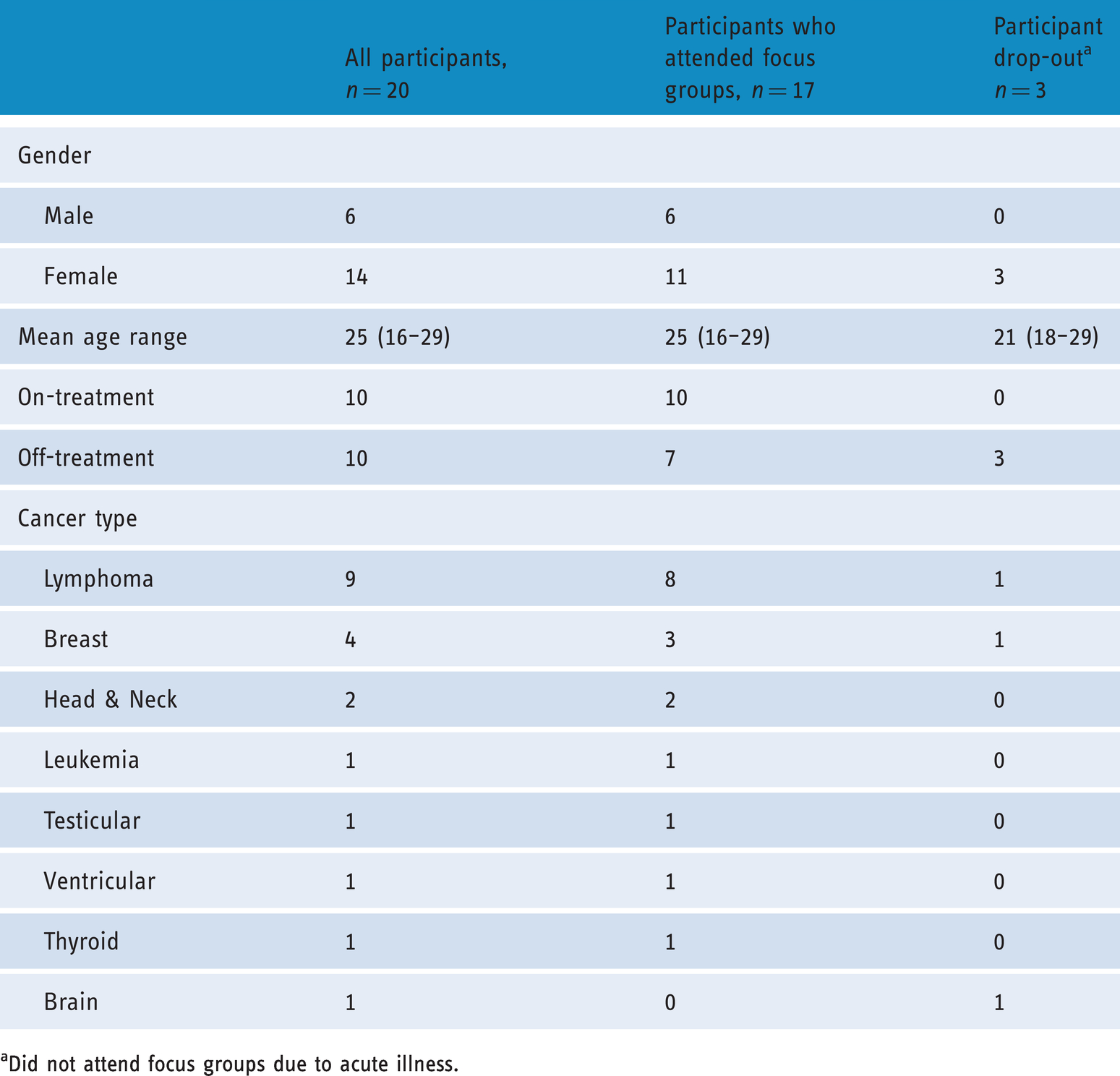
Did not attend focus groups due to acute illness.
Data collection
The participants were given access to the prototype of the app during a 6-week test period (April - May 2018). They were instructed to use the app according to their needs, and were not given any specific instructions on frequency or how to use the app. After the test period, the participants attended a think-aloud test (described in another article 38 ) followed by focus group interviews. Both interviews took place in the youth support center Kræftværket the 8.th of May 2018. Focus groups were chosen as the method, because it gave the AYAs the opportunity to discuss interactions and perceptions of the communities they participated in via the app. Six focus group interviews were conducted, with three to four participants in each group. A small number of participants in each group (so-called mini groups) was prioritized because focus groups with few participants are considered more appropriate for discussions of sensitive topics, including illness. 40 The groups were mixed in terms of treatment status, gender and age.
The focus group interviews were guided by a semi-structured interview guide. The interview guide was driven by existing knowledge in the field and contained topics related to e.g., information needs during treatment, knowledge about app communities, and use of apps as an everyday life tool (Table 3). The interview involved open and expansive initial questions, which included the participants’ immediate impressions of the app, taking new and unforeseen empirical observations into account. The opening questions were followed by targeted follow-up questions.
Examples from the interview guide.

The first author (SH) conducted the focus group interviews in Danish. They lasted on average 37 minutes, they were audio recorded and transcribed verbatim. Quotations were subsequently translated into English by a professional translator.
Data analysis
Data were analyzed using a thematic framework inspired by Richie & Spencer’s guide for the analysis of qualitative data including focus group interviews, anchored in five steps: (1) familiarization, (2) identifying a thematic framework, (3) indexing, (4) charting, and (5) mapping and interpretation. 41 By using this analysis strategy, it was possible to mix theoretical and empirical perspectives, which made it applicable to both pre-existing knowledge, and new unforeseen topics related to the participants’ immediate experiences of using the app. 41
To ensure an independent coding process, the authors performed steps 1 and 2 independently, which included getting an overview of the richness and diversity of data (familiarization) and writing memos in the margin of the transcripts to form ideas about concepts and preliminary themes across the data (identifying a thematic framework). After the second step, the authors met to discuss all concepts and preliminary themes, which have emerged from the transcripts. Consensus was reached on a range of relevant themes. Then first author SH performed steps 3–5, by re-reading and annotating data according to the thematic framework and organizing quotes according to the themes, which were found in the joint process (indexing). SH arranged all the themes into a coding tree with associated sub-themes (charting). Finally, SH mapped and interpreted the data set as a whole through a systematic process (mapping and interpretation), which was finally discussed among all authors, with a view to finding any overlooked insights.
Rigor was established to ensure dependability and credibility by properly transcribing data, individual analysis of data, discussing concepts and themes, and by validating the design through a theory-driven interview guide ensuring that all participants were asked the same range of questions.
Ethical considerations
Permission to conduct the study was granted by the Danish Data Protection Agency (VD-2018-27). Ethical approval is not necessary for this kind of study in Denmark; however, we followed the principles stated in the Helsinki II Declaration. The participants were given a description of the project before the focus group interviews were held, which informed them of the content and aim of the study. The participants gave written informed consent to participate and were informed of the opportunity to withdraw their consent without any consequences related to treatment at the hospital.
Results
The analysis of the focus group interviews led to a range of themes and sub-themes (Table 4).
Themes and sub-themes.

Sharing personal information
Anonymity
The anonymity function was discussed in all focus groups. The argument against anonymity was that there was a risk that one could hide behind an anonymous profile and write hateful comments or even bully others. One of the most frequently raised counter arguments was that everyone was in the same situation and had a high level of understanding of each other’s situation, and that the tone would therefore be positive. Those who did not want to use the anonymity feature were generally comfortable sharing personal issues with others with cancer, both in real life and in the virtual space. For some, however, certain things were easier to tell if they remained anonymous: “I also think it’s a really good thing, that you can be anonymous, because there are some things that can be difficult to talk about” (Female participant 24 years, focus group 2).
Moreover, it was important for some to have an opportunity to remain anonymous in the community. They did not want their name to appear in connection with personal posts as long as they did not know who was in the groups: If I were to look something up in it, I would look it up anonymously, as long as I didn’t know who it is [that is reading it]. There are a lot of, like, personal things, you could say, or it can quickly become so, anyway (Male participant, 29 years, focus group 4)
Safe communication
Most AYAs regarded the youth support center Kræftværket’s common room as a very safe place to be, as they could share experiences and personal information with like-minded people. Several AYAs thought that the atmosphere and comfort of this room were reflected in the app community. One participant experienced the real-life community in Kræftværket to be overwhelming, and perceived the app community as safer, because she could communicate with others without being physically present in the same room.
Several AYAs experienced a general sense of safety by writing personal things online, which also made it carefree to write in the app community. Furthermore, it felt safe to share personal stories in the community, given that the others were suffering from the same illness. While some participants did not usually post anything on social media, they felt safe to write in the app community because of the special bond experienced between AYAs with cancer: Usually I’m one who doesn’t write on social media at all, but I’ve been very comfortable doing that in here because there’s just some sort of special feeling of community, and a respect for the fact that there's no such thing as a stupid question (female participant, 24 years, focus group 1)
Tough topics
Some AYAs preferred to ask questions in the community rather than face-to-face, especially when dealing with existential and mental issues. They experienced that their questions were well received, in that many peers were willing to respond seriously. There could be too many people at one time in Kræftværket’s common room, to be able to discuss these issues in depth. Moreover, it felt more comfortable to ask these types of questions confidentially in the app community: Some of the questions, yeah, like those about one’s mental state, which aren’t so cool to sit and say out loud, because there are often a lot of people [in Kræftværket], and there may not always be the quietness that is needed to start on that kind of topic, so you can do it a bit better in the community. (female participant, 24 years, focus group 1) Often, when I thought of some questions, it was never when I was in the hospital, it was always after I had come home or at other times; I think it would be a help in the sense that you communicate with people who have actually experienced what you have to go through; it’s often that, that one is enormously uncertain about – that is, when you don’t know what’s going to happen (female participant, 29 years, focus group 6)
Videos and YouTube clips
There were several videos in the app’s information bank including AYAs from the youth support center Kræftværket, who told about their personal experiences. Many of the participants knew the AYAs in the videos personally, which created a sense of confidence and trustworthiness. Additionally, it underpinned the feeling of peer-to-peer support, as the personal experiences presented in the videos pointed to how to manage living with cancer and get well through the cancer trajectory. The app also allowed personal stories to be posted on YouTube. However, this feature felt unsafe to use, because the AYAs did not have a sense of who was watching and how the videos were used. The participants were unsure whether it was only other AYAs with cancer who could watch the videos: “I just couldn’t figure out how to use it and how it would be used and who exactly would use it” (female participant, 29 years, focus group 6).
Additionally, it felt unsafe not to know if and when the videos would be deleted and that they might be recoverable a long time after the cancer trajectory.
Tracking statistics
In the tracker, personal information could be shared with others (the information was attached to an email as a file). Some participants experienced it as a benefit to be able to share statistics with their doctor or nurse by prior arrangement. One AYA also suggested sharing tracking statistics with others, to compare symptoms: Or you would be able to share your tracker with others, to say, like, now I’ve been through my first week of chemo, did you guys experience it like this as well […] if I could ask a question about other people’s moods, whether it got just as bad, and if others had just as little desire to eat, and had as much nausea, so you could share it with the others. (female participant 25 years, focus group 4)
Normalcy
Seeing oneself reflected in others
Some of the AYAs considered that the app could provide them with a better understanding of their own situation; for example, by reading other AYAs’ descriptions of the thoughts that occupied their minds, which could be difficult to put into words. In addition, the AYAs could see themselves reflected in and be inspired by how other AYAs came through their cancer trajectory. The reflection took place through the small film clips in the information bank and by reading other AYAs’ experiences in the community. The film clips showed how to manage your disease, gave inspiration to cope with being ill, and encouragement by showing AYAs who had come through their cancer trajectory well: “that, I think, is one of the things that the videos also can do, that you can see that they, they look good and they are happy, and they have done it in a way that is inspiring” (female participant, 23 years, focus group 2).
Some AYAs used the community to get either confirmation or not, as to whether their symptoms were normal, and whether other AYAs experienced the same as they did. It gave peace of mind to find that, for example, one could have extreme nausea and that it seemed to be normal, since it was also reported by other AYAs.
Not alone
During the focus group discussions, participants debated whether the app could reduce the feeling of loneliness in terms of experiences of being the only young person in the world with cancer. Some AYAs said that the app could reduce the feeling of loneliness simply by its existence: The visual, that there is actually an app, there are many people who have downloaded it, there are lots of questions from people from within the community, so it doesn’t matter who these people are, it’s more the fact that you are not the only one. I still think you have the feeling that you are the only one, all those times you sit down in the ward, but you know there are others, and I think that can make a little difference. (female participant, 25 years, focus group 5) For me, this app would actually be such a natural part of my everyday life that it would just be a regular thing to use instead of […] Facebook, and I think there are many who are in the same boat, but their mindset is different, I feel, because there is often a rather large age difference [in the cancer groups on Facebook] (female participant, 26 years, focus group 3)
General and specific communities
Because one of the purposes of the app was to “bring Kræftværket with you in your pocket” there was a lot of reflection among the participants on whether they thought this aim had been achieved. Some had the same feeling of strong peer-to-peer connections to the other AYAs in the app as they had in the youth support center Kræftværket. This was supported by the app design, such as colors and graphics, as it reflected the design in the youth support center Kræftværket’s common room. One AYA mentioned that the community feeling also pointed from the app to real life: Just the whole feeling that there is someone at hand to ask, if you have a question, it just gives a good feeling that you think, there is something, if you need something, that sense of community that one brings with them outside (female participant, 24 years, focus group 1) However, other AYAs explained that they did not get the same strong sense of community in the app, possibly due to the prototype version and to the testing period, as it was only used with a limited number of AYAs using the app in an artificial setting. During the course of the illness, some participants were following disease-specific cancer groups they had found on Facebook (unrelated to Kræftværket), which inspired them to request similar, specific sub-groups in the app community. AYA-specific groups increased the feeling of normalcy: “I miss being able to have direct contact with others who have the exact same illness or read about others, so you can see if the way you feel yourself is normal” (Male participant, 21 years, focus group 5).
Those participants with types of cancer most often associated with older people, in particular, had a need for AYA groups to discuss issues of concern to younger people, such as clothing after breast cancer (e.g., swim suits or headwear). Communicating with others who had the exact same diagnosis allowed one to exchange experiences that were more comparable than were those of others. One of the participants suggested the opportunity to have an open profile so that one could contact others with the same rare cancer disease directly, including the opportunity to meet in real life.
Need for interaction
Response from the app
For some, it was difficult to use the tracker – simply because they did not get any reminders from the app. Many of the participants had had to restructure their everyday lives due to the illness, making it difficult to remember the tracker; thus, notifications would be a great help: You have to remember it; so notifications should be included in the picture, because you have so much else to think of, and your whole everyday life is scheduled, you know? So, you have to attend there, and then you have to be here, and then you go to one thing and then the other. (female participant, 28 years, focus group 6)
Information provided by the app
In general, the AYAs were satisfied with the information provided by the app, which was perceived as trustworthy because it was mediated by other AYAs whom they knew from the youth support center Kræftværket: “When someone has experienced it in their own body, it becomes more personal, and when it’s people you know, you know that it’s not just something they’ve read up on, it’s real experiences, they have had” (male participant 16 years, focus group 1).
Some AYAs were pleased that the information in the app instilled hope, because they did not want to face the worst-case scenario. Most AYAs found it easy to find answers they sought, such as clothing that covered scars and lost hair, and what it was like to continue one’s adolescence and young adulthood with changes in appearance. Some AYAs also appreciated tips about diet. In contrast, several AYAs wished to have more diagnosis-specific content in the app as they thought most of the information was too general: “I think it is really superficial that there is nothing specific about the type of cancer you have had yourself; I don’t know if you could do it somehow, so the different types of cancer are included” (female participant, 25 years, focus group 5).
One of the AYAs stated that the app had already given her more than the traditional hard-copy welcome package from the hospital department; and that it would be beneficial if the app could be part of the introduction package in the future. She proposed that all newly diagnosed AYAs should be introduced to the tracker to encourage them to use symptom and pain data at outpatient consultations to provide the doctor with a better overview of the cancer course. Furthermore, she perceived the tracker to be highly relevant, as it could retain specific information over a long time period; thus, it would be a reminder of her about her cancer trajectory also after treatment: When you come out the other side and have started to have a normal everyday life, then you forget it, and sometimes it is great to be without it, but sometimes it is nice to remember too, and there I think it could be a good logbook of the course of the illness. You can either look back on the year and think, wow, I had a bad time last year, or think, I have come this far, or sometimes you may need to look back at how things really went and then a little more specifically or concretely, because we forget what hurts us the most (female participant, 25 years, focus group 4)
The app should give more back
For some AYAs it was important to have a ‘give and take’ relationship with the app. By that, they meant that when they gave personal information to the tracker, they needed to get useful information back from the app, too. Getting information back from the app would make it even more indispensable to them: “If it [the app] could get to know me and give me something back, then there would be something about it, that I would keep doing it [tracking] and remember to do it” (female participant, 25 years, focus group 4).
It was the participant’s wish that the app should be able to get to know the user through the tracking and, for example, tell him/her about mood at certain times during treatment and recovery (for example: “you are in a bad mood every 1st of the month”). This could make the app much more interesting to use. Another AYA suggested that you could feed the app with photographs of yourself throughout the cancer trajectory to get a status of your personal development, e.g., once a month. The photographs could possibly display as a short video sequence.
An everyday tool
Integrating the app into daily routines
Some AYAs had difficulty integrating use of the app into their daily routines. They explained that there were no personal goals associated with the disease which the app could help them achieve, thus it was difficult to make it a habit using the app on regular basis: “I also think you have to get into the habit, and you have to want to do it, and I’ve had a hard time making it a habit because there was no purpose with my cancer” (female participant, 25 years, focus group 5).
They compared the app with their regular exercise apps, which they used with the purpose of getting in better shape or losing weight or their fertility app, used to register ovulation. Other participants perceived the app as a useful tool and very easy to integrate into their everyday lives. It was used to access advice, for example in relation to the facilitation of an everyday life during hospitalization as well as dietary advice, and to find out what could easily be put into one’s everyday life routines: “it is also very good to allow for those everyday things that you can easily put into your daily life, for example the kind of food that is good” (female participant, 24 years, focus group 1).
In particular, the tracker was perceived as a solid and useful everyday tool, which could typically be used during treatment which meant that participants were sedentary. Everyday tracking of symptoms could be essential, if the symptoms had to be reported to the health care professionals. Before the development of this app, several participants used to have to register symptoms, including pain, in a paper diary or in a note on the cell phone. The tracker made it easy and straightforward to follow good and bad periods and subsequently to show the summary to the health care professionals: I was asked very specifically how long did your tinnitus last […] and I simply couldn’t remember it until next time, so I had to write it down somewhere, and I really think I would have used the app, if I had had it (female participant, 29 years, focus group 6)
Competition between app and Facebook group
Several AYAs referred to the youth support center Kræftværket’s closed Facebook group during the focus group interviews. Many of the AYAs perceived the closed Facebook group to be a serious competitor to the app because the group was already an integrated everyday tool, and contained important features, such as a calendar for posting events related to the youth support center Kræftværket. To some AYAs, it was crucial that the difference between the community in the app and the community in Kræftværkets closed Facebook group be made clearer, to avoid a situation where the two would, inadvertently, be in competition with each other: “It should be clear what the app is for, and what the Facebook group is for, and that they are not competing with each other” (female participant 24 years, focus group 2).
Some AYAs perceived that checking two similar communities on a daily basis amounted to duplication of work. Therefore, some AYAs suggested creating a direct link from the app to the Facebook group, so that the Facebook group features (a calendar, a comprehensive community, pictures and peers) could be accessed. However, some AYAs experienced that they in line with a general tendency in society had lost interest in Facebook in general, including daily checking of posts in the closed Facebook group; for this reason, they preferred to use an independent app. It was highlighted that posts in the app did not disappear in the stream. Partly because of clear categorizations, partly because of fewer posts. This made it more foreseeable and a stronger everyday tool than the Facebook group community. Because notifications were received from the Facebook group – unlike the app – most AYAs used it more often than the app.
Temporary needs
Most participants stated that the app was only relevant to them during the active treatment period, and it was most important at disease onset, when the need to search for and receive access to information was greatest. Additionally, the pain and symptom tracking made most sense for the participants while they were tracking their symptoms from diagnosis onset, to see either disease progress, stagnation or relapse during the treatment period. None of the AYAs saw a need for tracking during good periods and, besides, they forgot about the app when they felt well: “when I’m feeling bad, it’s very nice to take a written note of how much I sleep, how much stress I have, but when you feel good, you don’t think too much about it” (Male participant 22 years, focus group 3).
None of the participants could imagine having the app in their possession after the cancer trajectory, unless information about recovery were to become integrated: “It might be good to have video clips that are about the time after, which is also a process” (Male participant 21 years, focus group 5).
The participants did not find the community relevant after the cancer trajectory, because they no longer had questions about the disease or things they wanted to discuss with others with cancer. During the recovery phase, the AYAs felt they had gained all relevant experience, which they required in the treatment period. Thus, their only reason to keep on using the community would be to help others who had recently been diagnosed. However, to move on in life, most AYAs preferred to close the ‘cancer chapter’, and to focus on getting back on track with their education, career and family life:
I also think it is an important feeling that you have learned something and experienced something, and it feels very meaningful to be able to pass it [the app] on and a little empty not being able to pass it on (Female participant 28 years, focus group 2)
In summary, the peer-to-peer relations in the community forum were considered relevant during treatment, but after treatment the participants preferred to return to their previous lives and be surrounded by healthy peers. The cancer communities were considered strong as long as they lasted, but it seemed important for one’s own life story to break out of such communities again.
Discussion
The aim of this qualitative study was to explore how AYA cancer patients assessed a prototype of the Kræftværket app after 6 weeks’ use. The analysis of the data pointed to four main themes: Sharing personal information, normalcy, interaction with the app, and the app as an everyday tool. Overall, the AYA participants in the study were satisfied with the functionalities of the app. However, they also raised some critical points, which will be considered when developing the final version of the Kræftværket app. Even though the app was targeted to AYAs both during and after cancer treatment, it was mainly considered relevant at disease onset. The value of the community was contested; it was unclear to some, how it differed from the existing community in the youth support center Kræftværket’s closed Facebook group. Moreover, the closed YouTube channel associated with the app remained unused, because the AYAs were unsure about who would be able to watch the videos. Generally, there was a call for implementation of notifications to be reminded to use the app.
The theme Sharing personal information included the sub-themes anonymity, safe communication, tough topics, videos and YouTube clips, and tracking statistics. As regards anonymity, some were comfortable sharing personal issues while others felt that certain things were easier to relate if they remained anonymous. Safe communication covered safety by writing personal experiences and discussing tough topics, which is in line with other studies in which it has been reported that online forums are considered a safe place to discuss sensitive topics.42,43 Altruism is a common theme in studies of AYA cancer patients, generally, 13 and in studies on virtual communication more specifically; many cancer patients value responding to other people’s questions with the sole aim of being of help. 44 The possibility of uploading personal YouTube clips was not well received by the AYAs in our study, as they perceived their illness to be a private matter. Keeping illness as a private matter is a general theme among adolescents with chronic illness, 45 and research suggests that young patients are more concerned with their life after cancer and less willing to share information with peers than are older patients. 46 Additionally, the AYAs were unsure about who would have access to their YouTube videos and what would happen to the YouTube clips in the long term. Thus, a clear explanation of how YouTube can be used safely is required. Nevertheless, most AYAs in our study welcomes the short video clips where AYAs offered advice, because they strengthened the sense of peer-to-peer support. In line with other studies, the participants found that sharing tracking statistics with health care professionals would be beneficial, because it could replace having to remember or use paper diaries.20,21
Normalcy encompassed the sub-themes seeing oneself reflected other AYAs, the feeling of not being alone, as well as being included in both general and specific communities. An increased feeling of normalcy related to reflection in other patients has also been reported in studies about the sharing of illness narratives in online support groups. 47 The mere existence of the app was perceived as a sign that there were actually many other AYA with cancer; thus, the feeling of being one of several AYAs with the same condition increased the feeling of normalcy. In particular, specific groups in terms of age and diagnosis increased the community feeling; communicating with others who had the exact same illness allowed one to exchange experiences that were more comparable than those of others. However, the communities were also temporary and, as one AYA stated, it was meaningful to be able to pass on the app to others after the cancer trajectory. These findings can be elucidated from a neotribe approach, which has also been applied to other studies of online community forums.48,49 The neotribe approach is inspired by Michel Maffesoli’s theory on everyday communities in situations and moments, called “presentism”. 50 Maffesoli argues that everyday communities consist of certain relationships and groupings, which are situational, mobile, changeable and fleeting. He defines these fleeting communities as “neotribes”, because people involved are united for the short time that they are together. The members of the community often experience a strong sense of community, but although the power is strong, the community is easy to break out of again. The results of our current study show that the app community was situational, fleeting, and both easy and important to break out of again, to move on in life after the cancer trajectory.
What you get from the app comprised of the sub-themes response from the app, information provided by the app, and the app should give more back. To get involved with an app, responses in the form of notifications are crucial, 51 thus; in the final version of the Kræftværket app, notifications will be a must. The AYAs in our study perceived the app to be trustworthy, which is important when it comes to trusting and wanting to use the app. 48 Video clips with other AYA cancer patients giving information about cancer on the basis of their own experiences strengthened the trustworthiness of the app. However, some AYAs had a wish for more cancer type-specific information, as they experienced the existing information to be too general. This is in line with studies on both adolescents’ and adults’ needs for cancer type-specific information during their treatment period.29,52 Furthermore, there was a wish for the app to give more back, which is in line with, e.g., exercise apps that provide users with a personal training program, once they have entered their information and personal goals. 53 This may, moreover, contribute to an increased need to use the app.
The theme app as an everyday tool included the sub-themes integrating the app into daily routines, competition between app and Facebook group, and temporary needs. Some AYAs experienced that the app easily fitted into their changed everyday life routines, and in particular the symptom tracker was seen as a great help, to keep track of symptoms and daily activities. Thus, the tracker was an empowerment tool, as it helped in gaining control, which is also seen in other studies of mHealth tracking. 54 For others, using the app was difficult; they had faced so many new routines, which made it difficult to keep track of them all. It is well known that cancer overturns everyday life and its routines, which is why integrating even more new routines, such as using an app, can be difficult for some AYAs. 55 The AYAs compared the app with the social youth support center Kræftværket’s closed Facebook group, which was already a functioning community for Kræftværket’s users, and had a frequently used calendar for posting events. There was a call for either a closer link between the app and the closed Facebook group or a clear distinction between their aims. On returning to a normal everyday life after cancer treatment, the app seemed to have had its day, in that the need for information and symptom tracking had passed. This is in line with the temporary need to take part in an app community. The app’s limited lifespan is seen in other studies of the use of cancer mobile apps, and the inclusion of AYAs during the recovery period should be taken into consideration in the further development of the app. 56
Limitations
Some limitations of this study should be taken into consideration. The app was evaluated in a local context with users recruited from only one Danish hospital. Therefore, some of the participants’ reflections were about the direct connection between the youth support center Kræftværket and the app, and the recognizability of the AYAs who participated in the video clips. This very local perspective can make it difficult to generalize the results to a wider audience, making further, nationwide, testing of the app important. Future research will build on the final version of the app with a national population of test users recruited from all regions in Denmark via youth coordinators at the hospitals. Moreover, it was difficult to test an app prototype because it was an artificial situation, with only 20 users connected to the app. It was therefore the test users who had to make the app come alive by creating the very first posts and categories. However, the 6 weeks’ test use led to the contribution of highly relevant comments, which could improve the final version, such as the need for a notification function. Another possible limitation was that more than double as many women than men participated in the study. Thus, there was an unequal distribution of male and female participants in each focus group which affected an imbalance in responses, which is reflected in number of quotes in the result section. Also, there was a lack of test users among the youngest AYAs, with only one participant under the age of 18. Thus, it is possible that other themes would have emerged if both the gender and age distribution had been more equally distributed. Attention should also be drawn to that the focus group interviews were conducted just after the think-aloud tests were held. The think-aloud test led to an awareness of navigation paths and functionalities which was not optimized, and this could possibly have made the participants more critical to the contents of the app reflected in the results of this study. Finally, the co-authors HP and MH were involved in the development of the app, which may lead to potential bias in the data analysis. However, to minimize bias, the preliminary analysis was conducted by all authors, including SH and KAB, who were not involved in the app development. Additionally, the data analysis and interpretation, together with scientific roles, attitudes, and authors’ preconceptions were discussed during the process of writing the article.
Conclusion
For some AYAs, the app was easy to integrate into their already changed everyday lives; in particular, the symptom and activity tracker was a great help to get an overview of the cancer trajectory and to use as a tool for recall. For some AYAs, however, life with cancer was characterized by so many new routines, that using an app too proved difficult. It was suggested that notifications, which had not been integrated into the evaluated prototype, would contribute to more frequent use of the app. The app had a limited lifespan for most AYAs, as information seeking, tracking and connecting to communities were mainly relevant during the treatment period, and especially at disease onset. During the treatment period, however, more diagnosis-specific information was requested, as well as the possibility be to part of more diagnosis-specific communities. Additionally, there was a need for a clearer distinction between the purpose of the closed Facebook group and app. Generally, it must be made clearer to the users that the app is a broader tool than Facebook containing both an information bank with validated content, a symptom and activity tracker and an age- and illness specific community. Information about the safe use of YouTube, is moreover essential for its use. More knowledge about the usability of the app on a larger scale is needed, and for this reason the app will be tested on a national basis during 2020 with a greater number of AYA test users.
Footnotes
Acknowledgements
The authors would like to acknowledge and thank participants for their time and willingness to take part in this study.
Contributorship
SH, MH and HP participated in the study concept and design. SH collected the data. SH, KAB, MH and HP participated in the analysis and interpretation of the data. SH drafted the manuscript, and HP, KAB and MH critically revised the manuscript. All authors read and approved the final manuscript.
Declaration of conflicting interests
The author(s) declare no potential conflicts of interest with respect to the research, authorship, and/or publication of this article.
Ethical approval
The project was approved by the Danish Data Protection Agency (VD-2018-27). According to Danish legislation, the project did not need approval from the Danish Biomedical Research Ethics Committee System.
Funding
The author(s) disclose receipt of the following financial support for the research, authorship, and publication of this article: The Danish Cancer Society (grant number R224-A13480).
Guarantor
SH.
Peer review
Elin Bã¸rã¸sund, Division of Medicine, Oslo University Hospital, Oslo University Hospital has already reviewed this manuscript.
