



Abstract
Background
In-hospital hyperglycemia (HH) is frequent and related to higher morbidity and mortality. Despite the benefits of HH treatment, glycemic control is often poor and neglected. The use of health applications to support diagnosis and therapy is now incorporated into medical practice. Medical applications for inpatient glycemic management have potential to standardize this handling by the nonspecialist physician. However, related studies are scarce. We aim to evaluate the efficacy in inpatient glycemic control parameters of medical software applications in non-critical care settings.
Methods
This systematic review on in-hospital insulin applications was performed according to PRISMA guidelines. Data were extracted in triplicate and methodological quality was verified. Specific outcomes of interest were glycemic control efficacy, hypoglycemia risk, length of in-hospital stay, integration with the electronic medical record and healthcare staff acceptance.
Results
Among the 573 articles initially identified and subsequent revision of the references of each one, seven studies involving six applications were eligible for the review. A better glycemic control was reported with the use of most in-hospital insulin applications in the studies evaluated, but there was no mention of the time to reach the glycemic goal. The risk of hypoglycemia was low. Different reasons influenced the varied acceptance of the use of applications among health professionals.
Conclusion
The six applications of inpatient insulin therapy in a non-critical care environment proved to be useful and safe compared to the usual management. Medical apps are tools that can help improve the quality of patient care.
Keywords
Introduction
In-hospital hyperglycemia (HH) is defined as a pre-meal blood glucose value greater than 140 mg/dL (7.8 mmol/L). 1 The exact prevalence is not known, but observational studies report that HH affects 32% to 38% in community hospitals,2,3 70% in hospitalizations for acute coronary syndromes 4 and about 80% after cardiac surgeries. 5 HH increases the mortality and morbidity of the underlying cause of hospitalization, regardless of whether patients have diabetes mellitus (DM).2,6
In 2017, it was estimated that there were approximately 425 million adults with diabetes in the world and 14.25 million in Brazil, corresponding to about 8.9% of the Brazilian population. 7 Patients with diabetes are hospitalized more frequently than general population, 8 representing a high cost of health care.
In 2012, the Endocrine Society’s clinical guidelines on management of hyperglycemia in hospitalized patients in non-critical care setting recommended safe and practical glycemic goals, description of protocols and standardization of subcutaneous insulin prescription in the hospital setting. 9 Despite the effort invested in the development and dissemination of medical guidelines, adherence is still limited in healthcare. 10 Complexity of insulin protocols and fear of hypoglycemia are obstacles to achieve optimal treatment and also contribute to poor adherence. 11
Many studies have provided evidence of benefits of HH treatment, such as reduction in hospital infections, 12 better prognosis after acute myocardial infarction13,14 and after stroke, and adverse thrombotic events risk reduction. 15 However, glycemic control remains deficient and neglected.16,17 Inpatient diabetes management is generally considered secondary in importance compared with the condition that led to admission, promoting a clinical inertia related to in-hospital glycemic management. 18
The subcutaneous insulin basal-bolus regimen is the recommended therapy for non-critical patients because it is the safest in most patients.19–22 However, clinical variables of the patients make the in-hospital insulin protocol more dynamic and complex. There are specialized teams in hospital glycemic control in several hospitals, involving endocrinologists, diabetologists, hospitalists, diabetes nurse practitioners, among others,23–25 but they are not always available or sufficient to meet demand. In 2018, there were 5,210 endocrinologists in Brazil, 26 and only the minority of them works in hospital setting. Considering the high prevalence of HH, the number of endocrinologists is not enough. Most cases of HH do not require the presence of the specialist for management; however, the non-specialist physicians barriers to insulin therapy protocol limit their performance and HH is often neglected. 18 In Brazilian public hospitals, the scenario may be even worse, due to the lack of resources and professional staff.
Solutions are needed to standardize the inpatient dysglycemia (hypo and hyperglycemia) management, including insulin therapy, to reduce complexity, facilitate adherence to the recommendations in guidelines and reduce inappropriate variations in care. 18
There are several medical software applications (medical apps) that facilitate the daily life of the physician and the patients with diabetes, 27 including for the management of insulin therapy. Most of them are for outpatient insulin management, lack validation and often provide recommendations for inadequate doses of insulin 28 or have a cost to use.
There is a need to improve the inpatient glycemic management due to the lack of standardization of treatment, barriers to insulin therapy and the limitation on skilled specialist availability make medical apps very attractive and useful tool for inpatient glucose management. The objective of this study is to compare the efficacy in glycemic control parameters of medical inpatient hospital applications in non-critical care settings.
Methods
Search strategy: Study was guided by the Preferred Reporting Items for Systematic reviews and Meta-Analyses (PRISMA) protocol. 29 Articles were identified by searches in the following databases in January 2020: Pubmed, Cochrane library, Embase, Academic Google, Scopus, Virtual Health Library (VHL), UpToDate, Fiocruz Public Health Library (EBSCO Fiocruz), Gideon. We search all articles published retrospectively until 2020.
The fixed text descriptors used in searches were: medical informatics applications (decision making, computer-assisted, information systems and decision support systems), insulin therapy and hospital. Additional searches could be performed, according to the availability of each database. After the careful selection of articles, which was performed by three independent researchers and in three specific technical-evaluative processes (Exclusion of clearly irrelevant titles, exclusion of abstracts that did not address the main theme of the review, and, finally, exclusion of articles that did not presented data on inpatient subcutaneous insulin therapy), two authors, Feitosa ACR and Lavinas-Jones JM, analyzed the selected papers, respecting the pre-established inclusion and exclusion criteria, and defined which documents would proceed in the data extraction process.
Inclusion criteria: Studies on medical apps used for over 18 years inpatient insulin therapy were included. The following criteria were adopted for the inclusion of the articles: I) medical apps used for subcutaneous insulin dose calculation in non-critical care hospital setting; II) observational studies or randomized clinical trials with data on hospital glycemic control parameters; III) papers published in English, Spanish or Portuguese; There were no restrictions on date or place of study.
Data extraction and quality assessment: Methodological quality was not an exclusion criterion and was carried out using the Jadad scale (Figure 1) 30 and the Delphi list. 31 Three independent reviewers (Lavinas-Jones JM, Fonseca EM, Pato RB) used a standardized form for extracting data from the studies: general characteristics, information on participants, interventions, comparisons and results.
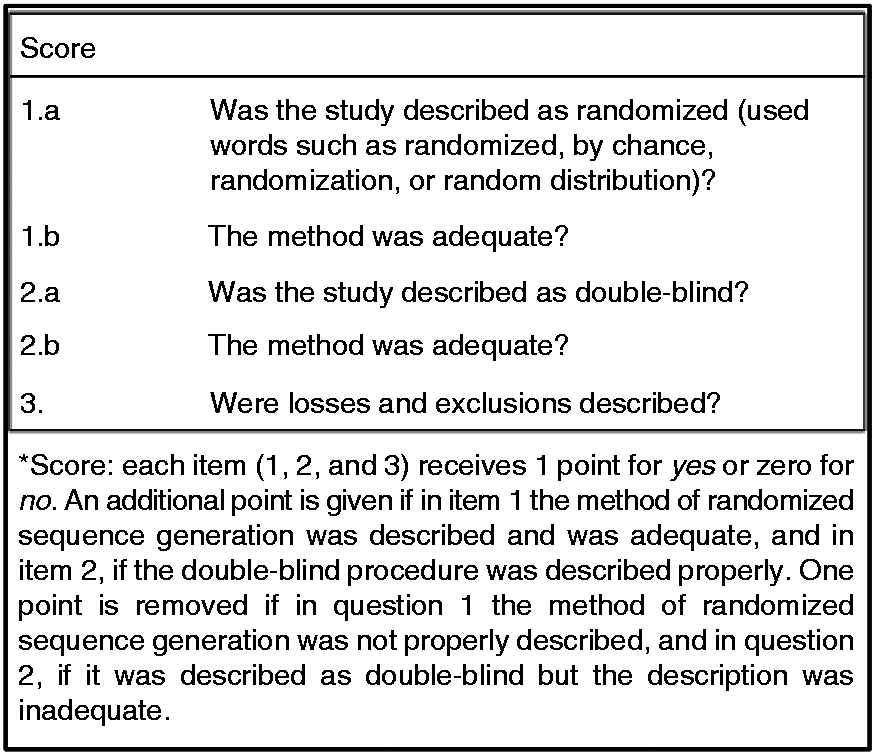
Jadad scale.
Data analysis and synthesis: Each included article was summarized in a structured narrative way. A narrative synthesis includes a complete description of the participants, type of diabetes, interventions received (type and dose of insulin), monitoring of efficacy and adherence, and outcome measures (mean blood glucose, percentage of blood glucose within the target, percentage of hypoglycemia and hyperglycemia episodes, amount of insulin used).
Results
A total of 573 records were identified in the electronic databases. Based on the review of titles, 83 articles were found to have met the initial selection criteria. Abstract analysis was performed and 25 articles remained. After examination of the full texts, five articles were eligible for the systematic review.32–36 And additional two studies37,38 that met the inclusion criteria were identified by checking the references of located papers. The seven selected studies involving six different applications were included in the review (Table 1).
Summary of included studies and patient demographics.

T1DM1, Type 1 Diabetes mellitus; T2DM, Type 2 Diabetes mellitus; SH, stress hyperglycemia; BMI, body mass index; Cr, serum creatinine.
Articles were excluded because they did not address the subject being searched, such as applications for the calculation of intravenous insulin dose39–41 or for outpatient use.42,43 Other articles were excluded because they did not have glycemic control parameters necessary for inclusion in the study.44–46 One study was excluded because it was a calculator for the pediatric population. 47 The complete search strategy and results are shown in Figure 2.

PRISMA (Preferred Reporting Items for Systematic Meta-analyses) flowchart.
Glycemic control parameters and length of in-hospital stay.
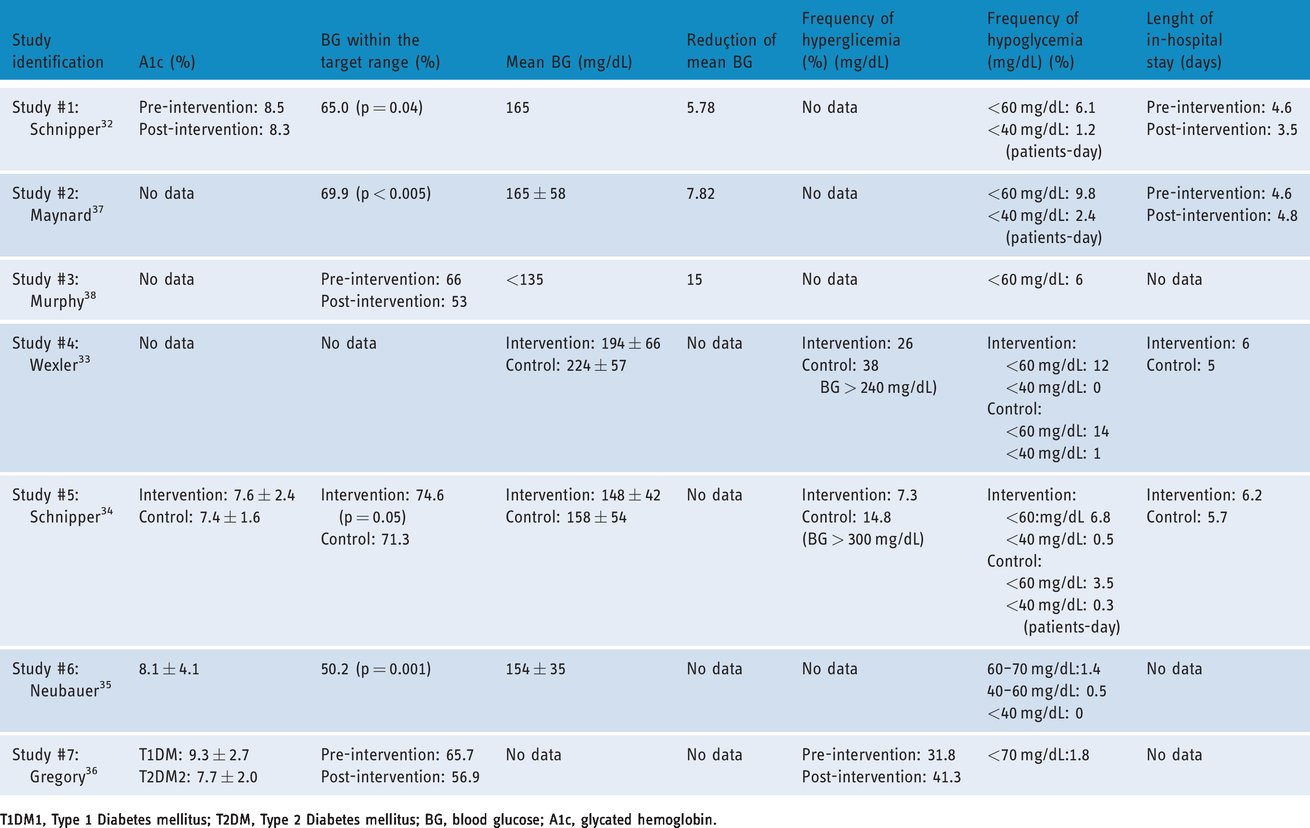
T1DM1, Type 1 Diabetes mellitus; T2DM, Type 2 Diabetes mellitus; BG, blood glucose; A1c, glycated hemoglobin.
Mean blood glucose of studies #132 and #635 were 165 and 154 mg/dL, respectively. The mean percent of glucose readings within the target range after the use of the applications was 65% in the study #132 and 50.2% in the study #6,35 but cut-off points were different: 60 to 180 mg/dL in the study #132 and 70 to 140 mg/dL in the study #635. Although these studies were uncontrolled clinical trials, the study #635 compared the group of patients using the application with the routine care group (paper-based algorithm), and it was shown that that the percentage of blood glucose between 70 and 180 mg/dL was significantly higher with application use (73% vs. 53%). In observational studies #237 and #3,38 mean blood glucose was 165 ± 58 and lower than 135 mg/dL, respectively. The use of the application resulted in 69.9% of the blood glucose within the target (60 to 180 mg/dL). Studies #338 and #736 compared the percentage of blood glucose within the target before and after the intervention. The study #338 considered a glycemic target of 60 to 180 mg/dL and the percentage before and after the intervention were 66% vs. 53%. Study #736 showed a reduction in the percentage of blood glucose values within the target (70 to 180 mg/dL) after the intervention, with results of 65.67% vs. 56.85%, respectively before and after the intervention. Studies #237 and #338 reduced the mean blood glucose by 7.82% and 15%, respectively, with the use of the applications.
The study #534 reported that physicians who used the tool had less acceptance of the new resource because they were professionals still in training whose preference was to perform glycemic control in the conventional manner. The study #433 identified that one of the reasons for the lower acceptance of the health team to the application was the fact that its use was optional by health professionals. The authors suggest the use of the application in a mandatory way, associated with an intensive implementation support with professionals who are in contact with the target population.
The studies #132, #237 and #338 did not report the team's acceptance of the new tool used, but in the discussion as one of the future improvements they cited the need to pay attention to usability.
Discussion
Although there is strong evidence of treatment benefits,35–38 glycemic control remains poor and neglected. 16 Management of in-hospital diabetes is generally considered less important than the condition that led to admission, resulting in a clinical inertia to the diabetes care in the hospital. 18 The use of electronic insulin dose calculation tools may standardize the in-hospital insulin therapy protocol, reduce the complexity and facilitate adherence to the recommendations of the guidelines, allowing a better control of HH.
Most of the applications aimed at glycemic management in critically ill patients39–41,51 or in an outpatient setting.42,43 Few medical applications have been identified for calculation of subcutaneous insulin doses for non-critical patients in an in-hospital setting. About the Glucostabilizer, it was not initially identified in our searches as a tool for subcutaneous insulinization. Possibly the article had not been identified due to the use of non-specific keywords. On the official website of the application, there is information that draws attention of the same in the performance in insulin IV and absence of information about subcutaneous insulinization. 52
Six applications32–38 were identified. They have been shown to be effective and safe for HH management. The mean blood glucose after tool use was within the glycemic targets set by the guidelines for non-critical patients. 9
On the other hand, the risk of hypoglycemia was low in all seven studies included in this systematic review. When compared with other studies,20,53 the frequency was similar. It is known that the physicians fear of hypoglycemia is one of the reasons for clinical inertia in the treatment of HH. Therefore, the use of strategies such as insulin dose calculators - which does not imply an increase or reduction in the risk of hypoglycemia - can generate knowledge and safety in insulinization, reducing episodes of hyperglycemia and contribute directly to the patient's better glycemic control.
Only one study 35 evaluated the acceptance of the tool by health professionals. The users reported confidence, practicality and better glycemic control with the use of the application. 35 The good acceptance of healthcare professionals may result in better adherence and quality to HH treatment. Most HH cases do not require the presence of the specialist for its management; however, the barriers to the use of in-hospital insulin therapy may limit the performance of the non-specialist physician. 16 Public health service hospitals may have an even worse scenario, due to the lack of resources and professionals. The use of a reliable and practical tool could aid in the in-hospital glycemic management of these hospitals.
It is of great importance that each hospital defines in its institutional protocol the role of health professionals in conducting hospital glycemic control. In most studies only the physician used the tool.32–34,36,37 Only two studies, nurses35,38 and pharmaceuticals 38 could also use. All study tools were integrated with EMR. This is of unique importance as the tool transcends its use in mobile-only applications and integrates the entire patient-linked hospital system. This directly implies as another factor that helps control the glycemic average of the patients studied, as it facilitates communication between health professionals and gives joint access to each patient's chart and their glycemic calculator.
The length of in-hospital stay was evaluated in four studies32–34,36 and was smaller in the intervention group in three of these studies.32–34 Such studies may represent a reduction in hospital costs and complications caused by long-term hospitalization.
Limitations were identified in the included studies, some being classified in the Jadad scale as having low methodological quality.32,35–38 Data that are considered important to evaluate the applicability of the tool have not been reported, such as the time to reach the target for glycemic control and the user acceptance report. We also meet the need for individualized algorithms for specific populations such as pregnancy, children and elderly.
Most in-hospital insulin dose calculation applications have helped to promote good glycemic control with low risk for hypoglycemia. In addition, they have the potential to standardize protocols, ensure applicability of the guidelines and assist the non-specialist physician in HH management. In Brazil, InsulinAPP application for in-hospital glycemic control is available 54 and we are conducting a prospective randomized study to validate this application.
Conclusion
This review is unprecedented and useful to expose the applications available for inpatient insulin therapy, describing important parameters related to adequate control.
The information from the present study allowed identifying and comparing medical apps for hospital insulinization of non-critical patients. The tools identified for in-hospital glycemic management promoted better glycemic mean and lower risk of hypoglycemia than usual management. The results are of interest to the scientific community and clinical practice, since they demonstrate the impact of the applications, electronic tools, in the control of HH and allow the diffusion of knowledge about the importance of hospital insulinization and alternative forms of HH management. In Brazil, InsulinAPP application for in-hospital glycemic control is available 54 and we are conducting a prospective randomized study to validate this application.
Footnotes
Acknowledgements
The authors express their gratitude to the Study Group GEPEN (Grupo de Estudo e Pesquisa em Endocrinologia e Metabologia), belonging to Escola Bahiana de Medicina e Saúde Pública. The funders of the six apps had no influence on the design of the review and were not involved in data collection or analysis, the writing of the article, or the decision to submit it for publication.
Contributorship
A.C.R.F. and J. M. L. J. wrote the initial research proposal and manuscript. A.C.R.F., J.M.L.J., M.T.K.T. and M.C.H. reviewed/edited the research proposal and manuscript and contributed to the discussion. J.M.L.J., M.C.H., E.M.F. and R.B.P. collected researched the data.
Declaration of conflicting interests
The author(s) declared the following potential conflicts of interest with respect to the research, authorship, and/or publication of this article: Dr Marcos Tadashi K. Toyoshima is one of the developers of the InsulinAPP application - an app for glycemic control of non-critical hospitalized patients. The others authors declare that there are no conflicts of interests.
Funding
The author(s) received no financial support for the research, authorship, and/or publication of this article.
Guarantor
A.C.R.F.
Peer review
This manuscript was reviewed by reviewers who have chosen to remain anonymous.
