




Abstract
Background
Games and elements of gamification can be utilized in mental healthcare to provide customized interventions for the service users. However, very little evidence exists as to what kind of experiences service users and professionals have towards games and gaming, and what their perceptions of the phenomenon are. This sort of information is needed to help professionals put game-based interventions actively into practice in mental health services.
Research objectives
The objective is to describe the experiences and perceptions of digital games and gaming from the perspectives of mental health service users and mental health professionals.
Methods
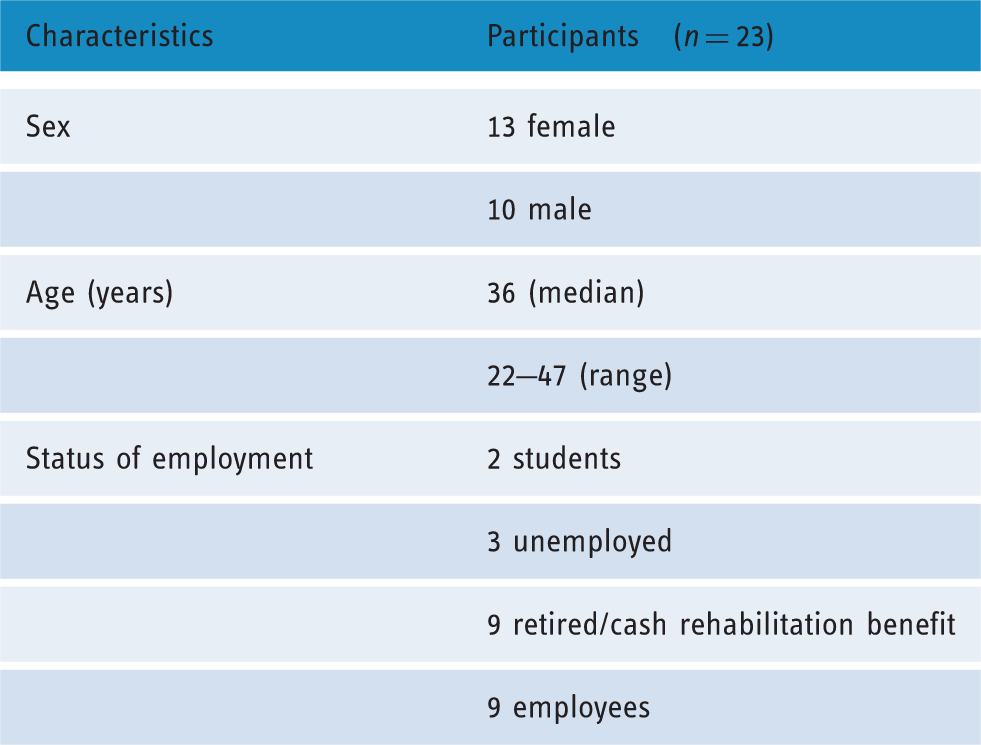
In this qualitative study, data consisted of interviews of 23 mental health service users and professionals working in the mental health field. We conducted altogether 39 interviews. Sixteen of the participants were interviewed twice. Main categories and subcategories were identified using qualitative content analysis.
Results
The analysis revealed four distinct orientations towards games and gaming: (a) compulsive gaming; (b) closet gaming; (c) gaming as a hobby; and (d) late bloomers. Each group was characterized by different personal histories, experiences, conceptions and attitudes regarding gaming and digital games.
Conclusion
When attempting to implement a game-based intervention in mental health services, it is essential to recognize the different attitudes that both service users and staff exhibit concerning games and gaming. The attitudes of service users and professionals described in this study can be utilized in the implementation of game-based methods as part of care and rehabilitation in mental health services.
Keywords
Introduction
Since the 2010s, many studies have shown a link between different types of games and individual games as an intervention in mental healthcare and positive patient outcomes.1–7 Serious games comprise games which are not designed solely for the sake of entertainment. 5 Serious gaming interventions have been, for example, reported to be effective in reducing disorders related to mental health symptoms, 6 supporting forensic mental health service users in preparing for discharge 7 and contributing to positive emotions and emotional stability, as well as having the potential to enhance life satisfaction and improve an individual player's mental well-being. 2 A good example is an Avatar-based video game “SPARX” which was found to be effective as a treatment of adolescents' depression as traditional face-to-face treatment. 8 In a study conducted by Stasiak et al. in 2012, 9 a video game called “Journey” imposed a significant decrease in adolescents' depressive symptoms. Furthermore, regular playing of a self-help program called “SuperBetter” seemed to reduce depressive symptoms and anxiety when compared to a control group. 10 Casual video games are, on the other hand, designed solely for the sake of entertainment. This category involves games that do not require much time invested or skills to play (e.g. exergaming). In addition, an enormously well-known game “Tetris” has been found to be effective in decreasing post-traumatic stress disorder symptoms 11 and cravings. 12
Overall, gamification has positive effects on health, well-being, personal growth and flourishing,13,14 and digital games have been shown to have an especially positive impact on reducing stress and anxiety. 15 As for depression, although studies have reported promising results, further research is needed. 16 Furthermore, results from the two systematic reviews revealed that games have a small but significant positive effect on depressive symptoms.3,17 In addition, a randomized controlled clinical study of participants with clinical depression demonstrated that playing video games could facilitate a significant decrease in depression in the short term as well as the long term. 1 As for anxiety, Fish et al. 18 reported that a prescribed regimen of casual video games play significantly reduced state and trait anxiety symptom severity. They further state that clinicians should consider using casual video games to address symptoms related with anxiety. 18 Currently, several trials are ongoing to investigate gamification as an intervention tool in different domains of mental health and mental healthcare. 19
Utilizing digital games in mental health services requires information not only on their effects but also on the perceptions, attitudes and experiences of both service users and professionals regarding games and gaming. However, research on these topics is currently scarce. Such information would help gain an understanding of the factors that hinder and promote the implementation of game-based methods in mental health services. Furthermore, data on the attitudes of service users and professionals regarding games and gaming would provide valuable information to supervisors, developers and agents of change on the factors that impact the planning of the development process for new game-based interventions. In addition to this, data is also needed to support decision-making concerning what kind of service users would benefit from in the utilization of games as part of their care. As such, the purpose of this study is to provide information on the experiences and perceptions of mental health service users and mental health professionals regarding games and gaming. Information on attitudes increases understanding of the factors that affect the implementation of digital methods in the mental healthcare sector and helps develop more personalized game-based interventions for different service user groups.
While there are a few studies on health professionals' attitudes, perceptions and experiences of using games in healthcare and its education in general, their potential for improving work processes, quality of care and individual creativity at work has received much less attention specifically in the field of mental healthcare. Levac and Miller 20 found that clinicians in a pediatric rehabilitation center saw many benefits for using virtual reality video games as part of their rehabilitation toolkit. Day-Black et al. 21 interviewed faculty and nursing students about their experiences of playing games as a strategy for innovative teaching-learning experiences. Both groups agree that serious gaming increases a student's motivation to learn. Similarly, Lynch-Sauer et al. 22 collected nursing students' and Kron et al. 23 medical students' experiences with and attitudes towards video gaming and using new media technology (e.g. multiplayer online healthcare simulations) in education. Student participants were interested in serious games and had a positive attitude towards digital games. Furthermore, they support using new media technologies as pedagogical tools in education.22,23
Hopia and Raitio 24 examined mental health service users' and health professionals' perceptions and experiences regarding the use of gamification in mental healthcare. In their study, service users felt that the most important factors promoting gamification were identifying the advantages of gaming and ensuring that the content of games was sufficiently meaningful. However, they were concerned that face-to-face interaction with health professionals would be eliminated, and that professionals would not approve of including game playing as part of care. Professionals felt that the use of game playing in mental healthcare requires that the professionals have an understanding of the service users' routines and that the game content is carefully designed. Professionals also recognized changes occurring in the work culture, and were concerned about the adequacy of their own digital expertise. 24
Our literature review revealed no prior studies that explicitly examined mental health service users' and mental health professionals' experiences, perceptions of, or attitudes towards games and gaming itself during their lifetime. However, mental health providers need to be aware of their attitudes, emotions and perceptions towards digital games and gaming, as professionals' own experiences and attitudes affect how they view their clients' gaming and the implementation of games as part of care. Awareness of one's own attitude is also important when developing new digital methods in the context of mental health services in particular. For example, professionals need to be aware how these attitudes may influence their relationship with service users. It is also important to understand what kind of meanings service users give to gaming and what their game playing history and motives are if game-based methods are utilized as part of their care. Being aware of these things could provide healthcare providers with the knowledge of how to capture a service user's attention, how to engage them in a target activity, and how to influence their behavior to help them engage with treatment. Since healthcare communities are starting to realize the power of gamification on a patient's motivation and adherence to treatment25,26 we need a more nuanced understanding about playing games from the perspective of service users and professionals in the domain of mental healthcare.
Objectives and research questions
The objective is to describe the experiences and perceptions of digital games and gaming from the perspective of mental health service users and mental health professionals. The research question is: What kind of relationship do mental health service users and mental health professionals have towards games and gaming in their life? This study contributes to our understanding of service users' and professionals' relationship with game playing and games. The purpose is to provide useful information for professionals, developers and management of mental healthcare to support the implementation of digital games and game-based methods and customize existing interventions to meet service users' individual needs.
Methods
Research design
We applied a qualitative, inductive content analysis method based on the procedures recommended by Roller and Lavrakas. 27 They describe two main phases of the content analysis process: (a) coding the content, which generates the data that is analyzed; and (b) analyzing the data by identifying categories and developing interpretations of the findings. Although the participants of the study consisted of mental health service users and mental health professionals, the purpose was not to compare the two groups. Instead, we aimed to increase understanding of different attitudes towards gaming in mental health services.
Participants
Participants' background characteristics.
Data collection
Themes covered in the interviews.

Each participant received a brochure describing the study and was asked to give their written informed consent to participate in the interview. It was made clear to them that participation was voluntary and that they could discontinue the interview at any point. We obtained permission to conduct the study from the research ethics committee of the local hospital. The interviews lasted 30–75 minutes and took place in the participant's home, at the university or at their workplace.
Analysis
The data consisted of 372 pages (1.5-spaced type) of participants' interviews. Data were analyzed by applying an inductive content analysis approach. 27 The analysis consisted of two phases. Before the first phase, one of the authors read and re-read the whole transcribed data several times. This process of repeated reading produced initial thoughts and ideas that were noted down as this is considered a preliminary stage in the analysis. At first, the researcher simply absorbs the content and gets a sense of the whole picture. 27 The first phase of data analysis started with the first 11 interviews (106 pages). The authors organized and labeled the data according to experiences, perceptions, attitudes and motives towards games and game playing described by the participants. A unit of data was a word, a few words or a sentence that the participant used to describe their experiences, feelings and phenomena. This phase produced altogether 240 original codes. Then, we grouped and re-grouped codes that seemed to link together. A total of 87 codes were produced. According to Roller and Lavrakas, 27 codes enable the researcher to condense large amounts of textual content into a manageable format. Next, we scrutinized the codes in relation to experiences, perceptions and attitudes towards the phenomenon. At this point, the codes related to participants' motives overlapped with other codes. When a dataset is fully coded, the next step is to look for meaningful categories across the codes that will help illuminate possible connections and patterns. 27 A total of 16 subcategories emerged, and after several rounds of analysis we ended up with the final four major categories. In the second phase of the analysis, we examined the remaining 28 interviews (266 pages) by reading through each interview several times in their entirety. The purpose of the second phase was to confirm possible saturation in the material. 28 The interviews were coded for individual statements related to the four categories already created. After this, we established the potential emergence of any new major categories. The second phase produced more descriptions for the major categories and subcategories. In addition, a new subcategory emerged under one of the major categories as a result of the second phase of the analysis. Roller and Lavrakas 27 state that it is essential for the researcher to verify interpretations and implications at this stage by way of triangulation. We, for example, compared the interpretations and implications drawn by three researchers on the same data and data display.
Findings
Relationship with gaming and games
The subjects described their relationship with games and gaming in four distinct ways: (a) compulsive gaming; (b) closet gaming; (c) gaming as a hobby; and (d) late bloomers. Each category was characterized by different personal histories, attitudes and perceptions regarding gaming and digital games.
Compulsive gaming
Poor self-regulation
Some of the interviewees felt that they could not control the amount of time they spent gaming and that their gaming was compulsive. They revealed that gaming was the first priority in their lives and that it took up the majority of their free time. These interviewees did not need a reason to start playing a game, simply having time to play was enough. Their gaming could be described as performance driven: their aim when playing a game was to advance from one level to the next, to beat the game or to complete it. Many of the participants in this category described how their daily rhythm was quickly disrupted by gaming, leading to their everyday life consisting almost exclusively of gaming sessions. They felt that they were unable to limit their gaming habit despite recognizing the need to do so. One of the interviewees described their situation as follows: I do get bored enough in like less than 10 hours that I don't have the energy to keep going anymore. But then I notice that I keep thinking about it at other times too, about gaming. I've ended up neglecting things like studies and eating and well even normal chores. It's really been like a long-term state of affairs. (A0311N)
Strong reactions
For some of the interviewees, gaming caused strong emotional responses. These included feelings of enjoyment and a compulsive need to complete the game and beat it. The interviewees also described feeling guilt, shame and anxiety about their gaming. Furthermore, some interviewees experienced feelings of uselessness after gaming. Gaming also served as a refuge, allowing them to stay at home. In this context, gaming served as a familiar and safe activity, which helped fill an empty hole in the interviewee's life. Some interviewees reported that the stories in games could cause them to feel sadness and that long gaming sessions produced melancholy. For some interviewees, gaming also caused physical symptoms, such as dryness of the eyes, hip pain, and shoulder-neck pain. Well if I'm in a bad position it affects my posture of course and when I sit my hip starts hurting and there's upper back tightness and then there's headache or haven't had stuff like that but my eyes get tired and I don't like gaming in the evening because if affects my quality of sleep and I notice that my heart rate is higher and my body feels more alert after gaming. (A0411T)
Closet gamers
Familiar, yet unfamiliar
Some of the interviewees recognized that because they had not played digital games in their childhood, gaming had not become a part of their everyday lives. For these interviewees, gaming was, on the one hand, a familiar but, on the other hand, an unfamiliar part of life. These interviewees considered themselves inbetweeners concerning gaming. Some of these interviewees had played board games and group games in their childhood and felt they had been a regular part of their childhood leisure activities. Even though these interviewees had already played digital games fairly extensively at the time of the interview, they reported that gaming had never become a natural part of everyday life. The interviewees strongly felt that they were currently able to control their gaming. For them, gaming was not a particularly goal-oriented activity. Some of the interviewees were aware that becoming a skilled and analytical gamer requires vast amounts of gaming experience. At the same time they recognized the addictiveness of games. Some were of the opinion that they needed to limit their gaming to some degree and pondered whether the appeal of gaming was a symptom of something else. The interviewees also contemplated whether gaming was a way to fill an empty hole in their lives and wondered about the significance and meaning that gaming provided for them. According to the interviewees, a person needs to have personal experience of gaming to understand the appeal and motives of gaming. Some interviewees described hiding their gaming because of other people's adverse reactions, but this also made them feel more guilty about their gaming.
Seeking explanations
The interviewees' accounts included a wide range of emotions associated with gaming. These included embarrassment and shame about wanting to play games as an adult. Gaming was also seen as causing feelings of guilt and regret because of the time spent playing. At times this regret was associated with a strong sense of uselessness. Some of the interviewees expressed being confounded over why they wanted to play games when there were plenty of more useful things to do instead. They also admitted to occasionally questioning their gaming habit and seeking rational justifications for it.
One rational justification some of the interviewees brought up was that they saw gaming as strengthening their professional skills. A variation of this was offered by one parent, who had made gaming a part of their parenthood. According to this interviewee, parenthood aims to help the child face and process different emotions, and this can be done by playing games together with the child. This parent described how they could provide their child with experiences of disappointment, success, sadness and joy through gaming: I think that I'm in the role of a parent when we're gaming. I mean of course it's a shared activity and a way to spend time together, but I think that there's a kind of educational role too. So I do my best to disappoint my child, sometimes succeeding and sometimes disappointing myself, but we're also spending time together. (A1003T)
Gaming as a hobby
Strong self-regulation
One group of interviewees told that they had been addicted to gaming earlier in their life. They described how they had been on a “gaming binge” during their childhood, and how adolescence had introduced other activities to their lives, which they felt had allowed them to break away from compulsive gaming. However, video games had remained a part of their lives ever since, and they felt they had grown to become a part of gaming culture. For these interviewees, gaming was currently an important part of everyday life, goal-oriented and under their control. These interviewees described numerous ways of regulating their everyday gaming. They regulated how much time they spent gaming, what games they played and who they played with. For example, they described being able to stop playing when it was still enjoyable, as well as taking regular breaks. Being able to self-regulate allowed these interviewees to view gaming as an alternative way to pass the time. Many of them expressed pride in being skilled gamers. One interviewee described their everyday self-regulation as follows: I guess it affects something like time management the most, but otherwise it [gaming] doesn't really affect anything, so everything gets done, but the times that things get done might be a bit flexible, but still things get done on the same day at least, but you might not get started on the things that need doing quite as early as you had planned. I mean I have gotten everything done, that's not really the issue here, I do take care of everything when I get started, but it's the getting started part that might take longer than I originally planned. (A0411N2)
The many dimensions of gaming
The interviewees' accounts included a multitude of motivations and perceived benefits related to gaming. For some, gaming fulfilled a desire to create something new, such as build villages and cities, increase their game character's powers or create new tactics for role-playing games. By contrast, some interviewees considered gaming to be a way of engaging in a shared activity with other players sharing similar interests. In fact, gaming friends constituted a significant part of these interviewees' social lives. For them, gaming offered a way of spending time with friends as well as making new friends. The games played also served as a means of communication between friends. I guess one big reason why I got more into gaming was that when I moved away from X [locality] all my best friends ended up living on the other side of Finland and then we discovered that Steam was a good way of keeping in touch and when you find a game there that you play together it becomes a really pleasant way to spend time together. (A2710N) I guess you go into a kind of flow or similar, you end up getting immersed in it, in strategy games or I guess in similar other games as well you get into the flow and you start thinking really hard about various tactics and things you can do. (A0411N2) Well it's about successes or about how if it like portrays something realistically, it's cool that you can kinda be in that world, you can assume a role that's different from normal and you can like be somebody there. For example you can be the manager of a football team if you want and then if they've played badly then you can take the role of the same characters, the players and score the goal. And the enjoyment, I guess it's dopamine or something that your brain secretes while playing. (A0311N)
Transference
Some of the interviewees recognized experiencing transference as a result of gaming. A success, such as scoring a victory for one's team or completing a difficult game, provided a sense of satisfaction. According to the interviewees, this sense of satisfaction was at times transferred to other everyday things, allowing them to take care of necessary everyday chores more efficiently. Such chores included grocery shopping, doing the laundry and cleaning the house. In addition to transference, the interviewees reported that gaming helped them identify different personal characteristics. Examples included the desire to help other players during the game or lessening feelings of anxiety by gaming. Gaming also provided dreams for the future. Some of the interviewees were interested in participating in the field of game development and had, in fact, learned to code.
Late bloomers
Learning new things
The final group of interviewees had played various board and outdoor games in their childhood and adolescence, but not digital games. As young adults or adults they had played some digital games but had never formed a closer relationship with gaming as a hobby. Although digital gaming was relatively new for these interviewees, they regarded it with interest. These interviewees made daily use of various social media applications and extensive use of online services, demonstrating a high level of digital competence. They described being eager to see what kind of learning opportunities gaming could provide and felt that gaming could be useful. They felt that gaming had helped them to learn new things and increase their digital competence. In this regard gaming also provided enjoyment for the interviewees. The interviewees were of the opinion that digital gaming could promote the player's well-being. One interviewee described their attitude towards games and gaming as follows: Hmm, well, there's the social elements. Then of course it is also pretty much a part of all-round education and I think that affects the social aspect and things like that too, but I do feel that it [gaming] is an important pastime for me, which has provided content for my life. And there are all these studies about how they develop these things, but I myself feel that it's more that it's made life more enjoyable and stuff. (A0511TT)
Participating in gaming culture
While generally positive towards gaming, several interviewees in this group expressed difficulties in understanding why people play for fun and leisure. They typically did not know any active gamers and considered the world of gaming to be fairly foreign to them. These interviewees wanted to ask “dumb questions” or present “a middle-aged woman's comments” in regard to gaming and the utilization of games in different situations. They recognized their status as novices but wanted to gain new information and be a small part of the gaming community. Many were of the opinion that games and gaming could play a part in treatment and rehabilitation in healthcare. They had a keen perception that gaming strengthens a sense of community and provides forums for safe social interaction for young people, in addition to serving as entertainment and amusement. These interviewees emphasized gaming-related attitude education and the promotion of more positive attitudes based on their personal experiences. There's the digital backpack and things in maths, English-language games and things, they make you realize how easily they learn from there, like an English-language game that they always choose from there, it says the color that comes from there or some simple things like this, so I've noticed that it's useful in these at least. And then when you think about older people, who may have like some bad experiences with these machines, then they may also find that with a tablet it's easy to play something like Mah-jong, which also maintains your memory capacity. (L2909TT)
Discussion
Main findings
The main findings of the study consisted of the four orientations towards games and gaming.
This study highlighted different experiences regarding gaming alone and in groups. Some of the interviewees preferred gaming alone, while others were of the opinion that gaming with other people made everyday life more enjoyable. These are, to some extent, in line with the description of short-term postgame experiences such as the good feeling of having spent time with friends via online gaming and relief after passing through a difficult level. 30 On the other hand, neglecting daily responsibilities and chores and feeling guilty after having played for too long are also the characteristics of postgame experiences. Poels et al. 30 assert that direct and lived experiential effects, in the form of repeatedly and intensively playing a particular game or game type, may also make postgame experiences affect gamers' perceptions, emotions and cognitions more long term. These are called long-term postgame experiences. 30 Even though their gaming was characterized by the inability to control the amount of time spent on it, these interviewees were highly aware of their compulsive behavior and reflected extensively on their relationship with gaming.
Some of the interviewees described various physical symptoms caused by excessive gaming. The symptoms caused by gaming can be compared to other sports hobbies that cause exhaustion, fatigue and sore muscles. 30 On the other hand, continuous sitting in front of a screen without breaks is known to reduce sleeping durations and increase the risk of contracting long-term illnesses.31,32
For some of the participants,
Some of the interviewees described being fascinated by the narrative nature, visuals and music of games. These subjects considered gaming to be a way to relax and a good everyday pastime. Poels et al. 30 are of the opinion that, as gaming has the potential to draw people into a fictional world, or to really immerse them into challenging tasks and activities, people lose track of time and end up spending more time than they actually planned at playing games. 30
Although late bloomers had not formed a close relationship with the video game culture, they still regarded the phenomenon with interest. In many ways, their orientation towards gaming could be described as utilitarian. They considered learning new things in the digital world to be an essential skill and were eager to make use of new games and learn from them. Technology, including game applications and game-based interventions, can help adults and older adults preserve their cognitive faculties. Games have been shown to stimulate and challenge mental actives as a form of brain exercise. 39 One of the significant barriers to the elderly using technology is skeptical attitudes towards the benefits of digital devices, and difficulties in using these technologies. 40 Despite their limited gaming experience, late bloomers exhibited a positive attitude towards the potential benefits of gaming, as well as interest and motivation in learning how to utilize digital tools in everyday operations.
Regarding the results of this study, there is neither a negative attitude nor a healthier attitude to be found. Therefore, we conclude that the goal should not be to move from one attitude level to another. In the compulsive gaming group of interviewees, some had no job nor attended any school for studies. This group felt that playing games was an escape strategy from the hardships of everyday life. Having virtually nothing else to do in their everyday lives, they passed the time by playing games. If not for playing games, the group felt that their lives would not have any meaningful content. With their days consumed by compulsive gaming, players did not actively seek any new meaningful content in their everyday lives, which can be seen as a detrimental strategy. Playing massively multiplayer online role-playing games (termed MMORPGs) requires time and dedication, and gamers are often called hardcore gamers. Recently, there have been growing concerns about excessive online gaming. For example, excessive gaming can cause various gaming-related problems 41 and negative escapism.42,43 On the other hand, excessive gaming should not be seen as only a negative thing. It can for instance present career opportunities in the gaming industry at some point in the future. Excessive gaming can also be a way to cope with a distressing life situation. Playing games can provide experiences of success, it can reward you, and you may feel that you are an important member of a gaming community. Thus, it is important to understand that compulsive gaming can, in some cases, act as a protective factor for players' mental health.
All the categories described in this study include both service users and health providers. The conclusion is that there is no point in separating service users and professionals in their own groups. For example, service users who were categorized as late bloomers could get excited about new digital working methods despite their initial doubts. Meanwhile, health providers who have a history of excessive gaming may be facing negative perceptions and prejudice from their own work community.
Strengths and limitations
The participants chosen for the study consisted of persons who were interested in gaming and the gamification of mental health services. Most of the interviewees were also willing to participate in a second interview. This is likely why the interviews provided such rich and quantitatively extensive material. Since the number of participants was small, the findings do not provide a generalized understanding of the relationship that mental health service users and professionals have with games and gaming. Instead, the findings provide a comprehensive look at the interviewees' relationship with games and gaming and illustrate how significantly their viewpoints and approaches could vary. These results will help mental health professionals understand what to take into account when applying game-based elements to work practices. The results are also a reminder of the importance of trying to gain insight into the individual viewpoints of both practitioners as well as service users when planning game-based interventions in the context of mental healthcare.
A two-phase analysis process conducted over an extended period can be seen as increasing the reliability of the results of this study. A total of three researchers took part in conducting the analysis. The research team engaged in a constant discussion regarding the categories and their content. This helped in describing how the categories were formed, as well as what their content was. Using multiple analysts to review findings may increase the trustworthiness of the data. 40 According to Roller and Lavrakas, 27 it is essential for the content analysis method that coders are trained not only in the coding scheme but also in the importance of capturing context. They further claim that without a complete and accurate account of the context about a particular code assignment, the researcher may be led to inappropriate interpretations that ultimately weaken the usefulness of the research. 27 We used multiple researchers to review categories and findings. This can provide a check on selective views and perceptions, and reveal blind spots over the course of the analysis process. Our aim was not to seek consensus but to understand the multiple ways of seeing the data.
Conclusions
If we wish to utilize game-based interventions as part of care in mental health services, we must first understand service users' and professionals' perceptions and experiences regarding games and gaming. This is why it was important to interview key actors about their relationships with gaming. The implementation and establishment of new treatment methods are relatively slow processes in the healthcare sector. One of the preconditions for the implementation of new methods is the availability of sufficient research focusing on different perspectives. However, the attitudes of service users and professionals towards games and gaming have not been extensively researched in the context of mental health services. The different orientations described in this study provide professionals with a basis for planning the implementation of game-based interventions as part of care. The results of the study can be utilized, for example, in discussions between professionals, service users and relatives about the implementation of games and gaming. It is very important that the results of the study can contribute to the establishment of a shared understanding among staff, for example, regarding general attitudes towards gaming and the implementation of games in the mental healthcare sector, the factors affecting their implementation, how to carry out implementation and how to evaluate results for patient work. Currently, we are told what we should avoid about games but not what games we should choose for healthy outcomes. 44
The gamification of care is not a solution that will work for all mental health service users. However, the results of this study serve to remind us of what a multifaceted and rich phenomenon we are touching upon when examining attitudes towards games and gaming. The same solutions will not be suitable for everyone, and integrating games to already established methods will most likely only benefit some service users. Because of this, the use of games and gamification in the mental healthcare sector must be backed up by sufficient evidence. Additionally, it can be difficult to predict how games will function, what the designers' objectives have been and what the individual outcomes of gaming will be. As such, professionals must also be compassionate in considering service users' individual needs when implementing game-based methods. This is another reason why there is a definite need for more research on attitudes towards games and gaming. Diaz-Orueta 44 has highlighted the efforts that are needed to plan and design particularly randomized controlled trials to identify if games are efficient as aides for psychological treatment. Moreover, as she further states, more robust research is needed to clarify which elements of these games are the ones that work. 44 In addition, Proffitt 45 recommends that all healthcare providers involved in developing new technology-based interventions should be part of the future of gamification in rehabilitation. She suggests, for example, that healthcare providers can participate in or run a small clinical trial to test the effectiveness of a commercialized game product. Patients receiving rehabilitation services can also become involved in gamification for rehabilitation research. 45
Footnotes
Acknowledgments
We would like to thank Merja Merasto for her assistance in this research.
Contributorship
HH and KR researched literature and conducted the study. KR was involved in obtaining ethical approval and participant recruitment. HH, KR and MS were involved in data analysis. HH wrote the first draft of the manuscript. All authors reviewed and edited the manuscript and approved the final version of the manuscript.
Declaration of conflicting interests
The authors declare that there is no conflict of interest.
Ethical approval
Permission for conducting the study was granted by the Central Finland Health Care District (August 25, 2014).
Funding
This research received no specific grant from any funding agency in the public, commercial, or not-for-profit sectors.
Guarantor
Hanna Hopia.
Peer review
This manuscript was reviewed by Matthew Fish, East Carolina University, USA and Carmen Russoniello, East Carolina University, USA.