



Abstract
One of the most intriguing discussions concerning blockchain technology revolves around its potential to ‘do good’. Consequently, numerous projects and institutions are showing interest in the capacity of blockchain to impact the social sphere positively. However, so far, very little literature has addressed the fundamental notion of ‘good’ that underlies its implementation or explores its connection to social justice theories. This article aims to analyse the narratives that surround the use of blockchain for social good and to compare them with traditional concepts that are significant in social justice theories, such as distribution and recognition. Results show that the selected informants involved in the blockchain scene tend to frame social good in rational, mathematical, and often competitive terms. This tendency contributes to the reinforcement of a neoliberal imaginary that neglects to address structural inequalities as relevant issues. Instead, it envisions social justice as an avenue for generating value, enhancing meritocracy, and ensuring technical accountability, echoing Silicon Valley's aspirations to ‘change the world’.
Keywords
This article is a part of special theme on City as a License. To see a full list of all articles in this special theme, please click here: https://journals.sagepub.com/page/bds/collections/thecityasalicense
Introduction
Since its arrival, blockchain technology has brought forth a set of promises regarding its potential to decentralize and disintermediate social relations on the Internet, addressing various issues stemming from the datafication of society (Van Dijk, 2017). The pervasive integration of data technologies into nearly every facet of human life has raised concerns about exacerbating existing inequalities, ranging from privacy scandals to power imbalances caused by digital platform monopolies and algorithmic discrimination perpetuated by machines. In this context, blockchain has risen as a potential solution for empowering digital identity, offering improved data ownership, transparency, and trust through its distributed and encrypted architecture. These affordances have been extensively discussed as a sociotechnical solution with the potential to enable individuals and communities to redefine their interactions in politics, business, and society at large, countering the centralization of the web (Tapscott and Tapscott, 2016; Swan, 2015). While the impact of blockchain technology on the financial sphere has garnered significant attention (Nelms et al., 2018; Swartz, 2017; Faustino et al., 2021), there has been comparatively less research on its applications in the social realm. Previous works have critically analysed blockchain affordances in terms of privacy (see De Filippi, 2016) or human rights (Beduschi, 2019); nevertheless, delving deeper into the promises of radical social change offered by blockchain can be pivotal in gaining a more comprehensive understanding of technology's social aspirations.
This research explores blockchain from a human-centred perspective influenced by data justice literature (Dencik et al., 2017), seeking to uncover the values driving the implementation of blockchain technology in the social sphere and the underlying visions of the world held by those involved. In doing so, it aims to provide insights into the sociotechnical imaginaries (Jasanoff and Kim, 2015) associated with blockchain, shedding light on the extent to which blockchain can be the ‘next revolution’, or conversely, how much it could be reinforcing similar biases and power dynamics present in the digital society (Marres, 2017). By raising these questions, the article focuses on understanding how blockchain experts conceptualize ‘social good’, which groups they aim to empower, and the societal concepts that underpin blockchain implementations. To achieve this, an 8-month multi-sited ethnography was conducted, employing interviews, participant observation, and the selection of a case study to unravel the sociotechnical imaginaries surrounding blockchain when it is advocated for social purposes.
Results reveal that blockchain experts often envision a tokenized perspective of social ties and relations, emphasizing concepts such as value, meritocracy, and technological accountability in the development of blockchain projects aimed at changing the world.
The structure of the article is as follows: firstly, the existence of blockchain is presented as a sociotechnical entity beyond the financial sphere, along with the significance of discussing sociotechnical imaginaries within the context of promoting social good. Subsequently, I delve into social justice theory to juxtapose it with blockchain experts’ perspectives on social good. Following that, I detail my chosen methodology and introduce the case of GrowBit. Finally, I present my findings, examining both interviews and a case study, and draw connections between the outcomes and a social imaginary that characterizes the tech scene, particularly the Silicon Valley.
Blockchain for social good
Blockchain technology presents a fascinating subject of study due to the myriad myths and narratives surrounding its implementation. Since its emergence in 2008, blockchain has been hailed as a disruptive and revolutionary technology capable of bringing about permanent change (Tapscott and Tapscott, 2016; Catlow et al., 2017). Initially centred around commercial and financial use cases, the conversation surrounding blockchain in the start-up world quickly expanded with the advent of Blockchain 2.0 (Swan, 2015; Scott, 2016; Hosp, 2019), exploring its potential applications beyond currency transactions. This led to the emergence of international initiatives such as the EU Blockchain Observatory and Forum (Lyons, 2018) and the OECD Global Blockchain Policy Forum (OECD, 2019), highlighting the broad discussion of blockchain technology's potential in various social contexts. As a result, blockchain experiments began to take place in diverse social domains, including governance, art and music, education, marriage declarations, property records, and copyright protection (Garner, 2018; Catlow et al., 2017; O’Dair, 2019; Tapscott and Tapscott, 2016). Consequently, a range of organizations expressed interest in leveraging blockchain capabilities to tackle social and public good challenges (Polvora et al., 2020).
In this sense, blockchain should be considered as a narrative technology (Reijers and Coeckelbergh, 2018), embedded with sociotechnical imaginaries and capable of having a normative and performative function as they entail promises and expectations for the future of the digital society (Magaudda, 2018). Given that social imaginary serves as an influential tool for interweaving, advocating, and proliferating ideological stances and power dynamics (Jasanoff and Kim 2015), blockchain's narratives and discourses regarding desirable futures deserve further attention. In light of the undeniable presence of ‘the integration of sociological concepts into digital architecture’ (Marres, 2017: 66), blockchain experts’ imaginary and expectations should be analysed more in depth to disclose more insights about the type of social change that is desired and imagined when designing and using this technology.
Much like any algorithmic innovation, blockchain is intrinsically fashioned upon specific perceptions of the societal landscape and is conceived with predetermined outcomes, which are often influenced by commercial or political agendas (Beer, 2016). In this regard, blockchain is not only understood in terms of technical applications unfolding in the social sphere but also claimed to be a technology ‘for good’, where this ‘social’ dimension points to a sort of ethical drive and positive collective impact of the application. This position is made clear, for instance, by a growing literature on ‘blockchain for good’ which argues that blockchain can substantially change how social good can be enhanced, claiming that blockchain would be able to tackle global challenges such as sustainability, financial exclusion, and humanitarian issues (see for example Kewell et al., 2017; Zwitter and Boisse-Despiaux, 2018). In a recent EU Joint Research Center report, blockchain was depicted as a way to ‘strengthen civil society and reinforce components such as public and social commons, while also opening up new or revitalized collaborative paradigms and alternative ways to generate and distribute value’ (Polvora et al., 2020: 14). The adjective ‘social’ then expresses the inner motivation of the entrepreneurs and developers, as well as the main business of their enterprises, to change the world for the better (Arvidsson, 2019).
To recognize that technology is implicated in this manner in the production of collective visions of futures recognizes that computer scientists and engineers are critical participants in propagating ideas about the nature, purposes, and social significance of their work, making it particularly important to understand how they participate in the creation of particular imaginaries attached to technology. While it has been scrutinized already how blockchain mythical narratives contribute to create a quasi-religious romanticism of the crypto scene towards this technology in terms of a financial revolution (Faustino et al., 2021; Swarz, 2017, Maurer et al., 2013), this work aims at unpacking blockchain experts’ conception of social good more in depth. Starting from an understanding of the blockchain scene as a nuanced and heterogenous one, and not only monolithically characterized by the presence of anarcho-libertarian positions (Golumbia, 2016), in the next sections, I will try to trace a common line between social imaginaries among a broad spectrum of experts who experiment with blockchain technology with the aspiration to create social impact. What kind of vision of future is encoded in blockchain experimentations? And what characteristics do this ‘social good’ have according to blockchains’ enthusiasts? To answer these questions, I will now proceed to discuss how social good is traditionally understood in the background of social justice theory and then compare it to what my research informants believe.
Social good and social justice
Social good broadly refers to services or products that promote human well-being on a large scale). This may include access to healthcare services and educational programmes, public access to clean water, as well as equality and civil rights. In the context of critical leftist theory, the term ‘social good’ is typically defined as a practice or action that benefits collectivity. ‘Social’, in this sense, indicates responsibility towards the collectivity and values of solidarity and cooperation. This is especially significant considering that society is based on the ‘function of receiving and affecting the fate and development of one individual by the other’ (Simmel, 1950: 11), where altruist and cooperative behaviour become foundational parts of our societies (Rushton, 1982). Given that social good maintains a collective aspiration, it also evokes the concept of ‘common good’, referring to the overcoming of private and political interests in order to achieve collective goals of public importance (Beerbohm and Davis, 2017). In this sense, the concept of the common good should not favour the interests or values of some members of society over those of others and should thus be free from external influences such as economic and political power. The common good is closely tied to the concept of justice, particularly in terms of distributive justice (Rawls, 1971) and has been widely debated inside social justice literature. Nancy Fraser has made one of the most relevant contributions in this regard. According to Fraser, injustice and justice are historically co-dependent concepts that require an understanding of what is unequal, who is unequal, and how inequality is inscribed in different institutions. Fraser asserts that a valid theory of justice should recognize the interrelation between the ‘what’, ‘who,’ and ‘how’ of justice because all these questions influence the capacity of social actors to participate equally and meaningfully in a given society (Fraser, 2009). Social justice is conceived through three different concepts: recognition (who deserves rights), distribution (who deserves income), and, more recently, representation (who becomes visible) (Fraser, 2019).
Fraser's theory underscores the relevance of ‘a new spirit of capitalism’ (Boltanski and Chiapello, 2005), which promotes a shift from equality to meritocracy and strengthens neoliberal dominance. Accordingly, the discourse of social justice has evolved, dividing between claims for redistribution and claims for recognition. Thus, rather than seeking to abolish social hierarchy, demands for equality now focus on diversifying and empowering minorities to ascend the social ladder (Fraser, 2019). However, Fraser argues that this perspective is misleading as it disregards the inherent social, political, and economic inequalities individuals face from the outset. Consequently, the traditional definition of ‘social good’ as primarily encompassing social justice and redistribution does not always hold true. As Arvidsson (2019) points out, neoliberalism has replaced the concept of the social with market-oriented discourses, where entrepreneurial individuals dominate. The idea that individual behaviours can be influenced by marketing and commercial strategies for the social good has gained traction (Gordon, 2016). This shift emphasizes economic freedom and competition, blurring the boundaries between private and public good and allowing the market to dominate social issues (Arvidsson and Peitersen 2013; Arvidsson, 2019).
Inside the blockchain scene (see Casemajor and Straw, 2023), something similar seems to happen, where many blockchain experts tend to adhere to a neoliberal view of ‘social good’ that echoes the Californian Ideology of the Silicon Valley (Barbrook and Cameron, 1996). Silicon Valley's imaginary is based on the belief that society is classless and social and political inequalities can and should be addressed through the power of technology instead of advocating for policy changes. This is something that Morozov (2013) refers to as ‘technosolutionism’. As I will show, this conceptualization of social good is often linked to a meritocratic and tokenized vision of the world, which is based on an understanding of social relations that is quite detached from altruism and social cooperation and is more akin to distrust and competition. This social imaginary is worth considering because it tends to reproduce neoliberal discourses that facilitate the growth of imbalances, inequalities, and social discrimination (Mosco, 2005). Moreover, it might jeopardize narratives that encourage social cooperation and social justice. Although this research only comprises a limited data set of social imaginaries from the blockchain scenes, it still provides useful insights into the power of sociotechnical imaginaries as they contribute to create ‘regimes of truth’ (Foucault, 1980). Here, the term is used to indicate that the blockchain imaginary is constructed upon some basic assumptions that constitute the foundation of a certain vision of the world (see more: Semenzin, 2021).
Methodological note
This study employed a ‘multi-sited ethnography’ (Marcus, 1995) to explore the sociotechnical imaginaries that underpin blockchain as a social and cultural object in its applications beyond the financial sector. The research took place in 2018–2019 and took two different local contexts into account—London and Milan. The geographic areas were chosen based on their recognition as European tech capital cities and, subsequently, their extensive participation in the blockchain scene. The data set comprises pieces of conversations that explore perspectives on social good in the blockchain 2.0 scene, involving 23 blockchain start-uppers and experts met during the project, with different social backgrounds and field of work. Informants were collected from formal and informal events, meet-ups, presentations, and networks, with the intention of being as heterogenous as possible to employ a ‘cross-contextual method’ (Mason, 1996). This method emphasizes the advantages of a varied group of respondents to identify the presence of commonalities across different social contexts. As such, I collected perspectives and imaginaries from a wide range of informants, including not only start-uppers and entrepreneurs but also hacktivists, artists, academics, and ‘evangelists’ (a sort of blockchain influencers). Generally, informants’ demographics align with those of the tech scene: they were young middle-class individuals (age ranging from 20 to 45), predominantly male (with over 80% identifying as male interviewees), and most held university degrees in engineering, computer science, business, or finance. All informants were of Caucasian ethnicity (see Appendix A).
During interviews, I conducted semi-structured conversations touching on three main areas of discussion: (a) participants’ involvement with the blockchain, (b) their assessment of blockchain's impact on the social sphere, and (c) their political orientation and engagement. This method enabled me to hear informants’ visions for changing the world, inquire about how their aspirations align with blockchain technology implementation, and identify recurring patterns within their political viewpoints. All interviews were recorded with participants’ consent and subsequently manually transcribed for interpretative content analysis. After transcription, I organized and labelled the interviews into components based on recurrent topics using NVivo software, employing a selective coding technique (Bryman, 2012).
Additionally, a case study was examined in greater depth using a shadowing approach to enhance the analysis. Shadowing involves a researcher closely observing a subject over time to study how people behave in their daily lives (Pickering, 1992). This approach allowed me to gain a broader sense of how a project emerges, evolves, and is discussed among blockchain experts. Shadowing is a form of structured observation that aims to capture both behaviours and opinions. As a data collection strategy, it is particularly suitable for addressing research questions where the unit of analysis is not the individual but the social relationship (Quinlan, 2008).
During the fieldwork in Milan (early 2019), I met Alessandro, a computer scientist developing a blockchain-based education project called GrowBit. I engaged in multiple informal conversations and conducted two extended interviews with him over an 8-month period. After a few meetings, Alessandro agreed to participate in my research as a primary key informant and promptly provided documents such as whitepapers, infographics, PowerPoint presentations, and pitch decks. These materials allowed me to delve more deeply into his encoded visions of the world. In Milan, I would meet Alessandro at least once a week for lunch or coffee, during which we discussed updates on his project's development, blockchain technology news, and upcoming events. Building a foundation of trust and confidence enabled us to engage in spontaneous and open conversations that greatly enriched this research. This type of ‘social proximity’ (Bourdieu et al., 1999) between interviewers and interviewees facilitated a horizontal dialogue, allowing us to freely express doubts, criticisms, and queries to each other.
In the discussion that follows, Alessandro's narrative will be echoed and complemented by excerpts from other participants’ interviews. This approach allows us to understand how others might describe similar experiences from their own perspectives, revealing new details or emphasizing similar ones. This method helps illuminate the relational and intersubjective nature of narratives (Bandinelli, 2020). While combining shadowing with multi-sited ethnography yields valuable insights, it also underscores the limitation of engaging with a relatively limited number of subjects and cases of ‘social’ blockchain implementation overall. Mager and Katzenbach argue that sociotechnical imaginaries are multiple, contested, and commodified. This implies that imaginaries should not be seen as monolithic or fixed, but rather as dynamic and multifaceted (2021: 225). Sociotechnical imaginaries are never universally defined; different actors, influenced by their sociocultural context and personal interests, construct narratives of the future and strive to translate them into social imaginaries; thus, we should expect blockchain imaginaries to exhibit similar multiplicity and controversial characteristics. For this reason, the results cannot be generalized to the entire blockchain 2.0 ecosystem or comprehensively cover the full spectrum of blockchain experimentations. Nevertheless, the study provides valuable insights into the increasing interest in nonfinancial blockchain applications within the start-up and technology domains, illustrating the strong connection of the selected blockchain scene with a robust neoliberal ethos.
Reflexivity
To develop a sound ethnography, reflexivity is a foundational principle that is considered crucial across the social sciences (Maxey, 1999; Darawsheh and Stanley, 2014). Ethnographers are indeed strongly encouraged to reflect on how their participation and perception might have influenced their research findings. This highlights the importance of a critically reflexive and engaged position for the academic researcher to embrace the discursive production of activism (Maxey, 1999). Researching blockchain imaginaries demanded ongoing reflexivity regarding my role as a researcher, especially considering my starting point as a feminist and digital rights activist. Over the years, I have strived to unite my academic research with political activism, contending that only deep knowledge of social issues can aid in constructing political solutions in alignment with feminist standpoint theory (Harding, 2004). This theory views knowledge production as a way to ‘empowering oppressed groups, valuing their experiences, and pointing toward a way to develop an “oppositional consciousness”’ (Collins and Sandoval in Harding, 2004: 2).
Initially approaching the research with a ‘techno-optimism’ perspective, my views and practices gradually evolved towards a more rational standpoint. Engaging with data justice literature and the ‘Big Critique’ (see Burgess, 2022), I found myself growing increasingly sceptical about the transformative power of encryption and algorithms proposed by my informants. This shift occurred simultaneously with the observation of a significant absence of structural criticism addressing systematic inequalities and a lack of discourse on privilege within the hacker scene in which I was involved. This absence is mirrored in the findings of my study. Throughout my research journey, I consistently analysed and rigorously questioned my role as an activist conducting research. I strove to ensure that my political beliefs did not impede the development of a robust and objective discussion. This effort involved, for instance, conducting in-depth interviews with individuals who held opposing political views, approaching them with balanced and nonjudgemental questions, and fostering horizontal dialogue. This challenging process proved immensely enriching for my personal growth as both a scholar and an activist, and although the scope of the research is inherently limited, it hopefully contributes to promoting critical engagement in the production of data activist practices (Lehtiniemi and Ruckenstein, 2019. These practices should be capable of challenging structural inequalities, empowering marginalized communities, and rejecting technosolutionism.
What kind of social good?
I will now present and discuss the first insights that emerged from the interviews with my informants. Although the interviews were conducted with a broad spectrum of individuals with different approaches to technology and society, three common approaches emerged in particular from the conversations on blockchain technology and its potential for social good: the conceptualization of blockchain in terms of value, meritocracy, and technological accountability. As we will see later in the discussion, this conceptualization was also shared in the construction and design of my main case study, GrowBit. This case study becomes a valuable example for better understanding the limitations and challenges of implementing blockchain in the social sphere, particularly in the context of education and pedagogy. Before delving into the case study, however, I will briefly present and discuss these three tendencies.
The production of value
The first tendency is to see social good in terms of value production. In the ‘Blockchain for Good Manifesto’ (2008), edited by blockchain experts and developers, the notion of social good was clearly detached from the concept of non-profit and highlighted a predisposition towards the change-making ethos of ‘doing good while making money’ (Arvidsson, 2019; Bandinelli, 2017): We are living in a world where ‘for good’ has become zeitgeist and is often interpreted as ‘social good’. However, to set the scene of the discussion, it is really important to note that ‘for good’ is not limited to non-profit activities or the third-sector. Business that will continue to thrive tomorrow, will be those with a clear purpose which is underpinned by a commitment which balances the triple bottom line of people, profit and planet. (Blockchain for Good Manifesto, 2008)
When considering how blockchain can be used for good, its relationship with creating new value becomes the central changemaker element, disregarding all the issues that the current neoliberal economic system causes in terms of global inequality and social exclusion. In this sense, blockchain affordances are principally seen to ‘do good’ by resolving long-standing obstacles to profitability and value capture (Kewell et al., 2017). This ethical push remains blurred as blockchain enthusiasts maintain a focus on the profitability of their projects. This is one of the first elements that emerged from my conversations with blockchain experts and enthusiasts, as exemplified by this quote from a 23-year-old man from London, who launched his own start-up to experiment with blockchain in the context of social aid: I am business smart and I like to build businesses, but I also like to do good. (…) ‘Bitcoin is actually value, and in society value is everything. Everything is value in society’. (Informant 3)
Kewell et al. have stated that ‘when considering how blockchain can be used for good, it is essential to look at its relationship with creating new value’ and that ‘DLTs represent a fundamental change in the way in which humans can exchange value’ (2017: 431). Value is a concept strongly linked to finance, and in blockchain discourses, almost every human transaction is conceived in terms of value. This view leads to tokenization of social relations, where metric power (Beer, 2016) becomes visible, and every human relationship can be conceptualized in terms of economics. The idea that money empowers people was commonly shared among all the informants that took part in this research, regardless their political position within the spectrum of blockchain imaginaries (see also (Husain, 2020). An informant from London (1), who identified himself as an anarcho-libertarian (Golumbia, 2016) and was using blockchain to promote green mobility, stated, for example, that ‘money is a basic tool to give back power to the people’, aligning with a political ideology that sees market freedom as the ultimate goal for enhancing social good. This position is further illustrated by a quote I collected during my participation in a conference titled ‘Blockchain and anarchy’ at the Imperial College of London in 2018, where a well-known crypto-libertarian evangelist stated: ‘Private property is the only right that should exist. Human rights are just a consequence and extension of it’.
While this position is quite characteristic of crypto-libertarian ideology, I discovered that also informants who identified themselves as part of the commonist scene (Peyrouzet García-Siñeriz, 2019) and thus, in theory, more aligned to practices for enhancing the common good also shared this same idea. In an interview with a London-based artist who defined herself as an anarcho-leftist and was experimenting with blockchain to create collaborative economies, she stated her belief in the role of the market in helping disadvantaged communities and empowering cultural activities such as art and music, resembling to a sort of capitalist realism (Fisher, 2009). In this framework, blockchain was depicted as the final instrument to create alternative and more horizontally structured market economies. Discussing how blockchain could help the world of art, she stated: We needed to start to think of alternative economies. We kind of have a problem in art if we think we are autonomous and separate from the rest… I think we really need to have a relationship with the economy. (…) We need to look at money and the economy as a means themselves and shift our position to become more empowered. And this is important to me because if artists do this, it will make them more available to other people. Using blockchain as a reward to think about this stuff, to put artists in a network and in a conversation with unintuitive, really uncomfortable conversations on putting market first… we can’t afford remaining in a bubble. (Informant 2)
According to this informant, public funding and public institutions can no longer fulfil the aspiration of living a decent life. Consequently, the role of collectivity is diminished, and social change is placed in the hand of individuals who can manipulate technology and finance. In this context, blockchain becomes a tool of hope and change to rebuild a more just society, reflecting a dejected surrender to market logics.
In blockchain discourses, value is advocated as the measure of goodness. This perspective of the world aligns with the tokenization of social relations and the legitimation of metric power. However, social justice theories emphasize the necessity of understanding justice, equality, and social good as political goals, separated from private and political interests as much as possible. Consequently, the relation of the concept of value to property rights and the market economy consistently embraces capitalist realism, avoiding a structural critique of social hierarchies and an envisioning of new social and economic structures. Once again, it becomes evident that these entrepreneurial individuals do not view economic enrichment and capital accumulation as inherently contradictory to ‘doing social good’ and ‘changing the world’. Instead, money becomes a means to change things they dislike, achieving personal fulfilment and ‘imposing their very personal vision of the world on the others’ (Arvidsson, 2019: 90).
Enhancing meritocracy
The concept that money and value play pivotal roles in advancing positive social change ‘for good’ was further developed by my informants. Throughout our conversations, blockchain experts emphasized that economic rewards could serve as potent incentives to encourage altruistic behaviour. This perspective might stem from a competitive outlook on society, wherein individuals are perceived as innately driven by self-interest and selfish motives, and financial incentives are seen as the ultimate method to foster solidarity among people. This viewpoint contrasts with theories that have underscored the significance of altruism in shaping societies and forging social connections (Rushton, 1982). A quote from the same informant in London, who was engaged in experimenting within the context of social aid, serves as an exemplar of this stance: You cannot stop people from misbehaving, but you can actually incentivise people to behave in a good way. Humans are not good by nature. They are selfish and think about themselves. So, for me… I don’t like the concept of NGOs because the money they receive is actually for the people in the system, people inside get a lot of money and have nice lives. So, we need to focus on incentivising the good in people. (Informant 3)
On the whole, blockchain experiments within the social sphere seem to be marked by a competitive and meritocratic mentality rooted in a neoliberal culture of individualism. Many proponents believe that blockchain constitutes a technology that will unleash an individual's potential, as it constructs social systems where success does not hinge on collaboration with others. This mirrors the meritocratic ethos prevalent in start-up culture, where the responsibility for both success and failure lies squarely on the individual and their industrious efforts: blockchain technology is seen as having the capacity to eliminate the intermediaries that hinder the genuine realization of meritocracy. For instance, consider the viewpoint of a blockchain developer based in Milan, employed at a start-up that provides corporations with blockchain solutions: I dream of a meritocratic society. For me, the blockchain was exactly what I was looking for. I’d like to build platforms where various players can emerge from the bottom up, free of intermediaries and corruption. I prioritise meritocracy. And now that we have the blockchain we can establish a distributed ecosystem in which these actions can take place without being directly controlled by anyone. (Informant 21)
The issue of equating meritocracy with equality has also been addressed by Amartya Sen, who argued that economic growth is an inadequate indicator of overall quality of life since it fails to accurately depict the well-being of deprived individuals (Sen, 1980, 1995). Nevertheless, the myth of meritocracy persists in capitalist societies, often championed as a means of promoting ‘good deeds’. Research in the field of social psychology has shown that those higher up in the social hierarchy are particularly inclined to embrace the ideology of meritocracy (Knowles et al., 2014). This perspective is concerning as the belief in meritocracy serves to legitimize existing status disparities among individuals and groups, effectively upholding the status quo (also see Jost and Banaji, 1994; Sidanius and Pratto, 2003). In this sense, the concept of meritocracy replaces the notion of solidarity, which forms the foundational basis for social justice.
This faith in meritocracy as a tool for fostering equality is closely tied to the hacker scene. Studies on hacker ethics have consistently demonstrated the centrality of the meritocratic concept within developer communities (see Himanen et al., 2001; Coleman and Golub, 2008). Levy (1984) also elucidates how this ethical principle has been present since the inception of the Internet network. Computer scientists often adopt a worldview where anyone can become a hacker and access the power of computer networks through coding knowledge gained from a DIY perspective. This perspective often downplays social inequalities related to Internet access and technological knowledge. Hackers frequently hold the belief that success is a result of hard work and talent, tending to disregard any ‘external’ assistance that may have contributed to their achievements. In the realm of blockchain, this viewpoint extends to the idea that anyone can learn to code, thereby empowering individuals and circumventing intermediaries. This sentiment is echoed by an informant from London who initiated a blockchain project to enhance transparency for NGOs: So, in a way blockchain decentralised fortune, investments and money making, and brought it to the masses. Basically, you do not need to come from a wealthy family, and you don’t need to know anything about investments. If you’re lucky enough to be a geek or hipster, you will use a blockchain to distribute the money to the masses like that. This is an advantage for me on a personal level. I really think it empowers the masses that way. However, this is no longer the case as it really became massive. Now the price dropped. (Informant 9)
On the one hand, this informant identifies ‘geeks’ and computer scientists as pioneers of an economic revolution rooted in coding skills; on the other hand, she suggests that using blockchain can empower individuals and masses, provided it does not reach a massive scale, thereby revealing a tension between the intended effects and the actual outcomes of blockchain and cryptocurrencies on a larger scale, which can undermine the profits of miners and participants in the crypto scene.
Lastly, it is essential to recognize how this emphasis on meritocracy as a means of enhancing social participation generates a biased worldview rooted in the Weberian spirit of capitalism, which places work at the forefront of individual lives. From this perspective, everyone deserves a decent life as long as they demonstrate enough motivation to secure a job and engage in the economic system. In the following quote, an informant articulates this stance while explaining that the ultimate aim of their blockchain application is to intervene in marginalized communities by ‘empowering’ homeless individuals: A*** is for making the world a better place. (…) I think we need to be able to see problems and not to deal with poverty in a way of giving stuff away. Helping the shorter will help poor people to get empowered and become like us, have a job and become autonomous. That’s fighting poverty, not giving free shoes, that won’t have them having a job, they will just receive free stuff. They are not different to us. (Informant 11)
The notion that poverty and inequalities can be addressed through individual empowerment aligns with the edge of neoliberal ideology. This perspective embodies a neoliberal mindset, whereby impoverished and disadvantaged individuals are portrayed primarily as idle, unconcerned about working, and remaining at the fringes of society due to personal choice. Creating a ‘them versus us’ dynamic establishes a condescending separation between rich and impoverished individuals, which contradicts theories of solidarity, equality, and social good that are founded on a broader sense of community and systemic efforts against social inequalities. Blockchain embodies this viewpoint, aiming to intervene in the social sphere through philanthropy and individual empowerment.
Providing technological accountability
A third aspect claimed to be efficient in terms of social good is blockchain's underlying capabilities to provide data confidentiality, integrity, and availability. In this context, blockchain is often championed for its inherent potential to promote fairness and equality on the web. The network's transparency and its potential for accountability are frequently touted as solutions to issues like mass surveillance or data monopolies by digital platforms. An informant from London, working within a tech company conducting research on blockchain and data privacy, articulated this sentiment: We need to build public services on the web and civil services where people feel like they are not being surveilled. That is a prerequisite for any democracy. We don’t really have any public sphere on the web right now. (…) D*** is interested in understanding how people share data for the common good. D*** doesn’t just want to create a tool where people lock their data down from anybody else: we want to create tools by which you can actually share data, in a trusted way. (Informant 8)
This viewpoint was further expanded upon by several informants who contended that this inherent technological transparency and accountability could also combat political corruption and address humanitarian crises by providing people with the means to achieve financial independence. A ‘Bitcoin evangelist’ from Milan elaborated: Blockchain will be extremely useful for outsiders, those who are underprivileged and underserved by the financial system: a woman in Afghanistan who cannot own a bank account, Wikileaks which sees its payments denied by Paypal, a Chinese man who wants to transact with a friend from Switzerland, people who are cut out from the system because they live in underdeveloped countries, sex workers and migrants. Look at the case of Venezuela: there are already people using Bitcoin to escape dictatorship. So first and foremost, blockchain will help unprivileged and unbanked people. It sounds like a fringe category, but it's actually the majority of people on Earth. Poor people. (Informant 16)
In this example, we observe how geopolitical concerns and global inequalities are exclusively viewed through the lens of financial exclusion, with blockchain positioned as a panacea for empowering marginalized populations. This perspective arises from the belief that when something is measurable, it becomes more easily verifiable and controllable (Beer, 2016). In essence, when social impact and social good are framed in terms of measurement, they become goals to attain and monitor. The problem of interpreting every kind of social relationship in these terms becomes more visible when examining projects aiming to employ blockchain applications to the social aid sector. Blockchain is advocated as a method to curb corruption and ensure proper allocation of funds by NGOs and social workers, under the assumption that human nature is inherently driven by greed. The preceding informant from London, who was involved with NGOs, clarified this viewpoint: We only track what has been achieved. And the more you achieve and the more you can prove it, the more money you will get because donations and investments should be based on whether the project is delivering well, and whether those beneficiaries are indeed being helped. (…) It's not about money making money, like private sector, banking. It's more about measuring efficiency. And with the social sector, why would it be different? It's people’s money. And it's people's life. Like you really need to prove that you helped. (Informant 9)
While emphasizing the necessity of producing results and ensuring funds are not squandered on ineffective services, the essence of the act of solidarity is diluted and viewed solely through the lens of generous philanthropy, without addressing the existence of structural issues. Ultimately, the conceptualization of social good equates to measurability, leading many interviewees to perceive blockchain ‘for good’ primarily in terms of efficiency.
The case of GrowBit
To analyse this vision of the social good in practice, I will now present the case of GrowBit. GrowBit serves as an illustrative case study for exploring blockchain sociotechnical imaginaries and narratives, as it is a blockchain social application designed to intervene in educational contexts and provide students with enhanced career possibilities. As we will delve into, GrowBit's inception stemmed from a pedagogical objective—utilizing technology to enrich individuals’ social participation and collaboration. However, by adopting a techno-solutionist approach, it falls short in comprehending broader social challenges, maintaining a simplistic view of social interactions that aligns with neoliberal perspectives voiced by other informants.
The project originated from a group of friends and underwent testing in select schools in Florence and Turin in 2019. Specifically, GrowBit aims to address the problem of school dropout rates and waning student interest in culture and knowledge using a blockchain-based incentive system. Blockchain technology plays a central role in the project due to its open architecture and capacity to create smart contracts, which, in theory, could incentivize students to persist in their studies and enhance their job prospects post-graduation. In essence, the founders believe that by incentivizing teamwork through blockchain rewards, students’ career outlooks could be improved. GrowBit is structured around a specific formula that calculates a monthly scholarship disbursed to students’ Bitcoin portfolios based on their grades. Of particular interest is that GrowBit emerges from a social aspiration to ‘fight social inequalities and individualism’ (GrowBit Whitepaper, 2019), an ethos purportedly embedded in the project's code. The formula, in fact, rewards class growth and teamwork among students rather than singling out the best-performing individual student. This approach, as highlighted in an interview with Alessandro and Figure 1, emphasizes fostering teamwork over individualism: The important message we want to convey to students is that their classroom is a projection of the bigger society in which they will be launched into at the end of their studies. Thus, they need to realize that they must take care of each other in order live in a fair and equal society.

GrowBit’s slides of presentation.
Aligned with sociological theories of the social good, I chose to investigate Alessandro's views on equality and collectivity, focusing on his intention to counter individualism. It soon became evident that he largely associated equality with the establishment of meritocracy. In practice, GrowBit's scholarship distribution did not differentiate between need-based and talent-based educational grants. The project claims to assess overall class performance and award deserving students Bitcoin scholarships (see Figure 2). According to Alessandro, this was the core aspect: as the reward went to the class, not an individual student, the use of blockchain was seen as collaborative rather than competitive.

A diapositive showing a GrowBit's notification.
‘The best way to learn is to compete’, said Alessandro. ‘The game has its roots in competition, and we play to learn how to code’. Thus, competition was viewed as ‘part of the game’, was not intrinsically problematic as long as the outcomes were shared. However, scholarships were initially designed within the context of education to assist disadvantaged students in completing their studies, not solely to reward performance. Relying on performance as the criterion for merit and participation can lead to adverse outcomes. Research suggests that meritocratic perspectives can have negative implications, including lower self-esteem and self-blame for failure, particularly among individuals from underprivileged backgrounds (McCoy and Major, 2007; Foster and Tsarfati, 2005). In this light, GrowBit does not challenge the meritocratic ideal but instead reinforces it. This stance aligns with the viewpoint held by other informants, where competition is seen as a natural human inclination. As a result, economic incentives gain prominence as means to promote collaborative and ‘good’ behaviour: In the past years, we often wondered which was the best way to encourage and incentivise students to follow us and to carry on the studies even when we were not there… basically, I was wondering how to make them curious. After studying Bitcoin, I put two and two together and I said: maybe we should use a cryptocurrency to incentivise students! But at the same time, let's also use blockchain to verify their results.
Furthermore, GrowBit exhibits a dose of technosolutionism, with the tool positioned as a means to educate students about and instil in them collaborative values. Solidarity and cooperation are framed as ‘skills’ to be acquired: The student will be incentivised to help other students to get better results – maybe not the best results but certainly better – and we think that this could enhance the formation of teamwork, which is not only related to studying because the same principles of collaboration can be reapplied to the life of a citizen. We could have people who have this skill of collaborating and could maybe create new initiatives; they could stop resonating as individuals and perhaps bring something to collectivity.
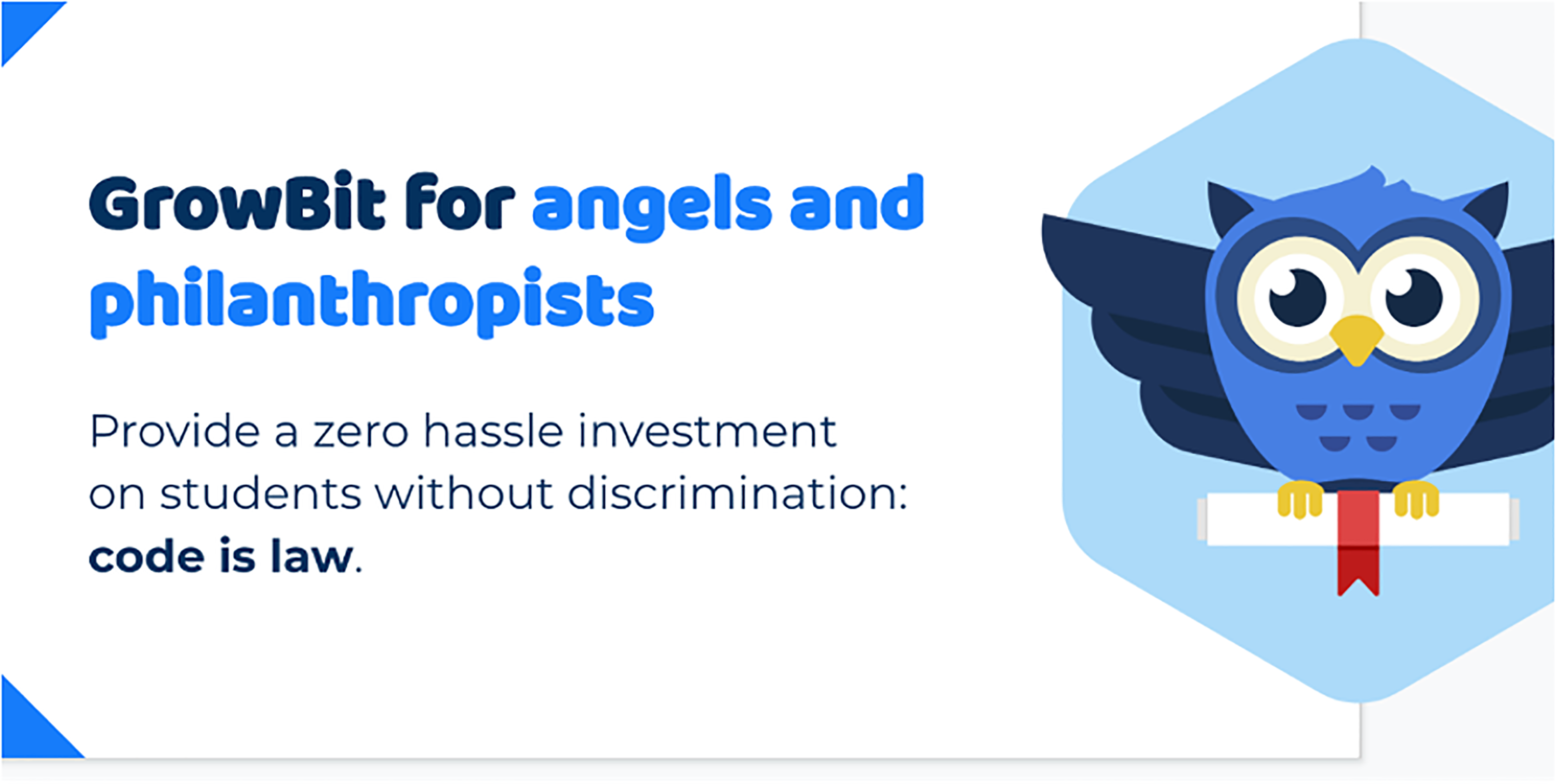
GrowBit and ‘code is law’.
In essence, this belief in the inherent transformative power of code and algorithms to reshape the world often stems from a limited understanding of social mechanisms. There is a tendency to apply mathematical simplifications to complex social dynamics without accounting for existing biases. This tendency becomes evident in GrowBit: Alessandro did the nature and origins of social injustices and their connection to educational processes, nor does he believe it is necessary to do so: We do not plan to overlap with the scholastic evaluation, so we would let that untouched and would not discuss how the school is currently evaluating students. We basically start from already produced data on students’ evaluation and try to incentivise teamwork.
Finally, the founders perceive young people as somewhat detached from the individualistic dynamics of society due to their limited exposure to the labour market and political system: Young people are the future. Since they are not yet in the market labour or institutions, they are not yet polluted by individualism and selfish behaviours. They evolve from a subset of society that is protected from the worries and concerns of adult life. That means that they have the time to learn how to help one another.
Conclusions
In examining the concept of blockchain for social good, I endeavoured to identify common patterns of understanding social aspects and embedded biases among blockchain informants. In doing so, three tendencies emerged regarding the conceptualization of social good and social justice: value creation, encouragement of meritocracy, and assurance of accountability for actions. As demonstrated through conversations and, notably, the case of GrowBit, this conceptual framework is deeply rooted in neoliberal logics and often lacks a critical perspective on existing inequities and social discrimination. The analysis reveals how social dynamics are often interpreted through a competitive and rational worldview: narratives surrounding blockchain frequently demonstrate a techno-deterministic and reductionist approach to society that underplays the intricacies of social structures, social relations, and social change. In this context, achieving individual (and collective) freedom is not achieved by challenging the ‘system’, but rather by conforming to the ‘natural principles’ of the free market and technological progress. This ‘capitalist realism’ legitimizes a perspective in which culture, art, and social bonds are commodified and absorbed by the financial logics of blockchain technology.
Despite the genuine desire of my blockchain informants to contribute positively to the world, their social vision appears oversimplified and built upon a rational and quantitative perception of society. Within this framework, the aspiration to make a difference in the world while generating profits becomes intertwined with technological innovation. While many experts express a dream of a world without wealth disparities and equal opportunities for all, the means of achieving this often seem to rely on the features and capabilities of blockchain technology, believed to be inherently conducive to the greater good due to its open, transparent, and decentralized structure. This ultimately reflects an underestimation of the role of social class in perpetuating inequalities, framing social good as a matter of ‘wanting’ and ‘desiring’ change.
The case of GrowBit illustrated how social justice is frequently interpreted in individualized and tokenized terms and can be implemented when an individual achieves outcomes based on ability and merit. This implies that ‘fairness’ plays a significant role in determining an individual's performance within a competitive context, showcasing a deeply ingrained commitment to the meritocracy ideology by assuming that an individual's success (or failure) in educational settings is solely a result of their individual efforts and capabilities. Consequently, when experimenting with technology, it becomes crucial to redefine the concept of the ‘common good’ in the context of social justice: embracing overly broad definitions of what constitutes ‘doing good’ may lead to a conflation of equality and meritocracy, with redistribution seen merely as a tool for democratization.
In conclusion, the ‘fairer and prosperous’ society envisioned by the enthusiasts of the ‘Blockchain for Good’ manifesto seems poised to replicate some of the fundamental dimensions of neoliberal society, of which remains an important by-product not only technically or economically, but above all, culturally. The promotion of hegemonic blockchain imaginaries appears closely interwoven with the prevailing cultural values of Silicon Valley, portraying society as classless and devoid of socioeconomic struggles, advocating the idea that technological markets, rather than government intervention, act as the catalyst for improving people's lives (Ferrari, 2020).
Supplemental Material
sj-docx-1-bds-10.1177_20539517231205479 - Supplemental material for ‘Blockchain for good’: Exploring the notion of social good inside the blockchain scene
Supplemental material, sj-docx-1-bds-10.1177_20539517231205479 for ‘Blockchain for good’: Exploring the notion of social good inside the blockchain scene by Silvia Semenzin in Big Data & Society
Footnotes
Acknowledgements
I would like to thank Alessandro Gandini and Paola Rebughini for their valuable help in the development of this research, as well as Samer Hassan and the P2P Models group for their great suggestions and support. Many thanks also to Alessandro from GrowBit for all the patience and help and to the anonymous reviewers of this manuscript who provided insightful comments that improved the quality of the paper.
Declaration of conflicting interests
The author(s) declared no potential conflicts of interest with respect to the research, authorship, and/or publication of this article.
Funding
The author(s) disclosed receipt of the following financial support for the research, authorship, and/or publication of this article: The research is based on PhD research conducted in 2017–2021 at the University of Milan with funding from the Network of the Advancement of Sociological and Political Research ( ).
).
Supplemental material
Supplemental material for this article is available online.
References
Supplementary Material
Please find the following supplemental material available below.
For Open Access articles published under a Creative Commons License, all supplemental material carries the same license as the article it is associated with.
For non-Open Access articles published, all supplemental material carries a non-exclusive license, and permission requests for re-use of supplemental material or any part of supplemental material shall be sent directly to the copyright owner as specified in the copyright notice associated with the article.
