



Abstract
Natural sounds play vital recreational and ecological roles across small aquatic ecosystems. Given the density and diversity of species reliant on these auditory environments, protecting natural soundscapes from growing forms of unsustainable human-use is important. Changing soundscape qualities with growing unnatural sources can herald species, habitat, or small ecosystem changes. In the case of small aquatic natural areas (SANAs), which face disturbances like unsustainable nature-based outdoor recreation with understudied ecological fates, some of these changes forecast unfavorable outcomes. Outdoor recreation induces direct (i.e., consumptive) ecological changes through fishing, hunting, or vegetation trampling/extraction. Conversely, boating, swimming, hiking, and natural feature viewing spark indirect (i.e., non-consumptive) ecological changes by altering wildlife behavior, re-organizing feeding relationships, or decreasing soundscape quality. In this work, we illuminate the current state of knowledge about outdoor recreational effects and soundscapes common within the Anthropocene. This work builds an understanding of recophony, or the suite of sounds from various nature-based recreational activities. Our system coverage includes small aquatic ecosystems like ponds, marshes, swamps, streams, and waterfalls. Through literature reviews and limited system-specific evaluations, we forge management questions for each small ecosystem and describe applied research paths. Our findings indicate that consistent recreational noise contributes to abnormal species communication patterns, altered species interactions, and conflicts among various user groups resulting from noise pollution. We encourage SANA managers and scholars to observe how specific species, habitats, and small freshwater ecosystems respond to diverse recreational uses. Finally, we challenge the aquatic-based outdoor recreation communities to consider both how recophony shapes user experiences but also affects the integrity of the natural soundscape during and after activity engagement.
Keywords
Soundscapes as critical recreational and ecological resources
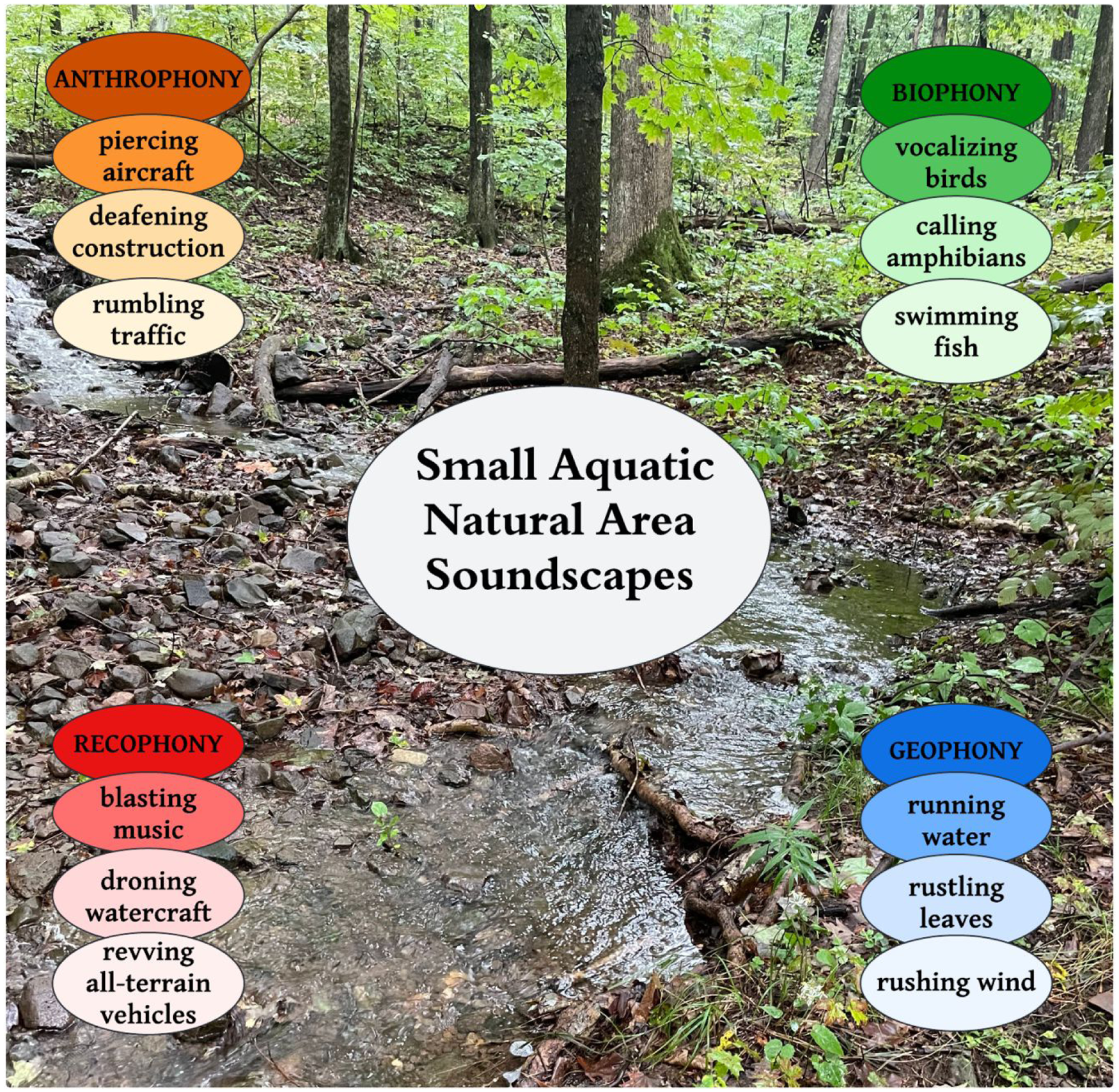
Sound plays a vital role across both natural and human-dominated ecosystems (Buxton et al., 2021). Naturally occurring sounds come from biological, non-biological, and human activities. Namely biophony, geophony, and anthrophony, these diverse and interacting elements comprise soundscapes. These auditory sources develop relationships within and between species through communication, which also drives a wide variety of necessary behaviors. Natural noises also influence relationships among species and various habitats. The presence of diverse sounds often guides important decisions, whether signaling positive or hazardous conditions (Miller et al., 2022). Researchers are growingly interested in exploring how emergent disturbances of the Anthropocene contribute to ecological and recreational resource changes across aquatic ecosystems (Chrobak et al., 2025). This perspective underscores small freshwater ecosystems because of their vulnerability to anthropogenic disturbances like increasing climate change effects and overuse. Although not the focus of this work, the climate change effects most likely to alter small aquatic ecosystems include precipitation changes, temperature alterations, nutrient loading, biological invasions, resource overextraction, and increasing visitor use (Doherty et al., 2021). Emphasizing small aquatic ecosystems aligns with academic and community-wide concerns about the ecological fate of these increasingly disturbed areas. Size and space matter when considering water depth, resource availability, presence of high-quality habitats, and level of recreational accessibility, which is a proxy for whether an environment can be easily exploited (Gonzalez et al., 2020). Throughout this work, we use the term small aquatic natural areas (SANAs) to represent the systems facing recreational and visitor-use. This term differs from small aquatic ecosystems, which often implies those environments in the absence of recreational and visitor-use.
Small aquatic natural areas can deliver plentiful sound (e.g., beach streams and shorebird vocalizations) resources, and depending on the management, continually offer opportunities for people and nature. We argue that natural soundscapes are resources, and they are finite given the wave of ongoing and anticipated anthropogenic changes (Chen et al., 2022). In addition to the rise of anthropogenic disturbances, increasingly artificial elements penetrate natural spaces, inducing ecological changes (Sethi et al., 2023). One of these important contemporary challenges involves declining natural soundscapes and increasing unnatural noises. Moreover, natural soundscape quality and intactness comprise three important measures of ecosystem health (Kuehne et al., 2013). Growing forms of urbanization (e.g., harbor expansion in Savannah, Georgia) is the primary driver of direct soundscape (e.g. tidal river waterfowl community responses) change, however indirect and poorly known elements also contribute. One of these poorly understood elements includes outdoor recreationally and visitor-use driven noise. We name this source, recophony, which comprises the association of noises stemming from various nature-based recreational activities. This type of sound falls under the anthrophonic contributions category, although given the distinction between industrial and recreational noises, it is important to add a much tighter label. Using the recophony title has important sound resource management implications, and we discuss these dynamics across our work. Natural soundscapes also comprise important dimensions driving outdoor recreation interests (e.g., chirping crickets, wet meadows, and water falling), and research across diverse parks, protected areas, and other publicly accessible resources confirms the connections these visitors possess to specific noises (Thornhill et al., 2025).
In this perspective, we examine how the outdoor recreational use of small aquatic natural areas (SANAs) might change soundscape quality and intactness. Both quality and intactness represent important social and ecological dimensions. Soundscape quality is often an important element denoting the current state of ecological health for those species known to communicate through noise. For instance, we emphasize how communicative vertebrates (e.g. migratory stream fish) respond to recreational activities like motorized boat use or shoreline hiking, which drive down the natural soundscape quality. Recreationally, soundscape quality is likely a key indicator guiding why people choose across some small aquatic natural areas over others (Testa, 2025). For example, several key studies indicate the importance of near or complete silence within riparian areas to draw repeat visitors (Stokowski, 2024). Moreover, soundscape intactness is also an important dimension because it reveals how much a system has changed from how it may have historically sounded. Intactness also indicates how current stressors, disturbances, and other threats draw down the perceived (e.g. each person and scholar may express variation among their soundscape preferences) natural soundscape (Turlington et al., 2024). Throughout this commentary, we consider how outdoor recreational dynamics, ongoing activities, changing visitor-use levels, and increasing noise levels affect both people and nature. These two elements are inextricably connected and increasingly reliant (e.g. human reliance on aquatic ecosystems is much more visible, but damaged and degraded systems also express needs from human interventions).
Methods: Inclusion criteria for small aquatic natural areas
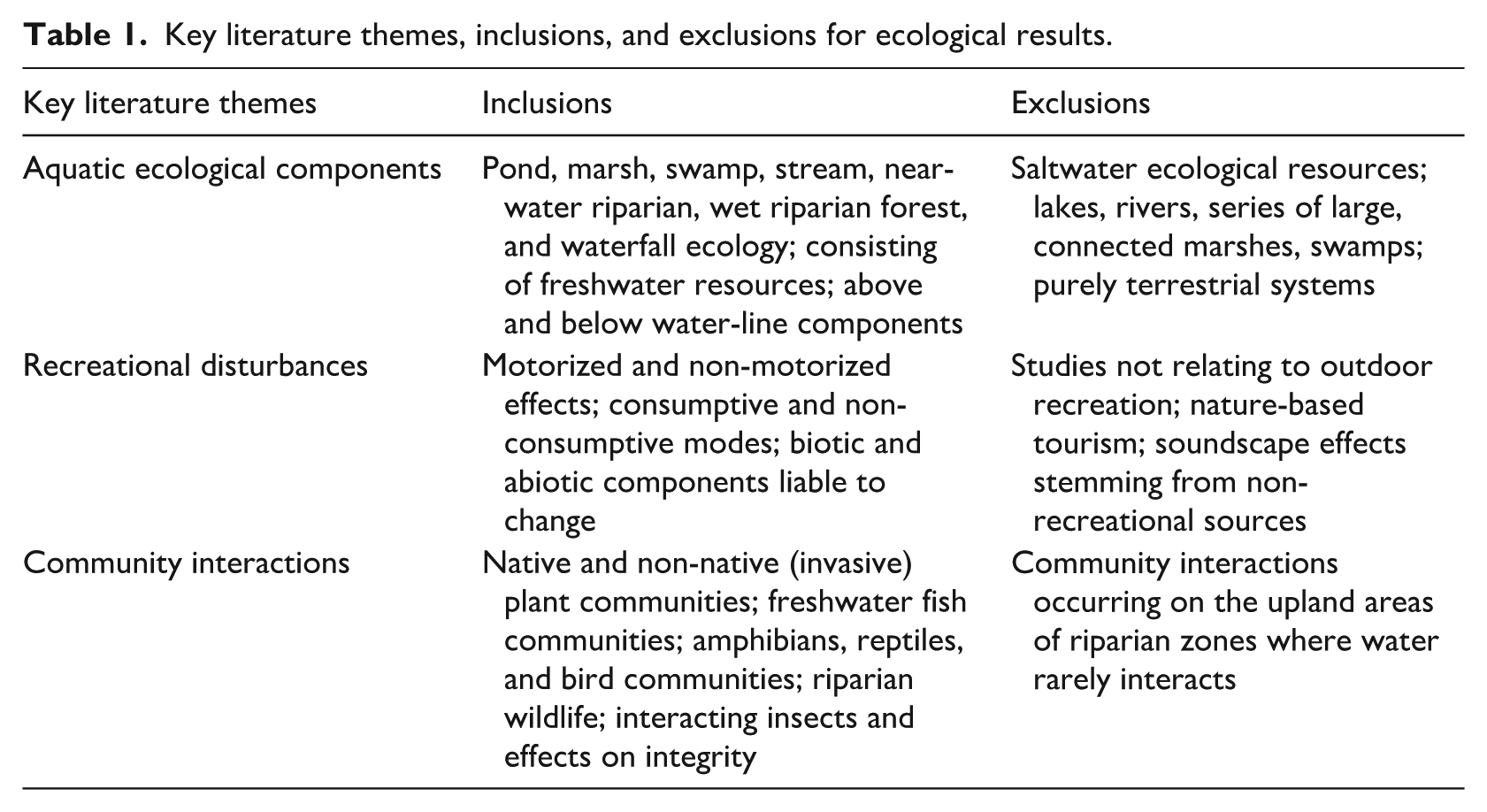
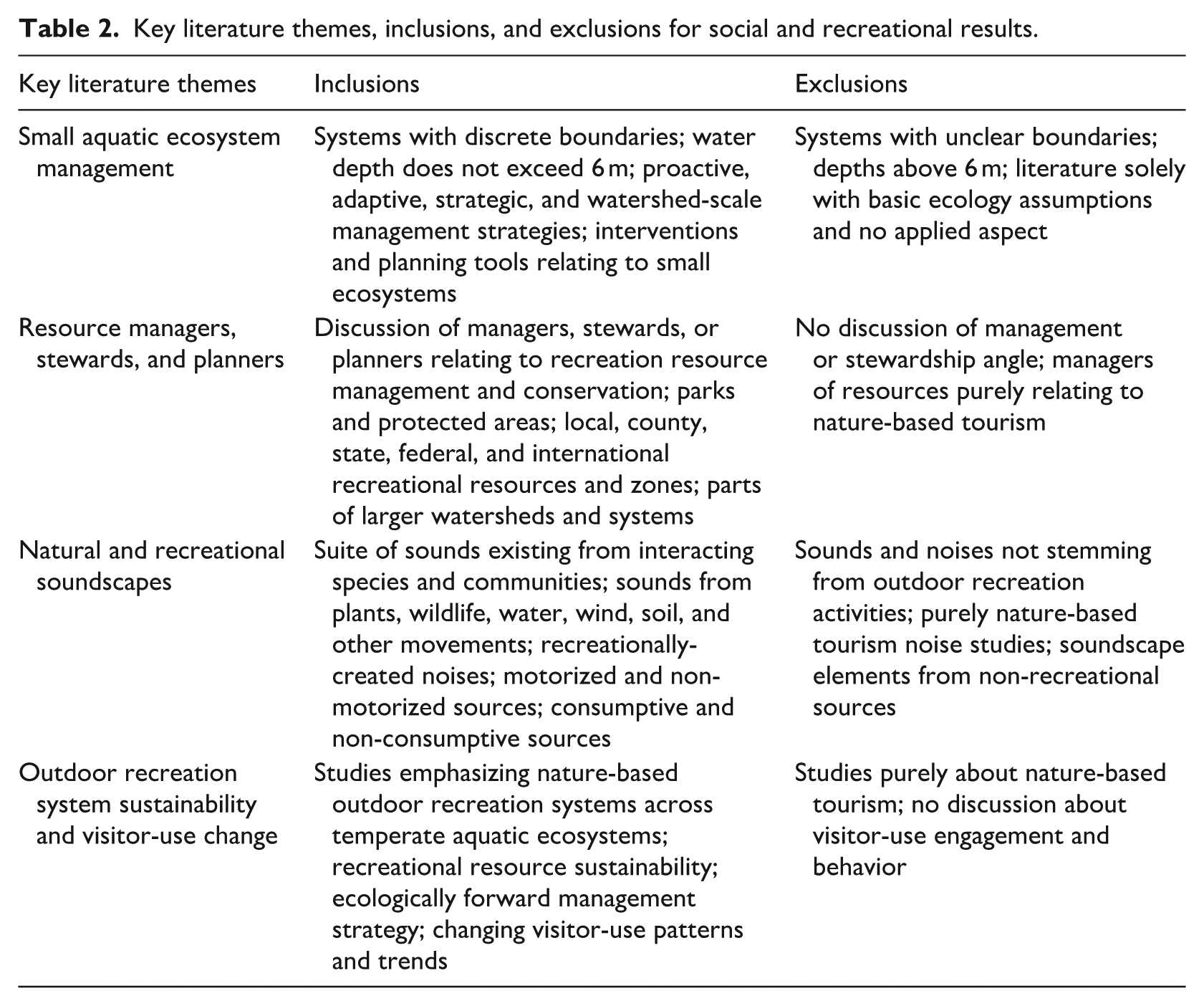
Our analysis of the role recreationally-derived sounds play across small aquatic ecosystems involved multiple methodological approaches. We accomplished this perspective through limited system-specific observation and key literature reviewing relating to each of the five small aquatic natural areas (SANAs). Both of these actions delivered an understanding of the current state of knowledge while also producing outstanding questions from observational data. Selected habitat and ecosystem based literature aligned with the aquatic ecological components, natural soundscapes, and community interactions. Social and recreational literature consisted of managing small aquatic ecosystems, recreational disturbances, outdoor recreation system sustainability, and visitor use changes. Some studies addressed outdoor recreation activities as novel soundscape elements and those with sufficient influence to trigger ecological changes. As expected, the literature pool was small, given the limited number of studies confronting how outdoor recreation contributes to soundscape change, and hence, affects the integrity of SANA dynamics (Tables 1 and 2).
Key literature themes, inclusions, and exclusions for ecological results.
Key literature themes, inclusions, and exclusions for social and recreational results.
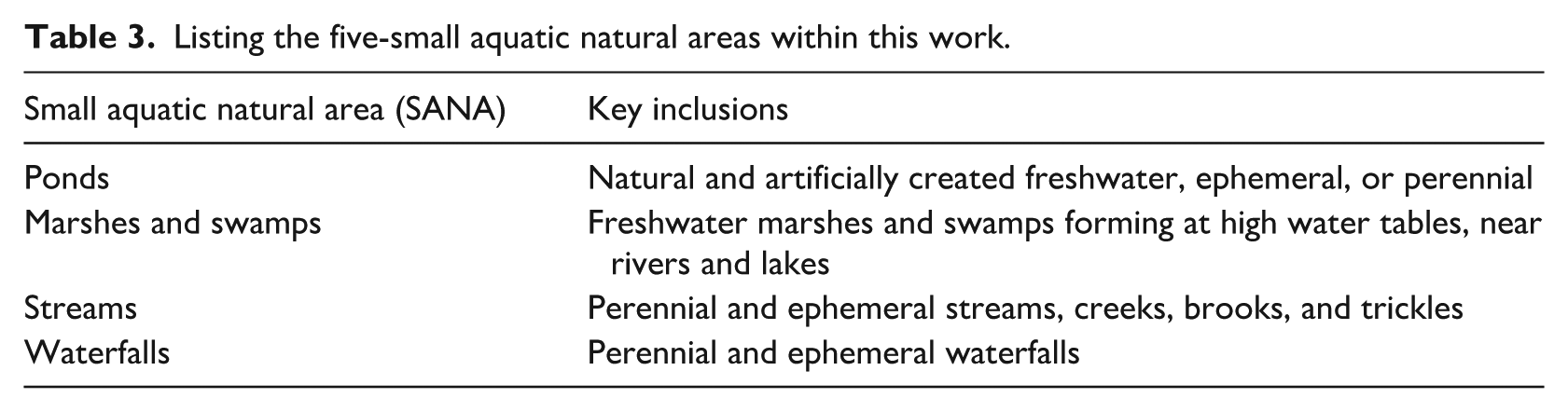
We also included a limited suite of observational research data from in-field measurements involving the analysis of individual, population, and community-level species data (Mallett et al., 2024). This data is hyper-limited, given that it was not captured across each of the temperate United States regions, however, it generates some useful data that may guide future research activities. Moreover, we created a management-forward tool named preliminary natural soundscape assessment (PNSA). This tool captures recreational and ecological data through purely observational methods. Later in the perspective, one formal analysis involving a pond ecosystem in Rhode Island reflects the use of this applied research and management-forward tool. Using findings across the literature and findings from observational research, we scrutinized each of the five-small aquatic natural areas and incorporated key takeaways for additional management and research investigations (Table 3). Given the applied nature of the questions, many of the recommendations and new research directions could be pursued by both scholars and practitioners.
Listing the five-small aquatic natural areas within this work.
We selected small aquatic ecosystems based on four major criteria (a) size, (b) presence across the temperate United States of America, (c) recreational importance and visitor-use, and (d) overall importance for freshwater sensitive plants and wildlife. Aquatic ecosystem sizes (e.g. measured in area and depth) greatly vary, however, in this perspective, we considered those small systems with discrete borders (Figure 1). Plays a crucial role in the acceptance or disturbance processing. Generally, the smaller the aquatic ecosystem, the higher probability of a disturbance occurrence with the strength to influence soundscape quality and intactness (Seidl and Turner, 2022). Size does not always predict natural complexity; however, foundational species relationship theories describe that smallness might result in less complex ecological systems. Moreover, we emphasize United States temperate aquatic ecosystems, and the literature and case examples draw on these environments. From this perspective, cases align with the Northeastern, Midwestern, Intermountain Western, and Northwestern United States temperate zones. The selected freshwater ecosystems are also recreational resources, and small aquatic natural area concepts arise. Outdoor recreationists can more easily access resources when they are close to parking lots, trails, and nearby civilizations. Parks, protected areas, or other mechanisms of freshwater ecosystem protection bring people near riparian zones, shorelines, nearshore areas, and open waters (Kesling, 2026). For instance, in the American Northeast, the Connecticut River watershed holds critical tributaries and many small streams, each of which disgorge into the main stem river (Siddique and Palmer, 2021). Most of these flowing waters cross local, state, and in some places, federal parks, and protected areas. Finally, these freshwater ecosystems provide vital benefits to those plants and wildlife dependent on them for life. Every case centers an ecological community confronting an ongoing or forecasted challenge relating to changing natural soundscapes. There is a specific focus on sensitive, threatened, and endangered freshwater life given the sensitivity to novel ecological disturbances like recreational soundscape changes (Fang et al., 2021). Global-scale freshwater ecosystem management objectives align with the conservation of declining species, so it would be myopic not to make these inclusions under the plants and wildlife criteria.
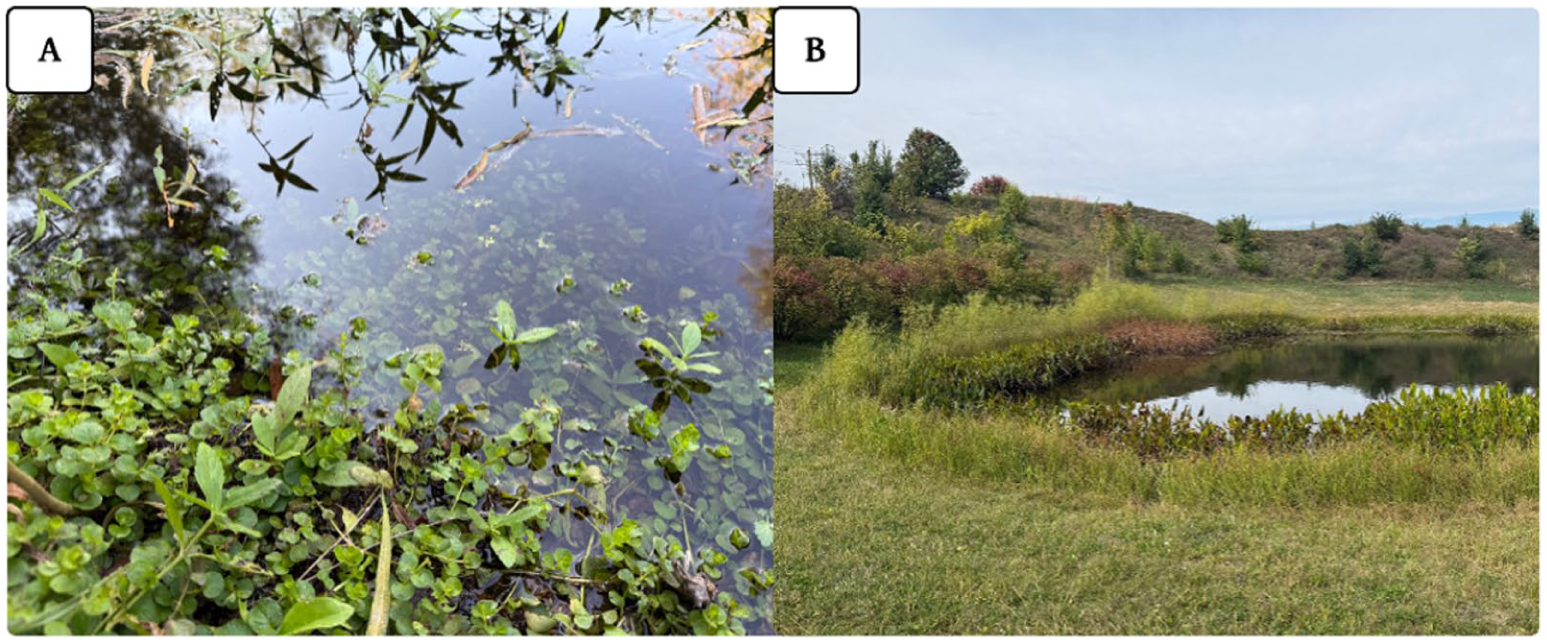
Photos depict shoreline macrophytes within a small stream and a pond ecosystem in (a) Northern Indiana and (b) Central Indiana. Both systems possess clear aquatic elements that align with our ecosystem selection protocol.
Small aquatic natural areas: Ponds, swamps, marshes, streams, and waterfalls
The following sections describe the importance of small aquatic natural area soundscapes for people and nature. Ponds, swamps, marshes, streams, and waterfalls exhibit a high level of ecological variation. This species, habitat, and ecosystem variation and diversity largely produce soundscape complexity, so each system must be treated with enough unique attention. Conversely, species (e.g. birds, mammals, amphibians, reptiles, fish, and to some extent, insects) capable of producing and relying on sound resources often behave similarly across these SANAs. Otherwise said, literature and personal observations from within one system may apply or somewhat accurately describe other, unstudied areas. Of course, liberally applying soundscape knowledge may also create larger inaccuracies if treated without sufficient system-specific attention. As this section progresses, recognize that many of the shared stories, cases, and assumptions apply to multiple SANAs.
Freshwater ponds, swamps, and marshes
Freshwater ponds, swamps (i.e. forested), and marshes (i.e. non-forested) play critical ecological and recreational roles (Song et al., 2024) across temperate landscapes. The natural soundscapes of swamps and marshes indicate an extremely high level of natural and communicative complexity. These aquatic ecosystems boast some of the highest species, habitat, and ecosystem diversity levels across this small aquatic natural area analysis. Despite offering a multiplicity of important functions and benefits pertaining to soundscapes, outdoor recreation and visitor-use is quickly increasing (Kesling, 2025b). Public land management agencies tasked with governing aquatic ecosystems, like the United States Fish and Wildlife Service, National Park Service, and the Forest Service, provide data supporting the increasing use of swamps and marshes (USFWS, 2024). Across the SANAs within these larger ponds capes, swamps and marshes, common recreational uses include non-motorized boating, motorized boating, shoreline hiking, angling, and wildlife viewing (e.g. likely to encounter avian species). Other less common activities occur; however, this suite comprises the most important uses. Like across other small aquatic natural areas, recophonic contributions induce some level of ecological uncertainty.
Seasonality plays a major role in the concern regarding natural soundscape changes across swamps and marshes. Spring and summer seasons draw recreational densities into SANAs, often in sums exceeding the system’s carrying capacity. When user numbers exceed carrying capacities, applied recreation ecologists assume degradation enters the system (Ajuhari et al., 2023; Long et al., 2022). Similarly, to recreational density upticks, many migratory fish and wildlife species begin to (re)obtain foraging, resting, and breeding grounds across open-waters, nearshore areas, and shorelines associated with swamps and marshes. Given that residential and migratory fish and wildlife rely on swamps and marshes, it is important to consider how to design both management and research objectives to best measure and monitor these sensitive ecosystems. Moreover, thousands of residential invertebrates and vertebrates, ranging from aquatic snails to the gregarious megafauna, traverse these ecosystems. These species are often more tolerant to recreational soundscape changes because of the adaptation dimension, which provides a slight buffering effect. This buffering effect manifests because of the chronic management of noisy soundscapes; however, it is lightly known.
Across the common recreational activities, motorized boat exploration of swamps (e.g. fishing, touring, air boat usage) and marshes (e.g. fishing, touring, air boat usage) seems to add the longest and loudest noises with the strength to negatively affect species. Some researchers have measured how motorized recreation affects the behavior of freshwater fish, which may temporarily occupy marshy or swampy habitats (McCloskey et al., 2020). In the presence of loud watercraft, thrashing while swimming, and consistent littoral area trampling, fish actively avoid important foraging and resting grounds. Limited information displays the exact activity’s decibel value range during these accounts, however, when jet skis and powerboats quickly accelerate, jumps from 95 to 115 dB are common (Ji et al., 2025; Valenzisi et al., 2024). Our observations across five small ponds in Central Michigan (i.e. Upper Midwestern US) displayed that consistent swimming in the morning hours drove Rock bass populations away from nearshore an invasive macrophyte community consisting of curly-leaf pondweed and Eurasian watermilfoil. During these observational windows, swimmers created an average noise output at or above 85 dB, and no other above or below water line activities were occurring. We did not test aquatic sound or movement changes. During observational windows when swimmers were quieter and producing less physical movement, smaller Rock bass populations returned to the invasive macrophyte communities. Our data is limited and observational, and while it expresses less empirical strength, other, longer-term data sets also note how acute noise events, stemming from activities like swimming, may result in changing freshwater fish-invasive macrophyte relationships. Furthermore, changing species relationships may facilitate the development of non-native, invasive, and problematic macrophyte communities because of fish avoidance (Thiemer et al., 2023). This avoidance behavior may result in unchecked macrophyte invasions across temperate SANAs. Much more research is needed to confirm these assumptions, however, we sound an alarm for additional noise-fish-invasive macrophyte research. Finally, pond and swamp and marsh resource managers facing ongoing large-scale biological invasions may want to consider whether soundscape disturbances play a role in ongoing and anticipated ecological community changes. The following information boxes should be used to assist with SANA management interventions and research investigations (Figure 2).
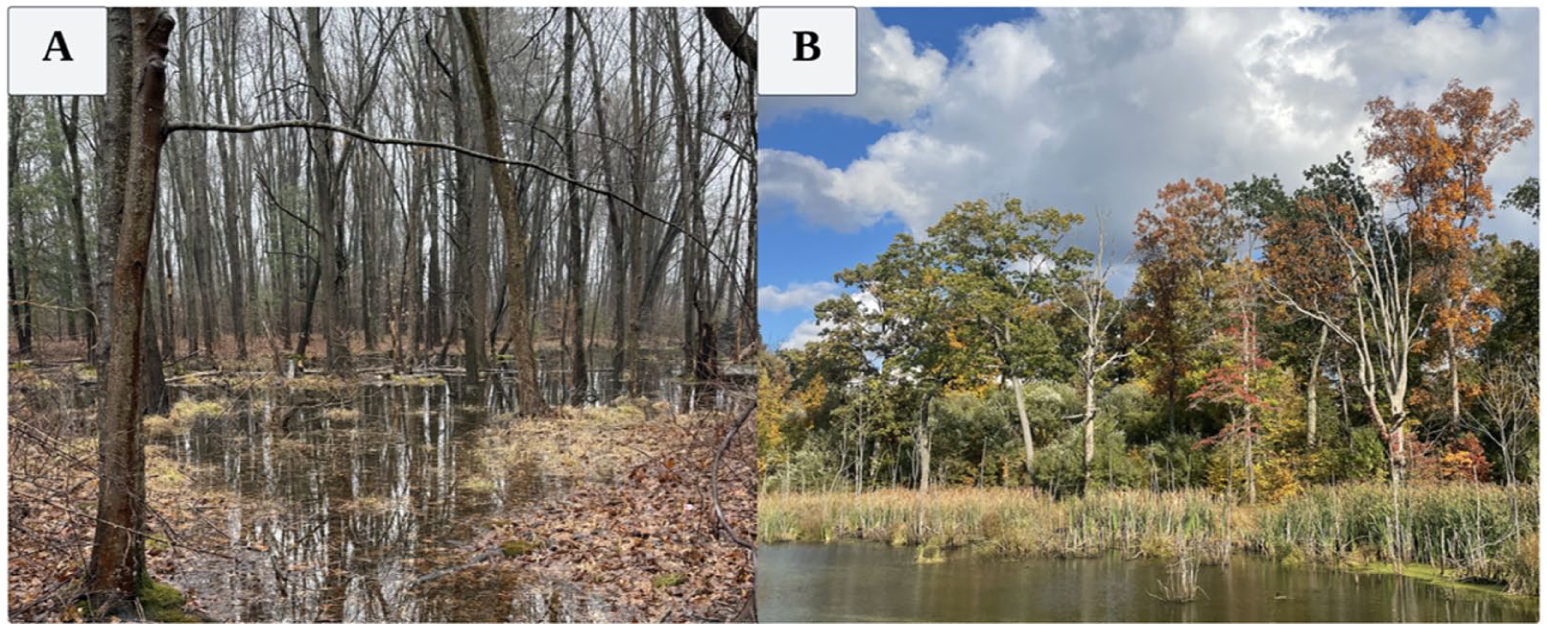
Images depict unique swamp and marsh ecosystems in (a) Central Massachusetts and (b) Northern Connecticut. Each system experiences different visitor-use patterns, although the Connecticut swamp offers multiple marsh-centric access trails.
Small aquatic natural area management ideas for ponds, swamps, and marshes
(A) Limiting or pausing motorized recreational activities during communicatively sensitive times for noise producing species, early in the morning, before evening; this strategy has been highly successful in protecting sensitive fish and wildlife populations across Northwestern United States SANAs
(B) Implementing quiet zones or areas where no human communication is permissible because of extreme sensitivity
(C) Increasing the distance between trails and open-water, nearshore, and shoreline systems during seasonally (i.e., spring and summer time) important times
Questions for researchers and managers
(A) How does the presence of natural sound change as different recreational groups enter ponds, swamps, and marshes? Do specific user groups create more intense or different noise pollutants?
(B) Does recreationally created noise induce insect, avian, mammalian, amphibian, or reptilian species differences via indirect effects? How might declining natural soundscape integrity affect species interactions?
(C) How might pond, swamp, or marsh visitors respond to signage, which is geared toward engaging sustainable behaviors that minimize ecological impacts?
Streams, sloughs, and riparian systems
Applied ecologists consistently express the importance of riparian zones for the conservation of biodiversity, retention of critical nutrients, modulation of stream temperature, and maintenance of resource pools vital for society (Acker et al., 2023). Riparian zones (i.e. transition from aquatic to terrestrial) sit along shorelines and extend into the uplands, and they temporarily flood during precipitation events and other water elevation periods (Figure 3). These ecosystems also harbor many species reliant on natural soundscapes for communication and survival (Quinn et al., 2022). However, riparian ecosystems receive very little scholarly attention outside of purely aquatic or terrestrial ecological disciplines (Herbert et al., 2010). Except for a handful of aged and spatially limited studies, recreational considerations are absent, leaving major knowledge gaps into how soundscape quality changes affect ecological health. Of the existing literature and through personal observations, the most common recreational uses within temperate riparian sites include hiking, wildlife viewing, wildflower picking, shoreline angling, rockhounding, and mushroom hunting. Each of these user groups contribute diverse recophonic elements to the natural soundscape.
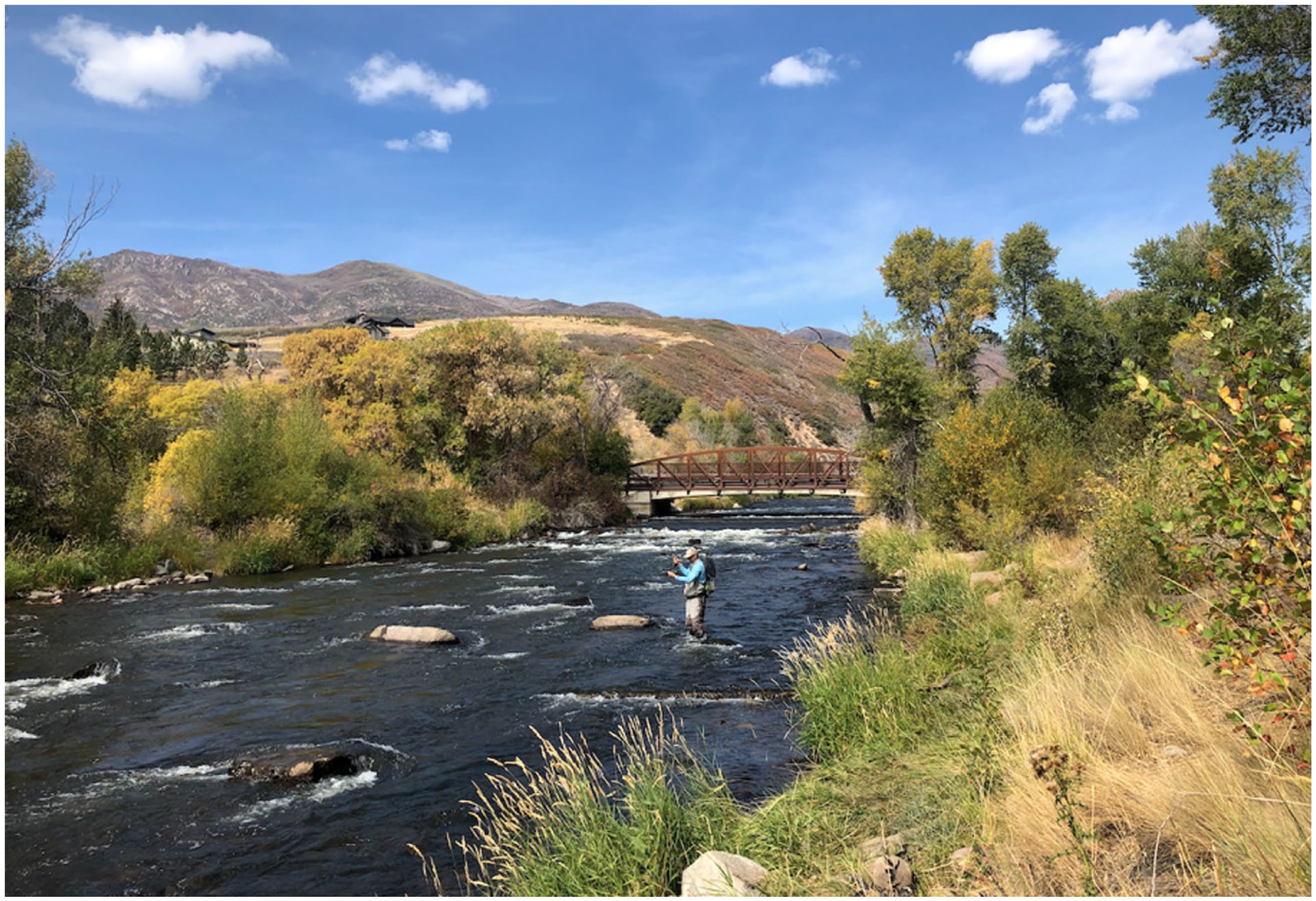
Image indicating a perennial stream and a clearly demarcated riparian ecosystem in Northern Utah. This system experiences different visitor-use patterns; however, multiple river and trail access trails guide people to this small aquatic natural area for activities like fly-fishing.
Temperate streams and sloughs comprise highly disturbed ecosystems because of the quantity of chemical pollution runoff and hydrological alterations. When combined with new disturbances like soundscape changes from increasing outdoor recreation and visitor-use, these sensitive ecosystems face negative change. Moreover, these SANAs hold some of the greatest recreational value, and angling, swimming, boating, hunting, hiking, and other activities often occur (Grzyb, 2024). Ecologically, many mammals, birds, amphibians, reptiles, birds, and invertebrates derive benefit from quiet and undisturbed streams and sloughs for feeding and breeding cycles. With the added novel threat of recreationally driven noise pollution, which spreads quickly and without many indicators, streams, and sloughs should be classified as highly sensitive at-risk environments. Whether above or below the water, stream and slough biota absorb the ambient sounds.
A multitude of sound-dependent species also use patches of stream (i.e. river tributaries) and slough (i.e. river and tributary back or side waters) habitat, and the declining health of these natural soundscapes affect ecological communities similarly to other discussed SANAs. Although markedly understudied compared to more recognized and monitored disturbances like early season drying up or biological invasions, soundscape alterations modulate certain functions throughout the stream depths and layers (Butler et al., 2021). The greatest modulatory effect includes the rearrangement of biodiversity and irregular movement (i.e. behavior) of species, which respond negatively to a large presence of unnatural sound. Moreover, researchers have measured how the propagation of underwater noise (e.g. stemming from motorized recreation and non-motorized paddling) affects fish, amphibian, and foraging bird behavior. Results clearly support the time-of-day concerns, which other studies also conclude. Furthermore, research found a heavier presence of recophonic inputs during the daytime, compared to nighttime (Zeller et al., 2024). It is important to recognize that time of day greatly matters for stream fish and wildlife management, and recreational stressors might increasingly induce irregular fish and amphibian behavior during certain times.
Small aquatic natural area management idea for streams, sloughs, and riparian areas
(A) Instituting soundscape-conscious zones, near small tributaries, in-stream islands, and areas with exceptionally high fish, wildlife, and plant diversity; these zones encourage visitors to engage in quieter or silent behaviors when boating, paddling, swimming, snorkeling, diving, or walking along the wettest shoreline areas
Questions for researchers and managers
(A) How does the presence of natural sound change as different recreational groups enter the bounds of a stream or slough? Do specific user groups create more intense or different noise pollutants?
(B) Does recreationally created noise induce insect, avian, mammalian, amphibian, or fish species differences via indirect effects? Stream and slough site comparisons are necessary to address this question.
(C) How might stream or slough visitors respond to signage, which is geared toward engaging sustainable behaviors that minimize ecological impacts?
Waterfalls
Applied ecologists, recreation specialists, and natural area managers currently lack a fundamental understanding of waterfall ecology and associated outdoor recreation impacts relating to soundscapes. One of the least comprehensively studied small aquatic natural areas (SANAs) includes waterfalls, or those former river environments with distinctive crests (i.e. water spilling zone) and plunge pools (i.e. basins of varied sizes). Like other SANAs, waterfalls boast unique soundscape elements, which are often drivers of human and non-human usage (Xu et al., 2023). Waterfall soundscapes greatly vary depending on the water spilling distance, hydrological flow, plunge pool substrate type, and overall geological intactness; however, these systems are notably louder than other aquatic features (Vogler et al., 2019). These diverse systems comprise some of the United States most sought after outdoor recreational resources (Mestanza-Ramón and Jiménez-Caballero, 2024). Waterfall dependent visitation often includes activities spanning water photography, rare plant searching, wildlife scanning, wading to cool off, shoreline hiking, and in some cases, ledge scaling, or the act of exploring waterfalls from immediate distances (Figure 4). Each of these recreational uses produce diverse sounds, capable of affecting the integrity of natural soundscapes, and affecting quality and intactness.
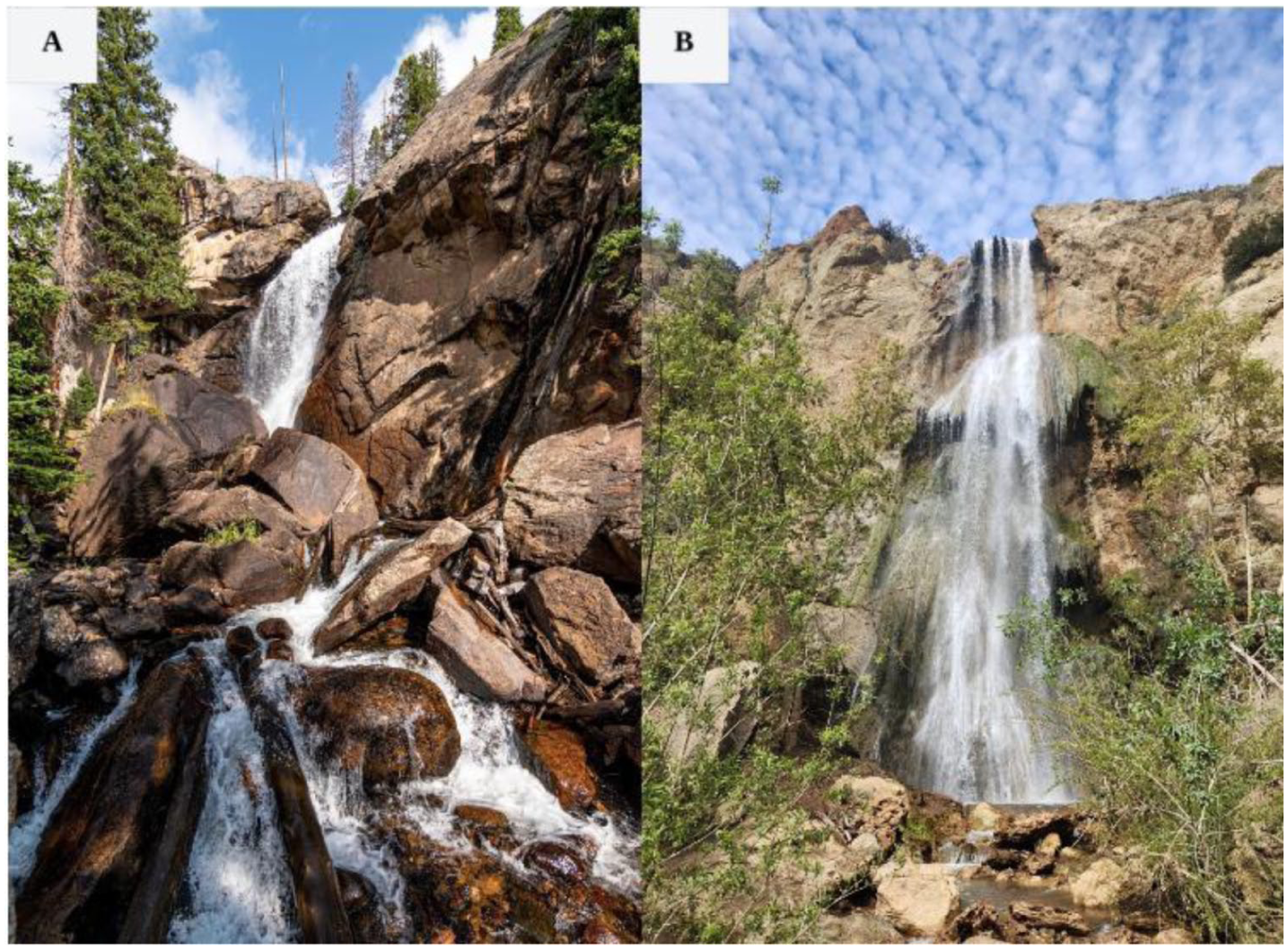
Images depict unique waterfall ecosystems in (a) Northern Central Colorado and (b) Western California. Each system experiences different visitor-use patterns, although the California falls offer trailside access.
Waterfalls are vital ecological resources for various flora and fauna species. The most noise-reliant waterfall faunal groups include insects, birds, and some mammals. Each of these groups heavily relies on internal and external sound resources. Many small aquatic insects use lithophytes (e.g. Evergreen violet in Silver Falls State Park, Western Oregon) that occupy moist and uneven geological surfaces. Ledge-scaling, plunge pool wading, and rare plant viewing comprise recreational uses that clutter natural sound cues which insects use to seek plants (Nor Akmar Abdul, 2021). Beyond insects, gregarious wildlife like mammals often use sound cues to engage in important behaviors relating to mating, feeding, and resting area selection. Recent observations from work in Utah’s Uinta-Wasatch-Cache National Forest show that moose, black bear, deer, and other mammals utilize plunge pools and riverine wetlands, presumably to escape increasing canyon temperatures (Kesling, 2025a). Moreover, these mammals heavily rely on falling water and prey-based noises (e.g. wounded animal drawing predators). Although unstudied, it seems important to test whether recreational noise prevents the movement of wildlife into important aquatic areas. Moreover, smaller falls tucked into Midwestern landscapes, like throughout the Cuyahoga Valley National Park (CVNP) in Ohio, receive extremely high visitation because of proximity to urban and suburban areas (Cuyahoga Valley National Park, 2025). For instance, CVNP received 2.9 million visitors in 2024, and many people commonly tour and recreate near waterfalls. One of the tiered falls, Brandywine Falls, drops nearly 65 feet, and opens into a large plunge pool. Visitors reach waterfall viewing areas by utilizing wooden-plank trail systems or social trails (i.e. unmarked and informally created pathways, which raise ecological concerns) through grasses, shrubbery, and muddy slopes. One of the largest recreational sound concerns relating to suburban and urban proximate waterfalls includes traveling human movement. Constant all-season visitation brings camera clicks, voices, speakers, and hiking sounds, each of which affect wildlife that require open-air and aquatic communication.
The United States’ waterfalls are unique recreational resources, and although they afford diverse and sublime outdoor recreational opportunities, they remain sensitive to growing ecological changes (e.g. soundscape quality changes, recreational overuse) resulting in possible biological invasions, limited hydrological connectivity, indirect thermal alterations, and fewer intact, high-quality crest, plunge, and plunge-bank habitats (O’Mara et al., 2025). Based on the limited evidence regarding waterfall ecosystems and recreational contributions to soundscape changes, it is difficult to make robust management and research recommendations. However, considering the following ideas may push the field in a productive direction and effect positive change for the conservation of natural waterfall soundscapes.
Small aquatic natural area management idea for waterfalls
(A) Reducing the distance between trails and plunge pools, which often harbor rare insects and migrating birds, and are gateways to waterfall bases, or those splashed surfaces hosting sensitive, threatened, and endangered plant communities; few parks and protected areas have implemented this strategy, however, small cases (e.g., Big Cottonwood Canyon waterfall conservation areas, Uinta-Wasatch-Cache National Forest in Northern Utah) display highly successful outcomes
Questions for researchers and managers
(A) How does the presence of natural sound change as different recreational groups enter the bounds of a waterfall? Do specific user groups create more intense or different noise pollutants?
(B) Does recreationally created noise induce insect, avian, mammalian, amphibian, or reptilian species differences via indirect effects? Waterfall site comparisons are necessary to address this question.
(C) How might waterfall visitors respond to signage, which is geared toward engaging sustainable behaviors that minimize ecological impacts?
Management strategies and worthy research directions
A suite of worthwhile management strategies and research directions arose from the analysis of various natural soundscapes associated with small aquatic natural areas (SANAs). The following ideas provide general directions for consideration across each of the discussed systems in this work.
(A) Producing an auditory and visual map of soundscapes, like landscape ecologists do with spatial data sets to cover an endangered species’ movement or habitat range will propound the discipline.
(B) Understanding the sources and durations of sound disturbances within a focal environment is the logical first step while collecting long-term data marks the next. View the preliminary natural soundscape assessment (PNAS) tool below.
(C) Identifying whether certain sounds acutely or chronically occur. Disturbance classification helps when allocating funding to both applied research investigations and management strategy synthesis.
(D) Contracting more small aquatic natural area managers and conservation researchers to develop species-specific investigations that inform best-practice techniques
(E) Implementing quiet zones across portions of the small aquatic natural areas during certain times of day, seasons, or breeding cycles.
(F) Encouraging sustainable recreation behavior by explaining the importance of individual and group level behaviors. For instance, using signage and other materials help people understand why correcting unsustainable (e.g. playing loud music from speakers while recreating) behaviors induces unwanted ecological changes and can reduce the overall quality of natural soundscapes.
Another general management and research consideration includes undertaking a preliminary natural soundscape assessment (PNSA). This assessment takes a soundscape’s initial pulse, and it greatly informs the management or research team by offering cues into the larger recreational and ecological picture associated with unique small aquatic natural areas (Chen et al., 2024). Oftentimes, the assessment collates the interacting biophonic, geophonic, anthrophonic, and recophonic elements. Selecting the optimal sampling location varies by project and aim, but consciously targeting an area within the heart of an outdoor recreation system creates a more representative scene (Berberi et al., 2024). Although unnecessary during a first or second use of this more rapidly geared tool, the assessor may map out the soundscape elements and identify spatial and temporal relationships. Other scholars have extensively mapped soundscapes to create important reference data, although in the absence of outdoor recreation system influences (Arzberger et al., 2025). The cues are understandably limited given that rapid assessments only capture short-term recreational and ecological dynamics. However, larger, and longer focal site coverage fills the gaps.
We undertake PNSAs when approaching new freshwater field sites because they unfailingly help me by identifying the suite of natural and unnatural sounds facing natural areas. Before allocating resources to management or research endeavors, I recommend conducting multiple PNSAs across the focal sites. Below is an example of a PNSA that one of the authors completed at Olney Pond within the Lincoln Woods State Park in Northeastern Rhode Island.
Preliminary natural soundscape assessment (PNSA) at Olney pond
Small aquatic natural area includes a riparian shoreline looking into a small (i.e., 4 acres) open water lake ecosystem. Biophonic elements include amphibian vocalizations within an ephemeral pond, forest interior songbird chirping, interacting with waterfowl at the opposing end of the site, far from recreationists, and deer trekking across a rapidly flowing stream. Geophonic elements include water dripping from conifer needles and deciduous leaves, wind moving through herbaceous vegetation, flowing streams, and the occasional ripple forming across the nearshore of the lake. Anthrophonic elements include overhead aircraft noise, nearby roadway traffic, and distanced construction sounds. Recophonic elements include visitors hiking, laughing while angling, shuffling across rocky terrain, and swimming, kayaking within the lake cove. Jet ski noises propagate across the lake from outside the focal site.
Overall PNSA results
On a warm, sunny, and dry afternoon in late April, this SANA experiences a minimum of three recreationally driven important noises: boating, swimming, and hiking. Each of these noises contribute to the natural soundscape and should be measured during peak (e.g., 1–2 hours after 17:00 and on the weekends) and (non)peak (e.g., between 13:00 and 16:00 during weekdays) times to characterize an accurate understanding of potential negative resource changes. Initial observations support the notion that sensitive native waterfowl communities actively avoided noisy areas although settling into quieter habitats across the lake. Motorized recreation seems to reduce the quality and intactness of the natural soundscape given the chronic auditory intrusions
Concluding thoughts
Noise pollution is not a novel disturbance for small aquatic natural area (SANA) managers to broadly consider, but researchers are actively exploring the short and long-term implications of recophony. Recreational noise has the strength to negatively affect some species, habitat, and small ecosystem processes through direct effects (e.g. broken or severed communication channels), and in some cases, larger ecosystems through the accumulation of indirect changes (e.g. plant community composition changes because of fish and wildlife feeding changes). The direct changes are much easier to detect, and therefore, receive much more scholarly and management-level attention. However, we argue that the indirect effects may pose much more detrimental long-term impacts. Moreover, remembering that small aquatic ecosystems and natural area soundscapes ecologically vary, making inventorying, monitoring, and researching challenging is of critical importance (Nimma et al., 2025). Future researchers must treat these sites with enough unique attention and resist the urge to universally apply assumptions. Holistic thinking is also necessary because of the role cumulative effects or compounded disturbances play in changing ecological communities. Recreational noise does not operate alone, meaning that when combined with anthrophonic disturbances, these contributions can alter the quality and intactness of natural soundscapes.
It is also crucial to drive new and unheard perspectives regarding soundscapes and outdoor recreation system dynamics. Scholars and natural area managers must work with outdoor recreationists and visitors to understand how changing soundscapes may impact their overall connection to aquatic ecosystems (Perry et al., 2020). Uncovering these social perspectives will only enhance the way decision-makers incorporate knowledge into long-term objective planning (Ferguson et al., 2022). This perspective shows that as more people use SANAs to satisfy recreational interests, the overall natural soundscape will become less ecologically diverse. However, visitors require natural spaces to maintain and increase both physical and emotional well-being, and therefore, we do not promote the exclusion or removal of people. This topic requires meaningful reflection, and the SANA management strategies should place behavior change at the center of the system.
Finally, we cannot stress enough the criticality of generating new data relating to both ecological and recreational dynamics relating to natural soundscape changes. The general lack of scholarly and applied attention brought this work to life, and we sought to manufacture additional research pathways. Outstanding ecological questions remain, and they include the need for more quantitative-heavy research (Monz et al., 2013). Some notable paths include the scrutiny of how specific outdoor recreational activities affect unique aquatic ecosystem components like fish and wildlife behavior and concomitant plant community changes. Others may involve how physical sound changes per activity and small aquatic natural area or whether activity-induced movement distorts some of the observed changes. On the social side, scholars and managers must consider how increasingly noisy soundscapes affect the overall visitor-use experience and recreational resource integrity. Recreational activities may not negatively influence natural soundscapes, and in some cases, other visitors may enjoy the recophonic contributions because of greater connection to people. As with any environmental conservation field, we must avoid problematizing parks and protected areas until cataloging and detecting some level of ecological impact while also grasping the outdoor recreation community’s overall perception of the issue. However, uncovering which visitors and activities generally induce more ecologically and recreationally negative change-inducing effects (Kantor et al., 2025) is an imperative.
Footnotes
Acknowledgements
A special thank you is extended to Joshua’s former environmental writing professor at Oregon State University, Dr. Tim Jensen. Through a formative conversation about the conservation of natural soundscapes across Western Oregon, Dr. Jensen instilled the importance of interrogating the role of auditory elements in ecosystems. We are also incredibly grateful to Yale University alumni, Steven Ring and Aidan Lyde, for their photographic contributions.

Ethical considerations
No sensitive human or non-human subjects were used in the completion of this manuscript.
Funding
The authors received no financial support for the research, authorship, and/or publication of this article.
Declaration of conflicting interests
The authors declared no potential conflicts of interest with respect to the research, authorship, and/or publication of this article.
Data availability statement
All data used in this manuscript is publicly and widely accessible