



Abstract
In this article, I examine how contemporary artists are responding to the unprecedented surge of anthropogenic mineral diversity and the rapid accumulation of technofossils by envisioning their potential future manifestations. These artworks move beyond the prevailing nostalgic and apocalyptic narratives by fostering a sense of concern and curiosity about the future interplay of biological, geological and technological compounds and their coevolutionary dynamics. Firstly, I analyse the works by Agnieszka Kurant and Sylvia Noronha, which challenge the conventional, ahistorical notions that often guide ex-situ mineralogy and the narratives presented in geology galleries. These traditional approaches typically emphasise chemical composition and crystal structure, neglecting crucial environmental and evolutionary contexts. I then turn to the art projects by Anika Schwarzlose and Brian McKenna, which speculate on the formation of novel minerals and the radical transformative material dynamics of mining technofossils in situ, both on the earth’s surface and in subsurface environments. I conclude by proposing that art acts as a catalyst for bridging the traditional divides between nature and culture and between biology and mineralogy. By doing so, art invites scholars, museum curators and the public to engage critically with newly emerging material dynamics. Through imaginative exploration, art creates a space to pose open-ended questions and develop new narratives that help us notice, name and responsibly connect with the material realities of the Anthropocene epoch.
Introduction
The dynamic multispecies environments of the Anthropocene are characterised not only by death and extinction but also by ‘emergent and unexpected constellations of life, nonlife and afterlife’, as Baubandt (2017: 137) has noted. An unprecedented increase in mineral diversity is significantly contributing to these new landscapes and, as Hazen (2014) explains, is caused by ‘widely accelerated feedbacks between life and rocks, with a special emphasis on a single organism: Homo sapiens’. These interactions also propel technological advancements and foster the proliferation and global dissemination of diverse artefacts. We are consequently witnessing the emergence and concentration of materials that were previously rare or entirely alien to natural ecosystems. To encapsulate this phenomenon, Zalasiewicz et al. (2014c: 34) coined the term ‘technostratigraphy’, which denotes ‘the geologically accelerated evolution and diversification of technofossils – the preservable material remains of the technosphere’. These profound material transformations and dynamics, which require us to ‘relearn multiple forms of curiosity’ (Tsing et al., 2017: 11), underpin ongoing conceptual debates among mineralogists concerning the criteria and the methods used to distinguish and characterise mineral species (Cleland et al., 2021; Heaney, 2017).
A focus on chemical composition and the crystal structure alone ‘without regard to its environment of formation’ (Cleland et al., 2021: 2) informed traditional ways of defining minerals. In this context, a mineral is a ‘naturally occurring solid that has been formed by geological processes either on Earth or in extraterrestrial bodies’ (Nickel and Grice, 1998: 913); hence, the International Mineralogical Association’s 1998 statement maintains that compounds produced by human activity are typically not classified as minerals. However, there are instances where human involvement in substance formation is less straightforward, blurring the distinction between what qualifies as a mineral and what does not (Hazen et al., 2017: 596). Therefore, the ongoing proliferation of novel compounds can no longer be ignored, and more inclusive definitions and conceptualisations are called for. In their paper ‘On the mineralogy of the “Anthropocene Epoch”’, Hazen et al. (2017) catalogue 208 mineral compounds that are directly or indirectly anthropogenic and approved by the International Mineralogical Association. However, a recent ‘more inclusive survey of the paragenetic modes of all minerals points to more than 600 mineral species that may form as byproducts of human industry, though most of those phases occur by natural processes, as well’ (Hazen and Morrison, 2022: 60). Hence, the rapid dynamics of the biosphere, geosphere and techno-sphere must be considered together as contributors to the emergence of Anthropocenic geodiversity.
In both general audiences and scholarly circles within the environmental humanities, the recent surge in mineral diversity has received far less nuanced attention than the decline in biological diversity. Aside from omnipresent alarmist and apocalyptic rhetoric concerning undesirable novel materials that jeopardise life (Dibley, 2018; Gille and Lepawsky, 2021; Paranada and Tothill, 2023; Rosol and Rispoli, 2022), inquiries into novel mineral compounds and their unique ways of emerging within the environment require the cultivation of the ‘arts of noticing’ (Tsing, 2015). Nonetheless, recent research on Anthropocenic materialities builds upon a longstanding tradition within the humanities and arts of conceptualising natural environments beyond biotic communities, an area which has experienced significant revitalisation through the contemporary geologic turn in cultural awareness. Ellsworth and Kruse (2012: 6), in their edited collection Making the Geologic Now: Responses to Material Conditions of Contemporary Life, observed that ‘there is an increasingly widespread turn towards the geologic as a source of explanation, motivation, and inspiration for cultural and aesthetic responses to conditions of the present moment’. This significant return of the geologic is marked by a wide range of interests (Whitington and Oguz, 2023), including mineral resource extraction (Arboleda, 2020; Bardi, 2014; Johnson, 2019), extractive colonialism (Yusoff, 2018, 2024), soils (Puig de la Bellacasa, 2019; Toland, 2023; Toland et al., 2018), anthropogenic climate change (Carey, 2007; Hemkendreis and Jürgens, 2024; Schmidt, 2021) and material foundations and environmental impact of digital and media technologies (Angus, 2024; Parikka, 2025).
Artists are now rediscovering minerals, mineraloids, (techno)fossils, geosites and geomorphosites, seeking to understand better this unprecedented ‘explosive expansion of species’ (Heaney, 2017: 926). They are considering minerals in light of the complex relations that actively shape geological diversity, which Stanley (2002: 1) has defined as ‘the link between people, landscapes, and their culture through the interaction of biodiversity, soils, minerals, rocks, fossils, active processes, and the built environment’. Art is creatively embracing the present challenging moment, recognising the necessity to depart from abstract and isolating terms traditionally used to classify minerals in modern science. 1 Instead, it is following those mineralogists who are exploring ‘a newly emerging “evolutionary system of mineralogy” which attempts to categorise minerals according to their historical contexts and consequent idiosyncratic combinations of attributes’ (Cleland et al., 2021: 2). Hence, with rapidly developing technologies becoming a geological phenomenon, the concept of geological diversity must also expand to accommodate various novel processes in which ‘minerals (considered sensu lato, including organogenic materials such as paper and textiles) and rocks, both natural and artificial, are combined in diversity patterns to produce the diverse and changing range of technofossils’ (Zalasiewicz et al., 2014c: 37).
In this paper, I aim to demonstrate how selected artworks that embrace anthropogenic mineral diversity and speculate on its future manifestations contribute to a better understanding of the ontological, ethical and political challenges posed by the Anthropocene. Being ‘ontologically inventive and sensible’ (Haraway, 2016: 98), these artworks manifest ‘a willingness to explore’ (Tsing, 2021) the unexpected, unpredictable, unsettling but also marvellous interspecies dynamics of this emerging materiality. As material curiosities themselves, these artworks stand as peculiar objects of contemporary naturecultures, reminiscent of predecessors showcased in Baroque cabinets of curiosities and surrealist collections (Robin, 2020; Wilson, 2023). Yet, they also challenge the public to grapple with ‘the inevitability and the creative potential of loss and change’ (DeSilvey and Harrison, 2020: 5) through an orientation towards the future free from nostalgic overtones. They embody a speculative mode of inquiry that ‘explores the open-endedness of change’ (Clark et al., 2018: 279) and encourages evolutionary thinking beyond human experience, imagining–as present–multiple futures that cannot be verified using scientific methods. Like Haraway’s (2016: 136) speculative fabulations, embodying a distinct ‘mode of attention’ and storytelling, they draw from both science fictions and science facts, adeptly embracing ‘wild facts’. And yet, with their ‘attempts to say that which resists being said’ (Hartman, 2008: 12) and by pointing to unexpected more-than-human agencies, the art projects work as critical fabulations, which, according to Saidiya Hartman, are both methodological and political tools capable of alternative knowledge-production and ethical attitudes, challenging the dominant power structures.
This article is divided into two main sections. In the first, I explore artworks by Agnieszka Kurant and Sylvia Noronha which simulate future mineral compounds capable of challenging conventional concepts in mineralogy and disrupting the traditional narratives guiding the ex-situ geological collections of natural history museums and other institutions. These artworks illuminate a relational and evolutionary approach to mineral diversity, prioritising the environmental context of mineralogical research. From this perspective, the changing geosphere is always considered together with the dynamic biosphere and technosphere. In the second section, I examine artworks by Anika Schwarzlose and Brian McKenna that take viewers to mining sites as prolific locations of emerging geodiversity and in situ geoheritage. These artworks speculatively uncover the concurrent formation of anthropogenic mineral species and the radical material transformations intrinsic to mining technofossils. A creative approach to trajectories unfolding on the earth’s surface and in the depths of subsurface environments encourages care (Baan Hofman, 2023) and curiosity through attentiveness to the agency (Barad, 2007) and vibrancy of mineral matter (Bennett, 2010).
Integrating Anthropocene minerals, mineraloids and technofossils into the narratives of natural history museums and other geological collections is a political project and demands fresh conceptual frameworks and practical solutions. As material expressions of storytelling and knowledge production (McNiff, 2013), the analysed artworks inspire and facilitate alternative forms of experiencing, conceptualising and responding to the burgeoning mineral diversity in and of the Anthropocene era. This article concludes by considering the transformative potential of art, encouraging innovative curatorial methodologies and strategies within mineralogical galleries. For those knowledge-producing institutions that have thus far resisted or overlooked the inclusion of anthropogenic minerals and technofossils (Van Geert, 2019), art emerges as a potential guiding force in cultivating response-ability (Haraway, 2013) and, hence, a catalyst in bridging the traditional divides between nature and culture, as well as between biology and mineralogy – conceptual shifts necessary to know, name and connect with material realities in the Anthropocene epoch.
Art objects-cum-future rocks and technofossils
Art galleries and museums – sometimes made almost entirely of rocks – effectively convey that art has always been closely associated with lithic materials. This connection is evident in various forms such as petroglyphs, stone sculptures, land art and cave paintings, all utilising a wide range of mineral pigments (Boivin and Owic, 2013). This indicates that in the West, for centuries, the geologic has served mainly as mere matter widely used as a medium for artistic expression or as a topic of visual representations capable of evoking feelings of exaltation and the sublime (Heringman, 2011). Only in recent years have minerals and rocks themselves finally become matters of artistic environmental concern and attention, especially in the context of the Anthropocene. Artists’ focus has shifted towards transformative geologic processes and mineral compounds in the form of rocks, stones and (techno)fossils, which often become artworks in their own right. With their unique response to the planetary entanglements of the geosphere, biosphere and technosphere, the art practices I will analyse below allow viewers to imagine and, to some degree, sensually experience the emerging anthropogenic and anthropogenically mediated mineral future.
Geoscientist Heaney (2017: 925) was apparently inspired by Zalasiewicz’s (2009) book The Earth After Us. What Legacy Will Humans Leave in the Rocks? when he suggested that ‘the question of what we might find were we to (re)visit the Earth millions of years hence has advanced from science fiction to serious geoscience, and the apprehension in our expectation is embodied by the concept of the Anthropocene’. Contributing to this discussion, Agnieszka Kurant, a Polish artist based in New York City, and Silvia Noronha, a Brazilian artist based in Berlin, offer their own answers in the form of creative practices that yield plausible future rocks and technofossils. By speculating about future material transformations as effects of the coevolutionary dynamics of bio-, geo- and technospheres, their artworks catalyse ‘new embodied ways of knowing’ (Rosner, 2018: 17) the mineral diversity of the Anthropocene. Conveying a message of ontological interconnectedness and relationality in a more-than-human world, they reveal what Bennett (2010: 122) calls ‘a wider distribution of agency’. Thus, they underscore the importance of exercising caution when asserting solely human agency over mineral materials. Therefore, respecting interspecies dependencies and keeping ‘the edges open and greedy for surprising new and old connections’ (Haraway, 2015: 160) is an ethical condition that should underly any political action humans take in these turbulent times of environmental crisis. Viewers of these artworks are presented with opportunities to speculate on ways to bridge the human/nonhuman, biotic/abiotic and nature/culture divides, sensitising them to the complexities of ongoing planetary geological forces and flows surpassing the spatial and temporal confines of human existence and even life itself.
Kurant, operating in the imaginary realm of possible future impactful events, both anthropogenic and contingent, created bio-techno-mineral compounds by meticulously selecting her materials from contemporary biological laboratories, electronic waste dumps and the post-industrial environment of automobile production. The focus of Noronha’s explorations was elsewhere, in the vast chaotic impact zone of a current anthropogenic natural disaster. Her art objects were created from material samples taken from a post-catastrophic environment and subsequently subjected to laboratory-simulated sedimentary dynamics and metamorphic processes similar to those naturally induced by volcanic eruptions. In the context of Kurant’s Still Life, the anthropogenic catastrophe is anticipated, whereas, for Noronha’s The Future of Stones, it has already happened. However, both artists’ strategies are linked with contingencies and intentional acts of making and ‘letting become’. And yet, these artworks refuse to ‘fill in the gaps and provide closure’ (Hartman, 2008: 12) but rather open up material possibilities to the viewers’ imagination as well as curiosity, which, for Tsing (2015: 2) is ‘the first requirement of collaborative survival in precarious times’ (Figure 1).
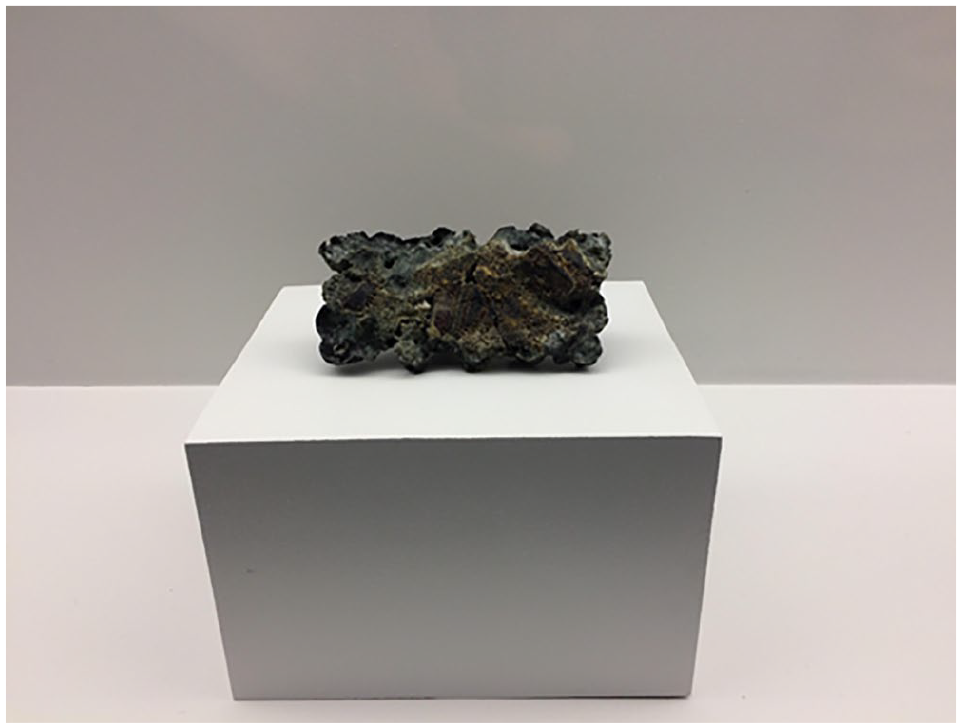
Agnieszka Kurant, Still Life, 2014. Courtesy of Marian Goodman Gallery, New York/Paris/Los Angeles.
The composition of Kurant’s synthetic rock, Still Life, has been carefully designed to suggest anthropogenic environments as their origin, yet doomed to turbulent events anticipated in the future. The work comprises synthetic DNA, xeno nucleic acid, plastic-metabolising bacteria, fossilised viruses and minerals commonly found in the hardware of computers and smartphones, such as coltan, cassiterite, gold and tungsten. While this bio-techno-mineral compound clearly embodies the material landscape of the Anthropocene, its connection to a distinct historical genre of still life is more than subtly suggested by its title. In many ways, her work draws from traditional Dutch still-life paintings, which, as noted by Bryson (1990: 109), often displayed either direct human mastery of nature or, at the very least, human labour exerted over nature: ‘the feeling is evident that not much is owed to nature’. Likewise, Kurant’s Still Life presents a meticulously selected post-natural composition that mirrors contemporary human material practices, albeit through the lens of a future perspective. Unlike a conventional still life, her art object is not a visual representation of any post-natural status quo but an actual presentation of a plausible future materiality. It is the result of high-tech material speculation produced in collaboration with geologist Heather Watson in her laboratory at the Rensselaer Polytechnic Institute, where strong gravitational forces, pressure and high temperatures were generated and applied to organic and non-organic materials to simulate a sequence of events, such as the impacts of meteors and nuclear bomb explosions.
While nuclear blasts are regarded as the most precise indicators of the Anthropocene epoch due to the resulting fallout, which is readily identifiable in the chemostratigraphic record (Zalasiewicz et al., 2015), the impacts of meteors throughout Earth’s history are viewed as natural catalysers in the coevolution of minerals and life. This combination of anthropogenic and non-anthropogenic factors invoked by Kurant alludes to the most recent unfolding of the co-evolution of life and minerals, inscribing human agency into the more-than-human deep-time context of planetary or even cosmic evolutionary dynamics. Being a part of these complex processes, however, humans have emerged as ‘the immersed subject of trans-corporality’, which, as Alaimo (2016: 158) claims, ‘recon with the Anthropocene as an intermingling of biological, chemical, and climatic processes, which are certainly neither simply “natural” nor managed by human intention’. This suggests that while humans should indeed be able to respond with care to the devastation they have caused, the widespread fantasy of the exclusive agency of humans – a notion often associated with the Anthropocene – frequently leads to the reinstatement of old hierarchies. This problematic mindset fuels nostalgic beliefs, as highlighted by Malm (2020: 167), who contends that ‘any call for a more environmentally beneficial practice by necessity puts humans front and centre’. However, the real challenge, recognised by both Alaimo and Kurant, lies not merely in changing the world but in transforming the semiotic and material practices through which the world continues to evolve into one with a future that is not necessarily human-centred.
In her other artwork, Post-Fordite, Kurant explicitly points to fossilisation as a time-marking process in response to what Yusoff (2013: 782) describes as a need to turn to fossils ‘to critically enquire after our own temporal moment in the strata’. Our present temporal position within planetary environments is characterised by unparallelled material dynamics. As Zalasiewicz et al. (2014c: 38) suggest, the ‘current evolution of the technosphere, of which the technofossils are the preserved remnant, is hence now orders of magnitude faster than biological evolution’. Kurant, curious about the results of these speedy processes, jumps forward in time and presents viewers with a future technofossil-bearing rock-cum-artwork entitled Post-Fordite. While it embodies speculation about the future lithosphere, this manufactured rock intriguingly incorporates an already existing technofossil colloquially referred to as ‘fordite’, ‘Detroit agate’ or ‘Motor City agate’ (Hsu and Lucas, 2016) (Figure 2).
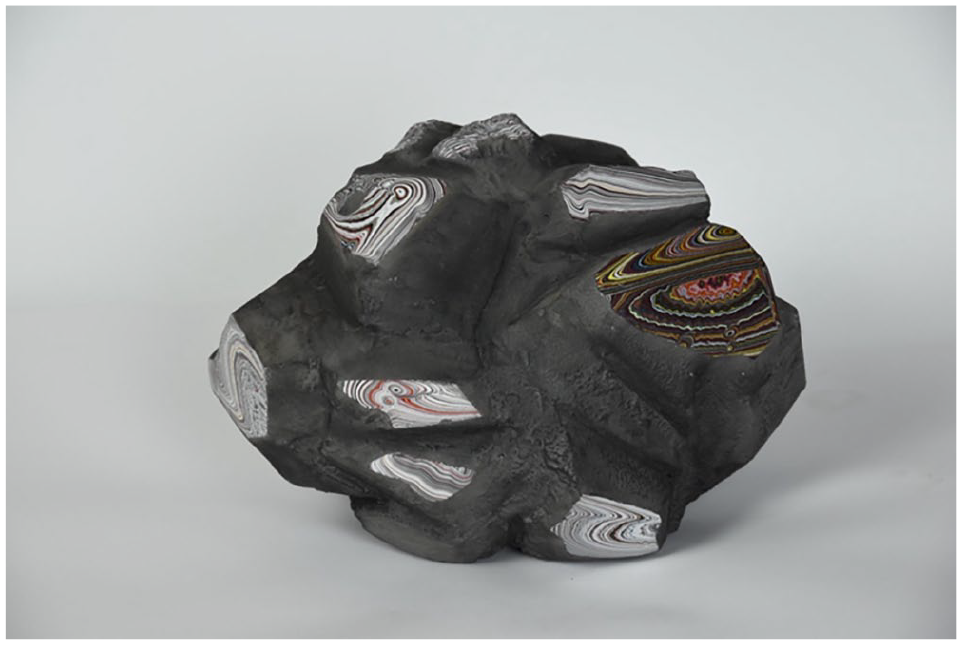
Agnieszka Kurant, Post-Fordite, 2020. Courtesy of Marian Goodman Gallery, New York/Paris/Los Angeles.
Fordite was first collected in the 1940s in old auto factories in Detroit and was only recently discovered by gemologists and jewellers. The most attractive material of this kind comes from the 1960s and 1970s, as it has the brightest and boldest colours, reflecting the fashion in car paint during that period. It emerged initially from layers of over-sprayed car paint accumulated in paint bays. The over-sprayed paint was repeatedly baked, which hardened the material and resulted in a rock-like appearance. This painting technique for car parts has long since ceased, rendering fordite a marker of a specific technological history of Michigan’s industrial environment and a brief period in the material history of the planet. However, fordite is also a reminder that the current prolific stage of mineral evolution might be ‘short-lived, unlike the case with natural minerals. . . Many man-made minerals will become extinct (i.e. cease to form), either because they come to be obsolete for humans or, ultimately, with the extinction of humans’ (Zalasiewicz et al., 2014a: 112).
Kurant’s Post-Fordite, envisioned as a hypothesised sedimentary rock of the future containing actual anthropomineral inclusions, indicates a deep-time perspective where anthropogenic materials in the form of Anthropocene fossils are projected to re-emerge in the future, much like the 550-million-year-old trilobite fossils found in limestone shale. Just as trilobite fossils function as heuristic tools for envisioning a pre-human world, technofossils, conceptualised by Dibley (2018), act as heuristics for imagining a post-human world. In this way, technofossils redirect our inquisitive attention towards realms beyond the human presence, contemplating a species that might have gone extinct or evolved into a new entity. This perspective illuminates the intricate interplay of planetary transspecies relations that unfold within the vast temporal context of deep time. In this context, Kurant’s work invites attentive caution and future-oriented discernment when confronted with the current abundance or excess of anthropogenic materials and techno-fossils. Her artwork points to the aesthetic beauty of the new material emerging on the ruins of outdated technologies. This loss becomes a productive change contributing to mineral diversity in the Anthropocene and beyond.
Highlighting technologies that are not merely outdated but inherently disastrous, Silvia Noronha’s series, The Future of Stones, is speculative and futuristic for reasons other than those already mentioned. The artist focuses on the Mariana Dam disaster, which occurred in November 2015 in Bento Rodrigues and was declared an environmental crime in Brazil. It generated numerous high-impact geo-bio-transformations witnessed by Noronha and articulated through her artworks, which serve as futuristic abiotic specimens conveying the story of the tailings slurry. The latter, including heavy metals such as arsenic, lead and mercury, travelled 879 km from Bento Rodrigues to the Atlantic Ocean. The wave that arrived on the coast in 2 weeks caused unprecedented contamination and destruction along the river, delta and Atlantic Ocean beaches. An immense biological disaster followed: As the large-scale flow of viscous material moved along at high speed after the dam collapse, it scraped up large-scale trees, animals, septic tanks, pigsties and drains. It swept away towns and villages. It swept away old gold mines and pans that used mercury. The gates of hydroelectric plants were opened completely to allow the wave of material to pass. (Robson, 2017: 16)
Waste deposition along the Rio Doce River has affected the lives of 1.4 million people, who are still awaiting ecosystem remediation. Noronha herself sampled heavily contaminated mud from four locations around Mariana and then, in collaboration with laboratories at the Technische Universitat in Berlin, subjugated them to simulated processes, which usually lead to volcanic and sedimentary rocks forming. This allowed her to speculate on the future geological landscapes left by the broken dam’s rupture and demonstrate to viewers the future accumulative effect of the ‘wave of mud [which] became an amalgam of contested meanings and materials, appearing as something both separate from and invasive of the river and its delta’ (Creado et al., 2018: 37). However, her work does not explicitly focus on the current toxicity of industrial waste as part of contemporary anthropogenic materiality. Instead, it shows how an event of such magnitude and complexity will not be materially forgotten as it becomes embedded in geological strata through anticipated transformational processes. The Future of Stones encourages a response-able reworking of the trauma inflicted by multi-scalar processes and the materials comprising these stone-art objects, offering a valuable perspective from a considerable temporal distance in the future. Through this engagement, viewers may confront these events anew with attentive curiosity and compassion, ultimately fostering a process of gradual healing of the otherwise debilitating trauma they represent. And yet, this work reflects on a much broader and much-needed project of searching for possibilities for ‘building the future in the ruins of the present’ (Pohl, 2021: 198). Nevertheless, the Mariana Dam disaster, like all current disasters, will not fade into obscurity; instead, it will become embedded in future rocks, profoundly impacting the mineral diversity of the region.
The form and mode of display of the artworks as isolated rocks and fossils, in the cases of both Kurant and Noronha, allude to the ex-situ geoheritage exhibited in the geology galleries of various institutions, including natural history museums, being ‘one of the prime vehicles, as they have been for several hundred years, for promoting cultural geoheritage to the public’ (Hose, 2016: 136). These art projects, however, indicate a need for historical and environmental perspectives in the mineralogy of the Anthropocene and beyond. As a materially speculated ‘unruly heritage of the Anthropocene’ (Pétursdóttir, 2020: 94), they call not only for a broad rethinking of the separation of biological and mineral species that is most commonly encountered in traditional displays in natural history museums, but also for the dissolution of the boundaries between ‘natural’ and ‘cultural’ heritage (Harrison, 2015). These enduring separations and the lack of historical perspective have been consistently implemented in displays in mineral collections and backed by Western natural philosophy and other persistent anthropocentric and biocentric cultural narratives. The latter is, however, finally being challenged with the support of contemporary scientific research in the geosciences, life sciences and environmental humanities.
Incorporating Anthropocene minerals, mineraloids and technofossils into the narratives of natural history museums and other geological collections requires interconnecting the diversification of mineral species with the evolution of biological species and the technosphere. This linkage is provided by the theory of mineral evolution, first introduced in 2008 by a group of earth scientists led by Hazen et al. (2008), who recognised Anthropocene mineralogy as part of the deep history of exchanges between minerals and life. Unlike more traditional approaches that favour solid-state chemistry and physics, this theory focuses on changes in mineral diversity resulting from a range of physical, chemical and biological dynamics that have formed the mineral composition of the Earth. Accordingly, on the surface of the pre-organic Earth, mineral evolution was shaped by crystallisation when molten lava cooled down, evaporation that left behind mineral residues and the deposition of these minerals in water. In this way, the atoms of various periodic table elements formed minerals (crystalline lattices), and physical processes, combined with chemical processes, generated different varieties. However, unlike biological species, mineral species do not mutate, reproduce and compete, but throughout their long geological history, they have been constantly diversifying. Mineral evolution research suggests (Hazen and Morrison, 2022) that almost half of the Earth’s 5659 minerals presently classified have formed from biological processes, while more than 1900 existed exclusively through life. Thus, anthropogenic minerals and technofossils emerge as the latest unfolding of evolutionary processes.
In recent years, some mineralogical gallery exhibits have undergone reconceptualisation in order to integrate, albeit in a limited manner, contextual and process-oriented perspectives on mineral formation. These insights hint at the co-evolution of minerals and life. However, despite these advancements, a rigid distinction between life and minerals persists, with biological species predominantly showcased in separate galleries from mineral specimens. This suggests a reluctance to embrace Anthropocene minerals, which could further blur traditional divisions and transcend the nature/culture dichotomy. Museums that have embraced the need to rethink and rearrange their mineral collections, such as the Smithsonian Institution, the Natural History Museum in Vienna, the American Museum in NYC, the National Museum of Natural History in Paris and the Natural History Museum of Milan, have acknowledged and explored coevolutionary life and mineral connections from a deep-time perspective. Each of them, to a different extent, not only displays ‘organic gems’ but also explains the complex geophysical and metabolic dynamics that lead to the formation of minerals. However, the direct or mediated anthropogenic impact on the diversification of mineral species and, hence, on mineral evolution is still rarely presented.
Extraction and evolution
‘Human subterranean explorations’, Zalasiewicz (2016: 177) suggests, ‘will form one of the more enduring parts of our rock-bound legacy’ not only as rock transformative punctures resulting in the translocation of materials but also as unique environments, such as dumps and the walls of mines, where new minerals have been observed forming, catalysed by high temperatures, fire gasses and changes in humidity (Hazen et al., 2017). Extraction sites operating at the intersection of the bio-, geo- and technospheres are usually characterised as threats to biodiversity, but they have likewise emerged as prolific locations for mineral diversification. These extreme environments also the sites of ongoing developments in the technosphere induced by complex forces, of which only some are human-related. As Zalasiewicz et al. (2014c: 41) has observed, ‘the technosphere, although clearly currently mediated through human agency, has a dynamic of its own and cannot be said to be under any central human control’.
Anika Schwarzlose, a German artist based in Amsterdam interested in environments heavily influenced by the mining industry, chose the Yekaterinburg and Chelyabinsk regions of the Ural Mountains on the border of Europe and Asia for her investigations. Her recent projects, such as Seeing into Stone and Unearth: In Between States of Matter, created in collaboration with Brian McKenna, a Canadian artist based in Amsterdam, focus on the industrial heritage of this region and are articulations of the transgressive potential of speculative mineralogy and speculative palaeontology in the Anthropocene. While these artworks make a point of staying on-site, ‘staying with the troubles’ (Haraway, 2016) and acknowledging the environmental impact of mining, they do not convey an apocalyptic tone. Instead, they point out that with environmental devastation and loss sometimes comes unexpected transformation; that is, while biological species learn to adapt, mineral species undergo diversification. In this sense, Schwarzlose’s work creatively embraces Haraway’s (2016: 4) ethical statement that in current circumstances, ‘we require each other in unexpected collaborations and combinations’. Although based on historical materials documenting the local entanglements of narratives with biotic and abiotic materialities, these artworks acknowledge the Anthropocene as a point of no return and overcome nostalgia through their faithfulness to present and future-oriented radical mineral speculations.
Seeing into Stone is a series of collages featuring plexiglass plates with screen-printed photographic images depicting mining tools like drills and digging devices. These tools exhibit an organic resemblance to curious fossils, set against images of rock formations that indicate former mining sites. The original photos were sourced from the archives of a local museum in Yekaterinburg, which houses a historical collection of works by Veniamin Leontievich Metenkov (1857–1933), a renowned Russian photographer of the Ural Region. To tell the region’s story otherwise, focusing on technofossils, Schwarzlose reproduced them on paper using a mineral pigment ink developed from once heavily extracted local minerals such as jarosite, volkonskoite and malachite. Images of drills and digging devices used in the past provide a visual synecdoche (pars pro toto), where the visible part of the mining machinery refers to the overall mining technosphere, most of which remains invisible to the public while operating inside the mountains or deep beneath the surface of the Earth. These defunct elements of the technosphere, brought to the foreground in these collages, assume a new status as excavated technofossils and offer a critical fabulation on what might have been happening or could have been happening underground but has not been adequately reflected in the archival material. The blown-out-of-proportion size of the mining machinery conveys the sense of robustness and domination they must have imposed on rocks and people while in operational mode. However, the shapes of these technofossils evoke the uncanny feeling of encountering something organic rather than merely mechanical. This effect is reinforced by their photographic in situ presentation in their natural environment composed of rocks, vegetation and seldom spotted human animals. Given their material constitution, these technofossils emerge as impressively marvellous remnants of (bio)mineral others, once regular dwellers of these subterrestrial environments (Figure 3).
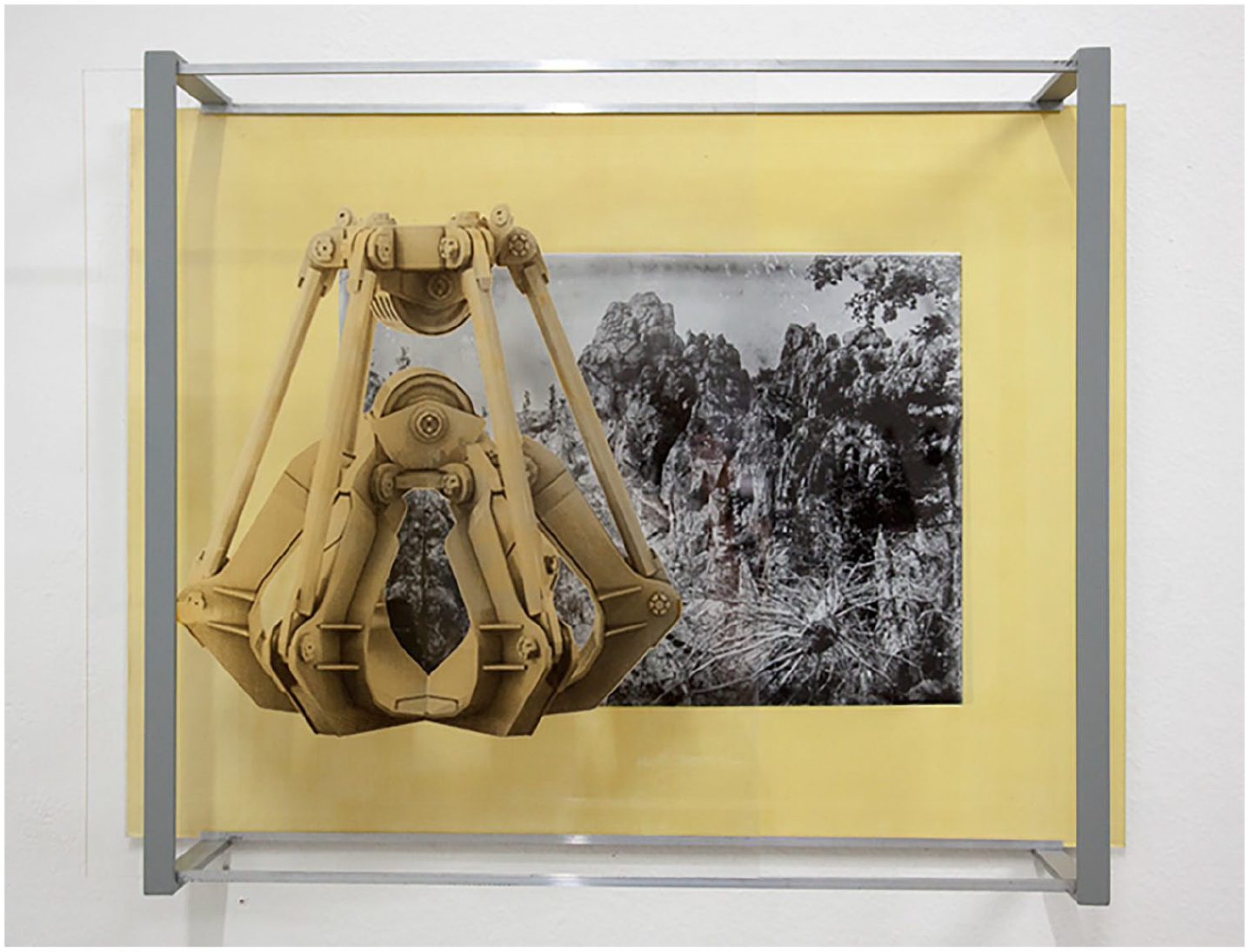
Anika Schwarzlose, Seeing into Stone, 2019. Courtesy of the artist.
While the work Seeing into Stone brings the past to the present to reimagine mining heritage through the emergent potentiality of technofossils, the video work Unearth: In Between States of Matter deals with similar mining sites in the Ural region but with a radical mineralogical future outlook. The film’s central narrative breaks away from the concept of inert or decaying technofossils as relics of the past stuck in abandoned mines. Instead, it offers a speculative scenario of their evolutionary future. In the video, both science fiction and geoscience come together as areas of knowledge production. The artists investigated how the practices of extensive extraction activate peculiar material dynamics, which may lead to novel mineral formations and, hence, to weird forms of mineral diversification. The film starts in a remote location above the ground, with scenes of a rural environment marked by slightly odd-looking hills. Upon closer inspection, this landscape reveals itself as ‘Anthroposcenic’, which is ‘emblematic of processes making the Anthropocene’ (Matless, 2018). Some waste heaps are partially colonised by bacteria, ruderal plants and various animal species, yet other parts of the terrain remain barren, exposing a burning core with hot gases escaping through cracks and creating an eerie, volcanic-like landscape. Although generally toxic to life, such environments are visibly active. Research suggests that ‘the weathering of bituminous coal remnants, deposited on coal dumps with barren rocks, often leads to spontaneous combustion of coal; therefore, the fire thus initiated is a purely natural phenomenon’ (Parafiniuk and Hatert, 2020) in this post-natural environment. Viewers of this video discover the intriguing outcome of these dynamics: turquoise-blue crystals emerging from the crevices of the burning heaps. Identified as crystalline sal ammoniac, typically found in volcanic regions near fume-releasing vents, these crystals emerge as anthropogenic mineral newcomers to this area. Particularly fragile and highly soluble in water, they cannot survive rainfall; thus, they appear as unexpected mineral marvels. Despite their unique beauty and sense of wonder, they are easily overlooked amidst these environmental ruins.
Transitioning from the surface reality of burning slag heaps, the camera leads viewers into underground locations currently being explored and exploited by drilling machinery. The mining technology is further investigated while viewers are taken to a contemporary mining fair in Russia. In these documentary fair scenes, a voiceover narrates the historical evolution of the infrastructure, highlighting pivotal moments such as the transition from animal-powered machinery to human-controlled machines and, subsequently, replacing human workers with robots. It is projected that human presence underground will become obsolete in the foreseeable future. In this film segment, the predominant visual realism of a contemporary mine documentary unexpectedly transitions into an animated fabulation. This animation serves as a speculative visual narrative depicting the evolution of the technosphere, taking an unforeseen major twist. The animation portrays monumental drilling devices undergoing a spectacular transformation into elaborate and colourful crystalline objects. Through slow motion, viewers can observe the intricate process wherein a piece of mining infrastructure transmutes, completely shedding its functional shape (Figure 4).
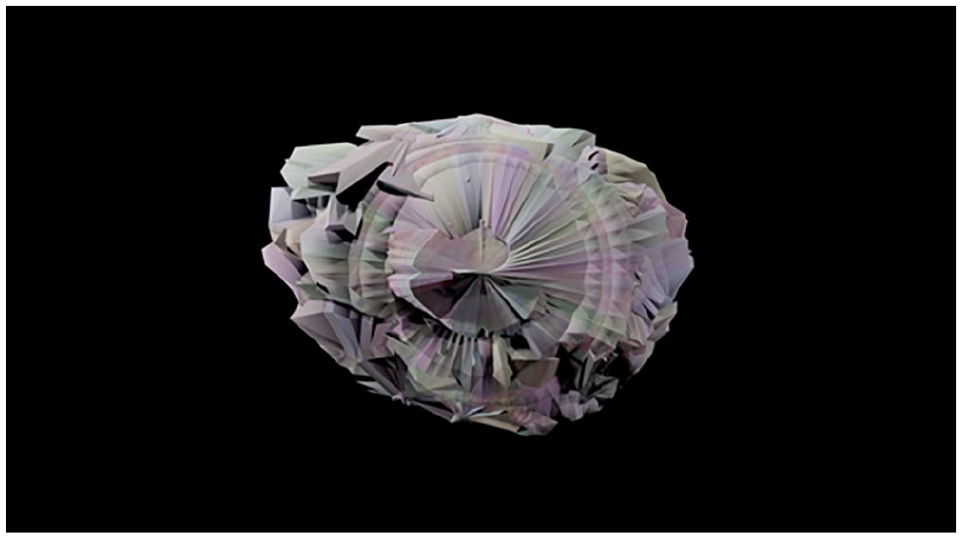
Anika Schwarzlose and Brian McKenna, Unearth: In Between States of Matter, 2020. Courtesy of the artists.
This video showcases the transformative evolutionary force of self-organising mineral matter in two instances. Firstly, anthropogenic mineral diversification spontaneously emerges from the environmental ruins of waste heaps. Secondly, the evolutionary development of the mining technosphere results in the loss of human connections and, ultimately, the loss of biotic connections. This latter phenomenon echoes the speculative palaeontology proposed by sociologist Bronislaw Szerszynski, for whom the technosphere and other planetary spheres such as biospheres and geospheres ‘are. . . autopoietic (“self-making”) entities—that is, they continuously regenerate the network of relations that produce them, specify their own boundaries in the process of self-production, and are operationally closed, or self-referential’ (Szerszynski, 2019: 3). In the video, the evolutionary dynamics of minerals and the technosphere eventually merge in accordance with Szerszynski’s observation that ‘perhaps the technosphere is gradually escaping not just animal makers, but its erstwhile shadowing of animal form’ (Szerszynski, 2017: 9). The video’s ability to encompass contradictory and surreal narratives and its presentation of marvellous objects serves to transcend denial of the unruly agency inherent in minerals. It also sensitises the viewers to the precarious nature of both present and future entanglements between living and non-living matter.
Schwarzlose’s and McKenna’s video is a critical fabulation boldly answering the ‘what if’ question. It attempts to imaginatively visualise phenomena that resist conventional representation through scientific methods, thus aligning with speculative palaeontology (Szerszynski, 2017) and speculative geology. The latter, as Clark et al. (2018: 279) have suggested, ‘takes a keen interest in science, though with a tendency to extrapolate from scientific developments in “collateral” directions that are not necessarily a priority of scientists themselves’. The artists thus embrace scientific facts and fictions (Haraway, 2016) of the Anthropocene mineral compounds to speculate about change viewed not as loss but as transformation. At the same time, they transcend the prevalent biocentric and anthropocentric mindset, inviting instead a nuanced and attentive approach to the relationalities of the diverse environmental bio-geo-techno realities of ‘living on a damaged planet’ (Tsing et al., 2017). By creatively visualising unexpected interplays between life and non-life, this artwork responds to Szerszynski’s (2017: 4) call for the cultivation of speculative palaeontology, advocating for a more imaginative approach to ‘the possible paths that could be taken in the self-organisation of matter in planetary evolution’.
Recognising mineral agency (Bennett, 2010) and the diversity of underground environments, which to some degree have co-evolved with nonhuman and human life and machines, underscores the importance of curiosity about the emergent unexpected species constellations. This requires what Haraway calls respons-abilty, which in this case is an obligation to respond to the plural agencies involved in current practices of rapacious extraction and other modifications affecting rock structure, hence the Earth’s geology (Zalasiewicz et al., 2014b: 7). These artworks cultivate response-ability by speculating about being witnesses to mineral species evolving diversely within the underground wilderness at their own pace and through their unique processual modes and relationships with biological and abiotic species. This approach reflects an ethical stance rarely extended to abiotic species (Stoner, 2017), especially in the form of underground rocks, and enables a caring appreciation of both known and imagined mineral futures.
Coda: Becoming mineral sensitive again
Following Niels Bubandt’s (2017:137) assertion that ‘a metaphysics that has lost the ability to distinguish the bios from geos, the human from the nonhuman, also holds a promise’, I advocate for turning to art to demonstrate the emergence of a new mineralogical awareness within broader cultural discourse. The examined artworks engage with contemporary anthropogenic material dynamics, emphasising the importance of what Haraway (2014: 76) calls an ‘obligation of and capacity for responsive attentiveness’. This approach becomes both an ethical imperative and a political choice in navigating the turbulent changes associated with the environmental crisis.
The artworks examined here, taking the form of rocks and technofossils, act as critical fabulations capable of opening up a discursive space where scholars, mineral collection curators and the public can think otherwise about the present and future ‘human-lithic enmeshment’ (Cohen, 2015: 6). These artworks communicate minerals’ agency, which is viewed as the ability to make a difference manifested through unique and intricate ways of relating to life and other nonlife. Thus, they have the potential to disrupt conventional knowledge production, challenging the boundaries of what is recognised, accepted, established, integrated and communicated to wider audiences through the geological collections of natural history museums and beyond.
Highlighting a resurgence in the format of cabinets of curiosities as a mode of curation and display in the Anthropocene, Robin (2020: 205) observes that museums and artists are drawn to ‘objects of strange change’ because they ‘seek to make sense of the chaotic changes of our present “strange times”’. Complex mineral compounds-cum-artworks align with Robin’s observation while revealing multiple fabulations about rapidly transforming environments, turbulent processes and radical time scales and underscoring the curious entanglements of organic and inorganic species. In many ways, these art objects relate to the rare and wonderful specimens once displayed in the cabinets of curiosities that achieved an exceptional level of popularity in 16th- and 17th-century Europe. These predecessors of museums of natural history offered displays of objects that often articulated perplexing narratives within a universe of entangled cultures and natures (artificalia and naturalia), including fabulations about their identity and origin most often linked to vague and distant locations and times that were impossible to verify. 2 Yet, cabinets of curiosities, as Zytaruk (2011: 3) suggests, were productive instruments ‘for recording and making knowledge’ with capabilities ‘to accommodate divergent readings of nature and to embody rival systems of knowledge’, hence producing otherwise impossible conceptual and material connections.
Drawing on the fascination with the marvellous, paradoxical and bizarre reignited by surrealists, Wilson (2023: 5) proposes ‘a surrealist art of noticing’ as a critical approach to and in the environmental reality of the Anthropocene. Wilson avoids nostalgia and ‘searches for beauty and possibility in the inescapable reality of this weirdness, instead of staging fantasies of reconstituted harmony and order’. Similarly, the contemporary artworks mentioned above can be seen as ‘objects of strange change’, which, like the meticulously arranged and psychologically charged objects of surrealist collections, possess potent transformative qualities that resonate synchronously with the external world (Conley, 2012: 12). They reflect social anxieties arising from both rapid environmental transformations and resistance to change from institutions, as evidenced by experts’ debates over identifying and naming emerging compounds and the inadequate efforts of galleries and museums to make these material changes more accessible to the public.
And yet, anthropogenic minerals and technofossils are slowly infiltrating museums, demonstrating a capacity to evade human control. Paradoxically, many traditional mineral galleries and their storage rooms have become sites where mineral evolution’s ‘unexpected others’ emerge. Ordinary oak storage cabinets can transform into cabinets of Anthropocene curiosities, serving as unique anthropogenic environments where one can look for novel mineral formation processes. For instance, the mineral calclacite was serendipitously discovered in 1945 inside an old cabinet at the Royal Museum of Natural History in Brussels. This peculiar mineral formed on calcareous rocks that had come into contact with acetic acid leaching from the oak wood used in crafting the display furniture. Since then, this mineral species, forming white crystals in a silky hair-like efflorescence, has also been found on fossils and ceramics stored in similar wooden cabinets in various locations (Boccia Paterakis and Steiger, 2015: 172).
Another conspicuous sign of this encroachment upon museums is the well-documented presence of plastiglomerate, a unique amalgam initially discovered on Kamilo Beach on the Big Island of Hawaii in 2006 by oceanographer Charles Moore. After being subsequently examined by geologist Patricia Corcoran and artist Kelly Jazvack, it had its institutional debut in an art exhibition (Corcoran et al., 2014). Plastiglomerate, formed from the fusion of plastic, volcanic rock, coral skeletons and shells through the process of campfire burning, has since become recognised as a global phenomenon, finding its way into the collections of esteemed institutions such as the Yale Peabody Museum, Het Nieuwe Instituut in Rotterdam and Natura Artis Magistra in Amsterdam (Robertson, 2016). The plastiglomerate case highlights how art spaces embrace experimentation and boundary-pushing, suggesting their potential as catalysers in integrating Anthropocene materials into museum settings.
Contemplating the reality that human endeavours have created ‘a host of crystalline compounds that never existed in the solar system, and perhaps in the universe’ (Hazen et al., 2017: 606) evokes a profound ontological and epistemological sense of wonder. At the same time, it brings to light significant ethical concerns regarding the inadequately comprehended consequences of destructive mining practices. Many of these novel compounds remain undiscovered; some evolve rapidly, embedded in the constellations of connections that are hard to grasp, while others await their eventual emergence. Amid this uncertainty, artists continuously scrutinise the present and probe the deep future of mineral environments, envisioning scenarios devoid of gloomy nostalgia or paralysing apocalyptic overtones, even in the absence of human presence. Through their explorations, they align with Tsing et al. (2017: 7), who urge that ‘in the midst of ruins, we must maintain enough curiosity to notice the strange and wonderful as well as the terrible and terrifying’.
Footnotes
Acknowledgements
My sincere thanks to the organisers of the 2019 Art in the Anthropocene conference at Trinity College, Dublin, for the opportunity to deliver a keynote address, which inspired the research leading to this text. I also want to thank the two anonymous reviewers whose valuable feedback enhanced this article.

Funding
The author(s) disclosed receipt of the following financial support for the research, authorship, and/or publication of this article: This publication was supported by the Excellence Initiative–Research University Programme of Adam Mickiewicz University [grant number 166/08/POB5/0052].
Declaration of conflicting interests
The author(s) declared no potential conflicts of interest with respect to the research, authorship, and/or publication of this article.