



Abstract
Considering unpredictable and hastily evolving tipping points (like the impacts of the COVID-19 pandemic, ongoing climate crisis and the war in Ukraine), it is clear that sustainable energy transition and utilization of locally sourced renewable energies must be in the heart of both national, regional, and local energy systems. However, if we take a closer look at the actions undertaken at the local (communal) level, we see enormous diversity of patterns, prerequisites, and implications that drive and affect spatial deployment of renewable energies. Therefore, our research targets to better comprehend the question if individual communities are comparatively involved in the energy transition. We also ask whether the demand and supply of renewable energy is territorially balanced and how these differences (if any) can be justified. We are framing our research by the concepts of energy justice and ecological debt. We thoroughly explore and asses the renewable energy balance on the level of individual communities which is based on data on the installed power capacity potentials and energy consumption in local administration units in Poland (380). Spatial distribution and discrepancies in the deployment of the renewable energy creditors and the renewable energy debtors are detected. Noticeable disproportions were identified among communities where improved utilization of local potential of renewable energy could exceed energy demand (29% of communities). This result is contrasting with communities (71% of communities) that can be, on the other hand, classified as renewable energy debtors. We claim that insufficient support (institution, regulatory, and financial) for expanding local renewable energy systems is a clear barrier when adapting to the climate crisis by balancing the energy demand and supply at the local level.
Introduction
The world economic development causes a rapid increase in the global demand for electricity and heat. Due to the current level of urbanization, there is no doubt that cities are largely responsible for growing energy consumption, both on the global, European, and also on national scale. However, the space we live in is highly diverse and thus, very different types of the settlements (from highly urbanized to suburban or distant rural areas) can be characterized by various conditions and requirements both in terms of the energy demand as well as the energy supply. The European Union’s (EU) regulations (European Council, 1993; European Green Deal, 2020; European Parliament, 2010, 2012) encourage the member states to implement and develop the policies to upgrade energy efficiency in buildings and invest in the development of renewable energy sources (RES) to more environmentally friendly and sustainably redefine our national energy mixes. An enormous effort is driven by the endeavor to reduce the greenhouse gas emissions and, consequently, contribute to the mitigation of climate change. The actions taken aim to reduce our overall energy consumption while increasing energy production from a wide portfolio of renewable energy sources (Mrówczyńska et al., 2020, 2021; Tutak and Brodny, 2022) and creating more sustainable energy systems. According to the vision of the European Commission, the share of energy generated from renewable sources in the EU’s final energy consumption should be at least 32% by the year 2030 (2030 Climate & Energy Framework, 2014). However, this process depends on a range of determinants and occurs with different dynamics and various implications in different parts of the world. The links between global events like the Middle-East Oil Crisis of 1973 and 1979 or the repercussions of the annexation of Crimea in 2014 had a significant influence on the world’s energy market (Overland, 2016). Further unrest in the energy market arose with Russia’s invasion of Ukraine in February 2022. The fossil fuel market, which was mainly dependent on supplies from Russia, saw a massive price increase (United Nations, 2022). International conflicts lay bare the importance of revising energy policies, and the Ukraine war was a case in point. The COVID-19 pandemic has undoubtedly been a challenge for developing renewables. During the first phase of the pandemic, an increase in interest in fossil fuels was noted. The drop in prices and international restrictions disrupted supply chains, negatively influencing the renewables market (Goodell, 2020; Madurai Elavarasan et al., 2021; Overland, 2016; Tian et al., 2022).
Considering the issues mentioned above as well as enormous differentiation of socio-environmental systems and specific national conditions and priorities within the EU, each of the member states can define its own way, trajectory and speed to achieve this target. It is undebatable that switching to renewable energy at the national and global levels, while complying with the EU regulations, requires major steps to be primarily taken on the local level. At the same time, the methods enabling cities and villages to assess the compliance of their energy strategies with existing national and global energy systems needs to be developed. Thus, it is urgently needed that cities, towns, and villages undertake, support and encourage an outlined way of energy transition by means of developing the local bottom-up actions and consider not just theirs but also the national and global contexts (Singh, 2020; Vuichard et al., 2022). The situation we are aiming to is that the RES performance at the national level covers centralized large-scale energy installations managed at the national level (Hennig et al., 2013; Kirchherr and Matthews, 2018) but also many scattered middle and predominantly small-scale installations developed by local authorities, energy companies, other local groups or households (Bazan-Krzywoszańska et al., 2018; Furmankiewicz et al., 2020; Lewandowska et al., 2020).
Based on this assumption, we study the relations between energy use and the renewable energy production potential in local communities in this research. We assess which communities can be labeled as pioneers in renewable energy development (renewable energy creditors) and, on the contrary, which communities can be perceived as burdens for developing our future and more sustainable energy system (renewable energy debtors). The scope of the study will also cover particularities in the spatial distribution of renewable energy creditors and renewable energy debtors. We are also keen to detect if any patterns of their locations exist and if differences can be found between the types in the settlement systems (from major urban centers to peripheral areas) and if any differences might be found in the energy performance between the regions in Poland. This is crucial to evaluate local units, as current system reports only the level of RES implementation at the national level and does not analyze more detailed the situation at the local scale, which greats a gap of knowledge. Our study further develops the most recent stream of research on defining the major renewable energy suppliers in the current energy systems and detecting the pioneers in renewable energy development (Hills and Michalena, 2017; Levenda et al., 2021; Sperling, 2017). The case study for this research is Poland, which is the biggest Member State in Central Europe and joined the EU structure at the beginning of the 21st century. As a part of the post-socialist European region, Poland is affected by the results of the centrally-planned economy, inc. the dominance of fossil fuel (coal-oriented energy sector) (Chodkowska-Miszczuk et al., 2022).
The aim of this research is to evaluate the potential of share of renewable energy (estimated based on renewable energy capacity of installations) in final energy consumption in local administrative units. The case study for this research is Poland, which is the biggest Member State in Central Europe which join EU structure in the beginning of 21st century, and still is strongly dependent of coal as the main energy source. In the theoretical framework presented in section 2, we conceptually frame our research with the energy justice and energy democracy approaches and based on the concept of ecological creditors and ecological debtors (Świąder et al., 2020a) we are developing this idea and further expand it with the renewable energy creditors and debtors. Additionally, we described the Polish context of RE development. Section 3 contains description of materials used during analyses and quantitative methodological approaches applied. The results presented in section 4 on the case study Poland include four streams of our considerations: (i) the distribution of renewable energy installed power potential, (ii) the distribution of renewable energy capacity, (iii) the distribution of energy consumption, and (iv) the distribution of renewable energy balance. The results obtained are discussed in section 5, which leads to final conclusions defined in section 6 where several recommendations for the rural energy transition in Poland are formulated.
Theoretical and political framework
Energy justice and energy democracy
The current direction of renewable energy development in more centralized as well as dispersed forms stands in line with the major environmental policy nowadays concluded in the 2030 Agenda for Sustainable Development (United Nations, 2015). The seventh Global Sustainable Development Goal aims to “ensure access to affordable, reliable, sustainable and modern energy for all.” Especially the perspective of “for all” expression highlights that it should not be just the domain of selected communities, but on the contrary, renewable energy development efforts should be undertaken simultaneously in all types of the settlement, from major cities and to the settlements in peripheral rural areas. Therefore, all local administrations as well as their population should take its part in the energy transition actions as each community consumes the resources and requires energy for its vital development (Bridge et al., 2013). This is a highly ethical requirement that the responsibility for our socio-ecological and energy transition is equally distributed among communities (Jenkins et al., 2018). However, in reality not every community equally contributes to both causing and, on the contrary, to dealing with of our environmental problems (Sovacool et al., 2016). The distribution of both is highly uneven, affected by multiple social, economic, cultural and environmental factors, and thus creates multi-layered (frequently opposite) development trajectories that crucially need to be better understood.
It has already been demonstrated that the concept of energy justice greatly frame the issue of uneven distribution of (renewable) energy generation projects and its social and environmental impacts (Bouzarovski and Simcock, 2017; Sovacool et al., 2016). There is no doubt that equity in wide participation in the energy systems (both in social and economic terms) creates the environs for ethically acceptable energy mixes in communities that are more accessible, affordable and principally cleaner and sustainable (Lee and Byrne, 2019). The usage of locally sourced energy resources create another important layer in our understanding of energy justice that complement its distributive element. The control over local energy systems needs to be based on the principles of democracy (Burke and Stephens, 2017; Szulecki, 2018) where participatory approach implies that involvement of voices of marginalized communities that are not usually being heard are taken into account (van Veelen and van der Horst, 2018). In scientific considerations energy democracy concept is commonly focusing on local communities (Droubi et al., 2022). We know that such a progress in energy democracy might reduce undesirable effects of the current energy systems such as energy poverty (Sovacool, 2012), reduce environmental burdens and limit energy insecurity on the level of households. Similar conceptual considerations are applied to the communities where social, economic and environmental burdens consequent to the energy systems are developed. As Knox et al. (2022) stated, at its heart energy justice is about the balanced distribution of costs and benefits across society, therefore, equally distributed in geographical aspect solutions are needed.
As a response, the concept of ecological creditors and ecological debtors who widely influence the socio-environmental systems was developed (Ohl et al., 2008; Świąder, 2018). As Goeminne and Paredis stated in their study (Goeminne and Paredis, 2020), the concept of ecological debt assessment is an element of environmental justice which highlights imbalance between demand and supply of natural resources and call for a radical transition to more environmentally sustainable human activities. As ecological creditors those communities are marked where the use of less ecological resources is occurring than is available within their borders. Similarly, ecological debtors use more ecological resources than can be found in their borders (Świąder et al., 2020a). These two obvious situations are commonly calculated by comparing ecological footprint (as a measure of consumption of resources) and biocapacity (as a measure of available resources) (Moran et al., 2008; Świąder et al., 2020b). Ecological footprint of socio-economic system is also commonly studied and discussed in the domain of energy studies (Iweka et al., 2019; Vita et al., 2020; Ward et al., 2020; Zaunbrecher et al., 2018). However, considering energy justice as the concept derived from the environmental justice (Hu, 2020; Jenkins, 2018; Kluskens et al., 2019; Lin et al., 2020), the approach of ecological creditors and debtors could be applied on the field of energy too.
Polish context
The issue dealing with the problems of which communities are sustainable from the perspective of energy production and consumption and where the energy creditors/debtors are located, was tackled with reference to the example of Poland. The main energy individual characteristics of Poland as a country undergoing energy transition is the past of almost half a century of centrally planned economy and centrally planned energy issues that is typical by the hegemony of entities related to coal mining (Szpor and Ziółkowska, 2018). It is necessary to refer to a case study and thus take into account the local context during the implementation of global megatrends related to the application of transnational policies (Chodkowska-Miszczuk et al., 2019, 2021a), including those connected with identifying renewable energy creditors and renewable energy debtors.
When analyzing the origins, development and trajectories in the use of RE in Poland, a certain specific context has be noticed right from the start that the vast majority of the information, strategies and subvention programs encouraging to invest and participate in the renewable energy generation are typically addressed to urban residents. Surprisingly much less attention is paid to rural areas and its population where, undoubtedly, a much greater potential for green energy development might be found. It seems to the Polish Government is aware of such a discrepancy. According to the Polish Ministry of Agriculture and Rural Development, rural areas have a more significant potential for developing renewable energy than cities as these can utilize the variety of vastly available biomass resources, as well as roofs of buildings in agricultural, industrial, public premises and residential buildings. Moreover, the hydro energy potential has to mentioned together with large areas unsuitable for agricultural production or abandoned agricultural premises and rural wastelands can be used for this purpose too (Klusáček et al., 2021; Rapacka: Potencjał OZE drzemie na wsi – BiznesAlert.pl, n.d.). According to the Ministry’s data, over 13% of biomass produced in Poland can be used for energy purposes, primarily perennial crops, plants used for the production of liquid biofuels, and bioethanol production. The energy potential of energy crops in Poland is estimated to approximately 900 PJ/year. The most popular raw material in Poland to be energetically processed is straw, the cut surplus of which amounts to 3.1 million tonnes per year. The total resources of biomass from energy crops in Poland are about 130,000 tons of the dry matter per year. There could be also found more than 100 biogas plants in Poland with the total electric installed capacity of 113.4 MW. It is a great chance to improve energy production within a circular economy (Chodkowska-Miszczuk et al., 2021b). The Ministry’s data shows that 7.8 billion m3 of biogas can be obtained from agricultural raw materials, including over 5 million m3 from the waste generated by animal husbandry (Rapacka: Potencjał OZE drzemie na wsi – BiznesAlert.pl, n.d.; OZE: Odnawialne źródła energii przyszłością obszarów wiejskich? – EURACTIV.pl, n.d.). According to the recent report on the impact on photovoltaics on the Polish economy (Raport PSES Perspektywy wpływu fotowoltaiki na gospodarke Polski w latach 2016 – | Enhanced Reader, n.d.,), farmers and rural areas will play an essential role in the future development of photovoltaics in Poland by installing solar power plants on the roofs of their houses, farm buildings, and on agricultural land designated for the location large-scale solar farms, no matter what environmental effect it might cause. It is intended that farmers will be the primary beneficiaries of the solar energy installations. Wind energy is in the report surprisingly perceived rather as a supplement to the development of photovoltaics in rural areas. The report highlights the wind farms as an effective technology that is, at the same time, not so demanding in terms of its spatial extent that is required for their operation.
There is no doubt that the wisely managed development of renewable energy in the countryside will be vital for both agricultural and rural economies, however consequent environmental and social impacts need to be carefully considered which is not happening much at the moment. It is likely that farmers will play a central role in the rural energy transition in Poland as we crucially need them to diversify their activities, becoming not only food producers and land stewards but also energy producers (Benedek et al., 2018; Wiśniewski et al., 2021). This way the Polish countryside might importantly increase its energy self-sufficiency and energy security.
Modes of RES: Which is the most suitable for locals?
The generation and the structure of renewable energy sources distinctly vary when considering diverse local environmental and socio-cultural contexts of cities, towns, and villages. We already know that certain types of the RE installations are more likely to be developed in densely developed urban areas while others require more open spaces. To be more specific, renewable energy generation in urban space quite significantly depends on photovoltaic installations, meeting the potential of enormous cover space of industrial operations, shopping malls, multi-story and public buildings, etc. The utilization of roofs and walls of schools, libraries, swimming pools, dormitories, or universities are usually being considered excellent location for renewable energy (RE) production as they do not only generate renewable energy but also promote the benefit of the usage of RE. In contract, the small-scale PVs installations could be more frequently found on the single-family homes, however specifically in Central Europe these occurring to a lesser extent. It is obvious that the future of renewable energy in urban space is the small-scale installations on family homes to cover their energy needs and offer surplus energy for the use of others. Additionally, it might be already clearly seen in a plenty of the current installations that individual and case-specific construction solutions in the form of racks or multiple RE systems can be used to flexibly adjust the location of the photovoltaic panels to the best position toward the Sun or to complement one type of RE with each other. By the more direct focus on the utilization of the RE potential of roofs and walls, increased energy efficiency and much better carbon balance of single-family houses can be achieved (Muaafa et al., 2017; Reames, 2020). An excellent example of the using the potential of urban roofs of buildings is surprisingly India, where about 40% of the solar energy comes from the roof photovoltaic installations located in urban and industrial areas. Simultaneously, the total technical photovoltaic potential hidden in the roofs in the 13 largest global cities is estimated for 17.8 GWp (Singh, 2020), proving extensive and usable source of renewable energy. Novel approaches enabling alternative location photovoltaic panels on buildings also exists. For instance, building-integrated photovoltaics developed in Norway might be mentioned as a nice example (Gholami et al., 2020). It is obvious that a rich variety of other opportunities in the usage of buildings for the solar energy might be found.
When it comes to the wind energy, micro-installations seems to be more optimal for the use in urban conditions than large-scale wind mills. Usually small wind turbines equipped with a vertical or horizontal axis of rotation can be well integrated into modern urban architecture (Sunderland et al., 2016). In urban areas, especially in single-family houses in the suburbs, the heat pumps, or efficient and technologically advanced biomass boilers (e.g. for pellets burning) can also be shown as an example (Greinert et al., 2020) that will be more spread in the near future. Large-scale wind farms are more likely to appear in rural and especially peripheral areas with a lower density of build-up areas and typically open landscape. However, examples of wind farms located in immediate urban vicinity can be also found. Offshore wind farms have been recently also vastly developed with an extremely large recently built example in the UK (the Hornsea project—173 off shore wind turbines with the total installed capacity of 1218 MW). Such a beneficial located of wind farms is crucially based to a lower roughness of the water surface that is favorable for the renewable energy production (Kazak et al., 2017).
The type of RE that is more common in rural areas is the biomass energy and particularly biogas energy for instance. In rural locations, where plenty of agricultural wastes can be found, the biogas plants seems as a sustainable way for its energy processing. On the other hand, transportation costs and necessity of fluent supplies of raw materials limit their size and thus amount of the energy generated. Similarly, potential conflicts caused by the operation of biogas plants in proximity to settled areas arise (Chodkowska-Miszczuk, 2019, 2020).
Generally, it seems that the recent progress and advancements in the development RE technologies create amazing potential for the energy transition. It also well known that individual RE technologies are not evenly supported and accepted by the decision-makers and the population where the RE projects are to be located. Such an acceptance also massively differs in various socio-cultural contexts. Literature suggests that rather small-scale RE projects well-adjusted to the local environmental conditions and consulted in each phases of their development with the local stakeholders are more likely to be supported. Therefore, small-scale RE installations seem to be the answer for renewables’ development in current socio-environmental systems.
When it comes to reporting of the progress of RE development in European Union the key performance indictor is the share of energy generated from renewable sources in final energy consumption, and EU results in that aspect are presented to the level of EU Member States (https://www.eea.europa.eu/ims/share-of-energy-consumption-from). That enables to assess if energy transformation actions are implemented equally by nations. However, the concept of evaluation of different countries was not adopted at a lower administrative level. There is neither regional, nor local assessment of local units. Therefore, current mechanisms do not focus on the structure of RE production inside the country. There is a gap of knowledge when it comes to define what is the share of energy generated from renewable sources in local administrative units. In order to fulfill the research gap, we propose our study focuses on endogenous energy sources and local’ potentiality. The local dimension is a crucial perspective, especially in countries with a post-socialist heritage that face the growing and cross-sectoral challenges of the Anthropocene (Chodkowska-Miszczuk et al., 2021a).
Materials and methods
Materials
The research procedure was based on a database of renewable energy installations (as of 31.12.2019).developed by the Energy Regulatory Office, ERO (Energy Regulatory Office (pol. Urząd Regulacji Energetyki, n.d.), the Polish government agency supervising the energy market in Poland. It contains data on RES installations producing electricity together with their installed capacity at local level, that is, poviat level (en. county). This administrative unit is equal to the European LAU 1 (Local Administrative Units; previously NUTS 4—Nomenclature of Territorial Units for Statistics) (Local Administrative Units (LAU) – Eurostat (n.d)). Sixteen voivodships are divided into poviats (en. counties) a total of 380 in all (Figure 1). Available dataset includes also one more type of energy production type—co-firing. However, as this category contains all type of co-fired energy systems, it is not possible to distinguish used resources and their shares in conventional energy production systems. Therefore, exclusion of this category allowed to avoid the use of data biased with traditional energy sources (coal in the Polish case). It is important to highlight that the dataset does not include geothermal energy, because in Poland it is not used for electricity production (Statistics Poland, 2019). In addition, data from the Local Data Bank of Statistics Poland, LDB SP (Statistics Poland (Główny Urząd Statystyczny, n.d.) were used to obtain information on the socio-economic factors.
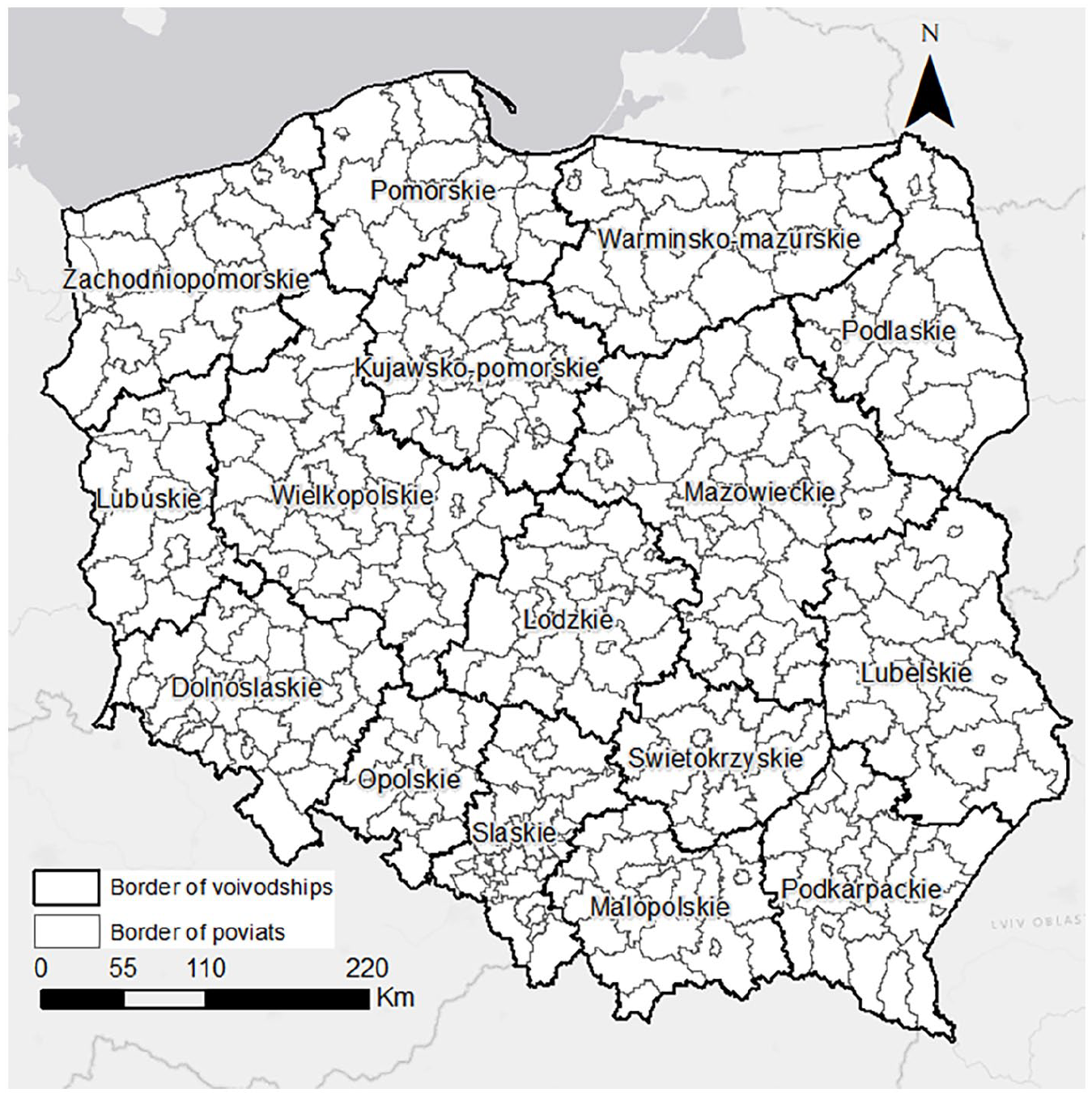
Administrative borders of poviats on the voivodeships (regions, NUTS2) map in Poland.
Methods
The available data contains the information about installed power potential based on the type of energy generator. The information about the amount of produced energy was not available, therefore, in this study we refer only to theoretical potential of energy production (renewable energy capacity) based on the relation between installed power potential and average efficiency of each type of renewable energy installation in Polish conditions. Based on the literature review, the average efficiency was assumed as follows:
• Photovoltaics – 13% (GRAMwZIELONE.pl, n.d.b; Pietruszka, 2015),
• Onshore wind energy—25% (GRAMwZIELONE.pl, n.d.a; Ostrowska-Bućko, 2014),
• Hydro energy—85% (Igliński, 2019),
• Biogas energy—80% (Igliński et al., 2020),
• Biomass energy—87% (Igliński et al., 2015, 2022).
The above values, obtained from scientific publications, are confirmed in reports published by the Energy Regulatory Office (https://www.ure.gov.pl/pl/oze/potencjaal-krajowy-oze). The reports cited are published quarterly, and the last one shows the status on December 31, 2021.
For each poviat (i-th) renewable energy balance (REB) was calculated by subtraction energy consumption (EC) from renewable energy capacity (REC):
REBi = RECi – ECi. (1)
Based on that operation each poviat was assigned as a renewable energy creditor (REBj > 0) or a renewable energy debtor (REBj < 0).
Visualization of the obtained results was performed with the use of business intelligence software (Tableau Desktop Professional 2020.3.2). All analyzed elements were presented with the use of bubble maps. This visualization method is suitable for comparing proportions over geographic regions, and at the same time it does not bias the data by an area size of analyzed unit, like it happens in case of choropleth maps (Data Visualization Explained: Bubble Map | Data Science PR, n.d.). The use of business intelligence in spatial data visualization was already verified and it proves high suitability of these tools in analyses of combined statistical and spatial data (Szewrański et al., 2017).
Results
Based on the adopted approach this section presents analyses on following elements: distribution of renewable energy installed power potential (4.1), distribution of renewable energy capacity (4.2), distribution of energy consumption (4.3) and distribution of renewable energy balance (4.4).
Distribution of renewable energy installed power potential
The spatial distribution of renewable energy installed power potential varies in the country noticeably (Figure 2), both in absolute terms and per capita. The RES installations with the highest installed capacity (over 160 MW) are hydropower, biomass, and wind power. The location and spatial distribution of the two of these types, that is, hydropower and wind power, is strictly dependent on local environmental conditions. Due to the availability of adequate wind speed and strength and the proper orography of the landscape, the most predisposed area for wind energy development is northern Poland, mostly along the coast of the Baltic Sea. In turn, the water relations enabling the distribution of hydropower plants are the most suitable in mountainous areas of southern Poland and the already mentioned northern Poland (Chodkowska-Miszczuk et al., 2016). Therefore, in terms of installed RES power, the national leaders are northern Poland dominated by wind and hydro energy power plants and the south-eastern part of the country. In turn, biomass power plants, whose functioning is much more linked to human activity than to natural factors, are characteristic of urban (e.g. Warsaw) and suburban areas (e.g. the wrocławski poviat surrounding the capital of the Dolnośląskie Voivodeship—Wrocław).
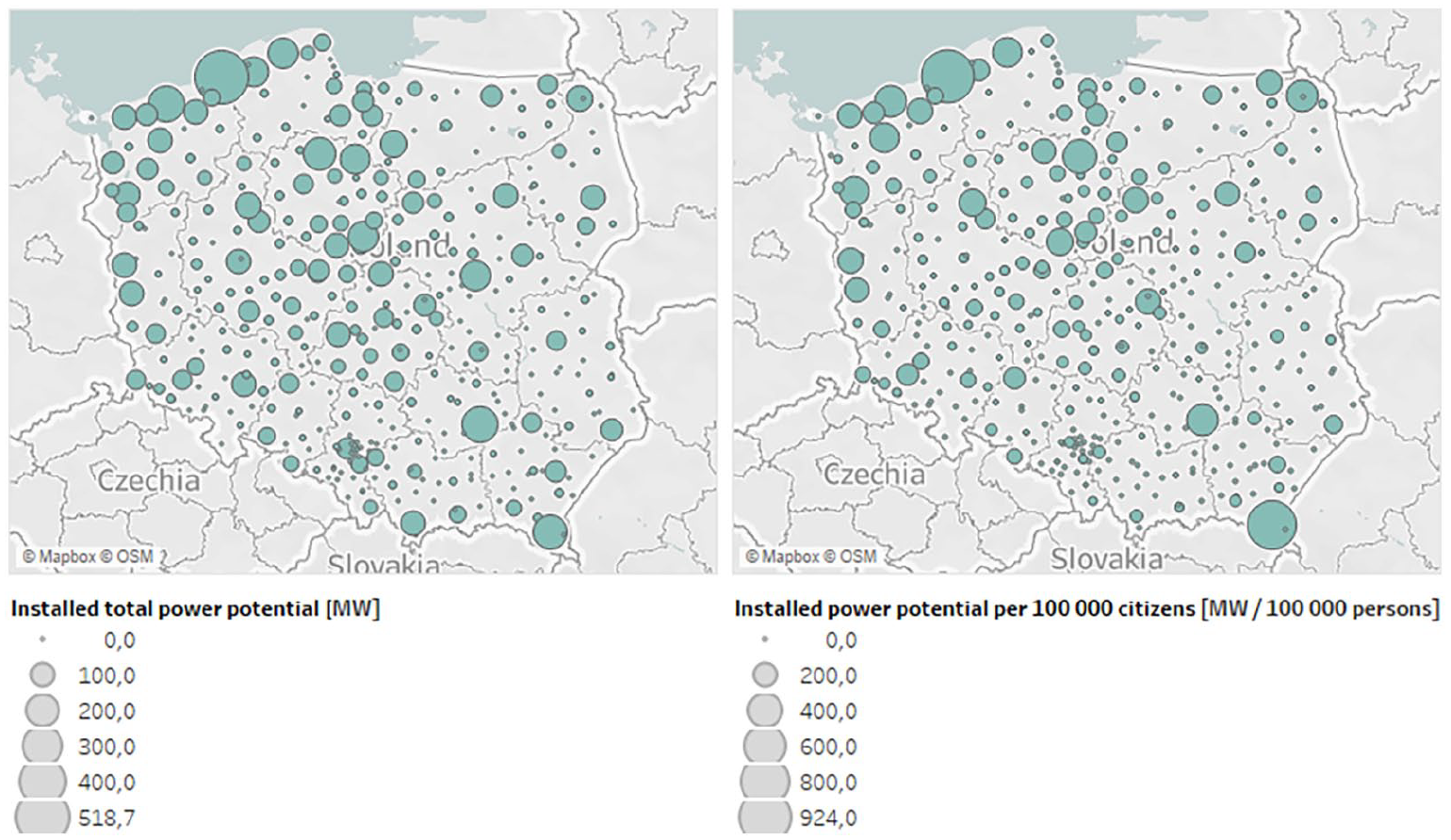
Distribution of renewable energy installed power potential in the poviats of Poland: left) total; right) per 100 thousand citizens.
Eastern Poland and a large part of southern Poland are a kind of “shadow” area with no large RES installations. However, this does not mean that there is a lack of renewable energy facilities here but that rather the small-scale type of installations dominate. For example, the average installed capacity of RES installations in the Lubelskie Voivodeship is 1.3 MW, while in the Zachodniopomorskie Voivodeship it is 6.2 MW. Nevertheless, as in the case of the whole country, wind, biomass, and biogas power plants have the largest installed capacity in the Lubelskie Voivodeship. Moreover, the Lubelskie Voivodeship is the national leader in terms of photovoltaic installations. More than 11% of the national PV power is located in the poviats of this region, which translates into more than 100 PV (55.1 MW) installations in the entire Lubelskie Voivodeship. A larger number of PV installations (170, 17.5 MW) was recorded only in the Śląskie Voivodeship. However, these are primarily microinstallations, as their total installed capacity does not exceed 4% of the national PV capacity.
Distribution of renewable energy capacity
As energy production efficiency varies for different renewable energy sources, evaluation of theoretically possible renewable energy capacity has changed relations between some Polish regions (Figure 3). Northern part of the country strongly relies on wind energy which has noticeably lower efficiency, therefore coastal units does not longer presents such major role, however, still higher than mean value. The importance of urban and suburban power plants using biomass and biogas, as well as the largest hydroelectric power plants in Poland has been much more prominent. Due to the relatively low efficiency of PV installations, the peripheralization of rural areas of eastern Poland, including the Lubelskie Voivodeship, the national leader in photovoltaic investments, has deepened even further.
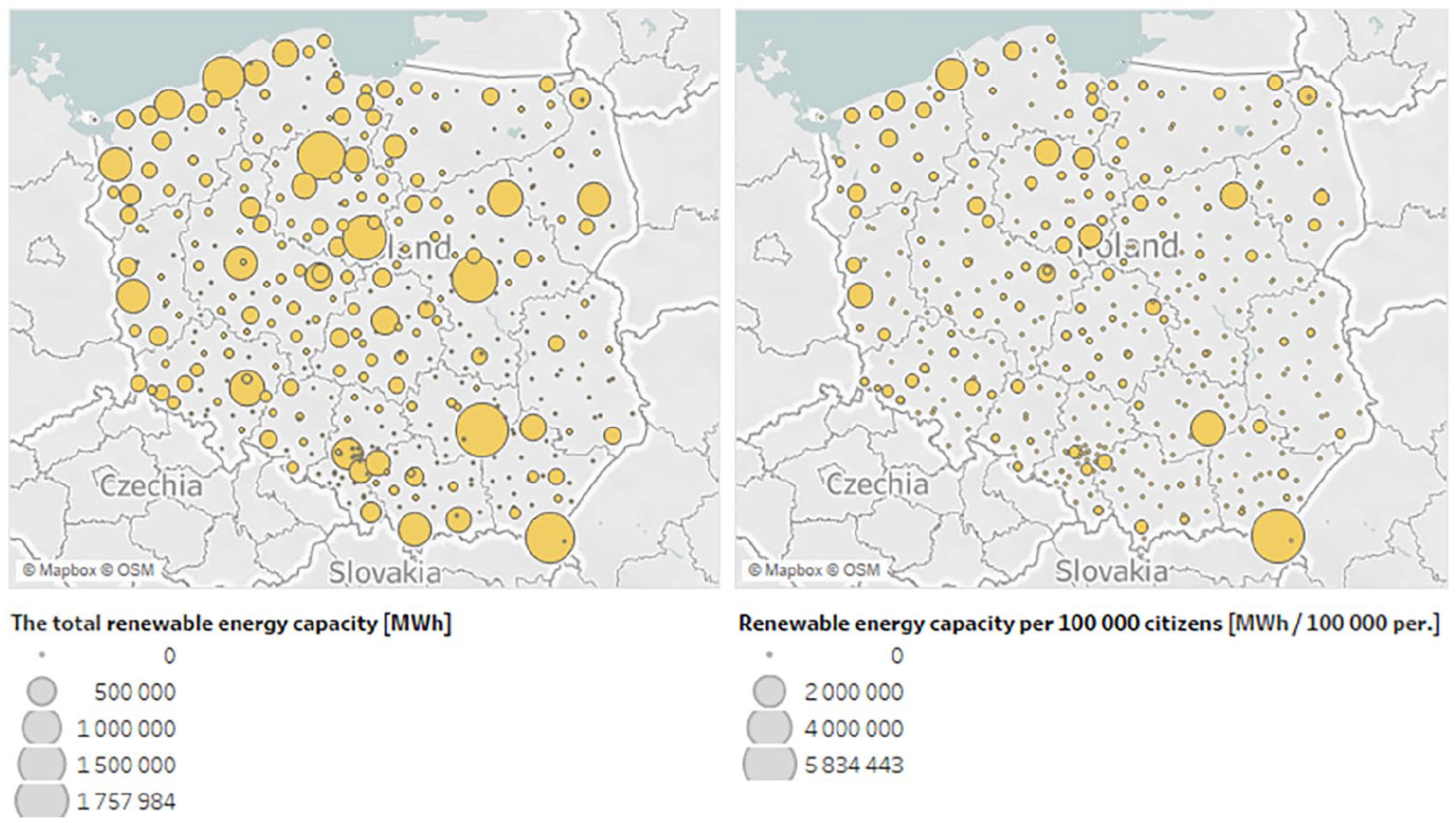
Distribution of renewable energy capacity: (left) total; (right) per 100 thousand citizens.
Distribution of energy consumption
In terms of energy consumption an expectable pattern can be observed once total consumption is considered (Figure 4). As energy consumption is significantly connected with number of energy consumers, the highest consumption is observed for capital city, then regional capitals and suburban areas, and finally more peripheral areas. However, when it comes to energy consumption in the relation to population size, other patterns are observed. The differences observed are becoming slight and blurred. Nevertheless, the map of Poland clearly shows a megaregion of three voivodeships: Lubelskie, Świętokrzyskie and Podkarpackie with the lowest energy consumption in the country. This is due to socio-economic factors related to the strong depopulation of this area, a deeply advanced process of population aging and economic regression (Bański and Wesołowska, 2020), which results in lower energy demand of the inhabitants of this megaregion.
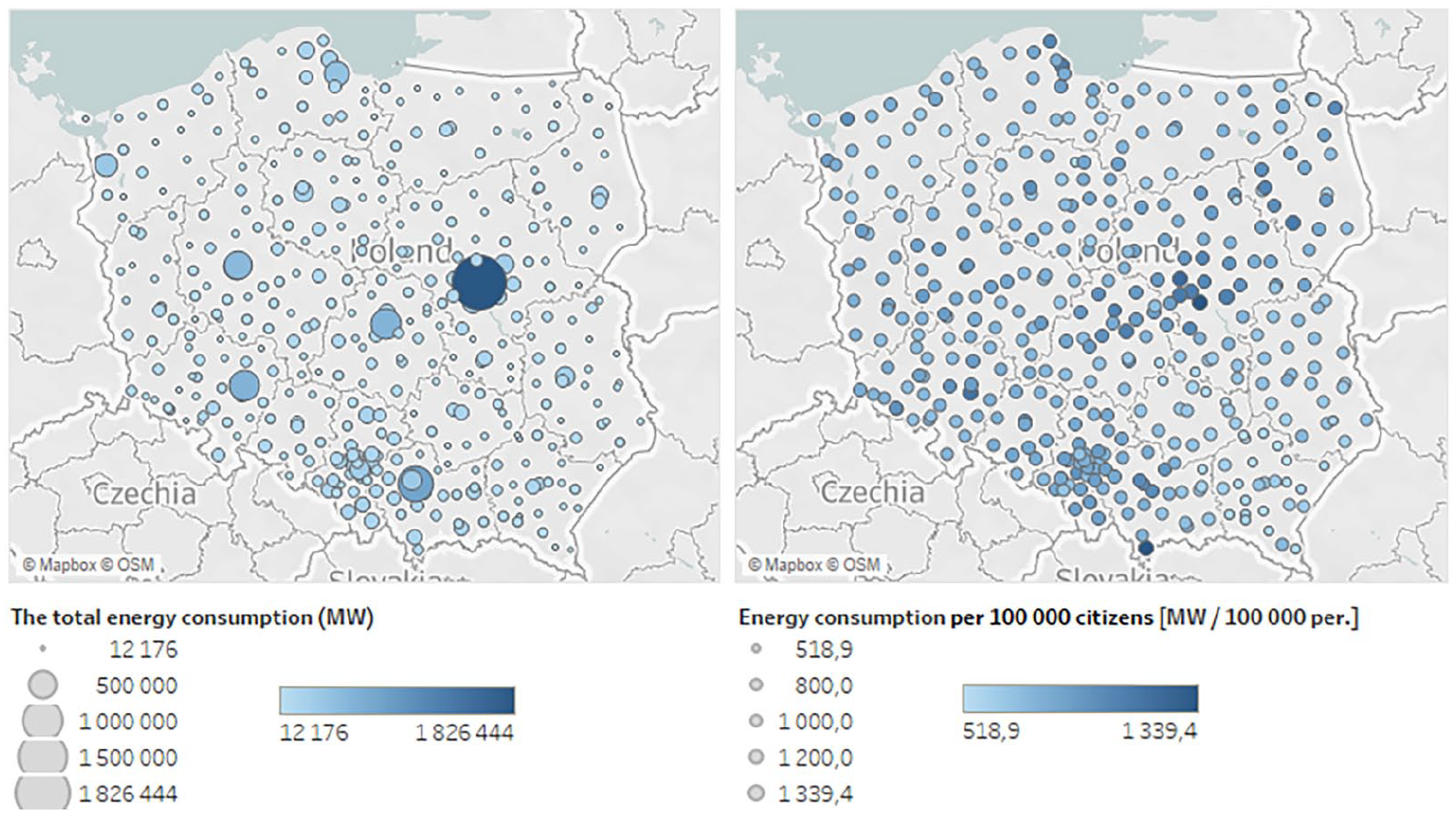
Distribution of energy consumption: (left) total; (right) per 100 thousand citizens.
Distribution of renewable energy balance
The relation between theoretically possible renewable energy capacity and energy consumption shows which poviats could have a theoretical chance to deliver renewable energy surplus (green units) and which will remain as renewable energy debtors (red) with current state of renewable energy installations (Figure 5). According to the analyses carried out, energy debtors include, on the one hand, rural areas, mainly in eastern and south-eastern Poland, and on the other hand, cities located almost all over the country, including mainly in southern and south-western Poland. In both situations the main reason is the lack of large, highly efficient RES installations. However, as far as urban energy debtors are concerned, the situation is improved by the fact that RES installations guaranteeing energy production based on locally available resources are located in the suburban areas of these cities, thus creating urban energy bases. This is different for rural areas. Despite relatively lower energy demand in these areas in comparison to metropolitan centers and urban agglomerations, their position as self-sufficient in terms of energy is diminishing. The lack of large RES installations with limited fluctuation in energy production and the location of small-scale RES installations (e.g. PV) with limited efficiency only deepen the peripheralization of Polish rural areas and strengthen their dependence on external energy supplies. This energy deficit may potentially lead to energy exclusion or even fuel poverty (Buzar, 2007; Lorenz and Grudziński, 2000; Ürge-Vorsatz et al., 2006). Areas affected by fuel poverty are characterized by difficulties in meeting basic needs related to the use of electricity (e.g. lighting, domestic appliances, and equipment) and heat (Energy poverty, 2014). This phenomenon may develop in a given area as a derivative of the insufficient supply of energy services to the population (insufficient energy production) and the socio-economic characteristics of the population living in the area. In Poland, 5.1% of the population is not able to heat their house properly due to the level of poverty and low material status (Czarnecka, 2013). Certain social groups are at particular risk of fuel poverty. They comprise the poor elderly living alone in rural areas, especially in dispersed settlements (Figaszewska, 2009), as well as the population of eastern Poland.
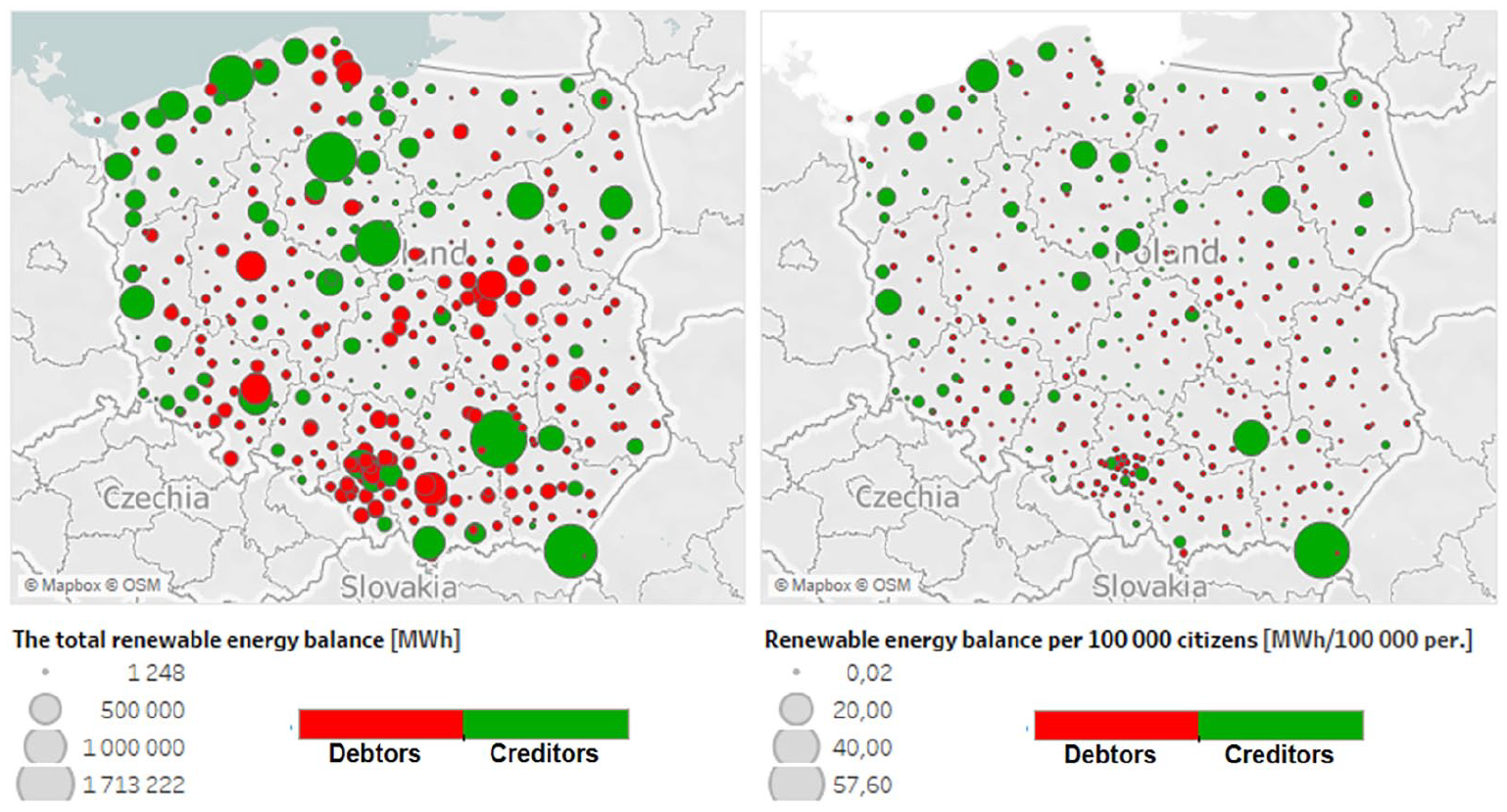
Spatial distribution of renewable energy creditors (green) and renewable energy debtors (red): (left) total; (right) per 100 thousand citizens.
All renewable energy creditors and debtors are presented are presented on rankings to visualize relative differences between specific unit (Figure 6). Detailed list of all poviats in each ranking are included in Supplemental Appendix A.
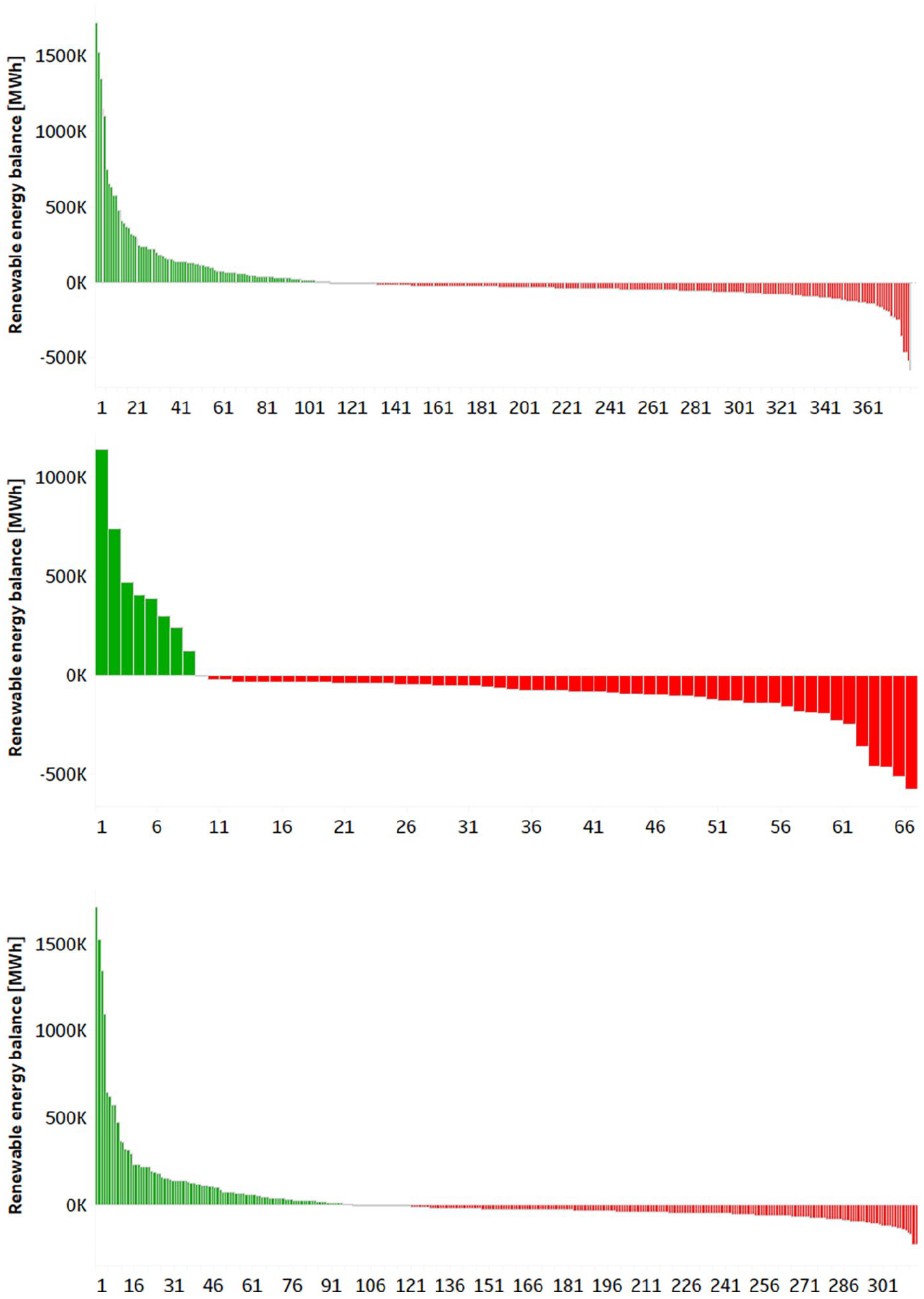
Comparison poviats as renewable energy creditors (green) or renewable energy debtors (red): top) all poviats; middle) cities of poviat status; bottom) other poviats.
Discussion
Creditors or debtors?
Obtained results show significant differentiations in renewable energy balance analyses. Main renewable energy creditors per capita create rather lonely islands and surrounding units in most cases does not follow the same pattern. The most homogeneous part of the country in terms of renewable energy surplus in a coastal part of Poland, which therefore, may play an important role in energy transformation of the country. Scattered locations of all creditors does not allow to categorize regions as fully creditors or debtors and in each region there are some poviats that can be categorized as frontrunners in sustainable energy development. In both total as well as per capita evaluation renewable energy debtors do not reach the amount of energy imbalance as creditors. That is a positive measure showing that the level of their sustainable energy development does not result in a gap that could be noticed by local authorities as impossible to reduce. Focusing at all poviats it can be noticed that 109 out of 380 poviats are renewable energy creditors which gives almost 29% of units. Comparing to well-known Pareto principle of 80%–20% which describe commonly noticed disproportions in many aspects of human activity (Matei and Bruno, 2015; Naoum et al., 2016; Tanabe, 2018), it could be assessed that proportions between renewable energy creditors and debtors have similar characteristics, even slightly in the direction of more equal distribution.
While discussing obtained results, it is important to highlight the main limitation of this study. The renewable energy capacity assessed in this research is a theoretical value and represents an amount of energy that could be produced in case renewable energy installations use their available installed power potential. We did take into account individual efficiency levels for each renewable energy source, however, additional limitations can be caused by external factors. For example, despite an efficiency of hydropower production, during periods of drought there could be not enough water resources to drive water turbines. Similar cases can impact all other renewable energy sources. Therefore, energy production in the reality is lower than evaluated in the results of this study. However, this limitation influence all types of analyzed installation which means that the impact on calculation results is proportional. That is why ranking of analyzed poviats could possibly stay similar, showing more or less the same relations on that which local units are frontrunners in renewable energy production and can offer surplus to the rest of the country (major renewable energy creditors).
Local energy producers in the Anthropocene
Bearing in mind the overwhelming uncertainty and fluctuations that accompany man in the Anthropocene as an immanent feature of late modernity (Giddens, 1990) or, as Bauman (1991) writes, postmodernity, the local dimension represents an unique and frequently underrated value. Both the local context and endogenous resources, including immobile ones, are appreciated as a good and expand the potential of a given place. Undoubtedly, the utilization of local energy resources also belongs to this group of assets. The identification of energy potential in communities, which precedes their possible launch, is critical and constitutes a milestone in overcoming transformational obstacles. This is clearly visible in Poland, where the post-socialist heritage uniquely forms The Anthropocene (Chodkowska-Miszczuk et al., 2021a).
The obtained results for all renewable energy debtors show that in the vast majority of poviats (areas that represent the local level in Poland), renewable energy production could not reach the status of their energy consumption, even theoretically. Higher congestion of renewable energy debtors may suggest policy-makers which parts of the country require support for renewable energy development activities driven by public authorities. The results prove the need for wide-ranging actions to normalize the distribution of energy production sites. Faulques et al. (2022) emphasize territorial distribution justice as one of the basic factors motivating the development of renewable energies. Unjustified irregularities in spatial distribution of the energy production facilities and disbalance between their location and local energy needs, gradually materializes into the conflicts with sustainable development of communities and just transition (Benediktsson, 2021). Right contrary, there is an urgent need to adapt our communities to the climate policies.
Considering the importance of energy transformation in recently adopted the European Green Deal (European Commission, 2019), it seems crucial to search for clean energy debtors in order to develop defused local energy systems limiting energy transmission losses as well as energy transmission infrastructure needs (Tröndle et al., 2020). Support of regions with low level of renewable energy production might have also long lasting effect as the ability to compare best practices in similar conditions increase the conviction of local community to implement similar solutions in their region (Carfora et al., 2017) reaching ultimate target of cohesion policy among EU (Chodkowska-Miszczuk et al., 2016). This issue became even more urgent considering eroding consensus on ecological modernization of energy transition in developed countries (Krüger, 2022).
Our findings are truly substantial from the perspective of other studies considering allocation of public funds to renewable energy projects. As was proved by the studies from Lithuania, Latvia and Estonia (Štreimikiene, 2016), Greece (Apostolopoulos et al., 2020), or Poland (Kazak et al., 2020) there is not a single one general national pattern of the European funds allocation for renewable energy so far. We are well aware of the example of the effects of the distribution of funds under the implementation of the Common Agriculture Policy, which proves that clear certain standards should be developed. The lack of suitable criteria for granting the EU support to farmers and rural areas to trigger pro-environmental measures and protection of the natural areas has unexpected and non-obvious consequences. These include, for example, the asymmetric division of funds with a s/ubstantial competitive advantage of large agricultural enterprises, the location of which does not always coincide with the presence of valuable natural areas (Wiśniewski et al., 2021). Biczkowski et al. (2022) identify an extremely disturbing process that can be referred to as “internal neo-colonialism.” The attractiveness of support funds causes agriculture and rural areas, including their natural and financial resources, to be drained by external (supra-local) entities.
Similar challenges lie behind the support of renewable energies. Therefore, the locally-driven approach proposed in this study we find as necessary tool to monitor and possibly revise the way how the public funds are spent. The energy sector, as the “lifeblood of the economy,” absolutely requires public support so that even ultraperipheral locations and secluded locations can be plugged to the grid. Nevertheless, an indispensable element of an effective energy transition is the democratization of energy systems (Silva, 2022; van Veelen and van der Horst, 2018) and the involvement of local communities expressing their needs and expectations (Krupnik et al., 2022). Bottom-up activities initiated as a result of cross-sectoral cooperation have a greater chance of success, as their planning and implementation take into account local needs and new opportunities that often cannot be spotted from the outside. The renewable energy market needs to diversify, both in terms of source structure and facility size. Distributed energy generation strengthens the country’s energy security and independence from external supplies and shortens the production chain, which is necessary for today’s fluctuating and challenging crisis time (Osička and Černoch, 2022).
Conclusions
The low carbon energy transition highlights the emerging spatial and social inequalities and the entanglement of the energy sector in power relations over territory and land. Contrary to clearly defined goals in terms of a share of renewable energy in energy sectors in each country of EU, local administration units do not show similar patterns that would allow to determine typical share of renewables in energy mix at the local scale. There are energy producers on the one hand and energy consumers on the other. And even the establishment of new energy entities that use locally available RES does not necessarily guarantee the economic success of an area. Even if a peripheral rural area generates significant amounts of energy from renewable energy, but not in accordance with local needs, it does not seem to be in line with sustainable energy development. There is an urgency of a balance between the level of energy production and consumption in each local communities, so that the environmental and socio-spatial costs of such investment can be gradually reduced, mitigated and the benefits increased. Otherwise, unequal model of renewable energy development will result for instance in increasing needs of energy transmission influencing in the total economic viability of renewable energy. Hence, the costs of renewable energy projects will increase and the same time, the benefits will decrease. Undoubtedly, there is higher chance for further increase of social frustration and peripheralisation of the wide areas. We need to keep in mind that energy justice require not only fair sharing of benefits but also responsibilities.
Despite ethical issues related to energy justice and its clear disconnection from the current mainstream energy policy, diffused approach of renewables’ development may increase energy security of individual communities and stabilize y our energy systems. We claim that more systematic introduction of decentralized systems is the way ahead out of the current energy crisis. The current war in Ukraine highlights this urgency. We should be aware that centralized energy systems result in few vulnerable points which might become military targets. By destroying these critical infrastructural facilities millions can have a limited or no access to energy with catastrophic consequences. That additionally proves the significance of development of decentralized and local energy systems in order to make them secure.
Considering all the points mentioned above, there is therefore a urgent need for a balanced approach to planning of renewable energies, taking into account the needs and expectations of local communities. Creating winners in this energy game is about producing local renewable energy corresponding to the level of its consumption. We are aware that this vision brings about multiple challenges for many communities that are not yet sufficiently prepared, both terms of infrastructure or planning.
It would useful if future studies concerning this issue focus on how to overcome a certain limitation of our study, that is, by the detailed analysis on actual local renewable energy production, not focusing just on the potentials based on installed capacity. We need to have more exact and precise information about the balance between energy demand and supply in local communities. Moreover, it is also worth to analyze annual variability between the supply and demand to clarify if the position of renewable energy creditor or debtors may change seasonally. The practical application of our approach is in regional policy on allocating the subsidies for renewable energy development. Public support should not be targeted only in these administrative units that are the most efficient in the preparation of funding applications, but the disproportion between renewable energy production and energy consumption should be also considered as a factor influencing decisions. We urgently need to support more sustainable energy development in our communities.
Supplemental Material
sj-docx-1-anr-10.1177_20530196221149111 – Supplemental material for Renewable energy creditors versus renewable energy debtors: Seeking a pattern in a sustainable energy transition during the climate crisis
Supplemental material, sj-docx-1-anr-10.1177_20530196221149111 for Renewable energy creditors versus renewable energy debtors: Seeking a pattern in a sustainable energy transition during the climate crisis by Jan K Kazak, Justyna Chodkowska-Miszczuk, Grzegorz Chrobak, Maria Mrówczyńska and Standa Martinát in The Anthropocene Review
Footnotes
Funding
The author(s) disclosed receipt of the following financial support for the research, authorship, and/or publication of this article: The Open Access fee of the article was covered by the Wrocław University of Environmental and Life Sciences.

Supplemental material
Supplemental material for this article is available online.
References
Supplementary Material
Please find the following supplemental material available below.
For Open Access articles published under a Creative Commons License, all supplemental material carries the same license as the article it is associated with.
For non-Open Access articles published, all supplemental material carries a non-exclusive license, and permission requests for re-use of supplemental material or any part of supplemental material shall be sent directly to the copyright owner as specified in the copyright notice associated with the article.
