



Abstract
This article reviews how simple heuristics – ‘rules of thumb’ – have guided human adaptation and the evolution of complex cultures. First, we argue that rules of thumb have been important catalysts for the evolution of human knowledge systems in the Holocene past. Through a variety of examples and case studies, we discuss how human cultures have used simple heuristics in domains as diverse as foraging, agriculture, social learning, moral and legal judgement and technological development. We emphasise how rules of thumb are convenient units for cultural transmission, and how they can facilitate efficient decision making by making use of recurrent environmental features. Second, we caution that as Anthropocene environments rapidly change, many traditional heuristic problem-solving strategies will face challenges due to cultural evolutionary mismatch. Old rules may not function in new environments, creating potential challenges for traditional (ecological) knowledge.
Keywords
Introduction
A key component of human adaptive capacity is our ability to solve problems and make decisions effectively, even when available information is limited (Gigerenzer and Selten, 2002; Haselton et al., 2009). Previous research has suggested that simple heuristics – ‘rules of thumb’ – can often be useful and practical decision-making strategies under limited information (Gigerenzer and Todd, 1999a; Todd and Gigerenzer, 2012). However, the variable ways by which human cultures have used rules of thumb to solve everyday problems are still insufficiently charted.
In this paper we reveal some of human societies’ rich history of applying rules of thumb in guiding their daily activities and social organisation. We draw examples of rule-of-thumb decision-making from cultural domains as variable as agriculture, foraging, social learning, religion, law, technologies and architecture, illustrating how rules of thumb have been key components of human adaptation in the Holocene. We discuss how rules of thumb are important constituents of traditional knowledge frameworks, and how they are effective, fast and frugal decision-making strategies that are useful for practical problem-solving.
We identify two key features of rules of thumb. On the one hand, we uncover how they are suitable vehicles for social learning. Rules of thumb are cognitive shortcuts that can be handily broken into conveniently learnable form, and embedded into traditions, stories, analogies, mnemonics, material artefacts and moral guidelines. This means that they can be accurately transmitted between and within human generations, enabling cumulative cultural and technological evolution. On the other hand, we illustrate how rules of thumb reduce cognitive demand by making efficient use of environmental structures and regularities. This means that they can simplify problem-solving strategies to more comprehensible and readily applicable form. Accordingly, we argue that rules of thumb provide simple scaffoldings which can facilitate the evolution of individual skills and complex cultures.
Uncovering the cognitive and behavioural precedents of cultural complexification and human adaptation have been identified as some of the key challenges in evolutionary human sciences (Brewer et al., 2017). To grasp how complex human cultural practices and technologies have evolved, it is important to understand the cognitive mechanisms that enabled their development. Whilst recent research has shed light on this question (Brand et al., 2021; Heyes, 2018; Malafouris, 2013; Norenzayan et al., 2006), much work remains to be done in providing cognitively plausible accounts for the evolution of complex cultures. Here, we argue that rules of thumb have been important catalysts for cultural complexification and human adaptation in the Holocene.
We also raise a cautionary point for the future. Since rules of thumb often depend on environmental regularities, they are suspect to cultural evolutionary mismatch – old rules may not function in new environments. In the rapidly changing environments of the Anthropocene, many traditional rules of thumb risk becoming outdated. We argue that this presents humanity with some specific cognitive-cultural hurdles when adapting to climate and ecosystem change.
We start by first going through the theoretical backdrop of these arguments, and then move on to a discussion that draws on exemplary case studies. We provide a review of the current understanding on simple heuristics, also highlighting how rules of thumb have had a larger role in cultural evolution than often assumed. We conclude by discussing the challenges of the Anthropocene on the continued use of traditional heuristics.
Theoretical backdrop: Heuristics and social learning
Recent research in behavioural science and decision-making has emphasised how humans manage complex tasks and navigate uncertain environments by using simple heuristics (Gigerenzer, 2008; Marewski et al., 2010; Sull and Eisenhardt, 2015; Todd and Gigerenzer, 2012). Research on ecological rationality has uncovered how good decisions do not always require complex cognitive processing (Marewski et al., 2010), and how simple rules of thumb can prove to be adaptive when used in the right environments (Hutchinson and Gigerenzer, 2005).
Heuristics can be useful in at least two respects. First, rationality is inescapably ‘bounded’ by structural constraints, such as limited time, information, energy and cognitive capacity (Arthur, 2021; Gigerenzer and Todd, 1999b; Kay and King, 2020; Simon, 1972, 1990; Todd and Gigerenzer, 2012). Rational decision-making is also impeded by fundamental uncertainty (Arthur, 2021; Kay and King, 2020): everyday problems are often ill-defined (optimal solutions are often unspecifiable), probabilities of outcomes (and their costs and benefits) may be unknown, and the search for an optimal policy may be computationally intractable (Arthur, 2021; Callebaut, 2007; Gigerenzer, 2021; Kay and King, 2020; Kozyreva and Hertwig, 2021; Simon, 1972, 2000). Since decisions must be made nonetheless – often with speed and efficiency – heuristics are indispensable for human survival.
Second, heuristics are typically adapted to the decision-maker’s ecological niche, making use of local knowledge and regularities. Research in ecological rationality has sought to define rationality in terms of fitness between cognitive strategies and environmental structure (Gigerenzer, 2004: 64). Even simple and biased heuristics can effectively exploit the structures of the local environment, using statistical regularities and ecologically valid 1 cues to make reliable inferences. By utilising environmental structures, heuristic decision-making can ‘offload’ cognitive processing to the environment (Risko and Gilbert, 2016; see also Clark and Chalmers, 1998; Constant et al., 2022). Offloading means that the cognitive demand for information processing may be considerably reduced when reliable environmental features/correlations are utilised in decision-making.
Heuristics can be ‘fast and frugal’, using one-reason decision-making or other simple inferences to make decisions (Gigerenzer and Todd, 1999a). Heuristics can also guide behaviours that ‘satisfice’ (Simon, 1956), settling on outcomes that meet a pre-defined aspiration level. See Todd and Gigerenzer (2012) for an overview of how and where fast and frugal heuristics or satisficing strategies have been shown to work. However, research in ecological rationality and fast and frugal heuristics has traditionally focused on well-defined algorithmic decision-making processes (e.g. Berretty et al., 1999; Martignon et al., 2008), and still has a dearth of examples and case studies from more realistic everyday problem-solving. This is something that we seek to amend by studying how cultures worldwide have developed rules of thumb to guide even complex everyday behaviours.
As defined here, ‘rules of thumb’ may be fast and frugal heuristics or other ‘simple rules’ (Eisenhardt and Sull, 2001; Sull and Eisenhardt, 2015), such as how-to rules (rules that guide successful behaviour), boundary rules (rules that define the boundaries for safe or successful behaviour), or other rules that resemble rough guidelines or principles. Typically, a rule of thumb is defined as something based on practical knowledge rather than theoretical understanding (OED Online, 2021). This also applies in the present text. The following working definition of ‘rule of thumb’ is used in the remainder of this review: A rule of thumb is a cognitive shortcut. A rule of thumb reduces the complexity of problem-solving by utilising simple cognitive or behavioural procedures. It is used for making inferences or guiding behaviours. It is typically based on practical rather than theoretical knowledge. Rules of thumb may be contextually sensitive “fast and frugal” heuristics, one-reason decisions, simple if/then rules, or rules based on, e.g., simple geometric ratios. Rules of thumb seek to satisfice rather than optimise. Rules of thumb may be used as rough guidelines, even without causally understanding why they work.
Consequently, rules of thumb are ‘bite-size’ cognitive tools that are easy to learn (and teach) through practical activities and embed into tradition, artisanship, material artefacts, mnemonics, analogies (see Brand et al., 2021) and social relations. Importantly, the use of rules of thumb does not require the understanding of causality – one can utilise culturally inherited rules of thumb without understanding why they work. Rules of thumb may therefore be embedded in the ‘collective brain’ (Henrich, 2015; Muthukrishna and Henrich, 2016) of cultures, helping us transmit valuable skills and adaptive strategies within and between generations.
Rules of thumb in cultural evolution: Case studies and discussion
To illustrate how simple rules contribute to human adaptation and cultural evolution, we present a cross-cultural sample of rule-of-thumb decision-making and problem-solving. These examples derive from the domains of agriculture, foraging, social learning, moral decision-making and technological evolution.
Natural cues: Rules of thumb in subsistence
Phenological knowledge
Avoiding poisonous foodstuffs, and timing activities such as sowing, hunting and harvest, are central to cultural continuity and reproduction. A recurring theme in literature on local, small-scale, practical, traditional and indigenous ecological knowledge is the use of bioindicators and phenological knowledge in decision-making. Phenology refers to the study of periodic/seasonal events in biological life cycles. Phenological knowledge makes use of recurrent ecological events, such as the flowering of particular plants or the arrival of migratory birds to open and close resource exploitation seasons (Colding and Folke, 2001; Prober et al., 2011; Smyth and Isherwood, 2016).
Traditional ecological knowledge has for long recognised the value of phenological indicators as cues for guiding cultural activities. Fast and frugal inferences can be based on a single ecologically valid cue, often on the appearance of a specific bioindicator (e.g. a plant or an animal). Since phenological events usually occur in a reliable sequence, one event may be used as a heuristic to indicate other activities (Lantz and Turner, 2003). This affords simple conditional ‘if/then’ rules, which use one event (‘if x occurs’) to trigger another (‘then do y’). These rules of thumb can efficiently offload vital decisions to the environment by utilising biological regularities. Since these rules rely upon local ecosystem features rather than universal systems, they can deal with local variance in, for example, weather conditions. Furthermore, they are conveniently embedded into local oral tradition and traditional ecological knowledge.
For example, among Aboriginal Australians and Torres Strait Islanders, the use of phenological rules of thumb is common. Recurrent ecological events, such as the flowering of specific plants or arrival of migratory birds, can determine the opening and closing of resource exploitation seasons (Smyth and Isherwood, 2016). In a review of Australian Aboriginal Peoples’ seasonal knowledge (Prober et al., 2011), various communities are described using cues such as ‘weather, plant flowering events, and other seasonal indicators’ to point to the arrival, breeding status, or condition of terrestrial or marine fauna. For example, the Miriwoong people use the flowering of the Gali-Galing (Grevillea pteridifolia) to signal the beginning of the cold season; this defines the time to undertake traditional burning practises which prevent landscape-damaging hot season fires (Leonard et al., 2013: 628).
The traditional Javenese seasonal calendar PranotoMongso utilises bioindicators as heuristics in resource management (Retnowati et al., 2014). Rural communities in Gunungkidul use PranotoMongso, for example, to identify the start of the rainy season from the bud of Gadung yam (Dioscorea hispida), which indicates increasing air humidity. The start of the dry season, in turn, can be identified from the outbreak of cotton tree (Ceiba pentandra) or the sound of the coconut bug (Oryctes rhinoceros). The timing of rainy and dry seasons is valuable knowledge for the timing of sowing or harvest. In Retnowati et al.’s (2014) research on Javanese use of the PranotoMongso, all interviewees knew some bioindicators for seasonal changes. These rules are passed on from the elderly to young farmers through stories, traditional narratives, observation and direct experience (Retnowati et al., 2014).
By the same token, a survey of ethnographic literature documented over 140 examples of traditional phenological indicators among the indigenous peoples of British Columbia and surrounding areas (Lantz and Turner, 2003). These traditional rules indicate plant and animal resource availability and may be used to predict changes in weather and seasons. Lantz and Turner (2003) found that approximately half of the documented rules are direct indicators that use the appearance of one species to signal the availability of another. For example, the Nlaka’pamux use the blooming of wild rose (Rosa spp.) as a heuristic to indicate that soapberries (Shepherdia canadensis) are ready for harvest, and the leafing of desert currant (Ribes cereum) to signal that the steelhead trout (Oncorhynchus mykiss) are running in a local river (Lantz and Turner, 2003).
Similar phenological knowledge has been reported in communities in the Delta State of Nigeria (Fitchett and Ebhuoma, 2018) and various Native American communities (Chisholm Hatfield et al., 2018). Studying the Seine River First Nation, Haines (2017) compared the efficacy of traditional phenological heuristics (first sightings of Eastern tiger swallowtail, Papilio glaucus) to modern scientific measurements (e.g. water temperature) to predict the spawning of lake sturgeon (Acipenser fulvescens). Whilst the latter was more accurate, the swallowtail-heuristic was still shown to be remarkably precise.
In Northern Europe, Skolt Saami tradition from Suõʹnnʼjel instructs to gather inner bark from pine trees (Pinus sylvestris) when Labrador tea (Rhododendron tomentosum) blooms (pine cambium was added to various foods). In Finnish tradition, the sowing of flax is timed with the flowering of the bird cherry (Prunus padus) (Kaukonen, 1946), and birch bark (used for tinder and crafts) is best removed from a growing tree while rye blooms (Laine, 1944). Traditional heuristics also guide pastoral activities. For example, some western North Saami reindeer herders make use of the following rule of thumb: ‘if pastures run out or if a reindeer is separated from their herd, search for missing reindeer in the magnetic north’. This heuristic may have its roots in deer species’ instincts to align with the Earth’s magnetic field (see Begall et al., 2008, 2014). 2 Similarly, environmental cues can be used to predict animal behaviour to guide the onset of hunting seasons: one rule used in Koyukuk-Middle Yukon is that ‘moose don’t move until it starts to freeze and you get that crunch in the ground’ (McNeeley and Shulski, 2011: 469). The biological process underlying this heuristic is that sub-zero temperatures cause the senescence of the deciduous tree leaves that moose browse, which in turn triggers bull moose to stop eating and commences their highly mobile rutting behaviour (moreover, less leaves also means higher visibility for hunters) (McNeeley and Shulski, 2011).
Rules of thumb are commonly used to complement more complex cultural traditions and processes, and simple heuristics may be embedded in complex cultural systems. Lansing’s (1987) work on Balinese water temples emphasised that whilst Balinese rice cultivation is timed accordingly with the full-moon of a specific month, this simple environmental cue is only used as a scaffolding to commence a complex series of cultural events that involve various rituals and complex forms of social cooperation that ensure successful harvest and pest control. Altogether, the use of simple heuristics does not imply that the cultural frameworks these heuristics are embedded in are simple. Rather, the use of rules of thumb is a testament of the capacity of local forms of traditional ecological knowledge to make efficient and adaptive use of ecological correlations. Turner and Clifton (2009: 185) emphasise how the intimate and elaborate understanding of phenological knowledge is important for survival: ‘it allows people to accommodate year-by-year variations in seasonal cycles without expending excessive energy through premature travel to distant harvesting sites, whether offshore islands, canyon floors or mountainsides’.
Foraging
Foraging can also be guided by heuristics. For example, simple rules of thumb are utilised to guide safe and efficient mushroom foraging in Finland (Kaaronen, 2020a). Edible mushrooms are often hard to distinguish from poisonous lookalike species, and deadly mushrooms are abundant. Regardless, mushroom foraging is very common in Finland, fatal accidents are rare and mushroom hunting is considered a form of cultural heritage (Kaaronen, 2020a).
Much of the foragers’ success in an uncertain environment can be attributed to relatively simple rules. Mushroom foraging heuristics include simple recognition-type heuristics (see also Goldstein and Gigerenzer, 2002), such as ‘don’t pick mushrooms you don’t recognise’, as well as other decision-making rules that altogether preclude the picking or eating of specific subsets of potentially dangerous mushrooms (Kaaronen, 2020a). The latter case is best exemplified by the commonly reported fast and frugal heuristic: ‘avoid all white mushrooms’. The rationale for this rule of thumb is the high prevalence of a deadly white mushroom species, Amanita virosa (Figure 1). Heuristics may also guide the search for mushrooms: because of mycorrhizal (symbiotic) associations between fungi and plants, mushrooms tend to grow near specific tree species. Therefore, for example, Finnish foragers may use the presence of a birch tree as a cue to infer a possible vicinity of chanterelle mushrooms (Cantharellus cibarius) (Kaaronen, 2020a).

Specimen of Amanita virosa, commonly known as the ‘destroying angel’, in southern Finland. Particularly young A. virosa (bottom row) may be mistaken for one of several edible mushroom species such as those in the genus Agaricus (which are relatives of the portobellos/champignons commonly found in supermarkets). Such a mistake could well be deadly, since A. virosa is one of the most poisonous mushrooms in the world – eating just one cap can kill an adult human. For this reason, many Finnish mushroom foragers report altogether avoiding white mushrooms, even though edible white species are plentiful. Pictures by Roope O. Kaaronen.
Foraging heuristics are used particularly to establish precautionary boundary rules for foraging (Kaaronen, 2019, 2020a). In the practice of mushroom foraging, it is foremost important to avoid the risk of consuming a poisonous mushroom. A forager does not typically prioritise optimising their catch, but rather avoids worst outcomes (Kaaronen, 2020a, 2020b, Chapter 3.3). Cognitive biases may thus protect foragers from deadly environmental variance (see also Johnson et al., 2013) – since making correct rejections is paramount, it may be more adaptive to bias one’s search for subsets of mushrooms that don’t include any poisonous species (even if this means missing some edible ones).
Foragers also use other fast and frugal heuristics to make inferences about edibility. For example, in Finland a milk-cap mushroom (genus Lactarius) is considered edible if it bleeds white milk-like latex when cut: many milk-caps look alike, but a common poisonous species, Lactarius helvus, does not bleed white ‘milk’. Although this is not a foolproof strategy, it satisfices and doesn’t lead to fatal mistakes (Kaaronen, 2020a). To facilitate cultural transmission, foraging heuristics are often taught in mnemonics and analogies (Kaaronen, 2020a: 642; see also Brand et al., 2021 for discussion on analogies and cultural transmission). Some foragers describe using rules of thumb even when not completely sure why they were used at all. This highlights that culturally transmitted rules of thumb may sometimes outsmart the individuals using them. Rules of thumb may form a part of the so-called collective brain that guides habitual decision-making even when individuals are unaware about the reasons for doing so (Henrich, 2015; Muthukrishna and Henrich, 2016).
Siberian Yupik are documented to use similar precautionary rules when foraging (Ainana and Zagrebin, 2014: 18, 73). Consuming the previous year’s cowberry crop is prohibited, likely because over-wintered (snow-covered) cowberries may look like poisonous alpine berries. Traditionally, the Central Siberian Yupik also prohibited the collecting of capped mushrooms, due to the prevalence of poisonous species (non-capped mushrooms such as puffballs, Lycoperdon, were occasionally eaten). The local names of capped mushrooms reflect upon this negative sentiment, evoking cautionary analogies: the tuģnyģam sigutaņa mushroom literally means ‘devil’s ear’ among the Chaplino people, and tuģnyģam ayaviģa the ‘devil’s staff’ among the Sireniki (Ainana and Zagrebin, 2014: 18, 73).
Rules of thumb are far from the only forms of knowledge used in foraging-related decision-making. For example, many Finnish foragers are well-versed in scientific mycology, and the practice is thoroughly infused with tacit knowledge, pattern recognition and practical expertise (Kaaronen, 2020a). In fact, the use heuristics may require more elaborate skills: for example, the ‘white milk’ heuristic presupposes the capacity to identify mushroom in genus Lactarius. However, rules of thumb can be used complementarily to more complex knowledge systems: inherited rules of thumb serve as rough-grained instructional scaffoldings (Van Der Stuyf, 2002) which allow even a child to participate in the practice of foraging. Indeed, rules of thumb are often among the first rules taught to beginners, helping new practitioners develop more fine-grained expertise later on (Kaaronen, 2019, 2020a, 2020b).
Cultural biases: Rules of thumb for social learning
Rules of thumb also guide social learning. Copying others is often adaptive, since it offloads costly individual trial-and-error learning to one’s conspecifics (Mesoudi, 2011: 17). Henrich and Gil-White (2001) have proposed that humans use various simple rules to decide which individual(s) to learn from in a social group. One suggested heuristic for social learning is prestige bias. In prestige-biased social learning, humans disproportionately copy the behaviours of individuals highly respected in a social group (Jiménez and Mesoudi, 2019): a heuristic could therefore follow structures such as ‘copy the most successful individual’. Whereas success or fitness may be difficult to judge, prestige may be easier to infer based on simple cues. These cues can be divided into two kinds (based on Jiménez and Mesoudi, 2019).
With first-order cues, people infer prestige from individual traits, such as appearance, personality and material possessions (Jiménez and Mesoudi, 2019). For example, since age is often correlated with accumulated cultural knowledge, age can be used to rank copied individuals. A commonly used rule of thumb is therefore ‘learn from elders’. Other first-order cues include generosity (since surplus may result from success), self-confidence, sex, ethnicity, dialect, self-similarity and cultural titles (Acerbi, 2019; Henrich and Henrich, 2007; Jiménez and Mesoudi, 2019).
Second-order cues are cues where people select whom to learn from based on the behaviour of other individuals (Jiménez and Mesoudi, 2019). Heuristics can involve frequency-dependent behaviours (Kendal et al., 2009) where those individuals are copied who are most copied by others. A novel behaviour may be adopted once a certain proportion of acquaintances convey that behaviour (Centola, 2018, 2021), or one may disproportionately copy the most common behaviour in a social group (‘conformism’, Henrich and Boyd, 1998).
Moral rules of thumb: Religion, law and reciprocity
Rules of thumb are abundant in moral judgements, ethical codes, religious texts and codes of law. Many ethical doctrines designate rough-grained boundaries for social interactions by rule-of-thumb ethical codes. One notable rule of thumb in world religions is the ‘Golden Rule’, commonly formulated in English as ‘do unto others as you would have them do unto you’. The Golden Rule is a simple rule used to guide reciprocal and prosocial behaviour, an essential prerequisite for the development of large-scale complex cultures (Atran and Henrich, 2010; Norenzayan et al., 2016). Various versions of The Golden Rule have been traced to several locations in the Ancient world (e.g. Egypt, India, Middle-East, Greece and Rome), and versions of it can be found in most major world religions, including Judaism, Zoroastrianism, Islam, Christianity, Buddhism and Confucianism (Gensler, 2013; Neusner and Chilton, 2008). Some examples include (see Neusner and Chilton, 2008 for more):
Jain collection Sutrakritanga (1.11.33): ‘A man should wander about treating all creatures as he himself would be treated’ (Davis, 2008: 146).
Zoroastrian Book VI of the Dēnkard: ‘that character is best, one who does not do to another that which is not good for himself’ (Moazami, 2008: 68).
The extent upon which the Golden Rule in its various forms has in practice shaped moral behaviour is variable and contextual (Neusner and Chilton, 2008). For instance, versions of the Golden Rule may promote reciprocity on a continuum from within-group to between-group interactions (Green, 2008b), and may be applied variably between social hierarchies (see, e.g. Hindu and Confucian Golden Rules in Csikszentmihalyi, 2008; Davis, 2008). Regardless, its prominence is possibly a testament to its prosocial utility in the self-organisation of complex cultures. As a rule of thumb, it is intuitive, easy to understand and learn and offers a simplified summary of the advocate’s reciprocal moral tradition (Green, 2008a; Wattles, 1996: 188). Easily graspable heuristics like the Golden Rule may have served to sustain or increase group solidarity and reduce intra-group competition and freeriding – all important precursors to the emergence of stable, large and cooperative societies (Norenzayan et al., 2016).
Similar reciprocal rules of thumb are found in early codes of law. For instance, the Babylonian Code of Hammurabi (1755–1750 BCE) contains several reciprocal rules. Most famous is the ‘eye for an eye’ law (code no. 196; in Slanski, 2012). Many laws follow the same if/then formula: if a man does x, then y shall be done to him, where y is often equivalent or identical to x (Slanski, 2012: 104). Whilst the Code was not a legal document in the modern sense, its rough-grained rules were established by a sovereign authority, and likely did describe and have influence on Babylonian legal practices and ideologies (Slanski, 2012). Note also that heuristics are still used by many legal practitioners today (Gigerenzer and Engel, 2006).
Rules of thumb have also guided, in the past and the present, the suite of moral inferences that define everyday judgement and decision-making. Research suggests that moral judgement is often rather a matter of emotion and affective intuition than intentional reasoning (Greene and Haidt, 2002).
Cosmides and Tooby (2006) suggest that people often use the prevalence of luck to guide moral decisions and inferences. For instance, we intuitively follow a heuristic that reacts to unfortunate outcomes with compassion. Such a heuristic may have evolved to account for the role of environmental variability in activities such as hunting or foraging (Cosmides and Tooby, 2006). In a variable environment, there is reason to expect that the future will vary from the present, and that those who procured less food today may eventually be in a better position to reciprocate in the future. Therefore, being compassionate towards someone with bad luck today can hedge against uncertainties in the future, providing fitness payoffs in the long-term.
Similarly, humans use moral heuristics to punish free-riders, an important prerequisite for the cultural evolution of human cooperation (Boyd et al., 2003, 2010). A decision-rule for punishment can exist in form of a moral heuristic, which could be formulated as: ‘more punitive sentiment is felt toward those who contribute less than the self as well as those who contribute less than the group average’ (Cosmides and Tooby, 2006: 192). For example, Price (2005) documents such punitive heuristics among Shuar hunter–horticulturists: punitive sentiment is experienced mainly by high contributors, and is directed mostly at beneficiaries of collective action who could have contributed highly but opted not to.
Gigerenzer (2010) discusses moral heuristics in terms of ‘moral satisficing’. For instance, there is higher prevalence of organ donation in countries where citizens are opted into organ donation by default, as compared to those countries where they are not (Johnson and Goldstein, 2003). Gigerenzer (2010) suggests that there is a kind of moral heuristic at play here: ‘If there is a default, do nothing about it”’. A default bias may serve a prosocial function and facilitate the coordination and cooperation of groups by promoting behavioural homogeneity (Gigerenzer, 2010: 539).
Another moral heuristic is the Tit-for-Tat rule (Gigerenzer, 2010: 546), in which an action (cooperation or retaliation) is equivalent to the action that it is done in response to. Although humans likely rarely follow strictly formalised versions of tit-for-tat, a related rule of thumb is known to have been applied in frontlines of the First World War. The ‘Live and Let Live’ principle guided small-unit military behaviour in trench warfare, and involved refraining from offensive activity on the condition that this act of non-aggression is reciprocated (Ashworth, 1968: 411, 1980: 19).
Reliable ratios: Rules of thumb in niche construction and technological evolution
Rules of thumb are, above all, practical rules. Accordingly, rules of thumb have been applied plentifully in the practical crafts and technical manufacture, guiding cultural niche construction (sensu Laland and O’Brien, 2011; Laland et al., 2001). Our species is, in many respects, the ultimate niche constructor, having fitted most of our everyday environments with infrastructures and technologies (Clark, 2015; Laland, 2018). Consequently, rules of thumb in these domains are likely to have had a particularly large impact on the evolution of complex cultures.
Builders and innovators of pre-modern times would often work without detailed plans or theories (Fitchen, 1989). In the West, practical and theoretical knowledge lived mostly separate lives until the early Renaissance (Crosby, 1997). Instead, technologies would evolve through practice, trial-and-error, tinkering, recombination, serendipity and tradition, with successful techniques surviving the test of time (Arthur, 2009; Cazzolla Gatti et al., 2020; Muthukrishna and Henrich, 2016). Social learning would be facilitated by elaborate social structures such as master-apprentice relations and guilds (Fitchen, 1989; Turnbull, 1993).
Although lack of causal understanding could lead to mishaps and major structural failures were more common than today, the history of atheoretical or semi-empirical building is less bleak than one might assume (Brencich and Morbiducci, 2007; Fitchen, 1989; James, 1982). Histories of engineering suggest that the much of preindustrial construction success can be attributed to the reliable and efficient use of rules of thumb (Brencich and Morbiducci, 2007; Dhoop and Olaberria, 2015; Fitchen, 1989; James, 1982; Olaberria, 2014; Turnbull, 1993). Rules of thumb would serve as the ‘mnemonics of the industry’, being an important way in which experience was memorised and transmitted socially (James, 1982: 32).
Crumlin-Pedersen (1986, 2009) suggests that Viking longships (such as the ninth century Oseberg ship, Figure 2) may have been designed partly by rules of thumb. There are no indications that construction drawings or downscaled models (or perhaps even moulds) were used in Viking shipbuilding in Scandinavia (Crumlin-Pedersen, 1986: 220). Shipbuilders were often illiterate, and would not have understanding of the mechanical principles underlying the function of ships (Dhoop and Olaberria, 2015). Instead, shipbuilders would construct ‘by eye, in a shell-first manner, and using rules of thumb to control the three-dimensional shape’ (Dhoop and Olaberria, 2015: 95). Rules of thumb would particularly utilise simple geometric ratios. For example, the shape of the stem of ships like the 11th century Skuldelev 3 was likely determined by simple geometrical proportions of the keel length (Crumlin-Pedersen, 2009: 153).
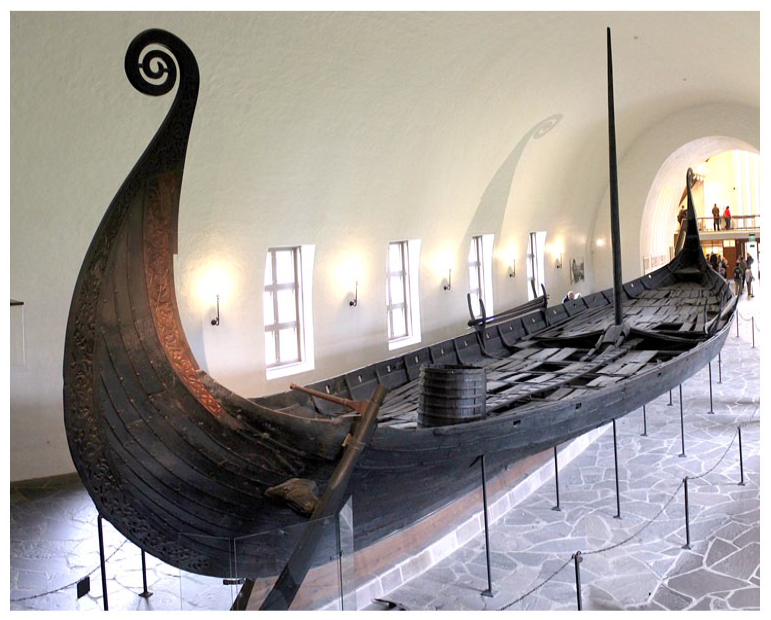
The well-preserved Oseberg ship, a nineth century Viking clinker-built longship at display in Viking Ship Museum, Oslo. The ship is mainly oak and elaborately decorated. Fully manned, the ship could carry 30 oarsmen (Museum of Cultural History, 2021). Photo by Mikael A. Manninen.
These geometric rules of thumb could be offloaded onto a simple physical artefact, for example a story-stick on which critical measurements would be recorded (Dhoop and Olaberria, 2015). In simpler cases, rules of thumb could be transcribed into verbal form or mnemonics – less precise, but effective memory aids and salient units for cultural transmission (Dhoop and Olaberria, 2015). The purpose of rules of thumb was not to rigidly prescribe the construction of the ship (Dhoop and Olaberria, 2015: 103). Rather, the builder would follow them as rough-grained guidelines, maintaining the liberty to implement small adjustments wherever deemed necessary. Some of these rules of thumb have survived to modern times in clinker building traditions (Crumlin-Pedersen, 2009: 150).
Olaberria (2014: 353) discusses a very similar case in ancient Mediterranean shipbuilding, noting how ‘the knowledge accumulated by pre-scientific shipwrights could be transmitted by rules-of-thumb and practical procedures’. Again, simple geometrical ratios may have been crucial for ship construction. For example, with the second century CE Laurons-2, ‘the diameter of the curve of the sternpost is one-and-a-half times the diameter of the circle circumscribing the master-section, or equal to the length of the keel’ (Olaberria, 2014: 356). The Marshallese have designed canoes in like manner: the length of canoe equals the length of mast, a half of the canoe length equals the distance from the weather side the of hull to its outrigger float, and ‘the length of float equals length of middle section of hull between the breaking points in line of keel’ (Mason, 1947: 88).
Finnish blacksmith traditions (Rytkönen, 1931: 143–146) are also reported to have made ample use of ratio-based rules of thumb. For example, when forging a scythe, the length of the required iron and steel bars would be one-half of the length of the intended scythe blade. Visual analogies were used to determine the amount of heating during the quenching of different kinds of steel: one kind of steel would be heated until white, and another until it is the colour of a ‘ripe cranberry’.
The use of geometric rules of thumb in early Mediaeval church construction is also well documented. Whilst the builders of Gothic cathedrals would not have detailed construction plans, models, or even universal units of measurement (masonry traditions even had idiosyncratic measures of a foot), they would have access to simpler but efficient understanding of geometry that served as rules of thumb for design (James, 1982; Turnbull, 1993). Rules would apply simple proportions: ‘half the number of feet in a span expressed in inches plus one inch will give the depth of a hardwood joist’ (Turnbull, 1993: 323; based on James, 1979).
Likewise, the wall thickness of the Saxon church of Bradford-on-Avon might have been determined by a simple geometric rule, using only a square and circle for measurement (James, 1982: 33; see Figure 3). James (1982: 33–34) emphases that the kind of geometric understanding used for building cathedrals was not as much mathematical as it was practical. This enabled the transmission and replication of specific arrangements in different circumstances, reduced problems to compact series of solutions, and afforded rough-grained and flexible responses to variable problems (Turnbull, 1993: 323). Simple ratio-based rules like these would be intuitive for a practitioner and simple enough to measure with tools no more complex than chalk lines, a straightedge, ruler, string and a pair of compasses (James, 1982; Turnbull, 1993). They would be conveniently and accurately transmitted within illiterate or atheoretical shipbuilder/masonry communities and master-apprenticeship relations (Olaberria, 2014). The skills necessary for using these rules would have been frozen around practical design procedures, making use of simple geometry and design tools (Olaberria, 2014: 361).
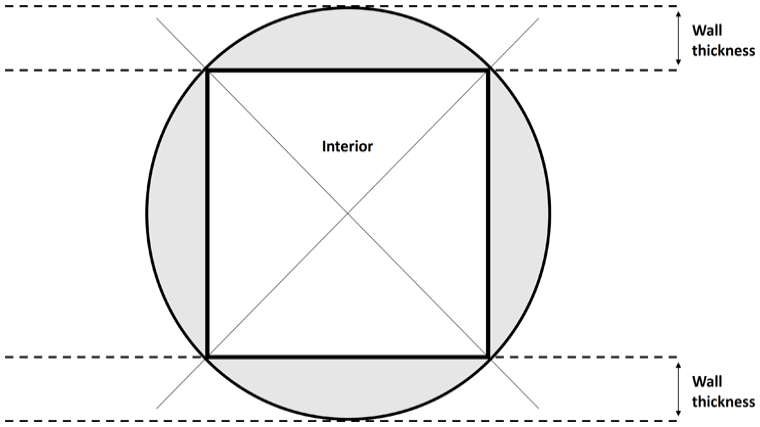
A simple rule from around the year 1000 CE used to determine wall thickness at the Saxon church of Bradford-on-Avon (adapted from James, 1982: 33): ‘A square would be drawn inside the walls of the nave [“Interior”] and, to calculate the outside, a circle would be set around the square’. The width of the leftover of the circle (pictured grey) would determine the thickness of the wall, as designated by the dashed lines. James 1982: 33) emphasises that this heuristic would only work for relatively small buildings.
In other cases, concrete bodily dimensions were preferred over abstract geometric ones. The role of body-based units of measure in cultural evolution has been more thoroughly discussed in Kaaronen et al. (2022). In fact, the etymology of ‘rule of thumb’ itself derives from the use of bodily ratios (e.g. thumb-width) as units of measure. Examples include Greenlandic traditions in kayak construction. A well-tempered kayak must be tailor-made for the kayaker (Jensen, 1975). Piloting a kayak requires the feeling of being a part of it, which in turn requires customised fit and positioning (Bisceglio, 2013). No drawings or fully standardised measurements are used. Instead, the dimensions of the kayak and paddle vary with the body measures (anthropometrics) of the kayaker. For example, in West-Greenlandic traditions, the total length of the kayak should be about three times the height (or the arm span) of the kayaker (Petersen, 1981). The length of a general-purpose double-bladed Greenland paddle can be determined by adding the user’s arm span to the cubit (the length of the forearm from the tip of the middle finger to the elbow; Heath and Arima, 2004).
Southwest Alaskan Yup’ik also have extensive traditions in using body measures for kayak construction (Lipka et al., 2010). This is evident in Yup’ik vocabulary, which includes concepts for the ‘length of outstretched arms from fingertips (yagneq), the length from fist to armpit (tallim cuqii), the length from middle of body to end of fingertips (taluyaneq), the distance of two elbow lengths (ikuyegarnerek malruk) made by putting the fists together’, as well as the length from elbow to the end of the fist (ikuyegarneq) (Lipka et al., 2010: 24, 39). These measures could be used to construct a custom-sized kayak as depicted in Figure 4.
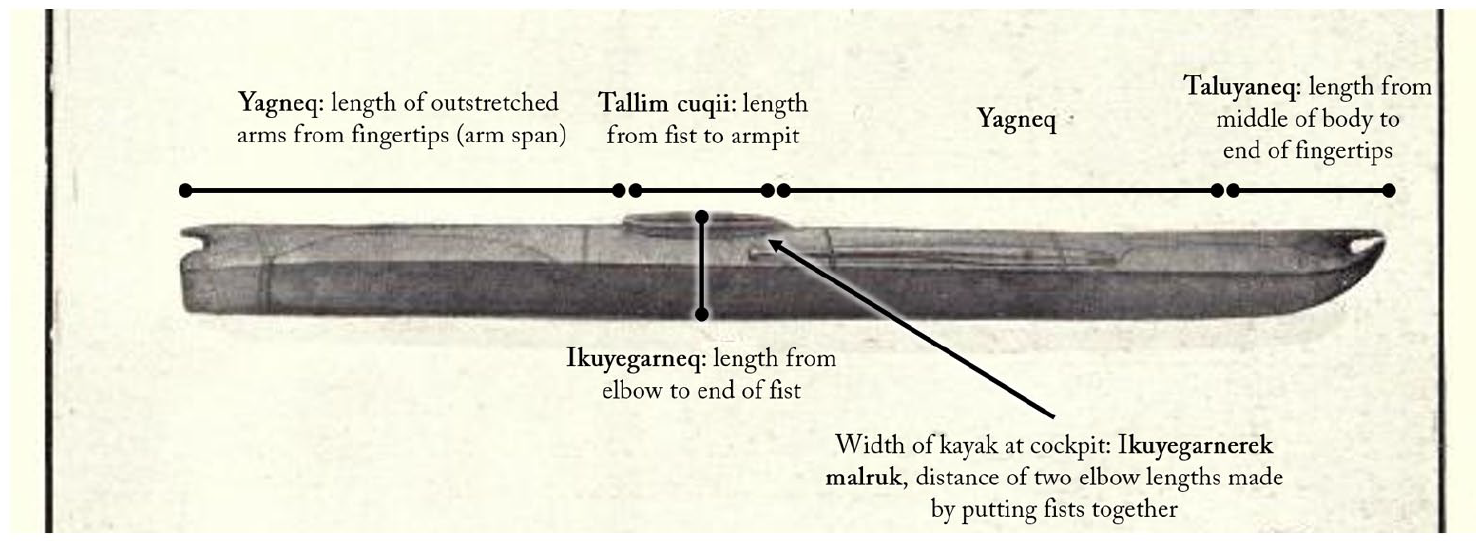
Body ratios for custom-tailored kayak construction as used by the Yup’ik, based on information provided in Lipka et al. (2010). Background image is a profile of a Yup’ik hunting kayak, for rough reference. Kayak image source: Wikimedia commons, public domain (original source Nelson, 1900), text added by authors.
Examples of body measures are also found in other technological domains. Ishi, the last known member of the Native American Yahi people (following the California Genocide), used them for custom-tailored bow construction. Ishi would fashion a bow by determining the bow’s length as ‘the distance from the right hip joint to the left finger tips, measured with the person standing erect and extending the left arm forward in a straight line from the shoulder – a distance of four feet and two inches for Ishi’ (Kroeber, 1961: 190; Pope, 1920: 187). The width at the hand grip should be four fingers for a powerful bow, and three for a light hunting bow. Simple auditory cues would also be used to determine the bow’s quality: a good bow would sing a high musical note (‘tin, tin, tin’) when snapped (Pope, 1920: 110). In Eastern Africa, peoples such as Gikuyu (Routledge, 1910), Somali (Puccioni, 1936) and Fur (Felkin, 1886) have used varieties of body-based measures in the design of garments and when measuring cloth.
Elsewhere, Khanti people use subjective body measures for custom-tailored ski design (Jordan, 2014: 159–160). In these conveniently learnable rules, ski-width is determined as an outstretched finger-and-thumb span plus two fingers, and ski-length as ‘to the eyebrows’ or equal to a person’s height. They offer useful balance relative to body size: too narrow skis would sink in soft snow, and excessively wide ones would lift snow and be heavy and cumbersome. Zapotec campesinos use various body measures such as brazeda (arm span), codo (cubit) and dedo (finger-width) to construct custom-sized ploughs (González, 2001, Chapter 3). Where manual work is part of daily life, ergonomics (e.g. custom-sized ploughs, kayaks or skis) is also important for preventing injuries. Traditional ergonomics is a remarkable feat, considering that in mass-productive industrial western economies, ergonomics only became a major disciplinary effort in response to World War II technologies (Meister, 2018). Next to custom-fit and convenient learnability, the use of body measures in problem-solving has the further benefit of not requiring external tools for measurement. The use of the adaptive and accessible body-ratios as rule-of-thumb units of measure affords highly mobile populations with tools and designs that are accurate and functional, without the need to carry extra weight.
Again, we emphasise that the use of rules of thumb does not imply incompetence or ‘primitivity’. Rather, rules of thumb are practical cognitive tools that often stood the test of time. They provided robust simple practical knowledge frameworks that ensured cultural continuity of material traditions even through turbulent times. Moreover, rules of thumb do not explain the whole of these complex practices. When used by shipbuilders, for example, rules of thumb would not replace but complement their artisanship and eye for working wood (Olaberria, 2014). It is easy to imagine how such simple rules would afford the emergence of more complex cultures: shipbuilding rules facilitated the expansion of complex Viking and Mediterranean trade networks, custom-tailored kayak construction afforded successful hunting expeditions and adaptation into cold climates, and rules of thumb in church construction helped form the basis for the rich cultural interactions that took place around Gothic cathedrals.
We argue, that rules of thumb act as catalysts that twist the cultural ratchet (Tennie et al., 2009), playing an important role in the creation of new technologies and material affordances (Malafouris, 2013) that guide the evolution of cumulative cultures (Cazzolla Gatti et al., 2020). Nevertheless, rules of thumb may themselves complexify as circumstances change. For example, the number and intricacy of rules in Mediaeval construction had to be increased when architecture developed in complexity (James, 1982: 33).
Rules of thumb in the Anthropocene
The first half of this manuscript has described how heuristics, or rules of thumb, have been important modes of knowledge in human cultural and technological evolution in the Holocene past. We have also described how rules of thumb have been utilised in contemporary times. Next, we set our sights on the future, discussing some challenges traditional rules of thumb may face in the Anthropocene. As we have described above, many (although not all) heuristics are dependent on environmental stability: for instance, phenological rules only work when familiar plants are available, and foraging heuristics depend on reliable bioindicators. Therefore, the structure of ecologically rational decision-making dictates that traditional heuristics may no longer function when ecological systems change or degrade.
We caution that as Anthropocene environments change at unprecedented rates (Barnosky et al., 2012; Steffen et al., 2015), traditional knowledge such as rules of thumb may fall into the trap of cultural evolutionary mismatch: a state of disequilibrium ‘whereby a trait that evolved in one environment becomes maladaptive in another’ (Lloyd et al., 2011). Consequently, the Anthropocene presents a notable breaking point for human cultural and cognitive evolution, since past analogies may no longer serve us well in the future (Kaaronen et al., 2021). Below, we point to some cases where mismatch between traditional rules of thumb and changing environments has been discovered, and other cases where it is mechanistically plausible to occur.
This analysis is prospective in nature. Cultural mismatch is hard to predict because it would require a detailed description of both future knowledge-states and environmental-states, neither of which are readily available. Moreover, although evolutionary mismatch is a well-documented theoretical phenomenon (Lloyd et al., 2011), cultural mismatch has not yet attracted sufficient research (although see, e.g. Nunn (2021) for a review of some recent evidence). This is despite the fact that, broadly writ, the phenomenon of cultural maladaptation in the Anthropocene has already been documented in various traditional (ecological) knowledge frameworks (Axelsson-Linkowski et al., 2020; Berkes, 2009; Fernández-Llamazares et al., 2015; Turner and Clifton, 2009; Valdivia et al., 2010).
We caution that the theoretical frameworks underlying cultural evolution and ecological rationality predict that cases of mismatch in traditional ecological knowledge will become considerably more common in the future. Therefore, we discuss cases for each class of heuristics described above where cultural mismatch (between traditional heuristics and changing environments) has been documented or where we may expect to encounter it. However, like any other mode of cultural knowledge, rules of thumb are also malleable when necessity dictates. Therefore, we also describe some instances where traditional heuristics have evolved to avoid mismatch.
Phenological mismatches
As noted, traditional ecological knowledge and phenological knowledge are fundamentally dependent on ecological regularities such as the availability of indicator species: often the appearance of one species is used as a heuristic to infer the presence of another. This has proved to be a successful and common strategy in some relatively stable Holocene ecosystems. However, Anthropocene climate change and biodiversity loss will likely cause various problems when indicator species disappear, are displaced, or behave unpredictably. This can quickly cause cultural mismatch, since traditional rules of thumb cease to function when the ecological validity (correlation) between environmental cues erodes.
For instance, biodiversity loss and climate change can both affect when plants develop leaves (Du et al., 2019) or flowers (Mazer et al., 2013). As shown in previous examples, the traditional phenological knowledge of various cultures is often dependent on leaf-out or flowering times. Turner and Clifton (2009) discuss how climate change and biodiversity loss affects such traditional phenological knowledge. For example, the traditional phenological knowledge systems of the Indigenous Peoples of British Columbia make elaborate use of phenological patterns (e.g. the growth of stinging nettles predicts seaweed harvest season), but in the Anthropocene such cues risk becoming more unreliable, as radically changed weather patterns have emerged and indicator species have been lost. Turner and Clifton (2009: 184) note how since the late 1990s ‘seaweed harvesting for the Gitga’at has been out of sync with the weather patterns’, which has caused serious concerns for age-old harvest traditions. Similarly, Gunungkidul farmers are now ‘questioning the effectiveness’ of PranotoMongso phenological knowledge due to climate change and loss of biodiversity (Retnowati et al., 2014: 789).
Foraging mismatches
Similarly, a combination of environmental change and climate-induced migration patterns can affect traditional foraging rules. Rules of thumb that have evolved in one environmental context may not work in another. This is already evident in cases where humans have migrated between environments: mushroom foraging accidents are reported to be especially pronounced in migrant populations (Bal et al., 2016; Healey et al., 1982; Petekkaya et al., 2016). As an illustrative example, in Santa Rosa, California, in 1981, a group of Laotian refugees mistakenly ate poisonous mushrooms because they had used a heuristic from their country of origin (‘mushrooms that turn boiled rice water red are poisonous’), which did not work in California (Healey et al., 1982). In 2015, mushroom poisonings in Germany were at an ‘all-time high’ (Connolly, 2015). One common cause for this is that refugees in Germany have foraged for white mushrooms typical to their country of origin, and mistakenly eaten a white A. virosa (Nykopp, 2015) – note that this is directly contrary to the Finnish precautionary heuristic of ‘avoiding all white mushrooms’, specifically designed to prevent A. virosa poisonings (Kaaronen, 2020a).
Equally, it is easy to imagine how foraging heuristics can fail when ecological systems change in the Anthropocene future – in many respects, migration serves as an analogy for radical ecological change, since in both cases old traditions face new environments. Foraging rules, such as those used by Finnish foragers to locate and identify mushrooms (Kaaronen, 2020a), fundamentally depend on the stability of ecological systems. It is imaginable that invasive species, environmental degradation and other ecological changes can quickly render old rules dysfunctional. That said, some foraging heuristics, such as the common and precautionary ‘only pick mushrooms you can identify with certainty’ (Kaaronen, 2020a) are plausibly much more robust against environmental change. Hazards like foraging accidents will likely also exacerbate in the future, since climate-induced migration is predicted to intensify (Xu et al., 2020), introducing foreign cultural heuristics into environments where they face cultural mismatch.
Social learning mismatches
Long traditions in socio-ecological and cultural evolutionary modelling have illustrated that social learning in unstable environments can quickly lead to cultural mismatch, since knowledge acquired through social learning can become outdated when environments change (Kameda and Nakanishi, 2002; Morgan et al., 2022; Rendell et al., 2010). Therefore, ongoing climate and environmental change affects us on a deeper level than being ‘just’ new conditions – once old regularities are no more, traditional heuristics might cease to work, and new modes of knowing are necessary (Kaaronen et al., 2021).
As a consequence, heuristics such as ‘follow the opinion of elders’ (or other forms of prestige-bias) may also work best under stable conditions, since under such circumstances cultural knowledge is more certain to be up to date. For instance, Kameda and Nakanishi (2002: 374–375) make the now familiar example of mushroom foraging: under stable conditions, one should be able to rely on the opinion of experienced elders on whether or not a mushroom is poisonous (because, in many respects, elders are living proof that the items they have foraged have not been deadly). However, with rapid ecological change, prestige-biased heuristics too may quickly become outdated as new (perhaps lookalike) mushroom species appear and old ones disappear, rendering vertically transmitted traditional knowledge less useful.
This is already evident in some empirical case studies. For instance, Saami reindeer herding practices are typically learned in the field, and more experienced herders typically pass on their knowledge to less experienced ones (Axelsson-Linkowski et al., 2020). However, new environmental and weather conditions (partly caused by climate change) have recently been far outside earlier experiences. This poses challenges for younger generations, since there is limited accumulated knowledge to learn from. Of course, this is no impasse, as young herders have adapted to these unprecedented conditions with new innovations (Axelsson-Linkowski et al., 2020) – although new innovations (such as supplementary feeding) may also risk becoming obsolete or unsustainable. It should be emphasised, though, that humans are, by nature, flexible and critical learners, able to acquire new (ecological) knowledge swiftly when needs or opportunities so dictate (Koster et al., 2016; Morgan et al., 2022). For instance, in contemporary digital environments, many elders have likely adopted reversed heuristics such as ‘learn digital skills from (grand)children’. Therefore, whilst mismatches in social learning heuristics may be expected to emerge, such disequilibria need not be long-lived or otherwise impassable obstacles.
Moral mismatches
Moral heuristics are typically not dependent on environmental regularities or constants, and therefore may be more robust against environmental and climatic variability than other rules of thumb reviewed here. However, moral heuristics such as default biases (‘if there is a default, do nothing about it’) and confirmation biases (‘only seek for information that supports the default’) have previously been purported to be some psychological/cognitive causes for the climate and ecological crises to begin with (Kaaronen, 2018; Whitmarsh, 2011). For instance, they may prevent or hinder the acquisition of knowledge or information necessary for sustainable behaviour change. Therefore, it is plausible that some previously successful moral heuristics may prove to be maladaptive in the Anthropocene.
Technological mismatches
The rules of thumb that guide technological evolution are often elaborately attuned to local environmental conditions. Many traditional technologies are specifically adapted to their local ecological niche: for instance, kayaks are designed in a way to enable functionality in their immediate use environment (e.g. waves, ice and wind), to serve specific subsistence purposes (e.g. seal-hunting), are often made exclusively from locally available resources, with variable designs found across kayaking cultures (Kankaanpää, 1989). As a consequent, many traditional technologies and rule-of-thumb designs will become redundant or maladaptive as environmental conditions deter – crudely, traditional ski design is of little use without snow.
Even those rules of thumb based on geometric ratios may face mismatch. The vulnerability of ratio-based rulesets is well evident in the historical record of traditional Chinese architecture. Research has illustrated how a key factor driving the millennial-scale modification of Chinese traditional roofs has been the change in extreme snowfall frequency (Li et al., 2021). Much like the ratio-based heuristic rules described above, Chinese traditional roof design has also relied on geometric ratios, in this case the height–span ratio (HSR) of the roof. However, owing to variation in climate and weather patterns, it has sometimes been the case that too gentle roof slopes (low HSR) have risked increased snow load and therefore structural failure. Research by Li et al. (2021) suggests that this ratio has been intentionally adjusted to reduce snow load. This has been accomplished by adjusting the HSR rules in design, building steeper roofs (high HSR) during cold periods and gentler roofs (low HSR) during warm periods (Li et al., 2021). Note that this also highlights how rapidly ratio-based rules can be adapted to match new environmental conditions – mismatch may only be a temporary concern as cultures, in a matter of years or decades, adapt to changing structural demands.
Today many building traditions are facing challenges in adapting to climate change (Crichton et al., 2009), although there are also attempts to revitalise some robust forms of design that have stood the test of time and environmental change (Dabaieh and Sakr, 2015; Watson, 2019). Although mismatches between traditional technological design and changing environments are still poorly documented, we emphasise that it is likely that such cases will only increase in the future as climate change, resource scarcity or depletion, and other environmental factors place new bounds on which kinds of technological heuristics are functional.
Implications
We surmise that cultural mismatch will likely become more pronounced and an urgent theme in climate adaptation in the Anthropocene future. Global environmental change is happening at a pace that is often too rapid to be captured in social memory (Fernández-Llamazares et al., 2015: 280), and the strategies embedded in traditions of past cultural memory may not serve their purpose in the changed environments of tomorrow (Kaaronen et al., 2021). A major challenge ahead will be to identify those cognitive-cultural strategies that are robust in wide ranges of environmental conditions (Kaaronen et al., 2021).
It is reasonable to assume that the human tendency to think heuristically will not disappear. Indeed, it has been claimed that even climate adaptation policies are often designed on the basis of ‘adaptation heuristics’ (Nalau et al., 2021; Preston et al., 2015). Therefore, as social-ecological systems change, whole new sets of simple problem-solving or decision-making rulesets may have to be developed, and the usefulness of existing rules of thumb must be actively reassessed (see Riede et al., 2018 for comparable ideas). Although traditional knowledge frameworks can contain valuable reserves of knowledge when adapting to uncertain environments (Halstead and O’Shea, 2004; Pearce et al., 2015), the assessment of cognitive climate adaptation challenges should take seriously the prospect that old modes of knowing may not be suited for their purpose in new environments.
According to our tentative analysis, we draw the conclusion that especially those traditional heuristics reliant on ecological stabilities (e.g. phenological and foraging rules) are at high risk of mismatch. Moreover, cognitive adaptation challenges will likely be most pronounced in regions where ecological systems are most radically altered and where populations migrate to unfamiliar environments. A better mechanistic understanding of ecologically rational rule-of-thumb problem-solving can help us understand more specifically why and how some traditional knowledge frameworks face mismatch in the Anthropocene.
Fortunately, ‘traditional knowledge’ is no static entity, and cases of cultural mismatch or disequilibrium are not guaranteed to be long-lived. As we discuss above, traditional knowledge frameworks are always on the move, solving problems through adaptive learning-by-doing (Berkes, 2009; Walsh et al., Forthcoming), and local peoples are often well-aware of mismatches between tradition and practice. Our analysis shows that rules of thumb are malleable cognitive tools that can also be repurposed or redesigned when necessity dictates. Moreover, human societies of the past are well-documented to survive mismatch or socio-ecological disequilibrium (through, e.g. cultural niche construction), and adaptive lags or mismatches are not altogether new phenomena (Laland and Brown, 2006; Riede et al., 2018). Therefore, by pinpointing cases where previously ecologically rational problem-solving or decision-making strategies may fail, our message is not that humans will inevitably be stuck at such disequilibria.
Limitations
In studying culturally evolved heuristics, we have had to rely on a sparse number of case studies to study a phenomenon (rules of thumb) that is likely common to most if not all of humankind. We have discussed cases from the past and present, and from industrialised to indigenous societies, but the focus of existing case studies is unfortunately biased towards the Global North. Future empirical work could seek to uncover cases of rule of thumb problem-solving in the Global South to amend this lack of evidential diversity. More generally, although the theory underlying heuristic decision-making is by now well-defined, cross-cultural evidence of heuristics is still largely lacking, and case studies from the ‘real-world’ are hard to come by. We hope that our review of rules of thumb across human cultures inspires future empirical work to further uncover the varieties of heuristic everyday problem-solving strategies human cultures have developed along thousands of years of cultural evolution.
Conclusion
We have provided a review of how heuristic problem-solving strategies have been key to human adaptation in the Holocene, and how rules of thumb have been used in domains as diverse as agriculture, foraging, social learning, moral/legal decision-making and technological development. We have suggested that rules of thumb have served as important components of Holocene knowledge systems, and that heuristics have played key roles as ‘cognitive tools’ that have enabled various forms of cultural and technological evolution. Specifically, we have illustrated how rules of thumb can make efficient use of environmental regularities, how heuristics enable the offloading of cognitive processing (to the material environment), and how rules of thumb often serve as bite-size cognitive tools that facilitate both individual and social learning.
However, in the rapidly changing environments of the 21st century, many traditional rules of thumb face the risk of cultural evolutionary mismatch. The success of rules of thumb and heuristics are typically contingent on the stability of environments. This is indeed how ecologically rational knowledge is structured: its function is dependent on the fitness between cognitive tools and features of the environment. As environments change, decision-making strategies can quickly face disequilibrium – old heuristics can become obsolete, and new ones may have to be developed in their stead. Since the human tendency to think in terms of heuristics is most likely here to stay, we argue that this potential for cultural mismatch is an important point to consider when discussing cognitive and cultural adaptation challenges in the Anthropocene.
Footnotes
Acknowledgements
We thank PAES research unit members Taarna Valtonen, Sirpa Rasmus and Leena Valkeapää for valuable early comments. We thank Oula A. Valkeapää for providing insights on reindeer herding practices.
Author contributions
All authors contributed to the conceptualisation, writing and administration of this research.
Declaration of conflicting interests
The author(s) declared no potential conflicts of interest with respect to the research, authorship, and/or publication of this article.
Funding
The author(s) disclosed receipt of the following financial support for the research, authorship, and/or publication of this article: This work was supported by the Academy of Finland (grants 338558 and 347305), European Union’s Horizon 2020 Research and Innovation Programme (grant 869471), and Kone Foundation.
Research transparency and reproducibility
This review did not involve the use of any data or code other than those cited in references.
