




Abstract
Geoengineering evokes fears and hopes among the general public, media and scientists. Policy-makers thus face the dilemma of how to respond to this deeply controversial issue. In this paper we examine a wide variety of policy documents from different countries, international organizations and NGOs to gain insights into how geoengineering is perceived at the policy level. We use qualitative content analysis in order to determine specific aspects of framing of geoengineering: concerns and hopes to indicate risk perceptions and action proposals to account for directions in policy development. The policy documents contain a large variety of concerns, hopes and action proposals. Technical and risk-related issues dominate the concerns; the hopes express a wish for new solutions to climate change; and the action proposals emphasize the need for more research. Furthermore, there were clear differences between Anglo-American and German documents, indicating that international policy development on geoengineering will be a difficult task.
Introduction
Geoengineering has quickly developed from being a fringe topic of climate scientists into a publicly debated issue, attracting attention from the media, civil society and interest groups. As geoengineering seems to offer a possible way to respond to the challenges posed by climate change, policy-makers around the world realize that it is a policy-relevant issue which needs to be addressed (e.g. Umweltbundesamt, 2011; US Government Accountability Office (USGAO), 2011).
Previous research in geoengineering discourse has shown the diversity of perceptions of geoengineering among the general public (e.g. Corner et al., 2012, 2013; Macnaghten and Szerszynski, 2013), in the media (Buck, 2013; Luokkanen et al., 2014; Nerlich and Jaspal, 2012; Porter and Hulme, 2013; Scholte et al., 2013) and also among scientists and experts (Bellamy et al., 2012, 2013; Cairns, 2013; Huttunen and Hildén, 2014). This means that policy-makers dealing with geoengineering face a dilemma: the messages provided by both the public and experts on how to treat geoengineering are deeply conflicting, and thus policy-makers are forced to explore a controversial territory. In this paper we examine how geoengineering is dealt with in different countries, international organizations and NGOs by analysing policy documents that can be seen as a record of the policy-making process. The way in which policy documents deal with geoengineering has not been thoroughly studied previously. Furthermore, we expand the scope of previous geoengineering discourse-related literature by including German and other non-English documents in the analysis. We also distinguish between official documents that reflect the core of ongoing policy processes and extra-parliamentary documents that indicate the lobbying and other pressures that policies will have to deal with. Our analysis therefore provides new perspectives on the challenges of policy development dealing with geoengineering.
The policy discussion is clearly progressing as different governance options are debated academically (e.g. Bodansky, 2013). At this stage it is impossible to definitively stop working on geoengineering (e.g. Blackstock and Long, 2010), but that does not mean that the development progresses deterministically. For example, Scholte et al. (2013) argue that discussion on geoengineering in the media is opening up, as ways of framing geoengineering are diversifying and new frames are becoming more prominent. Our aim is to examine how different risks and other issues are dealt with in the early policy discussions and to examine critical aspects of future geoengineering governance that are capable of addressing key concerns.
More specifically our research aims are: (1) to explore globally where and how geoengineering is discussed at the policy level; (2) to gain insight into how geoengineering is framed in policy documents with respect to societal concerns, hopes and action proposals; and (3) to discuss the implications of the findings for future geoengineering policies.
Background: The issues at stake
The term geoengineering comprises various fundamentally different technologies with different risks. Geoengineering technologies can be roughly divided into two basic groups: solar radiation management (SRM), which focuses on reducing the amount of solar radiation reaching the Earth, and CO2 removal (CDR) (Vaughan and Lenton, 2011). Within SRM the technologies vary from sulphate particle injections in the stratosphere to painting roofs to increase the albedo. CDR covers a host of different approaches from devices extracting CO2 from the air to growing trees. Obviously the risks involved depend heavily on the chosen approach and technology. It is easy to endorse the planting of more trees without much concern for the risks, whereas spraying aerosols into the stratosphere easily makes associations with ‘star wars’ and other high risk interventions.
Uncertainties and risks associated with the technologies are recurrent themes in the discussion over geoengineering. For policy development the contrasting of these risks with the hopes of intended effects is crucial. In this respect, the debate over geoengineering resembles debates over nuclear energy or genetically modified organisms. Some see that the deployment of such technologies will bring great benefits to society whereas others consider them to be threats or catastrophes waiting to happen (Kearnes et al., 2006; Peters and Slovic, 1996). Similar to the development of policies related to genetically modified organisms (e.g. Jasanoff, 2000) or nuclear energy (Jahn and Korolczuk, 2012), policies related to geoengineering have to deal with widely different risk perceptions. The more visible that risks and conflicts about risks become in the policy arena, the more difficult policy-making becomes. Szerzynski et al. (2013) have even argued that SRM challenges the liberal democratic system because of the unequal distribution of and uncertainties about impacts, i.e. risks.
Geoengineering experts and scientists have identified many different concerns related to geoengineering (for reviews see Bellamy et al., 2012; Huttunen and Hildén, 2014). In deliberative expert assessments, geoengineering has evoked different opinions on the most relevant risks and action to be taken (Bellamy et al., 2013; Cairns, 2013). The main concerns involve various unwanted environmental consequences (Hultman et al., 2010) and the possible failure of the technologies to achieve their main purpose (Keith, 2000). Risks can also be related to unilateral utilization for military purposes, or climatic manipulation that is too far-reaching (Victor, 2008; Virgoe, 2009) and could lead to geopolitical conflicts (Bodansky, 2013).
A deep ethical concern related to geoengineering is the following: are we allowed to deliberately change the climate, to what extent and on what conditions (e.g. Betz, 2011; Corner and Pidgeon, 2010; Jamieson, 1996)? The mere idea of planetary climate control can be labeled as a sign of human hubris (Gardiner, 2010). The justification for fixing problems caused by technology with an additional layer of technologies (instead of significantly altering the way we live, which is the root cause of climate change) is also an ethical question (e.g. Jamieson, 1996; Keith, 2000; also Luke, 2010). It leads to the consideration of moral hazards related to climate change mitigation (see, e.g. Betz, 2011; Gardiner, 2010). The potential utilization of geoengineering technologies further raises concerns related to equity, as the benefits and negative impacts may be unevenly distributed and the access to these technologies may be limited to richer countries (Corner and Pidgeon, 2010; Luke, 2010). Even the future of geoengineering research is seen as an ethical question. Once the research is done and the results published, who controls their utilization (Betz, 2011; Hamilton, 2011)?
From an economic perspective geoengineering is a highly uncertain option. Geoengineering has been estimated to be either a relatively cheap solution (SRM, e.g. Barrett, 2008), or an expensive technology with costs comparable with or higher than those of emission cuts (CDR, Pielke, 2009). The total costs of geoengineering are difficult to assess since the potentially harmful and costly side-effects are as yet poorly known.
In terms of governance, geoengineering raises many questions. Even experiments serving geoengineering research raise multiple governance issues (Dilling and Hauser, 2013).
Geoengineering may seem to be an attractive option, since global carbon dioxide emission cuts have proven to be extremely difficult to achieve (e.g. Victor, 2008). However, upon closer examination, governing geoengineering may not be any more simple (e.g. Bodansky, 2013). As geoengineering includes many technologies, there is a need for many forms of governance. This can mean governing global commons with the help of, for example, international treaties or regulation within sovereign states (Humphreys, 2011). A few countries may also form consortiums to pursue geoengineering (Virgoe, 2009). Making international treaties will be difficult as there is not enough information on the technologies and their potential harmful effects. Especially, the effects of simultaneous utilization of several geoengineering technologies are difficult to assess (Victor, 2008). At the same time, a total ban on the technologies does not seem practical since it would be difficult to control and might induce unilateral action (Bodansky, 2013; Victor, 2008).
In the media, discussions in English language newspapers and websites have been analysed from different angles (Buck, 2013; Porter and Hulme, 2013; Scholte et al., 2013). The concerns raised in the media tend to slightly emphasize risks related to the functioning and side-effects of geoengineering relative to moral, ethical or governance concerns. However, according to Scholte et al. (2013), media discussions increasingly use a governance frame in dealing with geoengineering. Scholte et al. (2013) further identified a worry that science may actually make things worse than they currently are. This worry, related to runaway science, is also reflected in metaphors used in the media (Luokkanen et al., 2014).
Lay people adopt the concerns that experts have raised (Corner et al., 2012). In general people are concerned about the uncertain performance and negative effects of geoengineering technologies (Corner et al., 2012; Parkhill and Pidgeon, 2011). The relationship with nature is an important theme that has emerged in deliberative discussions: people are concerned about geoengineering being an unacceptable interference with nature, although some see it as bringing hope and not being different from other human interventions in natural processes (Corner et al., 2013). Geoengineering also evokes concerns related to lifestyles of high consumption and the fact that geoengineering does not solve the root cause of climate change (Corner et al., 2013; Macnaghten and Szerszynski, 2013).
There is public support for further research on geoengineering, but considerable hesitation over its deployment (Corner et al., 2012). Governance related to geoengineering is already regarded as important at the research stage. However, the more people know about geoengineering, the more reluctant they are to accept it (Corner et al., 2012). In the case of SRM this reluctance has been explained by the difficulties related to making democratic and informed decisions on geoengineering (Macnaghten and Szerzynski, 2013). For example, many of the side-effects of geoengineering will only be known after long-term deployment.
Data and analysis
Data
In order to cover different hierarchical levels of the political debate on geoengineering, we included a wide range of policy documents: statements, reports, minutes from committee meetings, plenaries and hearings that were publicly available online. Reports from non-governmental organizations, lobbies and scientific associations were also included because this ‘grey literature’ has been an important part of the geoengineering debate. We accepted documents whose main topic was geoengineering and documents that dealt with the topic in a broader context. Both included arguments that reveal how geoengineering is perceived at the policy level.
We obtained initial material from two internet sites dedicated to following the topic: ‘Climate engineering’ maintained by Kiel Earth Institute and ‘Ethics of geoengineering online resource center’ maintained by the University of Montana. We collected additional material by scanning internet pages of governments, parliaments and international organizations. The search words used were: geoengineering, geo-engineering and climate engineering. In languages which do not use the English term, a translated search word was used. We did not limit our data to any specific kinds of geoengineering techniques but included a document when the actors themselves considered a method to be geoengineering. The documents defined geoengineering in somewhat different terms, some restricting it to SRM while others also included techniques such as biochar and afforestation.
We collected material written in English, German, Finnish, Swedish and Russian. We chose these languages because we wanted to include as many countries as possible but we had to restrict the search to languages we mastered. The intergovernmental organizations examined were UN, EU and African Union. We conducted some research for documents in Italian, Spanish and Portuguese but only one document was found, a report from the Brazilian government, which was not included in the analysis as we did not have access to translation services.
The material confirmed the findings of Beltel and Seidel (2013) that the geoengineering discussion has mainly occurred in the Northern Hemisphere and English-speaking countries. However, recently, Edney and Symons (2013) have analysed official and scholarly publications on geoengineering in China and found that elites and the media are aware of geoengineering and that the public discourse closely follows arguments in the West, except for arguments concerning the political implications of geoengineering. Lately Russia has declared an interest in geoengineering (Lukacs et al., 2013) but because of a lack of publicly available documents on the issue, it is difficult to estimate how broad the discussion is at the policy level.
Methods of analysis
We divided the identified policy documents into three groups according to their level of authority. The first group, official policy documents, contains documents connected to a political decision or statement, such as committee and ministry reports, policy statements and governments’ answers to inquiries. The second group, background policy documents, contains the remaining documents from public authorities. These are documents that are either needed in the decision-making process, such as hearings and minutes, or papers that inform other actors of the new topic, such as policy briefs. The third group, extra-parliamentary documents, includes reports from lobbies, non-governmental organizations and research associations intended to support or influence policy-making.
Methodologically our study is based on frame analysis. Frame analysis is a broad palette of methodologies aiming at scrutinizing different ways of perceiving an issue (e.g. Vliegenthart and van Zoonen, 2011). Instead of searching for broad frames related to geoengineering (e.g. Huttunen and Hildén, 2014; Porter and Hulme, 2013), we focused on three aspects: concerns, hopes and action proposals. The concerns and hopes were expected to reflect risks and risk perceptions whereas the action proposals give an indication of the policy development that is foreseen or argued for.
Our approach comes close to manual holistic framing research as described by Matthes and Kohring (2008). We utilized qualitative content analysis in order to determine what kind of concerns, hopes and action proposals were related to geoengineering. We read all the documents through several times and identified separate arguments relating either to concerns and hopes associated with geoengineering or recommendations on how to act upon the issue. In the coding process we used Nvivo software for qualitative analysis. Having detected single arguments, we formed larger nodes from similar arguments and further classified them thematically into categories and subcategories. This resulted in 11 categories of concern, two of hopes and five of action proposals. After deciding on the categorization, we coded the material a second time to verify that all arguments were coded consistently according to the same criteria. In the analysis, we looked at separate arguments in a document without categorizing the whole document. Thus one document can contain several, even competing, arguments. After we had fixed the codes we used quantitative methods to analyse the number of documents in which the different concerns, hopes and action proposals were mentioned. For this purpose, all the concern and action variables were coded into binary form, zero indicating that the argument was not present in the document and one indicating that the argument was present.
Owing to the wide variety of concerns identified, the concern arguments were clustered into larger groups with Nvivo software using Pearson’s correlation and the binary variables. The correlation between action proposals and concern clusters was identified using cross-tabulation. The phi coefficient was used for testing the significance of observed differences.
Scope of geoengineering in policy documents
In total we identified 133 documents published between July 1997 and February 2013. The overwhelming majority was published between 2009 and 2013, with only ten documents before that period. From 2009 onwards 20 to 35 documents with at least a mention of geoengineering were published yearly. After initial reading, we excluded documents which only mentioned the existence of geoengineering, without any discussion of it. We included 114 documents in the final analysis (Table 1). All the analysed documents are listed and briefly described in the supplementary material (available online).
The analysed policy documents related to geoengineering. The documents are classified according to level of interest shown in geoengineering and type of authority of the publisher. Reports from non-governmental organizations are classified in national documents if the organization operates nationally or international if the organization’s purpose is to have an international influence.
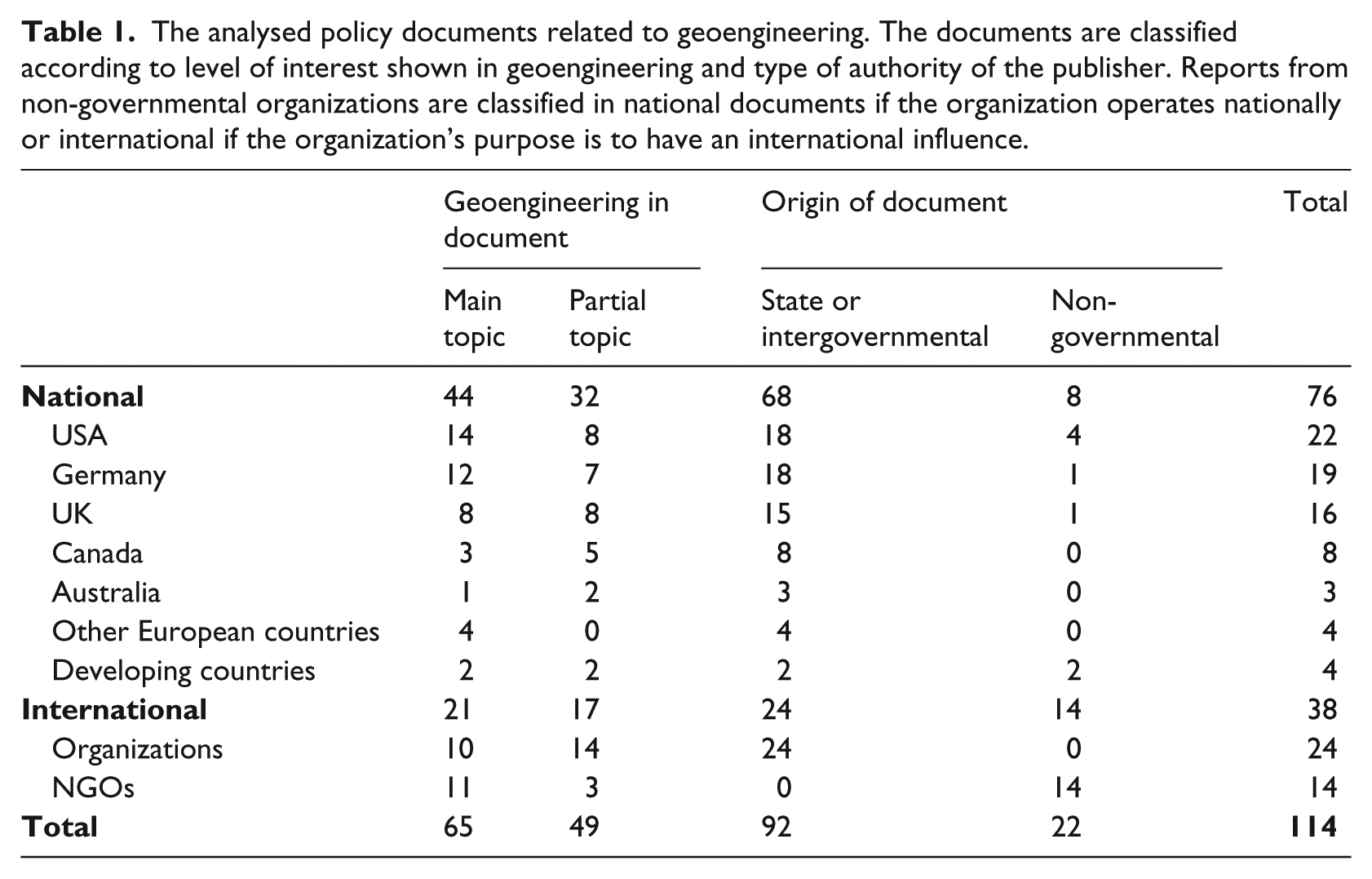
Most documents originated in the USA, Germany and the UK. The USA had the greatest number of documents but many of them were shorter than, for example, the British policy documents, which tended to gather material into larger reports.
As a topic, geoengineering entered the policy sphere earlier in the USA than in the other countries. The oldest document we found was a hearing in the US House of Representatives from 1997 where a scientist mentions geoengineering as a topic worth exploring in response to climate change. In the USA the following references were from 2007 in hearings related to the environment, energy and resources. It is not until 2009 that thorough reports were made by the House of Representatives, Congressional Research Service and Government Accountability Office. An important characteristic of the American geoengineering discussion is the presence of lobbies and think tanks, some of which advocate fiercely for research or even deployment of geoengineering.
In the UK, the House of Commons has published two committee reports on geoengineering, the first in 2008 as a part of a larger inquiry, ‘Engineering in Government’ and a second which focuses solely on the governance issues, ‘The Regulation of Geoengineering’, in 2010. An interesting point is that the USA and UK made a Joint Agreement to cooperate during the preparations of their geoengineering inquiries in 2009. As a result they shared papers, evidence and testimonies that each received and were able to concentrate their shared efforts on slightly different issues. This may have influenced the frames observed in the documents.
The geoengineering discussion in Germany has differed somewhat from that in the USA and UK. In the USA and UK, most of the documents were issued by government authorities, whereas in Germany the word geoengineering was first used by Parliamentarians in plenaries in 2009, in comments on the controversial Indo-German ocean fertilization experiment, LOHAFEX. This experiment elicited many comments during 2009 and it continued to be discussed extensively until June 2011. Later reports were issued by the German Ministries of Environment, Education and Research and Defense in 2011 and 2012.
Other European countries have not dealt with the topic, with the exception of a few parliamentary questions posed in Austria and Switzerland. A small but interesting group is that of developing and emerging countries such as Bolivia, whose official statement for the Intergovernmental Panel on Climate Change (IPCC) strictly rejects geoengineering, claiming that it creates environmental injustice. Other documents in this group are statements from the Indigenous Peoples’ Global Summit on Climate Change and the Asia-Pacific regional statement for the Global Civil Society Forum. These documents have in common a critical attitude towards geoengineering as well as a concern over side-effects and possible implications for vulnerable minority groups.
Among international organizations, the United Nations has explored the subject but most references to geoengineering have been part of larger reports which deal with a different main topic. However, some political decisions have been made, especially in relation to ocean fertilization. This geoengineering method rose on the agenda after several companies showed interest in conducting large-scale tests, hoping to make money in the carbon market. In response, Parties to the Convention on the Prevention of Marine Pollution by Dumping of Wastes and Other Matter 1972 (the London Convention) made a decision in 2008 to include ocean fertilization in the scope of the Convention but allowed small-scale scientific research. Similarly, the topic has been dealt with under the Convention on Biodiversity (CBD), most famously in the recommendation from the meeting in Nagoya to ban large-scale geoengineering tests until further knowledge of their consequences is available. According to our data, international organizations took an interest in geoengineering mainly from the summer of 2011 onwards, although some short statements can be found in UN reports already from 2008.
In our material there were several publications from international non-governmental organizations (see supplementary material available online). These reports came mostly either from organizations that press for more research and deliberation on geoengineering, or from grass-root environmental organizations whose aim is to warn about the dangers of these technologies. One of them is the Action Group on Erosion, Technology and Concentration (ETC) which argues for a complete moratorium on geoengineering technologies. The Arctic Methane Emergency Group is a grassroots organization which follows an almost opposite argument. It urges deployment of geoengineering as soon as possible in the Arctic to eschew dangerous methane emissions. Yet another aspect is offered by the Solar Radiation Management Governance Initiative, a follow-up of the report made by the Royal Society, which aims to foster international discussion on transparent and responsible ways to govern SRM.
Framing categories
Social concerns
We identified 11 categories of concerns and two categories of hopes related to geoengineering. As noted above these categories are not exclusive; one document can contain arguments from several categories.
General risk concern referred to concerns which could not be linked with any tangible issue but which still reflected a clear anxiety over the implications of geoengineering. Reference was made to ‘unknown unknowns’, ‘side-effects’ or ‘risks’ in a general sense.
Concerns over management and implementation involved governance-related concerns that deal with organizational and regulatory issues. Especially, the lack of a legal framework was recognized as a problem, and general questions about the characteristics of a good governance system for geoengineering were asked without necessarily providing any specific proposals.
Concerns over general implications of technological solutions included concerns expressing a general distrust in technology. These concerns had ethical underpinnings but we separated them from other ethical concerns because they formed a relatively large and coherent group. Here, geoengineering was viewed as a part of a fundamental problem of modern society where complex environmental and social problems are solved with quick techno-fixes. In some cases, they were related to profound ethical concerns of the relationship between humans and nature: fears were expressed that a critical line is crossed if humans interfere with natural phenomena in a direct way.
Concerns over legitimacy and transparency involved governance-related concerns which were more abstract in nature than the practical management concerns. These included concerns over legitimacy (who gets to decide whether and to what extent these technologies are implemented), general concerns over responsibilities for consequences and concerns over transparency (questions about openness of research and decision-making processes).
Concerns over moral hazard grouped concerns related to implications of geoengineering for current climate policies. The most common was the notion of moral hazard; a concern that if citizens and policy-makers were to find out about geoengineering, they would no longer be willing to mitigate greenhouse gases but instead trust that geoengineering technologies will take care of the problem. A similar concern was that if more resources are put into geoengineering, for instance through research funding, it would reduce resources for other climate policy measures.
Arguments related to Concerns over political consequences of implementation (state and non-state) expressed anxiety over different political troubles which could arise if geoengineering was ever deployed. These concerns referred either to international relations or non-state actors. The most recurrent concern was that one state or individual may decide to use geoengineering without consulting other parties. Other concerns were related to conflicts between states in favor of and those against geoengineering, or geoengineering technology being purposefully used for military causes.
Ethical concerns related mainly to concerns over intergenerational or global equity. Intergenerational concerns argued that deploying geoengineering could cause significant problems for future generations, who would possibly have to continue using technologies they did not choose in order to avoid even greater dangers. Global equity concerns referred to the argument that the side-effects would mostly fall upon poor and vulnerable people while richer nations would enjoy the benefits of a cooler climate. Similar to side-effects, ethical concerns were often mentioned at a general level without specification of what they were exactly.
Concerns related to cost-efficiency included arguments over costs of geoengineering or general claims for economic cost-benefit analyses.
Concerns over technical feasibility deal with questions about the effectiveness of and the current development status of geoengineering technologies. Concerns in this group were mostly linked with governance issues: in order to form an opinion or propose regulation, it is important to know if and to what extent geoengineering technologies are feasible in the sense that they deliver what they promise.
Concerns over environmental consequences were often referred to in general as ‘environmental issues’ but sometimes specific hazards were identified, especially in relation to specific geoengineering techniques. The most common environmental hazards identified in the documents were the loss of ozone and changes in precipitation patterns in relation to SRM, and threats to marine life in the case of ocean fertilization.
Skeptical of geoengineering technologies referred to arguments that doubt geoengineering technologies as an appropriate response to climate change. The principal argument was that geoengineering does not treat the causes of climate change but only its effects. The causes could be seen as either more profoundly related to lifestyles or as carbon emissions in a more practical sense. These were often connected to concerns about scientists’ ability to assess future uncertainties or the effectiveness of geoengineering as in the group ‘concern over technical feasibility’.
The hopes that we identified often viewed geoengineering as a way to overcome the perceived climate policy failure or to prepare for the proximity of climate emergency. Thus it was hoped that geoengineering would provide a way out of the impasse in international climate politics or diminish calamities related to a dangerous climate change. The identified hopes shared a trust in technological solutions.
The clustering resulted in three main concern groups (Figure 1). One group deals with general risk concern and management issues. Another group combines the social and ethical concerns, and the final group comprises more practical concerns, focusing on technical, environmental and economic problems.
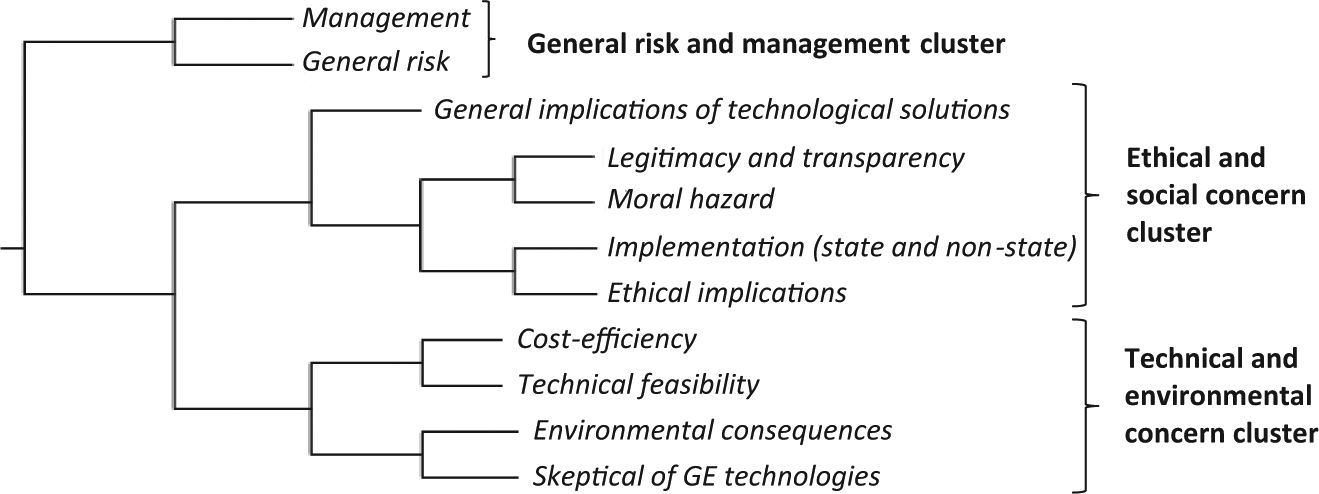
Concerns clustered with Pearson’s correlation coefficient.
The most commonly expressed single concerns were general risk (60%) and environmental consequences (46%). The ethical and social concern cluster was less common compared with other concern clusters. There, implementation was the most commonly mentioned concern (38%). Hopes were expressed only in 45% of the documents (Table 2).
Arguments related to concerns and hopes according to document types (% of all the documents in the category).
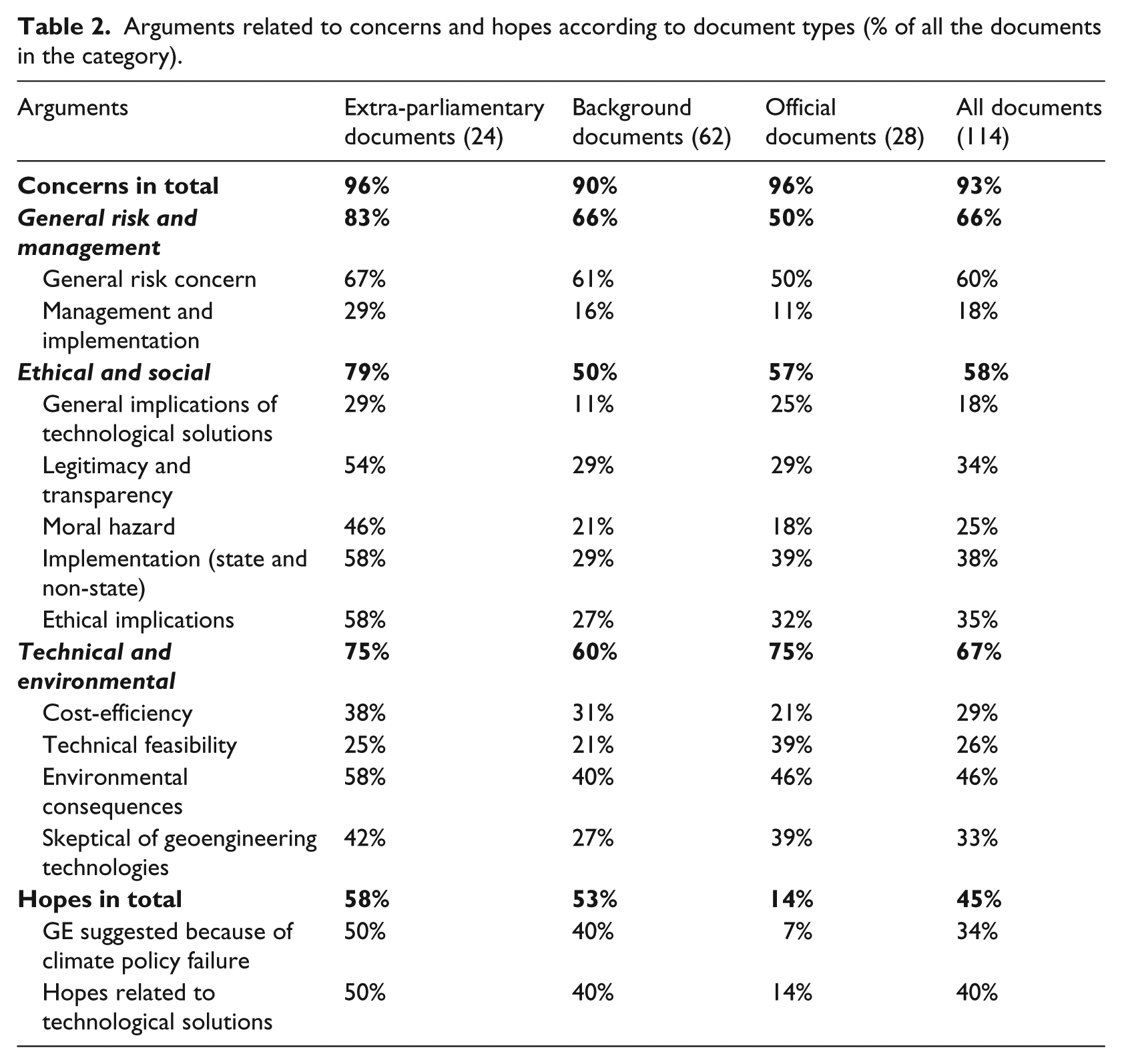
The prevalence of the identified arguments varied somewhat within each document category. In official policy documents, almost all concerns were expressed more frequently than in the background documents, but less frequently than in the extra-parliamentary documents. The general risk and management cluster was an exception: these concerns appeared clearly less often in official documents compared with the other document groups. Also hopes were less common in the official documents than in the other documents. In extra-parliamentary documents, all concern categories were referred to extensively. In this sense they were the most exhaustive group of documents, especially in the ethical and social cluster. Also hopes were expressed more often in extra-parliamentary documents than in the other two categories.
Action proposals
The identification of action proposals is useful because attitudes towards specific policy measures do not follow directly from attitudes for or against geoengineering. For example, documents for and against geoengineering can both argue for more research on geoengineering, whereas not all documents that reflect a permissive attitude towards geoengineering call for supportive governance. We identified five categories of action proposals. The categories permissive, opposed and undecided represented attitudes towards geoengineering in general. Categories emphasizing governance and more research represented more specific proposals, dealing with the practical solutions on how to proceed. Similar to concerns, one document could include several types of action proposals.
The category Permissive towards geoengineering accepted, to varying extent, either deployment of geoengineering or further consideration of the subject. Many documents which expressed an interest in geoengineering justified it by the need to explore all possible options: it would be unwise to solely focus on mitigation and instead some resources should be directed to at least studying the geoengineering option. The majority of arguments in this category opposed immediate deployment of geoengineering while still seeing it as something worth exploring. We identified two subcategories: moderately advocating and strongly advocating. The moderately advocating arguments viewed geoengineering as something that should not be deployed at the moment, but should be kept under review in case there would be an emergency in the future. The strongly advocating arguments emphasized the urgency of the climate situation and the lack of time: it could already be too late to stop a dangerous climate change. Geoengineering should either be deployed as soon as possible or at least serious effort should be put into investigating whether this option is possible.
All proposals in the category Opposed to geoengineering shared a skeptical attitude to the technologies. We detected two subcategories: moderately against and strictly against. In the former subcategory mitigation and adaptation strategies were prioritized because those are policies with reasonably known efficiency and consequences. In the latter subcategory, any kind of geoengineering was opposed. Many arguments were against any kind of research on the topic, claiming that the line between research and deployment is not clear and allowing research would eventually lead to deployment
Arguments in the Undecided category shared a sense of ambiguity and uncertainty. On one hand, geoengineering was considered unclear with arguments demanding a common definition of geoengineering or a wish to develop an official opinion about the issue, by having, for example, more debates between different experts. On the other hand, future political action on geoengineering was considered uncertain because the techniques are so new that it is too early to say what sort of regulations or measures they might require. Another similar recommendation was to passively observe other actors, such as countries, and see what they do about the issue.
The Governance category gathered policy proposals for governing geoengineering. These arguments could be divided into four groups: governance in general, restrictive regulation, supportive regulation and transparency. The General governance arguments called for more governance without specifying the type of governance needed. The Restrictive types of regulation ranged from fairly soft measures such as restricting research through supervision and assessment, to more strict forms such as posing a moratorium for large-scale testing until there is enough knowledge about possible side-effects, or concentrating on multilateral norm-building to prevent unilateral deployment. Arguments related to Supportive types of regulation stressed flexibility of regulation and freedom of research. These suggestions often involved a skeptical attitude to restrictive regulation, claiming, for example, that a moratorium would hinder possibilities to become informed of possibilities and risks related to geoengineering. An important proportion of supportive proposals dealt with measures to promote research, for example increasing funding or developing a research strategy for geoengineering. The arguments related to more Transparency included measures to ensure that the public is able to influence polices, and the future course of research. Interestingly, transparency was emphasized more often as an issue by official documents than extra-parliamentary documents.
The More research category covered a broad spectrum of research recommendations (Table 3). While many documents called for more research in general, others specifically demanded multidisciplinary research or research to assess risks and side-effects of geoengineering. Partly the ‘more research’ category is related to a permissive attitude, but instead of actively developing geoengineering the most common justification for research was that it would help to make better-informed decisions, or that it will be required in order to be prepared for future emergencies and uncertain political situations. There were also a considerable number of documents where the need for field trials at some point in the future was envisioned. These views were, however, almost always softened by demands for small-scale trials free of side-effects.
Arguments related to action proposals in the different document categories (% of all the documents in the category).
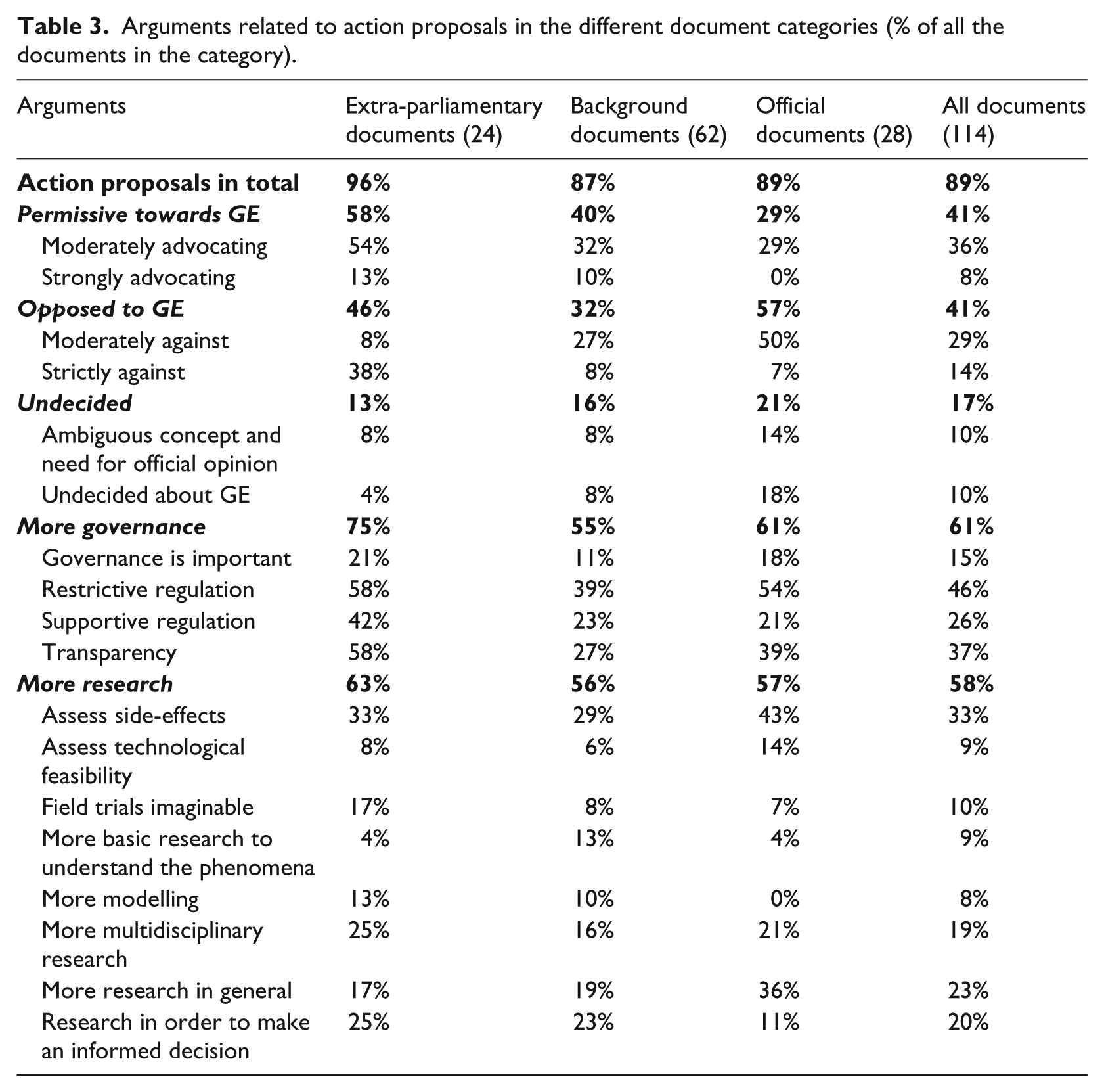
Equal shares (41%) of documents were permissive and opposed to geoengineering, whereas only 17% remained undecided (Table 3). Opposition against geoengineering was more pronounced in the official documents compared with the other document groups, but the opposition was moderate. Those official documents that advanced arguments in favor of geoengineering were not advocating it strongly. There were slightly more arguments in the undecided category, which could indicate greater ambiguity at the highest political level.
In background documents there was least opposition to geoengineering. We found the strongest opposition and promotion related to geoengineering in the extra-parliamentary group. In the extra-parliamentary documents, there were also more calls for governance. The more extreme viewpoints both for and against geoengineering reflected the lobbying positions of these extra-parliamentary documents. In the documents produced by official bodies the argument was more consensus-seeking, seeking to balance different viewpoints.
Correlation between concerns and action proposals
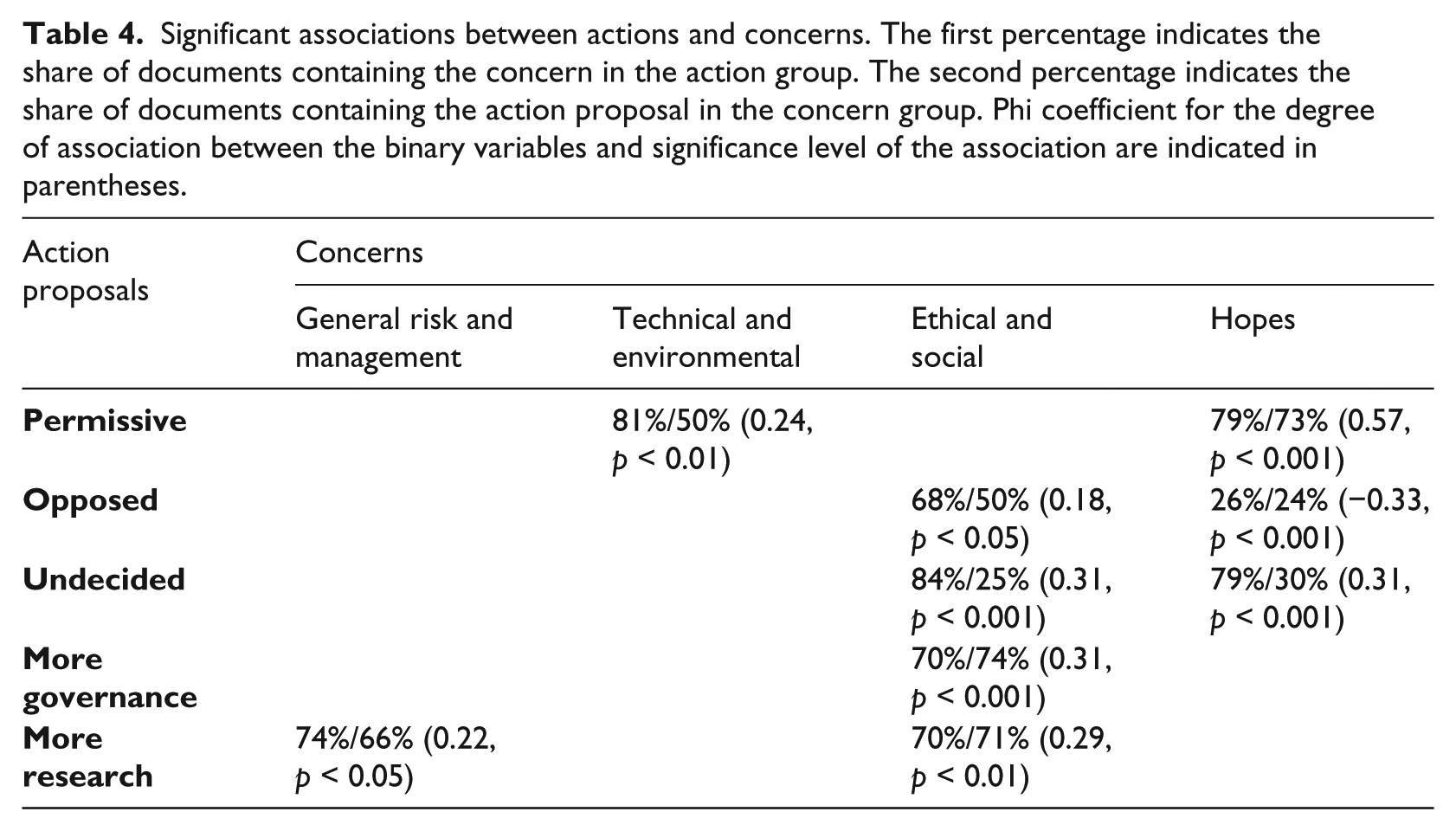
The concern clusters and action proposals were significantly correlated in some areas (Table 4). Thus documents permissive to geoengineering often contained concerns from the technical and environmental cluster and hopes (81%). Documents opposing geoengineering rarely contained hopes (26%), but they often contained ethical and social concerns (68%). Documents undecided on the issue often contained ethical and social concerns (84%) and hopes (79%). However, among documents indicating hopes, it was clearly most common to be permissive to geoengineering (73%) rather than be undecided (30%). Documents containing ethical and social concerns were equally permissive and opposed to geoengineering (50%), but rarely undecided (25%). Those documents arguing for more governance and for more research tended to be concerned with ethical and social issues.
Significant associations between actions and concerns. The first percentage indicates the share of documents containing the concern in the action group. The second percentage indicates the share of documents containing the action proposal in the concern group. Phi coefficient for the degree of association between the binary variables and significance level of the association are indicated in parentheses.
Differences between countries and organizations
We compared the different types of concerns and action proposals expressed in different countries and international organizations (Figures 2 and 3) to detect differences in policy development. All types of concerns were fairly equally distributed across countries, when all of the documents were viewed together. However, the techno-environmental concerns were more common than ethical and social concerns in all countries and organizations except for Germany and the category ‘other countries’ (including other European countries and developing countries). Hopes were more common in documents written in the USA and to some extent in international NGOs and the UK compared with other countries and organizations.
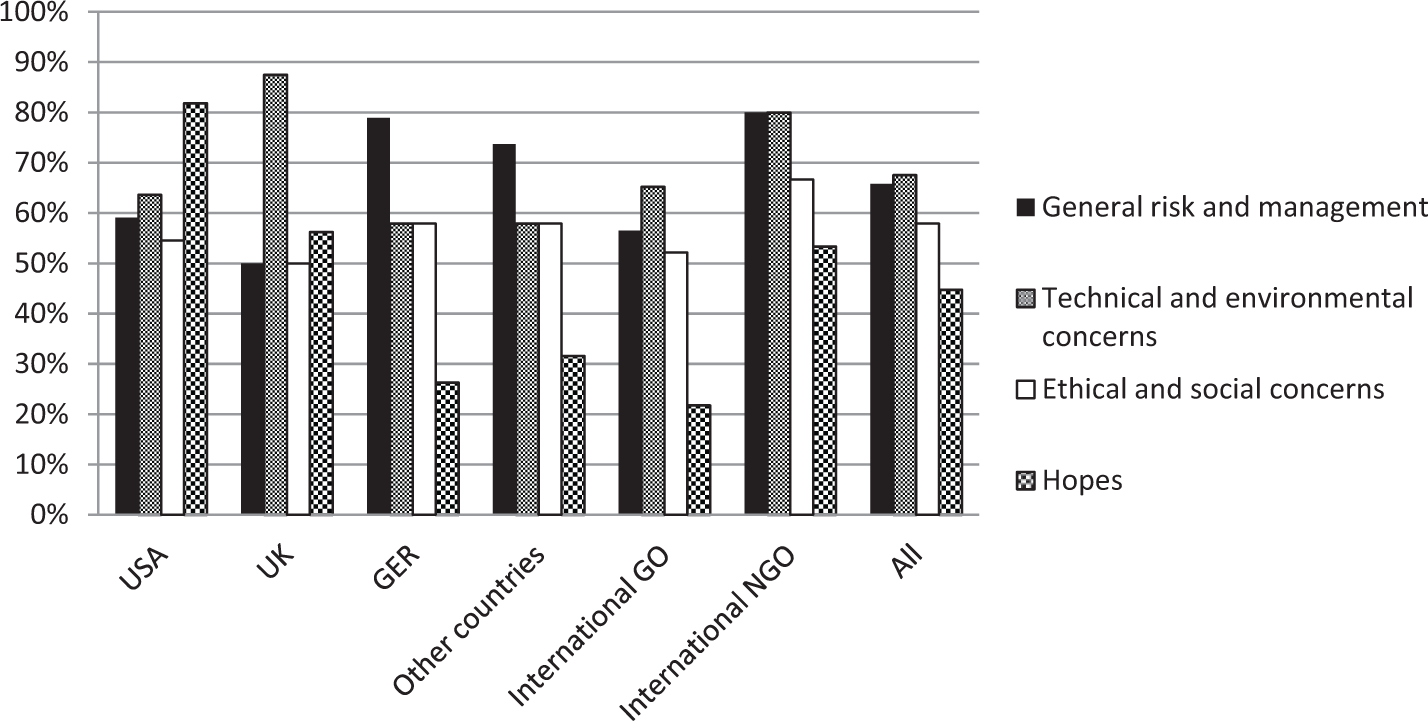
Concern clusters and hopes in different countries and international organizations, percentage of documents.
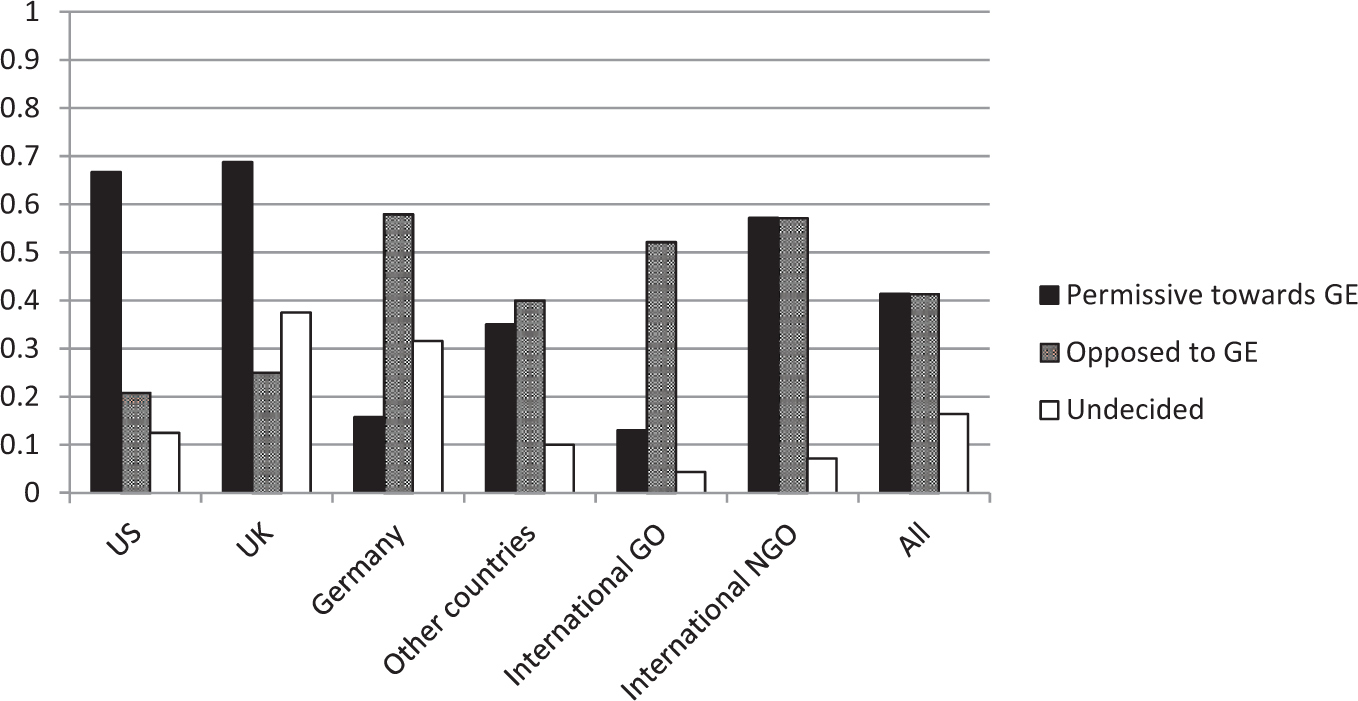
Action proposals in different countries and international organizations, percentage of documents.
Corresponding to the high frequency of hopes, documents written in the USA and UK were more permissive to geoengineering than those written in international organizations, Germany and the category ‘other countries’ (Figure 3). Documents from international organizations were equally opposed and permissive toward geoengineering.
Especially the data from the USA reflected the numerous conservative, climate-skeptic think tanks and lobbyists, which have been active in the American political arena and which have prepared very politically charged reports for national and international audiences. Still, even if we put these extra-parliamentary reports aside and compare the most official governmental documents, hopes and permissive attitudes towards geoengineering were more pronounced in the USA than elsewhere.
Discussion
Policy development is in an early phase
The issues that the analysed policy documents dealt with match the topics that have previously been identified both in the scientific and public discourses on geoengineering (e.g. Huttunen and Hildén, 2014; Porter and Hulme, 2013). An important question is to what extent the discourse changes when one moves from the broad general debates to the policy level. A full quantitative comparison between the earlier literature and our findings is not possible, but a comparison between the official policy documents and the extra-parliamentary documents gives some hints.
The official policy documents considerably less frequently contained general risk and management concerns and ethical and social concerns compared with the extra-parliamentary documents. Also hopes were expressed less frequently. The techno-environmental concern cluster was represented with the same frequency in all documents. The tendency to present the issues as a technical and environmental issue rather than a societal issue reflects the dominance of a technical discourse in the scientific literature on geoengineering (Huttunen and Hildén, 2014). It suggests that there is a danger of a ‘premature closure of the framing’ (Bellamy et al., 2012). If questions of geoengineering are reduced to technical issues the policy development may neglect concerns about the societal implications and issues of management and legitimacy, which are crucial for democratic societies.
The contents of the documents suggested that official policy development is still in an early stage, focusing on exploring the topic and not developing actual regulation. Had there been active work to develop regulation on the actual use of geoengineering, official documents would also have had to take a stand on intended effects and the position of geoengineering in the general climate policy scene. This had most likely been reflected also in clear positions on the hopes related to geoengineering, which were largely missing from the official documents (Table 2).
The differences in the frequencies of stated action proposals (Table 2) also suggest that the policy development on geoengineering is in a cautious exploratory phase. In the official documents and background documents the arguments for and against geoengineering were balanced and mainly moderate. The extra-parliamentary documents reflected more extreme views as indicated by the frequencies of arguments for and against geoengineering. Only a fifth of the official documents dealt with supportive regulation whereas the frequency of these arguments was twice as high in the extra-parliamentary documents. The cautious and exploratory attitude in the official documents was also revealed by the action proposals related to research. Any references to specific research topics, and field trials in particular, were rare, whereas general unspecified research was demanded. However, the observed tendency to stress the techno-environmental concerns in the official policy documents may indicate that at least a permissive attitude to research is beginning to evolve.
Cultural differences in risk perception affecting policy development
Our findings confirmed the Western Anglo-American dominance in the international policy discourse on geoengineering in terms of quantity, which has already been observed in science (Beltel and Seidel, 2013). Our results show, however, that the debates exist and are emerging elsewhere, particularly in Germany, and that these debates may differ significantly from the Anglo-American one.
The differences between the documents from the German and the Anglo-American policy sphere were striking (Figures 2 and 3). Does this reflect a fundamental difference in the views on a technology such as that represented by geoengineering (new, potential high risk, difficult to regulate) or is the result caused by chance? The German hard line on nuclear power (Jahn and Korolczuk, 2012) would suggest that potential high risks are generally considered unacceptable in German society. Germany has also taken a very critical position on genetically modified organisms (Dreyer and Gill, 2000). In both cases especially the USA has been more permissive (e.g. Jasanoff, 2000). Chance may, however, also have played a role in the emergence of views on geoengineering. The German policy discussion on geoengineering was partly sparked by the ocean fertilization experiment LOHAFEX, which caused considerable controversy as it started with deliberate experimentation before any policy discussion had taken place, causing a controversy also between the Minister of Science and the Minister of the Environment in Germany and with several NGOs (Strong et al., 2009).
Whatever the underlying cause, our findings from policy documents suggest that the USA and UK have had a more individualistic, and Germany a more collective, orientation to geoengineering risks in the sense of Douglas and Wildavsky (1982). If this difference is maintained, one can expect an additional challenge in any international negotiations on geoengineering. The EU has so far remained practically silent on the matter, but one can expect that the differences between countries will surface as soon as the EU tries to develop a position on geoengineering. Interestingly the material we were able to identify from international organizations was more ‘German’ than ‘Anglo-American’ in the positions on geoengineering (Figures 2 and 3).
Future governance
The dominance of techno-economic concerns in the official geoengineering policy documents reflects similarities with the politics of other controversial technologies. A focus on scientifically measurable risks and the functioning of the technology easily results in an inability of policies to respond to public concerns, which in turn causes conflict and mistrust in governance (e.g. Jasanoff, 2000; Kearnes et al., 2006). In the case of GMOs, Kearnes et al. (2006) argue that even the precautionary risk approach used in the UK has had the effect of excluding core public concerns related to wider social, political and ecological implications from official consideration, which in turn has reinforced public concerns related to GMOs. Public concerns about geoengineering have already shown indications on the importance of wider ethical and governance-related issues (Corner et al., 2013; Macnaghten and Szerszynski, 2013).
There are lessons to be learned from former policies on new technologies. Policy-makers should assure a legitimate basis for future policies by accounting for a wide variety of concerns. Public participation in geoengineering decision-making is difficult (e.g. Corner et al., 2012; Macnaghten and Szerzynski, 2013), but the broad range of public concerns can partly be taken into account by widening the range of experts consulted and by diversifying the appraisal methods (see Bellamy et al., 2012, 2013).
Irrespective of the reasons for the current biases in the argumentation in the policy documents, our findings suggest, in line with Bellamy et al. (2012, 2013), that there is a need for more social science, philosophy and humanities-oriented research to support informed policy decisions on geoengineering. Such research should in particular explore the many questions embedded in the socio-ethical cluster (Figure 1). By systematically exploring these issues governments can obtain support for policies that go beyond merely noting geoengineering as an option, but also designing appropriate forms of governance. How permissive or restrictive such a governance system should be can partly be answered by the research dealing with the techno-environmental clusters, including the environmental impacts, but the processes should be based on a recognition of issues related to legitimacy and transparency, and take into account ethical and moral dimensions and views of climate change policies.
Conclusions
In this paper we have described how geoengineering is discussed in policy documents in different countries, international organizations and NGOs. In so doing, our aim was to gain insight into how specific aspects of geoengineering are framed at the policy level, reflecting both risk perceptions and indications for policy development.
Several conclusions can be drawn from our material. First, the comparison between official policy documents and extra-parliamentary documents suggests that policy development on geoengineering is mainly in a cautious exploratory stage. In official documents arguments for and against are moderate and definitive statements or specific suggestions for future policy development are deliberately avoided.
Second, our analysis shows that that techno-environmental concerns dominate geoengineering-related policy documents, although they also contain many other building blocks of future policies by covering a broad range of concerns and action proposals.
Third, we have found that documents from the USA and UK dominate the geoengineering policy discourse in terms of quantity but that the debate is emerging also elsewhere, particularly in Germany. These emerging debates differ qualitatively from the Anglo-American debate. Future international policy development needs to recognize this, as it will no doubt affect any negotiations on the matter.
Finally, we conclude that the dominance of techno-environmental concerns over wider social implications presents a challenge for future policy-making. In order to deal with difficulties that have plagued the governance of GMOs and nuclear power, the wide variety of socio-ethical concerns should be taken into account at an early stage in developing official policies on geoengineering.
Footnotes
Funding
The research was funded by the Academy of Finland, grant number 140883 (COOL project).
References
Supplementary Material
Please find the following supplemental material available below.
For Open Access articles published under a Creative Commons License, all supplemental material carries the same license as the article it is associated with.
For non-Open Access articles published, all supplemental material carries a non-exclusive license, and permission requests for re-use of supplemental material or any part of supplemental material shall be sent directly to the copyright owner as specified in the copyright notice associated with the article.
