




Abstract
Objective:
The application of artificial intelligence (AI) in surgery has been an expanding discipline. We performed bibliometric analyses to characterise the current trends in AI application in Urology, with a sub-analysis of the top 100 cited articles.
Methods:
Clarivate Web of Science and MEDLINE databases were used to search for current literature on AI application in Urology between 1987 and 2024. Clarivate InCites and VOS viewer were used for bibliometric analysis, while CiteSpace VI was used for citation burst and mapping. Top 100 cited articles were evaluated and rated against Oxford Centre Evidence-Based Medicine level of evidence (OCEBM).
Results:
There is increasing number of AI related urology articles published in the past decade. Within the field analysis (n = 250) the average citation count was 15.18, the Journal of Urology (n = 31, 12.4%) and United States (n = 95, 38%) had the most publications for journals and country, respectively. The average citation count was 31.65, 39% were related to prostate cancer and 50% were related to AI usage in disease diagnosis/detection, and 70% were OCEBM level V. Journal of Urology and United States remains to be the most productive journal and country, respectively.
Conclusion:
This study highlighted rapid and emerging application of AI in Urology in the past decades.
Level of Evidence:
Not applicable.
Introduction
Artificial intelligence (AI) is a complex field of study that aims to create a machine with computational capability to mimic or perform human intelligent task through techniques such as deep learning, expert systems, machine learning and many more.1–4 The application of AI is endless and has been expanding at an exponential rate and there are abundant, yet continuously growing, research in its application in healthcare setting.2–5 Specifically, there are numerous AI techniques applied in various aspects of urological practices already.6–9 With the continued growth in research information, it can become difficult to keep track on the past, present and future literature; yet, the use of bibliometric analysis can provide insight into this.
The bibliometric study applies both quantitative and qualitative assessments on large volume of research data to help (1) identify knowledge gaps in research fields, (2) identify emerging trends and guide future research and (3) characterise and visualise the impact of and relationships between journals, authors, institutions and countries. 10 Examples of these assessments include network mapping, citation & publication metrics, citation analysis, co-word analysis and network visualisation. 10 While there are previous studies using bibliometric analysis on particular urological topics such as prostate and bladder cancer,11–14 this study aims to provide a rigorous bibliometric examination on current status of AI application in general Urology, with a focus in surgery and procedures. The study will help identify the current urological topics of interest and how AI is applied in those topics. Further sub-analysis of the top 100 articles will also shed light on the historical achievements and future prospects of AI application in Urology.
Methods
Search strategy
Through the Clarivate Web of Science (WOS) platform, a search strategy was conducted on 7 April 2024 with the following search terms: ALL = ‘artificial intelligence’ OR ‘artificial neural network’ OR ‘Bayes* network’ OR ‘big data’ OR ‘data clustering’ OR ‘data mining’ OR ‘deep network*’ OR ‘deep learning’ OR ‘expert* system*’ OR ‘feature* extraction’ OR ‘feature* learning’ OR ‘feature* mining’ OR ‘feature* selection’ OR ‘fuzzy logic’ OR ‘graph mining’ OR ‘image* segmentation’ OR ‘intelligent learning’ OR ‘knowledge graph’ OR ‘machine learning’ OR ‘neural network*’ OR ‘neural learning’ OR ‘supervised learning’ OR ‘semantic segmentation’ OR ‘support vector machine’ OR ‘unsupervised clustering’ AND ALL = (‘urolog*’ NEAR ‘procedur*’ OR ‘surger*’ OR ‘robot*’ OR ‘diagnos*’ OR ‘manage*’ OR ‘treatment’ OR ‘intervention*’). The WOS core collection and MEDLINE database were used for the search strategy.
There are pre-set search filters through the Clarivate WOS platform and the inclusion criteria was applied through these filters to accurately remove irrelevant studies. The inclusion criteria were as follows: (1) original article (document types), (2) Urology & Nephrology (research areas), (3) English (language) and (4) citation topics: urology, nephrology, kidney disease, pelvic-renal disorder, testicular disease, AI/machine learning, urolithiasis, incontinence, prostate cancer, bladder, renal cell carcinoma, erectile dysfunction and vesicoureteral reflux. The exclusion criteria were based on the assessment of title and abstract of the article. Articles were excluded if the abstract does not demonstrate any clinical application of AI technology towards the described urological condition, where the abstract and/or title must at least demonstrate utility of AI technology in the diagnosis, management or prognosis of the urological condition. The WOS core collection and MEDLINE was selected for its comprehensive and broad inclusion of scientific literature compared to other available databases.15–17
Bibliometric analysis
Clarivate InCites tool was used to analyse and identify parameters related to authorships, institution, medical journal and country. The primary outcomes include the number of citations and number of publications; the secondary outcome included h-index, impact factor, citation impact, number of international collaborations. These outcomes were selected to reflect and quantify the level of impact and productivity of authorship, institution, medical journal/publisher and country. VOSviewer 1.6.20 (Leiden University, Leiden, Netherlands) was used for analysis and network mapping of co-word (keywords), co-authorship and citations. CiteSpace 6.3.1 (Chaomei Chen, PA, USA) was used to identify the citation bursts for author, keywords and journal in the last decade.
The top 100 cited articles were identified and underwent sub-analysis for primary and secondary outcome as well. Each article was assigned a level of evidence based on the Oxford Centre for Evidence-Based Medicine (OCEBM) (University of Oxford, UK). Furthermore, each article (n = 250) was reviewed to identify the topic of interest and the purpose of the AI application. The general purpose of the AI application was categorised as either (1) diagnosis/detection, (2) treatment related/planning/optimisation and (3) prognosis or follow-up of treatment outcome/complication.8,9
Results
Following the search strategy, 594,225 articles were identified and screened along the inclusion criteria and this led to 383 journal articles. The additional 133 articles met the exclusion criteria as they do not demonstrate application of AI on the urological condition. The final 250 articles were available for field analysis (Figure 1). From the field analysis (n = 250), we found the average citation count to be 15.18 and between 2018 and 2024 the number of publications has increased progressively from 10 to 50 publications per year. The most common urological topics included prostate cancer (n = 86, 34.4%), urolithiasis (n = 45, 18%) and bladder cancer (n = 32, 12.8%) (Table 1). We identified the most common AI usage was related to disease diagnosis/detection (n = 137, 54.8%) (Supplemental Figure S1).
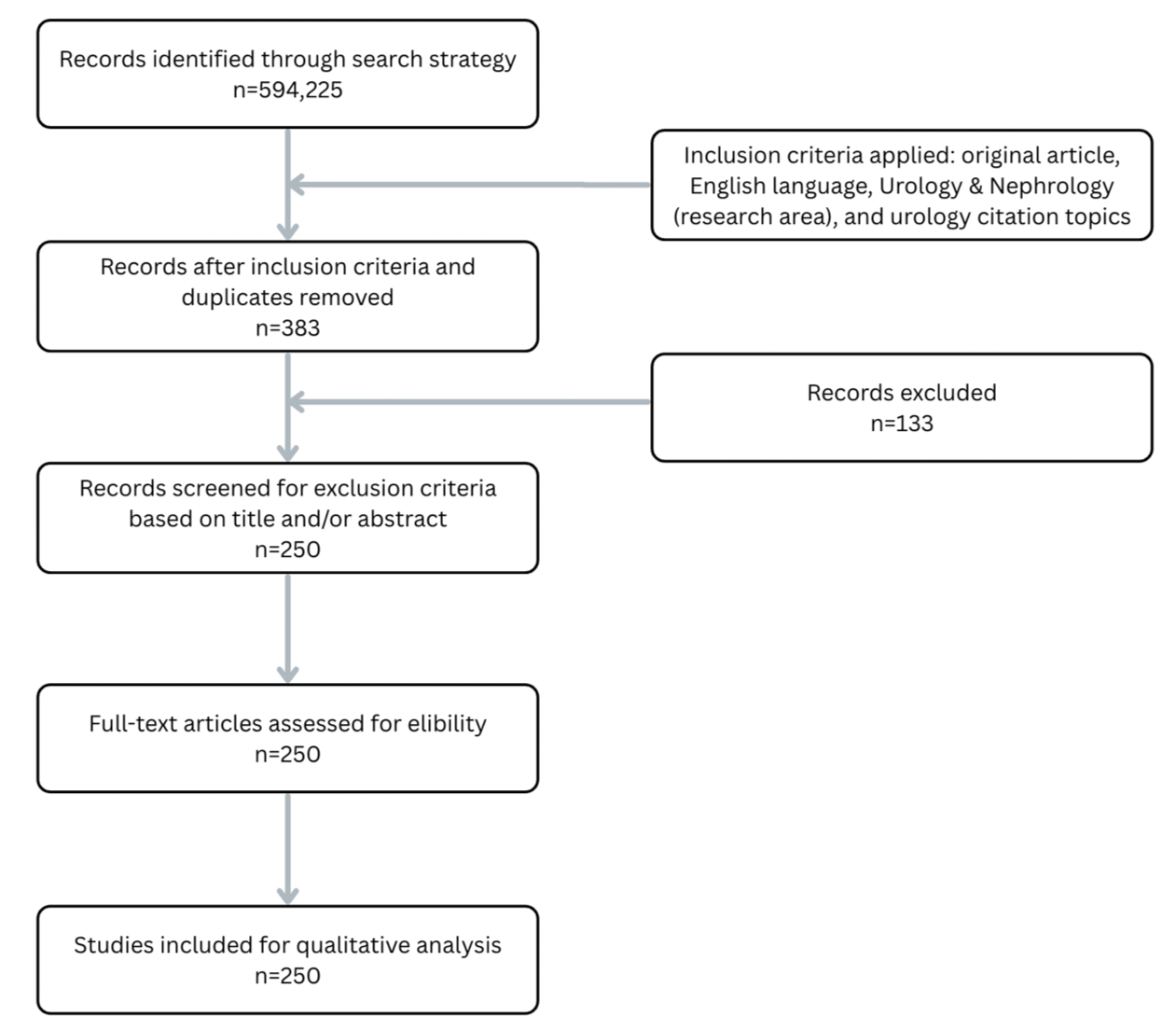
Flowchart of search strategy.
Ranking of authors, journals, institutions and countries of the field analysis (n = 250), ranked by citation count.
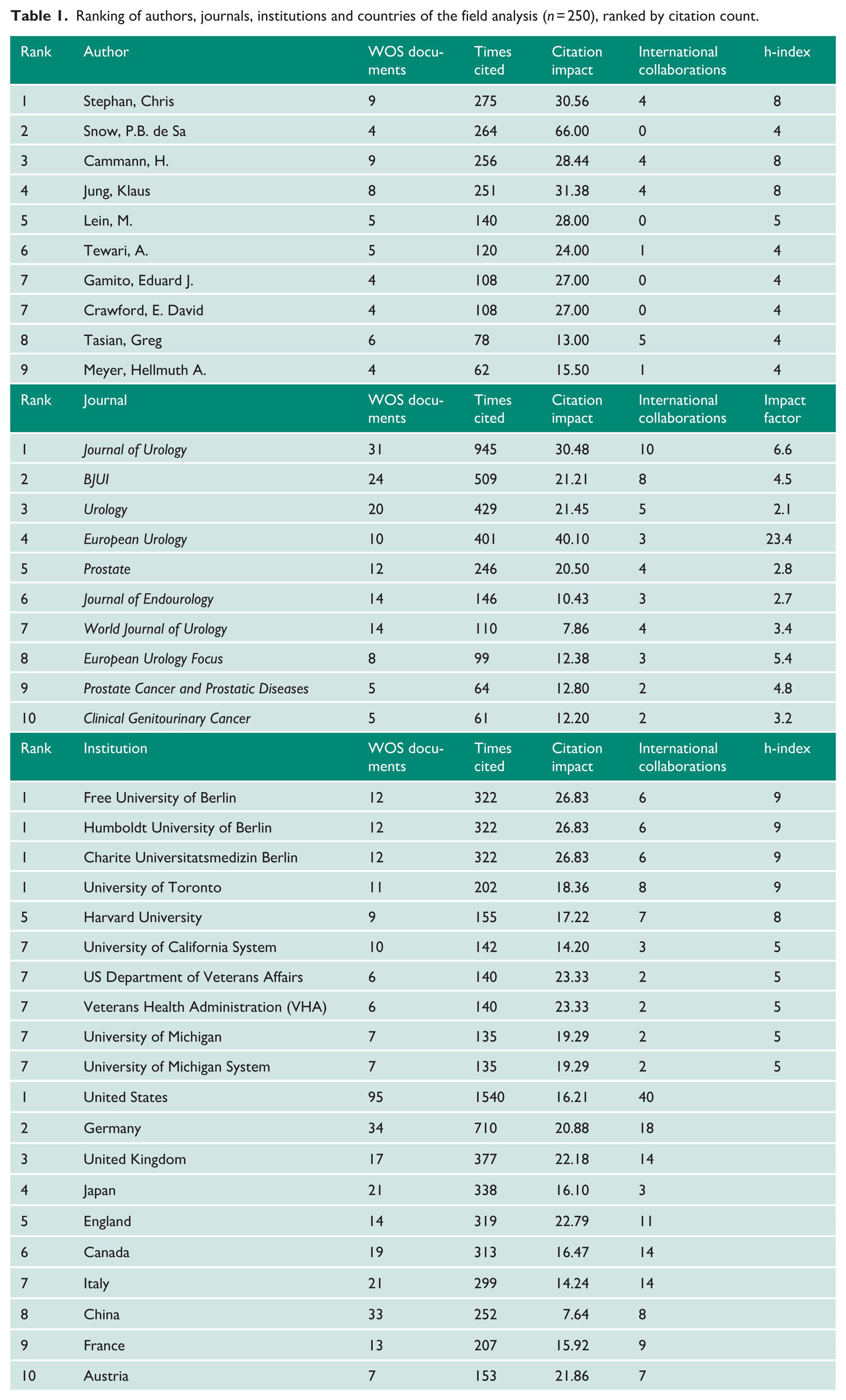
There was a total of 511 organisations, 44 countries, 45 medical journals and 1903 researchers. The United States contributed the most publications (n = 95, 38%) and had the highest citation count (n = 1568), followed by Germany (publications n = 34 & citation count n = 714). The most prolific institution was tied at first place with three institutions: Free university of Berlin, Humboldt university of Berlin and Charite Universitatsmedizin Berlin (n = 12). The most prolific researcher was Stephan. C (n = 10) and the most popular publication was Journal of Urology (n = 31, 12.4%) (Table 1).
Bibliometric mapping
Citation mapping is used to demonstrate the impact of publication based on the number of times articles citing each other and to identify the most influential publication within the publication field. To allow effective analysis of seminal literature and to avoid over complex interpretation, a minimum of 20 citations was set as filtering criterion. Only 62 publications met this requirement and only 28 of them were mapped as the remaining articles were isolated and not connected to the remaining cluster network shown in Supplemental Figure S2.
Co-citation analyse the number of times the articles were cited together and is used to identify the thematic clusters/foundational theme. In order to capture important reference without complicating the interpretation, 18 a minimum of 10 citations was set as criterion when performing co-citation mapping of authors. While 41 out of 4170 authors met the criterion, only 39 authors were displayed as the remaining 2 authors were isolated nodes and not part of the network cluster (Supplemental Figure S3). The proposed thematic cluster from this network map were cluster 1 – prostate cancer, artificial neural network (ANN), diagnosis, prostate specific antigen (PSA); cluster 2 – prostate cancer, imaging, diagnosis, cluster 3 – nephrectomy and cluster 4 – renal cell carcinoma, oncological outcomes, imaging.
Co-word analysis was performed to identify the most commonly occurring author keywords and, with the temporal overlay, to provide a preview of future research. A minimum of 5 occurrence was set as criterion and only 29 out of 596 keywords met this requirement. There were six clusters identified and the keywords ‘machine learning’ and ‘prostate cancer’ were popular and emerging topics (Figure 2).
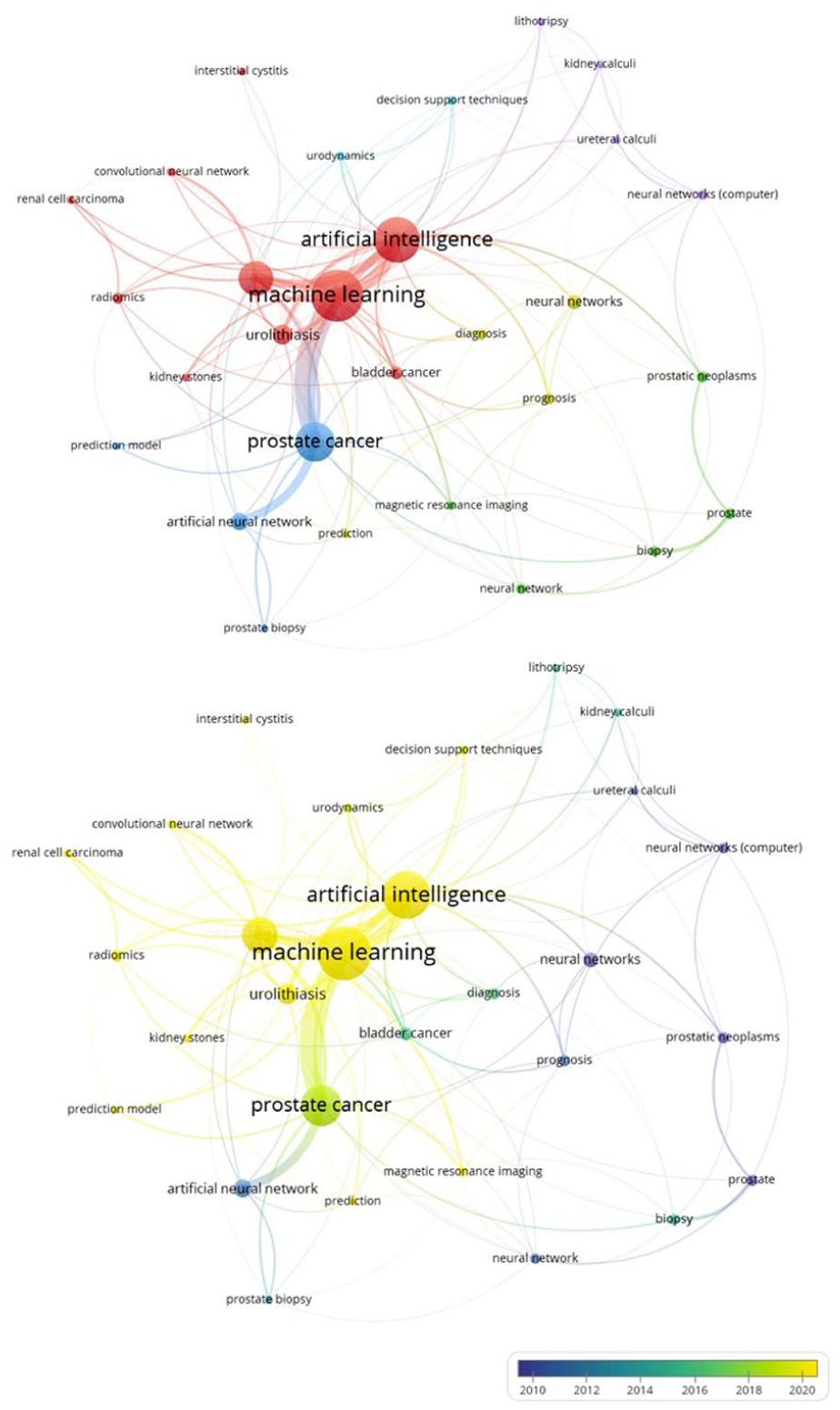
Co-word mapping with temporal overlay demonstrating popular author keywords. Six clusters were shown.
Citation burst
Citation burst analysis is useful to identify the current and emerging topics. Similar to co-work analysis, it helps to identify topics for future research. In the last decade the observed topics of interest were prostate cancer, machine and deep learning (Figure 3).
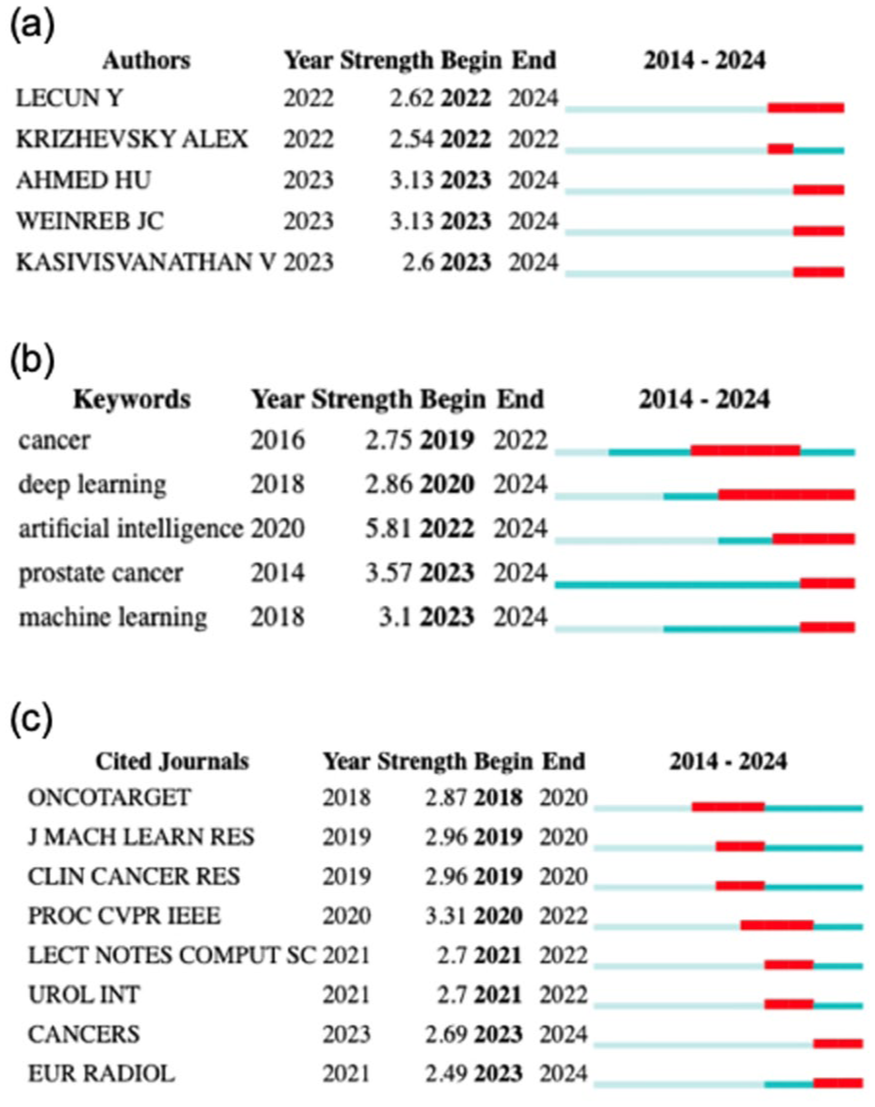
Citation bursts of the last decade performed through CiteSpace VI, (a) by top authors, (b) top keywords and (c) by cited journals.
Top 100 articles
The most popular topics were prostate cancer (39%), bladder cancer (18%) and urolithiasis (17%); the use of AI was commonly related to diagnosis/detection of disease (50%) (Supplemental Figure S4). Referencing to the OCEBM evidence level (level I = highest quality; 5 = lowest quality), the common level was level V (73%), followed by level IV (14%) and level III (13%). There was no level I or II of evidence. The average citation count was 31.65 per item with a h-index of 35.
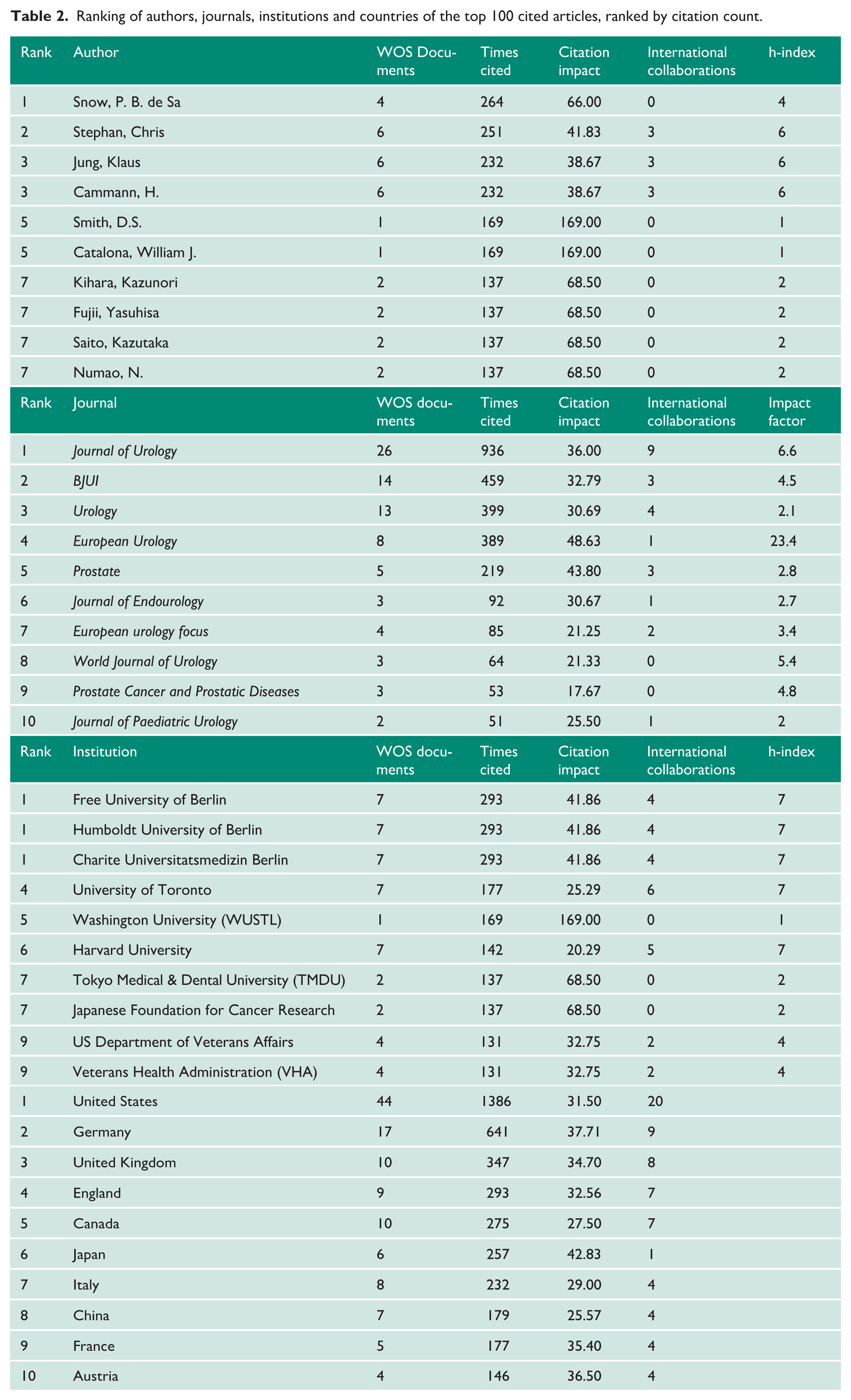
There was a total of 264 organisations, 34 countries, 24 publication sources and 740 researchers. The most prolific researcher was Snow P.B De Sa (n = 4 and citation count n = 264) and the most popular publication was Journal of Urology (n = 26). The most prolific institutions were Free university of Berlin, Humboldt university of Berlin and Charite Universitatsmedizin Berlin (n = 7, 7%). The top country was United States with the most publications (n = 44 and citation count of n = 1386) (Table 2).
Ranking of authors, journals, institutions and countries of the top 100 cited articles, ranked by citation count.
Discussion
The average citation count of the field analysis was 15.18 and only 45 articles had a citation count ⩽1. In comparison, the top 100 articles’ average citation count was 31.65 with a h-index of 35. These findings illustrate that these publications are highly impactful and productive, our findings are also consistent to the citation impact from the literature. Previous bibliometric studies demonstrated an average citation count of 23.79 in sacral neuromodulation, 11 29.24 in prostate cancer with AI, 13 27.06 in bladder cancer with AI 14 and 18.3 in robotics robotic surgery. 19 Nevertheless, the high citation count can only reflect the productivity rather than the overall quality of research and this is apparent from the OCEBM level of evidence. Among the top 100 cited articles, the most common EBM level was level V (73%) and there was no level I or II evidence. This finding should therefore encourage more prospective studies and/or randomised clinical trial (RCT) with AI application in urological care. However, it is understandable why the quality level of evidence is generally low. First, a large portion of AI technology is involved in model validation or retrospective case studies. Furthermore, the application of novel techniques often shows lower level of evidence 19 and to perform RCT in surgical studies can be a challenge. 20
The most common topic was prostate cancer. Together with other genitourinary cancers, the topic on neoplasms accounted for 56.8% of the field analysis and 65% of the top 100 cited articles. This finding was not unexpected as neoplasm is one of the most popular topics in AI application 5 ; relevant to this study prostate cancer is a common cancer and incurs significant health burden in males. 21 The popularity of this topic can be further illustrated by the citation mapping and burst analysis. However, we should also appreciate the emergence of other urological topics. Of note, urolithiasis was one of these topics as observed in the temporal overlay of co-word mapping. Furthermore, the thematic clusters of the co-citation mapping may under-represent other non-neoplasms topics because isolated nodes were not depicted within the network mapping and some of these isolated nodes included topics such as urolithiasis, lower urinary tract symptoms/incontinence, and benign prostate hyperplasia. The performance metrics such as citation count with these topics may improve with time 22 and by then, we may observe a different citation mapping in the next decade. Finally, the most common usage of AI was in disease diagnosis or detection, followed by prognosis. This finding is consistent with literature, regarding the popularity of AI’s utility in disease detection or diagnosis, often the popularity stems from AI’s accuracy, and its ability to process large amount of information and complex patterns.8,9,23 With this high level of performance efficacy and ability, it also turns to AI to be part of disease management and planning.
The country with the most productivity, citation count and international collaboration was United States and four out of the top 10 institutions were also based in the United States. The top publication was consistently the Journal of Urology in both field analysis and the top 100 cited articles. Other top four journals were BJUI, Urology, European Urology and Prostate. The average impact factor of the top five journals was 7.88 and 66 out of the top 100 cited articles were published in the top five journals; three of the top five medical journals are US-based. Our finding demonstrates United States continues to be a leading force in the biomedical research field and this is consistent with the literature.24,25 This finding is not unexpected given the country spends a relatively larger portion of their gross domestic product into research and development compared to other countries and it has a known track record of high volume and impactful research output.26,27
The strength in this study lies in the extensive bibliometric analysis used along with citation bursts to illustrate the emerging literature in the past decade. The additional use of the OCEBM level of evidence yields valuable information on the quality of evidence in these highly cited articles. This study also used the WOS core collection and MEDLINE, both are large and valid databases to perform bibliometric analysis,15,17 where it has been proven it’s productivity and performance metrics was stable and comparable to other databases such as Scopus and Google scholar.16,17 Arguably, there are limitations to this study such as the search strategy was limited to the WOS and MEDLINE databases and the inclusion of additional databases (such as Scopus or Google scholar) could expand the search field. Although the addition of another database could also introduce duplicates and irrelevant studies. Second, the search strategy focused on English and original articles only; hence, contributions from non-English and non-original articles were excluded.
Conclusion
This bibliometric study demonstrates the emerging impact and productivity of AI application in Urology, we found prostate cancer to be the most popular topic of interest and that the most common AI usage lies in disease diagnosis/detection. However, there is a progressive emergence in non-neoplasm topics such as urolithiasis. Despite the number of citations and citation impact of the field analysis, the OCEBM level of evidence is relatively low, though this is expected given the difficulty to perform prospective studies or clinical trial in surgery. Finally, United States continues to have the highest productivity and impact as a country and as a medical journal – Journal of Urology.
Supplemental Material
sj-docx-1-uro-10.1177_20514158251401725 – Supplemental material for Bibliometric analysis on current trends of artificial intelligence application in Urology and the top 100 cited articles
Supplemental material, sj-docx-1-uro-10.1177_20514158251401725 for Bibliometric analysis on current trends of artificial intelligence application in Urology and the top 100 cited articles by Yam Ting Ho, Femi E Ayeni, Jeremy Saad, Sachinka Ranasinghe, Henry Wang, Mohamed Khadra, Agus Rizal Ardy Hariandy Hamid, Isaac A Thangasamy and Jeremy YC Teoh in Journal of Clinical Urology
Footnotes
Acknowledgements
There are no acknowledgments to be made.
Conflicting interests
The authors declare that there is no conflict of interest.
Funding
The authors received no financial support for the research, authorship, and/or publication of this article.
Ethical considerations
Ethics approval is not applicable to this study as it solely analyses publicly available data, with no involvement of human or animal subjects.
Informed consent
Not applicable.
Consent to participate
Not applicable.
Consent for publication
Not applicable.
Data availability statement
The data that support the findings of this study are available on request to the author.
Guarantor
F.E.A.

Supplemental material
Supplemental material for this article is available online.
References
Supplementary Material
Please find the following supplemental material available below.
For Open Access articles published under a Creative Commons License, all supplemental material carries the same license as the article it is associated with.
For non-Open Access articles published, all supplemental material carries a non-exclusive license, and permission requests for re-use of supplemental material or any part of supplemental material shall be sent directly to the copyright owner as specified in the copyright notice associated with the article.
