Ulcerative colitis (UC) is an inflammatory disease of the colon and rectum. Treatment options include biologics and tofacitinib.
Objectives
We aim to summarize the evidence on efficacy and safety of biologics and tofacitinib in moderate-to-severe UC.
Methods
PubMed, Embase, Scopus, and the Cochrane Library were systematically searched to identify meta-analyses of randomized controlled trials assessing adalimumab, golimumab, infliximab, vedolizumab, and tofacitinib in UC. Efficacy outcomes included induction and maintenance of clinical response, clinical remission and mucosal healing. Safety outcomes included adverse events and serious adverse events.
Results
The overview involved 31 meta-analyses. All four biologics and tofacitinib were superior to placebo regarding efficacy. Indirect comparisons suggested that infliximab may be better than adalimumab and golimumab to induce clinical response and mucosal healing. Safety analyses indicated no increased rates of adverse events, except for infliximab.
Conclusions
Biologics and tofacitinib are efficacious and safe for treating UC. These findings can support clinical decision-making.
Ulcerative colitis (UC) is an inflammatory disease of the colon and rectum with remissions and relapses. Although the causes of UC have not been fully elucidated yet, its etiology comprises genetic and environmental factors.1 UC is globally spread2 with a high economic burden, which necessitates further research on its etiology and treatment. For instance, in the United States, where the prevalence of UC is 286 per 100,000 persons,2 the total annual cost of the disease is between $8.1 and $14.9 billion.3 The highest prevalence of UC has been observed in a European setting (Norway: 505 per 100,000). The cost of UC in Europe ranges between €12.5 and €29.1 billion.3 UC is related with worsened quality of life, substantial morbidity and increased cancer risk.4
Biologic therapies that include tumor necrosis factor (TNF) antagonists (adalimumab, ADA; golimumab, GLM; infliximab, IFX) and anti-a4b7 antibody (vedolizumab, VDZ) have improved the management of UC patients5 compared with the conventional therapeutic approaches of 5-aminosalicylates, glucocorticoids and immunomodulators. Meanwhile, new treatment options are emerging. Tofacitinib (TFB), an orally administered small-molecule Janus kinase inhibitor, is a promising new medicine that has recently been approved by the regulatory authorities.
This work aims to systematically summarize the available evidence and provide an efficient overview of published meta-analyses (MAs) of randomized controlled trials (RCTs) on efficacy and safety of biologic agents and TFB, and hopefully to support clinical decision-making.
Materials and methods
Literature search
PubMed, Embase, Scopus and the Cochrane Library were systematically searched through December 2018. Search terms included: adalimumab, golimumab, infliximab, vedolizumab, tofacitinib, biologic(s), biologic(al) agent(s), ulcerative colitis and meta-analysis. Medical subject headings (MeSH) terms were also included. The search was limited to papers published in English and in international scientific journals. Conference abstracts were excluded as they usually present results of preliminary analyses, which later appear as full-text publications. The reference lists of the included MAs were screened to identify additional eligible publications that might have been missed by the electronic search.
Study selection
Eligible articles were MAs of RCTs that examined the efficacy and/or safety of biologic agents and TFB versus placebo for treatment of moderate-to-severe UC. MA should have reported the effect estimates for at least one of the efficacy outcomes, that is, clinical response, clinical remission, and mucosal healing and/or assessed safety based on any adverse event (AE) and serious adverse event (SAE), as defined in each MA. Both induction and maintenance phases were considered.
MAs of observational studies were not included as they provide a lower level of evidence than MAs of RCTs. As mentioned above, articles written in language other than English and conference abstracts were excluded.
Data selection and extraction
Two reviewers (KP and DE) independently screened titles and abstracts to identify potentially eligible MAs. Disagreements were resolved by consensus with a third reviewer (DP). Two reviewers (KP and DE) extracted the data from MAs; a third reviewer (AY) verified their accuracy. First author’s last name, journal, year of publication, PROSPERO ID, type of agent and doses, patients’ characteristics, outcomes examined, numbers of included RCTs and participants, estimated summary effect sizes along with the corresponding 95% confidence intervals (CI) or credible intervals (CrI), heterogeneity statistics, and statistics about small-study effects (p-value) were extracted from each MA. An I-square < 50% and Cochran’s Q statistic p > 0.10 were considered as evidence of no substantial heterogeneity. The conduct of tests for small-study effects requires that at least 10 studies are included in a MA.6,7 Nevertheless, if tests for small-study effects were performed in MAs that had involved fewer than 10 studies, we presented their associated p-values. A p < 0.10 indicated the presence of small-study effects. In all other cases, a p < 0.05 was considered as statistically significant.
Quality of meta-analyses
Two reviewers (KP and AY) assessed the methodologic quality of each MA included in this overview based on AMSTAR 2.8 AMSTAR 2 is an appraisal tool to assess systematic reviews of randomized trials and includes 16 items that combine several published guidelines on this issue (e.g. PRISMA, MOOSE). The AMSTAR 2 tool rates the overall confidence in a systematic review as high, moderate, low or critically low.
Results
Search results
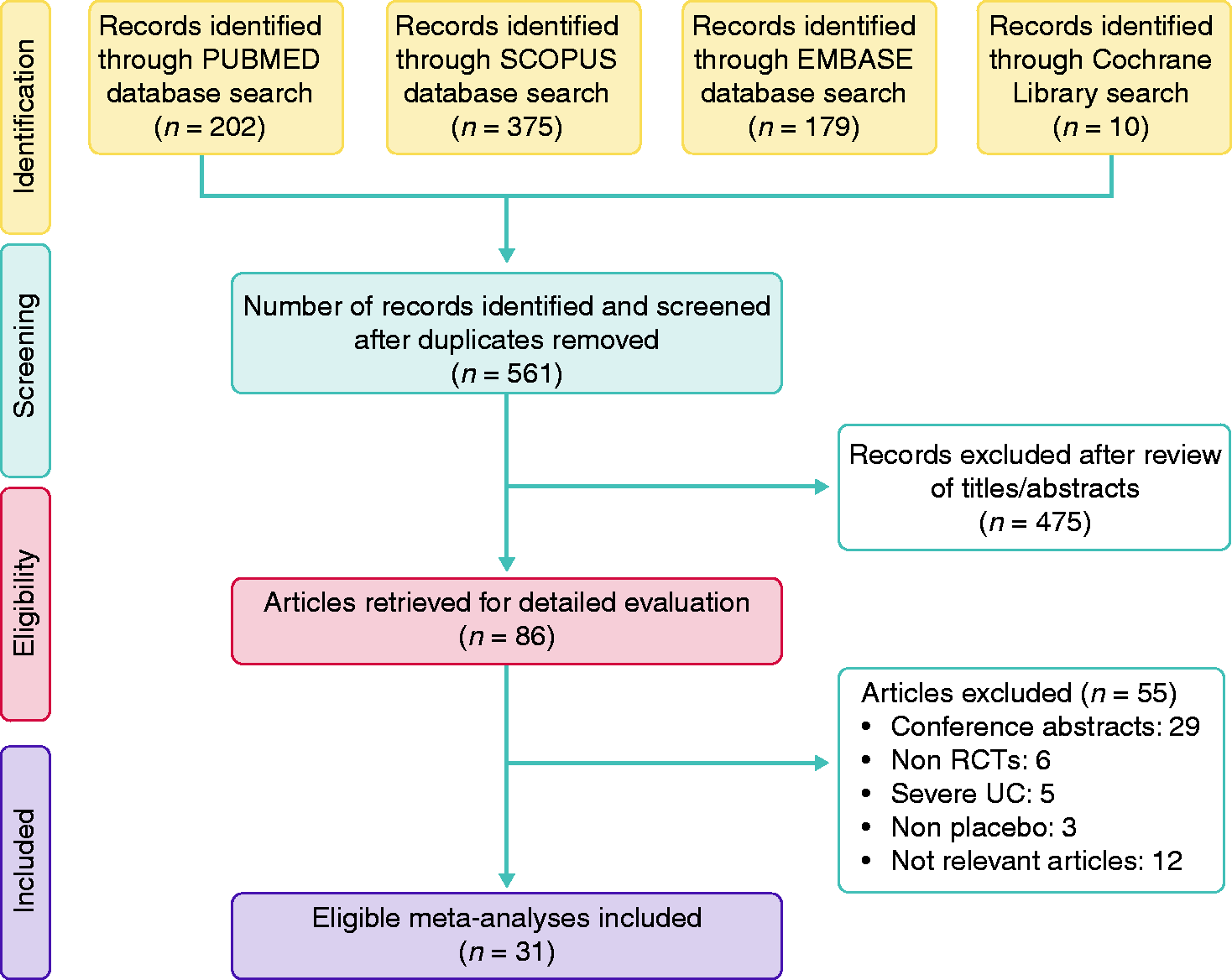
The literature search yielded 766 records. In total, 31 MAs9–39 met the eligibility criteria (Figure 1). MAs of head-to-head trials were unavailable, hence we included network MAs presenting evidence from indirect comparisons. One study was in Chinese and excluded from the overview.40 All eligible MAs were published after 2006.14 Most MAs involved adult patients (≥18 years old) and patients naive to anti-TNF agents (Supplementary Table S1).
Summary of the evidence search and selection process (flow chart).
The efficacy of biologic therapies in terms of clinical response, clinical remission and mucosal healing was studied in 28 MAs (Supplementary Table S1). Two MAs presented data only for safety.23,26 Four MAs9,20,29,38 examined the combined effect of biologics. Induction therapy was examined in 25 MAs, maintenance therapy in 19 MAs, and the combination of induction and maintenance phases in three.11,16,30 Primary maintenance studies considered in the included MAs that examined the efficacy and/or safety of golimumab and vedolizumab were restricted to induction responders who were re-randomized at the beginning of the study. This was not the case for adalimumab and infliximab trials.
Results of indirect comparisons between biologics were presented in 11 articles.9,10,15,17,22,24,29,31,34,35,39 These articles provided efficacy estimates for indirect comparisons for the induction phase, while nine articles9,10,15,17,22,29,31,34,39 did so also for the maintenance phase. AE were examined in 14 MAs and SAE in 19 MAs. Network MAs were reported in six articles.15,22–24,31,34
Tofacitinib was examined in four MAs12,24,31,34 (Supplementary Table S1). Clinical response was studied only when it was used as induction therapy.12,24
Most comparisons evaluated treatment effects using the odds ratio (OR) as the metric of choice. Relative risk (ReR) or Risk ratio (RiR) were also reported. One study17 used a probit link function to estimate the treatment effect based on the change of the probit score of the control arm.
Quality assessment of meta-analyses
The quality of the included MAs was assessed as low (eight MAs, 25.8%) and critically low (23 MAs, 74.2%) (Supplementary Table S2). Main critical flaws were the absence of a registered protocol for the MA (24 MAs, 77.4%) and of a list of the excluded studies with justification why these studies were not included in the MA (21 MAs, 67.7%).
Efficacy of biologics
Efficacy of biologics as induction therapy
Clinical response
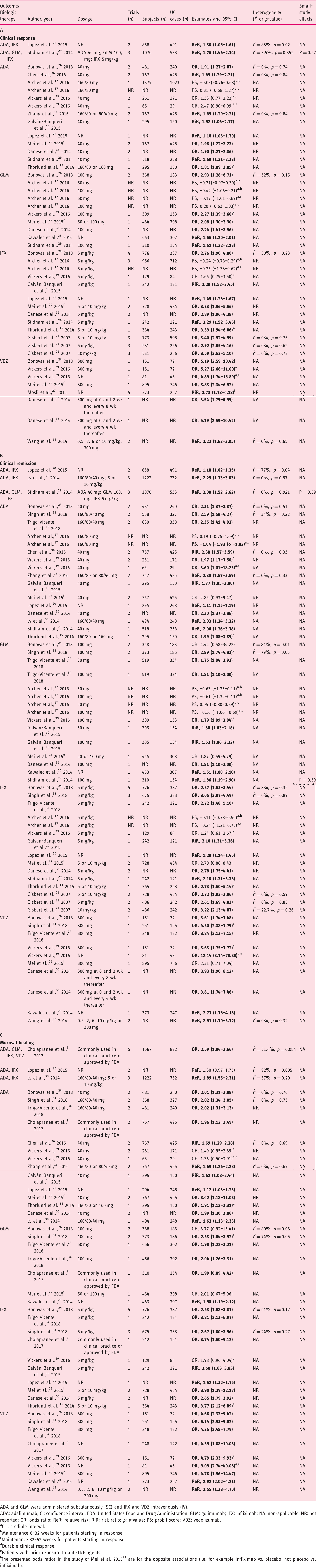
Meta-analyses20,29 examining ADA, GLM, and IFX together in a direct comparison with placebo concluded that biologics were superior to placebo (Table 1A).
Characteristics of meta-analyses that studied the efficacy (compared with placebo) of biologic therapies, that is, adalimumab, golimumab, infliximab and vedolizumab, as induction therapy, in ulcerative colitis. Significant estimates (p < 0.05) are presented in bold.
ADA and GLM were administered subcutaneously (SC) and IFX and VDZ intravenously (IV).
ADA: adalimumab; CI: confidence interval; FDA: United States Food and Drug Administration; GLM: golimumab; IFX: infliximab; NA: non-applicable; NR: not reported; OR: odds ratio; PS: probit score; ReR: relative risk; RiR: risk ratio; p, p-value; VDZ: vedolizumab.
CrI, credible interval.
Patients with prior exposure to anti-TNF agents.
The presented odds ratios in the study of Mei et al. 201522 are for the opposite associations (i.e. for example infliximab vs. placebo – not placebo vs. infliximab).
Failure to induce or maintain clinical response or remission.
The upper boundary of the credible interval is misprinted in the original publication.
ADA was individually examined in 12 MAs. The summary estimates showed that ADA is significantly better than placebo for dosages other than 80/40 mg subcutaneous (SC) (range of effect estimate: 1.28–1.98). Nine MAs studied the efficacy of GLM, 11 of IFX for intravenous use (IV), and nine of VDZ. All three biologics demonstrated superiority over placebo in all dosages (Table 1A). Most indirect comparisons did not reach statistical significance (Supplementary Table S3). However, the indirect comparisons in the included MAs showed that IFX was significantly better than ADA (range of effect estimate: 1.46–2.44) and GLM (range of effect estimate: 1.60–1.67) (Supplementary Table S3).
Clinical remission
ADA, GLM and IFX were examined together in two MAs.20,29 The results were statistically significant favoring these biologic agents over placebo (Table 1B).
The efficacy of ADA was investigated in 13 MAs. ADA administration improved clinical remission compared with placebo in most of these MAs (range of effect estimate: 1.10–2.22). Non-significant summary estimates were mainly obtained when only patients with prior exposure to anti-TNF agents were considered,31,39 the number of participants was low,20,31,36 or a dosage of 80/40 mg SC was administered.20,22,36
GLM attained significant improvements in remission rates compared with placebo in most of the 10 MAs (range of effect estimate: 1.12–3.54). Fifteen MAs examined the efficacy of IFX indicating superiority over placebo (range of effect estimate: 1.28–5.33). VDZ was also found to be more effective than placebo in 11 MAs, except for UC patients with prior exposure to biologics (range of effect estimate: 1.18–4.51). The highest magnitude of effect was observed for IFX (Table 1B). However, most indirect comparisons did not reach statistical significance (Supplementary Table S3). About half of the MAs showed that IFX was significantly better than ADA (range of effect estimate: 2.10–3.03).
Clinical response/remission
One MA17 examined the effect of ADA, GLM and IFX on clinical response and remission together. All three biologics were associated with beneficial treatment effects compared with placebo (Table 1C). The indirect comparisons did not show statistically significant differences (Supplementary Table S3).
Mucosal healing
Two MAs9,20 examined the efficacy of all biologics together, showing superiority over placebo (Table 1D). Summary effect estimates for ADA alone were reported in 13 MAs (17 comparisons). Of these, 12 comparisons showed that ADA was superior to placebo (range of effect estimate: 1.15–1.64). All comparisons in 10 MAs showed the superiority of GLM over placebo in terms of mucosal healing in the induction phase (range of effect estimate: 1.22–1.94), except for one comparison that was based on a dosage of 100/50 mg SC.20 IFX comparisons with placebo for dosages 5 or 10 mg/kg IV indicated the superiority of the active comparator (range of effect estimate: 1.69–3.42). VDZ was significantly better than placebo in eight of 10 comparisons presented in eight MAs (range of effect estimate: 1.19–2.97). The two non-significant comparisons31,39 considered only UC patients with prior exposure to anti-TNF agents.
Nine of the 10 indirect comparisons indicated the superiority of IFX over ADA and four of nine comparisons suggested that IFX was better than GLM (Supplementary Table S3).
Measures of heterogeneity and small-study effects
Several MAs9,13,14,16,18–20,24,25,27,29,31–33,35–39 provided heterogeneity assessment. Most comparisons versus placebo did not show substantial heterogeneity16,24,32,36 (Table 1A–D). In many cases, MAs included only one study or fewer than 10 studies, thus tests for small-study effects were not applicable.
Efficacy of biologics as maintenance therapy
Clinical response
MAs20,29 that examined biologics together found that biologics were superior to placebo (Table 2A).
Characteristics of meta-analyses that studied the efficacy (compared to placebo) of biologic therapies, i.e. adalimumab, golimumab, infliximab, and vedolizumab, as maintenance therapy, in ulcerative colitis. Significant estimates (p < 0.05) are presented in bold.
ADA and GLM were administered subcutaneously (SC) and IFX and VDZ intravenously (IV).
ADA: adalimumab; CI: confidence interval; FDA: United States Food and Drug Administration; GLM: golimumab; IFX: infliximab; NA: non-applicable; NR: not reported; OR: odds ratio; ReR: relative risk; RiR: risk ratio; p: p-value; PS: probit score; VDZ: vedolizumab.
CrI, credible interval.
Maintenance 8–32 weeks for patients starting in response.
Maintenance 32–52 weeks for patients starting in response.
Durable clinical response.
Patients with prior exposure to anti-TNF agents.
The presented odds ratios in the study of Mei et al. 201522 are for the opposite associations (i.e. for example infliximab vs. placebo—not placebo vs. infliximab).
Nine of 11 MAs for ADA and eight of 10 MAs for IFX showed a better clinical response over placebo in the maintenance phase. GLM and VDZ were also superior to placebo in all MAs except for one.17
A few articles reported data on indirect comparisons among biologics (Supplementary Table S4). Only one article39 suggested the superiority of VDZ over IFX (IFX vs. VDZ, OR: 0.31, 95% CrI: 0.11–0.88).
Clinical remission
Three MAs20,29,38 studied biologics together (Table 2B) and found that they were more effective than placebo. One MA38 included patients intolerant or refractory to conventional medical therapy but the superiority of biologics was confirmed.
Fourteen studies examined ADA individually. One22 failed to reach statistical significance. Seven of 10 MA found that GLM was superior to placebo (range of effect estimate: 1.50–2.89). IFX was more effective than placebo in nine of 12 MAs, and VDZ was better than placebo in seven of eight MAs (range of effect estimate: 2.51–12.14). VDZ performed better than IFX (IFX vs. VDZ, OR: 0.34, 95% CrI: 0.12–0.97) only in one study39 (Supplementary Table S4). No other indirect comparisons reached statistical significance.
Mucosal healing
The combination of ADA and IFX showed superiority over placebo in one of two MAs.20,38 The four biologic agents were significantly better than placebo in one MA9 (Table 2C). IFX was significantly better than placebo in nine of 10 MAs (range of effect estimate: 1.52–3.90) and VDZ was significantly better than placebo in all MAs (range of effect estimate: 2.55–9.09). ADA and GLM were significantly better than placebo in all (13 MAs and six MAs, respectively) but two MAs.
In indirect comparisons, two of five MAs suggested that VDZ may be superior to ADA, and one of six that it may be superior to GLM. The significant effect estimates for ADA versus VDZ ranged from 0.15 to 0.46, and for GLM versus VDZ from 0.45 to 0.47 (Supplementary Table S4).
Measures of heterogeneity and small-study effects
Heterogeneity assessments for comparisons evaluating the efficacy of biologics as maintenance therapy were lacking. For most comparisons, no evidence of substantial heterogeneity was found, except for ADA and IFX combined,20 and for GLM24,31 (Table 2A, B, and C).
In many cases, MAs included only one study, or fewer than 10 studies. Consequently, tests for small-study effects were not applicable.
Efficacy of biologics as induction/maintenance therapy
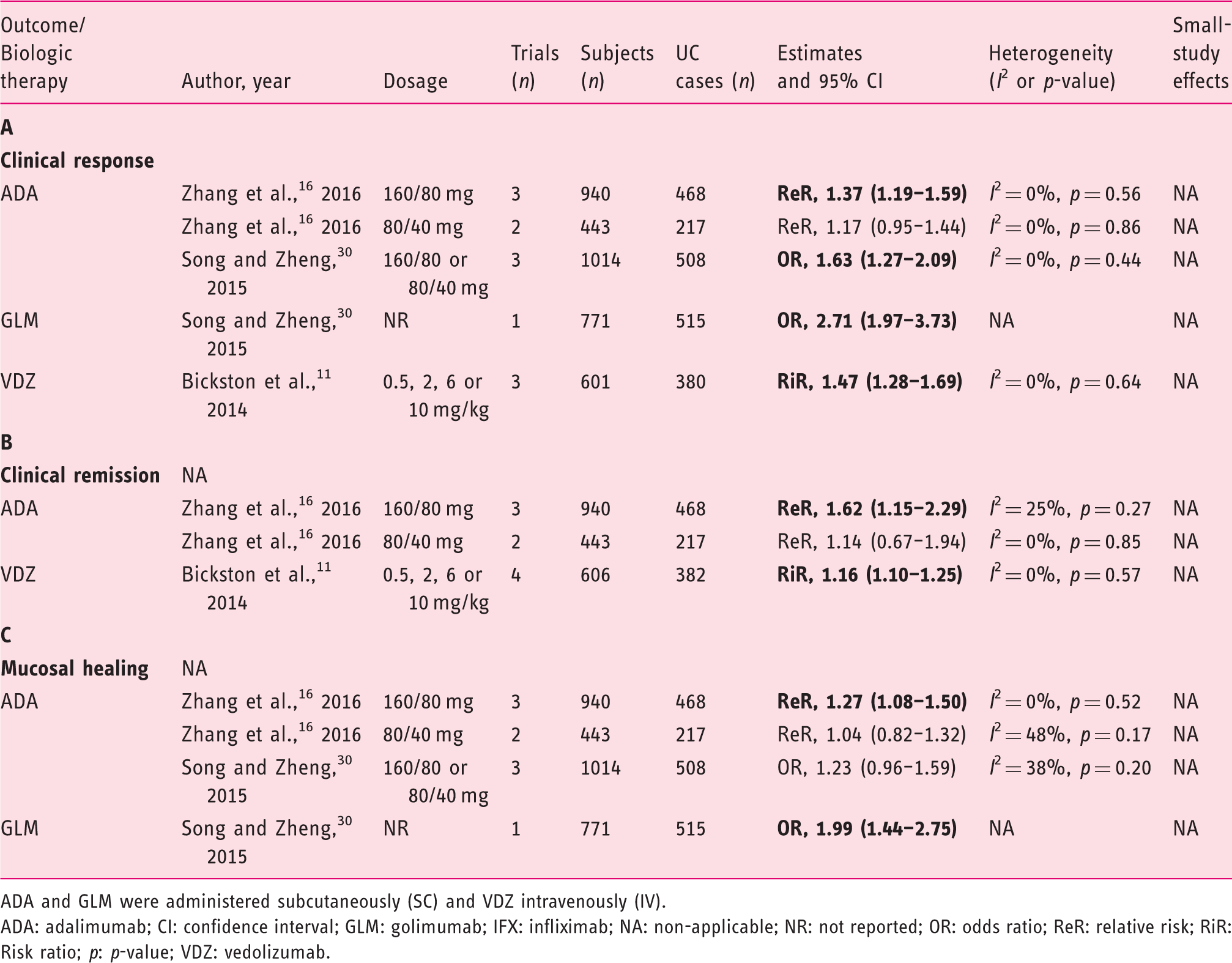
Induction and/or maintenance therapy was examined in three MAs.11,16,30 ADA, GLM and VDZ were more efficacious than placebo in most MAs (Table 3). Non-significant differences from placebo were observed when the ADA dosage of 80/40 mg SC was administered. None of the articles reported indirect comparisons.
Characteristics of meta-analyses that studied the efficacy (compared with placebo) of biologic therapies, i.e. adalimumab, golimumab, infliximab, and vedolizumab, as induction and/or maintenance therapy, in ulcerative colitis. Significant estimates (p < 0.05) are presented in bold.
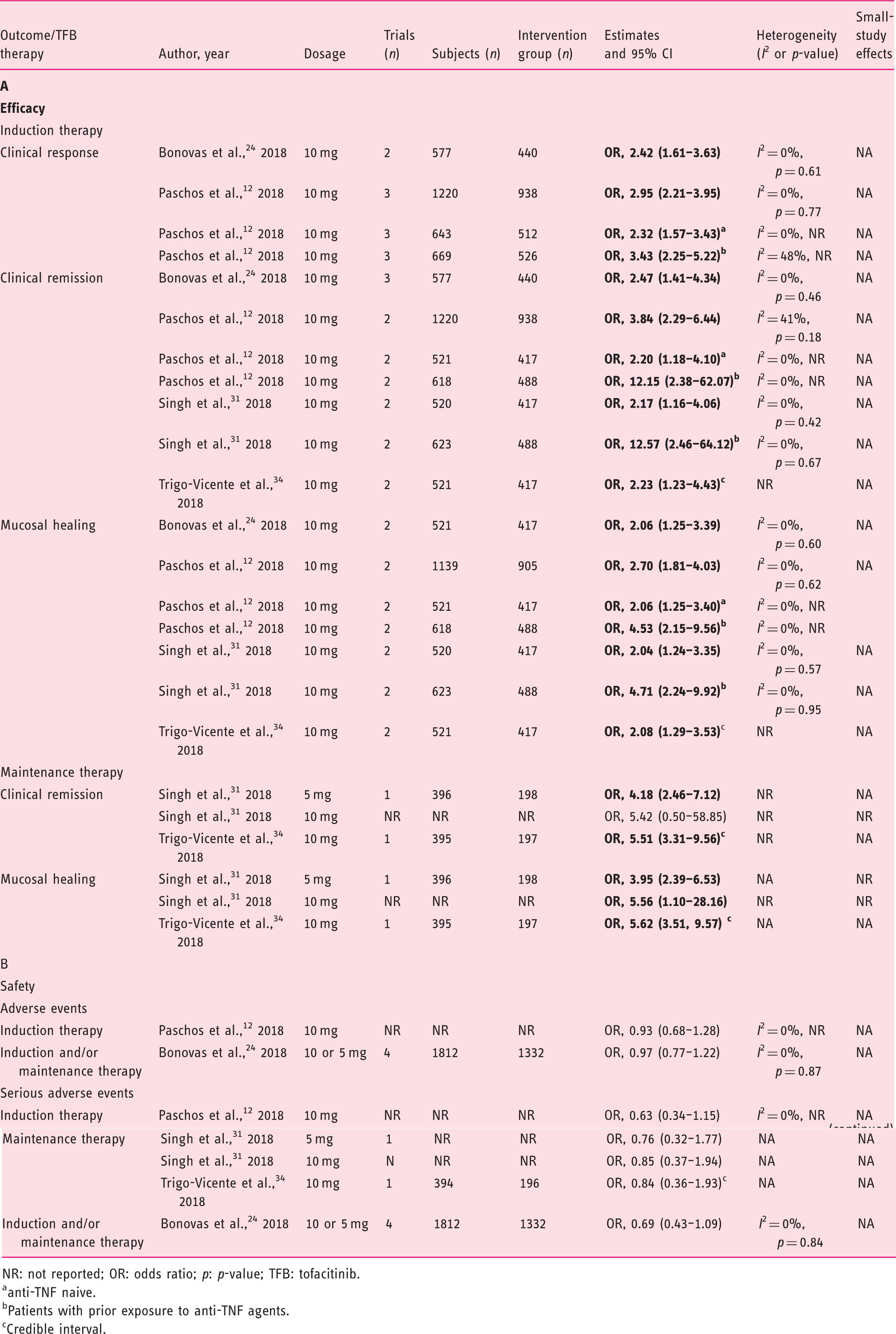
Tofacitinib was more effective than placebo in terms of clinical remission and mucosal healing in both the induction and maintenance phases. For the dosage of 10 mg as maintenance therapy, which was examined in two MAs,31,34 the difference regarding clinical remission was non-significant in one MA31 (Table 4). One MA31 showed that TFB was better than ADA in terms of clinical response and mucosal healing in the induction phase, when patients with prior exposure to anti-TNF agents were considered (Supplementary Table S5). TFB also was found to perform better than ADA and GLM (dosages 50 or 100 mg) as maintenance therapy in one MA.34
Characteristics of meta-analyses that studied (A) the efficacy and (B) the safety of tofacitinib compared with placebo, as induction, maintenance, and induction and/or maintenance therapy, in ulcerative colitis. Significant estimates (p < 0.05) are presented in bold.
NR: not reported; OR: odds ratio; p: p-value; TFB: tofacitinib.
anti-TNF naive.
Patients with prior exposure to anti-TNF agents.
Credible interval.
Safety
Safety of biologics
Most MAs indicated that the examined biologics are safe compared with placebo both in terms of AE and SAE (Supplementary Table S6). However, two comparisons for IFX (AE) reached statistical significance; one for the induction phase (OR: 1.52, 95% CI: 1.03–2.24)21 and one for the combined induction and/or maintenance phase (OR: 1.48, 95% CI: 1.00–2.19).24 ADA showed a slightly elevated occurrence of AE in the maintenance phase (RiR: 1.28, 95% CI: 1.06–1.54) in one MA. In terms of indirect comparisons, no significant difference was observed between the biologics (Supplementary Tables S3, S4, S7), except for a marginally significant difference in SAE between GLM and VDZ24 (Supplementary Table S7).
Safety of tofacitinib
All the MAs that examined TFB versus placebo have reported non-significant results (Table 4). Indirect comparisons between TFB with biologics also yielded non-significant results (Supplementary Table S5).
Discussion
This overview summarized and evaluated the evidence from 31 MAs on the efficacy and safety of four biologic therapies and of a small-molecule agent in moderate-to-severe UC. More MAs involved ADA and IFX than GLM and VDZ, evaluated clinical remission rather than clinical response or mucosal healing, and presented results for the induction phase rather than for the maintenance phase. In biologic-naive patients, the existing evidence suggested that biologics are more effective than placebo. The safety of biologics in patients with UC had been documented in another overview5 studying any infectious AEs, serious and opportunistic infections, tuberculosis and malignancies, concluding that treating UC patients with biologics is safe. Biologics were also found safe for treating UC in this overview. The only significant differences in terms of AEs (vs. placebo) were observed for IFX in the induction and induction/maintenance phases, and marginally for ADA in the maintenance phase.
Indirect comparisons suggested that IFX may be better than ADA and GLM to induce clinical response, better than ADA in clinical remission, and superior to ADA and GLM in mucosal healing. Some of the evidence indicated that VDZ could be better than ADA and GLM in maintaining mucosal healing. These results are confirmed by the first study directly comparing two biologic agents in UC.41 In this head-to-head comparison, VDZ was superior to ADA in achieving clinical remission and endoscopic mucosal healing at Week 52, while VDZ and ADA were both generally safe and well tolerated, in patients with moderate-to-severe UC.41
The accumulated evidence for TFB showed that it was more effective than placebo, and indirect comparisons suggested its superiority over ADA and GLM for maintenance of remission and mucosal healing. No evidence was found for indirect comparisons between TFB and IFX.
This overview revealed some weaknesses in the field. Many MAs have been conducted, although the primary RCTs are rather few. Therefore, some MAs are based on a limited number of RCTs, undermining a major objective of MAs, which is to test for heterogeneity and small-study effects. Differences in definitions of outcomes in the included MAs may exist and cause variation in their summary effect estimates. There were not head-to-head comparisons between biologics or between biologics and TFB in the primary RCTs included in the MAs of this overview. Thus, the evidence was based on indirect comparisons. Significant parameters for MAs including heterogeneity and small-study effects statistics were often not reported even when enough RCTs were included. It is well known that earlier trials enrolled a higher proportion of (or exclusively) biologic-naive patients. For this reason, the estimates presented in network MAs mixing naive and non-naive populations should be interpreted with great caution.42 Finally, many authors failed to register the protocol of their MA in advance and to provide a list of the primary studies excluded from MA and of the reasons why the authors did so.
In conclusion, this overview supports the efficacy and safety of biologics and TFB for the treatment of UC. IFX was superior than ADA and GLM for induction, and VDZ than ADA and GLM for maintaining mucosal healing. The superiority of VDZ over ADA was confirmed by a head-to-head trial.41 IFX was the only agent showing an increase of AEs. TFB seems to be better than ADA and GLM for maintenance of remission and mucosal healing. This overview, as an in-depth summary of the existing evidence on the comparative efficacy and safety of therapeutic options for patients with UC, can support clinical decision-making. More studies on therapy combinations, early effective intervention, and precision medicine approaches are still needed to improve the management of non-naive patients.42 More head-to-head trials are needed to confirm these findings and further support clinical decision-making.
Declaration of conflicting interests
Silvio Danese has served as a speaker, a consultant, and an advisory board member for AbbVie, Allergan, Biogen, Boehringer Ingelheim, Celgene, Celltrion, Ferring, Hospira, Johnson & Johnson, Merck, MSD, Takeda, Mundipharma, Pfizer, Sandoz, Tigenix, UCB Pharma, and Vifor. Laurent Peyrin-Biroulet has received consulting fees from AbbVie, Amgen, Biogaran, Biogen, Boerhinger-Ingelheim, Bristol-Myers Squibb, Celgene, Celltrion, Ferring, Forward Pharma, Genentech, H.A.C. Pharma, Hospira, Index Pharmaceuticals, Janssen, Lycera, Merck, Lilly, Mitsubishi, Norgine, Pfizer, Pharmacosmos, Pilege, Samsung Bioepis, Sandoz, Takeda, Therakos, Tillots, UCB Pharma and Vifor, and lecture fees from AbbVie, Ferring, H.A.C. Pharma, Janssen, Merck, Mitsubishi, Norgine, Takeda, Therakos, Tillots, and Vifor. All other authors have no conflicts of interest to declare.
Funding
This research received no specific grant from any funding agency in the public, commercial, or not-for-profit sectors.
Guarantor of the article
Georgios K. Nikolopoulos
Specific author contributions
Conception and design: SD, LPB, SB, GN. Literature search and data collection: KP, DE, DP, AY Data interpretation: AY, DP, SD, LPB, SB, GN. Drafting of the manuscript: KP. Critical revision of the manuscript for important intellectual content: All the authors. Final approval of the version to be published including the authorship list: All the authors.
Supplemental Material
UEG883566 Supplemental Material - Supplemental material for Efficacy and safety of biologic agents and tofacitinib in moderate-to-severe ulcerative colitis: A systematic overview of meta-analyses
Supplemental material, UEG883566 Supplemental Material for Efficacy and safety of biologic agents and tofacitinib in moderate-to-severe ulcerative colitis: A systematic overview of meta-analyses by Katerina Pantavou, Anneza I Yiallourou, Daniele Piovani, Despo Evripidou, Silvio Danese, Laurent Peyrin-Biroulet, Stefanos Bonovas and Georgios K Nikolopoulos in United European Gastroenterology Journal
NgSCShiHYHamidiN, et al.Worldwide incidence and prevalence of inflammatory bowel disease in the 21st century: A systematic review of population-based studies. Lancet2018; 390: 2769–2778.
3.
CohenRDYuAPWuEQ, et al.Systematic review: The costs of ulcerative colitis in Western countries. Aliment Pharmacol Ther2010; 31: 693–707.
4.
KinugasaTAkagiY. Status of colitis-associated cancer in ulcerative colitis. World J Gastrointest Oncol2016; 8: 351–357.
5.
BonovasSPantavouKEvripidouD, et al.Safety of biological therapies in ulcerative colitis: An umbrella review of meta-analyses. Best Pract Res Clin Gastroenterol2018; 32–33: 43–47.
6.
IoannidisJPATrikalinosTA. The appropriateness of asymmetry tests for publication bias in meta-analyses: A large survey. CMAJ2007; 176: 1091–1096.
SheaBJReevesBCWellsG, et al.AMSTAR 2: A critical appraisal tool for systematic reviews that include randomised or non-randomised studies of healthcare interventions, or both. BMJ2017; 358: j4008–j4008.
9.
CholapraneeAHazlewoodGSKaplanGG, et al.Systematic review with meta-analysis: Comparative efficacy of biologics for induction and maintenance of mucosal healing in Crohn’s disease and ulcerative colitis controlled trials. Aliment Pharmacol Ther2017; 45: 1291–1302.
10.
Galván-BanqueriMVega-CocaMDCastillo-MuñozMA, et al.Indirect comparison for anti-TNF drugs in moderate to severe ulcerative colitis. Farm Hosp2015; 39: 80–91.
11.
BickstonSBehmBTsoulisD, et al.Vedolizumab for induction and maintenance of remission in ulcerative colitis: A Cochrane systematic review and meta-analysis. Cochrane Database Syst Rev2014; 8: CD007571–CD007571.
12.
PaschosPKatsoulaAGioulemeO, et al.Tofacitinib for induction of remission in ulcerative colitis: Systematic review and meta-analysis. Ann Gastroenterol2018; 31: 572–582.
13.
WangMCZhangLYHanW, et al.PRISMA – Efficacy and safety of vedolizumab for inflammatory bowel diseases: A systematic review and meta-analysis of randomized controlled trials. Med (United States)2014; 93: e326–e326.
14.
LawsonMThomasAAkobengA. Tumour necrosis factor alpha blocking agents for treatment of active ulcerative colitis. Cochrane Database Syst Rev2006; 19: CD005112–CD005112.
15.
ThorlundKDruytsEMillsEJ, et al.Adalimumab versus infliximab for the treatment of moderate to severe ulcerative colitis in adult patients naïve to anti-TNF therapy: An indirect treatment comparison meta-analysis. J Crohn’s Colitis2014; 8: 571–581.
16.
ZhangZMLiWJiangXL. Efficacy and safety of adalimumab in moderately to severely active cases of ulcerative colitis: A meta-analysis of published placebo-controlled trials. Gut Liver2016; 10: 262–274.
17.
ArcherRTappendenPRenS, et al.Infliximab, adalimumab and golimumab for treating moderately to severely active ulcerative colitis after the failure of conventional therapy (including a review of TA140 and TA262): Clinical effectiveness systematic review and economic model. Health Technol Assess (Rockv)2016; 20: 1–326.
18.
FordACSandbornWJKhanKJ, et al.Efficacy of biological therapies in inflammatory bowel disease: Systematic review and meta-analysis. Am J Gastroenterol2011; 106: 644–659.
19.
YangZYeXZhuY, et al.Short-term effect and adverse events of adalimumab versus placebo in inducing remission for moderate-to-severe ulcerative colitis: A meta-analysis. Int J Clin Exp Med2015; 8: 86–93.
20.
LopezAFordACColombelJF, et al.Efficacy of tumour necrosis factor antagonists on remission, colectomy and hospitalisations in ulcerative colitis: Meta-analysis of placebo-controlled trials. Dig Liver Dis2015; 47: 356–364.
MeiWQHuHZLiuY, et al.Infliximab is superior to other biological agents for treatment of active ulcerative colitis: A meta-analysis. World J Gastroenterol2015; 21: 6044–6051.
23.
MoćkoPKawalecPPilcA. Safety profile of biologic drugs in the therapy of ulcerative colitis: A systematic review and network meta-analysis. Pharmacotherapy2016; 36: 870–879.
24.
BonovasSLytrasTNikolopoulosG, et al.Systematic review with network meta-analysis: Comparative assessment of tofacitinib and biological therapies for moderate-to-severe ulcerative colitis. Aliment Pharmacol Ther2018; 47: 454–465.
25.
KawalecPMikrutAŁopuchS. Systematic review of the effectiveness of biological therapy for active moderate to severe ulcerative colitis. J Gastroenterol and Hep2014; 29: 1159–1170.
26.
HuangXLvBJinHF, et al.A meta-analysis of the therapeutic effects of tumor necrosis factor-α blockers on ulcerative colitis. Eur J Clin Pharmacol2011; 67: 759–766.
27.
MosliMHMacdonaldJKBickstonSJ, et al.Vedolizumab for induction and maintenance of remission in ulcerative colitis: A Cochrane systematic review and meta-analysis. Inflamm Bowel Dis2015; 21: 1151–1159.
28.
LasaJRauschAZubiaurreI. Efficacy and safety of anti-integrin antibodies in inflammatory bowel disease: Systematic review and meta-analysis. Acta Gastroenterol Latinoam2018; 48: 106–116.
29.
StidhamRWLeeTCHHigginsPDR, et al.Systematic review with network meta-analysis: The efficacy of anti-tumour necrosis factor-alpha agents for the treatment of ulcerative colitis. Aliment Pharmacol Ther2014; 39: 660–671.
30.
SongYNZhengP. Efficacy and safety of tumor necrosis factor-α blockers for ulcerative colitis: A systematic review and meta-analysis of published randomized controlled trials. J Food Drug Anal2015; 23: 1–10.
31.
SinghSFumeryMSandbornWJ, et al.Systematic review with network meta-analysis: First- and second-line pharmacotherapy for moderate-severe ulcerative colitis. Aliment Pharmacol Ther2018; 47: 162–175.
32.
JinYLinYLinLJ, et al.Meta-analysis of the effectiveness and safety of vedolizumab for ulcerative colitis. World J Gastroenterol2015; 21: 6352–6360.
33.
NikfarSEhteshami-AfsharSAbdollahiM. A systematic review and meta-analysis of the efficacy and adverse events of infliximab in comparison to corticosteroids and placebo in active ulcerative colitis. Int J Pharmacol2011; 7: 325–332.
34.
Trigo-VicenteCGimeno-BallesterVGarcía-LópezS, et al.Systematic review and network meta-analysis of treatment for moderate-to-severe ulcerative colitis. Int J Clin Pharm2018; 40: 1411–1419.
35.
DaneseSFiorinoGPeyrin-birouletL, et al.Biological agents for moderately to severely active ulcerative colitis. Ann Intern Med2014; 160: 704–711.
36.
ChenXHouJYuanY, et al.Adalimumab for moderately to severely active ulcerative colitis: A systematic review and meta-analysis. BioDrugs2016; 30: 207–217.
37.
MotaghiEGhasemi-PirbalutiMZabihiM. Etrolizumab versus infliximab in the treatment of induction phase of ulcerative colitis: A systematic review and indirect comparison. Pharmacol Res2019; 139: 120–125.
38.
LvRQiaoWWuZ, et al.Tumor necrosis factor alpha blocking agents as treatment for ulcerative colitis intolerant or refractory to conventional medical therapy: A meta-analysis. PLoS One2014; 9: e86692–e86692.
39.
VickersADAinsworthCModyR, et al.Systematic review with network meta-analysis: Comparative efficacy of biologics in the treatment of moderately to severely active ulcerative colitis. PLoS One2016; 11: e0165435–e0165435.
40.
HuangXLüBZhangS. A meta analysis of tumor necrosis factor alpha blockers therapy for ulcerative colitis. Zhonghua nei ke za zhi2011; 50: 499–504.
41.
Schreiber S, Peyrin-Biroulet L, Loftus E Jr, et al. VARSITY: A double-blind, double-dummy, randomised, controlled trial of vedolizumab versus adalimumab in patients with active ulcerative colitis. In: 14th Congress of the European Crohn’s and Colitis Organisation, Copenhagen, Denmark, Abstract OP34.
42.
UngaroRCColombelJ-F. Editorial: biologics in inflammatory bowel disease-time for direct comparisons. Aliment Pharmacol Ther2017; 46: 68–69.
Supplementary Material
Please find the following supplemental material available below.
For Open Access articles published under a Creative Commons License, all supplemental material carries the same license as the article it is associated with.
For non-Open Access articles published, all supplemental material carries a non-exclusive license, and permission requests for re-use of supplemental material or any part of supplemental material shall be sent directly to the copyright owner as specified in the copyright notice associated with the article.