



Abstract
Introduction:
Endometriosis is a major gynecologic health issue affecting ~10% of women and girls of reproductive age worldwide. Despite its high prevalence, no curative treatment exists. Early diagnosis and treatment are critical to preventing complications; however, these remain limited in many healthcare settings. Diagnosis is also often delayed due to a lack of non-invasive tests. Physician education can also increase awareness of symptoms and accelerate diagnosis. A shift from surgical to non-surgical diagnostic methods could help reduce diagnostic delays.
Aim of study:
This study aimed to determine the rate of misdiagnosis and identify specific symptoms that could assist in early detection and management.
Methods:
This descriptive study was conducted at Prof. Dr. Margono Soekarjo General Hospital, Indonesia, involving all patients referred as suspected endometriosis cases to the fertility endocrinology clinic from 2020 to 2024. All participants underwent surgery, and an endometriosis diagnosis was confirmed by histopathology. Cases were grouped as true or non-endometriosis. Patient characteristics were analyzed to identify predictive features and determine the misdiagnosis rate.
Result:
Among the patients studied, 46.87% were ultimately diagnosed as non-endometriosis, reflecting a high misdiagnosis rate. Analysis revealed that three clinical features, including dysmenorrhea, early onset of dysmenorrhea, and high menstrual volume, were significantly associated with histologically confirmed endometriosis.
Conclusion:
Nearly half of suspected endometriosis cases were misdiagnosed, contributing to diagnostic delays and delayed treatment. Certain symptoms, particularly dysmenorrhea, its early onset, and increased menstrual volume, may serve as pathognomonic features. Identifying these signs could facilitate earlier diagnosis, especially in settings with limited access to surgical confirmation.
Introduction
Endometriosis is a chronic inflammatory disease which affects 10%–15% of women of reproductive age globally. 1 World Health Organization data showed 10% (190 million) were diagnosed. It usually takes up to 8–10 years to be diagnosed.2,3 At the global level, data from the Global Burden of Disease showed that the incidence of endometriosis was decreasing (10.37%) in this period (1990–2019).2,3 By contrast, the age-standardized incidence rate in Southeast Asia declined from 58.80 to 40.3/100,000 persons. 4 Data presented by the Ministry of National Development Planning 2023–2030 showed Indonesia would be facing a demographic bonus, which is higher for reproductive women (15–64 years) rather than lower or above the age range. Based on the population census 2020, Indonesia has 270 million people in total, of which 70.72% are included in the reproductive age group, either female or male. 5 The etiology of endometriosis is intricate and complicated, with numerous aspects remaining unverified to substantiate theories on its pathophysiology. It predominantly occurs in females of reproductive age. The retrograde hypothesis, recognized as the predominant explanation, suggests that menstrual effluent migrates through the fallopian tubes into the peritoneal area and implants in other organs. It induces various symptoms physically and psychologically. Physiological alterations are related to the prolonged treatment that led to mood disorders, depression, etc. Both of them impaired the quality of life. 1
There is a well-documented delay in diagnosis from the onset of symptoms for patients with endometriosis, and there is also a lack of non-invasive diagnostic tests. Several factors include the absence of a distinctive symptomatology, the diversity of symptoms, and the backlog for laparoscopic procedures. In 2012, a study including 173 endometriosis patients in Austria and Germany revealed that 74.3% had undergone a misdiagnosis. The little research on endometriosis results in insufficient understanding, complicating appropriate diagnosis, and delaying therapy, hence prolonging the process and leaving no recent solutions available. Moreover, recurrences of endometriosis following treatment occur swiftly. An effective, non-invasive, non-hormonal therapeutic option is required but currently unavailable. 1
The Visanne Post-approval Observational Study is the most extensive real-world, non-interventional study examining hormonal therapy of endometriosis. The study encompassed 27,840 women from six European nations and revealed that (1) the majority of women experience one of the triad of endometriosis-related pains: pelvic pain, pain during or after sexual intercourse, and dysmenorrhea; (2) dysmenorrhea is the most prevalent symptom; (3) the affected women are predominantly of reproductive age; (4) there is a history of prior pregnancies; (5) the time from symptom onset to diagnosis is typically within 1 year; and (6) diagnoses were primarily based on clinical symptoms. The behaviors and cultures of the country affect the clinical reporting of pain and the pursuit of healthcare. Moreover, healthcare experiences, expectations, and efficiency influence women’s symptom reporting. 6
Suriatmaja et al. showed that patients’ characteristics, based on laparoscopy in Hasan Sadikin Hospital, Bandung, in 2016–2018, are (1) reproductive age, (2) nulliparity, (3) dysmenorrhea, and (4) type of endometriosis is endometriomas. 7 Wu et al. showed that clinical manifestations of endometriosis patients, based on laparoscopy in Kandou Manado in 2016–2017, are (1) senior high school as the last education (61.1%), (2) housewife (51.9%), (3) nulliparity (51.9%), (4) not married (92.6%), (5) less than 14 years old (35.2%), (6) dysmenorrhea (44.4%), (7) site (73.6%), and (8) stage IV (51.9%). 8 Leriva et al. showed that clinical manifestations of endometriosis patients, based on laparoscopy/laparotomy in Mohammad Hoesin General Hospital Palembang in 2018–2020, are (1) reproductive age (15–49 years; 99%), (2) menarche (12–14 years; 67.6%), (3) ovarian site (58.1%), (4) workers (99%), (5) marriage status (85.7%), (6) fertile (43.8%), (7) dysmenorrhea (66.7%), (8) nulliparity (60%), and (9) stage IV (63.8%). 9 Mansur et al. showed that clinical manifestations of endometriosis patients, based on laparoscopy/laparotomy in Kariadi Hospital, Semarang, in 2018, are (1) reproductive age (20–35 years), (2) nulliparity, (3) dysmenorrhea, and (4) ovarian site. 10
Physical examinations and symptoms are quite varied. It is suggested that examination should be performed, including physical signs, bimanual and rectovaginal examination of the pelvic structure. Even the examination has a poor sensitivity and specificity compared to surgical approaches. Those are available biomarkers such as CA-125, CA-72, CA 15-3, CA-19-9. Imaging such as ultrasonography and MRI may be useful for identifying pelvic organ abnormalities and is the most common modality for differentiating diagnosis or the extension of endometriosis. The gold standard is laparoscopy with histopathological examination for diagnosis. It reported common lesion types. Unfortunately, very small lesions may be suspected of endometriotic implants in asymptomatic patients. 11
The heterogeneity of endometriosis and the diverse contexts in which it develops suggest that a single etiopathogenetic model is insufficient; instead, a multifactorial approach is required. Interactions between various endometriosis theories and epigenetic or environmental exposures may influence the risk associated with each underlying mechanism, as established in previous studies. 12 Given these complexities, this study serves as a preliminary investigation within our institution to explore potential risk factors and characteristics associated with endometriosis. The significance of these characteristics remains uncertain, as previous research has produced inconsistent findings, highlighting the need for further exploration and validation.
Materials and methods
This was a descriptive study, conducted over a 5-year period from 2020 to 2024 at Prof. Dr. Margono Soekarjo Regional General Hospital in Central Java, Indonesia. The study adhered to the ethical standards outlined in the Declaration of Helsinki and received approval from the Ethics Committee of Prof. Dr. Margono Regional General Hospital (approval number: 420/10313).
This study utilizes total sampling methods. All patients included in the study were diagnosed with endometriosis upon admission based on referral letters. The initial diagnosis was established through clinical symptomatology and ultrasound findings. Surgical intervention was performed for the treatment of endometriosis at our center, after which patients were classified into two groups: those with histopathologically confirmed endometriosis and those found to have other conditions (misdiagnosed cases). The total sample for this study is 64, which exceeds the minimum required sample size of 25 as calculated using the formula to estimate sample size using t test.
Data collection involved interviews and a review of medical records from patients attending the fertility and endocrinology reproductive polyclinic at Prof. Dr. Margono Soekarjo Provincial General Hospital. The interview was conducted during their first clinic visits. If any data needed to be further clarified with the patient, an additional interview would involve the patient directly. All of the data, both from the interview and also the medical records, were obtained under written informed consent. During the informed consent process, participants were given detailed explanations in their native language regarding the study variables, based on the operational definitions used in this article. For participants with no formal education or considered minors, written informed consent was obtained through their legally authorized representative. All of the participants have signed the written informed consent after given full understandings of the procedure and the research purposes.
The collected data were then analyzed to identify relevant characteristics and examine associations among various factors. Patients were excluded from the study if they had incomplete medical records or missing information related to menstrual history. Exclusion also applied to individuals diagnosed with other gynecological conditions known to affect menstrual cycles, such as polycystic ovary syndrome or uterine fibroids. In addition, those with a history of pelvic inflammatory disease or previous pelvic surgeries unrelated to endometriosis were not included. Patients currently receiving hormonal therapy or taking medications that could influence menstrual patterns were also excluded. Furthermore, postmenopausal women and those who had undergone a hysterectomy or oophorectomy prior to the study period were not considered eligible (Figure 1).

Diagram of subjects selection.
This included a standardized classification of menstrual characteristics according to the International Federation of Gynecology and Obstetrics, which was illustrated using a table presented in advance to all participants. 13 Data collection was conducted by a clinical expert affiliated with our institution.
To address the possibility of recall bias in self-reported menstrual characteristics such as cycle pattern, pain intensity, and menstrual volume, efforts were made to improve response accuracy. These included the use of standardized tools such as the Pictorial Blood Assessment Chart (PBAC) for quantifying menstrual blood loss and the visual analog scale (VAS) for assessing pain. 14 Visual references and clear definitions were provided during the consent process to aid participants in accurately recalling and reporting their experiences.
Menstrual volume was evaluated using the PBAC, a validated instrument for assessing menstrual blood loss. To enhance consistency and minimize reporting bias, participants were shown examples of the PBAC scoring method and were asked to classify their flow as “light,” “normal,” or “heavy” using visual aids. This approach aimed to reduce subjectivity and improve the reliability of the data.
Onset of dysmenorrhea was defined as menstrual pain during menstruation, and either within 3 years of menarche or more than 3 years afterward. The menstrual cycle was categorized by four parameters: frequency, duration, regularity, and bleeding volume. Frequency was defined as follows: (1) absent or amenorrhea, (2) shortened (<24 days), (3) normal (24–38 days), and (4) prolonged (>38 days). Duration was categorized into (1) short (<4 days), (2) normal (4–8 days), and (3) prolonged (>8 days). Regularity was defined as (1) regular (⩽7 days variation) and (2) irregular (>7 days variation). Bleeding volume was classified as (1) light (<5 cc), (2) normal (80–100 cc), and (3) heavy (>100 cc).
Dysmenorrhea was defined as menstrual pain during menstruation. Explanations of pain assessment using the VAS were also provided during the informed consent process, with visual examples shown beforehand. The VAS ranged from 0 (no pain) to 10 (pain severe enough to interfere with daily activities).
Contraceptive use was categorized based on prior usage, type of method, and duration before the diagnosis of endometriosis. Infertility was defined as the inability to conceive and deliver a healthy, living child (for women) or to impregnate a partner (for men) after 12 months of regular, unprotected sexual intercourse.
Ethical statement
This study was conducted in accordance with the ethical principles outlined in the Declaration of Helsinki and received approval from the Ethics Committee of Prof. Dr. Margono Soekarjo Regional General Hospital (approval no. 420/05073). Prior to participation, all individuals were provided with comprehensive information regarding the study’s aims, procedures, and potential risks. Written informed consent was obtained from all participants. For those with no formal education or considered minors, written informed consent was obtained from their legally authorized representatives, with the assurance that their participation was voluntary and that they could withdraw at any time without consequence. Confidentiality, autonomy, and the well-being of participants were fully respected throughout the research process.
Results
This study included 64 subjects, of which 34 (53.13%) were confirmed to have endometriosis through histopathological examination, while 30 (46.87%) were misdiagnosed based on histopathological findings (Table 1). The misdiagnosis rate of 46.87% indicates that the majority of cases (53.13%) were accurately diagnosed before surgical confirmation. This relatively high rate of accurate diagnosis suggests potential for developing non-surgical diagnostic methods, especially in low-resource settings. Improving diagnostic accuracy through non-invasive approaches could significantly reduce the need for surgical procedures and facilitate earlier intervention.
Misdiagnosis rate of endometriosis.
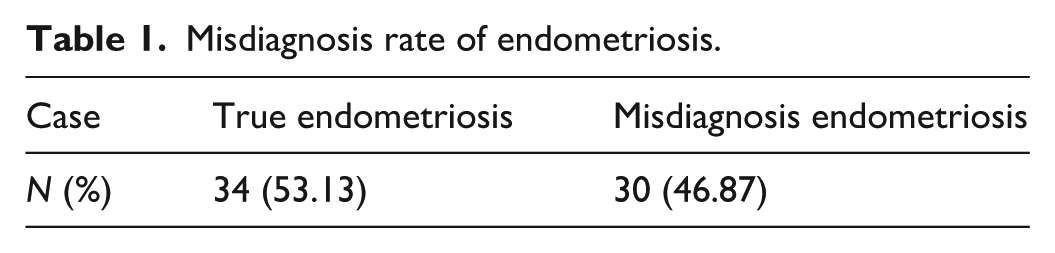
Table 2 presents the characteristics evaluated in this study, which include age, educational background, parity, dysmenorrhea, dysuria, dyschezia, menstrual cycle, menstrual frequency, menstrual volume, menstrual interval, infertility, contraceptive history, and VAS scores.
Basic characteristics of endometriosis cases.

Statistically significant result (*p < 0.05).
In terms of age, the majority of participants in both groups fell within the reproductive age range (15–49 years), accounting for 45.3% in the endometriosis group and 37.5% in the non-endometriosis group. There was no statistically significant difference in educational background between the two groups (p = 0.181). Nulliparity was more common among individuals with endometriosis (32.8%) compared to those without (23.4%).
Regarding menstrual pain, a statistically significant difference was observed in both the incidence and onset of dysmenorrhea between the two groups (p = 0.001 and p = 0.045, respectively). Dysuria and dyschezia were more often absent in endometriosis cases, each reported at 42.2%.
While no significant differences were found in menstrual interval, frequency, or regularity between the groups, menstrual volume showed a statistically significant difference (p = 0.001), with the endometriosis group exhibiting heavier menstrual bleeding.
There were no significant differences between groups in terms of infertility (p = 0.301) or contraceptive history (p = 0.570). However, a VAS score of 10 was more frequently reported in the endometriosis group (18.8%) compared to the non-endometriosis group (9.4%).
In conclusion, based on the patients’ baseline characteristics, this study found that individuals with dysmenorrhea, onset of dysmenorrhea more than 3 years after menarche and menstrual volume tend to have a higher likelihood of endometriosis.
These results serve as a pilot study for further research to determine whether there is an association between these three characteristics and the occurrence of endometriosis. This may help identify potential pathognomonic signs of endometriosis, enabling early diagnosis and preventing delayed diagnosis.
Discussion
The result of the study showed that education based on planned behavior had positive effects on reproductive health. 15 A lack of fundamental knowledge adversely affects young women’s understanding of menstrual pain, resulting in delayed diagnoses. It is susceptible to unnecessary and unsupervised medication consumption. The true onset of endometriosis does not occur at the time patients seek assistance; it has already begun prior to that point. 16
A meta-analysis (nine case–control, seven cohort, one cross-sectional) showed a significant inverse association between parity and endometriosis (odds ratio (OR) 0.56; 95% confidence interval (CI): 0.33–0.79; RR 0.42; 95% CI: 0.33–0.51). The parity suppresses endometriosis by progesterone-dominant hormonal. 17 A study showed that the risk of endometriosis is higher in nulliparity than in multiparity women. In addition, the risk was inverse to the number of births. As we mentioned above, lactation may also be involved in protective mechanisms. 18 Related to our study, our study indicates that endometriosis predominantly occurs in women with nulliparity (32.8%). The underlying mechanism between multiparity protected endometrial cancer is a lack of ovulation and decreased estrogen levels and increased progesterone levels. In addition, it is well accepted that estrogen stimulation without opposing progesterone, postmenopausal used estrogen therapy also as a risk for endometrial disturbances. Estrogen has been considered a mitogen. It promotes endometrial cell growth, altered morphology, number, and size. However, multiple studies found increasing parity as a protective factor against the development of endometrial disease, especially cancer. 19
A recent meta-analysis of 11 studies (two cohort and nine case–control) showed a higher BMI correlates with lower risk of endometriosis (RR 0.89; 95% CI: 0.82–0.96). It is suggested that the BMI may not provide etiology information for reflecting nature obesity. In addition, the inverse relationship may be biased because of pelvic less likely to be provided an operative intervention. The possible explanation is increasing weight/obesity, often associated with anovulation or oligomenorrhea, which decreases the chance of menstrual regurgitation. Another explanation is chronic pelvic pain of endometriosis-induced gastrointestinal symptoms and emotional stress, which decrease appetite and food intake. 20
Interestingly, in our study, the regularity of the menstrual cycle showed that the regular cycle is higher than the irregular cycle in both endometriosis and non-endometriosis women. Theoretically, endometriosis patients presented abnormal menstrual cycles. Abnormal cycle was defined as one of the following: (1) duration <28 or more than 32 days and (2) more than 8 days of menstrual bleeding or anovulatory cycle. It is important because the length of the menstrual cycle, which is a short duration and a long menstrual flow, leads to the risk of retrograde flow. This study showed a moderately strong correlation between menstrual cycle length and endometriosis (r 0.0622). 21
The meta-analysis, comprising 11 case–control studies, indicated that women with a menstrual cycle length of 27 days or shorter exhibited a higher risk of endometriosis compared to those with a cycle length of 29 days or longer (OR 1.22; 95% CI: 1.05–1.43). OR 0.68; 95% CI: 0.48–0.96. 22
In our study, we found a statistically significant association between menstrual pain and dysmenorrhea (p = 0.001; OR 17.5; 95% CI: 4.754–64.415), with a higher incidence observed in women with endometriosis (46.9%) compared to those without (14.1%). Dysmenorrhea is recognized as one of the main clinical manifestations of endometriosis. Few studies have explored the long-term consequences of dysmenorrhea in adolescents and young adults, though evidence suggests that it can have significant negative impacts. Dysmenorrhea could potentially serve as an early predictive marker for endometriosis. 23
In our study, we also found that the VAS score of 10 was more frequently reported among women with endometriosis (18.8%) than those without (9.4%). A systematic review comparing the VAS and Numeric Rating Scale for assessing endometriosis-related pain concluded that the VAS correlates strongly with pain severity and negative impacts on quality of life. 24 One study showed that a VAS score >7 is a commonly used cutoff for indicating severe pain among women with endometriosis, with an average reported score of 5.76. 25
In our analysis, no significant differences were found between endometriosis and non-endometriosis groups regarding infertility (p = 0.301) or contraceptive history (p = 0.570). Ectopic endometrial tissue is influenced by sex hormone-mediated inflammation. There are two contrasting perspectives on the role of oral contraceptives (OCPs) in endometriosis: some studies suggest they offer protection, while others propose they may contribute to disease progression. One theory suggests that exogenous hormone use suppresses endometrial tissue implantation via retrograde menstruation, thereby reducing risk. Conversely, long-term hormone exposure might promote the development of ectopic endometrial tissue. 26
Hormonal therapies may reduce endometrioma size through multiple mechanisms. For instance, progestins inhibit angiogenesis, suppress endometrial cell proliferation directly, and modulate the immune response indirectly. They also have anti-inflammatory effects and reduce the activity of matrix metalloproteinases, thereby limiting tissue invasiveness. Centrally, progestins suppress gonadotropin secretion, resulting in a hypoestrogenic state that further inhibits endometrial tissue growth.27,28
On the other hand, one study showed that OCP use for more than 5 years was associated with a higher risk of developing endometriosis (OR 2.42; 95% CI: 1.76–3.33), compared to use for <5 years (OR 2.13; 95% CI: 1.6–2.8). However, the specific types of contraceptives used were not mentioned in that study. A comparative study investigating the effect of progestins versus combined OCPs for 3 years in managing menstrual pain found improvements in both groups, indicating their potential role in pain relief for endometriosis patients. 28
Limitations
The limitations of this study include its descriptive design, which restricts the ability to establish causal relationships between the variables examined. In addition, the study was conducted at a single center, which may limit the generalizability of the findings to broader populations. The reliance on clinical and ultrasound-based diagnosis prior to surgical confirmation introduces the possibility of diagnostic inaccuracies, as evidenced by the 46.87% misdiagnosis rate identified. Furthermore, potential biases may have arisen from the retrospective nature of data collection, relying on registered records and interviews. Finally, the study did not control for potential confounders such as genetic, environmental, and lifestyle factors that may influence the occurrence of endometriosis. Future research with larger, multi-center cohorts and prospective designs are warranted to confirm these findings and further elucidate the factors associated with endometriosis.
Conclusion
This study found that the misdiagnosis rate in endometriosis cases remains as high as 46.87%. This may contribute to delayed diagnosis and delayed treatment. Previous studies have suggested that one of the challenges is the presence of signs and symptoms that mimic other diseases. Therefore, a more in-depth analysis of the signs and symptoms of endometriosis is necessary. In this study, based on patient characteristics, the reported signs and symptoms such as dysmenorrhea, onset of dysmenorrhea, and menstrual volume were identified as potential pathognomonic features of endometriosis. These findings could support early diagnosis and early treatment, especially in low-resource hospital settings.
Footnotes
ORCID iDs

Ethical considerations
The study obtained an approval from the Research Ethics Committee of Margono Hospital, Purwokerto, Indonesia (approval no. 420/05073). All patients in this study were examined, and the ethical standards set out in the 1964 Declaration of Helsinki were adhered to.
Consent to participate
Written informed consent was obtained from the patient or their legally authorized representative in the case of participants with no formal education or considered minors.
Consent for publication
Written informed consent was obtained from a legally authorized representative(s) for anonymized patient information to be published in this article.
Author contributions
R.A. was involved in the conception, design, analysis, interpretation of the data, and article drafting. A.U. and D.M. collected and analyzed the data and assisted in drafting the article. M.A.P.D.P. and P.N.A.A. collected and analyzed the data. B.S.A., A.F.P.S., and M.A.R. developed the conception design, analyzed and interpreted the data, and revised the article critically for intellectual content. A.R. contributed to data interpretation and critically revised the article for important intellectual content. The different affiliations of each author were due to the collaborative exchange among the participating centers.
Funding
The authors received no financial support for the research, authorship, and/or publication of this article.
Declaration of conflicting interests
The authors declared no potential conflicts of interest with respect to the research, authorship, and/or publication of this article.
Data availability statement
The data supporting this study’s findings are available from the corresponding author upon reasonable request. The data are not publicly available due to privacy or ethical restrictions.