




Abstract
Objective:
To assess the quality of healthcare in the emergency departments of governmental hospitals in the Gaza Strip, Palestine, from the perspective of nurses.
Methods:
This observational, descriptive, and analytical cross-sectional study was conducted in major governmental hospitals in the Gaza Strip between October 2022 and January 2023. The study population comprised nurses working in adult emergency departments who had at least 6 months of clinical experience. Data were collected using a self-administered English questionnaire designed to assess six key domains of healthcare quality: physician effectiveness, nursing effectiveness, medical equipment efficiency, communication methods, safe environments, and timeliness. Descriptive and inferential statistics were applied using Statistical Package for the Social Sciences version 25.
Results:
A total of 193 nurses were included. The study found that nurses rated the overall quality of healthcare in Gaza’s emergency departments as high (75.0%). Among the six evaluated domains, communication methods received the highest rating (87.0%), followed by safe environments (82.0%) and physician effectiveness (77.1%). Nurses reported strong teamwork and effective communication within the healthcare team. However, two domains received notably lower scores: the quality of medical devices and instruments (56.5%) and nursing effectiveness (68.5%). Key concerns included shortages in medical equipment, delays in replacements, and insufficient nurse-to-patient staffing ratios. Despite these challenges, nurses acknowledged their commitment to accurate documentation and continuous patient follow-up.
Conclusion:
The study indicates that while the overall quality of care in Gaza’s emergency departments is rated high by nurses, there are ongoing challenges in medical equipment and personnel. Addressing these issues is essential for improving patient care and outcomes. Future research should focus on optimizing resource allocation and improving nurse-patient ratios in conflict-affected areas.
Introduction
The quality of healthcare in emergency departments (EDs) is a crucial aspect of healthcare systems worldwide, as it directly impacts patient outcomes, especially in time sensitive and high-pressure situations. 1 In the Gaza Strip (GS), where ongoing conflict, limited resources, and overcrowded hospitals complicate healthcare delivery, the quality of emergency services remains a significant concern. 2 EDs play a vital role in delivering urgent care during acute health crises, yet there is a lack of comprehensive research on ED healthcare quality in Gaza, especially from the perspective of nurses, who are key frontline providers with valuable insights into the system’s strengths and challenges. 3
Healthcare quality is measured across dimensions such as timeliness, safety, communication, patient satisfaction, and resource availability. In Gaza, these aspects are negatively affected by ongoing political and humanitarian crises that strain infrastructure and limit resources. A recent study by Abu Hamad et al., 4 found that emergency care in Gaza is hindered by understaffing, shortages of medical supplies, and limited access to advanced medical equipment, all of which negatively impact the quality of care (QoC). Nurses in Gaza’s EDs frequently manage heavy caseloads with limited resources, leading to stress and burnout, which can negatively affect patient care. 5
Emergency nurses, central to patient care, have valuable insights into ED operations, including direct care, decision-making, and communication with patients and healthcare teams. Research shows that nurses’ perceptions of quality are closely tied to their working conditions, staffing levels, and access to training and resources. 6 Furthermore, their evaluation (QoC) is influenced by how well they can manage patient flows, the adequacy of medical devices, and the overall safety of the healthcare environment.
In conflict zones like Gaza, these challenges are intensified by inconsistent healthcare resources, a high influx of patients during crises, and the difficulty of providing care amidst frequent interruptions. A study by Obaid 7 highlights that while Gaza’s EDs strive to function, nurses face heightened challenges due to external factors, including political and logistical barriers. This study aims to assess healthcare quality in Gaza’s government hospital EDs from the perspective of nurses. The objectives of this study were to evaluate nurses’ perceptions of physician effectiveness in EDs, assess the perceived effectiveness of nursing staff in providing care, determine the adequacy and efficiency of medical devices and instruments used in EDs, examine the quality of communication among healthcare teams and with patients, assess the environmental safety and cleanliness of EDs, and evaluate the timeliness and responsiveness of care delivery in EDs settings. This study evaluates QoC in Gaza’s EDs across multiple dimensions, including nursing and physician effectiveness, communication, safety, timeliness, and medical device quality. It aims to provide a deeper understanding of the factors affecting healthcare delivery and inform improvements in training, resource allocation, and policy to enhance care quality in Gaza’s government hospitals.
Methods
Study design, setting, and participants
This observational, descriptive, and analytical study in Palestine that adhered to the Strengthening the Reporting of Observational Studies in Epidemiology checklist. Aimed to assess the quality of healthcare in EDs of government hospitals in the GS from the perspective of nurses. The research was carried out at major governmental hospitals in the GS, including primary and governmental hospitals. The researcher purposively selected key hospitals such as Al-Shifa Medical Complex, Nasser Medical Complex, European Gaza Hospital, Beit Hanoun Hospital, Indonesian Hospital, Al-Aqsa Hospital, and Al-Najar Hospital. Data collection was carried out from October 2022 to January 2023. The total duration of the study was ~1 year, from proposal approval to data analysis completion in April 2023. The study targeted nurses who work in adult EDs for at least 6 months (Supplemental Material).
Inclusion and exclusion criteria
The study included all nurses working in adult EDs in government hospitals in Gaza who had fixed-term contracts and consented to participate. Nurses who were absent during data collection, had <6 months of work experience or were on long-term leave were excluded from the study.
Governmental hospital services
The Ministry of Health (MOH) operates 13 hospitals in Gaza, providing secondary and some tertiary care. The average occupancy rate of these hospitals is about 90.2%. The hospitals serve the population of the GS, with the Beit Hanoun Hospital in the north, the Indonesian Hospital, the Al-Shifa Medical Complex in Gaza City, the Al-Aqsa Hospital in the midzone, and others in the southern GS.
Sample size and sampling
The study included all nurses who worked in adult EDs of selected government hospitals. The total sample size was 205 nurses. A census sample was used to avoid sampling errors, with questionnaires distributed to all participants in the selected hospitals. Of the 205 nurses, 193 responded (94.1%), which yielded satisfactory response rates.
The study was not equally distributed across all hospitals due to differences in hospital size, staffing levels, and patient volumes, with larger institutions such as Al-Shifa and Nasser Medical Complex naturally having more nurses working in EDs compared to smaller facilities. The study employed a census sampling method, aiming to include all eligible nurses in the selected hospitals rather than enforcing equal representation, which allowed for a more accurate reflection of the actual workforce distribution. Additionally, logistical factors such as nurse availability during different shifts, administrative cooperation, and accessibility challenges in certain areas of the GS may have influenced participation rates across hospitals.
Additionally, the hospitals included in this study were selected as major governmental healthcare providers in the GS, delivering essential emergency services to large portions of the population. These facilities such as Al-Shifa Medical Complex, Nasser Medical Complex, and European Gaza Hospital, were purposively chosen for their high patient volumes, strategic geographic distribution across the five Gaza governorates, and their pivotal role within the MOH’s emergency care network. Their inclusion ensured a broad and representative assessment of emergency healthcare quality across the primary public health facilities throughout the entire Gaza region.
Data collection
Data were collected using a self-administered questionnaire distributed during the morning, evening, and night shifts. The average time to complete the questionnaire was 20 min. The researcher visited different shifts to maximize response rates and clarified any ambiguities in the tool.
Study instruments
The study used a structured self-developed questionnaire in English, consisting of personal information (sociodemographic data) and six domains evaluating the quality of health services: (1) physician effectiveness; (2) nursing effectiveness; (3) medical equipment efficiency; (4) communication method; (5) safe environments; and (6) timeliness. 8 A five-point Likert scale was used to assess responses, ranging from “Very Low Degree” (1) to “Very High Degree” (5). 9 The mean, standard deviation, and relative weights (RW, %) for each response category were calculated.
Reliability and validity of study instruments
The reliability of the questionnaire was assessed using Cronbach’s alpha, with values ranging from 0.736 to 0.837 for the individual dimensions and 0.877 for the overall questionnaire, indicating good reliability. In our study, Cronbach’s alpha was applied to examine the internal consistency of the questionnaire items across the six domains, ensuring that each domain reliably measured a single underlying construct (e.g. nursing effectiveness, communication). Additionally, Cronbach’s alpha was applied to provide transparency about the questionnaire’s performance. Furthermore, the questionnaire was reviewed by experts and revised on the basis of their feedback.
Pilot study
A pilot study involving 20 nurses was carried out to verify clarity and improve the validity of the questionnaire.
Statistical analysis
The data was analyzed using the Statistical Package for the Social Sciences version 25. Various statistical methods were carried out including frequency tables, central tendency measures (mean), dispersion (standard deviation), and RW.
Ethical considerations
Ethical approvals were obtained from the University of Al-Butana, the MOH, and the Helsinki Committee (code no.: PHRC/HC/1211/22). Written informed consent was obtained from all participants prior to their inclusion in the study. The consent form explained the study’s purpose, procedures, the voluntary nature of participation, and assurances of confidentiality and anonymity. Participants were informed that they could withdraw from the study at any time without any consequences.
Results
Demographic characteristics of EDs nurses
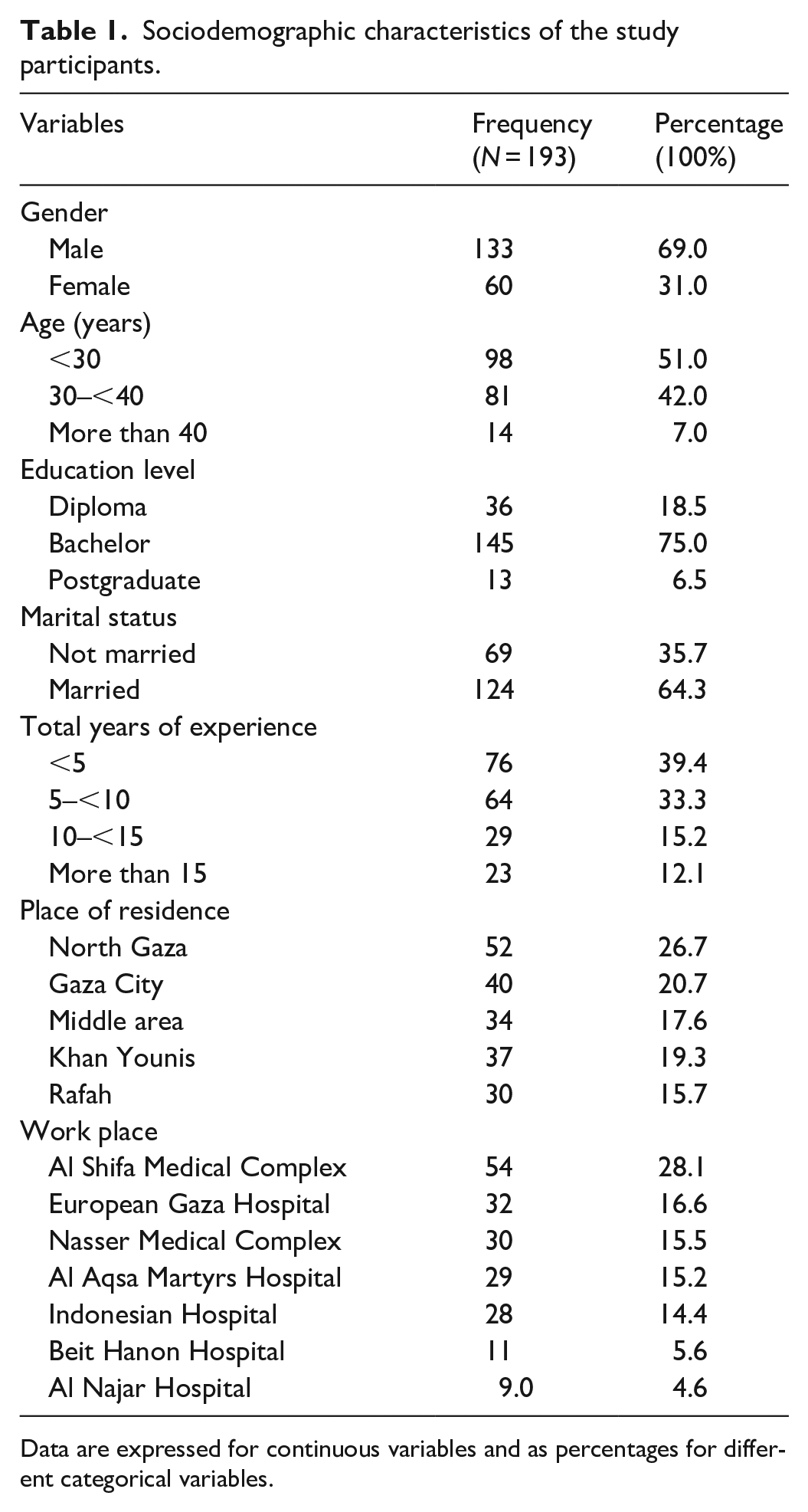
Table 1 summarizes the demographic details of the 193 EDs nurses who participated in the study. The majority of the nurses were male (69.0%) and just over half (51.0%) were younger than 30 years old. Most participants held a bachelor’s degree (75.0%) and were married (64.3%).
Sociodemographic characteristics of the study participants.
Data are expressed for continuous variables and as percentages for different categorical variables.
In terms of professional experience, 39.4% of the nurses had <5 years of work experience. Regarding their place of residence, the largest proportion lived in the North Gaza Governorate (26.7%), while the fewest were from the Rafah Governorate (15.7%).
Nurses’ responses to dimensions 1 and 2 of the quality of health care “physician’s effectiveness” and “nursing effectiveness”
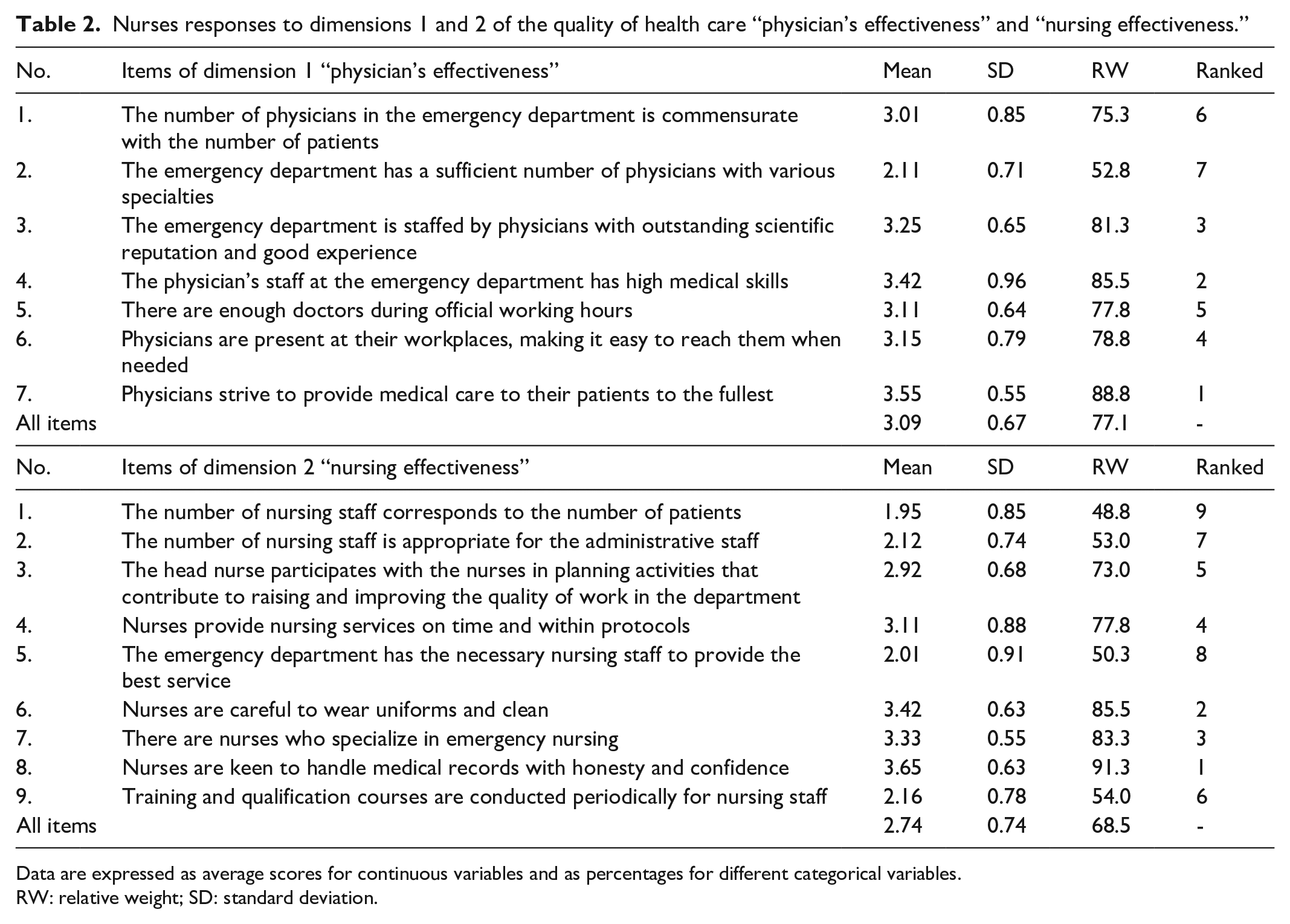
Table 2 presents nurses’ perceptions of healthcare quality in GS EDs, focusing on two key aspects: Physician’s Effectiveness and Nursing Effectiveness. For Physician’s Effectiveness, nurses rated the item “Physicians strive to provide medical care to their patients to the fullest” highest, with a mean score of 3.55 and a RW of 88.8%, reflecting strong agreement that physicians are dedicated to delivering comprehensive care. However, the lowest-rated item was “The ED has a sufficient number of physicians with various specialties,” scoring a mean of 2.11 and an RW of 52.8%, indicating concerns about the adequacy of specialized physicians. Overall, Physician’s Effectiveness was rated high, with an average RW of 77.1%. Regarding Nursing Effectiveness, the highest-rated item was “Nurses are keen to handle medical records with honesty and confidence,” with a mean score of 3.65 and an RW of 91.3%, showing strong agreement on the importance of professionalism in medical record handling. In contrast, the lowest-rated item was “The number of nursing staff corresponds to the number of patients,” which received a mean score of 1.95 and an RW of 48.8%, suggesting dissatisfaction with nurse staffing levels. Overall, Nursing Effectiveness was rated high, with an average RW of 68.5%.
Nurses responses to dimensions 1 and 2 of the quality of health care “physician’s effectiveness” and “nursing effectiveness.”
Data are expressed as average scores for continuous variables and as percentages for different categorical variables.
RW: relative weight; SD: standard deviation.
Nurses’ responses to dimensions 3 and 4 of the quality of health care: Quality of medical devices and instruments “efficiency” and “quality of the communication method”
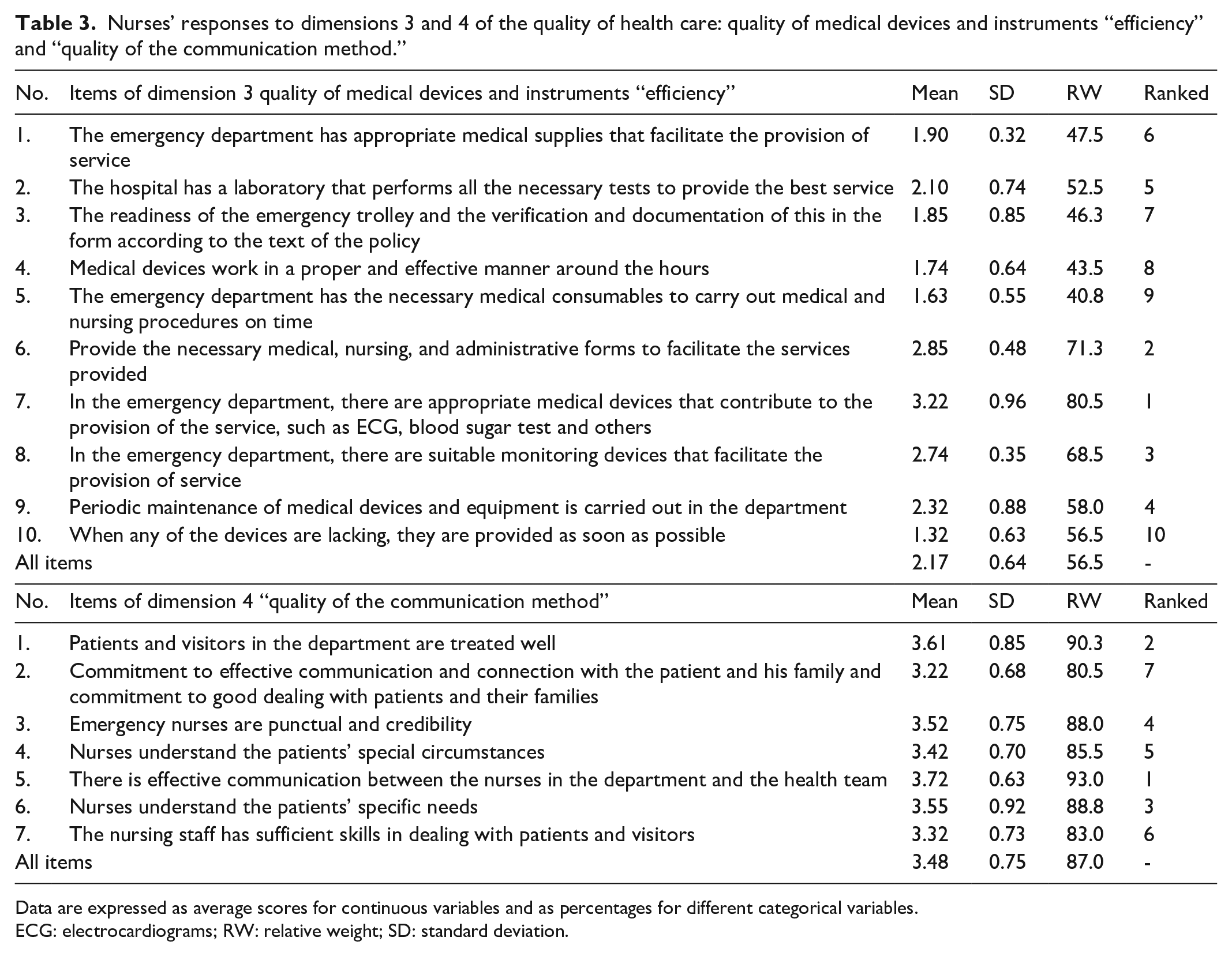
Table 3 presents nurses’ perceptions of two additional dimensions of healthcare quality: Quality of Medical Devices and Instruments (Efficiency) and Quality of the Communication Method. For Quality of Medical Devices, the mean scores ranged from 1.32 to 3.22. Nurses rated the item “In the ED, there are appropriate medical devices that contribute to the provision of the service, such as electrocardiograms, blood sugar tests, and others” highest, with a mean of 3.22 and an RW of 80.5%, indicating agreement that appropriate medical devices are available. However, the lowest-rated item, “When any of the devices are lacking, they are provided as soon as possible,” scored 1.32 with an RW of 56.5%, suggesting that timely delivery of missing devices is a concern. Overall, nurses rated the quality of medical devices and instruments as moderate with an average RW of 56.5%. For Quality of the Communication Method, the mean scores ranged from 3.22 to 3.72. The highest-rated item was “There is effective communication between the nurses in the department and the health team,” with a mean of 3.72 and an RW of 93.0%, indicating strong agreement on the effectiveness of communication within the health team. The lowest-rated item, “Commitment to effective communication and connection with the patient and his family,” still received a high mean score of 3.22 and an RW of 80.5%, showing that nurses agreed on the importance of communication with patients and families. Overall, the quality of communication methods was rated very high, with an average RW of 87.0%.
Nurses’ responses to dimensions 3 and 4 of the quality of health care: quality of medical devices and instruments “efficiency” and “quality of the communication method.”
Data are expressed as average scores for continuous variables and as percentages for different categorical variables.
ECG: electrocardiograms; RW: relative weight; SD: standard deviation.
Nurses’ responses to dimensions 5 and 6 of the quality of health care “safe environment” and “timely”
Table 4 presents nurses’ responses regarding the “Safe Environment” and “Timely” dimensions of healthcare quality in EDs. Overall, nurses rated the safe environment positively with a score of 82.0%. The highest-rated item was “The ED is clean and tidy” (mean = 3.62, RW = 90.5%), showing strong agreement, while the lowest-rated was “Keep the patient’s unit tidy, clean, and equipped with the tools the patient needs” (mean = 2.85, RW = 71.3%), still reflecting general agreement. Similarly, the timeliness of care received a favorable overall score of 79.1%. Nurses strongly agreed that they “follow-up on patients continuously” (mean = 3.61, RW = 90.3%), whereas they expressed disagreement with the item stating that “The procedures and policies followed in the department facilitate the provision of nursing service to patients” (mean = 2.33, RW = 58.3%), which was the lowest-rated in this dimension.
Nurses responses to dimensions 5 and 6 of the quality of health care “safe environment” and “timely.”

Data are expressed as average scores for continuous variables and as percentages for different categorical variables.
RW: relative weight; SD: standard deviation.
Overall level of the quality of health care in EDs of public hospitals in the GS
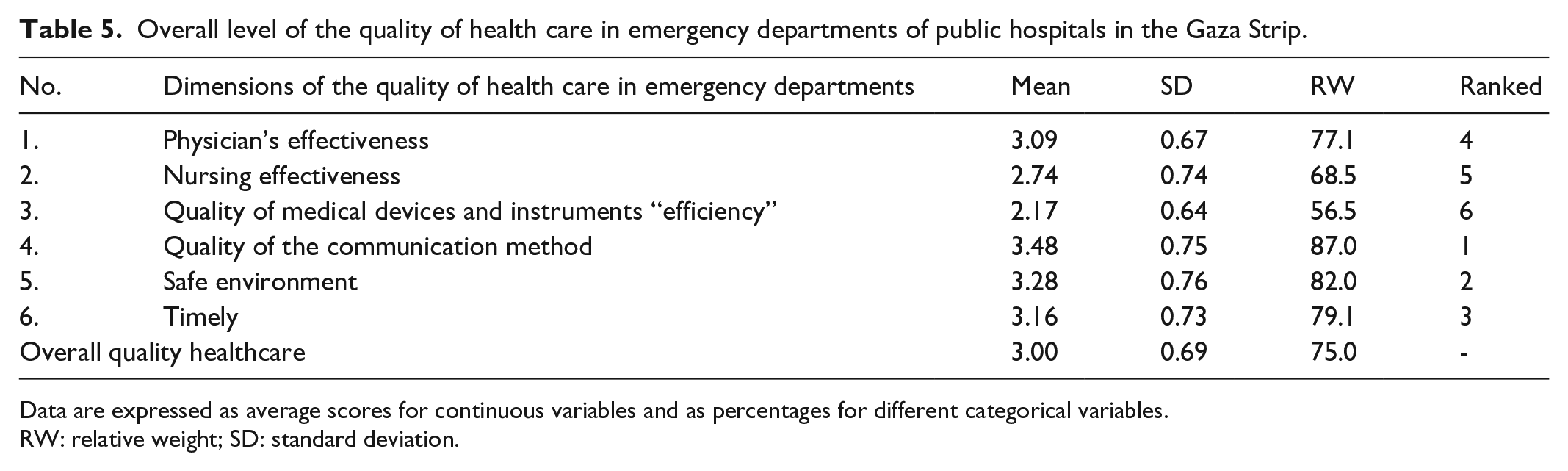
Table 5 summarizes nurses’ perceptions of the overall quality of healthcare in the EDs of government hospitals in the GS. The results indicate a generally high level of quality, with an overall score of 75.0%. Among the evaluated items, “Quality of the communication method” received the highest rating, with a mean score of 3.48 and a RW of 87.0%, reflecting strong agreement among nurses about the effectiveness of communication. In contrast, the lowest-rated item was “Quality of medical devices and instruments,” which had a mean score of 2.17 and an RW of 56.5%, indicating disagreement and highlighting concerns about the adequacy of medical equipment. These findings suggest that while communication in EDs is viewed positively, there are notable deficiencies in the availability or quality of medical devices.
Overall level of the quality of health care in emergency departments of public hospitals in the Gaza Strip.
Data are expressed as average scores for continuous variables and as percentages for different categorical variables.
RW: relative weight; SD: standard deviation.
Discussion
This study aimed to assess the quality of healthcare in the EDs of government hospitals in Gaza from the perspective of nurses. Overall, the results showed a high level of care, with the best ratings given to communication (87%) and the safety of the environment (82%). However, the lowest ratings were for the quality of medical devices and instruments (56.5%). Crucially, these outcomes must be interpreted in the context of the ongoing Israeli occupation and blockade of the GS, which has been recognized as unlawful by numerous international bodies including the United Nations and the International Court of Justice. This occupation imposes systematic restrictions on movement, access to medical supplies, fuel, electricity, and professional training, all of which directly impair the functioning of EDs.
Physician effectiveness
The effectiveness of physicians in Gaza’s EDs was rated highly (77.1%). This is consistent with other study 10 that emphasize the importance of physician performance in improving emergency care quality. However, structural limitations imposed by the occupation restrict standard methods for strengthening physician capacity such as participation in international training, access to updated medical guidelines, and the importation of essential pharmaceuticals and technologies. ¹¹ While individual efforts remain commendable, the ability of physicians to meet rising and complex medical demands is severely constrained by restrictions on mobility and equipment, as well as recurrent military escalations that overload the healthcare system.
Nursing effectiveness
Nursing effectiveness was rated moderately (68.5%). Although nurses in Gaza’s EDs are dedicated to improving their skills, they face challenges like heavy workloads and understaffing. While nursing protocols, professional development, and training have helped address these issues to some extent, a lack of staff still negatively impacts care quality.6–11 This is consistent with other studies that suggest nursing staff shortages can hinder overall care.5,12 The Israeli-imposed restrictions on the entry of medical personnel, educational opportunities, and equipment severely hinder efforts to train, recruit, and retain qualified nursing staff.
Quality of medical devices and instruments
The quality of medical devices and instruments in Gaza’s EDs was rated 56.5%, showing a moderate level of satisfaction. This indicates that more investment is needed to upgrade and maintain medical equipment. These shortages are not incidental but are the direct result of a long-standing blockade that restricts the importation of medical devices, spare parts, and maintenance resources.7,13 This situation undermines emergency preparedness and delays timely intervention, increasing morbidity and mortality in emergency cases. Even donations from international partners are often delayed or denied at border crossings, illustrating the geopolitical obstacles to healthcare provision. Despite challenges with limited resources and high patient volumes, nurses stressed the importance of maintaining the equipment they have to improve patient care. This finding contrasts with another study that rated medical devices as less adequate. 12
Quality of communication method
The communication method in EDs was rated very highly (87%). Nurses in Gaza place a strong emphasis on clear, compassionate, and respectful communication with patients. Effective communication is critical to building trust and ensuring patient satisfaction, particularly in high-stress environments like emergency care. This result aligns with previous studies,14,15 which highlight the importance of communication in overall service quality. It reflects nurses’ commitment to providing patient-centered care, a key aspect of high-quality healthcare. However, this strength should not obscure the fact that external communication, including with referred facilities, medical consultants, or international agencies is often obstructed by restricted internet access, electricity shortages, and border closures.
Safe environment
The safety of the environment in Gaza’s EDs was rated highly (82%). Factors like cleanliness, space suitability, and available infrastructure contribute to a safe environment. This result supports previous studies16–18 showing that a safe and well-equipped healthcare environment is crucial for providing quality care. However, there are still concerns about ED capacity and cleanliness, especially in areas with a high influx of patients. 12 While staff work diligently to maintain hygiene and order, damage to infrastructure from airstrikes, electricity cuts, and inadequate construction materials due to import restrictions limit broader improvements.16–18 Additionally, overcrowding due to repeated mass-casualty events places extreme strain on environmental controls and patient privacy.
Timeliness of care
Timeliness was also rated highly (79.1%). The ability to provide care quickly is essential in emergency settings, as delays can affect patient outcomes.1,19,20 Nurses in Gaza are committed to minimizing delays, even though they face challenges such as limited resources and a high volume of patients. Timely care is linked to patient satisfaction and recovery, as shown in other study. 21 Again, these challenges are deeply intertwined with occupation-related barriers, including inconsistent electricity supplies, internet blackouts, and shortages of staff due to movement restrictions or sudden military escalations.1,19,20
Strength and limitations of the study
This study provides a detailed and systematic assessment of healthcare quality in EDs across key governmental hospitals in the GS, capturing perspectives directly from frontline nurses. By including multiple major hospitals distributed across different governorates, the findings offer a broad and reasonably representative snapshot of the public emergency healthcare system in Gaza. However, while the selected hospitals serve large patient populations and cover diverse geographic areas, the results may not be fully generalizable to smaller or private healthcare facilities, or to hospitals in different contexts outside Gaza. Additionally, the cross-sectional design provides only a single time-point view, limiting insights into changes over time, or causal relationships. Future studies employing longitudinal or mixed-methods approaches could enhance understanding and support more generalizable conclusions across wider healthcare settings in the region. Additionally, the absence of a formal sample size calculation, which may affect the statistical power of subgroup comparisons or generalizability beyond the surveyed hospitals. However, the use of a census sampling approach across major governmental hospitals helped mitigate this limitation by capturing a wide range of nurse perspectives across diverse settings.
Conclusions
This study assessed the quality of healthcare in EDs of governmental hospitals in the GS from the perspective of nurses, revealing generally high perceived care quality in communication, safety, and physician performance. However, critical gaps were noted in medical equipment availability and nurse staffing, largely due to the impacts of the prolonged Israeli occupation, blockade, and ongoing conflict. Despite these challenges, healthcare workers continue to demonstrate remarkable resilience and professionalism. The study underscores the need for coordinated efforts at local, national, and international levels to support healthcare providers, improve resources, and ensure the delivery of care. It also calls for future research into the lived experiences of healthcare workers in conflict zones to inform sustainable, context-specific solutions.
Supplemental Material
sj-docx-1-smo-10.1177_20503121251376952 – Supplemental material for Assessment of the quality of health care in emergency departments of governing hospitals in the Gaza Strip: A nurse’s perspective
Supplemental material, sj-docx-1-smo-10.1177_20503121251376952 for Assessment of the quality of health care in emergency departments of governing hospitals in the Gaza Strip: A nurse’s perspective by Ahmed Darwesh Ahmad Jenenah and Sae’d Abu El-Kass in SAGE Open Medicine
Supplemental Material
sj-docx-2-smo-10.1177_20503121251376952 – Supplemental material for Assessment of the quality of health care in emergency departments of governing hospitals in the Gaza Strip: A nurse’s perspective
Supplemental material, sj-docx-2-smo-10.1177_20503121251376952 for Assessment of the quality of health care in emergency departments of governing hospitals in the Gaza Strip: A nurse’s perspective by Ahmed Darwesh Ahmad Jenenah and Sae’d Abu El-Kass in SAGE Open Medicine
Footnotes
Acknowledgements
The authors would like to thank the general director of hospitals at the Ministry of Health in the Gaza Strip, Palestine, and the directors of governmental hospitals in GS for paving the way to conduct the study by approving data collection.

Ethical considerations
Ethical approvals were obtained from the University of Al-Butana, the Palestinian Ministry of Health and the Helsinki Committee (code no.: PHRC/HC/1211/22). Participants received an informed consent form detailing the purpose, confidentiality, and voluntary participation of the study.
Consent to participate
Written informed consent was obtained from all participants prior to their inclusion in the study. The consent form explained the study’s purpose, procedures, the voluntary nature of participation, and assurances of confidentiality and anonymity. Participants were informed that they could withdraw from the study at any time without any consequences.
Author contributions
All authors contributed equally.
Funding
The authors received no financial support for the research, authorship, and/or publication of this article.
Declaration of conflicting interests
The authors declared no potential conflicts of interest with respect to the research, authorship, and/or publication of this article.
Data availability statement
The data that support the findings of this study are available from the corresponding author upon reasonable request.
Supplemental material
Supplemental material for this article is available online.
References
Supplementary Material
Please find the following supplemental material available below.
For Open Access articles published under a Creative Commons License, all supplemental material carries the same license as the article it is associated with.
For non-Open Access articles published, all supplemental material carries a non-exclusive license, and permission requests for re-use of supplemental material or any part of supplemental material shall be sent directly to the copyright owner as specified in the copyright notice associated with the article.
