




Abstract
Objective:
The study aimed to assess and investigate cervical spine fracture in diffuse idiopathic skeletal hyperostosis and to identify research trends in cervical spine fracture in diffuse idiopathic skeletal hyperostosis in countries around the world using bibliometric analysis.
Method:
We examined bibliometric data obtained from the Scopus database collection for the periods 1 January 2000 and 1 January 2022. Authors, institutions, nations, publications, keywords, and references were noted and analyzed. The total number of research articles published on the subject of diffuse idiopathic skeletal hyperostosis was used to calculate the amount of research on that subject undertaken in the study period. A sample of the publication data collected from the Scopus database was then analyzed using the Bibliometric program and used to develop a relationship chart using the Bibliometrix and VOSviewer programs.
Results:
The number of citations was assumed to be a qualitative measure of the publication. We estimated the impact of the research using several metrics, including the H-index, in the bibliometric analysis of authors, geographic areas, institutes, and references. A total of 52 studies related to cervical spine fractures in diffuse idiopathic skeletal hyperostosis were identified. Only 5.12% of those studies were cited in other publications, for a total of 1410 citations in publications by 342 authors, of whom only two authors had published a single study. Co-authorships occurred at 7.273%. Diseases common in elderly males were often studied retrospectively, and “Diffuse Idiopathic Skeletal Hyperostosis” was a frequently mentioned keyword.
Conclusion:
The findings of this study provide insights into authors, institutions, key publications, and research trends related to diffuse idiopathic skeletal hyperostosis and can potentially serve as a guide for further studies in the field. The bibliometric analysis of cervical spine fractures in patients with diffuse idiopathic skeletal hyperostosis highlights important contributors, influential papers, geographical trends, and study characteristics in this area of research.
Introduction
Diffuse idiopathic skeletal hyperostosis (DISH) increases the risk of unstable fractures in the spine that result in neurological degeneration. Patients with DISH may not always be aware of their spinal fractures, particularly if they result from low-energy trauma. 1 DISH is a pathological condition of bone formation characterized by the presence of at least three ossified bridges in the anterolateral region of the spine. The epidemiology of spinal fractures in DSIH reveals significant demographic patterns and associated risk factors. Fractures can occur throughout the spine, with the thoracic spine being the most frequently affected, with the majority located on the right side. This distribution is attributed to the protective effect of the pulsatile aorta on the left side. 2 Symmetry is seen in cervical and lumbar spine syndesmophytes. Risk factors include gout, hyperlipidemia, and diabetes. Associated conditions involve the lumbar and cervical spine, the impact of stenosis, dysphagia, stridor, sleep apnea, myelopathy, and fracture instability due to ankylosis. Hyperextension injuries can lead to unstable fractures even from low-energy trauma, warranting heightened vigilance in patients with back pain and ankylosed spines.3,4
The systematic review found that many of the reports of outcomes and most of the topics covered were related to Japan, suggesting that Japan may have the highest incidence rate of DISH. 5 DISH is classified as a non-inflammatory disorder characterized by an underlying metabolic abnormality; however, the exact cause is not well comprehended. DISH diagnosis is presently based on the Resnick and Niwayama criteria, 6 which includes conditions such as end-stage disease and ankylosing of the spine.7,8 DISH fractures of the cervical spine are frequently unstable and pose a substantial risk of brain damage and death. 9
DISH presents a unique challenge in orthopedic and neurological care due to its potential to cause spinal fractures, particularly in the cervical region. DISH, also known as Forestier’s disease, is characterized by ossification and hyperostosis of ligaments and entheses, primarily affecting the spine. This pathological process can lead to the formation of bony bridges along the anterolateral aspect of the vertebral bodies, predisposing individuals to fractures, particularly in the presence of trauma or degenerative changes. While DISH can affect various regions of the spine, including the thoracic and lumbar segments, cervical spine involvement poses particular risks and challenges. Unlike fractures in other regions of the spine, cervical spine fractures in DISH patients have been associated with higher rates of neurological deficits, spinal cord injury, and mortality.10–12 The unique anatomical and biomechanical characteristics of the cervical spine, coupled with the presence of hyperostotic bony formations in DISH, contribute to the increased severity and complications of cervical fractures in these individuals.13,14 Despite the potentially devastating consequences of cervical spine fractures in DISH patients, there remains a gap in the literature regarding the epidemiology, risk factors, clinical outcomes, and optimal management strategies for this specific condition. Previous studies have predominantly focused on fractures in the thoracic and lumbar spine, leading to a relative paucity of research specifically addressing cervical spine fractures in DISH. Consequently, there is a pressing need for comprehensive investigations into this aspect of DISH to better understand its pathophysiology, clinical implications, and therapeutic approaches.
Bibliometric analyses involve quantitative assessment and examination of scientific publications which aim to identify patterns, trends, and relationships within a specific field of research. By analyzing various metrics such as authorship, citations, institutions, keywords, and publication trends, bibliometric analyses can provide insights into the influence, impact, and collaboration dynamics of academic work. Such analyses contribute to the understanding of research landscapes, identifying key contributors, and guiding future studies and research directions. Bibliometric analyses are commonly employed to assess the academic influence of scientific publications and provide significant insight into the research that has been undertaken on a subject.15,16 Measurement and monitoring of research excellence and quality is a topic that has piqued the interest of concerned governments, institutions, and funding agencies seeking metrics of accountability and quality of scientific research. Although a scientist’s scholarly impact and reputation are not solely based on research output, they do provide an objective measure of his or her productivity and impact on the academic community, level of expertise, and associated collaborations and connections with various national and international research groups and institutions. Bibliometrics is the process of obtaining measurable data from published research papers through statistical analysis, as well as how the knowledge contained within a publication is utilized.17–19
This study seeks to address this gap by conducting a bibliometric analysis of cervical spine fractures in DISH, aiming to assess the current state of research, identify key contributors and publications, and delineate research trends in this area. By elucidating the epidemiology, outcomes, and associated factors of cervical spine fractures in DISH through a bibliometric lens, we aim to provide valuable insights that can inform clinical practice, guide future research endeavors, and ultimately improve the management and outcomes of patients with this challenging condition. Although cervical DISH fractures have been studied for decades, comprehensive analysis using bibliometrics has not yet been done. The purpose of this research was to investigate cervical spine fracture in DISH and to determine the trend factors of cervical spine fracture in DISH in countries around the world using bibliometric analysis.
Materials and methods
Sources of database and preparation
This study used bibliometric analysis to produce quantitative statistical assessments of recent published research on cervical spine fracture in DISH. We searched the Scopus database for articles published between 1 January 2000 and 1 January 2022. The following keywords were used to search the database: “diffuse idiopathic skeletal hyperostosis,” “DISH,” “Forestier’s Disease,” “cervical,” “thoracic,” “thoracolumbar,” “spine fracture,” and “fracture”. Publications with the terms “infection,” “cancer,” “neoplasia,” or “tumor” in the title were excluded. Studies published in languages other than English were also excluded as were published letters to the editor, technical notes, conference abstracts, and expert opinions. All the included articles were reviewed by two authors to elicit the less accurate and complete articles. A total of 52 studies met the inclusion criteria.
The study looked into the relationship between a variety of variables and the etiology of DISH in countries around the world. Due to the limited amount of evidence-based information on this disease in Thailand, research instruments and accuracy guidelines for collecting data on that country are needed. Bibliometric statistical techniques which evaluate many aspects of data can provide both qualitative and quantitative results. Bibliometric evaluation can include the use of various techniques depending on the purpose of the study, for example, publication calculation for overview mapping, references analysis to identify the impact of a publication, and wording analysis to act as a guide for future research. To generate the networks, researchers can utilize Bibliometrix 4.0.0, an open-source R package tool designed for quantitative research in bibliometrics and scientometrics, constructed using a logical bibliometric methodology and the R programming language for statistical computing and visualizations. 20 The bibliometric statistical technique is important for studying emerging diseases because it can analyze data as well as identify expert agencies and researchers. It can also act as a guide in treatment and prevention. Using the bibliometrics of DISH disease from the Scopus database can provide an overview and suggest linkages for further innovation and development.
Bibliometric analysis protocol
A systematic bibliometric analysis was conducted to identify and analyze research publications pertaining to cervical spine fractures in DISH. The following steps were undertaken to ensure transparency and reproducibility:
Database Selection: Two comprehensive electronic databases, PubMed and Web of Science, were selected for the literature search. These databases were chosen for their extensive coverage of biomedical literature, including peer-reviewed journal articles and conference proceedings.
Search Strategy: A structured search strategy was developed using a combination of Medical Subject Headings (MeSH) terms and keywords related to “DISH,” “cervical spine fractures,” and related concepts. The search strategy was designed to capture relevant articles published up to the date of the search.
Inclusion Criteria: Articles were included in the analysis if they met the following criteria: (a) published in English, (b) focused on cervical spine fractures in patients with DISH, (c) original research articles, reviews, or case reports, and (d) available in full-text format.
Screening Process: Two independent reviewers screened the search results based on titles and abstracts to identify potentially eligible articles. Any discrepancies were resolved through discussion and consensus.
Data Extraction: Relevant data from the included articles were extracted using a standardized data extraction form. The extracted data included publication year, authorship, journal name, study design, sample size, key findings, and bibliometric indicators (e.g., citation count, journal impact factor).
Quality Assessment: The methodological quality of the included studies was not formally assessed given the nature of bibliometric analysis, which focuses on quantitative analysis of publication characteristics rather than qualitative evaluation of study methodology.
Data Analysis: Descriptive statistics were used to summarize the characteristics of included articles, including publication trends over time, authorship patterns, citation counts, and journal distribution. Bibliometric indicators such as citation count and journal impact factor were calculated to assess the impact and visibility of individual publications within the scholarly literature.
Synthesis of Results: The findings of the bibliometric analysis were synthesized and presented narratively to provide insights into the current state of research on cervical spine fractures in DISH, identify key themes and research gaps, and offer implications for clinical practice, research, and policy.
Statistical analyses
The data analysis comprised of several steps, including the following: (1) data cleansing, in which collected data were checked for duplicate articles and articles providing the same basic information; (2) the bibliometric program developed by Aria and Cuccurullo 21 uses wording analysis to determine the number of publications and references and uses the R programing language to generate matrices for analysis of co-citations, coupling, collaboration, and co-wording; and (3) analysis grouping, which included general information in publications about DISH disease, content evaluation using co-word analysis to identify co-occurrences and frequencies of keywords appearing in documents over time to identify forms of thematic evolution, and visualization, that is, using images or graphs to demonstrate the coupling and connection between different groups. We used the Biblioshiny application as a tool to show the output of the Bibliometric program which is a subset of the RStudio 21 and the VOSviewer programs. 22
Results
The resources of the Scopus database from 2000 to 2022 were used to search the following inclusion and exclusion criteria. the main information of sampling consists of Timespan, sources (e.g., journals, books), other documents, annual growth rates, document average age, average number of citations per document, and average number of references. Categories of document contents include KeyWords Plus® (ID), author’s keywords (DE), author, author of single-authored docs, co-authors per doc, International co-authorships, article, conference paper, letter, review, and short survey (Table 1).
Resources for a list of the search terms used in the database.
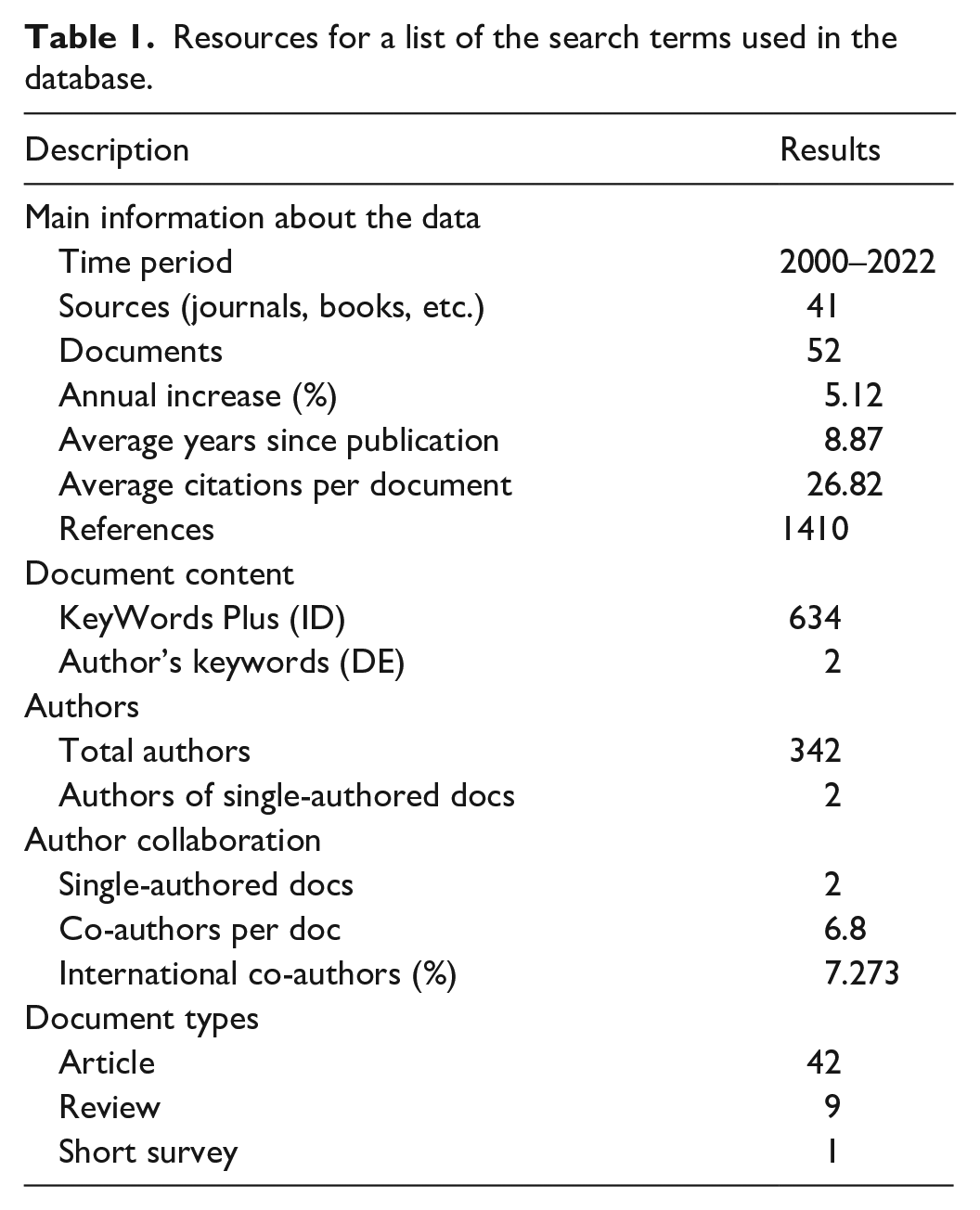
Table 1 contains the data from 2000 to 2022, showing 41 sources of data and 55 publications related to DISH. The annual increase in publications was 5.12%, while the average age of the documents in 2022 was 8.87 years. The average number of citations per document was 26.82%, with a total of 1410 citations. Of the 342 authors who reported on DISH, only 2 had single-authored documents, while the average number of collaborating authors per document was 6.8 and the average number of international collaborating authors was 7.273. Document types consisted of 42 articles, 9 reviews, and 1 short survey (Figure 1).

VOS-viewers demonstration of the connection network of the main word cloud of each category in cervical spine fracture in DISH.
Authors with the most publications
The authors with the most publications related to cervical spine fracture in DISH and articles fractionalized are shown in Table 2.
Number of articles per author related to cervical spine fracture and DISH.

AF: articles fractionalized; H-index: Hirsch index.
Most locally cited authors
The 10 authors with the most citations of cervical spine fracture in DISH articles from their home country (locally cited authors) are shown in Table 3.
Summary of the 10 authors with the most citations from their home country.
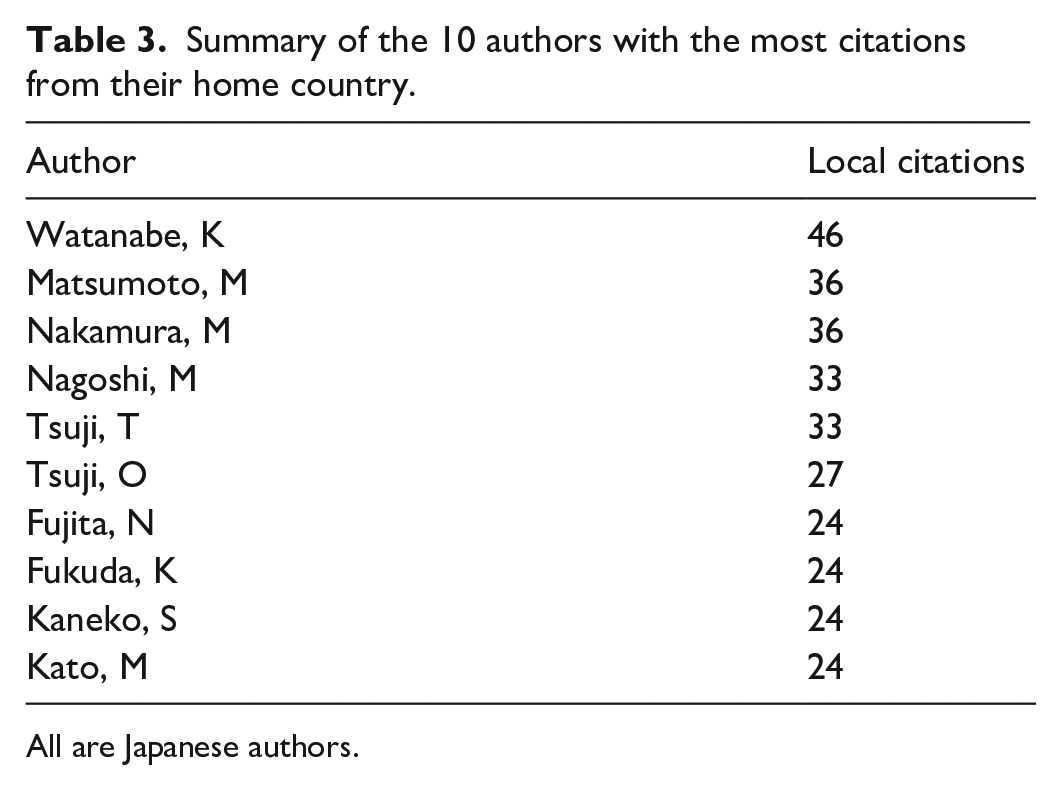
All are Japanese authors.
Author productivity according to Lotka’s law
Lotka’s law 23 defines the frequency with which authors publish in any particular field. Of the 342 authors who published reports on cervical spine fracture included in DISH, the great majority, 319 had only one publication (9.33%), 19 authors had 2 publications (0.56%), 2 authors had 3 publications (0.06%), and 1 author had 4 publications (0.03%) (Table 4).
Author productivity using Lotka’s law.

Most relevant affliction
There were 122 publications on affliction with cervical spine fracture with DISH, including 13 from Nara Medical University, 12 from Keio University School of Medicine, 9 from Keio University, 9 from Tokyo University, 9 from the University of Pittsburgh Medicine Center, 8 from Thomas Jefferson University, 7 from Juntendo University, 7 from The Mayo Clinic, 6 from Hyogo College of Medicine, and 6 from Kagawa Rosai Hospital (Table 5).
Summary of a number of publications about affliction with cervical spine fracture by the institution.

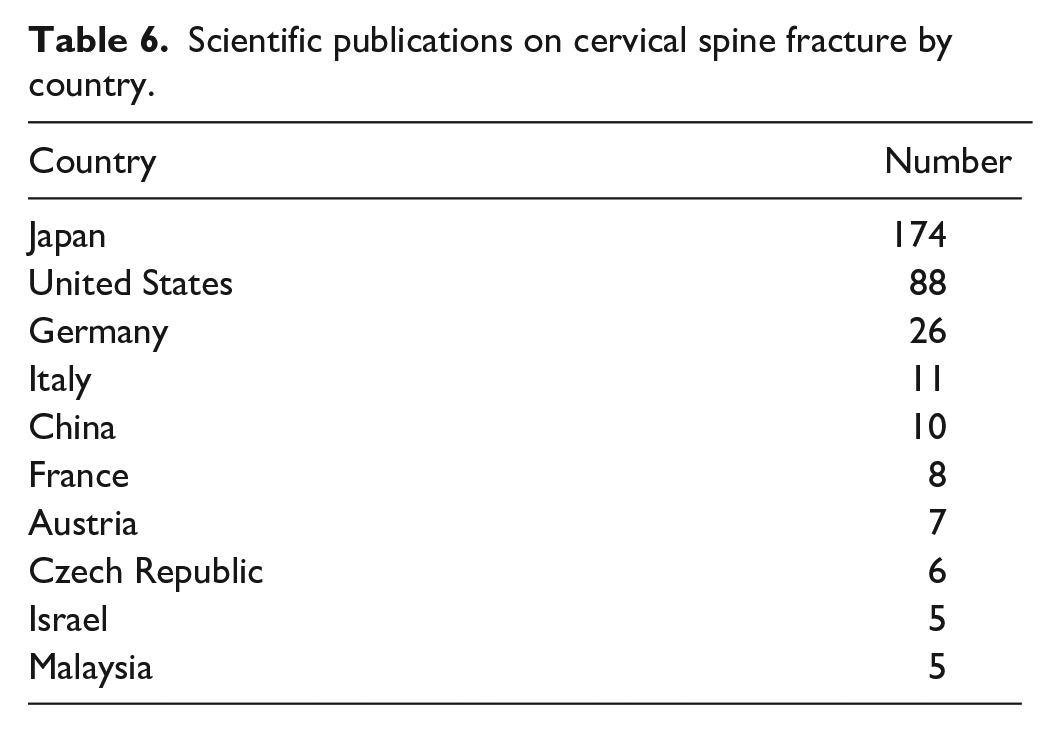
Scientific publications by country
In all, 19 countries had a total of 174 articles on cervical spine fracture with DISH. Japan, with 174, had the most by far the most publications, followed by the United States with 88 publications, 26 from Germany, 11 from Italy, 10 from China, 8 from France, 7 from Austria, 6 from the Czech Republic, and 5 each from Israel and 5 from Malaysia (Table 6).
Scientific publications on cervical spine fracture by country.
Most cited countries
A total of 17 countries had citations for publications related to cervical spine fracture in DISH. The United States had the most total citations with 611 (average citations per article = 38.19), followed by the Netherlands with 395 citations (average citations per article = 395.00) which is shown in Table 7 and Figure 2.
Summary of most cited citations by country.

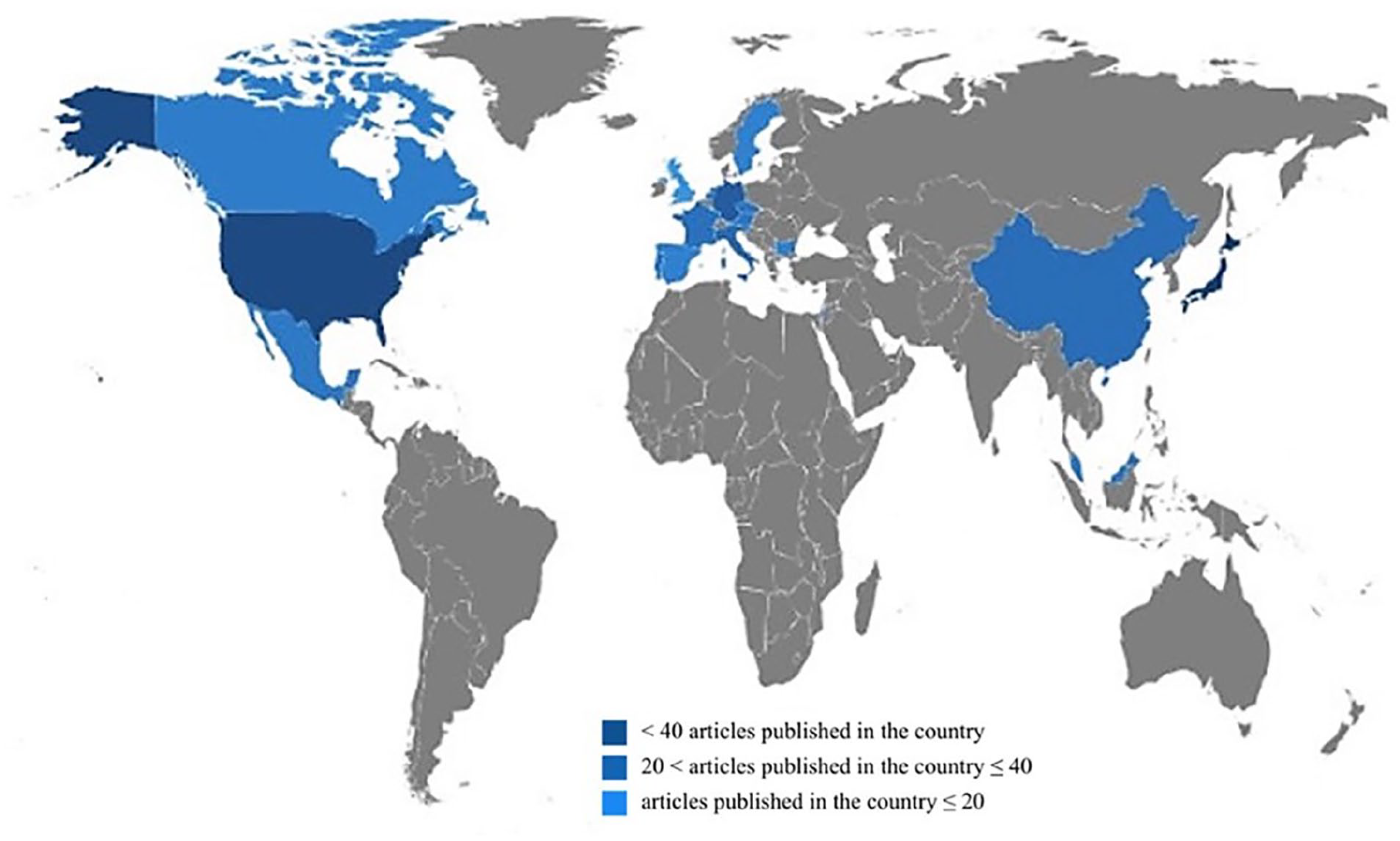
A world map showing the distributions of publications. The color intensity is proportional to the number of publications.
Most locally cited references
There were most 10 local citations of cervical spine fracture in DISH, including 16 citations of Resnick et al., 6 13 citations of Forestier et al., 24 and 12 citations of Westerveld et al. 5 (Table 8).
Summary of the most citations in publications from the author’s home country.

Most global citations
There were three papers with more than 100 citations each. Details of the 10 papers with the most citations are shown in Table 9 and Figure 3. There were most global citations of cervical spine fracture in DISH publication which were 395 citations of Westerveld et al. 5 which is 26.33% cited rate per year, normalized TC = 5.04.
Summary of most global citations.


The graph shows the local citations (Red line) and global citations research (Black line) between 2003 and 2020.
Word cloud
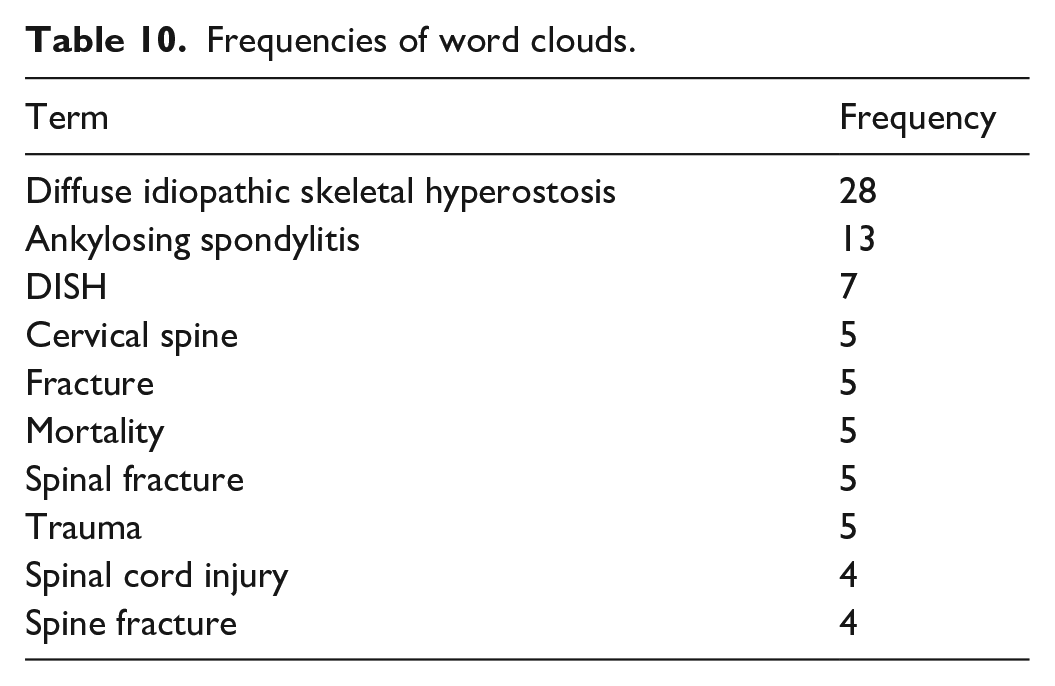
Word clouds, also known as tag clouds, are graphical representations of word frequency that highlight words that appear frequently in a source text. There were 50 word clouds related to cervical spine fracture in DISH. The 10 most frequent word clouds are shown in Table 10 and Figure 4.
Frequencies of word clouds.

List of top research topics on DISH and word clouds connection of cervical spine fracture in DISH.
Discussion
According to this global bibliometric analysis of DISH, the number of DISH-related publications produced each year is increasing. The growing number of articles indicates increasing levels of collaboration and investment of time, money, and effort in this sector. The current study is intended to aid researchers in selecting relevant topics, identifying appropriate teams to engage with, and identifying research platforms to use, all of which should save time and aid the global expansion of DISH.
This is the first scoping study of DISH distribution and many of its features. The study results are intended to inform the DISH community about the present state of the art, including the distribution as well as publication area in the disease’s genesis and highlighting how data links have changed over time. Clinical supervisors, health providers, and researchers can use this information to identify potential research trajectories and design improved standard management practices and agendas by reviewing past efforts and designing new and advanced directions in DISH, thereby advancing DISH management through the design and implementation of standard guidelines.
Arruda et al.’s 25 study showed both Bibliometrix and VOSviewer have proven to be invaluable assets in bibliometric analysis, providing researchers with robust methodologies and visualization capabilities that contribute to the credibility and reproducibility of bibliometric studies. The examination of the VOSviewer 22 and CiteSpace bibliometric networks 26 was used to describe the developmental research in DISH. Specifically, because DISH is one of the most frequent spine disorders, researchers have been committed to releasing research on potential changes based on data from numerous sources, including a wide variety of countries, article citations, authors, and universities.
Japan has the highest number of scientific papers on this subject which could be related to the epidemiology of the condition. That country has the highest prevalence of DISH as well as one of the highest proportions of older inhabitants of any country in the world, while the population has a high-stress rate.27,28 The incidence of DISH in Japan may be related to elevated BMD and plasma pentosidine levels, both of which are stress indicators and act as toxins. 29 Nara Medical University and Keio University School of Medicine have produced the most articles and received the most citations for their articles, demonstrating the relevance and leadership role of these two universities in DISH.
Review articles generally receive more citations than original research articles due to the following reasons: Comprehensive Synthesis: Review articles provide a comprehensive overview and synthesis of existing knowledge in a field, making them valuable reference sources for researchers seeking a broad understanding of a topic. Accessibility and Clarity: They present complex information in a more accessible and understandable manner compared to original research articles, making them more attractive for citation by researchers aiming to introduce a topic or provide background context. Longevity and Timelessness: Review articles tend to remain relevant over time as foundational resources, maintaining their usefulness and attracting citations for extended periods. Ease of Reference: Being a single source that consolidates information from multiple primary studies, review articles serve as convenient references, simplifying citation practices for researchers. Visibility and Prestige: Published in prestigious journals with wider readership and visibility, review articles benefit from increased exposure, leading to higher citation rates.
An examination of the keywords employed in these research efforts is an excellent place to begin assessing their evolution in this subject. To the best of our knowledge, this is the first report to detail the progression of global DISH research trends, including identifying keywords highlighting the writers’ areas of concentration and achievements, as well as providing general ideas about trends in DISH research.
The 10 most-cited papers all dealt with DISH-related fractures and surgery. Among those, the three most-cited articles discussed the outcomes of DISH patients, spinal fractures, and surgery variables. Review articles in general receive more citations than original research articles.
Hence, this study aims to examine academic research in the field of DISH. To achieve this objective, a methodological approach employing bibliometric techniques will be utilized to analyze the scientific output across various disciplines. This approach will enable researchers to identify sources of high repute based on citation and authorship metrics. The advancement of digital communication technology has facilitated and augmented the comprehension of knowledge production and its quantification, hence enabling a broader dissemination of information. 30
The potential future research directions
Performing well-designed clinical, epidemiological, b
Limitations
Although the data analysis in this study was relatively complete and objective, it had a number of limitations. There were discrepancies between the results of the bibliometric analysis and the actual research settings. Because of the low citation frequency of recently published papers, some high-quality articles were likely overlooked, so recent high-quality papers with high citation potential may not have been assessed. Japan showed the most incidence with the publication on DISH, which may be the gap and imbalance that represent the global landscape of DISH research. A keyword search cannot adequately cover all of the literature on atlantoaxial spine surgery. A further constraint is that the analysis only included publications in English. Furthermore, this was a cross-sectional study that took place over a defined time period. If the search had covered various time periods, the number of citations in the literature could have been different. Newly published research will inevitably alter the ranking of articles, necessitating updates to the study in the future. This study only conducted the cervical spine lesion, which could limit the findings from the thoracic and lumbar levels. And bibliometric tools do not show patient outcomes post-fracture or the efficacy of different treatment approaches.
Another limitation is that the research incorporated exclusively journal articles obtained from the social science citation index database of the Web of Science Core Collection. Web of Science, despite being one of the largest databases globally, exclusively comprises a fraction of the scientific articles that have been published. In subsequent investigations, it may be feasible for scholars to broaden their search methodology to include more extensive databases like Scopus. However, additional research into reasons for potential citation network analysis mistakes generated by citation networks in non-Web of Science (WoS) databases is required. After analyzing the search results, we ran a manual secondary check of the included articles’ title, abstract, and keyword fields, and consulted senior scholars to avoid irrelevant articles, which may assist in compensating for this constraint to some extent.
Conclusions
This bibliometric analysis sheds light on the current state of research regarding cervical spine fractures in DISH and offers valuable insights with practical implications for clinicians, researchers, and policymakers. For clinicians, the findings underscore the importance of heightened vigilance and comprehensive evaluation for cervical spine fractures in DISH patients presenting with trauma or degenerative changes. The increased risk of neurological deficits and spinal cord injury associated with cervical fractures in DISH necessitates prompt recognition, appropriate imaging studies, and timely intervention to optimize patient outcomes. Clinicians should consider the unique anatomical and biomechanical factors inherent to the cervical spine when formulating treatment strategies for DISH patients, with emphasis on minimizing complications and maximizing functional recovery. For researchers, this study highlights the need for further investigations into the epidemiology, pathophysiology, and optimal management of cervical spine fractures in DISH. Future research endeavors should prioritize prospective studies with larger sample sizes, longitudinal follow-up, and multidisciplinary collaboration to elucidate the underlying mechanisms driving fracture occurrence, identify modifiable risk factors, and evaluate the efficacy of novel therapeutic approaches. By addressing these knowledge gaps, researchers can contribute to the development of evidence-based guidelines and clinical pathways tailored to the management of cervical spine fractures in DISH, ultimately improving patient care and outcomes. For policymakers, the findings underscore the public health significance of DISH-related cervical spine fractures and advocate for the allocation of resources toward enhancing diagnostic capabilities, expanding access to specialized care, and promoting interdisciplinary collaboration among healthcare providers. Policymakers should prioritize initiatives aimed at raising awareness among healthcare professionals about the unique challenges posed by cervical fractures in DISH and fostering collaborative networks for knowledge exchange and best practice dissemination. By supporting research initiatives and implementing policies that facilitate early detection and optimal management of cervical spine fractures in DISH, policymakers can contribute to reducing the burden of disability and improving the quality of life for affected individuals. Further study, including biomechanical investigations of DISH-affected cervical spine biomechanics prognostic signs and assessing long-term results and surgical procedures, is needed to develop evidence-based treatment guidelines.
Footnotes
Acknowledgements
All authors would like to express their sincere thanks to Ass. Prof. Tienthong Takeaw, PhD, Ms. Kanchananat Niakat, Ms. Patcharathida Numngune, and Ms. Rinrada Srisai for the best support.
Author contributions
All authors contributed to the study’s conception and design. Material preparation, data collection, and analysis were performed by WL and PS. The first draft of the manuscript was written by WL and PS. All authors commented on previous versions of the manuscript. All authors read and approved the final manuscript.
Availability of data and material
The datasets generated during and/or analyzed during the current study are available from the corresponding author upon reasonable request.
Declaration of conflicting interests
The author(s) declared no potential conflicts of interest with respect to the research, authorship, and/or publication of this article.
Funding
The author(s) received no financial support for the research, authorship, and/or publication of this article.
Ethics approval
This study was conducted in accordance with the Declaration of Helsinki and with approval from the Ethics Committee and Institutional Review Board of the University of Phayao (Institutional Review Board (IRB) approval, IRB Number: UP-HEC 1.1/017/66).
