



Abstract
Background:
Exercise during pregnancy is among the cost-effective options that can significantly reduce the burden of chronic metabolic diseases leading to an adverse birth outcome. Despite the negative consequences of sedentary life among pregnant women, little is known about the pregnant mothers’ knowledge, attitude, and associated factors toward exercise during pregnancy in Ethiopia, particularly in the study area.
Objective:
To assess knowledge, attitude, and associated factors toward exercise during pregnancy among women attending antenatal care at Bahir Dar city, Northwest Ethiopia, 2020.
Methodology:
A health facility-based cross-sectional study design was employed among 475 pregnant women from March 12 to May 12, 2020. A systematic random sampling technique was used to select the study participants. Interviewer-administered questionnaire was used to collect the data from pregnant women attending the antenatal care unit. Data were coded and entered using Epidata version 3.1 and analyzed by Statistical Package for Social Science (SPSS) version 25. Binary and multivariable logistic regressions were used to identify possible determinants and an odds ratio was used to measure the strength of associations at a p-value of <0.05
Result:
The study showed that 55.8% (95% CI: 48.45–59.12) of pregnant women were knowledgeable about benefits and contraindication of exercise during pregnancy; 53.3% (95% CI: 49.05–57.62) of them had positive attitudes toward exercise during pregnancy. Educational status adjusted odd ratio (AOR) = 3.95 (95% CI: 1.712–9.108), practicing physical exercise before becoming pregnant AOR = 3.64 (95% CI: 1.091–12.118), and women who heard about exercise during pregnancy AOR = 4.74 (95% CI: 2.563–8.756) were found to have statistically significant association with knowledge of women about exercise during pregnancy. Women who were knowledgeable about exercise during pregnancy AOR = 4.45 (95% CI: 2.39–8.29) and women who heard about exercise during pregnancy AOR = 4.2 (95% CI: 2.19–8.08) were more likely to have a positive attitude toward benefits of exercise during pregnancy.
Conclusion:
The level of mothers’ knowledge and attitude toward exercise during pregnancy in the study area was low. Educational status, physical exercise before pregnancy, ever heard about exercise during pregnancy were independent determinants of women’s knowledge, while ever heard and knowledgeable about exercise during pregnancy were determinants of favorable attitude toward exercise during pregnancy. Empowering women through health education about physical exercise during pregnancy should get due attention.
Introduction
Physical activity during pregnancy is one of the health promotions that significantly reduces chronic metabolic diseases. 1 Physical activity is a bodily movement produced by the contraction of skeletal muscles while exercise is a structured or planned and repetitive movement to improve or maintain physical fitness. 2 Physical activity and exercise during pregnancy promote physical fitness and prevent excessive gestational weight gain, reduce the risk of gestational diabetes, preeclampsia, and cesarean deliveries and decrease the occurrence of macrosomia. It also reduces lower back pain and has positive effects on maternal mental health and quality of life.2–4
World Health Organization (WHO) identified physical inactivity as the fourth leading risk factor for global mortality among the general population. 5 According to Ethiopian demographic health survey 2016, Ethiopia is one of the sub-Saharan countries with a high maternal mortality rate, in which majority of the deaths is due to noncommunicable diseases like hypertensive disorder during pregnancy and gestational diabetes mellitus which is associated with physical inactivity.6–8 Physical inactivity worsens in pregnancy due to the fact that it is associated with considerable physiological and psychological changes that may promote sedentary behavior in women. 4
Sedentary behavior is associated with increased risk for gestational diabetes, preeclampsia, and excessive gestational weight gain, complications during labor and birth, postpartum weight retention, and postpartum mood disorder. 9 The exact causes of physical inactivity are not well documented in Ethiopia, but different studies reported that the reasons were most of the women did not receive advice about physical activity during prenatal care and belief that physical exercise during pregnancy is risky to the fetus.10–12 A low level of physical exercise in pregnancy is prevalent in developing and developed countries and, according to a systematic review in Africa, physical activity in pregnancy is low. 13 In the study conducted in different parts of Ethiopia, more than three-fourth of pregnant women were engaged in sedentary activities. This may be due to a lack of knowledge and favorable attitudes toward exercise during pregnancy.12,14,15
Despite its beneficial effect and cost-effectiveness, exercise during pregnancy has been given little importance, and there are limited studies assessing the knowledge and attitude of pregnant women toward exercise during pregnancy. Therefore, this study is intended to assess the knowledge, attitude, and associated factors toward exercise during pregnancy among pregnant women attending antenatal care (ANC) at Bahir Dar, Northwest Ethiopia.
Methods
Study design and setting
A facility-based cross-sectional study was employed among pregnant women attending ANC unit at Bahir Dar city public hospitals from March 12 to May 12, 2020. Bahir Dar city is the capital city of Amhara regional state, located at 552 km Northwest of Addis Ababa, Ethiopia. According to 2007 EC Ethiopian central statistics agency reported the population size of Bahir Dar city to be around 220,344. From these 107,578 were males and 112,766 were females. 16 In the city administration, there were three governmental hospitals, around 10 governmental health centers, and more than 10 nongovernmental health institutions which had been giving maternal and child health related services. The number of pregnant women who attended ANC at Bahir Dar city public hospital in the last 6 months from first of September 2019 to end of February 2020 was 13,150.
Source and study population
The source population was all pregnant women who were attending ANC unit at Bahir Dar public hospitals, while the study population was all pregnant women aged ⩾15 years. Pregnant women who were unwilling to participate in the study were excluded.
Sample size and sampling procedure
To get the required sample size, calculation was made for both outcome variables (knowledge, attitude) and associated factors. For outcome variables, it was calculated using single proportion formula; by considering 5% marginal error, 95% confidence interval, and 10% non-response rate. For associated factors, it was calculated using double proportion formula using EPI info version 7; by considering 5% margin of error, 95% confidence interval, 10% non-response rate, and 80% of power, from a study done in Addis Ababa, Ethiopia. 12 The final largest sample size calculated was 475.
ANC registration books of the three Bahir Dar city public hospitals, namely, Felege Hiwot Referral Hospital (FHRH), Addis Alem Hospital (AAH), and Tibebe Ghion Specialized Teaching Hospital (TGSTH) were reviewed to get a list of pregnant women attending ANC. The number of pregnant women who visited the ANC unit in 1 month of study period was 800, 700, and 850 for FHRH, TGSTH, and AAH, respectively. The calculated sample size of 475 was allocated to each hospital based on proportional allocation to the population size of the three Bahir Dar city public hospitals. Accordingly, proportional allocation to population size for each hospital was 160, 171, and 144 to FHRH, AAH, and TGSTH, respectively. Systematic random sampling technique was used to select the study participants from the three public hospitals. The sampling interval was approximately five for each health facility and the study subject was selected every five interval.
Study variable
Dependent variables
✓ Knowledge of pregnant women toward exercise during pregnancy
✓ Attitude of pregnant women toward exercise during pregnancy
Independent variables
Socioeconomic characteristics: Age in years, religion (Orthodox, Protestant, Catholic, and Muslim), educational level (no formal education, primary, secondary, and college or university), occupation (government employed, housewife, private business/trader, and nongovernmental employed), monthly income in Ethiopian birr (⩽600, 601–3200, and >3200), residence (urban and rural), and marital status (single, married, divorced, and widowed).
Pregnancy and obstetrical history: gravidity (primigravida and multigravida), parity (nullipara, 1–2, above 2), gestational age (<4 months, 4–6 months, 7–9 months), number of children (no child, 1–2, and above two), history of miscarriage, ever heard about exercise during pregnancy, and prepregnancy regular physical exercise experience.
Operational definition
Data collection instrument and procedure
The structured questionnaire was adapted from different pieces of literatures in English, then translated to Amharic and translated back to English to check its consistency.12,18,19 The questionnaires had five parts: the first two parts were sociodemographic characteristics, and obstetrical history that included 12 questions and the third part was concerning awareness and it had four questions, the fourth part was knowledge and had 16 questions (benefit and contraindication) of exercise during pregnancy with the alternative response of Yes, No, and I don’t know. The final part included eight attitude questions with alternative responses Agree, Uncertain, and Disagree.
Three MSc midwives as supervisors and three BSc midwives as data collectors participated in the data collection process. Pregnant women who were attending ANC at selected hospitals and willing to participate in the study were included at every five interval. Informed verbal consent was taken from all study participants and face-to-face interview was employed to collect data.
Data quality control
Before data collection, 5% of the sample size (24) was pretested at Shegaw Motta Primary Hospital. Based on the pretest findings, the necessary amendments were made before the implementation of actual data collection. The reliability of the tool was checked using Cronbach’s Alpha.
A 2-day training was given to the data collectors and supervisor on the data collection process. A close supervision was done throughout the actual data collection process. The supervisor and the principal investigator made a frequent cross check on the data collection process to ensure the completeness and consistency of the gathered information.
Statistical analysis
The collected data were coded and entered into EpiData version 3.1 statistical software and then exported to Statistical Package for Social Science (SPSS) Windows version 25 for further analysis. Data cleaning was done by sorting, computing frequencies, and checking for missed values and variables. In knowledge question, “yes” was worth 1, while “no” and “I don’t know” were worth 0 values. In attitude questions, “agree” response was rated as 3, while “uncertain” and “disagree” responses were rated as 2 and 1, respectively. The mean score for both knowledge- and attitude-related questions were computed. The participants who scored below and greater than or equal to the mean score for knowledge questions were categorized as “not knowledgeable” and “knowledgeable,” respectively. Moreover, the participants who scored below and greater than or equal to the mean score for attitude questions were categorized as “unfavorable attitude” and “favorable attitude,” respectively.
The results were presented in the form of tables, figures, and text using frequencies and summary statistics such as mean, standard deviation, and percentage to describe the study population concerning relevant variables. Binary logistic regression analysis was used primarily to check which variables had an association with the dependent variable individually. Variables having association at p < 0.2 were entered into the multivariable logistic regression.
Hosmer–Lemeshow model of fitness test was performed and multicollinearity was also tested using Variance Inflation Factor. Finally, the variables which had significant association were identified based on p < 0.05 at a 95% confidence interval.
Result
Sociodemographic characteristics of the respondents
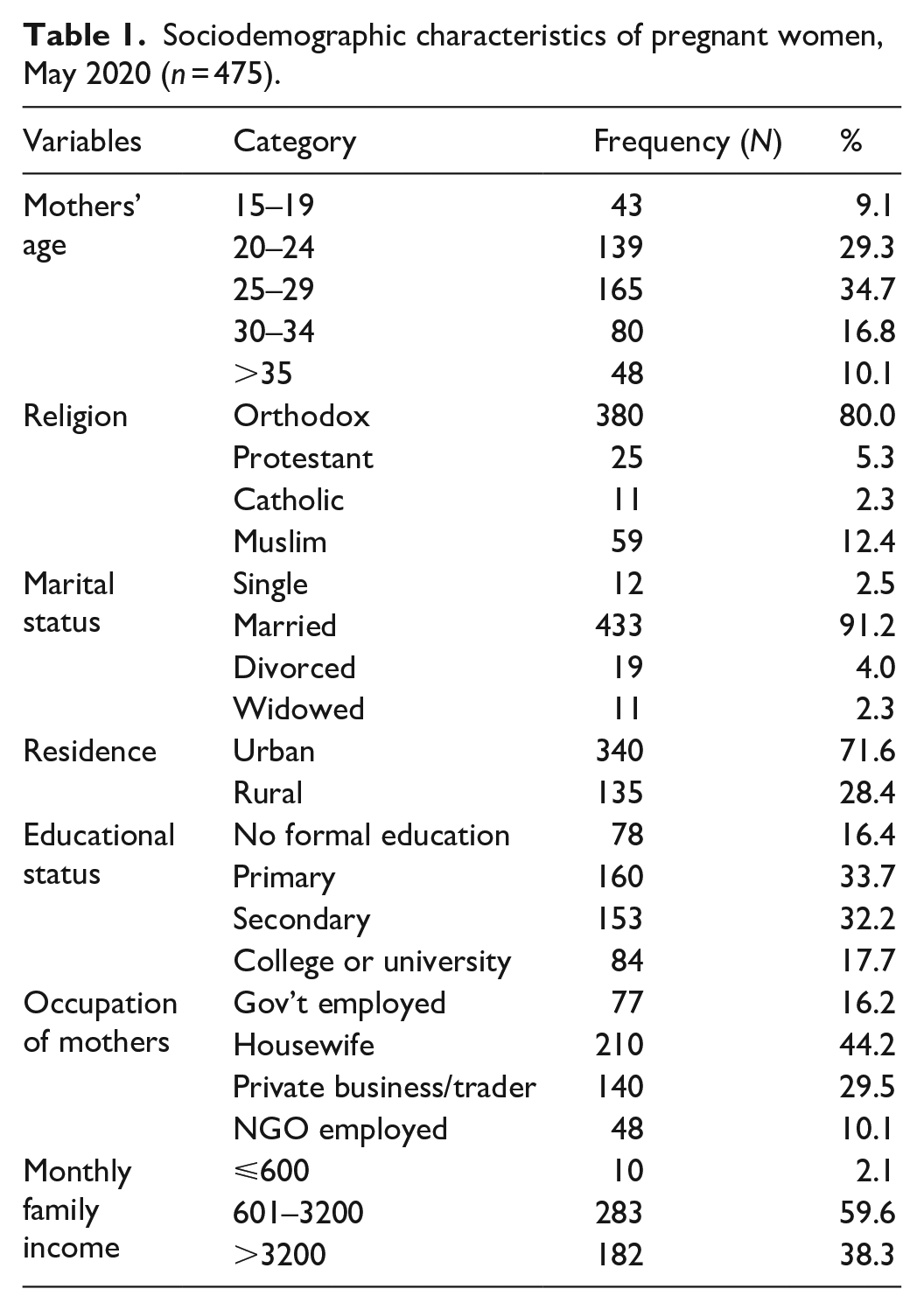
A total of 475 pregnant women participated in the study with a response rate of 100%. The women’s ages ranged from 16 to 43 years, with a mean age of 26.44 and (SD of ±5.52) years. More than one-third of the respondents, 165 (34.74%), were between 25 and 29 years old. The majority of the respondents, 380 (80%) were Orthodox. One hundred and fifty-three (32.2%) of the respondents attended secondary education. Regarding their marital status, the majority of the respondents 433 (91.2%) were married and, concerning their occupation, 210 (44.2%) were housewives. Nearly three-fourth, 340 (71.6%) of the study participants were urban dwellers (Table 1).
Sociodemographic characteristics of pregnant women, May 2020 (n = 475).
Obstetrical characteristics of pregnant women
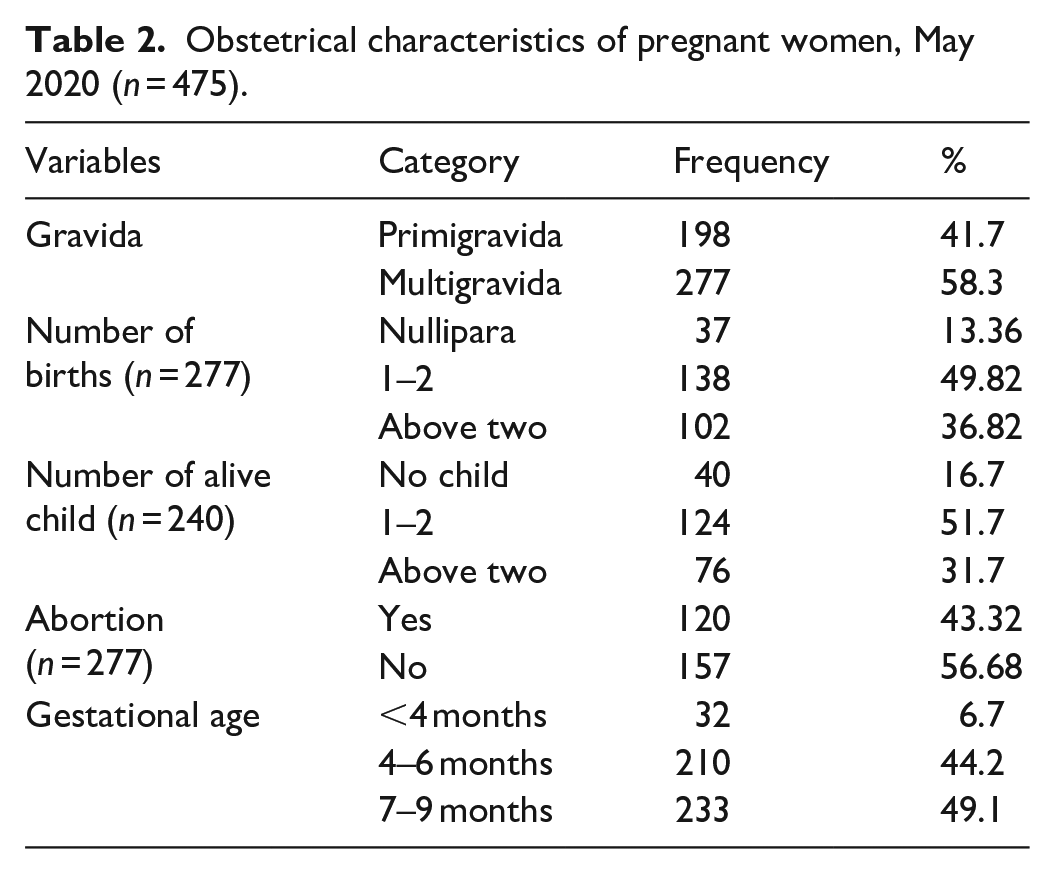
More than half of the study participants were multigravida 277 (58.3%) and 37 (13.36%) of them were nulliparous. Among multigravida mothers, 120 (43.32%) had a history of abortion. Concerning gestational age, nearly half of respondents reported 7–9 months and half of the study subjects had 1–2 living children (Table 2).
Obstetrical characteristics of pregnant women, May 2020 (n = 475).
Awareness of exercise during pregnancy
One hundred and eighty (39.2%) of the respondents reported that they had heard about exercise during pregnancy, among which 174 (96%) recalled walking, while 36 (20%) named ankle and toe exercise as a type of antenatal exercise. Regarding the source of information, 118 (31%) of subjects had heard from health-care providers, whereas 33 (9%) of them reported as having read it from the internet (Table 3).
Awareness of exercise during pregnancy.
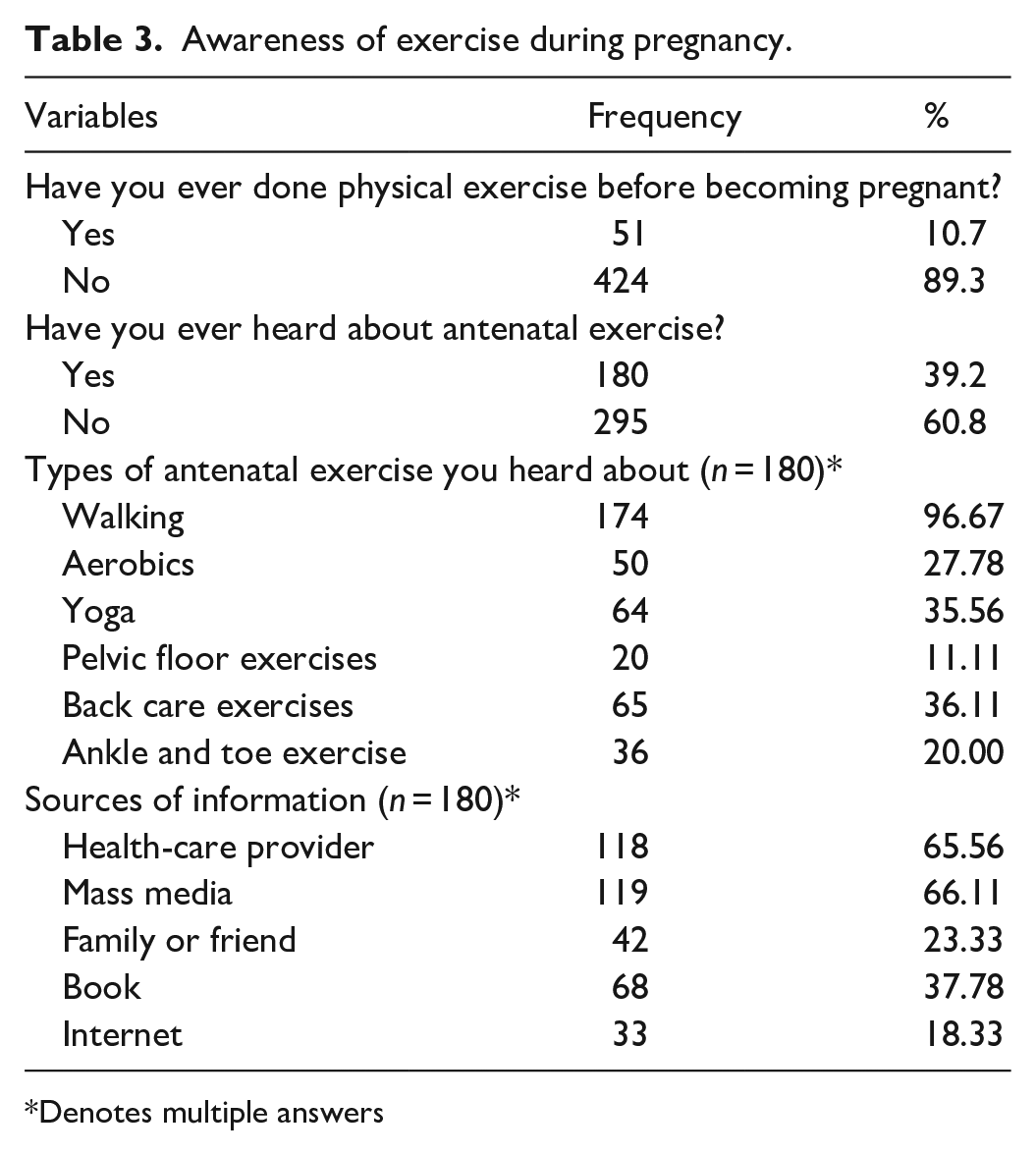
Denotes multiple answers
Knowledge toward benefit and contraindication of exercise during pregnancy
Fifty-one (10.7%) of mothers did physical exercise before becoming pregnant. More than one-third 177 (37.3%) and more than two-thirds 342 (68.2%) of respondents knew that exercise during pregnancy reduces back pain and excessive weight gain during pregnancy, respectively. Moreover, more than three-fourths, 378 (79.6%) and 301 (63.4%), of respondents knew that vaginal bleeding and premature rupture of the membrane are contraindicated for exercise during pregnancy, respectively. The study shows that majority 389 (81.9%) of pregnant women have misconceptions about benefits of exercise during pregnancy in the prevention of antenatal and postnatal depression. In this study, overall, 265 (55.8%) of pregnant mothers were knowledgeable about exercise during pregnancy.
Attitude toward exercise during pregnancy
More than half of mothers 275 (57.9%) agree that exercise during pregnancy is necessary. However, 138 (29.1%) of them believed that physical exercise during pregnancy is risky to the fetus. Surprisingly, only 60 (12.6%) of mothers agree that exercise during pregnancy is suitable to their culture and more than half 272 (57.3%) of them were uncertain as to whether exercise during pregnancy can reduce pregnancy-related complications. Overall, more than half 253 (53.3%) of pregnant mothers had a favorable attitude, that is, believed that exercises had a positive effect on pregnancy.
Factors affecting mothers’ knowledge toward exercise during pregnancy
In multivariable logistic regression analysis, factors associated with women’s knowledge toward exercise during pregnancy were education, exercise done before pregnancy, and ever heard exercise during pregnancy.
Those who completed high school were found to be 3.95 times more likely to be knowledgeable about exercise during pregnancy than those who had no formal education with adjusted odd ratio (AOR) = 3.95 (95% CI: 1.712–9.108). Besides, those women who had practiced exercise before becoming pregnant were 3.64 times more likely to be knowledgeable about exercise during pregnancy as compared with those women who did not practice exercise with AOR = 3.64 (95% CI: 1.091–12.118). Moreover, women who had heard about exercise during pregnancy were 4.74 times more likely to be knowledgeable about exercise during pregnancy compared with those women who had never heard about exercise during pregnancy with AOR = 4.74 (95% CI: 2.563–8.756) (Table 4).
Bivariable and multivariable analysis of associated factors related to knowledge of exercise during pregnancy, 2020.
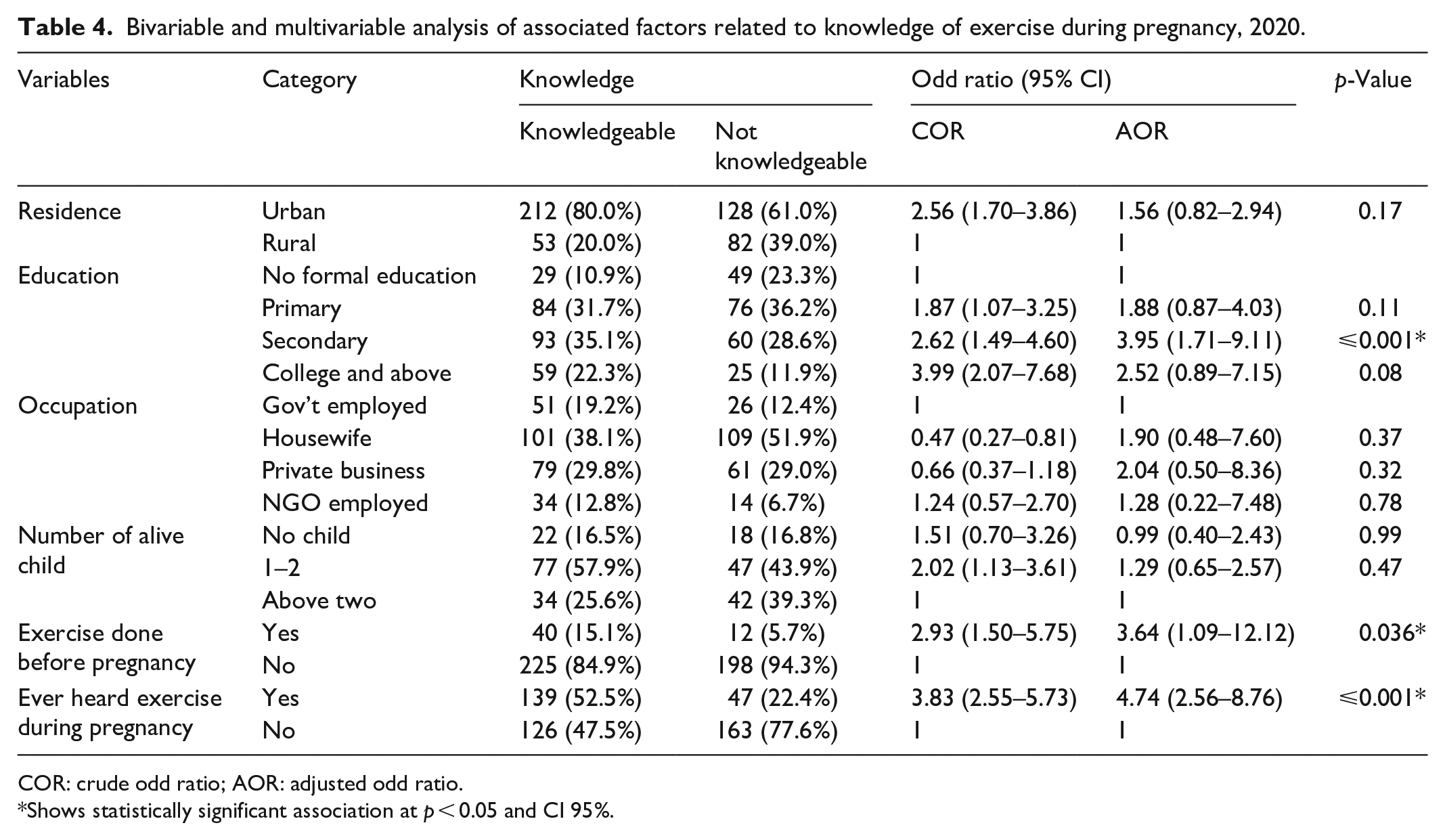
COR: crude odd ratio; AOR: adjusted odd ratio.
Shows statistically significant association at p < 0.05 and CI 95%.
Associated factors related to women’s attitudes toward exercise during pregnancy
In multivariable logistic regression analysis, factors associated with pregnant women’s attitude toward exercise during pregnancy were ever heard exercise during pregnancy and knowledge of pregnant women toward exercise during pregnancy.
Pregnant women, who had heard about exercise during pregnancy were 4.20 times more likely to have a favorable attitude about exercise during pregnancy compared with those women who had never heard about exercise during pregnancy with AOR = 4.20 (95% CI: 2.19–8.08). Besides, knowledgeable mothers about exercise during pregnancy were 4.45 times more likely to have a favorable attitude than their counterparts with AOR = 4.45 (95% CI: 2.39–8.29) (Table 5).
Bivariable and multivariable analysis of associated factors related to attitude toward exercise during pregnancy, 2020.
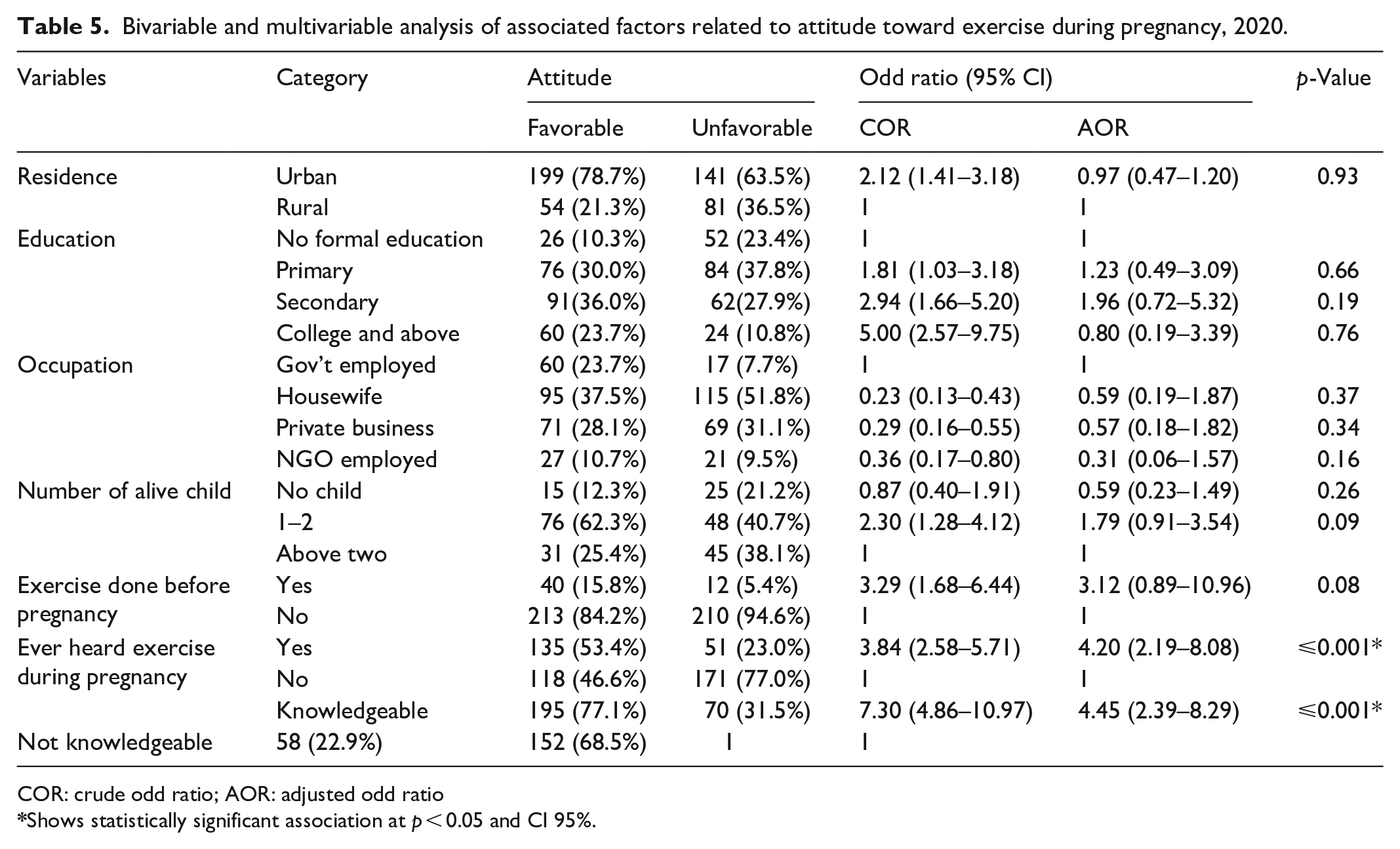
COR: crude odd ratio; AOR: adjusted odd ratio
Shows statistically significant association at p < 0.05 and CI 95%.
Discussion
The present study pointed out that 55.8% (95% CI: 48.45–59.12) of subjects were knowledgeable about exercise during pregnancy. This figure is slightly higher than in the study done in Addis Ababa (43.4%). 12 This could be due to ongoing education and counseling during ANC visits on exercise during pregnancy as the time of study conducted varies. This finding is higher than the study conducted in Gondar in which only 39.5% were knowledgeable. 14 The possible explanation for the discrepancy could be the sample size of study participants.
It is also higher than studies done in Zambia 19%, 20 Sri Lanka 27.3%, 18 and Pakistan (45.1%). 21 The discrepancy could be due to the time when the previous studies were carried out; currently, the awareness level of the population is increasing and difference in the percentage of study participants live in urban areas, due to the fact that urban dwellers easily access information from different media about exercise during pregnancy and the percentage of uneducated study participants was different from this study. However, the result is slightly lower than the study done in Brazil (65.6%). 17 The difference could be due to the educational status of respondents who participated in the study. This could be related to educated women tending to be more informed about the benefits and contraindication of exercise during pregnancy.
In this study, educational level was found to be an independent determinant of mothers’ knowledge on exercise during pregnancy. This finding is supported by existing evidence from Brazil, 17 Iraq, 22 Saudi Arabia, 23 Zambia, 20 Kenya, 24 Addis Ababa, 12 and Gondar. 14 The possible explanation could be because physical education is given as a basic course from primary to secondary school in the education curriculum, so they develop an understanding on the concepts and benefits of physical exercise. This implies that a starting point for improving health-promoting behaviors among pregnant women is education. In addition, empowering women through education enables them to gain the capability to do self-care and access health information easily. This depicts that education has a crucial role in improving one’s knowledge level on the health benefits of physical exercise during pregnancy.
Another independent variable that had a significant association with the knowledge of pregnant women about exercise during pregnancy was engaging in physical exercise before becoming pregnant. This finding is supported by a study done in Addis Ababa 12 and Gondar. 14 The possible explanation could be women who were engaged in physical exercise before becoming pregnant may have information and more willingness to learn about the benefits of exercise during pregnancy.
Furthermore, pregnant women who heard about exercise during pregnancy were found to have a positive association with the knowledge of mothers about exercise during pregnancy in this study. This finding is supported by a study done in Addis Ababa 12 and Gondar. 14 The possible explanation could be information dissemination is a key mechanism of awareness creation. 25 This implies information is powerful in improving one’s knowledge about exercise during pregnancy and therefore, this finding has clinical importance that counseling pregnant mothers during ANC services on the importance of physical exercise during pregnancy can improve their knowledge on it.
Regarding attitude toward exercise during pregnancy, about 53.3% (95% CI: 49.05–57.62) of respondents had a favorable attitude. This finding is lower as compared to the study done in Nigeria (84.2%) 26 and Zambia (93%). 20 The possible explanation for the observed discrepancy might be variations in sample size among the present and Nigerian study. Moreover, this could be due to the fact that in Zambia, percentage of study participants who had attended college and above were higher, as better education status was a significant predictor of the attitude of pregnant women toward exercise during pregnancy.12,14 However, a similar finding was documented in the study done in Addis Ababa (52.1%) 12 and Gondar (55.3%). 14
Regarding determinants of the attitude of mothers on exercise during pregnancy, women who heard about exercise during pregnancy had higher odds of favorable attitude. The finding is similar to the study reported in Addis Ababa 12 and Gondar. 14 The possible explanation could be due to the fact that being informed about the importance of exercise during pregnancy can change misconceptions about its necessity and decrease risks posed to the fetus. The acquisition of health information had made the women to modify their lifestyle and heed to safe behavioral practices such as physical exercise. This depicts that information can bring behavioral change among pregnant women and thus, need to be worked upon. Moreover, mothers’ knowledge about exercise during pregnancy had a higher likelihood of a favorable attitude. This is consistent with a study reported in Addis Ababa, 12 Nigeria, 26 and Gondar. 14 The possible explanation could be due to the fact that behavioral change can be enhanced by fostering knowledge. 27 This implies that knowledge plays an important role in influencing the personal belief of an individual.
Therefore, this study can provide a potential contribution to the improvement of women’s physical exercise during pregnancy by alerting health-care workers to provide an ongoing education and counseling to mothers regarding benefits of exercise during antenatal follow-up along with other services to make the mothers aware about the health benefits and contraindications of exercise. In addition, this study provided useful information about level knowledge and attitudes toward exercise during pregnancy and associated factors and it gave insight and base line data for future planning and emphasizing for developing antenatal physical exercise guidelines by integrating them into maternity health service.
Strength of the study
The study finding can be generalized to the target population due to the fact that currently, majority of pregnant mothers were attending ANC service.
The study generated empirical data and identified associated factors, which serve as a baseline data for future researchers since there is limited number of studies conducted on physical exercise during pregnancy in the Ethiopia.
Limitation of the Study
Since it is a cross-sectional study, it did not address the cause and effect relationship of the factors and the outcome variables. Besides, as the study was done in the hospital setting, the knowledge and attitude of women who didn’t attend ANC were not assessed. The study did not provide the qualitative perspective, which could not address the “why” questions in detail.
Conclusion
The present study indicated that the level of knowledge and attitude toward exercise during pregnancy were low. Education status, physical exercise engagement before becoming pregnant, and pregnant women who heard about exercise during pregnancy were found to be independent determinants of knowledge of exercise during pregnancy. Besides, pregnant women’s knowledge on exercise during pregnancy and women’s awareness status of exercise during pregnancy was found as a determinant of pregnant women’s attitude toward exercise during pregnancy. Empowering women through education has an irreplaceable role in bringing about a behavioral change toward exercise during pregnancy. Furthermore, counseling pregnant mothers during ANC should be emphasized to scale up a mother’s knowledge and attitude toward exercise during pregnancy.
Supplemental Material
sj-docx-1-smo-10.1177_20503121221115252 – Supplemental material for Pregnant women’s knowledge, attitudes, and associated factors toward physical exercise during pregnancy among those attending antenatal care at Bahir Dar city, Northwest Ethiopia
Supplemental material, sj-docx-1-smo-10.1177_20503121221115252 for Pregnant women’s knowledge, attitudes, and associated factors toward physical exercise during pregnancy among those attending antenatal care at Bahir Dar city, Northwest Ethiopia by Diriba Bayisa, Fikadu Waltengus, Selamawit Lake, Bizuneh Wakuma, Lami Bayisa, Merga Chala, Misganu Teshoma Regasa, Merga Besho and Getu Mosisa in SAGE Open Medicine
Footnotes
Acknowledgements
We would like to thank the data collectors and the study participants who took part in our study
Author contributions
DB designed the study, wrote result, analyzed finding, and prepared manuscript for this research. BW participated in interpretation and analysis of the data. DB, BW, FW, SL, LB, MB, MC, GM, and MT were involved in revising this research finding and all authors approved the final manuscript of this study.
Availability of data and materials
Data will be available upon reasonable request from corresponding Author.
Declaration of conflicting interests
The author(s) declared no potential conflicts of interest with respect to the research, authorship, and/or publication of this article.
Ethics approval and consent
Ethical clearance was obtained from the institutional review board of Bahir Dar University, College of Health Sciences in Ethiopia with reference number of 0048/2020. After formal letter was written to study area data collection was started and verbal consent was obtained from subjects and legally authorized representatives (in case of age less than 18) before the study. We used verbal informed consent because our study was low risk research.
Funding
The author(s) received no financial support for the research, authorship, and/or publication of this article.

Supplemental material
Supplemental material for this article is available online.
References
Supplementary Material
Please find the following supplemental material available below.
For Open Access articles published under a Creative Commons License, all supplemental material carries the same license as the article it is associated with.
For non-Open Access articles published, all supplemental material carries a non-exclusive license, and permission requests for re-use of supplemental material or any part of supplemental material shall be sent directly to the copyright owner as specified in the copyright notice associated with the article.
