



Abstract
Objectives:
The purpose of this study is to examine the effects of coronavirus disease 2019 pandemic on the prevalence of anxiety, depression, stress, insomnia, and social dysfunction among pregnant and/or lactating women and to measure the global pooled prevalence of mental health effects among these populations in the era of coronavirus disease 2019 pandemic.
Methods:
Comprehensive literature searching was conducted and studies published from 1 January 2020 to 30 September 2020 reporting the prevalence of anxiety, depression; stress, insomnia, and social dysfunctions were included. The pooled prevalence of anxiety, depression, stress, insomnia, and social dysfunctions was estimated using a random-effect model. In this study, all statistical analyses were performed using STATA (version 15) software.
Results:
There were a total of 19 studies included in the meta-analysis, of which 16, 14, 4, 2, and 2 studies were included in computing the pooled prevalence of anxiety, depression, stress, insomnia, and social dysfunction, respectively. The pooled prevalence of anxiety was 33% (95% confidence interval: 50%−61%), with significant heterogeneity between studies (I2 = 99.68%, p = 0.001). The pooled prevalence of depression was 27% (95% confidence interval: 9%−45%), with remarkable heterogeneity between studies (I2 = 99.29%, p = 0.001). Likewise, the pooled prevalence of stress was 56% (95% confidence interval: 30.07%−82.22%), with significant heterogeneity between studies (I2 = 98.8%, p = 0.0001). The pooled prevalence of social dysfunction was 24.3% (95% confidence interval: 13.41%−62.03%), with significant heterogeneity between studies (I2 = 97.5%, p = 0.0001) and finally, the pooled prevalence of insomnia was 33.53% (95% confidence interval: 3.05%−64.0%), with significant heterogeneity between studies (I2 = 99.6%, p = 0.0001).
Conclusions:
In this study, the mental health effects of the COVID-19 pandemic among pregnant and lactating women were found to be significant. Stress was the most common mental health problem in these population groups. Therefore, policymakers and health planners should give great emphasis to addressing maternal mental well-being during and after this global health crisis. Maternal mental health must be one of the international and national public health priority agendas to enhance the well-being of pregnant and lactating women. Besides, giving psychological support to pregnant and lactating women may reduce the long-term negative effects of this pandemic.
Keywords
Introduction
Coronavirus disease 2019 (COVID-19) is a disease caused by a novel coronavirus (2019-nCoV) that was first reported in Wuhan, Hubei Province, China in December. Since then, there have been over 1,203,459 cases of COVID-19 infections worldwide, with 64,754 deaths. 1
COVID-19 has both mental/emotional and social implications for pregnant and postpartum women who have been physically separated from families, relatives, and society all around the world. Understanding the maternal mental health implications of the COVID-19 pandemic is becoming increasingly necessary to best avoid the occurrence of severe mental disorders as a secondary consequence during the postpartum period.2,3
A study conducted in Toronto, Canada, revealed that 29% of individuals had symptoms of posttraumatic stress disorder and 31% had depression during severe acute respiratory syndrome (SARS) outbreak. 4 During the current pandemic, a study was done in China’s Wuhan region reported that 53.8% of respondents were in moderate or severe mental health problems, of which 17% and 29% had moderate to severe depression and anxiety, respectively. 5 During pregnancy and the postpartum period are vulnerable times for mothers themselves to more likely have cognitive and behavioral issues, while psychological distress can have negative consequences for both the mother and the baby. Studies showed that symptoms of anxiety and depression were higher among pregnant women than men during the COVID-19 pandemic.5,6 A study undertaken among prenatal women indicates that “elevated prenatal anxiety and depression symptoms” might increase the risk of postpartum depression as well as prenatal infection and illness rates.7,8 Besides, previous studies revealed that prenatal anxiety and depression can cause changes in physical activity, nutrition, sleep pattern, maternal mood, and fetal health which may increase the risk of miscarriage, preterm birth, lower birth weight, and lower Apgar scores at birth.9–13 Children of mothers who have endured elevated stress are at greater risk of subsequent mental health problems.13–17 Prenatal anxiety and depression are also correlated with changes in brain development and function in infants and children.18–21 These long-lasting psychological and neurological effects underscore the significance of alleviating prenatal discomfort for both pregnant women and their infants. A meta-analysis conducted in the general population reported that the pooled prevalence of depression during the COVID-19 outbreak is 25% (95% confidence interval (CI): 18%–33%) with significant heterogeneity between studies (I2 = 99.60%, p < 0.001). 22
It is also necessary to identify possible resilience factors that can help guard against high prenatal stress. Social reinforcement may minimize the impact of prenatal stress and has been shown to alleviate the effects of prenatal anxiety and depression symptoms of maternal and infant stress response systems. 23 Physical exercise is often correlated with decreased depressive and anxiety symptoms in pregnant women 24 considering the possible negative psychological effects of psychological, health, and financial instability coupled with social exclusion, there is an immediate need to evaluate the prevalence of psychological distress in pregnant women during this pandemic and to establish a protective factor.
To date, there is no systematic study or meta-analysis in the mental health effects of the COVID-19 pandemic in terms of anxiety, depression, stress, insomnia, and social dysfunction in pregnant and lactating women. This systematic review and meta-analysis will focus on a growing array of articles on mental well-being and COVID-19 published after the outbreak of the COVID-19 pandemic in different countries. To provide a more global viewpoint, we conducted a comprehensive systematic review and meta-analysis of available research findings examining anxiety, depression, stress, insomnia, and social instability in pregnant and lactating women during the COVID-19 pandemic.
Methods
Eligibility criteria and search strategies
We followed the Preferred Reporting Items for Systematic Reviews and Meta-analysis (PRISMA) guideline 25 to prepare the whole document. National surveys, published and unpublished articles were explored from different databases. In addition, the reference lists of included articles were cross-checked to identify articles that were not assessed in the search strings. We sought comprehensive literature research published on PubMed, CINAHL (EBSCOhost), Global Health (CABI), Medline (EBSCOhost), and other sources (Google Scholar and Google) from 01 January 2020 to 30 September 2020 that reported prevalence of anxiety, depression; stress, insomnia, and social dysfunctions. Studies conducted among pregnant and lactating women to validate the psychological consequences of COVID-19 have been included in this systematic review and meta-analysis.
Inclusion and exclusion criteria
The inclusion criteria in this meta-analysis were as follows: (1) population (pregnant women, lactating women, breastfeeding women, women in antenatal care, and puerperal women); (2) exposure (novel coronavirus, COVID-19, nCoV, severe acute respiratory syndrome coronavirus 2, and SARS-CoV-2); (3) outcome (impact, effect, mental health, psychology, anxiety, depression, stress, and social dysfunction); (4) study design (cohort studies, cross-sectional studies, epidemiology, and observational studies); (5) study setting (community-based surveys, health institutions, and Web-based surveys). The data from each study were verified for eligibility using study area, study setups, assessment methods, study designs, title, abstract, and full texts.
Eventually, observational studies reporting the magnitude of different forms of psychological disorders among pregnant or lactating women were included.
Exclusion criteria: (a) the same patients were enrolled in different articles; (b) commentaries, editorials, case reports, letters, and family-based studies; and (c) short communications.
Nonetheless, studies with incomplete or unclear diagnostic methods and without full texts were excluded. Letters to editors, conference proceedings, and qualitative studies were also excluded. The EndNote X8 reference manager was used to manage articles.
The appropriateness of the key terms was checked prior to conducting searches in each database. Example of search string in PubMed: ((“Psychology”(Mesh) OR (“Mental Health”(Mesh) OR (“Anxiety”(Mesh) OR (“Depression”(Mesh)) OR “Depression, Postpartum”(Mesh) OR (“well-being”) OR (“social instability”) OR (“Stress, Psychological”(Mesh) AND (“COVID-19” (Supplementary Concept))) OR (“severe acute respiratory syndrome coronavirus 2” (Supplementary Concept))) OR (novel coronavirus)) OR (nCoV)) AND (“Pregnant Women”(Mesh) OR (prenatal)) OR (perinatal)) OR (postpartum)) OR (antenatal)) OR (postnatal)) OR (puerperal)) OR (peurperal)) OR (lactating women) Journal Article, Observational Study, in the last 1 year, Humans, English, Adult: 19–44 years.
Data extraction process
A standardized data extraction checklist was prepared using Microsoft Excel 2016, and the data were extracted by two investigators (Z.W.B. and D.B.D.), independently. Name of the author(s), publication year, study country, sample size, study population, diagnostic methods, anxiety, depression, stress, insomnia, and social dysfunction were used in the extraction process. There were no discrepancies between ZWB and DBD on the inclusion of studies. The extracted data were cross-checked interchangeably by the two authors and inconsistencies were solved accordingly.
Quality assessment of studies
Critical appraisal of the included studies was performed by two authors (Z.W.B. and D.B.D.), independently using Joanna Briggs Institute (JBI) Critical Appraisal Checklist for Observational Studies was used for quality assessment. 26 The scores were added up and changed to percentages. The minimum score was 0 and 8 was the maximum one since all included studies were cross-sectional studies. Articles with >50% quality scores were included in this systematic review and meta-analysis (Supplemental Table 2). The inter-rater agreement was computed by an author (ZWB) before the decision of inclusion in this study was made. We computed inter-rater agreement using Cohen’s kappa coefficient (κ). The findings revealed that there were substantial agreement 27 between the two raters (κ = 0.652, p ⩽ 0.001).
Summary measures
The primary outcome of this research was to determine the mental health consequences of the COVID-19 pandemic in pregnant and lactating women using various diagnostic methods. The pooled prevalence was computed for depression, anxiety, stress, insomnia, and social dysfunction. Subgroup analyses were also done using diagnostic methods and the country where the original studies were performed. The prevalence was calculated by dividing the total number of mental disorders by the total sample size and multiplying it by 100. The binomial distribution formula was used to compute the standard error for each original study. The pooled estimates of depression, anxiety, and stress were computed using “meta pop” using a sample size as a weight (wgt) variable. This was done due to significant variability in the sample size of the included studies. The pooled estimates were presented with their 95% CIs. The effect sizes were prevalence of each component of mental disorders.
All studies measured anxiety using standardized scales, the most common being the Generalized Anxiety Disorder 7-item (GAD-7) scale and Hospital Anxiety and Depression Scale (HADS). Similarly, all studies measured depression among pregnant and lactating women using standardized scales, the most common being the Edinburgh Postnatal Depression Scale (EPDS) and HADS. Stress was also assessed based on the Perceived Stress Scale (PSS), while insomnia and social dysfunction were diagnosed based on standardized self-rating scale, respectively.
Statistical methods and analysis
The pooled estimates were calculated using STATA Version 15 (STATA Corporation, College Station, Texas) software in this meta-analysis. Both random- and fixed-impact methods were used to measure the pooled estimates. The pooled estimates were computed using random-effects models and weighted using the inverse variance method in the presence of high heterogeneity among studies. Subgroup analyses were done using different parameters (diagnostic methods and study country). We verified the appropriateness of each datum before the analysis of each datum. Forest plots, summary tables, and texts were used to present the findings of this study.
Publication bias and heterogeneity
The funnel plot Sterne and Egger’s 28 regression test were used to measure publication bias at a 5% significant level. In addition, heterogeneities among studies used to compute the pooled estimates in this meta-analysis were explored using forest plot, I2 test, and the Cochrane Q statistics. 29 The I2 values of 25%, 50%, and 75% were interpreted as low, medium, and high heterogeneity, respectively. 30 In the current meta-analysis, significant heterogeneity was considered when the I2 value was ⩾50%, with a p value < 0.05. The possible sources of significant heterogeneity were addressed through sub-group and sensitivity analyses.
Results
Selection of studies
In the initial search, 3007 studies were obtained from databases and gray literature sources. Primarily, 586 studies were excluded due to duplication. Then, 2392 studies were screened using titles and abstracts and 2421 were removed. Finally, the full texts of 29 studies were assessed for eligibility. Of the total 29 studies, 10 were excluded due to inconsistency of results.31–40 Eventually, 19 eligible studies were used in the final analysis of the current systematic review and meta-analysis41–59 (Figure 1).

PRISMA flow chart showing study selection process.
Study characteristics
Of total of 19 studies included in the final analysis, four studies were done in Canada,42,47,52,57 three studies in China,48,50,56 two in Iran,41,45 six in European countries (Belgium, 55 United Kingdom, 44 Turkey, 58 Ireland, 51 Bosnia and Herzegovina and Serbia, 46 and Italy 49 ), and the rest were conducted in the United States, 59 Colombia, 53 and Sri Lanka. 54 All studies were cross-sectional studies and critical appraisal of cross-sectional studies conducted revealed that about 95% of studies scored more than 75%, only one scored lowest scored 62.5%. The majority of the studies were conducted among pregnant women alone, except studies done in United States, 59 Belgium, 55 and Iran 45 were conducted in both pregnant and lactating women (Table 1).
Detailed description of the included studies for computing the prevalence of stress, anxiety, depression, and social dysfunctions among pregnant women and lactating women 2020.
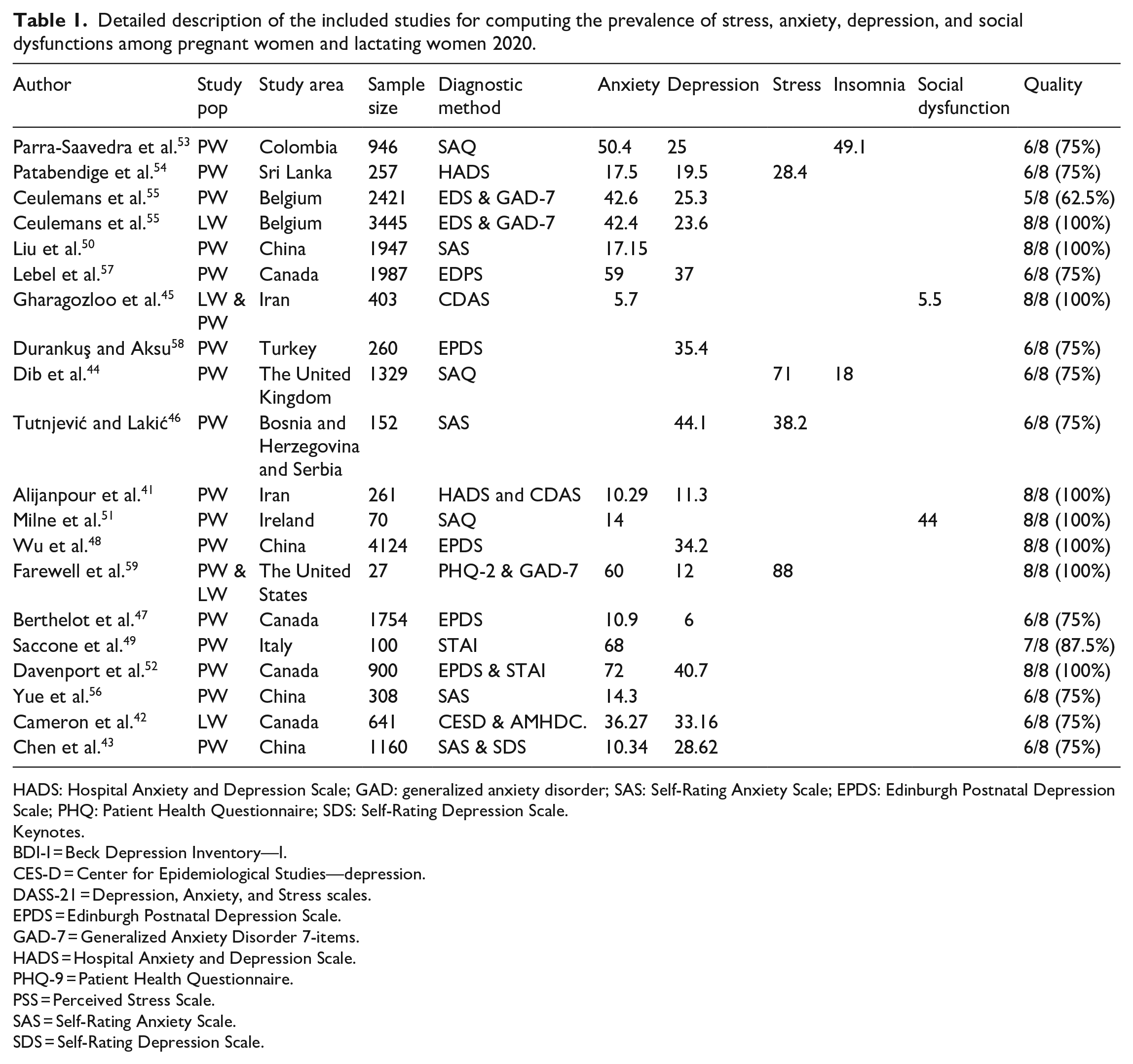
HADS: Hospital Anxiety and Depression Scale; GAD: generalized anxiety disorder; SAS: Self-Rating Anxiety Scale; EPDS: Edinburgh Postnatal Depression Scale; PHQ: Patient Health Questionnaire; SDS: Self-Rating Depression Scale.
Keynotes.
BDI-I = Beck Depression Inventory—I.
CES-D = Center for Epidemiological Studies—depression.
DASS-21 = Depression, Anxiety, and Stress scales.
EPDS = Edinburgh Postnatal Depression Scale.
GAD-7 = Generalized Anxiety Disorder 7-items.
HADS = Hospital Anxiety and Depression Scale.
PHQ-9 = Patient Health Questionnaire.
PSS = Perceived Stress Scale.
SAS = Self-Rating Anxiety Scale.
SDS = Self-Rating Depression Scale.
Prevalence of anxiety among pregnant and lactating women
A total of 16 studies were used to compute the pooled prevalence of anxiety among pregnant and lactating women.41–43,45,47,49–57,59 A total of 16 627 pregnant and lactating women were used to compute the pooled estimate of anxiety, 33 cases per 100 pregnant and lactating women (95% CI: 50%–61%) using the DerSimonian and Laird random-effects model (I2 = 99.68%, p = 0.001; Figure 2).
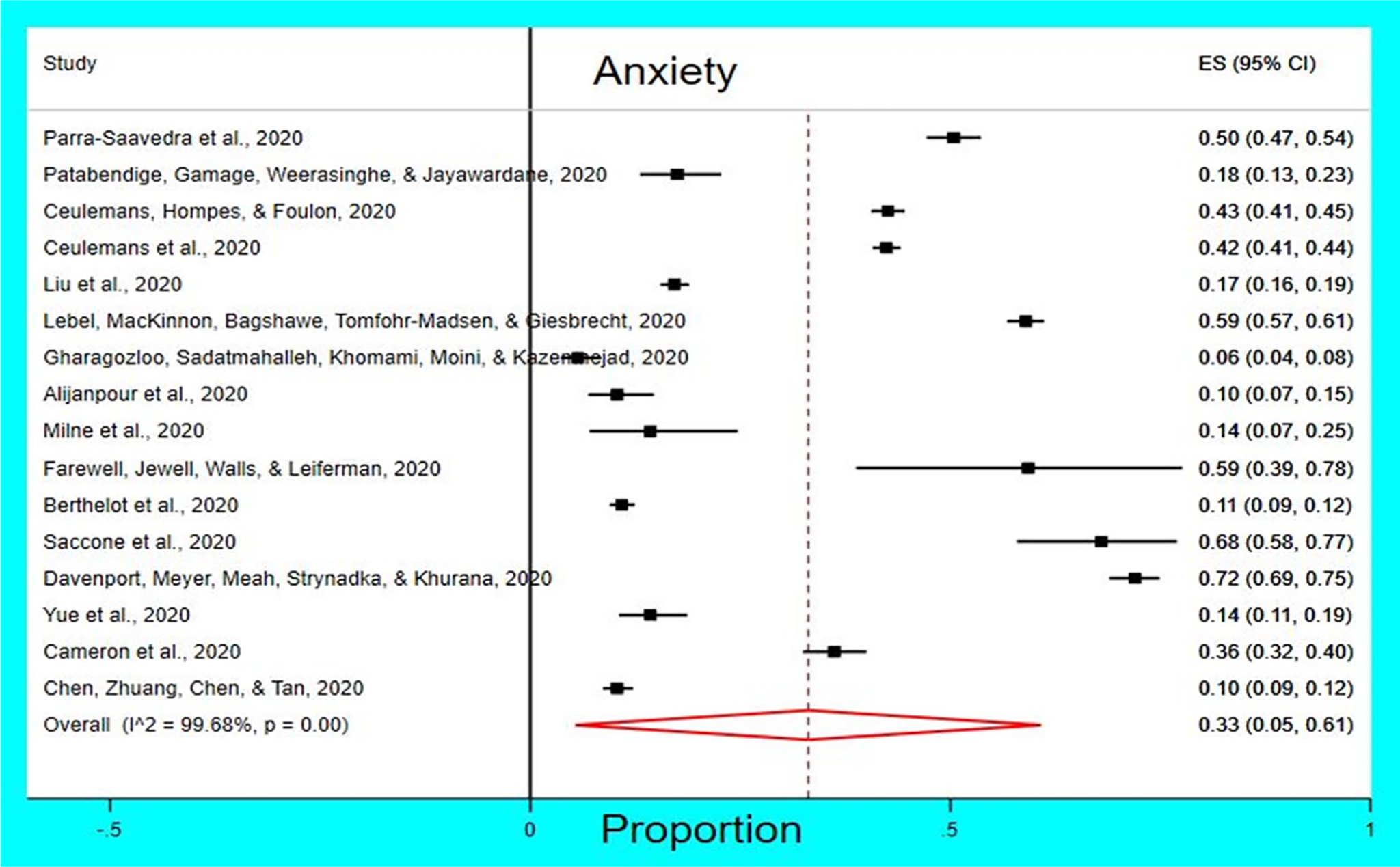
Forest plot showing the pooled prevalence of anxiety per 100 pregnant and lactating Women.
Publication bias was checked using funnel plot, and it was objectively verified using Egger’s regression test. Hence, the funnel plot seems asymmetric despite the Egger’s regression test (p = 0.098) did not confirm the asymmetry of funnel plot (Figure 3). The funnel plots report an upward pattern with no point falling within the predicted 95% CI for anxiety. Sensitivity analysis was also performed to identify the possible source of heterogeneity among the included studies. However, there was no single study having a remarkable effect on the heterogeneity of the pooled estimate (Figure 4). Finally, the funnel plots look asymmetric for anxiety (see Figure 3) which is congruency with Rosenthal’s method of finding of fail-safe-N analysis warrants acknowledgment of possible publication bias within the article, which revealed that the current existed body of literature.

Funnel plot showing the distribution of included studies for prevalence of anxiety among pregnant and lactating women.

Sensitivity analysis of studies used to compute pooled prevalence of anxiety.
Prevalence of depression among pregnant and lactating women
A total of 18,335 pregnant and lactating women from 14 studies were used to compute the pooled prevalence of depression41–43,46–48,52–55,57–59 was 27% (95% CI: 9%, 45%) by using the DerSimonian and Laird random-effects model (I2 = 99.29%, p = 0.001) (Figure 5).

Forest plot showing the pooled prevalence of depression among pregnant and lactating women in the era of COVID-19.
The possible source of higher heterogeneity among the included studies was identified using funnel plot and Egger’s regression test. Thus, the funnel plot pinpointed that no publication bias, which was confirmed by an objective test (Egger’s test, p = 0.208; Figure 6).

Funnel plot showing the distribution of included studies for prevalence of depression among pregnant and lactating women.
Finally, sensitivity analysis was done to identify the possible source of heterogeneity among the studies used in the pooled estimates. The figure showed that all studies contributed to the higher heterogeneity in the pooled prevalence of depression among pregnant and lactating women (Figure 7).

Sensitivity analysis of studies used to compute pooled prevalence of depression.
The funnel plots report a rightward shift with very few points falling within the predicted 95%CI for depression (Figure 6). But an objective test (Egger’s test, p = 0.208) for depression confirmed that no publication bias. Finally, the funnel plots look asymmetric for depression (see Figure 2) which is congruency with Rosenthal’s method of finding of fail-safe-N analysis warrants acknowledgment of possible publication bias within the article, which revealed that the current existed body of literature.
Prevalence of stress, insomnia, and social dysfunction among pregnant and lactating women
Out of four eligible studies, a total of 1765 pregnant and lactating women were used to compute the pooled estimate of stress.44,46,54,59 The pooled prevalence of stress was 56% (95% CI: 30.07%–82.2%) using the DerSimonian and Laird random-effects model (I2 = 98.8%, p = 0.0001). Similarly, the pooled prevalence of insomnia was computed from two eligible articles with a total of 2275 study subjects.44,53 Thus, 34% (95% CI: 3.05%–64.0%) of pregnant and lactating women were found to have insomnia in the DerSimonian and Laird random-effects model (I2 = 99.6%, p = 0.0001). Besides, the pooled prevalence of social dysfunction among pregnant and lactating women was estimated from two eligible studies with a total sample of 473.45,51 The pooled prevalence of social dysfunction was found to be 24.3% (95% CI: 13.41%–62.03%) using the DerSimonian and Laird random-effects model (I2 = 97.5%, p = 0.0001).
Subgroup analysis based on country and diagnostic methods was not found plausible result due to scant reports in each diagnostic method. The performed subgroup analysis based on country and diagnostic methods with null results for anxiety and depression.
Discussion
In this meta-analysis, 16 studies were used to compute the pooled prevalence of anxiety among pregnant and lactating women during the COVID-19 outbreak is 33% (95% CI: 50%–61%) with high heterogeneity between studies (I2 = 99.68%, p = 0.001). Sensitivity analysis was also performed to identify the possible source of heterogeneity among the included studies. However, there was no single study having a remarkable effect on the heterogeneity of the pooled estimate. This suggested that the source of this high heterogeneity in the prevalence rates of anxiety among the studies included in this meta-analysis was maybe the scale used for its diagnoses, with the highest prevalence rates in studies used the Anxiety GAD-7 scale and HADS and the lowest in those using the PHQ-9 and Self-Rating Anxiety Scale. This may be due to the use of self-reported online survey data may imply the presence of social desirability bias. This pooled prevalence is higher than a study done in China’s Wuhan region reported that 29% anxiety symptoms. 5 This difference may be due to present pooled prevalence and pregnant women during the COVID-19 pandemic may be particularly affected, prolonged, increased prenatal anxiety symptoms increase the risk of prenatal infection and illness rates.7,8
The current meta-analysis of 14 studies revealed that the pooled prevalence of depression among pregnant and lactating women during the COVID-19 outbreak is 27% (95% CI: 9%–45%) with heterogeneity between studies (I2 = 99.29%, p = 0.001), which is higher than the pooled prevalence in the general population 25% (95% CI: 18%–33%). 59 This difference may be due to study population difference, this study among pregnant and lactating women and pregnant women in particular, prolonged, intensified prenatal depression symptoms may raise the risk of postpartum depression, as well as prenatal infection and disease rates during the COVID-19 pandemic.7,8
On the present meta-analysis, the possible source of higher heterogeneity among the included studies was identified using funnel plot and Egger’s regression test. Thus, the funnel plot pinpointed that no publication bias, which was confirmed by an objective test (Egger’s test, p = 0.208). Finally, sensitivity analysis was done to identify the possible source of heterogeneity among the studies used in the pooled estimates. The figure showed that all studies contributed to the higher heterogeneity in the pooled prevalence of depression among pregnant and lactating women. This suggested that the source of this high heterogeneity in the prevalence rates of depression among the studies included in this meta-analysis was maybe the scales used for its diagnoses, with the highest prevalence rates in studies used the EPDS scale and HADS and the lowest in those using the CES-D (Center for Epidemiological Studies—depression and Self-Rating Depression Scale. This may be due to the use of self-reported online survey data may suggest the presence of social desirability bias.
Out of four eligible studies, a total of 1765 pregnant and lactating women were used to compute the pooled estimate of stress.44,46,54,59 The pooled prevalence of stress was 56% (95% CI: 30.07%–82.2%) with heterogeneity between studies (I2 = 98.8%, p = 0.0001). The pooled prevalence of stress among pregnant and lactating women is the highest of all psychological impact of COVID 19 among these populations as identified in this meta-analysis which the pooled prevalence of anxiety 33%, depression 27%, and social dysfunction was 24.3% (95% among pregnant and lactating women). It is also important to search for possible resistance factors that can help to defend against high prenatal stress. Social reinforcement can alleviate the impact of prenatal stress and has been found to minimize the effects of prenatal anxiety and depressive symptoms on maternal and child stress response systems. 23 Similarly, the pooled prevalence of insomnia was computed from two eligible articles with a total of 2275 study subjects.44,53 Thus, 34% (95% CI: 3.05%–64.0%) of pregnant and lactating women were found to have insomnia in the DerSimonian and Laird random-effects model (I2 = 99.6%, p = 0.0001). Besides, the pooled prevalence of social dysfunction among pregnant and lactating women was estimated from two eligible studies with a total sample of 473.45,51 The pooled prevalence of social dysfunction was found to be 24.3% (95% CI: 13.41%–62.03%) by using the DerSimonian and Laird random-effects model (I2 = 97.5%, p = 0.0001). Despite the likely negative psychological sequelae of psychological, health, and financial instability combined with social alienation, physical exercise is often correlated with decreased depressive and anxiety symptoms in pregnant individuals 24 Pregnancy is an especially sensitive period when psychiatric depression may have detrimental effects on both mother and child. Considering recent meta-analysis conducted in general population revealed that the overall global prevalence of depressive disorders is 25% in the general population 22 which is lower, as compared to 27% among pregnant women and lactating, in addition, this, the present meta-analysis findings identified higher pooled proportion of anxiety 34% and stress 56% during the COVID-19 outbreak. This implies a substantial impact of the current pandemic situation on mental health among pregnant and lactating women that should be targeted during antenatal care and postpartum care-level strategies.
This is the first systematic review and meta-analysis undertaken of all available studies of anxiety, depression, stress, and social dysfunctions among pregnant and lactating women during the COVID-19 outbreak. Meta-analysis revealed that greater power than individual studies to estimate more accurate rates of anxiety, depression, stress, and social dysfunctions, by considering a much larger population drawn from different countries. However, limitations should be considered when interpreting these results. For example, randomization of the sample was not available in certain situations, and data had to be gathered by Internet surveys, which may have led to selection biases, such as oversampling of younger and more qualified individuals. 60 Ultimately, the latest meta-analysis relies on studies that involve pregnant and lactating women only. The effect of COVID-19 on the psychological well-being of disadvantaged populations, such as health staff, outpatients, or elderly persons, is projected to be high. Future epidemiological trials performed in these subpopulations, as well as systemic analyses of evidence pooling, are also especially required to adjust public health strategies.
Limitation of the study Letters to editors, short communications, and preprints were not considered in this study which may be the limitation of this study. Another weakness may be revealed that a small fail-safe N suggests that the conclusion of the meta-analysis may be susceptible to publication bias. Lack of reporting metrics that are known to influence anxiety and depression symptoms is a limitation to the study.
Conclusion
The mental health effects of COVID-19 among pregnant and lactating women were determined in terms of anxiety, depression, stress, social dysfunction, and insomnia. This systematic review and meta-analysis determined the overall global pooled prevalence of anxiety 33%, depression 27%, stress 56%, insomnia 34%, and social dysfunction 24% during the COVID-19 pandemic outbreak in the globe among pregnant and lactating women. This implies a substantial impact of the current pandemic situation on mental health among pregnant and lactating women that should be targeted during antenatal care and postpartum care-level strategies. This embryonic condition involves collaborative efforts by the research community to add to the monitoring of pregnant and lactating women during the COVID-19 epidemic and to examine the short- and long-term detrimental effects on the mental health well-being of mothers and infants. Therefore, policymakers and health planners should give great emphasis to addressing maternal mental well-being during and after this global health crisis. Maternal mental health must be one of the international and national public health priority agendas to enhance the well-being of pregnant and lactating women. Besides, giving psychological support to pregnant and lactating women may reduce the long-term negative effects of this pandemic.
Supplemental Material
sj-docx-1-smo-10.1177_20503121211026195 – Supplemental material for Mental health effect of COVID-19 pandemic among women who are pregnant and/or lactating: A systematic review and meta-analysis
Supplemental material, sj-docx-1-smo-10.1177_20503121211026195 for Mental health effect of COVID-19 pandemic among women who are pregnant and/or lactating: A systematic review and meta-analysis by Dereje Bayissa Demissie and Zebenay Workneh Bitew in SAGE Open Medicine
Footnotes
Acknowledgements
The authors would like to address their gratitude to the authors of the included studies for this systematic review and meta-analysis and St. Paul’s Hospital Millennium Medical College.
Author contributions
D.B.D. and Z.W.B. conceived and designed the review. Z.W.B. prepared the draft of the manuscript. The final version of the manuscript was approved by all the authors.
Declaration of conflicting interests
The author(s) declared no potential conflicts of interest with respect to the research, authorship, and/or publication of this article.
Funding
The author(s) received no financial support for the research, authorship, and/or publication of this article.
Ethical approval
Ethical approval for this study was obtained from INSTITUTIONAL REVIEW BOARD (APPROVAL NUMBER/ID) (SPHMMC 202/21/2019) from the ethical review board of St. Paul’s Hospital Millennium Medical College (Or) Ethical approval for this study was waived by INSTITUTIONAL REVIEW BOARD* because *REASON FOR WAIVER*. For printing and secretarial services only.
Informed consent
Written informed consent was obtained from all subjects before the study. Not applicable.
Informed consent was not sought for this study because this study was a systematic review and meta-analysis.

Supplemental material
Supplemental material for this article is available online.
References
Supplementary Material
Please find the following supplemental material available below.
For Open Access articles published under a Creative Commons License, all supplemental material carries the same license as the article it is associated with.
For non-Open Access articles published, all supplemental material carries a non-exclusive license, and permission requests for re-use of supplemental material or any part of supplemental material shall be sent directly to the copyright owner as specified in the copyright notice associated with the article.
