




Abstract
During the Covid-19 crisis, stereotypical images of young people as selfish troublemakers or passive victims appeared in the media and scholarly publications. These persistent views disregard many young people's authentic experiences and civic contributions. In this article, we challenge these perceptions by highlighting young people's acts of citizenship during the pandemic lockdowns that took place during 2020 in Aotearoa New Zealand. Despite being internationally praised for its compliant Covid-19 response, citizens were prepared to challenges the pandemic restrictions in order to have their voices heard. Young people were often at the forefront of these protests, wanting to actively participate in matters that concerned them by joining Black Lives Matter marches or campaigning to lower the voting age. At the same time, young people engaged in more personal and invisible acts of citizenship within their families and school communities. In this article, we share evidence from our empirical study into young people's social and political engagement during the Covid-19 lockdowns in Aotearoa New Zealand. Implications of this study for citizenship education are discussed.
Introduction
Despite receiving international praise for its compliant Covid-19 response, there were still acts of social unrest and protest in Aotearoa New Zealand throughout 2020. Young people were often at the forefront of these protests, joining BlackLivesMatter marches, campaigning to lower the voting age or finding ways to challenge adult authority they considered unfair. However, little attention has been paid to the ways in which lockdowns impacted young people's engagement with the social and political issues that concern them. Instead, young people were frequently portrayed as passive victims or selfish troublemakers (Gharzai et al., 2020). In this article, we challenge these views by exploring young people's acts of citizenship (Isin, 2008, 2009) in Aotearoa New Zealand during the 2020 lockdowns.
We first place our study in the context of the way young people are portrayed in the literature before outlining the theoretical framing for the study, namely, Isin's (2008, 2009) notion of purposive acts of citizenship. We then introduce methods, including introducing the school context and the participants. The findings are set out in two sections: young people's experiences of lockdown and young people's acts of citizenship. The findings highlight the differences between two groups of students in this school, confirming that the lockdown continued to exacerbate the economic and social divide. In the discussion section, we explore the limitations and possibilities that the lockdowns brought and highlight young people's adaptation to their circumstances and their creative engagement in matters of social justice. We conclude with a discussion on the implications of this study for citizenship education.
Literature review: Beyond a youth-at-risk discourse
In times of crisis, young people are often portrayed as vulnerable victims rather than active members of society (Gibbs et al., 2013; Peek, 2008). In this regard, Covid-19 is no exception. Since the pandemic started, much research warned of the dire consequences of lockdowns and social restriction measures on young people's mental health and wellbeing (e.g. Courtney et al., 2020; Golberstein et al., 2020). Studies report higher levels of stress, anxiety and depression (Courtney et al., 2020; Shanahan et al., 2020), physical exhaustion and decreased motivation (Labrague and Ballad, 2021), poor sleeping and dietary habits (Ghosh et al., 2020), unemployment (OECD, 2020), uncertainty about the future (Li et al., 2021) and fear and guilt of infection (Ghosh et al., 2020). This focus on youth vulnerability leads to a youth-at-risk discourse (Author, year) that disregards young people's wider experiences and contributions. Paradoxically, the view of young people as vulnerable victims has coexisted with its opposite: the view that young people's thoughtlessness was responsible for the rapid spread of the virus. This latter image has been particularly widespread in news reports where young people were ostracised for breaking social distancing rules (Gharzai et al., 2020). Both images of young people coexist under the at-risk discourses that portray youth in terms of deficit, deviancy and/or delinquency and that often serve as a justification for practices of intervention and surveillance (Kelly, 2000).
Calls for young people's wellbeing protection and social restriction compliance have ended up monopolising the debate on the role of young people during Covid-19. More recently, however, other voices are challenging stereotypes and calling for recognition of the breadth of young people's experiences (Efuribe et al., 2020; Gharzai et al., 2020; Pavarini et al., 2020). Studies reveal how young people in different parts of the world have dealt with varied circumstances such as lockdowns (Marstaller, 2020) and home learning (Segre et al., 2021). Others show how young people have led Covid-19 responses in their communities, such as fighting misinformation, helping vulnerable members of their communities, or promoting social distancing measures (Mohamad, 2020; Wickramanayake, 2020). However, little attention has been paid to the ways in which this pandemic has impacted young people's engagement with the continuing social and political issues that concern them. The youth-at-risk discourse (Author, year) perpetuates a view of young people as objects of protection rather than subjects of rights, overlooking how they have actively engaged in matters that affect their lives during the pandemic. Thus, their contributions – as well as the struggles and the forms of discrimination that they have faced – still remain, to a large extent, undocumented.
Theoretical framework: Young people’s acts of citizenship
In the last few decades, young people have been repeatedly viewed as disengaged from social and political issues. Recent research has refuted this view by highlighting the narrow and adult-centric view of political engagement that underlies such claims (Harris et al., 2010; Pickard, 2019; Pickard and Bessant, 2018; Wyn and Harris, 2004). In the current context of globalisation, migration, urbanisation and digitalisation, young people are constantly producing new forms of political activism that move beyond conventional practices, such as voting or joining a political party. These analyses draw attention to young people's everyday citizenship practices to dismantle the discourses of youth political apathy that trivialise their ordinary ways of enacting citizenship (e.g. Harris et al., 2010; Harris and Wyn, 2009; Wood, 2014). This perspective explores instances of infra-recognised forms of political agency that do not necessarily question institutional arrangements (Lewicki and O’Toole, 2017). As Third et al. (2019) argue, “Whilst it has been important to assert the value of children's and young people's everyday practices […], the everyday signals the domain of routine and ordering repetitions” and this could further exacerbate the trivialising of their efforts.
For Isin (2008), focusing on routine over rupture limits the discussion of ‘how subjects become claimants under surprising conditions or within a relatively short period of time’ (17). He proposes, instead, to focus on the acts of citizenship through which subjects become claimants of rights (civil, political, social, sexual, ecological, cultural) in different sites (bodies, courts, streets, media, networks, borders) and scales (urban, regional, national, international) of contestation.
A key distinction in Isin's work (2008, 2009, 2012) is the difference between ‘acts of citizenship’ and other concepts that also involve ‘doing’, such as actions, habitus, conduct or practices of citizenship. Drawing on Arendt's (1958) conception of an act as making a new beginning, he understands acts of citizenship as a disruption, a rupture of a routine and, therefore, always purposive. The acts of citizenship call the law or social norms into question. In disrupting the routine or norm, they create a space for reshaping the boundaries of citizenship and build new subjectivities. These acts create what Isin calls activist citizens (Isin, 2008, 2009). For Isin (2008, 2009), activist citizens differ from active citizens in that the latter follow already existing paths of participation without disrupting already defined orders and status.
When young people mobilise and transgress the status quo, they are usually subjected to criticism and censorship (Beals and Wood, 2012; White and Wyn, 2008). Pickard (2019), for example, has explored how young people's engagement in what she calls ‘Do-it-Ourselves’ politics, through which young people collectively operate and claim for their rights outside of political institutions, are frequently portrayed as a ‘danger to public order’ (p. 445). Repression of young people's protests has involved creating a series of barriers that are not only legal and physical, but also digital and psychological (Grasso and Bessant, 2018; Pickard, 2019). In Aotearoa New Zealand, while non-disruptive forms of youth participation are generally positively valued by public opinion, young people's disruptive acts of citizenship are often dismissed as misbehaviour by the media and face opposition from adults – including teachers, principals and politicians (Beals and Wood, 2012).
The Covid-19 lockdowns did not stop individuals and social movements from around the world stepping up to claim for their rights by combining both online and offline strategies (e.g. Kowalewski, 2020; Pinckney and Rivers, 2020; Pleyers, 2020). In Aotearoa New Zealand, for example, one of the events organised by the BlackLivesMatter movement 1 was a demonstration, which was highly criticised for breaking physical distancing rules (e.g. Flahive, 2020; RNZ, 2020). This event was promoted by young people, in particular, from Māori and Pacific communities (Godfrey, 2020), who are usually portrayed as youth-at-risk (Fitzpatrick, 2011; Wyn and Harris, 2004). These young people were disproportionally affected by the economic consequences of the lockdowns (Mutch, 2020; Mutch and Estellés, 2021). This unfair impact of Covid-19 together with the outbreak of the BlackLivesMatter movement galvanised their activism (Godfrey, 2020), which connects with a long history of solidarity with the Black movement and struggles against racial discrimination by Pacific people in Aotearoa New Zealand 2 (Anae et al., 2015; Okeroa, 2012; Shilliam, 2012).
Isin's theory of acts of citizenship provides a powerful tool to explore the ways in which young people challenge existing boundaries of citizenship to claim their rights (Kallio et al., 2020; Larkins, 2014), in particular, in the unprecedented social, political and economic circumstances generated by the pandemic.
Methodology, methods and ethics
The data reported on in this article, are drawn from a larger qualitative research project on young people's experiences during Covid-19 lockdowns, in which the focus was on the ways in which young people responded to the pandemic in creative and innovative ways. For the purposes of this paper, the authors are reporting on one significant theme that arose across the three sites but manifested itself more strongly in one particular optional social studies class. Consistent with a theoretical framing that seeks to understand constructions of citizenship, the researchers work within a social constructionist paradigm, viewing such acts as imbued with layers of social, political and historical meaning (Burr, 2015). The methodology is case study (Stake, 1995), and in this project, we focus on a conceptual case, that of the construction and articulation of citizenship. Case study was selected because it supports the examination of the phenomenon of interest (young people's acts of citizenship) during a particular period of time (the Covid-19 pandemic) across a variety of settings (secondary schools in Aotearoa New Zealand) through multiple methods (focus groups, individual interviews, and artefact analysis).
In the larger project, university-based researchers collaborated with teachers from three secondary schools. In this article, we focus on one secondary school class where the 14 participants who volunteered to participate were all female, aged between 16 and 17 years old. Eight participants were Pākehā (of European descent); five were of Pacific descent; and one was Iranian. The voices included in this article broadly fall into two socio-economic groups: the young Pacific women were mostly from low-income communities, while the young Pākehā women were predominantly from middle-class backgrounds. This participant breakdown opened up the opportunity to ponder the connection between ethnicity and class on the participants’ experiences.
Participants were offered different ways to participate to ensure that they felt comfortable: a focus group, a one-on-one interview and/or sharing artefacts they had created (e.g. posters or websites). The interviews/focus groups revolved around the young people's life during lockdown (experiences, difficulties and strategies used) and their acts of citizenship during this period (motivation, challenges and opportunities). The students in the social studies class reported on here, expressed an eagerness to participate in the study. Their positive attitude towards their engagement was partly motivated by the close relationship that they had with the teacher of the class, with whom they openly discussed social justice issues as part of their programme centred on social movements.
Data was open coded by the research team using thematic analysis of each data source and across sources using a constant comparative method (Fram, 2013; Saldaña, 2016). The thematic analysis utilised both deductive and inductive means (Miles et al., 2014). Deductively, the research team drew on Isin's notions of practices and acts of citizenship and the existing literature to inform the coding process. For example, recent research provides rich insights into young people's uses of social media as means of becoming informed, raising their voices and building social capital (e.g. Campbell, 2017; Yamamoto et al., 2015). Initially, the following themes guided the deductive analysis: young people's experiences and practices of citizenship during lockdowns; their acts of citizenship (Isin, 2008; 2009); motivations to enact their citizenship; and limitations and possibilities of lockdowns for youth citizenship. The research team then conducted an inductive thematic analysis of each data source to compare the emergent themes with the deductive themes.
The ethical issues of this study were carefully considered. Before the fieldwork began, the research team obtained approval from [removed for review purposes]. Participation was completely voluntary. At the first school visit, the researchers asked about the relevant cultural protocols to ensure research was conducted with cultural sensitivity (Hudson et al., 2010). Participants were provided with a Participant Information Sheet and signed a Consent Form to agree to participate in the study. Participants are not identified by name to ensure anonymity.
Apart from the theoretical lens that informed the analysis, the personal and professional trajectories of the research team also influenced data analysis (Denzin and Lincoln, 2011). All three authors felt a great responsibility to ensure that their analysis did not perpetuate deficit views of young people but honoured their voices and acknowledged the complexity of their lives (Denzin and Lincoln, 2011; Merriam and Tisdall, 2016).
Findings
Young people's experiences and practices of citizenship during COVID-19 lockdowns
When the first lockdown started, many participants described having a feeling of being on holiday which did not last long. They soon realised that it was something serious and reported experiencing isolation from family and friends. As one participant explained, “We’re so used to having contact and physically like seeing our family and friends and connecting with each other. And then all of a sudden, that just got cut off”. They all followed Covid-19 restrictions and guidelines, not just for themselves, but for their families and communities. One participant, for example, reported wearing masks before it became compulsory to do everything at her hand to protect vulnerable members of the community. As she explained: I wore a mask when going shopping, even though it wasn't compulsory one. I mean, it did get compulsory, but it wasn’t originally. Just for the safety of like others more than myself. Because, you know, I don’t really care if I get sick, but for the people who actually needed to be there. I was like: ‘OK, there are some people here who if they catch this virus, it's gonna be you know, big news’. So, I was like: ‘OK, I’ll just do everything I can to protect those people’. And then worry about myself later, because, you know, if I get it, it's not gonna be the end of the world.
The majority of the participants expressed their gratitude for New Zealand's response to the pandemic. As one participant said, “It was a relief knowing that, at least as a system, we were able to deal with it”. As they recognised, watching the daily press conferences
3
and following Covid-19 news became a routine during lockdown. However, Covid-19 news updates and constant exposure to social media were so pervasive that many participants reported becoming overwhelmed and anxious. For one participant, this was an opportunity to consciously step back from social media. As she said: I didn’t actually go much on social media after three weeks of the first lockdown, I just got off. I was like, I’m not gonna be on social media, it was too much. Because I was like, reloading my news feed and stuff, like every five seconds. So I just got off social media and decided to just, you know, look around me, my family, like, myself and reflect on everything that I do.
This girl was not the only participant reporting that lockdown triggered a reflection upon their lives. Indeed, many recognised that the time created by lockdowns made them reflect upon their personal circumstances and their role in society, igniting their desire to contribute to their communities. As one participant said, “I wanted to participate a lot more and use the time that I had at home to try and make even the slightest difference”.
At the same time, however, they also reported feeling frustrated and overwhelmed by the email traffic from their teachers and the high volume of work set. In the words of one of the participants, “our teachers were emailing us like thousands of emails telling us all we had this assessment, do another assessment and do and it was just so hard to just do my schoolwork at home”. They recognised that the isolating circumstances generated by lockdowns influenced their motivation to focus on schoolwork. As one girl explained in one of the focus groups: I was alone for like a lot of lockdown. And I think similar to [Student A], I had an experience of like I’d have burst of energies here and there. But for most of it, I was very, like, neutral. And I only kind of participated in the classes that I found interesting.
Commonalities aside, there was a clear difference between the lockdown experiences of Pacific participants from low-income families and Pākehā participants from middle-class backgrounds. Pacific participants had family members who were essential workers during lockdown, working in factories, airports and supermarkets. These participants experienced deep fear and responsibility for the safety of their families, which made them take Covid-19 rules seriously. As one Pacific participant shared, A lot of us were really scared that our families could be infected by the virus, especially since my mom works at the airport. She was on the frontline welcoming people [into the country]. And everyday she would come home and tell me about flights that had come in and gone out. I think she had about 12 Covid tests. It was really hard, because there was always the possibility that mum or dad could [get] infected, and they could get sick. There would be no source of income for us.
For the Pacific participants, relationships at home were strained by the stress of potential loss of income, being at risk of infection or, in some cases, reduced income as a result of reduced work hours. As one participant shared: In the beginning, I really liked the idea of lockdown, no school. Yeah. And then a couple weeks, my dad couldn’t go to work because it was Level 4 [highest level of social restriction] and he's a trainee, so he couldn’t work. And then I started seeing like the financial effects started kicking in and things weren’t the best at home.
Pacific participants were also concerned for the well-being of other families in their community. They were deeply conscious of how Covid-19 disproportionately impacted Pacific families. As one of them explained: I know a lot of other Pacific families who were struggling way worse than mine. Even people who were being made redundant from their jobs, they were the main source of income in those families.
By contrast, Pākehā participants came from families of non-essential workers who worked from home throughout lockdown. While their families were together during lockdown, they faced challenges nonetheless. The stress of running businesses became a priority for business owners. As one Pākehā participant shared, “My parents were more concerned about the business. They were not at all focused on the family”. Some experienced boredom and loneliness. One shared that her step-siblings lived with their mother in alternate weeks, so there were periods of time when, “It was just me and my dad, and then he [went back] to work it would be a big empty house and just me”. Many struggled with their well-being and were pushed beyond their limits. One student shared, “you had to test those boundaries with your own mental health that hadn’t been tested before”. Some reported feeling very anxious about the pandemic, participating in “panic buying”. Many of them recognised feeling very “guilty” for being so “unmotivated” and “lazy”. They struggled with the need to feel productive and they used different strategies to cope with it. Some set daily goals; others went on long walks. One Pākehā girl even framed self-care as a form of productivity: “I learned how to have a day off, sitting outside in the sun, reading a book and being fine with it. That's productive, because it's taking care of yourself, you know?”
Young people's acts of citizenship
During lockdowns, the participants were involved in different activities that called for a new distribution of political status in forms that were not always accepted by adults. Ethnicity played a key role in the type of struggles they chose. Pacific students engaged passionately in the fight against racial discrimination, while Pākehā students combatted gender inequality and homophobia.
Pacific students described the murder of George Floyd and the subsequent rise of BlackLivesMatter as critical to gaining awareness of racial injustice. One participant explained, “I feel like a lot of us started waking up. It was just like a click. And we all started assessing what was happening there and comparing it to what is happening here”. When the protests started in the US, the Pacific students shared videos of police brutality against Black people and signed petitions to arrest the police officers responsible for George Floyd's murder. They were aware that, as a result of this interaction, they were receiving more posts and videos showing signs of institutionalised racism. They valued this information, as it opened their eyes and reinforced their commitment. They were critical of their peers who got involved because it was a trending topic: There was a point where everyone was changing their profile pictures and, as soon as it started going down, everyone's profile pic just went back to the photos […] my vacation, my little trip… and I was just like: okay, so you just forgot about it because everyone else just stopped. There were people giving speeches. There was an American man, who was stuck in New Zealand because of Covid. He gave a speech on his experience of police brutality [when he] was stopped on the road by a police officer and dragged out of his car for no reason. They fully just beat him up […] And it was so bad. I felt so sad. It just made me want to make a change and I was sharing all of that on social media.
For the Pacific participants, BlackLivesMatter in the US and the injustices that they witnessed during lockdown made them stand up against racism in their own communities. In the focus group, they expressed outrage at the fact that the pandemic had raised ethnic stereotypes. They were angry with the way the media framed Auckland going into lockdown for a second time as due to an outbreak in a Pacific family: Participant 1 Someone said that there was a Polynesian family that started the community cases. We felt attacked, I felt attacked. Participant 2 I felt attacked as well. Participant 3 Do we ever say that it was a white person that caught the virus?
Pacific participants were actively involved in the inter-school peace march that took place in Auckland despite social restrictions. For them, the march represented a way to fight against ethnic stereotypes. They shared the event on social media and two participants put up posters of the event at school (see Figure 1), despite facing disagreement by teachers: “One of the teachers asked me: Are you sure you want to be putting those [posters] up?” Many participants expressed anger and class consciousness when discussing the social pressure they faced in attending the march under Covid-related gathering restrictions. One participant said: There were a lot of people saying: ‘Oh, look at these kids, they’re going to go protest in the middle of a pandemic, but we’re not allowed to go to the hairdresser’. There [were] a lot of privileged rich people saying that about us.
Supporting the march was, indeed, an act of citizenship that implied a brave transgression of the norms. Participants were not discouraged by adult opposition. As they noted, this opposition was also evident when the march had heavy police surveillance and was not allowed to take place on a main street: We did have to have police officers and wardens and other people walking around us, police cars following us or guiding us through the street. Just keep an eye on us […] And yeah, you know, we couldn’t really have the platform that we wanted, because they had restricted us to such a small block.
From being involved in the march, three participants were inspired to continue the struggle within their own communities: “When me and my two friends just went to the march, we had a spark light in us that we wanted to see the same change that we saw out there in here”. Upon returning to school, they created a group called Pacific Warriors to stop prejudice against Pacific students and promote Brown academic excellence and success. They started by following, via social media, other Pacific groups supporting Pacific families who were struggling during lockdowns. When the interviews took place, these participants were talking with Pacific teachers at school to gain their support: “With Pacific Warriors at school, it's just getting off the ground, but we’ve talked to a lot of Pacific teachers at our school, especially teachers in higher positions”.
For the Pākehā participants, their acts of citizenship centred on LGBTQIIA + rights and feminism. During lockdown, one participant created an online petition to ban gay conversion therapy which gained over 8000 signatures.
4
Another was a youth leader in the school's Peer Sexuality Support Programme which hosted an Instagram Live on contraception during lockdown. This platform gave the group wider coverage than they anticipated, with teenagers from around the country following the feed. However, organising the action was challenging with parents hindering their work: Parents, I believe, kind of hindered that as well, because you try and organise a time for a Zoom call. And then someone's mum would come in and ask him to do like three or four chores, and they’d be like: ‘Do it now!’
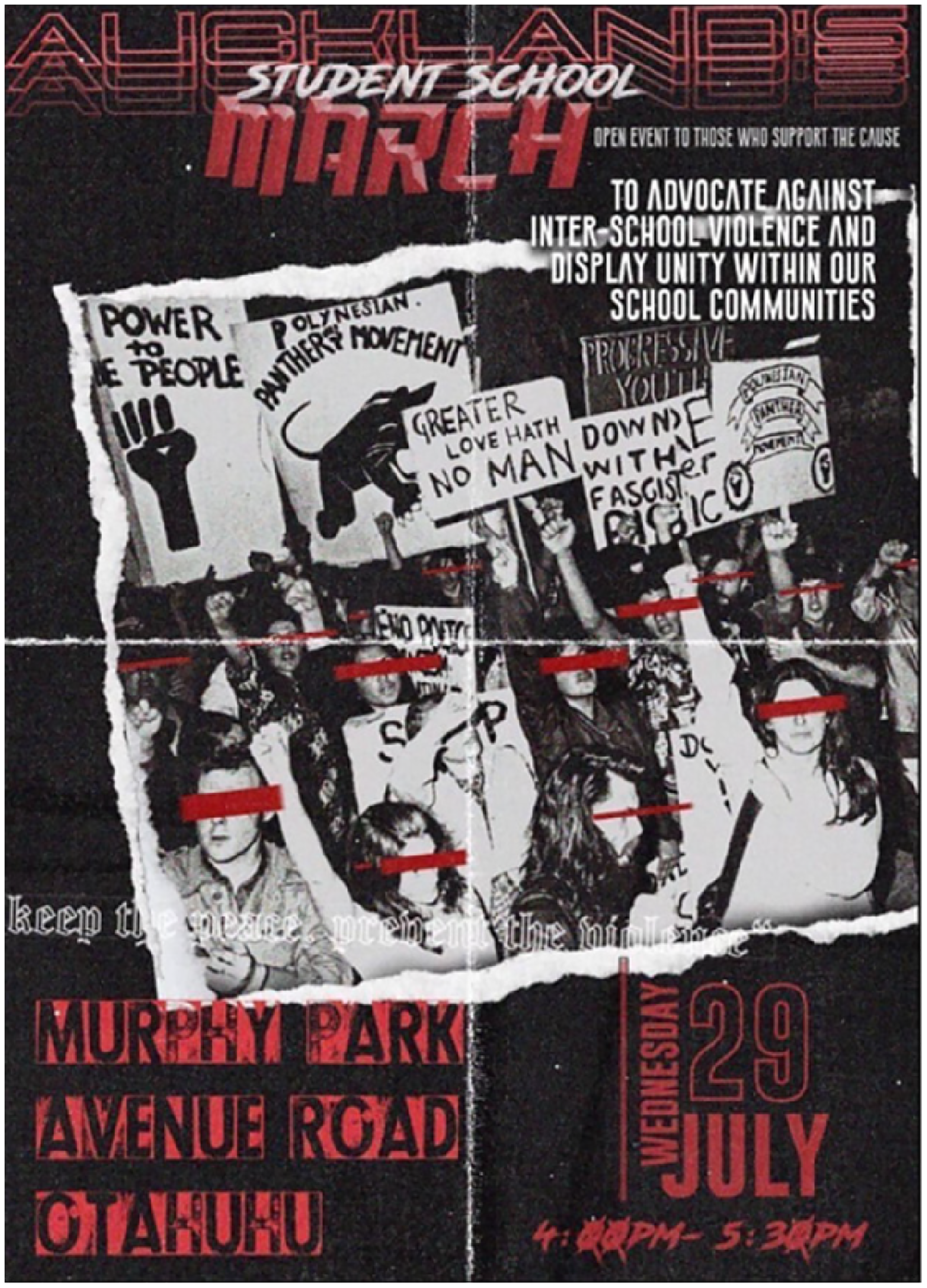
Poster of peace march.
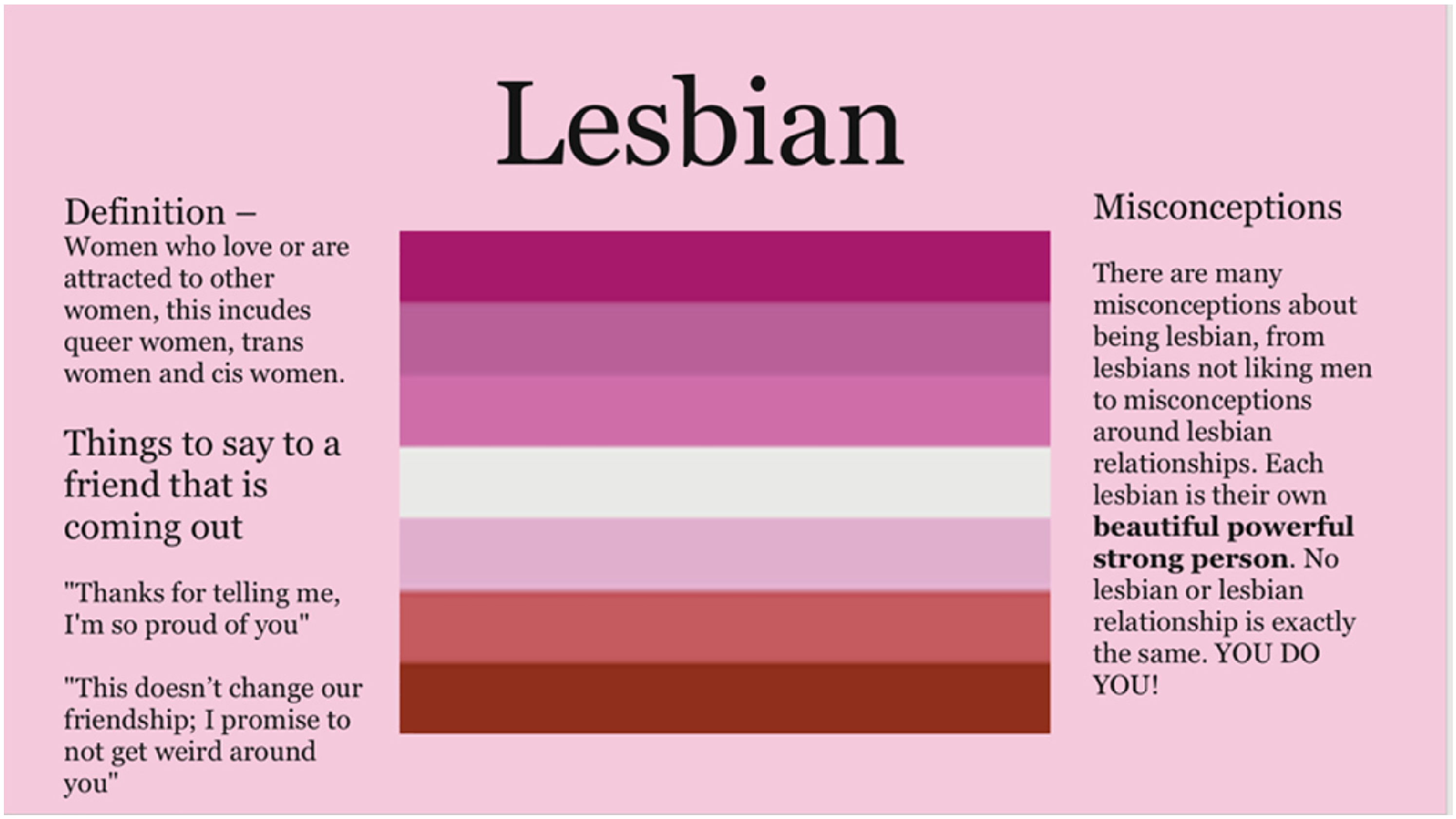
Sexuality poster produced by students.
Pākehā participants also enacted their citizenship within their own lives. They explained that, as a result of learning about MeToo
5
in their social studies class, they took these conversations into their homes. One participant who lives with her father started questioning why she did all the cooking and cleaning, and challenged him: In my family, I don’t live with my mum, I just live with my dad so usually it would be him who was going to work and stuff. And then he come home from work, and I would made him dinner. Because that's just how it is, you know? But instead I’d be like: ‘Can you make dinner? Can you do the washing or something? ‘Cause I'm 16 and I don't have to do it just because I'm like a female.
As this participant recognised, learning about MeToo whilst in lockdown made it easier for her to detect gender injustices within her own family: “When I was at home learning [about MeToo], I had all this time to think about what I was learning and apply it to my actual life”. Some participants started to speak up when previously they would have stayed silent. One participant spoke of calling people out on misogynistic comments, including teachers, which resulted in teachers getting annoyed: I used to bite my tongue [when hearing a sexist comment] But, especially recently, I’ve been really calling people out on it. And a lot of people get really annoyed […] and my teachers did get sick of it.
Another realised that the way she engaged with social media perpetuated patriarchal thinking. Now, she explained, “Instead of just liking a post, [I am] more cautious of what I [am] interacting with”.
Acts of citizenship: Limitations and possibilities during lockdowns
Contrary to much of the earlier literature and media commentary on young people and Covid-19, our study has provided a window into the citizenship experiences of two groups of young people in Aotearoa New Zealand and shown that while lockdown did create limitations in their engagement, it also opened up possibilities. We will discuss four cross-cutting themes that arose from our analysis of the data relating to these 14 young people. First, the findings highlight that the youth involved in this study were not passive victims, nor self-centred troublemakers during the Covid-19 lockdowns. Second, despite Covid-19 restrictions, these youth claimed for their rights through various acts of citizenship in different sites and at different scales (Isin, 2008, 2009). Third, paradoxically, Covid-19 lockdowns provided time and space for the young people to reflect on their lives and fuelled their convictions to enact their citizenship. Finally, the participants’ lockdown experiences and practices and acts of citizenship continued to reflect pre-existing disparities that occur in Aotearoa New Zealand across socio-economic, gender and ethnic lines.
Offering an alternative discourse
Our findings have highlighted an alternative image of young people in lockdown. In our study, participants clearly and openly expressed their fears and anxieties, their concerns for their families and their worries about their mental health. In this, their lockdown experiences resonate with the literature (Foon, 2020; Every-Palmer et al., 2020) that found, through representative samples, that almost half of young New Zealanders suffered from distress during the 2020 Covid-19 lockdowns. However, in this study, participants did not see themselves as passive victims. These young people, despite being afraid of contracting and transmitting the virus, took Covid-19 restrictions seriously for themselves and their families. This active compliance with the rules, although deliberate, did not imply a questioning of the social order and, in this sense, could be described as a practice of citizenship (Isin, 2008, 2009). Other actions enacted by the participants such as wearing masks even if not required, kept informed of Covid-19 updates or actively care for their mental health can also be described in this way. Through these practices of citizenship, the participants constitute themselves as active citizens (Isin, 2008, 2009). Some of the participants, however, also demonstrate their agency through acts that represented a clear rupture to the status quo. When some of the participants deliberately broke the Covid-19 restrictions or other social norms, they were not driven by any hedonistic desire, but by a strong sense of indignation, solidarity and social justice. Through such purposive acts of citizenship aimed at questioning certain institutional arrangements, these young people became claimants of rights, activist citizens (Isin, 2008, 2009).
Sites and scales of contestation
Despite the limiting circumstances generated by lockdowns, the young people involved in this study claimed their rights through acts of citizenship on different sites and scales of contestation. They challenged existing boundaries of citizenship seeking to be treated equally, no matter their age, ethnicity, gender or sexual orientation. Their acts of citizenship drew on conventional forms of citizenship, such as joining protests, starting campaigns and creating interest groups. Yet, their stories show the nuanced ways in which these performances of citizenship implied a brave transgression of the norms and, particularly, of adult authority. To join the demonstrations, for example, these young people transgressed several barriers of dissent (Pickard, 2019), from legal (Covid-19 restrictions) to psychological (pressure from adults and the media) and physical (police). In some cases, the struggle against authority led the participants to turn to what Pickard (2019) calls ‘Do-It-Ourselves’ politics, although they also tried to find alliances with sympathetic adults to inform, ignite and support their causes.
The sites where young people enacted their citizenship varied. They claimed their rights at home, on their return to school, in their communities and in cyberspace. Given the pandemic-related restrictions, social networking sites became important settings for the participants to become informed about current events, spread their political ideas and publicly condemn social injustices, forming what Pariser (2012) calls social and informational ‘bubbles’. The young people also used these sites to organise politically. As Harris (2008) notes, these platforms provide spaces for young people, and young women in particular, to connect with their peers away from adults’ eyes. Harris (2008) explains that young women use social networking sites to construct a public self that combines the personal with the political. The findings show how young people move in/between digital and non-digital sites to intervene politically in their own social environment, as other studies have also highlighted (Campbell, 2017). For the participants, showing digital forms of solidarity with the BlackLivesMatter movement (through signing petitions or sharing posts and videos) provides hope and inspiration for their own political struggles at school. Along with other literature on youth digital citizenship (e.g. Harris and Johns, 2021), this study also suggests that digital practices contribute to increase the political agency of young people from minority groups in addressing exclusion from traditional political participation.
As part of enacting their citizenship, the young people created or adapted strategies to work within their lockdown circumstances. As recent research has noted (e.g. Kowalewski, 2020; Pinckney and Rivers, 2020; Pleyers, 2020), social movements have been particularly active during this pandemic and protesters have adapted their tactics to suit lockdown regulations and social restrictions, using hybrid combinations of online and offline forms of activism (Castells, 2012).
In terms of scale, we have seen young people engaging with transnational social movements (e.g. BlackLivesMatter and MeToo), resonating with such causes to highlight national petitions (e.g. banning gay conversion therapy) and local activist groups (Pacific Warriors) and articulating these struggles into own personal lives as they interacted with friends, family and teachers. The scales of these acts reveal the broad range of imagined fields of resistance or ‘civic horizons’ (Thorson, 2012), that the young people have at their disposal. Their acts of citizenship attest to the creative blending of local and global forms of protest (Wyn and Harris, 2004).
The paradox of COVID-19
The Covid-19 pandemic hindered young people's anticipated outcomes for their acts of citizenship: for example, they could not get many students engaged in the march, they had to march on a secondary street, or their posters did not reach a large audience at school. Moreover, their narratives suggest adults’ portrayals of these young people as delinquents (or, in this case, public health dangers) that justified measures of control and surveillance, as noted by Kelly (2000). Despite these limitations, lockdowns also represented a fruitful opportunity to extend their engagement. A common thread in their narratives was that the disruption created by the pandemic, and the time in lockdown, helped them to reflect upon their role in society. The participants used their indignation and solidarity to fuel the courage needed to construct acts of citizenship (Isin, 2008, 2009). Other studies have noted that lockdowns had ‘silver linings’ (Foon, 2020) giving more time for reflection, to engage with family (Moore and Andersen, 2020), or to write creatively (Clark et al., 2020).
COVID-19 and the exacerbation of inequality
In our study, the young people's experiences and struggles during lockdown were highly conditioned by ethnicity and class. This finding resonates with other studies undertaken during the lockdowns in Aotearoa New Zealand (e.g. Education Review Office, 2020a, 2020b; Hood, 2020; Leeson et al., 2020; Riwai-Couch et al., 2020) that have highlighted the exacerbation of social and economic inequalities derived from the Covid-19 lockdowns. Participants not only dealt with different family circumstances, such as the impact of Covid-19 on their parents’ employment, but turned their attention to different issues because of their own social, economic and historical circumstances. The Pacific participants focused on issues related to ethnic discrimination, connecting with a long history of Pacific activism in Aotearoa New Zealand (Anae et al., 2015). They created a group to support Brown excellence at their school because they were aware of the impact of educational inequalities on their communities. As studies have shown (e.g. Ferguson et al., 2008; Hunter et al., 2016; Nakhid, 2003), schooling practices, including a Western-biased curriculum, lack of cultural responsiveness, and lowered expectations, have traditionally disadvantaged Māori and Pasifika students in Aotearoa New Zealand. The pandemic has, not surprisingly, increased such disparity. As Hood (2020: 4) notes, “The lockdown period shone a light on the range of inequities, disparities and divides within New Zealand's educational system, as well as potentially exacerbating them”.
Finally, in our study, there is also a clear gendered dimension in the participants’ experiences and acts of citizenship. Even though we did not examine whether our young female participants, in comparison to young males, enacted their citizenship differently during lockdowns, the role of gender can be observed in the sites where the different struggles have taken place. While racial struggles were fought in public, in physical (city, schools) and online spaces (petitions, social media), feminist claims took place in more ‘hidden spaces’ within families, groups of friends and classrooms. This does not detract from the young women's acts of citizenship to challenge patriarchal norms, but it is a sign of how silenced feminist objections are in their society (Blackett, 2016). As Blackett (2016) argues, there is a widespread belief in Aotearoa New Zealand that feminism is no longer needed because the country has already achieved gender equality, when in reality, it is still a work in progress.
Implications for citizenship education
In educational initiatives focused on teaching citizenship, young people are often implicitly portrayed as subjects to be saved from political apathy or provincialism (e.g. Biesta and Lawy, 2006; Nicoll et al., 2013; Popkewitz, 2008). Our study provides good evidence of the limitations of this portrayal. The analytical focus on acts of citizenship (Isin, 2008, 2009), as well as our in-depth qualitative case study, have enabled us to explore the limitations and possibilities offered by lockdowns for the enactment of youth citizenship in Aotearoa New Zealand. As we have shown, even in the restrictive circumstances generated by Covid-19 lockdowns, the young people who participated in this study found the courage to engage in purposive acts of citizenship and, by these acts, constituted themselves as activist citizens worthy of that name. Some of these acts of citizenship, however, are not always recognised by citizenship educators, as they take place in ‘hidden spaces’ or do not fit within conventional definitions of political participation (Pickard, 2019). We encourage citizenship educators to consider young people as sites of potential and recognise that acts of citizenship can take many forms, across different sites and at different scales. Therefore, this study aligns with previous calls to “work together with- rather than on young people to nurture their democratic attitudes and dispositions” (Lawy and Biesta, 2006: 20).
What Covid-19 lockdowns have more particularly highlighted is the importance of time and spaces for discussion (virtual or physical) in encouraging acts of citizenship, despite impositions and restrictions. Unexpectedly, the Covid-19 pandemic has not only been unable to stop young people's struggles for social justice, but has, in many cases, fuelled them (Mason, 2021). The present time could be a unique opportunity for citizenship educators to bring these struggles into the classroom and provide that time and space needed for discussion.
Footnotes
Declaration of conflicting interests
The authors declared no potential conflicts of interest with respect to the research, authorship, and/or publication of this article.
Funding
The authors received no financial support for the research, authorship and/or publication of this article.
