



Abstract
For many years empirical studies have repeatedly pointed to the need to improve the economic competence of adolescent and young adults. This demand is already reflected – at least in part – in the inclusion of economic content in the curriculum of general educational schools. However, the curricular implementation seems to be only partially comprehensive enough to sufficiently support the acquisition of economic competence, so that non-formal and informal learning opportunities do not lose their importance as a supplement to the general curriculum-based framework. The research situation, however, is hardly given with regard to empirical findings on the effectiveness of such learning opportunities for the acquisition of economic competence. Therefore, our intervention study examines the role of non-formal learning opportunities in the economic field as a supplement to normal economic teaching lessons and how these learning opportunities affect the competence development of students in general educational schools. The results show that the intervention group was able to improve its economic competence significantly more than the control group. Furthermore, it becomes clear that over the intervention period the influence of personal factors loses relevance for the prediction of economic competence, but only for the intervention group.
Keywords
Introduction
Economic competence is part of the canon of competences that are regarded as central and fundamental (Beck, 1993; Krol and Zoerner, 2008; Liening, 2019; Seeber et al., 2015) and therefore should not become an objective only when one has to deal with economics in everyday professional life. Its development is thus a social task that is particularly the responsibility of general education schools (e.g. Dubs, 2011; Eberle, 2006).
Economic content – albeit very diverse – is anchored in the general education schools of all federal states, either in an independent or compound subject (Marx, 2015). Nevertheless, the results of various studies repeatedly point out that young adults seem to find it difficult to answer questions on economic issues correctly (Beck, 1993; Förster and Happ, 2019; Müller et al., 2007; Schumann and Eberle, 2014; Siegfried and Ackermann, 2020). One reason that is often mentioned in this context is that the implementation of economic content in the curricula of the federal states is very heterogeneous and often not comprehensive enough (Marx, 2015; Siegfried and Hangen, 2020). Against this background, the question arises regarding whether additional extracurricular learning opportunities, such as those offered in the context of non-formal and informal learning opportunities (Eshach, 2007), offer the possibility of supporting the acquisition of economic competence. Since, studies for the economic context focus mainly on the effect of formal learning opportunities (e.g. Förster and Happ, 2019; Jüttler and Schumann, 2019; Siegfried and Hangen, 2020; Walstad and Rebeck, 2001), domain-related studies from the area of financial literacy are used to identify effects due to non-formal and informal learning opportunities. However, their results point to inconsistent results and refer to partly positive effects (Rudeloff, 2019; Schürkmann and Schuhen, 2013) and), but also show no effect at all (Fürstenau and Hommel, 2019). Thus, whether additional opportunities to learn in economics offered from economic experts can foster the economic competence of pupils remains an open question.
The present study addresses this question and analyses whether and to what extend an additional non-formal opportunity to learn in economics offered by experts promotes the economic competence of pupils.
The following section first outlines the construct of economic competence and presents the current state of research on pupils’ economic competence and also the economic competence of prospective teacher (chapters 2 and 3), followed by the research questions (chapter 4) and the methodological approach (chapter 5). Chapter 6 presents the results, which are discussed in chapter 7.
Economic competence
Studies dealing with economic competence also examine the economic knowledge of the participants, as it is considered a central component of economic competence (Schumann and Eberle, 2014). Even if the term economic literacy can be found in this context in the Anglo-American world, its use can be equated with the construct of economic knowledge and understanding. ‘If he has been taught to deal with economic issues rationally (p. 21), [. . .] that is, on the basis of a reasonable understanding of how the economy operates, a clear recognition of the goals we want to achieve, an appraisal of the relevant facts, and a reasoned choice of that line of action which will best achieve our goals [. . .] (p. 13), he will be well on his way to having the degree of economic literacy necessary for good citizenship’ (Committee for Economic Development, 1961: 21). Based on this understanding, the ‘Test of Economic Literacy’ (TEL) was conceived and is still regularly used today in revised versions to measure the level of knowledge in the economic context (TEL1-4: Förster et al., 2015; Soper, 1979; Soper and Walstad, 1987; Walstad and Rebeck, 2001; Walstad et al., 2013).
For German-speaking countries, Beck (1989) adopts the understanding of economic literacy, albeit only as a partial component, under the heading ‘economic knowledge and skills’ for his construct of economic education. Other sub-components are economic attitudes and the ability to reflect morally on economic issues. This conceptualisation makes it possible to measure the individual status of economic literacy on the basis of individual characteristics in the three components and extends the exclusively cognitive approach of economic literacy to include affective components.
Adapted several times, but taken up mostly in its basic form, this concept forms the basis of many models of economic competence in the German-speaking world (e.g. Beck, 1993; Förster et al., 2015; Schumann et al., 2011). The mixture of the terms ‘economic education’ and ‘economic competence’, which is always present, might be due to the similarity of their modelling with the common understanding of competence sensu Weinert (2001). Both Beck’s (1993) concept of economic education and Weinert’s (2001) concept of competence go beyond a purely cognitive approach and consider not only knowledge but also attitudes and interests. While Beck (1993), however, still integrates the ability to reflect morally as a third dimension, the concept of competence focuses on the aspects of knowledge, motivation and interests. For the present contribution, we use the concept of competence. In this context, economic competence is understood as the interaction of the components of: (1) economic knowledge and skills, (2) economic attitudes and (3) interest in economic issues, which should enable a reflected solution to an economic problem (see also Schumann and Eberle, 2014).
Economic knowledge and skills
The competence component, ‘economic knowledge and skills’, comprises the understanding of central economic terms and principles, which refer in particular to economic content (Beck, 1993; Schumann et al., 2011). This includes knowledge of basic economic terms and concepts, of micro- and macroeconomics and of international relations (Beck, 1993; Beck et al., 2005).
Economic attitudes
Attitudes have the function of controlling attention and perception by being responsible for whether and with what affective tone an individual is prepared to view reality from an object-related (e.g. economic) aspect (Eagly and Chaiken, 1993; Haddock and Maio, 2014; Mayerl, 2009). Attitudes are evaluations of a specific object (e.g. facts or people) that have developed on the basis of cognitive (convictions, conceptual systems, thoughts in associations with the object of attitude), affective (emotions towards the object of attitude) and behavioural (tendency to act in relation to an object of attitude) information (Eagly and Chaiken, 1993; Haddock and Maio, 2014; Mayerl, 2009). This object evaluation can be individually developed differently in terms of valence (positive or negative evaluation of the attitude object) and strength (strong positive/negative vs weak positive/negative evaluation of the attitude object) (Haddock and Maio, 2014). In connection with economic attitudes, the question is thus investigated as to whether and with what valence (positive vs negative) and strength (strong vs weak) an individual is prepared to view reality from an economic perspective (Beck, 1989; Walstad, 1987). Aversive economic attitudes thus tend to avoid economy-related ways of looking at things, while positive attitudes tend to give attention to economy-related explanations.
Interest in economics
Interests are considered to be an important conditional factor of learning (Krapp, 1992; Krapp and Prenzel, 2011), which is why the development of a stable interest is the aim of general education (e.g. Schiefele, 1986). In contrast to attitudes, interest is interpreted as the ‘relationship between person and object’ (Prenzel et al., 1986: 166). The individual distinguishes this object of interest (e.g. economic facts) from other object areas (mathematical facts). The underlying relationship between person and object can be a relationship specific to a particular time situation or a relationship spanning several time situations. The former describes a situational interest as a ‘unique, situation-specific, motivational state’ (Krapp, 1992: 748), as it can be evoked by stimulating learning situations (Krapp, 1992). This interest can be transformed into a dispositional, long-term interest through a deeper engagement with the object of interest (e.g. in the form of current, real test situations with the support of experts) (Krapp, 1998), which is a prerequisite for effective learning (Krapp and Prenzel, 2011). In this case, individual interest can be assumed (Ainley et al., 2002; Prenzel et al., 1986; Schiefele, 2008).
The decision for such a person-object-relation takes place under the condition that the person experiences enrichment (value-related characteristic) and connects positive feelings (emotional characteristic) when dealing with the object and acquiring knowledge (cognitive characteristic) about it (Hidi et al., 2004; Prenzel et al., 1986; Schiefele, 1986). The cognitive aspect is therefore manifested in a complex understanding of the object, which is expressed in differentiated (economic) knowledge. The second characteristic refers to the emotional experience of the person in dealing with the object of interest (economic content), which is experienced as positive. The value-related characteristic indicates the intention of the examination of the object of interest (economic content), which is seen as valuable.
Overview of the state of research on economic competence, its influencing factors and development potential through learning opportunities
Considering the offer-use model according to Helmke (2012), teaching can be seen as a crucial factor in the provision of an adequate learning offering. Instruction is then used as an initiator of learning activities depending on the individual prerequisites of the learners. According to Eshach’s (2007), these instruction-related learning offerings represent formal (curricular) learning opportunities. This is because they are based on the objective of a certified qualification (e.g. the lower secondary school completion certificate, intermediate secondary school completion certificate or school completion examination) awarded by a recognised educational institution.
In Germany, there is a legally binding framework for the provision of formal learning opportunities, which is structured differently by the individual federal states. With regard to curricular learning opportunities that address economic content, these are allocated to different subjects (or groups of subjects) depending on the federal state (e.g. economics in Baden-Württemberg or politics and economics in Hessen; see Marx, 2015; Siegfried, 2016; Siegfried and Hangen, 2020). In all federal states, the main focus is on basic economic topics (Marx, 2015; Siegfried and Hangen, 2020), which are usually deepened in advanced courses in the upper secondary school and enriched with business economic content (Marx, 2015; Siegfried and Hangen, 2020). Depending on whether economic content is provided in a single subject or a compound subject, and whether it is based on an advanced or basic course, the time frame and content framework for dealing with economic topics differs (Marx, 2015; Siegfried and Hangen, 2020).
However, Eshach (2007) distinguishes two further forms of learning opportunities in addition to formal learning opportunities: non-formal learning opportunities, which do not provide a formal qualification and can therefore be offered by different and therefore not-special educational institutions (such as the Funkkolleg provided by the Hessischen Rundfunkt) and informal learning opportunities, which can take place without a separate learning objective and in any situation (e.g. discussions about lessons with friends or family, see Rudeloff, 2019).
This distinction between different learning opportunities makes it clear that the learning opportunities for the development of economic competence are not exclusively located in school lessons (see also Rudeloff, 2019; Schuhen and Kunde, 2015). Rather, non-formal and informal learning opportunities can be seen as complements to and a foundation for formal learning opportunities (cf. BMBF, 2004: 30; Bos et al., 2003).
This view of learning opportunities does not change the school’s responsibility to offer formal economic learning opportunities and to develop economic competence. On the contrary, the aim is to open the view to the interaction and, thus, the effect of different learning opportunities on the acquisition of economic competence. Thus, it seems worthwhile for further analyses to examine the current state of research on the influence of formal, non-formal and informal learning opportunities as well as on individual factors influencing the acquisition of economic competence.
The importance of formal, non-formal and informal learning opportunities for the acquisition of economic competence
The fact that learning opportunities are essential for the acquisition of economic competence is already clear from the above-mentioned supply-use model (Helmke, 2012). However, while the research on the effect of formal learning opportunities on the acquisition of economic competence is extensive, the effect of non-formal and informal learning opportunities has not been sufficiently researched so far.
Studies examining influences on consumer competence and financial literacy point out that informal learning opportunities that arise through conversations with parents, as well as personal experience, and information via the internet, have mainly a significant positive influence on test results in financial literacy and consumption decisions (Fürstenau and Hommel, 2019; Grønhøj, 2007; Rudeloff, 2019; Schürkmann and Schuhen, 2013). However, the intended learning effect varies according to gender, among other things, because the learning opportunities offered are often gender-specific (Rudeloff, 2019; Schuhen et al., 2014).
Findings from various studies regarding formal learning opportunities (e.g. Beck, 1993; Brückner et al., 2015; Jüttler and Schumann, 2019; Kaiser et al., 2019; Lüdecke-Plümer and Sczesny, 1998; Macha, 2015; Müller et al., 2007; Nagy et al., 2012; Schumann et al., 2011; Siegfried, 2019; Sticca et al., 2018; Walstad and Rebeck, 2001) can only be compared to a limited extent not only because of their heterogeneity at the curricular level, but also because of their different approaches to definitions and measurements. Nevertheless, we can summarise that learners who were able to perceive more formal learning opportunities with economic content (higher grade level, advanced course, type of school) show a higher degree of economic knowledge (Ackermann and Siegfried, 2019; Beck, 1993; Hoidn and Kaminski, 2006; Lüdecke-Plümer and Sczesny, 1998; Müller et al., 2007; Schumann and Eberle, 2014; Walstad and Rebeck, 2001).
Even if attitudes are regarded as comparatively stable psychological characteristics of a person, they can be influenced by interventions. These include, for example, the confrontation with expert opinions and the solidity of the associated arguments as a quality feature of the information about the object of the attitude (e.g. Chaiken and Maheswaran, 1994; Owens and Driffill, 2008), the frequency of confrontation or personal experience with the object of the attitude (e.g. Hatemi, 2013; Klein and Webster, 2000) and the associated increase in economic knowledge (Allgood and Walstad, 1999; Thomas and Campbell, 2006).
Regarding interest in economics, studies show that interest changes during formal learning opportunities (Forster-Heinzer et al., 2020; Schumann and Eberle, 2010; Sembill, 2004; Siegfried and Wuttke, 2016). However, positive changes in interest depend among other things on the individual characteristics of the participant and perceived relevance of the learning content.
Economic competence and individual influencing factors
The economic competence of learners varies not only in terms of the above-mentioned contextual characteristics leading to different learning opportunities (type of school, grade level, choice of major subject), but also on the basis of individual characteristics. Thus, cognitive ability (usually operationalised by secondary school completion graduation) is said to have a particularly strong influence on economic competence (e.g. Beck, 1993; Gill and Gratton-Lavoie, 2011; Happ et al., 2016; Jüttler and Schumann, 2019). In almost all studies, male subjects also perform better than their female colleagues (e.g. Beck, 1993; Förster and Happ, 2019; Gill and Gratton-Lavoie, 2011; Jüttler and Schumann, 2019; Kaiser et al., 2020; Kotte and Lietz, 1998; Lüdecke-Plümer and Sczesny, 1998; Müller et al., 2007; Schmidt et al., 2016; Soper and Walstad, 1987). One of the reasons for this can be attributed to the often-found gender-related differences in interest in economics (Beck and Wuttke, 2004; Ackermann and Siegfried, 2019; Förster and Happ, 2019; Jüttler and Schumann, 2019). However, an influencing factor is also attributed to the test format (the tests predominantly contain multiple-choice items, in which men often perform better than women across all content) (Lindner et al., 2015; Reardon et al., 2018; Siegfried and Wuttke, 2019). Schmidt et al. (2016) also examine the influence of intrinsic and extrinsic motivation on the development of economic competence and find that learners with high intrinsic motivation consistently perform better over a longer period of time than learners with high extrinsic motivation.
However, the relationship between individual characteristics and economic competence seems to change depending on the way economic learning opportunities are dealt with, and corresponding empirical findings provide heterogeneous results. While in some studies, previous knowledge gains in importance with increasing usage of learning opportunities in economics (Happ et al., 2016; Schmidt et al., 2016; Siegfried, 2019), other studies point to a decreasing influence (Sticca et al., 2018). As far as the influence of gender is concerned, a decreasing influence on economic competence is more likely to become apparent with increasing involvement with economic content (Sticca et al., 2018; Siegfried, 2019), whereas one study shows the opposite (Schmidt et al., 2016).
Research questions
The theoretical assumptions and empirical findings presented make it clear that the use of formal but also non-formal and informal learning opportunities in economics is expected to lead to an increase in competence; that among other things the level of economic competence seems to depend on the gender of the respondents, their cognitive abilities, and motivation and that these relationships between individual influencing factors and economic competence seem to change depending on the use of learning opportunities in economics. What the presented studies often do not provide (except e.g. Schumann and Eberle, 2014) is the inclusion of all components of economic competence. Furthermore, there is a lack of studies that focus on different learning opportunities and their influence on the acquisition of economic competence. Therefore, it is not surprising, that possible changes in the relationships between individual influencing factors and economic competence depending on the use of different learning opportunities have not been the focused of research projects (except Schmidt et al., 2016 for formal learning opportunities).
Therefore, the present study examines the question of how the use of non-formal learning opportunities by economic experts affects the development of economic competence (and in particular, economic knowledge, attitudes and interests) among students. This comprehensive question is concretised by the following research questions:
How does participation in a non-formal learning opportunity in economics (Funkkolleg Wirtschaft) change the economic competence (economic knowledge, attituded in economics, interest in economics) of learners?
How do individual factors (gender, previous knowledge (grade in politics and economics), subject interest and motivation to learn), contextual factors (class level) and attendance at non-formal learning opportunities influence the components of economic competence?
How does the use of the non-formal learning opportunities change the relationship between individual and contextual influencing factors and the component of economic competence?
Study design and methodical approach
Study design
The non-formal learning opportunity was initiated by the ‘Funkkolleg Wirtschaft’, which is a radio format of the station ‘Hessischer Rundfunk’. It included 22.5-hour radio broadcasts guided by experts, where each broadcast focused on a specific economic subject (Table 1).
Contents and broadcasting times of the non-formal learning opportunity ‘Funkkolleg Wirtschaft’.
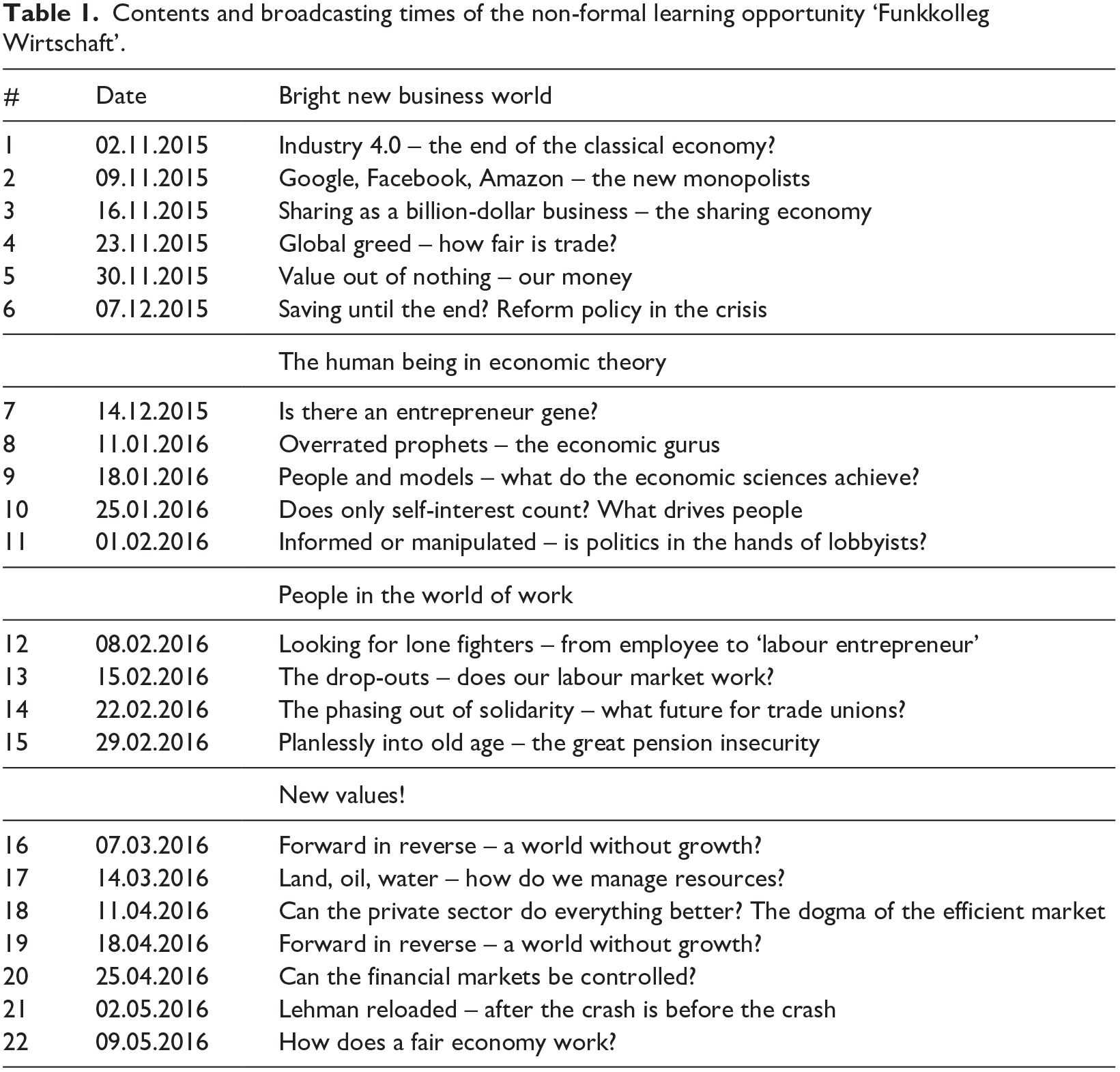
The radio series was launched in November 2015 and ended with the last broadcast in May 2016. The radio broadcasts were prepared in such a way that each topic was discussed controversially, that is against the background of different economic stakeholders (e.g., consumers, buyers, entrepreneurs). By explaining relevant terms used in the broadcasts, it was taken into account that the target group for the ‘Funkkolleg Wirtschaft’ were pupils and not teachers, as was the case with previous Funkkolleg broadcasts. All schools in Hesse were invited to participate in the ‘Funkkolleg Wirtschaft’ on a voluntary basis. Participation included regular listening to the radio broadcasts and access to additional learning materials provided by economic experts.
Teachers and pupils listened to the radio broadcasts in class and discussed them afterwards.
This way, it was possible to ensure that all learners listened to the radio broadcast. If learners were absent from class, the ‘re-listening’ took place at home in a self-organised way. All participants answered various surveys and completed tests before, during and after the ‘Funkkolleg Wirtschaft’ (see section 5.3). However, the extent to and intensity with which the individual learners worked through the radio broadcast and the additional materials was not surveyed. As a proxy for this, a test was carried out after the first 11 broadcasts and at the end of all broadcasts, which directly asked about the content of each broadcast and was thus intended to reveal the extent to which the specific content had been understood.
To answer the research questions, a quasi-experimental intervention study was conducted with one intervention group (pre-test: N = 165, post-test: N = 141, match pre- and post-test: N = 141) and one control group (pre-test: N = 54, post-test: N = 42, match pre- and post-test: N = 42). Both the intervention group and the control group were trained in economics in regular classes. The intervention group received the non-formal learning programme, ‘Funkkolleg Wirtschaft’ in addition to regular classes. Allocation to the intervention group was carried out by the teacher who registered her classes for the ‘Funkkolleg Wirtschaft’. The classes in the control group were accordingly reached by formal letters to schools that did not participate in the ‘Funkkolleg Wirtschaft’. A random allocation of classes to one of the two conditions is not possible, as it was the teachers’ decision to participate in the ‘Funkkolleg Wirtschaft’ or not. This must be considered when interpreting the results.
Sample
The surveys were carried out between June 2016 and June 2017 at seven general upper secondary schools in Hesse with a total of 11 classes of the upper secondary school (this lasts for a total of 3 years and thus six school semesters) (intervention group: 40% in the first (E1), 53% in the third (Q1) and 10% in the second last school semester (Q3) of the upper secondary school; control group: 65% in the third (Q1) and 35% in the second last school semester (Q3) of the upper secondary school). A total of 183 students participated at all survey points in the study (intervention group female = 46, male = 95; control group female = 25, male = 17). The average age of the students was 16.14 years (SD = 0.89; intervention group M = 15.96, SD = 0.84, control group M = 16.74, SD = 0.80). The average grade point average of the last report mark in the subject politics and economics (PE) was 2.11 (SD = 0.80) in the intervention group and 2.32 (SD = 0.82) in the control group, but this difference is not significant (t(153) = 1.39, p = 0.166, d = 0.244) (Table 2).
Sample characteristics.
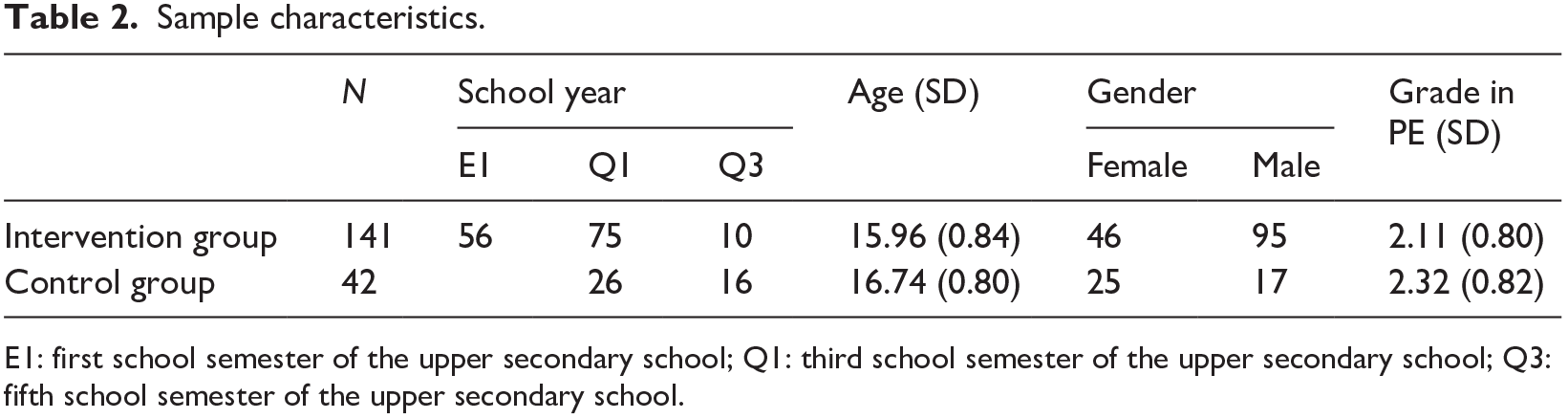
E1: first school semester of the upper secondary school; Q1: third school semester of the upper secondary school; Q3: fifth school semester of the upper secondary school.
Instruments
Economic knowledge
The Wirtschaftskundlicher Bildung Test (WBT) (Beck et al., 1998) as the German version of the TEL (Soper and Walstad, 1987) with a total of 46 single-choice questions was used to examine economic knowledge and skills. The items relate to the four content areas of fundamentals, microeconomics, macroeconomics and international relations.
Economic attitudes
The German version of the questionnaire ‘Attitudes Towards Economics’ (ATE, 14 Items, Soper and Walstad, 1983; German version: Beck, 1993) was used to assess economic attitudes. The ATE uses a five-level Likert scale (1 = absolutely agree to 5 = absolutely disagree) to measure the extent to which learners are willing to look at a question from an economic perspective. Referring to the three components of attitude (affective, cognitive, action-related), see Beck (1993) and Phipps and Clark (1993).
Interest in economic issues (factual interest)
Interest in economic issues was measured using the scale of interest in the subject (adapted from Baumert et al., 1986 for use in economics education). A four-level answer format was used, from 1 = not applicable to 4 = fully applicable. The items represent the interest characteristics of emotionality, value retention and self-intentionality.
Interest in the subject politics and economics
The interest in the subject is based on the interest in the teaching subject of PE (adaptation from Vollmer, 1982 for economics lessons). The answers to the subject interest range on a four-level scale from 1 = nothing at all to 4 = quite a lot.
Learning motivation
The learning motivation for participation in the ‘Funkkolleg Wirtschaft’ was surveyed using the shortened questionnaire by Rowold (2008), originally by Noe and Schmitt (1986). On a five-point Likert scale (1 = don’t agree at all to 5 = fully agree), participants answered five items.
Learning outcomes in the ‘Funkkolleg Wirtschaft’ test (midterm, final)
The tests for assessing the learning outcomes related to the contents of the ‘Funkkolleg Wirtschaft’ (own development) were used at two different measurement points. The intermediate exam (49 closed items) was used at the end of the first semester and therefore after half of the broadcasts; the final exam (40 closed items) was used at the end of the second semester and therefore the end of the ‘Funkkolleg Wirtschaft’. The test takers were able to score a maximum of 49 points on the intermediate exam and a maximum of 79 points on the final exam. An overview of the survey instruments and the respective measurement dates is shown in Table 3.
Overview of the instrument used.
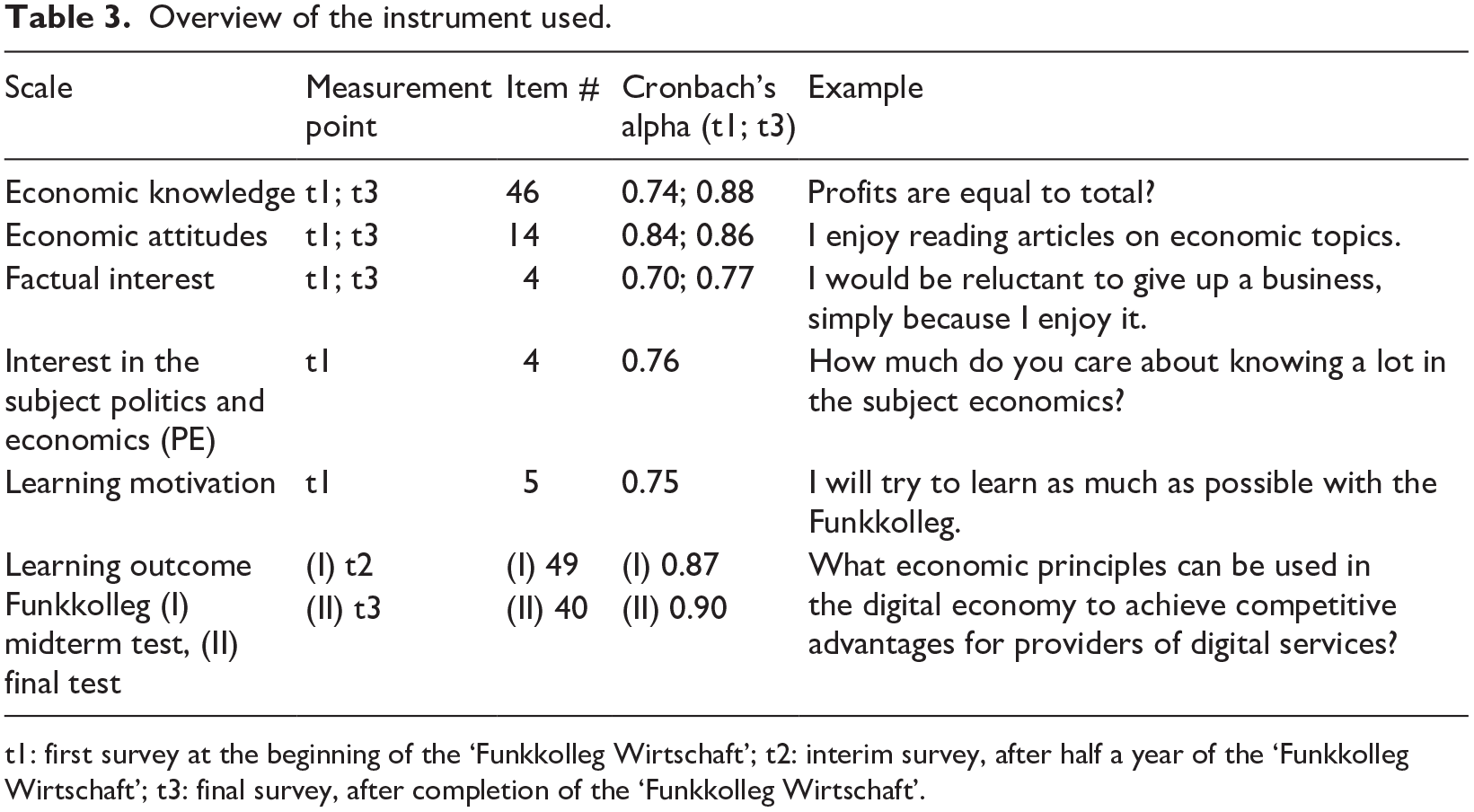
t1: first survey at the beginning of the ‘Funkkolleg Wirtschaft’; t2: interim survey, after half a year of the ‘Funkkolleg Wirtschaft’; t3: final survey, after completion of the ‘Funkkolleg Wirtschaft’.
The measuring instruments, which were used at two measurement points, were each used in exactly the same version in order to enable a comparison of the results between the measuring points.
Results
Economic competence of secondary school students
In order to answer research question 1, the IBM SPSS Statistics 25 statistical programme was used in the first step to calculate mean differences in the three components of economic competence (economic knowledge, attitudes and interests) between t1 and t3, that is, before and after one school year and the attendance or non-attendance of the ‘Funkkolleg Wirtschaft’, for both the intervention group and the control group. In a second step, analysis of variance with repeated measurements was used to derive the interaction effect of the group (intervention and, therefore, the attendance of the additional non-formal learning opportunity ‘Funkkolleg Wirtschaft’ or control group and therefore only a regular economic class during one school year) and the regular attendance of formal learning opportunities (OTL) in economics during one school year.
Table 4 first shows a comparison of the achieved mean values for the three components of economic competence for the intervention and control groups before and after one school year. First, it becomes clear that the mean value for all three components of economic competence is higher for the intervention group than for the control group. The difference in the mean values is significant for economic knowledge. Regarding the comparison of the two measurement points t1 and t3, it can be stated that the intervention group can achieve a significant increase in economic competence with a medium (economic knowledge with Cohen’s d = 0.68) to weak effect (economic attitude with Cohen’s d = 0.34; economic interest with Cohen’s d = 0.23). The results of the control group demonstrate only significant changes in the mean value in economic knowledge with a medium effect (Cohen’s d = 0.52) by the end of the school year (Field, 2013).
Descriptive results.
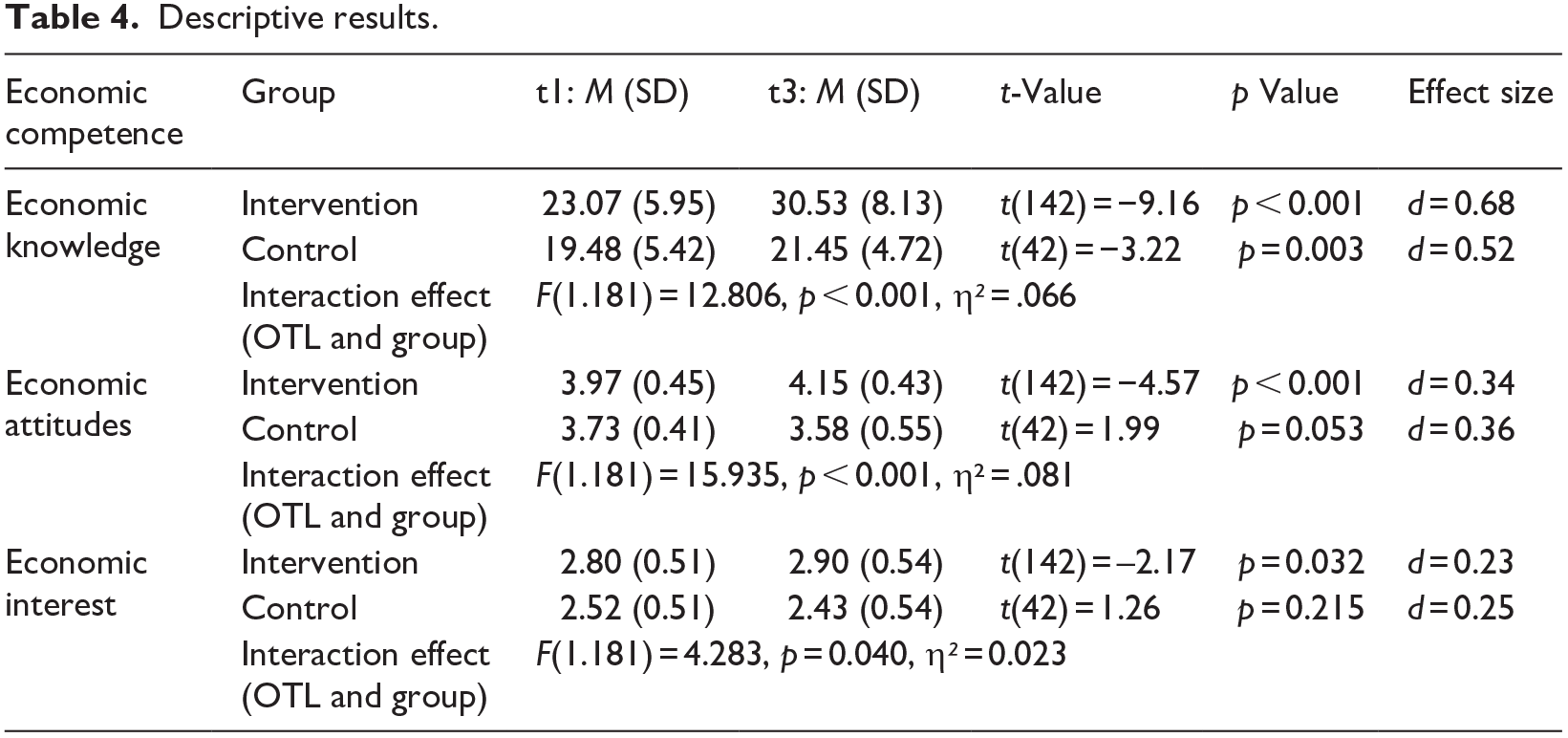
If the interaction effect is examined on the basis of the condition that only the intervention group participated in the additional non-formal learning opportunity at the ‘Funkkolleg Wirtschaft’, the results indicate a significant effect of the additional learning opportunities on economic competence for the invention group with a variance explanation of between 2.3% and 8.1%, which corresponds to a small to medium effect (Sedlmeier and Renkewitz, 2008).
Relationship between non-formal learning opportunities, individual factors and economic competence
The relationship between the learning outcomes shown in the midterm and final test of the Funkkolleg, as well as the individual influencing factors and the three components of economic competence (research question 2), were investigated using a structural equation model. The software AMOS 24 (Arbuckle, 2016) was used. The components of economic competence (knowledge, attitudes, interest), subject interest and learning motivation were latently modelled. For economic knowledge, the four content areas of the WBT (basics, microeconomics, macroeconomics and international relations) were used as indicators; for economic attitudes, the three components of the ATE (behavioural, affective and cognitive components) were used; and for subject interest, the underlying four items were used. The score achieved on the midterm and final test, gender, the last grade in PE and the school year were modelled as fixed predictor variables. The maximum likelihood method was used to estimate the model. For this purpose, the existence of a multivariate normal distribution must be analysed (Weiber and Mühlhauser, 2014). In the first step, the univariate normal distributions were therefore examined using the Kolmogorov-Smirnoff test. It turns out that almost none of the variables fulfils the prerequisite of univariate normal distribution. Since this test is very conservative for structural equation models, the skewness and kurtosis of the variables were analysed in a second step. Almost all variables show skewness and kurtosis with values <1.5, and for kurtosis only three variables show small deviations with values between 2.5 and 3.1; therefore, it can be assumed that there is no substantial deviation from the normal distribution at indicator level. A calculation of the multivariate normal distribution based on the Mardia coefficient cannot be calculated due to missing values, which are only replaced directly in the model during parameter estimation within the framework of the FIML method (Weiber and Mühlhauser, 2014). However, studies indicate that the FIML method reacts very robustly to possible violations of the normal distribution (Arzheimer, 2015), which is why the FIML method is used in the following. The model quality criteria indicate a good fit of the empirical data to the theoretical model (Figure 1; χ2 = 303.554, df = 244, p = 0.01, CFI = 0.93, RMSEA = 0.037, LO90 < 0.024, HI90 = 0.056, PCLOE = 0.814) (Hu and Bentler, 1999). The standardised regression weights are reported in Figure 1.
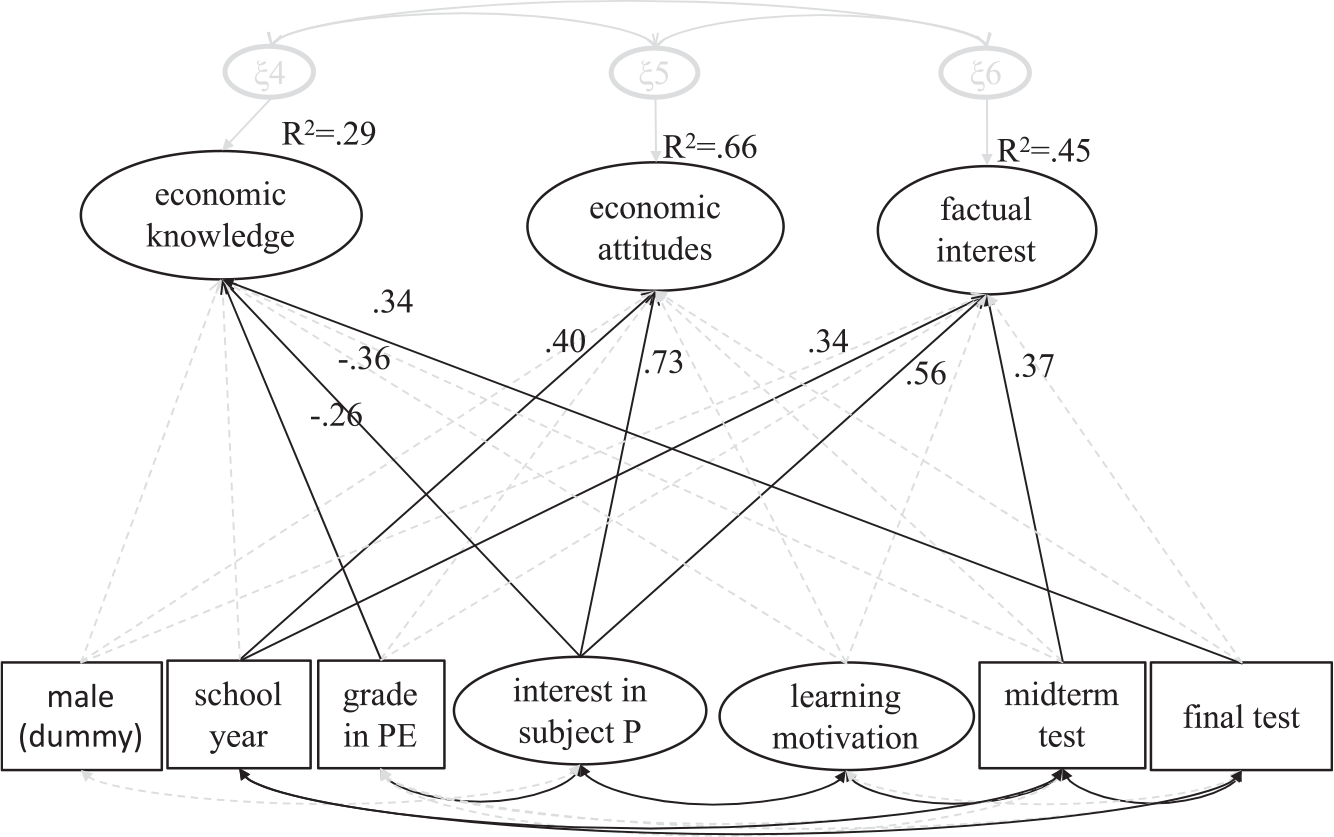
Structural equation model to predict economic competence at t1 with standardised values of significant regression weights.
The results show that a high score on the final test of the Funkkolleg has an influence on the learners’ economic knowledge (β = 0.34), while the midterm test has an influence on their interest in economic issues (β = 0.37). Economic attitudes, on the other hand, do not seem to be influenced by the results achieved on the midterm and/or final test of the ‘Funkkolleg Wirtschaft’.
If we look at the individual factors and their influence on the dimensions of economic competence, we find that there are considerable differences. While the school year influences the economic attitude (β = 0.40) and the interest (β = 0.34) with a small to medium effect, this is not the case for economic knowledge. The opposite is true with regard to the students’ grade in PE. Here, only the influence on economic knowledge (β = −0.26) is significant. Interest in the subject, on the other hand, is a significant factor for all three competence components, but it is negative for economic knowledge (β = −0.36); whereas, there is a strong positive influence for the other two components (attitude: β = 0.73; interest: β = 0.56).
The influence of non-formal learning opportunities on the relationship between individual and contextual factors and economic competence
To answer research question 3 and thus the question regarding to what extent the effect of the non-formal learning opportunity of the ‘Funkkolleg Wirtschaft’ changes (moderates) the influence of individual characteristics of the learners on the three components of economic competence, a structural equation model and various multi-group analyses were used (Figure 2).
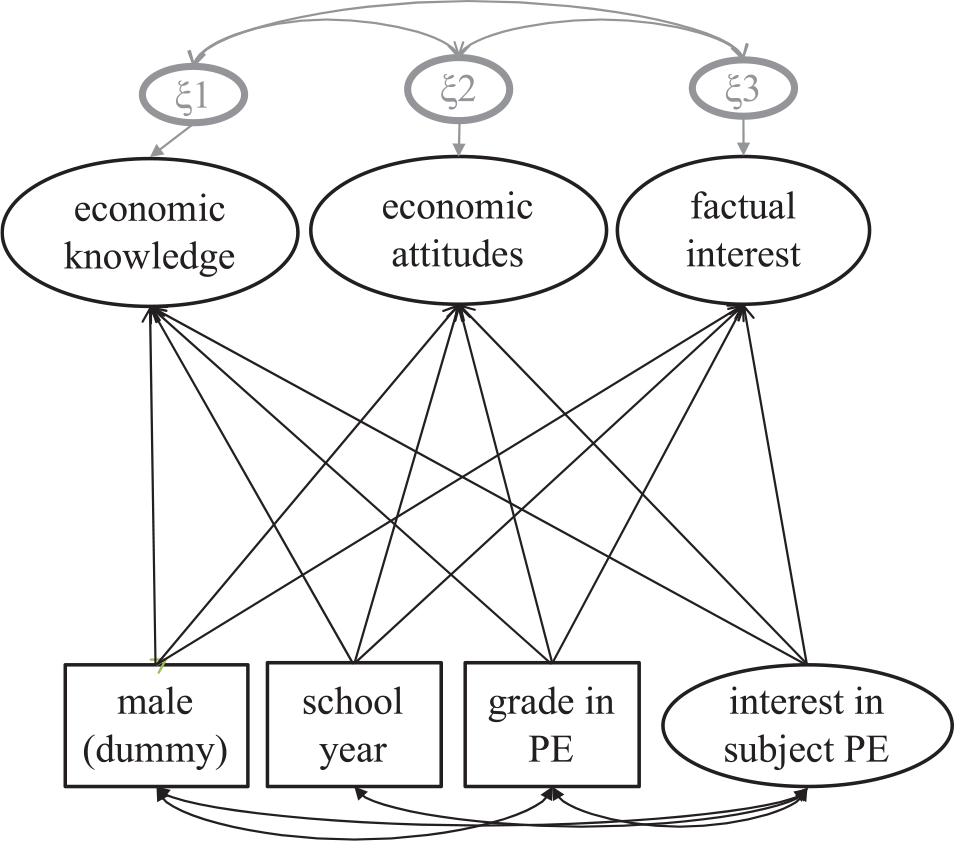
Relationships between the individual influencing factors and economic competence at t1.
In the first step, we examined to what extent the effect sizes of the influencing factors differ between the intervention and control group for the time before (t1) and after (t3) participation in the non-formal learning opportunity ‘Funkkolleg Wirtschaft’. If there are group differences in the effect sizes, especially after the intervention, the change in the effect sizes of the influencing factors over time should be examined in a second step by including the measurement time points t1 and t3 as group variables in the model.
Relationships between the individual influencing factors and economic competence at t1
As a prerequisite for a comparison of the regression weights of the influencing factors at measurement point t1 between the intervention and control group, there must be at least tau equivalence for the measurement models of the dimensions of economic competence. There is factorial invariance (df = 8, CMIN = 12.51, p = 0.13) (Meredith, 1993).
The comparison of the model fits for group-equal and free parameter estimation indicates no significant differences 1 in the regression weights between the intervention and control group, which is why both groups can be modelled together in the structural equation model at measurement point t1. The model fit for the model estimation can be regarded as moderate (χ2 = 205.761, df = 119, p < 0.05, CFI = 0.90, RMSEA = 0.06, LO90 = 0.048, HI90 = 0.078, PCLOE = 0.07). Table 5 shows the standardised regression coefficients.
Regression weights of individual characteristics at t1.
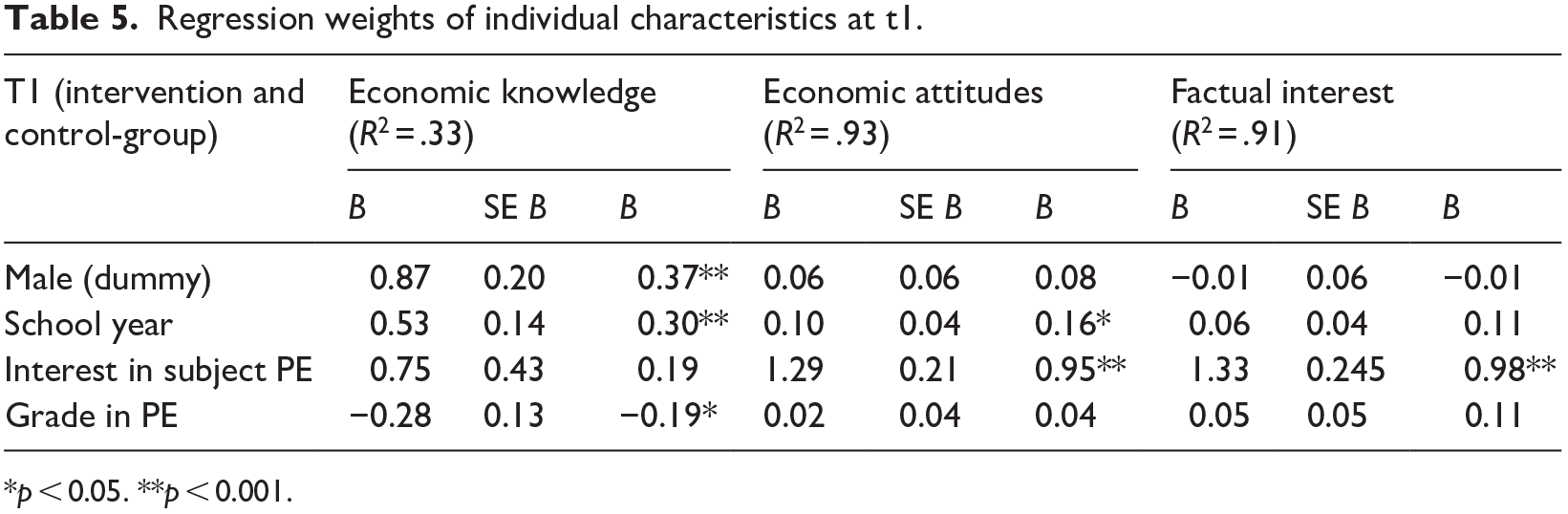
p < 0.05. **p < 0.001.
The results indicate a significant influence of gender and school year on economic knowledge (gender: β = 0.37; school year: β = 0.30) and economic attitude (school year: β = 0.15) for both groups at t1. Subject interest exerts a strong influence on economic attitude (β = 0.95) and economic interest (β = 0.98). The grade achieved in PE, on the other hand, only has a significant influence on economic knowledge (β = −0.19).
Relationships between the individual influencing factors and economic competence at t3
To analyse whether the effect sizes of the influencing factors between the control and intervention groups can also be assumed to be the same at measurement point t3 and thus after participation in the non-formal learning opportunity ‘Funkkolleg Wirtschaft’, the model fits were compared for group-equal and free parameter estimation. The results show that the initially good model fit with free parameter estimation (χ2 = 310.085, df = 246, p = 0.003, CFI = 0.92, RMSEA = 0.038, LO90 = 0.023, HI90 = 0.050, PCLOE = 0.943) is significantly worse when the regression coefficients gender on economic interest 2 and on economic attitude 3 , as well as school year 4 and subject interest 5 on economic knowledge are restricted to equality. In the following, the standardised regression coefficients are therefore presented separately for the intervention and control groups (Tables 6 and 7).
Regression weights of individual characteristics at t3 in the intervention group.
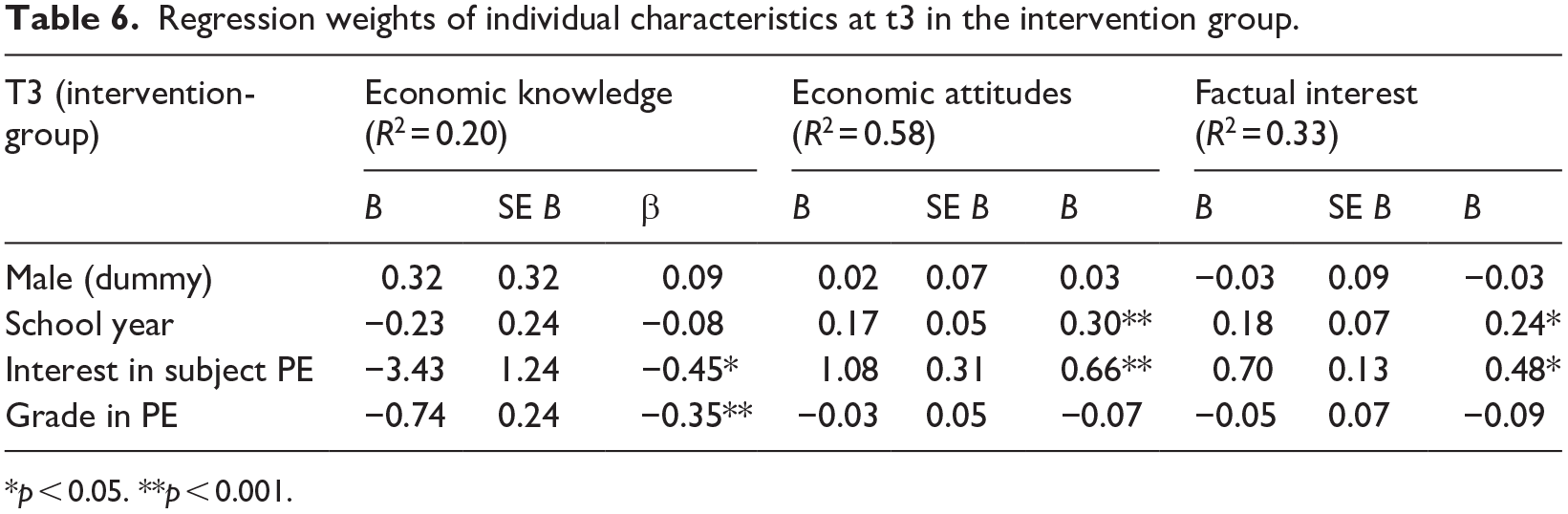
p < 0.05. **p < 0.001.
Regression weights of individual characteristics at t3 in the control group.
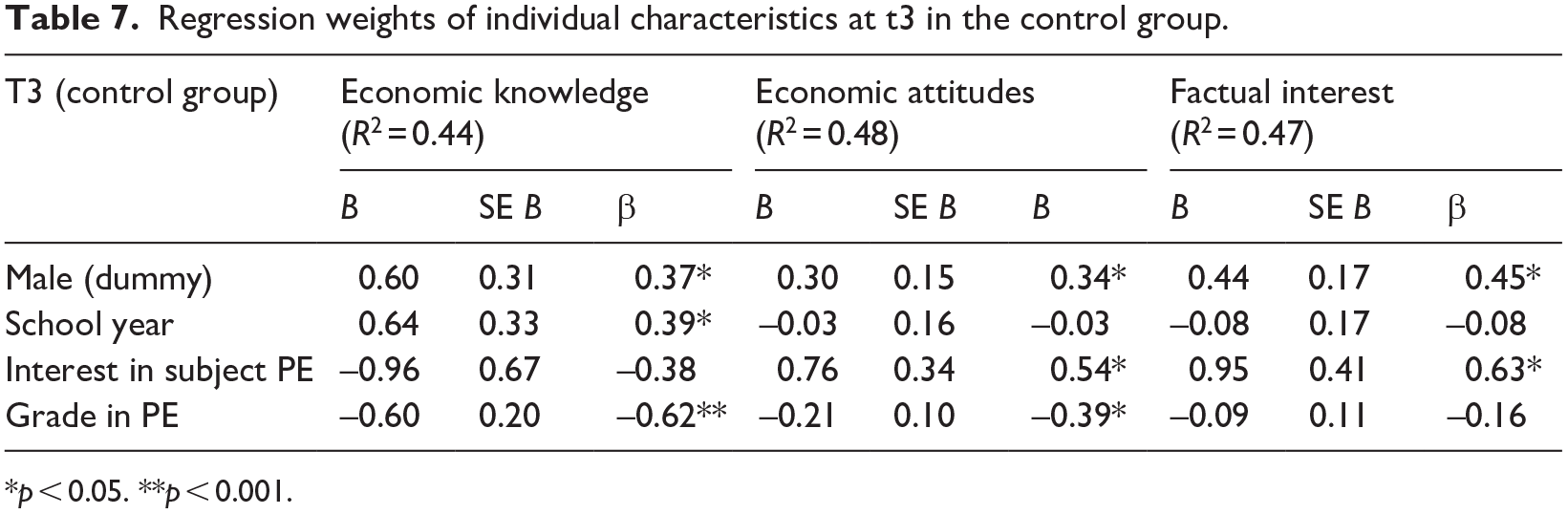
p < 0.05. **p < 0.001.
Comparing the effect sizes of the factors influencing the dimensions of economic competence between the intervention and the control group, further descriptive differences emerge in addition to the significant differences already reported. For example, it becomes clear that gender only exerts a significant influence on economic knowledge in the control group (β = 0.37), while significant influences on economic attitude (β = 0.30) and interest (β = 0.24) are only found for the school year in the intervention group. The grade in PE, on the other hand, only has an influence on economic attitudes in the control group (β = −0.39).
Moderator effect of the non-formal learning opportunity, ‘Funkkolleg Wirtschaft’, on the relationship between individual influencing factors and economic competence
In order to investigate to what extent the reported differences in the regression coefficients between the intervention and control group are due to a moderation effect over the time of the intervention, a moderator analysis was carried out for both the intervention and the control group. For this purpose, the measurement points t1 and t3 were inserted as group variables in the structural equation model.
The prerequisite for such an analysis is again the existence of factorial invariance for the measurement models of the three components of economic competence at both measurement points (t1 and t3). This can be assumed for both the intervention group (df = 8, CMIN = 11.77, p = 0.16) and the control group (df = 8, CMIN = 4.032, p = 0.01) (Meredith, 1993). Subsequently, the multi-group analyses can be carried out based on the two measurement points t1 and t3 by comparing the models with restricted and free parameter estimation. It is shown that only for the intervention group, the good model fit (χ2 = 319.248, df = 240, p < 0.05, CFI = 0.94, RMSEA = 0.034, LO90 = 0.024, HI90 = 0.044, PCLOE = 0.99) with free parameter estimation worsened significantly with restricted parameter estimation (df = 19, CMIN = 36.356, p = 0.01). This significant worsening results from the restricted parameters of gender on economic attitude 6 and economic knowledge 7 and school year on economic knowledge. 8
Discussion
The aim of this study was to promote the economic competence of the participants by offering a non-formal learning opportunity alongside the normal curricular lessons through the ‘Funkkolleg Wirtschaft’. The results show that students in the intervention group who took part in the ‘Funkkolleg Wirtschaft’ were able to develop their economic competence more significantly over time compared to those in the control group. The more successful the participation in the ‘Funkkolleg Wirtschaft’ was in the form of a high score on the final exam, the better the result in economic competence at the end of the school year. Overall, however, the variance explanation related to the interaction of intervention and group (intervention or control group) for the change in economic competence is only small to moderate (2.3%–8.1%). This seems plausible in view of the fact that both the intervention and control groups have completed 1 year of curricular based economics class, which in turn should, as expected, be accompanied by an improvement in economic competence. Even though the learners in the intervention and control groups come from different grades in the upper secondary school and thus have different levels of prior knowledge, all learners have completed the penultimate school year before their final secondary school completion qualification by the end of the ‘Funkkolleg Wirtschaft’. This school year mainly deals with those topics of economics that are also tested in the WBT (see also Siegfried and Ackermann, 2020). The non-formal learning opportunity can thus additionally contribute to a change in economic competence, but it does not make formal teaching obsolete.
Considering the explanatory potential of the addressed individual and contextual influencing factors on the components of economic competence, gender, the last school grade in PE and the grade level are important predictors for economic knowledge; whereas, interest in the subject predicts the attitude and interest in economic issues significantly. However, these relationships between individual as well as contextual factors and economic competence change with the use of the non-formal learning opportunity, but such changes cannot be recorded through the usual curriculum-based economics course represented by the control group. Thus, after attending the ‘Funkkolleg Wirtschaft’, students’ grade level and gender are no longer significant influencing factors for economic knowledge and attitudes. Thus, the ‘Funkkolleg Wirtschaft’ seems to support the development of knowledge and the strengthening of positive attitudes towards the adoption of economic perspectives among students in such a way that gender- and age-related differences in prior knowledge can be balanced out (Marlin, 1991; Siegfried, 2019; Schober, 1984).
Regarding the limitations of the study, it must first be considered that only a small sample size could be obtained as a control group. This poses an open question as to how generalisable the corresponding results are. In addition, comparisons of the entry requirements of the learners in the intervention and control group show that there is a statistically significant difference in the dimensions of economic competence (economic knowledge: t = 3.506, p = 0.001; economic attitude: t = 3.223, p < 0.001; interest in economic issues: t = 3.075, p = 0.002) in favour of the intervention group. Since participation in the ‘Funkkolleg Wirtschaft’ was voluntary, it cannot be ruled out that mainly classes that were already more interested in economic issues participated. This could have influenced the results since interest is known to support learning processes and learning outcomes (Krapp, 1992, 1998, 2002). Furthermore, the sample characteristic shows that the gender distribution in the two groups is different, with more male subjects in the intervention group. In this context, studies indicate that male seem to have an advantage over females in MC tests (e.g., Siegfried and Wuttke, 2019). Since the test instruments used here are based exclusively on MC items, this could have resulted in an advantage for the intervention group. Furthermore, on the basis of the current study, it is not possible to draw any conclusions about correlations between the (professional) economic competence of teachers and learners. While the technical competence of the experts can be assumed, the professional competence of the teachers working in the different classes remains unknown.
Future studies should address these limitations. Replications including an analysis of professional teacher competence and other school types are desirable in order to investigate the robustness of the effects found in this study. With regard to the inclusion of professional teacher competences, it would be particularly interesting to map these as comprehensively as possible (e.g. pedagogical content knowledge and content knowledge). Furthermore, the aspect of non-formal and informal opportunities to learn addressed in this article could be examined in a more differentiated, qualitative way by also interviewing learners on the use of informal opportunities to learn, such as to what extent the learning content is discussed with parents, siblings or friends, to what extent additional information is researched and, if so, in what form.
Regardless of the limitations and further research requirements outlined above, the comprehensive modelling of economic competence and the differentiated consideration of the effects of individual and contextual influencing factors depending on non-formal learning opportunities provide an important addition to the existing findings.
Footnotes
Declaration of conflicting interests
The author(s) declared no potential conflicts of interest with respect to the research, authorship, and/or publication of this article.
Funding
The author(s) received no financial support for the research, authorship, and/or publication of this article.
