



Abstract
This research compared the economics curriculum of the economics undergraduate programs of the best universities in the world, and those of universities within a developing country (Ecuador), in order to show the basic formal differences and the common characteristics (intra-rankings and inter-rankings). The proposed comparison criteria were the academic load, the professional approach, and the common core courses. We found that, in the best universities in the world, the students must study between 30 and 40 courses. It is almost half than in Ecuador. In the group with the lower status the distribution of courses was more dispersed. Another difference was that low-level local universities teach courses of general application, and those of worldwide category are focused in teaching only specific economics courses.
Introduction
The objective of this work was to carry out a comparative analysis of the economics curriculum of the undergraduate courses in economics, with those of the best universities in the world and those of the universities of a developing country, to show the basic formal differences and the common characteristics. The country chosen was Ecuador. 1
The study was oriented toward the curricular structure, that is, the core courses that students must take in order to obtain their bachelor degree. The proposed comparison criteria were the academic load, the professional approach and the common courses.
The detection of this characterization is relevant, since the quality of education affects the outcome of the alumni and, later, their working life. Social scientists have analyzed this from the micro and macro perspectives; our research was carried out from a micro perspective.
To define the use of the term “economics curriculum” in this research, we used what The Cambridge Dictionary defines as “curriculum,” it is “the subjects studied in a school, college, etc. and what each subject includes.” On the other hand, The Oxford Dictionary defines it as “The subjects comprising a course of study in a school or college.” The Glossary of Education Reform offers a broader definition: “The term curriculum refers to the lessons and academic content taught in a school or in a specific course or program,” and that “. . . refers to the knowledge and skills students are expected to learn, which includes the learning standards or learning objectives they are expected to meet; the units and lessons that teachers teach; the assignments and projects given to students; the books, materials, videos, presentations, and readings used in a course; and the tests, assessments, and other methods used to evaluate students.”
To avoid this ambiguity of criteria, the authors assumed a very simplified definition of the term “economics curriculum,” restricting it to define the total number of subjects that students must complete to graduate. 2 In addition, the terms “study plans” and “study programs” were used as synonyms for “curriculum,” since several universities did.
Why is economics curriculum important?
For Van Wyk (2015), economic education covers, mainly, the content and the teaching method. If we include academic staff, especially professors and students, we can analyze all the factors that affect the quality of education in economic sciences and, consequently, the quality of each higher education institution (HEI). Economy – as a professional career – is offered in HEIs through specialization, which is tied to the approach (business or scientific), reflected in the “economics curriculum.”Ceteris paribus is this factor, which would determine the success of future professionals.
On the other hand, Hayek (1945) states that knowledge is not concentrated or integrated, in a natural way; it is rather, dispersed and disseminated in the minds of all human beings. Therefore, it is necessary to decentralize the decision-making. That is the challenge of the HEIs: to train professionals in the economic field that allows them to take on new challenges with multiple skills and scientific approach in organizations (Oates, 1997) and nations, since economists, besides being responsible for government administration and policy formulation within a country, have a direct influence on the economic system. Their opinion is most listened to, than the ones from professionals in other areas (Stigler, 1970). That is the reason why societies demand economists; they think that they are (1) more prepared to give coherent explanations about the new social phenomena, (2) better trained to face these challenges with creative strategies, and (3) able to adapt to the continuous economic changes (De Muijnck et al., 2016).
In this regard, Earle et al. (2016), showed how the economy has been introduced in all life aspects of the average citizen. They even argued that today’s political decisions are based more on economic fundamentals, than on ethical or moral justifications. As a result, economics has become the default method of analysis of the political and social debate.
In that sense, Walstad (1997) stated the direct effect of economic knowledge on public opinion. He also showed – statistically – that, if someone passes a university course of economic sciences, it will have a lasting effect on the knowledge about the national economy as an adult. A year later, Walstad (1998) showed an interesting review on the type of knowledge that economic literacy brings to the citizens, adhering to Stigler’s vision. He distinguished two kinds of economic knowledge: (1) one that gives an understanding of the economic world and (2) one that provides techniques to invest money. In the same line confirmed by Santomero (2003), he added that an effective economic education helps people find the right harmony between their financial and personal objectives, thus ensuring their wellbeing in the long term. 3
Literature review
The concern about the curricular analysis is recent. A pioneering work was developed by Siegfried and Wilkinson (1982), collecting information mainly from the 1979–1980 academic programs in the United States, and making an exhaustive description of the economics curriculum. Cole (1980), through an analysis of changes in the economics curriculum of 21 small liberal arts colleges between 1955 and 1980, found that during the 1960s, most colleges saw an increase in the theoretical component of the general economy, mainly through the introduction of intermediate-level courses in microeconomics and macroeconomics. Likewise, quantitative courses, such as econometrics and mathematical economics, acquired greater relative importance during the sample period. 4 In addition, he suggested that the increase in offers in those fields matched a relative decrease in other fields, particularly in those related to business, monetary-fiscal, and labor economics. That is how he found the paradigm shift in the teaching of economic sciences, during those years.
In the following decade, Stiglitz (1993) argued for a change in the economics curriculum, by suggesting programs with a more international perspective that encouraged students to address emerging problems. Already in the new millennium, Hansen et al. (2002) analyzed the main topics that were addressed by universities in the microeconomic and macroeconomic areas. Meanwhile, Monteiro and Ferreira (2007), when comparing the university majors of the 20 top-ranked economic departments of Europe and the United States, found similarities and differences. The similarities were in the core of the conventional major requirements, since both groups contain sets of courses that introduce students to the basic principles of economics and the main quantitative techniques. The differences were in the specialization approaches (the optional subjects or courses), which in the United States were more oriented toward research and applied analysis; while in Europe they were more oriented toward management, law, and other applications of the social sciences.
In the decade that we are in, there are interesting studies done in other countries, such as Australia, where Thornton (2012) evidenced with a survey of the Economic Society that the Australian economics profession wants to see a pluralization and update of what the academy teaches. Apparently, this occurs because between 1980 and 2011 there was no progress in their academic curriculum, so this kept them away from the intellectual and practical benefits of it. In the case of the Netherlands, De Muijnck et al. (2016), after analyzing the content of the most important nine economics bachelor programs offered, stated that there is a lack of diversity in the methodological skills of economics students, since only four bachelor’s courses throughout the Netherlands teach qualitative methods. On average, students had to use almost 80% of their time in the neoclassical school. Barone (1991) found the same situation in a US college. They recommended more pluralism, in order to let students learn the social phenomena with more focus and critical thinking.
Stilwell (2006) and Garnett (2009) contributed as well to the study of the benefits of pluralism in the economic education, while other results of evaluations on teaching economics are found in Becker (2000),Gärtner (2001), and Walstad (2001).
On the other hand, in countries like the United States, there is a decrease in the granting of academic degrees in economic sciences. Siegfried (2007), using a sample of 277 US HEIs (estimated to represent 63% of the universities that grant degrees in economics), showed this and pointed out that this has occurred, mainly, in selective colleges of liberal arts, where there was a decrease for the second year in a row. In this country, the large public universities also experienced a substantial decrease.
Limitations and delimitations
The general complexity of this type of study lies in the (1) heterogeneity of the general requirements imposed by the HEIs to complete the major, (2) particular requirements imposed by the school, and (3) different nomenclatures used for the evaluation and monitoring of students throughout the whole career.
This leads to an instrumentalization that starts from the Higher Education System, through core credits, equivalence of credit base per class hour attended, distinction between optional and elective courses, periods of study, which, in addition, can be semi-annual or quarterly. Also the methodology and structure of the evaluations, evaluation nomenclature, among other restrictions on the number of optional courses, which can be in academic areas (in our research they were called “groups” of courses) imposed by the same HEI, the number of hours for assigned readings that the student must fulfill during each course and the academic flexibility.
The specific complexity, however, lies in the diversity of the courses that are offered by the HEIs due to their academic flexibility and career focus. Even if a standardized higher education system is assumed, the diversity of subjects makes the comparison difficult. Therefore, an appropriate classification that captures this characteristic becomes imperative. To achieve this, it is necessary to review the syllabus of each class program and determine an appropriate correspondence. This “nomenclature problem” can be solved by grouping the courses according to the nature of their object of study, but in the same way one must be willing to sacrifice specificity in the analysis.
Both complexities are inevitable and have caused difficulties in the formality of the analysis. However, it can be mitigated by considering that, in the world, two systems act as a reference for other countries, due to their great positive results: European and American, even accepting their differences (Gapinski, 2010).
To avoid the persistence of the mentioned limitations, this document analyzed the methodology of face-to-face studies and does not intend to make comparisons on the following:
Profile at graduation;
The content of the programs of each subject (syllabus);
The evaluation criteria;
The pedagogical methods used (Becker, 1997: 1352–1353);
Higher education systems;
The time and use of pedagogical methods (Becker, 1997: 1352–1353);
Tasks assigned to the faculty (Dearden et al., 2001 and Monson, 1978);
Institutional priorities related to research and quality of their publications (Dearden et al., 2001);
Distribution of principle students by major (Monson, 1978).
In this article, distribution of student knowledge within and between colleges was not taken into consideration either (Becker, 1982: 231).
Comparison method
Other authors have made comparative studies of the curricula of other undergraduate majors, such as physics in Colombian universities (González, 2015) or civil engineering in Chilean schools (Valle, 2005), and also graduate programs, such as MBA (Marks, 2002).
In order to analyze the outcomes of studying some courses, like International Marketing by comparing Perúand Guatemala (Pestonjee et al., 2010), or Comparative Economics Systems in the United States (Kovzik and Johnson, 2016), authors have used Likert-type scale surveys and other methodologies.
There are some authors who have tried to standardize the Environmental Studies and Sciences (Proctor, 2015), Teacher Training Programs in Economics syllabus (Salemi, 2002), and so on.
The comparison method used in this investigation was divided into three stages. In the first, a method for classifying courses by groups (academic areas) was established, which aims to solve the problems of heterogeneity, nomenclature, and in turn, avoids the bias generated by the different national systems of higher education. For its fulfillment, four groups were proposed that captured the most elementary curriculum of all the undergraduate programs in economics. 5 They were as follows:
Management Group: corresponded to the courses that rule the business training, understood as an art, that is, as the adaptation of the principles discovered by the social sciences in the business decision-making. Among them are administration, business management, entrepreneurship, sales, operations, business, strategies, foreign trade, marketing, and so on.
Economics Group: corresponded to the courses of economic theory; that is, those courses that involve the scientific analysis of economic phenomena, independent of the use of mathematics as a language for its formalization. These include microeconomics, macroeconomics, development economics, economic history, economic growth, economic geography, international economics, fiscal policy, monetary policy, tax policy, and so on.
Group of Quantitative courses: corresponded to those courses of the exact sciences that allow the advance toward instrumentation of the empirical analysis that facilitates the economic calculation and administrative decision-making. It included subjects such as mathematics, algebra, calculus, statistics, simulation, econometrics, advanced finance, and so on.
General Education Group: corresponded to humanities, liberal arts courses, and those that did not match the description of the previous groups. Other sciences that must be reviewed by students to achieve a holistic training were included here. Among them are language, languages, writing, history, chemistry, physics, sports, computers, and so on.
Once the courses were grouped, we proceeded with the second stage, which consisted in the definition and adoption of four subgroups of universities, according to their local ranking. Thus, when taking the extremes, we tried to show the main differences as follows:
The universities placed in the top positions of the international ranking;
The universities placed in the last positions of the international ranking;
The universities placed in the highest status category of the national ranking;
The universities placed in the lowest status category of the national ranking.
Once the course groups were assigned according to the subgroups of universities, the third stage was carried out, consistent with the calculation of the evaluation and comparison criteria. The proposed criteria were as follows:
The academic load. The number of courses of the study program adjusted by the number of core credits required to obtain the degree. The greater the number of courses to be studied, the greater the academic load.
The professional approach. The number of courses of each academic area divided by the total courses. This indicator reflects the relative importance that the economics curriculum devotes to each scientific area. Economics courses could have a business or academic approach, and was determined by this percentage of participation of the groups of subjects in economics, respectively.
The common courses. The courses that are repeated in the curriculum of the universities in each category.
Data description
As mentioned before in the article, Ecuador, our country, was chosen, because we would like to contribute to its development. For the same reason, the Economic Sciences Major was chosen. We believe that it can later be replicated in other majors/countries.
The selection of universities for comparative analysis constituted a judgment sample. The distinction between Ecuadorian and foreign universities made it necessary to use rankings to undertake the selection process. The sample was filtered through the fulfillment of two criteria established by the authors as essential to avoid arbitrariness. The first criterion was the selection of HEIs based on a recognized academic ranking. The second criterion was to choose those top and worst ranked universities. Thus, we tried to make intra-ranking and inter-ranking comparisons to define the main differences.
In this sense, the quality of the universities was defined through the adoption of the classifications: the international Academic Ranking of World Universities 6 (Shanghai Jiao Tong University, 2016). (henceforth it will be referred to as ranking Shanghai), and the current Ecuadorian categorization of Council of Evaluation, Accreditation and Quality Assurance of Higher Education (CEAACES, 2014; 7 from now on rkEcuador). They were not chosen because their methodologies are similar, but because they allowed the comparing of the curriculum by facilitating the desired subgroups.
Following the work of Monteiro and Ferreira (2007), the foreign universities were selected from the Shanghai 2016 ranking. The 20 highest HEI scored and the last 20 were chosen. Likewise, Ecuadorian universities were chosen based on the classification made by CEAACES, which places the best and worst rated Ecuadorian universities in the “A” and “D” categories, which contain 6 and 7 universities, respectively. Among these categories were the “B” and “C,” which were not a part of this study.
It is worth clarifying that the Shanghai Ranking is made up only of high status universities; not so the Ecuadorian categorization, where there are high and low statuses. Another important clarification is that no Ecuadorian university has been included in the Shanghai ranking.
In order to extract the courses from the undergraduate programs in economics, a simulation process was carried out, in which study programs were planned for a hypothetical student in each of the chosen HEIs. A margin of ±10% was considered for the number of selected courses. The data were obtained from each university website.
In the first instance, this work involved a comparative analysis of 53 universities. However, because some of them did not offer the degree of our interest (1 of the best ranked in the Shanghai ranking, 6 of those located in the last positions of the same ranking, 1 of the “A” Ecuadorian category, and 2 of the “D” Ecuadorian category). It was decided to take 14 universities from those among the better situated, and the same number among the last situated in the Shanghai ranking. Similarly, the Ecuadorian universities analyzed, category “A” and “D,” now included five universities, each one.
For this reason, this work used data from the undergraduate programs in economics from 38 universities in the world, which included 28 foreign universities and 10 Ecuadorian universities.
Results interpretation
The HEIs were grouped according to the status granted by the rankings. The comparing of university groups were made through their averages.
Analysis of the academic load
Table 1 shows the respective averages for the four subgroups of universities. The second column presents the average of courses to be studied by the economics degree students according to each category of universities. The third to the sixth columns show the average of the number of courses in its four proposed groups. Note that as the university is of better status, the number of courses decreases. The best positioned universities in the world Shanghai ranking require their students of economics to study – on average – 34 courses, of which 15 must be of general education, 13 economy, 5 quantitative, and just 1 administrative area. You can notice a clear scientific approach focused on economic science and far from business management.
Average of the number of courses by university category and academic area.
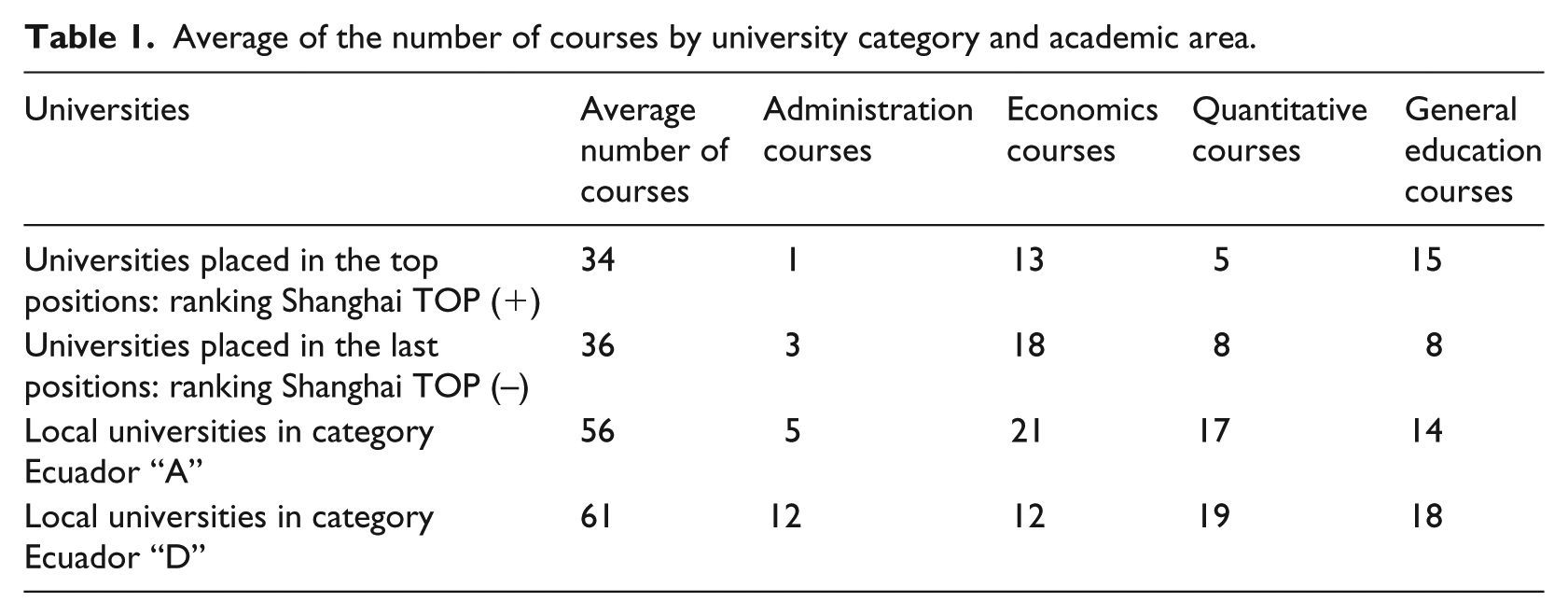
Although the subgroup of universities placed at the end of the Shanghai ranking was more balanced than the subgroup mentioned in the previous paragraph, it also repeated its scientific pattern focused on economic science and far from business management. 8
In the Ecuadorian case, it could be noted that the amount of courses to be studied was, on average, much higher than the case of the best universities in the world. There are, however, differences within: the universities of “D” category demanded that their students of economics study more quantitative courses than those of their economic specialization, while those in the “A” category did concentrate more on the economy, as did the two subgroups of the Shanghai ranking.
Analysis of the professional approach
Table 2 evaluated the professional approach showing the participation of each group of courses, by subgroup of universities, calculated from their averages already shown. The second column shows the average number of courses that each student must complete, and in the remaining four columns, the participation in terms of percentage of each proposed group in this work, for each subgroup.
Percentage of each academic group of courses by subgroup of university categories (taken from the averages in Table 1).
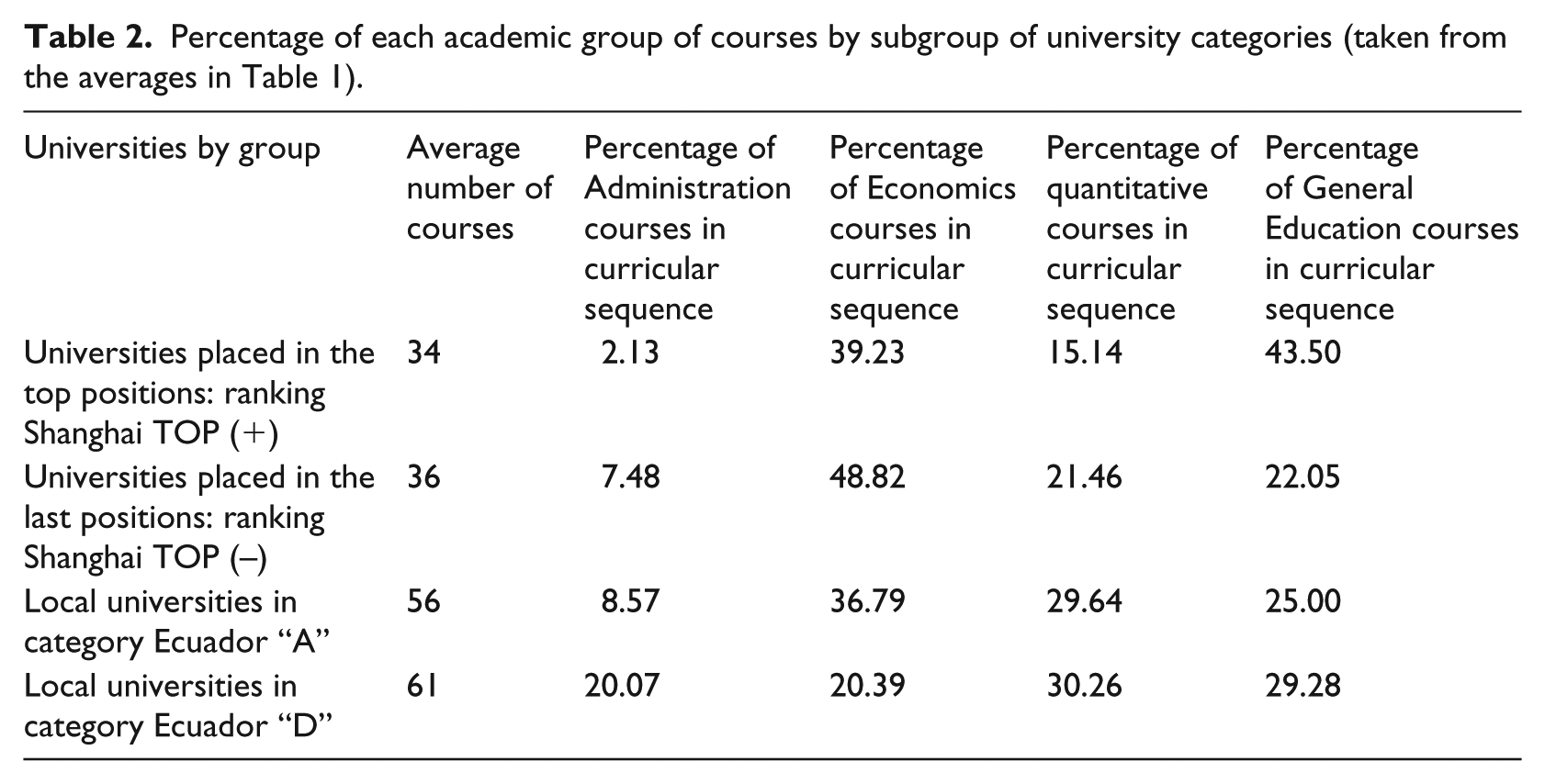
Regarding the participation of the different categories (or subgroups of universities) proposed in this research, we can see that the Ecuadorian HEIs of category “D” provide a greater participation to the quantitative group (3 out of 10), while the other three subgroups gave a much higher importance to the economic science group (at least 4 out of 10). Note, also, that in the best universities in the world high importance was given to the group of general education courses; on the other hand, in the Ecuadorian universities, that place corresponded to the group of quantitative courses.
When the general analysis of the distribution of the number of courses that students of economics degree must study to graduate was conducted, as shown in Figure 1, in most of the universities of the Shanghai ranking the distribution of subjects was very similar and was close to between 30 and 40. In the Ecuadorian universities this distribution was also quite similar within the groups, but was almost double the amount (between 50 and 70), with the aggravating circumstance that the dispersion was greater in category “D.”
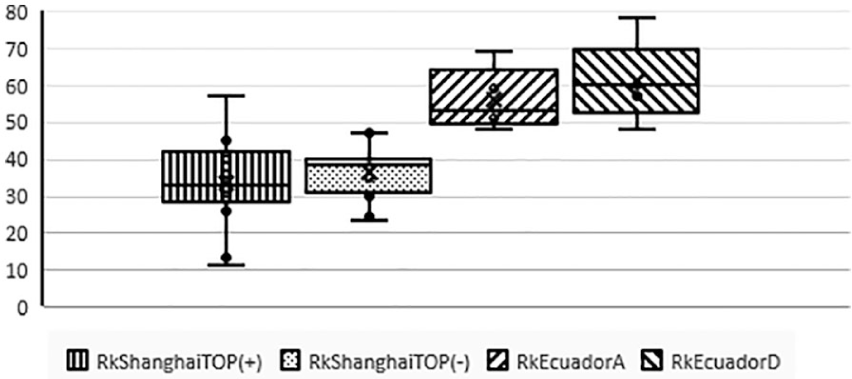
Number of courses in the Economics major curriculum.
Another significant and important difference is that in the distribution of courses from the best universities in the world, the interquartile difference (Q1, Q2, Q3) was lower than in the Ecuadorian ones. This implies that though there could be discrepancies between the methodological approaches of the professor’s economic thinking, business/scientific orientation of their alumni, or of another nature, they did not disagree in their need to concentrate the study in a few science fields.
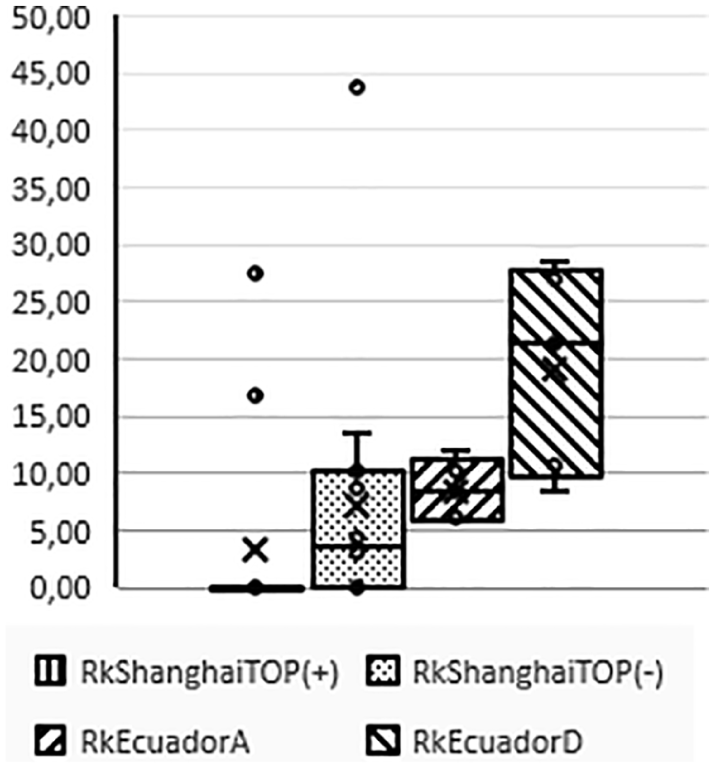
When an individual analysis of the distribution of the courses by scientific areas was conducted, starting with the group of administrative sciences, as shown in Figure 2, it was possible to highlight two very important aspects: (1) most of the best universities in the world located few (maybe 4) or no administrative courses in their undergraduate economics curriculum; however, the Ecuadorians had many more, even above 20 courses and b) a clear progression toward the reduction of quality was noted as administration courses were added. Figure 3 confirms the above.
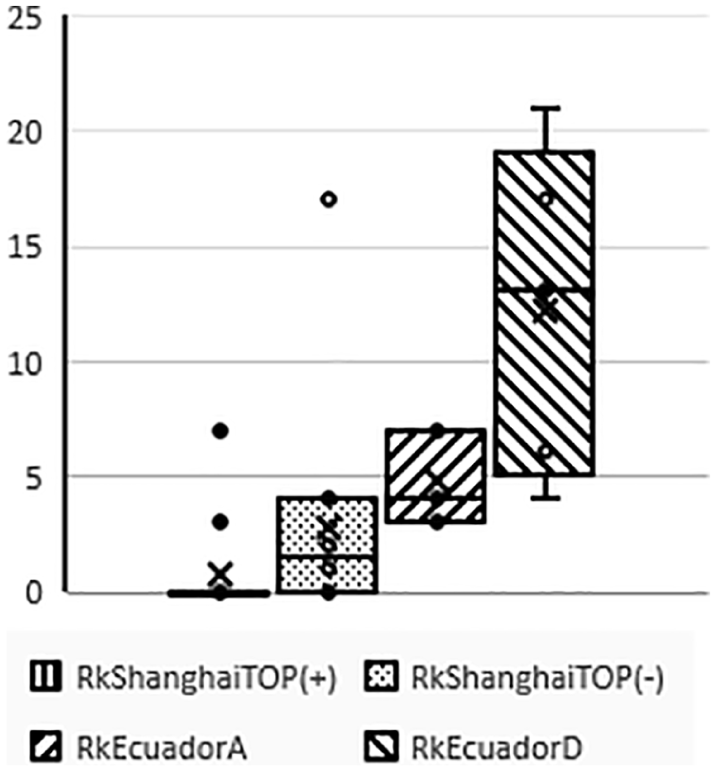
Number of courses in Administrative sciences within the Economics major curriculum.
Percentage of courses in Administrative within the Economics major curriculum.
As for the group of economic sciences courses, here it showed the closest proximity between the distributions of each subgroup of universities. Figure 4 shows that most of the universities assigned between 30% and 60% of the courses for this science, and it is here where their strength should be, except in the case of those that belong to the “D” category in Ecuador, which is the lowest status, and where less than the abovementioned was destined. This is reflected in Figure 5, where it is seen that between 15 and 22 courses seemed to be an approximation to the numerical optimum to be taught, with a maximum that bordered the 30s, except for the “D” Ecuadorian category, where they did not reach 20.
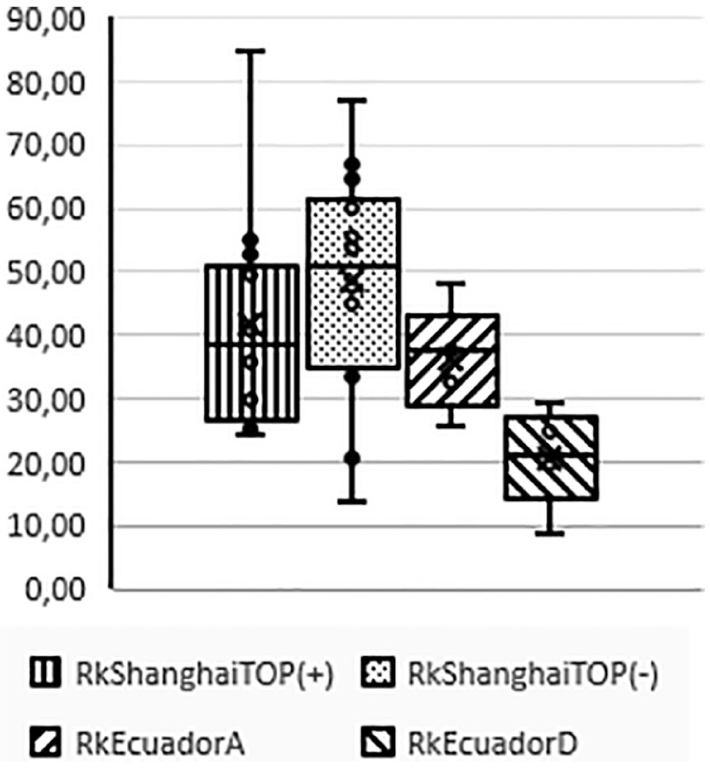
Percentage of courses in Economic Sciences within the Economics major curriculum.
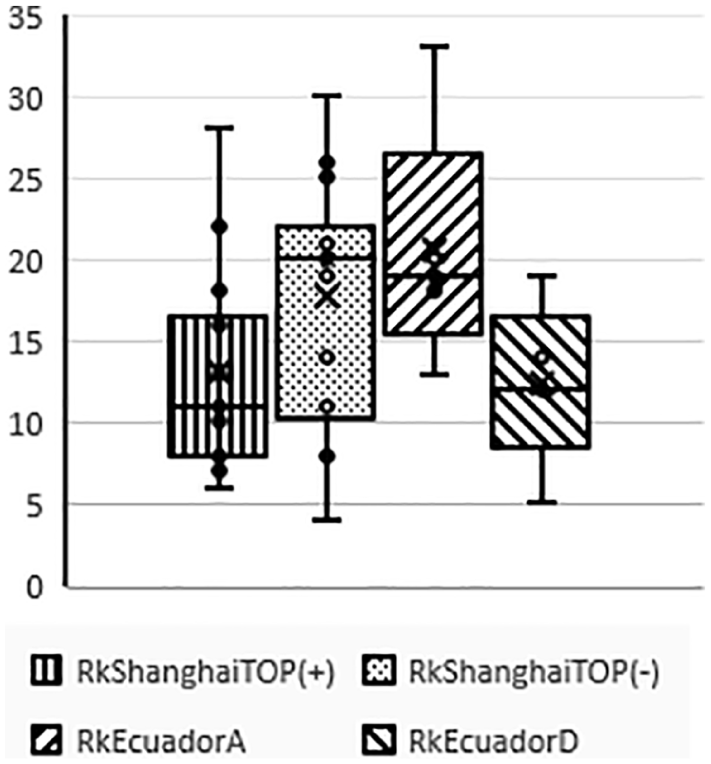
Number of courses in Economic sciences within the Economics major curriculum.
A particular turnout was among the best universities in the world and the best in Ecuador, since in both subgroups the majority of observations were above the median; that is, in both cases the greatest dispersion was present (see Figure 5).
When analyzing the group of quantitative courses, Figure 6 shows that students from most of the best universities in the world studied less quantitative courses than students from most of the Ecuadorian universities.
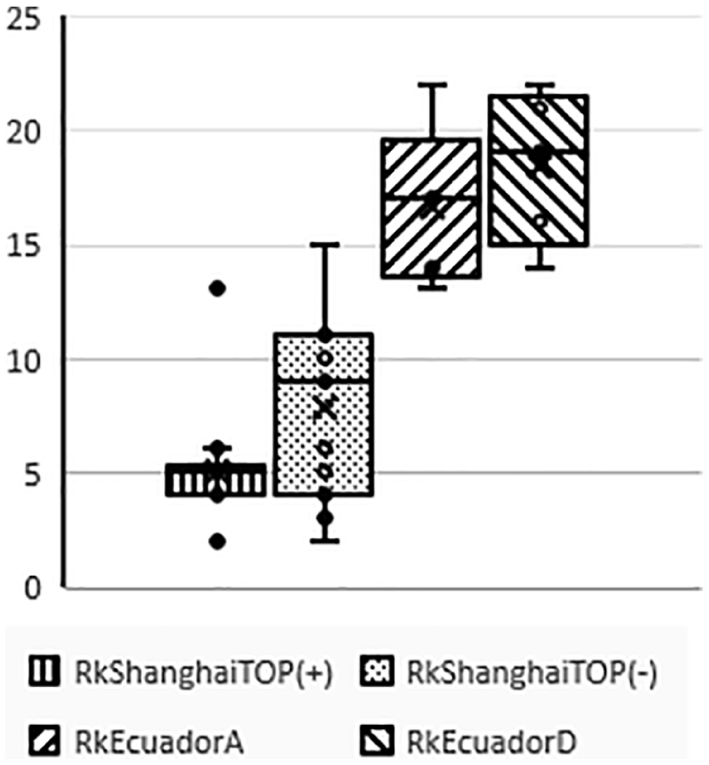
Number of courses in quantitative sciences within the Economics major curriculum.
The situation is somewhat similar to that of the courses of the administration group, but not by much, since all the subgroups presented distributions with a greater number of observations below the median, that is, the dispersion was higher there.
Here, there was a particular coincidence in the field of Ecuadorian universities: there were no relevant differences between the quantities of quantitative courses of high and low status subgroups, where students from most universities studied between 14 and 22 courses (see Figure 6), which corresponded to between 24% and 37% of the total courses (see Figure 7). There was not even a statistically significant difference between the limits of their quartiles 1. The same applies to the limits of their third quartiles 3.
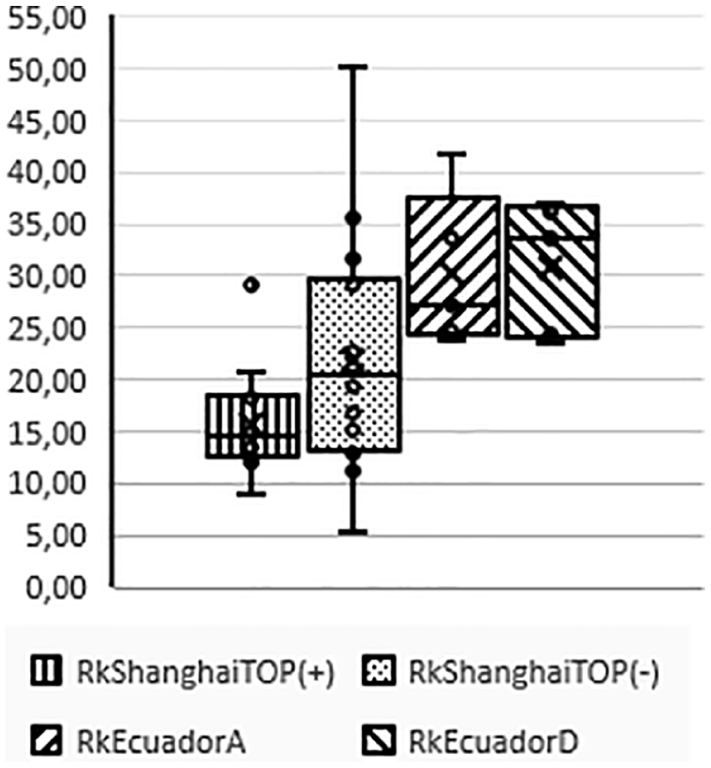
Percentage of courses in quantitative sciences within the Economics major curriculum.
Finally, as can be seen in Figure 8, only the best universities in the world, according to the Shanghai ranking (subgroup RkShanghaiTOP+), assigned a large number of their courses to general education (which included new fields of economic studies); the other three subgroups assigned less than one-third. This would not be possible to be noticed if the analysis was carried out with the absolute values (see Figure 9), which could lead to wrong conclusions.
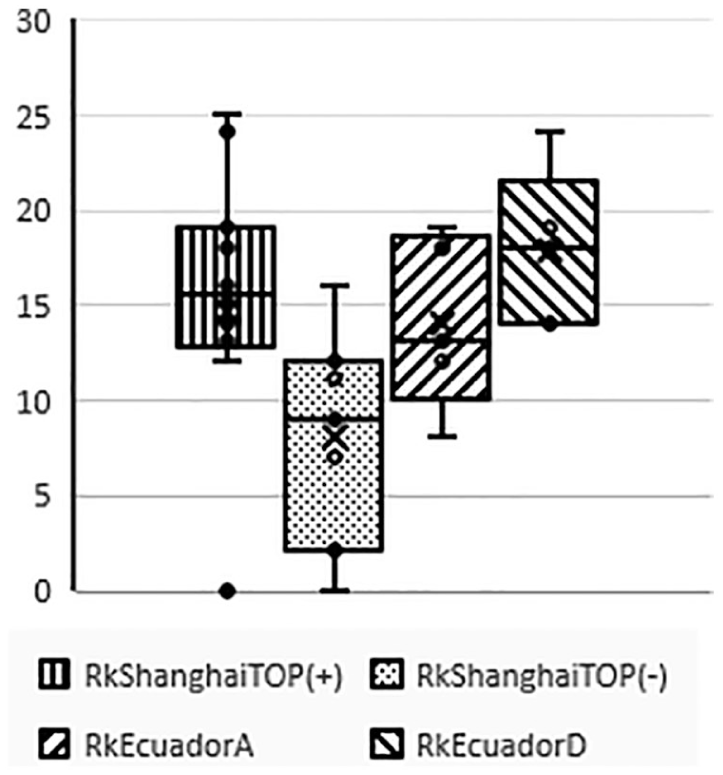
Percentage of courses in General Education sciences within the Economics major curriculum.
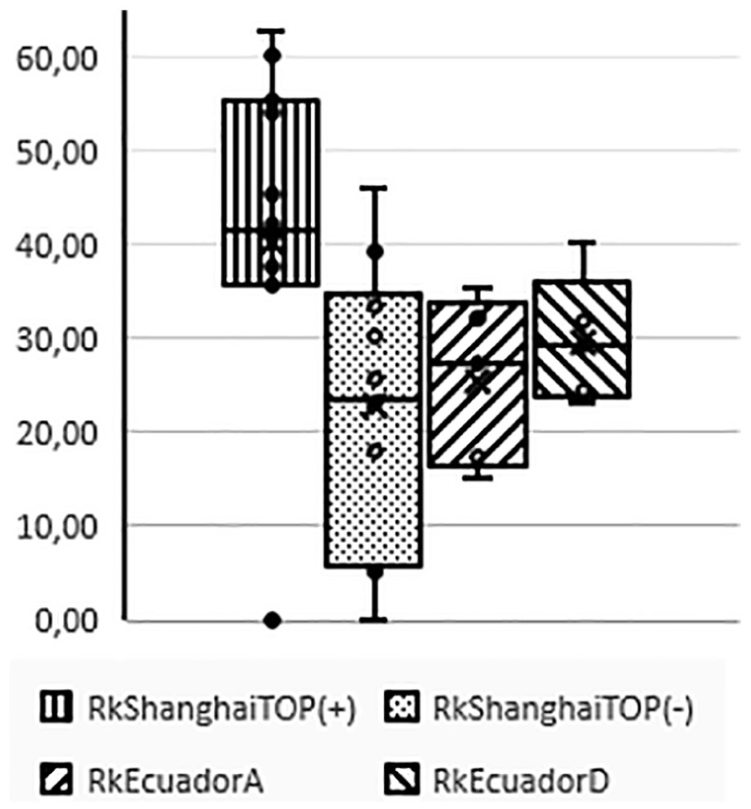
Number of courses in General Education sciences within the Economics major curriculum.
Analysis of common courses
Figure 10 shows the common courses of the economics curricula in the different categories of the universities that were analyzed. 9 All of them had a theoretical basis (introduction to economics, etc.) and empirical analysis (econometrics) which are necessary for the future of the professionals they are to graduate. However, while the best universities in the world focused on the intermediate knowledge of microeconomics, Ecuadorian schools preferred to provide technical knowledge of general application, such as composition, management, marketing, and so on.
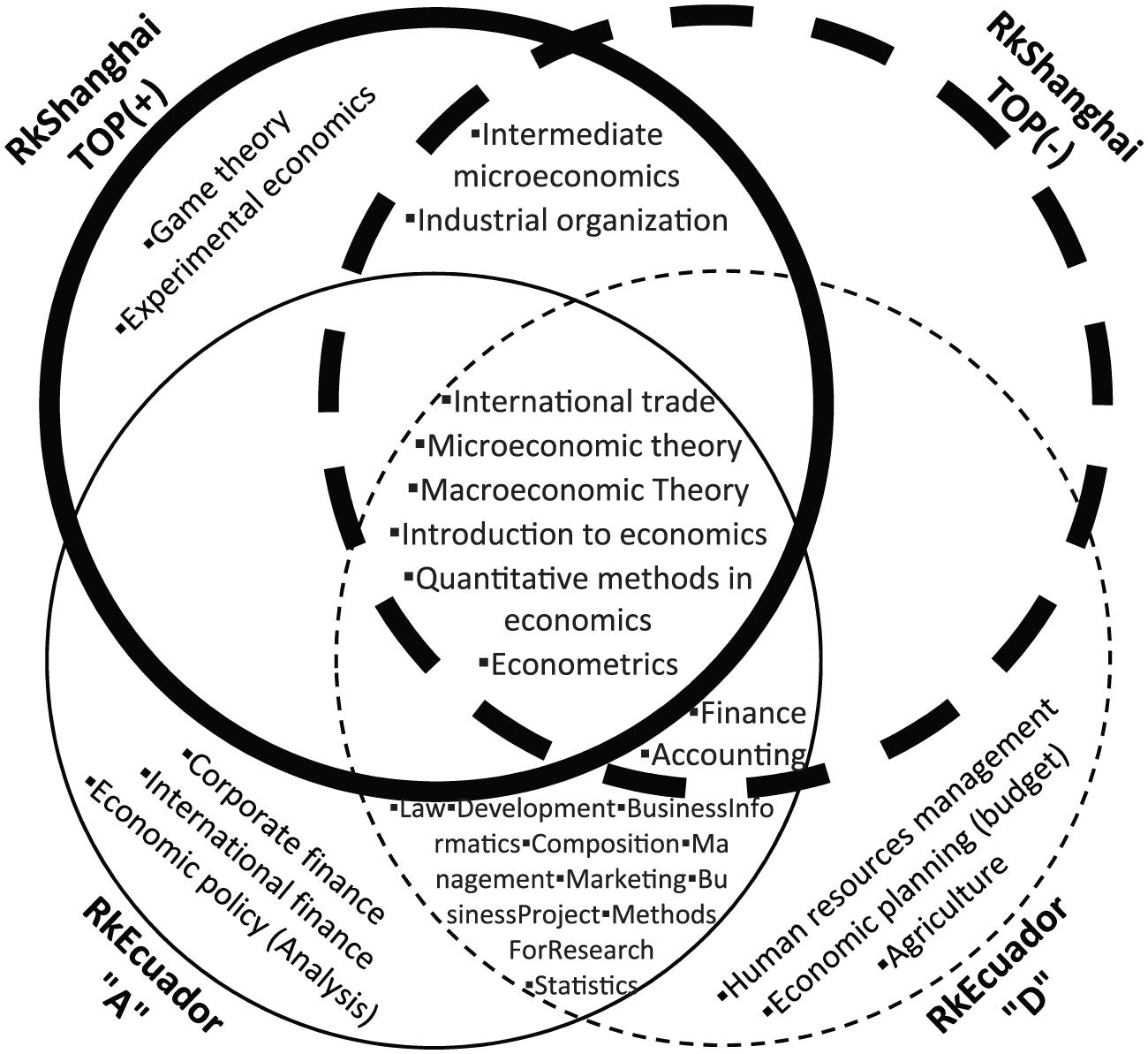
Common courses, according to university rankings.
On the other hand, the group of world-class universities (RkShanghaiTOP+) provided its students with courses that would allow them to advance in the research field of knowledge, such as game theory and experimental economics, while the best Ecuadorian universities continued with technical courses of specific application (corporate finance, etc.), unlike those located in the “D” category, which persisted in focusing toward more technical knowledge of general application, such as human resources management and so on.
It is worth highlighting that, among the world-class universities, only in Oxford, Accounting was a core course and Finance was not included in any program as a core course. This may be due to their high level of specialization in Economics courses. In the same way, it was noticed that none of the Ecuadorian universities of “D” category offered the course Game Theory, because they are more focused on the knowledge of general application, and in many cases have specific applications, because they are located in the Ecuadorian agriculture area, so they try to focus their courses in the agricultural field.
Discussions
The diversity of methodologies of study and evaluations of academic credits in each subject, as well as its engagement in the time of studies, limited the analysis due to the time and the necessary resources that would entail the conversion to a single metric. Therefore, no progress was made toward these analytical instances; nevertheless, we believe that the standardization of the third-level study regimes that are being advanced in the European Union and in the United States will make it possible to further refine the description of university scientific progress in the future.
On the other hand, the better the university was classified, the more elective courses that are offered and the price of teaching them was higher, which could be specific to the economy (regulation, tax policy, etc.) or general knowledge (history, etc.), and could be advanced or introductory, in some specific area. In the case of the universities of a developing country, the costs would force them to offer fewer elective courses, which would also make the “common core” curriculum (mandatory for students) broader. 10 This may even be the reason why the core of the program of the best universities in the world is more concentrated in Economic Sciences.
Concluding remarks and recommendations
The observed academic-institutional logics goes from the general (social holistic) to the highly specialized (focused in economics), that is to say – without considering the courses which are common to all, from Figure 10 – the low local category universities offer courses of general application. Those of high local category offer courses of general application with some specific focus. In addition, those of worldwide category far from the first places offer a wider variety of specific courses of economics and few of general application, whereas those that occupy the first places of the world category concentrate on offering only specific Economics courses (see Figure 11).
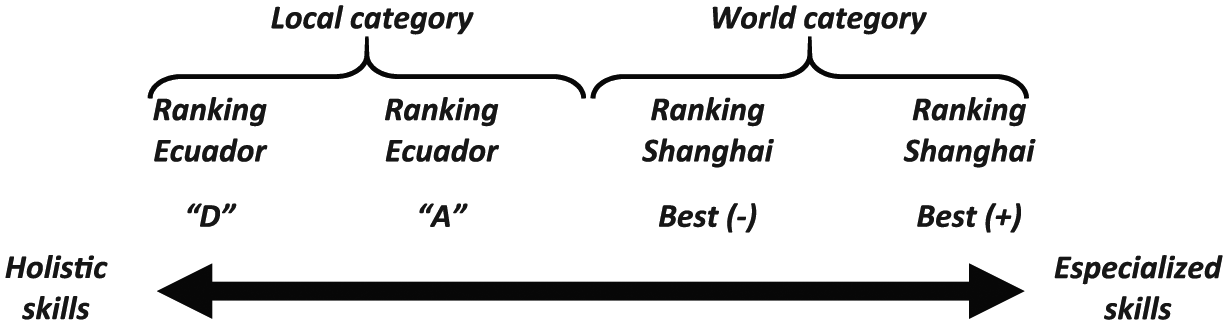
Academic-institutional logics observed.
The similarities and differences between the categories of the universities that were analyzed here were close to those that which Monteiro and Ferreira (2007) found when comparing the best schools in the United States and the best in the European Union (see the literature review). Perhaps, their differences are not tied to the characteristics of their location, but to their placement in different categories, as shown in our research.
Another important aspect is the number of courses, since their dedication has the greatest amount of student time committed. The best universities in the world, which offer the economics major, do not disagree on this, even though they differ in the professors’ research methodologies, the employment orientation of their alumni, and so on. In most of the universities in the Shanghai ranking, students were offered half the courses than those offered by the Ecuadorian schools, where – in addition – the greatest dispersion occurred within the lowest status category.
The best universities in the world, which offer Economics major, are focused in that academic area. They do not have many core courses, Administrative or General Education, and in most cases, they offer fewer numbers of courses within the quantitative group, than the Ecuadorian counterpart does. Perhaps they are complying with those scientific areas using other types of methodologies of study, such as projects, research, or experimental work, which is not within the scope of this research.
Regarding the study of the courses of the group of economic sciences, the four subgroups of universities analyzed were close in the number of courses, although the Ecuadorians in the “D” category came off a little below the others. This leads us to conclude that there is no difference in the intergroup university performance.
A remarkable aspect is the similarity that the Ecuadorian universities analyzed for the study, of high and low status, in their quantitative courses focus, either in absolute or relative values. This may occur due to the strong presence of the neoclassical paradigm, similar to the Netherlands case described by De Muijnck et al. (2016), which makes it difficult for students to observe social phenomena from other critical thinking approaches. 11 None of the Ecuadorian universities offer courses that focus on qualitative methodologies.
A first suggestion, which could be applied in a conservative manner, would be to reduce the number of courses. In countries like Ecuador, this change is impossible without first changing the legal norm that governs universities, otherwise the student could concentrate his effort, and take advantage of his time and focus on specific issues (sacrificing his holistic development) that will allow him to achieve better results in his research. The number of courses could be closer to just over 40. Of these, at least half should be Economics core, complemented with a maximum of 5 of the Administration group, between 10 and 15 courses of the General Education group (perhaps with projects to develop the creative interests of students), and the rest of courses should belong to the quantitative group (maybe complemented with specific topics).
Obviously, in order to decide on the facts presented in the previous paragraph, it is necessary to have a clear idea of the university objective, since in most cases the undergraduate training granted by the universities in developing countries is very general, to make the transition of students to the labor field easier. These changes would make it harder for students to reach the level of specialization (and focus) that the best universities in the world have, and that perhaps only they can have due to the costs involved, which generate a tradeoff between depth and breadth (Barone, 1991: 19–20).
On the other hand, there is no logic nor is there evidence that the presence of the group of quantitative methods courses in the Economics major causes a reduction in the graduates or of the university standards; however, this statement is beyond the scope of this descriptive investigation. According to the data analyzed, the variable that reduces the standards is the presence of too many courses, as was also evident by Cole (1980), for the US case.
Finally, it was brought to evidence that, contrary to common sense, most of the top universities, according to the Shanghai ranking (category RkShanghaiTOP+), assign about 45% of the curriculum to general education courses (which are not core courses), unlike most universities in the other subgroups, which use between 20% and 30%. This may be due to the innovation boosted by the mixture of academic flexibility (first 2 years of discovery of the student’s vocation in which the courses of General Education, and choice of elective subjects predominate. And then, when choosing their major they focus in scientific areas of their preference), academic load (number of courses), financial investment, and elite students (high quality raw material for learning). This is a broad field that is suggested for study in the near future with methodologies that imply causality, to be able to measure the effect of each one of those variables, in an intragroup way.
Footnotes
Declaration of conflicting interests
The author(s) declared no potential conflicts of interest with respect to the research, authorship and/or publication of this article.
Funding
The author(s) received no financial support for the research, authorship, and/or publication of this article.
