




Abstract
The present research is designed to identify the appropriate and relevant objectives that need to be pursued through entrepreneurial activities targeting elementary school children. It assesses the effectiveness of early entrepreneurship education. To do so, children aged 11 and 12 attended an entrepreneurial program and completed two versions of the same questionnaire before and after the program. We measured the development of three outcome sets of skills: non-cognitive entrepreneurial skills, cognitive entrepreneurial skills, and intentions to become an entrepreneur. The change in the dependent variable (the three sets of skills) is measured by the difference in this scale between using paired-sample t-test. Gender and parents’ occupation were controlled for. The findings of this study confirm that late childhood (11–12 years old) seems to be the adequate period in order to develop self-efficacy, a non-cognitive skill required to become an entrepreneur. Nonetheless, cognitive entrepreneurial skills and entrepreneurial intentions did not change after the program.
Introduction
Interest in entrepreneurship education has been increasing due to the proliferation of entrepreneurship programs over the last few decades (Valerio et al., 2013). Several countries have implemented these programs owing to their expected benefits. In this regard, the European Commission (2012) has been exhorting its member states to implement entrepreneurship programs in hopes of honing students’ entrepreneurial skills. Entrepreneurship education was also found to enhance the intention to launch a business (Noel, 2000), as well as contribute to economic growth and job creation (Falkäng and Alberti, 2000). Hence, awareness about the importance of entrepreneurship education has been on the rise (Carland and Carland, 2004).
In Morocco, diverse stakeholders have recognized the relevance of entrepreneurship education and its contributions to economic growth and individual development (Hassi and Storti, 2014). The Department of National Education recently adopted an initiative entitled Entrepreneurial Culture which aims at introducing students of all levels to entrepreneurship implicitly through extra-curricular activities. However, details about the initiative such as the objectives, contents, methods, and evaluation were not provided to the teachers. To clarify the pillars of entrepreneurship programs in primary schools, the present research was designed to identify relevant objectives that teachers should pursue through entrepreneurial activities targeting elementary school children. It is expected that this study will also contribute to the extant body of knowledge on entrepreneurship education, particularly in the Moroccan context which lacks data on the topic.
Research background and context
Morocco is considered as a developing country and has recently adopted a human capital–based national strategic direction. This goal can be achieved through education as there is an association between human capital and education (Becker, 1993). Improving education leads to a better quality of human capital and ultimately an improvement of people lives. Investment in human capital also contributes to improving economic growth (Galor and Tsiddon, 1997). To do so, Moroccan policymakers are banking on developing human capital through education, including the “entrepreneurial culture” initiative. Nonetheless, there has been no concrete operationalization of this initiative in hopes of translating it into precise objectives, specific activities, clear contents, and adequate pedagogical methods. Consequently, it is common that different stakeholders – attempt to – implement this initiative differently according to their perception of the appropriate purpose that needs to be achieved through it.
In terms of academic research, there are no studies that investigated entrepreneurship at the primary, junior, and secondary school. The few existing studies on entrepreneurship education in Morocco have focused on the tertiary education level. However, the lack of exposure of students in primary and secondary schools to entrepreneurship is a worldwide concern, particularly in developing countries as documented by the Global Entrepreneurship Monitor study (Martinez et al., 2008). In fact, entrepreneurship education in primary and secondary schools is lower than any other entrepreneurship framework condition. Nonetheless, childhood, along with adolescence, is the preferred period to plant entrepreneurial seeds and to nurture positive attitudes toward entrepreneurship as well as to acquire basic knowledge on the topic (Peterman and Kennedy, 2003). Recommendations will be made to policymakers about incorporating entrepreneurial culture insights at the primary school.
Entrepreneurship or enterprise education
Teaching entrepreneurship was first introduced in the Harvard Business School back in 1945 and has since gained popularity (Mwasalwiba, 2010). It is nowadays widely taught across the globe with special attention in developed countries such as the United States, the United Kingdom, Germany, and the Netherlands. Entrepreneurship courses and programs are offered at universities, high schools, secondary schools, and even at primary schools. This growing interest in entrepreneurship education is due to the fact that the latter has been found to lead to students and young individuals nurturing a lasting interest for entrepreneurship (Torimiro and Dionco-Adetayo, 2005). Furthermore, governments and policymakers have to come to believe that small businesses launched by entrepreneurs are a viable alternative solution to youth (un)employment.
The term “entrepreneurship education” is commonly used in the United States and Canada, whereas in the United Kingdom and some parts of Europe, the term “enterprise education” is preferred (Gibb, 1993). These two terms are mostly used interchangeably as they refer to the same concepts, but they may also differ depending on the context and the purpose (Mwasalwiba, 2010). In North America, the concept in question is associated with business education, whereas in the United Kingdom, it refers to developing enterprising individuals (Gibb, 1993). In this respect, it is important to highlight that entrepreneurship education focuses more on creating and managing a business entity, whereas enterprise education is about acquiring and honing personal skills, abilities, and attributes that can be used in diverse contexts and throughout the life course (Jones and Iredale, 2010). Hence, while entrepreneurship education is closely related to business, enterprise education is concerned with developing productive individuals and instilling values (Chell, 2007). In this respect, it is noteworthy to mention that a lot of policymakers, practitioners, and educators still believe that entrepreneurship education should only be concerned with the creation of new ventures and new jobs. In corollary, entrepreneurship education lacks academic credibility, and there is no clear return on investment to society from the point of view of politicians and decision-makers (Fayolle et al., 2006). This field is very young, emergent, and in its infancy phase (Low, 2001); it is, hence, natural that it is facing epistemological, theoretical, pedagogical, and practical challenges (Fiet, 2007).
Can entrepreneurship be taught?
For a long time, the issue of “can entrepreneurship be taught?” had been debated by specialists (Solomon, 2007). It was thought that it is not possible to teach entrepreneurship as it is a matter of personality and psychological characteristics as talent and temperament, for instance, cannot be taught (Thompson, 2004). However, this argument holds true for many professions. Medicine, law, or engineering can be taught, and yet there are surgeons, lawyers, and engineers who are talented and others who are not. A similar argument can be advanced in the case of entrepreneurs. It ought to be mentioned that not everyone can be an entrepreneur and not every individual needs to be an entrepreneur (Garavan and O’Cinneide, 1994). Entrepreneurship can be taught and explained to others (Keogh and Galloway, 2004) or at least some of its facets (Klein and Bullock, 2006; Kuratko, 2005). It is important to pinpoint that the “Can entrepreneurship be taught?” debate has shifted from “whether” to “what,” “how,” and “why” (Greene and Rice, 2007) although the idea of the “born entrepreneur” has not totally disappeared (Cunningham and Lischeron, 1991). Entrepreneurship is both an art and science, innate and acquired, but not exclusively inherited. Hence, it is important to grant students adequate experiences in hopes to develop their entrepreneurial skills. Entrepreneurship can be formed at an early age through relevant and adequate educational activities.
In terms of teaching practices, two approaches can be distinguished. Traditional approach is transmissive and instructive by nature and associated with the transfer of information. Conversely, the alternative approaches are called active, constructive, and goal-oriented processes. With the latter, learning is enhanced as students are engaged in the construction of knowledge by “acquiring, generating, analyzing, manipulating and structuring information.” This approach is based on activities, action, and experiential learning. It is rather a “transformative methodology” as learners are engaged in constructing and owning their learning.
Concerning the purpose(s) of entrepreneurship education, three broad categories or forms can be distinguished: (a) education through entrepreneurship, which is learning to become entrepreneur by developing a wide range of cognitive skills needed to run a business such as accounting, finance, marketing, and human resource management notions; (b) education about entrepreneurship which aims at enhancing awareness of the role played by entrepreneurs and entrepreneurship as a potential career opportunity and a suitable occupation in the future; and (c) education for entrepreneurship, which is learning to be entrepreneurial through developing a variety of non-cognitive skills such as creativity, risk-taking, persistence needed by labor market (Curry and Storer, 1990; Hytti et al., 2002; Young and Sexton, 1997).
Teaching of entrepreneurship at early age
Teaching entrepreneurship at early ages to students and providing them with the adequate exposure to entrepreneurial activities can contribute to instilling the entrepreneurial spirit in them. There are several successful examples of entrepreneurship education programs that aim at enhancing children skills, particularly in the United States such as “Mini Society” and the “Entrepreneurs in Kentucky Initiative.” The former was initiated by Marilyn Kourilsky to benefit students aged between 8 and 12. Its effectiveness in generating students’ interest in entrepreneurship has been confirmed (Kourilsky and Carlson, 1996). The latter was introduced by the Kentucky Council. It was also effective in enhancing primary school students’ knowledge of entrepreneurial concepts and shaping their attitude toward entrepreneurship (Code, 2006). In the Netherlands, the BizWorld program is destined to teach children aged 11–12 the fundamentals of entrepreneurship. It aims at promoting teamwork and leadership in the primary schools through experiential learning approaches (Huber et al., 2014). In the Moroccan context, there is a recent initiative called “Injaz Al Maghrib,” which involves the private sector to teach youth about entrepreneurship. It aims at preparing secondary students to the challenges of the workplace. Volunteers, who are mainly managers and executives, deliver workshops and courses in public schools following structured entrepreneurship programs. However, there is no academic research about this initiative.
These educational entrepreneurial activities can generate interest and shape the creation of entrepreneurs as long as they are appropriately developed (Pihie and Elias, 1990). In this respect, if adolescents are provided with entrepreneurial skills at an early stage, the likelihood is high for them launching their own venture later in life (Obschonka et al., 2011) as this exposure to entrepreneurship may lead students to choose entrepreneurial careers in the future. It seems that entrepreneurship education ought to be considered as a one consistent and continued process from kindergarten to secondary school. As students progress in their education, their interest in entrepreneurship needs to be revived and refined at every level in order for them to become mature, responsible, and well prepared to continue on with their studies at the tertiary level (Widad, 1995). Given this context, students’ exposure to entrepreneurial activity ought to be carried out at an early stage. Not only does this exposure benefit students, especially later in life in terms of seizing opportunities for greater financial independence, dignity and self-respect (Wilson et al., 2004), but also benefits the country, at the macro level, through economic growth and youth employment.
In terms of academic research, majority of the studies examined entrepreneurship education and its effectiveness for adolescents, namely, secondary or high school students. Most of these studies focus, exclusively, on the effect of entrepreneurship education on entrepreneurial intentions. However, their findings are far from being conclusive. Some studies found positive impacts such as Peterman and Kennedy (2003) as well as Souitaris et al. (2007), while other investigations found zero or even negative impacts of entrepreneurial programs and courses such as Oosterbeek et al. (2010) as well as Von Graevenitz et al. (2010). It seems that studies that concluded a positive impact may be due to their use of non-random entrepreneurial activities. The non-positive impact needs to be carefully and cautiously regarded as an early investment in skill development at an early age may have a limited effect on the current child skills, but could produce higher skills in the subsequent life stages through boosting current skills or self-productivity of skills as documented by Cunha and Heckman (2007) in their model of the technology skill formation. These authors found that investment in child skill development in non-cognitive skills is most effective in middle childhood, namely, between 9 and 11 years old.
As for children, Huber et al. (2014) analyzed the effectiveness of an entrepreneurship program taught at the final grade of the primary school in the Netherlands. The findings did not yield any impact of the program on cognitive entrepreneurial skills or entrepreneurial intentions. Nonetheless, the program had strong positive impact on seven non-cognitive entrepreneurial skills (out of the nine initially taken into account in the study), namely, risk-taking propensity, creativity, need for achievement, self-efficacy, pro-activity, persistence, and analyzing.
In the Moroccan context, no studies have attempted to assess the effectiveness of entrepreneurship program or courses, probably due to the near absence of the latter, hence the relevance and importance of this study.
Methodology
The present research assesses the effectiveness of early entrepreneurship education. To do so, a field research was conducted as part of a program called Never too early to learn entrepreneurship: Planting the seeds for the next generation of young Moroccan entrepreneurs initiated by the author in the Moroccan city of Ifrane. Alongside the conventional curriculum, an additional subject was offered to 42 grade 6 students (11–12 years) in a weekly 2-hour entrepreneurship-based theme for a period of 3 months.
The program in question, which is not compulsory, aims at spurring children’s interest in entrepreneurship by teaching entrepreneurial basics in a simplified manner. The objective of the program was threefold: (a) leading the pupils toward generating entrepreneurial ideas, acquiring basic business knowledge, and developing a “product” or “service”; (b) developing pupils’ non-cognitive skills such as risk-taking, self-confidence, and internal locus of control; and (c) favoring the adoption of an entrepreneurial attitude and intention by the pupils. These objectives are to be achieved through various relevant activities and topics taught to the target pupils.
For the first 2 months, every week, the pupils read various stories of successful Moroccan entrepreneurs and then discussed them in class. The stories, which were simple, were drafted by the author. Students also had to tell stories about entrepreneurs or successful business people from their entourage. Furthermore, students were presented with a problem and tasked with finding a solution, and often put in groups to pitch and, eventually, execute the idea. Basic buying and selling management concepts were discussed and explained in class such as price, advertising, profits, loss, and capital. Role plays were also used, and students had to stand up in front of their schoolmates and talk where they act as merchants and clients. Students were also asked to write a persuasive essay about their imaginative business.
During the third and last month, the young students worked on team-based entrepreneurial projects and presented investor pitches in a modified business plan competition. Each three-member team had to identify a business opportunity in their environment, think of a business idea, and develop a business plan and presented it to the author and the pupils’ teacher who played the role of a “venture capitalists.”
We measured the development of three outcome sets of skills: non-cognitive entrepreneurial skills, cognitive entrepreneurial skills, and intentions to become an entrepreneur.
Non-cognitive entrepreneurial skills
Scholars have been testing, for decades, non-cognitive skills to find out which ones are crucial for entrepreneurship (see Begley and Boyd, 1987; Hornaday and Aboud, 1971). The “low risk aversion” skill has been systematically found to be related to entrepreneurial intentions (Segal et al., 2005) and performance of the start-up (Caliendo et al., 2010). Risk-taking propensity reflects the predisposition toward risky alternatives, the willingness to risk a loss, and to deal with uncertainty. The risk-taking characteristic has been consistently highlighted in research to the point that it has been equated to entrepreneurship (Lee and Peterson, 2000; Price, 2004). In fact, risk-taking triggers acting independently which constitutes another important component of the personal profile of entrepreneurs (Stoner et al., 2004). Both characteristics make entrepreneurs depend on themselves to make decisions (Robbins and Coulter, 1996).
To measure the tendency to take risk in this study, the scale developed by Weber et al. (2002) will be used. This 5-point Likert scale, which assesses different kinds of risk-taking, comprises the following items:
I can start a conversation with a person whom I do not know (social).
I am not afraid for extreme sports (recreational).
I am not afraid of riding a car without a seat belt (health/safety).
I can bet all the money I have in a game to win a toy (financial: gambling).
I am not afraid to pass on someone’s work as my own (ethical).
Furthermore, self-efficacy means believing in your own ability, feeling self-confident, and controlling your own success. It is associated with successful entrepreneurs as confidence and belief in one’s own abilities enhance the willingness to seize entrepreneurial opportunities (Shane, 2003). To measure the self-efficacy of students in this study, the following scale will be used. The 5-point Likert scale comprises the following items:
People with whom I have relations trust me.
I do not need anybody to tell me how to solve all my school problems.
I always persist very long on difficult job before giving up.
I often feel good about quality of work I do.
I often feel good when I am with very successful students.
Locus of control refers to the perception whether the outcome of an event is under the control and understanding of an individual or not (Rotter, 1990). People with internal locus of control believe that their behaviors are influenced by their ability, effort, and skills, whereas people with external locus of control claim that their behaviors are under the influence of outside forces. Entrepreneurs have been found to have an internal locus of control orientation as perception about control of the environment is crucial for the decision to launch and manage a new venture (Brockhaus and Horwitz, 1986; Perry, 1990).
It is important to highlight that entrepreneurship literature related to entrepreneurial tendencies or motives revolves around socio-psychological, economical, and psychological motives. As this study is concerned with children of age 11–12, the emphasis is placed on personal characteristics of individuals that are crucial to their decision to become an entrepreneur.
The change of students’ locus of control was assessed, between t = 0 and t = 1, through a 5-point Likert scale, validated by Geri (2013), used by respondents to assess each item representing a specific aspect of the locus of control construct as follows:
My friends decide where to go to play.
I do not try anything that has not been tried by others.
If things go right, it is usually because of chance.
I do what my relatives advise when making decisions about my career
I do not pursue ideas when there is an opposition from others.
Cognitive entrepreneurial skills
Research has shown that cognitive skills and knowledge are important for entrepreneurial success too (Hartog et al., 2010; Unger et al., 2011). These cognitive skills are knowledge about what an entrepreneur does and what it entails to run a business. One of the desired outcomes of the entrepreneurship program under study was the development of diverse skills that are relevant for entrepreneurs. To assess the change in the cognitive skills of students, a 5-item scale was used. The latter was taken from the Bernelli Entrepreneurial Learning Model™. This model includes five skills that children need to manage a business (Mischel and Iannarelli, 2011). These skills are as follows
Self-starting: I love undertaking projects on my own initiative, without needing to be told or encouraged to do so by others.
People: I know how to work with people.
Marketing: I know how to sell a product.
Money: I know how to manage money.
Leadership skills: I know how to lead a team.
The development of these cognitive entrepreneurial skills was measured by a change, between t = 0 and t = 1, through a 5-point Likert scale used by respondents to assess each item representing a specific skill.
Entrepreneurial intentions
Career socialization theory suggests that exposure to educational experiences is an integral part of the list of social factors that influence individuals’ decision to initiate a career (Dyer, 1994). These experiences impact the perceived desirability of launching a business in the future. Along the same line, Krueger (1993) contends that perceived feasibility and perceived desirability predict the intentions to become an entrepreneur; perceived social norms and perceived self-efficacy are antecedents to perceived feasibility (Krueger and Brazeal, 1994).
Entrepreneurial intentions constitute the third and last outcome that was measured in this study to assess the impacts of the entrepreneurship program in question on children’s intentions to become entrepreneurs. They refer to students’ intentions to become an entrepreneur before and after the entrepreneurial program.
It is important to mention that while enhancing entrepreneurial intentions is not a primary objective of the program, it is one of the fundamental and ultimate goals of entrepreneurship education.
There is no doubt that measuring entrepreneurial intentions of children aged 11–12 is a real challenge, particularly that no data are available on the psychometric qualities, including the validity and the predictive power of this measure at this age. Therefore, the results related to this scale will be interpreted with caution.
A 3-item scale is used to measure the change in the children’s intention to launch a business as an outcome of their participation in the program. The 5-point Likert scale comprises the following three items:
I would like to start my own business in the future.
I do not like to work for others in the future.
I am currently thinking about an idea for a business in the future.
The change in entrepreneurial intentions is measured per individual by the difference in this scale between t = 0 and t = 1 as reflected by the first and the second questionnaire.
Control variables
In addition to measuring the development of our main outcome variables of interest, the dependent variable, which includes non-cognitive entrepreneurial skills, cognitive entrepreneurial skills, and intentions to become an entrepreneur before and after the program, there is a need to control for some variables which would potentially bring some noise to our research model, namely, the occupation of the parents and gender. In fact, controlling for gender and parents’ occupation will allow to single out any social influence or attitude or predisposition these children may have toward entrepreneurship in general and entrepreneurship program in particular.
Parents’ job serves as an indicator of the social capital of respondents which has been associated with becoming an entrepreneur and successfully going through the start-up phase owing to the ability to benefit from social connections (Davidsson and Honig, 2003).
With reference to gender and entrepreneurship, it has been documented that women launch their business out of necessity, as opposed to men who choose to become entrepreneurs as a result of business opportunities attractiveness, particularly in developing countries (Allen et al., 2007).
Research hypothesis
We hypothesize that the entrepreneurship program would yield changes in the students’ sets of cognitive and non-cognitive skills and their entrepreneurial intentions. To test this hypothesis, a paired-samples t-test will be conducted to compare the means of each component before and after the participants attend the program.
Data collection tool and procedure
We measure the dependent variables and control variables using self-assessment tests. Self-reported paper and pencil tests are considered as the most effective measures in psychology (Borghans et al., 2008). Research in psychology has recently confirmed the validity of self-assessment tests with children, including those of 12 years of age (Barbaranelli et al., 2003; McCrae et al., 2002).
As our study pertains to children between the age of 11 and 12, some aspects were taken into consideration. Only three types of non-cognitive skills were measured (risk-taking, self-efficacy, and locus of control) in order to have a reasonable length of the questionnaire to better cater to the younger target group. It is noteworthy to mention that children have a short concentration time span. Furthermore, concepts and constructs that are challenging to relate to children were excluded such as networking and social relations skills. In addition, original scale items were rephrased and graded to make them comprehensible for children.
Findings
Descriptive statistics
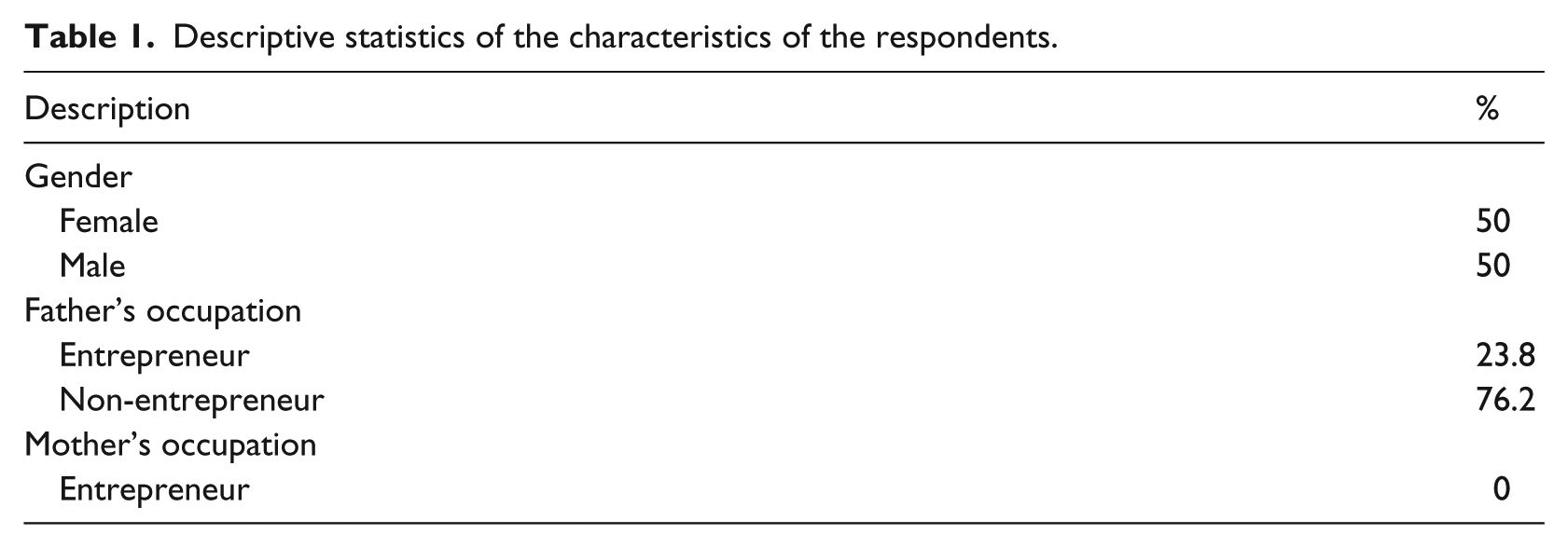
Table 1 depicts demographic characteristics of the sample used in the study. Out of the 42 children who took part in the program and completed both questionnaires, 50% are female and 50% are male. The sample is, hence, perfectly balanced in terms of gender. Furthermore, none of the respondents have a mother who is an entrepreneur. Only 23.8% of the respondents have an entrepreneur father.
Descriptive statistics of the characteristics of the respondents.
Paired-samples t-test assumptions
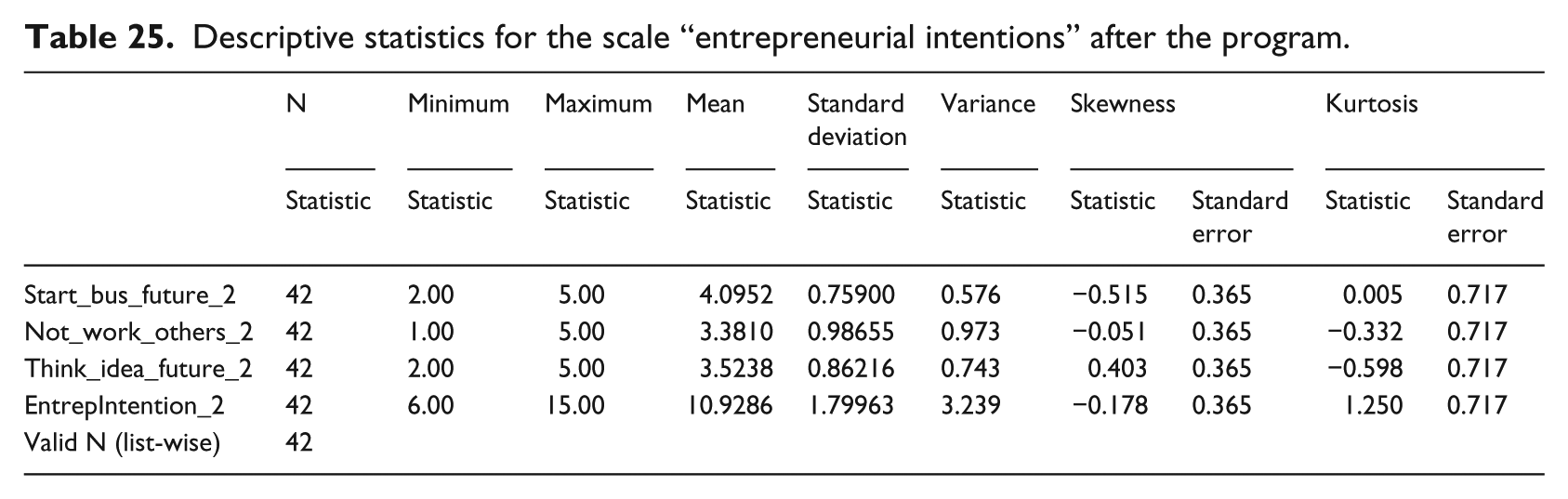
The distribution of data is, overall, normal as the value of kurtosis does not exceed 8 and the value of skewness is comprised between −2 and +2 (Appendix 1, Tables 16–25).
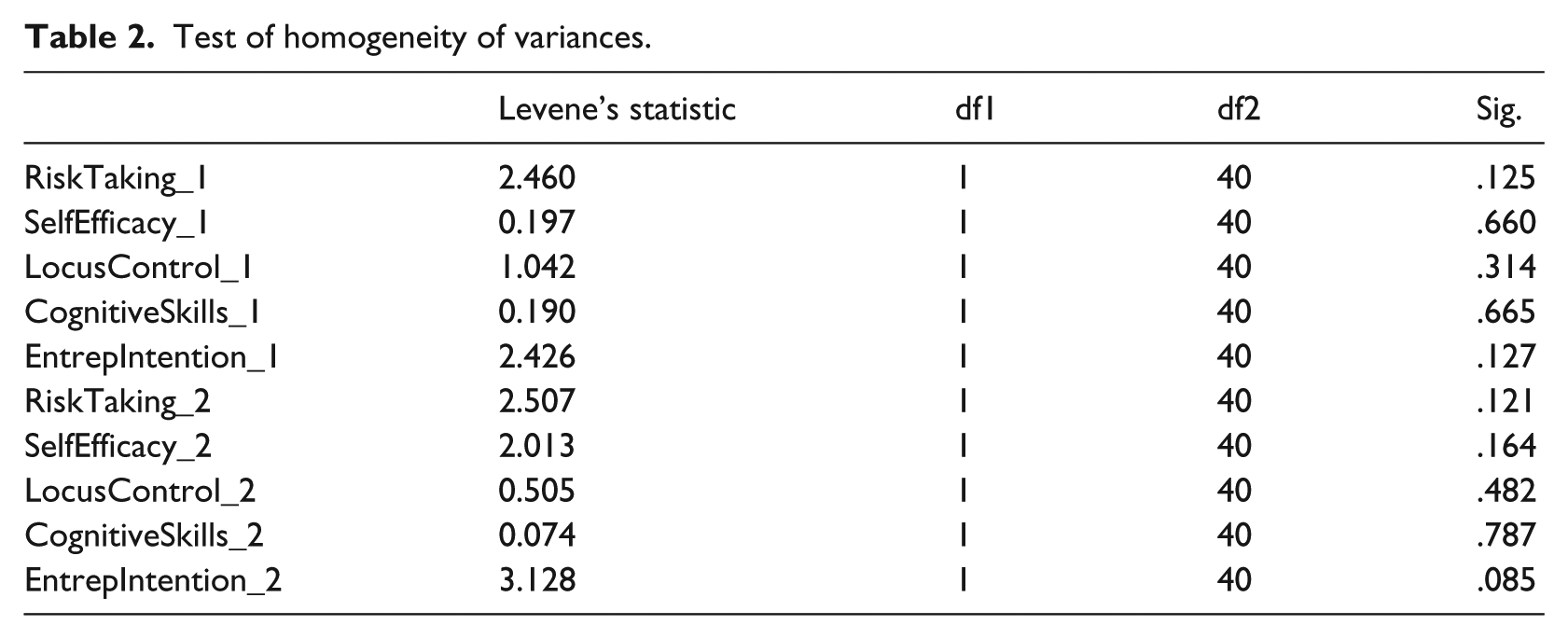
To test for the assumptions of the paired-samples t-test, Levene’s test of homogeneity of variances was conducted and did not yield any discrepancy (Table 2).
Test of homogeneity of variances.
Reliability
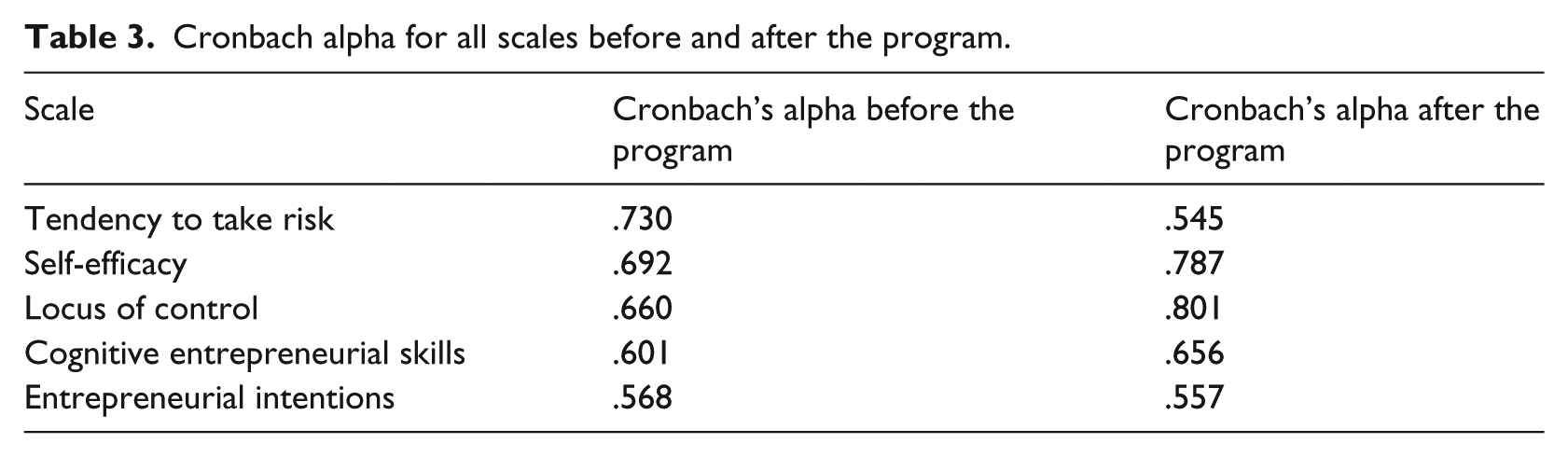
The scales used to measure all the variables seem reliable if we rely on Cronbach’s alpha to test for their reliability (Table 3). All scales have a Cronbach alpha that is ranging between .545 and .801. It is important to conduct the reliability test after the program in order to verify whether any contamination occurred between the initial questionnaire and final administration of questionnaire.
Cronbach alpha for all scales before and after the program.
Paired-samples t-test
To verify the research hypothesis according to which the program would yield changes in the students’ sets of cognitive and non-cognitive skills and their entrepreneurial intentions, a paired-samples t-test was conducted. The results of these tests are presented in the following paragraphs.
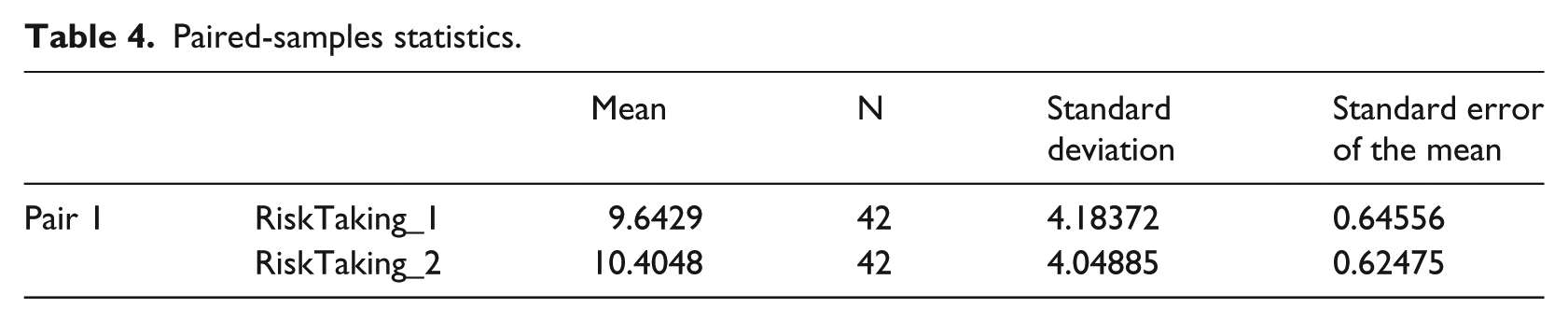
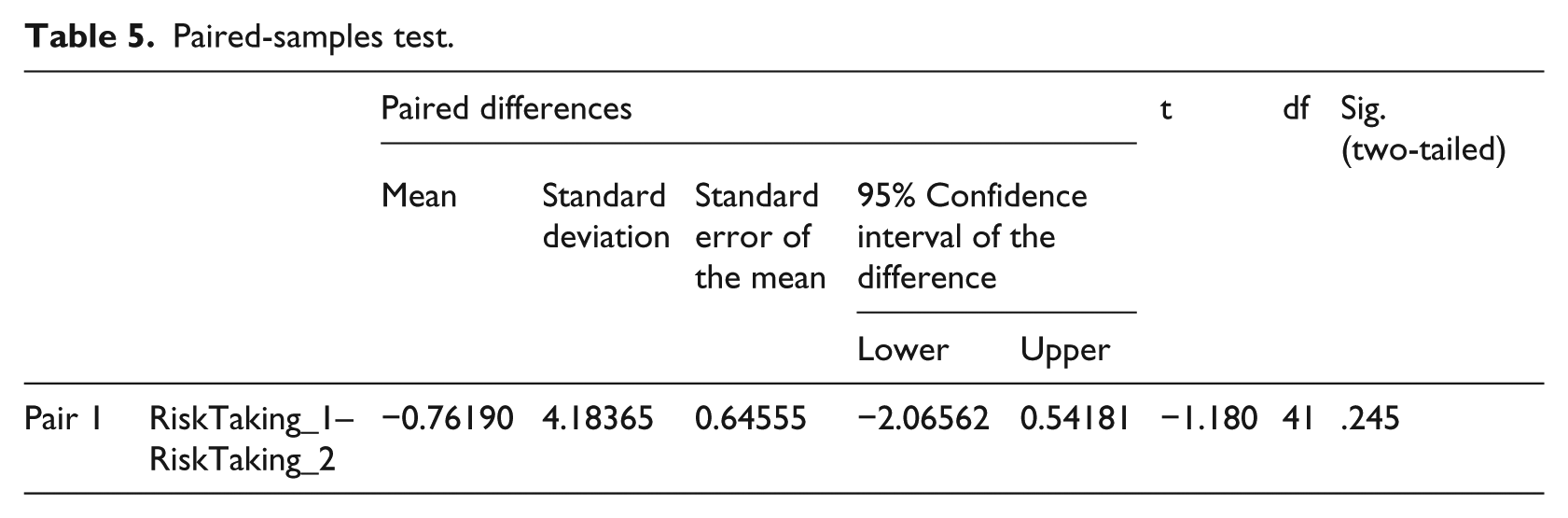
Regarding the risk-taking scale, there is no significant difference in the scores before the program (M = 9.6429; standard deviation (SD) = 4.1837) and after the program (M = 10.4048; SD = 4.04888) as indicated in Table 4; t = −1.180, p = .245 (Table 5). Hence, the null hypothesis of equal means is not rejected.
Paired-samples statistics.
Paired-samples test.
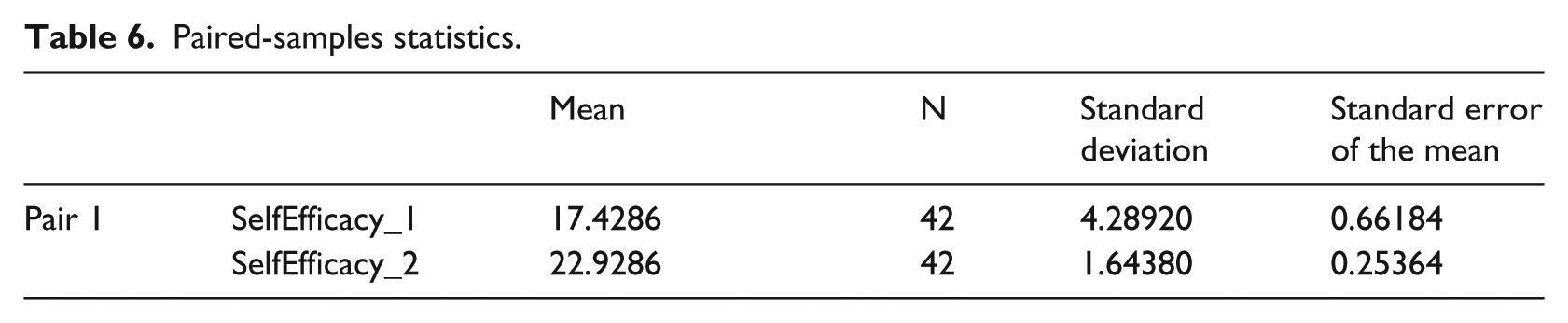
Concerning self-efficacy scale, there is a statistically significant difference in the scores before the program (M = 17.428; SD = 4.289) and after the program (M = 22.928; SD = 1.643) as indicated in Table 6; t = −9.640, p = .00 (Table 7). Hence, the null hypothesis of equal means is rejected. Students’ self-efficacy skill seems to have changed before and after the program.
Paired-samples statistics.
Paired-samples test.
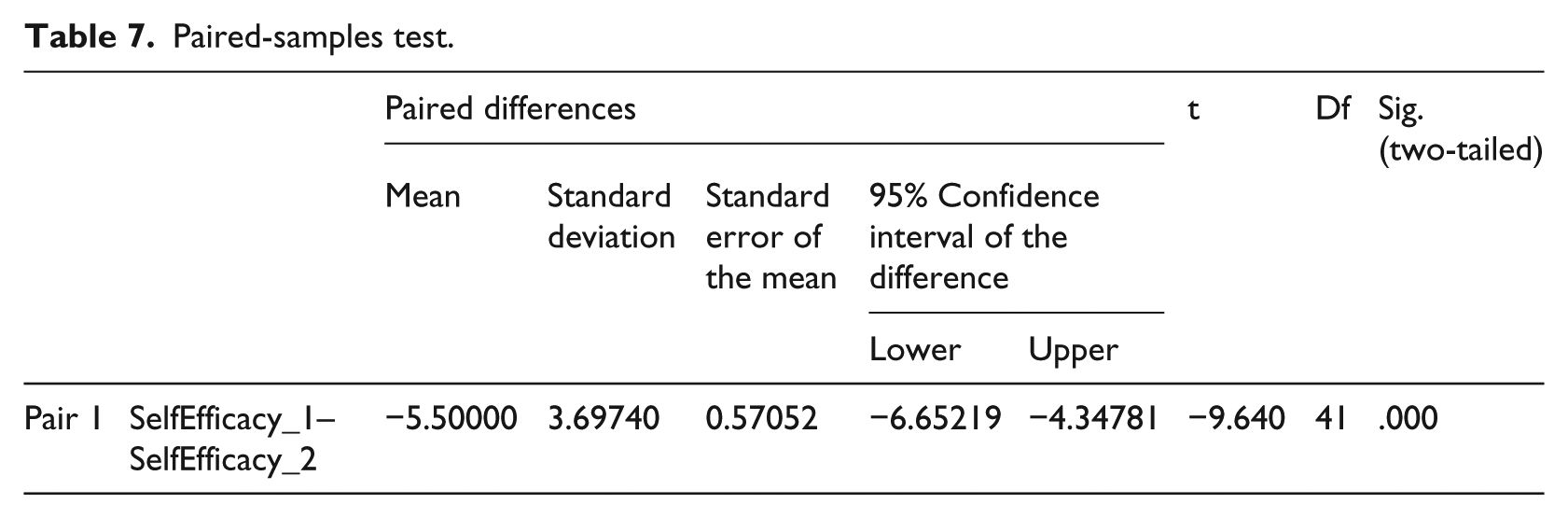
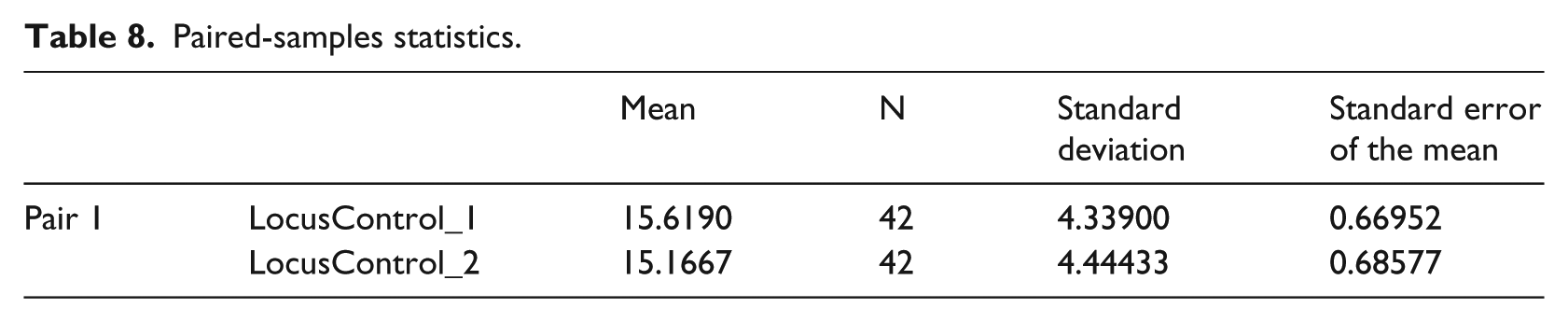
As for the locus of control, there is no significant difference in the scores before the program (M = 15.619; SD = 4.339) and after program (M = 15.166; SD = 4.444) as indicated in Table 8; t = .448, p = .631 (Table 9). Hence, the null hypothesis of equal means is not rejected.
Paired-samples statistics.
Paired-samples test.
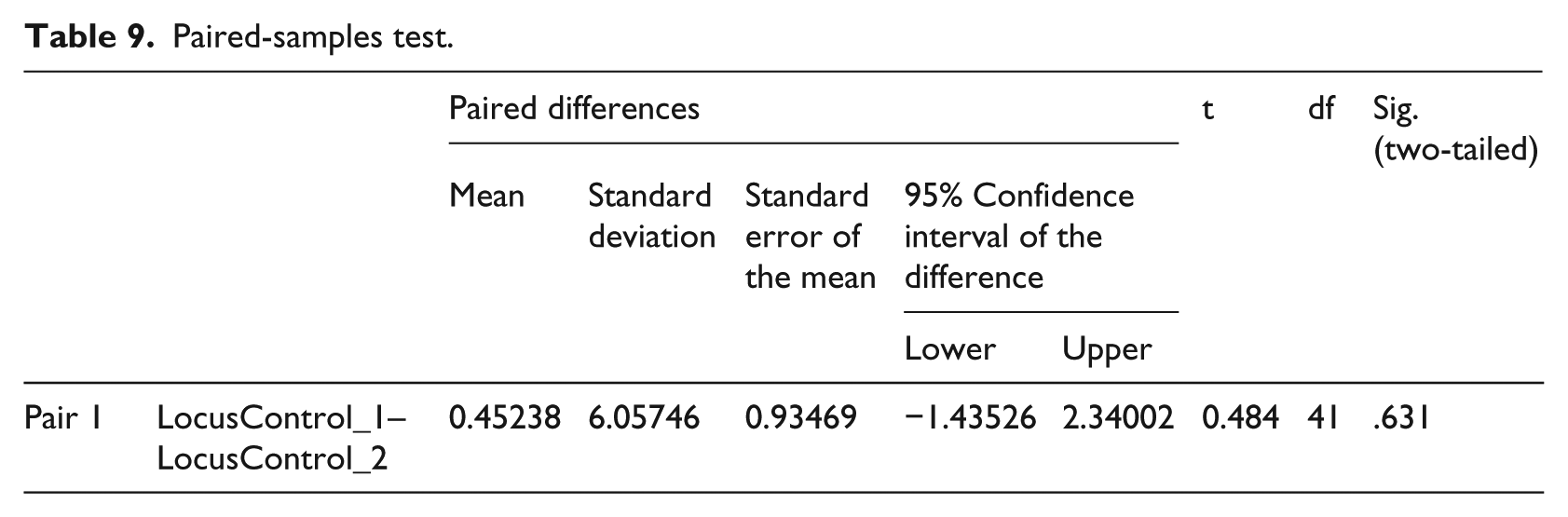
Students’ locus of control did not significantly change before and after the program.
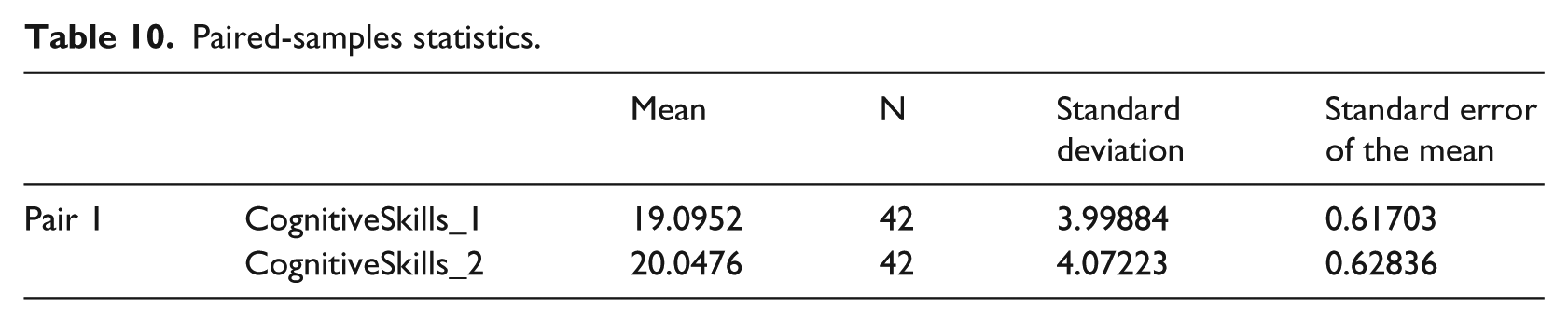
With respect to the cognitive skills, there is no statistically significant difference in their scores before the program (M = 19.095; SD = 3.998) and after the program (M = 20.047; SD = 4.072) as indicated in Table 10; t = −1.740, p = .089 (Table 11). Hence, the null hypothesis of equal means is not rejected.
Paired-samples statistics.
Paired-samples test.
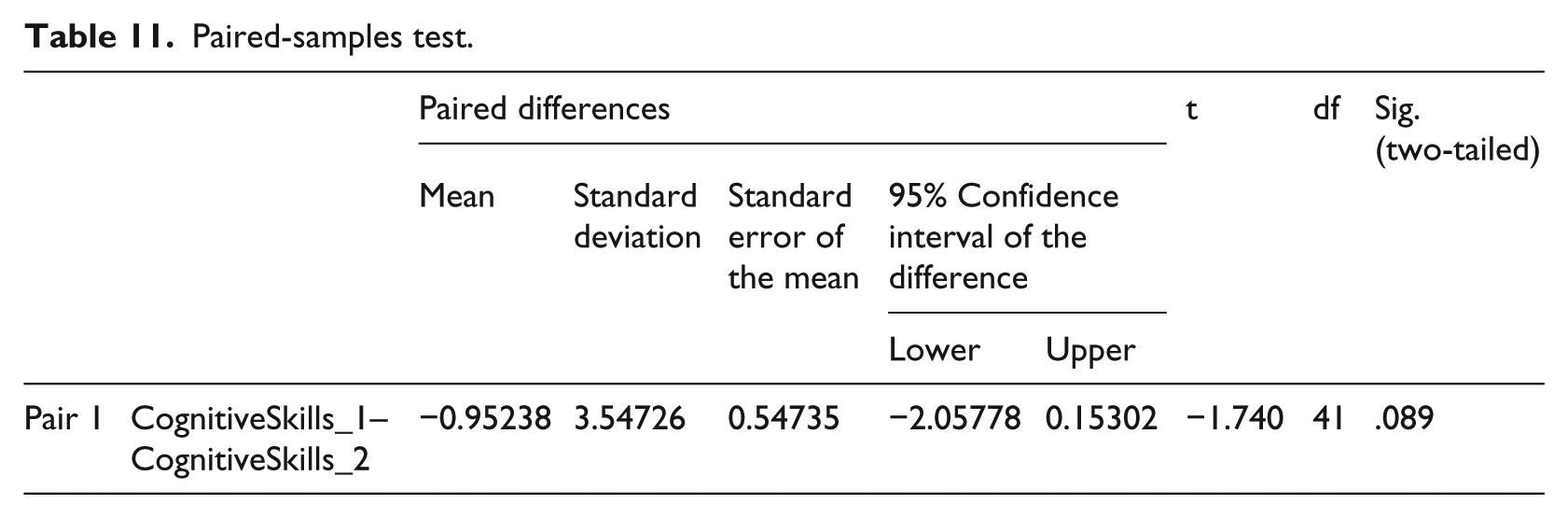
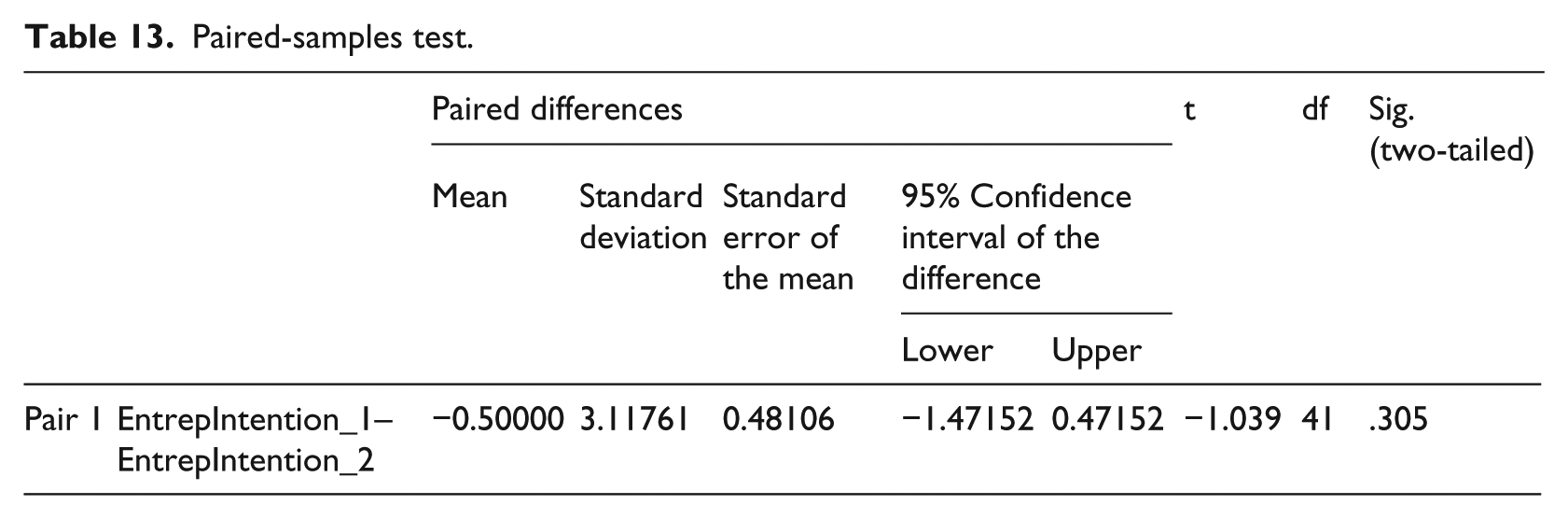
With reference to the entrepreneurial intentions, there is no statistically significant difference in their scores before the program (M = 10.428; SD = 2.931) and after the program (M = 10.928; SD = 1.799) as indicated in Table 12; t = −1.039, p = .305 (Table 13). Hence, the null hypothesis of equal means is not rejected.
Paired-samples statistics.
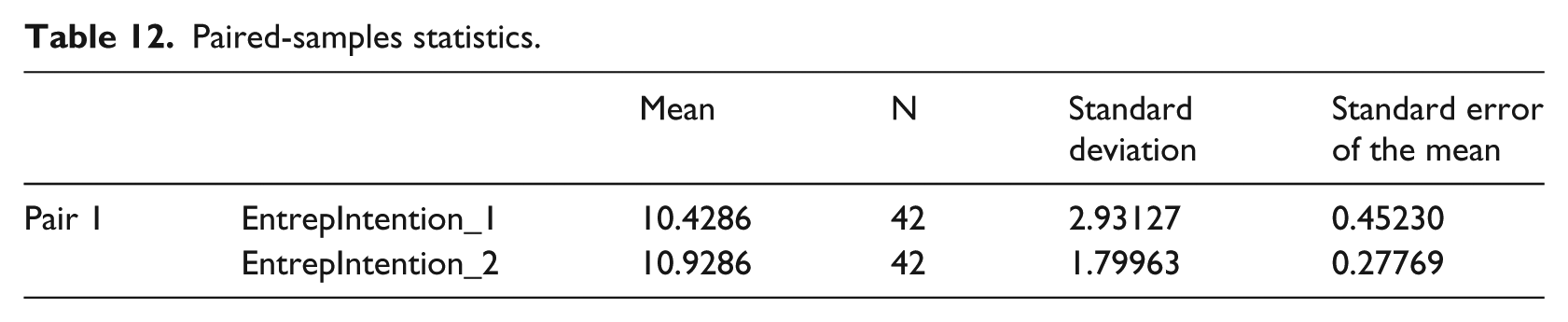
Paired-samples test.
Control variables
Gender
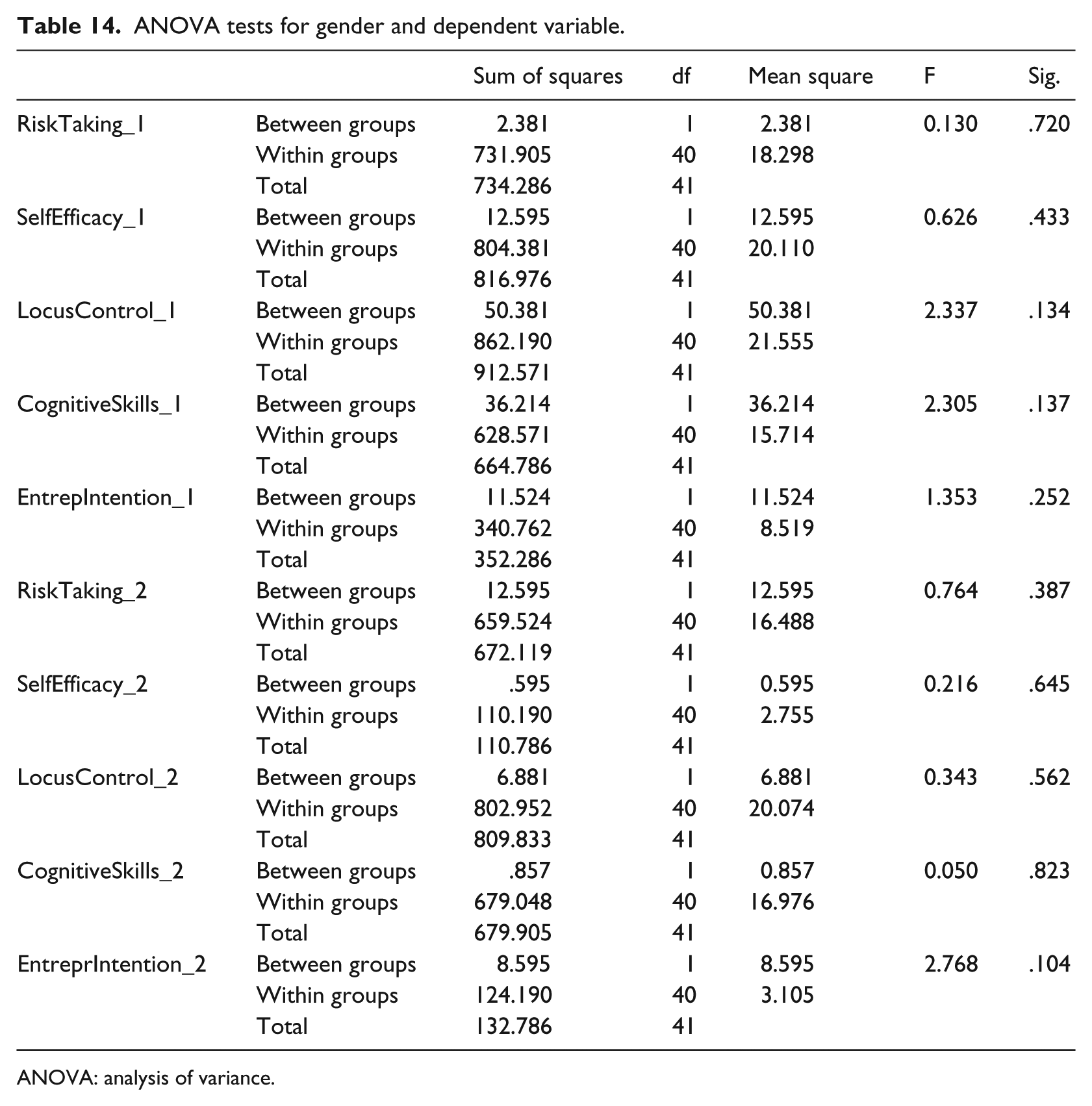
Analysis of variance (ANOVA) tests were conducted to test for correlations between gender and dependent variables (sets of skills and entrepreneurial intentions). These tests did not yield any significant results. Therefore, differences of responses reported by girls and boys are not statistically significant (Table 14).
ANOVA tests for gender and dependent variable.
ANOVA: analysis of variance.
Parents’ occupation
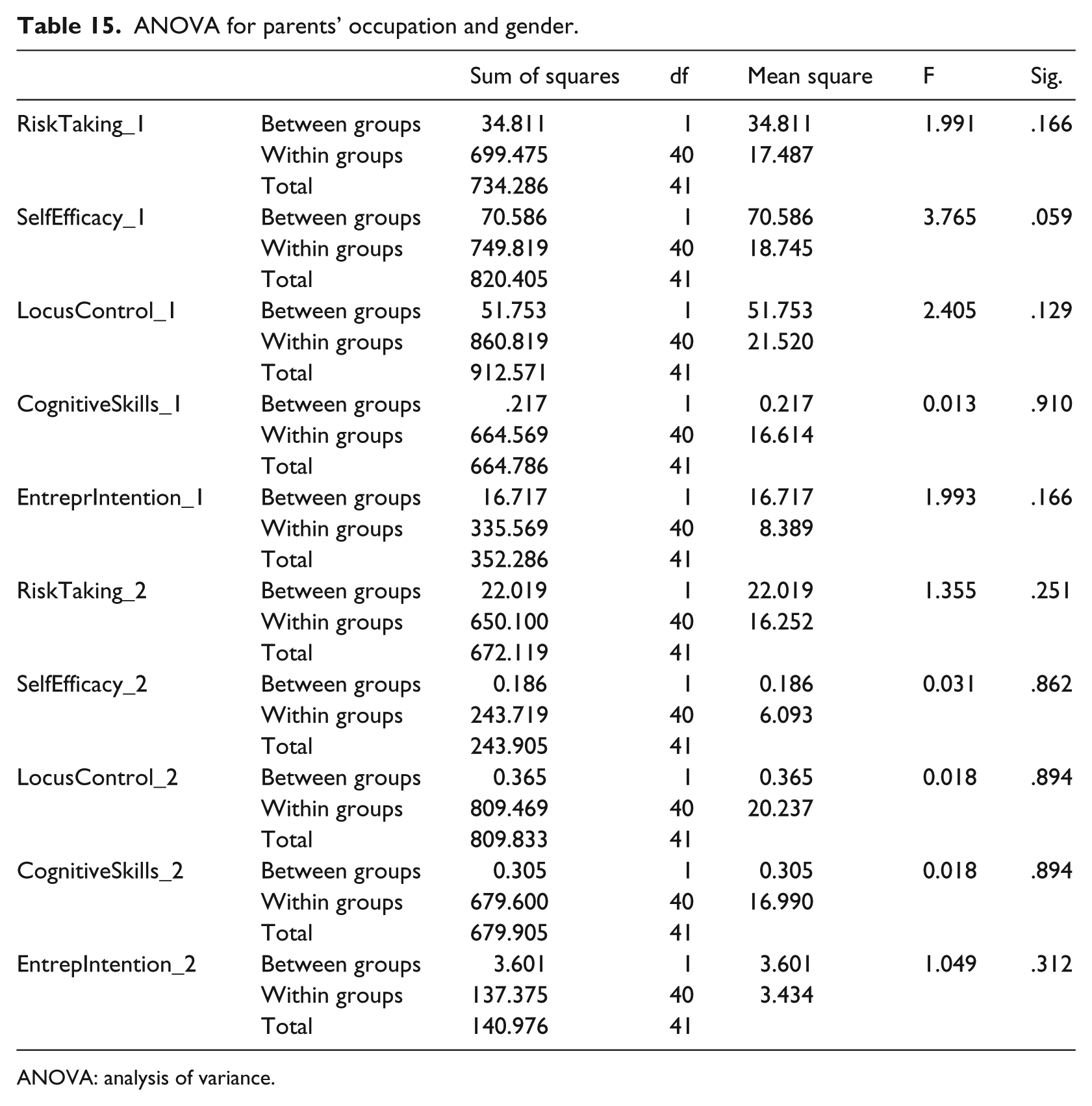
ANOVA tests were conducted to test for correlations between the fact of having a father who is an entrepreneur (all respondents mothers are non-entrepreneurs) and the dependent variables (sets of skills and entrepreneurial intentions). These tests did not yield any significant results. Therefore, there are no statistically significant differences in responses reported by children whose fathers are entrepreneurs and those whose fathers are not entrepreneurs (Table 15).
ANOVA for parents’ occupation and gender.
ANOVA: analysis of variance.
To answer the study hypothesis, the entrepreneurship program did not seem to yield changes in the students’ cognitive skills, in two types of non-cognitive skills, namely, risk-taking and locus of control as well as in their entrepreneurial intentions. Only students’ self-efficacy skills seem to have been influenced by the program in question, even when controlling for gender and parents’ occupation to single out any social influence or attitude or predisposition these children may have toward entrepreneurship in general and entrepreneurship program in particular.
Discussion
Several authors and researchers contend that childhood is the preferred period to plant entrepreneurial seeds and to nurture positive attitudes toward entrepreneurship as well as to acquire basic knowledge on the topic (Peterman and Kennedy, 2003). Nonetheless, the literature is not conclusive as there are studies that found contradictory effects of entrepreneurship education. Furthermore, the extant literature, by large, does not specify the appropriate skills that need to be targeted by entrepreneurial programs.
To address this gap in the entrepreneurship education literature, particularity in the Moroccan context, this study tested whether the exposure of children to an entrepreneurship program would bring about changes in their entrepreneurial skills, non-cognitive skills (risk-taking, self-efficacy, and locus of control), and their entrepreneurial intentions. The only change that took place concerned their self-efficacy. The concept of self-efficacy was developed out of the social cognitive theory (Bandura, 1977). Perceived self-efficacy is defined as “a judgment of one’s ability to organise and execute given types of performances” (Bandura, 1997: 21). Personal beliefs about capabilities are crucial for the learning process. In fact, measures of self-efficacy seem to be better predictors of behavior than what individuals are actually capable of achieving (Bandura, 1989).
In the current research design, we rule out that the effects measured are due to other subjects as there are no entrepreneurship courses or any other activities offered at the primary education level in Morocco and that’s why we did not resort to a control group in the research strategy; we only conducted the study with the treatment group.
While the selection of the school, among other schools in the city of Ifrane, was random, the selection of the city was, however, a more convenient choice. Hence, the external validity of our study may be limited as the sample may not be representative of the population of interest, namely, Moroccan school children aged 11–12. Nonetheless, both the school and the students do not seem to be different than most Moroccan public schools and majority of elementary school children throughout the country, particularly in terms of their socio-economic background.
On another note, no participation bias seemed to be associated with our study as the entrepreneurial program was not compulsory and children were free to attend it or not.
The findings of this study corroborate the results of Huber et al. (2014) conducted in the Dutch context with the same age children (11–12) in terms of sets of skills that were influenced due to the entrepreneurial program, namely, non-cognitive skills. In fact, out of nine non-cognitive skills initially taken into account in the Huber et al. (2014) study, seven experienced changes, namely, risk-taking propensity, creativity, need for achievement, self-efficacy, pro-activity, persistence, and analyzing. In both studies, no changes occurred in cognitive entrepreneurial skills and entrepreneurial intentions.
In corollary to the previous point, public policymakers ought to devise policies and coordinate the efforts with the objective to enhance children self-efficacy at school, especially that self-efficacy operates within a broad network of sociocultural influences (Bandura, 1997).
The above results suggest that these entrepreneurial programs and courses do not seem to be effective as an educational initiative to promote and develop children entrepreneurial skills and intentions. Hence, investment in entrepreneurial skills in middle childhood through entrepreneurial programs would not yield high returns on the short run, although they would benefit children through the spill-over mechanism on the long run. This suggestion should not be understood as these entrepreneurial programs have no benefits for children; there is no doubt the latter who attend these entrepreneurial programs in elementary school would benefit better from similar programs later in their educational path more than those who never attended these programs at an early age. Our contention is that under tight economic circumstances, public policymakers need to rationalize decisions and optimize resource utilization and have to strategically select appropriate activities to efficiently develop specific skills in children.
In light of the findings, we hypothesize that cognitive and non-cognitive entrepreneurial skills as well as entrepreneurial intentions may develop through different life stages; for example, non-cognitive entrepreneurial skills are best developed at primary level, whereas cognitive skills may be conducive to develop in high school and the development of entrepreneurial intentions lends itself better at the tertiary level when students begin thinking about their career path. In short, different entrepreneurship education objectives (education through entrepreneurship; education about entrepreneurship; and education for entrepreneurship) may need to be set for different age-groups. Future research need to disentangle this matter and investigate these premises.
Considering the crucial role that entrepreneurial activities play in economic growth, social cohesion and innovation, assessing the effectiveness of early entrepreneurship education at the primary school level is of vital interest to researchers, policymakers, education leaders, educators, and parents. Furthermore, it should be emphasized, again, that the extant literature of entrepreneurial programs have mostly focused on adolescents in secondary and higher education, whereas research on children in elementary school, particularly those of second childhood (aged 11–12) has been mostly neglected. Nonetheless, the results related to entrepreneurial intentions need to be interpreted with caution as children aged 11–12 are still far from selecting an occupation, and they may not establish a connection between their participation in the program and their future occupation.
In terms of limitations, it should be mentioned that the effects of only one specific program were assessed in this study just like other studies (i.e. Huber et al., 2014; Oosterbeek et al., 2010), while different programs may yield different findings, hence the importance of new research based on different entrepreneurial programs.
Conclusion
This article assesses the impact of early entrepreneurship education for the development of cognitive and non-cognitive entrepreneurial skills and entrepreneurial intentions. Results from a field research are reported through a program called Never too early to learn entrepreneurship in the Moroccan context which aims to teach children aged 11–12 the basics of entrepreneurship and promote entrepreneurial culture in the classroom through an experiential learning program that span over a 3-month period, once a week. The sample consists of 42 students in the Ifrane region (center of Morocco).To do so, a pre-program and a post-program tests were used.
The findings of this study confirm that late childhood (11–12 years old) seems to be the adequate period in order to develop self-efficacy, a non-cognitive skill required to become an entrepreneur. The skill levels increased to a larger extent for the students’ self-efficacy after the program as measured by the self-reported scores on three different sets of entrepreneurial skills scales. Nonetheless, cognitive entrepreneurial skills and entrepreneurial intentions are not to be pursued at an early age.
The presented field research, which is the first of its kind in the Moroccan context, provides a case for further educational activities fostering entrepreneurship that public policymakers ought to take into account while developing and reforming elementary school curriculum.
The results of this study suggest that investment in the development of children entrepreneurial skills might be efficient to begin at the middle childhood stage and most importantly students’ self-efficacy is best developed at an early age.
Footnotes
Appendix 1
Descriptive statistics for the scale “entrepreneurial intentions” after the program.
| N |
Minimum |
Maximum |
Mean |
Standard deviation |
Variance |
Skewness |
Kurtosis |
|||
|---|---|---|---|---|---|---|---|---|---|---|
| Statistic | Statistic | Statistic | Statistic | Statistic | Statistic | Statistic | Standard error | Statistic | Standard error | |
| Start_bus_future_2 | 42 | 2.00 | 5.00 | 4.0952 | 0.75900 | 0.576 | −0.515 | 0.365 | 0.005 | 0.717 |
| Not_work_others_2 | 42 | 1.00 | 5.00 | 3.3810 | 0.98655 | 0.973 | −0.051 | 0.365 | −0.332 | 0.717 |
| Think_idea_future_2 | 42 | 2.00 | 5.00 | 3.5238 | 0.86216 | 0.743 | 0.403 | 0.365 | −0.598 | 0.717 |
| EntrepIntention_2 | 42 | 6.00 | 15.00 | 10.9286 | 1.79963 | 3.239 | −0.178 | 0.365 | 1.250 | 0.717 |
| Valid N (list-wise) | 42 | |||||||||
Declaration of Conflicting Interests
The author(s) declared no potential conflicts of interest with respect to the research, authorship, and/or publication of this article.
Funding
The author(s) received no financial support for the research, authorship, and/or publication of this article.