




Abstract
Prostacyclins are vasodilatory agents used in the treatment of pulmonary arterial hypertension. The direct effects of prostacyclins on right heart function are still not clarified. The aim of this study was to investigate the possible direct inotropic properties of clinical available prostacyclin mimetics in the normal and the pressure-overloaded human right atrium. Trabeculae from the right atrium were collected during surgery from chronic thromboembolic pulmonary hypertension (CTEPH) patients with pressure-overloaded right hearts, undergoing pulmonary thromboendarterectomy (n = 10) and from patients with normal right hearts operated by valve replacement or coronary bypass surgery (n = 9). The trabeculae were placed in an organ bath, continuously paced at 1 Hz. They were subjected to increasing concentrations of iloprost, treprostinil, epoprostenol, or MRE-269, followed by isoprenaline to elicit a reference inotropic response. The force of contraction was measured continuously. The expression of prostanoid receptors was explored through quantitative polymerase chain reaction (qPCR).
Iloprost, treprostinil, epoprostenol, or MRE-269 did not alter force of contraction in any of the trabeculae. Isoprenaline showed a direct inotropic response in both trabeculae from the pressure-overloaded right atrium and from the normal right atrium. Control experiments on ventricular trabeculae from the pig failed to show an inotropic response to the prostacyclin mimetics. qPCR demonstrated varying expression of the different prostanoid receptors in the human atrium. In conclusion, prostacyclin mimetics did not increase the force of contraction of human atrial trabeculae from the normal or the pressure-overloaded right heart. These data suggest that prostacyclin mimetics have no direct inotropic effects in the human right atrium.
Keywords
Introduction
Right heart failure is the terminal event of several diseases causing sustained pressure-overload of the right ventricle (RV), including pulmonary arterial hypertension (PAH), chronic thromboembolic pulmonary hypertension (CTEPH), and various congenital heart diseases.1–3 Despite extensive research in the field,4–8 there is still a lack of safe and effective targeted therapies for the right heart. Characterization of currently used pharmacologic agents with a potential beneficial effect on the right ventricle and development of new treatments for the right heart are required. 2
Prostacyclins decrease pulmonary vascular resistance and afterload for the RV in patients suffering from PAH. 9 This effect is mediated through different G-protein coupled prostanoid receptors linked to second messenger pathways, subsequently resulting in pulmonary vasodilation. 10 The prostacyclins have shown to improve cardiac output in humans11–13 as well as RV function in several animal models.14–16 Whether prostacyclins have direct inotropic effects on the right heart, or if the beneficial effects result exclusively from decreased pulmonary vascular resistance and RV afterload reduction, has been debated for decades. Recent animal studies point towards a direct effect on the heart of some of the available prostacyclin mimetics.14–17 However, experimental studies in rats and the human left ventricle suggest that heart failure might attenuate potential positive effects on the heart.17,18 It is not known if this problem also applies to the human right heart.
In the current study, we aimed to examine the direct effect of four different, clinically available prostacyclin mimetics on the force of contraction of the human right atrium from patients with and without pressure-overload of the right heart. We also investigated the expression of the prostanoid receptors in the human right atrium.
Methods
The study was carried out in accordance with the Declaration of Helsinki and informed consent was obtained from all the participants involved.19 The protocol was approved by The National Committee on Health Research Ethics in Denmark before initiation of the study. The sub-study involving tissue from pigs conforms to the Principles of Laboratory Animal Care formulated by the National Society for Medical Research and the Guide for the Care and Use of Laboratory Animals published by the US National Institutes of Health. 20
Human right atrial trabeculae
Baseline characteristics of patients.
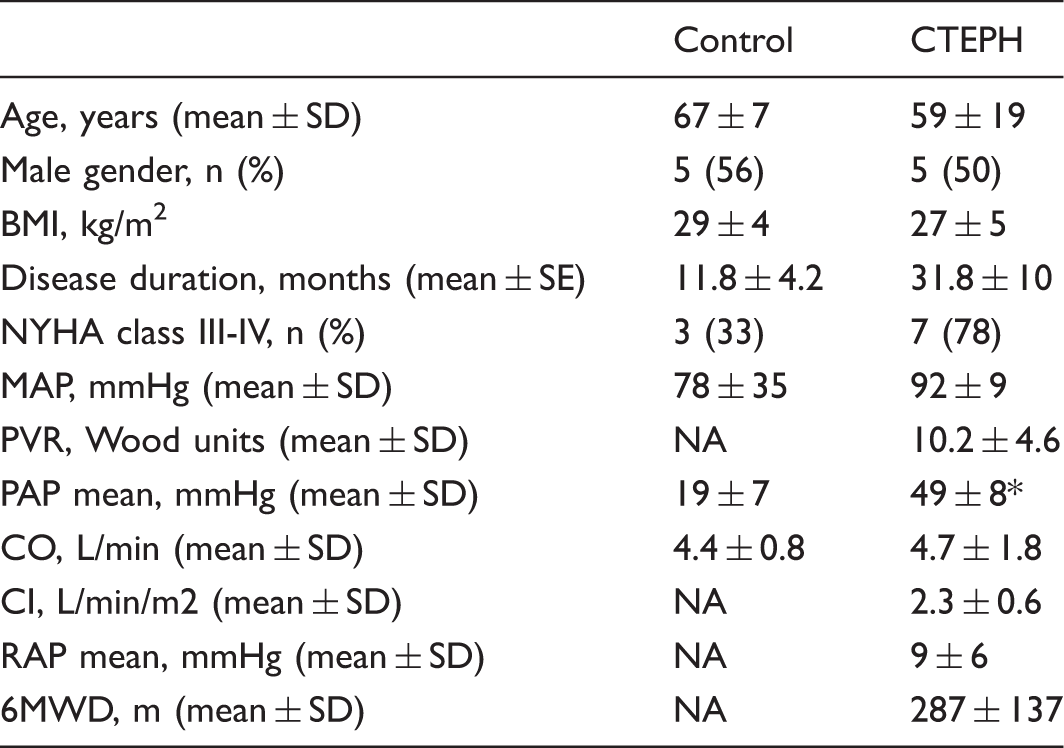
P < 0.0001 compared to controls.
6MWD, 6-minute walking distance; BMI, body mass index; CI, cardiac index; CO, cardiac output; CTEPH, chronic thromboembolic pulmonary hypertension; EF, ejection fraction; MAP, mean arterial pressure; PAP, pulmonary arterial pressure; PVR, pulmonary vascular resistance; RAP, right atrial pressure; SD, standard deviation; SE, standard error of mean.
In relation to insertion of cardiopulmonary bypass tubes, a small specimen of the appendage of the right atrium (5 × 5 mm) was removed. This tissue sample from the right atrial appendage was collected and immediately submerged in room temperature Krebs-Henseleit buffer (pH 7.35–7.45). While submerged in the buffer, up to four trabeculae from the right atrial appendage were isolated, placed in an organ bath in 36℃ oxygenated, modified Krebs-Henseleit buffer ([mmol/L] NaCl2 [112.1], KCl [4.8], NaHCO3 [42.5], MgCl2 [1.2], KH2PO4 [1.0] CaCl2 [2.0], glucose [10], pyruvic acid [10]), bubbled with 95% O2 and 5% CO2. The trabeculae were paced continuously at 1 Hz between two electrodes. The rest of the right atrial tissue was frozen in liquid nitrogen and stored at −80℃ for later tissue analysis.
The isolated trabeculae were initially stretched to a pretension of 0.5 g and allowed to stabilize for 75 min. After the stabilization period, each trabeculae was subjected to increasing concentrations of iloprost (control n = 8, CTEPH n = 6), treprostinil (control n = 7, CTEPH n = 7), epoprostenol (control n = 7, CTEPH n = 7), or MRE-269 (control n = 7, CTEPH n = 5). Each drug was administered in the buffer as six cumulative doses letting the trabeculae stabilize to each dose for 10 min before the next was administered. At the end of the protocol, one dose of isoprenaline (30 ug/mL) was administered to induce a reference inotropic response. Force of contraction was measured continuously with a force transducer and obtained and analyzed using Notocord Hem Software (Notocord Systems, France). Trabeculae that did not reach the threshold of 0.5 g in developed force after stabilization or with no reaction to isoprenaline were excluded from the study.
Right atrium versus right ventricle
To determine a potential differential effect of the prostacyclin mimetics between the right atrium (RA) and the right ventricle (RV), we obtained right atrial and right ventricular tissue from eight Danish landrace/Yorkshire pigs (46 ± 15 kg). With the pig fully anesthetized, a median sternotomy was performed. The right atrial appendage and the RV were cut out of the beating heart and immediately submerged in room temperature Krebs-Henseleit buffer. Trabeculae from the RA and the RV were isolated, mounted between the pacing electrodes in an organ bath and subjected to increasing concentrations of iloprost (RA n = 7, RV n = 7) or treprostinil (RA n = 5, RV n = 6) as described in the protocol above.
Expression of prostanoid receptor in the human right atrium
The frozen human RA tissue was ground in a mortar and homogenized with TRIzol (Invitrogen, Life Technologies, UK). The aqueous phase containing the RNA was separated from the organic phase with chloroform and precipitated with isopropanolol. The RNA pellet was resuspended in DEPC water (Invitrogen, Life Technologies, UK). The quality and concentration of the total RNA were determined using spectrophotometry (NanoDrop-1000 Spectrophotometer, Thermo Scientific, USA). Complementary DNA (cDNA) was synthesized using Taqman Reverse Transcription Reagents kit (Applied Biosystems Roche, New Jersey, USA). Real-time polymerase chain reaction (RT-PCR) was carried out using primers from Qiagen Company, UK (Table 1) in ABI Prism 7900HT Sequence Detection System (Applied Biosystems, UK). Gene transcription was measured by Taqman RT-PCR. The Ct value was calculated as the mean of triplicate measurements. Expression of the prostanoid receptors were calculated as: Expression(gene of interest) = 2(Ct reference gene – Ct gene of interest). Glyceraldehyde 3-phosphate dehydrogenase (GAPDH) was used as reference gene.
Materials
Iloprost (Ilomedin®) was from Bayer Schering Pharma, treprostinil (Remodulin®) was from NordicInfu Care AB, Sweden, and epoprostenol (Flolan®) was from GlaxoSmithKline, UK, all dissolved in saline and MRE-269 from Cayman Chemical, USA, dissolved in DMSO (Merck, Germany). Iloprost was administered in concentrations in the range of 0.02–6 ng/mL, treprostinil in the range of 0.5–150 ng/mL, epoprostenol in the range of 0.06–20 ng/mL, and MRE-269 in the range of 30–10,000 ng/mL (Fig. 1). We aimed to evaluate a broad range of concentrations including clinical relevant doses. Drug concentrations were chosen on the basis of previous studies from our laboratory,14,17 as well as other studies suggesting inotropic effect of the prostacyclin mimetics.15,23–26
Study design. The right atrial tissue was collected in Krebs-Henseleit buffer, the trabeculae isolated and mounted in the organ bath between two electrodes pacing at 1 Hz. Excess atrial tissue was frozen in liquid nitrogen for later tissue analysis. After 75 min of stabilization each trabecula was subjected to six increasing concentrations of iloprost, treprostinil, epoprostenol, or MRE-269, followed by one dose of isoprenaline. The drugs were added in cumulative doses to the buffer surrounding the trabecula.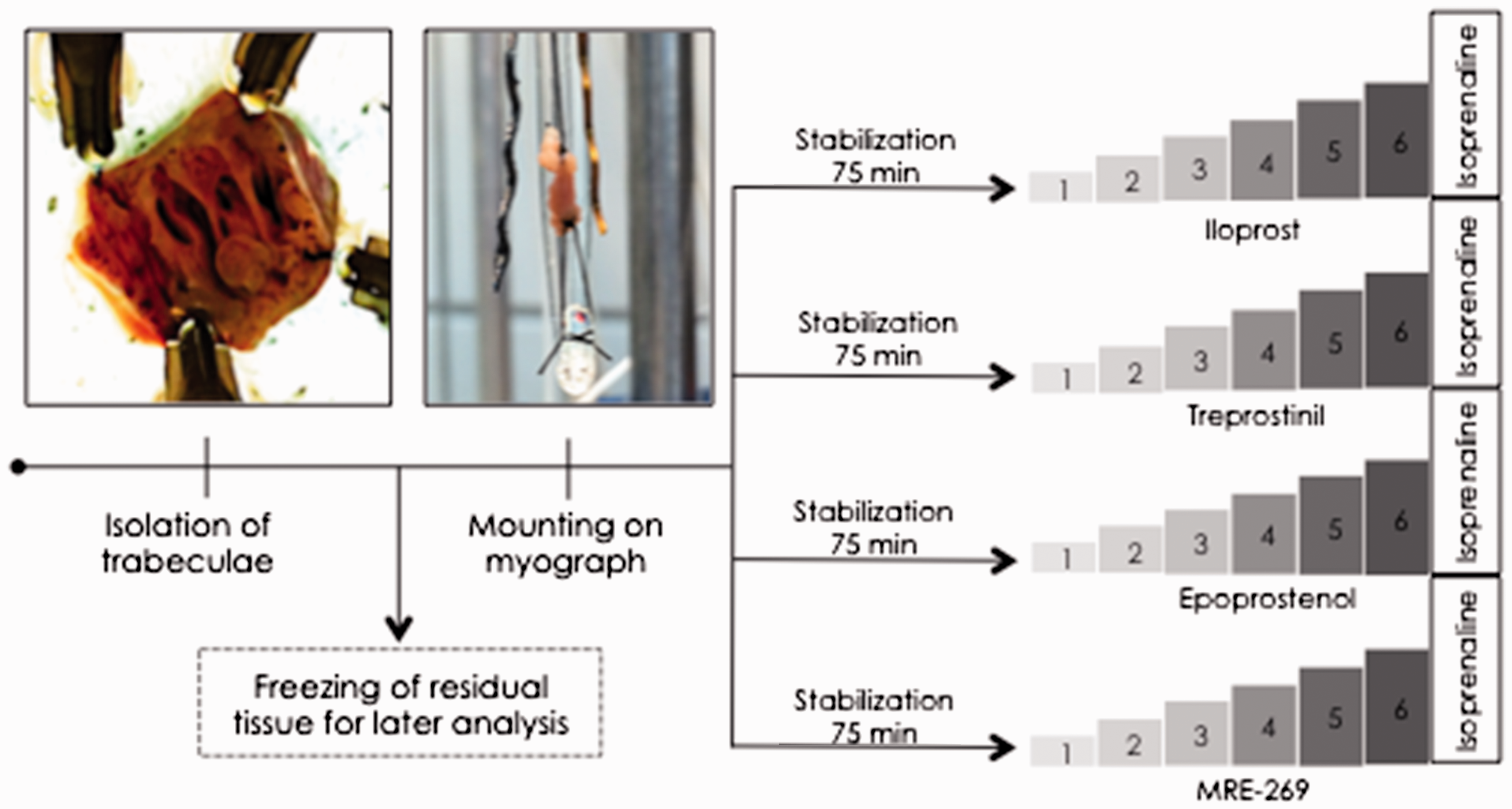
Statistics
Unpaired t-test and Mann–Whitney test were used to test difference in baseline characteristics between controls and CTEPH patients. The effect of prostacyclin mimetics was tested using repeated measurements one-way analysis of variance (ANOVA) or Friedman test followed by a post hoc multiple comparisons test. Difference between the effect on atrial and ventricular tissue was tested with a two-way ANOVA. A P value < 0.05 was considered statistically significant. Data were analyzed using GraphPad Prism 6.0 (La Jolla, CA, USA) and is presented as mean ± standard deviation unless otherwise specified.
Results
Baseline characteristics
Characteristics of the test participants are presented in Table 1. Age, gender distribution, and body mass index did not differ between participants with and without CTEPH. CTEPH patients presented with elevated pulmonary arterial pressure compared to control patients as well as high pulmonary vascular resistance and low 6-minute walking distance (Table 1). None of the patients received treatment with prostacyclin mimetics at the time of the experiment.
Effect of prostacyclin mimetics on human right atrial trabeculae
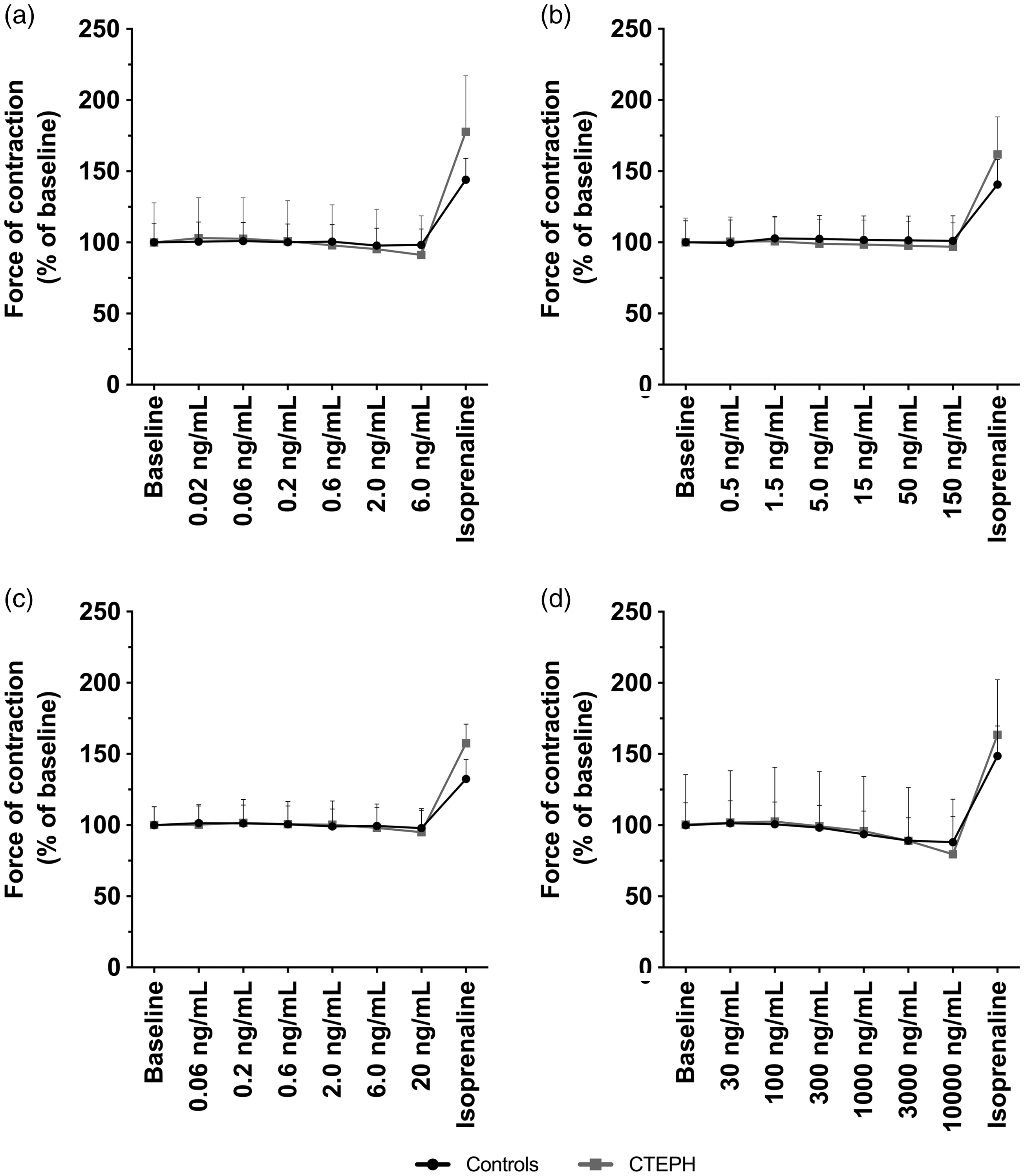
Baseline force of contraction was higher in trabeculae from controls compared to CTEPH patients (Fig. 2a). However, there was no difference in maximum force of contraction (isoprenaline force – baseline force) between the two groups (Fig. 2b). Neither iloprost, treprostinil, epoprostenol, nor MRE-269 increased force of contraction in any of the trabeculae. MRE-269 had a non-significant negative effect in trabeculae from both control patients (P = 0.06) and CTEPH patients (P = 0.09) (Fig. 3). There were no differences between the effect on controls and CTEPH of any of the agents (p(interaction) = non-significant).
(a) Baseline force of contraction and (b) Maximum force of contraction. CTEPH, chronic thromboembolic pulmonary hypertension; NS, non-significant. Effect of (a) iloprost, (b) treprostinil, (c) epoprostenol, and (d) MRE-269 on human right atrial trabeculae. Data are presented as mean force of contraction relative to baseline (100%) + standard deviation.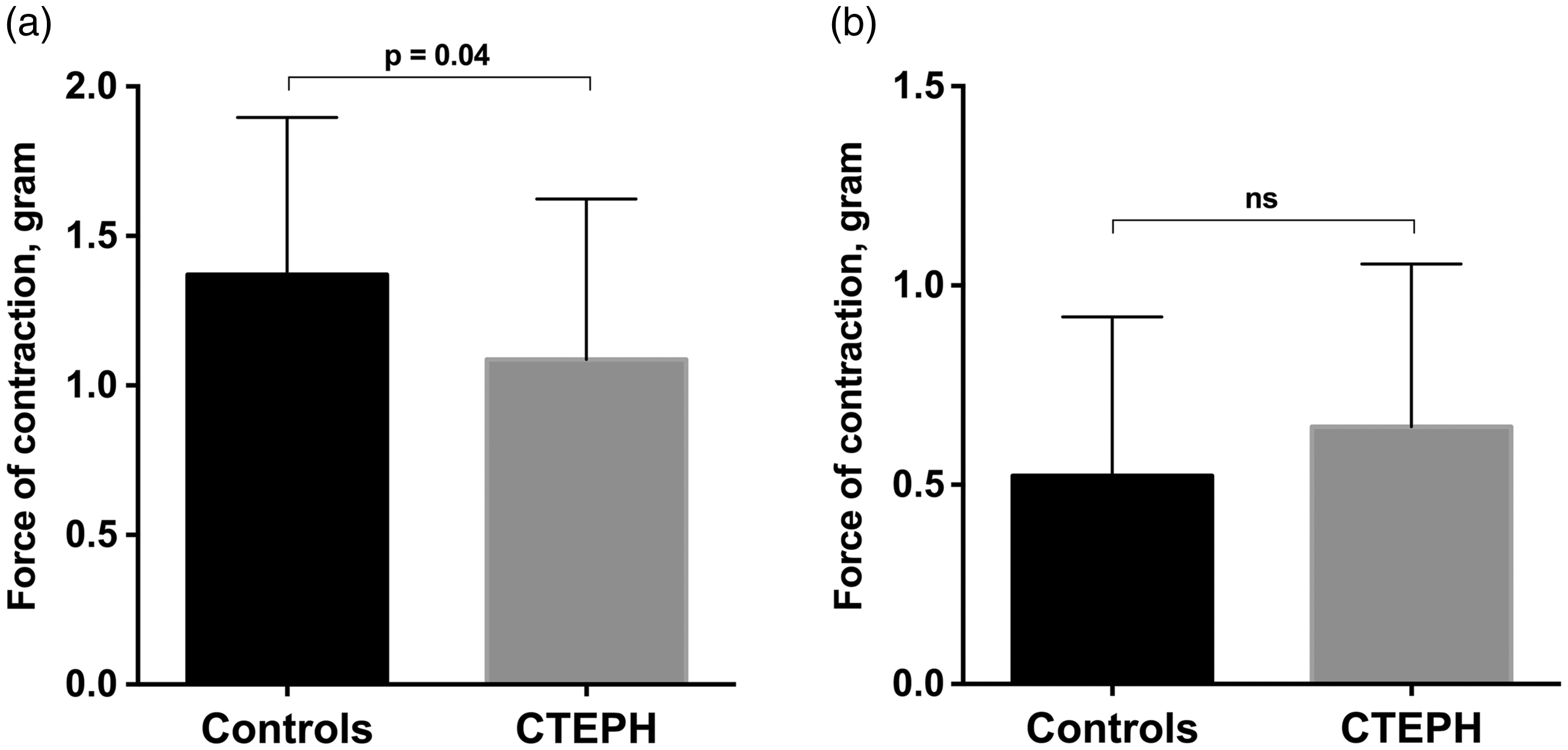
We found no difference in maximum response to isoprenaline between trabeculae from controls and trabeculae from CTEPH patients (Control vs. CTEPH Δforce ± sd: 0.52 ± 0.40 g vs. 0.65 ± 0.41 g, P = 0.17).
Right atrium versus right ventricle
Baseline force of contraction was lower in trabeculae from the right atrium than trabeculae from the right ventricle (force ± sd: RA 0.5 ± 0.39 g vs. RV 1.2 ± 0.94 g, P = 0.034) obtained from pigs.
Iloprost increased force of contraction in the right atrium (P = 0.001) whereas it had no effect on the right ventricle (RA vs. RV p(interaction) = 0.015, two-way ANOVA) (Fig. 4a).
Effect of (a) iloprost and (b) treprostinil on right atrial and right ventricular trabeculae from the pig. Data are presented as mean force of contraction relative to baseline (100%) + standard deviation. *P < 0.05, **P < 0.01, Dunn’s multiple comparisons test.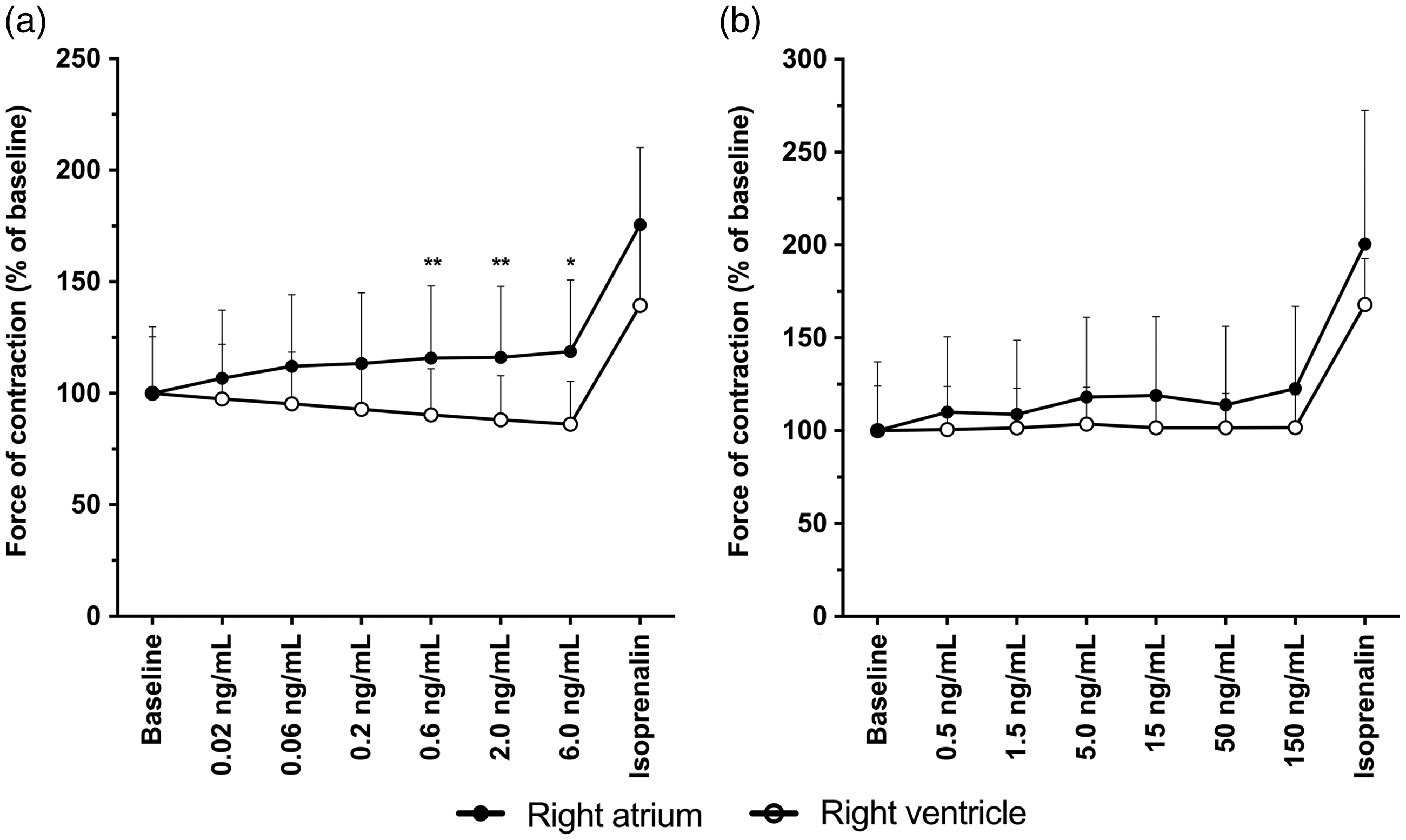
Treprostinil had no effect on either the right atrium or the right ventricle (Fig. 4b). Isoprenaline increased force of contraction in both atrial and ventricular trabeculae, confirming a contractile potential.
Expression of prostanoid receptors in the human right atrium
In the right atrium from both controls and CTEPH patients, the EP4 receptor was abundantly expressed. The IP, EP2, and DP receptors were less abundantly expressed whereas there was a very low expression of the EP1, EP3, FP, and TP receptors. In the right atrium from CTEPH patients, expression of EP2 was reduced compared to controls (messenger RNA [mRNA] expression mean difference control vs. CTEPH: 0.0011, 95% CI, 0.00017–0.0019; P = 0.02) (Fig. 5).
Expression of mRNA for the prostanoid receptor subtypes in the right atrium, quantified by PCR. The data were normalized to the reference gene Glyceraldehyde 3-phosphate dehydrogenase (GAPDH). Control n = 9, CTEPH n = 7. Results are presented as mean ± SEM. *P < 0.05, **P < 0.01, ***P < 0.001, student’s t-test. CTEPH, chronic thromboembolic pulmonary hypertension; mRNA, messenger RNA.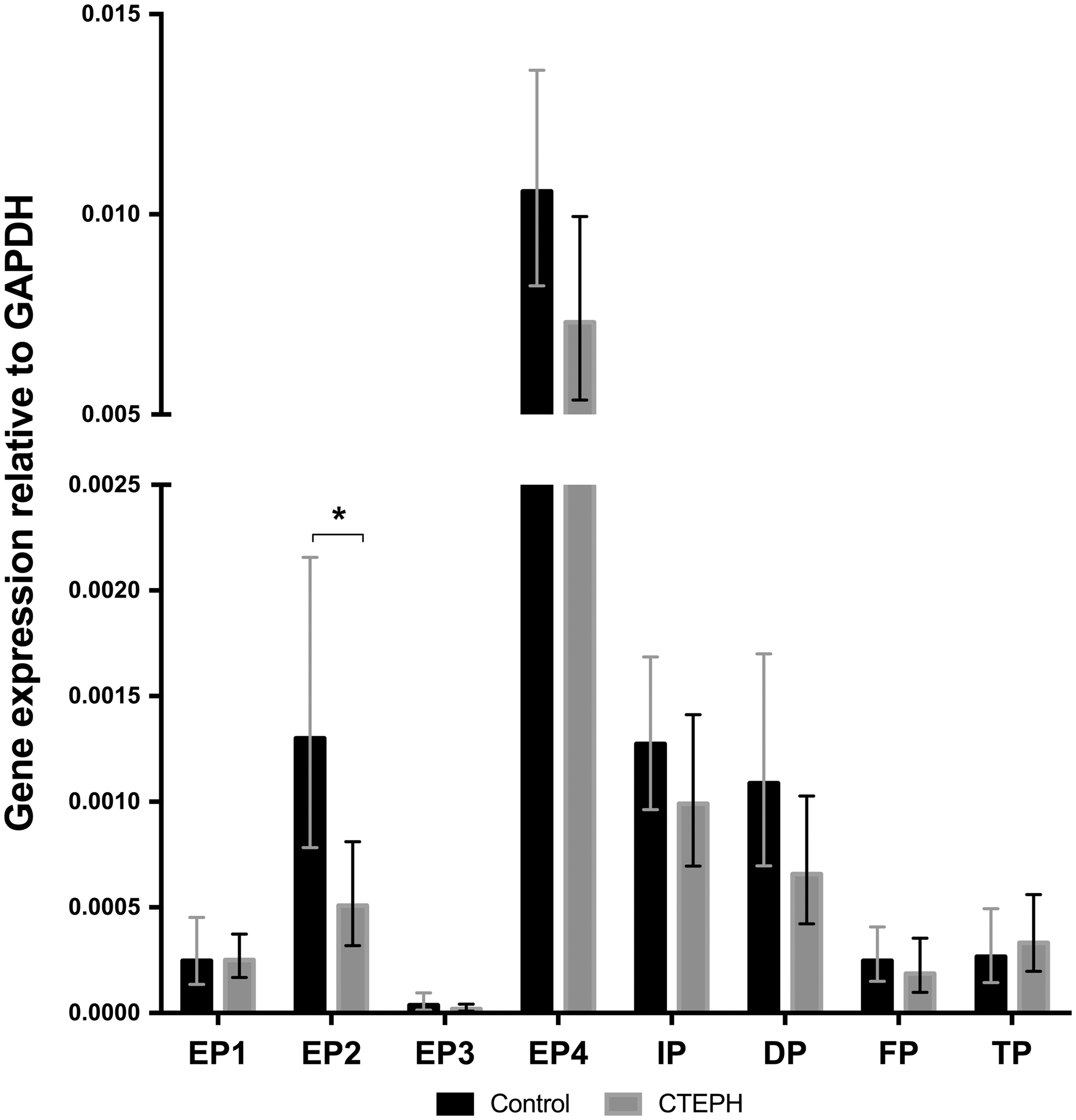
Discussion
In the present study, we investigated the effects of four clinically available prostacyclin mimetics on force of contraction of the human right atrium. Using heart tissue from patients with normal right hearts as well as CTEPH patients, we were able to examine whether there was a potential differential effect on the normal and the pressure-overloaded right heart. We observed no changes in force of contraction in the human atrium when the prostacyclin mimetics were administered. A contractile reserve was consistently observed with administration of isoprenaline.
Patients were chosen to represent two distinct groups, one with pressure-overloaded right hearts and one with normal right hearts. The CTEPH patients included in this study all presented with markedly elevated pulmonary vascular resistance, pulmonary artery pressures, and severely reduced functional level similar to previous studies of patients with this condition.27,28 This was not the case for the control group and they were considered to have a normal right heart.
We found that none of the four prostacyclin mimetics had a direct effect on force of contraction in the human right atrium. This contradicts our previous studies where we found iloprost, treprostinil, and MRE-269 to improve right heart function in the healthy rat.14,17 In these studies we used fixed afterload and the isolated heart model to avoid measuring non-cardiac effects of the prostacyclin mimetics rather than a direct effect on the heart. However, changes in RV function resulting from effects in the systemic and coronary circulation cannot be ruled out. In the present study, we used isolated muscle trabeculae in organ baths, where the prostacyclin mimetics are delivered to the cardiomyocytes through diffusion. This allowed us to investigate the direct effect on the atrial myocardial tissue separated from systemic effects and changes in coronary flow.
Riise et al. found iloprost to have a transient negative inotropy in the non-failing human left ventricle and a sustained negative inotropy in the failing left ventricle. 18 We did not observe negative inotropic effects of the prostacyclin mimetics, yet a tendency towards reduced force of contraction was found when MRE-269 was administered in the highest concentrations. Riise et al. suggest the negative inotropic effect to be mediated by the IP receptor and our findings may support this, as MRE-269 is considered a selective IP receptor agonist, though this agent can act independently of the IP receptor in the rat. 29
As the right and the left heart are embryologically differently derived, results from the left heart cannot automatically be extrapolated to the right heart. 30 This concurs with the study from Ueno et al., demonstrating a positive inotropic effect in the left myocardium of the prostacyclin analogue, beraprost, but no effect on the right myocardium from the guinea pig. 31 Our study suggests that effects of prostacyclin mimetics on the right heart are not due to direct actions on the cardiomyocytes, which is supported by a number of other studies from the RV proposing the effect to be primarily a consequence of vasodilatation in the pulmonary and/or coronary circulation and not a direct effect on the RV.17,32,33
Pharmacological effects on atrial trabeculae may not completely reflect effects on the ventricular myocardium. 21 Using right atrial tissue, we were concerned that we might miss that the right ventricle could be more sensitive to the prostacyclin mimetics. For obvious reasons, the different response to prostacyclin mimetics between ventricular and atrial tissue can only be investigated in an animal model. To explore whether the RV responds better to the prostacyclin mimetics than the RA, we conducted a separate set of experiments, comparing the effects of iloprost and treprostinil on right atrial trabeculae to right ventricular trabeculae from the pig. Neither iloprost nor treprostinil altered the force of contraction in the ventricular trabeculae, though iloprost actually had a positive effect in the atrial trabeculae. These results suggest that the pig and human atrium do not respond in a similar fashion to prostacyclin mimetics. Therefore, we cannot expect that the human and porcine ventricle would respond similarly to prostacyclin mimetics. Our results, however, do not support that prostacyclin mimetics improve porcine ventricular contractility and it could be speculated that these findings translate to humans.
Prostanoid receptor binding affinities.

Human prostanoid receptor binding affinities (Ki in nM) for the prostacyclin mimetics.
Modified with permission from Clapp and Gurung. 10
NA, not available.
Limitations
This study was carried out on isolated human trabeculae. Direct effects on the heart are only a part of the many effects of prostacyclin mimetics in the intact organism, adding up to the net effect on the whole cardiovascular system. Yet, the aim of this study was to investigate the isolated, direct effect on the human right myocardium, which, to our knowledge, this study is the first to do.
We did not normalize trabecular force to preparation size. As we use a constant preload of 0.5 g, different preparations sizes may have different strains, which could introduce a potential bias.
Experiments comparing the effects on the right atrium versus the right ventricle were carried out in trabeculae from the pig. Animal experiments may not be directly transferable to humans, however, considering the obvious challenges in obtaining tissue from the live human ventricle, we chose to use the pig, a well-accepted animal model in cardiovascular research.
Conclusion
In conclusion, this study demonstrates that prostacyclin mimetics have no direct inotropic effects on cardiomyocytes in the human right atrium, though prostanoid receptors, which the prostacyclin mimetics are likely to activate, were expressed.
Footnotes
Conflict of interest
United Therapeutics Corporation provided a grant for materials to another study, of which Sarah Holmboe is a co-author. Lucie H. Clapp has received educational grants from United Therapeutics Corporation.
Funding
This work was supported by: Danish Heart Foundation (12-04-R90-A3793-22694), Danish Children’s Heart Foundation (14-R97-A5009-26020, 13-04-R93-A4567-26011), AP Møller Foundation, Aarhus University, Aarhus University Research Foundation, and Snedkermester Sophus Jacobsen and hustru Astrid Jacobsens Foundation.