




Abstract
Tardive dyskinesia (TD) is a movement disorder that can develop with the use of dopamine receptor-blocking agents and is most commonly caused by antipsychotics. The use of antipsychotics is expanding, which may lead to an increased number of patients experiencing TD. To summarise the current knowledge of the epidemiology and risk factors for TD in Japan, we reviewed articles related to the current state of knowledge around TD identified through a PubMed search, and held a roundtable discussion of experts in Japan on 9 September 2021 to form the basis of the opinion presented within this review. The true prevalence of TD among patients treated with antipsychotics is not well characterised; it is reported to be between 15% and 50% globally and between 6.5% and 7.7% in Japan. Potential barriers to timely treatment of TD include the stigma surrounding mental health issues and the lack of data regarding TD in Asian patients. This review summarises the current knowledge of the epidemiology, challenges to TD diagnosis and risk factors for TD in Japan. Recent strategies for symptom monitoring and early diagnosis, as well as consensus recommendations are included. Achieving a high level of awareness of TD among physicians who treat patients with psychiatric disorders is of great importance and physicians should ensure that patients with psychiatric disorders receiving antipsychotics are proactively monitored for signs of TD.
Plain Language Summary
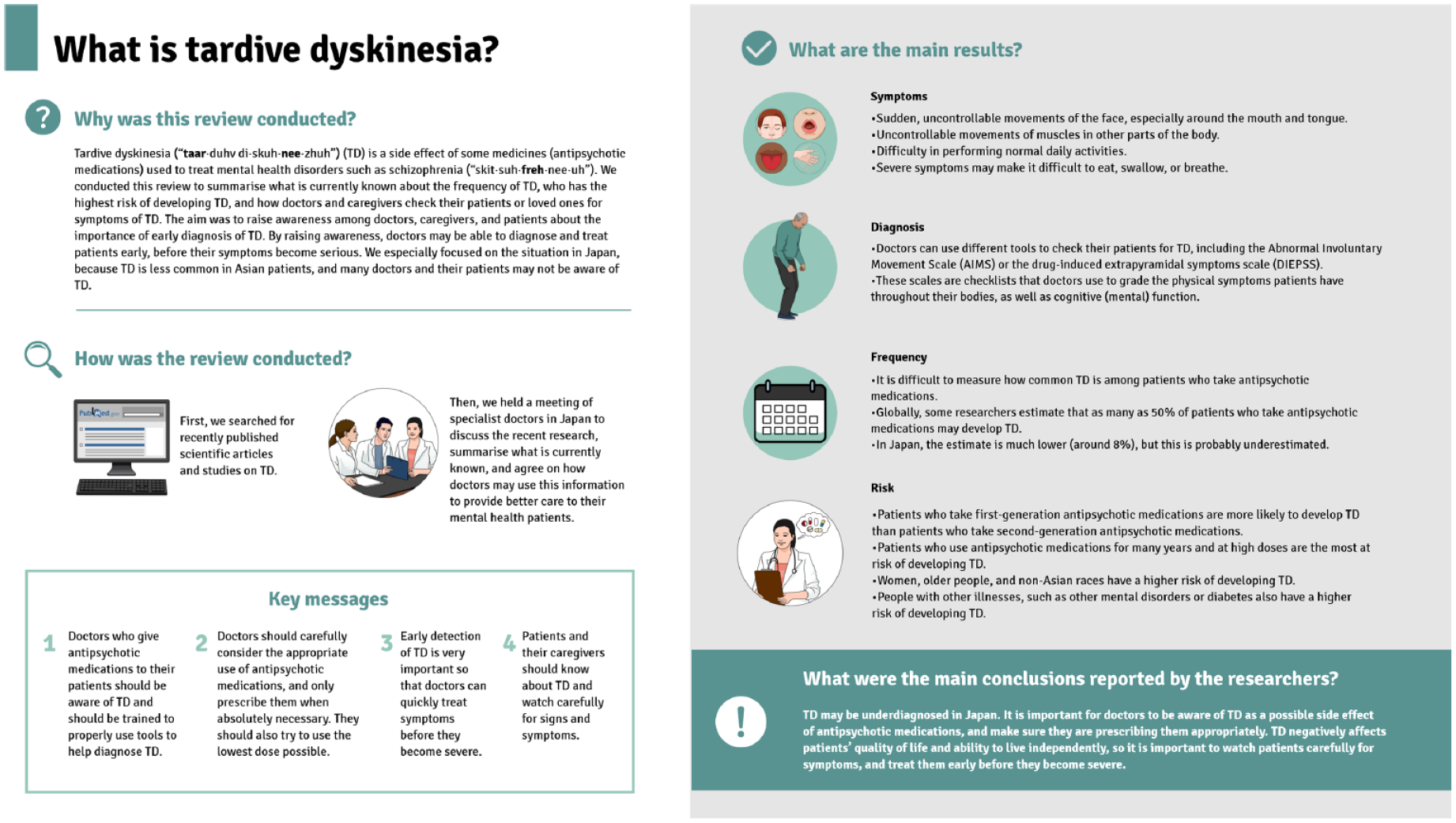
Visual Summary

Introduction
Tardive dyskinesia (TD) is a movement disorder that occurs as a potentially serious adverse drug reaction to various psychotropic medications, the most common of which are antipsychotics.1,2 TD is classified in the Diagnostic and Statistical Manual of Mental Disorders, Fifth edition (DSM-5) as ‘involuntary athetoid or choreiform movements lasting at least a few weeks, developing in association with the use of a neuroleptic medication for at least a few months, and persisting beyond 4–8 weeks’. 3 TD is more commonly observed in patients treated with first-generation antipsychotics (FGAs) than with second-generation antipsychotics (SGAs),4–8 yet the increasing use of SGAs for treatment of affective disorders in addition to schizophrenia suggests that the prevalence of TD will likely continue to increase. 9
The symptoms of TD include spontaneous, repetitive and involuntary muscle movements, frequently of the lower face and jaw, and sometimes unwanted movements of the extremities, hindering walking or the use of hands.10,11 The burdens of patients with TD include not only impairments in activities of daily life and the social stigma associated with uncontrollable facial expressions or disfigurement, but in rare cases where the pharyngeal, diaphragm or trunk muscles are involved, TD can also be life-threatening.12–14 TD is often irreversible, even when antipsychotics are discontinued.15,16
Although progress has been made in Japan in recent decades to address the stigma associated with mental illness, 17 public perception of mental illness in Japan remains problematic, as the belief persists that illnesses such as schizophrenia and major depressive disorder commonly result from a patient’s own character flaws or the way he or she was raised. 18 This stigma may present a considerable barrier to treatment for patients struggling with mental health issues; there is a need to better understand the situation in Japan with respect to treatment and patient or caregiver burden, particularly regarding side effects of antipsychotics. Moreover, there is a lack of data specifically in Asian patients, who are less likely to suffer from TD than other races. 19
The purpose of this review is to summarise the current knowledge of the epidemiology and risk factors for TD with a special focus on Japan, and to describe the recent strategies for symptom monitoring and early diagnosis, as discussed at the recent roundtable discussion of experts in Japan. A detailed review of the pathophysiology and current treatment options for TD, as well as the prognosis for TD, is included in the second article of the supplement.
Methods
To identify suitable literature to include in this review, we conducted a PubMed search in August 2021 focusing on articles published between January 2000 and August 2021, although articles published prior to 2000 were included as appropriate. The following search terms were used: ‘tardive dyskinesia’, alone and in combination with ‘epidemiology’, ‘incidence’, ‘prevalence’, ‘atypical antipsychotics’, ‘risk factors’, ‘mortality rate’, ‘quality of life’, ‘Asia’, and ‘Japan’. Details of the literature search are described in the flow diagram shown in Supplementary Figure 1. A roundtable discussion, which was held on 9 September 2021, formed the basis for the expert opinion presented in this article. We prioritised the inclusion of systematic reviews and meta-analyses in addition to original articles as materials for the roundtable discussion, and discussed narrative reviews where appropriate. Case reports and case series were excluded. We prioritised English publications but also included Japanese articles where relevant, particularly with respect to the clinical situation in Japan. Among those who attended the roundtable discussion, the authors of this review as well as Professor Koichiro Watanabe (Department of Neuropsychiatry, Faculty of Medicine, Kyorin University, Japan) contributed to the consensus recommendations.
The roundtable discussion was moderated by a representative of the sponsor, Mitsubishi Tanabe Pharma Corporation. Discussions were facilitated by Professor Watanabe, who also recommended the panellists to be invited to participate, based on their clinical and academic experience as well as their participation in scientific congresses in Japan. In addition to Professor Watanabe, the panellists included the authors of this article. The discussion was structured as follows: the first half began with a 15-min review of the recent literature concerning TD epidemiology, risk factors and symptoms or diagnosis, followed by a 30-min discussion among the panellists concerning the following questions: (1) Epidemiology: Is TD onset similar in Japan compared with other countries? Are there any concerns specific to Japan, such as the clinical environment or the drugs used to treat the underlying psychiatric disease? (2) Diagnosis: Are there any particularly important signs or symptoms to monitor for? What should physicians be cautious of with respect to differential diagnoses? Are there any challenges to be aware of for the use of evaluation scales such as the Abnormal Involuntary Movement Scale (AIMS) and drug-induced extrapyramidal symptoms scale (DIEPSS)? (3) Risk factors: What are the risk factors that physicians should be aware of, and how can they be mitigated? The second half of the discussion included topics covered in the second article of this supplement. The entire discussion was recorded and minutes were taken in Japanese and translated into English. The authors collaborated with the medical writer to structure the content into this review article. All participants consented to publication of the article, and non-author contributors have been mentioned in the acknowledgement.
Epidemiology of TD
The prevalence and incidence of TD in the general population are difficult to estimate, as the existing literature generally describes the epidemiology of TD with respect to patients with psychiatric disorders (i.e. those receiving antipsychotics). 9 Estimates for the global prevalence of TD among those treated with antipsychotics vary considerably, from 15% to as high as 50%,1,2 and the prevalence is understood to be higher among patients treated with FGAs than SGAs. A large meta-analysis of 41 studies found an overall TD prevalence of 25.3% [95% confidence interval (CI), 22.7–28.1%] among patients treated with antipsychotics, whereas the prevalence for patients treated with FGAs and SGAs was 30.0% (95% CI: 26.4–33.8%) and 20.7% (95% CI: 16.6–25.4%), respectively. 20 Another meta-analysis conducted by the same group, which analysed the annual incidence of TD among patients receiving antipsychotics, found a similarly elevated risk of developing TD for patients treated with FGAs [6.5% (95% CI: 5.3–7.8%)] compared with SGAs [2.6% (95% CI: 2.0–3.1%)]. 8
With respect to differences in risk of TD associated with different SGAs, research has shown mixed results. A meta-analysis comparing various SGAs reported that aripiprazole was associated with the lowest risk of TD, with a rate ratio (RR) and 95% CI of 0.045 (0.01–0.19) versus FGAs. Olanzapine, risperidone and clozapine also conferred less risk of TD: 0.25 (0.19–0.34), 0.38 (0.25–0.58) and 0.39 (0.22–0.70), respectively, whereas ziprasidone, paliperidone and quetiapine were not found to be significantly different from FGAs. 8 Although this meta-analysis did not show reduced risk of clozapine versus other SGAs, another meta-analysis suggested that switching to clozapine may improve symptoms of TD. 21 A long-term study conducted in Europe also found that olanzapine and clozapine were associated with lower risk of TD compared with FGAs and other SGAs, 22 whereas a postmarketing surveillance study conducted in Japan did not find a significant difference between clozapine and other SGAs. 23 The limitations and often small number of treatment arms in the above studies should be considered when interpreting the results and how they should be applied to decisions for patient care.
Data describing the prevalence and incidence of TD in Japan among patients treated with antipsychotics are somewhat limited. An older epidemiological study found a mean prevalence of TD of 7.7% when including data from 13 studies conducted in Japan between 1972 and 1992, representing 7560 patients. 24 Data from the more recent Research on Asian Psychotropic Prescription Pattern (REAP) survey, which analysed the frequency of TD in inpatients with schizophrenia, found a TD prevalence of 6.5% among Japanese patients. 25 However, it should be noted that this study included only inpatients and thus may not be representative of the entire patient population, as patients with a less-severe form of schizophrenia (i.e. not requiring hospitalisation) were not included. To date, there have been no studies reporting the estimated annual incidence of TD or the incidence of TD according to treatment with FGAs versus SGAs among Japanese patients.
The drastic variation of prevalence and incidence estimates across studies may be at least partly explained by differences in study designs and methodological details in how data were gathered. 26 In addition, there is likely heterogeneity of subjects across studies and a failure to control for spontaneous dyskinesias. 10 Further complicating assessments of prevalence and incidence with respect to FGAs versus SGAs is the fact that many studies do not control for prior medication use, and the influence of prior pharmacotherapy on development of TD cannot be ruled out. The true prevalence of TD is likely underestimated, owing to its often insidious presentation and frequent misdiagnosis as extrapyramidal symptoms of the underlying disease, rather than an adverse drug reaction. 27
With the advent of SGAs, TD was expected to become less common as physicians tended to favour the newer drugs when treating patients with schizophrenia. However, as the indications of many SGAs continue to expand for other psychiatric disorders, the risk of TD will remain a persistent concern of increasing importance. 9 Nevertheless, schizophrenia remains one of the most common disorders for which these drugs are prescribed. The global age-standardised point prevalence of schizophrenia was estimated to be 0.28% in 2016; the prevalence did not vary widely among countries and was reported to be between 0.27% and 0.33% in Japan. 28 Interestingly, movement disorders including dyskinesia have been reported in antipsychotic-naïve patients with schizophrenia.29–31 A systematic review reported that such patients presented with dyskinesia more frequently compared with healthy controls [odds ratio (OR): 3.59 (95% CI: 1.53–8.41)] and that movement disorders (dyskinesia and parkinsonism) were significantly more prevalent in first-degree healthy relatives of patients with schizophrenia than controls [OR: 1.38 (95% CI: 1.06–1.81)]. 32
Diagnosis of TD
TD can be challenging to diagnose because of the fluctuating nature of the symptoms, which often have a subtle presentation that can be easily overlooked or mistaken for symptoms of the mental illness itself.26,33,34 The ‘tardive’ (i.e. delayed in onset) nature of TD can further complicate diagnosis as physicians may not immediately associate new symptoms with medication that has been well-tolerated for several months. 35 TD usually involves the oral, buccal and lingual areas of the face; the limbs and trunk may also be involved but tend to be less affected than the mouth and face. The associated involuntary movements are usually described as choreiform or athetoid in nature.10,11 According to the DSM-5 criteria for TD, diagnosis is based on a patient exhibiting involuntary athetoid or choreiform movements typically of the tongue, jaw and extremities, that last at least several weeks and are associated with the use of antipsychotics of at least a few months’ duration.3,36
In 1982, the Schooler–Kane criteria were proposed. 37 The Schooler–Kane criteria for a diagnosis of TD include a history of at least 3 months’ total cumulative exposure to antipsychotics (continuous or discontinuous), the presence of moderate or worse dyskinetic movements in one or more body areas or mild or worse dyskinetic movements in two or more body areas (face, lips, jaw, tongue, upper extremities, lower extremities and trunk) and the absence of other conditions that may produce the observed abnormal involuntary movements.37–39
There are several rating scales available to aid in the assessment of TD. The AIMS was developed as a research tool by the National Institute of Mental Health and originally consisted of 12 items: 7 to measure the severity of abnormal movements in the orofacial region, upper extremities, lower extremities and trunk rated from 0 (none) to 4 (severe); and 5 that involve clinicians’ global assessment of severity, patient awareness, incapacitation due to abnormal movements and mental status. The revised scale includes two additional items (edentulousness and the disappearance of abnormal movements during sleep).39,40 The AIMS rating scale is frequently used to assess severity and location of abnormal involuntary movements, and acts as a screening tool for subsequent confirmation of diagnosis based on the Schooler–Kane criteria.36,38,39 In addition to its use as a screening tool, the AIMS rating scale can be used to monitor changes in TD severity over time. 39 In the West, the AIMS rating scale is often used as a safety assessment to monitor for the development of TD in patients receiving antipsychotics in clinical trials. 41
Another related rating scale is the DIEPSS, which consists of eight individual symptoms (gait, bradykinesia, sialorrhea, muscle rigidity, tremor, akathisia, dystonia and dyskinesia) and one global assessment (overall severity of extrapyramidal symptoms), rated on a scale of 0 (normal) to 4 (severe).42,43 The DIEPSS rating scale evaluates a wider range of extrapyramidal symptoms, in addition to dyskinesia, compared with the AIMS. In Japan, the DIEPSS rating scale is generally the preferred tool for evaluating TD. Clinical trials conducted in Japan for antipsychotics use the DIEPSS as the standard rating scale to evaluate extrapyramidal symptoms, and the DIEPSS is the only such tool covered under the national health insurance system in Japan.
The key difference between the AIMS and DIEPSS rating scales is their scope; the AIMS scale only evaluates symptoms of TD, while the DIEPSS scale also evaluates other movement disorders, including symptoms of parkinsonism, dystonia and akathisia. 41 Data were compared from a large international study that used the AIMS to monitor for dyskinesia along with other rating scales to monitor for additional extrapyramidal symptoms, and a large study conducted in Japan that used the DIEPSS for monitoring, both of which compared the efficacy and safety of olanzapine or haloperidol. 41 The analysis found that treatment-emergent incidences of dyskinesia were similar between the two studies, suggesting that the two diagnostic tests were comparable in their ability to screen for TD.
Correctly diagnosing TD is imperative in terms of providing appropriate and timely treatment; however, there are many syndromes and conditions that cause abnormal movements similar to those of TD. As such, differential diagnosis should be performed. Differential diagnosis of TD is based on a history of treatment with antipsychotics and/or other dopamine receptor-blocking agents (DRBAs), recent discontinuation or dose reduction, and movement phenomenology. 44 Several conditions should be considered in the differential diagnosis, including spontaneous dyskinesias, parkinsonism, akathisia, dystonia and rabbit syndrome.36,44–48 Extrapyramidal symptoms that are not considered TD as well as spontaneous dyskinesias should be ruled out. 47 Spontaneous and edentulous dyskinesias, which are not associated with antipsychotic exposure, are fairly common in elderly patients and those with schizophrenia who have not been exposed to DRBAs; such symptoms may be difficult to distinguish from TD.36,46 Symptoms of DRBA-induced parkinsonism include bradykinesia, rigidity and rhythmic tremor; 50–75% of cases occur within 1 month of initiating DRBA treatment and 90% occur within the first 3 months. 49 Comparatively, TD onset is delayed and symptoms typically do not appear until ⩾ 3 months after initiating treatment. 45 Symptoms of DRBA-induced parkinsonism are generally reversible after discontinuation of treatment.44,45 Akathisia usually occurs in an acute or subacute form (90% of cases occur within 90 days of initiating DRBAs), although some patients may have tardive akathisia. 44 Patients with akathisia experience subjective feelings of restlessness and an urge to move, with an inability to sit or stand still.36,44 Dystonia can occur in either acute or tardive forms, and may manifest in a paroxysmal (e.g. oculogyric crisis) or continuous fashion. Dystonic movements are usually sustained, which results in abnormal postures. 44 These symptoms may be present in some patients with TD, but to a much lesser degree than patients with diagnosed dystonia. Nevertheless, distinguishing dystonia from dyskinesia may be particularly difficult and physicians should be cautious about the potential for misdiagnosis. Tardive dystonia occurs more commonly in young men, while TD occurs more frequently in elderly patients and women. 36 Similar to TD, antipsychotic-induced rabbit syndrome tends to present after months to years of antipsychotic treatment and involves repetitive motions of the mouth or lips; however, it can be distinguished from TD by the lack of involvement of the tongue. 48
A timely and accurate diagnosis is critical to initiating appropriate management strategies. Clinical management of movement disorders varies and may negatively impact TD if misdiagnosed. For example, parkinsonism is often treated with anti-cholinergic agents, which may worsen TD. 45 Caregivers are often the first to identify symptoms of TD, as patients may not notice or complain of mild symptoms. 46 This highlights the importance of proactive screening by clinicians. Patients with TD may experience many impairments, including aspiration, difficulty in chewing, increased fall risk, gait disorders, eating disorders, impairments in fine motor skills and difficulty in eating, dressing, bathing, using the restroom and sleeping (Figure 1).26,50 Even if patients do not complain of symptoms, quality of life may be negatively impacted. Severity of TD is negatively associated with quality of life51,52 and patients with TD have a significantly worse health-related quality of life and social withdrawal compared with similar patients without TD. 51 Notably, among patients with at least one psychiatric disorder who have three or more months of lifetime antipsychotic exposure, those with TD have lower rates of employment than those without. 53 In addition, patients may experience difficulties in carrying out daily activities necessary for independent living because of their symptoms. 54

Negative impacts of tardive dyskinesia on activities of daily living.a
Risk factors for TD
Medications with known or suspected association with drug-induced TD include DRBAs (FGAs, SGAs and some antiemetics), as well as antidepressants [selective serotonin reuptake inhibitors (SSRIs) and tricyclic antidepressants].1,55,56 It should be noted that the evidence for the association of antidepressants with risk of developing TD is debated and may be because these agents unmask symptoms of TD that are caused by concomitant DRBA therapy. 55 Although the risk of TD is thought to be lower in patients treated with SGAs versus FGAs, the use of SGAs has been increasing in recent years (including off-label indications and prescriptions for mood disorders, anxiety and sleep disorders, among others) and the incidence of TD is also expected to increase.36,57
Risk factors for developing TD, both modifiable and non-modifiable, are illustrated in Figure 2. Age plays a role in risk, as adults have a higher risk than children, and elderly patients have the highest risk.7,26,58–61 Initiating antipsychotics later in life (in the fifth decade or later) 61 and late-onset psychosis (⩾ 45 years of age) 62 are also associated with a greater risk of developing TD. TD is more common in women,4,19,63 with a global study reporting an overall prevalence of 24.2% among nearly 40,000 patients with psychiatric disorders, whereas the sex-stratified prevalence was 26.6% for women and 21.6% for men. 64 Severity of TD was also reported to be greater in women than in men. Ethnicity also plays a role in TD risk, with non-Asians having a higher risk than Asians 19 and African Americans having a higher risk than other racial groups. 63

Risk factors for development of drug-induced tardive dyskinesia.
The risk of developing TD increases with an increased cumulative duration of antipsychotic treatment. 61 For FGAs, a meta-analysis of older patients reported that the incidence estimates for probable TD were 23%, 42% and 57% after 1, 2 and 3 years of use, respectively. 65 While the risk of developing TD is lower overall for SGAs versus FGAs, 65 patients taking SGAs can develop TD and the incidence increases over time. A study in antipsychotic-naïve elderly patients evaluating the use of two SGAs over time reported TD incidence rates of 6.7% and 11.1% after 1 and 2 years with olanzapine treatment, and 5.3% and 7.2% with risperidone, respectively. 63 Higher cumulative exposure was also found to be associated with TD in paediatric patients taking SGAs.66,67 For the majority of pharmacological treatments, higher doses tend to increase the risk of most adverse drug reactions; 68 this is also reported to be the case with antipsychotics.46,69 Interestingly, a recent retrospective data analysis reported an increased risk of TD with a dose equivalent to ⩽ 100 mg/day chlorpromazine but not with a dose equivalent to > 100 mg/day; 70 this could be attributed to the increased dose of antipsychotic masking the symptoms of TD. 46
Diabetes mellitus has been suggested as an independent risk factor for TD,70–72 although other studies have failed to corroborate this association.61,73,74 The link between diabetes and TD is influenced by certain treatments for symptoms of diabetes, which are known to increase the risk of TD (e.g. metoclopramide).19,75,76
The presence of mood disorders has been identified as a risk factor for developing TD;77,78 however, these findings were based on older studies with FGAs and/or high doses. 19 There is a need to evaluate SGAs and lower-dose treatment regimens in patients with mood disorders. 19 A meta-analysis of prospective studies that included patients with schizophrenia reported that early presentation of extrapyramidal symptoms was found to be a risk factor. 79
Several genetic risk factors have also been reported; it is hoped that such findings can eventually be translated to clinical practice and lead to individualised antipsychotic treatment.80–82 A large genome-wide study found that single-nucleotide polymorphisms (SNPs) in TNFRSF1B (TNF receptor superfamily member 1B) and CALCOCO1 (calcium-binding and coiled-coil domain-containing protein 1) conferred a three-fold increase in TD risk, independent of other clinical risk factors. 80 A genome-wide association analysis of Japanese patients with schizophrenia identified an association of an SNP in the HSPG2 (heparan sulphate proteoglycan 2, perlecan) gene.83,84 This risk allele was associated with higher expression of HSPG2 in the prefrontal cortex and subsequent studies in mice support an association for higher HSPG2 expression and increased TD susceptibility. 84 A meta-analysis evaluating the effects of the BDNF (brain-derived neurotropic factor) gene Val66Met polymorphism on the AIMS score and TD incidence reported that the polymorphism was associated with a significantly higher AIMS score and a numerically higher incidence of TD in studies that included Caucasian patients. 85 There was no association between the polymorphism and AIMS scores or TD incidence in Asians or across all patients included in the analysis. While some studies have reported an association with TD for SNPs in the following genes: DRD2 (dopamine 2 receptor), DRD3 (dopamine 3 receptor),86,87 VMAT2 (vesicular monoamine transporter 2), 88 HTR2A (serotonin 2A receptor), HTR2 C (serotonin 2 C receptor), SOD2 (manganese superoxide dismutase), DPP6 (dipeptidyl peptidase-lid protein-6), MTNR1A (melatonin receptor 1A), PIP5K2A (phosphatidylinositol-4-phosphate 5-kinase IIα) and CNR1 (cannabinoid receptor 1), more studies are needed to confirm or refute these findings.89,90
The influence of smoking, alcohol and substance abuse on risk of TD remains somewhat controversial, as some studies have reported an increased risk whereas others have failed to find any association. In one study, the degree of smoking was correlated with TD severity, 91 and another study found that alcohol use was similarly associated with increased TD severity. 92 A retrospective analysis of patients with TD noted a correlation between substance abuse and TD; 93 however, a newer study analysing modifiable risk factors including smoking, alcohol and substance abuse or addiction found no such association. 94 Finally, organic brain damage has been suggested as a risk factor for TD and respiratory dyskinesia, although the evidence for this is limited. 95
Overall, the most important of these risk factors appear to be cumulative DRBA exposure and advanced age. 46 While many of the identified risk factors are non-modifiable, those that are modifiable represent an opportunity to mitigate risk. Clinicians can work with patients to improve modifiable patient factors such as working to prevent or control type 2 diabetes.19,46 Additional approaches may include preferentially treating with SGAs versus FGAs and using DRBAs only when clearly indicated and minimising the dose and duration of exposure.19,46
Clinical situation in Japan
Various epidemiological studies in Japan have estimated antipsychotic polypharmacy rates in adult patients in Japan to be as low as 15% 96 or as high as 57%; 97 the variation in estimates may be due to differences in study design and how data were collected (e.g. cross-sectional versus longitudinal or type of claims database used). Outpatient versus inpatient status also plays a large role, as hospitalised patients are likely to have more severe disease that may be more likely to necessitate polypharmacy. 98 Nevertheless, it is broadly accepted that antipsychotic polypharmacy is more prevalent in Japan compared with other countries,99,100 although in recent years polypharmacy and high-dose antipsychotic prescriptions have tended to decrease somewhat.96,100 The most commonly prescribed antipsychotics in Japan include olanzapine, risperidone, aripiprazole, quetiapine and blonanserin; and elderly patients (age 60 years and above) tend to be prescribed lower doses than non-elderly adults. 98 SGAs are generally preferred over FGAs.96,98,101
A recent study investigating anticholinergic use among patients with schizophrenia in Japan revealed that concomitant anticholinergic prescription rates varied considerably by hospital. 102 In that study, the overall anticholinergic prescription rate was 30.5%, yet the rate ranged from 0 to 66.7% among all hospitals included in the study. Patients prescribed high doses of antipsychotics or combinations of antipsychotics were more likely to be prescribed an anticholinergic, as were patients who received FGAs.
As has been the case overseas, some antipsychotics have been used for treatment of mood disorders in Japan. Anecdotal evidence has also suggested that antipsychotics may be prescribed to patients with co-diagnoses of dementia and epilepsy, but who may not actually be suffering from schizophrenia. 103 An administrative database study of drug use among patients in Japan diagnosed with schizophrenia suggested that a diagnosis of schizophrenia may be recorded to allow a prescription for antipsychotics, which would otherwise be considered off-label. 103 Therefore, the use of antipsychotics is likely to continue to expand and the overall incidence of TD is likely to increase. 104
The burden of TD affects not only the patients themselves, but extends to their caregivers, as described in the RE-KINECT study, in which caregivers reported that the TD symptoms of the patient in their care impacted their own ability to continue usual activities (50.0%), be productive (58.3%), socialise (55.6%) and take care of themselves (50.0%). 53 To date, there are no Japanese studies that specifically investigate TD caregiver burden, but it is reasonable to expect that caregivers in Japan face similar issues.
Prevention of TD is important, as it may become chronic or irreversible in up to 50% of patients.15,16,105,106 However, if detected early, it may be possible to halt the progress of TD in some patients by discontinuation or dose reduction of antipsychotics. 105 The risk of TD may also be reduced if alternative treatments are chosen when early dyskinesia is identified. 36
Consensus recommendations for monitoring strategies for TD
As noted previously, literature describing the status of TD in Japan is limited; therefore, we have the following recommendations to address this gap. In our experience, some patients are not greatly troubled by their TD symptoms; however, those with stable psychiatric symptoms are particularly concerned about their outward appearance and how this may affect their employment or social acceptance, even if their symptoms are mild. Treatment decisions for TD should, therefore, focus foremost on patient needs. TD symptoms have a very broad spectrum of severity, and physicians should consider patients’ subjective evaluation of their symptoms when deciding how to treat. The benefits of early treatment must be made clear to patients and caregivers because TD is often irreversible, and without early treatment, patients are at risk of worsening symptoms that will become burdensome.
Caregivers also play an important role in the diagnosis and treatment of TD. Physicians in Japan may have the impression that patients with TD rarely complain of symptoms unless they are severe, and that caregivers are more likely to notice subtle symptoms. In addition, caregivers have the substantial burden to constantly monitor for potentially life-threatening symptoms such as dyspnoea and dysphagia, as these symptoms can lead to fatal outcomes. For this reason, we recommend that the needs of caregivers also be considered when determining TD treatment options.
It is our opinion that although many Japanese physicians are aware that TD is a side effect of antipsychotics, they remain reluctant to diagnose TD. This might be because TD is usually irreversible, there are limited treatment options in Japan, and there is no effective cure at this time. Furthermore, physicians in Japan who have not been involved in clinical trials for TD therapeutics may not be familiar with TD and may require training in use of the AIMS or DIEPSS. To improve TD diagnosis and awareness in daily clinical practice in Japan, we believe that additional tools are needed to facilitate a full understanding of TD, and to recognise the symptoms and accurately determine severity. Short (i.e. 5-min) consultations generally do not provide enough time for the observation of TD symptoms; therefore, we recommend that patients be observed for at least 15–30 min.
Because of the increased use of antipsychotic medications for mood disorders in Japan in recent years, we think that physicians who treat patients with mood disorders need to be aware of TD. Physicians should also be aware of the current perception that SGAs are less likely than FGAs to cause TD, yet should remain vigilant in monitoring for signs of TD regardless of the type of antipsychotics prescribed. Many aspects of our recommendations are in line with the recommendations of US consensus panels published in 2020 107 and 2021. 108 These include the importance of frequent monitoring for TD and an understanding that patients may not be aware of their TD symptoms. The importance of involving caregivers and family members in discussions around TD, such as gathering information regarding symptoms and deciding on when and how to treat, was also noted by both US consensus panels. In addition, assessment of the impact of TD on a patient’s life was emphasised and five key evaluation areas were listed, which included social, physical, vocational, psychological and psychiatric. Both US groups recommended tailoring the treatment plan to each individual’s daily life and abilities. To improve the current situation in Japan, it is important for patients to be informed that TD is a potential side effect of antipsychotics so that they can effectively monitor themselves for symptoms.
We also recommend avoiding the overuse of antipsychotics as a key strategy to prevent TD occurrence. Regarding early detection, we advise that physicians remain vigilant and observe their patients carefully for signs of TD development. There is a large variation in reports of TD awareness among psychiatric patients, with one study of psychiatric outpatients in the United States suggesting only 25% of patients were unaware of possible TD symptoms, 109 whereas another study conducted among psychiatric inpatients in Singapore reported that 67% of patients with TD were unaware of their abnormal movements. 110 Early detection is crucial for effective treatment of TD, and risk may be further mitigated by appropriate and timely selection of alternative treatments for the underlying psychiatric disease at the first signs of extrapyramidal symptoms.
Supplemental Material
sj-tif-1-tpp-10.1177_20451253221139608 – Supplemental material for Current perspectives on the epidemiology and burden of tardive dyskinesia: a focused review of the clinical situation in Japan
Supplemental material, sj-tif-1-tpp-10.1177_20451253221139608 for Current perspectives on the epidemiology and burden of tardive dyskinesia: a focused review of the clinical situation in Japan by Yasuhiro Mori, Hiroyoshi Takeuchi and Yuichiro Tsutsumi in Therapeutic Advances in Psychopharmacology
Supplemental Material
sj-tif-2-tpp-10.1177_20451253221139608 – Supplemental material for Current perspectives on the epidemiology and burden of tardive dyskinesia: a focused review of the clinical situation in Japan
Supplemental material, sj-tif-2-tpp-10.1177_20451253221139608 for Current perspectives on the epidemiology and burden of tardive dyskinesia: a focused review of the clinical situation in Japan by Yasuhiro Mori, Hiroyoshi Takeuchi and Yuichiro Tsutsumi in Therapeutic Advances in Psychopharmacology
Supplemental Material
sj-tif-3-tpp-10.1177_20451253221139608 – Supplemental material for Current perspectives on the epidemiology and burden of tardive dyskinesia: a focused review of the clinical situation in Japan
Supplemental material, sj-tif-3-tpp-10.1177_20451253221139608 for Current perspectives on the epidemiology and burden of tardive dyskinesia: a focused review of the clinical situation in Japan by Yasuhiro Mori, Hiroyoshi Takeuchi and Yuichiro Tsutsumi in Therapeutic Advances in Psychopharmacology
Supplemental Material
sj-tif-4-tpp-10.1177_20451253221139608 – Supplemental material for Current perspectives on the epidemiology and burden of tardive dyskinesia: a focused review of the clinical situation in Japan
Supplemental material, sj-tif-4-tpp-10.1177_20451253221139608 for Current perspectives on the epidemiology and burden of tardive dyskinesia: a focused review of the clinical situation in Japan by Yasuhiro Mori, Hiroyoshi Takeuchi and Yuichiro Tsutsumi in Therapeutic Advances in Psychopharmacology
Supplemental Material
sj-tif-5-tpp-10.1177_20451253221139608 – Supplemental material for Current perspectives on the epidemiology and burden of tardive dyskinesia: a focused review of the clinical situation in Japan
Supplemental material, sj-tif-5-tpp-10.1177_20451253221139608 for Current perspectives on the epidemiology and burden of tardive dyskinesia: a focused review of the clinical situation in Japan by Yasuhiro Mori, Hiroyoshi Takeuchi and Yuichiro Tsutsumi in Therapeutic Advances in Psychopharmacology
Footnotes
Acknowledgements
The authors thank Sarah Bubeck, PhD, of Edanz, Japan, for medical writing assistance and publication support, which was funded by Mitsubishi Tanabe Pharma Corporation, and Dr Koichiro Watanabe for facilitating the roundtable discussion. The authors have authorised the submission of this article via Edanz and have approved the funding and conflict of interest statements.
Declarations

Supplemental material
Supplemental material for this article is available online.
References
Supplementary Material
Please find the following supplemental material available below.
For Open Access articles published under a Creative Commons License, all supplemental material carries the same license as the article it is associated with.
For non-Open Access articles published, all supplemental material carries a non-exclusive license, and permission requests for re-use of supplemental material or any part of supplemental material shall be sent directly to the copyright owner as specified in the copyright notice associated with the article.
