




Abstract
The evolution of fashion has been affected by technology—both in the creation of new ideas and the ability to implement those ideas and distribute them. Digital technology also makes a classic fashion piece—the graphic T-shirt—easily accessible and customizable for group use. A T-shirt combines an effective method of group solidarity with visual marketing. This article analyzes what makes something “art,” the development of customizable products, and how digital technology enables development and distribution, as well as how one Gannon University club created their own design.
Keywords
Introduction
Much has been written about the advances of digital technology. Group affiliation, belonging, and interaction can all take place within an online platform, and communication and marketing efforts are improved with informed use of the technology. However, one classic form of group solidarity and visual marketing is still going strong: the T-shirt.
Coordinating T-shirts allows a group to identify one another, advertise their presence, and present a unified look that gives an immediate impression of who they are and possibly what they believe or what their goals are. Despite the old-school nature of a simple cotton tee, it continues to be a strong marketing option, both to target those in the group and raise awareness outside the group.
Although the concept of a T-shirt is simple, digital technology has allowed for better customization, more options, and even the incorporation of interactive technology that allow designs to appear 3D by scanning them with a smartphone in augmented reality offerings. Likewise, fashion has moved into the digital space in manner ways. The marriage of digital technology and wearable advertising allows the T-shirt to remain a smart group investment.
Digital technology in fashion design
Fashion has always been important to define the way the people see themselves and reflect the signs of the times, mirroring in some ways what is happening in culture. We see trends that come and go. Recently, some trends from the 80s and 90s that those who lived through the decades thought should stay in the 80s and 90s have come back. It may not seem the fashion is evolving drastically year over year, but when taken as a whole, it is easy to see how far we’ve come. Many people today do not realize how much their current clothing choices—from design, sourcing, fabrics, manufacturing, shipping, and advertising is driven by digital technology. Have an idea for a T-shirt? You can create it—affordably—on a variety of websites. Not just a T-shirt: it has become “a communication tool and identity marker” (Pogner, 2014).
Digital technology in fashion has a dual development. First, technology influences fashion design and even “promotes the development of the modern clothing design industry” (Dan-Dan and Zhi-Qiang, 2017). Digital technology directly leads to the development of new ways of thinking and changes design practices, with direct inspiration arising from the abilities of computer graphic software. Various software exists that can be used in fashion design and game development, and innovative thinking leads to new ways of using fashion. (See Figure 1). “The increasing prevalence of digital tools in our everyday lives can provide fashion garments with greater flexibility and variability, and their elements can be changed into completely different substances” (Choi, 2022). Ultimately, “the effect on fashion design brought by computer has become increasingly prominent and fashion design industry gradually realized the transformation from the ‘traditional’ design to the ‘technological, informationized, digital and efficient’ design” (Dan-Dan and Zhi-Qiang, 2017). Combining digital technology with traditional art design. (Jia et al., 2022).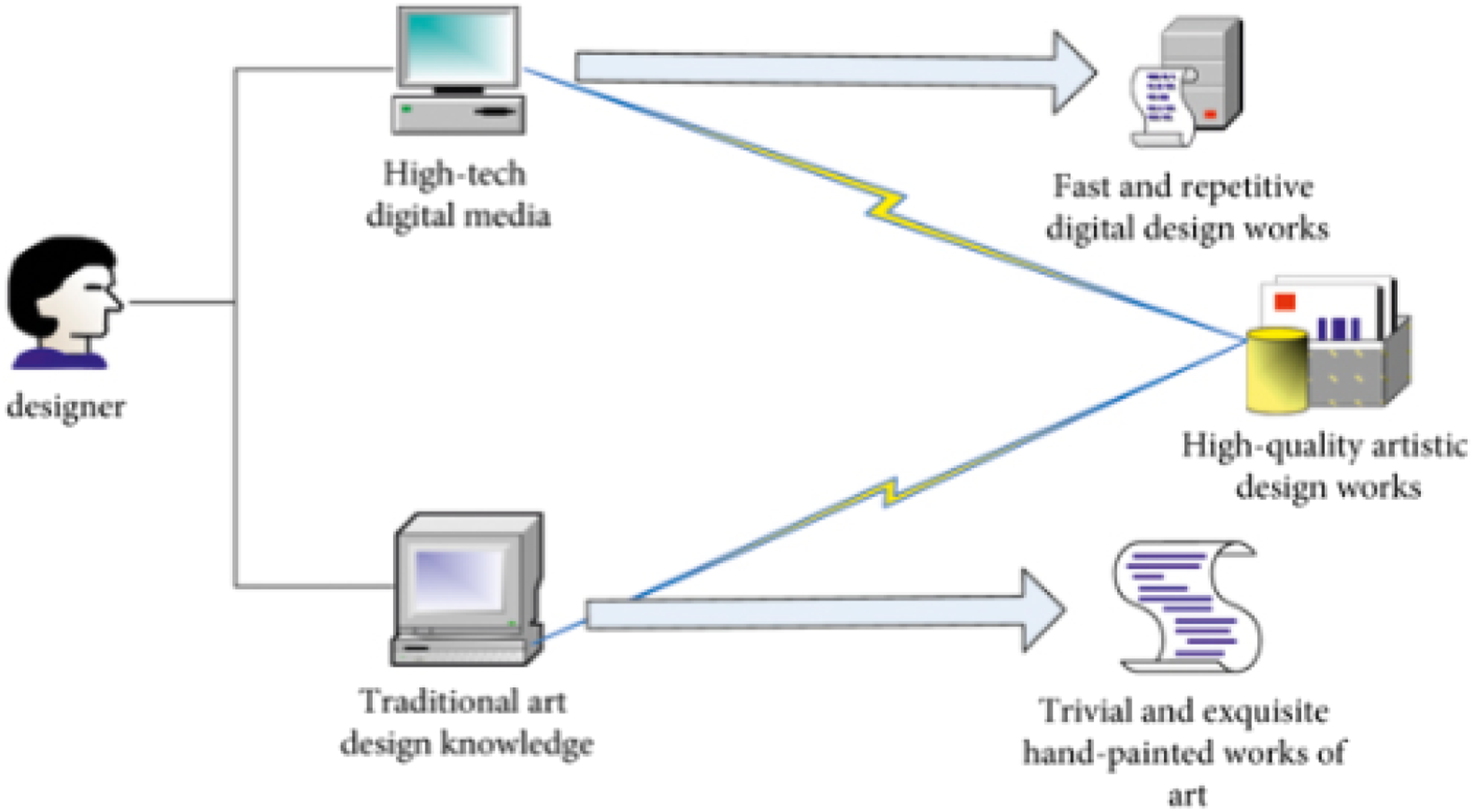
In addition, fashion translates into the digital space, with users having the ability to customize their avatars to higher degrees. “Digital dresses within a computer game world are obviously related to the player’s identity through the embodiment of the avatar. Body image is defined as a person’s attitude toward the physical self, including thoughts (cognition), feelings (affect), and behavioral evaluations” (Choi, 2022), all of which can be readily displayed through the options the user chooses for her or her character.
Fashion and marketing
It is easy to see how clothing choices can reflect the individual, but fashion has a larger impact on marketing in general, affecting many sectors including culture, entertainment, finance, and information communication technologies (Nobile et al., 2021). The use of digital tools in the marketing space blurs lines between fashion and technology further. “Social media analytics…anticipate the future wants and needs of targeted customer groups” (Manko 2021), and as targeted ads can be pointed to these groups, their fashion is further confirmed and influenced by seeing the developing trends. Smartphones as well have become “remarkable” in changing “the field of digital fashion business and promotion” both for shopping and commerce (Sayem, 2022). The improvement of e-design, technical skills for production, and communication skills for marketing improves speed to market and consumer satisfaction, not to mention the options that occur directly from big data, as it allows changes in product creation, such as making patterns with texture, fractals, or color forecasting (Nobile et al., 2021).
Graphic tees can be customized in a variety of ways, with logos, images, and text, which makes the wearer “a billboard for advertising, marketing, and branding, as well as [a] canvas for displaying preferences, comments, opinions and other messages” (Pogner, 2014).
Truly digitalization has created a “new media environment” (Zhong, 2021) that actually allows fine art (the expression of self-concept, “where the artist forms the materials to express his thought, translate his feelings, or reflect what he sees”) to evolve into this new medium (Radwi, 2022). This new media has great benefits, but also requires the practical side of database management to store the large amount of information and data typically required. All contemporary art can be found within the field of digital media, as society continuously improves and develops communication technology (Ye and Li, 2022). Information exchange has accelerated, and visual communication is rapidly assimilated, changing reader habits (Skorokhod and Smola, 2022).
Global impact
Pogner (2014) called the T-shirt “a symbol of globalization,” that actually has economic and political impact. As a “traditional” piece of Western wear, it has become “a globally used tool to express the personal and social identity of the person wearing it,” that sends messages or makes a statement about lifestyle and opinions (Ibid). The manufacture of these garments is also global, with production networks in East Asia and China that have increased economical interdependence and developed market integration in the region (Pasierbiak, 2019). In order to maintain competitive advantage, innovation is key at both the individual and group level (Mazur and Inków, 2017), and business models must be open—open to innovation specifically, as the Internet and e-Business changes the capabilities of manufacturing (Pokojski, 2021).
Customized clothing
From the major world impact of fashion, we see that customized clothing allows for fashion to also be targeted to a microcosm as small as one individual. By manufacturer collaboration with the customer, who is offered base pieces of clothing with various options (fabric, color, print options), the customer is able to essentially design their own piece of clothing. This has become possible due to technology development in websites and manufacturing to allow for a feasible price and profit margin, making both customer and seller happy (Özbek, 2020).
The impression of a logo is well known, as it comes to represent a brand’s image. “A good logo can leave a deep impression on people and intuitively understand the content of the product” (Jia et al., 2022). Likewise, a slogan can represent a brand and inspire feelings. For example, Converse used the phrase “Proud to be…” on a T-shirt as part of a Pride campaign and as a reflection of Converse’s brand personality. A researcher found that participants from Petra Christian University decoded the message to mean they should be “proud of ourselves,” demonstrating that while they may not have perceived the intent of the brand’s message, they still had positive reactions (Maharani, 2018).
The power of a logo is so complete that there are instances of piracy or off-brand substitutes that give the impression of the original. Copyright enforcement protects intellectual property with infringement detection and brand tracking, but there will always be knock-offs (Jia et al., 2022).
Advertising through visible elements, such as on a t-shirt, allows symbols to “represent something else by virtue of relationship, association or convention” (Adamus-Matuszyńska and Dzik, 2022). Place-making and place-promoting are really achieved by marketing and branding, and symbols (such as of a cityscape design) become representative of the feel the place is trying to convey (Ibid).
Graphic T-shirt in the college space
College aged students are in the process of developing their adult personalities. Today, more than any time before, the development of multimedia has given them the ability to personalize much of their lives. Digital media can customize design, style, and expression both in and out of their digital footprint, in video, pictures and internet presence (Jia et al., 2022). College students are more willing to pay for university-branded apparel if they perceive “prosocial marketing claims,” and tag itself becomes prime advertising space (Hyllegard et al., 2014). In the “campus service space” where teachers and students intersect, the presence of a branded T-shirt helps identify members of a group as a cohesive whole (Song, 2022). It then often becomes a cherished memento of a pivotal time in their lives.
Figure 2 shows an example of customizations available from website Vistaprint.com. Such print-on-demand items become cheaper as the order size grows. Example of online t-shirt customization options.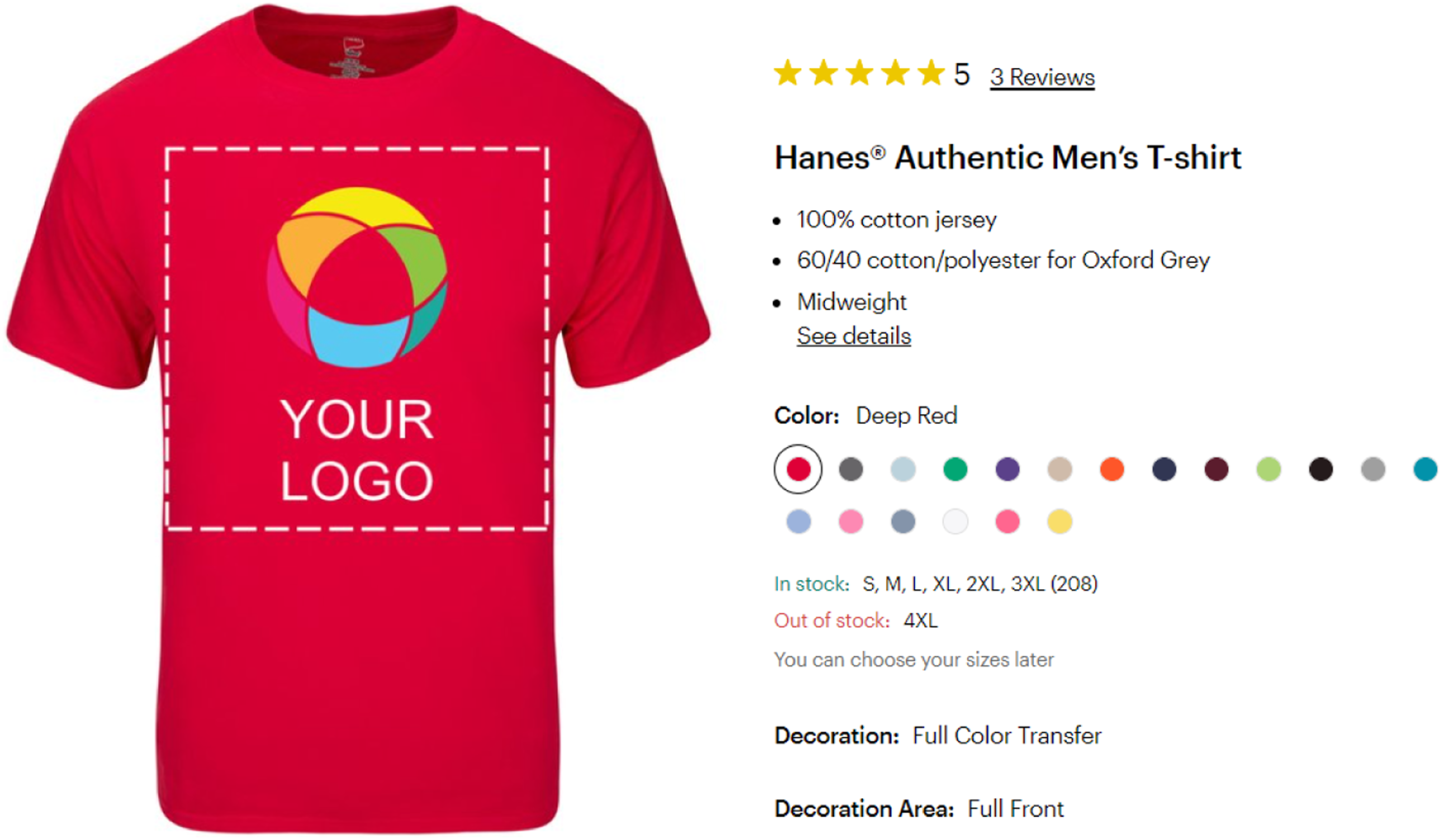
Membership and participation in extracurricular student activities is an essential aspect of student learning that contributes to a well-rounded university education. These clubs present academic advantages, opportunities for networking, and introduction to a lifestyle of service, with planned events supporting the local community or identified in-need groups.
Gannon University, a well-respected school in Erie, PA, offers among other degree options an undergraduate degree (BS) in business administration and a Master of Business Administration. Both programs are student-oriented, and curriculum is designed to combine functional courses as well as technology application. Besides being academically rigorous, coursework is supplemented by extracurricular activities.
The author is the academic sponsor for a graduate-level club, the Gannon University MBA Analytical Club, which exists to help students develop new skills, meet new people, connect with the community, and contribute to causes they are passionate about. The club has chosen to focus their support on international students, refugees, and the local community, and brings together students with different backgrounds and allows them to learn from one another, share their interests, and build professional connections. They have T-shirts (see Figure 3) to identify club members, and also provide sweatshirts to welcome new international students and have a student-designed logo. Front and back of the MBA analytics club of Gannon university (Dahlkemper school of business).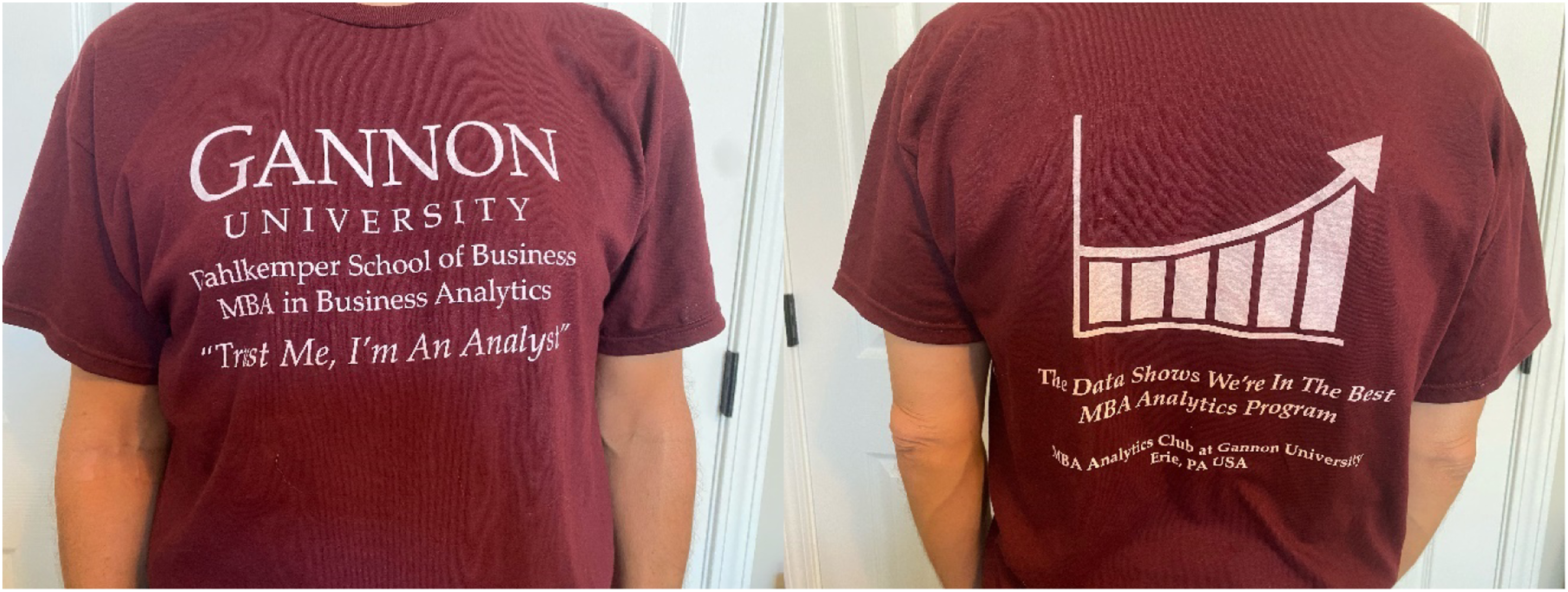
Case study: Club initiatives
Ozkara et al. (2022) studied the Cerrahpasa Neuroscience Society Journal Clubs, a group of entirely student-run online journal clubs at Cerrahpasa Faculty of Medicine, Istanbul University-Cerrahpasa, which were founded during spring 2020 during the COVID-19 pandemic in order to enhance medical student education, allow participation in academic discussions, and address social isolation, all of which was affected as the professor were recruited as frontline workers.
Journal clubs were founded in areas such as psychiatry, neurology, and neuroscience, for medical students only. Students then met for approximately 2 h every 2 weeks using virtual meeting software and student participants rated their participation highly. While traditional clubs, run by faculty, are typically effective, this experiment showed that clubs run by student mentors was a viable alternative, when circumstances required. The benefits of participation in such clubs are well worth the effort.
Conclusion
Graphic T-shirts are a viable source of advertising for businesses or concepts, and work especially well at the university level when paired with student-led clubs and activities. Because of the increased ability for customization, they can be branded to represent the club’s philosophy and advertise both participation in and recruitment for said society. For the university-age student, graphic tees likely remain a relevant wardrobe choice, and they are accustomed to having wardrobe choices reflect their personality. It only makes sense to take advantage of such a classic wardrobe staple as part of a marketing plan in the 21st century and digital technology makes it possible and affordable to customize whatever design the club can conceive.
Questions
1. Marketers discovered long ago that individuals can serve as walking advertisements for their products. This has been captured in logo T-shirts, campaigns that allow consumers to trade in purchase points for branded merchandise, and (in a few extreme cases) people selling advertising space on their own bodies. How can these large-scale efforts be used effectively within small groups? 2. How has technology impacted the ability to market a brand? 3. How can the concepts of identity and group be shared digitally?
Classroom activity: have students who are wearing graphic T-shirts stand and give a brief explanation of what the T-shirt represents and why they chose it. (You may want to coordinate this ahead of time, especially if your classroom has a more business casual dress code.)
Footnotes
Acknowledgements
Dr Barbara A. Manko is an advisor and mentor for the Gannon MBA Analytics student club. She acknowledges Tori Williams Assistant Director, Campus Engagement and Activities and all the leaders from the club that dedicate their time to supporting one another. She appreciates all the cultural events that the club leaders and members are organizing to support students and the local community in Erie, PA.
Declaration of conflicting interests
The author(s) declared no potential conflicts of interest with respect to the research, authorship, and/or publication of this article.
Funding
The author(s) received no financial support for the research, authorship, and/or publication of this article.
