



Abstract
In this paper, I outline the spatial imaginaries of the late radical thinker Mark Fisher (1968–2017). I begin by explaining Fisher's focus on culture and desire as forces that must be addressed if an effective postcapitalist politics is to be formed and underscoring that so far in postcapitalist geographies, the roles of culture and desire have been relatively overlooked. I then delineate three spatial imaginaries threaded through Fisher's work, which I call 3D hauntology, grotesque stratigraphy, and acid topology, demonstrating how they offer fresh ideas at the nexus of postcapitalist geography and political strategy. To conclude, I argue that postcapitalist geographers must urgently foster cultural and political experiments that wager on latent popular desire for a future characterised by a reimagined communism.
Key of Fisher's major works
Capitalist Realism (2009)
Ghosts of My Life (2014)
The Weird and the Eerie (2016)
k-punk: The Collected and Unpublished Writings (2018)
Postcapitalist Desire (2021)
Introduction: the ghosts of ‘lost futures’
… there can be no return to pre-capitalist territorialities … The long dark night at the end of history has to be grasped as an enormous opportunity … glimmers of alternative political and economic possibilities can have a disproportionately great effect. The tiniest event can tear a hole in the grey curtain of reaction which has marked the horizons of possibility … suddenly, anything is possible again.
In January 2017, the world lost one of its most brilliant thinkers, Mark Fisher (Figure 1). Although rising to prominence with the publication of his book Capitalist Realism in 2009, he had long been admired for his k-punk blog, essays for music magazine The Wire, and work at The Cybernetic Culture Research Unit affiliated to Warwick University, UK. His other major works include 2014's Ghosts of My Life, a collection of essays that – amongst other things – demonstrates the power of Derrida's (1994) ‘hauntology’ concept regarding cultural criticism, and 2016's The Weird and the Eerie, a cracking-open of Freud's conceptualisation of the uncanny to explore a selection of cultural productions that expose their subjects – and audiences – to troubling encounters with the limits of their everyday perception.
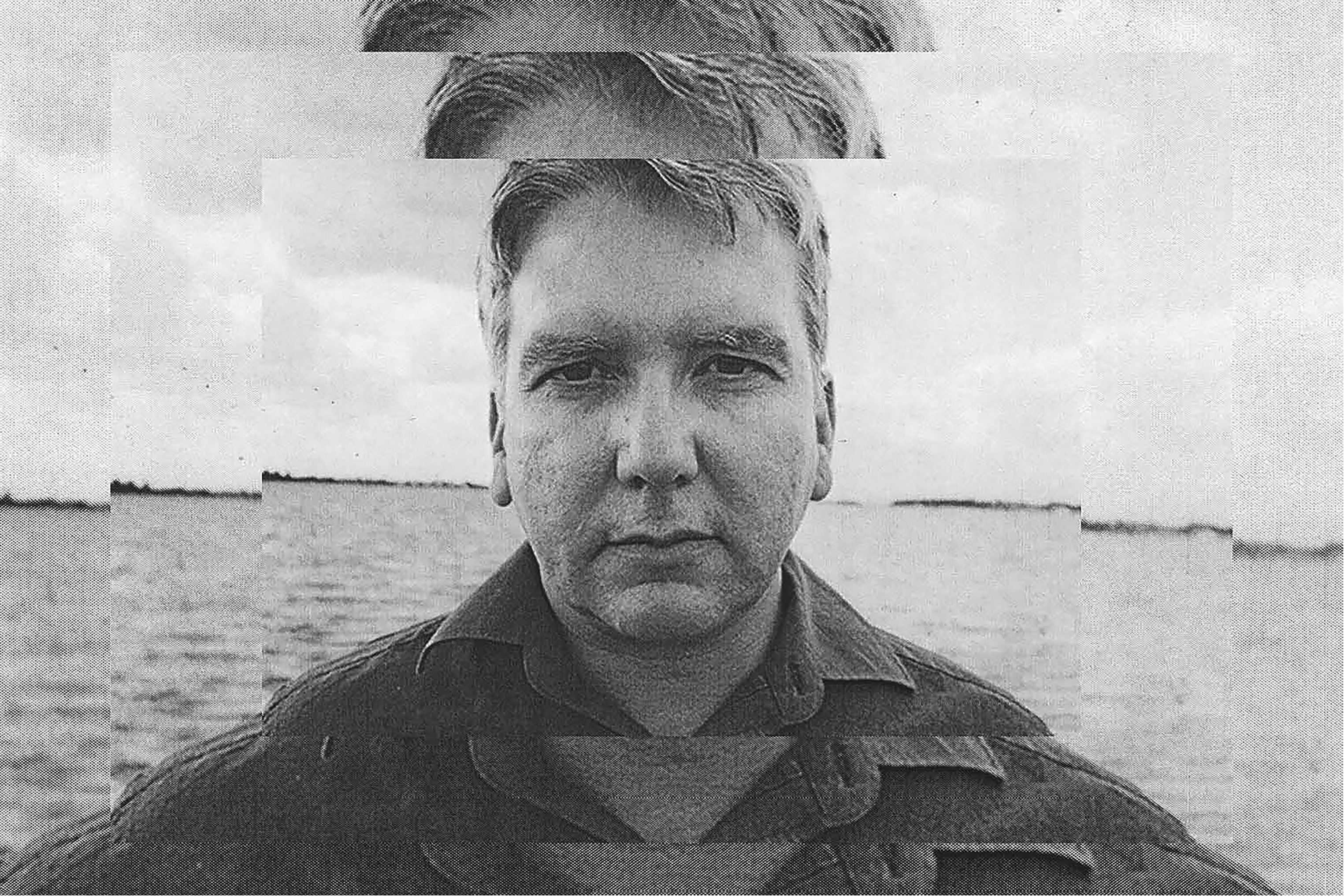
Mark Fisher. Image available at https://crackmagazine.net/article/long-reads/k-punk-capitalist-realism- and-acid-communism/.
The themes which permeate Fisher's oeuvre rumble within the above epigram. Although covering a range of different topics, Fisher determinedly quested for the reinvigoration of the Left – particularly its class politics – but not at the expense of a searing analysis of the (capitalist) problem at hand. Fisher pulled no punches when explaining why it often feels as if capitalism has society locked in ‘a long dark night’, smothered under a ‘grey curtain’; but he was also insistent that under this curtain, somewhere in the darkness, is a still-burning desire to transmute capitalism's pall. It is not a retrograde desire intent on reversing the changes that capitalism has wrought upon the world. Fisher was not inclined to rewind towards feudalism. Something new is desired and ways of imagining and grasping it must be developed. For Fisher, this was a communism that does not imagine itself in opposition to capitalism but moves past (or through) it; a communism fuelled by postcapitalist desires. 1 A rival force, not a reactive one (CR: 79).
For Fisher, capitalism currently runs on a logic of ‘precorporation’ (CR: 9), meaning that presently (at least in ‘the West’), capitalism no longer must incorporate or recuperate alternative cultures – such as the countercultural and workers movements of the 1960s and 1970s (CR: 7-9) – to keep functioning. Capitalism increasingly has formatted the emergent ‘desires, aspirations and hopes’ (CR: 9) of people born since 1980. A sense – that Fisher identifies in the Left (and perhaps the wider society) of the 1970s – that ‘the revolution is probable’ (KP: 770) has been corroded by the enormous union defeats, ‘derailing’ of socialist governments, taming of the avant-garde, and shredding of social security executed by neoliberals from the 1970s until the present (CR: 7–9; KP: 753–770). The decimated confidence of the Left and its socio-economic disempowerment – that these neoliberal ‘accomplishments’ engendered – is maintained by and, according to Fisher, coproduces a wider culture of ‘“capitalist realism”: the widespread sense that not only is capitalism the only viable political and economic system, but also that it is now impossible to imagine a coherent alternative to it’ (CR: 2). This conjuncture is undergirded by the heretofore success of post-Fordism in creating consumers rather than citizens, the desires of which capitalism confects and then ‘sates’ (CR: 15). People born since 1980 are hence precorporatively – that is, from the outset – subjectivating in a culture dominated by the celebration, weary acceptance, or inhibiting fear of capitalism (rather than its contestation). It is difficult to imagine a future beyond capitalism – and how a postcapitalist society might better meet present and future desires – when it is likely that your consciousness has been shaped by a culture of acquiescence to capitalism from the start.
It is this cultural malaise – of being unable to imagine and desire ‘the new’ (CR: 2) – that Fisher was often most interested in apprehending and dismantling. This is not only because he saw the cultures and desires engineered by precorporation and capitalist realism as some of the most significant (and therefore perhaps – fearfully – disavowed) impediments to a progressive postcapitalist future and so urgently requiring redress. It is because he understood culture – particularly cultural production – and desire as key terrains upon which capitalism's impact on society can be more clearly perceived (and so more effectively rivalled) but also as those that harbour resources for capitalism's transformation.
Fisher argued that neoliberalism's target in the 1970s was not its ‘official’ enemy of the ‘Soviet bloc …. and the crumbling compacts of social democracy and the New Deal [but] … the experiments in democratic socialism and libertarian communism that were efflorescing at the end of the Sixties and the beginning of the Seventies’ (KP: 754). These countercultures – the ‘mass avant garde’ (KP: 769) of 1970s Bologna for example – formed a feedback loop between political radicalism and aesthetic experimentalism, developing confidence in an emerging capacity and desire to build a future of socio-economic equality, democratic control of work, and increased leisure time. Fisher argued that despite having crushed and continuing to retrospectively bowdlerise these countercultures, neoliberals betray their fear - indeed, the reality – that the desires of the countercultures still haunt society by recurrently posing as lovers of the freedom that the countercultures coveted (KP: 756). However, neoliberalism has utterly failed to deliver these freedoms. The freedom from work has been replaced by ‘freedom through work’ (KP: 756); the freedom of existential security has been replaced by ecological degradation (CR: 80); and freedom from bureaucracy has been replaced by ‘Control societies’ (CR: 40). Due to these failures, capitalism must precorporate desire as a way of suppressing the spectral libido of these countercultures (and that of more contemporary ones such as rave or grime (Xenogothic, 2019)). These suppressed desires are the ‘lost futures’ that Fisher argued were – in the present and near past – acutely identifiable in the fragmented yet intense senses of longing represented and engendered by experimental cultural production in the mid-2000s and 2010s; the music of The Advisory Circle and Burial, for example (GoML: 26; Fisher, 2013).
Despite the success of capitalist realism in maintaining a precorporative culture that indefinitely defers desire for the qualitatively new – itself claiming always to represent the new and yet characterised by pastiche (KP: 199) – it has not been able to totally neutralise ‘lost futures[’] [ability to] unpredictably bubble-up to unsettle’ it (Fisher, 2013: 47). The distorted, muffled echoes of countercultural desires are still somewhere in suspension in the cultural atmosphere of capitalist realism and intermittently make themselves known. In analysing culture and cultural production, Fisher honed methods for identifying how countercultural desires, (i) re-emerge through ‘hauntological’ art (GoML: 97), (ii) were preceded and coproduced through strange, modernist ‘modes of film and fiction[,] … perception[, and] … being’ (TWE: 9), and (iii) began evaluating how desire for the new – and the processes that induce/d it – was stalled, and yet also how ‘lost futures’ might be salvaged partially as inspiration for a contemporary postcapitalist politics.
Many human geographers have recently turned their attention to developing concepts, spatial imaginaries, and manifestos of postcapitalism, driven by a sense that relations that might replace – or, pessimistically, simply outlast – capitalism rather than only resisting it, 2 are urgently necessary (Balaguer Rasillo, 2018; Büscher, 2019; Chatterton and Pusey, 2020; Gerhardt, 2020; Nelson, 2020; Osborne, 2019; Schmid, 2019). There are severe ‘shortcomings … [in] humanity's present condition’ (Chatterton and Pusey, 2020: 27) of ecological destruction, economic inequality, entrenchment of the colonial inheritance, and rising reactionism (Osborne, 2019). However, postcapitalist geographers have paid scant attention to the terrains that Fisher did – of culture, cultural production, and desire – in forming a spatial imaginary of postcapitalist politics. As I have argued above by briefly explaining precorporation and capitalist realism, attempts to analyse and/or form a postcapitalist politics may well find Fisher's perspective on culture and desire transformative. Thus, a potentially effective intervention for postcapitalist geographies would be a spatial ‘coding’ of Fisher's work, which is the scope of this paper. The spatial imaginaries latent in Fisher's work provide a potent resource for grasping capitalism's effect on culture and desire and offer starting points for reimagining postcapitalist geographies. This paper does not so much seek to ‘spatialise’ Fisher's work, but rather to explicate the geographies already implicit within it. By initiating a spatial-analytical connection, it will lay the ground for a more general ‘Fisherian’ intervention in spatial thinking.
Below, I will give a brief overview of the ‘state of play’ in postcapitalist geographies, identifying three key themes that have developed within the subdiscipline, largely from the work of Gibson-Graham (1996; 2006). These themes are ‘the commons’, ‘worlds’, and ‘spatial imaginaries’. 3 These will be evaluated in light of Fisher's alternative spatial imagining of capitalism and desire, highlighting how his imaginary offers fresh resources for postcapitalist geographers in envisioning the problem at hand. I will then outline three further spatial imaginaries that animate Fisher's work – 3D hauntology, grotesque stratigraphy, and acid topology – as ways of envisioning culture and desire and how they might transcend capitalist precorporation. These are three separate – but synergistic – ways of imagining space, offering a selection of entry points into imagining and participating in postcapitalist politics. 3D hauntology suggests drawing inspiration from the lingering a/effects of political alternatives that capitalism has suppressed, grotesque stratigraphy foregrounds the ways in which contestations over place can generate a sense of solidarity between temporo-spatially disparate collectives, and acid topology suggests ways of working with desire in the shaping of political networks. Finally, I will underscore the political importance of reimagining space for postcapitalist geographies and suggest further ways in which a postcapitalist desire might be manifested by drawing on examples from Fisher's own political experiments.
Postcapitalism beyond the commons, worlds, and spatial imaginaries
Almost all of geography's postcapitalist literature has been significantly shaped by Gibson-Graham's (1996; 2006) theory of postcapitalism as a perspectival shift and political project. Schmid (2019: 5) summarises Gibson-Graham's position as: […criticising the] representation of capitalism as unified singular totality … [generating] a shift in perspective beyond ‘capitalocentric’ discourse, making visible an already existing diversity of provisioning and (re)productive practices in order to disidentify with capitalism as privileged form of economic relatedness … A postcapitalist politics, then, is about the cultivation of discourses and practices of economic difference that open spaces for ethical decision making around key economic coordinates such as necessity, surplus, consumption, and commons …
Gibson-Graham (2006: 3) counters an anticapitalist position insistent that the only way to generate an alternative to capitalism is through global solidarities that ‘meet global power on its own terrain’ and resist state abandonment of the vulnerable. The drawbacks of this position include its tendency towards c/overt belief in a teleologically-underpinned coming-revolution (an increasingly unlikely prospect to many (Osborne, 2019)) or ‘doomerism’, and a negation of unpredictability, thereby forestalling political experiments in favour of theoretical ‘certainties’ about capitalism's all-pervasiveness. Instead, Gibson-Graham (2006: 196) foregrounds praxes of local autonomy that generate noncapitalist social relations which might engender a global counterhegemony through ‘the accretion and interaction of small changes in place’. Frustrated by a left-wing melancholy (see Brown, 1999) that finds ‘attachment to a past political analysis… stronger than the interest in present possibilities for mobilization…’ (Gibson-Graham, 2006: 5), Gibson-Graham turns attention to the identification, protection, and proliferation of relations beyond capitalist exploitation.
Three key themes are identifiable in Gibson-Graham's work and have been developed in recent geographies of postcapitalism; ‘the commons’, ‘worlds’, and ‘spatial imaginaries’, which I briefly encapsulate below.
Balaguer Rasillo (2018) argues that the commons are complex systems sustained by: (i) the interrelation of resources or commonwealth; (ii) people willing to share these resources; and (iii) practices that reproduce sharing relationships and what is shared. Recognising Gibson-Graham's thesis that capitalism has never (and is not) the sole organiser of socio-economic relationships, Chatterton and Pusey (2020) argue that the commons predate capitalism and that capitalism has continually contended with their promise. There is a shared history between capitalism and the commons that highlights capitalism's enclosing processes of primitive accumulation and alienation, set against the commons’ characteristics of ‘co-ownership, co-production, and co-management’ (Chatterton and Pusey, 2020: 17) of that which has ‘use value for a plurality’ (Balaguer Rasillo, 2018: 2). Despite being part of heterogeneous territories crosscut by capitalist relations, the commons provide the basis for a postcapitalist politics, cultivating noncapitalist management of resources that might be networked to ‘inhibit the accumulation of surplus value, individualisation, commodification and enclosure … [and to] build … socially useful production and doing’ (Chatterton and Pusey, 2020: 41–42).
Worlds emerge in the postcapitalist literature to underscore the need for the democratic production of space and place. Following thinkers such as Arendt (2013), ‘world’ has been used in postcapitalist geographies, not as a synonym for the globe, but to index the situated interconnectedness of people and their environment. As argued by the Invisible Committee (2009), capitalism, by enclosing space, severs people's autonomy over the production of space – over their environment – damaging the sense of being that emerges from a sense of world (see Heidegger's (2010: 108) argument that the ‘subject … is spatial in a primordial sense’). This sense of world is damaged by capitalism as it commodifies and makes-fungible people and their environment; constantly de/re-territorialising more-than-human webs of care and intimacy (Dialectical Insurgency, 2014). By a renewed ‘thickening’ of world – multiplying interdependence and deepening intimacy between people and their environment – new affective commons emerge as an underpinning condition of maintaining common resources. As Osborne (2019; following Haraway, 2016) argues, the threadbare, depressing worlds engendered by capitalism require subjective and social reweaving – a becoming – from what is at hand. New hope can be encountered in braiding together everyday, emplaced practices of prefigurative community to multiply and nourish relations in place, inducing a renewed sense of closeness to still possible – and previously inconceivable – postcapitalist worlds (Gibson-Graham, 2006; Osborne, 2019). This placed thinking and practicing of world is a useful access point and vital site of action in the maintenance and invigoration of the translocal solidarities which form a key part of postcapitalist praxes (Featherstone, 2008). This parallels a Massey-type politics of ‘place beyond place’ (Massey et al., 2009: 401), reigniting political debate about the purpose of place via more equal exchange with places beyond.
Spatial imaginaries represent the most contentious aspect of postcapitalist geographies, staging at times a confrontation and at others a synthesis between flat and scalar ontologies (Schmid, 2019). Gerhardt (2020: 684) confronts flat ontologies: spatial visualisations inspired by Marston et al.'s (2005) disavowal of scale as an ‘inoperable abstraction that distracts from the actual site-based production of events and entities’, which – in an admittedly postcapitalist vein – resists the reification of capitalism and other systems of domination. Although it can be politically useful to focus on how site is constructed through a flat ontology of networked relations (hence identifying a greater range of what it is/not possible to achieve through a particular site), this approach often fails to consider the effects of the more proliferated, traumatically distinctive processes of – for instance – capitalism, downplaying the costs of being found surplus-to or at-odds-with the relations integral to such processes (Gerhardt, 2020). As Dempsey and Rowe (2004: 47) argue, essentialising systems of domination affords them more power than they actually possess, stoking ‘disempowerment and unsound strategy’. However, this does not mean that webbed, horizontal ‘chains’ (Schmid, 2019: 8) of particular kinds of relationships, like capitalist exploitation, do not exist. Just because capitalism is emergent and socially constructed in-and-between sites does not mean that it does not generate significant social effects that set marked spatio-temporal limits on relational and processual possibilities, with severe attendant risks of breaching these limits (Smith, 2005). Taking a more synthetic approach to postcapitalist spatial imaginaries of flatness and scale, Schmid (2019) points out that, although ‘chain’ thinking reintroduces scale to the conversation – certain webbed chains are more extensive than others – this is still a relational, not a hierarchical, imaginary. Schmid (2019: 8) also points out that chain thinking more accurately captures the initial concerns of the site ontology developed by Schatzki (2003) which inspires many anti-scalar arguments. Schatzki's (2003: 174) site ontology forms a practice theory that connects the ‘actual events and entities’ of site with the ‘material arrangements’ and social ‘mesh’ that site both affects and is affected by; a nuanced entanglement of place and space that contemporary geographical engagements with site ontology often seem to avoid, attending to local and temporary political possibilities rather than their interaction (for better or worse) with broader networks. Drawing on Chatterton and Pusey (2020), Schmid argues that the risks and rewards of breaking or evading relational chains are variegated by scale and positionality. Engaging a micropolitics of disidentifying with capitalism will not afford someone the same autonomy – or at least not the same kind of autonomy – as participating in a more developed commons, while the risks-of and resistances-to these tasks differ in accordance with the level of threat they pose to capitalism. Considering the differences in risk and reward relative to postionality and tactics are crucial for developing effective postcapitalist strategy.
In reimagining what a postcapitalist geography could be in this paper – through Fisher's thought – I harbour no intention of undermining the empirical contexts of commons-building and worlding that existing postcapitalist geographies analyse and envisage. The prefigurative work of building commons and reinstating a sense of world are absolutely part of the Fisherian recasting (both conceptually and practically) of postcapitalist geography that I hope this paper will achieve (KP: 744). However, when it comes to spatially imagining capitalism and postcapitalist politics, Fisher's thought underscores inadequacies in the flat and scalar ontologies that dominate the discussion of postcapitalist geographies; namely their inability to account for less predictable, ‘atmospheric’ or affective conditions of culture and desire. This has implications for building commons and worlding because although they must play a central role in postcapitalist politics, their implementation might be reoriented by accounting for the Fisherian imaginary of capitalism outlined immediately below.
Throughout Fisher's writings, he references the many spatial dislocations caused by capitalism. Spaces of work and rest meld through perennial connection to workmail and the self-marketisation of social media, making it difficult to know where you are (GoML: 179). Urban landscapes are homogenised so as to look like anywhere, overpopulated by the commercial outposts of those with the power to monitor and sculpt consumption, paradoxically engendering the feeling of being nowhere (GoML: 137). Cybernetic enmeshment renders attention transitory as it is always directed elsewhere (CR: 24; Fisher, 2016). Fisher argues that these various dislocations are motivated by different sets of interests – rather than being centrally co-ordinated (CR: 63) – but adhere to the common logic of post-Fordist capitalism; monetising and managing people's time, space, and attention. These dislocations serve precorporation and capitalist realism because they exenterate society of the time and space needed to make noncapitalist ecologies – the aforementioned commons and worlds – that might intensify desire-for, confidence-in, and manifestations-of a postcapitalist politics (KP: 753). These conditions make interdependence between collectives and place – and so meaningful connections across space – difficult to develop, generating weary acquiescence to the ‘fungibility’ of people/place and to the precarity of post-Fordism (CR: 54; Philo et al., 2019). These attacks on time, space, and desire directly affect the ability of commons and worlds to proliferate and become a rival power to capitalism. Although forming this rival power is the stated aim of postcapitalist geographers – that is, building a counterhegemony through ‘the accretion and interaction of small changes in place’ (Gibson-Graham, 2006: 196) – little postcapitalist geography has considered how the spatial dislocations that Fisher highlights hamstring this accretion, and so imagining how they might be tackled is an urgent area for conceptualisation and research.
Fisher's flagging of spatial dislocations adds fuel to the fire of commons-and-worlds-based critiques of capitalism, directing them towards additional spatial concerns. However, his visualisation of capitalism intervenes in geographic debates about how it is spatially imagined at a more fundamental level. Fisher's spatial imaginary of capitalism contains an ‘atmospheric’ dimension that he holds in tension with its ‘flat’ operations of dislocating and remaking networks. This contrasts with the singular, seemingly opposed images of ‘site’ and ‘chain’ in existing postcapitalist spatial imaginaries. Fisher argues that capitalism engenders socio-spatial fungibility, foregrounding its flatness. It ‘treats’ all that is subject to it as dissolvable and fungible for its self-reproduction and growth; breaking, reforming, and extending chains of exploitative relations seemingly at will. However, it also has an emergent ‘atmospheric’ affect – capitalist realism – that interacts with its patchy socio-spatial networks, making their re-combinations possible but also difficult to predict (Ash, 2020). By arguing that capitalism occupies an affective atmosphere around (and in relation to) flat networks, Fisher foregrounds, not just the social and material connections that resist and are often ‘spatially fixed’ by capitalism, but affective resistances to capitalism which might be in suspension; denoting both a sense of stalling (of something interrupted but with a possibility of future movement) and something ‘hanging in the air’ (something not yet grounded). These affective resistances – for example, the aforementioned ghosts of lost futures – might help generate the confidence to form new networks of relations, but are targeted by capitalism for dissolution and precorporation before they can coalesce. This flat/atmospheric tension is arguably core to Fisher's project. Addressing the spatial dislocations – the anywheres, nowheres, and elsewheres – that render commons and worlds more readily fungible is essential and there must be tactics and strategies formed to tackle these (more on this later). But the ‘pervasive atmosphere’ (CR: 16) of capitalist realism must also be rivalled. Limiting spatial imaginaries of postcapitalism to ‘site’ and ‘chain’ will not address this problem and so it is essential to factor-in Fisher's dual flat/atmospheric imaginary into discussions of postcapitalist geographies and politics. New commons and worlds must be built, but they must also have an atmosphere from – and into – which they can precipitate and proliferate if they are to become a rival to capitalism. They need a surrounding culture of postcapitalist desire.
Fisher's spatial imaginary of capitalism may seem stifling, but – not unlike Gibson-Graham (2006) – he approved of political experimentalism, based on his confidence that a postcapitalist future could be desired and constructed. Not only did he take heart from latent desires to reanimate the lost futures of countercultures, still floating in the cultural atmosphere of the West, but his understanding of precorporation and its relation to desire bolstered his confidence too. Fisher argued – via Deleuze and Freud (TWE: 82) – that desire is ‘always seeking more connections’ (Deleuze, 2006: 81; in Colquhoun, 2020: 230), always seeking ‘the new’. What this means is that there is a limit to how long capitalism can keep precorporating desire because the whole point of precorporation is to forestall desire connecting with ‘the new’. The deep dissatisfaction that precorporation engenders must be directed towards capitalism and political experiments should be geared towards developing cultures that reanimate stalled – and construct new – postcapitalist futures to desire. In Kodwo Eshun's (2018) inaugural Mark Fisher Memorial Lecture, he stated that Fisher was deeply committed to and gifted in ‘the art of building scenes … the design of sustaining subcultures … he loved to empower and to incubate …’, adding that in Fisher's passing, what was required was to continue his work of metabolising ‘the egresses required by the changing needs of our present’. As this quote from Eshun hints, the spatial imaginaries of Fisher's oeuvre are not limited to that of capital. Indeed, they envision pathways towards ‘egresses’ from capitalism. Below, I will turn to outlining these spatial imaginaries, which are ways of envisioning desire and the ways it is both shaped by, parodied/paralleled by, but also exceeds capitalism.
Fisherian spatial imaginary 1: 3D hauntology
The spatial imaginaries that animated Fisher's analysis of cultural production – searching for ways to identify, reanimate, and construct postcapitalist desire – offer abundant resources for reimagining the spatial and political concerns of postcapitalist geography. The most prominent imaginary that Fisher offers in this regard is hauntology; primarily a diagnostic theory of time, but which, as I explain below, has significant spatial ramifications. Hauntology – a wordplay on ‘ontology’ first coined by Derrida (1994) – emphasises that the present is a recombination of what has gone before; the present is ‘haunted’ by a blurry and restless past. A hauntological lens enables the analyst to perceive the effects of ‘ghosts’; ‘that which acts without (physically) existing’ (GoML: 18), the effects of past events – and the residues of previously imagined futures – interacting with the present. Fisher argued that hauntology was ‘not … a political strategy’ but the study of ghosts, ‘responding to … what absently insists’ (k-punk, 2008) from the past in the present. It is an alternative framing of ‘what is there’ (k-punk, 2008), a way of analysing culture that tunes into something other than the precorporative delusion that we are experiencing ‘the new’, offering an alternative perspective on how culture is affected and affects.
What Fisher most famously used a hauntological lens for was to critically assess contemporary music culture and its relation to the past, an endeavour he undertook – in part – because he believed that ‘[m]usic culture is in many ways paradigmatic of the fate of culture [more generally] under post-Fordist capitalism…’ (GoML: 16). There is a significant pattern in much mainstream music, he argued, of activating nostalgia for previous musical eras by creating ‘timeless’ music which repeats older forms and genres but ‘buffed up by new [studio] technology’ (GoML: 11). One example he gives is Arctic Monkeys breakthrough hit, I Bet You Look Good on the Dancefloor, which Fisher first heard in 2005 and ‘genuinely believed that it was some lost artefact from circa 1980’ (GoML: 9). Yet Fisher is not writing a polemic against Arctic Monkeys’ or even record execs’ lack of imagination. Instead, his analysis of I Bet You Look Good on the Dancefloor stresses that the inability to make music that captures the present – rather than rehashing the past – is due more to capitalism's effect, since the 1980s, of expunging ‘the new’ from mainstream culture. Consumers’ desires and producers’ consciousness are exhausted and overstimulated by the digital flexibilisation of labour and leisure (KP: 675). Short of time, space, energy, and attention, quick culture-fixes are the demand to which the culture industry supplies and the conditions in which it is producing. Music, TV, and film are produced in familiar, ‘reliable’ forms by and for those who do not have the time or energy to challenge or be challenged. Furthermore, the precaritisation of life under neoliberalism forecloses the space and time needed for artistic innovation: gutted public services increase pressure for immediate artistic success or finding another income, ditto for the inflation of housing costs, and the demand for constant digital connection at work and play forestalls the seclusion and focus needed for pathfinding creativity (GoML: 14–16). Amongst all this, the modernist impulse of much 20th century cultural production to ‘make it new’ (Braithwaite, 2019) has been undermined by a postmodern sensibility that intuits that we are in a ‘new historical period in which we [understand] that there is nothing new … [only] simulation, ironic repetition, fragmentation and pastiche’ (Graeber, 2012 in Fisher, 2017).
Fisher contrasts this mode of cultural production – a product of a neoliberalised and capitalist realist culture – with that which operationalises a hauntological method. Remaining focussed on music, he compares the seamless melding of genre conventions with shiny new production to ‘hauntological music’ which exposes sampled music to contemporary production technologies in as jarring a way as possible, foregrounding – rather than occluding – ‘time … out of joint’ (Fisher, 2013: 47), the past in the present. One of the effects of post-Fordist cultural production is that in rehashing and ‘buffing-up’ previous cultural forms and genres – particularly musical ones – it sanitises them; they are ‘timeless’ because they are divorced from the historical conditions from which the original innovation emerged, free from the cultural technologies of that time, especially those that physically degrade like vinyl or audiotape. Conversely, hauntological cultural production turns the ‘seam’ (Penman, 1995 in Fisher, 2013: 44) of its production inside out, unabashedly stitching together aesthetic signatures from different eras. One of Fisher's examples is Burial (GoML: 98), who take vocal samples from 90s rave tracks and warp their timbre, undergirding them with 70s dub drums and the vinyl crackle associated with the majority of recorded sound in the early 20th century. The effect is deeply melancholic, conjuring visions of a dystopian London of ‘abandoned spaces once carnivalised by Raves … returned to depopulated dereliction …’ (GoML: 98–99). Burial evoke a longing for the ‘unexplored potentials’ (GoML: 82) of the 1990s rave scene that – though not as directly political as the counterculture of 60s and 70s – challenged the neoliberal aspiration of ‘getting ahead’ with collective experiences of ‘getting off your head’ (Colquhuon, 2020: 241).
In its model of cultural production, we might be tempted to (indeed, to some extent we should) understand hauntological cultural production through a similar spatial imaginary to Fisher's one of capitalism; it breaks-off and re-presents past cultures in relation with an atmospheric affect/effect. However, because hauntology relates to the past differently to capitalism – treating it as a vault of resources for creating something new or unexpected, rather than something to be partitioned, sanitised, and rolled-out as reassurance that the only cultural and political necessities are now simulation and pastiche – space is also related to differently. Hauntological cultural production is about representing the ‘unexplored potentials’ of previous genres by lashing them together with others into ‘viable constructions’ (Williams, 2011, in Xenogothic 2021) for the present and future. This poses a key Fisherian question: why were these potentials left unexplored? If post-Fordist cultural production sets past genres of cultural production in aspic for periodic re-presentation, hauntological cultural production foregrounds their spatial production and perhaps ‘untimely’ decline. These genres’ beginnings and endings were not ‘destined’ events that legitimate capitalist ‘progress’, but the result of temporally shifting ‘spatial organization[s]’ and struggles (Williams, 2011, in Xenogothic 2021). Furthermore, hauntology frames the spatiality of the present as shaped by the ghosts of these spatial organisations, the power of which is ‘still in play’ as well as the living-dead continuity of capitalism.
This is a 3D hauntology with which geographers can spatialise culture and desire in the same dual sense that Fisher does capitalism: contested networks of power relations in relationship with an atmosphere of unsettled (and unsettling) desires. As Fisher argues, the structure and function of desire and capitalism are almost – but not quite – identical (PCD: 126). Capitalism – like desire – is an ‘endless’ drive always seeking ‘the new’. However, whereas desire has no barriers to what it might want, capitalism does. Hence, capitalism limits and hems-in desire for that which strives to go beyond it, leading to cultural and political pastiche. 3D hauntology's spatial imaginary of desire and capitalism is potentially revolutionary for postcapitalist geographies and politics by highlighting the fact that – regarding desire – capitalist culture only represents part of ‘what is there’ (k-punk, 2008). What would a political practice of intensifying the desires and disaffections of ‘ghosts’ involve? What suppressed trajectories could these be bound together with to form a ‘viable construction’ for contemporary politics?
Fisher suggested and embodied potential answers to these questions. Although insisting that hauntology was not itself a political strategy, there is a sense in which his writing itself fuelled the intensification of a postcapitalist cultural atmosphere. Perhaps the study of ‘ghosts’ is not a political strategy for intensifying a sense-for and solidarity-with postcapitalist desires; but maybe writing about them is (KP: 103)? As far as creating a ‘viable construction’ from suppressed trajectories, Fisher advocated for the combination of countercultural desires for autonomy and the desire for the universal provision of 20th century communism; both stalled projects. Neoliberalism claims to have delivered the pure autonomy purportedly desired by the counterculture by doing away with authoritarian communist managerialism (CR: 40). However, it presents a faulty offering that mangles autonomy and reinstates management, not in the unyielding form of 20th century communism, but as an insidious omnipresence. Neoliberalism presents the ‘flexibility’ of zero-hours contracts (instead of autonomy) and the constant micro-demands of perma-connected e-managers (rather than freedom from interference). Fisher pointed to experiments in Latin America – sprouting after the 2008 financial crash – of government facilitation of worker-run collectives as a way of responding to the desires of both the counterculture and 20th century communism, reimagining management as the protection of space and time for autonomous collaboration and innovation (KP: 501).
Fisherian spatial imaginary 2: Grotesque stratigraphy
3D hauntology offers a spatial imaginary for envisioning postcapitalist responses to the stale atmosphere of capitalist realism, illustrating that it is possible that desire might be otherwise. The next spatial imaginary of Fisher's I will outline – what I call his ‘grotesque stratigraphy’ – is a useful imaginary for postcapitalist geographers because it addresses how postcapitalist desire might emerge through a more grounded engagement with place. This is distinct from 3D hauntology's perhaps more vague promise of reinvigorating countercultural desires that may feel spatially and/or temporally distant. Fisher's grotesque stratigraphic imaginary conceptualises place as formed from a riot of cultural, social, and political detritus which is layered ‘beneath’ yet often ‘ruthlessly photoshopped … out’ of ‘official’ representations of place (GoML: 184). Furthermore, the grotesque imaginary of place that Fisher offers is useful for thinking transpatially, conceptualising postcapitalist desire not through ‘fixed’ imaginaries of the ‘essential nature’ of place, but always as made-by (and making) the world.
I have argued already that Fisher was perturbed by the effect that capitalism had on space and place, rendering them as ‘frictionless’ surfaces for the technologies and signs of capitalism; blurring places of work and leisure and corporately homogenising areas with more vibrant, public potentials (GoML: 137; 179). For Fisher, post-Fordist capitalism's effects on – particularly urban – place have been to populate it with an itinerant workforce, enclose it, and subject it to recursive ‘regeneration’ by developers, passing this all off as progressive ‘modernisation’; not to mention making as much social activity and labour dependent on the internet as possible, limiting a sense of interdependence with place 4 (GoML: 183–232). Presenting this all as ‘inevitable progress’ is, once again, a capitalist limiting of ‘what is there’; suppressing alternative desires of and for place by casting them as inconceivable or outdated. Capitalism prevents desire for ‘the new’ developing by ensuring that the creation of space and place is a vector for precorporation, rather than a process of formulating more fulfilling ways of desiring.
Against this, Fisher frames place as ‘stained’ by its past (GoML: 82). Placed histories are fragmented, overwritten, and erased by capitalism's – and less insidious factors’ – effects on place … but the stains caused by ‘particularly intense moments of time’ are difficult leach altogether because, in part, they ‘re-stain themselves’ (GoML: 191). Cultural residues, and particularly those that might be considered ‘traumatic’, are difficult to scrub from place because their reproduction is often triggered by place (TWE: 96); being around a specific building or neighbourhood associated with trauma or ‘bad habits’, can plunge us (and the place) into the past. Veins of ‘unexpiated suffering’ (GoML: 82) leak into the present, coursing upwards from buried layers of history along the traumatic fractures of place. And so for Fisher, this traumatic stratigraphy of place creates the possibility for coming into contact with the grotesque.
Fisher's concept of ‘the grotesque’ is a corollary of his concept of ‘the weird’, which he develops as a way of explaining why certain cultural productions are unsettling. A weird affect is generated when something is encountered outside of its ‘proper place’ (TWE: 21). Things are conjoined that should not – in all ‘good sense’ – be conjoined, challenging the adequacy of our conceptions about the world. Fisher uses David Lynch's film Mulholland Drive as an example. One of the film's motifs is that dreaming is not a subjective experience ‘in our heads’ but one of exiting through a portal into a dreamworld. This dreamworld connects, and is navigated, by all dreamers, creating the unsettling possibility of not knowing exactly who's dream you are in, or exiting through the ‘wrong’ portal into the ‘wrong’ waking life (TWE: 56). Lynch removes dreams from their ‘proper place’ in the subjective interior, situating them in an intersubjective dreamscape. This evokes a sense of the weird for his audience by asking them to ‘follow a story’ which relies on the idea of dreaming and yet which renders mainstream conceptions of dreaming inadequate. The dream and the dreamer, the story (if there is one) and who it belongs to (if it belongs to anyone), are constantly changing. Fisher builds on this example, and others, to underscore that the collaged products of the weird are facilitated by – and highlight – an ‘egress’ (TWE: 19); a portal between ontologically ‘discrete’ worlds, challenging our conception of reality.
The grotesque then, is generated by familiar aesthetic forms altered by many egresses, something collaged from between worlds, generating an ‘ontological struggle’ (TWE: 33). An object or subject's form is changed so substantially as to question what kind of universe it could possibly exist in. Fisher refers to the cover of postpunk band The Fall's 1980 double A-side How I Wrote Elastic Man/City Hobgoblins (Figure 2). The cover is a collage: in the centre is a cut-out photograph of a dilapidated tenement, a giant goblin is etched-in behind. To the right of the goblin is what looks like a photograph of tiles or brickwork, turned on its side, giving the impression of a City-of-London-esque skyscraper. It is a grotesque, ‘palimpsest city’ (GoML: 149), the claim to which is torn between premodern myth, smashed working-class communities, and neofuturist posturing. It is a vision of place as a site of struggle and of stains from ‘real’ and ‘mythic’ pasts (GoML: 183).
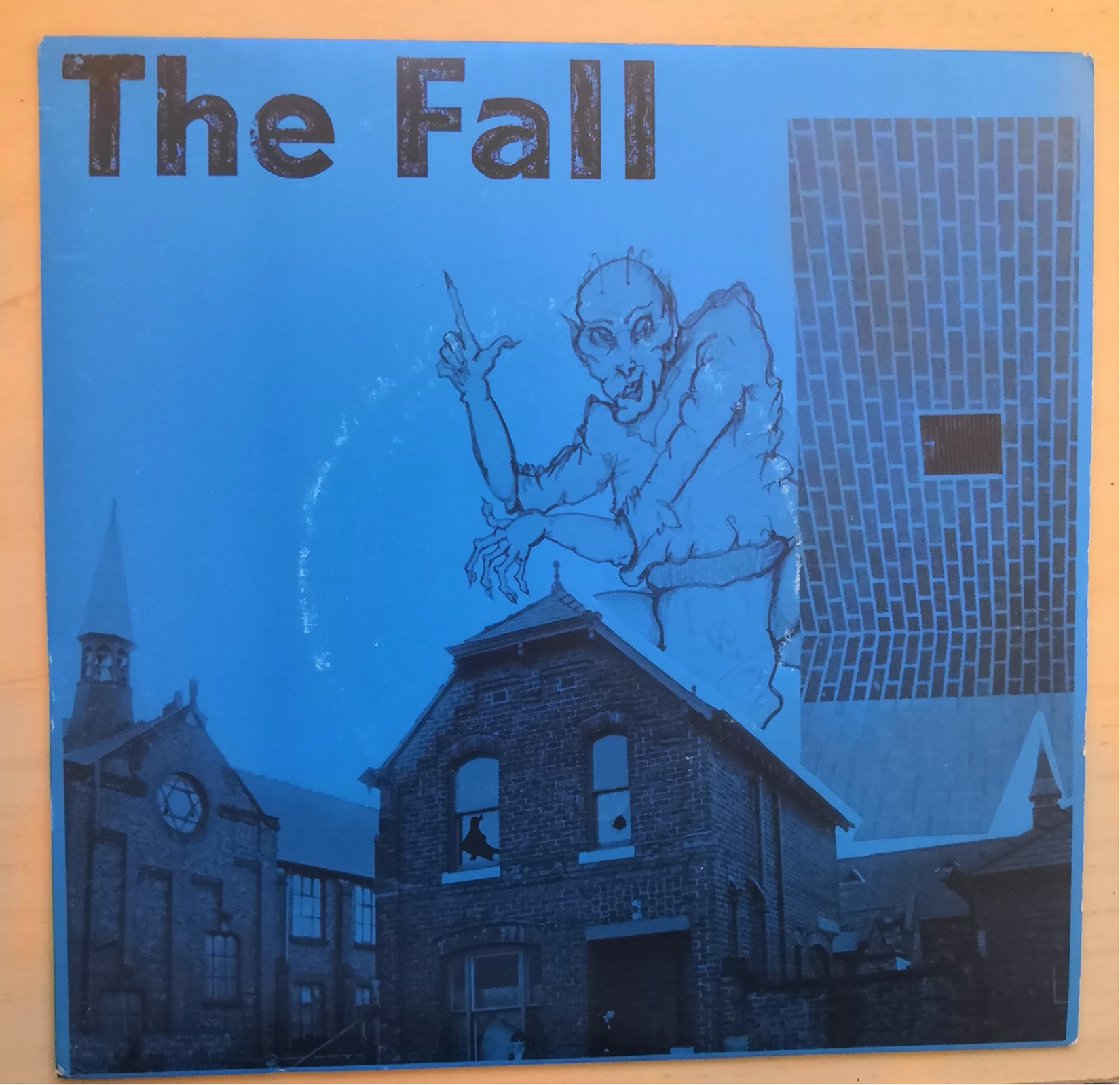
Front cover of the Fall's double A-side ‘how I wrote elastic man/city hobgoblins’.
Fisher's analysis of the How I Wrote Elastic Man cover provides, not just an example of the aesthetic register of the grotesque, but a conception of place itself as inherently grotesque. Place is formed by the ‘ontological struggle’ between precorporation and visitors from a stratigraphy of cultural detritus; the ‘colliding, splintering and reconfiguring’ (GoML: 184) of the stains of place. This is important in forming postcapitalist desire: Fisher argued that desire inherently gravitates towards weird affects and aesthetics – and hence the grotesque as a corollary of the weird – because they intrigue (TWE: 13). By presenting us with that which is ‘out of place’, the fear engendered by a sense of something ‘being wrong’ pulses within the weird; but so does a desire to reconfigure the conceptions of the world that it challenges (TWE: 128). The weird may horrify, but it also ensures that we cannot look away or ignore our desire to acquire more knowledge about it. An experience of the weird is a ‘sign that we are in the presence of the new’ (TWE: 13), towards which desire always wants to move. A spatial imaginary of grotesque stratigraphy therefore opens the possibility for postcapitalist geographers to imagine ways of engaging with place as a direct challenge to precorporation; an ‘escape route’ for desire from capitalism. Grotesque stratigraphy focuses less on discerning the vague atmospheres that 3D hauntology might direct us to and more on generating new desires from – as in ‘originating in’ but also ‘out of’ – place.
As I argued in the previous section, Fisher framed capitalist culture's relation to the past as one of pastiche. Cultural movements are frozen in time, de-spatialised, and represented as legitimators of capitalist realism; free of contradictions. Fisher lauded cultural production that engaged in what might be called a ‘practice’ of grotesque stratigraphy; allowing the cultural detritus of place to fracture these contradiction-free simulacra. Rooting around in the buried cultural fragments of place reinserts the ‘contradictions’ (CR: 60) of history back into broader awareness, questioning what a place might have been rather than accepting the cipher of capitalism that it has become. In Ghosts of My Life, a reprint of Fisher's introduction to Laura Grace Ford's Savage Messiah (2011) – a collection of her zines of the same title – underscores the grotesque stratigraphic merits of her psychogeographic approach. Her zines conjure up and memorialise an East London which has been eerily erased since the 2012 Olympics, a place that ‘the Olympic Delivery Authority transformed whole areas of … into a temporary photo opportunity’ (GoML: 185) 5 . Although the melancholy that courses through Savage Messiah highlights what has been lost, it also foregrounds ‘moments of transition and threshold, moments when a whole alternative time track opens….[inviting] us to see the contours of another world in the cracks and gaps of an occupied London’ (GoML: 192). Grotesque stratigraphy is important to Fisher not just because it renders the capitalist present of place as phoney, but because it connects desire – as it moves towards the grotesque weirdness of place – with alternative futures; the ‘other worlds in the cracks and gaps’ of place. It increases proximity and attraction to resources for unsettling the atmosphere of capitalist realism, the precorporation and sanitised pastiche of which is rendered absurd by the grotesqueness of ‘what is there’ in place.
Although 3D hauntology draws people towards a postcapitalist politics by reinvigorating the ghostly desires of countercultures, grotesque stratigraphy offers a more immanent starting point for perceiving the contours of and getting involved in postcapitalist politics; a prefigurative, libidinal jolt for virtuous cycles. The grotesque does, however, have to be steered in ‘the direction of the Future’ and towards ‘groups and alliances whose reason for existence is a movement into wider realities’ (Barton, 2019). A politics based on a version of grotesque stratigraphy interested solely in intensifying the grotesque affect of place is only useful up to a point. However, grotesque stratigraphy is not just about place; its unveiling of place opens onto a spatial imaginary. The cultural detritus of place underscores as much the spatial and historical processes – of capitalism and counter-capitalism – that have engendered the grotesque, as it does its own weirdness. Pockets of counter-capitalist action are constructed in place through transpatial relations, but capitalism repeatedly ‘fixes’ these ‘aberrations’, instantiating traumas and fragmenting cultures. Sifting through this cultural detritus enables capitalism to be framed contra desire, as being ‘on the side of resistance and control’ (Fisher, 2014), building confidence in the notion that desire is ‘always seeking new connections’ which capitalism forestalls. A sense of nearness to other possible worlds can be intensified by emphasising the recursive conflict between capitalism and desire that has raged ‘beneath our feet’, and that this conflict is not over. Furthermore, a sense that capitalism always tries to kill-off the ‘collective capacity to produce, care, and enjoy’ (KP: 753) ‘here’ – wherever ‘here’ is – in favour of an immiserating individualism must be intensified (CR: 37). Grotesque stratigraphy highlights a ‘boundless flow’ (Barrow, 2020) of desire which traverses space and time, down into the grotesque column of place and out along the strata of space. It connects a desire for the weird – for the new – with the transtemporal and transpatial struggle for the world to move beyond capitalism, creating a myriad of possibilities for surprising solidarity and partnership, powered by divergent, placed desires.
Grotesque stratigraphy disrupts the hegemony of capitalist realism through place, stressing both the fractures that place can create in a corporate veneer and the ways in which these cracks are generated by the desires of a common, transtemporal and transpatial struggle. A politics inspired by this kind of spatial imaginary can be drawn out from, for example, Fisher's references to UK mining communities. Cultural production has a crucial role in inspiring grotesque stratigraphy, and Fisher foregrounds the work of musician James Kirby, artist Jeremy Deller, and novelist David Peace as a selection of people who have done work on the ‘particularly intense moment in time’ of the Battle of Orgreave (GoML: 117). In memorialising this space-time, there is an opportunity to draw people together to work on contemporary, transpatial struggles. Many of those in former mining communities struggle with mental ill-health, in effect, ‘casualties of capital … psychologically damaged as a consequence of the capitalist realist insistence that industries such as mining are no longer economically viable’ (CR: 37); however, mental ill-health in ex-mining communities is now just part of a wider, contemporary surge in mental ill-health (Segal, 2017). A sense for the grotesque – made all the more intense by the stratigraphy of places like Orgreave – can build a sense of solidarity between the rage and thwarted possibility particular to place, and a struggle to politicise mental ill health more generally. Grotesque stratigraphy offers a spatial imaginary that traces the disturbances in the strata of historical place into a range of sites across space and time. As Fisher points out, capitalism not only undermined the viability of mining as an excuse to gut cultures of solidarity, inflicting psychological trauma disproportionately on mining places, it now inflicts a post-Fordist labour on all workers, normalising being perpetually ‘on the clock’, demanding emotional on top of productive energy, and requiring additional bureaucracy to justify (rather than perform) jobs (CR: 39-53). Fisher argued that the effects of both past and present labour markets continue to cause literal depression. Grotesque stratigraphy connects these different experiences and geographies of struggle by emphasising their common causation and their shared desires for more democratic control over work (whether historical desires to ensure that mining jobs moved into other sectors or present desires to fully ‘unplug’ from the workplace). Forming a collective subject from differing yet connected experiences of capitalism's effect on mental health has the potential to spark a popular politicisation of mental illness, framing capitalism as an engine of mental ill-health and hence lacking viability as a system by which to organise production and fulfil the desires of workers.
Fisherian spatial imaginary 3: Acid topology
The third spatial imaginary that it is possible to draw out of Fisher's work is what I call his ‘acid topology’. If 3D hauntology foregrounds the nagging atmospheres that suggest desire strives for something beyond precorporation, and grotesque stratigraphy foregrounds the moments in which desire has almost broken through to a postcapitalist trajectory, acid topology emphasises the imperative for these two ‘separate’ imaginaries to form a dynamic relationship with one another and political networks. 3D hauntology can draw on the resources of grotesque stratigraphy – the unexplored potentials of place – to create ‘viable constructions’ for neutralising the atmosphere of capitalist realism, and grotesque stratigraphy can connect emergent desires for the new to a trans-temporal and trans-spatial sense of solidarity. 3D hauntology and grotesque stratigraphy cannot be thought of as an integrated ‘counterlibido’ (Fisher, 2014) to capitalism yet. However, they are different ways of imagining entry points into postcapitalist praxis, intervening in desire in different spatial registers and political forums against precorporation's libidinal curbing. Their integration and co-proliferation holds out the possibility of an ‘acid topology’ – ‘a virtual confluence that has not yet come together in actuality’ (KP: 758) – a plastic model of desire based on a libidinal commons; the ghostly and contemporary desires that capitalism suppresses, and should be available for more democratic exploration and management in search of the new. Acid topology is an imaginary that spatialises the emergent themes of a concept that Fisher was working on when he passed away: acid communism (KP: 753).
Acid communism has been rapidly uptaken as a concept in activist-academic circles because, at one level, it represents an attempt to recoup the confidence of 1970s radicalism that Fisher was writing about not long before he died 6 . However, as Colquhoun (2020) indicates, much development of acid communism comprises an ‘affirmative project, seeking the rehabilitation of mid-twentieth-century countercultural utopianism’ (228), foregrounding a ‘positive’ affect that misunderstands what Fisher was driving at. At one level, acid communism is a project to ‘unforget’ (KP: 757) the countercultures of the 1970s, which were in the process of fusing ‘class consciousness, socialist-feminist consciousness-raising and psychedelic consciousness … with a communist project’ (KP: 758). However, although partly interested in un-stalling the converging trajectories of these movements, Fisher recognised that they cannot be returned to; the shape of desire has been drastically altered since the 1970s. Desire for ‘the new’ has to be reinvigorated, but from desire's contemporary post-Fordist conjuncture, which is thoroughly interwoven with, for instance, consumer goods and cheap credit in a way that it was not in the 1970s, not to mention its (deliberately) withered contemporary relation to collectives (Fisher, 2014).
For Fisher, to reinvigorate desire for the new, politics must come to terms with a model of desire proposed by Deleuze and Guattari (1983), which conceives of it as a historical force with a tendency to move away from steady equilibrium. Humans, as ‘desiring creatures’ (Fisher, 2014), tend to disrupt existential ‘balance’ to experience the new. In The Weird and the Eerie, Fisher unpacks how this model of desire is based – in part – on Freud's (2011) notions of the life drive and death drive. He explains that the death drive is not the drive towards death itself – that is, to be free from the compulsions of desire – but a more general tendency of desire to ‘burn out’ or become more difficult to satisfy when it is repeatedly directed towards the same object. Desire responds to this burnout by ‘regenerating’ through the life drive; by – in effect – finding new things to desire. Fisher stresses that it is grasping how desire functions through these two drives that might offer a way of responding to it more effectively – rather than accepting the precorporative mode – which has significant implications for politics (TWE: 85). The ‘reality programming’ (Barrow, 2020) of capitalist realism – which frames ‘capitalism [as] the only viable political and economic system’ (CR: 2) – can be rivalled by a change in consciousness that recognises that capitalism's response to desire is to break it up, block it, and reorganise it rather than follow in the myriad of other directions it might lead. Capitalism repeatedly reroutes desire into barely distinguishable formations of consumption, resulting in a planetary zombie-walk towards environmental catastrophe, rather than freeing desire to move beyond a post-Fordist world (CR: 15; 19). You could almost excuse humanity's mortal imperilment if we were headed to hell in a hedonistic handcart, but – as Fisher points out (CR: 21) – capitalism's precorporation of desire means that systemic collapse is, criminally, not even happening because we are having too much fun…
Fisher argued that working with desire – of recognising its reach towards the new – is what was closer to being realised in the countercultures of the 1960s and 1970s (and to which further countercultures, like grime, have expressed increasing fury at being blocked-off from (Xenogothic, 2019)). The interdependence of different political movements in the 1960s and 1970s was grounded in a recognition that their divergent desires could be met in a future world of equality, democratic control of work, and increased leisure. Fisher asks how postcapitalist alliances might be achieved now by ‘building on the desires that neoliberalism has generated but which it has been unable to satisfy’ (CR: 79). How can, for instance, contemporary desires for a reduction in managerialism, increased mental wellbeing, and freedom from looming eco-autoritarianism be bound into a collective vision, demand, and subject? Acid communism frames desire, not as a return to the libidinal formations 1970s, but to their libidinal processes, which were oriented towards an emerging collective consciousness; that interdependence across diversity was needed for proper management of desire's mobius strip of life and death drives (Xenogothic, 2020).
The spatial imaginary that is latent in Fisher's acid communist reckoning of desire is what I call an acid topology. Here I will argue why topology is a suitable way of imagining desire and why it requires the ‘acid’ qualifier. Topology – as defined by Häkli and Kallio (2014) – frames space as relational, stressing the importance of the quality and frequency of relationships in the formation of an individual or collective subject. This is as distinct from the more ‘steady state’ imaginary of topography which envisions space in terms of ‘blocks’ like voting districts or jurisdictions. I argue that desire is topological in three ways. Firstly, it incorporates changing networks between subjects. Topology not only imagines the connections between points, but the changing configuration of the relationships between them. Acid communism's framing of desire highlights that the result of its constitution by life and death drives, is that it will become less drawn towards certain relationships and more drawn to others, changing the configuration of relational networks over time. Secondly, topology highlights variegated relational intensities. What a collective or individual is most drawn to does not have to be limited to that which is in their ‘topographical’ vicinity. Acid communism offers a reinvigoration of desire by drawing on 3D hauntology and grotesque stratigraphy, which both envision powerful affects developed through consciousness of places, times, and processes that may be physically distant from the subject in both space and time but invite relationship more powerfully than more local or familiar entities. Finally, there is a sense that networked subjects not only change the web(s) of connections they are a part of – the relations of which have a range of affective intensities – but that these change as the subject moves across space. The subject is not a passive node in a network of changing libidinal connections and charges. By gaining awareness of the structuring of desire, the subject can intervene in it by – if nothing else – moving through space, finding new placings for desire, new constellations of connection and charge for libidinal invigoration. This means that the subject – by intervening in their own desires – alters the structure of desire more broadly. By seeking out something to reinvigorate desire, the subject unearths suppressed libidinal constellations and thrusts them into the (capitalist) present. The topological distortions thereby provoked grate against other subjects, posing questions about the structuring of their own desires.
Fisher's topological imagining of unleashed desire requires an ‘acid’ qualifier – hence, acid topology – because topological imaginings of space are often based on space being an enactment of present – both in the sense of being ‘not-absent’ and ‘current’ – objects and networks (Law, 2002). Conversely, acid topology imagines how present spatialities are constituted, not just by the face-value capacities of the networked objects that make them up, but the ways in which the times, places, and processes that are not physically attendant endow present spatialities with hidden potentials. Indeed, this is the primary effect of desire on space; driving changes to relational networks with its atmospheric ghosts, incomplete agendas, and future hopes. An acid topological spatial imaginary is an imaginary of how relational networks (could more effectively) alter their configurations, relations intensities, and transpatial mobilities in dynamic relationship with intense atmospheres of 3D hauntology and grotesque stratigraphy's cultural detritus. It is an imaginary that thinks about desire as something that present spatial relations keep moving – towards the new – but could do so much more effectively if freed from capitalist precorporation, attentive to the libidinal atmospheres of 3D hauntology and drawing on the myriad resources for the construction of place and space of grotesque stratigraphy.
One of the most pressing issues that Fisher argues this spatial imaginary must shape political thinking around is the climate emergency (CR: 80; KP: 196). Here it becomes clear that a political consciousness that understands how desire strives for the new is imperative. Precorporative capitalism has no answer to the climate emergency. It has no option but to continue formatting desire through a consumption model that will destroy the planet if not curtailed. However, does Fisher's alternative conception of humans as ‘desiring creatures’, perpetually striving for the new, not also destine humanity to destroy a finite planet, eating through novelty after novelty? Quite the contrary. In the unfinished introduction to Acid Communism, Fisher seemed to be sketching out a trajectory for desire beyond precorporative consumption. He argued that the countercultures of the 1960s and 1970s were oriented towards the ‘unprecedented aestheticisation of everyday life’ (KP: 758), an unleashed ‘collective capacity to produce, care and enjoy’ (KP: 753), and ‘[a] new humanity, a new seeing, a new thinking, a new loving’ (KP: 767). Would the redistribution of resources towards creating a society that had more space and time for these pursuits – which call for no expenditure of energy other than the capacity of humans for enjoying expression and sociality – solve not just a material but a libidinal problem? In fact, would not piquing a libidinal taste for cultural experimentation, and making it clear that more – not less – of it exists beyond capitalism be a way of redirecting desire towards a more sustainable green politics, where material sustainability equals aesthetic and social abundance? The argument might be made that this just puts a different kind of limit on desire. Of course, it does. But acid communism proposes accessing an abundance, a libidinal ‘Red Plenty’ (KP. 754), that makes capitalism's desirous regime and range seem meagre. As Fisher argued if ‘we’ understand the ‘nature of … [our] own impulses … [this] offers some possibility of escape from them’ (TWE: 85). Capitalism fails to understand desire and so engineers it towards destruction. Proper understanding and management of desire, through an acid communist politics and acid topological spatial imaginary, are critical tools for avoiding a consumption-driven climate emergency, redirecting desire towards aesthetic, cultural, and social experimentation.
Conclusion
This paper has conducted an in-depth exploration of the work of Mark Fisher, offering three alternative spatial imaginaries for thinking through geographies of postcapitalism. It has explained Fisher's theory of how capitalism affects desire through precorporation and capitalist realism and argues that culture and desire are vital and interlinked forces that can generate favourable ‘atmospheric’ conditions for the proliferation of new networks of commons and worlds. The paper has offered a twin spatial imaginary of capitalism as an atmosphere and as a patchy circuitry that treats culture as a way of precorporating rather than unleashing desire. As an alternative, the paper offers three distinct yet potentially synergistic postcapitalist spatial imaginaries coded within Fisher's work. These three spatial imaginaries each offer various entry-points into a praxis of constructing and managing postcapitalist desire: whether drawing attention to precorporation and identifying the alternatives it is attempting to foreclose (3D hauntology), exploration of the suppressed desires of place and their temporo-spatial context (grotesque stratigraphy), or envisaging desire as a force to be both worked alongside and managed in the creation and maintenance of political networks (acid topology).
What these spatial imaginaries offer geographers of postcapitalism are new ways of evaluating activism, questioning whether it might not only instigate ‘the accretion and interaction of small changes in place’ (Gibson-Graham, 2006: 5) but create cultural and libidinal atmospheres that sustain ‘virtuous cycle[s] … in which … a new universality starts to build itself’ (KP: 745). If a rival to capitalism is to be constructed, then postcapitalist geographers need to participate in the identification and development of geographies that can catalyse these virtuous cycles: co-amplifying the construction of alternative socio-economic relations and a broader atmosphere of desire for them. Building of commons and ‘worlding’ should constitute a significant part of continuing postcapitalist politics; prioritising use over surplus value and sustaining this prioritisation through a thickly-woven ecology of nonexploitative, joy-increasing relationships (Chatterton and Pusey, 2020; Osborne, 2019). However, to defend these ecologies from capitalism and for them to have increasing impact, an atmosphere of postcapitalist desire must be formed in conjunction with them. It must become apparent to a greater sweep of the population that dismantling the precorporative block on desire is a crucial action-point in creating a more enjoyable world. Commons and worlds should be framed as part of this more enjoyable world; the socio-economic basis for increasingly free exploration of aesthetic, cultural, and social desires.
As I have indicated, these spatial imaginaries offer new experimental – yet concrete – politics to explore. 3D hauntology might inflame desire for experiments in balancing management and autonomy, grotesque stratigraphy offers ways of intensifying relations between spatio-temporally disparate political constituencies, and acid topology offers a way of reframing desire to popularise green politics. These concrete propositions made by Fisher, are risky and experimental. However, more daring political experimentation is precisely what is needed to generate a politics up-to the present challenges that the planet faces. It is not that learning should not be taken from previous forms of organising, but to address Fisher's challenge of creating a rival to capitalism clearly requires stepping out of tactical and strategic comfort zones. Postcapitalist desire needs to be wagered on. Although precorporative capitalism has desire in a (slackening) chokehold right now, it can be released; desire can be otherwise. Desire must be empowered to beat capitalism, not be passed-off, gasping, to authoritarians.
Future-facing speculation is necessary, but lessons can be taken from Fisher's own political life. He was daring and experimental, wagering that desire could be otherwise. In 2014, he and Jeremy Gilbert wrote a paper called ‘Reclaim Modernity: Beyond Markets, Beyond Machines’ for Compass, what was, at that time, a UK Labour Party ideas pressure group (Fisher and Gilbert, 2014). This paper – amongst other things – took on a reactionary ‘Blue Labour’ movement that purported to reach people ‘where they really [were]’ (8), but which, as Fisher and Gilbert argued, had outdated ideas about people's daily geographies and values. ‘Reclaiming Modernity’ was an intellectual intervention in policy, suggesting that Blue Labour's hankering for a ‘return’ to a paternalistic state was futile because, amongst other things, it was not what people wanted. Instead, Fisher and Gilbert argued that in an era where power lay more squarely in the hands of tech companies like Facebook than in those of political leaders, progressive politicians needed strategies that could meet the urgencies and desires of the moment. The moment – in 2014 – was one in which trust in democratic institutions was crumbling (something that has only continued apace) and the answer to this problem – for Fisher and Gilbert – was democratic management of healthcare, educational, and broadcasting institutions rather than paternal stifling or neoliberal dispersal. In another stream of his activism, Fisher fought for the revival of public intellectualism (KP: 103). Against the impulse of neoliberal cultural production to offer ‘choice’ – channeling ‘creativity’ towards a conveyor belt of simulacra – at the expense of serendipitous encounters with difference (KP: 199-203), Fisher wagered radical ideas and media could attain popularity. His ‘popular modernist’ approach that made challenging ideas and aesthetics accessible without watering them down drove him and his colleagues to establish Zer0 and then Repeater Books (Braithwaite, 2019). As Gilbert (2017) argued after Fisher's passing, Zer0 Books and Fisher's k-punk blog were crucial in forming the intellectual wing of the movements that catapulted Jeremy Corbyn and Bernie Sanders to public prominence. However, as Fisher himself argued, his endeavours were an expression of his belief in ideas and movements that were ‘already flourishing … beyond the striplit malls of so-called mass media and the neurotically bureaucratic halls of academia’ (KP: 103). His blog and literary imprints were focal points around which these radical intellectual and aesthetic alternatives converged – and still do – creating a ‘surprising world’ (KP: 744) in which, for instance, during Corbyn's term as the UK's Labour leader, people who were mostly active online and had little sense of Left conventions formed an influential Left block with trade unionists deeply embedded in a politically diffuse Labour party (Forrester, 2021). Fisher believed that postcapitalist desire already exists but requires taking political risks in order to be catalysed into a libidinal formation capable of challenging capitalism. Fisher's strategy and tactics were implicitly influenced by the spatial imaginaries that I have laid out in this paper. As postcapitalist geographers, rendering these imaginaries explicit and cultivating politics inspired by them is the mantle we must now assume.
Footnotes
Acknowledgements
Although not directly involved in the creation of this paper, I want to acknowledge my more foundational debt to the recently departed Paul Cloke. I am hugely grateful to Chris Philo and Dave Featherstone for their invaluable mentorship and camaraderie throughout the production of this paper. I would also like to thank the Urban Studies Foundation for their financial backing.
Declaration of conflicting interests
The author declared no potential conflicts of interest with respect to the research, authorship, and/or publication of this article.
Funding
The author(s) disclosed receipt of the following financial support for the research, authorship, and/or publication of this article: The research for this paper was funded by the Urban Studies Foundation (Grant No. 260220).