



Abstract
In times of disasters and adversity, children are among the most vulnerable. The United Nations Convention on the Rights of the Child (1989) highlights the importance of protecting children from harm and making decisions in their best interests—matters that become heightened in an adverse context. From 2020 to 2023, the government of Aotearoa New Zealand employed strict lockdown and vaccination requirements to ensure that such rights were upheld during the COVID-19 pandemic. This article reports on a small-scale research study conducted during and after the first COVID-19 lockdown, involving children aged 3–8. The article extends the discussion of children’s rights in a disaster or adverse context, such as a pandemic, to include Articles 12 and 13 of the Convention, which focus on children’s rights to express their views and to express them freely. Using the conduit of stories about a toy bear, along with willing parents, the research gained insights into children’s understandings, emotions, and experiences of this time. The study revealed children at home navigating a new identity in which they displayed connection, autonomy, responsibility, and compassion. A parallel finding was the way in which parents in the study used a “pedagogy of care” to make these informal learning situations ones in which children could freely and openly express their feelings, ideas, and opinions.
Introduction
The novel coronavirus, later named COVID-19, first reached Aotearoa New Zealand in January 2020. The Prime Minister at the time, Jacinda Ardern, who was later widely praised for her prompt response to COVID-19, set up a task force to consider the country’s response. A concern was raised that a large-scale pandemic would overwhelm the country’s health system (Cameron, 2020; Cumming, 2022). The Prime Minister favored an approach that would save as many lives as possible. In March 2020, a four-level alert system was set in place: Level 1 was to prepare for the pandemic’s arrival; Level 2 was to reduce its spread; Level 3 was to restrict movement; and Level 4 was to aim to eliminate the virus altogether (Cumming, 2022). Before the month was out, the entire country was put into a strict Level 4 lockdown (Cameron, 2020). The borders were closed except to returning citizens, internal travel was restricted, and only essential services were allowed to operate. Schooling was suspended and the April holidays were brought forward while the Ministry of Education assessed the country’s readiness for online teaching and learning (New Zealand Government, 2020).
The metaphor of a bubble was introduced to help people understand the importance of staying home and not interacting with others outside their residences (New Zealand Herald, 2020). Bubble groups could leave their homes for exercise but were to keep a distance from other groups. Each bubble could choose a designated shopper who could collect groceries and urgent medical supplies. For children, it was a time of new routines and becoming reacquainted with family dynamics as busy lives were put on hold (Mutch and Romero, 2023). By mid-April, the Ministry of Education had produced curriculum packs and made electronic learning devices available to many schools, teachers had adapted their teaching to on-line formats, and school-aged students began a mixture of on-line classes and home-learning tasks (Education Review Office, 2021). Over the next 3 years, the country moved up and down alert levels, and in and out of lockdowns, with schools and early childhood centers closing and reopening depending on the severity of local outbreaks.
This article reports on a small-scale research project that took place in the first few months of the pandemic in Aotearoa New Zealand, with children (aged 3–8 years). The study aimed to find out how children were coping with their new lives in their family bubbles. As the researcher could not go into children’s homes to talk to them or their parents, an innovative method of getting children to talk candidly was needed. The researcher recruited parents who were willing to read a series of e-books about a toy bear in lockdown to their children and record the entire conversation.
This article aims to explore how children’s rights are enacted in an adverse context, in particular, the right to have a say in matters that concern them and the right to express themselves freely, as per Articles 12 and 13 of the Convention of the Rights of the Child (United Nations, 1989). The findings of the study highlight that such insights would not have been possible if the adults involved had not provided a caring pedagogy, which enabled children to express their thoughts freely in safe, reciprocal conversations. Examples of children’s responses will be shared in the findings section. First, the literature relating to the impact of disasters and adversity on children is synthesized before examining children’s rights in adverse contexts. Next, the theoretical approach of capturing children’s traumatic experiences through the strategy of emotional processing is discussed, followed by an outline of the research design. The presentation of the findings will be followed by a discussion of the key themes using a critical hermeneutics lens before concluding with lessons from the study.
Literature review
Children and disasters
Research into disasters and adversity highlights that children comprise one of the most vulnerable groups during and after the event (Cahill, et al., 2010; Gibbs, et al., 2013; Kousky, 2016; Peek, 2008; Speier, 2000). From death and serious injury to material loss and psychological trauma, experts and researchers outline the many impacts that children face. Approximately 25%–30% of injuries in a disaster context involve children (Chui et al., 2022). Following the event, they may face further harm through neglect, abuse, malnutrition, disease, or infection (Chui et al., 2022; Kousky, 2016). They might become separated from family, friends, and community, become displaced or relocated, or face violence and crime (Bertho et al., 2012; Kaur and Kang 2021; Kousky, 2016). As the initial shock wears off, they might face a loss of security, safety and predictability and begin to feel guilty, helpless, vulnerable and without hope (Betancourt and Kahn, 2008; Orr, 2007).
Once the initial event is over, there are continuing repercussions. Children could begin to feel the impact of the loss of their home or belongings, family dislocation, disrupted community services, or poverty (Bertho et al. 2012; Kousky 2016; Speier, 2000). When schooling is delayed or disrupted, their learning might suffer leading to a lack of motivation, learning gaps or limited progress (Peek et al. 2018; Speier, 2000). In some situations, children may not be able to continue their education as they are expected to undertake paid work, are forced to marry, or become victims of child trafficking (Bertho et al., 2012; Kaur and Kang, 2021).
One of the largest bodies of literature on children in disasters or adversity focuses on the psychosocial impacts. Children can suffer from anxiety, grief, stress, and depression (Alisic et al. 2018; Bonanno et al., 2010; La Greca and Silverman 2009; Speier, 2000) and some will go on to develop chronic symptoms that become posttraumatic stress disorder (Alisic et al., 2018; Dyregrov et al., 2018). Many children exhibit behavioral changes, such as bedwetting, withdrawal, clinginess, irritability, poor impulse control, or heightened aggression (Bonanno et al., 2010; Speier, 2000). Impacts, however, vary for individuals according to the losses endured, the length of the disruption or dislocation, parental responses, and pre-existing factors such as prior trauma or mental health issues (Bonanno et al. 2010; La Greca and Silverman 2009; Speier, 2000). Most children will display some emotional or behavioral issues initially but fewer than one third will display on-going issues and most will recover with time and support (Bonanno et al. 2010; Speier, 2000; Visser and du Plessis 2015).
Children are no less at risk in epidemics and pandemics. In the recent measles outbreak in the Pacific (UNICEF, 2019), children were the most likely to die. In relation to the COVID-19 pandemic, UNICEF (2023) states that while thousands of children and young people are recording as dying directly from the virus, there are many more unrecorded deaths resulting from the indirect effects of overstretched health systems, disruption to preventative care, and family and community economic impacts. The wider literature concludes that COVID-19 affected millions of children in many other ways, particularly children from low-income families, children of frontline workers, and children with disabilities or chronic illnesses (Amin and Parveen, 2022; Cuevas-Parra, 2021; Hoskins et al., 2023). Studies of the longer-term impact of COVID-19 on children record a multitude of issues. There are related health issues, such as auto-immune and other inflammatory diseases, psychological issues, including heightened anxiety, changes in behavior, sleep disturbances and social media addiction, social issues, such as isolation and sensory deprivation, as well as economic hardship, safety issues, increased violence and child exploitation (Amin and Parveen, 2022; Cuevas-Parra, 2021; Kvalsvig et al., 2022).
Educational concerns feature strongly in the literature internationally (see for example, OECD, 2021), but to set the study in its local context, the next section will discuss relevant literature from Aotearoa New Zealand. A review of studies of the educational impact of COVID-19 on children in Aotearoa New Zealand highlighted that the pandemic exacerbated the existing economic, social and educational disparities already existing in the country (Mutch, 2021). The review highlighted three groups of factors. The first group of factors related to learning provisions—To what extent did children have access to learning devices, internet connectivity, a suitable learning space and appropriate materials? The second group of factors related to the learning process—were children able to focus on their learning? Did they have the skills to learn in this new mode? Did they have a supportive environment? Were the learning expectations, pedagogical practices and curriculum contents conducive to their learning? The third group of factors focused on the learning outcomes—Did they engage in deep learning and make progress? To what extent was their sense of self-efficacy able to support their learning? Were they able to continue social contact with teachers and peers, and did the experience enhance their sense of well-being? The review revealed a marked contrast between the children who had a positive learning experience during COVID-19 and those whose learning and wellbeing suffered (Mutch, 2021).
Children’s right in disaster contexts
Given the list of possible impacts that children can face, it is important that their rights are protected. As Todres (2011: 1233) notes: Children, due to their young age and developmental status, are typically more vulnerable than adults. In post-disaster settings, nearly all the rights of children are implicated, ranging from basic survival, to freedom from abuse and exploitation, to access to health care and education.
While it is important to uphold these rights to ensure that children are protected and given the best opportunity to recover, sometimes good intentions inadvertently lead to rescue narratives, or what Gibbs et al. (2013) call a “child-at-risk” perspective. Here, children are seen as passive and helpless or desperate and needy (Penrose and Takaki, 2006; Todres, 2011). Such attitudes can lead to the provision of inappropriate, inadequate, or demeaning help. Penrose and Takaki (2006: 669) suggest that those working in post-disaster or adverse contexts view children as agents in their own right. They state: We need to see children both as beneficiaries—their basic rights to survival, development, and protection must be fulfilled—and as actors—providing useful knowledge of their communities, neighbourhoods, and family assets, and actively contributing to disaster relief and recovery efforts.
One important way to uphold children’s rights is to ask them what it is that they need or want and not always leave it to adult perceptions (Jörgensen et al., 2022). Yet this approach is rarely put into practice. A study conducted during the pandemic (Larkins et al., 2020), found that 70% of child rights professionals in Europe could not identify any child-specific initiatives and that children themselves found few avenues of support or information relevant to them. However, there is a growing body of disaster research where children’s voices are sought, considered and, in some cases, acted upon (Freeman et al., 2015; Gibbs et al., 2013; Lopez et al., 2012). Engaging children in expressive arts related projects is one common strategy to give voice to their ideas and feelings, especially when children have limited levels of language (Jörgensen et al. 2022). Children’s experiences, emotions and hopes for the future following disasters, such as earthquakes, wildfires, floods and tsunami have been shared through narratives (Bateman and Danby, 2013; Rahiem et al., 2021), painting, puppets, and poetry (Latai and McDonald, 2017), drama and storytelling (Gibbs et al., 2013), artefacts and photographs (Burke and Collier, 2024), drawings (Burke, 2023; Ribeiro and Silva; 2020; Shreve et al., 2002) and group interviews, mosaics, and video recordings (Mutch, 2017). Not only have these studies provided deep insights into children’s experiences of trauma, but they have also highlighted their courage, resilience, creativity and hope.
Similarly, researchers with an interest in children (ages 4–11) and their understandings and experiences of the COVID-19 pandemic found ways to foreground children’s voices. Some researchers turned to virtual methods such as Zoom interviews (see, for example, Education Review Office, 2021) or phone interviews (Leeson et al., 2020). Other researchers used parents or teachers as proxy-researchers, getting them to ask their children questions (Chamberlain et al., 2021). Some researchers tried arts-based methods, such as asking children to draw their understandings of the virus (Nikiforidou and Doni, 2023) or what came to mind when they thought of COVID-19 (Jones and McNulty, 2022). To gather kindergarten children’s experiences of online learning, Khales (2022) asking about their experiences, while Burke (2023) analyzed their drawings and descriptions. Webber et al. (2024) asked children to create maps of their COVID-restricted world (Webber et al., 2024) and Koller et al. (2023) asked children to tell an alien what was happening on earth at that time.
In response, most often, children reported missing their friends and experiencing feelings of sadness, fear or loss of freedom. These responses were often off-set by more positive feelings of less external pressure and enjoying more time with their families. While some children saw the virus as deadly, they generally understood and supported the restrictive health measures. As with broader studies of the impact of the pandemic on children, those in marginalized or disadvantaged communities suffered more negative stresses than those in higher socio-economic situations. One study, however, (Cartmell and Pope, 2022) asked children’s parents to ask open-ended questions, such as, “What was the best thing that happened today?” Parents were requested not to ask anything related specifically to the pandemic. These children (aged 7–11) tended to focus on the more positive aspects of their lockdown experience and, thus, appeared more resilient and creative.
Theoretical frameworks
Pedagogy of care
Two important theoretical constructs in this article are a pedagogy of care and the use of emotional processing in post-disaster contexts. Care as a facet of education is not a new idea. Mortari (2016) reminds us that as far back as Socrates, philosophers, and educators have expounded the idea that care was an important part of the educative relationship. In more recent times, the notion of a caring pedagogy is synonymous with Nel Noddings and her book, Caring: a feminist approach to ethics and moral education (1984), in which she discussed the concept of an “ethic of care.” She has gone on to further elaborate on the characteristics of a caring pedagogy. One important principle is that the adults in the learning relationships set the tone by modeling what care looks like, including displaying receptiveness and responsiveness. They engage in open and reciprocal dialogue, and provide opportunities to learn and practice important dispositions, such as empathy, trust, and attentiveness. Finally, there is a focus on affirming ethical behavior (Noddings, 2010, 2013). In investigating how students view a caring pedagogy, Curtis Banks (2009) found that students described two aspects, pedagogical caring (where teachers help students, give of their time, and use effective teaching strategies) and nurturing caring (where teachers build personal relationships, show respect and concern, and where students feel cared for). Curtis Banks (2009: 87) concludes that when teachers display both high pedagogical care and high nurturing care, students, “acquire feelings of being important, accepted, valued, helped, comforted, motivated and their self esteem grows.” Mortari (2016: 458) also notes that a caring pedagogy requires the teacher to be “available at both a cognitive and emotive level.”
In the context of Aotearoa New Zealand, a caring pedagogy resonates strongly with Māori (Indigenous) values, such as whanaungatanga (strong binding relationships) and kotahitanga (togetherness) and informs pedagogical approaches in both English and Māori-medium education. The early childhood curriculum, for example, Te Whāriki: He whāriki mātauranga mō ngā mokopuna o Aotearoa/Early childhood curriculum (Ministry of Education, 2017: 6) states the document’s vision as producing, “Competent and confident learners and communicators, healthy in mind, body and spirit, secure in their sense of belonging and in the knowledge that they make a valued contribution to society.” In this curriculum, the notions of caring pedagogy and nurturing pedagogy can be clearly seen, concepts which will be further discussed in the findings section of the article.
Emotional processing
The other important theoretical concept, emotional processing, relates more specifically to working with children in post-disaster contexts or facing adversity. It is based on the premise that if children are not able put the events into perspective and to absorb what has happened to them, they can turn to rumination which interferes with normal functioning and an inability to move forward (Caruana, 2010; Gibbs et al., 2013; Prinstein et al., 1996). Post-disaster, many children exhibit changes in behavior but, if not severely traumatized and needing specialist help, they can benefit from opportunities to process the events (Speier, 2000). Talking to a caring and trusted adult, finding support from their peers, or expressing their feelings through creative, physical and arts-based activities are ways that support emotional processing. There are many examples of the use emotional processing activities in the post-disaster and COVID-19 contexts discussed in the literature review section.
Methodology
Conducting research during the COVID-19 pandemic presented unusual challenges. Decisions needed to be made quickly to capture real time data, funding bodies and organizations granting ethical clearance needed to speed up their processes, and researchers needed to find creative ways to gather and interpret their data. Cornejo et al. (2023) highlight difficulties in accessing and recruiting participants, selecting methodologies for virtual contexts, differing ethical considerations, and concerns about quality and rigor. The literature review includes examples of the ways in which child-focused researchers attempted to overcome these obstacles.
In the case of this study, it was more about taking advantage of a serendipitous situation. As the study involved children responding to stories, it is important to explain the genesis of the stories and the way in which they captured the attention of parents.
Introducing Bear
When Aotearoa New Zealand’s first lockdown was announced, the author found herself locked down on her rural property. Family bubbles were encouraged to take walks around their neighborhoods for daily exercise where, in response to a Facebook post, people placed teddy bears in their windows to give children something to look for when they went out walking. The author joined the campaign and took her son’s old bear out of the toybox and put him on the gatepost at the front of her driveway. She recorded his day in humorous form and posted it on Facebook for family and friends. “Bear” gained an immediate following and she felt compelled to continue the story of his daily adventures, which were loosely based on her own life. The posts were later compiled into e-book form. Two pages from the first of four books (Mutch, 2020a: 5–6) are reproduced in Figure 1.
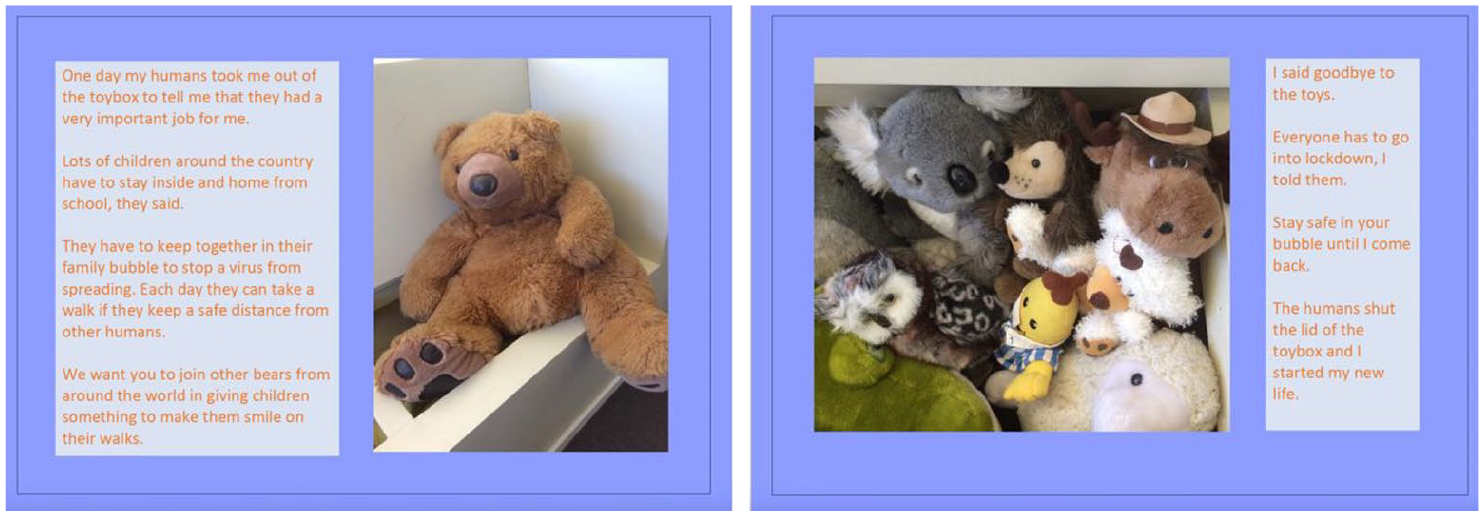
Bear begins his COVID-19 story.
After a few weeks, the books appeared on two educational websites, where parents and teachers found them. Positive feedback sowed a seed in the author’s mind—how could she use Bear’s stories to gain insights into how children were experiencing the lockdowns? Her research proposal was fast-tracked and ethically approved by her university, and she set about recruiting willing families.
Gaining insights through family conversations
The author had prior experience researching with children in sensitive contexts so was cognizant of not re-traumatizing participants (Mutch, 2017). The Bear stories offered an opportunity to approach the topic of the lockdown obliquely. Feedback from parents and teachers reported being able to use the books to help children talk about their lockdown experiences in a safe and relaxed manner.
The recruitment flyer, delivered through a variety of channels, asked for parents or carers of children aged between approximately 3 and 8 years of age, who were willing to read the e-stories to their children and record the entire conversations. Those who responded were requested to make the reading sessions as informal as possible, mirroring the family’s typical reading sessions. Parents completed a consent form where they agreed to ensure that children’s rights to agree, stop or withdraw from the study would be upheld. Parents were asked to record the full reading sessions on an electronic device and forward them to the author. Children had the purpose and process of the research explained to them via a script read to them by their parents. Children indicated their assent by circling an emoji (sad face, neutral face or smiley face). Ten participants across four families participated. All sessions involved one parent and one or two children. Most stories were read over one or more occasion and often spontaneous activities followed.
It is important to highlight the limitations of this study. First, while initially more families agreed, only four family groupings sent in their full sets of recordings. These parents tended to be well-educated, confident in the use of recording devices, and comfortable enough to let the researcher glimpse into their home lives. Despite these limitations, there were hours of verbatim parent-child conversations providing insights that would have been difficult to capture in other forms of data gathering, given the constraints of the lockdown.
Sense making through critical hermeneutics
The recordings were transcribed, returned to families for any amendments and analyzed using critical hermeneutics. Kinsella (2006) explains that a hermeneutic approach is about understanding rather than explaining, placing the interpretation in its linguistic and historical context and viewing inquiry more as a conversation. It also requires a tolerance for ambiguity. These ideas also aply to critical hermeneutics but the critical nature requires the reader to be more aware of complexity and contradiction, and to develop an awareness of how text is used and misused to obscure and invisibilize (Kinsella, 2006). In Ricoeur’s approach to textual analysis through critical hermeneutics (Ricoeur, 1971; Ricoeur and Pellauer, 2013), there is no definitive interpretation of a text. Each reader creates a new interpretation of the text grounded in their social, cultural and historical context. Not only can a reader change the interpretation of the text as they imbue it with their own experience, the text can change the reader, who goes on to develop a deeper understanding of themselves and their world. As Kinsella (2006: 10) notes, “Thus a hermeneutical approach is open to the ambiguous nature of textual analysis and resists the urge to offer authoritative readings and neat reconciliations.”
The critical hermeneutic approach undertaken in this study is drawn from Wadhwani (2023). The first layer of analysis is preconception, that is, the meanings the reader (in this case, the researcher) brings to the original text (the Bear books) and the secondary text (the transcript of the family conversations about the books). The second layer of analysis (distanciation) requires a sense of distance, where context, complexity and contradictions are considered. The third layer is where the reader absorbs meanings that can alter their preconception and initial interpretation and their understanding of themselves and the world (appropriation). Simms (2003: 43) explains appropriation as follows: Texts propose a world which readers appropriate to understand their own world, and consequently to understand themselves. Texts are the medium through which readers arrive at self-understanding; they are the bridge between the subjectivity of the self and the objectivity of the world.
Critical hermeneutics, in the context of the reading of the Bear stories, operated at these different levels of meaning and interpretation. The parents read the stories to the children, making their own interpretations, which shaped their delivery and discussion. The children listened and commented, bringing their own level of understanding to the conversation. The researcher read the original and secondary texts in the context of the parent-child conversations, and the surrounding socio-historical moment in time, to provide her own interpretation, which in turn, altered her undertstanding of the original text and her perspective on the socio-historical context. Finally, the readers of this article will bring their interpretations to, and approriate, the layers of text and meaning in their own ways.
On a practical level, the transcripts were first divided into coherent sections of dialogue, to be interpreted alongside the relevant text and illustrations from the story. In this first reading (excerpts of which are shared in the findings section), the researcher was interested, at an preconceptual interpretive level, what the transcripts revealed and how the parents facilitated this layer of interpretation. Later, in the discussion section, a deeper distanciated reading was created by placing selected pieces of text, and accompanying illustration, into a quadrant to highlight the interconnected layers of meaning between context, text, parent facilitation and children’s responses (see Figure 5 later in the article).
Findings
The findings section, therefore, provides a first layer of researcher interpretation exploring two elements: (a) what the data highlighted about children’s understandings of and responses to the pandemic; and (b) how the adults facilitated the sharing of these insights.
Children talk about lockdown
The study took place during and after the first Level 4 COVID-19 lockdown beginning in March 2020. Children were coming to understand their new world. The Bear stories enabled children to make connections between their lives in lockdown and the life of the central character. Figure 2 presents the moment in the first story where Bear convinces his humans that he is now in their bubble. A parent uses the accompanying text to check their child’s understanding:
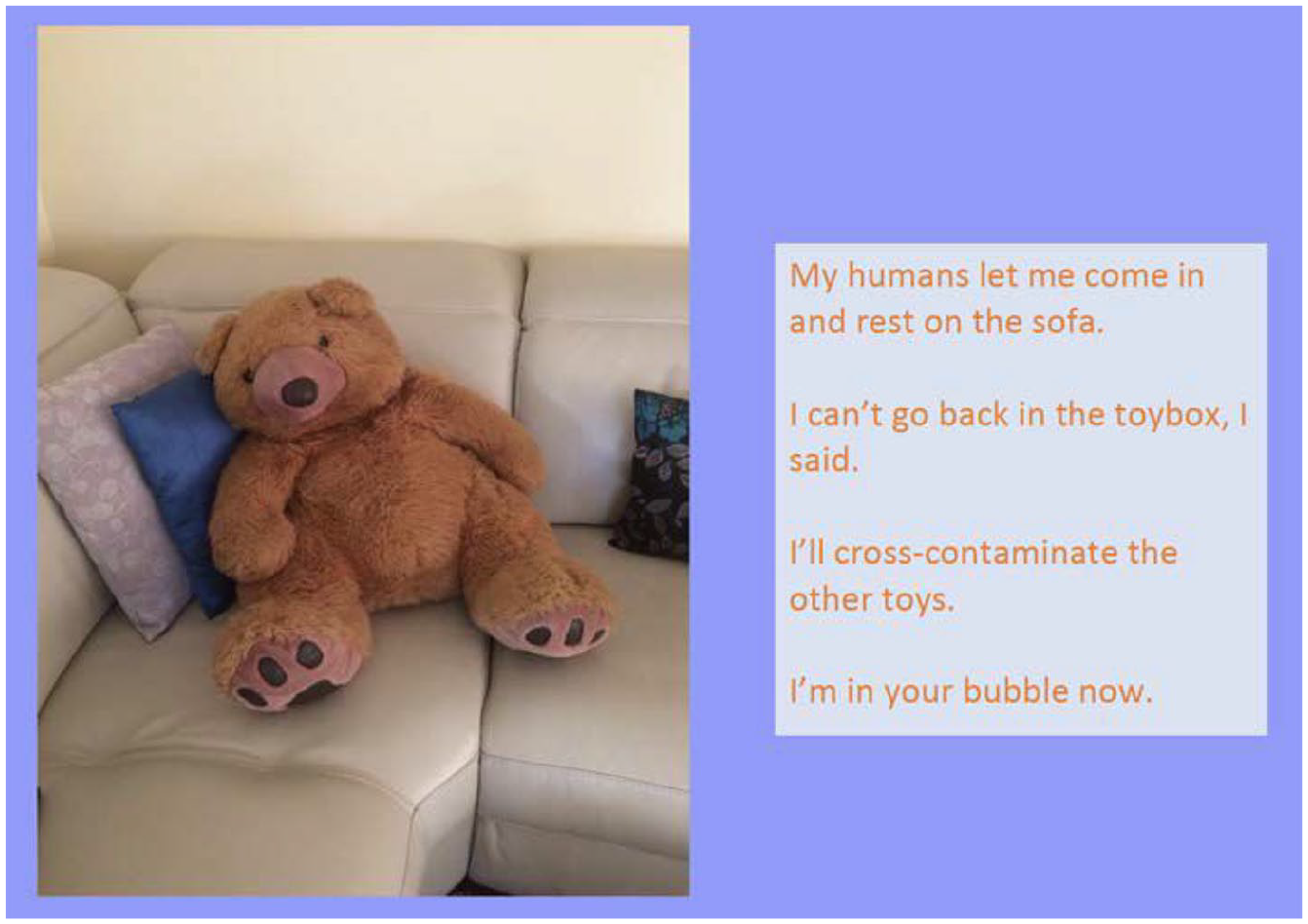
Bear joins the human family’s bubble (Mutch, 2020a: 8).
(Key: F = Family; A = Adult; C = Child):
F1/A1: What do you think that means? Cross-contaminate?
F1/C1: Maybe he crosses bubbles?
F1/A1: What do you think will happen if he crosses bubbles?
F1/C1: If he goes to the other toys, he might make them sick.
F1/A1: Ah. So, if he crosses bubbles he won’t be with the toys?
F1/C1: Yes, but he can still see them and talk to them, but he can’t get close. He can go into Facetime.
Here, the parent asks open-ended questions to tease out the child’s understanding and then checks that understanding with the child. The child continues the conversation by not seeing this situation as a major problem but just as something to be overcome and uses creative problem-solving to suggest a solution. This excerpt highlights common themes across the different family conversations. Children quickly assimilated new vocabulary, such as Covid, pandemic, bubble, and lockdown, along with the world these concepts encapsulated. They also recognized that there would be sacrifices, such as not being with your friends.
F2/A2: Can you relate to the bear?
F2/C2: Sometimes I feel sad that I can’t see my friends.
Children showed an acceptance of the necessity for the restrictions that were being placed on them, that is, to ensure that others were not put at risk:
F1/C1: Yeah, we went to the park but we can’t use the equipment. Because if you touch it somebody else will touch it too and you’ll get sick.
Children could make connections with their own lives, past and present. Here, Bear and his friend, Alligator, entertain themselves by having a picnic on the lawn. A child seizes the opportunity to recall a picnic they experienced (Figure 3):
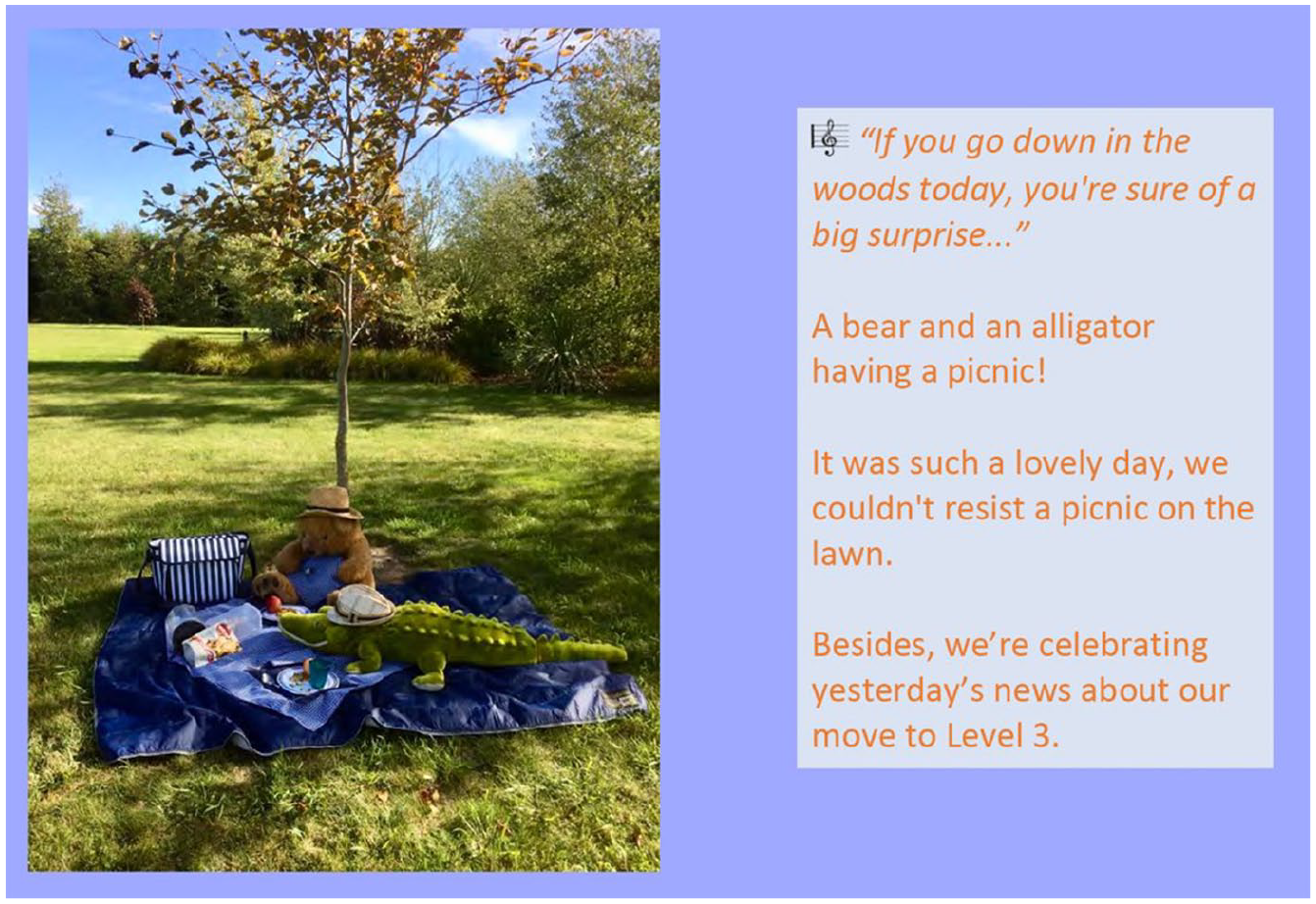
A picnic on the lawn (Mutch, 2020d: 4).
F3/C4: Yes. I love picnics. We did a picnic at school. Whole family. We got cupcakes. We got carrots and hummus. Cookies, okay, wait. And juice. Okay.
The stories also gave children the opportunity to connect with Bear’s emotions of sadness, boredom, happiness, puzzlement or excitement. Here a child is prompted by their parent to recall some of their emotions during lockdown, especially in relation to the playground:
F1/A1: How did you feel when we couldn’t touch things?
F1/C1: I felt a little bit angry. Because I wanted to play on the equipment but I couldn’t.
F1/A1: Mmm. That must have been quite hard, actually.
F1/C1: Yeah.
F1/A1: So, you felt angry?
F1/C1: And sad.
However, rather than just focusing on their own emotions, children also showed care and compassion toward others—their families, pets, toys and friends, and even unknown others who needed to be protected. Here, one child connects to the way in which the humans and the Bear care for each other:
F3/C4: They’re so kind to the bear and the bear is so kind to them. The humans are doing some jobs for him and not making him bored and being kind to him. And the bear is doing some chores for them.
This interest in caring behavior led to two children from different families, spontaneously and each without knowing the other, to create protective clothing for their dolls. One fashioned facemasks out of an old curtain and the other full PPE out of a blue plastic bag.
Sad emotions often centered around the things that children missed—their friends, school or early childhood, parks, playgrounds and other places and people special to them. When, in the story, Bear visits his local playground to find a notice saying it had been closed due to the pandemic, a parent asks her child:
F2/A2: Do you miss playing on the playground?
F2/C2: Mm-hmm.
The sadness in the child’s voice is poignant. Yet, another common theme was the way in which children used their initiative to find solutions to the problems that the lockdown restrictions were presenting. Here, Family 2 continue their conversation about the playground:
F2/A2: Do you think it’s worth it to not play on the playground in order to make sure everyone else doesn’t get sick?
F2/C2: Uh huh. But I can still play in the backyard. The backyard is kind of like a playground.
Another child offers a different set of solutions to the same problem:
F4/A4: Does it make you feel sad to see the playground closed?
F4/C5: No. You can do anything like draw, read, play with your sister, friends. . .
In conclusion, across the four family groupings, children drew on the Bear stories to make connections to their own lives, develop their understandings of the pandemic and begin to create a new narrative identity (Bourke et al., 2021; Gibbs et al., 2013). Within these new identities, children displayed autonomy, for example, coming up with their own ideas and solutions. They showed empathy and compassion for those around them and wider afield, and they developed a sense of responsibility for their role in the care and protection of others.
Parents facilitating conversations
To begin with, parents took a more educative stance, asking questions at regular points in the story to check understanding. When Bear is concerned that the sheep are not taking COVID-19 seriously, a parent checks on their child’s understanding:
F4/A4: But do you think COVID-19 is not a true thing?
F4/C5: I think, yes, it’s true. I think it’s a true thing. And everybody’s saying it.
F4/A4: What do you hear about it?
F4/C5: At night, me and [name] got up [. . .] and saw the news and they were saying COVID-19, blah, blah, blah, and I hear it from school and the teachers and the principal and from you.
The parents in this study, used the stories as a catalyst for gaining insights into their child’s understandings and feelings, both for the study and for themselves. Here one child provides an insight into their experience of on-line learning:
F3/A3: How did you feel?
F3/C5: Bored. I wanted to go to school, with my friends and learn. [. . .]
F3/A3: But you were doing online learning.
F3/C5: Oh yeah. But it was harder than you could imagine. I didn’t like online, I wanted to do it in real life. But when we went back to school I was so happy. To see everybody, especially do my writing, reading, math.
F3/A3: Wasn’t it the same online? Were you doing the same thing?
F3/C5: Not really.
F3/A3: How was it different?
F3/C5: Online learning is not like real life.
Often as children became more engaged in the Bear stories, they gave perfunctory answers to routine questions, wanting to follow the Bear’s adventures rather than talk for talking’s sake:
F4/A4: What can you see in this picture?
F4/C4; A flag, a tree, a chair, couches, a table and books.
Parents started to relax and take their cues from children’s questions and interests. When Bear decided to start a photo album, one child asks:
F3/C3: What’s an album?
F3/A3: It’s a book, like a scrapbook. But it has photos of friends and family. Have you ever seen a photo album?
F3/C3: Yes, of me and my sister when we were young. It had pictures like what Bear has.
In another example, when Bear accompanies his humans to get their influenza inoculation, this child closes down the conversation:
F1/C1: I don’t like flu shots.
F1/A1: No?
F1/C1: I don’t want to talk about it.
F1/A1: You don’t want to talk about it. Okay, we’ll go on to another page.
As the readings of the stories progressed, the sessions became less question and answer activities and more like reciprocal conversations. Throughout, however, the parents’ tones were gentle, inquiring, and empathetic. They were cognizant of children’s feelings and respected children’s ideas and allowed them to follow their lines of interest. Rather than close down a topic, they let it take its natural course and this included when Bear’s humans lost an extended family member during the pandemic. The discussions followed the children’s wishes—in one case to talk about a friend’s grandfather who had also died, in another case, an uncle who died overseas, and in yet another, to talk about God.
In conclusion, although not labeled as such by parents themselves, these sections of transcript illustrate a caring pedagogy where parents conduct the conversations at both a cognitive and emotive level (Mortari, 2016), gently prompting the children but always respecting their ideas and feelings.
Discussion
The discussion section examines the data through a second hermeneutic reading, setting the data in its wider context, examining the interplay between text and readers, creating new understandings of time and place (Ricoeur and Pellauer, 2013) before returning to the themes from the first reading.
In this section, the four elements of context, text, facilitation and response support a deeper distanciated critical hermeneutic reading. The point of a critical hermeneutic reading is that it undertakes multiple readings to peel back layers of meaning that might have been missed in earlier iterations. This more complex reading is displayed in quadrant form bringing four aspects together: context, text, facilitation and response. First, the COVID-19 pandemic provided a context in which the text was conceived. The text then exists as an entity open to interpretation. It was presented to children who interacted with the text through a reading that was facilitated by an adult. Finally, the researcher brought the layers together in a new interpretation explained under each quadrant (Figure 4).
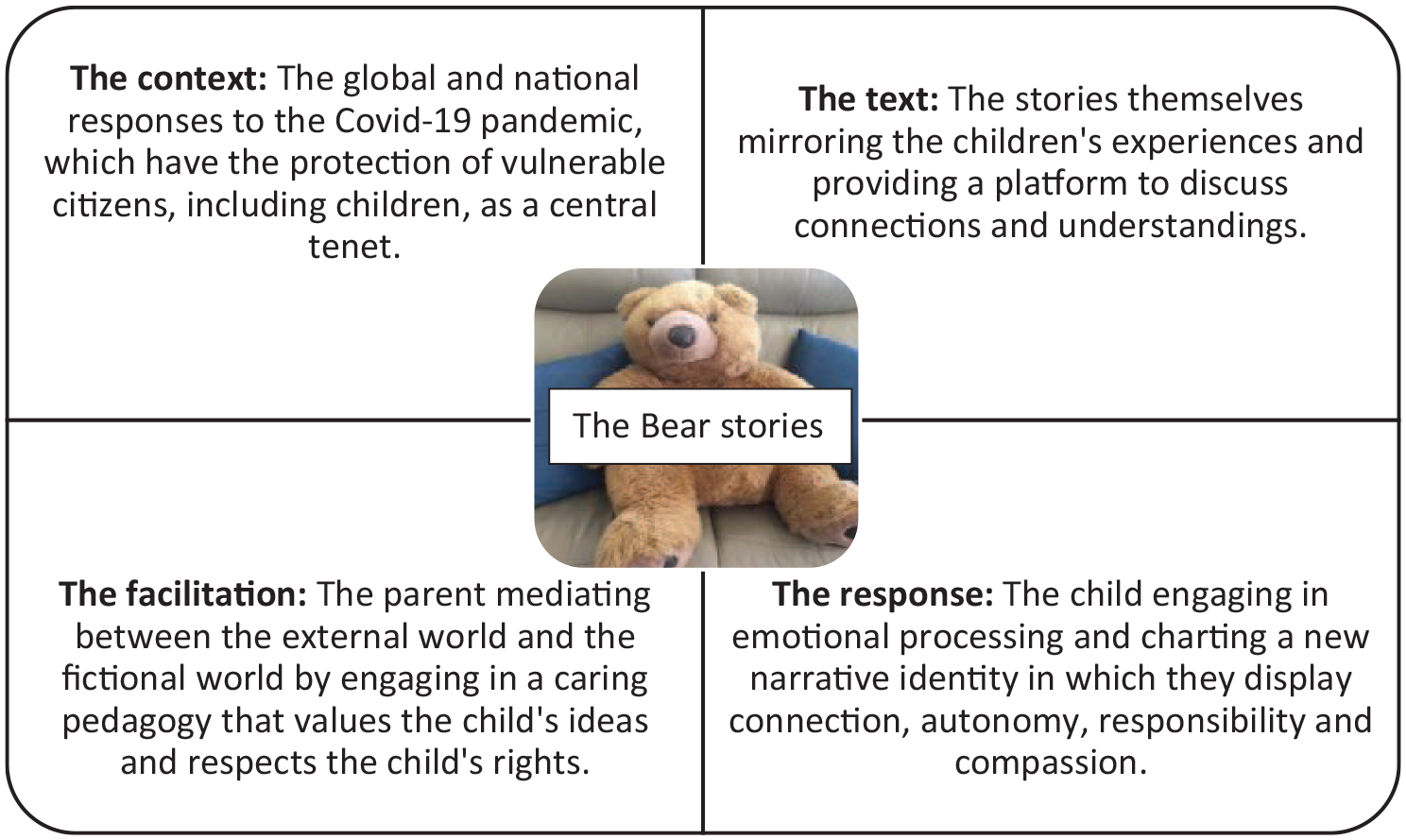
A critical hermeneutic interpretive structure (Mutch, 2020c: 1).
Re-reading the data through a critical hermeneutic lens
Three excerpts are selected to illustrate that these reading sessions were informed by the external context, through the Bear’s activities, allowing the parents to assist children to make connections, ask questions, retell experiences, express feelings and begin to absorb the events into their own personal histories and identities (Bourke et al., 2021; Gibbs et al., 2013; Speier, 2000).
In a critical hermeneutic reading of this excerpt (Figure 5), we see that by having Bear check on his neighbors, the author was able to obliquely insert global health advice about social distancing into the story, a point which was picked up by the parent who used it to see what her child remembered. Each element has thus become interconnected from the global to the local, through the text, and the parent and child’s interaction with the text, to where these new concepts become embedded in the child’s understanding.
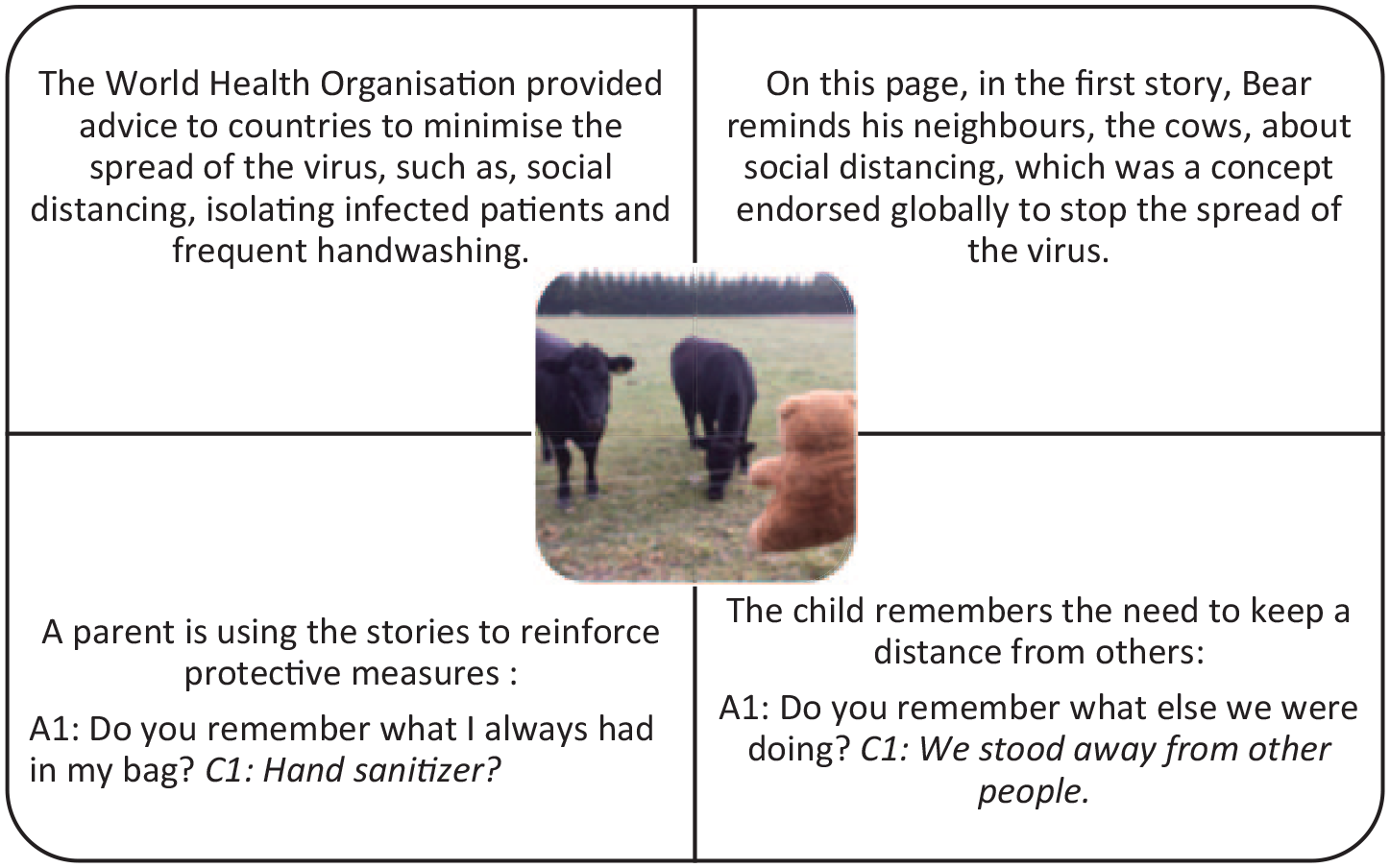
A critical hermeneutic reading of a page in “Bear goes into Lockdown” (Mutch, 2020a: 13).
This excerpt (Figure 6) highlights that while countries considered different ways of enforcing restrictions, Aotearoa New Zealand chose a unique way to reinforce the concept of minimizing contact with others. However, later research showed that this concept favored those in single-household bubbles, and disadvantaged those in crowded housing settings or where individuals lived alone (Anderson, et al, 2020; Officer, et al., 2022). Increased family violence was one outcome; social isolation another. That the child was attuned to the way in which the bubble concept kept people apart, who would have rather been together, is an insight that the research approach allowed the author to capture.
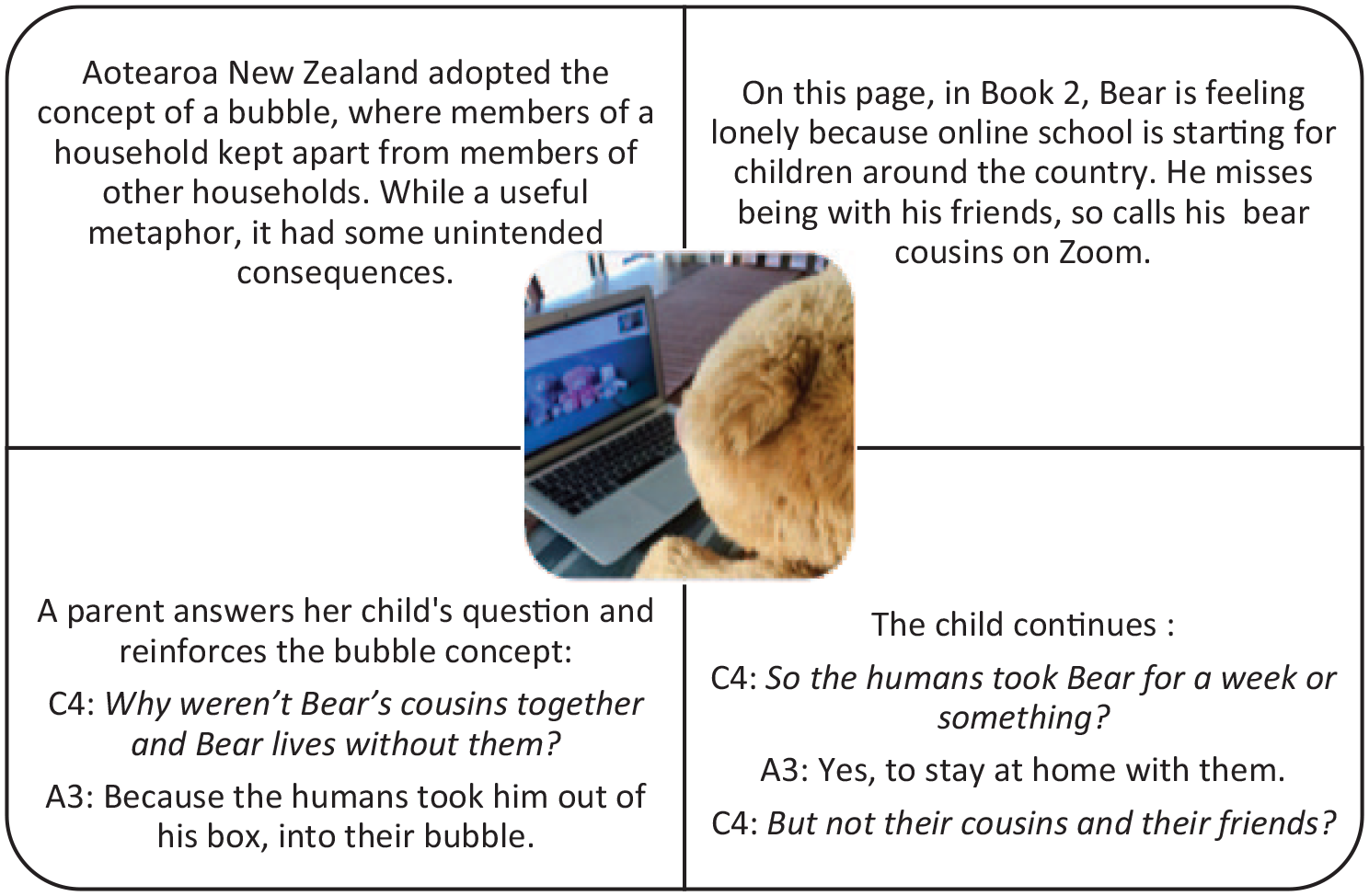
A critical hermeneutic reading of a page in “Bear settles into Lockdown” (Mutch, 2020b: 5).
In this final example (Figure 7), we see how Aotearoa New Zealand, Bear and the families in the study adapt to their changed world. An important consideration in the research on children in disaster and adverse contexts is how to provide some regularity or certainty in a world of uncertainty (Younger, 2017). In Aotearoa New Zealand, this happened at a national level in different ways. One was returning to schooling, albeit at home and online. Another was the Prime Minister, Jacinda Ardern, proclaiming that the Easter Bunny and the Tooth Fairy were essential workers who could continue to do their jobs despite the country being in lockdown. This particular excerpt highlights the Returned Services Association’s initiative to ask people to stand in their bubbles, at their gates as dawn broke, to remember those who have died in wars. In these ways, some of the patterns of childhood experiences could be retained even at a time where others were lost or disrupted.
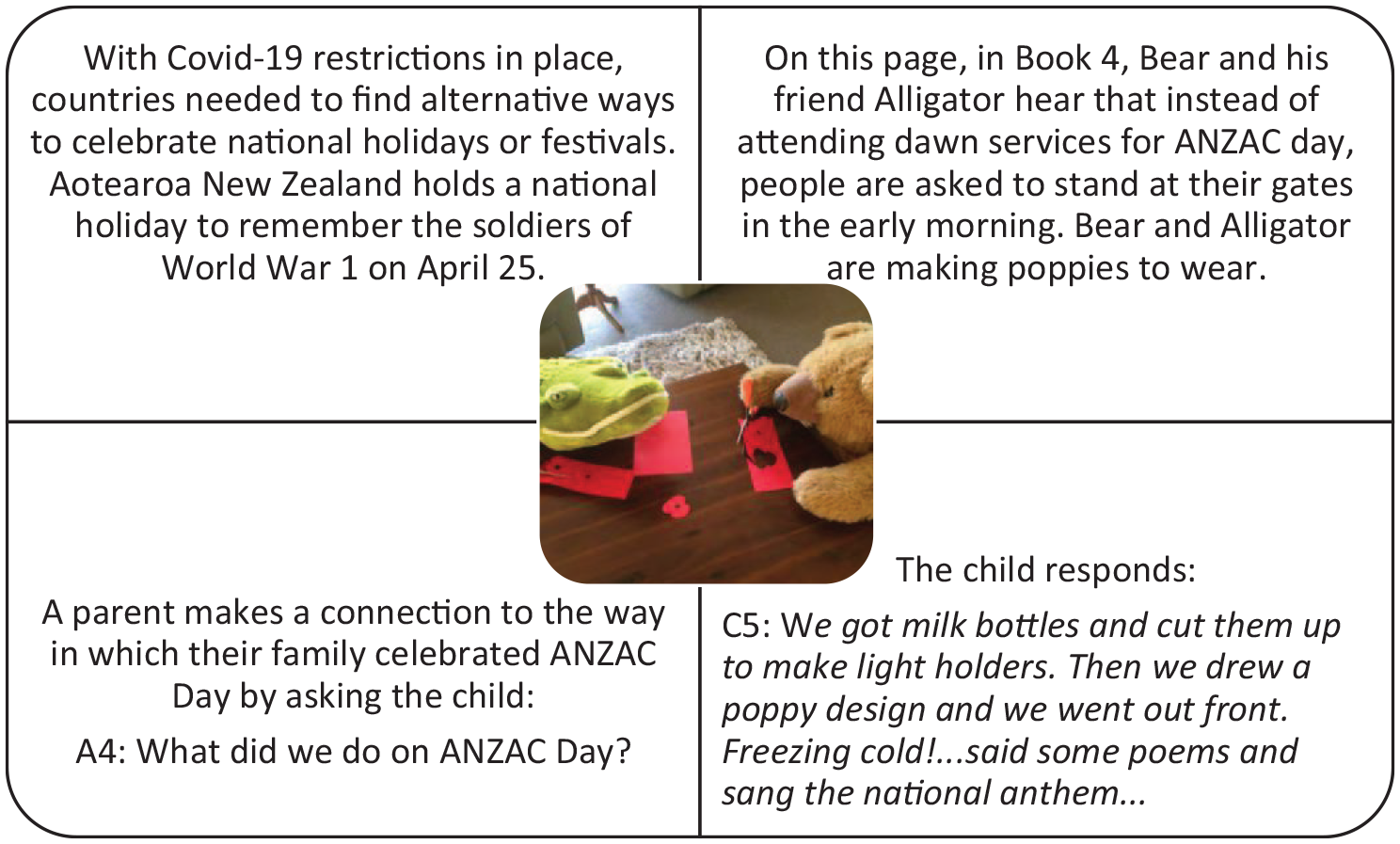
A critical hermeneutic reading of a page in “Bear ends his Lockdown” (Mutch 2020d: 11).
Emotional processing
These excerpts also highlight the two key research findings to come from the study. The first is the way that the interplay between text and self, that is between Bear’s stories and the child, highlighted common elements across the four data sets. Moving between the text and the conversations with their parents, the children began to assimilate new understandings and narrate new versions of their personal identities and histories (Bourke et al., 2021; Gibbs, et al., 2013; Rahiem et al., 2021). This emotional processing approach has been recognized as a useful tool in post-disaster contexts to assist children to move forward with critical hope (O’Connor, 2013). While the arts, such as painting, poetry and drama, are common activities to support children to express their feelings and gain a measure of distance from the adverse events, fictional picture books can achieve this outcome equally well. On reflection, the success of the Bear in Lockdown e-books was that they were not written to be didactic and they are certainly not sophisticated in their format, but they tell an authentic story through the eyes of an appealing character. With naivety and humor Bear bumbles through lockdown, where the stories operate on multiple levels. Adults, for example, connect with the stresses of working from home and dreaming up new ways to entertain their children. Children laugh out loud when Bear falls off the trampoline or gets his head stuck in the mailbox.
With and without parent facilitation, children made connections between their lives under lockdown conditions and those of Bear and his human family. An important element of emotional processing is that children are able to see that they are not the only ones who have experienced that adverse event, or had those thoughts or feelings (Bateman and Danby, 2013; Orr, 2007). In the recordings, the children’s voices and comments reflect Bear’s actions and feelings. They felt sad when he missed his friends, they sympathized when he couldn’t go to the playground, they laughed when he watered the weeds and dug up the roses, and they excitedly participated in Bear’s Easter egg hunt.
Another theme was understanding the need for the restrictions and taking responsibility for themselves and others by willingly following the restrictions and health advice. Even though one child said she felt angry that she couldn’t play on the play equipment, she still followed the rules. When problems presented themselves, rather than feeling dejected, children took responsibility to find creative alternatives.
Showing compassion for Bear and others, from their family, pets and toys, to distant others who had died or might get sick from COVID-19, was another strong feature of the data. Again, an important concept in recovery from adverse events is engaging in ways to empathize with or help others (Mutch, Yates and Hu, 2015). The two children who made protective clothing for their dolls is a good example of focusing on others.
A pedagogy of care
The second finding is that these insights into children’s COVID-19 experiences and understandings could not have happened without careful parent facilitation. Although the sample size was small and the parents were self-selected, the consistency of their approach provides a window into a pedagogy of care in action. Each parent entered into the reading sessions calmly and thoughtfully. They quickly saw that there was a reciprocal benefit in being part of the research as they gained insights into how their children were coping without having to ask them directly. Prior disaster research has shown that children often take their cues from how parents react or hide their feelings so as not to add to their parents’ worries (Freeman et al., 2015; Mutch and Gawith, 2014).
While not all the parents were skilled at asking questions, they soon learned that closed questions produced perfunctory answers whereas open questions often produced more detailed responses. Parents relaxed as their children engaged with the stories and were more willing to let them take the lead—to read parts if they wished, to ask questions, to spend more time on certain illustrations, or to move along when they wanted to get to the next page.
A pedagogy of care is not just about the skill of facilitation but also in the pedagogical relationship and the environment in which the learning takes place. These parents displayed receptiveness and responsiveness (Noddings, 2010), accepting children’s answers without correcting them, adding their own comments without taking over, and letting the conversation ebb and flow. By using appropriate strategies of careful prompting, well-paced pausing, and active listening they showed pedagogical caring (Curtis Banks, 2009). By giving their wholehearted time and attention to reading with their children they showed nurturing caring (Curtis Banks, 2009). One child felt so relaxed at the end of the last story that she leaned into her mother and sighed, “Sleepy. You’re a comfy bed, mum, but a human one.”
Conclusion
This study set out to investigate how children were experiencing and understanding the first few months of the COVID-19 pandemic in Aotearoa New Zealand. As the country was in a full lockdown, it was not possible to speak with children in person, the author needed to find an innovative solution. Using of a set of four children’s books that she had authored about a toy bear in lockdown, she recruited parents to record their conversations of reading and discussing the books with their children. The parents forwarded the full conversations to the author for analysis. Using a critical hermeneutic approach, the conversations were analyzed to reveal a complex interplay between the global and national context of the pandemic, and the parents and children’s interactions, through the conduit of the stories. Two key findings emerged—one relating to children’s responses and the other to parents’ facilitation. The stories enabled the children to engage in emotional processing of their situation, ask and answer questions, and express their feelings and ideas about the pandemic. The themes running through the children’s responses were connection, autonomy, responsibility, and compassion. The depth and candor of the responses was enabled by their parents engaging in a pedagogy of care, in which children’s rights to discuss matters that concerned them and to express their ideas freely were front and center.
Lessons to be taken from this study that further our understanding of children’s rights in adverse contexts are methodological, theoretical, and pedagogical. Methodologically, it was not possible to fall back on tried-and-true methods because of the pandemic, but ingenuity and serendipity enabled the author to devise a study that used engaging picture books to connect to children’s lives. Using willing parents to read the books with their children and record the ensuing conversations provided rich data gathered in a safe context. Theoretically, using critical hermeneutics (Kinsella, 2006; Ricoeur, 1971; Ricoeur and Pellauer, 2013; Wadhwani, 2023) allowed a deeper analysis that highlighted the depth and complexity of the interplay and meaning between the text, the global context, and children’s lived experiences. Pedagogically, the study revealed the importance of a pedagogy of care when approaching sensitive topics with children, where the adult is receptive and responsive and displays both nurturing caring and pedagogical caring (Curtis Banks, 2009), to fully uphold children’s rights to express their views and to express them freely.
Footnotes
Acknowledgements
The author is grateful to the children and their parents who let us glimpse their lives in lockdown, and to Noah Romero, my Research Assistant, who transcribed the recordings and contributed to the discussions about their contents.
Declaration of conflicting interests
The author declared no potential conflicts of interest with respect to the research, authorship, and/or publication of this article.
Funding
The author disclosed receipt of the following financial support for the research, authorship, and/or publication of this article: The author received a small grant from The University of Auckland for transcribing the parent/child conversations reported in this article.
