



Abstract
The COVID-19 pandemic globally disrupted education, forcing a shift to remote learning that excludes many learners. This paper examines student perspectives of the changes to their education. In October 2020, students worldwide participated in the Digital Inclusion Challenge, a hackathon-style event hosted by Convergence.Tech, a digital transformation company. Participants described barriers to learning and proposed solutions to increase inclusivity and effectiveness. Using thematic analysis, student-identified barriers and their proposed solutions were coded and explored. Overall, themes of four barriers to digital inclusion in education and themes of six solutions were identified. The findings demonstrate what students value in their education, and what they felt they had lost in the transition to online and remote learning. This research contributes to knowledge on the severe impacts of the loss of in-person learning and explores technological and conceptual innovations ideated by youth. Further, it provides insight into global student experiences in accessing education during the pandemic and offers considerations for future research.
The COVID-19 pandemic has disrupted education on a global scale. Many countries have responded to the COVID-19 global pandemic with containment efforts including school closures to limit the transmission of the virus and lessen the burden on healthcare systems. UNESCO reports that as many as 160 countrywide school closures were put in place during the pandemic, impacting 1.6 billion learners (UNESCO, 2020a; UNESCO, 2020b). Digital education has replaced traditional teaching styles when students cannot attend school in person, with educators and institutions relying primarily on digital technology to deliver instruction (Li and Farah, 2020). The shift to “technology-dependent distance learning” (Tawil, 2020: 3) has resulted in the exclusion of many learners from the education system due to a lack of digital literacy, insufficient technology, or precarious home environments, among other factors (Tawil, 2020; Van Lancker and Parolin, 2020). Two years into the pandemic, the transition to remote learning continues to impact education and remains understudied.
This paper examines students’ own experiences and their perceptions of fellow students’ experiences of the changes to the delivery of their education. In October 2020, students worldwide participated in the Digital Inclusion Challenge (the Challenge) hosted by Convergence.Tech, a Canadian digital transformation company. Students participating in the Challenge were instructed to create innovative solutions related to the United Nations Sustainable Development Goal of Quality Education: “Ensure inclusive and equitable quality education and promote lifelong learning opportunities for all,” with a focus on addressing issues arising during the pandemic (United Nations Department of Economic and Social Affairs, 2021: 11). This paper explores two primary research questions: first, what are the main barriers, as reported by youth based on their own experiences or their perception of students’ experiences, to inclusion in digital education? Second, what solutions do students propose to make digital learning during COVID-19 more effective and equitable? Using thematic analysis, four barriers and six solutions are identified in this exploratory study. While this paper focuses on the perspectives of youth who participated in the Challenge, this research aims to contribute to knowledge on how a younger generation has been severely impacted by the loss of in-person learning during the COVID-19 pandemic. These preliminary findings provide insight into aspects of in-person education that are valued by students.
Literature review
As pandemic restrictions forced schools to transition to online and remote learning, this presented a number of new challenges for students such as confronting social isolation, mental health issues, and increased difficulties due to lack of access to digital technology and the internet (Aboagye et al., 2020). These issues prevented many students, particularly those who are marginalized, from learning and engaging in the same capacity as they did prior to the pandemic, leading to their social exclusion.
The digital divide
One of the biggest challenges associated with the transition to online learning is the socio-economic disparity commonly referred to as the digital divide. The digital divide is the growing gap between those with access to modern technology and those without (Iivari et al., 2018). While the digital divide has always posed a challenge to learning for vulnerable students, this problem is now greatly exacerbated in a learning environment that is entirely online. This gap perpetuates disparities and is thought to contribute to political, social, and economic exclusion (Esteban-Navarro et al., 2020; Ye and Yang, 2020). The digital divide is replicated at a global level as there are large disparities in access to digital education for children in low- and middle-income countries in comparison to high-income countries, meaning that students from the poorest households across the world are less likely to be able to participate in remote learning (United Nations Department of Economic and Social Affairs, 2021). Research has identified numerous barriers to digital inclusion, which consist of lack of access to broadband internet, lack of access to technological hardware such as computers, or lack of competent digital skills (Borg and Smith, 2018; Gonzales, 2016; Gui and Argentin, 2011; Correa et al., 2020; Reisdorf et al., 2022). Studies have also shown that individuals with few digital skills often develop negative attitudes toward technology, such as high levels of anxiety, that serve to maintain the digital divide (Borg and Smith, 2018). Individuals who are more likely to experience these barriers are also often of lower socioeconomic status, members of racial minorities, persons with disabilities, or are living in rural communities (Anderson and Perrin, 2018; Cherubini, 2020; Kim and Padilla, 2020; Lai and Widmar, 2020; Livingstone and Helsper, 2007; Newman et al., 2017). Disparities already present in the education system are exacerbated when digital learning becomes the societal norm.
During school closures, students are expected to attend class and complete assignments online. For those struggling with barriers to digital inclusion, this transition has not been conducive to learning. A study by Kim and Padilla (2020) on the impact of the digital divide on Latino students from low-income families during quarantine found that, while all students had been loaned a digital device, the majority had issues with an unstable internet connection that led to a disruption in their learning. Further, all students surveyed reported a decline in their grades since the transition to an online learning environment (Kim and Padilla, 2020). Low levels of academic achievement due to digital inequality were noted in students even before the onset of the pandemic (Gonzales et al., 2020; Robinson et al., 2018). Additionally, young students with parents who do not have digital skills are at a disadvantage with online learning as they lack support both in using technology for education purposes and developing their own digital skills (Eynon and Geniets, 2016). As a result, digital learning during the pandemic creates a greater likelihood of exclusion for marginalized students.
The digital divide also poses a challenge to accessing physical and mental health resources during the COVID-19 pandemic. While COVID-19 quarantine measures are resulting in increasing rates of anxiety and other mental health issues, they are also preventing access to mental health services (Mishori and Antono, 2020; Wang et al., 2020). While telehealth and the use of digital technologies are being used to address the problem, individuals impacted by the digital divide may not be able to take advantage of these services, leading to further exclusion (Ennis et al., 2012; Li et al., 2020; Watson et al., 2021). The inability to access necessary support services has deleterious impacts on already vulnerable populations.
Mental health
The onset of the COVID-19 pandemic raised concerns regarding the mental health of children and youth, especially for those at-risk or with existing mental health issues. In particular, some evidence indicates that students in post-secondary education may have been a vulnerable population for mental health concerns prior to the pandemic, given the presence of academic, social, and economic challenges (Holmes and Silvestri, 2016; Robinson et al., 2016; Stallman, 2010; Storrie et al., 2010). As a result of the rigorous isolation measures enacted to prevent the spread of COVID-19, students are dealing with new stressors, such as COVID-19 related anxiety, social isolation, and loss of employment (Han et al., 2021; Loades et al., 2020; Solomou and Constantinidou, 2020). In addition, many students or their family members may contract the virus and must manage physical symptoms that can range from mild to severe. Some students may also have a loved one hospitalized or die due to COVID-19, which can have severe and long-lasting effects (Li et al., 2021).
Unsurprisingly, emerging research shows the large psychological impact of COVID-19, and a noted rise in mental health issues among students and the general population (Cao et al., 2020; Copeland et al., 2021; Husky et al., 2020; Li et al., 2021; Son et al., 2020; Tang et al., 2021; Wang et al., 2020). A study by Son et al. (2020) that surveyed students at a U.S university found that students were reporting increased levels of stress and anxiety. Research on college students in France showed similar trends, with most of the sample reporting increased feelings of anxiety and moderate to extreme feelings of stress (Husky et al., 2020). Another U.S. study found an increase in both externalizing problems as well as attention issues among university students during quarantine (Copeland et al., 2021). The increasing rates of mental health problems are even more concerning, considering that schools are a primary source of support for student mental health (Hoffman and Miller, 2020). With rising rates of stress and anxiety among students, many are finding it difficult to focus on their studies. Students are reporting increases in attention problems, while teachers are reporting a need for resources and strategies to keep students engaged and motivated in the online classroom (Copeland et al., 2021; Trinidad, 2021). As both students and teachers continue to struggle in this unfamiliar, challenging new setting, it is prudent to consider the long-term impacts of COVID-19 on student outcomes and education system efficacy.
The Challenge
In October 2020, Convergence.Tech, a digital transformation company in Toronto, Canada, held a virtual, global hackathon-style challenge. Hackathons are events “where small groups cooperate to produce software prototypes in a limited amount of time” which are focused on generating new ideas (Kitsios and Kamariotou, 2019: 234). This event, the Digital Inclusion Challenge 2020 (the Challenge), aimed to “create new technology solutions for the education sector which will address mental health, digital wellness, equity, and diversity issues,” in the face of the disruption caused by the COVID-19 pandemic (Convergence.Tech, 2020). Students identified current problems in education that they wanted to solve based on this prompt. Their solution could target any issue, as long as it was within the Challenge’s parameters. This could be based on their own personal experience, the experience of other students in their community, or the world at large. The event was inspired by traditional hackathons, as students independently collaborated on design solutions (Convergence.Tech, 2020). However, coded software and hardware solutions were not required in their final submission (Convergence.Tech, 2020).
Methods
Due to pandemic restrictions, Convergence.Tech adapted their annual 4-day, in-person hackathon to an online, 10-day Challenge. The shift to a virtual Challenge allowed the competition to become global. In addition, eliminating the requirement for a computer-coded solution (as is typical with hackathons) reduced barriers for participation. The aim of this study is to explore students’ perspectives of barriers to education during the COVID-19 pandemic and their proposed solutions by analyzing student submissions from the 2020 Digital Inclusion Challenge. Inductive thematic analysis, a qualitative method for identifying and describing patterns within data, was used to analyze the students’ Challenge submissions (Braun and Clarke, 2006; Nowell et al., 2017). Thematic analysis is a useful method to examine different perspectives and generate unanticipated insights from participants (Braun and Clarke, 2006; Nowell et al., 2017). As there is a dearth of research from students’ perspectives on the pandemic consequences to their education, employing an inductive, exploratory methodology, allowed the students’ submissions to guide and inform the analysis (Braun and Clarke, 2006). Further, we believed the use of thematic analysis to be appropriate given the exploratory nature of our study and the lack of focus on developing theory.
Participants
The pandemic continues to impact education and effects at this time remain understudied. As primary stakeholders in the education system, the student perspective provides key insight into the impact of COVID-19 on the provision of education and the resulting disparities in learning efficacy and outcomes. Convergence.Tech recruited global submissions through social media and the Challenge planning committee’s collective networks, including representatives of the UN, World Bank, academic institutions, and the Canadian Trade Commissions. These contacts were used to promote and spread awareness of the event. Applications were accepted from high school, college, and university student teams of two to six people and participation was free. Teams were required to submit their application prior to the Challenge. Over 300 applications were received. The planning committee assessed applications based on long-form answers to two questions, “Why do you want to take part in the Challenge?,” “Is there a particular problem you’d like to solve?.” A diverse group of 150 teams were selected to participate in the Challenge. Each participant consented to Convergence.Tech using their submission for post-event purposes.
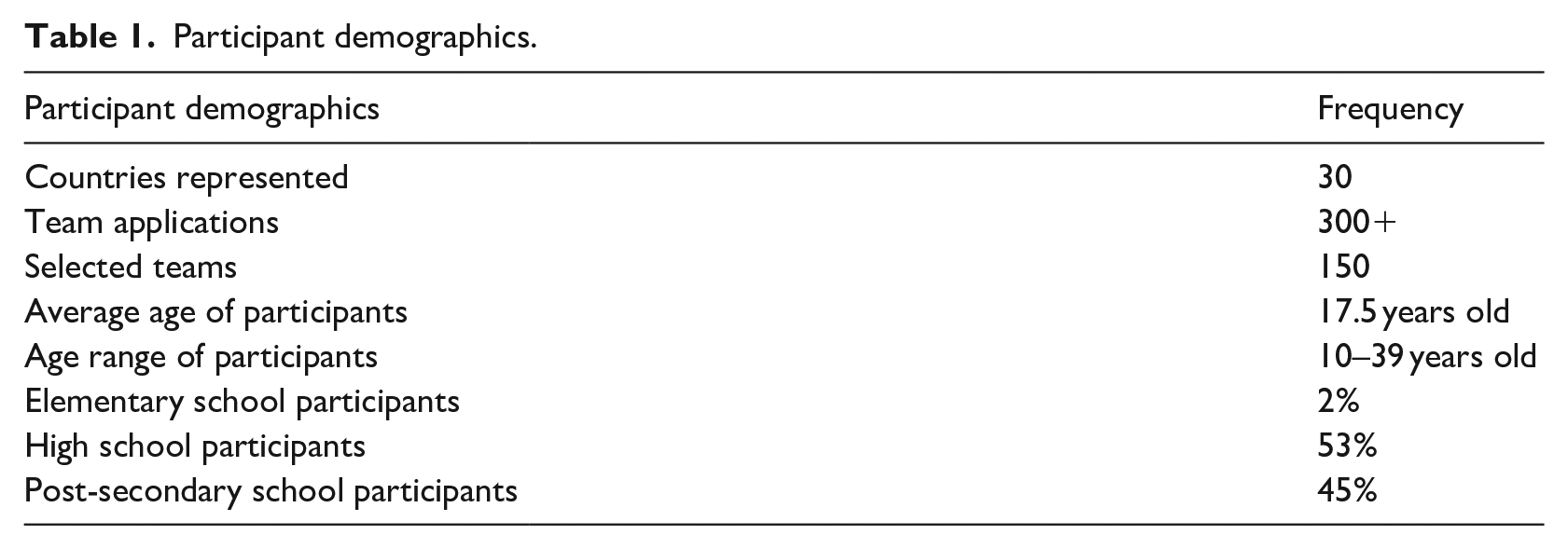
The final 150 teams represented 30 countries. The majority of teams were from Canada (40 teams). Sixteen teams were from the Philippines and 14 teams from the U.S. The participants were almost equally male and female students (48% female). While education level was not explicitly reported, using the participant’s age and team information, 53% of participants were assumed to be in high school, 45% were completing post-secondary education, and the remaining 2% were in elementary school. The average age of the students was 17.5 years old, with a range from 10 to 30 years old. Please see Table 1 and Figure 1.
Participant demographics.
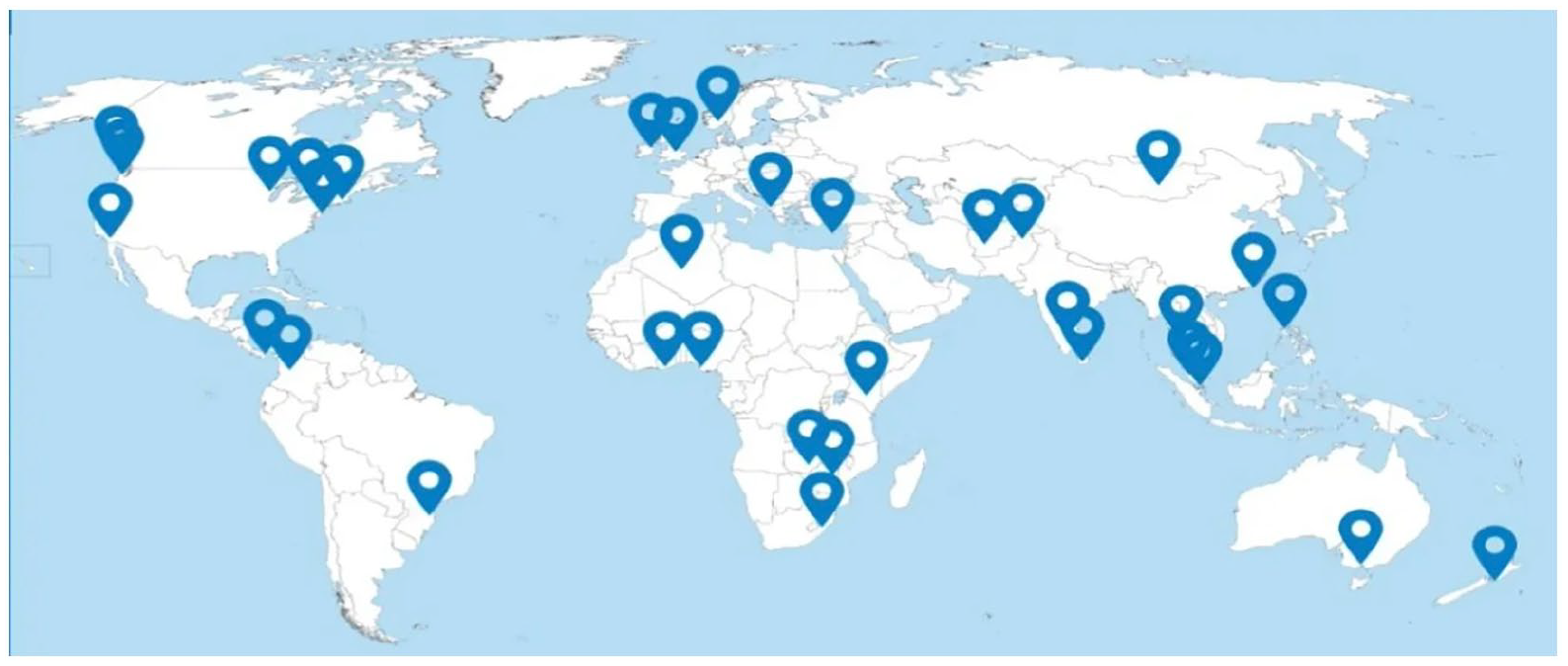
Regions represented in the challenge.
Data analysis
All 150 student proposals submitted to the 2020 Digital Inclusion Challenge were included in analysis. Each student submission included PowerPoint slides and video presentations. Drawing on Braun and Clarke’s (2006) framework, the research team conducted thematic analysis of the students’ submissions. The research team familiarized themselves with the data by transcribing the presentations into text for analysis. All text included in the PowerPoint slides and videos was included in the transcriptions, all voice recordings were included in the transcriptions, and all other visual information elicited from the media materials was noted in the transcriptions. The research team then divided the data into sections for initial coding, with each researcher independently reviewing approximately 50 submissions. Each researcher completed initial open-coding via an iterative process of reviewing the transcriptions and sifting through the text to draw out commonalities. The research team then met and reviewed each code, using the research questions as a guide to discuss differences and relationships amongst categories until saturation was reached and no new codes, sub-categories and/or relationships between the categories could be identified. Arriving at a consistent coding framework through an iterative process ensured trustworthiness of the analysis (Braun and Clarke, 2006; Lincoln and Guba, 1985). The research team continued to meet to collate the codes into themes that accurately and clearly represented the data. The themes were reviewed and refined until the names and definitions of each were finalized (Braun and Clarke, 2006). This process provided a preliminary understanding of young people’s ideas through inductive, descriptive analysis.
Findings - Major themes
Barriers to Digital Inclusion
Four primary barriers to digital inclusion in education were identified during analysis (Figure 2). Approximately 35% of submissions were included under the first barrier, with 23%, 7%, and 34% of submissions under the second, third, and fourth barriers, respectively.
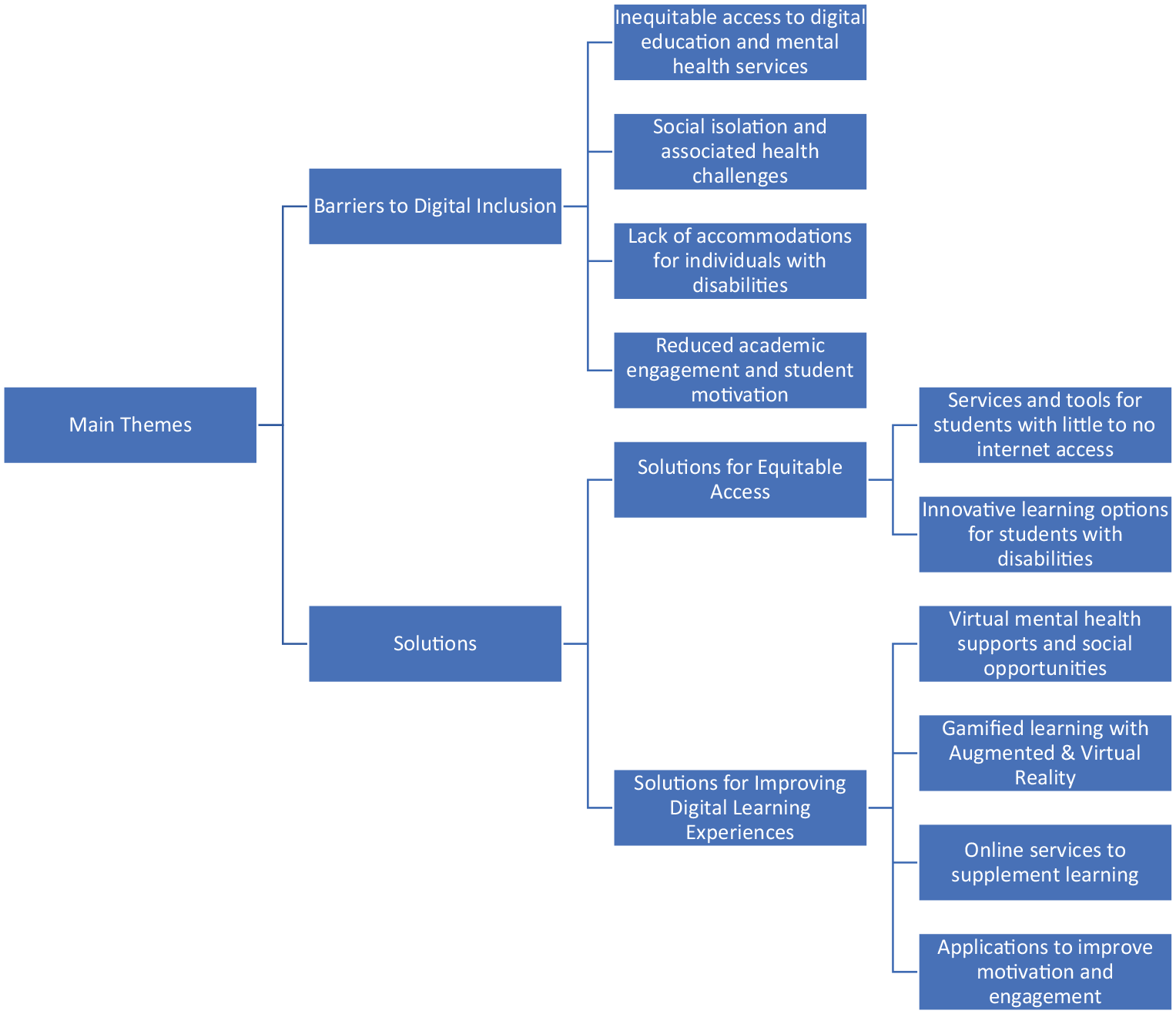
Outline of main themes and sub-themes identified during exploratory analysis.
Inequitable access to digital education and mental health services
“It is very hard to understand the lessons because I’m expected to study them on my own [with regards to modular learning].”
Many Challenge participants focused their efforts on addressing barriers that prevent access to education and mental health services, namely a lack of infrastructure, lack of hardware, and/or lack of technological literacy. They noted that these issues are often a result of inequitable distribution of resources amongst rich and poor communities or households. For example, lack of infrastructure may mean there is little to no internet connectivity, slow broadband, or inadequate school facilities for students. A lack of hardware may mean there is no laptop, desktop computer, or other essential electronic equipment available. A lack of technological literacy may be an issue for families where children and/or parents are still learning to use computers and are unable to navigate the online school system to participate in classes or receive feedback. Additionally, lack of technological literacy amongst teachers was a widely reported issue.
With the transition to online learning, these barriers are deeply impacting remote, low-income, and developing communities. Furthermore, the digital divide worsens unequal distribution of resources amongst high- and low-income countries. Teachers and students living in developing regions are facing significantly limited opportunities and greater challenges to remote learning during COVID-19 compared to their counterparts in developed areas. Barriers addressed in the Challenge that were more specific to developing countries included issues such as lack of electricity or an unstable power grid, lack of government resources, and greater risk of exposure to natural disaster. Thus, any impacts on education due to the COVID-19 pandemic may exacerbate disparities at a global level.
Teams who targeted these barriers were commonly impacted directly by a lack of infrastructure in their areas. For example, a team of university students from the Philippines proposed an SMS-based platform to facilitate feedback in modular learning settings where internet access may be inconsistent, a common issue in the Philippines. Another team from Thunder Bay, Ontario concentrated their pitch on enabling access to mental health support via a low bandwidth video conferencing solution for youth living in remote communities. Thunder Bay is a northern city that serves as a hub for many smaller, remote communities located further north, thus the Thunder Bay team designed a solution for students with whom they felt a connection and who were being greatly impacted by the digital divide.
Social isolation and associated health challenges
“The past year has been a very difficult time for me due to the COVID situation. I’ve been experiencing an incredible amount of stress due to difficulties in coping with the new e-learning system that has been implemented in university, anxiety over being unable to find a job, and being unable to meet up physically with my friends. This website will be hugely beneficial to me in terms of helping me manage my declining mental health.”
A common problem identified by Challenge participants due to online learning was the negative impact of social isolation on student wellbeing and health. Many teams designed solutions to mitigate these effects and help students improve their health and wellbeing. A number of these solutions focused on helping students form social connections and easily access mental health resources.
A team from Singapore determined that the social isolation from strict quarantine measures was posing a significant challenge for students, especially for their mental health. In response to the rising levels of stress, anxiety, and depression among students, this team designed a web platform where users can access mental health advice and support from a buddy system to alleviate these effects. A team from the United States also recognized the significant impact of social isolation on students. With online learning, many students were unable to attend extracurricular activities and clubs, one of their main avenues for social interaction. To address this challenge for students, this team designed an app to help them find virtual extracurricular activities to lessen feelings of isolation while learning online.
Lack of accommodations for individuals with disabilities
[via assistive technology] “As you can notice I do not speak out of my mouth, but I have a lot to say. My whole life I have been told I have a lot of potential. I know I can do so many things. I just need a little help sometimes to help me through the day. Due to the COVID-19 pandemic, people who suffer from brain injuries, cognitive delays, Alzheimer’s, and other brain disorders have been left to fend for themselves. To me it’s sad that a teacher can’t approach a student to help them in the classroom. It makes me sad that people with disabilities can’t have support staff come into their home to help them with their daily tasks. These are people who really need help. People like me.”
With the transition to online learning, many participants noted that this new setting presented additional challenges for students with disabilities. As well, support services that were previously in place for these students were no longer accessible with COVID-19 quarantine measures.
One team from Canada designed an app to help individuals with autism engage with online material. This team recognized that with online learning, there is often less structure and more distractions, which creates learning challenges for students with autism. The app addresses this new barrier by providing users with an app that helps them structure and plan their day, while minimizing visual distractions on the screen. Another team from the Philippines focused on barriers in online learning for individuals who are hearing impaired. This team identified a drop in enrollment for students with hearing difficulties during the COVID-19 pandemic, and understood that online learning was not accessible to these students. This led them to develop a web platform to address the needs of this community in order to ensure that students with disabilities had an accessible online learning platform.
Reduced academic engagement and student motivation
“As a student myself, I get it. Many of us are drained by virtual learning. We miss the collaborative nature of working with classmates or the hands-on aspect of performing labs or working on projects. . . When students are forced to listen to lectures or complete worksheets for hours on end, there’s a decrease in engagement.”
Students shared that online classrooms and learning environments increased the difficulty to collaborate and receive support. The inorganic nature of online learning left students feeling less motivated and engaged with their studies. As a result, students felt a decrease in the quality of education they received.
One team from Ireland recognized the inequity in resources and supports available to students during online learning. As a result, some students have fewer opportunities for engagement, impacting their education. The team proposed a website which is accessible to all students online, to promote engagement and learning opportunities. The website recruits teachers who share the values of providing engaging education to all students. Students can choose lessons of interest, and ask the teacher questions and participate in educational games, to support the students’ understanding of the content.
Solutions
Solutions to improve digital inclusion in education were divided into two categories during analysis: solutions addressing equitable access and solutions for improving digital learning experiences. Within these two groups, six primary solutions to improve digital inclusion in education were identified (Figure 2).
Solutions for equitable access: The loss of in-person education due to COVID-19 quarantine measures exacerbated the digital divide amongst students. As the pre-existing inequities in the education system were exposed, participants in the Challenge proposed solutions to assist students who were being excluded from remote learning.
Services and tools for students with little to no internet access
Prior to pandemic restrictions, students who did not have access to a computer or internet at home, could utilize these services at school or other public spaces such as a library. Due to pandemic restrictions, students abruptly lost access to these spaces, leaving them unable to participate in their online learning. Solutions to support students with little to no internet access varied from the creation of software programs which operated with limited internet services to providing offline opportunities for learning. Teams from several countries, such as Canada, Nigeria, South Africa, Sri Lanka, and the United States designed solutions for students and families who did not have the necessary bandwidth and internet speeds to participate fully in live video classrooms. These proposed solutions optimized the video being transmitted to create an avatar, decreasing the amount of bandwidth required, or allowed students to download lessons onto their devices so they can watch them if they lose internet access. Finally, students from Mongolia, Nigeria, and Zimbabwe also suggested solutions that eliminated the need for internet to access their education. These ranged from solutions that increased access to paper materials to providing students with radios to hear their teachers’ lessons.
Innovative learning options for students with disabilities
Challenge participants highlighted the need to provide innovative solutions for students who are neurodivergent or have a disability which impacts their ability to participate and learn online. Solutions to improve the accessibility of online learning were submitted from students across the globe, including Pakistan and Ghana. A solution for students who are hearing impaired involved a partnership with local organizations which support the hearing impaired community to provide video sign language lessons. Another proposed solution was an application which created structure and routine for students who need support with complex tasks. This application allows for personalized routines and tasks to be inputted, which then visually and audibly cue the student step by step.
Solutions for improving digital learning experiences. The abrupt transition to digital learning came with many challenges for students, both academically and socially. As a result, many of the solutions designed by Challenge participants attempted to improve the digital learning experience and compensate for lost opportunities and resources.
Virtual mental health supports and social opportunities
For many students, school is their main opportunity for social interaction and often their primary support system, especially for mental health resources. The transition to online learning left a large gap in these areas, which many Challenge participants attempted to address. One solution ideated by an Indonesian team to support students’ mental health and social needs was an app to provide space for students to interact with each other, as well as resources for mental health, such as self-care tips. Another solution, designed by a team from the Philippines, is an app that connects students struggling with mental health issues directly to professionals who can help them. This app provides a new way for students to anonymously access resources and support for their mental health, without the need for school as the connector.
Gamified learning with augmented and virtual reality
Gamified learning is a new and innovative type of learning that incorporates game aspects to increase student engagement. Many solutions designed by Challenge participants used gamified learning, often in the form of Augmented or Virtual Reality programs. While Virtual Reality programs allow users to experience a virtual environment, in Augmented Reality (AR) programs the environment is real but enhanced by the addition of virtual elements.
One example of this type of solution was an app designed by a team from Indonesia that used AR to project digital objects onto the real-world environment. This allows students to conduct lab experiments or participate in lessons in an interactive setting that is not provided by online learning. Another example of a gamified solution was proposed by a team from Ireland who designed an online web platform that provided students with quizzes, multiplayer challenges, leaderboards, and chat options to capture and maintain student attention.
Online services to supplement learning
A number of solutions included learning tools and services to supplement online learning and provide additional support for students and teachers. This included a wide range of resources in the form of flashcards, videos, tutoring services, and communication portals.
One of the Challenge finalists, a team from Canada, pitched a web-platform where students can access notes and videos for different topics and specific lessons. The platform also makes it easy for students to contact peer tutors for extra help on subjects they are struggling with. Another solution that was designed to provide students with additional education resources, is a web-platform that generates curated courses using Artificial Intelligence. Students enter the topics they want to learn about, and the platform would create a course with videos based on that topic.
Applications to improve motivation and engagement
Many Challenge participants proposed solutions designed to make digital learning more engaging, therefore improving student motivation and information retention. Students feel that their productivity and information retention has been negatively impacted by the loss of in-person learning, therefore they ideated a variety of mobile and web apps with functions such as removing distractions, assisting with scheduling and time management, or demonstrating new learning strategies depending on students’ preferred learning style.
A team from Canada proposed an app that assists students with productivity and time management, inspired by research from the Harvard Business School. The app includes a Pomodoro timer, goal list, calendar, productivity score, and weekly study hacks. It also encourages students to complete a daily reflection on how they felt about their studies that day. Another team from Pakistan designed a web-based application for students of all ages, which runs in the background while online classes are conducted via platforms such as Zoom. At some point during the class, the app will send a pop up with a surprise notification that requires all students and teachers to turn on their computer cameras and participate in an activity, such as eating a snack together, sharing a happy memory, or doing a stretch. The app injects a sense of fun into the daily routine of online school, helping students stay motivated and engaged.
Discussion
The 2020 Digital Inclusion Challenge brought together students from around the world to participate in a virtual hackathon-style event. This event provided students with an opportunity to highlight the challenges and barriers they were facing due to digital learning and to ideate solutions to these complicated structural issues. The findings of this study contribute to a better understanding of the student experience during the COVID-19 pandemic.
Most people worldwide have been impacted by the COVID-19 pandemic to varying degrees. The formative years of today’s children and youth are occurring differently than most older generations raised in the modern era. Two years into the pandemic, research shows that student learning has suffered, with the UN declaring global education has been set back by 20 years, and these impacts may continue to resonate even after students return to in-person education (Engzell et al., 2020; Middleton, 2020; Minkos and Gelbar, 2020; United Nations Department of Economic and Social Affairs, 2021; Wyse et al., 2020). For example, using a pedagogical production function model, a study by Kaffenberger (2021) predicts that without proper remediation, school closures could reduce long-term learning by a full year. Further, the COVID-19 pandemic poses multiple risk factors to healthy child and adolescent development (Araújo et al., 2021; Branquinho et al., 2020; The Lancet Child & Adolescent Health, 2020). As key stakeholders in the education system, it is important to understand the student perspective on the transition to digital learning. Thematic analysis of students’ Digital Inclusion Challenge submissions sheds light on disparities within the education system that have been exacerbated by COVID-19. In addition, the analysis of students’ educational experiences during the pandemic revealed that students report a decrease in quality of education and detrimental impacts of social isolation on students’ mental health. In order to make education accessible and equitable for all students, these barriers need to be addressed.
Examination of the themes that emerged from student Challenge submissions presents a holistic view of the student perspective on what was lost in the abrupt transition to digital learning and what was most valued about the in-person education system prior to COVID-19. A prominent theme that emerged in the analysis was the impact of social isolation on the student experience. A large proportion of teams wanted to address the sudden loss of social interaction and connection, indicating that this was of particular importance to them. Predictably, quarantine restrictions and online learning had significant changes on student social interactions, with a decrease in the number of interactions and increased isolation reported by students (Elmer et al., 2020). Studies have demonstrated the particular impact of this isolation on student mental health (Chen et al., 2020). Another important theme students addressed was the loss of motivation they experienced as a result of online learning. This is supported in a study by Zaccoletti et al. (2020), which found that parents reported a significant decrease in their child’s academic motivation following the onset of COVID-19 and lockdown. Previous research suggests that this may be linked to the loss of teacher support and peer interactions inherent to in-person learning (Wang and Eccles, 2013; Wang et al., 2013). Students presented a number of innovative and creative solutions intended to engage students and increase academic motivation, such as AR programs and time management apps. These two themes clearly illustrate what students appreciated about in-person classes, and what they felt online learning lacked.
Inequity in access to modern technology amongst students was an issue in the education system prior to the pandemic. For decades, there has been a growing gap between those who have access to and competency in the use of digital technology and those who do not; this gap is commonly referred to as the digital divide (Iivari et al., 2018; Livingstone and Helsper, 2007; Mariën and Prodnik, 2014). The COVID-19 pandemic has further exacerbated the digital divide, as marginalized students have not had equitable access to education during the transition to remote learning (Herold and Kurtz, 2020; Iivari et al., 2018; Minkos and Gelbar, 2020). Students without access to the digital technologies required for remote learning, who may also lack competence and parental support, are at a disadvantage compared to their peers. These students are not able to receive the same quality of education as they would in person, nor the same quality of education as their counterparts who are able to use modern technology (Iivari et al., 2018). Research shows that students who are from low-income backgrounds and/or minority communities are more likely to fall behind academically during the pandemic, as well as experience a disproportionate burden of illness and death (Herold and Kurtz, 2020; Minkos and Gelbar, 2020; Wyse et al., 2020). Findings of the thematic analysis show that current students are greatly concerned about the growing disparities in the education system. Student pitches commonly aimed to address the digital divide through inclusive, low-cost, innovative solutions that could be accessed on or offline. The details to address this consideration inevitably differ worldwide, based on available infrastructure, the school system, and cultural requirements (Morgan, 2020).
Practice recommendations for remote learning that have emerged from this pandemic can address inequities of accessing education (Morgan, 2020) and the differing socioemotional impacts (Literat, 2021). To increase access to online learning, recommendations range from national internet companies providing low-cost internet services to local schools loaning laptops to students (Morgan, 2020). Improving students’ sense of connection while learning remotely is suggested to improve their wellbeing, as well as understanding of the material (Literat, 2021). As submissions for this Challenge included spaces to increase connection and social opportunities, it is evident the participants felt a need for peer support. Students need to feel supported while remote learning, through recognition of physical needs, as well as emotional (Literat, 2021).
Limitations
The limitations of this study should be noted when analyzing the findings and caution applied when theorizing the broader relevance of the results to students, teachers, and schools (Mujere, 2016). The study design utilized self-selection sampling, as it consisted of participants who voluntarily participated in the virtual Challenge. As participation in the Challenge required digital access, students most affected by the digital divide did not participate and their perspectives are missing from the study. In addition, while the Challenge recruited participants globally, the majority of participants were from the United States and Canada. As a result, the findings may be more representative of students’ experiences during the pandemic from these countries. Nevertheless, participation from students in 30 countries is represented in the data. Finally, the three researchers who thematically coded the results were educated in Canada. While the research team employed reflexivity to reduce biases when analyzing the data, some Eurocentric biases may remain.
Conclusion
Due to the rapid and recurring shifts to provide differentiated education to students during the pandemic, further research is required to understand the impact of these unprecedented transitions on students. The findings from this thematic analysis highlight the variety of challenges voiced by students worldwide during the transition to online learning due to the COVID-19 pandemic. By gathering qualitative data from the students themselves, this paper offers a unique perspective of what students value in their education. The effects of the COVID-19 pandemic on education are likely to be long-lasting, particularly for those students with inequitable access to their education. As this paper presents the findings of an exploratory study, further in-depth examination of the student experience during the COVID-19 pandemic is warranted. Building on these results, future research should explore contextual factors to ensure proposed solutions are appropriate for local communities. Finally, additional studies should explore students’ strengths and resilience while continuing their education during the pandemic.
Footnotes
Funding
The author(s) disclosed receipt of the following financial support for the research, authorship, and/or publication of this article: The manuscript was completed with financial support from Dr. Barbara Fallon’s Social Sciences and Humanities Research Council Canada Research Chair in Child Welfare (#950-231186).
