




Abstract
The popularity of multiplayer online videogames (MOVs) in the lives of young people has become a recurrent area of interest for parents and researchers. The use of these platforms has generated concerns regarding the potential negative effects on children’s personal and social development. Additionally, the ways in which players socialize through these games has raised questions concerning what are regarded as the most effective approaches to promote a constructive articulation of virtual and physical worlds. Fortnite, was created by Epic Games in 2017. It can be characterized as a social survival gaming experience and has the most remarkable use on a worldwide scale. The study reported here is a qualitative case study that explores the social dimension of the use of Fortnite and how it impacts on children’s and their parents’ perceptions regarding its use. A total of 82 in-depth interviews were conducted in 2019 with Argentinian and Chilean children between 9 and 18 years of age and their parents. Findings reveal that parents and children have diverging perspectives regarding the social dimension of the game’s immersive experience. The topic developed in this article is of particular relevance to parents and researchers given the current events and widescale use of online platforms due to the Covid-19 pandemic.
Introduction
Digital technologies serve as environmental forces that can shape how people understand themselves, their interpersonal relationships, how they represent the world and how they socialize within these new environments (Floridi, 2015). However, people are often unaware of the impact of these features on their lives. In a world where digital technologies are increasingly taking a fundamental place in human lives, new understandings about how people socialize are needed (Bezemer and Kress, 2016). In this sense, Floridi (2015) claims that we need novel approaches to explore and comprehend the transformations derived from the evolution and increasing usage of digital technologies.
Some studies highlight a recurring view among adults that young people are technologically connected but remain socially disconnected without understanding how technologies can enhance human relationships (Carter et al., 2020a; Kowert et al., 2014; UNICEF, 2017). This view perpetuates a generational gap of opinion that can sometimes result in negative views and projections concerning what is happening in the adolescents’ digital experiences. We propose to redesign our interpretation of the blended ecology in which parents and children participate. We have identified the need to reconceptualise negative biases and create new communication interfaces. The topic developed in this article is of particular relevance to parents and researchers given the current events and widescale use of online platforms due to the Covid-19 pandemic while people are spending increasing amounts of time at home online (United Nations, 2020). Our study explores the social dynamics associated with the use of ‘multiplayer online videogames’ (MOVs). More specifically, it focuses on the social dynamics generated by the use of Fortnite.
We base the study in one primary and one subsidiary research question:
How is the social dimension associated with the use of Fortnite perceived by children/users and their parents? 1.1. In what ways is Fortnite usage linked to different views among parents and their children/users?
The social dimension of MOV
Socialization is a vital component of MOVs. Fortnite is one of the most relevant games in contemporary times due to its popularity in a broad range of young people. The videogame functions as a social network, in which each player can interact with 99 other players in different modes (i.e., solitary, duos, squads and creative mode). Thus, players generate spaces for socialization within the game. As we will discuss bellow, three forms of socialization appear to be relevant to the players:
a)
b)
c)
MOVs use may encourage prosocial behaviours and social transformation (Martínez-Cano et al., 2019). Hence, MOVs convey social practices, ranging from playing online to generating content and tutorials, that empower players to interact through collaborative dynamics. Within MOVs, players assume different roles, empathize with others as part of an empowerment process that leads to greater self-understanding (Burr et al., 2020 Kartsanis and Murzyn, 2016). Likewise, MOVs can also satisfy the need for social relationships (Johnson et al., 2013). They can trigger collaborative practices, such as mutual assistance in achieving a specific task or dialogue with other players to complete shared aims.
The argument above echoes with Taylor (2020), who highlights that MOVs are part of a media ecosystem in which users create and share collective knowledge – offline and online – through various platforms. This idea also constitutes one of the primary arguments of online socialization: The Internet is part of our everyday life, and MOVs do not escape this reality (Taylor, 2020).
In generic terms, online socialization (i.e., within social networks, MOVs, among other platforms) can create positive human bonds. In this vein, Peter et al. (2005) suggest that more gregarious people tend to have further frequent personal contact and communication in online environments, which in turn improves their online friendships. Given that relationships among peers are essential in adolescence, socializing online can be more relevant than devoting time to share with the family. The primary reason for this resides in the idea that differentiating from parents is a symbolic characteristic of that developmental stage (Kardefelt-Winther, 2017; Lee, 2009).
The ideas above support our argument that the impact of MOVs on social interactions is complex. It depends upon intertwined contextual and individual factors, such as the child’s developmental stage, the family configuration, the sociocultural context, among others (Kardefelt-Winther, 2017; McKenna and Bargh, 2000; Peter et al., 2005). Currently, the vast majority have access to the digital world. This situation facilitates strengthening friendships and developing social networks among peers (Kardefelt-Winther, 2017; Valkenburg and Peter, 2009).
In the context of this research, we focused the case study on the Fortnite usage by children ranging from 9 to 18 years old. The game is the MOV with the highest penetration among gamers worldwide. We explored the aspects that affect the construction and strengthening of social relationships in online gaming situations and how Fortnite usage might be associated with divergent views among parents and their children/users. The children participating in our research were not examined as isolated individuals, but rather within the family system, with the dynamics and complexities that it entails (Piaget, 1969).
Conflicting viewpoints regarding the use of MOVs
Some studies highlight that MOVs may negatively affect the psychosocial development of children if they replace face-to-face socialisation with virtual interaction (Flisher, 2010; Tejeiro and Bersabé, 2002; Young, 2015). For instance, Przybylski (2014) cautions that exposure to inappropriate content could model violent behaviours among children. However, there are solid reasons to think that MOVs – like traditional games – are beneficial for the socialization and psychosocial adaptation among children. Moreover, we find in MOVs a terrain to develop collective creativity and, as a result, to increase the child’s self-esteem (Canadian Paediatric Society, 2019).
Concerning addiction, a systematic review carried out by Sandoval-Obando (2020) revealed a close relationship between videogames and addictive disorders. He also found a marked tendency to characterize videogame disorder as an emerging pathology in current diagnostic classification guidebooks. However, the inclusion of videogame use as a pathology is a controversial issue because its clinical manifestations are descriptive, heterogeneous and diverse (American Psychiatric Association, 2013; Sandoval-Obando, 2020). It is possible to find extensive quantitative measurements aiming at identifying addictive behaviour patterns in the use of videogames. Some examples are the Internet Addiction Scale (Young, 1998), the Video and Online Game Addiction (Flisher, 2010, Young, 2015), the Problem Videogame Playing questionnaire (Tejeiro and Bersabé, 2002), the Gaming Addiction Scale (Lemmens et al., 2009), the Video Game Addiction Test (Van Rooij et al., 2010) and the Internet Gaming Disorder Scale (Lemmens, Valkenburg & Gentile, 2015). Despite these instruments, Sandoval-Obando (2020) highlights that their psychometric validity and application in different contexts are still pending (Sandoval-Obando, 2020). Added to this problem, there seems to be a lack of consistency in videogame addiction definitions (Craighead et al., 2015). Some videogame genres have been strongly associated with addiction and a more significant amount of time-playing. Such is the case of massive multiplayer online role-playing games (MMORPGs), which we label as MOVs (Berle et al., 2014; Craighead et al., 2015; Ng and Wiemer-Hastings, 2005; Van Rooij et al., 2011; Zagalo and Gonçalves, 2014). Likewise, Di Blasi et al. (2019) argue that MOVs meet operating conditions and criteria that validate and normalize dysfunctional behaviours, such as impunity for actions carried out in gaming and the validation and normalization of risky behaviours.
Other authors focus on violence as a problematic outcome of videogame use and point out that establishing casual relationships is difficult because they may offer biased viewpoints (García Sernaz, 2018, Weber et al., 2020). Such relationships have been questioned by several authors (Buckingham and Jensen, 2012; Drotner, 1999; Ferguson, 2015) for whom this standpoint reflects a sort of ‘moral panic’ – also labelled as ‘media panic’ because, in other times, it could be related to cinema and TV (García Sernaz, 2018). Likewise, this type of approach uses imprecise definitions of ‘aggressiveness’ and ‘violence’, assuming that one leads to the other. In this way, García Sernaz (2018) questions the validity of the concept ‘effects’ since it establishes causal relationships between videogames and violence that recalls the hypodermic needle theory (Lasswell, 1985) of a behaviourist nature (García Sernaz, 2018). Furthermore, some authors indicate that videogames media coverage – like the one on Fortnite – has often been based on stereotypical representations of the players as ‘socially inept teenagers, hypnotically committed to their worlds game’ (Kowert et al., 2014: 145; see also Carter et al., 2020a). These stereotypes shape parents’ attitudes towards games and the mediation of harmful practices (Nikken and Jansz, 2006; Mavoa et al., 2019). Following similar perspectives, Weber et al. (2020) argue that there is no conclusive data about the effects of videogames on players’ aggressive behaviours. Instead, they prefer to speak of ‘equivalences’ between aggressive behaviour with interactivity and player skills (Weber et al., 2020).
Finally, a qualitative study focused on children from 9 to 14 years old who play Fortnite, investigated how parents and children make sense of their discourses regarding the term ‘addiction’ (Carter et al., 2020a). The researchers found that children negotiate the discourses, which impact on their playing experiences and their identity as players. For instance, children use ‘addiction’ to describe their usual way of playing, whereas parents use the term ‘pathology’ to describe it (Carter et al., 2020b). Likewise, the authors propose that incorporating children’s viewpoints into these discourses concerning ‘problematic play’ and their right to play is significant (Apperley, 2015, 2017). This idea echoes the Convention on the Rights of the Child’s recognition of boys’ and girls’ right to play (OHCHR, 1990, article Nº31). In other work, Carter et al. (2020b) argue that the appeal of Fortnite is linked to its intersection with YouTube and game live streaming, as well as how the game acts as a vehicle for social capital and identity performance, in addition to the rich social experience promoted by the game. These notions allow young people to participate in a vast repertoire of cultural and informational practices concerning the game (Carter et al., 2020b).
Research design and methodology
Sample
A total of 82 interviews were conducted in 2019, with 32 families participating in the study. Each case was composed of one family, in which the child/ren or player/s, one or two parents, or the carer/tutor were interviewed. The above-mentioned procedure was significant to depict how the family members perceive Fortnite’s social dynamics. In other words, the analysis of one single case was composed of one interview with the child/player, both parents and, if applicable, the carer or tutor of the child. When the participants integrated single-parent or blended families (see the definition in Table 1), the interviews were conducted with the members that were present in the session. When the family had more than one player, all the members who played the game were interviewed to explore the phenomenon in more depth. Table 1 reports the number of cases by country and Table 2 presents the number of participants according to their role in the family unit.
Characterization of each family unit.
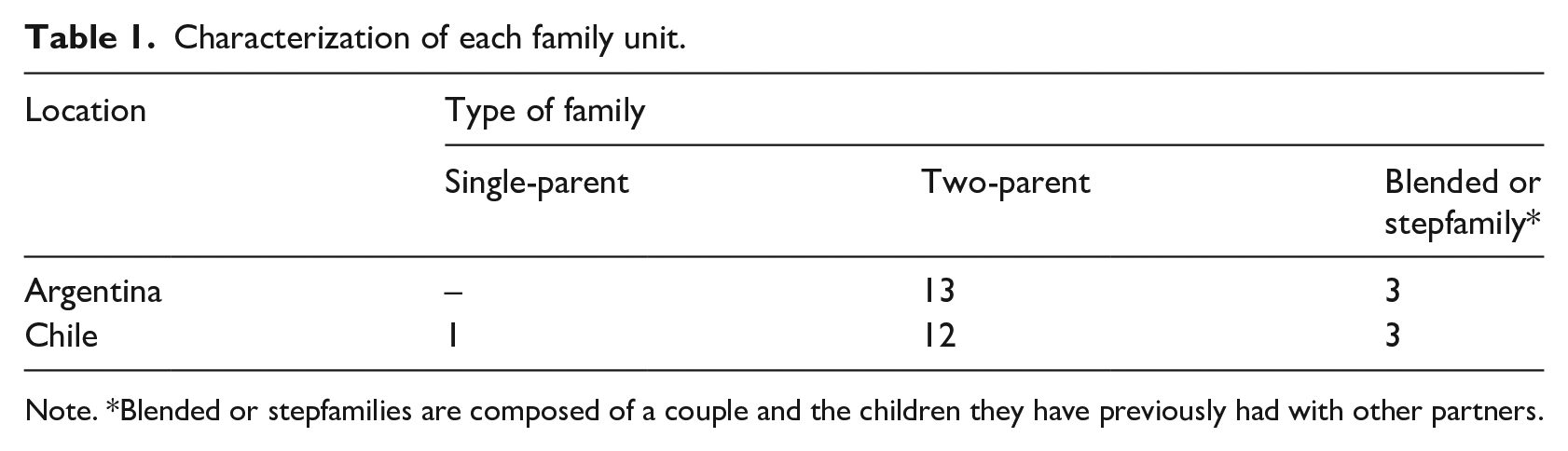
Note. *Blended or stepfamilies are composed of a couple and the children they have previously had with other partners.
Interviews per case.
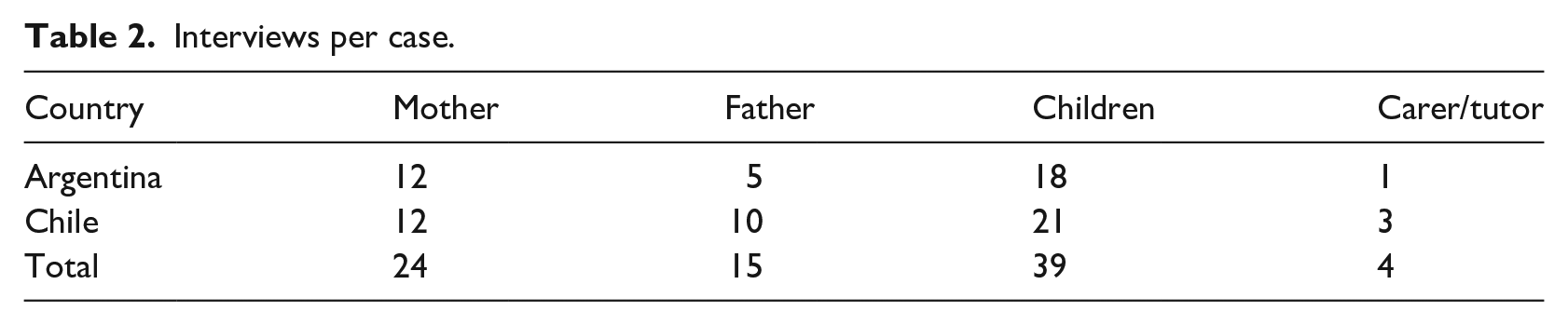
The sample is composed of families whose children and peers play Fortnite. Although we acknowledge the developmental differences between a 9-year-old child and an 18-year-old, we decided to focus on the dynamics that occur in the family as a system related to the games’ social dimension because we were interested in exploring perceptions from different family roles rather than from a specific age range.
We used a snowball sampling method (Noy, 2008), which is often employed in the exanimation of the dynamics of natural and organic social networks. That is the case of families that coexist and socialize within the use of multiplayer online videogames (MOV). The latter is significant for two main reasons (Noy, 2008): (a) the procedural dynamic and emerging nature of social knowledge; (b) the disposition and interest of the participants themselves to participate in the project. We contacted parents with children using Fortnite within the pre-specified age range (i.e., 9-18 years old). Then, each of these parents provided multiple referrals. We ceased carrying out the interviews when the sample was saturated, that is when we did not find novel or different aspects in the cases compared to the previous ones. This procedure allowed us to focus on depth rather than generalizability (Noy, 2008).
The ethical protocol was founded on each research team’s institutional guidelines (i.e., Universidad Austral for Argentina and Universidad de los Andes for Chile). Each case was provided with an information letter that indicated all the details of their participation. Thereafter, the adults (i.e., parents or carers/tutors) were asked to sign a consent letter and the children a letter of assent. The participants were informed that they could withdraw at any point of the research and request the removal of their data at any time. Participants were informed that anonymised findings would be disclosed in different academic activities, such as journals and conferences. Thus, to ensure anonymity, pseudonyms will be provided in this article.
Research design and methods of data collection
As noted earlier, we adopted a case study design (Yin, 2014). Tight (2017) suggests that case studies help researchers understand deeply a specific phenomenon within the boundaries of its particular context (i.e., the family). Concerning data analysis, we balanced deductive and inductive positions (Tight, 2017; Yin, 2014). We studied the phenomenon in its natural context (i.e., the families) and explored the social dimension of MOVs use as illustrations of the broader theory, aiming at its confirmation. When the cases exemplify the theory and offer new analytical insights, the relevance of the research increases (Tight, 2017).
Case study design is often critiqued for its lack of replicability. However, transferability is not the purpose of our research (Tight, 2017; Yin, 2014). We focused on depth and quality rather than data generalizability.
Methods
Within the case study, we conducted semi-structured interviews. We used this method to characterize how each family unit member perceived Fortnite’s social dimension. One reason for prioritizing a qualitative over a quantitative approach is grounded on our shared interest in exploring depth over scalability. On the other hand, we considered semi-structured interviews instead of other qualitative techniques because the method itself is flexible enough to gain rich and in-depth information of the phenomenon under research and provides a frame to avoid losing the focus of the study (Bogdan and Biklen, 2006). In this way, the method allows adapting the interview protocol to each family unit’s context and maintains the focus of the research on the family dynamics associated with the use of the videogame (Gibson and Brown, 2009).
Analysis
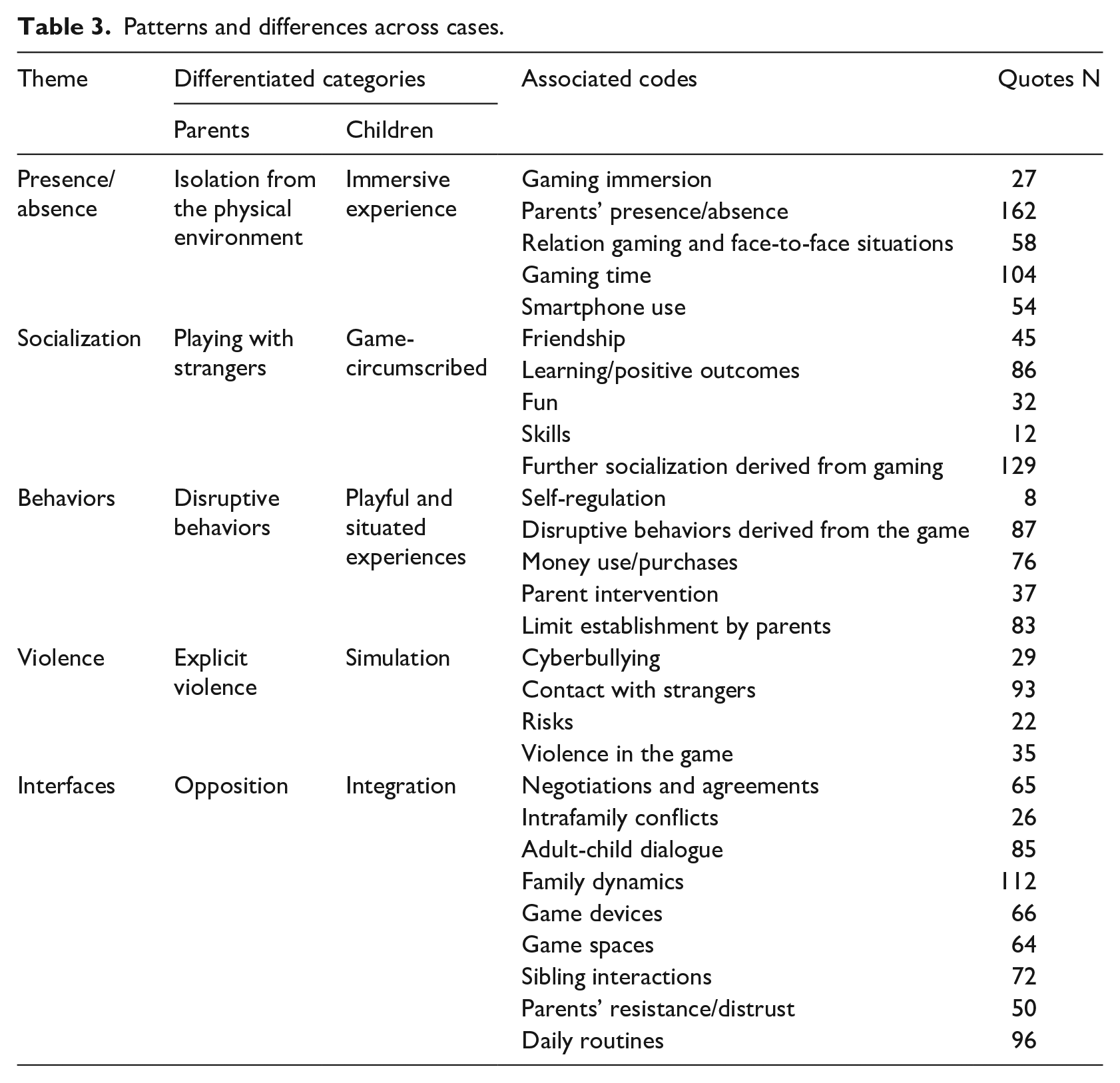
The data was analysed thematically. Patterns and differences within and across the cases were explored and scrutinized by employing a specific comparative strategy (Guest et al., 2012). In this way, we used double-coding technique. Drawing on Ranney et al. (2015), the team decided that one researcher would develop an initial set of codes. Thereafter, the codes were reviewed, reframed and/or confirmed by another colleague of the team. Then, the researchers identified distinctions and patterns and categorized them in a matrix based on the frequencies of appearance within the data sets. Thematic analysis (TA) involves content and form (Nordernhaugh Ciholas, 1974). We combined a quantification strategy with an interpretative account of the data to consider both aspects of TA. Quantification was useful for the identification of the patterns across cases (see Table 3). With that information at hand, we could find tendencies, exceptional situations, and the interrelationships among them (i.e., content; Boyatzis, 1998). Comparison enabled to analyze the phenomenon with more depth. As we have mentioned before, considering that there seems to be limited theoretical development of MOVs’ social dimension – except for Carter et al., 2020b –, we explored the cases thematically. In particular, we first conducted a deductive approach and compared the cases against the data to see whether they helped enhance the theory (i.e., inductive analysis).
Patterns and differences across cases.
Findings
Differences among parents and children
When children played Fortnite at home, the family interactions revealed divergent views between adults and children (see Table 3). Such perspectives increased when the participants referred to the social aspects associated with the videogame. We will first present parents’ standpoints and proceed with children’s viewpoints.
Divergent views about Fortnite. Parents – Children
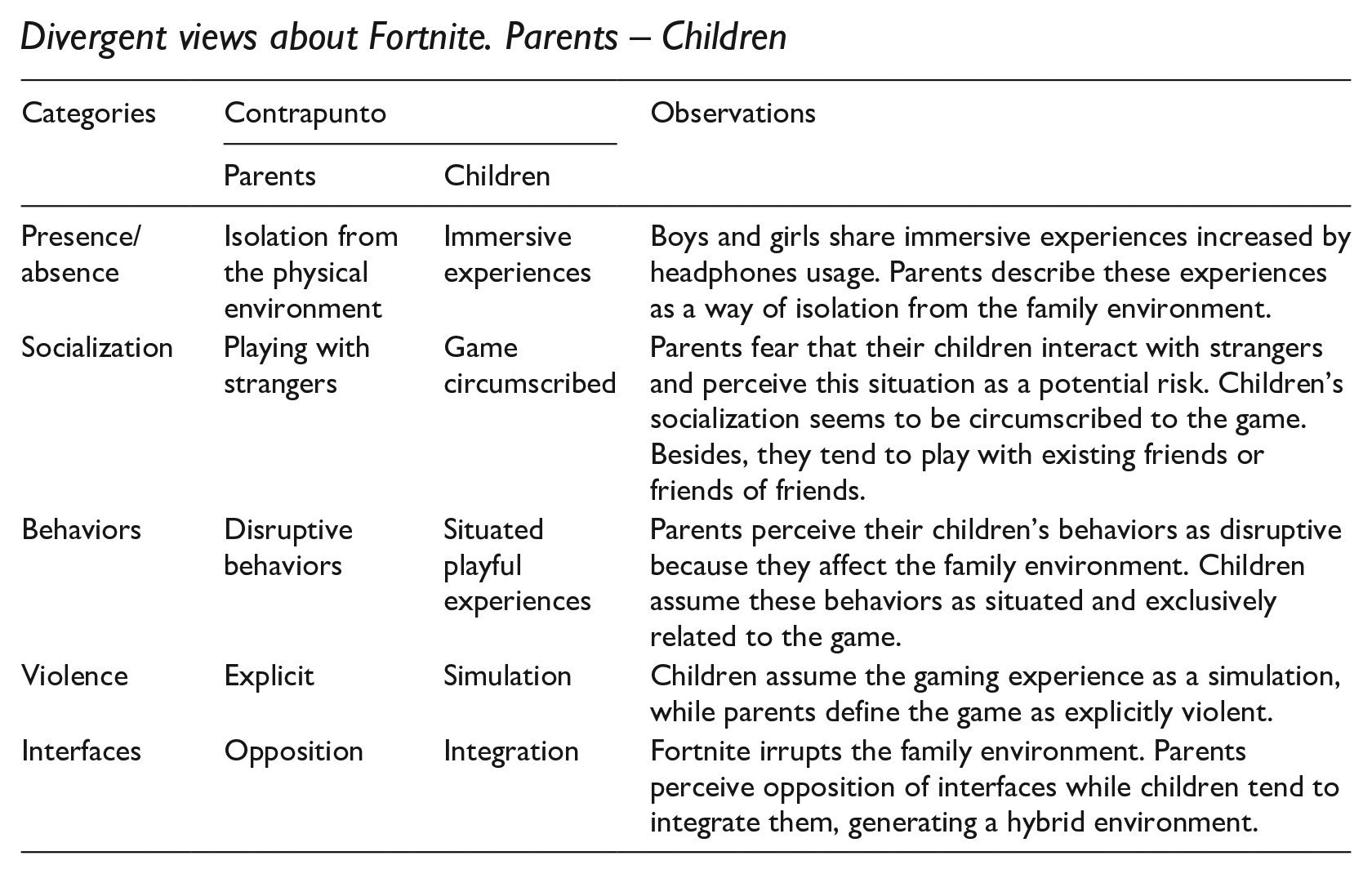
For instance, parents conceive the playing situation as a private experience, in which the child isolates him/herself from the surrounding environment. The child ‘disappears’ and detaches from the family dynamics. This ‘disappearance’ becomes evident because most of the participants played in shared spaces, such as the living room. Likewise, most of the participants used headphones with integrated microphones to play. Therefore, children are immersed in the playing situation without acknowledging the physical environment surrounding them. Parents saw this issue as an undesirable effect of Fortnite. Thus, the use of the microphone was seen as a disruptive activity that affected the privacy of other family members. For example, three mothers indicated: It bothers me a lot. It bothers me to come back home and know he is up there. Instead, I would prefer to see him here, sitting on the couch watching the TV (Sebastián’s mother, 11 years old, Argentina). He delves deeply into the game, as he explained you. Suddenly, I come across and he doesn’t notice. He doesn’t know that people are in front of him. It could be his mom or dad. At that moment, he is completely gone (Felipe’s mother, 16 years old, Chile). Sometimes it is annoying that they do not realize they are with those headphones. They scream without noticing it (Diego’s mother, 14 years old, Argentina).
On the other hand, children reported that Fortnite created a social space for them. This social space could be generated with other family members (e.g., brothers, sisters, cousins), neighbors as well as fellow classmates. As we will further reveal, children value the videogame as an opportunity to make new friends, for instance, friends of existing friends. For parents, this last argument constitutes a potentially dangerous aspect. Children can interact with strangers who use the game for other purposes that may put them at risk, especially for the youngest. For example: Sometimes I control who he plays with. And when I see that don’t know someone, I ask him: ‘Who is this boy?’. If he tells me that he doesn’t know him, I ask him to kick him out (Gastón’s mother, 8 years old, Argentina). In these days I distrust everything. . . so I wanted to see who he was texting with. . . who he was talking to. . . I saw that they were from different places. . . but being 17-year-old. . . I don’t know if he is more responsible. Still, hey, one tries to talk to him a little more. . . and I supervise the 12-year-old little more (Gonzalo’s mother, 12 years old, Argentina).
Some parents considered certain children’s interactions within the game (i.e., yelling, cursing, arguing and outbreaks) as being unpleasant and unacceptable indoor behaviors. This idea differs from the arguments of some authors, who claim the need for more consistent evidence regarding the correlation between disruptive and abusive behaviors (Mavoa et al., 2019; Nikken and Jansz, 2006; Weber et al., 2020). Two parents in this study reported: I notice he is becoming more aggressive. From the way he replies to other players, I feel that he is increasingly turning more aggressive (mother of Tomás, 17 years old, Argentina). He doesn’t curse only when playing Fortnite. No, he curses all the time. His classmates swear all the time. Swearing is already like a part of him (father of Joaquín, 18 years old, Chile).
The violent behaviors attributed to the children are directly related to the type of game. Fortnite is a survival MOV. As noted, each player tries to survive by eliminating their opponents. This aspect of the game can be seen in other MOV. The latter is the most frequent concern among parents in the interviews. They consider Fortnite as a violent game itself: ‘It’s a game, mom’. ‘It’s a game, I’m not killing real people’. He says. But it reminds me of a police case that took place a couple of years ago. A little boy who played many (violent) games, (. . .) A thief entered the house, and the boy knew where his father’s gun was. He planned it perfectly and killed the thief (Daniel’s mother, 13 years old, Argentina).
In other words, for children, Fortnite is a game, a simulation, but parents tend to associate it with real-life scenarios. They tend to focus on the harmful effects that the game can produce on their children, drawing on media cases that focus and voice their concerns.
The children’s viewpoints differed from the parents’ perspectives. The children participating in the study assumed that the social dimension of Fortnite was a natural aspect of the immersive experience in the game. The use of headphones and the apparent ‘absence’ at home is seen by the children as a necessary condition to have a good performance in the game. They said it helped them to communicate with other players. For example, it enabled them to, organise and refine their battle strategies. Likewise, children declared that they do not acknowledge they are yelling while playing: I always use headphones because I’m playing with friends. Also, if you have headphones, you can hear where other users come from (Juan, 13 years old, Chile). Sometimes I forget and start screaming about something. Others hear me scream. I forget they are listening (Adrián, 12 years old, Argentina).
The category ‘friends’ here encompasses different types of friendship depending on the role played by each ‘gamer’ in Fortnite. Unlike the statements of the parents, children understand that ‘Fortnite friends’ are only for playing this game. When they talk about their personal lives while playing, they do not generally think about extending those relationships outside of the game: I became friends with Tomás’s cousin, who is from Argentina. If I talk to a stranger, it is my friend’s friend or my friend’s cousin (Alonso, 12 years old, Chile). I also met other kids in the game who aren’t from here. And I come across with them at school, but we aren’t friends, we only talk through the game. . . and just for playing, anything else (Agustín, 13 years old, Argentina).
After summarizing the contrasts between the parents’ and children’s perspectives on the social experience of the videogame at home, we will describe the social dynamics that take place within the game. The latter, to characterize those social competencies that children develop while playing.
The social dynamics generated within the game
Some children declared that they decide to play Fortnite with others because they did not feel that they wanted to play alone. In this way, the game allows users to make new friends and/or deepen existing friendships: I play with my friends, it just bores me, and I end up turning off the console (Marcos, 12 years old, Argentina). I met them as a team (. . .) I sent them a request to play through the PlayStation. They accepted my request, and we became Fortnite friends. Since then, we play together (Sebastián, 17 years old, Argentina)
Thus, the game serves as a way to make friends. Within the game’s boundaries, these bonds, often circumstantial and limited to the game- make sense; they are ‘Fortnite friends’. However, the social experience that Fortnite offers adds a differential feature to relationships: its global character. In other words, the videogame expands contacts to other locations, even other countries: Yes, they are from here, from Asia, Brazil and Portugal because I speak Portuguese (Sol, 9 years old, Argentina)
Fortnite, as a social experience, allows players to strengthen the relationships among peers in other physical/face-to-face interactional contexts, such as the school: Playing with my friends is like extending the recess (Martín, 12 years old, Argentina) I have a friend who never talks at school, but since he’s good at Fortnite, everyone wants to play with him. So now he has friends (Sebastián, 12 years old, Chile).
As noted, the online environment is not the only one where the game takes place. When playing at other friend’s houses, children may even carry their consoles, controllers and/or other devices in order to share the game experience. Virtuality and physicality blend, configuring a hybrid experience that is as real as the face-to-face encounters with which adults seem to feel more comfortable. PlayStation is the console preferred by the children who participated in the research. Given that Fortnite does not allow to develop simultaneous playing experiences in this console, players decide to use different devices or play in turns. In this case, while waiting for their turn, they watch their peers’ play.
Added to the encouragement of socialization, children view the game as an opportunity to develop other abilities. Concerning our research’s focus, Fortnite promotes collaborative and creative problem-solving skills, which some parents value as a positive aspect of the game: I see that Manuel has a leadership capacity to command groups among his peers. Not to control, but to lead. To organize the strategies, this seems to me to be very good (Manuel’s mother, 10 years old, Argentina). Playing with friends is fine. Because I know: Ismael is there on the corner. I hear him calling his friends. And that’s good. That’s good because it is a way of socializing (Daniel’s mother, 9 years old, Argentina).
Besides, the ‘squad mode’ facilitates choosing players that share the same level of expertise. Hence, children can play in other superior instances, the ‘duos’, which implies a higher level of confidence: Sometimes I squad up, complete 100 friends and see if I can find someone. There is a player that I liked because of how he spoke. I got interested in the things that he was talking about and in him too. So, I added him, and we played in ‘duos’ (Manuel, 10 years old, Argentina).
Another important aspect of socializing through Fortnite is the expansion to other platforms, such as video streaming (e.g., Twitch or YouTube) and instant messaging systems (e.g., Discord or WhatsApp). For example, children watch videos of advanced gamers in streaming platforms. They learn new strategies and techniques from these gamers that play the role of influencers in the matter of MOVs. By watching expert gamers/influencers, children gain further experience and enhance their performance in the game: I follow professional YouTubers to develop my strategy further, but I also watch some who, for example, make challenges, and are not necessarily professional. That makes you laugh more than it drives you to play (Diego, 14 years old, Argentina).
In other cases, children watch other players not only to learn more strategies associated with the game, but also merely for leisure. In this sense, the ‘live shows’ – or games exhibited while Youtubers/Influencers play – are the most viewed, primarily when they are conducted by well-versed streamers. Likewise, video streaming platforms operate as a medium to broadcast Fortnite. Many gamers learned about the game by watching Youtubers or famous streamers. Moreover, the dissemination of dances, skins and other accessories of the game through the streaming platforms facilitate the development of other practices that are not directly associated with playing.
Instant messaging apps (e.g., Discord), are used by players to talk while playing, in order to establish strategies: While playing, I use WhatsApp to chat with my friends. We also talk to each other to make strategies. But I put on the loudspeaker because, when I do so, I can do better, and I don’t lose the game. Sometimes we also talk about daily life experiences, or about whatever subjects we want to chat about (Javier, 16 years old, Argentina).
In this way, players use their mobile devices as an alternative screen that expands and complements the gaming experience, enhancing its social character through different means of conversation.
Discussion and conclusions
Over the last decade MOVs have created a meaningful socialization space for children. Online interactions have tended to blend with ‘traditional’ physical/face-to-face relationships when using online platforms. MOVs exemplify this replacement. In this context, children have increased their interest in videogames because they can meet their friends and share leisure experiences. This situation is an opportunity to reconceptualize videogame’s effects on young people (Crowe and Flynn, 2014). We explored the social aspect of MOVs, more specifically of Fortnite. We also delved into divergent perceptions between parents and children regarding the game’s social dimension.
We highlighted the social role of Fortnite and how gamers’ families perceive this ‘new socialization’ through the game. We observed how parents perceive Fortnite as an isolating experience. The interviews also revealed that the game dynamics inside the participants’ houses can produce tensions. For instance, while playing, as with any other game, children scream, which parents conceive as ‘disruptive behaviors’.
Most parents interviewed declared they do not share the immersive experience of the game. This situation leads us to hypothesize that adults may dismiss the socialization taking place within Fortnite. On one side, the interactions generated in the game signify regular activities for the children (Johnson et al, 2013; Martínez-Cano et al., 2019; O’Connor et al., 2015). However, parents tend to see the emotions produced in their children as a matter of concern. It seems that, precisely, such immersive experience in the videogame generates divergent viewpoints. As noted, children understand that their apparent ‘absence’ at home is primarily due to the game’s immersive character (O’Connor et al., 2015). The emotions derived from playing the game led them to scream and get excited without acknowledging the physical context that surrounds them.
Another concern for parents is the possibility that harmful virtual relationships with strangers will be established. Nevertheless, we found that the children understand Fortnite as a space to frame exclusive friendships in the game (i.e., ‘the Fortnite friends’). Although they discuss personal issues while playing, in general, they do not choose to extend those relationships outside the game. Parents’ concerns regarding contact with strangers, and the relationship between the video game and violence, coincide with the idea of ‘media panic’ or ‘moral panic’ accompanying the media evolution throughout history (Buckingham and Jensen, 2012; Drotner, 1999; Ferguson, 2015; Garcia Sernaz, 2018).
In this research, we have described how children extend their social life while playing Fortnite. First, they see gaming as a social experience that helps them overcome the boredom of playing alone. They choose Fortnite because their friends play it, and they recognize that relationships expand into the face-to-face school territory. Moreover, they establish new relationships in the game, particularly in the ‘squad’ mode. In this mode, they develop joint strategies and collaborative skills. This fact echoes the claims of Crowe and Flynn (2014), who sustain that MOVs can encourage engagement among gamers and that this potential affordance seems to be dismissed by adults. Nevertheless, in the interviews, we found that parents valued the collaborative aspect of the videogame.
Likewise, we have seen how Fornite’s social experience is not simply limited to the videogame. It extends to other platforms such as video streaming and instant messaging apps. In video streaming sites (i.e., YouTube, Twitch), children follow gamers and generate players’ communities (Carter et al., 2020a). As such, they learn tricks to improve their performance in the game. Also, children use those instant messaging systems to talk with their friends while playing and keep refining their performance. In this way, gamers complement platforms and devices to experience greater immersion and proficiency in the game.
This discussion does not imply that parents have nothing to contribute to developing their children’s social skills while they are playing. The need for generating a trusting and dialogical climate between parents and children is evident. Both agents have many learning opportunities when using these platforms and this is acknowledged in previous research.
Fortnite, as any new technology, constitutes an unknown terrain for most adults (Croew and Flynn, 2014). We face the challenge of learning from the MOVs’ environments to better accompany children in the development of healthy relationships and practices while playing, and we need to consider children’s and adolescents meanings of videogames in their daily lives (Carter et al., 2020a). MOVs represent both challenges and opportunities for children. Parents and carers/tutors need to acquire the necessary skills and knowledge of the immersive gaming experience to guide children in finding a way to respect each other’s differences and capabilities while playing. The question to pose, then, is: what is at stake in MOVs? We have attempted to present how socialization among children and adolescents takes place in these new online environments. Although we face new forms of socialization through new socialization platforms (O’Connor et al., 2015), parents’ role remains the same: guiding children to establish healthy relationships leading to harmonious and sensible personal development in the current digitized world.
Limitations and further research
We acknowledge one common constraint of qualitative studies: findings apply to a limited sample (i.e., 16 Argentinian and 16 Chilean families, and a corpus of 82 in-depth interviews). Additionally, both samples are considerably similar. However, we believe that the richness of qualitative case studies resides on depth and quality (Bryman, 2012), enabling us to gain a more profound view of this complex phenomenon. In this way, the cases illustrate what is happening with the social dimension of MOVs.
Further research could delve deeper into other categories, such as parental mediation strategies, using quantitative designs that increase scalability and include other contexts and more heterogeneous population. However, it should be noted that the results conveniently describe these aspects of the family dynamics related to MOVs. We suggest exploring other implications of using MOVs from the context of the Covid-19 pandemic onwards as an exciting area of further research. The pandemic has challenged how we experience our daily lives. Technologies are playing and will continue to play an increasing role in almost every domain of human existence. Henceforth, it is expected that the influence of MOVs will persist over time.
Footnotes
Funding
The author(s) disclosed receipt of the following financial support for the research, authorship, and/or publication of this article: Research article derived from the project entitled “The family dynamics associated with the use of multiple online videogames: the case of Fortnite”. The project received funding in 2018 from the Network of Latin American University Institutes of Family (REDIFAM).
