




Abstract
This study investigated the experiences of Finnish media professionals with online harassment. Participants (N = 695) answered a survey including questions concerning their experiences with online harassment and a survey experiment involving a death threat received by someone else. Results showed that closeness to the victim was associated with increased anxiety levels, but it did not affect countermeasures recommendations for the victim. Victims’ reactions depended on their visibility in the public sphere and on the frequency and severity of the harassment. The results demonstrate that online harassment is prevalent among media professionals and that prevention and intervention are crucial.
Introduction
The rise of online harassment is a concerning problem resulting from the technological developments of recent decades (Keipi et al., 2017; Williams, 2021). Online harassment targets groups and individuals through various hostile and abusive behaviors (Nurse, 2019), which can lead to many negative psychological and social consequences for targets (Farley et al., 2021). A distinctive type of online harassment is online hate (i.e., online hate speech or cyberhate), in which the attack is based on the target’s minority identity or other group characteristics, such as religious conviction, sexual orientation, or ethnicity (Hawdon et al., 2017; Keipi et al., 2017). Online hate is a severe form of harassment because it attacks the target’s identity and even when online hate targets individuals, it also attacks and devalues the whole collective (Kilvington, 2021; Waldron, 2012).
This study investigated the experiences of Finnish media professionals as targets and bystanders in instances of online harassment and hate. Despite the growing interest in media professionals’ experiences with online hate and harassment (Adams, 2018; Chen & Pain, 2017; Gardiner, 2018; S. C. Lewis et al., 2020; Nilsson & Örnebring, 2016), factors influencing targets’ decisions on how to react to the harassment, as well as bystanders’ experience, remain understudied. We aimed to provide fresh insight into these important issues. This study includes media professionals, namely journalists and other professionals actively involved in preparing and presenting the journalistic work, for example, editors, photographers, and presenters working in various types of media outlets, including TV, radio, press, and internet outlets. Our research questions dealt with how closeness to the target of a death threat affects state anxiety and recommended countermeasures for the target, and how situational and individual factors are associated with targets’ reactions to online harassment and hate. We relied on the social identity approach based on social identity theory (SIT; Hornsey, 2008; Tajfel & Turner, 1979; Turner & Reynolds, 2010) and transactional model of stress and coping (Lazarus & Folkman, 1984). We used experimental and survey designs, which is a novel combination of research methods to study online harassment of journalists. Past research relies primarily on qualitative methods and cross-sectional quantitative designs. The experimental design, in which closeness to the victim is manipulated, specifically delves deeper into the bystanders’ experiences with witnessing online harassment and hate.
Online Harassment of Media Professionals
In the online sphere, users are allowed, or even encouraged, to participate in the news cycle, share their opinions, and react to news (Clark & Horsley, 2020; Hedman & Djerf-Pierre, 2013). Although this can be beneficial to the process and to journalists (Graham & Wright, 2015; Loke, 2012; Papacharissi, 2004), it also creates the potential for these rights to be misused, leading to harassment of media professionals (Barrios & Miller, 2021; Reporters Without Borders, 2018). Past studies have suggested that media professionals from all types of media receive harassment online (Chen et al., 2020; Clark & Grech, 2017; Pain & Chen, 2019).
A few major factors increase the risks of online harassment and hate for media professionals. First, having an occupation that requires an online presence has been identified as a risk for online hate and harassment victimization (Pew Research Center, 2014, 2021), and media professionals are often expected to create and maintain a personal brand (Reporters Without Borders, 2018). In addition, a high level of personal visibility, such as appearing on camera or having one’s voice included alongside their work, has been previously identified as a predictor of experiencing online harassment (S. C. Lewis et al., 2020). Second, the online sphere creates a potentially dangerous disproportion between media professionals and their audience. In most cases, internet users can control the level of personal data they share, and as a result, may remain largely anonymous (Loke, 2012; Neurauter-Kessels, 2011). However, media professionals are usually public figures, with their names, workplace information, and physical appearance widely known (Neurauter-Kessels, 2011; Reporters Without Borders, 2018). This creates a risk of abuse (Clark & Horsley, 2020). Third, journalists are often encouraged to cover controversial issues to draw in audiences (Pain & Chen, 2019), but such subjects tend to also elicit more disrespectful comments and abusive online behavior (Chen et al., 2020; Coe et al., 2014; Gardiner, 2018; Nilsson & Örnebring, 2016). For some media professionals, replying to comments online is part of their job duties, which may expose them to more harassment (Chen & Pain, 2017; Chen et al., 2020; Loke, 2012). All these circumstances make media professionals a group especially vulnerable to online harassment and hate.
Although it is difficult to assess the prevalence of online harassment, past studies have demonstrated worrying results: Between 40% and 80% of journalists have experienced some form of online harassment (Clark & Grech, 2017; Gardiner, 2018; Hagen, 2015; S. C. Lewis et al., 2020; Nilsson & Örnebring, 2016; Stahel & Schoen, 2020). Online harassment can damage journalists’ careers (Neurauter-Kessels, 2011; Searles et al., 2020), as the comments often target journalists’ status by attacking their credibility, authority, and trustworthiness, which are crucial professional values (Clark & Grech, 2017; Neurauter-Kessels, 2011). However, media professionals also experience criticism of their appearance and other personal attacks, hacking, public defamation, and even violence and death threats (Barrios & Miller, 2021; Clark & Grech, 2017; Hiltunen, 2019; Holton et al., 2021; Reporters Without Borders, 2018).
Experiencing online harassment and hate commonly leads to serious consequences for the target’s mental health, including lower self-esteem, loneliness, depression, and anxiety (Gardiner, 2018; Holton et al., 2021; Kowalski et al., 2018). However, online harassment against journalists may also have far-reaching societal consequences, especially if it leads to silencing the targets. Media professionals may fear speaking up about the experienced harassment for fear of stigma or even losing their jobs, as organizational and institutional norms can restrict targets’ freedom to act (Holton et al., 2021; S. C. Lewis et al., 2020). Avoiding covering specific topics, refusing assignments, changing one’s behavior in social media, reducing participation in online social networks, or even considering quitting journalism altogether are common responses to the experienced harassment (Adams, 2018; Chen at al., 2020; Gardiner, 2018; Hiltunen, 2019; S. C. Lewis et al., 2020; Nilsson & Örnebring, 2016; Post & Kepplinger, 2019; Reporters Without Borders, 2018). Past research has suggested that the more abusive comments the target receives and the more negative emotions they experience, the more they engage in self-censorship (Nilsson & Örnebring, 2016; Post & Kepplinger, 2019). Importantly, similar patterns have been shown for media professionals just witnessing online harassment—indirectly affected individuals also report self-censoring as a response to the experience (Reporters Without Borders, 2018). As such, online harassment and hate against media professionals has been recognized as a critical societal threat, endangering freedom of speech and access to information (United Nations Educational, Scientific and Cultural Organization [UNESCO], 2017).
However, active and assertive reactions are also a common way of dealing with online harassment and hate. A survey among Swedish journalists found that 44% of journalists targeted with online harassment reacted by restricting the possibilities to comment on content (Nilsson & Örnebring, 2016). In a survey of U.S. journalists, 32% of the targets reported the harassment to site administrators, 37% asked for help from close ones or someone in their work community, and 10% reported the incident to authorities (S. C. Lewis et al., 2020). Some journalists reported that they experienced positive feelings because of audience hostility. They interpret it as confirmation that they are doing their job right, touching on important topics, and evoking emotions (Lischka, 2019; Post & Kepplinger, 2019). One study found that experiencing hate speech could lead to feeling more confirmed in journalistic work (Obermaier et al., 2018).
Despite recent studies focusing on media professionals’ own experiences with online harassment (Barrios & Miller, 2021; Hagen, 2015; Pain & Chen, 2019; Stahel & Schoen, 2020), crucial aspects of the phenomenon remain unclear. Although targets’ own reactions to the experience have received some attention (Adams, 2018; Chen & Pain, 2017; Gardiner, 2018; S. C. Lewis et al., 2020; Nilsson & Örnebring, 2016), factors influencing targets’ decisions on how to react have not been systematically explored. Developing our state of knowledge on the subject is essential, as the way targets react to harassment can have substantial impact on how the situation develops, and on the consequences it has for both the target and the perpetrator. Therefore, investigating the factors that contribute to these decisions can help understand the dynamics of online harassment instances and guide practitioners aiming at resolving conflicts and supporting the targets. For this purpose, we employ the transactional model of stress and coping perspective, which proposes a useful classification of coping strategies and predictions for targets’ choices. This approach has been effectively used in related research (Obermaier et al., 2018).
Relatedly, still little is known about media professionals’ experiences as bystanders in online harassment situations (Rudnicki et al., 2022). This is a crucial question for both prevention and interventional efforts. If closeness to the victim affects how the harassment and hate affect bystanders and how likely they are to support the victim in acting against it, it may affect if and how harassment is reported and subsequently handled. Furthermore, as witnessing harassment can have similar effects to being targeted (Reporters Without Borders, 2018), investigating bystanders’ experiences is important from both societal and individual perspectives. It can also help guide practitioners aiming to mitigate the negative effects of online harassment occurring in the organization by directing their efforts toward the most impacted individuals. We base our investigation on SIT, which provides a fruitful framework for understanding the role of closeness to target in bystanders’ behavior (Cikara et al., 2011; Van Cleemput et al., 2014).
Social Identity Approach to Bystanders’ Experiences
SIT states that individuals’ behavior is influenced by the social groups to which they belong. Such group identity can be built even on a minimal basis, and individuals will strive to maintain a positive view of their in-groups (Diehl, 1990; Tajfel & Turner, 1979). SIT predicts that individuals will be motivated to provide preferential treatment to the in-group members and may be more likely to engage in prosocial and cooperative behaviors toward them (Balliet et al., 2014; Hackel et al., 2017; Turner & Reynolds, 2001). In certain contexts, namely under existential threats, such tendencies may be stronger if self-categorization as a group member is activated (Giannakakis & Fritsche, 2011). Drawing on SIT, intergroup emotion theory (IET) predicts that when group identity is salient, in-group members may feel and act on behalf of the group and the affected individual, even if they would not be personally attacked (Mackie & Smith, 2015). For instance, witnessing a common identity related attack on an in-group member has been shown to elicit higher state anxiety in bystanders than other type of violations (Paterson et al., 2019).
In line with SIT, previous research has suggested that individuals feel more empathy toward in-group members (Cikara et al., 2011; Vanman, 2016). This is consequential, as in cyberbullying research, empathy has been shown to motivate bystanders to help targets (Freis & Gurung, 2013; Van Cleemput et al., 2014). It has been proposed that empathizing with the target leads to the so-called co-victimization experience, which generates stress. Individuals may be motivated to reduce this stress and negative emotions by helping the target (Coyne et al., 2019). Moreover, a systematic review of research on adult online hate witnesses identified close relationship with the target, including a good work relationship, or belonging to the same in-group as an important factor increasing the likelihood of bystander intervention (Rudnicki et al., 2022).
Coping Behaviors Among Targets of Online Harassment
According to the transactional model of stress and coping theory (Lazarus & Folkman, 1984), stress is the outcome of the interplay between the individual and the environment. The decision on how to react in each situation is based first on primary appraisal, assessment of the significance and threat posed by the situation, and then on the secondary appraisal, evaluation of the controllability of the situation and the resources available to deal with it. Coping is motivated by individuals’ emotional reaction to stress or harm and refers to conscious cognitive and behavioral efforts to deal with a stressful situation that strains or exceeds an individual’s resources to manage it (Lazarus, 1993; Lazarus & Folkman, 1984). Online harassment can constitute such a threatening situation, and past research has shown that targets use a wide range of coping strategies to deal with the experience (Chen & Pain, 2017; Gardiner, 2018; Pew Research Center, 2014).
Lazarus and Folkman (1984) distinguished between two main coping approaches. Emotion-focused coping aims to manage the distress brought about by a situation. Problem-focused coping aims at altering the situation or the interaction between oneself and the circumstances. It is usually undertaken when the individual believes that they have enough resources to influence the situation (Folkman, 1984). Both coping approaches include many behaviors that can have various outcomes for the individual. For instance, according to Lazarus (1993), confrontative coping may lead to increased distress.
Retaliation, as a confrontative approach, is most probable when individuals feel they have been morally wronged (Fessler, 2006). Retaliation may be seen as a moral imperative. Such norms often develop in societies without strong institutional laws, where one feels like one cannot count on law enforcement to restore order (Nowak et al., 2016). As it may prove difficult to find justice in the online setting—due to platform difficulties in dealing with online abuse (Amnesty International, 2020) and inadequate police procedures (R. Lewis et al., 2017)—similar behaviors may arise in reaction to online harassment. Moreover, in online settings, due to specific characteristics of cyberspace, typical inhibitions in behavior are lowered (Lapidot-Lefler & Barak, 2012). This may make certain forms of retaliation particularly plausible online.
Overall, according to the transactional model of stress and coping theory, coping is an ever-changing process, and the choice of coping strategy depends on various individual and situational factors (Lazarus & Folkman, 1984). Situational factors include novelty, timing, and duration of the event. Commitments (i.e., goals and values) are an important individual factor driving primary and secondary appraisal, as well as choice of coping strategies. Beliefs about control are also crucial in determining coping strategies. However, general beliefs about control are not enough to predict behaviors, which will likely stem from beliefs concerning an individual’s level of control over a specific situation. These assumptions depend on a multitude of factors, including an individual’s mental state, skills, and past experiences (Folkman, 1984; Lazarus & Folkman, 1984).
Individual and Situational Factors Associated With Active and Retaliative Reactions to Becoming a Target of Harassment
First, victimization factors constitute an important component in determining targets’ reactions. The more severe or frequent the harassment is, the more likely it can be appraised as a significant threat and prompt assertive coping behaviors. Indeed, feeling threatened with physical violence has been previously associated with more problem-focused coping with online harassment and hate among journalists (Obermaier et al., 2018), and receiving threats more likely leads to reporting the incident to the police than receiving abusive comments, both online and offline (Nilsson & Örnebring, 2016).
Second, target’s media activity is also an important area affecting their reactions to online harassment and hate. In the online context, beliefs about control relevant for choosing coping behaviors will likely relate to individuals’ assessments of their own competence with social media. This is supported by past research suggesting that positive attitudes toward the online sphere are associated with confronting the cyberbullying perpetrator among adolescents (Li & Fung, 2012), and frequent social media use has been linked with intentions to respond in an uncivil manner to provocative comments on social media (Koban et al., 2018). Moreover, more frequent use of public social media can also mean greater public visibility, which is a risk factor for victimization (S. C. Lewis et al., 2020; Pew Research, & Center, 2014, 2021) Hence, media visibility in traditional outlets (e.g., TV, print) and in online social channels could lead to the risk of future victimization being assessed as higher and consequently to appraisal of the online harassment as more threatening, prompting reactions aimed at stopping or punishing the perpetrator.
Third, the impact that harassment and hate have on an individual’s well-being may also guide subsequent reactions. German journalists who were targets of online harassment and hate preferred problem-focused reactions if the experience made them angry or led to decreased well-being (Obermaier et al., 2018). A similar result was obtained in a study among adolescent targets of online harassment—those who felt distraught and simultaneously experienced other symptoms of distress (e.g., sleep troubles or irritability) were more likely to choose coping strategies aimed at stopping or punishing the perpetrator (Priebe et al., 2013). However, more specifically, work-related well-being may have a different impact on reactions. The same survey among German journalists found that if experienced online harassment strengthened their identity as journalists and made them feel more confirmed in their work, consequently they were more likely to choose problem-focused coping (Obermaier et al., 2018). Therefore, psychological distress and work engagement could potentially be related to assertive reactions and harassment and hate experiences. Psychological distress is defined as a state of low well-being that is associated with many psychological and psychosomatic symptoms, including sleep difficulties and depression (Drapeau et al., 2012). Work engagement refers to a positive affective–motivational state, characterized by feeling motivated, dedicated, focused on one’s work, and open to new work-related experiences (Bakker & Albrecht, 2018; Schaufeli & Bakker, 2004a). The way in which individuals function and communicate online has previously been found to influence work engagement (Celuch et al., 2022; Oksa et al., 2020, 2021).
In addition, the transactional model of stress and coping predicts that personality will also influence coping behaviors (Lazarus & Folkman, 1984). The Big Five trait taxonomy (Digman, 1990; John et al., 2008) has been previously used in studies concerning uncivil online communication (Koban et al., 2018) and coping (Connor-Smith & Flachsbart, 2007). A meta-analysis in the field found that although no consistent relationships were present between personality traits and the main coping approaches distinguished by Lazarus and Folkman (1984), certain traits were associated with selecting specific coping strategies. For instance, higher extroversion and conscientiousness have been connected to focusing on problem-solving, whereas neuroticism is associated with withdrawing from the problem (Connor-Smith & Flachsbart, 2007). Therefore, we included personality characteristics as an additional variable in our investigation of targets’ reactions to harassment.
The Current Study
The aim of this study was to investigate online harassment and hate among Finnish media professionals. We investigated targets’ and bystanders’ experiences and reactions, as these areas remain understudied, despite their potential far-reaching individual and societal consequences. Specifically, we focused on bystanders’ experiences with online harassment using an experimental design, and we aimed to investigate how closeness to the target impacts bystanders’ experience of witnessing harassment. Hypotheses of the experimental part of the study were registered to Open Science Forum before the start of project data collection (Oksanen, Savela et al., 2020). Based on previous theoretical and empirical studies within the social identity approach, we expected that closeness to the target will affect bystanders’ experiences:
Moreover, based on the transactional model of stress and coping (Lazarus & Folkman, 1984), we investigated individual and situational factors associated with targets’ reactions. We focused on reactions aimed at stopping on punishing the perpetrator (hereafter referred to as active reactions) as well as specifically on retaliative reactions, as these kinds of responses may lead to especially fast and far-reaching consequences for the target and the perpetrator. Based on the theoretical background (Lazarus & Folkman, 1984; Tajfel & Turner, 1979) and past research in the field (Nilsson & Örnebring, 2016; Obermaier et al., 2018), we expected targets’ reactions to harassment to be associated with various individual and situational factors, spread across three main domains: victimization characteristics, target’s media activity, and well-being. Hence, our main hypotheses were the following:
We also investigated the effects of well-being variables—psychological distress and work engagement on targets’ reactions to harassment and hate, but due to limited evidence made no specific predictions. We also included a range of control and background variables, namely, personality and socio-demographic characteristics.
Our study focuses on the experiences of media professionals working in Finnish media. Finland ranks among the countries with the highest levels of press freedom according to Press Freedom Index (Reporters Without Borders, 2022a). Nevertheless, Finnish journalists still experience external interference including verbal abuse, defamation, threats, and intimidation by legal means (Hiltunen, 2019; Reporters Without Borders, 2022b) and social media has been named as a significant threat to Finnish media, due to its potential to spread misinformation and harassment (Reporters Without Borders, 2022b).
Method
Participants and Procedure
The sample for this study included Finnish media professionals from a diverse range of news broadcasters in Finland, including TV, radio, print, and online media (N = 695). Information from participants was collected online in October–December 2020. The recruitment was done in collaboration with media houses, broadcasters, and the Finnish Union of Journalists. In total, 3,698 media professionals received an email invitation to participate, of which the response rate was 18.79%. In addition, a few responses were obtained through a link in an online newsletter. Of the participants, 57.12% were female, 41.87% male, and 1.01% of other genders. The mean age of the participants was 47.10 years (SD = 11.44), and 74.82% of participants had completed higher education. Most participants (67.91%) worked mainly as editors or reporters, 2.16% as photographers, 2.45% as graphic designers, and 27.48% worked in other positions. Our sample is close to other available statistics on Finnish journalists. The Finnish Union of Journalists (2022) reports that in 2021 58.20% out of their members were women (57.12% in our sample). As most of our participants were recruited via biggest media companies, most of them are working with either permanent (85.32%) or fixed term contracts (12.37%). There were fewer freelancers or entrepreneurs in the sample (1.15%) compared with the members of the Finnish Union of Journalists (11.26%). Our data are hence more representative on journalists working in media companies. The participants were recruited from all areas of Finland and the data covers also Swedish speakers (11.22% of the respondents).
The survey was available in Finnish and Swedish (the official languages of Finland). The median response time to the survey was 16 min, and 33 s. Participants were presented with a brief explanation of the study objectives and contact information for the project’s principal investigator. Participants were told that participation in the study was voluntary and that they could withdraw their consent at any moment, resulting in their data being deleted. Prior to data collection, the academic ethics committee in Tampere region assessed that the project did not raise any ethical problems.
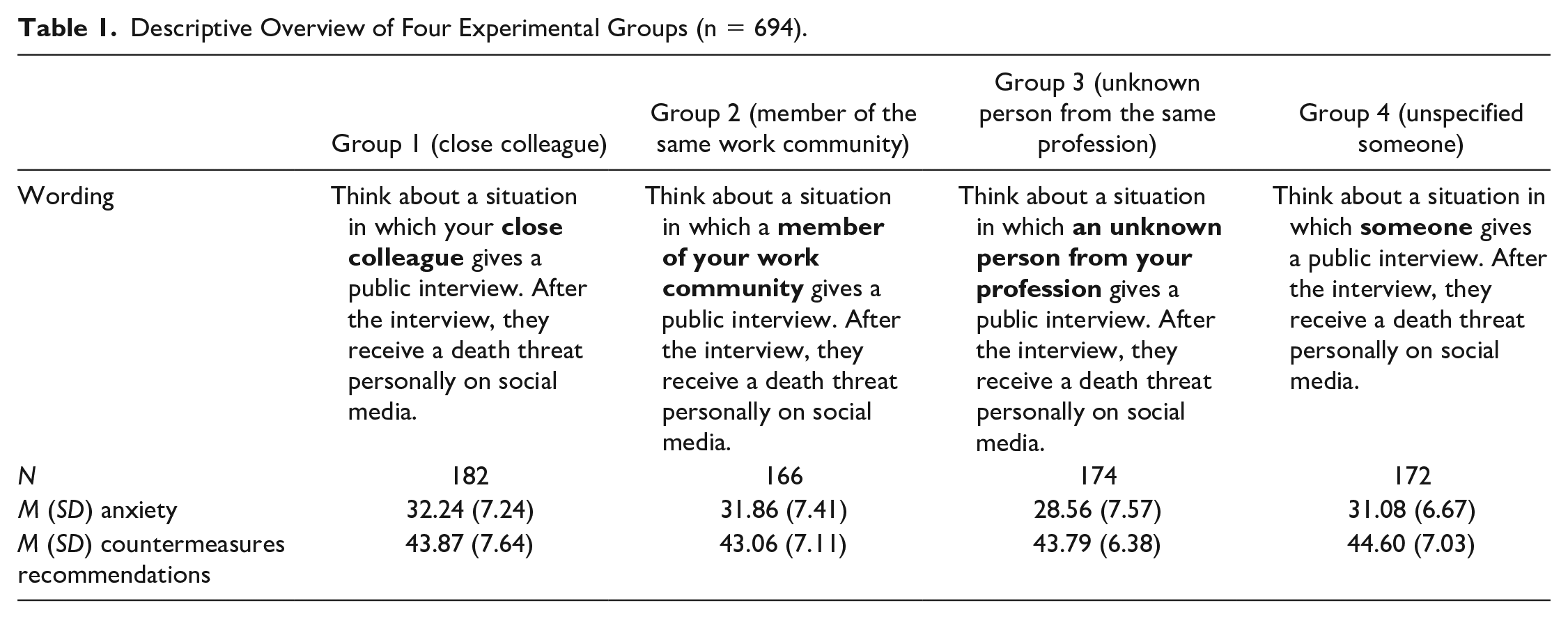
The survey included questions about participants’ background, experiences of online harassment and hate, and well-being at work. The survey also included a survey experiment in which participants were randomly assigned to one of four experimental groups and asked to imagine that someone received a death threat in social media following a public interview. The experiment manipulated closeness to the target using four variations of the scenario. The person receiving a death threat was either (a) a close colleague, (b) member of the same work community, (c) a previously unknown person from the same profession, or (d) an unspecified person (see Table 1 for exact wording). After reading the experimental scenario, participants were asked about their anxiety levels and countermeasures they would recommend to the target (see “Measures” section).
Descriptive Overview of Four Experimental Groups (n = 694).
Measures
Experiment on Bystanders’ Experiences
We measured state anxiety and recommended countermeasures during the experiment after manipulating the closeness of the target of a death threat in social media. State anxiety was measured with a six-item short form of the state scale from the Spielberger State-Trait Anxiety Inventory (STAI-6, Marteau & Bekker, 1992). The scale’s instructions were adapted to measure the participants’ state of anxiety after reading the experimental scenario. The scale ranged from 6 to 42, and its inter-item reliability was good across all groups based on McDonald’s omega (ω values from .81 to .87) and in the whole sample (ω = .84). We measured the recommended countermeasures with a list of 15 potential reactions to the attack. Participants were asked to assess how recommendable each of the countermeasures was, using a Likert-type scale ranging from 1 “not at all recommended” to 7 “highly recommended.” The list was based on the coping with cybercrime inventories used in previous studies on the topic (Begotti et al., 2020; Sticca et al., 2015; Wachs et al., 2020). The list covered five major approaches: assertive responses (e.g., “Report the offense to the police”), technical countermeasures (e.g., “Report the perpetrator to site administrators”), retaliation (e.g., “Respond with a similar message”), avoidance (e.g., “Reduce the use of social media”), and ignoring (e.g., “Try not to think about what happened”). A full list of the items is included in Supplemental Appendix A. Participants’ responses to all statements, except for the three ignoring approach items, were summed up, resulting in a scale ranging from 12 to 84, reflecting the number and strength of recommendations.
Online Harassment and Hate Victimization
Online harassment and hate victimization were assessed with a list of 20 items referring to work-related online abuse. It included a wide range of harassment experiences, ranging from receiving angry messages (e.g., “You have received offending and angry messages via social media”) to becoming a target of serious crimes (e.g., “Your life has been threatened.”). This list was based on items previously used in cyberhate and cyberbullying at work studies (Forssell, 2016; Keipi et al., 2017; Oksanen, Oksa et al., 2020; Reichelmann et al., 2021). Participants were asked to indicate if and how often they had experienced each of these situations in the preceding 6 months. The response options included the following: never, sometimes, monthly, weekly, and daily. Participants who reported experiencing at least one form of harassment at least sometimes were classified as targets of harassment and asked additional questions about their experience, including where the experience occurred (public social media, internet messaging apps, or online discussion forums) and whether the perpetrator was known to the target. For the analysis, a dummy variable was created to include participants experiencing victimization at least weekly. To investigate the impact of harassment severity on target’s responses, we created two additional variables by dividing the 20-item list into two categories reflecting more and less severe instances of harassment. Participants who reported experiencing harassment of varying severity were included as targets in both variables. We were interested in including a wide range of behaviors of varying levels of severity in our classification. This is a quite unexplored area as past studies investigating the impact of harassment severity on target’s reaction typically focused on a small number of chosen examples of harassing behavior (e.g., Nilsson & Örnebring, 2016; Obermaier et al., 2018). Although we recognize that the severity of abusive behavior is to some extent a subjective and relative matter, we have employed various criteria in making the distinction. We considered the wording and specific aspects of the items (e.g., regarding “being attacked/harassed” as more serious than “being criticized/underestimated” and “offensive” multimedia materials as more severe than general “photo/video manipulations”). We also included attacks based on the target’s sexual orientation, ethnic origin, and religion in the “more severe harassment” category, reflecting the definition of online hate, which is a serious violation that can have various far-reaching consequences (Hawdon et al., 2017; Keipi et al., 2017). A full list of items along with the classification can be found in Supplemental Appendix B.
Reactions to Online Victimization
Participants who reported experiencing online harassment and hate were asked to assess what impact the event had on their own actions. They were presented with a list of 13 possible reactions and asked to choose whether they reacted in a given way (0 = no, 1 = yes). The list was based on the coping with cybercrime inventories used in previous studies on the topic (Begotti et al., 2020; Sticca et al., 2015; Wachs et al., 2020). To reflect the focus of this study, these reactions were first categorized into two categories: active reactions and other types of reactions. Of six reactions classified as active, three were included in the subcategory of retaliative reactions to allow for exploration of factors associated with online revenge. The full list of items, along with the classification, is presented in Supplemental Appendix C. Dummy variables were created to reflect undertaking at least one active and at least one retaliative reaction to harassment.
Social Media Communication
Two items were used to measure how often participants sent messages to public social media services (e.g., Facebook, Instagram, and Twitter) for work-related (formal) purposes and nonwork-related (informal) reasons. Response options for both items included 0 “I don’t send any,” 1 “less than once a week,” 2 “once a week,” 3 “once a day,” 4 “many times a day.”
Work Engagement
Work engagement was measured using the nine-item version (Utrecht Work Engagement Scale [UWES-9]; Seppälä et al., 2009) of the UWES (Schaufeli & Bakker, 2004b). Participants responded to each item using a Likert-type scale from 0 (“never”) to 6 (“daily”), resulting in a final scale ranging from 0 to 54 that was used for the analyses, with higher scores indicating higher work engagement. The internal consistency of the scale was excellent (ω = .94).
Psychological Distress
Psychological distress was measured using a 12-item General Health Questionnaire (Goldberg et al., 1997). The response options ranged from 0 to 3. All 12 items were summed up, resulting in a scale from 0 to 36 with higher scores indicating higher psychological distress. The internal consistency of the scale was good (ω = .89).
Media Appearances
Participants were asked how often they appeared on TV, radio, or in press media due to their work. Response options included never, a few times a year, once a month, a few times a month, once a week, a few times a week, and daily. A dummy variable was then created to include participants who appeared in media at least weekly.
Personality
As an additional measure, we used a 15-item Big Five Inventory (Hahn et al., 2012) to measure personality traits. For each item, response options ranged from 1 (“does not describe me at all”) to 7 (“describes me completely”), resulting in a scale from 3 to 21 for each of the five traits. The internal consistency for each trait ranged from good to acceptable: ω = .88 for extroversion; ω = .88; ω = .78 for neuroticism; ω = .64 for openness; ω = .66 for agreeableness; and ω = .60 for conscientiousness.
Background Variables
Background variables included participants’ gender (male, female, or other), age as continuous, and education. For education, a dummy variable was created to reflect at least obtaining a master’s degree.
Statistical Analyses
All analyses were performed using Stata 17.0 software. We provided descriptive statistics for an overview of the data collected considering victimization rates, reaction preferences, and other variables (see Tables 1 and 2). McDonald’s ω values are reported for multi-item scales as an optimal alternative to Cronbach’s alpha (Dunn et al., 2014). To analyze the experiment’s results, we used the nonparametric Kruskal–Wallis H test because our dependent variables did not consistently follow a normal distribution. For analyses of factors associated with choosing active and retaliative reactions to harassment, we computed binary logistic regression models. For model estimation reasons, participants who chose the “other” gender option (n = 7) were dropped from the regression models. Odds ratio (ORs), p-values, average marginal effects (AMEs), and 95% confidence intervals (CIs) were reported for the models. Model statistics include pseudo coefficients of determination (pseudo R2). No issues with multicollinearity were detected for the models (variance inflation factors [VIFs] < 2; Hair et al., 1995).
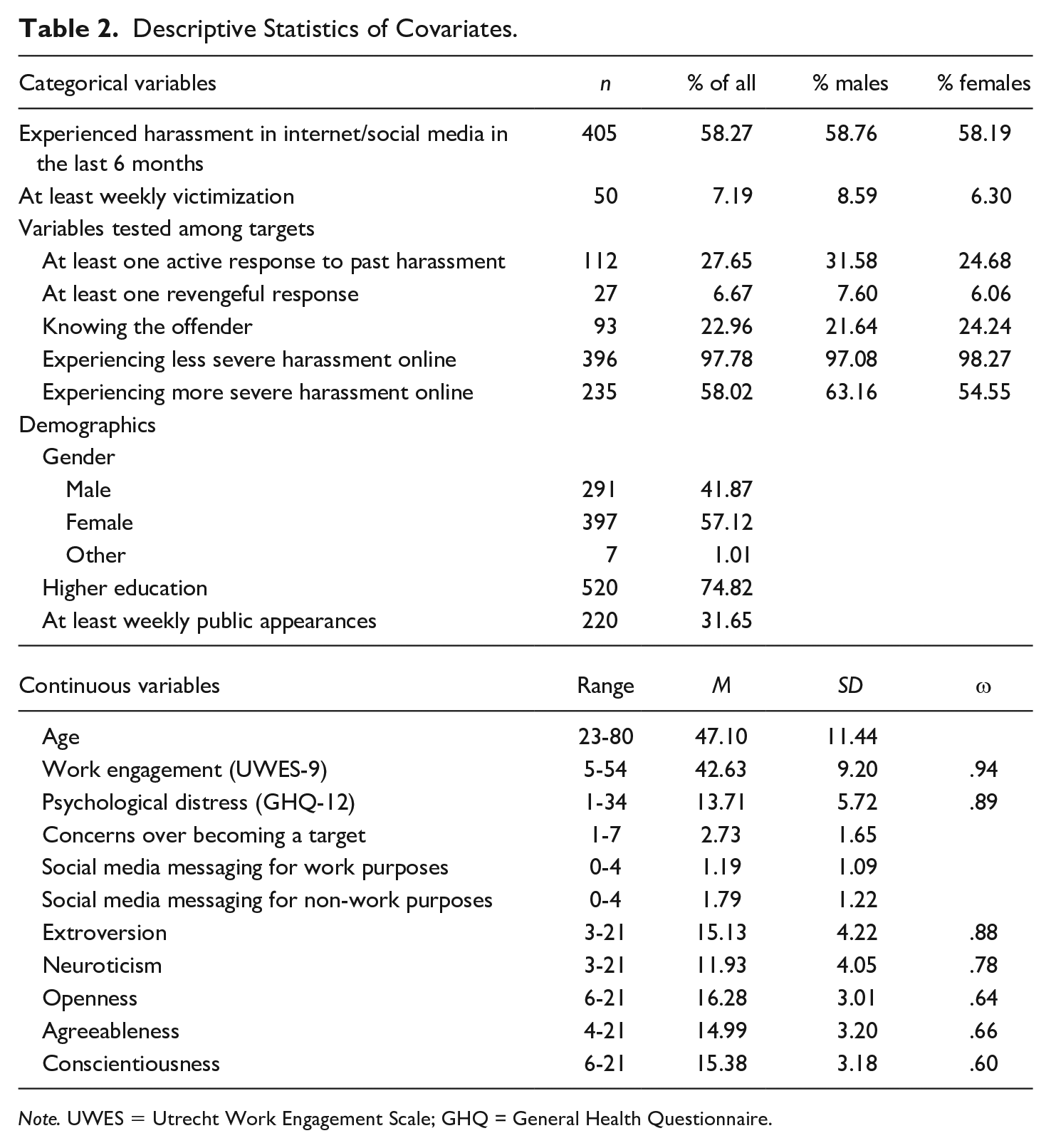
Descriptive Statistics of Covariates.
Note. UWES = Utrecht Work Engagement Scale; GHQ = General Health Questionnaire.
Results
Reactions to Death Threats Sent to Someone Else in the Experiment
Descriptive results considering differences between experimental groups are presented in Table 1. The results verified that the highest anxiety was reported when the death threat was sent to a close colleague, and the lowest when it concerned an unknown person from the same profession. The Kruskal–Wallis Test showed statistically significant differences between groups on the analysis of anxiety, χ2(3) = 29.463, p < .001, but not on recommended countermeasures, χ2(3) = 3.911, p = .271. Pairwise comparisons of anxiety levels between experimental groups using the Kruskal–Wallis test demonstrated that experimental group, including a close colleague reported higher anxiety than the group involving an unknown member of the same profession, χ2(1) = 23.582, p < .001, and an unspecified person, χ2(1) = 4.565, p = .033, but no statistically significant difference was found between the close colleague and member of the same work community conditions, χ2(1) = 0.283, p = .594. Participants in the experimental group including a member of the same work community reported higher anxiety than participants in the unknown member of the same profession group, χ2(1) = 17.876, p < .001, and no statistically significant difference was found compared with the unspecified someone condition, χ2(1) = 1.876, p = .171. Finally, participants in the experimental condition involving an unspecified someone reported significantly higher anxiety levels than participants in the group involving an unknown member of the same profession, χ2(1) = 10.521, p = .001.
Prevalence of Online Harassment Victimization and Reaction Rates
Overall, 58.27% of participants reported experiencing some form of harassment on the internet or social media during the preceding 6 months. Of the targets, 97.78% experienced milder forms of harassment, whereas 58.02% were subjected to attacks classified as more severe. Moreover, 22.96% of targets knew the attacker. Although overall the rates of experiencing any online harassment were similar between men and women (see Table 2), descriptive results revealed some gendered patterns of harassment, with 35.77% of female participants reporting being underestimated because of their gender and 14.36% reporting being sexually harassed online. Prevalence rates of all harassment behaviors, including breakdown by target’s gender, are presented in Supplemental Appendix B. Overall, 27.65% of the targets undertook at least one active reaction, and 6.67% retaliated. The exact rates for each of the response items are presented in Supplemental Appendix C.
Predictors of Active and Retaliative Reactions to Harassment Victimization
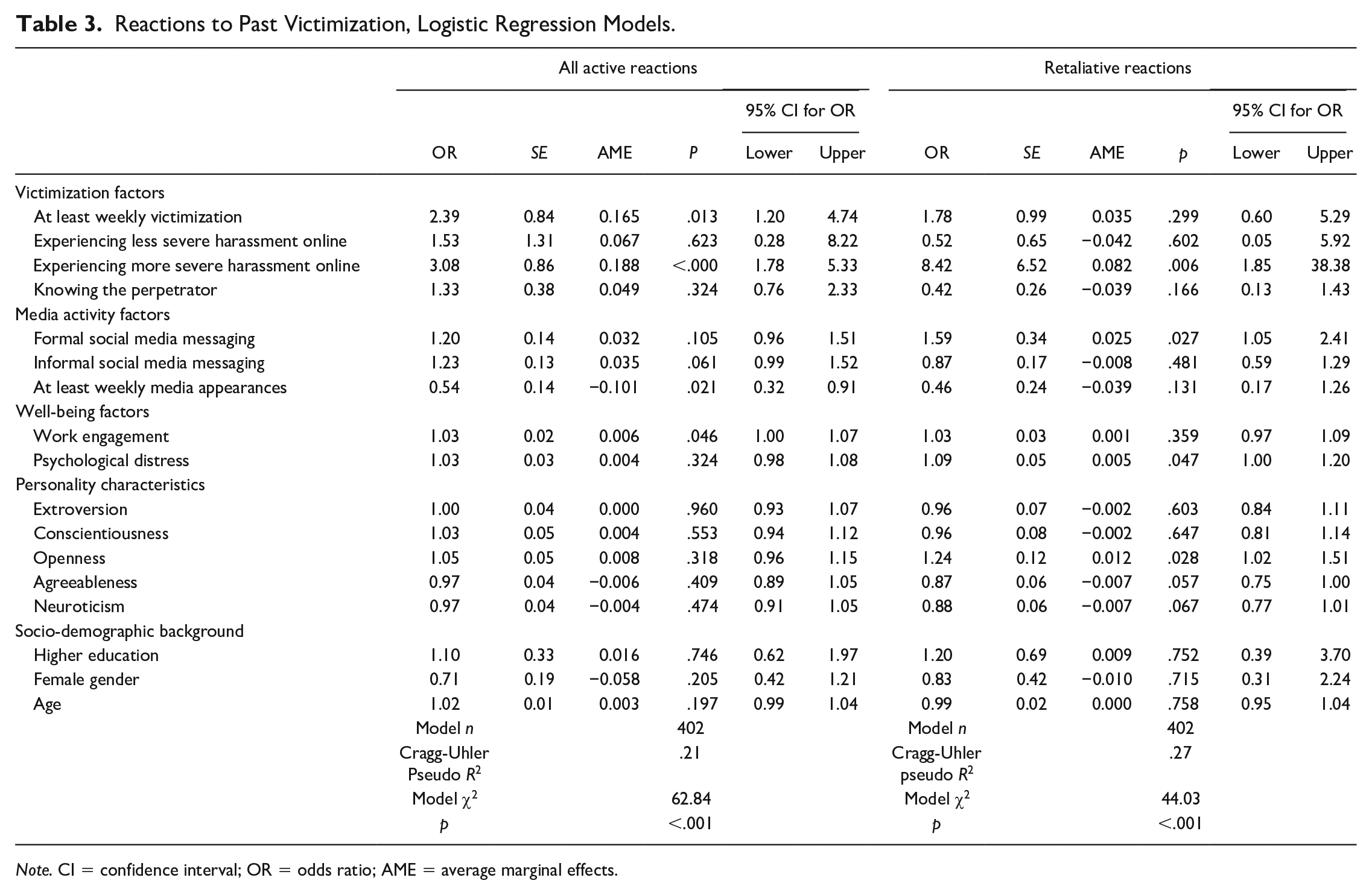
Experiencing harassment and hate online was reported by 402 participants, who were included in two binary logistic regression models that investigated the active and retaliative reactions to harassment. The results of both regression models are depicted in Table 3. The active reaction model fits the data well (χ2 = 62.84, p < .001). According to the results, two victimization factors: experiencing at least weekly victimization (OR = 2.39, p = .013) and experiencing more severe harassment (OR = 3.08, p < .001) were associated with undertaking an active reaction. No significant associations were found for knowing the perpetrator. Considering media activity factors, participants who appeared in the media at least weekly were less likely to actively react to online harassment (OR = 0.54, p = .021). Frequency of social media communication was not a significant predictor. One of the well-being factors, namely, higher work engagement (OR = 1.03, p = .046) was also associated with an active reaction to harassment, but no significant relationship with psychological distress was found. No significant associations were found between the control variables of personality traits and socio-demographic background. The model explained 21% of total variance.
Reactions to Past Victimization, Logistic Regression Models.
Note. CI = confidence interval; OR = odds ratio; AME = average marginal effects.
The retaliative reaction model fits the data well (χ2 = 44.03, p < .001). According to the results, one victimization factor, namely, experiencing severe online harassment, was associated with a retaliative reaction to the experience (OR = 8.42, p = .006), similar to all active reactions. Considering media activity factors, undertaking a retaliative reaction to online harassment was associated with more frequent formal social media communication (OR = 1.59, p = .027). Well-being was also associated with retaliative reactions, with higher psychological distress (OR = 1.09, p = .047) associating with undertaking such reactions. Finally, among the control factors, higher openness to experience score was associated with retaliative reactions (OR = 1.24, p = .028). No significant associations were found for the remaining variables. The model explained 27% of total variance.
Discussion
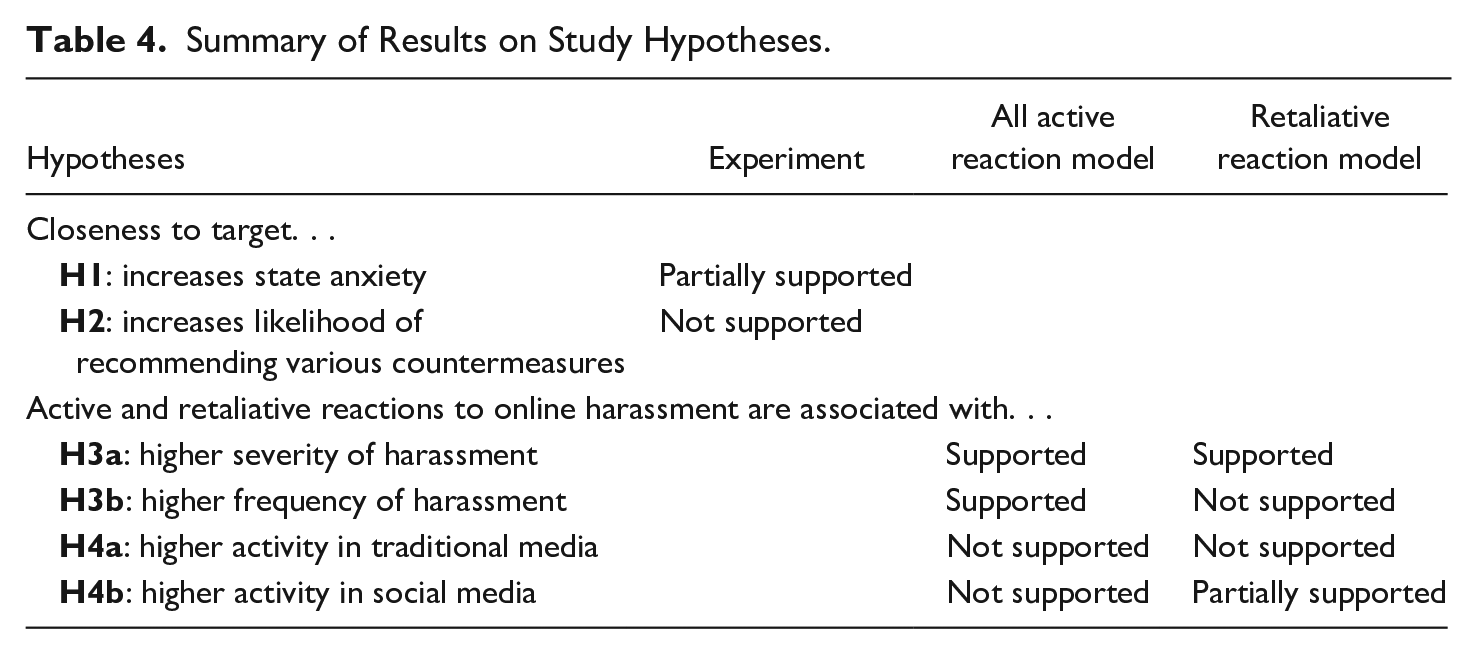
The present research investigated the experiences of Finnish media professionals as targets and bystanders in online harassment and hate instances. Specifically, a survey experiment theoretically grounded in the social identity approach (Tajfel & Turner, 1979; Turner & Reynolds, 2010) was used to investigate the impact of closeness to the target on bystanders’ experiences with online harassment and hate. We found that closeness to the target was associated with experiencing higher anxiety, but it did not affect countermeasure recommendations. Moreover, based on the transactional model of stress and coping (Lazarus & Folkman, 1984), we explored the role of situational and individual factors in targets’ reactions to online harassment and hate. Table 4 includes an overview of the results on study hypotheses. The results provide robust evidence regarding the role of specific harassment characteristics as well as targets’ individual attributes and work context in reacting to online harassment and hate. Overall, our research contributes to the crucial but understudied area of the experiences of media professionals as targets and bystanders in online harassment and hate instances.
Summary of Results on Study Hypotheses.
The results of the survey experiment generally align with our expectations concerning the impact of closeness to the online harassment target on bystanders’ anxiety levels (
No differences between the groups were found concerning the countermeasures recommendations for the target (
Considering the targets of online harassment and hate, the obtained rates of victimization and the use of different types of countermeasures align with previous research (Adams, 2018; Chen & Pain, 2017; Gardiner, 2018; Nilsson & Örnebring, 2016). The high prevalence rates of experienced online harassment and hate, including the pervasiveness of the more severe instances, is an important and worrying result. Moreover, we found some gendered patterns in type of harassment experienced, with high rates of being underestimated due to gender and even being sexually harassed among women. This aligns with previous research which pointed to the gendered and sexualized nature of online abuse against women and its silencing consequences as a serious issue that needs to be addressed by the online platforms and employers alike (Amnesty International, 2020; Chen et al., 2020).
Not doing anything in response to the harassment was by far the most common strategy for dealing with the experience. Purposeful ignoring has been previously named as an important approach in dealing with cyberbullying and online harassment, and a way to discourage the behavior (Chen et al., 2020; Sticca et al., 2015). However, although this approach may be useful in some, especially mild instances of harassment, it may also lead to perpetrators being allowed to continue harassing other targets, or even to serious crimes not being reported to authorities. Indeed, in our sample, very few targets reported contacting the police about experienced harassment. Concerningly high rates of refraining from public debate or even considering changing the work field or topic have also been recorded. Self-censoring can be detrimental not only to the targets’ professional careers and, as a result, their mental well-being but also to society at large, limiting public access to information. Therefore, high prevalence rates of online harassment and hate among media professionals are a major reason for concern.
The results partially confirmed our expectations of the associations of personal and situational factors with reactions to online harassment and hate. Among victimization factors, more frequent and severe harassment more likely led to active reactions (
We obtained insightful results concerning associations between well-being and active reactions to online harassment and hate. Work engagement was positively related to undertaking an active reaction and psychological distress associated with a specifically retaliative reaction, hence contributing to prior literature. Based on past research (Obermaier et al., 2018; Priebe et al., 2013), these results can be interpreted to mean that experiencing psychological distress because of harassment leads to retaliation attempts and that work engagement constitutes an important motivational resource that allows for an active reaction in the face of harassment, which is in line with conservation of resources theory, which highlights the importance of individuals trying to maintain their valuable resources when facing adversity (Hobfoll, 2001). However, due to the cross-sectional nature of this part of the data, a reverse relationship is also possible. According to Lazarus (1993), distress can be an outcome of confrontational coping and attempting to retaliate may result in increased psychological distress. It is also possible that undertaking an active reaction may lead to an increase in work engagement. Further research is needed to establish the causality of these associations. Nevertheless, these results provide fresh evidence on previously understudies’ associations between well-being and reactions to online victimization.
Our results revealed that most online harassment does not lead to any counteraction from the target. Past research has suggested that online harassment was not reported to employers or authorities for multiple reasons, such as targets may not have sufficient knowledge about existing measures, or they do not trust that an action would lead to any solutions. Some targets fear repercussions of reporting their experience or feel that they lack appropriate support (Chen et al., 2020; Clark & Grech, 2017; Hagen, 2015; Holton et al., 2021; Loke, 2012), which could influence their responses (or absence of them) and have negative well-being implications. We suggest that reporting instances of harassment can be encouraged by providing knowledge, clear procedures, and organization-wide support systems for media professionals. Moreover, for serious crimes to be reported to relevant state authorities, procedures applied in online harassment cases need to be carefully scrutinized and improved, as inadequate procedures may discourage targets from seeking justice (R. Lewis et al., 2017).
Media professionals’ experiences with dealing with online harassment and their need for support vary depending on various factors, such as their positionality, the medium they work in, the size of the organization and the number of extra activities that they are expected to perform (International Press Institute, 2019; Reporters Without Borders, 2018). Although news organizations increasingly seek solutions to address the problem and protect the well-being of their employees, they often lack necessary resources to effectively deal with the issue (International Press Institute, 2019). Multifaceted action is needed to protect journalists from online harassment, including legal measures on national and international levels, interventions on online platforms, creation of educational programs, prevention, support measures in media organizations, as well as development of newsroom culture that would allow for a coordinated response to the problem (International Press Institute, 2019; Reporters Without Borders, 2018).
The current study is limited because it was restricted to using only a Finnish sample, and any generalizations of the results beyond the Finnish context must be approached with caution. Past studies suggest that there are important cross-cultural differences in how online harassment is experienced and handled by media professionals (Chen et al., 2020; Clark & Grech, 2017). In Finnish context, our data had the limitation of including few freelancers. However, the data generally well represents journalists working in the biggest media companies in Finland. Our analysis is also partly limited by the cross-sectional design that does not allow any causal claims. Future studies using longitudinal data could help solve these issues and further advance our knowledge on the matter. More research is also required on media professionals retaliating against online perpetrators, as the desire for revenge can motivate a range of various behaviors that may lead to many different consequences for the target and the perpetrator. What is understood as a retaliative behavior and the outcomes it leads to is an interesting avenue of exploration for future research.
Conclusions
This paper investigated Finnish media professionals’ experiences with online harassment and hate. The results of the survey experiment showed that bystanders experienced higher anxiety if the target was close to them, but closeness to the target did not affect their countermeasure recommendations. Regularity of media appearances, frequency and severity of the harassment, and well-being influenced targets’ reactions against harassment. These results suggest that online harassment and hate constitute a serious problem for media professionals and that there is an urgent need for development of preventive measures and support systems for the targets.
Supplemental Material
sj-docx-1-jmq-10.1177_10776990221148987 – Supplemental material for Online Harassment and Hate Among Media Professionals: Reactions to One’s Own and Others’ Victimization
Supplemental material, sj-docx-1-jmq-10.1177_10776990221148987 for Online Harassment and Hate Among Media Professionals: Reactions to One’s Own and Others’ Victimization by Magdalena Celuch, Rita Latikka, Reetta Oksa and Atte Oksanen in Journalism & Mass Communication Quarterly
Footnotes
Declaration of Conflicting Interests
The author(s) declared no potential conflicts of interest with respect to the research, authorship, and/or publication of this article.
Funding
The author(s) disclosed receipt of the following financial support for the research, authorship, and/or publication of this article: This research has received funding from Helsingin Sanomat Foundation (Hate and Public Sphere Project 2020-2021, PI: Atte Oksanen).

Supplemental Material
Supplemental material for this article is available online.
Author Biographies
References
Supplementary Material
Please find the following supplemental material available below.
For Open Access articles published under a Creative Commons License, all supplemental material carries the same license as the article it is associated with.
For non-Open Access articles published, all supplemental material carries a non-exclusive license, and permission requests for re-use of supplemental material or any part of supplemental material shall be sent directly to the copyright owner as specified in the copyright notice associated with the article.
