




Abstract
This qualitative study explored teachers’ use of technology to manage teaching and learning activities during COVID-19 in Nepalese higher education institutions. To this end, 11 teachers from three universities located in five provinces of Nepal were purposefully selected. Their experiences of using technological tools were explored through semi-structured interviews and document analysis. The findings show that the implementations of online teaching and learning to manage students’ learning loss during the COVID-19 were marred by paradoxical policy, insufficient resources, teachers’ attitudes, socio-psychological issues, the lack of trained teachers and connection among technology, curriculum, pedagogy and assessment. Interestingly, the findings demonstrate that the teachers have taken the COVID-19 crisis as an opportunity for learning to use technologies in their teaching and learning activities. Based on these findings, we suggest that the government of Nepal needs to design an action plan to facilitate free mental health and wellbeing counseling programmes for students and teachers, provide sufficient devices with internet access to their students and train teachers and staff on how they can blend technologies, pedagogies and contents.
Introduction
The last month of the year 2019 started with the terror of the Severe Acute Respiratory Syndrome Coronavirus (SARS-COV-2), which caused the COVID-19 outbreak in the Chinese city of Wuhan (World Health Organization [WHO], 2019). The WHO declared the outbreak of COVID-19 as a global pandemic on 11 March 2020. In Nepal, the first COVID-19 case was reported on 24 January 2020 (Ministry of Health and Population of Nepal, 2020). As it started to claim lives unprecedentedly, the WHO strongly recommended preventive measures to break coronavirus transmission chains. Among different prevention strategies, many countries considered lockdown as the best method for controlling virus spread within and across the counties. However, it was not sufficient to prevent its spread in many countries (WHO, 2020; Zhu et al., 2020). Consequently, the pandemic hit every aspect of human life, including education. It created a global learning crisis because academic institutions worldwide were shut down or switched to online mode to safeguard students, faculty, and staff from the virus. Indeed, the pandemic impacted approximately all the world’s students (UNESCO, 2020), including Nepalese students (Ministry of Education, Science, and Technology, 2020). Globally, the pandemic pushed more than 1.6 billion school-age children out of school and more than 220 million tertiary-level students out of universities (UNESCO, 2021).
Like academic institutions worldwide, Nepal had to switch to an online mode of teaching and learning to mitigate students’ perceived learning loss amid intangible policies and limited resources. To introduce technology in school classrooms, the government of Nepal enacted an open and distance learning policy in 2007 (MoE, 2007). Nevertheless, it failed to implement the policy as envisioned by the policymakers. The government reiterated the same instance through the School Sector Development Plan (SSDP) 2016–2023. The policies aimed to recognize all kinds of traditional modes of education and harmonize them with alternative open learning provisions. While several policy documents mention the terms such as e-learning, e-library, and e−teachers (GoN, 2007, 2016), the government does not guarantee access to resources such as the high-speed internet and computers to students and teachers (Thapaliya, 2021). In recent years, internet use through mobile phones has substantially increased among the general public though its use in those devices is not reliable. When the services were offered online during the pandemic, people had challenges in using the internet in those devices. About 95% households could not have access to online services due to the lack of computers even though they could have access to the internet in their mobile phones (Pandey and Raj, 2016).
The quality and access to information and communication technology (ICT) in higher institutions and schools remain virtually the same. In 2015, Tribhuvan University (TU) made a provision to integrate e-learning components in conventional programme to make a blended system with a view to increasing learning opportunities and catering to students’ academic needs in higher academic institutions. However, concrete steps were not taken to introduce technology in any Nepalese universities before COVID. After the COVID outbreak, the government of Nepal endorsed the COVID-19 Education Cluster Contingency Plan and Student Learning Facilitation Directory 2020. Pursuant to these policies, all academic institutions were required to offer learning opportunities through alternative modes of teaching that required the extensive use of ICTs.
Consequently, aligning their policies with the government’s directives, all Nepalese universities took initiatives to provide their students with learning opportunities through online teaching. In doing so, they prepared appropriate operational guidelines and manuals so that they could make transition to online teaching from face to face teaching (Kathmandu University, 2020; Mid-Western University, 2020; Tribhuvan University, 2020). This information indirectly suggests that Nepalese universities were forced to use online teaching due to the COVID-19 outbreak. Had there not been any situational compulsions, the universities would not have probably opted for online teaching and learning. Indeed, they had neither clear policies nor sufficient resources needed for conducting virtual classes. As such, the pandemic-induced teaching and learning offered Nepalese teachers to upgrade their traditional way of teaching by adopting technology-mediated teaching and learning. In such a scenario, the study explores how university teachers managed to continue their teaching and learning activities online. This study specifically aimed to answer the following research questions. • How did faculty in Higher Education Institutions (HEIs) in Nepal manage to mitigate learning loss during the COVID-19 pandemic situation? • What challenges did they face and what affordances did they have while implementing technology-mediated teaching as the only viable option for teaching during the pandemic time?
While this paper is based on Nepal’s case study, its findings can inform both resourceful and resource-scarce countries in terms of the participants’ lived experiences during the pandemic. In what follows, we at first discuss the existing literature and present the findings after the description of methodological procedures.
Literature review
There exists a substantial body of literature related to COVID-19 and its impacts on human beings worldwide. Most of them deal with the narrative case studies of how people working in different fields responded to the immediate threats that the pandemic posed to them, how they recovered or attempted to recover from those threats, and how they reimagined their personal and professional lives. Since the availability of resources and infrastructures remarkably differ across many parts of the world, we have delimited the literature review related to higher education institutions within the Indian subcontinent where the distribution of the resources and infrastructures are almost the same.
The use of devices and technologies/applications/software
Nepal is not technologically advanced. It stands in the 123rd position regarding its ICT infrastructure (Shrestha et al., 2020). While it has good ICT policies for schools, there exist several barriers to the use of ICT in schools that include corruption, political influence, lack of funds, lack of resources, lack of trained teachers and their attitudes, a lack of connection of technology to assessment and curriculum (Thapaliya, 2021). When COVID-19 created chaos and confusion, Nepalese universities used freely available technological tools and applications to continue their teaching. Students and teachers would use the learning management system, Google classroom, Zoom, Google meet, Skype, WhatsApp, Facebook, and televisions (Mishra et al., 2020; Vijayan, 2021). Regarding using devices, most teachers and students used laptops and mobile phones but a very few of them used desktops and iPads (Shrestha et al., 2021).
Challenges faced by the stakeholders of education while continuing teaching and learning activities in their academic institutions
Various studies discuss several issues and challenges that the main stakeholders of education faced while continuing their academic activities during the pandemic (Danitsa-Schmidt and Ramot, 2020; Mishra et al., 2020; Sharma et al., 2020). These issues and challenges are related to infrastructure, teaching and learning activities, socio-psychological aspects, emotional aspects of learning, and institutional policies. The unavailability of the infrastructure required for the continuation of uninterrupted teaching and learning activities is a major challenge, particularly in the least developed countries such as Nepal, Bangladesh and Pakistan (Bhagat and Kim, 2020; Devkota, 2021; Salceanu, 2020). Many students in these countries lack devices, reliable internet services and uninterrupted electricity supplies that are essential for online classes (Acharya et al., 2021; Asgher and Hanif, 2021; Gautam and Gautam, 2021). The lack of infrastructural development related to the internet causes difficulty in implementing contingency plans during the traumatic time. Surprisingly, all higher education institutions do not have their own official learning management system (Shrestha et al., 2021). Therefore, the already adverse learning conditions were further exacerbated when the students could not pay for the internet and devices. For this reason, teaching and learning during pandemic time arguably further widened the digital divide between the students of different socio-economic groups, thereby offering them inequitable learning opportunities (Devkota, 2021).
The students and teachers from low-income countries had to face several challenges in continuing their teaching and learning activities. Though the online mode of education existed before the pandemic, very few faculty and students were acquainted with this mode of instruction as they would rarely prefer online mode of learning to face to face. Therefore, one of the persistent challenges that faculty across institutions and countries faced during the pandemic time was the lack of technological knowledge. The faculty had to upgrade necessary technical knowledge and skills for online classes (Acharya et al., 2021). It was good that the teachers who were previously reluctant to use technological applications and tools in their regular classes also learned to use essential skills to conduct their teaching online during the pandemic (Donitsa-Schmidt and Ramot, 2020). Thus, the situation necessitated them to learn new teaching ICT skills.
Another challenge that the teachers frequently faced was to keep students motivated and engaged in learning. While taking online classes, students had difficulties in maintaining their interests and attentions towards their studies due to lack of: (1) meaningful interactions between students and teachers, (2) sufficient time allocated for each class, (3) systems for monitoring students’ engagement in leaning and (4) opportunities for conducting practical activities (Mishra et al., 2020). The next challenge was the lack of self-motivation (Acharya et al., 2021). Indeed, it is the self-motivation that inherently drives people to work well. It is related to the self-realization of duties and responsibilities (Laudari et al., 2021). Understandably, both students and teachers seemed to have low self-motivation during the pandemic due to fear and uncertainties looming worldwide.
Impacts of COVID-19 on stakeholders’ socio-psychological aspects
Several studies reported that COVID-19 adversely impacted people’s social, physical, and mental health (Cao et al., 2020; Goyal et al., 2020; Muzi et al., 2021; Odriozola-gonzalez et al., 2020). These studies demonstrate that the pandemic has significant adverse effects on the socio-psychological aspects of human beings. They had anxieties, frustrations, worries, stresses and depression. In fact, students were not exceptions to these effects. Their learning, social and emotional well-being, and mental health had been seriously impacted during the pandemic time (Dawadi et al., 2020). The social/physical distancing has repercussions on their socio-emotional aspects (Asgher and Hanif, 2021; Vijayan, 2021). Because of the stressful situations created by the pandemic, the stakeholders of education, particularly students and teachers, did not have good mental and social well-being (Mishra et al., 2020). They became anxious as they missed their relatives and co-workers. Additionally, their level of anxiety increased due to the one-way delivery of teachers through online classes. Therefore, the students and teachers demanded personal counseling and professional workshops on reducing stresses and anxieties (Shrestha et al., 2021).
The studies reviewed above do not directly focus on teaching faculty’s perceptions and experiences of using technology to manage the learning crisis during the COVID-19 pandemic in Nepalese higher education institutions. Hence, this study aimed to explore Nepalese university faculty’s perspectives on using technology to manage learning loss during the pandemic.
Conceptual framework
Understanding different teaching models, including alternative, distance, and online, provides an opportunity for policymakers, teachers, and other educational stakeholders to consider broader perspectives when identifying ways to manage learning loss during the COVID-19 pandemic. Two of them include Garrison et al.'s, (2000) Community of Inquiry (CoI) and Mishra and Koehler’s (2009) Technological Pedagogical Content Knowledge (TPACK) model.
Developed in 2000, the Community of Inquiry (CoI) has three presences: cognitive, social, and teaching. The CoI has discussion boards, blogs, wikis, and videoconferencing features that make it an interactive model. Similarly, the Online Collaborative Learning (OCL) developed by Harasim also has interactive features as it focuses on using the internet to co-construct new knowledge through interactions (Harasim, 2012). Additionally, Garrison et al. (2000) developed a multimodal model for online education suitable for a larger extended academic program. This model requires integration of other software. Altogether, it has seven components: content (media games), social/emotional (face-to-face teaching, tutoring, advisement), self-paced/independent study (adaptive software), dialectic/questioning (discussion board), evaluation/assessment, collaboration/student-generated content/peer review and reflection (blog, journal). Similar to these models, Mishra and Koehler’s TPACK model offers teachers and other stakeholders in academic institutions to understand how teachers blend technology in teaching and learning practices. Needless to say, for effective technology-embedded classes, teachers should develop Content Knowledge (CK), Pedagogical Knowledge (PK), Technology Knowledge (TK), Pedagogical Content Knowledge (PCK), Technical Content Knowledge (TCK) and Technological Pedagogical Knowledge (TPK) as discussed by Mishra and Koehler (2009). While the CoI, the multimodal, and the TPACK models were developed prior to the COVID-19 pandemic situation, these models are still relevant for the description of teachers' knowledge base during the pandemic.
However, each of them as the model designed for normal teaching and learning situations is not sufficient to capture the features of teaching and learning activities conducted during the pandemic because they have not captured socio-emotional aspects of teaching and learning. For this reason, we have merged Mishra and Koehler (2009) and Garrison et al. (2000) framework creating a new conceptual framework to explore teachers’ experiences of using technological tools to facilitate teaching and learning activities during COVID-19. This conceptual framework helped us to understand faculty’s perspectives on using technology, challenges and opportunities during pandemic teaching. Figure 1 represents the conceptual framework. Understanding teachers’ perspectives of using technology to manage learning loss.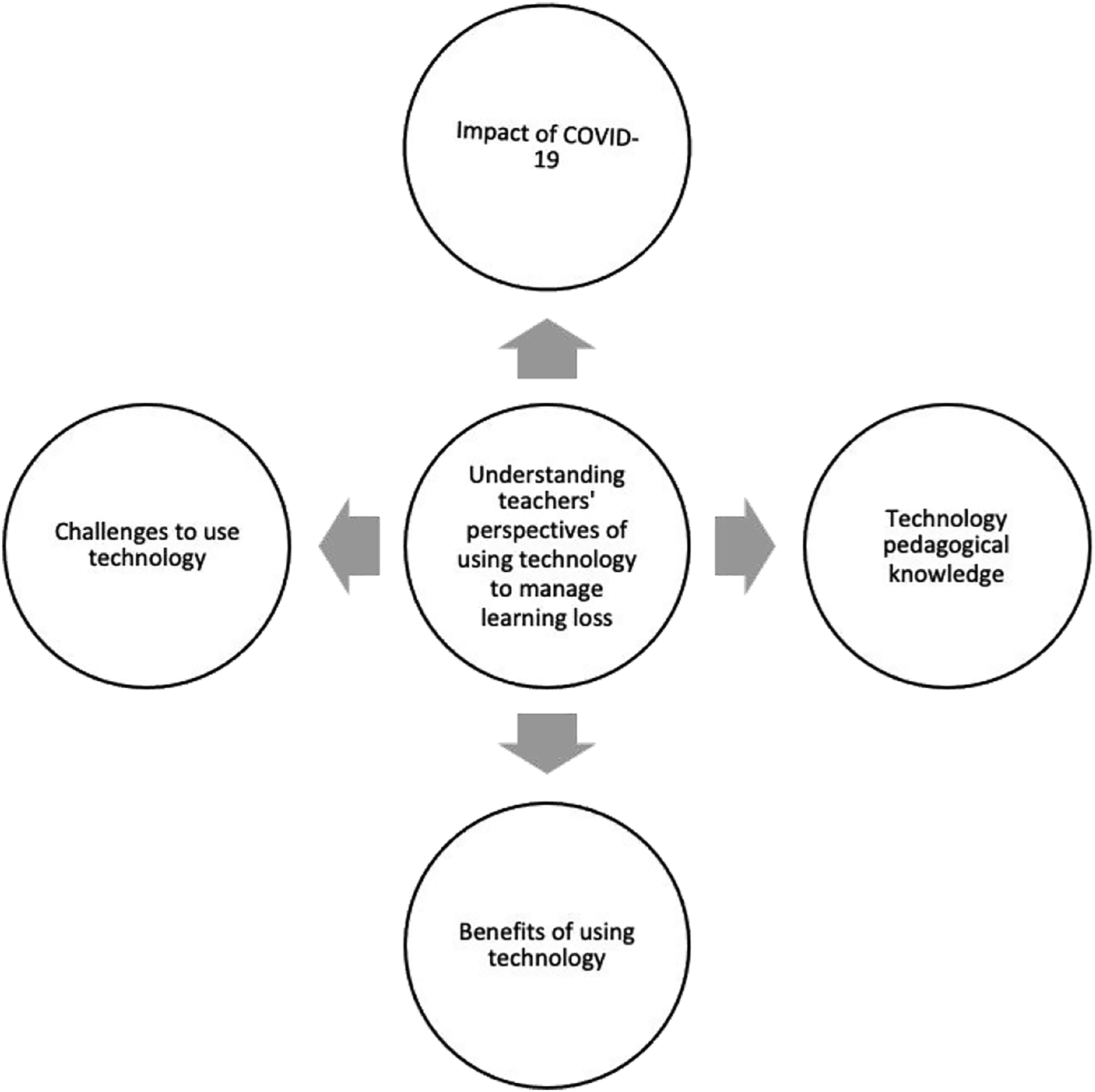
Methodology
This study used a qualitative approach to answer the research questions. There have been many discussions regarding the use of a qualitative approach that focuses on gaining insight into how people interpret and make sense of their experiences in a particular context (Robson, 2002; Strauss and Corbin, 1998; Taylor et al., 2016). The qualitative research design helps us to investigate research questions by capturing research participants’ experiences in their natural settings to obtain a thick and rich description. As a result, researchers can understand how they perceive things in their social world (Patton, 2015). The qualitative research approaches are more suitable for exploring and answering ‘what’ and ‘how’ questions (Yin, 2009).
For this study, we adopted an interpretative phenomenological design because this design focuses on the commonality of lived experiences of a particular group of people (Dowling, 2007). In addition, this approach allowed us to gain an in-depth understanding of participants' lived experiences (Patton, 2015). Thinking through this approach, we described teachers' perspectives of using technology for facilitating teaching and learning. Our focus was on understanding how teachers would interpret their experiences of using technology. The interpretive phenomenology as the ontology helped us to understand all aspects of the phenomena under study instead of focusing on one particular concept. We first attempted to reduce individual research participant’s experiences with a concept to a description of the universal essence and then interpret the meaning of the lived experiences.
The primary purpose of this qualitative interpretive phenomenological study was to explore university teachers’ experiences and their perceptions of using technology to manage online classes. The required data for the study were collected using interviews and document analysis. The research questions posed toward the end of the introduction section of this paper guided us to obtain participants’ perspectives and experiences regarding the use of technology.
Participants
This study was undertaken to explore how teachers used technology to mitigate learning loss during the COVID-19 pandemic situation in Higher Education Institutions (HEIs) in Nepal. While selecting the participants, we sent two hundred email invitations to university teachers teaching in Nepal via emails and social media. Out of them, 20 teachers accepted our request and we selected 11 research participants (nine males and two females) from three universities considering their experiences of teaching students online. Using the semi-structured interview method, the first author interviewed the selected participants through the Zoom.
Methods and procedure for data collection
The semi-structured interviews and document analysis were used to collect data for the study. The semi-structured interview method helped us to collect rich in-depth information from participants (Patton, 2002). With the flexibility in framing questions, the first author established the rapport with participants and took opportunities to seek clarification about participants’ understandings of issues and obtain enough information on a phenomenon of interest (Taylor et al., 2016). This method became helpful in formulating some questions while interviewing the participants and the flexibility of framing questions during the interview derived some valuable information that were not generally expected to have in the beginning. The document analysis provided us with supplementary information on how the various policy documents enacted facilitated teaching and learning during the COVID-19 pandemic situation in Nepalese higher education institutions.
While collecting data, at first, we sent information sheets and consent forms to the selected participants, and then they sent us having filled out those forms electronically. The first author informed them about their voluntary participation and right to withdraw from the study at any time if they do not like to participate in the study. Also, he guaranteed their privacy and confidentiality. Then, from November through December 2021, 11 interviews, lasting from 30 to 45 min, were recorded online using Zoom meetings. All the interviews were conducted considering the participants' convenience. Though we have used participants' names here, they are pseudonyms given to ensure the participants' anonymity.
Data analysis
The collected data were thematically analyzed (Braun and Clarke, 2006). It helps organize and break data into manageable units and synthesize them to find and report repetitive patterns. Additionally, it is easy to apply with a wide range of research questions and data. Indeed, the thematic analysis provides a systematic procedure that is simple to follow and makes provision for the analysis of data obtained from different data collection methods, and it has theoretical flexibility (Braun and Clarke, 2006). In the following figure, we present Braun and Clark’s (2006) components of six-phase thematic analysis. Figure 2 Data analysis framework.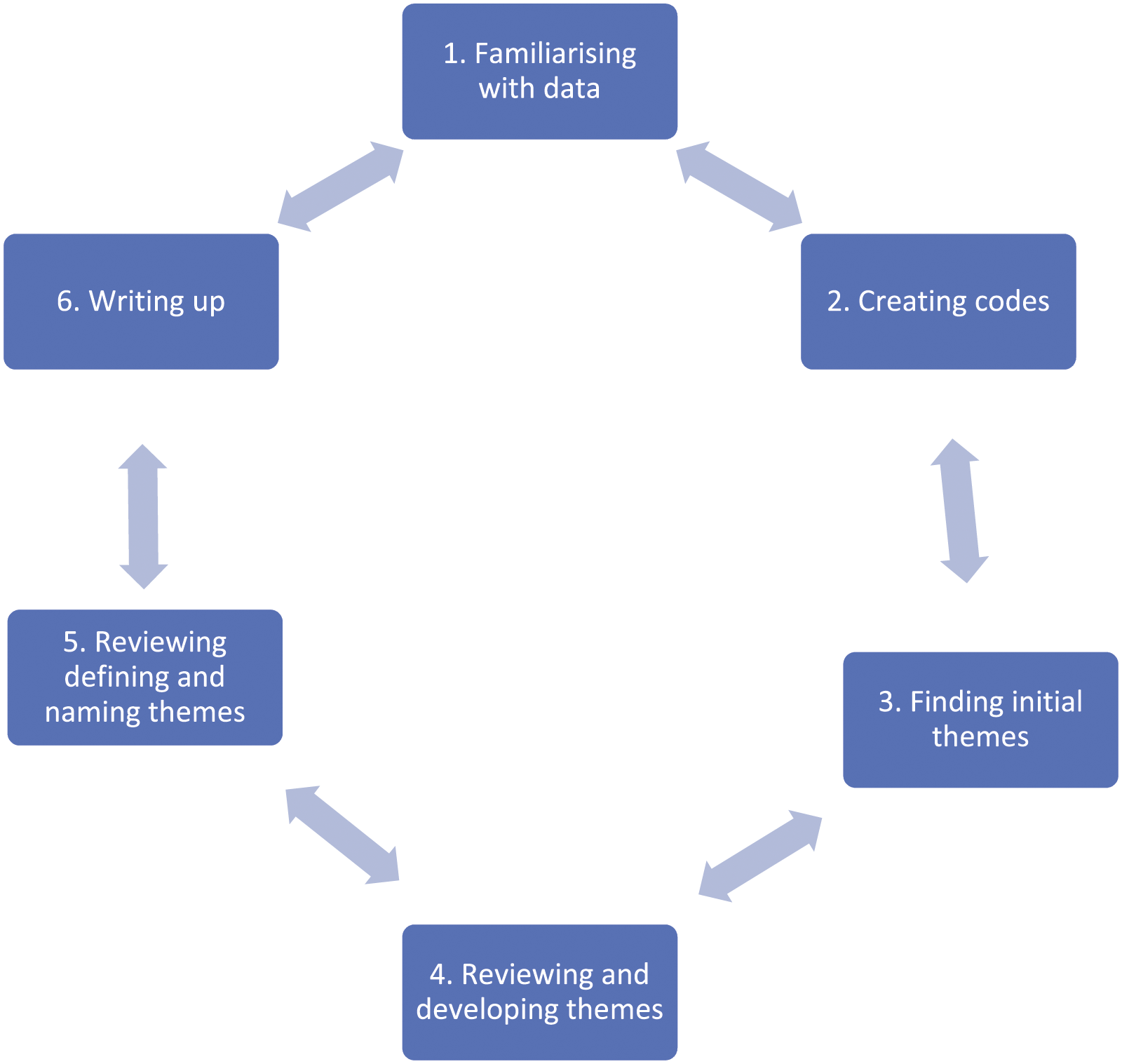
In spite of the sequential six phases, analysis is typically a recursive process, with movement back and forth between different phases.
After following six phases of the thematic data analysis framework, we wrote a detailed analysis and the accompanying story each theme presented and considered how it fits in the research questions and the broader overall narration of the data. By considering and acknowledging themes, we did an in-depth analysis of whether a theme has sub-themes or not. After that, we made a detailed analysis of individual themes concerning the research questions. Each theme was clearly defined and described in a few sentences and suitable titles were given to them. Finally, the authors held meetings via zoom meeting to discuss data analysis. The eight themes emerged out of data analysis. They were: 1) socio-psychological factors, 2) digital tools, 3) paradigm shift, 4) benefits of using technology, 5) access to resources, 6) connectivity issues, 7) attitudes, and 8) policy. These eight themes were merged into four broader themes as stated in the conceptual framework.
Findings
The study was carried out to understand the effects of COVID-19 on teaching and learning, teachers’ efforts to mitigate the perceived learning loss during COVID-19 pandemic and the challenges they faced while continuing teaching during the pandemic. Having analyzed the data, we found four major themes: the impact of COVID-19, technology pedagogical knowledge, benefits of using technology, and challenges of using technology. In the following subsections, we present each of them in detail.
The impact of COVID-19 on teachers’ personal and professional activities
The data analysis shows that the COVID-19 pandemic impacted teachers and students in their teaching and learning activities, socio-psychological aspects and (dis)engagements in learning. In what follows, we present each of them in detail.
The impact of COVID-19 on teaching and learning
Amid the fear and doubts created by the pandemic, the participants reported that they could continue teaching their students following the COVID health and safety protocols for online and face-to-face classes as advised by the Government of Nepal (GoN) and Higher Education Institutions (HEIs). However, most of them reported that their teaching and learning activities could not be effective. Thus, they believe COVID-19 negatively impacted their teaching and learning activities. They reported that they would not engage themselves in teaching and learning activities due to the fear engendered by the pandemic. Recalling how his teaching and learning activities were negatively impacted during the pandemic, Prakash states, …COVID-19 impacted a lot for me and my teaching and learning…at the first few weeks of lockdown, I was quite worried about what would happen next…I could not focus on my teaching. We mainly talked about what would happen next, how long it would go, what the future of humans in general would be like and so on. I am affected by mental pressure and stress…. I think it affected students as well… as a result, a very low number of students were regular in my online class…
This participant’s comments indicate that he was worried due to the uncertainty of his future, his family, and some psychological pressures (e.g., anxiety, stress) in his mind. He seems to be worried about what happens if he gets infected with the coronavirus. Despite these challenges, he demonstrates his commitment towards his profession and students’ wellbeing. Like Prakash, Krishna maintains that he was impacted. He says that “the COVID- 19 suddenly shifted the class to a virtual classroom. I was not mentally, physically and technologically ready for the online class”. From Krishna’s comment, it can be assumed that the COVID-19 impacted teachers in their teaching and learning as they could not focus on their professional activities due to their sense of fear.
The impact of COVID-19 on socio-psychological aspects
The current research found that the COVID-19 directly impacted teachers’ social-physical and psychological health. They say that they suffered from frustration, anxiety and stress during the COVID-19. This is evident in what Madhav says, … I put all my effort into presenting my lesson in simple and clear … I have a good relationship with my students… some students expressed to me a kind of anxiety regarding examinations…because there is uncertainty about it…
Similar comments are received from another respondent, Binod. He states, “...students rarely submit assignments on time… I inquired about … they mention ‘not feeling well sir… could you please extend me some time to submit…“. These participants’ comments reveal that students have been suffering from a kind of anxiety and stress. This comment may signal that students could have some kind of social and psychological problems due to COVID-19 pandemic. This is supported by another research participant, Rita. She narrates about her student’s story, ... as you know... I am living in a rented single bedroom at Kirtipur…. Neither do I have a laptop nor can I pay the internet bill …how can I participate in online class regularly and do assignments on time...
From this participant’s comments, it can be imagined how she must have felt about her students’ reason for being unable to take online classes. What she reports clearly indicates that her student does not have sufficient money to pay for a digital device and the internet connectivity for online class.
Students’ (dis)engagement in online classes
This study found that students’ disengagement in online classes is another impact of the COVID-19 pandemic. All research participants reported that they had students’ engagement issues in online classes during the pandemic. A respondent, Madhav states, “in my bachelor level math class, around 70% of students are disengaged and irregular in online learning… quite often they are disconnected from the virtual environment …“. This participant states that around two third of students were not engaged and regular in online classes. With his statement, it can be deduced that the students did not pay attention towards their studies. This consequence could probably be because of a sense of fear being created by the pandemic. Additionally, their lack of access to required resources such as internet connections and devices might have caused them to be disengaged and irregular.
Technology pedagogical knowledge
This study found that research participants knew how to use technological tools for teaching and learning activities. Here, technological knowledge refers to the software and applications that were used in order to switch the face-to-face class to online synchronous classes. The participants reported that they were familiar with some applications such as Facebook, Messenger, Viber, WhatsApp, and Google Hangouts. As their universities decided to use Zoom or Microsoft Teams, they participated in the training on how to use these applications before they started to take their classes through the online synchronous mode. In what follows, we discuss what digital tools the participants had used while teaching online and why they considered teaching online as a paradigm shift.
Uses of digital tools
The participants mention that YouTube, social media (e.g. private Facebook messenger group, Viber, WhatsApp), Zoom Meeting, Google Meet, Google Hangout and Microsoft Teams were used to deliver teaching and learning activities during the COVID-19 pandemic situation. They report that they created an official Facebook page to communicate with faculty, staff and students regarding teaching and learning, general meeting notice, examination results and other business. Furthermore, the digital tools such as Zoom, Microsoft Suite 365, G-Suite, television, radio, multimedia projectors, mobile phones, audio-video recorder and social media: Facebook, Viber, WhatsApp were used to manage the perceived learning loss during the pandemic.
The participants reported that they tended to use multimedia projectors occasionally for teaching and learning activities. This finding suggests that there was a rare use of technological tools for teaching and learning purposes. In the pre-pandemic situation, they reported that teachers would take students to the computer labs to search for resources available online. Meantime, they used to teach students how to create email accounts. Regarding the use of multimedia projectors in the pre-pandemic situation, Binod states, Occasionally, I used multimedia projectors... Students were brought to the computer labs. They were connected with the internet and helped them to search the content using Google search engine…
With this statement, it can be inferred that Binod has a good knowledge of using digital tools by blending multimodal online teaching strategies even though he had limited resources and time.
Teaching online as a paradigm shift
During the pandemic, the universities in Nepal were forced to use technological tools for the continuation of their usual business. This is reflected in the university’s 5 Es policy stated by Prakash. Our university implemented a policy regarding alternative teaching and learning strategies. It has 5 Es: e-Admission, e-Class, e-Assessment, e-Examination, and e-Certification. E-admission means online enrollment. ...students can get admission via online...
As most participants did not have any experience in teaching and studying online, they considered the process of enrolling students to award degrees through an online system unique. As the existing system could not function, the shift in the mode of working enabled them to continue their usual business. Therefore, they take the COVID-19 pandemic situation as an opportunity to make a paradigm shift from a chalk and talk way of teaching to online learning and teaching in Nepalese HEIs. In this regard, Hari states, The COVID-19 offered me an opportunity to up-skill myself with new skills and knowledge to mitigate learning loss. New skills and knowledge are about technology and e-pedagogy, e-content and e-assessment…e-professional development … it is totally a new system for me… I think COVID-19 brought a kind of paradigm shift in teaching ...
This participant’s comments on online teaching and learning signal that the pandemic situation was a learning opportunity for Professional Learning Development (PLD), new skills, and knowledge. He might have considered online teaching a new paradigm because it was different from his traditional way of teaching. To continue his profession, he had to learn e-pedagogy, e-content and e-assessment, and e-PLD for being able to facilitate lessons for his students online. The other participants, such as Ram, Krishna, Binod, and Madav also narrated their experiences, which are, by no means, different from Hari’s experience. They all adapted themselves in the pandemic-induced teaching and learning contexts. They believed that their universities were changing their working modes due to the outbreak of the pandemic.
Benefits of using technology
This theme has two sub-themes: effective tools for learning and teaching new skills and connection, collaboration, consultation, and communication. Each of them is discussed below.
Effective tools for learning and teaching new skills
Using technology to manage learning loss during the COVID-19 was effective in teaching humanities-related courses. The participants agreed that they learned skills and knowledge on how to tackle the COVID-19 pandemic situation personally and professionally. Prakash states, I teach critical discourse analysis for Master’s degree students. Closed Facebook group messenger, MS Teams, and Zoom meetings have been used to deliver course content for students… digital teaching materials are prepared...
What prakash says is supported by respondents yam and rita. Yam says I found that students were more engaged with learning when I facilitated teaching sessions online like Zoom meetings…it is more effective teaching...students are motivated and actively involved in the discussion by the new trend of using technology in their class...
These respondents’ comments indicate that online teaching is more effective than face-to-face teaching. This finding could be because teachers invested more time in preparing teaching and learning materials. Also, they used technology that might have aroused students’ interests. As a whole, they believe that digital tools are good for self-study as well as for teaching. This is what Ram explains, “…I used YouTube videos to learn how to make Google sites for teaching. course. I get a chance to learn skills on how to integrate the curriculum with technology...“. This is seconded by Yam, who says, I find, digital tools are kind of innovative....I did what was possible during lockdown to deliver teaching and learning for my students… by sharing resources from Google drive… recording audio on my mobile … writing on a piece of paper, taking a screenshot and sharing it to students on social media…
Based on these participants’ comments, they seem to believe that technological tools are the sources of new knowledge. Comparatively, the participants seem to have found online teaching tools and resources more effective than the usual chalk and talk. Additionally, the participants report that teachers have enthusiasm for learning new skills for their work.
Connection, collaboration, consultation and communication
The networking of students, parents, and other stakeholders of education is essential to facilitate teaching and learning, including online. To form such networks, technology helped them connect, collaborate, consult and communicate conveniently. Madhav’s experience reflects this idea. He states, ... consulted with parents, students, faculties and non-teaching staff before enacting any regulations… I connect, collaborate, consult and communicate with students before I facilitate and design any teaching session online…I found learners’ collaboration, cooperation and activeness… students get opportunities to learn, create and share on virtual platforms.
His comment indicates that teachers can easily connect, collaborate, consult, and communicate with faculty, parents, and students by using technology. Also, students get ample opportunities to learn, create and share students’ opinions through online platforms. This is supported by what Hari says, I have to teach 12 periods per week through online teaching. I use the MS Teams application to facilitate my course... I share my teaching material in the online portal among other teachers... this kind of collaboration helps me to save my time...
His comment reveals that collaboration among teachers saves his teaching materials preparation time. He also reuses resources from the online portal. The connection, collaboration, and communication among teachers help him to learn new skills from his colleagues and other teachers. Likewise, Prakash shares a similar experience. In the first phase of lockdown, the university does not have learners’ contact numbers and email … around 40 to 50% of students only participated …In the second phase of lockdown, when students came regularly to the class ...university updated students' information..., ... 70 to 80% of students participated in online learning regularly...
His statement implies that they could make connections to their students using technologies. Had there not been technologies, it would have been very challenging for them to get connected to their students. He further states that he could make local and global networks of professionals using technologies. I got the opportunity to build up a network from local to global…different people from the USA, European countries, Nepal, and India. For example, I did not take any classes myself for my Master’s degree, semester two courses, I approached scholars who are related to the topic, and requested them. If they are interested, I invited them according to the topic to facilitate a session ... ... opportunity for students to get the varieties of exposure in the classroom.
His comments reveal that he could be within the network of scholars, researchers, and teachers globally due to the use of his technological knowledge. Based on participant’s comments, it can be deduced that they got benefits of being connected to their students and colleagues with the help of technological tools.
Challenges of using technology
Although the participants report that they have benefits of using technological tools in their online class, they face several challenges. We present them in the following subsections.
Lack of sufficient technological devices and digital resources. Lack of resources and technology devices are common barriers to the use of technology during the pandemic across Nepalese HEIs. Shiva voices this challenge as follows: ... more than 4000 thousand students are studying from undergraduate programmes to postgraduates in management, humanities, education, and science stream. …being a campus chief for more than 3 years, I requested the university and campus management committee to build a smart learning information, communication and technology lab … with sufficient laptops, computers and video recording devices. Neither they listened to me nor they took any action regarding it…
This statement is also supported by Hari, who says, “…we have a policy for digital, virtual, and alternative teaching-learning but we do not have access to resources and internet connectivity to implement these policy guidelines…“. These participants’ comments demonstrate that they liked to deliver their lessons using technologies but did not have sufficient resources. This finding may mean that HEIs are keen to deliver teaching and learning processes online if they get sufficient resources.
Power cut and internet connectivity
The uninterrupted supply of electricity and reliable internet connectivity are other challenges to implementing alternative teaching online. Yam says, “…there is an electricity connection in my house but there is a frequent power cut…. internet speed is very slow …” Shyam’s comment is also the same as Yam’s. He mentions, “...the campus has wireless internet connectivity, but ... not working all the time...there is no system to manage that available facilities work properly…“. Based on these comments, it is clear that poor internet connection and interrupted power supply are the major challenges that teachers encountered during their online teaching.
Teachers’ attitudes towards learning new skills
Teachers’ negative attitudes towards learning new skills can be an obstacle to introducing new technologies or strategies as they are habituated to their own way of doing. Bishnu states, “...the majority of lecturers in our campus feel inferior if technological training is facilitated by their fellow colleagues who are junior…“. This participant’s statement reveals that senior professors may think that the professor who are junior to them do not have sufficient knowledge and skills to give them training in technology. This finding may reveal that they may have egoism and negative attitudes to learn new skills from junior teachers. This is supported by Yam. He says, “…senior lecturers are feeling difficult to adapt to new technological interventions in teaching because they are not habitual and they have a different mindset…“. This participant’s comments reflect that senior lecturers are unlikely to adopt online teaching. This means that those teachers might have negative attitudes towards their online professional development training.
Insufficient Professional Learning and Development (PLD) in online teaching
Insufficient PLD of online teaching is the barrier to adopting online teaching. Madhav explains, “...during a lockdown when the campus directed me to teach students online… but the campus provided 1-day of online teaching PLD… I believe 1 day is insufficient for me… I need more training in online teaching…“. This is supported by Bishnu, who says, “... three day’s online orientation awareness programme for students and teachers… I participated in the programme… the training manual is all about basic stuff such as opening email id… Zoom teaching… I find training insufficient for me…“. With his comment, it can be deduced that teachers did not have sufficient PLD. Some of them say that they learned from their colleagues. Regarding this way of learning, Madhav says that peer tutoring can be a solution to this kind of problem. He states, “…I got mentored by my friend… he showed me how to use zoom and MS Teams for online teaching…“. Indeed, learning from colleagues can be easy for teachers since they may feel comfortable asking questions about how to use a particular application or tool.
Time constraints and lack of technical support
Time constraints and lack of technical support in online teaching were other challenges during the pandemic situation. Raising this issue, Ram, explains, I need to teach 12 periods per week ... I need to spend around an extra 15 h preparing resources for 12 periods for a week...it’s taking my extra time... my computer does not turn on... nobody is there to repair it remotely…
This comment reveals that this research participant has to work extra hours to prepare teaching materials. Therefore, he may have physical, mental health and wellbeing issues because he needs to spend around an extra 15 h to finish up his work weekly. Additionally, he is having a technical problem with his computer.
Funding issue
This study found that funding was another barrier to deliver online classes. A participant teacher, Shiva, states, During lockdown, I applied for a funding application for technology and software support to the University Grant Commission (UGC) for 4000 students... and local government… after 8 months, the UGC approved Nepali Rs. one million equivalent to around US $ 8500… it is not sufficient to buy basic things for an online class for 4000 students…
These comments indicate that the campus where he works is underfunded. Getting funds from the UGC for online classes is supportive but insufficient to meet the demand for 4000 students. This means that the campus might have issues in delivering online classes because of financial constraints.
Lack of policy dissemination
The University Grant Commission (UGC) Nepal enacted directives for learning facilitation through alternative teaching-learning systems in higher education in 2020 (UGC Nepal, 2020). All HEIs have been advised and instructed to adapt to an alternative arrangement to continue teaching following the health and safety protocols of COVID-19. The majority of research participants heard about these plans and guidelines. But they did not know how these policy guidelines were implemented into practice. A respondent Bishnu states, “… I’ve heard about an online class operational manual … but I do not know how it works in everyday practice… there was no orientation to the faculty and students about it…“. This participant’s comments reveal that there is a policy for online classes. But he does not understand how these policy guidelines work in everyday practice. This may signal that there could be an implementation and dissemination gap between policy and practice.
Discussion and conclusion
This paper analyses Nepalese teachers’ perspectives and understanding of using technologies to manage the learning crisis during the COVID-19 pandemic. The findings reveal that they faced multiple challenges while using technologies to manage learning loss during the pandemic. Despite those challenges, they took the pandemic crisis as an opportunity to make a paradigm shift in teaching and learning practices. It was evident that the COVID-19 crisis adversely impacted their teaching and learning activities due to their social, physical and psychological wellbeing. This finding goes in line with prior studies (Cao et al., 2020; Goyal et al., 2020; Muzi et al., 2021; Odriozola-gonzalez et al., 2020). Similarly, the findings of this study demonstrate that the teachers teaching in HEIs have the idea of integrating digital tools, pedagogy and curricula in their online classes. This finding supports what Koirala et al. (2016) and Thapaliya (2014, 2021) have reported regarding teachers’ pedagogical technological knowledge.
Indeed, teachers’ attitudes towards using technologies in their classrooms can influence the extent to which they succeed in using them (Laudari et al., 2021). This study shows that the teachers who teach in HEIs have positive attitudes towards using technology in their online classes. They believe that the use of technology during the pandemic enhanced their teaching and learning activities and offered them opportunities to learn new teaching skills through collaboration, consultation and communication with other faculty locally and globally. Most importantly, they believe that the pandemic offered them an opportunity to make a paradigm shift by revamping the overall teaching and administration system in terms of modes of delivery. In a sense, they could do it as their usual way of working was somehow replaced by the online mode of teaching. However, they argue that the HEIs in Nepal missed out that opportunity as they could not implement their policies of e-admission, e-teaching, e-exam and e-certification properly due to several challenges, mainly related to resources, policy and stakeholders’ attitudes towards online teaching. The teachers and students may lack technological devices, digital resources, uninterrupted power supply, high-speed internet connectivity, reliable technical support, adequate funding and transparent policies. (Acharya et al., 2021; Asgher and Hanif, 2021; Devkota, 2021; Gautam and Gautam, 2021; Shrestha et al., 2021). These challenges, however, were prevalent before the pandemic (Drent and Meelissen, 2008; Hew and Brush, 2007; Kopcha, 2012).
The lack of teacher training in using ICTs is another barrier in using digital technology in the classroom (Albugarni and Ahmed, 2015; Hamel et al., 2013; Laferrière, Hamel and Searson, 2013). Few participants maintain that they did not feel comfortable using technology in their classrooms due to their limited technological knowledge and lack of prior experience using technology. This finding reinforces Thapaliya’s (2021) finding that teachers in Nepal have limited technological knowledge and computer skills. Likewise, the findings demonstrate that the pandemic further widened the divides between those who have resources and those who lack them. The students from low socio-economic backgrounds could not buy a laptop and internet connectivity, which might have languished them further than their friends who could afford them easily. This finding reiterates the issues raised by Dawadi et al. (2021) and Devkota (2021).
In conclusion, this study shows that, like teachers around the globe, teachers in Nepalese HEIs were impacted due to the pandemic. They have challenges in the socio-psychological states as they were worried about their future and the future of humanity in general (Asgher and Hanif, 2021; Vijayan, 2021). It is good that they could somehow continue doing their jobs despite some challenges. They mainly faced infrastructural, attitudinal and policy challenges during online teaching. Nevertheless, they maintained that they were committed to professional activities and integrity. For them, the pandemic was an unexpected opportunity to move away from the chalk and talk way of teaching by integrating technologies in teaching, learning, and administrative work in Nepalese HEIs. Because it forced the teachers to integrate their technological, pedagogical and psychological knowledge to mitigate students’ perceived learning loss during the pandemic.
Based on our findings, we suggest that HEIs focus on a blended approach to teaching in order to mitigate learning loss at the present and potential pandemic situations in the future. Collaboratively, HEIs and the GoN need to revise their policy guidelines on using technology, facilitate teacher professional development training, invest in infrastructures and increase internet connectivity countrywide. Additionally, they should provide psycho-social counselling to students and teachers. Likewise, they had better prepare digital teaching and learning materials to make them available readily to all the concerned students and teachers.
Suggestions for further research
This study is limited to an interpretive phenomenological study of 11 participants who work at three universities in Nepal. For this reason, the findings of the study may not necessarily be generalizable to a larger population. As the study draws on the interview data only, it is suggested that any further studies carried out collecting data through multiple methods such as questionnaire, observation and interview can give researchers an in-depth understanding of how teachers have been using technology-mediated pedagogical practices in their classrooms.
Footnotes
Acknowledgements
We would like to express our deepest gratitude to research participants for their invaluable time and anonymous reviewers for their critical comments.
Declaration of conflicting interests
The author(s) declared no potential conflicts of interest with respect to the research, authorship, and/or publication of this article.
Funding
The author(s) received no financial support for the research, authorship, and/or publication of this article.
