




Abstract
After the spread of the coronavirus around the world, the Egyptian government imposed blended learning on higher education institutions. Consequently, colleges and universities in Egypt are entering a new era where learning is not confined to the classroom alone but also through learning management systems (LMSs). Thus, this study adopts the Unified Theory of Acceptance and Use of Technology (UTAUT) to study how students accept and use the LMSs. An online survey was conducted through a structured questionnaire to collect quantitative data for analysis. Obtained data from 803 respondents were analyzed using structural equation modelling Partially least squares regression was used for the model and hypothesis testing. The results show that trust is vital in determining the acceptance and use of LMSs. The study results may provide insights into a better approach to promoting LMS acceptance.
Keywords
Introduction
The rapid development of information and communication technologies ICT is considered a decisive factor in facilitating and increasing access to ICT for educational purposes (Tashfeen, 2020). Moreover, the spread of network technologies has led to a new model of education known as e-learning and has contributed significantly to the development of e-learning practices (Kahiigi et al., 2008). E-learning refers to “the use of computer network technology, primarily over or through the internet, to deliver information and instructions to individuals.” (Wang et al., 2010).
Learning management systems LMSs are one of the ICT tools that are widely used in higher education to support e-learning in terms of designing and managing the learning environment, managing and presenting educational materials, tracking the learners’ and teachers’ performance, and customizing learning and teaching processes (Yalcin and Kutlu, 2019). In other words, an LMS is a software application to manage learning activities. For example, LMSs may be open-source (e.g. Forma LMS, Moodle, Sakai CLE, Moodle, Dokeos Tutor) or commercial (e.g. eFront, Blackboard, Brightspace) (Al-Busaidi and Alshihi, 2010; Shannon and Rice, 2017).
The coronavirus (Covid-19) emergence and classification as a global pandemic (WHO, 2020) can be considered a turning point in the path of e-learning worldwide, especially in developing countries such as Egypt. In addition, the spread of the coronavirus around the world has led countries to take precautionary measures and impose social distancing in all aspects of life (Anderson et al., 2020), including education. Students’ access to education inside the learning halls has become fraught with the spread of the virus. Here, the changes resulting from IT development had a clear role, as that technology helped to continue the learning process under the umbrella of e-learning (Zwain, 2019). As a result, LMSs have emerged as a distribution mechanism for educational resources in educational institutions.
(Al-Nuaimi and Al-Emran, 2021) Emphasize that, even though many universities have invested in LMSs, students who accept and use the LMSs have incredibly high dropout rates, illustrating the importance of studying the factors that increase dropout rates to reduce them. Furthermore, they identified two gaps. First, the majority of the LMS research recruited samples from undergraduate students. Second, most LMS research investigated respondents from among affiliates of specific disciplines. Our study intends to cover these by recruiting samples of undergraduate and postgraduate students from different disciplines to provide a more comprehensive investigation of student acceptance of LMSs.
Nevertheless, few previous studies have identified the factors impacting students’ acceptance of LMSs during extreme settings. (Raza et al., 2021) investigated the influence of social isolation and the moderating role of coronavirus fear on the BI of the LMSs. The importance of studying these factors is that the spread of the pandemic is not a temporary matter but an extended one that requires taking them into account to face the consequences of its continuation and its impact on the acceptance of LMSs. Moreover, LMSs’ acceptance and use are also an inclusive venue for researchers, and the variables influencing the acceptance and use of the LMSs are primarily unknown and require more investigation coherently and holistically (Altinpulluk and Kesim, 2021).
In Egypt, although e-learning is in its infancy (Matar, 2011; Mirza and Al-Abdulkareem, 2011), the Supreme Council of Universities approved the implementation of a hybrid education system that blends distance education and face-to-face education for the new academic year 2020/2021, intending to reduce the student population and ensure convenience. Moreover, to provide an interactive learning experience without limitations regarding location, time, and accessibility, in this regard, each university is responsible for establishing the mechanisms and controls necessary to implement hybrid education based on the nature of the colleges and the different curricula (MOHESR, 2020).
Egyptian universities have spent years attempting to keep up with the massive changes brought about by the development of information technology by utilizing web-based technologies to improve the learning process, developing technology-enhanced learning, and heavily investing in IT infrastructure. However, learning management systems are frequently underutilized, and the COVID-19 pandemic emerged as a catalyst for the total transfer to e-learning during and after the pandemic.
However, LMSs are not yet widespread and well used in developing countries compared to other developed countries (Sultana, 2020). Also, the LMS faces many challenges regarding success, efficiency, assessment, evaluation, selection, and usability (Terzioglu and Kurt, 2019). When it comes to students’ acceptance of innovative technology, such as LMS, these differences and unique characteristics of high education in Egypt could mean that new factors are involved, or that the same factors, but with differing levels and degrees of significance, are involved. Putting all this together motivates this study to consider LMSs because it is essential to comprehend and evaluate the background feed of LMSs’ uses to continually improve the learning process by increasing the use of LMSs and providing a better user experience.
Many academic pieces of literature have used different models to explain the adoption of technology and systems in the field of learning (Abu-Al-Aish and Love, 2013; BELLAAJ et al., 2015; Sultana, 2020), including Learning Management Systems LMSs (Al-Busaidi and Alshihi, 2010; Fathema et al., 2015; Yalcin and Kutlu, 2019). UTAUT is one of the well-known models introduced by (Venkatesh et al., 2003). Venkatesh developed the UTAUT model to explore a unified view of information technology. Recently, many scholars (Ziraba et al., 2020) recommended adding external factors to improve its ability to predict technology acceptance (Al-Nuaimi and Al-Emran, 2021).
Previous research, such as (Ali and Arshad, 2016), emphasizes that education in the Egyptian context suffers from a variety of issues, including students dropping out for economic reasons, such as lower transportation fees, or cultural reasons, such as forcing females to stay at home, increasing classroom density, and time-consuming. Mobility is a factor that removes time and places constraints. As a result, we can argue that mobility is a critical factor in student acceptance of the use of LMSs (Chavoshi and Hamid, 2019). However, previous studies that used the UTAUT model could not definitively determine whether mobility has a significant impact on BI in the context of LMS (Sultana, 2020; Mohammadi, 2015).
Students’ Self-Management of Learning (SML)s an aspect based on them (Mohammadi, 2015). Because an LMS requires students to follow specific procedures to manage their learning better, students’ SML seems to be a vital factor to investigate (Al-Nuaimi and Al-Emran, 2021). According to previous research (Sultana, 2020; Al-Adwan et al., 2018), students with higher SML were more willing to use LMSs.
Trust is another critical factor in LMSs’ acceptance (Chao, 2019; Widjaja et al., 2019). Trust is composed of initial and experiential trust (KIM et al., 2008). A range of factors can affect both initial and experiential trust. For example, students lack experience with LMS in the educational context and may lack experiential trust. However, students’ initial trust may be based on their university’s responsibility for the LMSs or the LMS provider. As a result, students can either trust or distrust the various components of the learning process. However, the more students who trust their LMS providers, the more likely they will use the LMS.
Building on past studies related to UTAUT model applications in the LMSs (Chao, 2019; Zwain, 2019; Raman et al., 2014; Alshehri et al., 2019), this study adopted and extended the UTAUT model by incorporating the constructs of Mobility (mob), Self-Management of Learning (SML), and Trust to the factors influencing the university students’ acceptance of LMSs in the Egyptian higher-educational context and their use during the current COVID-19 pandemic.
The study provides evidence of an association of UTAUT model variables in the Egyptian educational environment. To the best of the author’s knowledge, this is the first study of its kind that uses LMSs in the context of higher education in Egypt during the COVID-19 epidemic. The results could contribute to a deeper understanding of the conduct of students at Egyptian universities using LMS services, evaluating user behavior in the Egyptian context of e-learning, and providing references for faculty and educational institutions to decide the future guidelines and approaches for the development of LMSs.
This paper is structured as follows. Section 2, a brief overview of LMSs, then provides the theoretical background of UTAUT models. Then it mentions the research framework and hypothesis development. Section 3 discusses the research methods, including sampling design, measurement, and data collection. Section 4, the analysis and results, Section 5, the discussion, and conclusions, Finally, the report concludes with limitations and recommendations for future research.
Literature review and hypothesis development
A hybrid e-learning model
E-learning as a global trend affects traditional higher education, but e-learning should not replace face-to-face education but be complementary since face-to-face education plays a vital role in the Egyptian educational culture (Osman, 2018). Hybrid education combines courses and programs that include traditional and Internet-based education features and benefits (Meydanlioglu and Arikan, 2014). See Figure 1. The components of hybrid learning. Source: (Meydanlioglu and Arikan, 2014).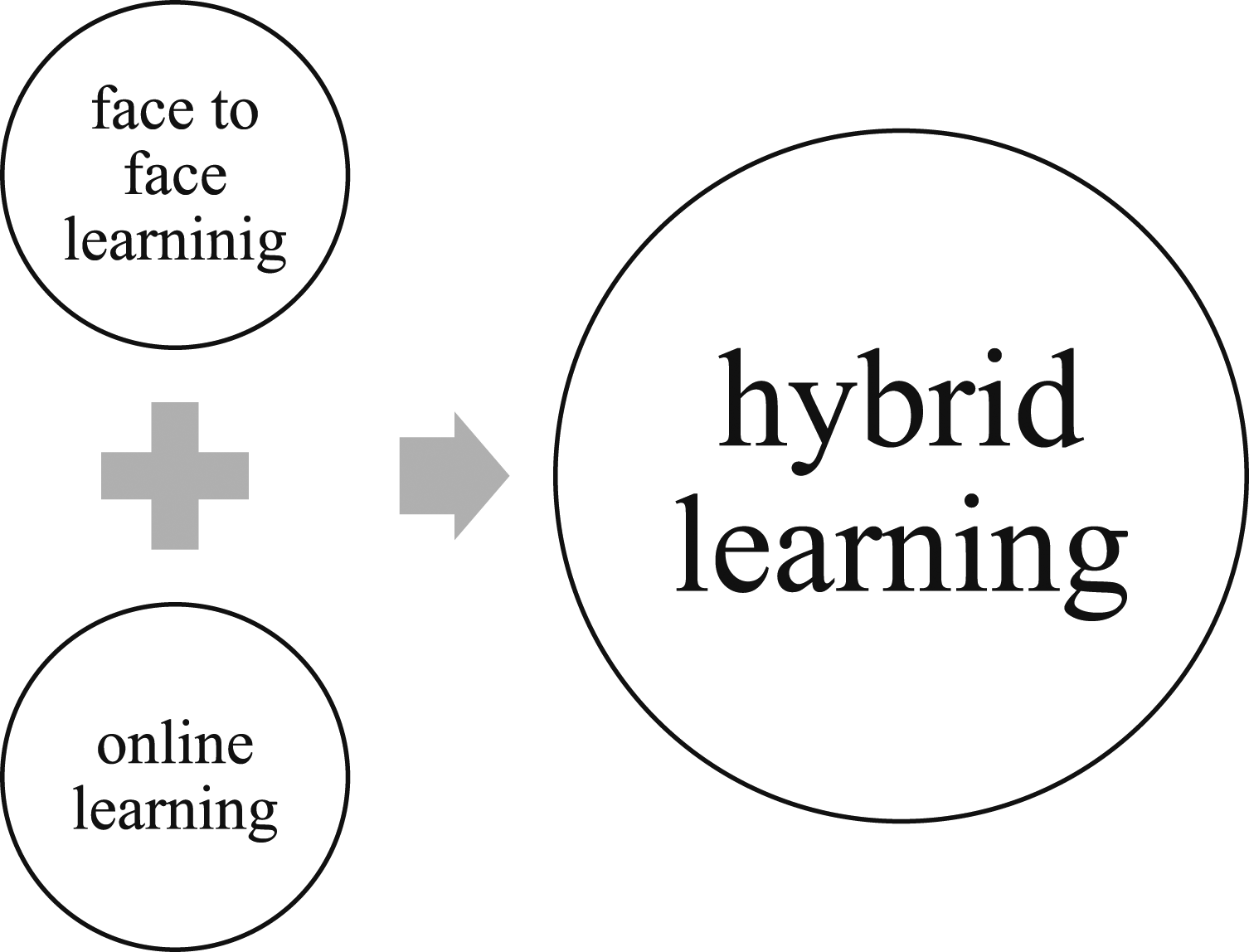
With aiming to provide an educational opportunity for all students, hybrid education can enhance students’ learning by taking full advantage of the essential features of each model (Saykili, 2019). Moreover, the hybrid model includes physical buildings and a platform for providing education services to students (for registration purposes, exams, etc.) (Mirza and Al-Abdulkareem, 2011). Hence, hybrid learning requires re-imagining and redesigning a course or a program in a mixed environment. However, there is no single format for designing integrated courses. Therefore, blended learning designs vary greatly depending on the nature of the course content, the audience or students, the objectives of the course, the instructor, and the technology available (Vaughan and Garrisonb, 2005; Meydanlioglu and Arikan, 2014).
In this model, the student has responsibilities such as using the LMS to obtain course materials, contacting the course instructor, and submitting assignments. In general, however, the hybrid education model provides higher training in technical and non-technical skills in a realistic context (Kjellin et al., 2014).
Egyptian universities have responded differently to e-learning. However, most e-learning initiatives in Egyptian universities are within the hybrid learning model in support of attending courses with learning management systems. Universities encouraged faculty to create educational materials compatible with the LMS and encourage students to use the LMS.
Nevertheless, (Widjaja et al., 2020) highlighted that the use of the LMS in the university’s teaching process was widely employed, but the intensification of the LMS in a culture is a challenge in higher education. In other words, students and academics often prefer traditional education methods for many reasons, including the weakness of the Internet and the lack of fast devices (Fathema et al., 2015). In addition, face-to-face education is the criterion used in the available curriculum design. According to (Fathema et al., 2015), there are several personal, attitudinal, and organizational barriers. Therefore, we can argue that resistance to adopting LMSs in developing countries among students, academics, and executives is widespread.
Learning management systems (LMSs)
The rapid development of information and communication technologies ICT has led to the spread of many popular internet technologies that support distance, face-to-face, and hybrid/blended teaching-learning processes (Yalcin and Kutlu, 2019; Tashfeen, 2020). Internet-based Learning Management Systems (LMSs) are one of those technologies.
Learning Management Systems (LMSs) can be defined as the web-based technology used today in e-learning, developed to enable interaction between lectures and students (Alias and Zainuddin, 2005; Radwan et al., 2014). That can happen through administration, documentation, tracking, reporting, automation, and delivery of educational courses to improve the learning process through applicable planning, application, and evaluation in educational institutions (Al Imarah, Zwain and Al-Hakim, 2013). The alternate terms and acronyms for LMS are, e.g. Distance Education Platform (DLP), Virtual Learning Environment (VLE), Mobile Cloud Learning (MCL), Course Management System (CMS), and Personal Learning Environment (PLE) (Sultana, 2020; Radwan et al., 2014).
Moreover, LMSs create a virtual way to increase the effectiveness of the educational process by increasing and accelerating communication between students and teachers (Fathema et al., 2015). LMS software products are primarily standardized, offering the same tools, such as scheduling, quizzes, performance management, and communication facilities. (Shannon and Rice, 2017). Thus, they have more similarities than differences. There remains a slight difference. However, they all aim at continually improving the conduct of the learning process in a planned and systematic manner since they enable the monitoring and evaluation of educational activities (Rogers, 2003).
LMSs are not new in today’s world. Universities that run e-learning adopt this system to improve effective learning (Ohliati and Abbas, 2019). LMSs require a significant investment in resources and infrastructure. Therefore, it is of utmost importance to investigate the factors that lead to the acceptance of LMS technology among students (Alharbi and Drew, 2014; Ma and Yuen, 2011; Alshehri et al., 2019). Students play an indispensable role in determining the effectiveness, efficiency, and accreditation of an LMS.
However, there is a common idea that university students in the Arab world reject this form of web-based education (Osman, 2018). In other words, students do not always fully benefit from learning technology, and LMSs often remain untapped (Alshehri et al., 2019). Recent evidence has shown that students’ attitudes towards LMSs are diversified depending on infrastructure, internet access, available support structures (adequate technological infrastructure), ICT training (Terzioglu and Kurt, 2019), and peer pressure (Alenezi, 2018).
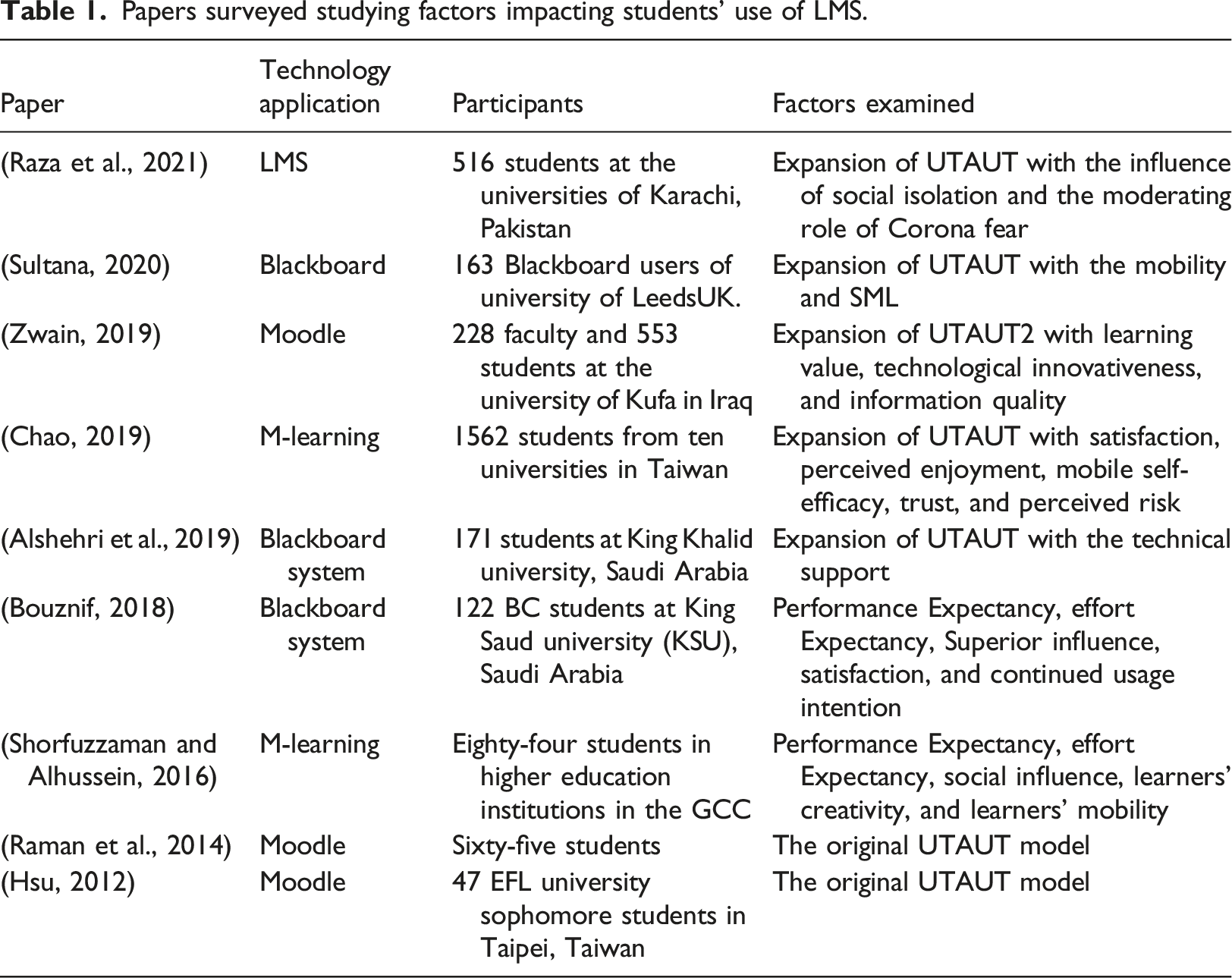
Papers surveyed studying factors impacting students’ use of LMS.
Theoretical framework
In this study, the unified theory of acceptance and use of technology (UTAUT) investigates the influential factors affecting students’ behavioral intentions toward using Internet-based Learning Management Systems (LMSs) in Egyptian universities from the perspective of university students. The UTAUT model was developed by empirically studying eight competing models, namely the theory of reasoned action (TRA) (Sheppard et al., 1988; Davis et al., 1989); the technology acceptance model (TAM and TAM2) (Davis et al., 1989; Davis, 1989; Venkatesh and Davis, 2000); the theory of planned behavior (TPB) (Ajzen, 1991); and combined TAM and TPB (C-TAMTPB) (Taylor and Todd, 1995); innovation diffusion theory (IDT) (Rogers, 2003); the motivational model (MM) (Vallerand, 1997); the model of PC utilization (MPCU) (Thompson et al., 1991); and the social cognitive theory (SCT) (Bandura, 1986; Compeau and Higgins, 1995). Moreover, the eight models were integrated and refined through an extensive examination into a new model called UTAUT. See Figure 2. The unified theory of acceptance and use of technology (UTAUT) model. Source: (Venkatesh et al., 2003).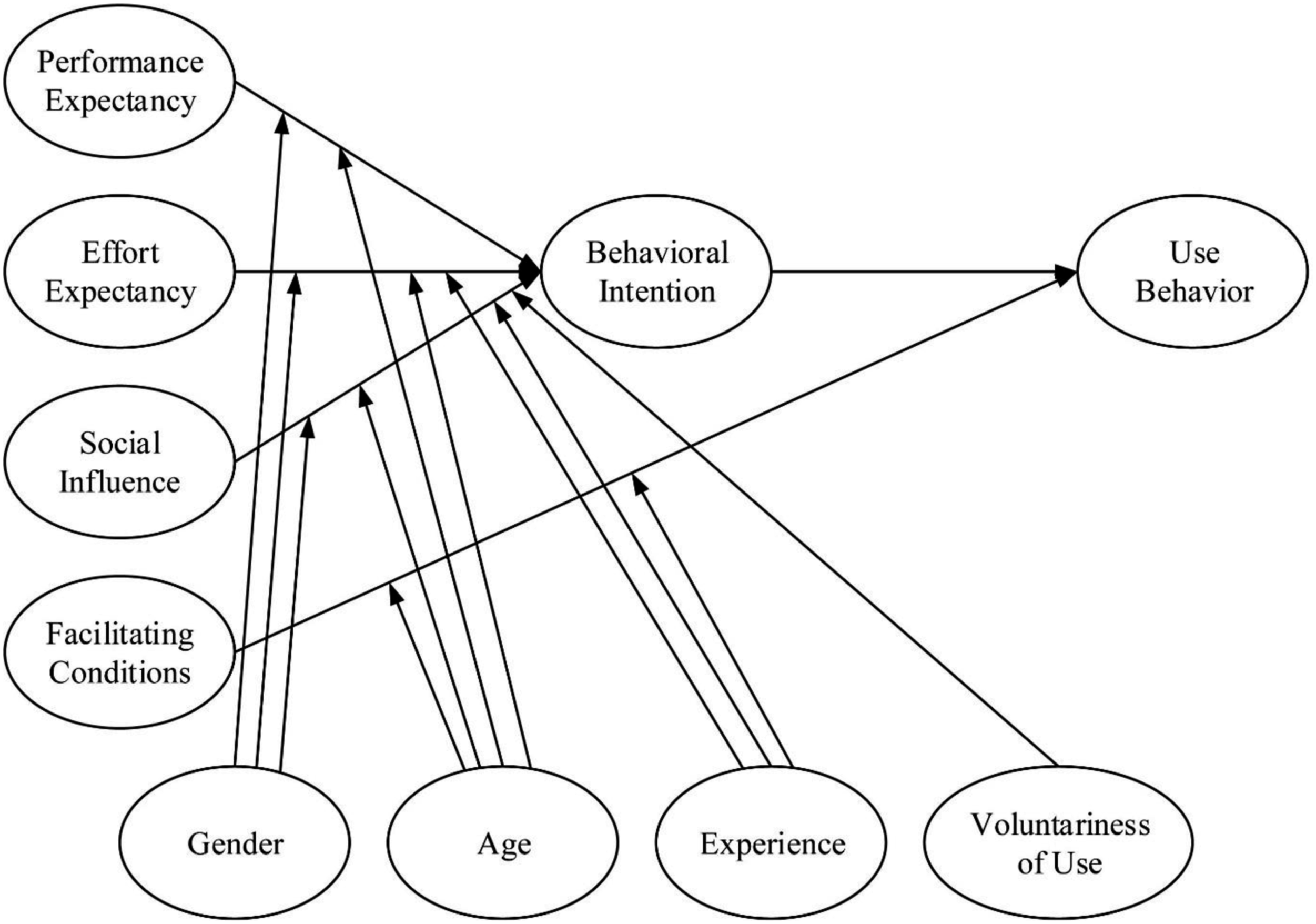
The model improved predictive efficiency by 70% of the behavioral intention (BI) variance for using the technology (Venkatesh et al., 2003). More variables were added to the original UTAUT model, such as price and habit, to develop into a second version called UTAUT2. However, this study used the original UTAUT model because the additional variables in UTAUT2 are less related to LMSs. Furthermore, this study was conducted on university students who are not personally responsible for paying the LMS usage fees. Additionally, students may not have previous experience using LMSs.
Because the UTAUT model can integrate different TAMs, it provides a framework that explains the acceptance of both IT and IS by emphasizing primary determinants that anticipate adoption intent and actual adoption. In addition, UTAUT is a model that helps to explore the actual use of these technologies and systems. Moreover, the UTAUT model allows analysis of contingencies from mediators that may amplify or limit the effects of the primary determinants (Venkatesh et al., 2003; Al Imarah, Zwain and Al-Hakim, 2013). Therefore, this study chooses UTAUT as a theoretical foundation to develop the hypotheses.
The UTAUT model consists of four essential factors influencing the technology’s behavioral intent (BI) and usage behavior (UB). In addition, there are four mediators - gender, age, experience, and voluntariness of use that affect usage of technology. See Figure 2.
The factors and the development of hypotheses are given in the following section.
Hypotheses development
In this study, the UTAUT model was chosen as a basis for investigating university students’ perceptions of LMSs. In the original UTAUT model, four moderating variables were identified: gender, age, experience, and voluntariness of usage. However, in the interests of briefness for this study, only the main hypotheses will be investigated, while the effects of the moderators will not be the focus of this study. Additional external variables were also adopted: mobility, self-management of learning, and trust. Figure 3 illustrates the expected relationships between these variables. The research Framework of the present study. Source: Author’s.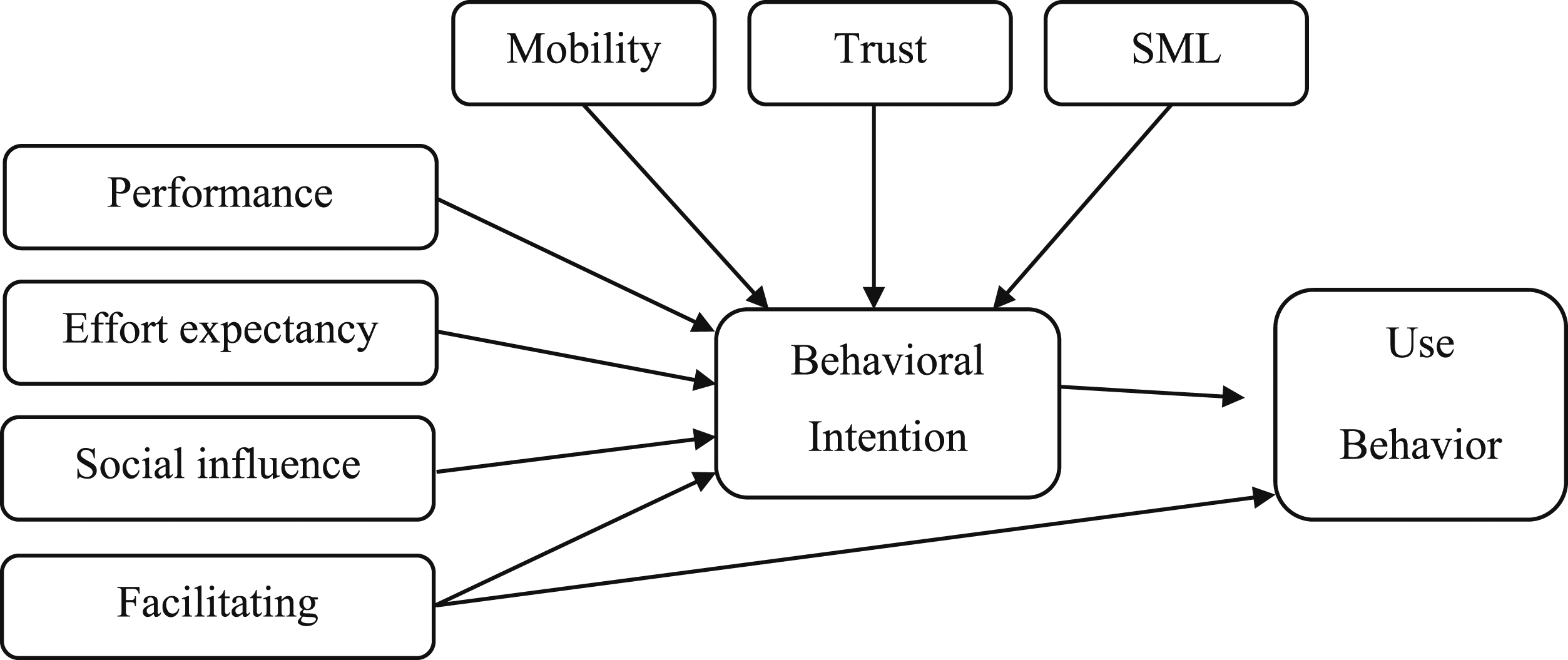
Performance expectancy (PE)
In the UTAUT model, PE is “the degree to which an individual believes the system helps improve job performance.” In other words, it refers to the expectation of achieving the goal using technology. In this context, the antecedents of the PE in the previous models are, e.g. perceived usefulness (TAM/TAM2), relative advantage (IDT), extrinsic motivation (MM), job-fit (MPCU), and outcome expectation (SCT) (Venkatesh et al., 2003; Abu-Al-Aish and Love, 2013). PE implicitly denotes that learning and retrieving necessary information through LMSs occur anytime and anywhere, effectively and efficiently. Many studies have shown that PE is a significant determinant of BI when using an LMS (Sultana, 2020; Alshammari, 2021; Alshehri et al., 2019; Raza et al., 2021; Hsu, 2012; Raman et al., 2014). As a result, this study hypothesizes, based on UTAUT: H1: PE significantly affects students’ BI to use an LMS.
Effort expectancy (EE)
In the UTAUT model, EE is “the degree of ease associated with the use of the system.” In this context, the antecedents of EE are, e.g. the concepts of perceived ease-of-use (TAM/TAM2), complexity (MPCU), and ease-of-use (IDT) (Abu-Al-Aish and Love, 2013; Venkatesh et al., 2003). EE implicitly denotes the amount of effort students expect to invest in using the LMS. In the present study, EE represents university students’ beliefs regarding the ease of use of LMSs. Data from several sources has identified a significant association between EE and BI when using an LMS (Sultana, 2020; Raza et al., 2021; Hsu, 2012). So, students will use LMS when they see it as effortless. However, other studies (Bouznif, 2018; Alshehri et al., 2019; Zwain, 2019; Raman et al., 2014) showed otherwise, considering that we posit the following hypothesis: H2: EE significantly affects students’ BI to use an LMS.
Social Influence (SI)
In the UTAUT model, SI is “the degree to which an individual perceives those important others believe he or she should use the new system.” (Venkatesh et al., 2003). The social component, such as the opinions of friends, relatives, and actual users, was considered a critical component. Therefore, this study incorporated SI into the model. In this context, SI represents subjective norms in TRA, TAM2, TPB/DTPB, CTAM-TPB, social factors in MPCU, and image in IDT. Many studies have found a significant relationship between SI and BI when using LMS in education (Raman et al., 2014; Hsu, 2012; Alshehri et al., 2019). However, several studies do not support this hypothesis (Sultana, 2020; Alshammari, 2021; Zwain, 2019; Bouznif, 2018). Accordingly, the following hypothesis is posited: H3: SI significantly affects students’ BI to use an LMS.
Facilitating conditions (FC)
In the UTAUT model, FC is “the degree to which an individual believes that an organizational and technical infrastructure exists to support the use of the system.” (Venkatesh et al., 2003). In this context, the antecedents of the FC in the previous models are, e.g. perceived behavioral control (TPB/DTPB, C-TAM-TPB), facilitating conditions (MPCU), and compatibility, for instance, work style (IDT) (Venkatesh et al., 2003). In the context of learning, it is the individual’s perception of how well the university supports the usage of the LMS. In other words, it assesses whether individuals have the necessary personal knowledge and institutional resources to use the system. According to the original UTAUT, FC was significantly affecting actual use. In the LMS adoption literature, such as (Hsu, 2012; Raman et al., 2014), they spotlighted that the FC would have a significant impact on BI, while (Alshehri et al., 2019; Zwain, 2019) proved that the FC positively influences actual use of LMS. Based on the literature, the following hypotheses are proposed: H4: FC significantly affects students’ BI to use an LMS. H5: FC significantly affects the actual use of the students to use an LMS.
Mobility (mob)
Mobility refers to having no time and placing constraints on learning using an LMS (Han and Shin, 2016). The most valuable feature of an LMS is its physical mobility, which allows full-time students to access lectures and educational activities at any time and from any location. (Sultana, 2020) found that mobility had no significant positive effect on BI when using an LMS. Further consideration of the role of mobility as a predictor of BI in the Egyptian context is necessary. Therefore, the following hypothesis has been posited: H6: Mobility (mob) significantly affects students’ BI to use an LMS.
Self-management of learning (SML)
According to (Smith et al., 2003), SML refers to the extent to which a person perceives self-discipline and the ability to engage in autonomous learning. Additionally, the virtual environment of LMSs causes students not to be present among teachers, their peers, and educational service providers, which leads to the inevitability of students requesting the skills and competencies to manage their learning effectively. Data from (Sultana, 2020; Al-Adwan et al., 2018) has identified a significant association between SML and BI. Therefore, the following hypothesis is considered: H7: SML significantly affects students’ BI to use an LMS.
Trust
Because the notion of trust is complicated and diverse, numerous definitions in the literature reflect the author’s perspective on trust. However, the concept of trust in ICT studies relates to a relationship between humans and technology or a technological application. (Xu et al., 2014) defined technology trust as “a particular type of trust where the technology user lays trust in technology.” Whereas (Arpaci, 2016) defined trust as “students’ perceptions about the reliability and trustworthiness of the system.” Although (Chao, 2019; Widjaja et al., 2019) highlighted the significance of trust for the BIs of university students using m-learning and LMSs, some have found no such relationship (Widjaja et al., 2020). Considering these, we posit the following hypothesis: H8: Trust significantly affects students’ BI to use an LMS.
Behavioral intention (BI)
In the UTAUT model, BI is defined as “the degree to which a person has formulated conscious plans regarding whether to perform a specified future behavior.“. (Venkatesh et al., 2003) argued and confirmed that BI has a significant influence on the actual use of technology. Furthermore, previous studies have found a positive effect of BI on the actual use of technology (Al-Adwan et al., 2018; Abu-Al-Aish and Love, 2013; Alshammari, 2021). Regarding LMS (Hsu, 2012; Raza et al., 2021; Zwain, 2019; Alshehri et al., 2019; Sultana, 2020), they have found a positive effect of BI on the actual use of LMS. Based on the literature, the following hypothesis is proposed: H9: BI significantly affects students’ actual use of an LMS.
Methodology
This study is quantitative research with a cross-sectional research design. Using the Smart PLS 2.0 software package (Ringle et al., 2005), Google Sheets, and SPSS version 21. Moreover, the collected data was analyzed using the partial least squares structural equation modelling (PLS-SEM) technique.
Sample and sampling design
The population of this research included students in the higher education sector in Egypt. The targeted population for this study was the students enrolled in Egyptian public and private universities that use LMSs during the academic year 2020–2021. The sample was not restricted to undergraduates but also included postgraduates because they have an intention to continue usage of the LMS. The data was gathered from nine universities and fourteen institutes in Egypt. The universities and institutes were chosen based on their institutional characteristics and LMS adoption history. Eight universities were public, and the rest were private. See Appendix 1. The sample size was determined using PLS-SEM analysis requirements, which call for ten times the total number of structural paths directed toward a construct. (Hair et al., 2017). If seven paths are directed to behavioral intention in the modified model, the required minimum sample size would be seventy respondents.
Measurement
Measurement variable, items, Reliability, and their sources.
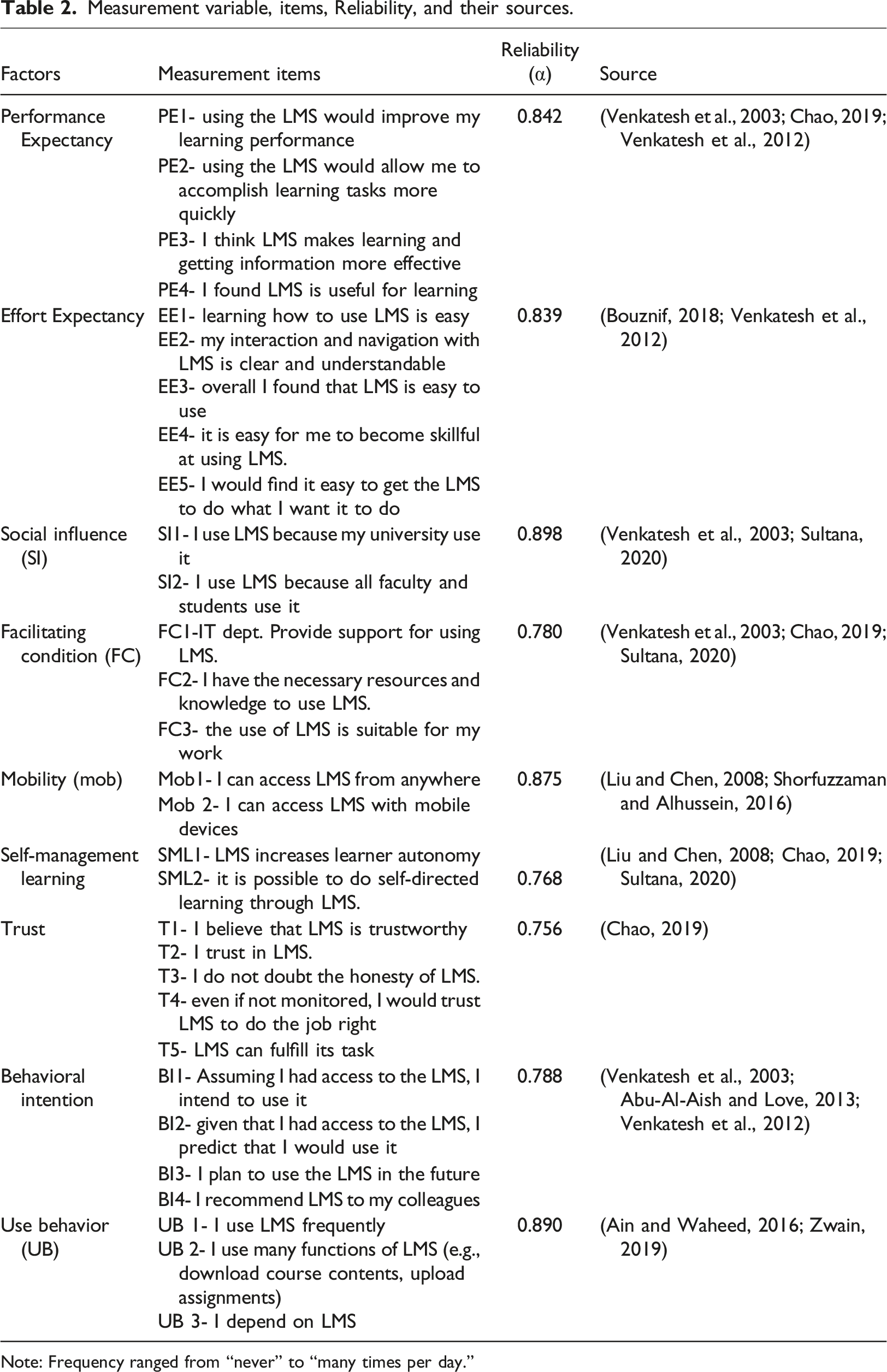
Note: Frequency ranged from “never” to “many times per day.”
Furthermore, to ensure the validity of the content and construct, a group of professional and academic educational experts reviewed the instrument to ensure that none of the items contained within it are irrelevant to students in the context of the Egyptian LMS. However, the items were rephrased to ensure straightforward interpretation and comprehension of the questions and make them relevant to the study’s specific context. In addition, the survey was pilot tested. Forty-six questionnaires were distributed to assess the usefulness and validity of our instrument in the survey. Internal consistency reliabilities (ICR) (based on Cronbach’s alphas) for all nine scales ranged from 0.756 to 0.890 (Table 2), which was considered an acceptable Cronbach’s alpha reliability coefficient (Hair et al., 2019). As a result, thirty indicators are included in the third part of the survey. More specifically, we retained five indicators for EE and Trust, four indicators for PE and BI, three indicators for FC and UB, and two indicators for SI, Mod, and SML, all of which we adapted to the specific settings of this study.
The questionnaire consists of three parts: The first part incorporates a nominal scale to identify respondents’ demographic information such as gender, educational level, and university name; the second part collects information about students’ previous experiences with LMSs and current students’ usage rates; the third part includes UTAUT constructs, Mob, SML, and trust.
These constructs were measured on a 5-point Likert scale (1: strongly disagree, 5: strongly agree). Measurement items for the factors are given with sources in Table 2.
Data collection
This study used Google forms to administer the online questionnaire. After generating a direct link to the survey, researchers posted it to each university student’s Facebook groups. The technique of convenience sampling was used.
A total of 852 questionnaires were received. However, forty-nine were addressed with data patterns, such as offering one reply to all items. As a result, 803 valid responses were used for data analysis, implying an overall response rate of approximately 94.25%.
Respondent’s profile (N=803).
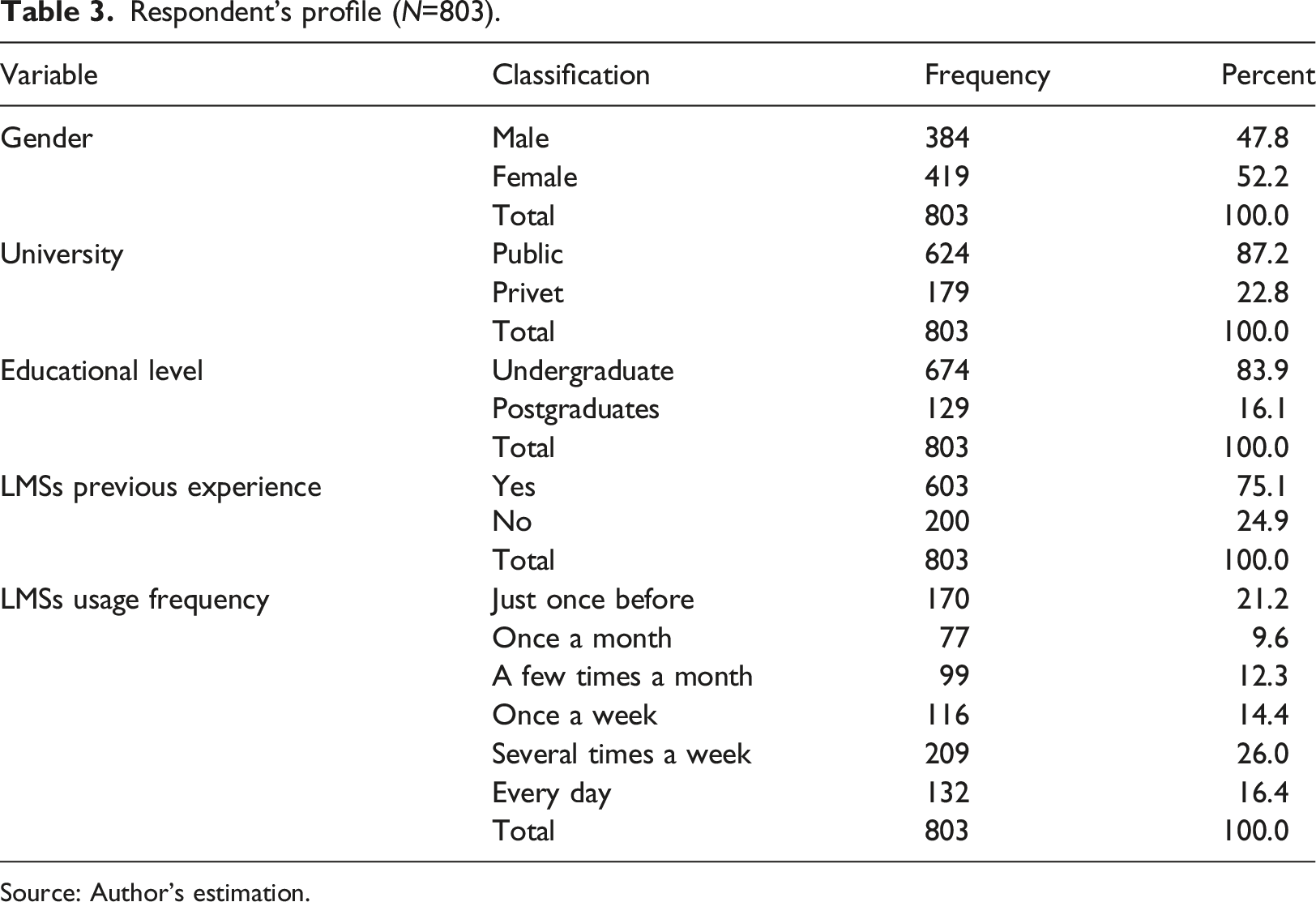
Source: Author’s estimation.
The results also indicate that 75.1% of the students have previous experience using the LMSs. The average rate of LMS frequency usage among respondents ranged from every day to just once before. Thus, the general rate was about 26%, not very heavy usage.
We can attribute the high percentage of students with previous experience to the fact that most universities tended to conduct intensive training courses for students on LMS when the government-imposed hybrid education. Therefore, a significant percentage of students had previous experience of using LMS. In addition, according to the Central Agency for Public Mobilization and Statistics report (CAPMAS, 2021), students enrolled in higher education during the academic year 2020–21, including 71.8% in public universities and 28.2% in private universities. Of them, 51.4% are males, and 48.6% are females. Putting it all together, this indicates that the sample represents the population.
When comparing the percentage of students with previous experience with the actual usage rates here, a significant difference in sample rates emerges, necessitating verification of this difference, which illustrates the importance of investigating the factors that influence students’ acceptance of the LMS.
Analysis and results
The researchers employed a two-step procedure for performing PLS-SEM in this study (Wong, 2013).
Measurement model
Before assessing the structural model, the study analyzed the measurement model to determine its reliability and validity.
Measurement model results.
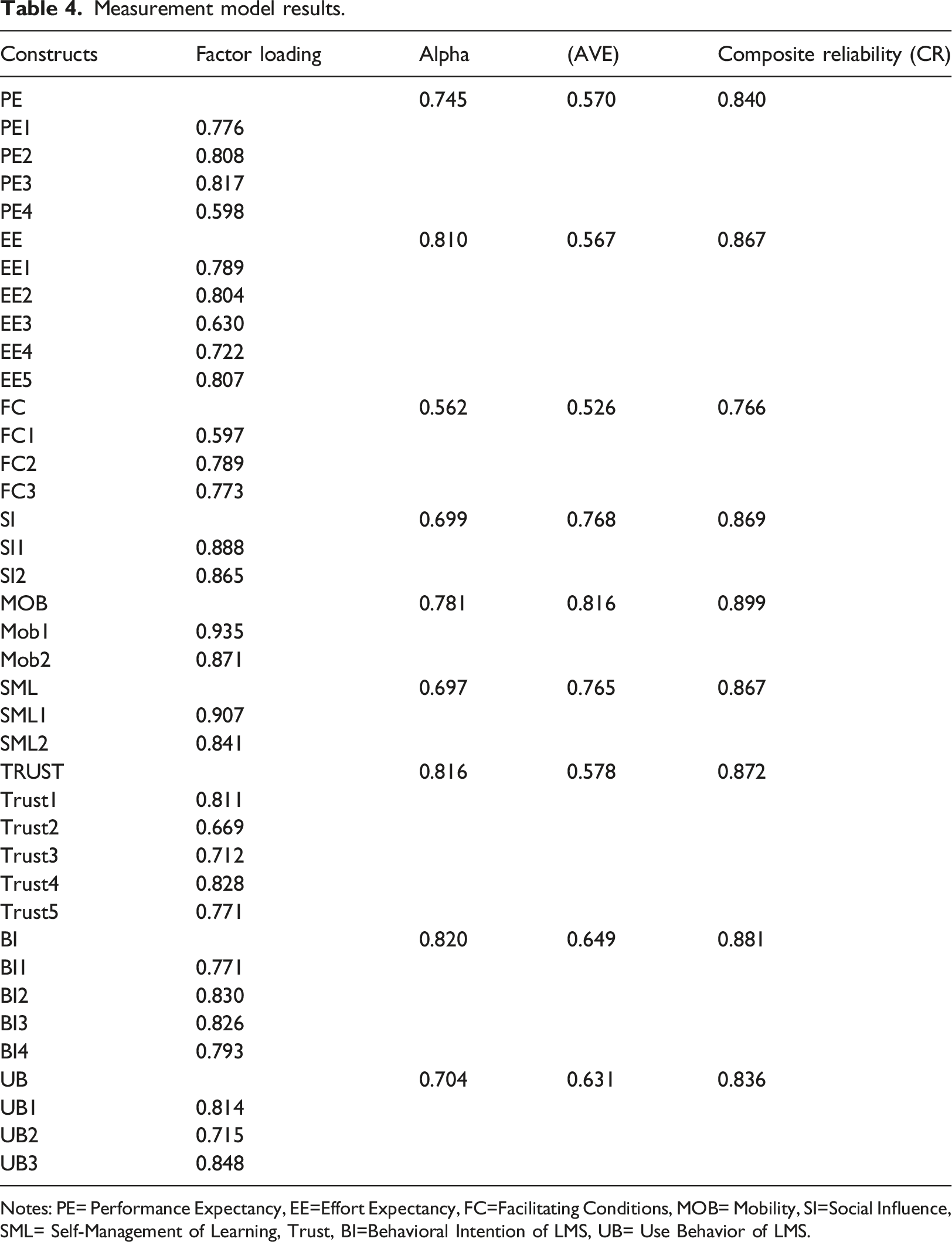
Notes: PE= Performance Expectancy, EE=Effort Expectancy, FC=Facilitating Conditions, MOB= Mobility, SI=Social Influence, SML= Self-Management of Learning, Trust, BI=Behavioral Intention of LMS, UB= Use Behavior of LMS.
Furthermore, the composite reliability (CR) and average variance extracted (AVE) for each underlying construct are also estimated. (Hair et al., 2019) recommend that the acceptable level of CR is higher than 0.70 and that the AVE should exceed 0.50. As shown in Table 4, the CR and the AVE for all latent variables exceed the typical values at which convergent validity is established.
Fornell-larcker criterion.
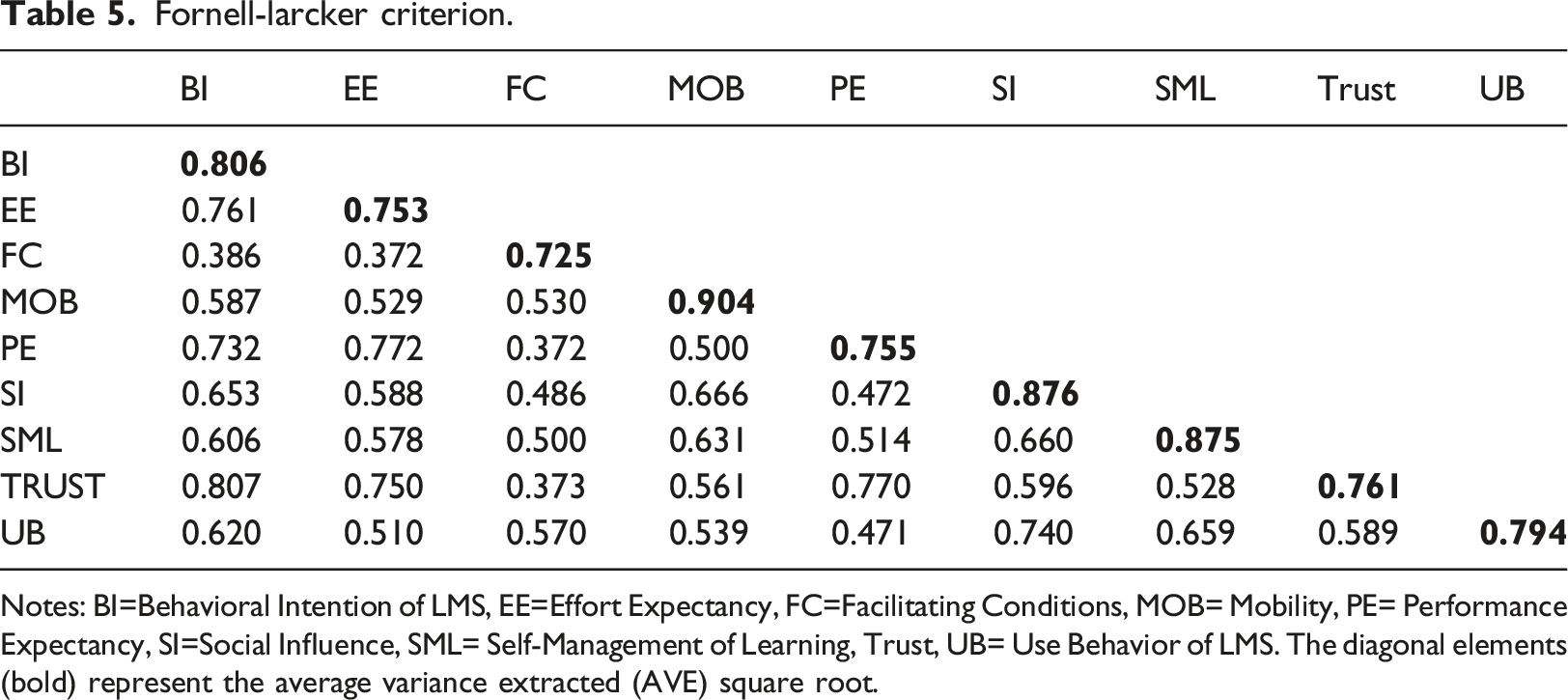
Notes: BI=Behavioral Intention of LMS, EE=Effort Expectancy, FC=Facilitating Conditions, MOB= Mobility, PE= Performance Expectancy, SI=Social Influence, SML= Self-Management of Learning, Trust, UB= Use Behavior of LMS. The diagonal elements (bold) represent the average variance extracted (AVE) square root.
Loadings and cross loadings.
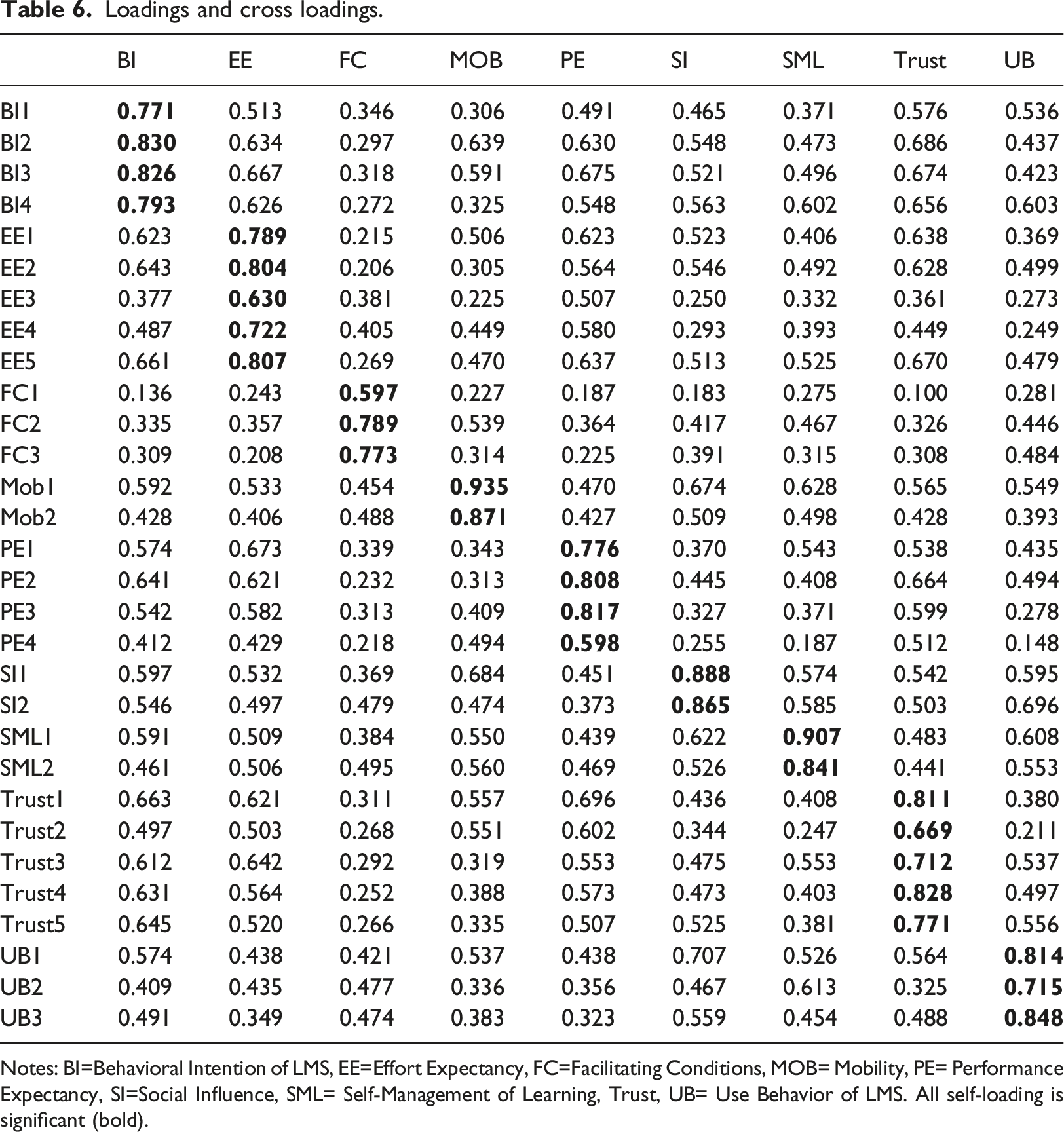
Notes: BI=Behavioral Intention of LMS, EE=Effort Expectancy, FC=Facilitating Conditions, MOB= Mobility, PE= Performance Expectancy, SI=Social Influence, SML= Self-Management of Learning, Trust, UB= Use Behavior of LMS. All self-loading is significant (bold).
HTMT.
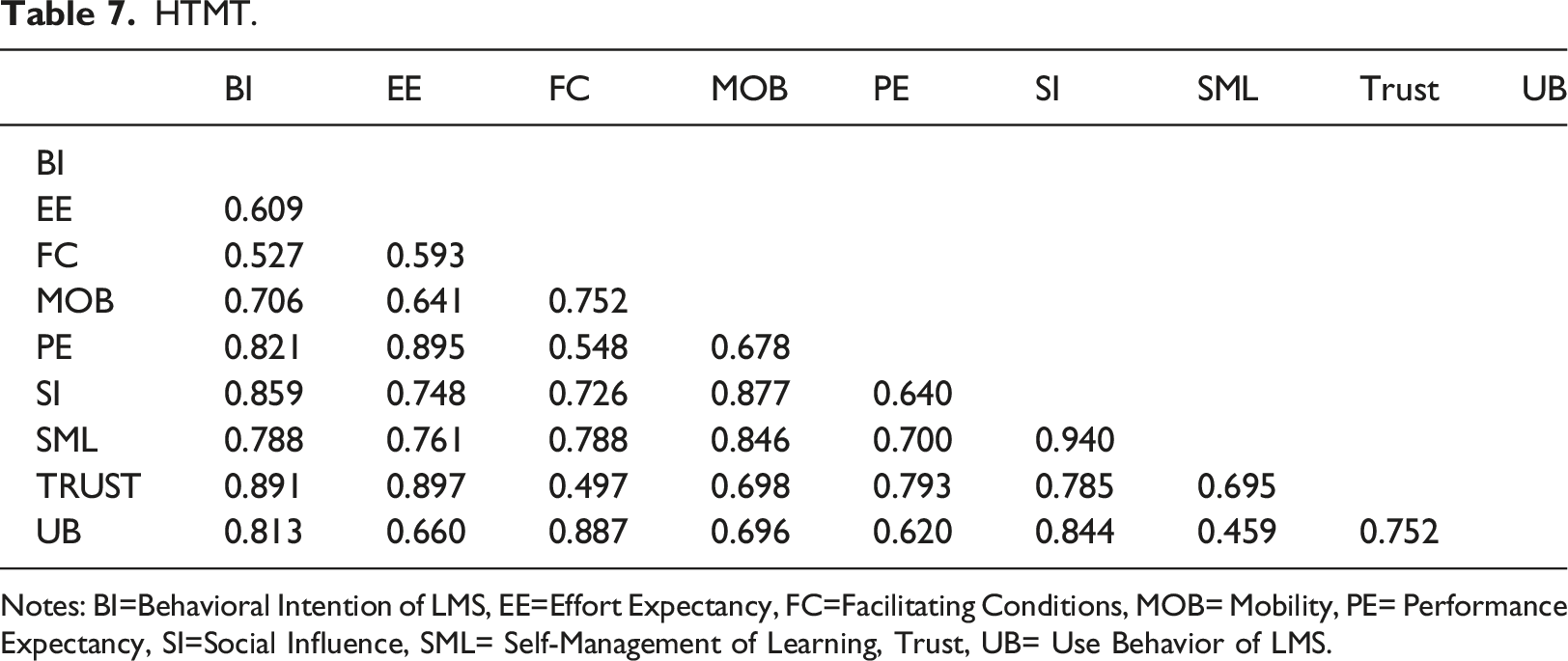
Notes: BI=Behavioral Intention of LMS, EE=Effort Expectancy, FC=Facilitating Conditions, MOB= Mobility, PE= Performance Expectancy, SI=Social Influence, SML= Self-Management of Learning, Trust, UB= Use Behavior of LMS.
The distinctiveness of the framework has been confirmed, deeming it reliable and valid for moving forward to the analysis of the structural model.
The structural model
In the second stage, the hypothesized relationships were assessed. The Bootstrap resampling method with 5000 resamples (Ringle et al., 2005) was used to establish the significance of the path coefficient and estimate standard errors, t-statistics, effect sizes, predictive relevance, the confidence intervals for significant relationships, and IPMA (Hair et al., 2019).
Results of structural model path coefficient.
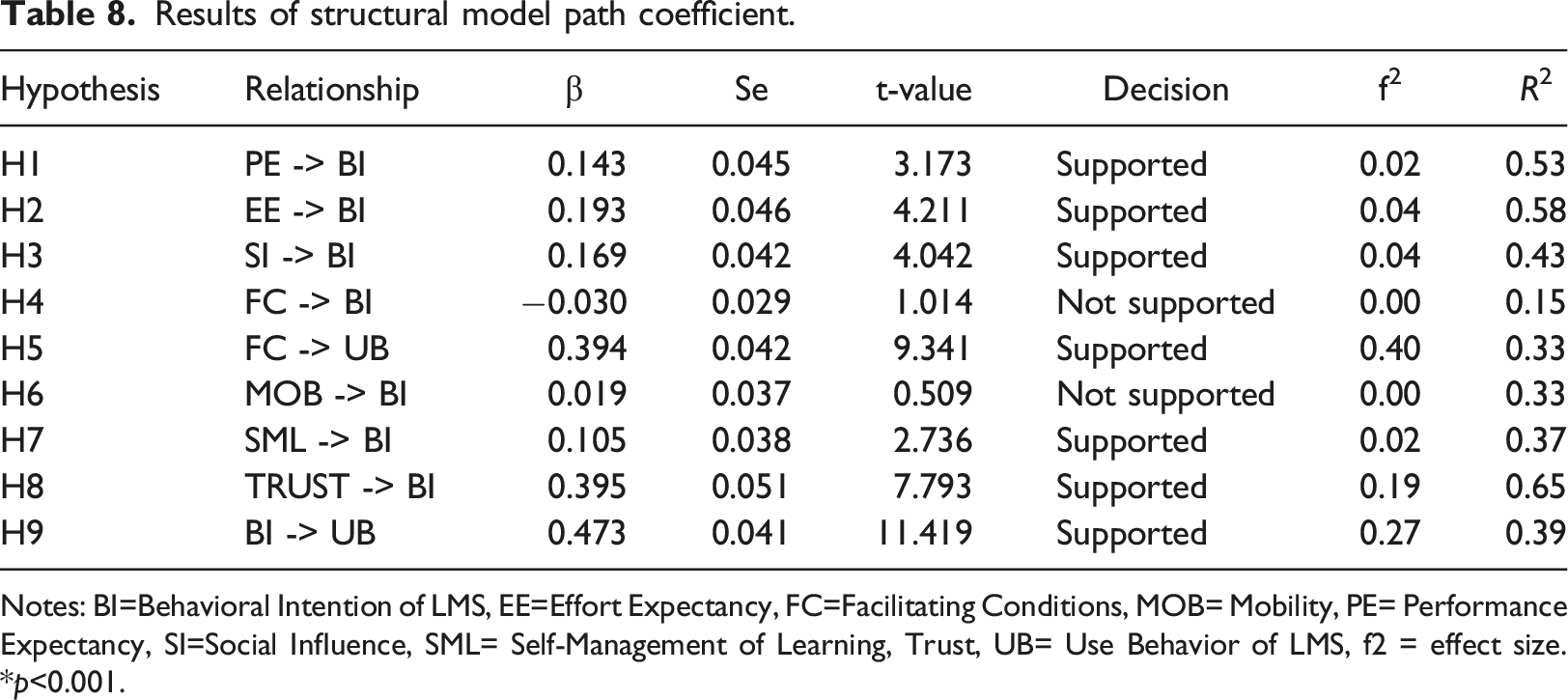
Notes: BI=Behavioral Intention of LMS, EE=Effort Expectancy, FC=Facilitating Conditions, MOB= Mobility, PE= Performance Expectancy, SI=Social Influence, SML= Self-Management of Learning, Trust, UB= Use Behavior of LMS, f2 = effect size. *p<0.001.
After that, the coefficient of determination (R2), effect size (f2), and cross-validated redundancy (Q2) were conducted to evaluate the substantive significance of the structural relationships. The f2 value indicates the influence of a latent variable on the structural model (Hair et al., 2019). However, (Hair et al., 2019) cite Cohen’s rule of thumb as 0.02, 0.15, and 0.35, representing small, medium, and significant effects. Based on the results of f2 effect sizes in Table 8, there are nine correlational effect sizes. PE to BI and SML to BI had minor effects, whereas FC to UB had the most significant f2, with a value of 0.40. Furthermore, neither relationship has any effect size between FC and BI or MOB to BI.
Furthermore, Figure 4 illustrates the results of Standardized Regression Weight (SRW). According to Figure 4, BI R2 is 0.743, implying that 74.3% of the BI to use LMS is due to the latent variable in the model. Similarly, R2 for “Use Behavior of LMS” is 0.521, implying that 52.1% of the UB is because of the BI. See Table 8. However, (Hair et al., 2019) highlight that R2 values of 0.75, 0.50, and 0.25 are considered substantial, moderate, and weak. R2 values of 0.90 and higher are typically indicative of overfitting. Results of Path Analysis. Source: Author’s estimation.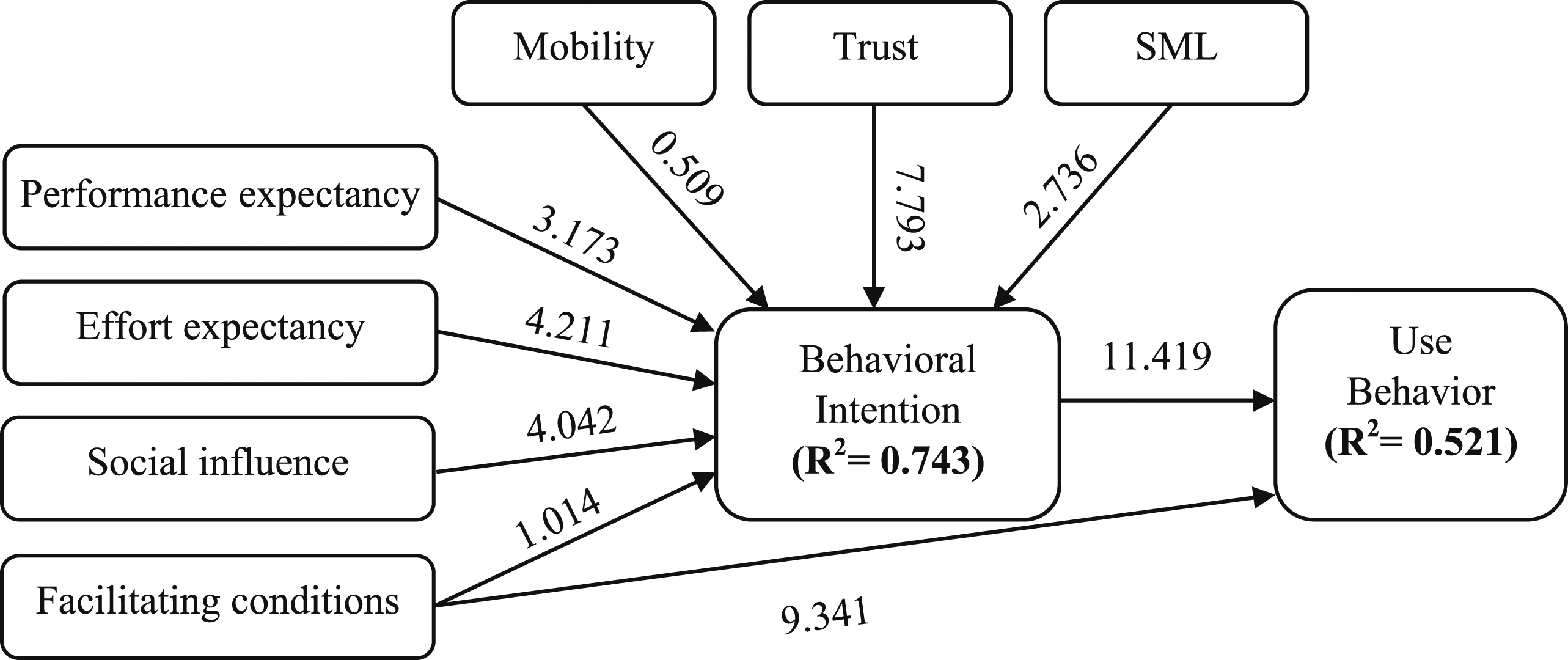
Stone-geisser or Q2.
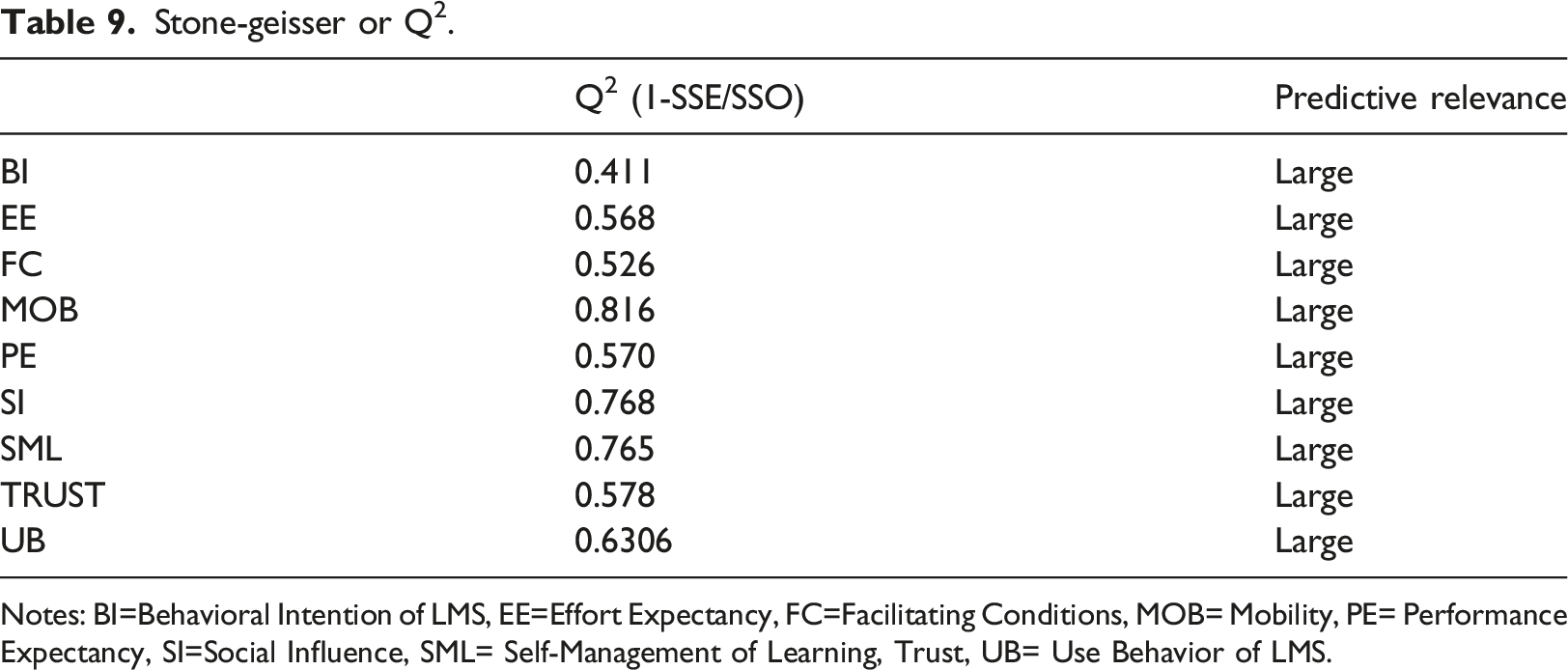
Notes: BI=Behavioral Intention of LMS, EE=Effort Expectancy, FC=Facilitating Conditions, MOB= Mobility, PE= Performance Expectancy, SI=Social Influence, SML= Self-Management of Learning, Trust, UB= Use Behavior of LMS.
Importance performance map analysis (IPMA)
(Hair et al., 2019) suggested that researchers could use the importance-performance map analytics (IPMA) to interpret the total effect of constructing and extending the essential PLS outcomes reporting of path coefficient estimates, providing a more in-depth dimension to the analysis about the performance and relevance of each latent variable. Therefore, we employ the IPMA as an advanced approach in PLS-SEM by using the BI as the target variable.
IPMA for UB
Performance index values and total effects for UB.
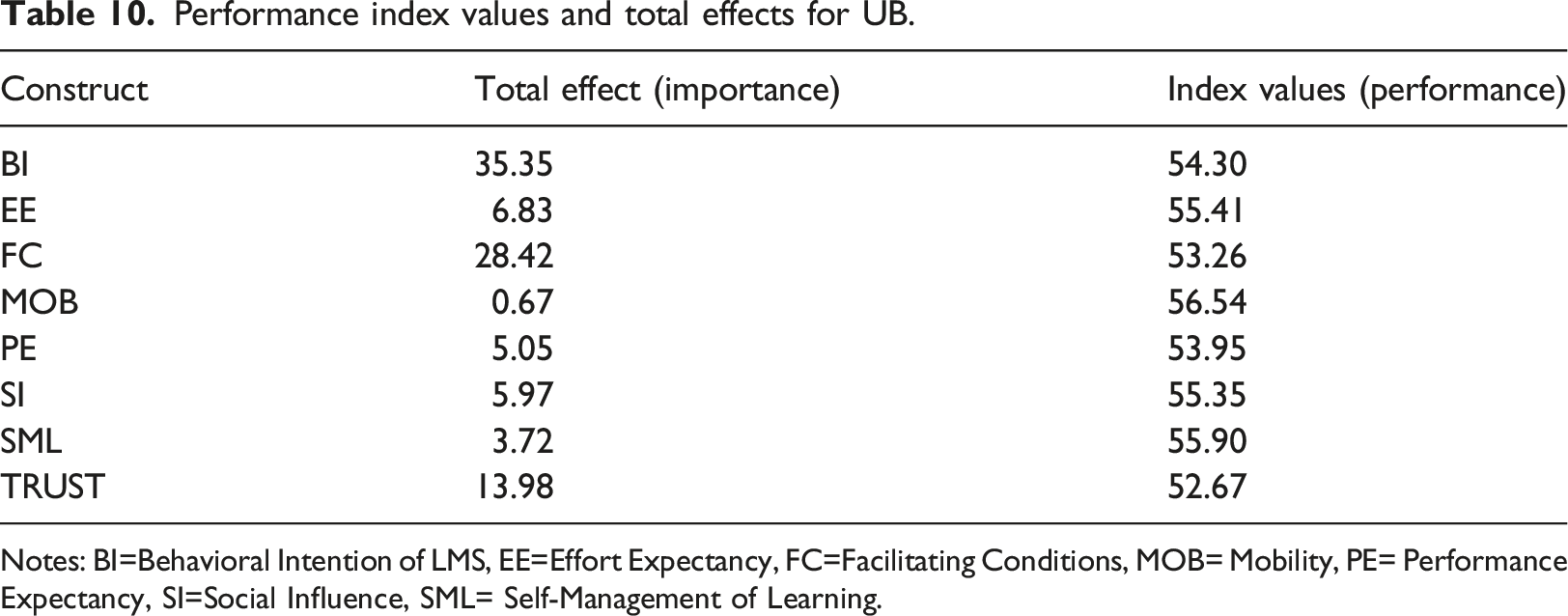
Notes: BI=Behavioral Intention of LMS, EE=Effort Expectancy, FC=Facilitating Conditions, MOB= Mobility, PE= Performance Expectancy, SI=Social Influence, SML= Self-Management of Learning.

IPMA for UB of LMSs. Notes: BI=Behavioral Intention of LMSs , EE=Effort expectancy  , FC=Facilitating conditions
  , MOB= mobility
  , PE= performance expectancy
  , SI=Social Influence
  , SML= self-management of learning
  , trust
  .
.
IPMA for BI
Performance index values and total effects for BI.
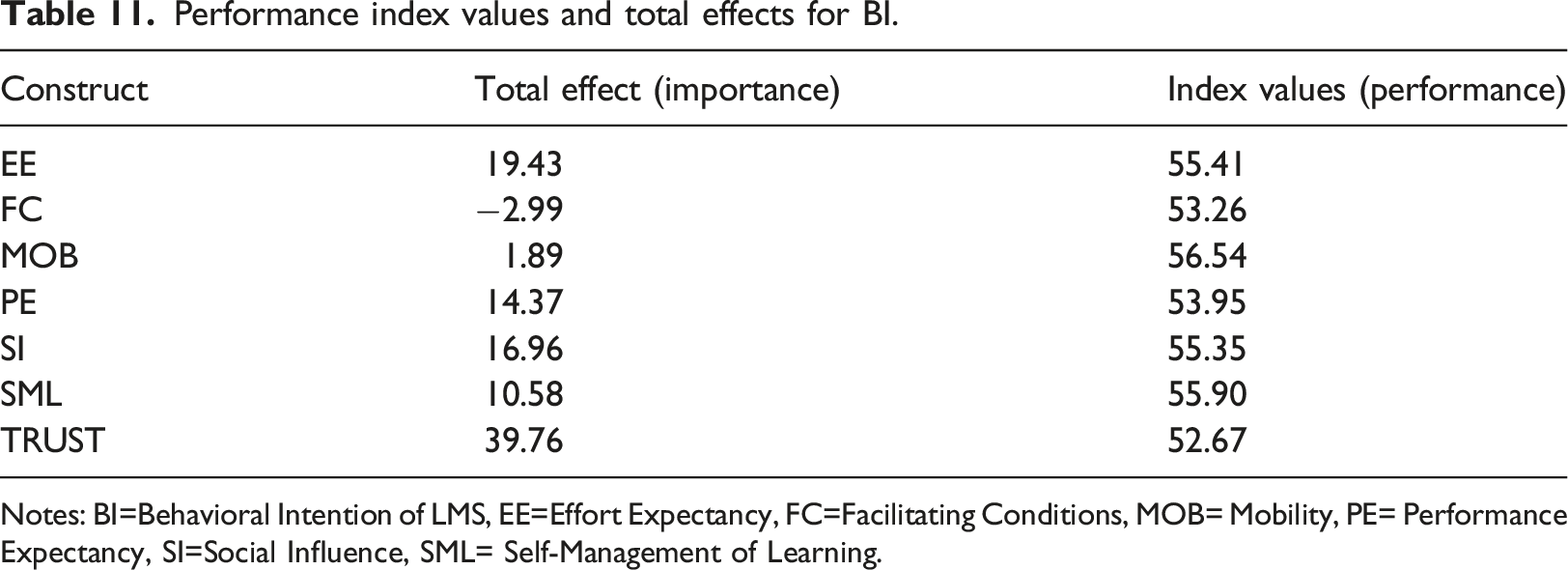
Notes: BI=Behavioral Intention of LMS, EE=Effort Expectancy, FC=Facilitating Conditions, MOB= Mobility, PE= Performance Expectancy, SI=Social Influence, SML= Self-Management of Learning.

IPMA for behavioral intention. Notes: EE=Effort Expectancy , MOB= Mobility  , PE= Performance Expectancy
  , SI=Social Influence
  , SML= Self-Management of Learning
  , Trust
  .
.
Discussion and conclusions
The current study has extended the UTAUT model to explore factors influencing university students’ acceptance of LMSs in the Egyptian higher-educational context and their use during the current COVID-19 pandemic. Despite the economic and social effects of the COVID-19 pandemic worldwide and Egypt in particular. In Egyptian education, the pandemic worked as an accelerator for a complete transformation to e-learning. For years, Egyptian universities have tried to keep pace with the massive changes brought about by the development of information technology by investing heavily in information technology infrastructure. However, learning management systems are frequently underutilized, and when the pandemic strikes, the Egyptian government imposes e-learning on all institutions as a precautionary measure to mitigate the virus infection. Therefore, this study considers LMSs. Because LMSs are crucial to comprehending and evaluating the background feed of LMSs’ uses to improve the learning process continually, increasing LMS usage and providing a better user experience.
The results of a cross-sectional online survey of 803 participants demonstrated that the fundamental determinants for pursuing the use of LMSs were, in order of relevance, trust, EE, SI, PE, and SML. FC and Mob, on the other hand, are unaffected. The outcome of this study supports some previous studies and contradicts some others. This study finds trust to be a significant factor, which implies that the reliability and trustworthiness of the system are crucial to user behavior. The IPMA result also showed that trust was the most crucial variable in determining students’ intention towards LMS use. This study supports studies by (Chao, 2019; Widjaja et al., 2019) as they also found trust significant for learning technology uses. The increasing attention to the role of trust is coupled with growing uncertainty regarding the trend and the need for risk-taking, the increasing interdependence and need for cooperation, the increasing rate of new threats and dangers, and the limitless power to make decisions that increase the level of uncertainty. Different trust patterns have been developed because of investigations into new tech trust (Ejdys, 2018). Finally, the analysis revealed that institutional trust plays a significant role in implementing, adapting, and utilizing innovative technology.
For PE, this study supports studies by (Hsu, 2012; Raman et al., 2014; Alshehri et al., 2019; Zwain, 2019; Raza et al., 2021) as they also found PE significant for LMS uses; this means that the performance of the technology is fundamental to user behavior. In other words, the more students believe that the outcomes obtained from utilizing LMS are the most positive, the more likely they are to continue using LMS in the long term.
For EE, this study supports previous studies by (Sultana, 2020; Raza et al., 2021; Hsu, 2012), as EE has also become significant. Therefore, it can be argued that students will use an LMS when they see it as effortless. In other words, the more students believe that using LMS is simple for them, the more likely it is that they will continue to use LMS over time. This study finds SI as a significant factor, which indicates that students will be socially influenced by their colleagues and faculty to use LMSs.
For SI, this study supports previous studies by (Raman et al., 2014; Hsu, 2012; Alshehri et al., 2019), as they also found SI significant for LMSs uses and contradicts studies by (Sultana, 2020; Alshammari, 2021; Zwain, 2019; Bouznif, 2018). The contradicts in the results indicate that the social impact differs from one context to another. Therefore, further research needs to be conducted to formulate a persuasive argument for SI with more measurement items.
For SML, this study supports previous studies (Sultana, 2020; Al-Adwan et al., 2018). This finding implies that students with high autonomous learning abilities will be more interested in LMSs than students with low autonomous learning abilities.
Our results reveal that FC has an insignificant impact on BI, which contradicts previous studies (Hsu, 2012; Raman et al., 2014), highlighting that the FC would significantly impact BI. However, at the same time, FC significantly affects the actual use of the students to use an LMS, which supports studies by (Alshehri et al., 2019; Zwain, 2019) proved that FC positively influences the actual use of an LMS. The IPMA further confirms this result for FC in the model.
However, and contrary to our expectations, the effect of social MOB is insignificant. Other studies found that MOB has no direct impact on BI when using LMSs (Sultana, 2020). The IPMA result also showed that MOB was not relevant in determining students’ BI.
The findings of this study reveal several implications. The theoretical contribution of this research is our attempt to enrich the literature on technology adoption by extending the UTAUT model to consider the current epidemic situation. To the author’s knowledge, this study is the first of its kind that applies LMSs with the expansion of the UTAUT model in the environment of Egyptian higher education in the time of the COVID-19 pandemic. Our findings provide a better understanding of the adoption and acceptance of LMS technologies in the context of higher education in Egypt.
As for practical implications, the findings of this study can help decision-makers in the educational process of higher education determine what influenced students’ continued usage. Decision-makers should consider all the crucial factors linked to LMS knowledge and technical support to improve the positive acceptance of LMSs. Thus, trust was discovered as the most crucial component that should be given special consideration.
Egypt’s universities will strengthen student achievement by upgrading the interface and learning management system features. As students’ learning efficiency improves, they will be more driven to complete their studies with the help of a learning management system (LMS). Furthermore, improving the e-learning system in terms of the effort required to use LMS should be prioritized, as students will be more motivated to adapt to change if they believe it will be beneficial and straightforward to use. Furthermore, LMS use in education demonstrates that various instructional activities can be conducted online. Leverage students to retain all information in one place at any time and from any location. In other words, the LMS allows for a unified pool of knowledge. It is suggested that efforts be made to promote the use of LMSs through exemplary strategy implementation, which will assist students in analyzing the benefits of the technology rather than being scared by the change.
Limitation
This study has some limitations. Firstly, the effects of moderating variables (such as age, gender, and experience) were not examined. Therefore, future studies should investigate moderating variables. Secondly, further research may conduct comparative studies to contrast LMS usage within different contexts (school education and/or other countries). Thirdly, the sample size employed in this paper is an additional limitation. Future studies should increase their sample size to generate more generalizable conclusions. Researchers can further investigate the acceptance of LMS by executing a gender-specific study that examines and compares the behaviors of male and female respondents, as the sample exclusively consisted of students without considering their gender. Fourthly, this study cannot confirm long-term causal relationships among factors because it is a cross-sectional study. As a result, a longitudinal study is required to confirm the long-term causal relationship. Fifthly, because this study used non-probability sampling (i.e. convenience sampling), the potential bias caused by such sampling cannot be estimated. As a result, when generalizing the findings of our study, extra care must be taken. Finally, moderating and mediating variables can be added to the model to extend it further and evaluate mechanisms relating to the present situation. Such as the mediating role of factors such as COVID-19 fear, social isolation, burnout, and technostress on acceptance and use of technology in LMSs among students. Future studies could investigate these variables.
Footnotes
Declaration of conflicting interests
The author(s) declared no potential conflicts of interest with respect to the research, authorship, and/or publication of this article.
Funding
The author(s) received no financial support for the research, authorship, and/or publication of this article.
