




Abstract
Business simulation games (BSGs) are educational tools that help students develop business management knowledge and skills. However, to date, relatively little research has investigated the factors that influence students’ BSG usage intention. Grounded on the extended unified theory of acceptance and use of technology, this study helped to fill this gap by exploring intention to use BSGs. Specifically, this study investigated the influence of performance expectancy, effort expectancy, social influence, facilitating conditions, hedonic motivation, and price value on behavioral intention to use BSGs. Data collected from 141 useful respondents were tested against the research model using partial least square approach. The results of this study indicated that behavioral intention to use BSGs was influenced by facilitating conditions, hedonic motivation, and price value. Unexpectedly, performance expectancy, effort expectancy, and social influence were not predictive of students’ behavioral intention to use BSGs. These findings enhanced our understanding of students’ BSG usage behavior and provided several important theoretical and practical implications for the application of BSG in the context of business and management education.
Keywords
Introduction
Within the game-based learning context, research on business simulation games (BSGs) has become more popular, especially for higher education and employee training in companies (Buil, Catalán, & Martínez, 2018; Faria, 1998; Faria, Hutchinson, Wellington, & Gold, 2009; Faria & Wellington, 2004; Khan & Pearce, 2015; Sitzmann, 2011). BSGs refer to instructions provided by personal computers to immerse trainees in a manual business environment for decision-making and management knowledge to understand the consequences of their decisions without having to experiment in a real business environment (Sitzmann, 2011). Taking the most well-known Beer Distribution Game as an example, the role-playing simulation exercise of simple production and distribution system has been used in countless business education courses and widely studied in the literature because it was first developed at MIT Sloan School of Management (Costas, Ponte, de la Fuente, Lozano, & Parreño, 2017; Kaminsky & Simchi-Levi, 1998). This simple game has proven to be very effective in helping trainees to understand the causal relationship between decision-making and supply chain behavior (Goodwin & Franklin, 1994). Apart from the term BSGs itself, many other terms of game-based learning are in existence such as business (simulation) game, action plan game, (learning) simulation game, educational game, management game, simulation exercise, and planning game (cf., Anderson & Lawton, 2008; Chang, Lee, Ng, & Moon, 2003; Jensen, 2003; Karl, 2014; Sitzmann, 2011; van Daalen, Schaffernicht, & Mayer, 2014). The learning style has a strong relationship with experiential learning, as it allows learners to develop business management knowledge and skills by testing their business ideas in a trial and error method and to manage companies in a risk-free environment (Aldrich, 2003; Zantow, Knowlton, & Sharp, 2005). BSGs are widespread instructional tools that allow instructors to offer a bridge between business theories and practice through problem-solving-based learning (Geithner & Menzel, 2016; Loon, Evans, & Kerridge, 2015). BSGs led instructors to explore the feasibility of using a simulation game format to supplement or replace lecture-style teaching in the field of business education (Randel, Morris, Wetzel, & Whitehill, 1992). Cognitive complexity theory (Kieras & Polson, 1985), as a formal method for analyzing the complexity of interactive applications, proposes that BSGs are more effective than other traditional modes at helping learners develop effective decision-making capabilities to deal with dynamic and complex problems presented to them, thereby increasing learning and knowledge acquisition (Cordova & Lepper, 1996; Garris, Ahlers, & Driskell, 2002; Leemkuil & de Jong, 2012).
When compared with simulation games from other contexts (e.g., surgery, flight, and military), prior research on BSGs has primarily focused on the development of specific managerial competencies and exploration of trainees’ responses to these instructional tools (Buil et al., 2018; Pasin & Giroux, 2011). Learners perceive that BSGs assist them to improve a range of key competencies that are especially important in a business environment, including decision-making skills, ability to adapt to new situations, teamwork skills, communication skills, problem-solving skills, and information analysis skills (Borrajo et al., 2010; Fitó-Bertran, Hernández-Lara, & López, 2014; Loon et al., 2015; Pasin & Giroux, 2011). In addition to developing specific managerial competencies, learners note that BSGs offer many advantages such as the opportunity to draw up business strategies, assist in reaching business goals, managing a business, and understanding the basic principles of business management and the correlation between the organizational structure and management control (Borrajo et al., 2010; Fitó-Bertran et al., 2014). In general, scholars have confirmed that instruction supplemented by various relevant fantasy contexts raises both learners’ curiosity and learning effectiveness (Cordova & Lepper, 1996; Parker & Lepper, 1992). There appears to be a positive correlation between a learner’s academic motivation levels and academic performance (Terrell & Rendulic, 1996). Nevertheless, to date, the adoption intention of such approaches has not been well documented, and the factors that influence a learner’s behavioral intention to use BSGs remain unknown.
Understanding the predictors of students’ behavioral intention to use BSGs is critical to enabling instructors to develop effective ways to strengthen business and management education techniques. Although previous studies recognized that BSGs have numerous benefits such as providing opportunities for students to improve their work-related business management knowledge and skills, and showed that BSGs usage has grown continuously (Faria, 1998; Faria & Wellington, 2004; Sitzmann, 2011; Wellington, Hutchinson, & Faria, 2017), little is known about why BSGs are adopted in education and what factors contribute to students’ adoption behavior (Faria & Wellington, 2004; Gunawan, Fiarni, & Lawalata, 2015). In the information system (IS) literature, scholars have developed and validated a number of models such as the technology acceptance model (TAM; Davis, Bagozzi, & Warshaw, 1989) and the theory of planned behavior (TPB; Fishbein & Ajzen, 1975) to investigate user acceptance and information technology (IT) usage. Venkatesh, Morris, Davis, and Davis (2003) later synthesized these proposed models into the unified theory of acceptance and use of technology (UTAUT). The UTAUT proposes that four key elements (i.e., performance expectancy [PE], effort expectancy [EE], social influence [SI], and facilitating conditions [FCs]) and four moderators (i.e., gender, age, experience, and voluntariness of use) predict behavioral intention to use a system/technology and actual use behavior. The theory was later extended (UTAUT2; Venkatesh, Thong, & Xu, 2012) by incorporating three new key variables (i.e., hedonic motivation [HM], price value [PV], and habit [HB]). Within the specific context of the use of BSGs, little research has explored how UTAUT2 applies to and accounts for students’ behavioral intentions. Therefore, drawing on UTAUT2 (Venkatesh et al., 2012), the aim of this article is to investigate how these constructs explain the use of BSGs.
Theoretical Background
System Dynamics-Based BSGs
Systems thinking is defined as a capacity to view the real world as a complex system, in which one cannot do just one thing without affecting other things (Sterman, 2000). Closely associated to the notion of systems thinking is system dynamics (SD), which is a method of using systemic modeling and simulation based on causality to operate systems thinking and understand the behavior of dynamic complex systems in different fields (Miettinen et al., 2016). SD models contain stock and flow charts with feedback loops and delays. They are suitable for studying the complexity, nonlinearity, and feedback loop structures that are inherent in social technology systems that include interrelationships between technical elements (e.g., project task structures and priority relationships) and human factors, decision-making, and strategy choices (e.g., the impact of prolonged overtime work on project cost and quality and labor decision rules; Forrester, 1994; Miettinen et al., 2016). They can facilitate a more holistic understanding of some real-world systems as well as strategic decision-making.
SD-based games are interactive simulations with game features; unlike traditional games, SD-based games are primarily used for purposes other than entertainment (Miettinen et al., 2016; van Daalen et al., 2014). Most SD-based games are found to be effective for learning because they allow the creation of virtual worlds in which participants can experiment with different decisions and strategies (Miettinen et al., 2016). More specifically, Sterman (1994) noted three advantages of interacting with SD-based games as opposed to the real world. First, SD-based games provide a safe and risk-free environment for testing different operational strategies without fear of making mistakes, which can be costly in real-world contexts. Second, the effects of feedback pertaining to long-term consequences of decisions made can be seen almost immediately. Third, the relationship between decisions and the respective effects is much clearer and easier to verify. Accordingly, learning through SD-based games is more cost-effective and efficient.
A BSG-based SD approach incorporates valuable tools that facilitate the absorption of management knowledge and an understanding of how to improve business performance. They can be used as a management training tool or as a way to explore new strategic opportunities (Jensen, 2003). BSGs are created to be as realistic as possible, even though the described business environment is based solely on assumptions. The assumptions and the virtual world provide conflict and problem settings that allow students to prove themselves by achieving specific goals (Karl, 2014). Based on the preceding discussion, this study uses BSGs as target systems to investigate students’ management knowledge learning and adoption behavior.
UTAUT2
The original UTAUT (Venkatesh et al., 2003) explained behavioral intention to use or adopt IT based on perceptions reminiscent of many IS theories/models such as the theory of reasoned action (Fishbein & Ajzen, 1975), TAM/extended TAM (TAM/TAM2; Davis, 1989; Venkatesh & Davis, 2000), TPB/decomposed TPBs/combined TAM and TPB (TPB/DTPB/C-TAM-TPB; Ajzen, 1985, 1991; Taylor & Todd, 1995a, 1995b, 1995c), model of personal computer utilization (MPCU; Thompson, Higgins, & Howell, 1991), social cognitive theory (Bandura, 1986), motivational model (Davis, Bagozzi, & Warshaw, 1992), and innovation diffusion theory (IDT; Rogers, 2003). The model recognized four direct determinants of behavioral intentions and IT use behaviors: PE, EE, SI, and FCs, as well as several moderators (i.e., gender, age, experience, and voluntariness of use). Venkatesh et al. (2012) extended UTAUT to develop UTAUT2 (depicted in Figure 1) by incorporating three new variables focused on user acceptance and use: HM, PV, and HB; they also proposed age, gender, and experience as moderator variables. One key difference between UTAUT2 and UTAUT is that the relationship between behavioral intentions and IT use behavior is controlled by experience with IT. Also, personal characteristics mitigate the influence of HB on behavioral intentions and IT use behaviors. Compared with UTAUT, UTAUT2 produced a significant improvement in the variance explained in the case of behavioral intentions (56% to 74%) and IT usage behavior (40% to 52%). As such, UTAUT2 provides a broad theoretical framework that enjoys considerable prestige and empirical verification in a wide range of research areas and mission environments (e.g., Alalwan, Dwivedi, & Rana, 2017; Arenas-Gaitán, Peral-Peral, & Ramón-Jerónimo, 2015; Baptista & Oliveira, 2015; Escobar-Rodríguez & Carvajal-Trujillo, 2013; Herrero, San Martín, & García de los Salmones, 2017).
UTAUT2.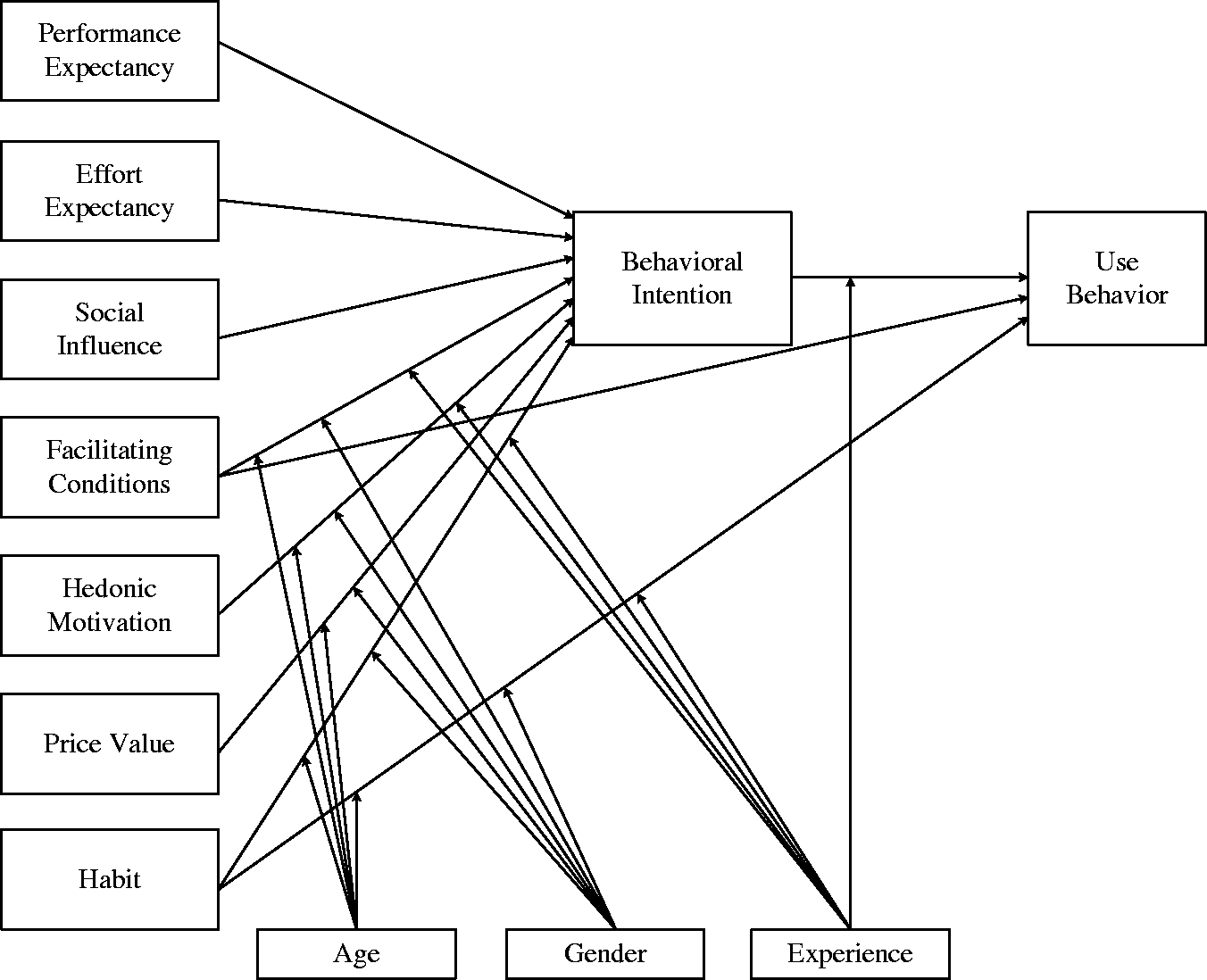
UTAUT2 is used as the theoretical basis for presenting the conceptual model utilized in current research due to the fact that it covers almost all constructs that determine students’ behavioral intention to use BSGs. The key factors of UTAUT2 are PE, EE, SI, FC, HM, and PV, which are the direct determinants of students’ behavioral intention to use BSGs. Despite the recommendations made by Venkatesh et al. (2012), this study does not take into account the effects of HB because participants require a wealth of experience using BSGs in order to test the effects of HB; however, respondents in this study had not previously used BSGs.
Hypotheses Development and Research Model
Figure 2 shows the research model of this study based on UTAUT2 and the proposed relationship among the research variables (PE, EE, SI, FC, HM, and PV) that influence their behavioral intention to use BSGs. On this basis, this study provides theoretical arguments followed by the proposed hypotheses.
Research model.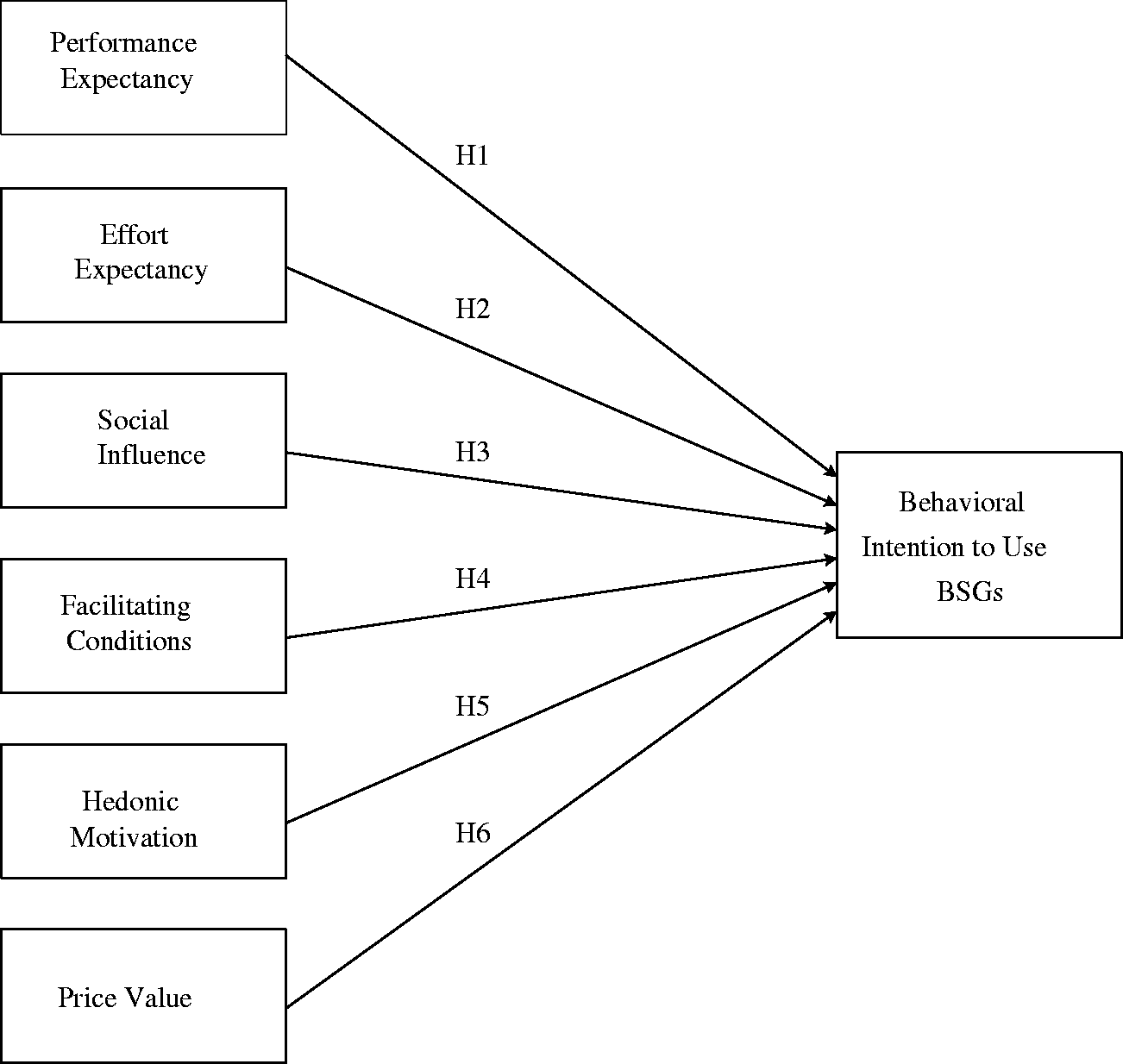
Behavioral Intention to Use BSGs
Behavioral intentions refer to the perceived likelihood or subjective probability that an individual will perform some specified future behavior (Warshaw & Davis, 1985). Within the existing IS literature, behavioral intentions play an important role in determining the actual use and adoption of a system/technology (Ajzen, 1991; Venkatesh et al., 2003, 2012). Consistent with all IS models derived from psychological theories that individuals’ behavior is predictable and influenced by behavioral intentions, many IS theories/models have argued and demonstrated that behavioral intention to use has a major impact on system use (Chen & Chan, 2014; Foon & Fah, 2011; Im, Hong, & Kang, 2011; Martins, Oliveira, & Popovič, 2014; Venkatesh et al., 2003, 2012; Venkatesh & Zhang, 2010; Yu, 2012). In line with this assumption, this study assumes that the practical application of BSGs can be largely predicted by students who are willing to use such systems. The research framework does not attempt to explain actual usage behavior. Instead, it attempts to explain the behavioral intention to use, which is used as a reliable predictor of future behavior.
Performance Expectancy
PE refers to the extent to which an individual believes that a system/technology assists in task completion (Venkatesh et al., 2003, 2012). The concept of PE represents the utilitarian value of system usage, emphasizes the utilitarian benefits provided to users by using the system, and is similar to other IS theories/models such as perceived usefulness in TAM/TAM2 (Davis, 1989; Venkatesh & Davis, 2000), relative advantage in IDT (Rogers, 2003), and extrinsic motivation in motivational model (Davis et al., 1992). Generally speaking, a person seems to be more motivated to use or adopt a system if he or she perceives that the system is advantageous and beneficial to their work or learning performance (Alalwan, Dwivedi, & Williams, 2016; Davis et al., 1989; Venkatesh et al., 2003, 2012). The utilitarian benefits from using BSGs include surfacing new business strategic options and allowing these to be tested in a risk-free environment, challenging conventional business wisdom, surfacing other managers’ thinking about business strategic issues, team building at the management level, communicating the importance of the dynamical aspects of business strategic planning, and allowing managers to think of themselves in the roles of other players, for example, competitors (Jensen, 2003). These benefits can increase students’ motivation and behavioral intention to use BSGs. Similarly, prior research argued that PE was an important predictor of behavioral intentions (Foon & Fah, 2011; Venkatesh et al., 2003). Thus, this study hypothesizes the following: H1. PE is positively associated with behavioral intention to use BSGs.
Effort Expectancy
Learning from other IS theories/models, Venkatesh et al. (2003) adopted the ideas of perceived ease of use (TAM/TAM2; Davis, 1989; Venkatesh & Davis, 2000), ease of use (IDT; Rogers, 2003), and complexity (MPCU; Thompson et al., 1991) to define EE as the degree of ease associated with system usage. Consistent with previous research, the users’ behavioral intention to use a system/technology can be predicted not only by the positive value of the system but also by the extent to which the system is easily used. BSGs are designed to teach generic management skills (e.g., dissemination of business strategies and establishment of new practices and values throughout an organization). Hence, according to the special natures of BSGs, which must have management knowledge and skill, EE plays a vital part in shaping and developing students’ behavioral intentions. Also, EE is widely recognized as an important premise of behavioral intentions (Foon & Fah, 2011; Martins et al., 2014; Nistor et al., 2014; Oechslein, Fleischmann, & Hess, 2014; Venkatesh et al., 2003, 2012; Zhou, Lu, & Wang, 2010). Therefore, this study hypothesizes the following: H2. EE is positively associated with behavioral intention to use BSGs.
Social Influence
SI refers to the degree to which a person perceives that important referents approve of a particular behavior (Venkatesh et al., 2003, 2012). The construct is used to characterize subjective norms in theory of reasoned action (Fishbein & Ajzen, 1975), TAM2 (Venkatesh & Davis, 2000), TPB/DTPB (Ajzen, 1985, 1991; Taylor & Todd, 1995b, 1995c), C-TAM-TPB (Taylor & Todd, 1995a), social factors in MPCU (Thompson et al., 1991), and image in IDT (Rogers, 2003). As for the adoption of BSGs, SI can be conceptualized as the impact of the social environment on students’ behavioral intention to use BSGs; for instance, families, peers, classmates, and friends as reference groups. In other words, SI assumes that these people will create a positive influence on students’ awareness and behavioral intention to use BSGs (Alalwan, Rana, Dwivedi, Lal, & Williams, 2015; Alalwan et al., 2016). The choice of SI as a crucial determinant of behavioral intentions is based on previous studies that support the impact of SI on individuals’ propensity to use a particular technology (Alalwan et al., 2016; Foon & Fah, 2011; Martins et al., 2014; Moore & Benbasat, 1991; Riquelme & Rios, 2010; Thompson et al., 1991; Venkatesh et al., 2003, 2012; Yu, 2012; Zhou et al., 2010). Therefore, this study hypothesizes the following: H3. SI is positively associated with behavioral intention to use BSGs.
Facilitating Conditions
By adopting the notions of perceived behavioral control in TPB/DTPB/C-TAM-TPB (Ajzen, 1985, 1991; Taylor & Todd, 1995a, 1995b, 1995c), compatibility, such as work style, in IDT (Rogers, 2003), and facilitating conditions in MPCU (Thompson et al., 1991), Venkatesh et al. (2012) defined FC as the extent to which a person perceives that resources exist for facilitating specific task completion. FC is interpreted as environmental elements that either promote or hinder system adoption and include various aspects that directly affect adoption behavior, such as training or knowledge acquired. Compared with other systems, some BSGs may require related knowledge or resource support; as such, these also affect students’ willingness to use. Students who have a better understanding of how to use BSGs are more willing to use them. Previous research has supported the view that FC has a positive impact on behavioral intention to use (Chen & Chan, 2014; Foon & Fah, 2011; Im et al., 2011; Martins et al., 2014; Mutlu & Der, 2017; Yu, 2012). Thus, this study hypothesizes the following: H4. FC is positively associated with behavioral intention to use BSGs.
Hedonic Motivation
HM refers to the extent to which individuals believe that entertainment is derived from using a system/technology (Venkatesh et al., 2012). HM is a kind of enjoyment, playfulness, or happiness that comes from using a system, and it plays a critical role in determining system adoption (Brown & Venkatesh, 2005; Davis et al., 1992; Venkatesh & Davis, 2000; Webster & Martocchio, 1992). As far as BSGs are concerned, although they are not specifically designed with HM in mind, many of them also contain some interesting features that allow participants to get involved and be engaged. Some BSGs are designed to be gamified: They adopt game characteristics or game mechanics to make the user interface more engaging and fun. One of the advantages of BSGs is that they have an intrinsic stimulating effect associated with challenge, curiosity, and fantasy (Malone, 1981). There is a close connection among participants’ enjoyment of BSGs, motivation for participation, and performance feedback (Garris et al., 2002). In the IS literature, scholars strongly believe that intrinsic utility (e.g., happiness, fun, playfulness, entertainment, and enjoyment) can play a role in accelerating individuals’ behavioral intention to adopt a system (e.g., Brown & Venkatesh, 2005; van der Heijden, 2004; Venkatesh et al., 2012). Thus, this study hypothesizes the following: H5. HM is positively associated with behavioral intention to use BSGs.
Price Value
PV (or price utility) represents individuals’ cognitive trade-off between the perceived benefits of the IT applications and the monetary costs or value benefits associated with using them (Dodds, Monroe, & Grewal, 1991; Venkatesh et al., 2012). PV refers to the effective use of money by individuals and the rationality of price. In the context of BSGs, PV is a vital consideration for most adopters. There are various approaches to setting prices including free, paid, and freemium. Free versions can be downloaded for free; paid versions require payment to download; and freemium versions can be downloaded for free but require payment to unlock additional features. Individuals expect high-quality products or service if they pay more for BSGs (Zeithaml, 1988). Put another way, as the PV rises, individuals will be more willing to adopt BSGs (Venkatesh et al., 2012; Yu, 2012). Therefore, this study hypothesizes the following: H6. PV is positively associated with behavioral intention to use BSGs.
Method
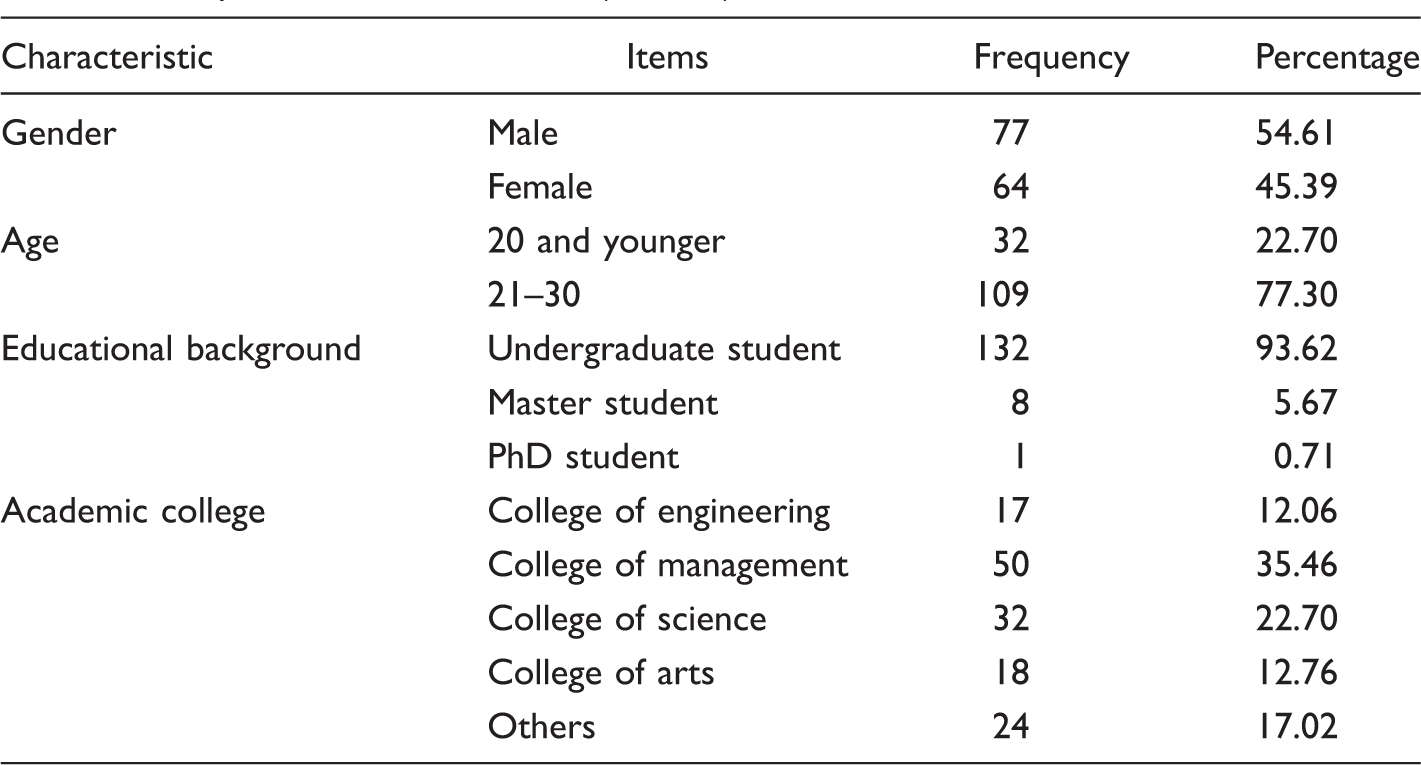
Convenience sampling was employed in this study to recruit participants. To validate the hypotheses, data were collected from an online survey conducted in Taiwan from January 2018 to April 2018. The questionnaire was uploaded to a survey portal and opened to Internet users.
Measures of the Constructs
The questionnaire was made up of two parts: The first collected demographic information, while the second collected information on the selected constructs. In order to confirm the content validity, survey items should describe the notion of valid generalizations (Bohmstedt, 1970); as such, all measures of the focal constructs were taken from existing research and then slightly modified to accommodate the context of BSGs adoption behavior. A total of 24 indicators adapted from Venkatesh et al. (2012) were included to measure behavioral intention to use BSGs and the selected constructs, namely PE, EE, SI, FC, HM, and PV. For each statement, respondents were asked to respond on 7-point Likert scales to indicate their agreement or disagreement. To enhance the questionnaire item wording, a panel of information management academics and professionals were consulted. All measurement items are shown in Appendix.
Data Collection
Respondent Characteristics (n = 141).
Results
The collected data were analyzed using SmartPLS software (Ringle, Wende, & Will, 2005) with a two-step approach. First, the measurement model was tested to evaluate the correlation between each construct and its observed indicators. The next step focused on the analysis of the structural model to test the structural relationships among latent constructs.
Measurement Model
Descriptive Statistics and Factor Loadings.
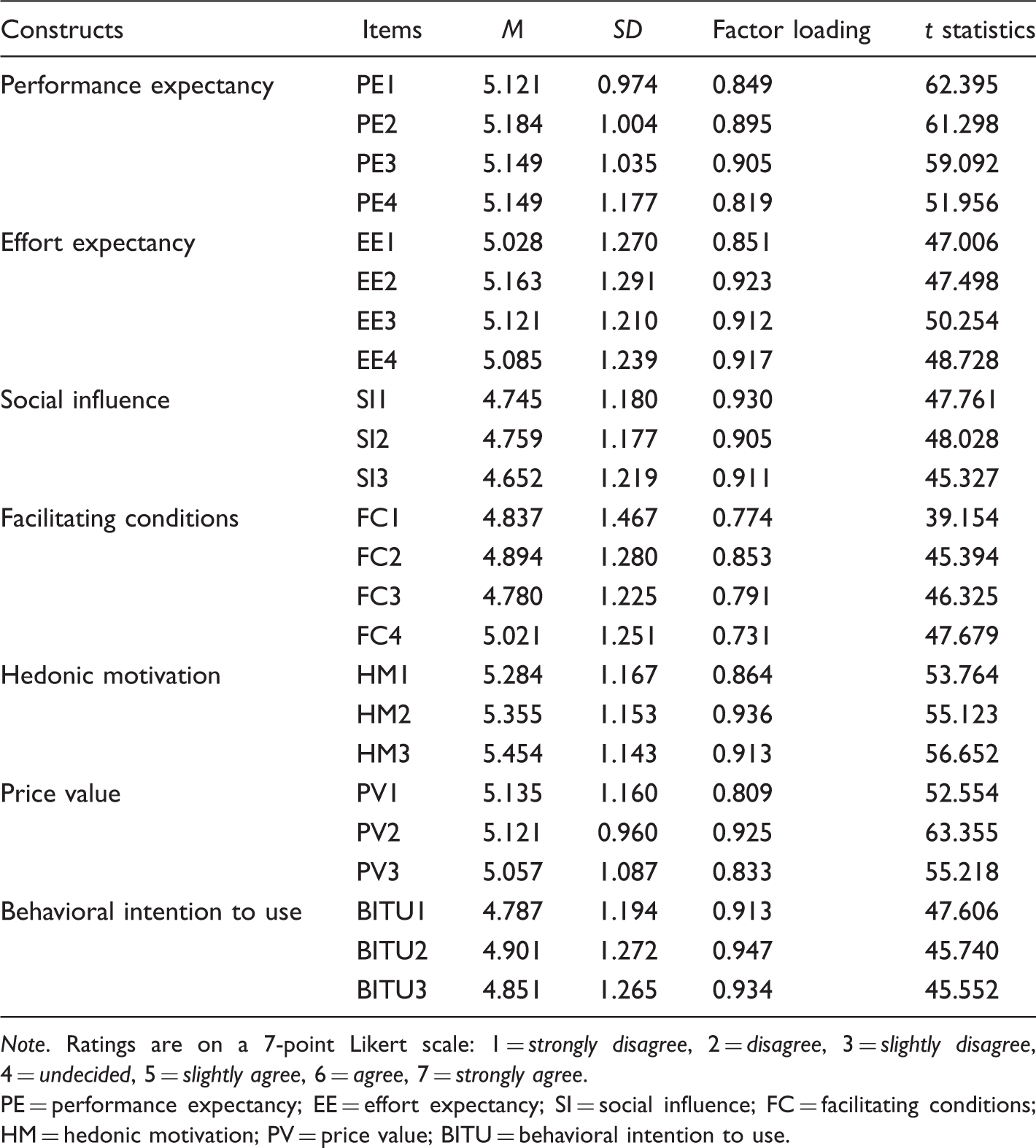
Note. Ratings are on a 7-point Likert scale: 1 = strongly disagree, 2 = disagree, 3 = slightly disagree, 4 = undecided, 5 = slightly agree, 6 = agree, 7 = strongly agree. PE = performance expectancy; EE = effort expectancy; SI = social influence; FC = facilitating conditions; HM = hedonic motivation; PV = price value; BITU = behavioral intention to use.
Reliability Analysis and Cross-Loadings.
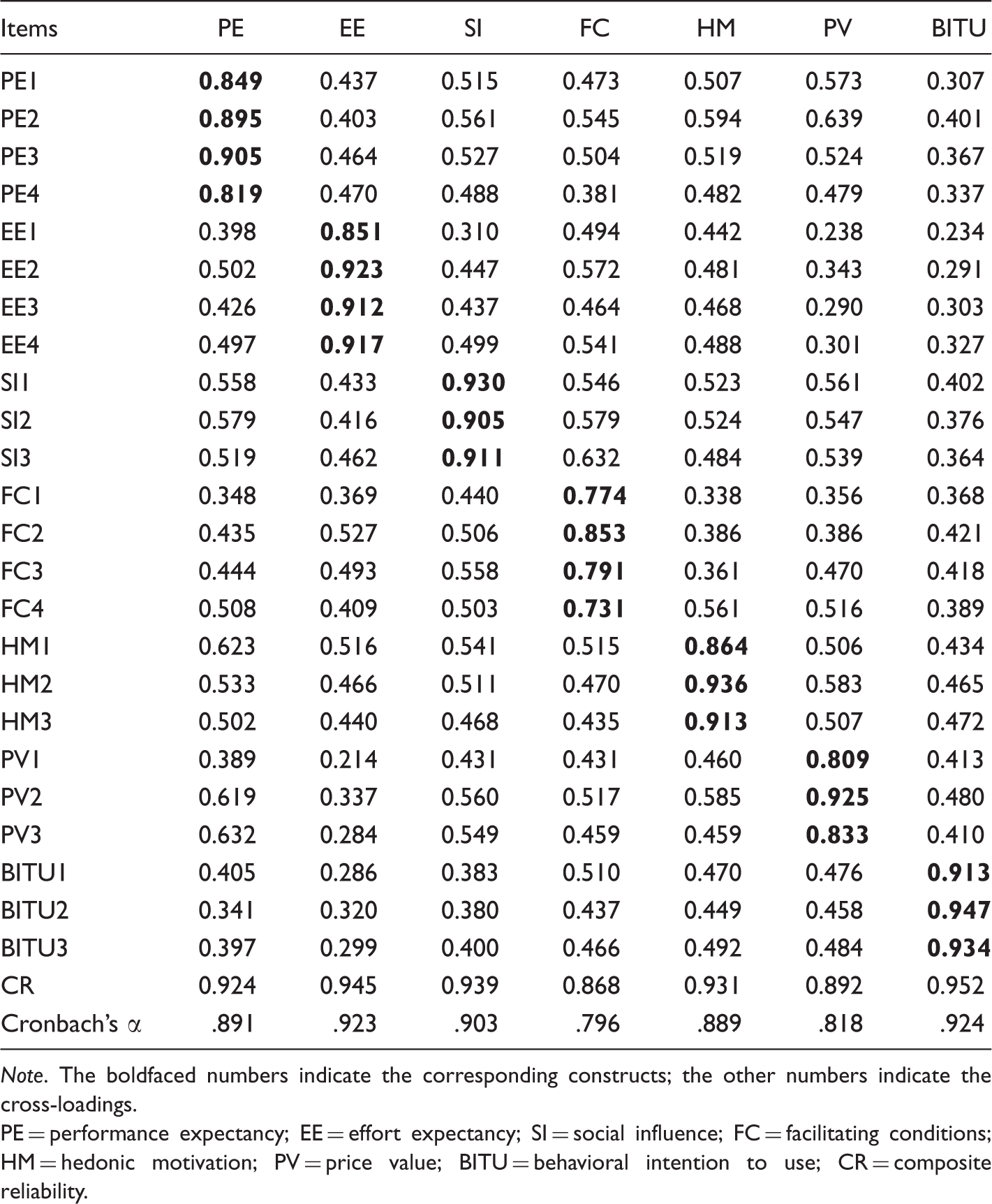
Note. The boldfaced numbers indicate the corresponding constructs; the other numbers indicate the cross-loadings. PE = performance expectancy; EE = effort expectancy; SI = social influence; FC = facilitating conditions; HM = hedonic motivation; PV = price value; BITU = behavioral intention to use; CR = composite reliability.
Interconstruct Correlations and Reliability Measures.
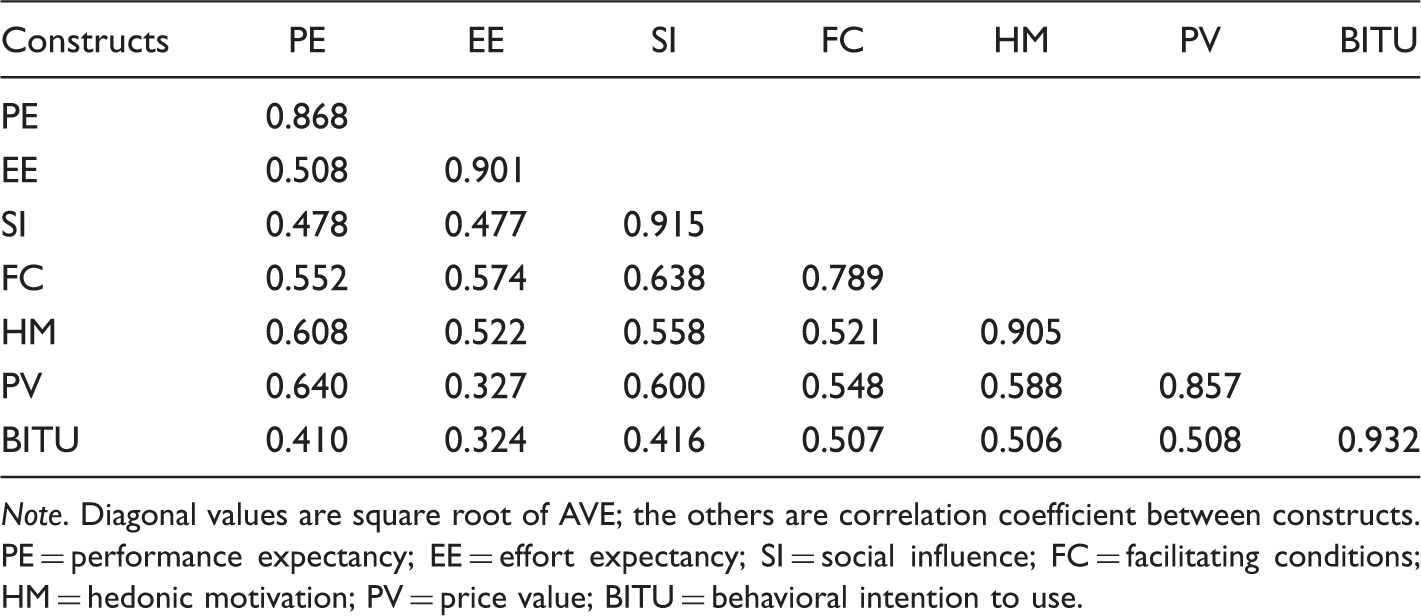
Note. Diagonal values are square root of AVE; the others are correlation coefficient between constructs. PE = performance expectancy; EE = effort expectancy; SI = social influence; FC = facilitating conditions; HM = hedonic motivation; PV = price value; BITU = behavioral intention to use.
Structural Model
To test the hypotheses, based on the structural model, this study investigated the path significance using a bootstrapping resampling technique based on 500 subsamples, as recommended by Chin (1998). Figure 3 illustrates the normalized path coefficients and their significance on the structural model.
Standardized path coefficients.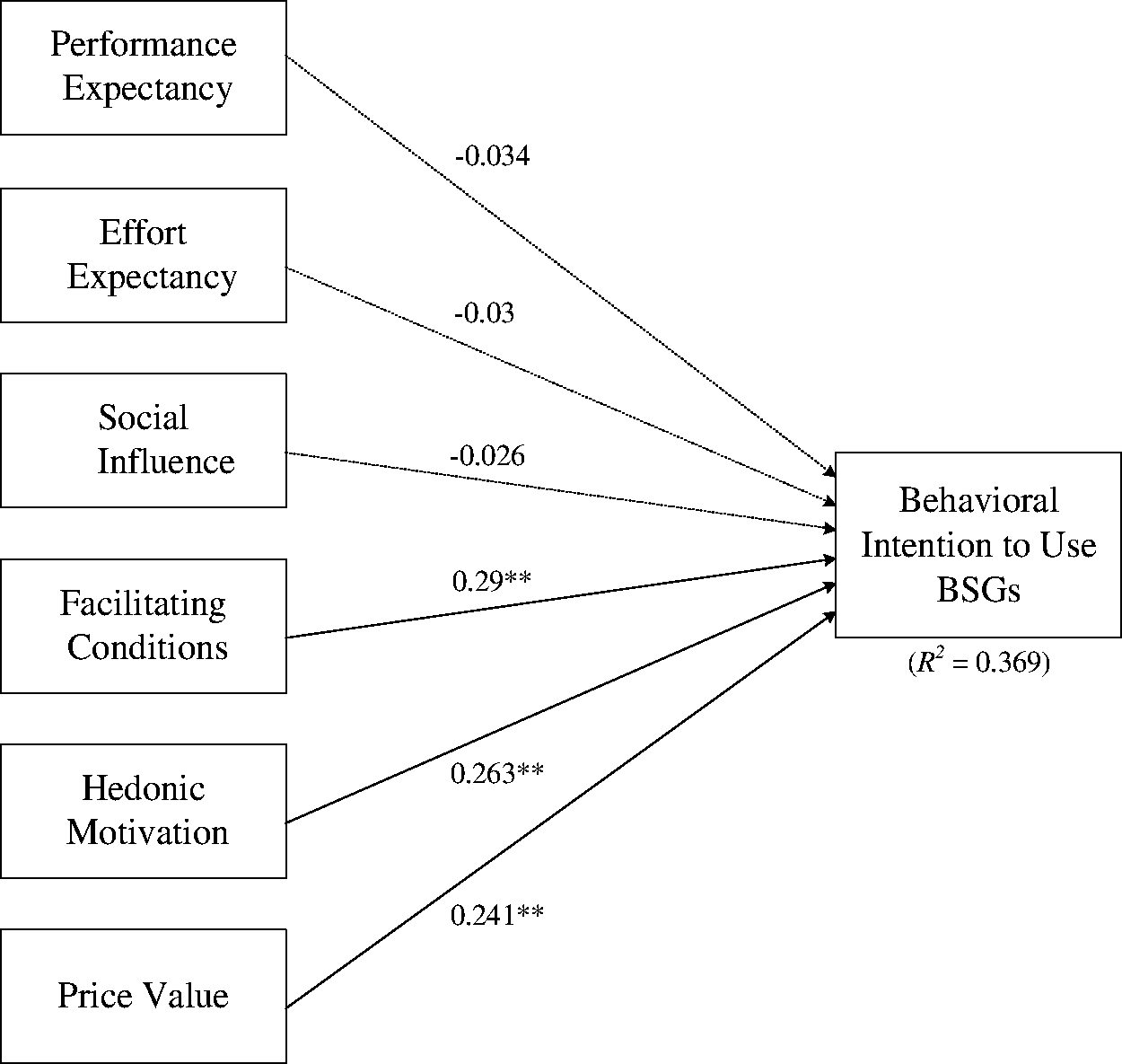
Hypotheses 1 to 6 state that PE (H1), EE (H2), SI (H3), FC (H4), HM (H5), and PV (H6) are positively related to behavioral intention to use BSGs. As indicated in Figure 3, the findings support H4, H5, and H6: FC, HM, and PV had significant positive relationships with behavioral intention to use BSGs (β = .290, p < .01; β = .263, p < .01; β = .241, p < .01, respectively). That is to say, higher perceived FC, HM, and PV were associated with higher behavioral intention to use BSGs. However, PE, EE, and SI were not significantly related to behavioral intention to use BSGs (β = −.034, p > .05; β = .030, p > .05; β = −.026, p > .05, respectively). Therefore, H1, H2, and H3 are unsupported.
The results show that UTAUT2 was somewhat suitable for students’ BSGs adoption behavior. Altogether, about 36.9% of the variance of the behavioral intention to use BSGs was explained by FC, HM, and PV, with FC making the greatest contribution.
Discussion
The purpose of the present study was to apply the UTAUT2 (Venkatesh et al., 2012) as a theoretical framework to gauge determinants of students’ behavioral intention to use BSGs. The results show that three of the six UTAUT2 constructs (i.e., FC, HM, and PV) predicted students’ behavioral intention to use BSGs, while the other factors (i.e., PE, EE, and SI) did not. Consistent with prior IS studies, this study suggests that UTAUT2 is a useful framework for understanding engagement with BSGs usage behaviors. Some insightful results can be drawn from the research framework, as described later.
First, as expected, it has been empirically demonstrated that FC is a key factor influencing students’ behavioral intention to use BSGs. This study focused on university students with no experience using BSGs. Within the UTAUT2 context, Venkatesh et al. (2012) argued that individuals with no experience depend more on external support. This suggests that these types of individuals require resources and support facilities to successfully and efficiently use BSGs. The FC result is similar to those found in previous studies that examined the positive correlation between FC and behavioral intentions (e.g., Alalwan et al., 2017; Foon & Fah, 2011; Morosan & DeFranco, 2016; Raman & Don, 2013).
Second, HM demonstrated a statistically significant positive effect on acceptance intention to use BSGs. This result in the context of students’ BSGs adoption intention is also consistent with previous findings (e.g., Alalwan et al., 2017; Morosan & DeFranco, 2016; Raman & Don, 2013; Yang, 2013; Yuan, Ma, Kanthawala, & Peng, 2015). University student respondents in the current study noted the importance of HM. This result suggests that even though BSGs are mainly used for utilitarian purposes (i.e., learning management knowledge), in the initial use case, intrinsic utility (e.g., happiness, fun, playfulness, entertainment, and enjoyment) are vital to encourage individuals’ behavioral intention to use.
Third, the price utility of BSGs is realized as a practical value that plays an important part in students’ decision to use them. The result is consistent with prior studies (e.g., Alalwan et al., 2017; Arenas-Gaitán et al., 2015; Yang, 2013; Yuan et al., 2015) that indicate that PV had a significant positive impact on individuals’ behavioral intention to use a system/technology. While numerous BSGs are free, this does not mean that students are willing to use them, especially if doing so is not perceived as having value. In other words, if individuals can get value from using BSGs, they may be willing to pay for them.
Fourth, unexpectedly, PE, EE, and SI were not significantly related to students’ behavioral intention to use BSGs. These findings are inconsistent with literature from the system/technology acceptance environment, such as TAM (Davis et al., 1989), TAM2 (Davis et al., 1992), and IDT (Rogers, 2003). A possible reason for the lack of support for PE is that although BSGs may provide learning tools for students to develop specific skills (i.e., learn management knowledge), the lack of usage experience may constrain the impact of utilitarian benefits on usage intention.
Moreover, while EE, or the amount of effort a user desires to use a specific system, has been proven to have a positive impact on an individual’s behavioral intention to use a system (Venkatesh et al., 2012), it did not play a sufficiently important part in facilitating students’ behavioral intention to use BSGs. This finding matches those obtained by Yang (2013), Baptista and Oliveira (2015), Lian (2015), Yuan et al. (2015), and Morosan and DeFranco (2016) and may be due to advances in usability of computer-aided learning, which reduces the number of effort students must expend to use these types of systems.
Finally, although referents’ SI seems to be a critical factor in determining an individuals’ adoption intention, SI had no significant relationship with students’ behavioral intention to use BSGs. However, lack of significance seen in the results may be indicative of descriptive norms (Cialdini, Kallgren, & Reno, 1991), and their use of BSGs may depend on the actual norms that students believe (Yuan et al., 2015).
Implications
Theoretical Implications
Despite the popularity of BSGs, little research has investigated factors that influence students’ usage behaviors. The current study proposes and validates a theoretical model to better understand the key factors affecting students’ BSGs usage intentions and behaviors. Although a variety of studies (e.g., Doyle & Brown, 2000; Fitó-Bertran et al., 2014, 2015; Pasin & Giroux, 2011) have analyzed the impact of BSGs on students’ learning effectiveness, little is known about the impact of specific factors on their usage intention. Also, in terms of theory building, none have integrated the UTAUT2 (Venkatesh et al., 2012) or considered which factors influence students’ usage judgment and decision-making. The inclusion of UTAUT2 in the current study led to a deeper understanding of the behavioral decision-making process regarding BSGs usage.
Based on UTAUT2, the research model investigated students’ PE, EE, SI, FC, HM, PV, and behavioral intention to use BSGs. The results suggest that FC, HM, and PV are salient indicators of behavioral intention to use BSGs. Unexpectedly, PE, EE, and SI did not significantly affect students’ behavioral intention to use BSGs. Even so, the findings contribute to the system/technology adoption literature by showing that one’s intrinsic motivation (i.e., HM) and extrinsic motivation (i.e., FC and PV) are crucial motivators of usage intention in this specific context. These findings have greatly facilitated the existing understanding of BSGs usage behavior.
Practical Implications
The results provide several practical implications to help instructors with respect to designing business courses that promote learner engagement through BSGs usage. First, learning institutions or instructors should consider how to facilitate learners’ behavioral intention to use BSGs for business management knowledge learning by focusing on extrinsic motivation related to FC and PV. Because previous research (e.g., Wu & Lederer, 2009) has pointed out that the effects of extrinsic motivation might be decreased by mandatory participation, BSGs should be incorporated into courses on a voluntary basis. When learners perceive BSGs use to be nonmandatory, their willingness to complete the learning tasks is likely to increase. Also, learning institutions or instructors can provide rich and engaging learning channels that show how to use BSGs (e.g., inform students about their performance and their progress in the activity), as well as the benefits of BSGs (e.g., tangible rewards and available support structures). Moreover, reasonably priced BSGs increase learners’ BSGs usage intention: Even BSGs that cost money, but are perceived as valuable, can be acceptable. Also, BSGs developers can employ a variety of pricing strategies when promoting a simulation product or service.
Further, this result has implications for BSGs instructors, researchers, and developers who are designing or implementing BSGs for their players/trainees—the elements associated with intrinsic motivation such as challenge, curiosity, and fantasy should not be overlooked. HM is seen as an underlying mechanism that encourages learners to concentrate and helps them absorb material (Lucardie, 2014). Instructors must consider the underlying dimensions of HM (e.g., fun, enjoyment, and entertainment), as these dimensions contribute to facilitating BSGs usage intention that is valuable in terms of the learning of business management knowledge or skills. Thus, BSGs used in business courses should include elements associated with playfulness, enjoyment, and entertainment value and be designed to ensure easy learner absorption.
Conclusions and Future Research
Overall, this study helps to more fully understand students’ behavioral intention to use BSGs, especially in terms of the impact of FC, HM, and PV. The contributions of this study to the theoretical development of students’ behavioral intention to use BSGs are twofold. First, based on UTAUT2, the results of this study provide a deeper understanding of the context of BSGs adoption. Instructors and developers can use this information to learn more about the factors that influence an individual’s decision to use BSGs. Focusing on the important factors found in the current research, they can develop and utilize BSGs that are perceived of as fun while ensuring that users have the resources and support they need, as well as good PV. Second, the findings can help academics and practitioners better understand how to use BSGs in a business and management education environment to enhance management knowledge learning.
Although these findings provide meaningful insights for researchers and practitioners, there are some limitations that should be noted. First, self-reported responses were obtained from a convenience sample of university student volunteers who had no experience using BSGs. Accordingly, the findings may not represent the general public. It would be useful to replicate this study using many different groups from a wider population so that the robustness of the results can be established. Second, a cross-sectional design was used; thus, the behavioral intention to use BSGs to predict future actual use behaviors cannot be established. Parsing how the predictive factors of behavioral intention to use BSGs affect actual use in a continual manner would be an interesting direction for future research. Finally, this study considered only the direct factors of UTAUT2 in examining students’ behavioral intention to use BSGs. In future research, the moderators such as age, gender, and experience can be used to extend the proposed research model.
Footnotes
Declaration of Conflicting Interests
The authors declared no potential conflicts of interest with respect to the research, authorship, and/or publication of this article.
Funding
The authors disclosed receipt of the following financial support for the research, authorship, and/or publication of this article: This research was substantially supported by the Ministry of Science and Technology of Taiwan under grant number MOST 105-2511-S-018-013-MY3.