




Abstract
This research aims to investigate the impact of three different training methods (digital game, drill, and traditional education) on the motivation of the students to teach earthquake preparedness and earthquake prevention knowledge to primary school students. The explanatory design from the mixed-methods research was used in the study. The sample of the study consists of 294 students at the fourth-grade level in three different elementary schools in one of Turkey’s easternmost provinces. At the end of different educational methods, the motivation scale about the course was used to determine the motivations of the students. Focus group interviews were conducted with students randomly selected from each study group to examine in depth the reasons for the differentiation of motivation levels of the students. The findings showed that students who participated in the traditional education method were more motivated than the other methods of teaching. Besides, students who study with the digital game were found to be less motivated. In this study, the limitations and advantages of educational methods in terms of motivation were examined in-depth, and the reasons affecting motivation were discussed. The results can provide important insights to educators, educational game designers, and educational politicians.
Introduction
About 1.87 million people have died in the world due to earthquakes in the 20th century (Doocy et al., 2013). It is reported that around 250-300 earthquakes, which occur almost every year in the world, cause harm to people, and nearly 100 of these earthquakes cause more damages. Earthquakes in China, Haiti, Chile, Japan, New Zealand, and Italy over the past few years have had a very wide impact on people and governments because of the socio-economic damage (Shroder and Wyss, 2014). Located on the Alpine-Himalayan earthquake belt, Turkey has also been severely affected due to the damages caused by earthquakes (Adalier and Aydingun, 2001). Especially after the 1999 Marmara earthquake, Turkey is undoubtedly one of the countries that have to face the earthquake reality, because as a result of this earthquake, more than 25,000 people lost their lives and around 750,000 people became homeless while the majority of people were affected psychologically (Konuk et al., 2006).
There are various solutions to minimize the damages of earthquakes. Sendai Framework for Disaster Risk Reduction 2015-2030 of the United Nations emphasized that people, civil society organizations, private sector, academic institutions, communities, and individuals must act together with governments in the process of taking measures against natural disasters (SENDAI Framework, 2019). In addition to this cooperation, it is argued that most importantly, individuals should take action to prepare for disasters (Tekeli-Yeşil et al., 2019). The reason is that individual preparation plays a critical role in reducing the mortality and other damages caused by natural disasters such as earthquakes (Tekeli-Yeşil et al., 2010). Therefore, earthquake-prone countries such as the United States, Japan, New Zealand, and Turkey argue that people should be trained individually to cope with the consequences of earthquakes, to adapt to earthquakes, and to facilitate their ability to survive earthquakes (Becker et al., 2012; Zhou et al., 2018).
In the past research, it is reported that the education of children is an effective strategy in the process of communicating safety-related information to the at-risk community, raising awareness, and preparing for disasters (Oda, 2016; Tekeli-Yesil et al., 2010). It is stated that the new generation of children can easily learn, they are a good channel for transferring information to their parents, and they play a critical role in developing a culture of protection from natural disasters such as earthquakes (Izadkhah and Hosseini, 2006). It is also argued that children can actively contribute to the process of reducing casualties associated with disasters when they are sufficiently motivated (Navakanesh et al., 2019). Because motivation has proven to be a good indicator of the process of performing actions related to earthquake preparedness (Paton et al., 2005, 2010).
Motivation
Motivation is a multidimensional and complex structure that includes many components such as interest, pleasure, expectation, and value. Motivation is defined as a framework that represents the internal and positive stimuli in the process of realizing a certain goal by people's own will (Ryan and Deci, 2000). According to the Expectancy-Value Theory, people have a set of expectations for an activity they are engaged in, and they get a result when the activity is completed. It is stated that the closer they establish a link between their expectations before the activity and the value they gain after the activity, the more their motivation will increase (Martin, 2001). Based on Expectation-Value Theory, Keller (2000) defines motivation as the process of students' orientation to the learning situation they desire and inner strength.
Researchers focus on motivation-related research; they often wonder what the individual does, how he determines his choice of behavior, how he decides to start and stop an activity, or what the individual thinks while participating in an activity (Graham and Weiner, 1996). Therefore, the motivation highlighted in the study expresses the willingness of people to strive for educational activities to be realized (Garris et al., 2002; Keller and Subhiyah, 1987).
In addition, according to the Constructivist Learning Theory, it is stated that motivation is an important component in the learning process (Hein, 1991) and should not be neglected in learning environments (Dede and Yaman, 2008). Because it is known that motivation affects the individual's effort and performance in learning environments, affects the success results, and makes the individual feel more meaningful and valuable in teaching (Howard et al., 2021). In this context, providing the right motivation methods together with the training applied in the preparation process for natural disasters such as earthquakes has critical importance in changing the attitudes and behaviors of individuals (Ryan et al., 2012).
Earthquake education methods
Considering the earthquake education methods in the literature, it is noteworthy that game-based learning (GBL), drill and traditional (using materials such as brochures, posters, books, etc.) teaching methods are frequently used (Barreto, 2014; Chen, 2015; Feng et al., 2018; Navakanesh et al., 2019; Sözcü, 2021; Yeon et al., 2020).
With the developments in information technologies, it is reported that GBL has been adopted in education programs as an alternative approach to traditional methods (Tsai et al., 2020). Game-based learning is an approach that encourages active learning and participation of students by placing learning content in the context of the game (Noroozi et al., 2020). It is known that GBL attracts students at various educational levels (Gampell et al., 2020) and has generally positive effects on students' participation in learning activities, motivation, and academic achievement (bin Abdullah and Toyoda, 2021). Based on the GBL approach, digital games used in education are defined as games that entertain users while educating them or changing their behavior (Stokes, 2005). In this context, educational digital games have been developed for educational purposes and provide both the realism and entertainment aspect of traditional games. In addition, in an educational game, students have fun with the progress they make while improving their performance, which is measured by a scoring mechanism, and the difficulty of reaching a certain goal (Min et al., 2022).
Another training method preferred in the preparation process for earthquakes is drilled. According to Social Learning Theory (Bandura, 1986); it is emphasized that especially primary school students can take models by observing most of their affective, cognitive, social and psychomotor learning skills and achieve more effective learning outcomes. In addition, it is stated that students' interaction with the teacher during the observation process will contribute to the development of students' mental functions (Bandura, 1986). In this context, drills are considered an important activity for students to be prepared to respond to emergencies by observing and modeling (Santos-Reyes, 2020). It is emphasized that the purpose of earthquake drills is to strengthen people's ability to exhibit safe behavior quickly and effectively without hesitation or trying to remember what to do when an earthquake occurs (ISMEP, 2011). In line with this purpose, earthquake drills provide the behaviors that students should practice in case of a possible earthquake (Tipler et al., 2016).
It is emphasized in the traditional teaching method that a teacher-centered education is generally adopted, and students are generally passive participants in the lessons (Taşoğlu and Bakaç, 2010). For this reason, the lessons are heavily based on the teachers’ explanations on the subject of learning, the content in the textbooks, inquiries, and discussions in the classroom (Aydın and Coşkun, 2010). It is stated that traditional methods, including some printed materials such as books, magazines, newspapers, and brochures are used in earthquake education (Tanaka, 2005; Tekeli-Yeşil et al., 2019).
The importance of the study
Considering that education and motivation play a critical role in preparation for natural disasters (Bowen and Faison, 2002; Proulx and Aboud, 2019; Tekeli-Yesil et al., 2010), it is emphasized that all necessary efforts must be made to increase the motivation aspect of the educational programs (Clerveaux et al., 2008; Tekeli-Yeşil et al., 2019). Otherwise, it is stated that education programs about earthquake preparedness will not be beneficial for students (Becker et al., 2012; Navakanesh et al., 2019). It is argued that the knowledge and skills gained in the education process will not be sufficient alone to change the attitudes and behaviors of children (Stoto et al., 2018), and correct motivation methods should be integrated into education (Ryan et al., 2012). Especially to raise awareness of children, earthquake education methods that can be easily adopted by children, interesting and motivating them should be designed (Becker et al., 2017; Clerveaux et al., 2008). In this context, the question of how earthquake education should be answered (Lai and Tang, 2018). This study is important in terms of contributing to the understanding and developing the motivation orientation of children during the earthquake preparedness process. It is also important in terms of revealing children's reactions to earthquake education methods in a motivational context and guiding curriculum developers who strive to maximize the impact of earthquake preparedness education.
Literature review
There are some studies in the literature where these educational methods are compared in terms of motivation. For example, Gray (1996) compared a traditional teaching approach with video-aided training designed to provide disaster training to hospital staff. As a result of the research, it was concluded that the participants in the video-supported training group were more successful in terms of learning, the video attracted the attention of the participants, and they adopted this training method more. Bowen and Faison (2002) compared two different methods (workshop and printed materials) to investigate which training method is more effective in providing and motivating individuals in the earthquake preparation process. As a result of the research, they emphasized that printed materials are more effective in providing motivation. Sözcü (2021) stated that regular practice and information seminars about earthquakes increase the earthquake awareness of the students and that the students are satisfied with such practices.
Izadkhah and Heshmati (2007) compared six different teaching methods to give children earthquake education: singing, narrating dangerous places, playing with cards, playing with puppet gloves, drawing pictures, and role-playing. As a result of the research, they emphasized that the training method provided by using puppet gloves motivates children more. Mangione et al. (2013) compared a story-based teaching approach in disaster education with the traditional teaching method. The results of the study showed that the students adopted a story-based teaching approach, we’re satisfied with this approach and felt more motivated. Yılmaz (2014) compared the extra-curricular activities method (Shulruf, 2010) with the traditional method of education, which was defined as a method of not grading students in disaster education. As a result of the research, providing awareness and motivation of the students involved in extra-curricular activities was more effective. MacDonald et al. (2017) investigated the effectiveness of an interactive earthquake education program designed in a museum setting to increase the knowledge and awareness of children, parents, and teachers about earthquakes. As a result of the research, it has been shown that the museum-supported education application is successful in providing pre-disaster awareness of people, including children, in knowledge acquisition, knowledge transfer, and motivation.
Tsai et al. (2015) developed a digital game called Flood Protection for disaster education. In the research, they compared the education method provided with the digital game with the traditional method. As a result of the research, they observed that the students who were educated with digital games were more motivated. Chen (2015) developed a digital earthquake game called Defying Disaster. They compared the developed game to two different teaching methods, teacher-guided and not teacher-guided. It was shown that the game developed as a result of the research contributed to obtaining better learning objectives related to earthquake preparedness, but there was no significant difference between the methods in terms of motivation. They also emphasized that the scenes in the game cannot fully reflect a real earthquake moment, and different researches are needed. Mubarak et al. (2019) provided education to primary school students by applying three different education methods: disaster prevention drills, educational video, and traditional education. In the results of the research, they underlined that students who were trained by the drills were more successful, and this method would be more effective in changing and motivating students’ attitudes. Aslam et al. (2019) compared to drill and game-based education in terms of motivation. As a result of their research for undergraduate students, they concluded that students should use the game application with the drills, and they are satisfied with the method of education with the game. In addition, students reflected on their experience that the drills should be designed to reflect a real scenario.
Shu et al. (2019) compared an earthquake game they developed using a desktop computer-based learning environment and a virtual reality (VR)-based learning environment. Virtual reality is defined as a computer technology that provides an opportunity to simulate an environment that users can explore and interact with (Makransky and Lilleholt, 2018). As a result of the research, they emphasized that the VR-based training attracted the attention of the participants and provided a more realistic earthquake experience. Feng et al. (2021), in their study in which they compared a VR-supported earthquake game with the traditional education method, stated that VR-based education was more adopted by the students. Shyr et al. (2021), when compared to traditional teaching methods, showed that practice-based teaching activities and the GBL method have a mediating role on students' learning outcomes and responses to the lesson. In another study, an android-based earthquake game was developed and the GBL method was compared with the traditional training method (Winarni et al., 2021). As a result of the research, it was seen that the students found the game developed more interesting and entertaining compared to the traditional method and they were more interested in the game. Feng et al. (2020) argued that the VR-assisted educational environment is effective in improving the pre-and post-earthquake behaviors of the individual, and the behavioral responses of the participants and their self-efficacy regarding preparation have increased significantly. In addition, they emphasized that although VR-assisted education is a new technology, its teaching potential is strong and showed that this technology is more interesting and easier to use.
Considering that there are three training methods (GBL, drill, and traditional methods) commonly used in earthquake training, there are not many studies in the literature comparing these training methods in terms of motivation. In most of the studies in the literature, it was seen that the reasons affecting students' motivation were not investigated in-depth and most of the studies lacked qualitative data. In the literature, it is stated that the studies on which of the earthquake education methods offered to children are more limited in terms of motivation, the reasons affecting motivation are not examined in-depth, and new experimental studies are needed (Becker et al., 2012; Johnson et al., 2014; Tekeli-Yesil et al., 2019). In addition, the issue of how to motivate individuals in the process of earthquake preparedness and earthquake protection is still among the key issues (Bowen and Faison, 2002; Johnson et al., 2014). In this context, it is stated that people's motivation to prepare for natural disasters such as earthquakes is not at a satisfactory level (Ao et al., 2021; Tekeli-Yeşil et al., 2010). This study aims to investigate the effects of three different education methods (GBL, drill, and traditional methods) used to teach children about earthquake preparation and earthquake protection on students’ motivation. Accordingly, research questions are formulated as follows: 1. Is there a significant difference between the GBL, drill, and traditional education methods applied in terms of motivating students? 2. What are the opinions and experiences of the students regarding the applied training methods?
Methodology
Research approach and design
The study is based on the explanatory design from the mixed-methods research design (Creswell, 2017). According to Johnson and Christensen (2019), mixed-methods research is defined as a research approach that involves the combined use of quantitative and qualitative research methods or paradigms. This method aims to obtain more comprehensive data that reinforces the results (Johnson and Christensen, 2019). In other words, the explanatory method allows for a more in-depth explanation of the results of quantitative data analysis. Results from quantitative methods alone allow researchers to make more limited interpretations. However, the explanatory method complements the data and reduces these limitations (Creswell, 2017). Participants’ motivation levels were determined by quantitative methods. Then, qualitative methods were used to analyze quantitative data in detail and interpret it in terms of factors affecting motivation. In Figure 1, the research design is presented as a summary. Research design.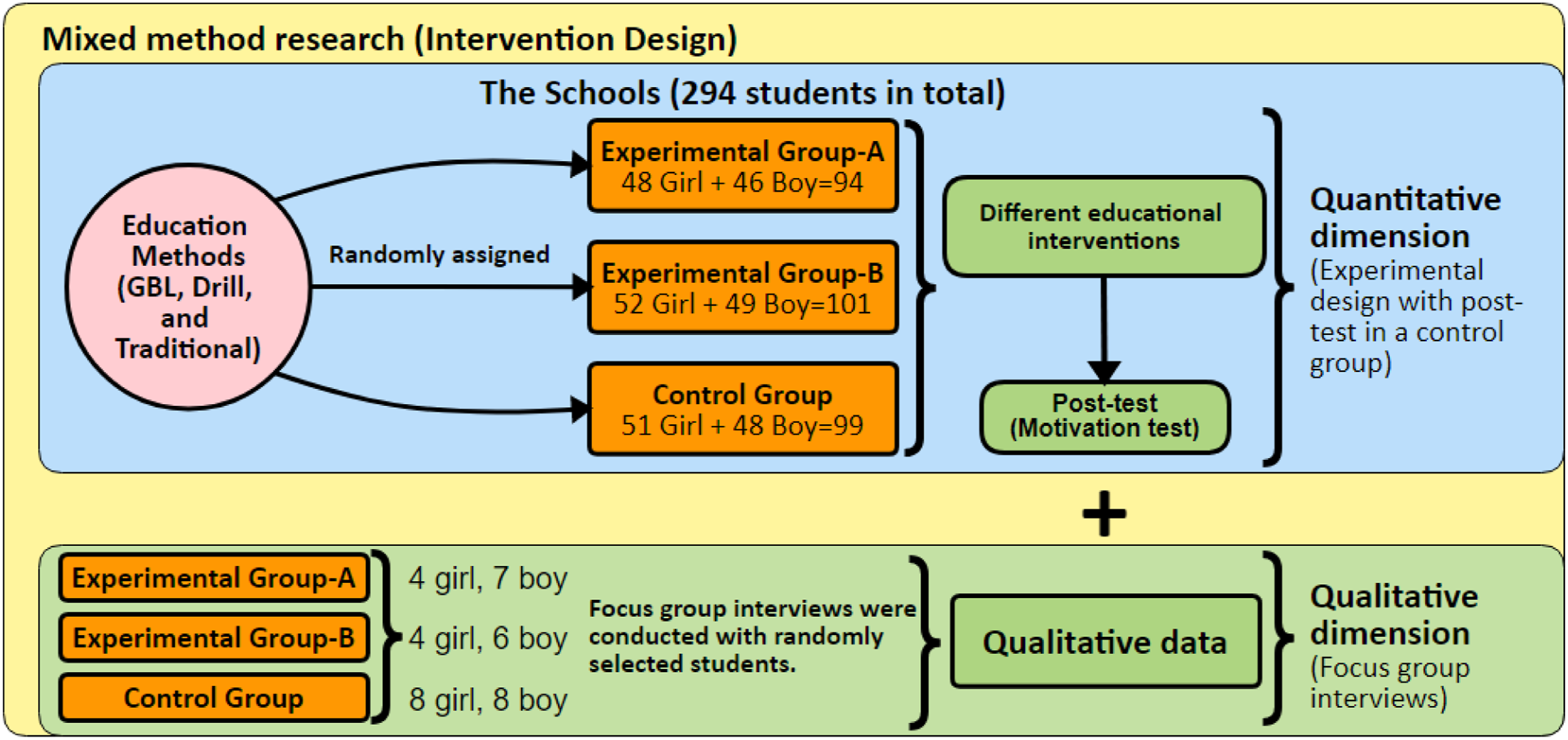
In the quantitative part of the study, the post-test experimental design with a control group was used. The post-test experimental design with the control group is defined as a research design that controls all potential threats for internal validity, as it includes a control group (Johnson and Christensen, 2019). In this context, it was determined randomly which of the three schools would be the experimental group or the control group. In other words, three different training methods (GBL, drill, and traditional methods) were randomly assigned to three selected schools. Pre-testing was not needed because it was aimed to measure the motivation and responses of the students towards specific education methods rather than the general motivation levels of the students. In addition, students participating in the study process have not received prior training on earthquake preparedness and earthquake protection. Therefore, the post-test experimental design with a control group was preferred as the quantitative research design.
In the qualitative part of the research, focus group interviews were conducted with students randomly selected from each study group. This method was used to strengthen quantitative data about the motivation variable, to understand the reasons for quantitative results better, and to get detailed information about the experiences of users in educational environments (Creswell, 2017).
Research sampling
The research sample consists of three primary schools located in one of the easternmost provinces of Turkey. The criterion sampling method from purposeful sampling techniques was used in determining the research sample (Patton, 2014). In the selection of schools, the criteria were taken into account that the participants provided sufficient sample size, that they had not received earthquake training before, and that they were composed of persons who were suitable for the focus of the research. By the statements of the administrators and classroom teachers of the selected schools, it was determined that the students were residing in the same area and that their socio-economic and academic success status was equal. Students are at the elementary fourth-grade level (age range of 9–10) and took part in the study voluntarily.
Learning content
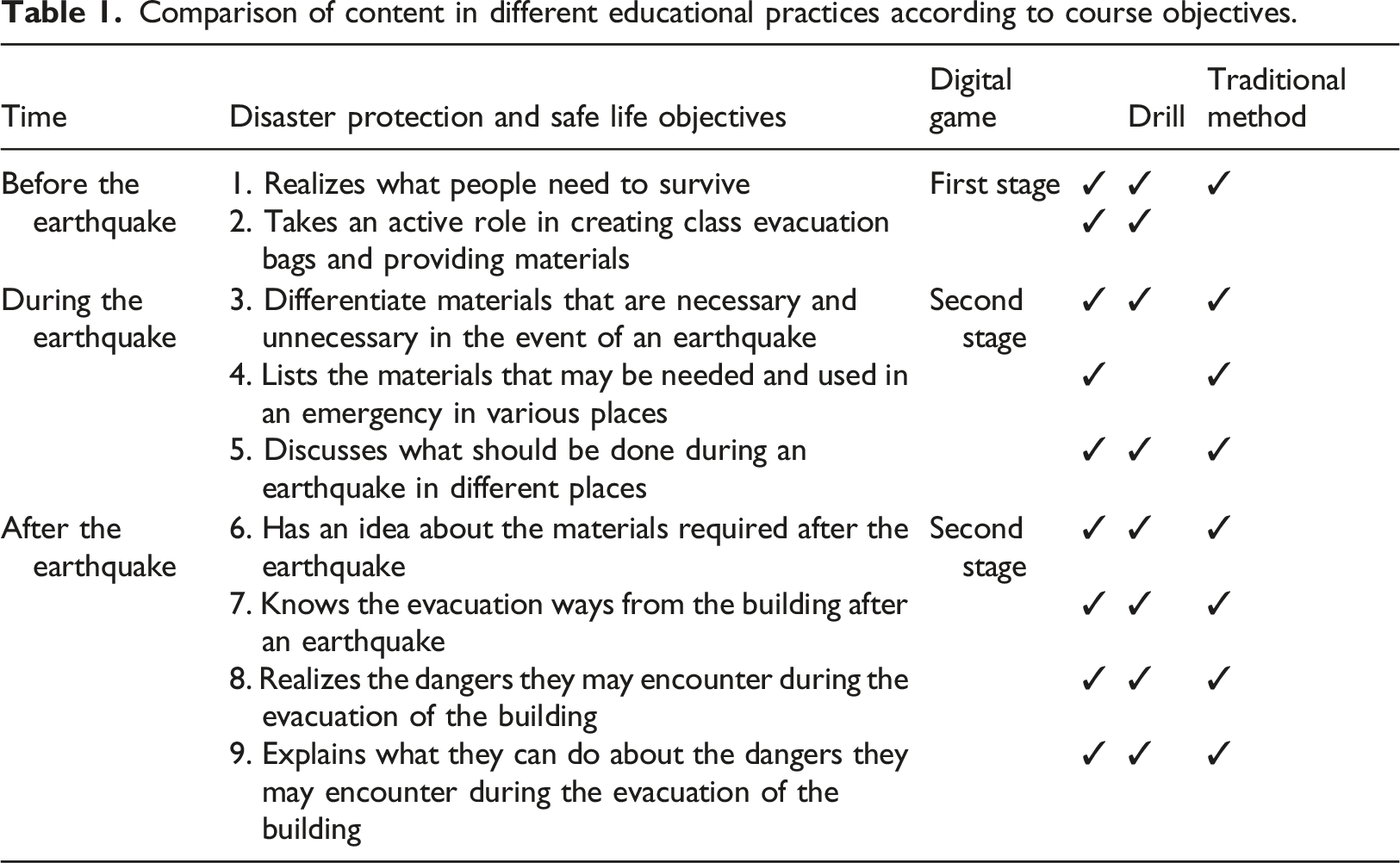
Comparison of content in different educational practices according to course objectives.
Research process
The planning, implementation, and evaluation (PIE) process were followed in the study (Newby et al., 2000). During the planning phase, the tools that the study groups will use in the training activity were prepared, and infrastructure preparations were made. During the implementation phase, the study groups carried out relevant training activities within the specified time interval. In the evaluation phase, quantitative and qualitative data were collected and interpreted from each study group. Students in the digital game group were trained by playing the game called Earthquake Escape (“Depremden Kaçış” in Turkish) developed by researchers. The students in the drill group were trained by participating in the earthquake drill where applied activities took place. On the other hand, students in the control group attended traditional educational activities and received training. Accordingly, the implementation process in all training groups took 3 days. The PIE process for each study group is summarized in Figure 2. Research process.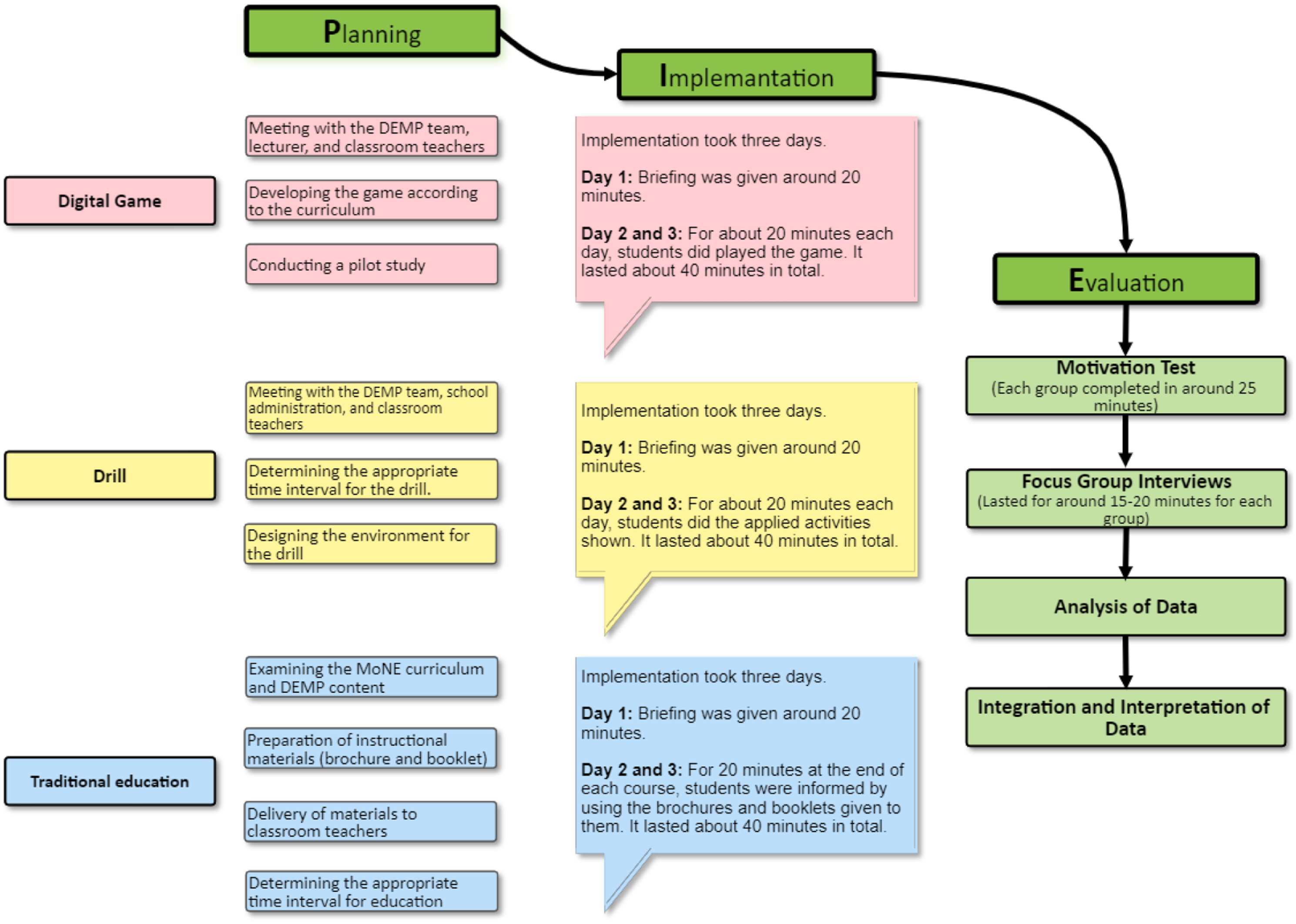
A basic contact meeting on earthquake preparedness and earthquake protection was held before the day on which the training activities were applied to the study groups. The briefing meetings were conducted by the same people from the Disaster and Emergency Management Presidency (DEMP) team (four experts) using the same content and materials (video and PowerPoint presentation). In addition, information about the educational activities of the students was given during the meetings.
During educational practices, administrators, teachers, and researchers only guided the students. For example, the students in the digital game group were provided various aids in the preparation phase, such as technical and hardware preparation of their computers, determining the appropriate laboratory environment, loading, and testing the game. The administrators and teachers at the school in the drill group, together with the researchers, helped to design the educational environment in line with the guidance of the DEMP team and observed the students during the implementation process. In the control group, administrators, teachers, and researchers assisted in the distribution of the brochures and booklets prepared to the students. As a result, administrators, teachers, and researchers were involved as observers and assistants during the implementation of educational activities. In this context, they did not directly interfere with students’ educational activities. In addition, the same team (four experts from DEMP and researchers of this study) took part in the training process presented to the working groups. Details of the training activities applied for the study groups are explained in the following sections.
Teaching with digital game
When evaluated in terms of education, it is stated that 3D games allow students to observe objects from different angles and interact with 3D models (Dede et al., 1999). The reason is that while our real world is 3D, it is emphasized that the efforts of explaining some processes, events, and phenomena with 2D media elements such as graphics, images, and slides cannot be effective (Billinghurst and Dünser, 2012). In this regard, the inclusion of 3D objects in learning activities is advocated to facilitate understanding of events and motivate students (AlAli et al., 2018).
When digital games related to earthquake education are analyzed, the majority of the games are two-dimensional (2D) (Barreto, 2014; Chen, 2015; EarthQuake Master Game, 2015; Tanes and Cho, 2013; Tsai et al., 2015), have limited features in terms of interaction and that it is not effective for students to create mental models (Huk, 2006). In addition, in the games examined, the information about what to do before, during, and after the earthquake is not given in a certain systematic, and most games are not compatible with the learning outcomes determined within the scope of the study (Barreto, 2014; Chen, 2015; EarthQuake Game, 2015; ISDR, 2015; Legacy Interactive, 2015; Tanes and Cho, 2013; Tsai et al., 2015) and specific games related to earthquake education are quite limited.
Consequently, it was decided to develop the Earthquake Escape game by taking into account the limitations of the existing digital games and the motivating features of the digital games (Acquah and Katz, 2020). While the game was being developed, four people from the DEMP team, three field experts working as lecturers in the Computer Education and Instructional Technology department, and three classroom teachers selected from the schools to which the students were studying were interviewed.
The game mechanics developed using the Unity 3D game engine were designed and developed (Unity3D, 2020). The Earthquake Escape game presented in Figure 3 consists of three parts: Introduction, first level, and the second level. In the introduction section, information about how the game is played in the How to Play section. This section contains basic information about the stages of the game, how the player will make basic movements in the game, and the setup of the game through a video created. (a) Screenshot of the first level of the game (b) screenshot of the second level of the game.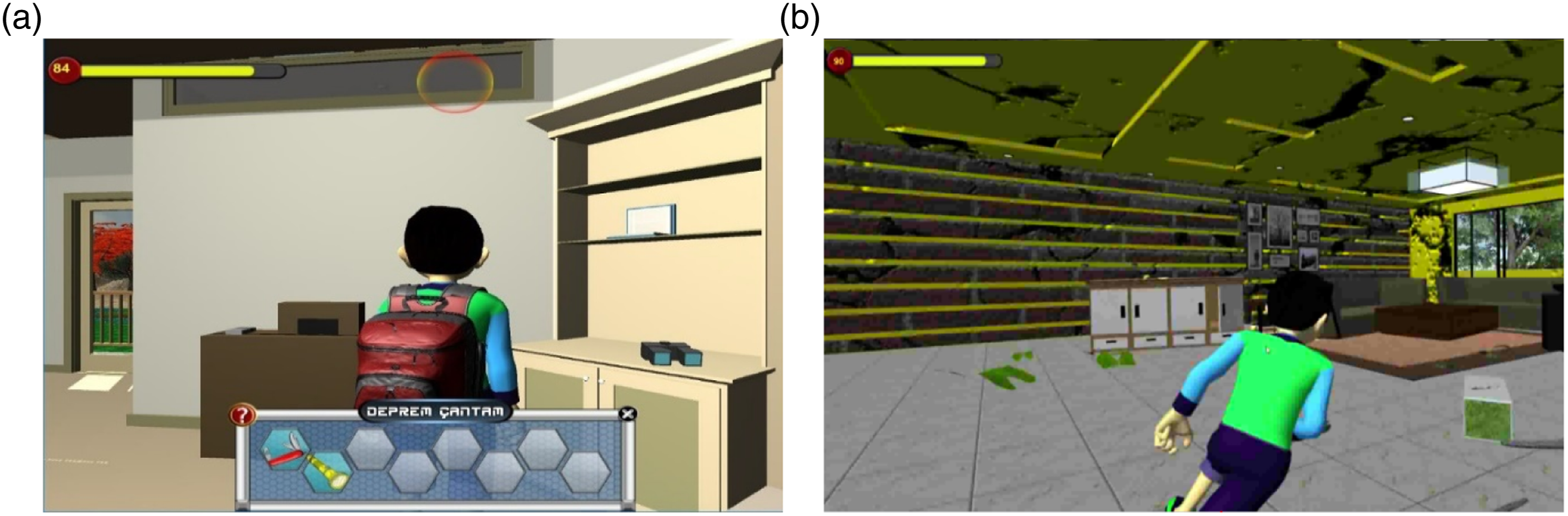
In the first level of the game, the player is expected to collect the target items into the earthquake bag within 100 s among the objects scattered on the stage. The player can see the correct objects he has collected in the section titled My Earthquake Bag, as seen in Figure 3(a). The player gains additional time (10 s) and points for each correct object he finds. If the player cannot collect the specified items in the target time, he will not be able to move on to the second stage of the game, and the game will end.
In the second level of the game shown in Figure 3(b), an earthquake occurs at a random time interval. The player can be found anywhere at the time of the earthquake. It is recommended that support should be obtained from intact objects by avoiding unfixed items, especially without panicking in the event of an earthquake, and that a safe place and drop-cover-hold on movement should be performed until the shaking finishes (ISMEP, 2011). Drop-in this movement means predicting to find a safe place and kneel, cover expresses the protection of head and neck, and hold on means holding in a fixed place not to fall. In the event of an earthquake, the player decides where and how best to protect himself, where he will make drop-cover-hold on movement, wait for the earthquake to stop, or try to leave the site. During an earthquake, depending on the severity of the earthquake, unfixed items in the game scene may fall over and collapse, and cracks in various parts of the building can occur. The player loses points for each impact he is exposed to, and when the score value is zero, the player’s character dies, and the game ends. The game can be played as many times as wanted. Also, the player can pause and resume the game at any time from where it quit. When the second level is completed, the player sees an animated show and greeting message, and the game is over.
Some motivating design elements have been added to the developed game. For example, in the first level of the game, the background music was added to the background to motivate the player emotionally (Garris et al., 2002). When the items to be collected in the earthquake bag are correctly selected, the player hears a sound effect as feedback. The player has 100 s to complete the first level successfully. This time is shown in a time bar to motivate and help the player become motivated. The duration is set to be not too long or too short for the player to allow the player to control himself within a certain limit (Csikszentmihalyi and Csikszentmihalyi, 1992; Garris et al., 2002). The items to be collected in the earthquake bag were distributed to random places on the layer to make the game more mysterious and fun (Garris et al., 2002). The player earns additional time (10 s) for each correct item he collected in the earthquake bag, which is automatically updated in the time bar.
In the second level of the game, sound effects such as refraction or multiplication were added to the falling elements during the earthquake to motivate the player emotionally (Garris et al., 2002). To give a sense of fun and reality together, it is ensured that the sound produced by a real earthquake is experienced by the player. A sound effect is added to evoke a sense of pain to allow the player to react to physical impacts. The player is dead when the score value is zero as a result of the impacts. The player is given the sound of dying to revive a real moment of death.
Garris et al. (2002) emphasize that it is necessary to analyze the difficulties and problems faced by users who play a game for learning purposes and to determine the ways of solving these problems (Garris et al., 2002). Therefore, a pilot study was conducted with five students to finalize the game mechanics and prevent possible user errors. The pilot study took about an hour. At the end of the pilot study, the data obtained from the feedback received from the students, and the observations made were evaluated, necessary arrangements were made, and the final version of the game was developed.
After the informative meeting, students played the game several times at the end of the last lesson of the remaining 2 days. Quantitative and qualitative data were collected from the students after the application process, which was presented in Figure 4, and the process was completed. Teaching with digital game process.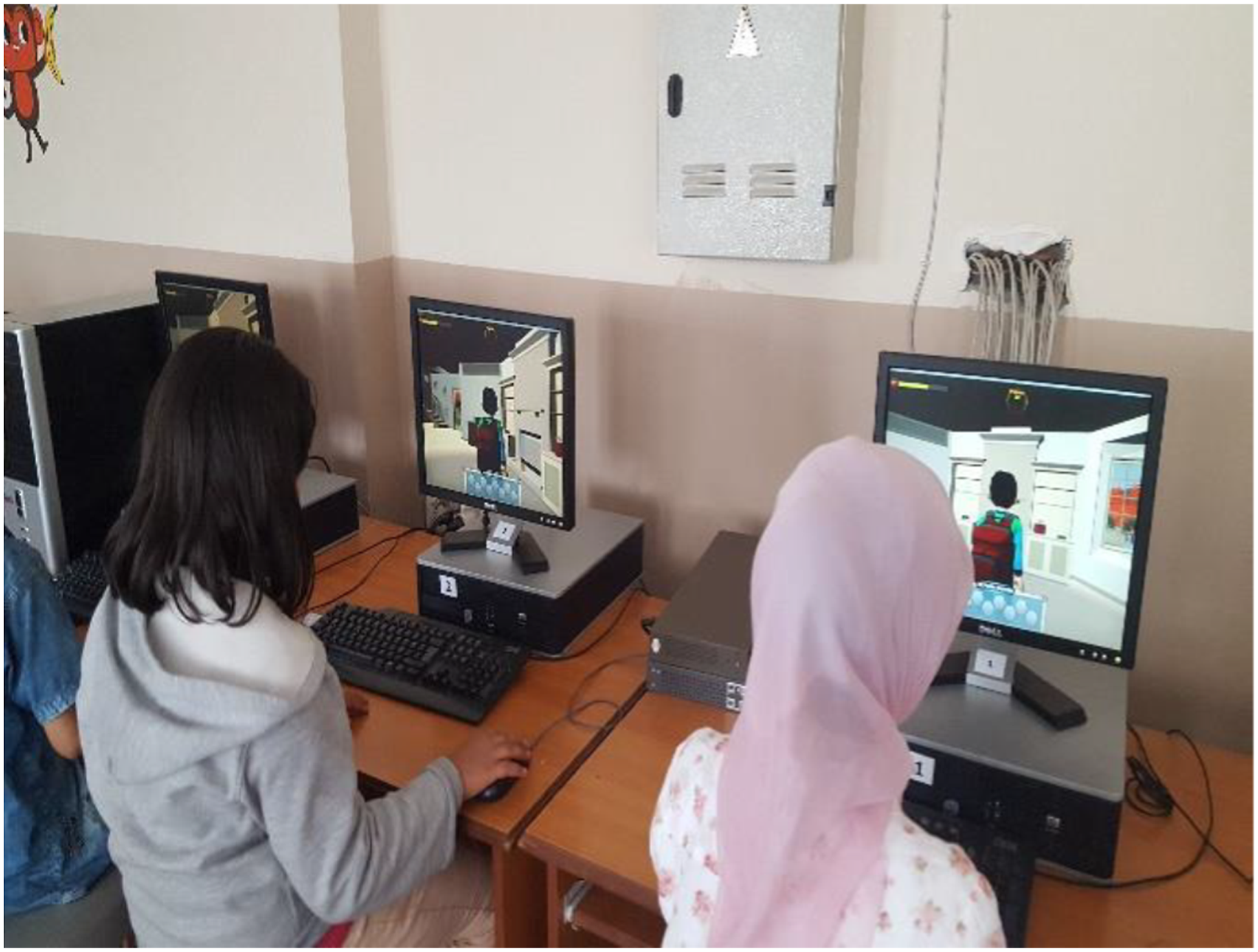
Teaching with drill
Four experts from the DEMP provided the students with practical training on the protective measures for earthquake protection. It is emphasized that the purpose of earthquake drills is to strengthen the ability of people to demonstrate safe behavior quickly and effectively without hesitation or trying to remember what to do when an earthquake occurs.
In line with this purpose, after the information process, students were provided to perform the “drop-cover-hold” movement practically in the event of a possible earthquake, and they were provided to perform these movements practically in the event of an evacuation (Tipler et al., 2016). For example, during the evacuation stage, students were enabled to move to a pre-determined meeting area, using their hands to protect the head and neck. Besides, practical activities were carried out regarding what dangers the students might face during the evacuation and which roads they will evacuate. On the third day of the implementation process, after a warning sound was given by the school, the students were given the evacuation activities, and the teaching activity was completed. Some screenshots of the training activity by drill are shown in Figure 5. After the application process, quantitative and qualitative data were collected from the students, and the process was completed. Teaching with drill process.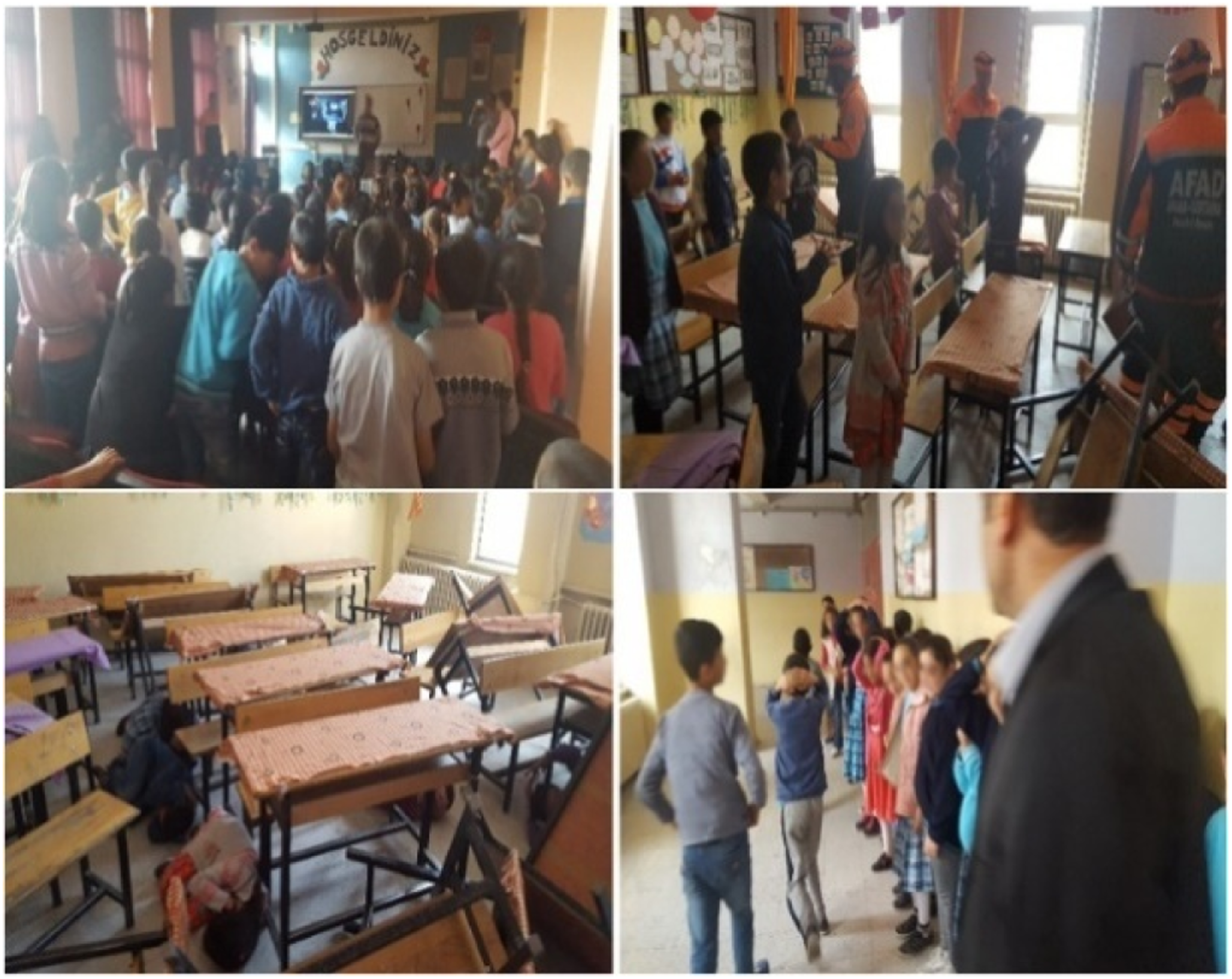
Teaching with traditional education
The students in this study group were trained by presenting traditional methods. During the education, students used the brochures on the DEMP official Web site and resources on earthquake protection. These resources were preferred because the printed resources were suitable for learning objectives and contained colorful and summary information for children. A brochure (Brochures, 2018) and printed materials were used in the learning activity. The one-page brochure is designed in color for children. As content in the brochure, there are stages related to the pre-earthquake preparation plan, the creation of the earthquake bag, basic behavior information to be done at the time of the earthquake, and communication information in case of an emergency. As printed material, the information in the electronic resource published within the scope of the Istanbul Seismic Risk Reduction and Emergency Preparedness Project was used (ISMEP, 2011). The printed material contains colorful and summary information. It was observed that it covers the learning objectives stated within the scope of the study. For example, information such as how to fix things before the earthquake, what behaviors should be done at the time of the earthquake, and the possible evacuation ways after the earthquake are presented. The learning content in the printed material consists of 34 pages. After the informative meeting, students acquired theoretical knowledge by making use of this brochure and printed material in the last lesson of each day. A screenshot of the training activity by traditional education is shown in Figure 6. After the application process, quantitative and qualitative data were collected from the students, and the process was completed. Teaching with traditional education process.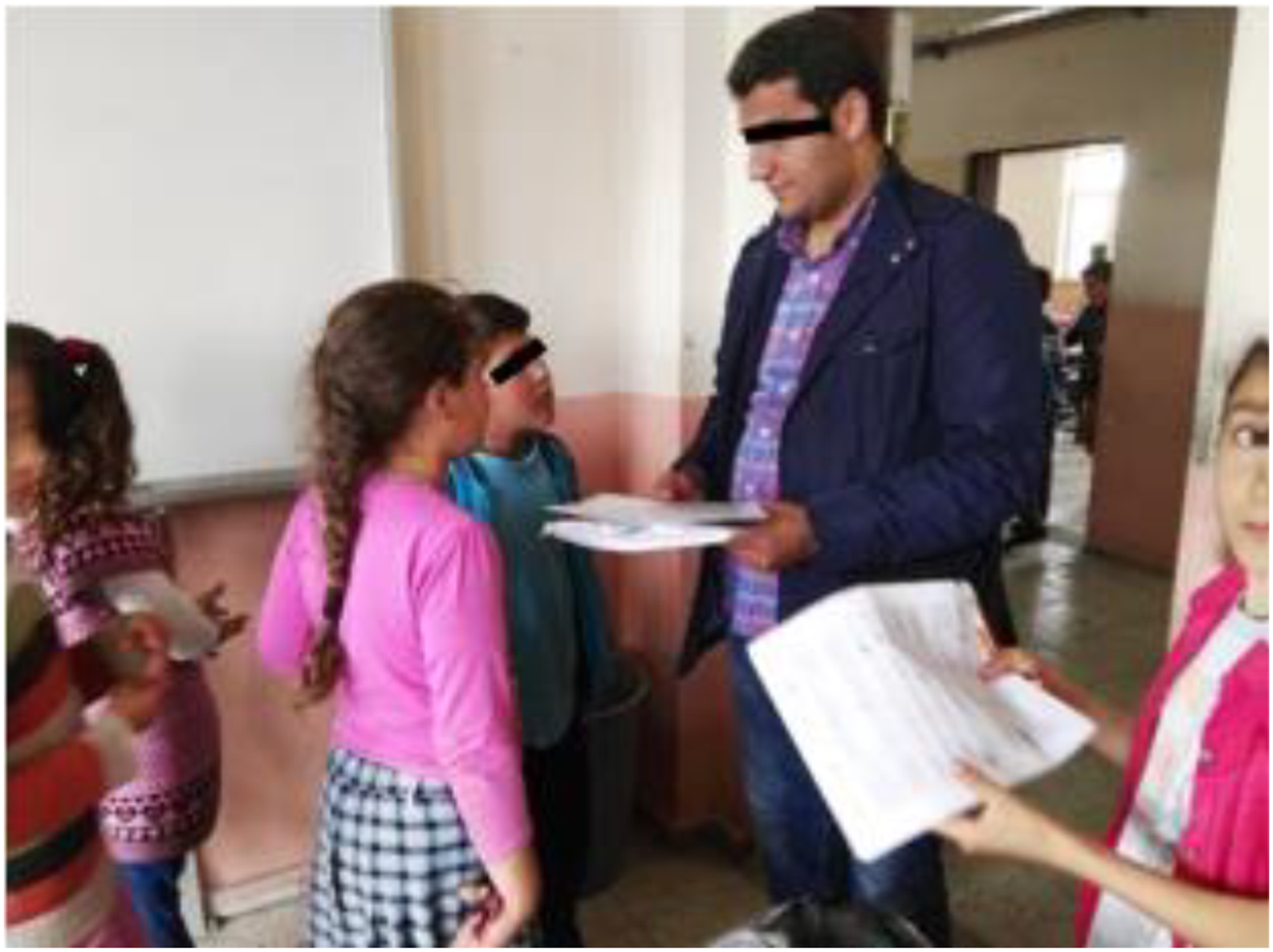
Data collection tools
Keller (1987a) developed the ARCS Motivation Model based on expectation-value theory (Vroom, 1964) and consisting of four dimensions to motivate the learning process. The model was named the ARCS Motivation Model because it consists of initials of Attention, Relevance, Confidence, and Satisfaction. The attention dimension is a sub-dimension that includes activities developed to attract the attention of the student during the lesson and to ensure the continuity of this attention. Attention is related to reflexes, curiosity, and senses, which are among the natural reactions of individuals. The interest dimension is the motivation sub-dimension about why the student’s activities during the lesson process are important for him and meet his expectations that the information he learned in the lesson will be useful for him in the future (Keller, 1987a). Therefore, if the course activities taken by the student do not meet the expectations of the student and thinks that it will not be useful in the future, the student will not be interested and motivated. Students can gain different and new objectives during the course. The confidence dimension is the motivation sub-dimension, which includes activities to provide a sense of accomplishment using the knowledge acquired by the student. Therefore, the difficulty level of the student’s activity or activities where he can test the knowledge he has learned must be well adjusted. Activities with a high level of difficulty can lead to a loss of feeling of achievement in the student and can naturally negatively affect the student’s self-confidence. This can also negatively affect the student’s motivation (Keller, 1987b). The student may be pleased to receive an award for fulfilling pre-determined objectives in the course processor to receive a diploma at the end of the course process. The satisfaction dimension is a sub-dimension of motivation, which covers activities aimed at motivating students to work and pursue their aspirations.
Course Interest Survey (CIS) developed by Keller and Subhiyah (1987) was used to determine the motivation of the students against the educational activities offered. This scale is a scale used to measure the motivational effect of the lesson on the students in motivation-oriented teaching or the reactions of the students to the lesson in the motivational context (Huett, 2006; Keller, 2006). Furthermore, the developed scale is a scale developed to measure the motivation and responses of the students towards the specifically defined education method rather than the general level of motivation (Keller and Subhiyah, 1987). This scale was used because it was aimed to measure the motivation of the students towards the educational activity offered rather than their previous general motivation. The five-Likert type scale was adapted to Turkish by Acar (2009), and the reliability coefficient Cronbach Alpha value was calculated as α = 0.93. The Cronbach Alpha value of the data collected within the scope of the study was calculated as α = 0.90. Therefore, the scale is quite reliable. The highest score to be obtained from the scale is 170.
The interview form prepared for qualitative data was checked by two field experts, two doctoral students, and one language specialist and rearranged according to the feedback received. Then, a pilot interview was held with a student, and necessary arrangements were also made in the form.
Data analysis
The descriptive statistical methods were used to determine the difference between ARCS motivation means and motivation sub-dimensions. Then, the statistical significance and effect level of the difference was determined. According to Kolmogorov-Smirnov normality test results, it was found that [pARCS = .000; p < .05], [pAttention = .000; p < .05], [pRelevance = .000; p < .05], [p Confidence = .000; p < .05] and [pSatisfaction = .000; p < .05]. According to Levene’s homogeneity test results, it was found that [pARCS = .000; p < .05], [pAttention = .004; p < .05], [pRelevance = .000; p < .05], [p Confidence = .008; p < .05] and [pSatisfaction = .000; p < .05]. According to these results, the data were not distributed normally, and it was not homogeneous. For this reason, Kruskal Wallis and Mann-Whitney-U tests of non-parametric tests were used for data analysis (Field, 2013). After the Bonferroni correction to be made in a case where three groups will be compared with each other, the p-value was considered as .0167 since the significance level to be taken as a basis in paired comparison tests would be p = .05/3 = .0167 (Pallant, 2007). The qualitative data obtained from the interviews with the students were analyzed using the content analysis method.
The qualitative data obtained from the interviews with students were analyzed using the content analysis method. In the coding process of the data, Cohen Kappa value, which is also considered as inter-rater reliability, was taken into consideration (Cohen, 1968). In the calculation made by the researchers, this value was calculated as 0.846. In this context, it can be said that the coding process is reliable.
Findings
Results regarding differences in motivation between applied teaching methods
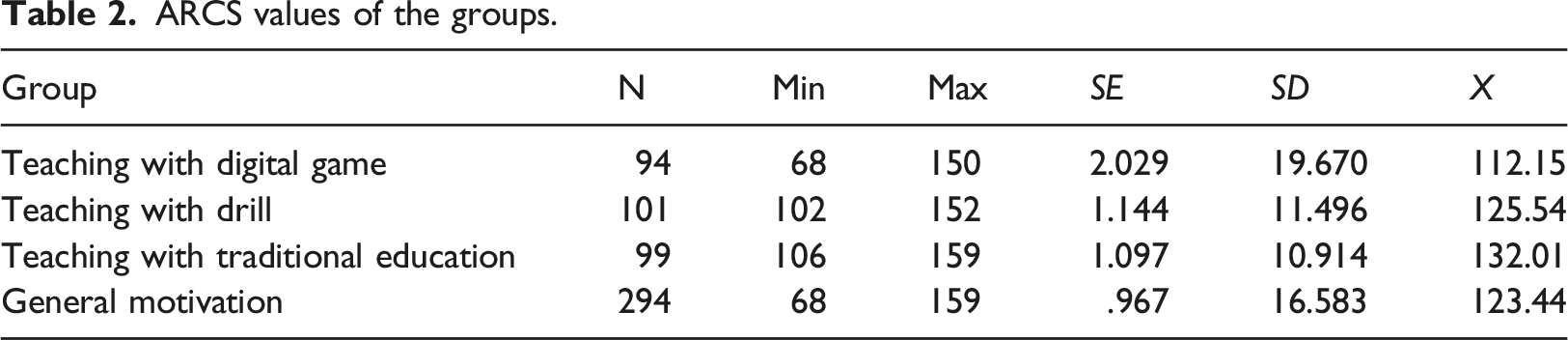
ARCS values of the groups.
Mann–Whitney U test results.
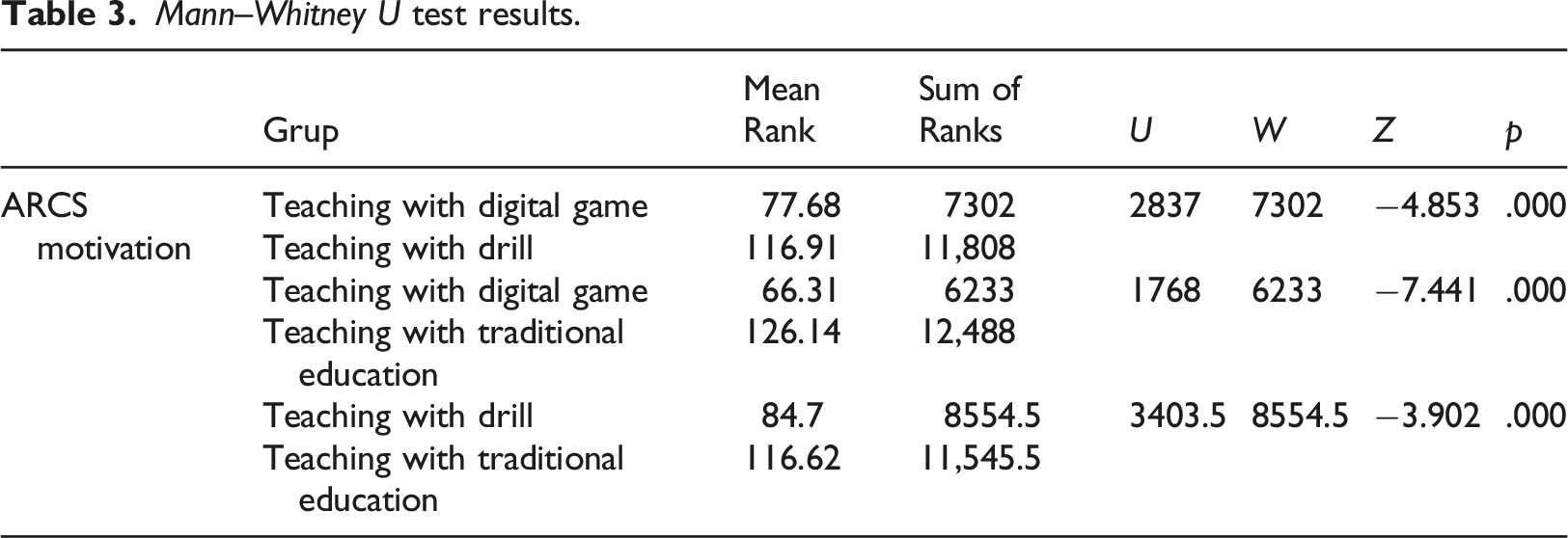
When Table 3 is examined, in terms of teaching with the digital game and drill [Mann Whitney-U = 2837; z = −4.853; p = .000], there is a significant difference in favor of training with the drill. With regards to teaching with the digital game and traditional education [Mann Whitney-U = 1768; z = −7.441; p = .000], there is a significant difference in favor of traditional education. Finally, according to teaching with the drill and traditional education [Mann Whitney-U = 3403.5; z = −3.902; p = .000], there is a significant difference in favor of traditional education.
Descriptive results of ARCS sub-dimensions.
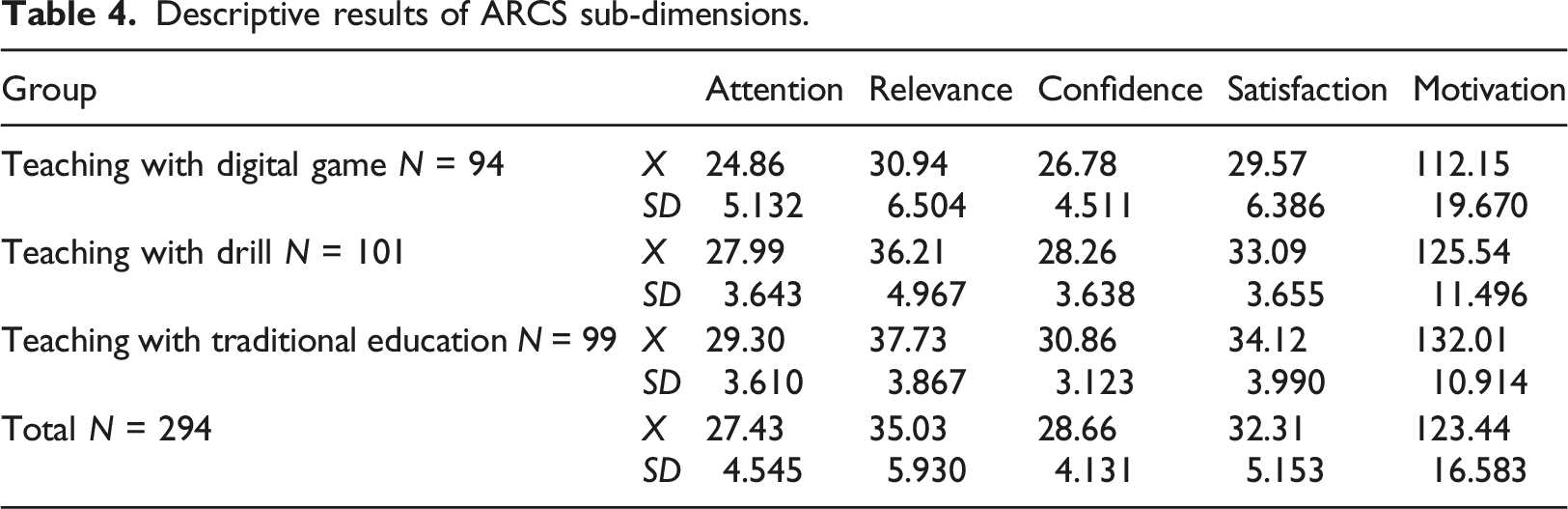
As presented in Table 4, there was no significant difference between the digital game group and the drill group only in terms of the confidence dimension [Mann Whitney-U = 3899.5; z = −2.159; p = .031]. There is a significant difference between all other dimensions in favor of the drill group. There is a significant difference between the digital game group and the traditional education group in favor of the traditional education group in terms of all motivation dimensions. Lastly, no significant difference was found between the drill and traditional education groups between the sub-dimensions of relevance and satisfaction. However, a significant difference was found in favor of traditional education group between sub-dimensions of attention [Mann Whitney-U = 3962.5; z = −2.545; p = .011] and confidence [Mann Whitney-U = 2964.0; z = −4.992; p = .000].
Opinions and experiences of students regarding teaching methods
Opinions and experiences of students.
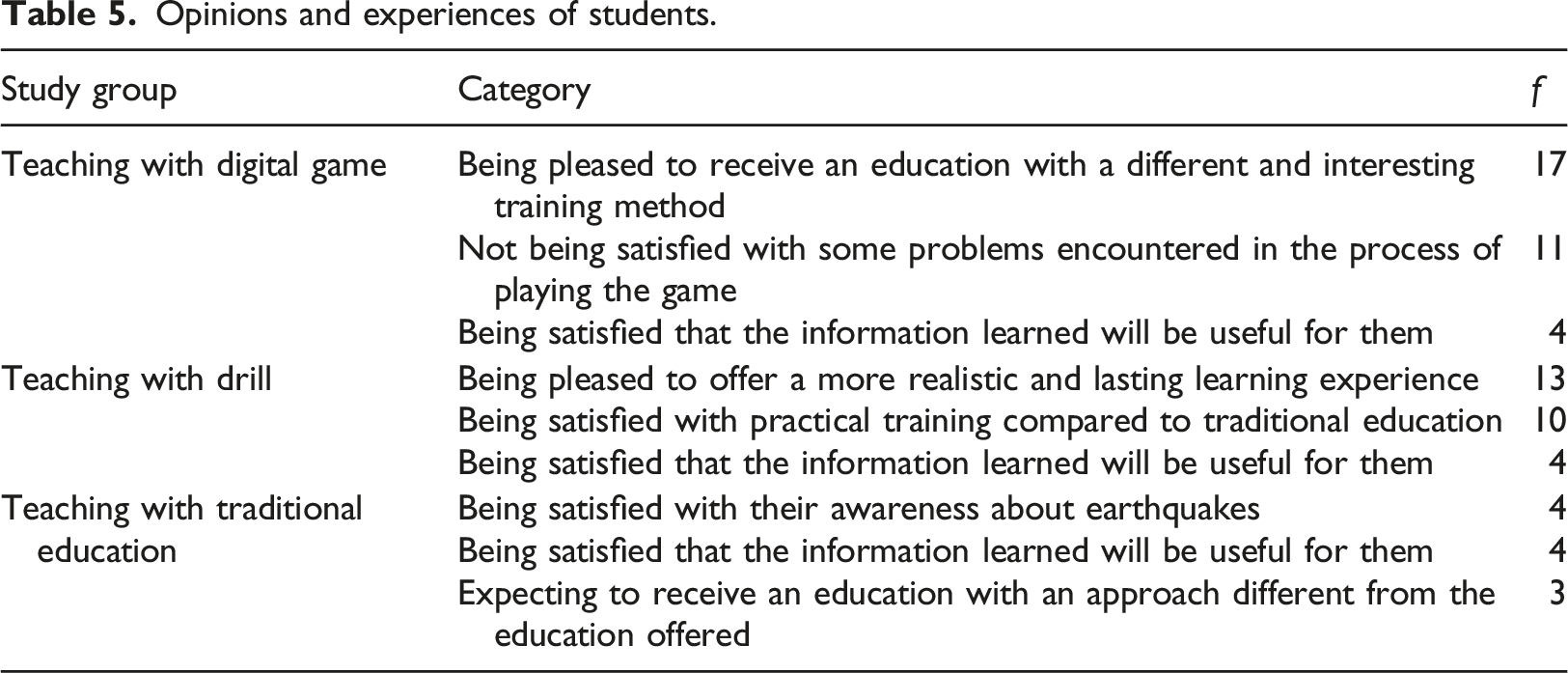
The students in the digital game group stated that they are pleased to receive education differently and interestingly. The students stated that they adopted the game and that the game was exciting and interesting. They also stated that they were pleased that the information learned would be useful for them. Some students about this situation reflected their experiences as follows:
“There are more interesting things in the game.”
“The game is more interesting and fun…”
“It was showing us how to act [behave] in an earthquake.”
“…the game teaches people useful things.”
“…if there was an earthquake, for example, this information could save our lives.”
However, the students stated that they had encountered various difficulties with the game and were displeased with it. For example, they noted that they sometimes encounter problems when moving the character in the game and that the camera angle that displays the 3D environment is adversely affected by some design elements in the game environment, occasionally blocking their viewing angles. Some students have expressed their experiences as follows:
“I was pressing the keys, but the character sometimes did not stop.”
“Sometimes, the player could not quite get in between the doors...”
“…the player barely made it up the stairs.”
“The camera was constantly showing the walls. That is why I was having trouble.”
Some students suggested video-assisted teaching as an alternative approach to teaching with the GBL method. A student expressed his opinion about this situation as follows:
“…for example, there may be something like a video film about the earthquake in schools…”
The students in the drill group stated that they were very pleased with the practical presentation of the preparation information about earthquakes. They were very pleased with this situation, stating that the education offered allowed them to experience more realistic and more lasting learning experiences. Some students have reflected their experiences as follows: “It is very good that the training process is practical...” (
“It is more effective because it is education with applications because we are reading, it is engraved in our minds. But we learn better when we practice.”
“…because when we read from the book, there are some things that we don’t understand. But if we do, we can keep in mind to repeat…”
In addition, students emphasized that they are pleased to receive an education with a different method as an alternative to the traditional education method, and the activities in the drill are more realistic and practical than traditional education. Some students have expressed their views as follows:
“…because we practically learned how to behave when there is a fire or an earthquake during an earthquake.”
“We learned practically what we can do when we are left under the rubble after the earthquake. In this way, we have a better understanding of earthquake protection methods...”
“This training was more practical than normal lessons [traditional methods].”
“…if there is time to escape from the earthquake, we should also take the earthquake bag. We must prepare the earthquake bag beforehand. We realized this…”
Finally, the students suggested that they did not encounter any negative situations during the application process and that they could be taught with a training method such as theater or drama as an alternative approach to the training method by the drill. In addition, they stated that the objectives they obtained with the application method were useful information for them in the future and that they were pleased with this situation. Some students have expressed their views as follows:
“Theatre can be a more flamboyant [effective] education.”
We learned useful information that will save both our relatives and our lives.”
“I learned practically how to do the collapse-snap-hold movement when there is an earthquake in the future. I enjoyed doing this...”
Students in the traditional education group stated that they were satisfied because they learned the information about earthquake preparedness and earthquake protection. The students stated that awareness-raising activities are important for their safety, and they argued that the training method provided is very useful in terms of presenting information that could save their lives during an earthquake. Regarding this situation, some students reflected their opinions as follows:
“I am very glad that it can keep us safe …”
“I am very happy that it taught us how to act in an earthquake.”
“Because it made us aware of the earthquake...”
“…taught the side effects of the earthquake. It taught the bad effects…”
“Taught earthquake-related measures, items that should be in an earthquake bag...”
“If we did not receive this information and there was an earthquake, we would act very unconsciously. We would do something wrong. For example, we would go and get on the elevator or stay near the windows...”
“We learned about how we can save our lives in an earthquake. So, it was a very useful course.”
Students also suggested different education methods than traditional education methods. For example, they stated that videos related to earthquakes can be used in the teaching process, practical activities such as drills and that a course related to earthquakes can be actively included in the curriculum. The students reflected their views on these suggestions as follows:
“For example, there should be something like a movie about the earthquake moment in schools...”
“There may be preparatory things (activities) such as drills.”
“There could be an earthquake course, such as mathematics and Turkish. A course about what we can experience about earthquakes can be given…”
Consequently, students stated that they did not face any difficulties with the traditional education process, but that teachers should be more supportive in the education process offered. For example, a student has expressed his opinion as follows:
“I think it would have been better if my teacher had told me. I mean, it would have been better if the teachers had taught me…”
Discussion
This study aims to investigate the impact of different educational practices on the motivation of the students to teach earthquake preparedness and earthquake prevention to primary school students.
According to the results, most of the students in the study groups think that the information presented will be useful to them. According to the Expectancy-Value Theory of Atkinson (1957), if the individual believes that the knowledge he will learn will be valuable and useful to them, he will act and become more motivated to learn that knowledge. In this respect, students’ motivation to view learning content as beneficial to them has a positive effect (Atkinson, 1957; Keller, 1987a). The fact that the relevance dimension is higher in the sub-dimensions of motivation than in the other dimensions supports this situation. However, it appears that the motivation orientations of the students for different educational activities vary.
For example, students in the GBL group stated that the training method offered by the game was interesting, remarkable, and fun. In the literature, it is stated that these features of digital games motivate students (bin Abdullah and Toyoda, 2021; Feng et al., 2021; Gampell et al., 2020; Min et al., 2022; Noroozi et al., 2020; Shu et al., 2019; Shyr et al., 2021; Tsai et al., 2020; Winarni et al., 2021). In this context, these features offered by digital games may be a reason for students' satisfaction with their education with a different education method than the traditional education method. However, they were displeased with some of the design elements in the game. In particular, some of the design elements in the first level of the game seem to have a significant impact on the motivation of the students. Past research has argued that design elements such as feedback, reward, task difficulty, and control, which are commonly used within game mechanics, have a significant effect on motivation (Csikszentmihályi and Csikszentmihályi, 1992; Malone and Lepper, 1987; Rigby and Ryan, 2011; Tanes and Cho, 2013). In this context, it can be said that the process of students adopting and motivating the game is adversely affected due to the discontent of the students regarding some of the design elements involved in the Earthquake Escape game. Barreto (2014) also reached similar conclusions. Barreto (2014) concluded that the difficulty level of the earthquake game they had developed was not designed to be suitable for students and argued that some design deficiencies in pedagogical terms adversely affected motivation.
Rigby and Ryan (2011) point out that in a GBL-based teaching method, the relatedness component, which explains the process of a player having meaningful relationships with other players, can be effective in terms of motivation. Considering that Earthquake Escape is a single-user and offline game, students do not have the opportunity to communicate with other students within the game. Therefore, students' motivation may have been affected by the relatedness component. However, in some studies, it was concluded that, even though an online game education activity was offered, students’ interest in the game decreased over time (Eseryel et al., 2014). In the related research, it is argued that the motivation of the students is gradually decreasing since the game does not meet the expectations of the students to be like a typical commercial game. Therefore, users' perceptions, expectations, and reactions regarding an educational digital game may affect their motivation.
In this context, some researchers use the “chocolate-covered broccoli” metaphor to define educational games (Granic et al., 2014). In other words, they argue that the entertainment factor is negatively affected or even removed when the educational content is embedded in a digital game (Bruckman, 1999). In this context, although the motivation variable is thought to be affected by the design of the Earthquake Escape game without the relatedness component and some design deficiencies, it can be considered that motivation is also affected by the nature of educational digital games. The fact that the attention dimension related to the teaching with the game is lower than the other dimensions can be shown as proof of this finding.
As a remarkable variable, the perception of reality is effective in terms of motivation. For example, students in the drill group stated that the training method offered was realistic and practical and expressed their satisfaction with this situation. However, it is seen that there is no similar reaction from students in the digital game and traditional education group. Some studies state that earthquake education with digital games cannot reflect a real earthquake moment (Chen, 2015; Gong et al., 2015; Hu and Zheng, 2018). This factor may be a reason for the motivation of students in the drill group to be higher than those in the digital game group. In some studies, the greater adoption and motivation of digital games integrated with technologies such as VR, which offers a greater sense of reality to users, support this situation (Feng et al., 2020, 2021; Lovreglio et al., 2018; Shu et al., 2019). In this context, the fact that the Earthquake Escape game developed has more limited features in terms of presenting the sense of reality to students compared to digital games integrated with technologies such as VR may have affected the motivation of the students.
The students in the drill group stated that they were pleased because the training method offered was practical. Higher motivation and satisfaction sub-dimensions related to motivation support this situation. However, some studies argue that drills are not effective and motivating enough in earthquake education (Gong et al., 2015; Hu and Zheng, 2018; Lovreglio et al., 2018). Therefore, it is stated that the drills are repetitive and performed activities by the formalities at certain time intervals rather than reflecting a real earthquake moment (Johnston et al., 2011). The results contrast with these findings in the literature because some research emphasizes that drills are more effective in changing and motivating students’ attitudes (Aslam et al., 2019; Mubarak et al., 2019). The findings of the study are similar to the findings in these studies.
According to social learning theory (Bandura, 1986), it is emphasized that especially elementary school students can take models by observing most of their affective, cognitive, social, and psychomotor learning skills and obtain more effective learning objectives. In this context, it can be said that drills are observable and composed of applied activities that are effective in the satisfaction of students with applied activities. However, in some studies, it is stated that the people who participated in the drills expressed that it was not effective because they are not generally provided with assessment and feedback regarding the right protection options against disasters (Gwynne et al., 2016, 2019). Considering that students’ perception of success should be provided as a result of their activities for motivation, the lack of feedback for students in training offered by the drills can be shown as a reason affecting their motivation. The low motivation attention and confidence sub-dimensions support this situation.
It is seen that students who are educated with the traditional method are more motivated. In some studies, it is emphasized that traditional methods to motivate students are not effective, teaching books and other printed materials deprive students of interaction, have limited features (Tekeli-Yesil et al., 2019), are boring, and do not motivate students in disaster education (Gong et al., 2015; Hu and Zheng, 2018; Tsai et al., 2015). However, in some studies, media items such as brochures, posters, and written documents that are used in conjunction with traditional methods in earthquake education are reported to be effective (Navakanesh et al., 2019; Tanaka, 2005). To this end, the findings obtained in this study seem to coincide with the results of these studies in the literature. The students stated that the educational materials provided contained vital information for them. This may have provided students with awareness and motivated them (Atkinson, 1957; Keller, 1987a) because they realized that the information they learned in the face of a seismic risk factor was directly related to them. The enrichment of the content in the printed materials with the images directly related to the effects of the earthquakes may have provided the students’ awareness and motivated more (Cammasi et al., 2005). Besides, it is stated in some studies that printed materials may be more interesting and direct subject-oriented rather than the format that can satisfy students (Martinez, 2002). It is also stated that printed materials support students to organize their learning processes in line with their learning styles and can be motivating when they are well designed (Johnstone, 1996). These features of the printed materials may have motivated the students more.
Compared to students in other groups, students who have been taught with traditional methods have been trained with an education method they are more familiar with. In this matter, the education experiences of students in other groups are more sophisticated. In addition, students in the digital game group complained about various design problems. Considering these variables, it can be discussed as another reason why the motivation of students in the traditional education group is higher. Although students seem to be satisfied and more motivated by this method of education, the students state that they can be trained using different educational practices such as drills and watching movies. Therefore, it can be argued that a single information format is not sufficient to motivate individuals and that different sources should be used (Becker et al., 2012).
Limitations
There are many limitations to this study. First of all, educational practices cover about an hour. This period is a very limited time. However, to determine students’ reactions and attitudes towards motivation orientations, it is thought that the number of sampling is the high and random determination of the study groups reduces the effect of this limitation. Secondly, it should be noted that students in the digital game group have low motivation due to some design difficulties in the game. The corrections made to the digital game are limited to the data obtained as a result of a pilot application only. Therefore, it is seen that the number of pilot studies is very important to reveal possible design deficiencies in full (Garris et al., 2002). Thirdly, some researchers argue that different results can be obtained in terms of motivation, considering student characteristics and the types of games used (Khenissi et al., 2016). For instance, while some students are better motivated than game types such as adventure, strategy, and simulation, some students may be better motivated than games containing themes such as puzzles and action. For this reason, the findings obtained from the students in the digital game group are limited only by their motivational responses regarding the Earthquake Escape game. Lastly, students in the drill group continued their educational activities interactively with people in the DEMP team. However, the interaction in the digital game group and traditional education group is limited except for the information activity.
Conclusion and suggestions
Despite the limitations identified, this study can provide important information to educators, educational game designers, and educational politicians. Accordingly, the following conclusions can be drawn from the research: • All educational methods have positively influenced motivation as they offer basic, important, and real-life learning content such as protection, survival, and defense. • The teaching methods applied have limitations and advantages in terms of motivation. In this context, o Teaching with the digital game is motivating because it is fun, interesting, and has a different approach. Nevertheless, it appears to be not motivating in terms of presenting the perception of reality to students (Barreto, 2014; Chen, 2015; Lovreglio et al., 2018). o The influence of game mechanics is important in the motivational effects of the training method offered by the digital game. o The practical application of the teaching with drills and the presentation of the perception of reality reflected positively on the motivation of the students. o Motivation can be less costly and effective with printed materials. However, it is seen that it does not meet the expectations of the students in terms of motivation. o A single teaching method is not sufficient in terms of motivation. Students have different expectations regarding each educational method applied.
In light of these results, considering the following recommendations to motivate students about earthquake preparedness and earthquake protection can be useful to educators, game designers, and educational politicians: • It may be more useful to provide students with different, interesting, and real-life teaching activities for motivation. • The presence of teaching activities that will present the perception of reality in the training method to be applied can increase motivation. In this context, educational approaches integrated with technologies such as VR may be more effective in terms of motivation. • Developing teaching methods where students can control their learning processes, practice-based, and receive feedback to gain a sense of confidence may be more useful in terms of motivation. • In earthquake training, students can be more motivated when the design elements in digital games are planned more carefully from a pedagogical point of view. Therefore, when developing an educational digital game, it may be more useful to increase the number of pilot studies and the number of participants participating in pilot studies. • Using technologies such as VR and augmented reality, digital games that offer more sense of reality can be developed to examine the impact on students’ motivations.
In future studies, it is planned to develop an earthquake education simulation based on a VR platform so that students will experience a real earthquake moment. During the research process, students’ motivations will be examined in terms of different variables.
Footnotes
Declaration of conflicting interests
The author(s) declared no potential conflicts of interest with respect to the research, authorship, and/or publication of this article.
Funding
The author(s) received no financial support for the research, authorship, and/or publication of this article.
Compliance with ethical standards
The implementations were conducted at in Agri/Turkey. Before implementations, necessary permissions were taken from teachers and students. All children in our study were voluntary. Researchers helped them during activity. The names and faces of children were not used anywhere for this study.
