




Abstract
In this study, 15-year-old Turkish students’ profiles of using ICT at home and at school were identified, and the extent to which these profiles were associated with their academic achievement was determined. Moreover, the study investigated the effects of the students’ age of first usage of digital device and internet, their gender and their parents’ education level on the students’ ICT usage profiles. In the study, by using Latent Class Analysis, Program for International Student Assessment (PISA) 2018 Turkey data were analyzed (n = 6890). According to the findings obtained in the study, it was revealed that the students who used ICT resources at high level at home and at school constituted the smallest class (8% of the sample). The students whose mothers’ levels of education were high and those who were male had a higher probability of being a member of the high-level ICT user class. In addition, the students who started using their first digital devices and the Internet at later ages were less likely to be a member of the class using high-level ICT. Finally, the students in the high-level ICT user class had low mathematics, reading, and science achievement scores.
Keywords
Rapid developments in information and communication technologies have affected the political approaches of countries in different fields such as economy, trade, or education and made it necessary for them to adapt to this change. For this reason, many countries have implemented policies regarding the integration of information and communication technologies (ICT) into educational environments in order to adapt to this change and transferred significant resources to ICT infrastructures at schools (Steffens, 2014; Witte and Rogge, 2014). Though information technology is important for the development of a country’s workforce, the extent to which the country will benefit from ICT use depends on the accessibility of ICT and on the extent to which the population is competent in or familiar with ICT (Srijamdee and Pholphirul, 2020). These competences are often referred to as “digital competence” or “21st century skills” in literature. While P21 defines these competencies as the knowledge, skills, and expertise students need to become successful at work and in life (P21, 2019), the Organization for Economic Cooperation and Development (OECD) defines the 21st century skills as skills and competences required for young people to become effective employees and citizens of the twenty-first century information society (Ananiadou and Claro, 2009; Partnership for 21st Century Learning, 2019). Although different definitions and classifications have been provided in literature, these skills generally include technological usage skills, communication and collaboration, problem solving and critical thinking, creativity and productivity (Voogt and Roblin, 2012). According to Larson and Miller (2011), these skills generally emphasize what students can do with the knowledge and how they can apply that knowledge in the authentic contexts. In order to have students acquire these skills, countries’ national ICT policies and plans can provide essential tools for ICT to contribute significantly to the sustainable development of a society (SPC, 2010).
Some countries have highlighted the role computers can play in improving educational performance and in enabling students to master the skills and competencies necessary in today’s labor market (Farina et al., 2015). However, ICT usage policies in education vary from country to another. In Turkey, an OECD country, the government, with its 10th Development Plan released in 2014, aim to achieve a high level of education. Thus, since 2010, many important improvements have been done in the field of education to increase the quality of education (Depren, 2018). For example, in relation to technology integration policies in education, a project under the name of FATIH was implemented in 2010 with the cooperation of the Ministry of National Education and the Ministry of Transport. With this project, the purpose was to ensure the use of interactive boards and Internet at preschool, primary, and secondary education levels, to provide both teachers and students with tablet computers, and to create e-contents compatible with ICT-based teaching. One of the main goals of this project was to increase the academic achievements of students in courses (Ministry of National Education, 2012). Although there are mixed findings obtained in studies regarding the relationship between ICT use and student achievement, many of them have shown that ICT use increases the academic achievements of students (Delen and Bulut, 2011; Erdogdu and Erdogdu, 2015; Kubiatko and Vlckova, 2010; Zhang and Liu, 2016). However, according to the Program for International Student Assessment (PISA) applied by the Organization of Economic Cooperation and Development (OECD) in 2018, students in Turkey were found to be below the OECD average with respect to the students’ scores in mathematics, reading, and science. Among 79 countries, Turkey ranked 40th in the area of reading skills, 42nd in mathematics literacy, and 39th in science literacy (OECD, 2019).
PISA is an application carried out by the Organization for Economic Cooperation and Development (OECD), which collects data from 15-year-old students in countries around the world every three years. Each PISA test evaluates students’ knowledge and skills in the fields of reading, mathematics, and science. In 2018, PISA focused on reading skills in digital environment. PISA is also concerned with evaluating the role of information and communication technology in students’ lives (OECD, 2019). Since 2000, PISA has been conducting an additional survey to map ICT usage, including questions about access to various ICT devices, frequency of ICT use, and self-efficacy in ICT use. These applications give valuable information to politicians, researchers, and the education systems of countries about students’ performance in the related field and about the factors likely to be related to their performance
When studies in related literature are examined, it is seen that there are many variables related to the students’ learning outcomes in PISA tests. In the present study, the relationship between ICT use, one of these variables, and academic achievement was examined. In addition, the variables of gender, parents’ education level, and the age of first Internet-digital device usage were included in the scope of the study as they might have effects on students’ ICT usage profiles.
Literature review
ICT and academic achievement
There is a great amount of literature on the relationship between students’ use of ICT at home and at school and their learning outcomes. The influence of ICT on student achievement is still a matter of debate in most large-scale international studies conducted by researchers using different variables and methodologies (Erdogdu and Erdogdu, 2015; Petko et al., 2017). Some of these studies reported findings on the positive effects of ICT use on academic achievements (Aşkar and Olkun, 2005; Delen and Bulut 2011; Erdogdu and Erdogdu, 2015; Freddano and Diana, 2012; Kubiatko and Vlckova, 2010; Leino, 2014; Zhang and Liu, 2016). For example, Zhang and Liu (2016), in their study using PISA data from 2000 to 2012, found that when Gross National Product (GNP), school type and school ICT investments were controlled, the variables related to ICT at school-level had positive influence on learning outcomes. Another study used 2012 PISA data from Turkey. In this study, Erdogdu and Erdogdu (2015) demonstrated that access to the Internet at home had positive influence on the students’ mathematics achievement, while access to the Internet at school increased the student’s test score in the field of science. Similarly, Delen and Bulut (2011) used PISA 2009 data and examined the relationship between ICT use and the students’ achievements in mathematics and science in Turkey. Based on these data, the researchers revealed that the students’ use of ICT at home and at school was a strong predictor of their achievements in mathematics and science. Furthermore, use of ICT out of school had greater influence on mathematics and science achievement when compared to ICT use at school. Besides the effects of ICT use on science and mathematics achievement scores, it also had effects on reading skills. For instance, in one study with Finnish students, Leino (2014) showed that surfing on the Internet increases reading skills depending on the person’s familiarity with searching data on the Internet. In another study, according to PISA 2009, the Italian students with high levels of success in reading used the computer better than those with low levels of success in reading and that ICT had a more positive effect on the students’ success (Freddano and Diana, 2012).
There are studies reporting mixed or negative relationships depending on the availability/use of ICT at home and at school (Agasisti et al., 2020; Bulut and Cutumisu, 2017; Hu et al., 2018; Lee and Wu, 2012; Petko et al., 2017; Song and Kang, 2012; Skryabin et al. 2015). For example, using the PISA 2015 data, Hu et al. (2018) conducted a study with a total of 11,075 students from 44 countries and found that the availability of ICT at school had a positive relationship with the students’ academic achievement and the availability of ICT at home had a negative relationship with the students’ academic achievement. In another study, Skryabin et al. (2015), based on the Trends in International Mathematics and Science Study (TIMSS) 2011 and Progress in International Reading Literacy Study (PIRLS) 2011 data, revealed that use of ICT at home and at school positively affected the 4th grade students’ performances in reading, mathematics, and science. On the other hand, the researchers reported that for the 8th grade students, ICT use at school had negative influence in all these three areas, while its use at home had positive influence. In studies making comparisons between countries, the effects of ICT availability/use on academic achievement differed from one country to another. Bulut and Cutumisu (2017) used the PISA 2012 data in their study and found that ICT availability at home and at school had a positive relationship with the students’ achievements in mathematics and science in Turkey and a negative relationship with the students’ achievements in the two fields in Finland. In this study, although use of ICT for entertainment purposes had negative influence on the students’ scores in mathematics and science in Finland and positive influence on the students’ scores in mathematics and science in Turkey. Looking at the studies that revealed the negative effects of ICT use on academic achievement, Lee and Wu (2012) found that availability of ICT at home had a negative effect on PISA 2009 reading literacy. Song and Kang (2012), on the other hand, reported negative effects of using ICT at both student-level and school-level on mathematics achievement. There are also other studies in literature which did not find any relationship between ICT use and academic achievement (Alpay, 2010; Fariña et al., 2015; Scherer et al., 2017). For instance, Scherer et al. (2017), in their study using Latent Class Analysis, determined the ICT usage profiles of the students and did not find any relationship between these profiles and the students’ achievement scores in the computer and information literacy (CIL) test.
In some other studies using PISA data, findings were obtained in relation to the students’ usage frequency of and familiarity with ICT. Using the PISA 2015 data, Srijamdee and Pholphirul (2020), who conducted a study on the students’ daily use of ICT in Thailand, found that ICT use had positive influence on the students’ academic achievements as long as they used it at school only for 1–30 min on weekdays and for 2–4 h at weekends. In addition, the researchers reported that the students with more experience in ICT use tended to have better scores in reading, mathematics, and science. In another study conducted with students from the Czech Republic, Kubiatko and Vlckova (2010) used the PISA 2016 results and concluded that the students more familiar with the use of ICT achieved better academic results in science. Moreover, in other studies, it was reported that students who were familiar with the Internet and computers at an early age had higher levels of mathematical literacy when compared to those who were not (Aşkar and Olkun, 2005). On the other hand, there are studies reporting a decrease in achievement in line with the increase in usage frequency. Agasisti et al. (2020), in their study with EU15 countries, showed that according to the PISA test scores, more frequent use of ICT at home, even if it is related to school-related tasks, is harmful for academic achievement. Similar findings were obtained in a study carried out by Skryabin et al. (2015).
ICT and gender
According to the findings obtained in studies on gender and computer use, there were generally differences in ICT use between the male and female participants. In some studies, it was found that boys accessed and used computers more than girls (Alpay, 2010; Livingstone and Helsper, 2007; Notten et al., 2009; OECD, 2015). ICT usage of boys and girls could be said to differ depending on the purpose of using ICT. According to the PISA 2018 results in the OECD 2019 report, it is seen that in all countries, boys use computers considerably more than girls for educational activities. This difference is quite high in Turkey (OECD, 2019). Similarly, Fairlie (2016) stated that when compared to female students, male students were more likely to use computers for games rather than for school homework. Using the PISA 2009 data, Cheung et al. (2013) reported that when compared to female students, Hong Kong and Korean male students were more likely to use ICT at home for such leisure time activities as playing online games and downloading music and for online reading activities such as searching for information on the Internet and social networking. On the other hand, some studies revealed that female students preferred to chat and search for information on the Internet more than boys (Li and Ranieri, 2013; Pierce, 2009). Using the 2006 PISA Turkey data, Alpay (2010) stated that boys use the computer for software and entertainment purposes more than girls.
In addition, in some studies examining the relationship between ICT skills and student achievement, it was found that girls had higher scores than boys (Aesaert and Van Braak, 2015; Siddiq and Scherer, 2019), while some other studies revealed results in favor of boys (Volman et al., 2005).
ICT and SES (parents’ education)
There are different measures used to capture the socio-economic background, such as economic wealth, cultural capital, education levels, and parents’ occupation (Hauser, 1994). There are studies in the literature showing that students’ socio-economic status has a relationship with ICT use (Aesaert and Van Braak, 2015; Scherer and Siddiq, 2019). Similar to gender, studies report mixed findings regarding the relationship between SES and ICT competencies.
In one meta-analysis study, Scherer and Siddiq (2019), looking at the relationship between SES and ICT, found that students with higher SES performed better in ICT tasks than students with lower SES, regardless of the way SES was measured. The researchers concluded that these differences in access to digital resources and devices might lead to differences in ICT literacy and that accordingly, ICT literacy was sensitive to the differences in K-12 students’ SES. In another study, Aesaert and Van Braak (2015), in their research with elementary school students in Belgium, found that students from families where the mother had a higher education degree demonstrated better development in their higher-order ICT competencies and technical ICT skills related to digital communication and searching and processing digital information. The researchers also stated that SES-related differences in ICT skills might increase the differences between academic performance. Similarly, Vekiri (2010) found that the percentage of elementary school students with high SES searching for information was higher than the percentage of low-SES students performing such ICT activities. The study also revealed that students from low-SES families had fewer opportunities to develop their ICT competencies, which, according to the researchers, explained why they had less positive self-efficacy beliefs. Moreover, students from all social groups had equally positive beliefs about the value of computers. On the other hand, some studies provided evidence regarding the fact that the relationship between SES and ICT competencies was too weak to determine whether lower SES contributed to less developed ICT competencies (Tondeur et al., 2011).
Early use of ICT
The role of the family environment in developing ICT competence and autonomy is further strengthened by a lower age at which children start using the Internet and digital technology (Ólafsson et al., 2014). Students have more freedom of using ICT at home and have enough time to get to know and explore the technologies they have. Chaudron (2015) state that, based on the qualitative studies conducted in European countries, children’s ICT use skills begin to develop at a very young age in the home environment and that this period is absolutely necessary for the development of children’s digital competence. In one study carried out with the PISA 2015 data, Juhaňák et al. (2019), considering the students’ ages when they started using PC, examined their perceived ICT skills and autonomies at the age of 15. The findings showed that the children who started using computers at a later age (after age seven) in almost all the countries displayed significantly lower ICT competence and ICT autonomy at age fifteen. In another study conducted with 8th grade students from 15 countries, including Turkey, Hatlevik et al. (2018), the students’ ICT experiences (by year) had a positive relationship with ICT self-efficacy and computer-information literacy. Some researchers focused on university students’ ICT experiences. Verhoeven et al. (2016) found that among the best predictors of using ICT software was the age when students first started using the computer (the lower the age, the higher the scores). On the other hand, there are studies showing that ICT capacity decreases or does not develop over time (De Wit et al., 2012; Kaminski et al., 2009). Some studies focused on the relationship between Internet experience and Internet skills. For example, van Deursen et al. (2011) found that Internet experience had a positive relationship with content-related Internet skills (knowledge and strategic Internet skills).
Present study
When the related literature is examined, it is seen that although the influence of students’ ICT use on their academic achievement is unclear both in Turkey and in the world, many studies reported different and important relationships. These mixed relationships might be due to the fact that the relationship between ICT use and learning achievement is mediated by different backgrounds and process-related variables (Song and Kang, 2012) and/or might be due to the influence of differences in students’ use of ICT. Accordingly, our assumption is that there are unobservable student sub-groups representing different ICT user classes (profiles). In order to test this assumption, first, Latent Class Analysis, which groups students using a categorical latent variable, was applied. At another stage, the relationship between class membership and students’ gender, parents’ education level and their first use of Internet-digital devices was examined. In the last stage, whether class membership is related to the students’ academic achievement scores (mathematics, science, and reading) was examined. The full model of latent class analysis with academic achievement (mathematics, reading, and science) score as a distal outcome and students’ background variables (gender, parents’ education level and age of first digital device and Internet usage) as covariates is shown in Figure 1. Model of the study. Latent class (c).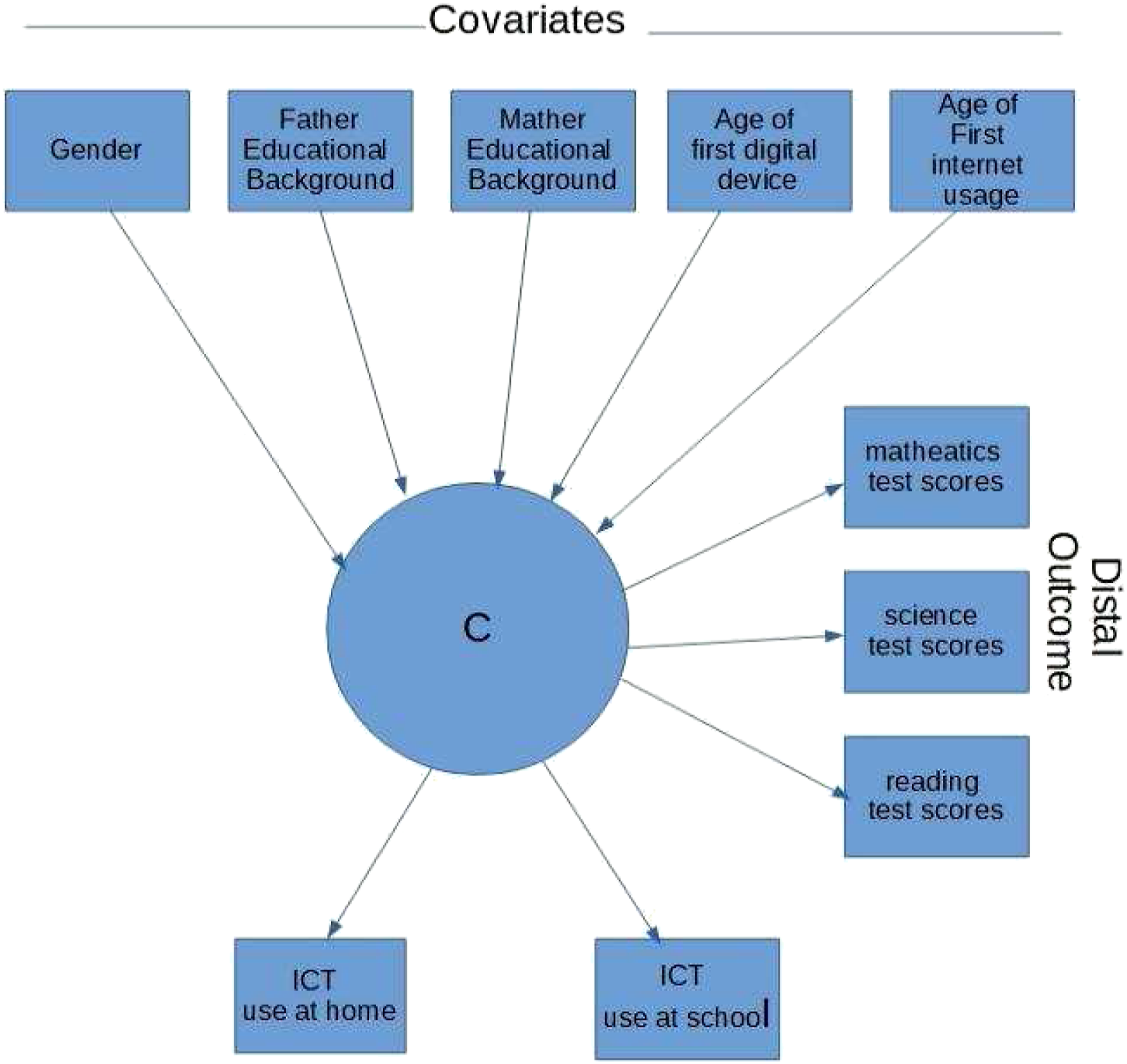
Considering that students in Turkey perform below the OECD average in PISA tests, the present study is important in terms of examining the factors associated with academic achievement. In addition, it is seen that most of the studies examining the relationship between ICT use and academic achievement used the PISA data of 2015 and before. In the literature, no research was found in which 2018 PISA Turkey data were analyzed with Latent Class Analysis. Therefore, is thought that this study will contribute to the related literature. In this respect, the purpose of this study was to determine the 15-year-old Turkish students’ profiles of using ICT sources at home and at school (who all took the 2018 PISA exam) and to identify the extent to which these profiles had a relationship with their academic achievements. In addition, the study also focused on the effects of students' first digital device and Internet usage age, their gender, and their parents’ education level on their ICT usage profiles. In this context, the following research questions (RQ) were directed in the study. (RQ1). How many latent classes can be defined in relation to 15-year-old Turkish students’ ICT use at home and at school who took the PISA exam, and what characterizes them? (RQ2). To what extent do student characteristics (gender, parents’ education level and age of first digital device and Internet usage) differentiate class membership of covariates? (RQ3). To what extent do students’ achievements in mathematics, reading and science exams in PISA (distal outcomes) differentiate latent ICT user class membership?
Method
Data
More than half a million students from 79 countries and economies that are (or are not) members of the OECD participated in PISA 2018. While determining the students to participate in PISA, in the first stage, the schools which students from the 15-year-old age group were attending were systematically selected, and in the second stage, the students from the schools determined were selected randomly (OECD, 2014). In this study, PISA Turkey 2018 data were used. Turkey took part in PISA 2018 with 6890 students from 186 schools representing 12 Level-1 regions (Suna et al., 2019). In the study, the data collected via the mathematics, science and reading field tests as well as via the student and ICT familiarity questionnaire. The ICT familiarity questionnaire asks students several questions regarding the use of digital devices and digital media including desktop computers, tablet computers, smartphones, mobile phones with Internet access, video game consoles, e-book readers, and Internet-connected television.
Items used in latent class analysis
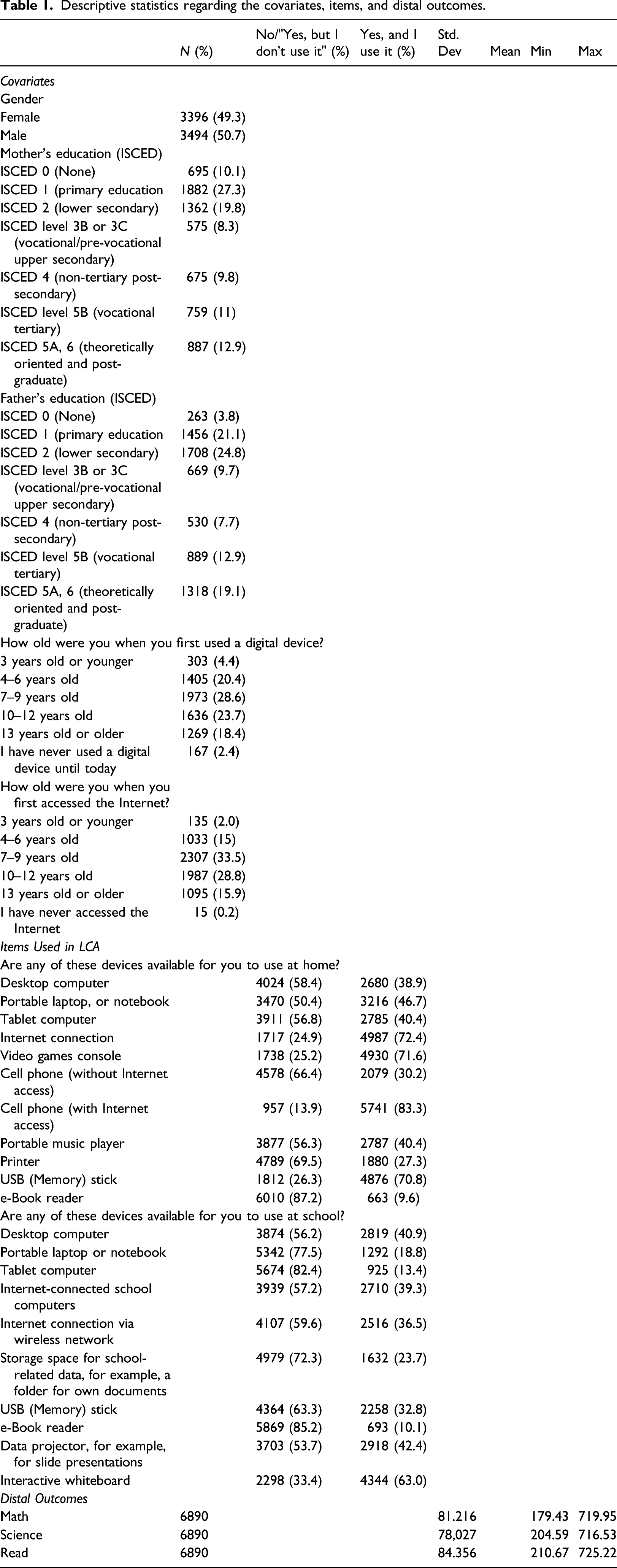
Descriptive statistics regarding the covariates, items, and distal outcomes.
Covariates
In the analysis process in the study, gender, parents’ education level, and age of first digital and Internet device usage were used as covariates.
Gender
The data collected from the PISA 2018 Turkey sample. In this sample, 3191 (50.2%) of the individuals were female, and 3164 (49.8%) of them were male. In the PISA student questionnaire, the individuals were coded as follows: “girls” = 1 and “boys” = 2.
Parents’ education
Parents’ education was classified using the International Standard Classification of Education (ISCED) (OECD, 1999). ISCED is a multi-purpose system designed to analyze educational policies and to facilitate decision-making regardless of the structure of national education systems or of the economic development levels of countries. The parents’ education levels ranged between 0 and 6, and these levels were coded as follows: (0) ISCED 0 (None) = 0 (1) ISCED 1 (primary education) = 1; (2) ISCED 2 (lower secondary) = 2; (3) ISCED Level 3B or 3C (vocational/pre-vocational upper secondary) = 3; (4) ISCED 3A level 4 (secondary school and up) and/or ISCED 4 (non-tertiary post-secondary) = 4; (5) ISCED level 5B (vocational tertiary) = 5 and (6) ISCED 5A, 6 (theoretically oriented and post-graduate) = 6 (OECD, 2009).
Age of first digital device and internet usage
In the PISA 2018 familiarity questionnaire, the questions directed to determine the students’ ages of using the Internet and a digital device for the first time in their lives were subjected to analysis. The items under the questions of “How old were you when you first used a digital device?” and “How old were you when you first accessed the Internet?” were coded as follows: “3 years old or younger” = 1; “4–6 years old” = 2; “7–9 years old” = 3, “10–12 years old” = 4; “13 years old or older” = 5, and “I have never used a digital device until today” = 6.
While performing the analyses, the categorical variables of parents' education level, age of first Internet and digital device use and gender were coded as dummy variables.
Distal outcomes
In the study, as the distal outcome, the students’ mathematics, science and reading test scores obtained via the PISA 2018 Turkey data were used. The tests used in PISA application included open-ended, short-answer and multiple-choice items. In each subtest, there were items for different proficiency levels. As a result of the students’ performances in the tests, plausible values were calculated for each student. There were 10 plausible values in each of the fields of mathematics, science and reading skills in the PISA 2018 application. Since the Turkey sample participating in PISA 2018 was taken into account in the study, the average of the 10 plausible values calculated in all the applications was taken into consideration.
Table 1 presents descriptive statistics regarding the distal outcomes, covariates, and items used in LCA.
Analytic model
LCA is used to classify groups of participants with similar unobserved characteristics according to observed item response patterns (Heinen, 1996; Muthén, 1992). LCA is sometimes compared with other statistical techniques such as class analysis or factor analysis. However, LCA is different from traditional class analysis because LCA is a model-based clustering approach. Unlike other types of class analysis, such as discriminant analysis (Hand, 1981; Lachenbruch, 1975), class membership is not known or data are not observed in LCA. Instead, class membership is assumed to be latent.
Factor analysis and LCA are similar techniques because both describe unobserved structures that underlie observed responses. While the basic structure in LCA is a categorical variable, it is a continuous variable in factor analysis. Variable-centered approaches like factor analysis determine relationships between variables, while person-centered approaches such as LCA define groups of individuals with common characteristics (Laursen and Hoff, 2006). In variable-centered approaches, it is assumed that the relationships between variables are consistent or homogeneous across the sample. In person-centered approaches, it is assumed that predictors influence outcome variables and that the process is heterogeneous across the sample. These approaches allow discovering individual or group differences in the response model (Laursen and Hoff, 2006). Masyn (2013) defines latent class analysis as “person-centered or person-oriented approach.”
Results
Latent profiles of ICT use at home and at school (RQ1)
The analyses in the study were conducted using the maximum likelihood estimation in Mplus v8.2 software (Muthén and Muthén, 1998). In the study, the process of separating the latent classes started with one class and continued with other classes until convergence problems were encountered. The analyses were run with 200 optimizations and 50 iterations with an initial value of 1000 to avoid convergence.
There are many criteria to decide on the appropriate number of latent classes (Geiser, 2011). Model fit statistics were used to determine the most suitable model. These were Akaike Information Criterion (AIC), Bayesian Information Criterion (BIC), Adjusted BIC, Lo-Mendell-Rubin Adjusted Likelihood Ratio Test (LMRT) and Bootstrap Likelihood Ratio Test (BLRT) (Akaike, 1974; Arminger et al., 1999; Lo et al., 2001). In addition to the model fit statistics given above, the theoretical significance of the classes and the proportion of the participants represented in the classes (being not less than 5% of the members that constituted each class) were taken into account (Bauer, 2007; Nylund et al., 2007). After choosing the most suitable model, modified three-step Mplus procedures (R3STEP) auxiliary command were used (Asparouhov and Muthén, 2014). The BCH procedure was used to determine the mean differences in the mathematics, science, and reading scores between the latent classes obtained (Asparouhov and Muthén, 2014), and multi-nominal logistic regression analysis was applied to determine the relationships between class membership and covariates (Hosmer et al., 2013).
Comparisons of the model fit indices between the LCA models.
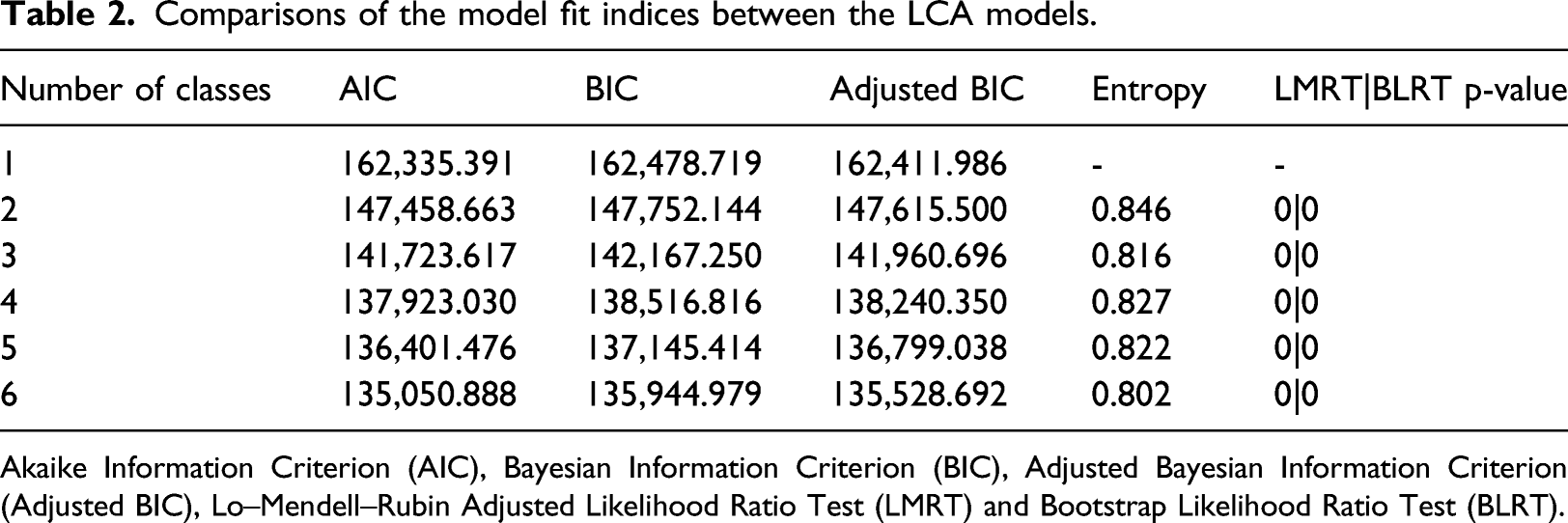
Akaike Information Criterion (AIC), Bayesian Information Criterion (BIC), Adjusted Bayesian Information Criterion (Adjusted BIC), Lo–Mendell–Rubin Adjusted Likelihood Ratio Test (LMRT) and Bootstrap Likelihood Ratio Test (BLRT).
According to Table 2, a four-class structure was preferred for the following reasons: there was no difference between the AIC and BIC values of the 4th and 5th classes; the entropy value of the four-class structure was higher; and it was easier to interpret the classes. These classes are listed below. Figure 2 shows the Elbow graph according to the model fit indices in Table 2. The elbow graph according to the model fit indices. Akaike information criterion (AIC), Bayesian information criterion (BIC), adjusted Bayesian information criterion (adjusted BIC).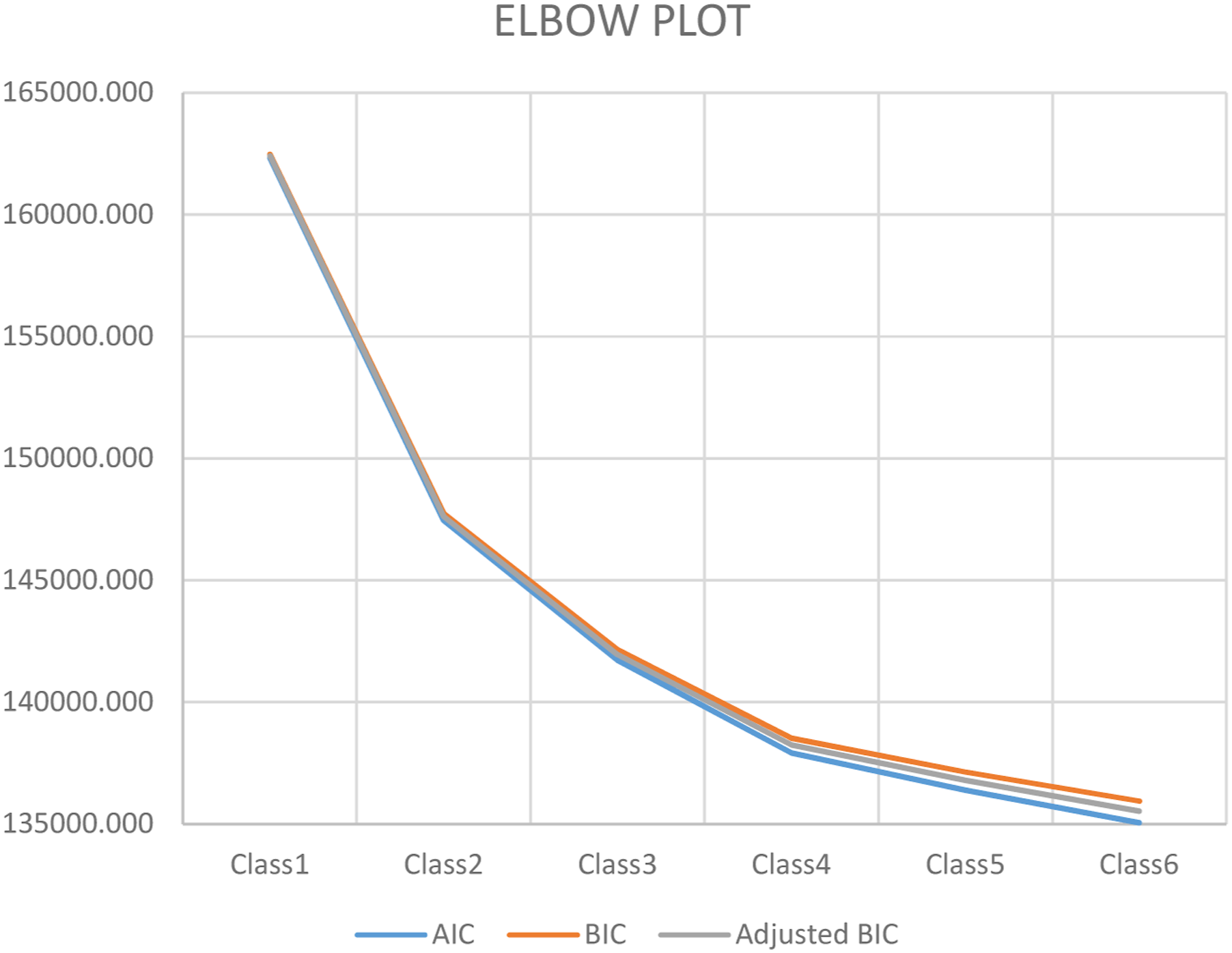
Class 1 (high-level ICT users)
This class was the one that used ICT sources at home and at school at a high level (n = 551, 8%). The ICT source used most by the members of this class was the use of the Internet at home, while the ICT source used least by them was e-book reader at home.
Class 2 (moderate-low-level ICT users)
This class was the one that used ICT sources at home and at school at a moderate-low level (n = 2262, 33%). The ICT source used most by the members of this class was the mobile phone connected to the Internet at home, while ICT source used least by them was e-book reader at home.
Class 3 (moderate-high-level ICT users)
This class was the one that used ICT sources at a moderate-high level at home and at school (n = 2307, 33%). The ICT source used most by the members of this class was the mobile phone connected to the Internet at home, while the ICT source used least by them was e-book reader at school.
Class 4 (low-level ICT users)
This class was the one that used the ICT resources at the lowest level at home and at school (n = 1683, 24%). The ICT source used most by this class was the mobile phone connected to the Internet at school, while the ICT source used least by them was e-book reader at home.
Figure 3 shows students’ response probabilities to the items related to their use of ICT at home and at school. Students' Response Probabilities to the Items Related To Their Use of ICT At Home and At School.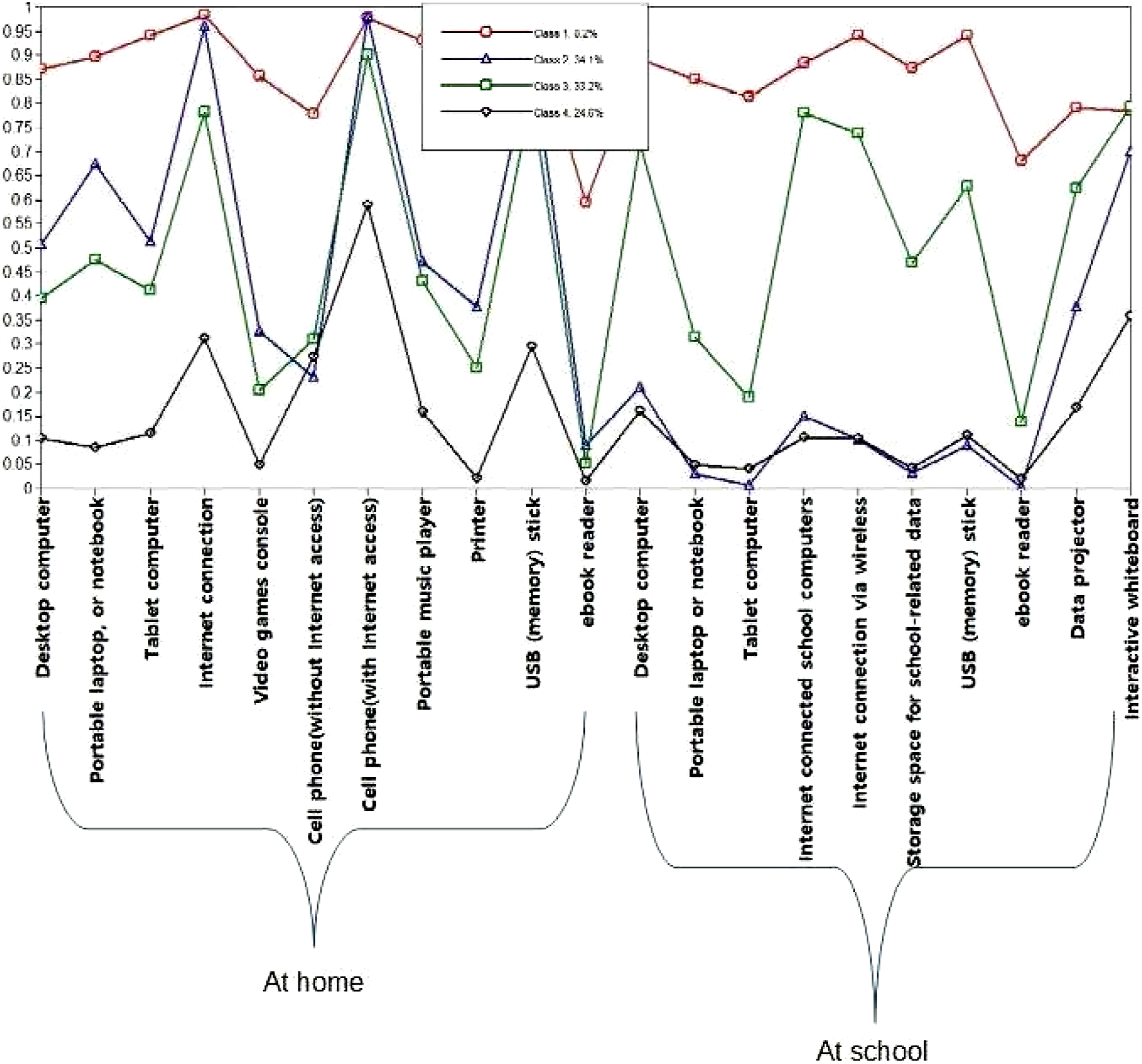
Effects of covariates on class membership (RQ2)
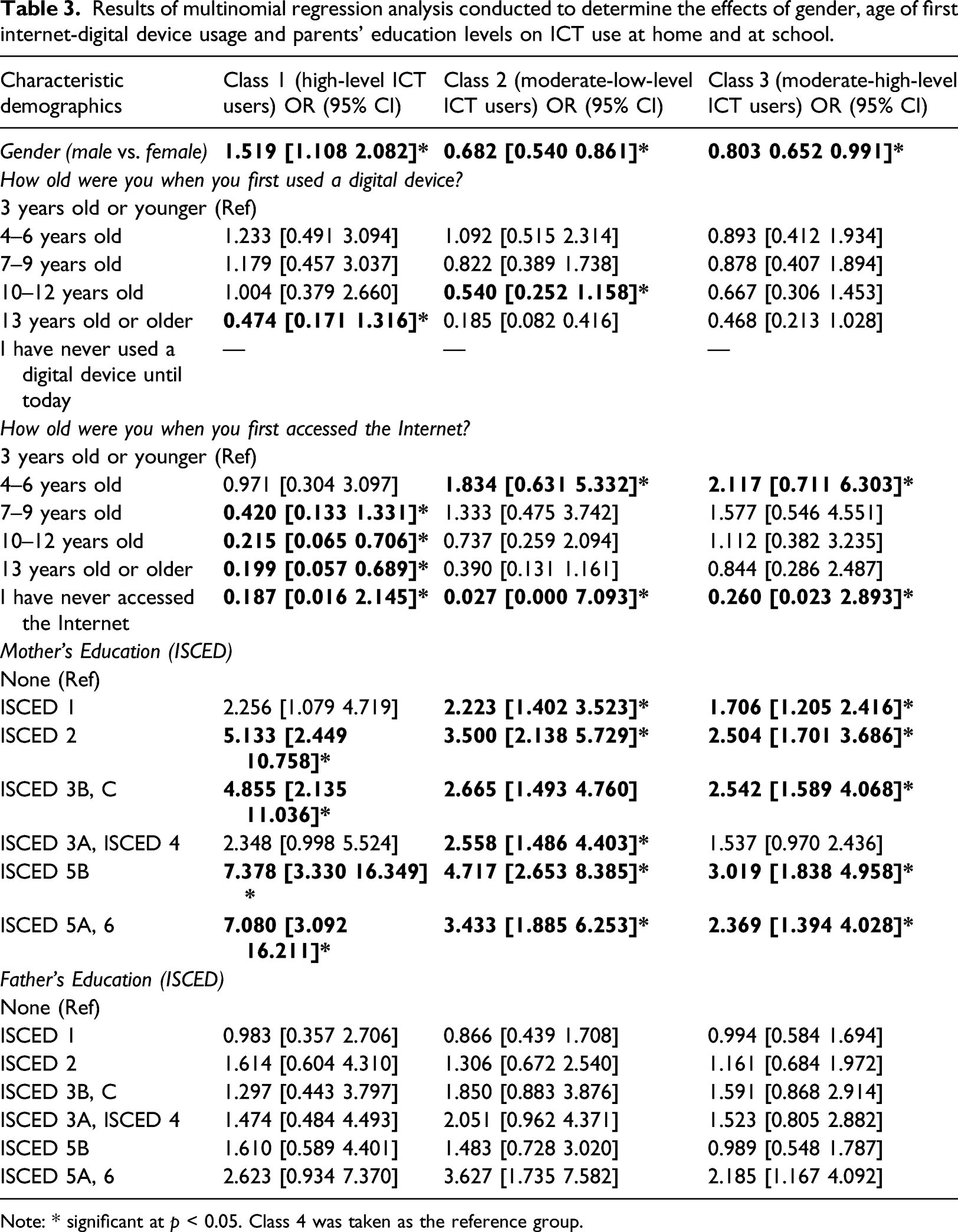
Results of multinomial regression analysis conducted to determine the effects of gender, age of first internet-digital device usage and parents’ education levels on ICT use at home and at school.
Note: * significant at p < 0.05. Class 4 was taken as the reference group.
In the Multinomial Logistic Regression analysis, the interpretation was made with reference to Class 4 (Table 3). On the basis of gender, the male students were more likely to be a member of Class 1 (high-level ICT users) than the female students (OR=1.519: 95% CI [1.108 2.082]), while the students who started using their first digital device (OR=0.474: 95% CI [0.171 1.316]) and the Internet (OR = 0.187: 95% CI [0.016 2.145]) at later ages were less likely to be a Class 1 member. In addition, the students with a mother with high education level (OR = 7.080: 95% CI [3.092 16.211]) were more likely to be a member of Class 1. There was no significant difference in any dimension in terms of the father’s educational level.
Differences in learning outcomes between the profiles (RQ3)
Relationships between the ICT usage profiles regarding mathematics, reading, and science achievement scores (distal outcome).

Note: * significant at p < 0.05. Significance tests are Pearson chi-square.
According to the analysis results, the overall equality test of the mean scores of mathematics (χ2 = 574.817, p < 0.001), reading (χ2 = 842.489, p < 0.001) and science (χ2 = 700.347, p < 0.001) across the profiles in PISA tests was significant for interpersonal deviance. The students with the highest achievement mean scores in mathematics (M = 488.634, SE = 1.905, p < 0.001), reading (M = 508.204, SE = 1.842, p < 0.001) and science (M = 504.595, SE = 1.775, p < 0.001) were clustered in Class 2 (moderate-low-level users). On the other hand, the students in the class using high level ICT had low mathematics, reading, and science achievement scores.
Hierarchical data structure and weights
In the PISA exam, it is necessary to take school differences into account by using the multi-level modeling method. Because students are nested in different schools, the data are explained at two levels. When multi-level statistical models are established, the characteristics specific to schools reveal unaccountable variations (Goldstein, 2004). In this study, the individual characteristics of the students (gender, parents’ education level and age of first Internet/digital device usage) and the differences of the schools included in the application process were taken into account. In order not to ignore these differences, students’ final weights and school weights were used (OECD 2017). In all the single-level analyses conducted in the study, the parameter of TYPE = MIXTURE COMPLEX and student weights were used (Mplus WEIGHT option). Multi-level analysis is modeled at school level using the class membership probabilities, variance and covariance components (Mplus option TYPE = MIXTURE TWOLEVEL) (Asparouhov and Muthén 2010). In the multi-level analysis, both student and school weights were used together. The weighting procedure was done at two levels. The first-level weighting was in individual dimension (Mplus WEIGHT option with WTSCALE = cluster), and the second-level weighting was carried out in school dimension (Mplus BWEIGHT option with BWTSCALE = sample).
Multi-level LCA
The model assuming that the class size can differ between schools resulted in two variance components (Var [Class 1] = 1.265, % 95 CI [0.681, 1.849]; Var [Class 2] = 1.320, % 95 CI [0.925, 1.715]). With reference to Class 3, covariance (Cov = −0.073, % 95 CI [-0.429, 0.283]) was found between Class 1 and Class 2. Based on this result, findings showing that there was a significant variation in class size among schools were obtained. Later, the variables would affect cluster memberships at student and school levels were predicted. The difference in variation in Class 2 (those using ICT sources a lot at home and at school) was explained with the variables of the ratio of computers per student at school (RATCMP1) (B = 0.280, SE = 0.085, p < 0.05), the ratio of Internet-connected computers per student at school (RATCMP2) (B = 0.825, SE = 0.236, p < 0.05) and lack of educational material (EDUSHORT). The variance difference in Class 1 (those using ICT sources less) could not be explained with school-level variables. Accordingly, the students at schools with high ratios of computers per student (RATCMP1) and Internet-connected computers (RATCMP2) were assigned to class 2 at a higher rate, while the lack of the variable of educational material (EDUSHORT) did not cause a statistically significant difference.
Discussion
ICT usage profiles (RQ1)
In this study, the students’ use of ICT at home and at school was examined, and four ICT usage profiles were determined: “high-level ICT users,” “moderate-high-level ICT users,” “moderate-low-level ICT users,” and “low-level ICT users”. The results revealed that the students who used ICT at home and at school at a high level constituted the smallest class (8% of the sample), which shows that the ratio of students using ICT sources at a high level in Turkey is low. According to a report published by the OECD in 2015, only 4% of 15-year-old students did not have a computer in OECD countries in general, while this ratio was reported to be 29% in Turkey. In the same report, it was pointed out that the ratio of students with a computer and Internet access at home in Turkey was lower than the OECD average (OECD, 2015). According to a report published in 2018 by Turkey Statistical Institute, which has regularly conducted “Survey of Information and Communication Technologies (ICT) Usage at Home” in Turkey every year since 2004, the computer use ratio of individuals from the 16 to 24 age group was found to be 68.2%. On the other hand, it was reported in 2018 that except mobile/smart phones (97.8%), the ownership ratio of ICT sources at home (desktop and portable computers, tablet computers, game console) was below 40% (TÜİK, 2018). Considering ICT usage statistics in Turkey and the fact that the students using ICT sources at home and at school at a high level constituted the smallest class in the present study, it is seen that many students fail to use ICT sources sufficiently in Turkey. Similarly, Çilan and Ozdemir (2014), in their study conducted using Latent Class Analysis, examined digital divide and found that individuals in Turkey were in the class of low-level usage of information technology (IT).
Effects of covariates on profiles (RQ2)
According to the findings of in the study, the students who started using their first digital devices and the internet at later ages were less likely to be a member of the high-level ICT user class. Studies revealed that ICT use at an early age has a positive effect on ICT autonomy, self-efficacy, and skills. Hatlevik et al. (2018), who conducted related studies, found that 8th grade students' ICT experiences (by year) had a positive relationship with ICT self-efficacy and computer-information literacy. In addition, the study revealed that ICT experiences explained the variation regarding ICT self-efficacy and computer-information literacy in Turkey better than in some of other countries. Similarly, Juhaňák et al. (2019) found that children who started using computers at a later age (after the age of seven) demonstrated significantly lower ICT competence and ICT autonomy at age fifteen. Focusing on the causes of this situation, Chaudron (2015) stated that children’s ICT usage skills developed starting at a very young age; that they learned how to use digital technologies generally through trial and error as well as by imitating their parents, which, according to the researchers, further supported children’s autonomy and self-confidence in using ICT. However, some studies indicate that students in Turkey do not use ICT resources at an early age. According to the OECD report, in 2012, more than one out of every ten students at the age of 15 in Turkey did not have any experience (or if any, limited) regarding how to use the computer (OECD, 2015). Similarly, Hatlevik et al. (2018), in their study, revealed that the Turkish students had less experience in ICT when compared to those from other countries.
According to another result obtained in the study, the students with a mother with a high education level had a higher probability of being a member of the high-level user class, while there was no significant difference in terms of the students with a father with high education level. In one study carried out in Turkey, Aşıcı and Usluel (2009) found that the students’ access to ICT, their ICT use and their levels of ICT literacy increased as their parents’ levels of education increased. Aesaert and Van Braak (2015) showed in their study that the education level of the mother had a positive relationship with both students’ technical ICT skills and high-level ICT competencies. In other studies, it was pointed out that students whose parents had high SES had more ICT use and skills than students with low SES (Aesaert and Van Braak, 2015; Scherer and Siddiq, 2019; Vekiri, 2010). This might be due to differences in children’s access to ICT resources as well as due to parents’ creating learning opportunities for their children and their communicating their own values and aspirations regarding the use of ICT (Vekiri, 2010). According to the results of other studies, even if parents consider it important for their children to learn about ICT use (Clark et al., 2005; Linebarger et al., 2004), students with low SES may not receive sufficient technological help and guidance from their families (Vekiri, 2010). Vekiri (2010) stated that students who thought that their parents supported the development of their computer use and ICT skills had more positive opinions about the value of computer learning, had more confident in computer skills and eventually were more likely to use the computer in various activities.
Another result obtained in the study was that the male participants had a higher probability of being a member of the high-level ICT user class than the female participants. It is reported in many studies in literature that boys access or use computers more than girls (Drabowicz, 2014; Livingstone and Helsper, 2007; Notten et al., 2009; OECD, 2015). Similarly, according to Turkey Statistical Institute’s data, boys in the 16–24 age group used the Internet and computer in Turkey in 2018 was higher than girls (TÜİK, 2018). However, depending on the ICT use purpose, it is seen that men and women may differ in their ICT usage (Alpay, 2010; Cheung et al., 2013; Fairlie, 2016; Li and Ranieri, 2013; Pierce, 2009). For example, according to the PISA 2018 results, in all countries, boys use the computer for entertainment activities significantly more than girls. This difference is quite high in Turkey (OECD, 2019). Similar findings were also obtained in a study conducted by Drabowicz (2014). Drabowicz (2014), using the 2006 PISA data of 39 countries, reported that in all the countries including Turkey, boys used the Internet and ICT for entertainment purposes significantly more than girls. In addition, it was seen that in almost all of the countries (38), girls used the Internet and ICT for educational purposes significantly less than boys. On the other hand, Scherer et al. (2017), identified the students’ ICT usage profiles by using LCA and found that compared to the boys, the girls had a higher probability of belonging to the class of frequent ICT users with respect to almost all the ICT purposes.
Differences in educational outcomes between profiles (RQ3)
When the effect of the four classes formed on distal outcome (mathematics, reading, science) achievement scores was examined, it was found that the students in the high-level ICT user class had low mathematics, reading, and science achievement scores and that the students with the highest mean scores were moderate-low-level ICT users. In literature, it is seen that students’ academic achievements differ depending on the availability/use of ICT at home and at school and the purpose of using ICT. While some studies conducted with PISA data showed that the availability/use of ICT had positive effects on students' academic achievement (Bulut and Cutumisu, 2017; Hu et al., 2018; Lee and Wu, 2012; Petko et al., 2017; Skryabin et al., 2015; Xiao et al., 2019), some other studies revealed its negative effects (Delen and Bulut 2011; Erdogdu and Erdogdu, 2015; Kubiatko and Vlckova, 2010; Leino, 2014; Zhang and Liu, 2016). Using ICT for different purposes could also produce different educational outcomes. In some studies, there are findings that students' intensive use of ICT for entertainment purposes negatively affects their academic achievement (Bulut and Cutumisu, 2017; Luu and Freeman, 2011; Skryabin et al., 2015). Although ICT tools are used for learning purposes, they are also used by students for entertainment purposes such as playing games, chatting online, listening to music, and watching movies (Cheema and Zhang, 2013). However, these activities may distract students from the learning environment in the classroom and prevent them from taking enough time to do their homework and read various materials (Hu et al., 2018).
Analysis results regarding the multi-level school dimension
The results of the multi-level analysis demonstrated that the school characteristics revealed significant variations in the students' access to and use of ICT resources. It was found that the students at schools with a high number of computers and computers connected to the Internet belonged more to the class using high ICT resources and that lack of educational materials (EDUSHORT) at schools did not make a significant difference. Similar to the findings of the study, Zhong (2011) found in a study using the PISA 2003 and 2006 data that ICT facilities at school had a positive relationship with the self-reported digital skills of adolescents. Schools can be an important place where adolescents from low-SES families or with no ICT facilities at home can develop their ICT competencies (Kuhlemeier and Hemker, 2007). Vekiri (2010) stated that for many young people (especially those from less privileged family backgrounds), school is the only environment where they can develop technological expertise and learn the sophisticated and creative uses of ICTs.
Conclusion and future research
Using the PISA 2018 data in Turkey, this study focused on the relationship between students’ ICT use and their achievement. As mentioned before, in Turkey, the goals of the FATIH Project executed by the policymakers in Turkey since 2010 included providing the hardware and software infrastructure at preschool, elementary school, secondary school levels, and ensuring effective ICT use within the scope of the curricula in practice as well as helping avoid inequality of opportunities presented to students. However, according to the results obtained in the study, many students in Turkey do not use ICT sources at a high level. In this respect, the policymakers in Turkey and other concerned institutions could reconsider and revise the integration of ICT in education.
According to the other results obtained in the study, it was revealed that in Turkey, the students who were male, who used the first digital device and Internet at an early age and who had mothers with high education levels had a higher probability of being a member of the high-level ICT user class. In addition, the students in the high-level ICT user class had low mathematics, reading, and science achievement scores. Although there have been some discussions on the reasons for this in the present study, there is a need for more research on PISA 2018 data to focus on the relationship between students’ ICT use purposes and their academic achievement.
With the COVID-19 pandemic that emerged in the first half of 2020, schools and universities were closed in many countries around the world. During the pandemic, many students had to take their courses in online education environments. In these environments, students need technical equipment, tools, and related skills to interact virtually with teachers and peers and to use hardware and software (Händel et al., 2020). Therefore, the transition to online education environments with the pandemic might have affected the students’ access to and use of ICT’ resources and their academic achievements in different ways. Thus, the results of this study, which conducted analysis on PISA 2018 data, reflect the pre-pandemic situation.
In addition, people have started to allocate more time to ICT resources in order to overcome the negative consequences of the limitations caused by the pandemic such as anxiety, stress and isolation. For example, Malta et al. (2020), in their research conducted in Brazil, stated that the use of computers and tablets after the pandemic increased by an average of 1 h and 30 min compared to the pre-pandemic period and by 3 h in people aged 18–29. Similarly, this may change students’ use of ICT. Therefore, similar studies could be replicated for future PISA results.
Limitations
This study had some limitations. First, due to the cross-sectional nature of the PISA data, it is not possible to determine the cause-effect relationships. Therefore, any relationship between ICT access, its use and academic achievement cannot be taken as evidence of the influence of ICT on learning.
The ICT familiarity questionnaire in PISA is based on self-reported data. Therefore, measurements related to ICT may not fully reflect actual scores. In addition, in the present study, the ICT use classes were determined according to the variety of ICT resources students use at home and at school. The details provided by the ICT Familiarity Questionnaire do not indicate the quality of the devices or the meaningfulness of usage. As a result, only a more general interaction that students establish with ICT can be mentioned. The quality of ICT use is an important predictor of academic achievement and is necessary for students to have a positive relationship between ICT and learning quality (Lei, 2010; Lei and Zhao 2007).
Individuals’ ICT use levels and purposes may change over time. Especially the limitations brought about by the COVID-19 pandemic and the transition process of schools to online education might have significantly changed students’ ICT usage habits and areas. Lastly, since the sample of this study included only 15-year-old students in Turkey, the findings of the study cannot be generalized to other countries.
Footnotes
Declaration of conflicting interests
The author(s) declared no potential conflicts of interest with respect to the research, authorship, and/or publication of this article.
Funding
The author(s) received no financial support for the research, authorship, and/or publication of this article.
