




Abstract
It requires a lot of energy to support the adoption of online learning by adult learners. Thus, the question of how online learning intersects with adult learning may provide meaningful pathways to understanding online learning per se. This study aims to understand the online study behaviors of teachers enrolled in an online Educational Technology Master’s program. This case study involved a Research Methods course, which was part of an online project for teachers. An online control list form and interviews were used as data collection tools. The results indicated that sharing, problem solving, product development, monitoring, and research were prominent activities that shape the study behaviors. While some of the behaviors in these activities indicated the reshaping of previous study behaviors, other behaviors newly appeared during the program. Characteristics of adult learners, online setting features, and the context of the projects were the main factors that influenced study behaviors. Finally, the implications for better online adult learning experiences are addressed.
Introduction
Online learning continues to play a significant role in adult education. In this context, in the last decades, online in-service teacher-training programs have gained much attention to inform teachers about the innovations in education. Because of their busy schedules and individual characteristics, teachers as adults need to access resources as well as getting ongoing support (Dede et al., 2009). Since their educational needs, expectations, and interests are different from those of young students, there has been an increasing trend among adults to use different tools for learning online, such as online assessment, monitoring, receiving feedback, and progress tracking (Laurillard, 2012). Emerging technologies and learning platforms have allowed teachers access to learning resources in various formats, interactive tools for collaborative works, web-based activities, and scaffolding tools for information searches.
Researchers argue that when a quality social learning environment is created, the online learners can be retained in online learning tasks (Sutterlin, 2018). In this sense, synchronous technologies like video conferencing contribute considerably to adults’ communications in the learning process. Meanwhile, researchers have increasingly pointed to prominent features of the learning management systems (LMSs); for example, perceived ease of use, perceived usefulness, and course flexibility, as prerequisites for enhancing the learning experience and learners’ satisfaction (Asoodar et al., 2016; Venkatesh et al., 2012). In addition, Zoom has become a robust, reliable video conferencing tool to teach and learn together for adults. Zoom allows learners and teachers to connect through virtual tutorials from any location. Learners can be invited to meetings and classes by using various communication and collaboration tools. In a study, students reported that they valued using Zoom and found that it is useful for their educational success; however, there is reluctance to use technologies like Zoom as they can increase distraction (Brainard and Watson, 2020). Google Meet is another tool for sharing the screen content, creating groups, sharing documents, and communicating. Similarly, new versions of Adobe Connect, Microsoft Teams, Skype, or other tools have been used for recent online learning implementations.
Adult learning theories suggest that adults engage in the learning process through their expectations for personal relevance in what they learn, participation in setting their learning outcomes based on their real-world needs, self-direction of their learning resources and pathways, and establishment of an active learning community (Bear, 2012; Bryan et al., 2009; Rabourn et al., 2018). Adults are self-directed learners, and a clear presentation of the course goals, structures, and subject matter content is important (Milheim, 2012; Philips et al., 2017). In this sense, content planning and delivery methods should be appropriate for adults’ needs, interests, and perspectives (Vu et al., 2014). At this point, learners’ needs and experiences may increase online course value (Hanna et al., 2000; Palloff and Pratt, 1999). While taking advantage of new methods to engage adults who cannot attend to classes on a regular basis in online courses (Cerna and Pavliushchenko, 2015), learners’ behaviors in adopting the online learning environments may differ from their previous educational background (De la Fuente and Cardelle-Elawar, 2009; Wang et al., 2013).
From a motivational perspective, Knowles et al. (1998) suggest that adult learners are more motivated to learn if the content is relevant to their goals. Due to their maturity, adult learners are characterized as self-directed learners who take for their own learning responsibilities (Diep et al., 2019) possessing “self” behaviors such as self-discipline, self-monitoring, self-initiative, and self-management, which are the characteristics of self-regulated or self-directed learning (Cheurprakobkit et al., 2002). Adults’ personal and professional responsibilities, their working environments, time limitations, and their social lives may be important factors in shaping adults’ study behaviors. Thus, one can consider that learners’ study behaviors can be reshaped by in-class or extracurricular activities in online learning settings. Besides, adult learners may exhibit various study behaviors through their individual adult characteristics.
Online learning characteristics of adult learners
Adult learners’ exhibit various behaviors while interacting with other adult learners or with their teachers. Researchers address adult learners’ learning behaviors in different ways in knowledge construction and social interaction (Knowles et al., 2012; Porter, 2004). While andragogy generally focuses on adults’ problem-solving processes (Chan, 2010; Huang, 2002), transformative learning addresses the events that lead to changes in individuals’ lives (Cranton, 1996; Mezirow, 1991). The role of transformative learning refers to the process of transforming adults’ experiences, values, and feelings and shapes their actions and living conditions, combined with the cultural context within which they are socialized (Kokkos, 2005). The principles of andragogy suggest solving problems that adults may encounter in their professional lives (Knowles et al., 1998). Andragogy suggests some principles for learners: need to know (why, what, and how), learner self-concept (autonomous and self-directing), learner’s prior experience (resource and mental models), readiness to learn (life related and developmental task), orientation to learning (problem centered and contextual), and motivation to learn (intrinsic value and personal) (Knowles et al., 1998). Figure 1 represents the general concepts of the adult-learning framework. Knowles et al. (1998) theoretical framework for adult learning.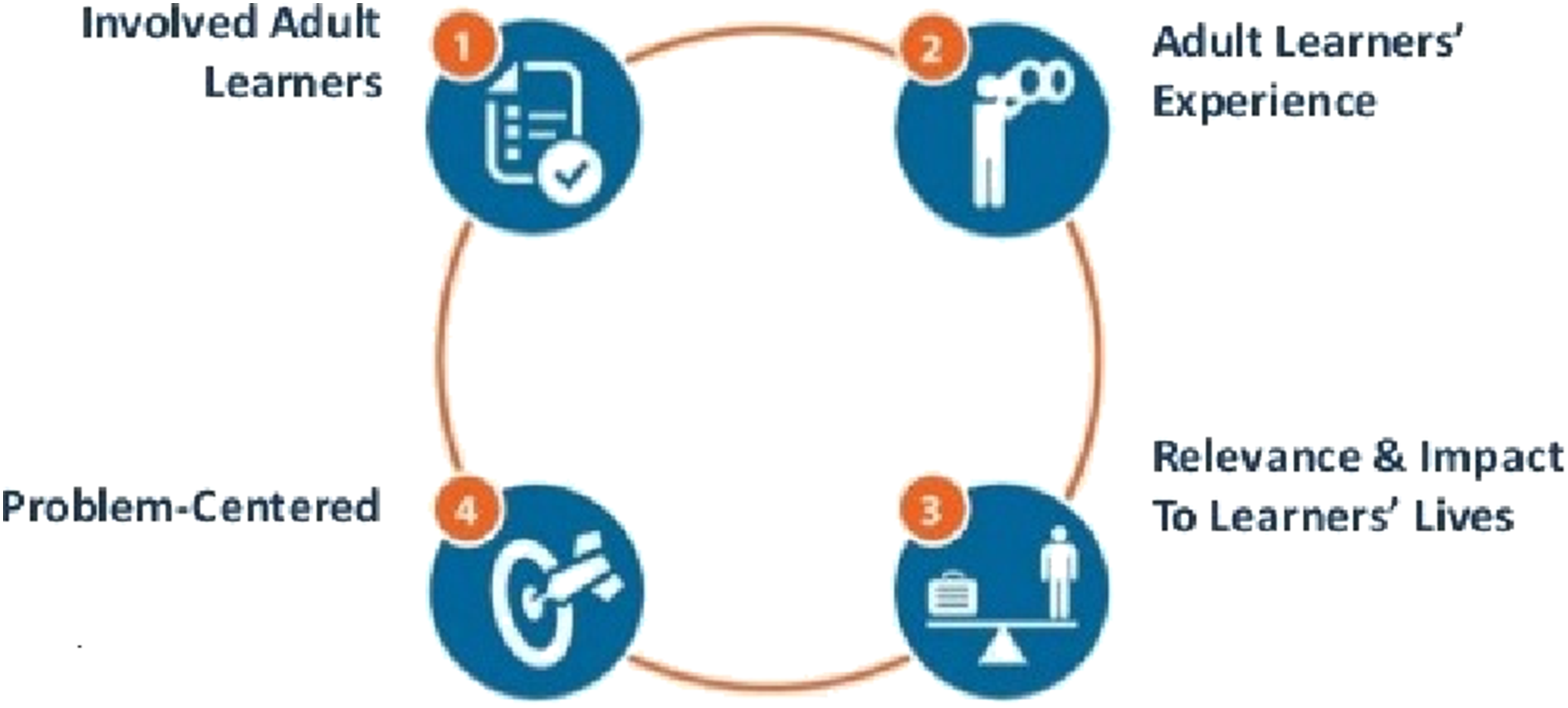
Research studies argued that instructors should facilitate online interactions via discussions among learners to share their knowledge and experiences. With this in mind, in order to construct online-learning communities among adult learners, the design and implementation of online courses for adult learners should be revisited (Blieck et al., 2017; Diep et al., 2019; Palloff and Pratt, 2007). In this sense, many kinds of delivery methods such as learning communities, asynhronous learning environments are used for providing interactions to meet adult learners’ needs. (Diep et al., 2017; Stephens and Coryell, 2020). Similarly, Gravani (2015) pointed out that adult learners’ online learning needs can be met with more open, flexible, mutual, active, and autonomous activities. At this point, while learning online, adult learners may exhibit their abilities with different study behaviors, especially in extracurricular activities (Brindley et al., 2009; Huang, 2002).
Study behaviors are individual characteristics which represent what students actually do in the current learning setting (Andrews and Tynan, 2015; Bliss and Mueller, 1993; George, 2015). Study behaviors are considered as study routines that include how often a student engages in studying sessions generally in out-of-class environments (Rabourn et al., 2018; Strayer, 2012). Students in all academic levels taking the same course may engage in the activities differently while studying in and out of the classroom. In line with this, planning the study, organizing the study environment, effective reading, listening to teacher, taking notes, writing, active participation in lessons, doing homework, working collaboratively, exchanging knowledge, or studying for exams are considered in the context of study behaviors or study habits (Buck, 2016; Cerna and Pavliushchenko, 2015; Lammers et al., 2001; Lewis and Doorlag, 1999; Nonis and Hudson, 2010; Sato et al., 2019; Smith, 2000; Thomas, 1993).
While working in online settings, adults may encounter challenges in using online tools to construct knowledge (Parkavi et al., 2021; Ziegler et al., 2014). Along with transformative learning, adults have tried to reflect online study behaviors instead of traditional study approaches. At this point, learners bring some of their study behaviors into online learning environments from prior face-to-face experiences, and some changes may occur in their study behaviors. For instance, while learners take notes on papers in a traditional classroom, adults take notes by assigning the links for the information in the online learning.
Given the importance of professional development for teachers (Vu et al., 2014), this paper seeks to examine how teachers as adult learners study in online professional development program. We also focus on the factors affecting this change with the online project-based activities.
Considering the aforementioned theoretical basis, the following ideas were guided to the study: 1. The study behaviors of the adult learners can be differentiated due to the features of online learning settings. 2. Adults may exhibit different study behaviors in formal learning age. 3. The online setting features and the adult learning characteristics together may influence the adults’ study behaviors in the learning process.
More specifically, the research addressed the following question: “How do the adults’ study behaviors take progress in an online learning setting?”
Methodology
Research model
Study behaviors are mostly determined through learners’ self-reporting data by using surveys (Credé and Kuncel, 2008). However, study behaviors have a progressive nature in online learning settings, and it is difficult to determine the change in learners’ behaviors via quantitative tools. Therefore, this study adopted a descriptive-qualitative methodology using an explanatory case study design (Yin, 2003). Qualitative studies typically focus in depth on purposefully selected participants’ perceptions, beliefs, or experiences (Patton, 2002). Case studies may also be implemented to better understand complex educational circumstances (Yin, 2003). Thus, the study behaviors were examined by focusing on all dimensions such as event, fact, situation, and groups (Yin, 2009). The study addresses the change in study behaviors considering the continuity of exhibiting the behaviors. The exhibition forms of the behaviors are considered in terms of aims, tools, place, and time. The structure of the “study behaviors” in this study is considered in a hierarchical manner as illustrated in Figure 2. The structure of study behaviors.
Activities
Activities were considered as the main guidance for determining the study behaviors. The aims of the adults were taken as basis for the main activities through the question “For what purpose did learners exhibit the behavior?” Considering the purposes, the items in the control list were grouped under 12 categories related to the behaviors in the activities (such as watching a video, taking notes, and working together) during the study on the projects.
Study behaviors
Study behaviors were extracted from the ways of acting in the activities. The question of “What kind of behaviors did the participant exhibit?” was answered and also the questions “How?,” “When?,” and “Where?” were directed for each item in order to describe the contexts of the behaviors.
Exhibition forms of the behaviors
Detailed data about the study behaviors including the place, time, tools used, or the aim of the participants were considered in this stage.
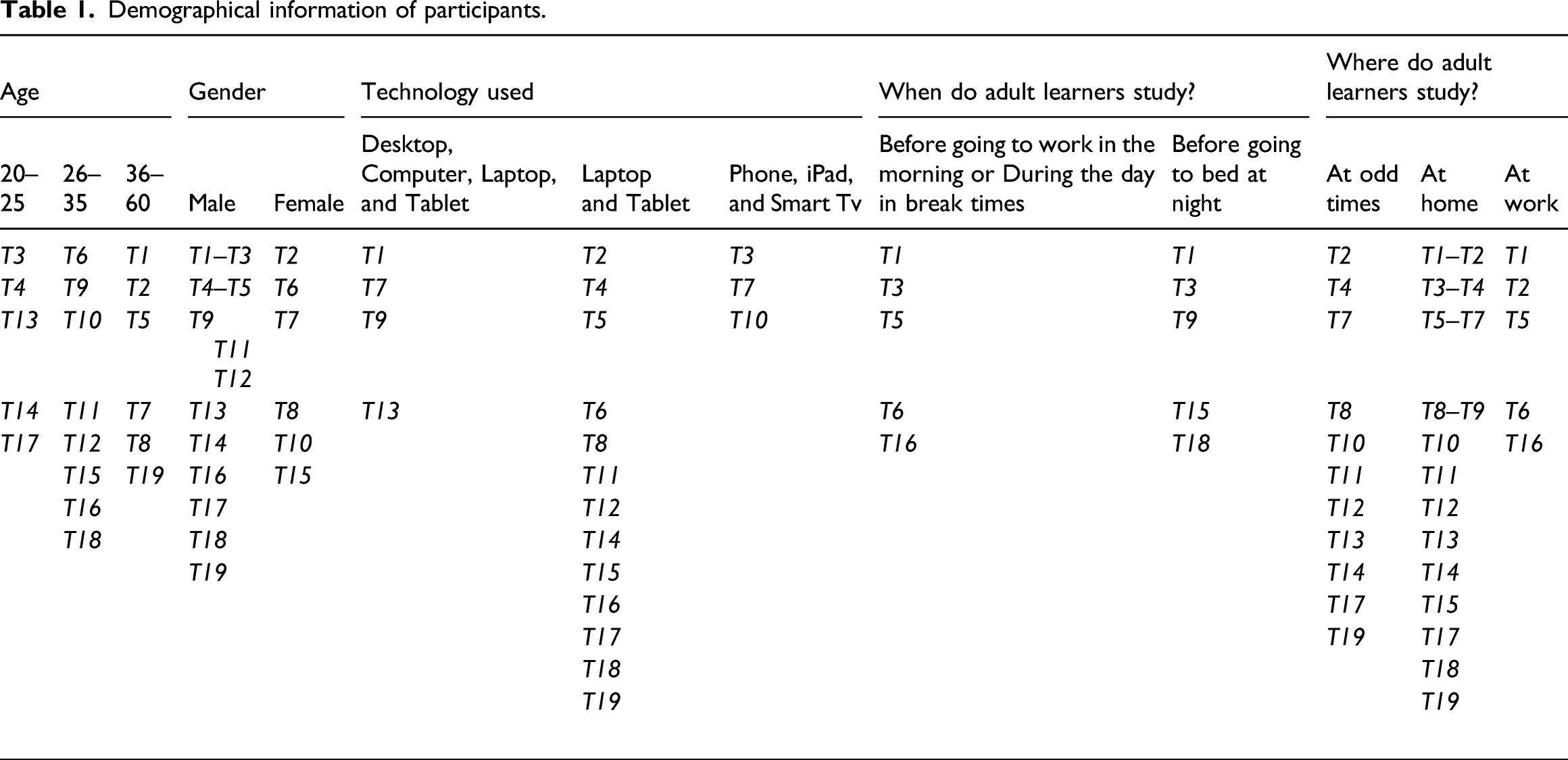
Participants
Demographical information of participants.
Process
The teachers took a course which involves the instructional package on theoretical basic of research methods in the virtual classroom during 10 weeks. Five projects were given to students for task-oriented study. Two-week period was assigned for all projects. Learners were allowed to use various online learning tools which are blogs, social networks, online libraries, weblogs, video-sharing sites, and other environments to search, share, and construct knowledge.
Data collection tools
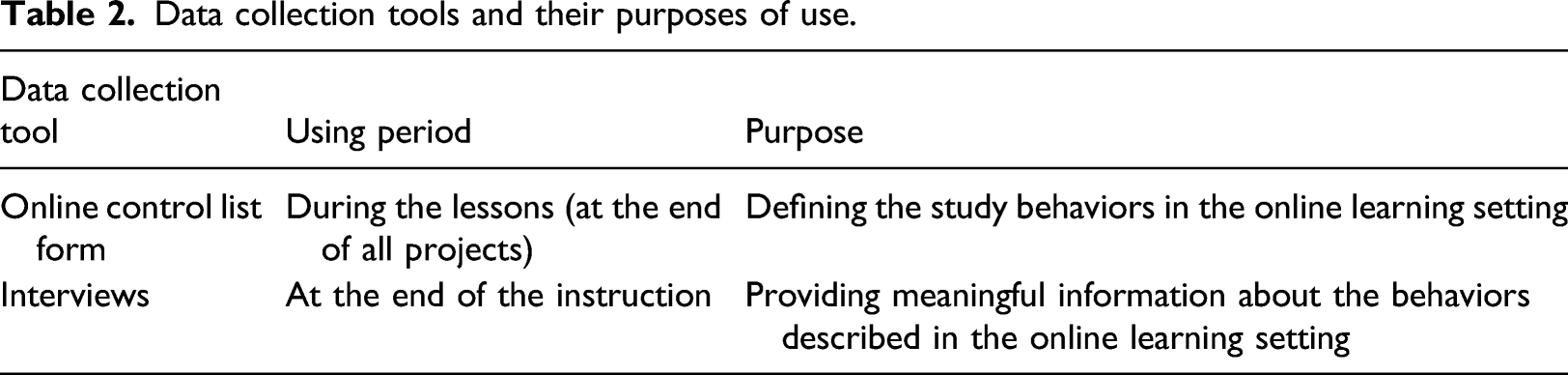
Data collection tools and their purposes of use.
Online control list form
The changes in the study behaviors were addressed by using an online form. The form included short open-ended items (see Appendix 2) which were developed by reviewing the scales and inventories about study behaviors or strategies. The questions of online control list form were reviewed by two field experts who are lecturers in ICT department and measurement and evaluation department. They ensure the specific items addressing relevant study behavior components regarding learners’ exhibitions. In the analysis of the form, first, basic activities were revealed from the learners’ behaviors and then study behaviors were addressed from the patterns of learners’ actions in the process of studying for projects.
Interviews
Interviews were conducted to expand the answers for the items in the form. The interviews were conducted with eight teachers chosen purposefully regarding their responses in the online form who had different progressions of study behaviors. The participants who actively participated in the online system during the term was one of the factors for choosing him/her for interview. On the other hand, their age, gender, branch, and study conditions were taken into account when choosing these eight participants. For example, one of them is a manager in the school, the other one is a mother and she has two children, another male is single etc. The interviews were conducted face-to-face for about 20–35 min and included questions about the changes in their study behaviors. Also, the context of the activities related to the online tools, characteristics of the projects, and the individual characteristics of learners were asked. Some sample interview questions are presented in Appendix 1.
Data analysis
Content analysis procedures reflecting open coding were used to analyze the responses in the online form. Content analysis provides data into meaningful categories to be analyzed and interpreted (Blair, 2015). Open coding is drawn from grounded theory (Glaser and Strauss, 1967; Strauss and Corbin, 1998), and it was identified generating a participant-generated “theory” from the data (Strauss and Corbin, 1998). After examining the responses, two coders created tentative categories to classify the thematic units into categories. After a negotiation among the researchers for refining the coding scheme, the final categories were identified and assigned as activities. Then, study behaviors were coded in the same way regarding the main activities. The behaviors and their exhibition forms were presented in a two-dimensional tabular form. When defining the categories, the behaviors related to the main activities sometimes overlapped each other since some of the behaviors were exhibited in the same forms. From this point of view, it can be thought that the study behaviors in the activities have an intertwined structure. However, in the analysis of the online form data, the behaviors which reflect the activities were explained within their exhibition forms. For this reason, study behaviors and the exhibition forms of the behaviors were distinguished from one another considering the aims of the learners while exhibiting the behaviors. The data from the interviews were transcribed and coded through the activities, and the exhibitions of the behaviors were described by including quotations within the behaviors.
Findings
Study behaviors of adults in the online environment
Findings are presented through the research question including the prominent study behaviors and explaining their change in online learning setting. As a matter of fact, we constructed the items of the online form including “Whats” for determining “what kind of study behaviors were exhibited” and the questions “Hows” for explaining how the study behaviors were exhibited. It was also difficult to code the study behaviors thematically because some of the behaviors were exhibited somehow similarly. For example, we coded “working together” as an exhibition form of a study behavior. In this circumstance, one can work on his/her project by exhibiting “working together” behavior. In another case, the learners can also write assessment notes or solve problems with “working together” behavior. Therefore, we created the categories which demonstrate the behaviors in different forms and by different tools or for different purposes. We used frequencies often (when 14–19 learners exhibited), sometimes (when 7–13 learners exhibited), and rarely (when 1–6 learners exhibited) to identify whether study behaviors had continuity during all projects. The frequency of the study behaviors was determined by rating the frequency of the behavior with the highest frequency of that behavior. We used tables to represent the results in a short, understandable, and holistic way instead of using long descriptions. Accordingly, coding the data from the control list, we defined five main themes and assigned them as activities: “Sharing, Problem Solving, Product Development, Monitoring, and Researching”. The tables briefly outline the activities, study behaviors, and how they were exhibited.
Sharing
Study behaviors in sharing activity.
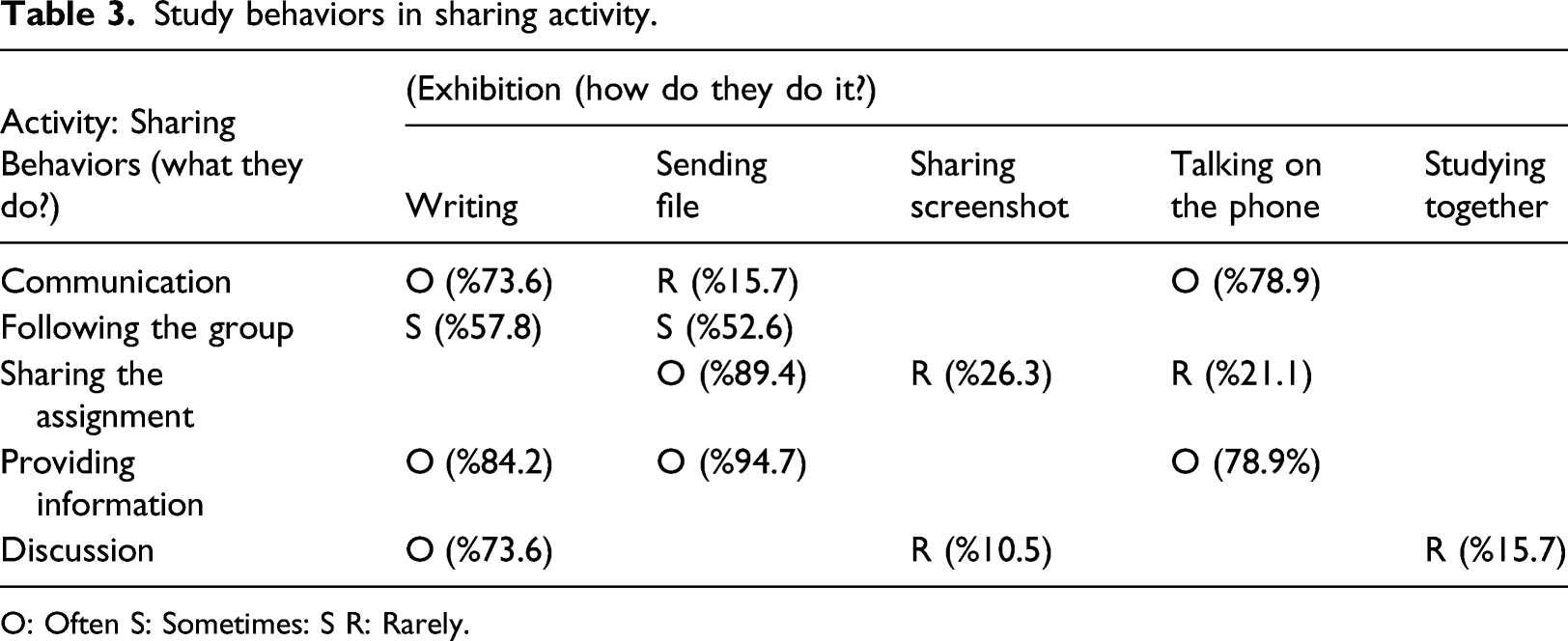
O: Often S: Sometimes: S R: Rarely.
In the sharing category, it is seen that students perform different behaviors with different tools for their aims. While the teachers were acting as “sharing,” in the context of the communication, they communicated by phone calls with others to get support or share information. They often used Whatsapp, Facebook, and e-mail and communicated via these tools by sending a picture, text, and video. Also, in the discussion category, sharing information in text form was often exhibited via Facebook, Whatsapp, and e-mail. Some of the participants indicated that they rarely used the tools as screen sharing via Google Drive and others in the discussions. In terms of following the groups, students actively followed the Facebook and Whatsapp groups and most of them expressed that they were able to send pictures, texts, and video files via these platforms.
Similarly, some of the teachers announced the topics, projects, instructions of the course, and the exams in order to inform the others, which was considered in the scope of informing behaviors. As well as following the group, the students were frequently informed via Facebook and Whatsapp by sending files and writing to each other. In this circumstance, T7 expressed that: “I followed our Whatsapp group to be aware of the instructional process. I provided some information to my friends about what we should consider in the assignments.”
In the sharing the assignment category, most of the participants stated that they generally shared their assignments by sending file via Facebook. Especially, their discussions about the projects motivated and directed them to engage in the assignments actively. Accordingly, a fifty-year-old T2 stated that “I was familiar with T8, so when I prepared the project, I sent it to her, and after I got her approval, I shared the project in the Facebook group”. In addition, the participants sent screenshots rarely when they asked their friends to evaluate their assignments. Related to the providing information within the idea of learning from other teachers, the T3 asked for instant help by calling for friends’ experience or knowledge about the assignments to find the necessary information.
In sum, most of the participants addressed that they used various ways of sharing to communicate and interact with each other, to inform and discuss what they needed to do about their assignments, and to follow the group. Sharing in different ways seems to bring learners closer to each other, create a positive atmosphere, and enable them to work in cooperation outside the classroom.
Problem solving
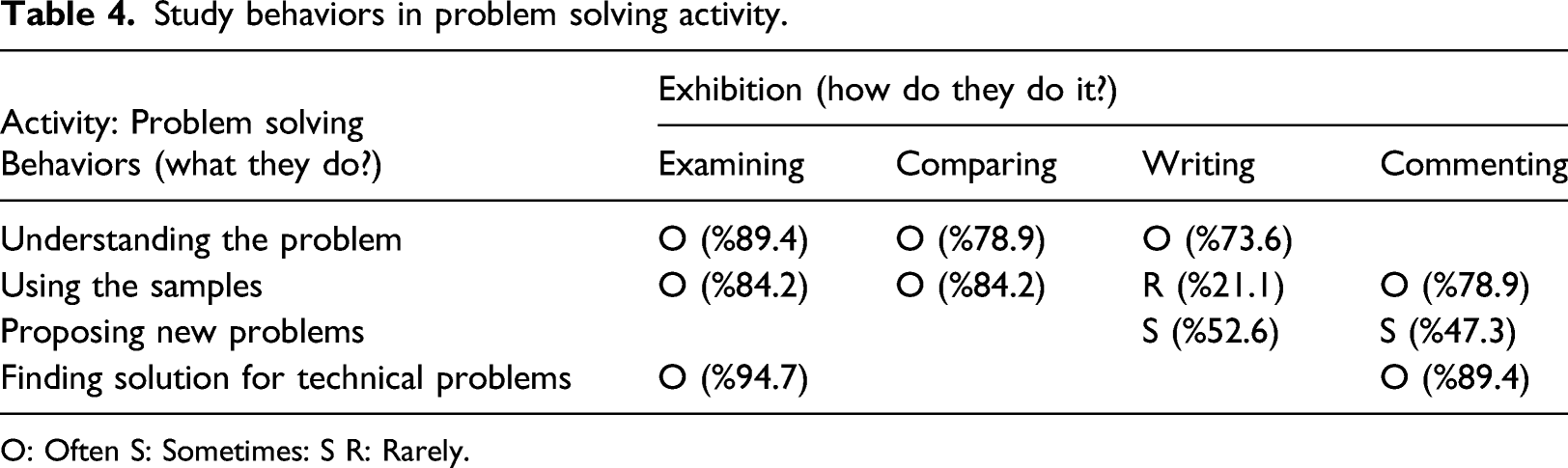
Study behaviors in problem solving activity.
O: Often S: Sometimes: S R: Rarely.
Perspectives of the participants indicated that they strived for understanding the problem, using different ways of dealing with the problems they encountered. They often tried to understand the problem for depth analysis. About proposing new problems, T7 stated that he had difficulty in understanding what he could do for the problem about the data tools in the assessment. He stated that he found a solution both by using the samples and by commenting and providing suggestion for T6 and T3 who had similar problems. Another learner who is a maths teacher (T2) stated about finding solutions that “I listened to the lesson records and I found a word that I did not understand in my notes or something that I did not know related to the lesson; as a result, I found solutions for instant problems by doing research from internet.” On the other hand, the difficulties encountered in the given projects during the term also played roles in the development of problem solving. Some of the participants who had high internal motivations were interested in the problems they encountered and solved them through thinking, researching, and analyzing the methods. Some of the learners who had difficulty in doing their projects stated that they tried to understand what the projects were about and how to study for them. Some of them searched through search engines such as Google and YouTube. In this sense, one of the participants (T6) who followed the examples about the assignments through the Facebook group described this situation as the following: “I reviewed my friends’ assignments and artifacts in the Facebook group. After examining a number of examples, I identified what I should consider in the assignment.”
Most of the teachers expressed that they did not get help in solving the technical problems they encountered during the learning process and that they produced their own individual solutions. This is also often the case for solving problems by focusing on the problem in detail with analysis. Accordingly, one of the teachers (T5) stated that “In order to connect to the Adobe Connect virtual learning environment from iPad, I needed an additional program; I researched and discovered this program on the internet so that I could upload this program and link to the course via my tablet”.
Product development
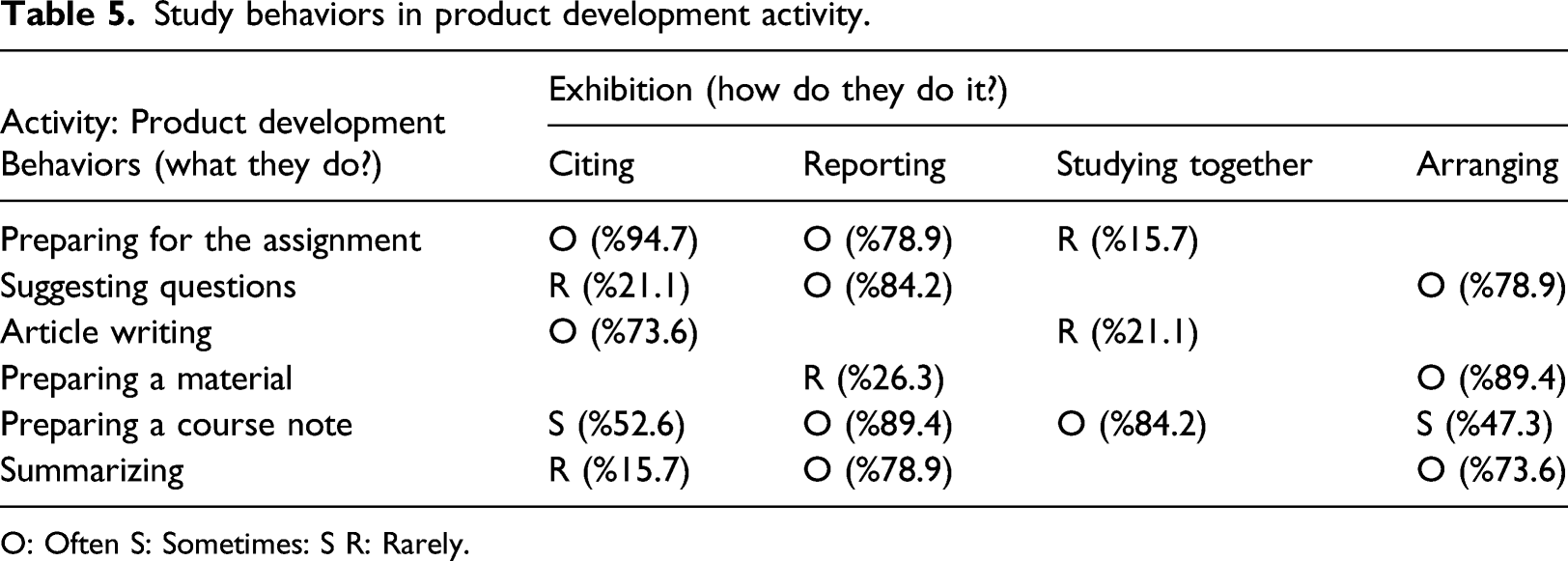
Study behaviors in product development activity.
O: Often S: Sometimes: S R: Rarely.
The artifacts of the participants in the form of documents, presentations, and materials were assessed in the context of product development. While in some cases the behaviors in this activity are provided by the changes in the present document, sometimes they are seen as products of the new artifact. The participants sometimes used the ways of quoting, frequently reporting, rarely working together online, and organizing important parts of the artifact. In the context of preparing for the assignment, some of the participants prepared their assignments in the word, pdf, or power point format in accordance with the content of reporting via Facebook. Some of the teachers completed their projects by working with their friends in the online setting and combining the information they gathered from the different internet sites.
Suggesting questions is another assigned study behavior with regard to product development. Some of the teachers prepared questions from their course notes or from the information they gathered and they tried to find the answers for these questions. Some also stored the information by eliminating from the information they found, arranging them after a filtering process. T1, T5, and T6 prepared course notes through different filing and folding systems, and T2 and T8 who had difficulties in changing their study habits prepared their documents on printed material. Adult learners in this study were rarely involved in the process of article writing by working together online. They rarely used some cloud systems (Google Drive, One Drive, or Dropbox) when working together in online. In the product development activities, some of the participants in the activities created new pictures with different pictures, texts, and combined videos and animations. Most of them took notes in digital or printed forms depending on the learning environment, and they expressed that they would like to use printed form of the notes, especially for exams. In this sense, T5 expressed how he organized the notes as the following: “While the instructor was presenting the lesson, I copied the screen and the sections which were more essential. Then, I converted them into the word format and stored them.” On the contrary, compared to traditional learning process, T8 stated that she printed the course materials before the exams as she did in previous face-to-face courses.
Some teachers put an emphasis on the flexibility of the online environment in product development process. Some of the teachers benefited from the online technologies in their learning processes, but the others did not because of their traditional behavioral patterns. In this sense, when preparing the course notes, T8 who was accustomed to traditional learning environments stated that “I made the course grading process especially on paper because I was used to it; I was relieved to have a printed document because I studied on notes by taking more notes in this way. I also studied by taking notes during the lesson and then I combined the documents”.
Monitoring
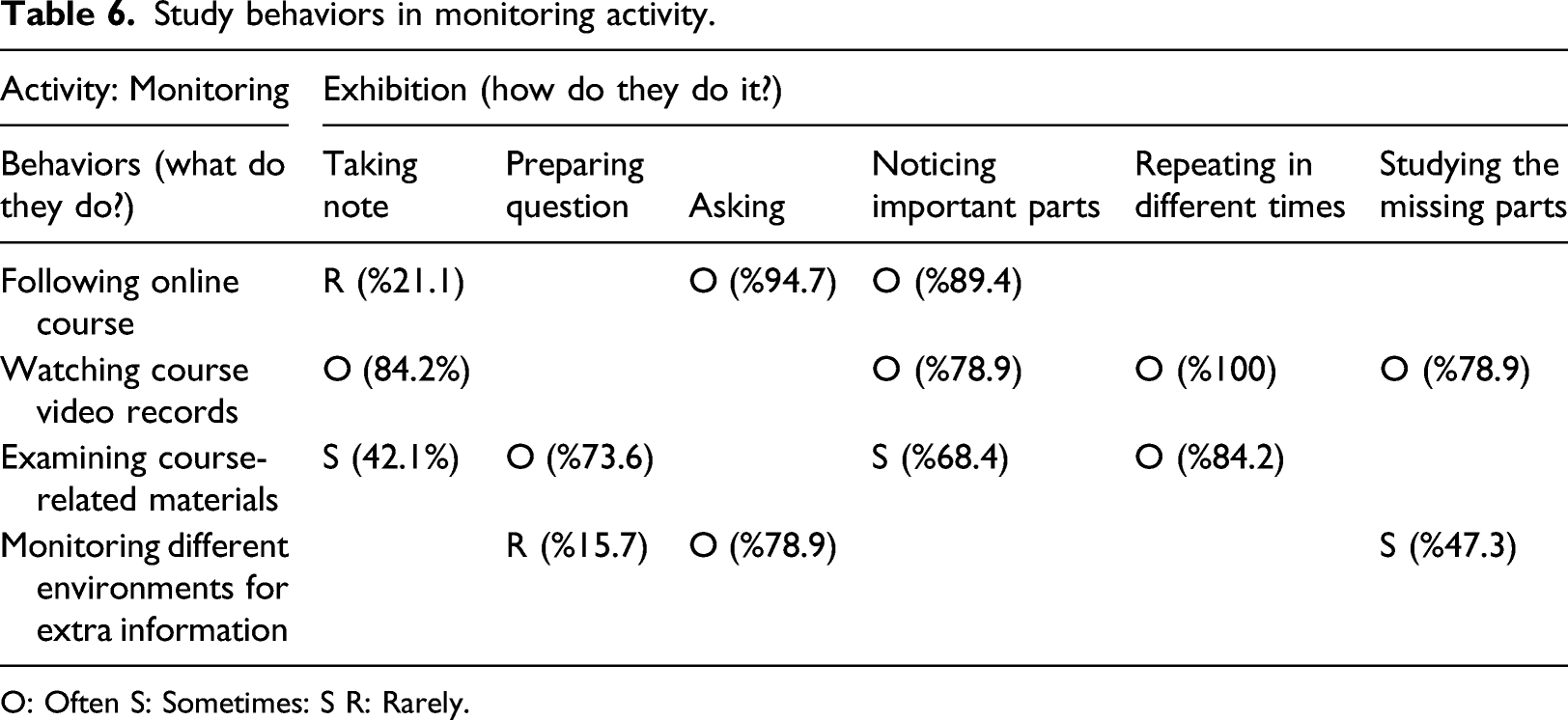
Study behaviors in monitoring activity.
O: Often S: Sometimes: S R: Rarely.
Teachers used various tools in monitoring (phone, laptop, tablet, iPad, etc.,). Most of them addressed that the purposes of using these were to provide online access everywhere. Through these technologies, students followed the live lesson, watched and noticed essential parts about the lessons, and sometimes they were followed by other friends.
Out of the school, it was seen that the teachers watched the course video records by taking notes, using the video records and the presentations in the Adobe Connect system. In particular, they pointed out that, in studying for exams or in the project-preparing period, most of them watched the videos frequently at different times. In addition, T2, T6, and T8 who were parents stated that they sometimes had difficulty while monitoring online because of the needs of their children and sometimes they could not complete the monitoring process and had to rewind them many times. An example video is presented in Figure 3. Example video (Adobe Connect).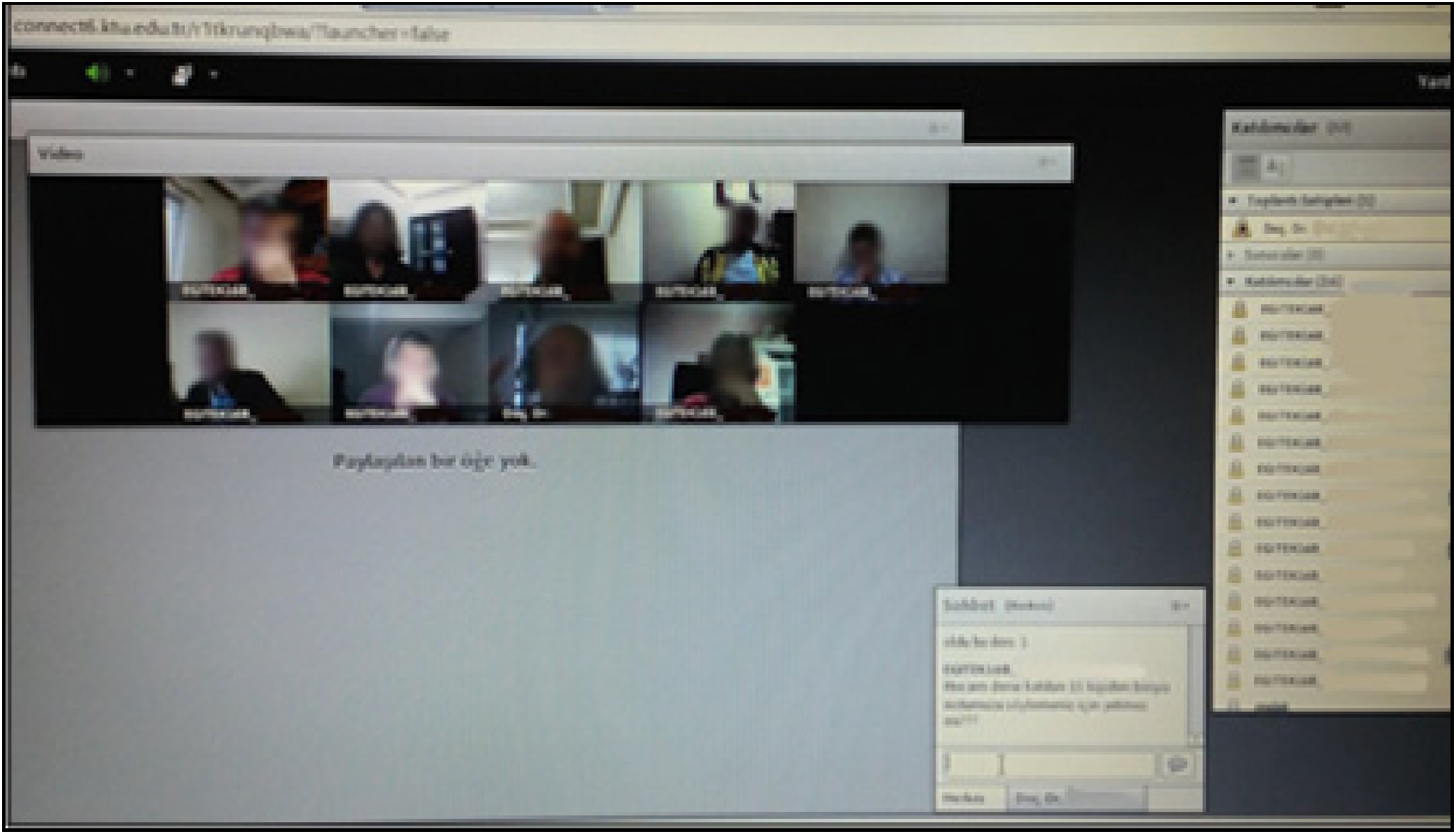
Similarly, the teachers who wanted to learn the details of some projects indicated that they searched for additional information in different environments. In this context, T4 stated that in order to learn different data collecting tools in detail within the scope of the second project, “The interview method was reshaped in my mind by watching video that I found on YouTube.” Examining the materials related to the course, T1 stated that “When I was a child at sixth grade, our relatives had an encyclopedia set…Now I search on the internet (Google Scholar or library, Google search engine) when I need materials for the course.”
Research
One of the activities was “Research”. While some of the behaviors emerged only in the online environment, some context of the behaviors had already existed, and they changed in the online environment.
Teachers performed activities by exhibiting finding information for the assignment, finding articles, finding a sample, reviewing the literature, finding exam questions, and having pilot test behaviors. It is seen that behaviors of finding information for the assignment, finding an article, and reviewing the literature were often exhibited; however, the finding an exam question and having a pilot test were generally exhibited for the exams. While performing the task of finding information for the assignment, teachers often used the search engines; they were rarely observed using web tools, educational web sites, and various academic databases. For instance, in the fourth assignment, T8 expressed that while citing from the current studies, he searched reviewed the literature by using the institutions databases, thesis centers or Google Scholar.
Teachers also found the articles or thesis by searching the topic title, by using keyword, searching by the authors, and searching by the document type. They often used the search engines such as Google and Yandex to find similar examples to their research. In this sense, T5 stated that; “While I was working on exams, I looked at different sources such as videos and the texts I used before. I got information about the questions that could be made through Google academic”.
Study behaviors in research activity.
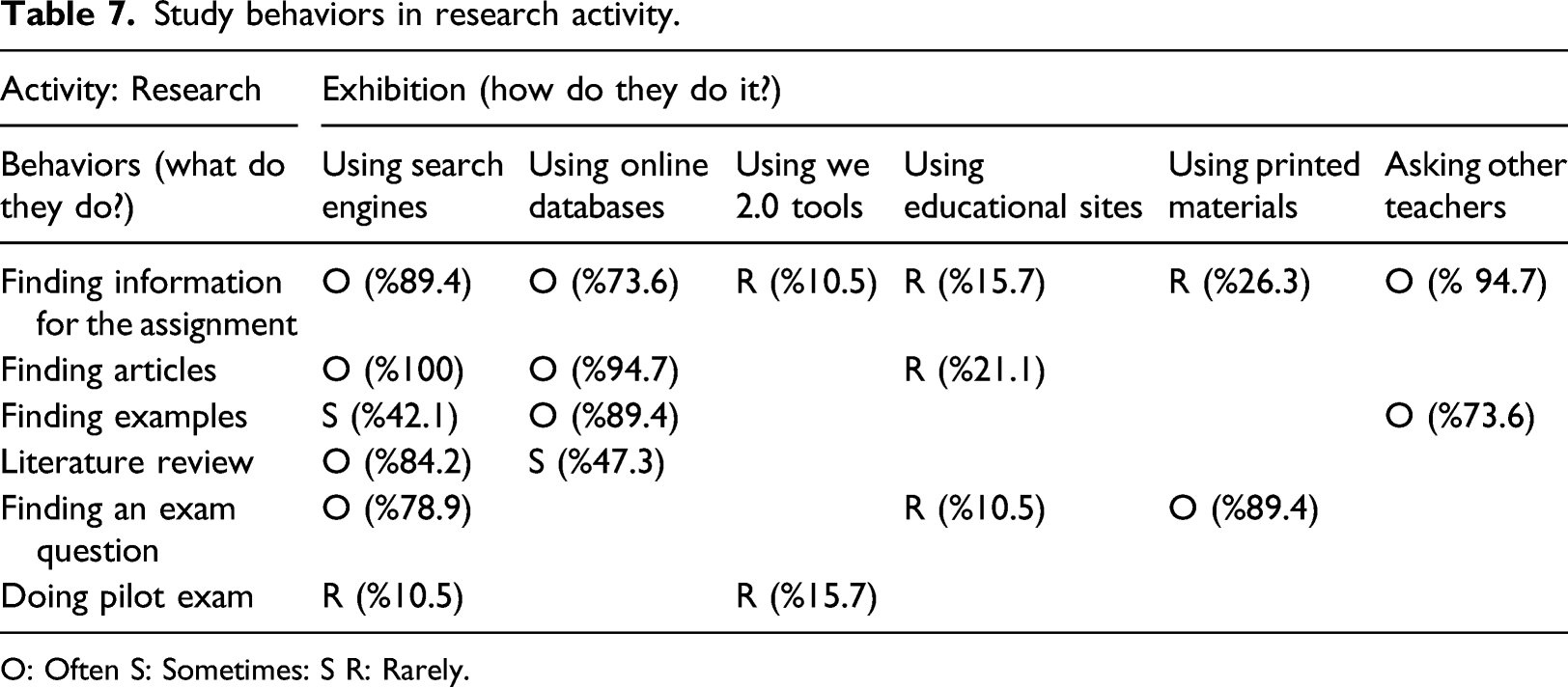
O: Often S: Sometimes: S R: Rarely.
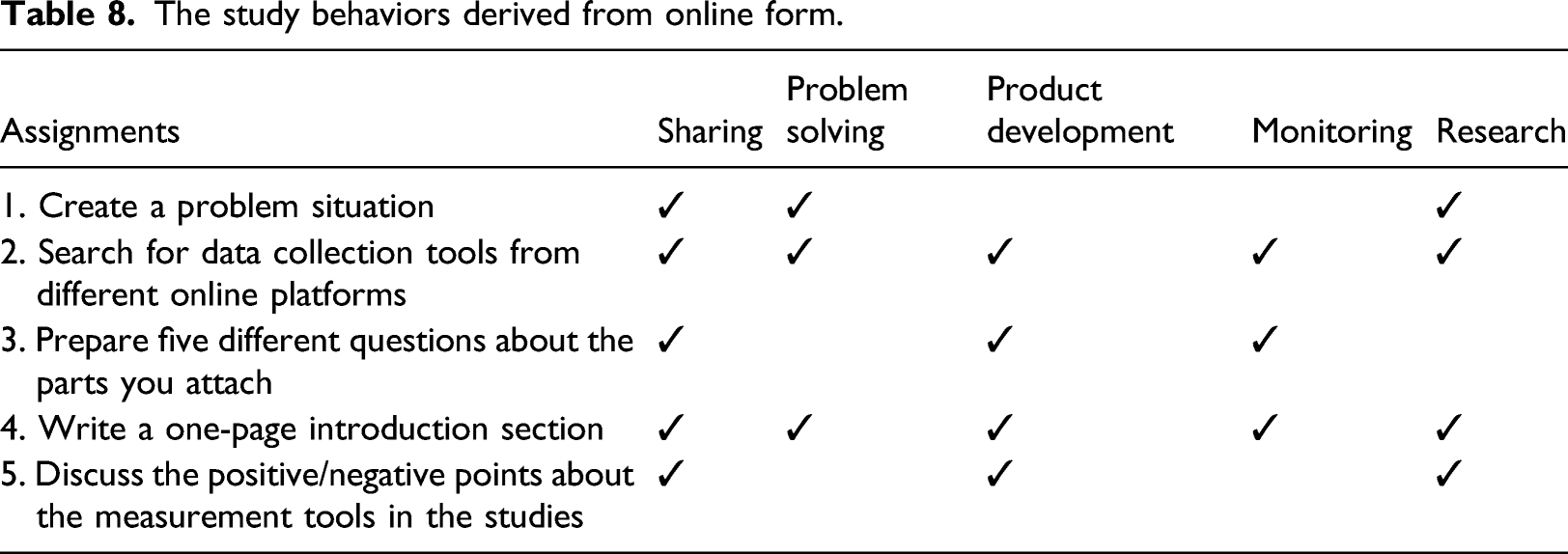
The study behaviors derived from online form.
Discussion
In this section, the factors behind the development of study behaviors (sharing, problem solving, product development, monitoring, and researching) were discussed in the contexts of the online setting, characteristics of learners, and the extracurricular activities in the projects.
Changes in online study behaviors of adults
Granger et al. (2002) pointed out that teachers as adult learners should be transformed into active knowledge builders possessing substantial autonomy regarding the specific knowledge they require. Thus, this study is planned to provide assignments for adult learners to motivate and direct them to engage in the assignments actively. While working for the projects, five activities such as sharing, problem solving, product development, monitoring, and researching were addressed.
Sharing was one of the experienced activities among teachers that Facebook group was often used, which may be due to the familiarity of the teachers. Similarly, researchers pointed out that Facebook has a great potential of sharing in collaborated learning, searching, questioning, and discussing (Bicen and Uzunboylu, 2013; Huang, 2002). Also, Ma and Yuen (2011) posit that the success of online learning is determined by participation, engagement, and social interaction among the learners. The study behaviors of communication, following the group, sharing the assignment, providing information, and discussion were all related to the learning community approach. In line with this, constructivist and andragogic research highlights the positive role of communication between learner–instructor and among students to construct knowledge (Allen, 2016; Diep et al., 2017). In this sense, sharing in this study might be a way of constructing an online learning community among adults. In agreement with this idea, Ke and Xie (2009) pointed out that knowledge sharing and construction capture the process by which learners elaborate, synthesize, and integrate new concepts and apply them in practice through interacting with peers. In adult education settings other than higher education, wherein learners need to combine work and family with study, online participation for knowledge exchange and collaborative work is normally required (Nistor, 2013). In addition, one prominent behavior was “discussing” that can be considered as a new way of sharing among adults by creating a classroom atmosphere in asynchronous format.
Problem solving was an activity which was observed in all of the projects. The participants were found to be experienced in a certain subject and be aware of responsibilities that may positively affect to strive in the tasks. Knowles et al. (2015) consider problem solving as a kind of learning that requires the internal events usually called thinking. In the present study’s context, the pressure for adult learners is reduced to some extent by the projects. On the other hand, solving unexpected problems motivated learners in problem-solving process. In parallel with this, high internal motivation should be taken into consideration in the instructional process for adults, since they have limited time for their learning process (Diep et al., 2019). Product development was one of the prominent activities that was frequently exhibited by reporting. However, few teachers continued to pile up the course notes as they were accustomed to papers. Although Prensky (2001) described today’s adults as digital immigrants and asserted that they cannot easily leave their previous behaviors, this study indicated that some of the adults (as digital immigrants) left their note-taking behaviors. Watching the videos for receiving information can be considered as a newly appeared behavior. Nevertheless, Brecht (2012) argued that following the videos has become a common behavior while studying among students in traditional classrooms, especially to prepare for the exams. Monitoring was an activity which continued through the course period. The different responsibilities of the learners may have directed them to monitor more than other activities. As a matter of fact, the work and family lives of the adult learners take precedence in order of priority, unlike the formal education students (Merriam and Brockett, 2011). Researching is one of the activities that the adult learners definitely changed when compared to their previous study behaviors. When the adults searched for finding articles, exam questions, and digital materials, they used the search engines, online databases, thesis centers, and Google Scholar for their projects. Some researchers suggest online library catalogs providing information for adults (Tonta, 2009). In this circumstance, the results of the study indicate that using online libraries in researching was a remarkable change among adult study behaviors in online settings.
Factors affecting the study behaviors of teachers in online settings
It was seen that although learners were adults and have brought their study behaviors from traditional experiences, the nature of online setting and projects in this study influenced the adoption of online learning. Some behaviors reflecting study behaviors were provided solely (mostly in researching and monitoring) and some others were generally exhibited in a group (such as sharing, product development, or problem solving). Even though product development and problem solving were considered through collaborative behaviors, some students also exhibited these behaviors individually.
The tasks in the study included searching information, analysis of data, or solving problems. So, the given projects may have played a role in the fulfillment, repetition, and continuity of some behaviors. Also, adults’ characteristics were other factors influencing the study behaviors. Especially, the working area, family life, and the aims of the adults somehow affected the developments of the behaviors in the study. The underpinning factors of the behaviors are summarized in Figure 4. The factors influenced the exhibition of adults’ study habits.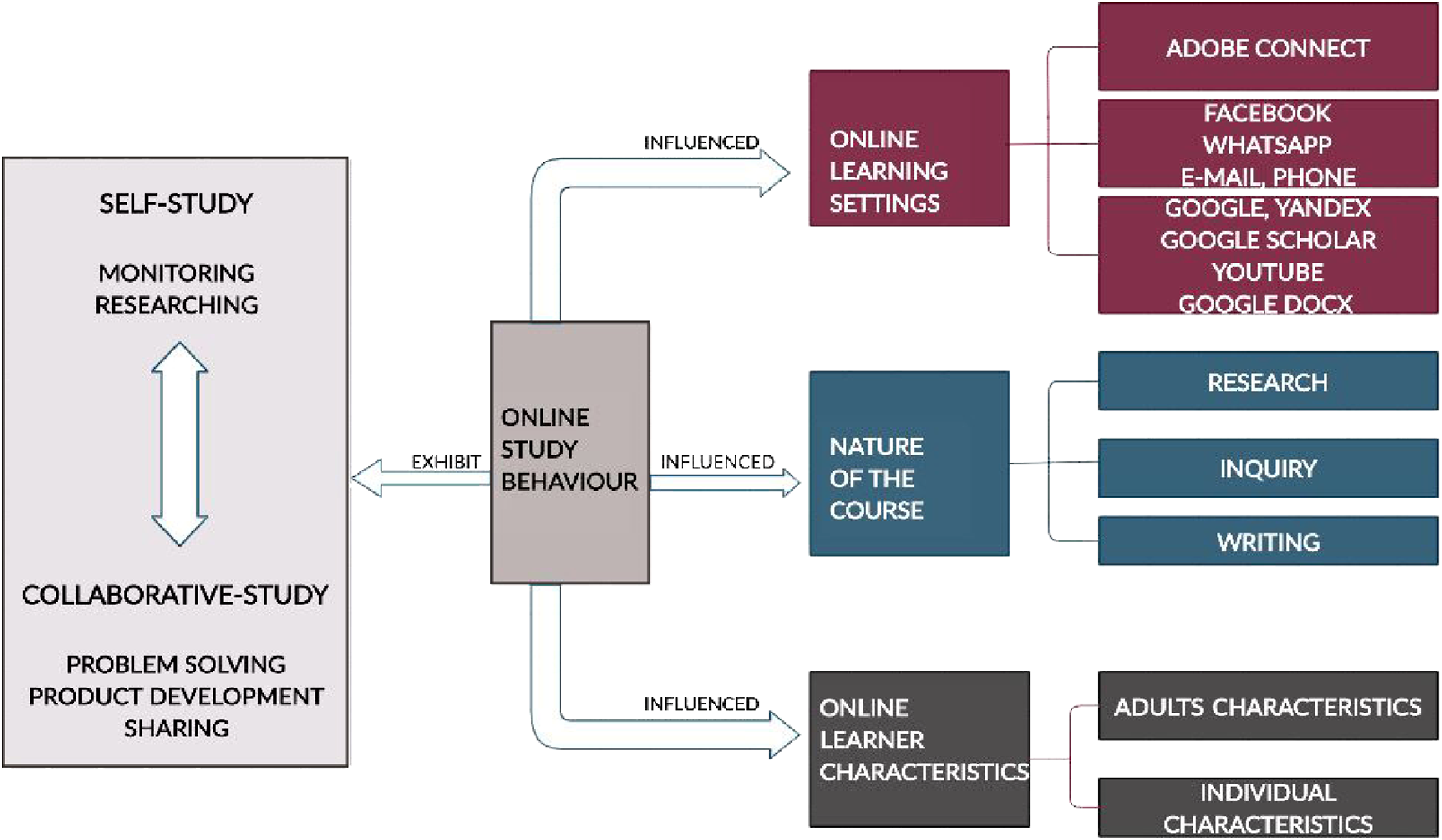
Boyd (2004) addressed some factors influencing online learners’ behaviors: the technical factors and the environmental factors which are in accord to the present study. In addition, the factors addressed in this study were similar to the studies which reported that online learning success came from learners’ characteristics (Beaudoin et al., 2009; Sun, 2014; Vu et al., 2014). In the present study, interestingly, although the teachers had too much workload, it seemed that they experienced more different online ways to exhibit their study behaviors. One reason for this may be the mobility for exhibiting study behaviors. Rather, in our study, learners’ prior online learning experiences were influential on explaining learning support and learning motivation but not as the prominent factors in other studies (Huett et al., 2004; LaPadula, 2003).
On the other hand, the findings of this study concur with previous works about study behaviors exhibited within the groups (Ma and Yuen, 2011). Adobe Connect software, an online learning environment, the popular online platforms (Facebook, WhatsApp, Google Drive, and YouTube), and the devices (desktop computer, laptop, iPad, and tablet) were the tools used in the learning process. In this study, providing the assignments for the teachers could encourage them to work collaboratively within these platforms.
Limitations
This research is not exempt from limitations, the most important of which is its case study nature. Although, in this study it was useful to gather more detail data by studying with small sample, a larger sample size would increase the sensitivity of the generalization. Perceptual data obtained from adult learners were preferred so log data can be used in future studies.
In this study, the study behaviors were generally exhibited through the given projects. Thus, more time is required to reveal whether they become study habits or not. However, the projects in the study provided hints about the differentiations of the study behaviors in the activities. This study utilized perspectives of online learners to reveal the behaviors, and data were gathered during one semester instructional process. The scope of the topics may limit the generalization of the study findings, and the longer observation period may provide more details. For more generalization, in future studies, this work needs to be augmented by extending the learners’ profiles to address their long-term study behaviors that appear in the longer assignments.
Conclusion and recommendations
In this study, online study behaviors of teachers were evaluated through qualitative data. The study behaviors in the online environment emerged in five activities: sharing, problem solving, product development, monitoring, and researching.
The results indicated that learners who did not change their study behaviors easily continued to exhibit their behaviors in online settings. At this point, the behaviors were not entirely new. However, the new exhibition forms of study behaviors may be considered as new. It was found that informal knowledge sharing in social networks can be powerful catalysts for enabling teachers to improve and share their practices. In addition, acting in groups contributed to direct their experiences to the tasks together. Also, the characteristics of adults such as their professional life or family life influenced exhibiting the study behaviors in the tasks. In addition, the study confirmed that before offering an online learning for in-service teachers as adults, instructors need to be aware that the adults have certain personal characteristics and skills such as self-discipline and familiarity with technology (Granger et al., 2002). Moreover, curriculum should be structured in a way that fosters sharing of experiences among learners such as through the use of group projects and interactive discussions. Along this line of reasoning, online programs for teachers should be constructed in a way for including problem-solving activities. In addition, teachers may be directed to active a goal in the context of a product development. While they were working to achieve goal-oriented works, the learning environment should provide opportunities working collaboratively and sharing knowledge to reconstruct knowledge and share experiences.
From the methodological point of view, this study has some different viewpoints. Because when study behaviors become habit-oriented, people do not need to consider too much about the behaviors when they exhibit them (Braisby and Gellatly, 2012). Thus, when learners are asked about their actual behaviors, they generally do not think whether the behavior is a habit or not. Thus, we focused on the progression of the behaviors in some period of time, and differently, in this study, the continuity of exhibiting behaviors in the learning process is considered as an indicator of study behaviors.
The contribution of this study to the adult education is in two-folds. First, researchers and practitioners of online education can utilize the study findings in designing more learner-centered online courses. Second, several tools for instructional strategies were addressed for online project based learning. Consequently, we hope that the findings of this study would assist in future design and implementation of online learning settings for course designers or online instructors.
Footnotes
Declaration of conflicting interests
The author(s) declared no potential conflicts of interest with respect to the research, authorship, and/or publication of this article.
Funding
The author(s) received no financial support for the research, authorship, and/or publication of this article.

Examples from the project topics
1. Create a problem situation by examining the prior studies in your field. You will share the text, converting the text of the one-page problem description. 2. Study all the topics covered up in this week’s course in line with the material of the lesson and prepare five different questions about the parts you attach or consider as important. 3. Write a one-page introduction section within the framework of the research that you will do in order to find the answer to how to write the introduction section of the article on the subject matter. You will write in the section, note the relevant citation and share your assignment by converting it to the relevant form.
Online control list form
Items: I Studied for the projects
How?
Where?
When?
Why?
Searching online databases
Examining previous studies
Reading the studies that I found in online settings
Watching videos
Using shared media in online settings
Solving problems
Making quotations
Developing products
Exchanging ideas
Synthesizing the information from several sources
Summarizing
Following the lesson records
Memorizing/editing lecture notes