




Abstract
Set in English Language Arts, this article takes up recent trends in literacy toward investigating ontological notions of digital texts. Two teacher educators recently implemented a series of readings and activities in their methods courses designed to help preservice teachers sophisticate their conceptions of texts beyond autonomous, neutral collections of information by considering digital age ideas such as software theory, textual ideology, and the algorithmic bias of the Internet. The authors review recent scholarship surrounding the integration of computational thinking and the humanities before illustrating a theoretical framework that combines software-driven interpretation and critical media literacy. Descriptions and applications of course texts and exercises precede a discussion on typological methodology. Through the analysis of semester-long writing reflections and course interactions, a typology of preservice teachers is then presented, illustrating three archetypes: Strategists, Hawkeyes, and Improvers. These archetypes are taken up to analyze the ways in which a range of teacher candidates considered ontological notions of digital texts to analyze instructional techniques, to sharpen their critical lenses, or to gain greater understanding of ELA as a discipline (or some combination of all three). This work demonstrates that as teacher educators and teacher candidates increasingly consider software-powered literacies, interrogations of who we are, who we are becoming, and what it all means requires attention to, and explicit practice with, the dark side of digital texts.
Keywords
Since the turn of the century, scholars have used social semiotic theories of multimodality to investigate the increasing use of digital technologies in schools as well as the emerging social practices of meaning-making and communication that they afford teachers and learners (Johnson, 2016). More recently, investigations into the connections between software theory and English language arts (ELA) have carved new pathways for researchers to expand our understanding of digital texts and literacy (Lynch, 2016). In this practitioner article, we outline our interest in this newest strand of digital literacies research by interrogating what is going on underneath our screens and inside our devices (Lynch, 2017). By pursuing ontological interpretations of digital texts and practices, we argue that digital literacies can no longer be considered autonomous objectifications and actions, that they are, in fact, ideological (Lynch and Gerber, 2018). We also aim to illuminate this interrogative construct for preservice teachers by showcasing recent critical literacy strategies implemented in teacher education settings (Golden, 2017).
We begin by reviewing the expansive body of research on digital literacies in ELA before outlining our primary research questions and pedagogical assumptions through which we engage in this work. We then highlight recent readings and activities from our coursework that encourage preservice teachers to consider ideological notions of digital texts. Next, we present a profile typology of our students resulting from a qualitative analysis of written reflections in which preservice teachers react to instruction by describing their notions of literacy practices, digital texts, and pedagogy. Finally, we discuss our limitations and recommendations while positioning the implications of our work moving forward within larger scholarly trends.
Moving ahead with digital literacies through a critical lens
Digital literacies account for the myriad ways contemporary learners produce and negotiate meaning through and alongside texts and technology (Lankshear and Knobel, 2011). A number of pedagogical assumptions are integral to the ways in which we engage in digital literacies with our preservice ELA students, all of which have foundations in previous scholarship. As teacher educators, we approach literacy as diverse sets of socially situated meaning-making practices that are influenced by and contribute to sociocultural, dialogical contexts (Bakhtin, 1981; Gee, 2017). Literacy education in the digital age is best understood as the generation of knowledge and communication enabled by social and cultural factors that contribute to co-existing realities which are understood and expressed through multiple means including digital, linguistic, and semiotic (Coiro et al., 2008). By integrating digital literacies with curriculum and instruction, educators position students at all levels to engage in literacy practices that are reflective of their unique aptitudes, helping them establish new ways of being readers, writers, speakers, and listeners (Cope and Kalantzis, 2000).
Digital literacies research has propelled the ELA field forward by accounting for studies in reading and writing with technology (Hicks, 2009; Purcell et al., 2013); enhancing literature study through digital connections (Marlatt, 2018; Sulzer, 2019); improving argumentative writing through technological support (Benjamin, 2005; Howell, 2017); teaching and learning around multimodal compositions (Jewitt, 2009; Kress, 2011); reconsidering disciplinary standards in light of technological advancement (Sulzer, 2018; Stornaiuolo et al., 2017); prioritizing games for socially-situated learning (Garcia et al., 2020; Squire, 2011); and expanding our perspectives of technology research across institutions (Baker, 2010; Mills, 2010). The ongoing work of scholars exploring the impact of digital texts on traditional modes of literacy practices and learning operations within ELA classroom spaces is vital for our future (Pasternak et al., 2016). Still, we also recognize our field’s current expansion alongside technological ubiquity to include deeper considerations of non-neutral realities and ideological forces in operation at the center of digitized meaning-making (Ávila and Pandya, 2013; Lynch, 2015).
Teacher educators strive to prepare ELA teachers who are skilled in utilizing digital literacies with students, but they are also responsible for modeling how texts and tools should be critically analyzed (Rybakova et al., 2019). McQueeney (2014) argues that critical media literacy (CML) affords pathways to interrogate the contexts surrounding media’s creation, distribution, and consumption. CML allows for the exploration of media phenomena, including the social ideologies that drive it as well as the cultural consequences of its existence (Puchner et al., 2015). A critical perspective models healthy skepticism of media and empowers students to think carefully about the messages they encounter (Redmond, 2012). Proponents of CML argue that it transforms teaching and learning through the promotion of democratic ideals and active citizenship (Gainer, 2010). This trend is visible in teacher education, where current and future educators interact with and through ideologies and digital practices (Siegel, 2012).
The present article considers ontological conditions of digital texts, positing that their fundamental nature and properties are inherently unlike and more multifaceted than our sense of texts has allowed for previously (Lankshear and Knobel, 2011). This work involves enacting theoretical and instructional support for the ongoing transition from assumptions of the autonomous to the ideological nature of texts (Street, 2003). The newly revised position statement on ELA teaching states that teachers should “emphasize literacy as meaning-making that fosters language competence in a variety of authentic texts, genres, contexts, and situations continuously mediated by a plurality of social, cultural, and ideological factors” (NCTE, 2017). Considering implications for theory and practice of software-driven digital texts expands our focus to include a multitude of textual genres produced, navigated, and recreated within variant contexts ranging from social to ideological.
Refocusing our approaches to literacy education as they relate to software and tracking this shift from accepting the autonomous nature of texts to recognizing their ideological composition reflects something of a new frontier in the teaching of ELA. While ample scholarly attention has been paid to the implementation and implications of digital literacies for classroom activity, this work attempts to articulate a framework for ELA that addresses a darker underside of digital literacies, the shifting ontological makeup out of which various platforms, applications, and games arise. More precisely, we seek to examine both sides of the digital texts foundation: 1) the lighter, discernible side of myriad digital texts with which we physically see and interact in both academic and social spaces such as Twitter, Minecraft, and Google; and 2) the inconspicuous (though larger) dark side of software whirling below the surface, generating momentum that animates our channels of daily interaction via technology while also carrying out actions to and through its users unlike the static texts of the past.
As the above belief statement and others argue, ELA teaching should not only be about literary analysis, writing pedagogy, or finding affordances in innovative digital texts for making and sharing meaning, it should also be about gaining awareness of and interrogating the ontology of texts, especially their ideological motivations and outcomes. Previous scholars explored these questions in the 1990s as society and schools were being introduced to multiliteracies and the Internet (NLG, 1996). However, the issue seems exponentially more vital today because software-driven texts are different in kind than any that have preceded them. Texts have always presented meaning-making environments in which readers play, interact, shape, respond to, and accept or resist, but the engagement was initiated by the reader. Today’s software-comprised texts are alive, participating in real time with the reader. They are hungry for our interactions and information. They play back. Digital texts shape back and respond back. They collect, incentivize, advertise, and affect our behavior. Mirra (2019) reminds us that digital texts and tools can “enrich ELA classroom practices if and when they are embedded into an instructional paradigm focused on relevance to students’ personal, academic, and civil lives” (p. 262). And as they always have been, ELA teachers are well positioned to illuminate these concepts for students in ways that can impact their present understandings about literacy practices and prepare them for success in future classrooms. Research and implementation is needed which illustrates entry points for preservice teachers into topics of digital texts and ideologies.
Research questions driving our work
In our work with ELA preservice teachers, we are catalyzed by the following two research questions: 1) Where do our teacher candidates tend to begin in their understanding about literacy? 2) How do our students begin consider ideologies within digital texts, and how do these considerations shape their sense of what it means to be a literacy educator?
Pedagogical framework
In helping our preservice teachers adjust their critical lenses to zoom further into and below their devices, we look to scholars whose recent work has bridged the worlds of ELA and software study (Lynch, 2015). In his call for greater interdisciplinary synthesis of computational thinking and humanistic approaches in teacher education, Lynch (2019) argues for inclusion of scholarly readings and analytical activities melding digital humanities with software theory: We must begin by acknowledging that digital means software; software means languages. Languages power the Digital Age. Languages, both human and computational, have never played so fundamental a role in the world. I say that without hyperbole. Computers might be binary by design, but our world is not. Only critical and creative encounters with computationality will prepare teachers and students to navigate the challenges and opportunities that lie ahead (p. 34).
The work of illuminating the dark side of digital texts in teacher education also integrates CML principles, not merely as stand-alone units on teaching healthy Internet skills or as isolated lessons on identifying fake news, but as a foundation for developing instructors with critically-engaged pedagogies (Leach, 2017). Critical approaches help educators point out social ideologies and motivations of media, as well as their cultural consequences (Redmond, 2012). Todorova (2015) categorizes three areas in which CML can impact spaces of teacher preparation, including the modeling of critical media consumption, socially-just media creation and dissemination, and shared power stances between educators and students through which inequitable hegemonies can be disrupted. Our work draws from each of these aspects and seeks to position future teachers to recognize and interrupt authoritative ideologies that are harmful for young people and their communities and increasingly hidden from our vision, even as our usage of digital texts escalates in and out of school (Hobbs and Jensen, 2009).
Implementation
In the following section, after offering institutional contexts, we share integrated readings that we have recently implemented in our ELA preservice courses, not as a replacement for traditional curricula such as modeling engaged literature study or effective writing instruction, but as a sharpened spotlight on the dark side of digital texts. We then showcase recent activities that have challenged our preservice teachers to consider the many ideological compositions of software-driven texts and operations that they employ to design and carry out literacy instruction.
Institutional contexts
Rick and Mark are ELA teacher educators and literacy researchers interested in critical explorations of digital literacies and pedagogy. Rick teaches at a large, Hispanic Serving Institution in the Southwest United States. Mark teaches at a large, Midwestern state university situated in an urban setting. Although the individual contexts of our institutions differ, our students tend to share a number of similarities with regard to their expectations and prior knowledge of learning how to teach ELA subject matter, as well as the kinds of scaffolds that seem effective in helping them to begin exploring ideological notions of digital texts. While our students are unique individuals expressing myriad dispositions and aptitudes, we acknowledge similarities across both locations, including the questions many students have coming in, as well as the challenges and successes we encounter in helping them construct answers along the way.
Readings and activities
Like many ELA teacher educators, we are interested in helping readers develop command for textual features. Traditionally, this principle has necessitated moves toward understanding an author’s purpose, navigating an index to locate specific topics, and gleaning interpretation from categorized tables. Today, preservice teachers’ knowledge of texts must drill down further to account for components that are in many ways new to the lexicon of literacy education, including coding and software theory. We are by no means experts in computational thinking, and we certainly do not demand mastery from our students; however, we are most interested in folding digital processes into language usage and literacy practices and exploring their critical, ideological makeup. We are committed to exploring what software means for our literacy operations and teaching practices, and the following readings and activities offer clear conduits for students to pursue their own connections. Doubtless there are many other readings available that can help spark discussions around the concept of textual ideologies. This is only a small sample of some of the texts that have assisted us with our preservice teachers.
Starting out
Introductory readings help us encourage students to begin thinking deeper about digital texts. “From ‘Reading’ to ‘New Literacies’” is Lankshear and Knobel’s (2011) opening chapter which traces the evolution of “reading” to “literacy” to “literacies” from the 1970s to the early 2000s and provides a historical backdrop for the field of New Literacies Studies (NLS). The authors argue that the “new” of new literacies concerns the ontological and “ethos stuff” of digitally mediated texts, which are markedly different than print-based texts. In terms of “ontological stuff”, new literacies involve an interplay of sounds, images, videos, and gifs; in terms of “ethos stuff”, new literacies include practices that are more participatory, collaborative, and distributed than literacies of the past. As we hope to steer preservice teachers toward ontological considerations, we find this chapter to be instructive. More recent NLS scholarship helps preservice teachers situate themselves as practitioners within the digital age, simultaneously developing effective approaches to navigate technology-mediated classrooms (West, 2019) along with critical hybrid pedagogies (Strom and Porfilio, 2019) that utilize a critical lens to account for social justice issues. Students initiate themselves by exploring how literacy education, through and alongside digital texts, is more interactive and interdisciplinary than ever before. Once this foundation is established, we move into a variety of activities.
Hashtag analysis
The Twitter thread by @smartereveryday (2019, Feb. 2) focuses on an auto-created YouTube disinformation video featuring Donald Trump’s supposed letter to Ruth Bader Ginsberg. The video is clearly fake, but the author notes the high ratio of “likes” it has and the ways in which this fake video enters into the sidebar suggestion space on the right side of the screen. The author then delves into how the video was created and for what purposes in order to introduce concepts of weaponized bots, algorithm exploitation, and all manner of counter (and counter-counter) measures that disinformation experts employ to control national narratives. Students began in small groups and searched for hashtags trending on Twitter. Their goal was to find hashtags that clearly represent ideological struggle. For the purposes of the activity (Figure 1), ideology was defined as a set of beliefs about what is and is not “good.” Thus, ideological struggle was framed as struggle over what is good and what is not. To model the activity, #TacoTrucksOnEveryCorner was taken up as an example. This hashtag originated from a comment made by the founder for Latinos for Trump, who claimed more Mexican immigrants would mean a taco truck on every corner. Both negative and positive connotations were immediately augmented on Twitter. Then in independent practice, students found their own examples and unpacked how their hashtags represented ideological struggle.
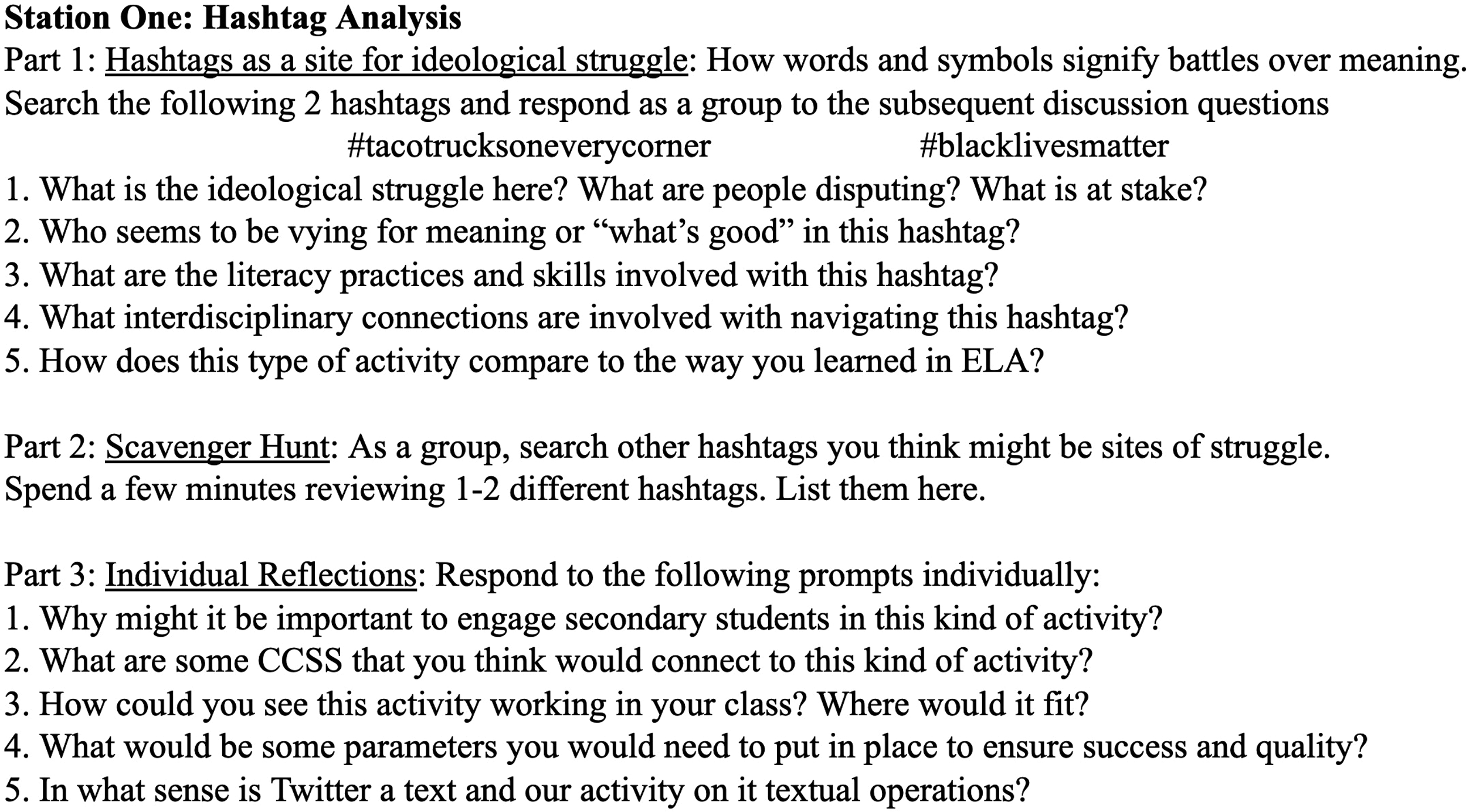
Hashtag analysis: digital texts as sites for ideological struggle.
Meme analysis
In “#NeverthelessMemesPersisted: Building Critical Memetic Literacy in the Classroom”, Harvey and Palese (2018) offer a framework for critical memetic literacy, which takes up memes as a way to engage in critical analysis. The scaffold gives special attention to the (re)production and consumption cycle of memes, broadly defining memes as “replicable units of cultural information that [command] influence” (p. 261), delineating into three types: image macros, exploitables, and memetic videos. This reading helps teachers and learners theorize the sociocultural prevalence of memes in our literacy practices and offers a blueprint for implementing memetic studies in ELA. To prepare for this activity (Figure 2), students were asked to post two memes to the online discussion board. During class, we shared and discussed in small groups. Discussions were guided by three interrelated prompts: 1. What does the meme communicate? 2. What response does the meme want to evoke in the reader? 3. How does the meme achieve its goal, what background knowledge or understanding is required of the reader to “get it”? Each group then presented their insights to the whole class. Last, we took up the broad question about what memes mean for ELA educators.
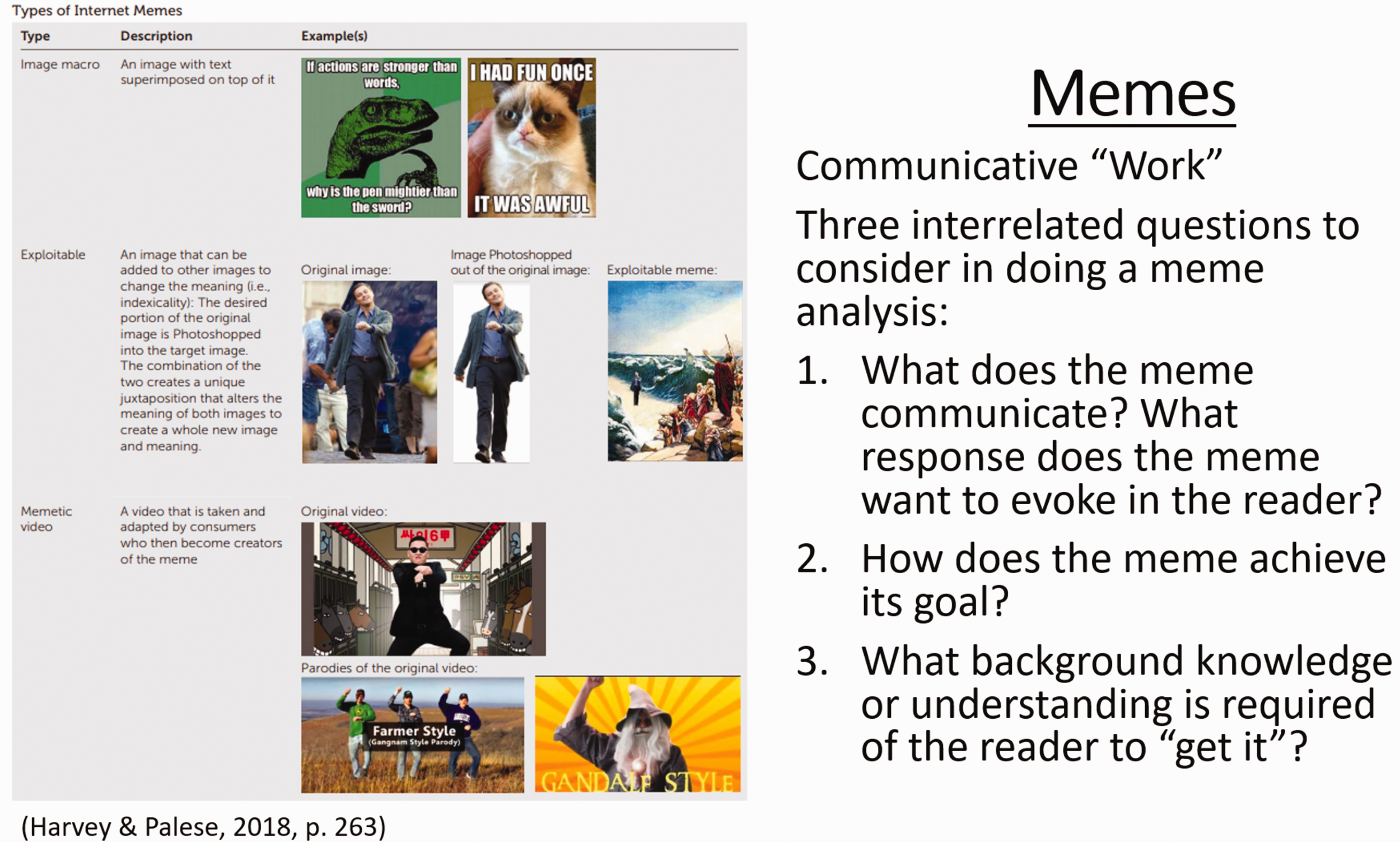
Meme analysis: understanding how meaning is conveyed through image.
Text spies
Published by the Alliance for Securing Democracy (Schafer, 2018), “A View from the Digital Trenches” details the multifaceted strategy of the Russian government to influence the 2016 presidential election in the United States. The report highlights particular strategies reliant on the use of social media platforms and organizations to bolster offline protests and the use of state-sponsored troll farms to produce polarization, destabilization, and deterioration of social trust in democratic institutions. A major takeaway for students is that our digital texts are alive, actively nudging our moves on screen and recording every moment. Using this article as a springboard, we launch into the Text Spies activity by arranging students into small groups. One group member is designated as Person A while the rest assume roles as Person Bs. Person A’s task is to search the Internet, watch YouTube, or scroll through applications such as Facebook, Instagram, or Twitter. Person Bs are instructed to silently spy on Person A, recording information that a computer might collect such as numbers of mouse clicks, scroll patterns, and pictures viewed. After ten minutes, Person Bs compile a master list of everything they recorded. Then as a whole class, each Person A reads aloud the master list of data (Figure 3). These reactions then set the grounds for a discussion about how software enables texts to read us at the same time we are reading them and how that affects our teaching with digital texts.
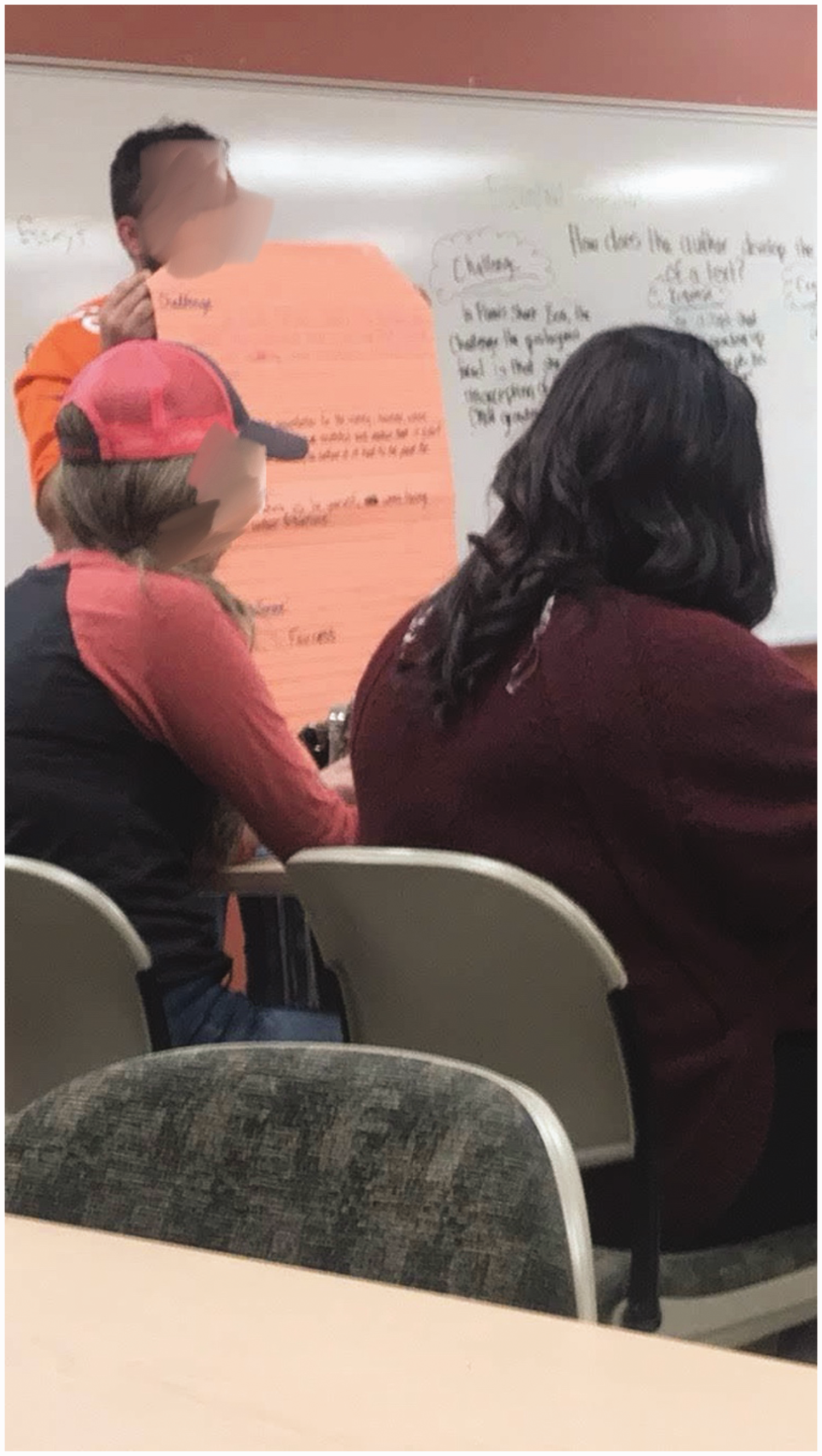
Text spies: hidden data brought to light.
Google search
In Algorithms of Oppression, Noble (2018) introduces the concept of “technological redlining” and details a number of ways in which algorithms are ideologically driven manifestations of the predominately white, millennial men who make them. Using Google as the primary resource for a range of examples, the author focuses on how algorithms perpetuate and promote stereotypes, narratives, and biases through search results. To apply these concepts in practice, we ask our preservice teachers to engage in the Google Search Activity (Figure 4). This exercise asks students to perform Google searches on key terms and consider the ideological nature of the results. In groups, students begin with the same key terms used by Noble: “black girls,” “why are black people so,” why are black women so,” “why are white women so,” “beautiful,” “ugly,” and “professor style” (pp. 19–23). The groups compare Noble’s results to their own and discuss the differences. In some cases, students may notice the algorithms have been reworked to address Noble’s concerns, another layer to add to the discussion and more evidence that algorithms are not, in fact, value neutral. The groups then search their own key words and present their findings to the class. Throughout the activity, students are encouraged to consider search results as non-neutral, algorithmically-driven texts that (re)present the world.
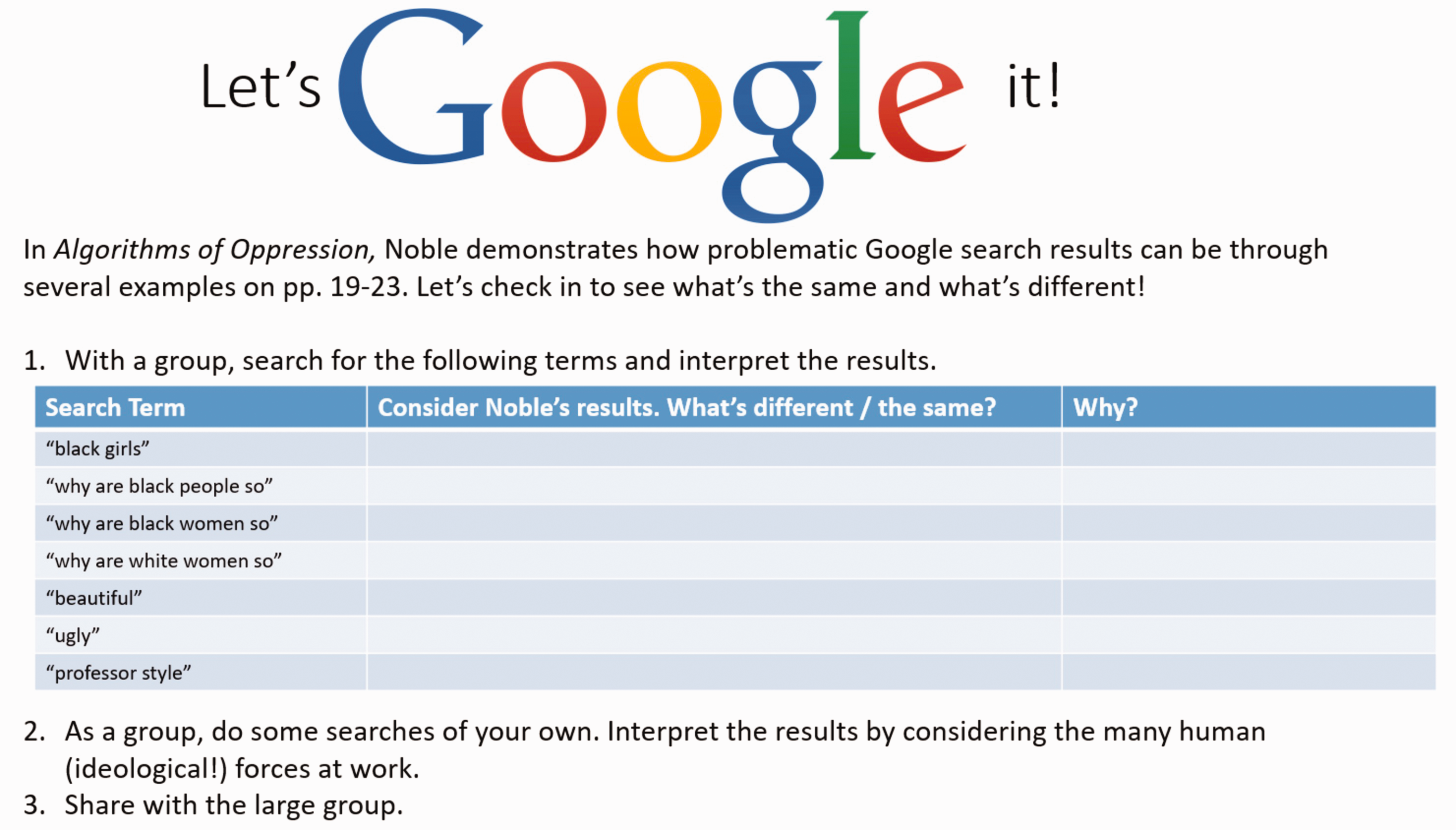
Google search: ideological forces at work in our information consumption.
Interspersed throughout the semester with other course units, these activities comprise some of the methods by which we expose preservice teachers to new ways of thinking deeper into the digital texts we all use and how ideological considerations can impact their pedagogies. By asking students to consistently experiment with ontological notions of texts, and then respond in writing with reflections on their experiences, we hope to equip them with a fluency and disposition that acknowledges software and coding as integral to our contemporary literacies.
Toward a typology of ELA preservice teachers
As our research questions focus on understanding 1) where our students begin in their conceptions of literacy and 2) how their considerations of ideologies in texts shape their development as educators, we ask students to reflect often during their coursework. In addition to pre- and post-course surveys, we invite responses to a series of prompts following each digital text activity. Collectively, students’ reflections help us better pinpoint their initial stances on teaching alongside technology, accessing digital texts, familiarities with computational theory, and more. We also glean from their writings the kinds of support we can offer in terms of instructional approaches or pedagogical approaches. Cumulatively, we are able to gain insight into their understanding of how textual ideologies can play roles in their literacy and teaching practices. A total of 27 preservice teachers participating in their first ELA methods course from a range of ethnicities including African American, Indigenous, Latinx, and White granted us permission to collect and analyze their writings and interactions throughout the semester.
Methods
Using a semester’s worth of writing to construct typological profiles of our students’ conceptions of digital texts aligns with Doty and Glick’s (1994) theorization of typologies as a method of establishing relationships between complex phenomena and categorizing it into a working model. Capecchi (1968) defines teacher typologies as “the selection of a certain number of combinations of groups of variables” (p. 9). Although typology construction is a conceptual undertaking, the resulting structure can serve as a practical guide for curricular decision-making (Bailey, 1994). In our attempt to understand preservice teachers’ values and visions, we align with recent scholarship conducted by Goff et al. (2019), who use typologies “broadly within education research to capture the systematic classification of educators” (p. 3). After collecting data in fall, 2019, we created a typology of our 27 students through a coding and categorization process (Saldaña, 2015) in order to find recurring and prominent ideas expressed about reading and writing in the digital age, personal goals for learning in the course, considerations of digital texts’ ontological compositions, and more. These characteristics were then grouped to produce profiles that we later described using thick, rich description (Ellingson, 2009).
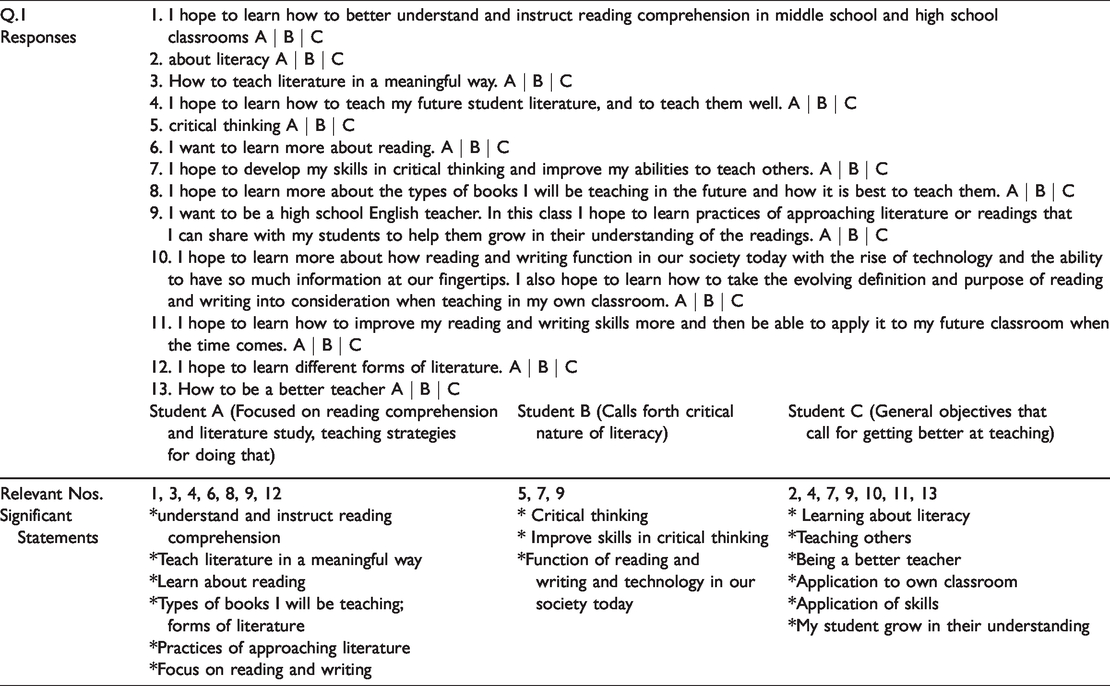
In the following analytical structure samples, we showcase our coding process from the first question on Mark’s pre-course survey (Table 1) and the fourth question on Rick’s post-course survey (Table 2). The process began by grouping students’ responses according to similar significant statements, resulting in three distinct categories of response types.
Analytical structure sample. “What do you hope to learn in this class?” (n = 13).
Analytical structure sample. “What have you learned in this class?” (n = 14).
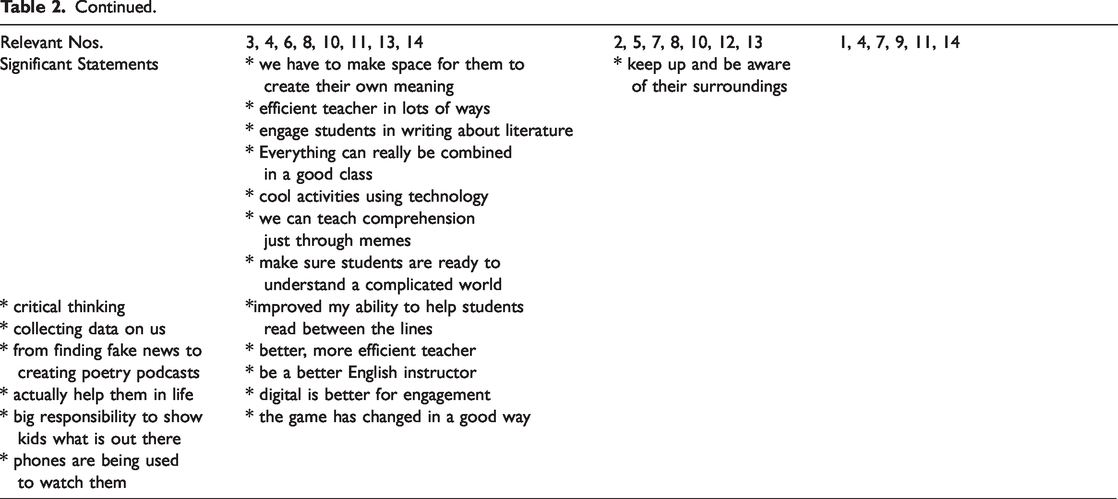
As the A, B, and C student types were continually reinforced through similar codes throughout the analysis, we identified our three student profiles as “The Strategist,” “The Hawkeye,” and “The Improver.” These profiles are not tied to a singular student; rather, they represent a range of attitudes, dispositions, and knowledge bases of preservice teachers enrolled in our courses and are intended to serve as a guide in our collective interactions (Urick and Bowers, 2014). Ethical considerations were a priority in our typological methods. Students consented to participate with the assurance that their personal characteristics would remain anonymous, and details about their beliefs and practices would be reported strictly as aggregate data. Any real-life student in our courses might exhibit characteristics of one, two, or even all three of the profiles, but for analytic purposes, we present them as a distinct model to address our research questions and explore the interplay of our pedagogical practices and the three student types. We hope our findings will afford insight into students’ identities and agency within technology-mediated environments, as important typologies have done previously (Ellaway et al., 2006).
Positionality
As practitioner researchers, we recognize the power differential that exists between students and instructors, which can result in participants feeling pressured to respond to course activities in line with a project’s goals or conceptual approach. Designing curricula which served both as course components and as data collection tools positioned us simultaneously as insiders and outsiders to the research. Negotiating these dual roles involved discussing the research in class, checking our assumptions, and deepening our analysis of students’ ideas about texts and ideologies through memos (Saldaña, 2015). We also sought to not shy away from any tensions that might arise, but instead invited dissonance in the spirit of collectively improving our practice as educators through practitioner research (Lytle, 2008). In our exploration of digital literacies and ELA teacher education within the NLS paradigm, we are inspired by practitioner research methodologies, which Simon et al. (2012) argue, “can contribute to a more dialectical vision of literacy practice and theory” (p. 6). Our positionality was situated within our central framework; we drew upon our “identities and experiences to question established systems and create more equitable arrangements for student learning” (Simon et al., 2012: 9).
Results
We now present a triplex typology of our ELA preservice teachers, sharing student responses and artifacts from our coursework to demonstrate how educators-in-training are reacting to these new course objectives, highlighting their perspectives as humanities-minded learners, and as developing practitioners with interests familiar in ELA environments. Throughout our sketches of Strategists, Hawkeyes, and Improvers, all names are pseudonyms.
The strategist
The Strategist begins with the assumption that reading and writing are important skills to master for students’ success in school and life, and a good ELA teacher knows a range of strategies to engage students in these activities. The Strategist is interested in using the course to become familiar with these strategies: what they are called, how they work, what to expect, how to troubleshoot, and how to evaluate student performance. Above all, the Strategist wants to know what to do in a middle or high school classroom at the opening bell all the way to the closing bell. In its purest form, the imagination of the Strategist renders reading and writing as a series of stepwise procedures that can be enhanced through instructional support. The Strategist’s goal is to accumulate pedagogical strategies and develop a vision for when to use them such that any reading or writing difficulties encountered in the classroom can be remedied through the proper deployment of a particular strategy. As the Strategist is foremost concerned with the technical aspects of teaching, their instructional approaches become tools that can be used to repair severed lines of communication and ensure proper results in a given learning design.
Preservice teachers classified as Strategists largely saw digital texts as instruments of engagement employed as part of a broader learning strategy. For instance, although Mia expressed interest in utilizing Twitter throughout the Hashtag Analysis, her writings reveal a strategically traditional approach to social media. In response to how this type of activity could figure into her future teaching, Mia focused on tapping into the multiple applications students use with their smartphones daily, writing, “This means that they are familiar with it and actually enjoy spending time on the platform. So then, wouldn’t it make sense to use something students already love to help them engage and dive even deeper into classroom activities?” Similarly, Vincent situated his answer to how Twitter serves as a text and spurs textual operations from a perspective of cultural relevance, offering, “By using Twitter as a digital literacy text, it can help students be engaged as well as make the class more relevant to students’ lives.” Jules agreed, arguing that memes can be advantageous for classroom inclusion because they afford teachers the opportunity to “bend the content of our classes to more closely align with their interests and hobbies. Examining things that students do outside of school through an academic lens will help students connect other scholarly content to their lived experiences.”
Strategists’ responses to the Meme Analysis were particularly illustrative of their dual positionality as thoughtful, inquisitive meaning makers and organized lesson designers. While students such as Trudi alluded to memes as a “new and exciting way for us to interact with other social media users because they really are their own language,” she simultaneously understood memes as logically the next tool in line as part of a long lineage of literacy strategies in the ELA classroom (Figure 5) and centered her reactions within notions of instructional practice. Brett was equally strategic. On one hand, he acknowledged unprecedented potentials of teaching with memes by calling them, “gamechangers where students are gaining much more information from memes than simply a humorous photo,” and on the other hand, he returned to a procedural stance, arguing “It is important that students are learning through means which interest them. Now think about this: imagine having students create their own memes as a form of assessment.” For the most part, Strategists felt that digital texts such as hashtags and memes provided a familiar entry point through which students can explore concepts in literacy learning.
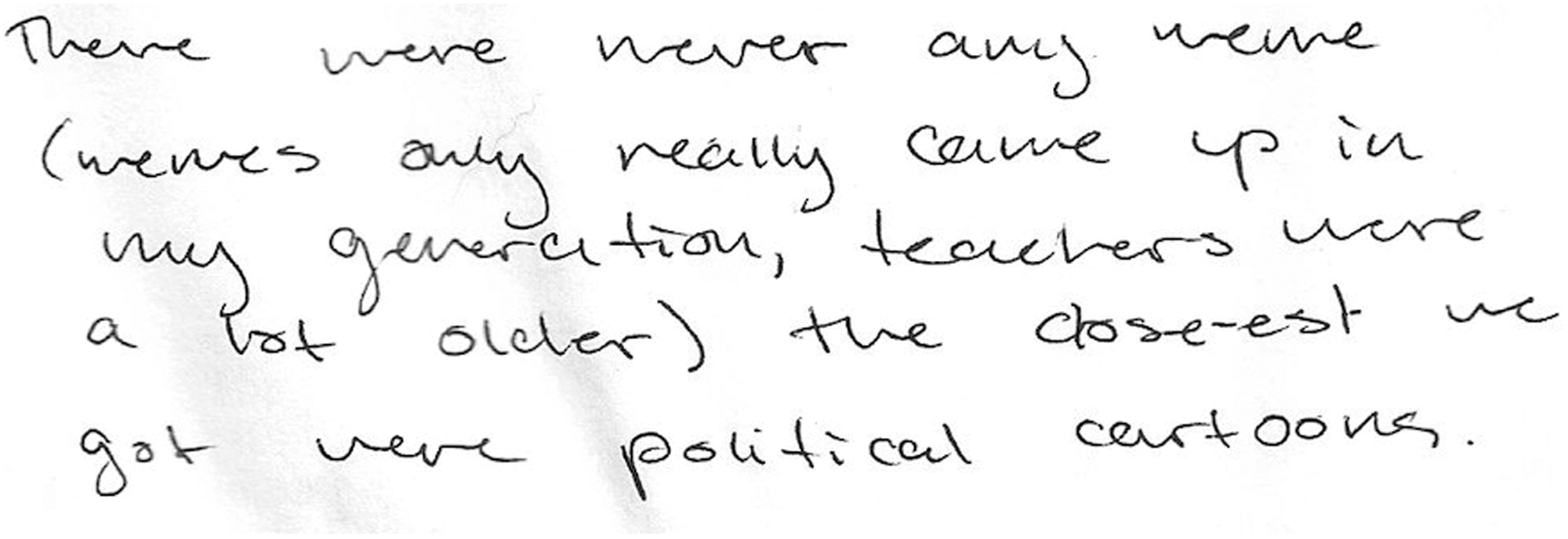
A strategist sees memes as another pedagogical tool.
Although these operational conceptions are extremely valuable in terms of our preservice teachers positioning digital texts to enhance their teaching practices, most Strategists did not appear to deeply consider ideological compositions or the role of software in their responses. Jody embodied this preference for staying within the realm of curriculum and instruction. While writing about the impact of the #MeToo movement, Jody avoided any discussion of sociopolitical or capitalistic motivation and ideology, choosing to ruminate on the integration of this significant hashtag for engagement in literature study, stating that it can “help young students connect the novel to important real-life events and movements. The versatility of this simple theme is an incredible tool for educators to open the doors of conversation, interpretation, and voice to their students.” Much like her fellow Strategists, Jody prioritizes digital texts as “tools” that can help students access “simple themes” during literary analysis. Rather than probing any ontological undercurrents, her reactions tread on the surface level, describing a dynamic social phenomena as an autonomous scaffold that can be leveraged for content mastery.
While most primarily held perfunctory conceptions of digital texts as mechanisms for instruction and curricular vehicles, a few Strategists did take their notions of teaching strategies deeper to explore sophisticated questions pertaining to the origins of texts as well as authorial motivation and desired outcomes. Expounding further on how social media applications can augment literature study, specifically within the nonfiction genre, Brett added, “The questions we should prepare students to explore include, Who wrote it? What were the authors trying to accomplish? What is the target audience? These kinds of questions allow students to think complex about any text that they come across.” Brett’s inclusion of “complex thinking” stands out from other Strategists’ more positivistic outlook, wherein digital texts can help students “locate information” and “obtain correct answers.” Likewise, while discussing the use of electronic readers and eBooks at the high school level, Jules invoked their effects on readers, adding, “It is chiefly important to understand the reader’s role in the digital environment by being keenly aware of not only the sources selected, but also how those sources came to be.”
The Hawkeye
The Hawkeye begins with the assumption that reading and writing involve some sort of “critical” thinking, and an effective ELA teacher provides space to critically assess the creation and consumption of information. The term “critical” is ascribed weight and significance, although the meaning tends to remain amorphous. At times, the term tends to align with adjectives such as innovative, smart, clever, different, and original; and it is at these times that critical thinking becomes a stand-in for the cliché of thinking outside of the box. At other times, the Hawkeye seems to understand critical thinking as a form of resistance to common, dominant ways of thinking. Thus, the Hawkeye’s goal is to pursue ways of thinking, imagining, and doing in the classroom such that reading and writing are ways of enacting authentic thought, which at times can move against normalized ways of thinking. On balance, the Hawkeye is most at home with “critical” meaning “original” and may want to venture out to find possibilities in “critical” as concerned with disrupting prevailing forms of thought. The Hawkeye understands that reading and writing perform influential functions in society and that what it means to read and write changes dramatically through technological advancement. As focused as Hawkeye preservice teachers are on specific textual details both seen and unseen, their moniker also acknowledges a broad vision, a kind of all-seeing eye constantly responding to texts with scrutiny and nuance.
Hawkeyes seemed to successfully penetrate the topic of ontological notions of digital texts, pursuing various implications rooted in the acknowledgement that the Internet is a non-neutral textual conglomerate facilitated by people with their own political identities, corporate affiliations, financial obligations, and more. Several Hawkeyes equated effective ELA classrooms with frequent opportunities for students to explore CML skills in practice. In response to the range of search results based on multiple factors such as user, location, and history during the Google Search, Butch dove directly into identity and power issues, positing, “Behind these computer systems are people who privilege some voices while discriminating others. It is up to us to critically break down the worldviews and influences being promoted to understand what they mean for us as social beings.” Marilyn was similarly concerned with Google’s algorithmic ability to manipulate unaware users and highlighted the responsibility of educators to combat these trends, writing, “If students are left uneducated about the dangers and biases at play when using certain online resources, educators will be letting the flawed systems in power get exactly what they want more misinformation spread throughout the world.”
The Text Spies activity invoked powerful responses from Hawkeyes who described their work with future ELA students as a “call to action” and fulfilling a “critical sense of purpose.”
Hawkeyes tended to describe the critical aspects of literacy learning as a vital set of social practices and were quick to acknowledge the effects digital texts have in and out of classroom spaces. In response to the inauthentic video featuring Trump writing to Justice Ginsberg, Roger grounded his reaction in the role of weaponized bots to manipulate social media users’ thought and actions. Describing bots’ exploitation of Twitter users who become an integral part of the disinformation spread, Roger argued, “When we share it, comment, up or downvote it, and show it to others in a ‘can you believe this breaking news?!’ sort of manner, the bots begin controlling our human behavior- if we don’t learn to question it.” Roger accompanies his own personal outlook with recommendations for teaching and learning dedicated to “learning to question” what we often accept as truth. Paul was equally concerned with the role that ELA teachers can play in highlighting for students the complex interactions between digital texts and their users. Asked to reflect on why a Hashtag Analysis might be an important exercise for secondary learners, Paul wrote, “I’m tasked with helping students develop multiple literacy skills from printed texts to the algorithms which determine their recommendations on YouTube. Teaching literacy must be tailored to the social context and of digital literacy in an increasingly digital age.” Fabienne agreed. In her review of critical literacy state standards, she noted, “It is important that as educators we talk to our students about digital literacy and how to navigate the internet in a way that promotes responsible meaning-making instead of passive consumption.”
Reflections from Hawkeyes differ from those of Strategists not only in their varying degrees of complexity, but also in the sense that digital texts themselves serve as the subject matter around which ELA can converge, rather than conduits through which the subject matter can be taught. Whereas Strategists appeared to be married to the use of “tools” as “engaging approaches” to help them teach normalized curricula such as research papers and grammar units, Hawkeyes saw digital texts as the central component of study holding “critical” instructional value through which ELA skills such as author purpose, textual inference, and rhetorical analysis can be applied. In response to the kinds of parameters needed to ensure an effective lesson using literary memes, Mamie argued that her group could design an “entire unit using only memes as texts,” citing the connections students could make between multimodal meaning and common ELA scholarly elements such as setting, plot, metaphor, symbolism, and more. On her post-survey, Mamie argued, “Shakespeare is great, but if I can teach the appearance/reality theme by comparing articles on election security from differing news sources, I have to think about what is more immediate to students: Hamlet’s soliloquy or their votes being stolen.”
For Hawkeyes, digital texts serve a far more significant purpose than simply “instruments” for instructional methods. In fact, the ideological compositions and global complexities hiding below the surface provide a treasure trove of possibilities in ELA settings. Used in conjunction with numerous other materials, both electronic and print-based, Hawkeyes recognize the potential for digital texts and practices to carry critically-engaged language and literacy education. During Marvin’s Text Spies group discussion, he gestured toward the materials sprawled out on their desks (Figure 6) and said, “This is what today’s classroom looks like. kids have to know how to use all of this because this is how we communicate. This is how they will need to succeed and survive in school and in life.” While Hawkeyes were more inclined to dive below the surface of digital texts in comparison with their Strategist peers, they lacked at times the ability to replicate ideologically-driven learning opportunities in terms of organized instructional approaches and were not as adept at aligning critical exercises with state standards.
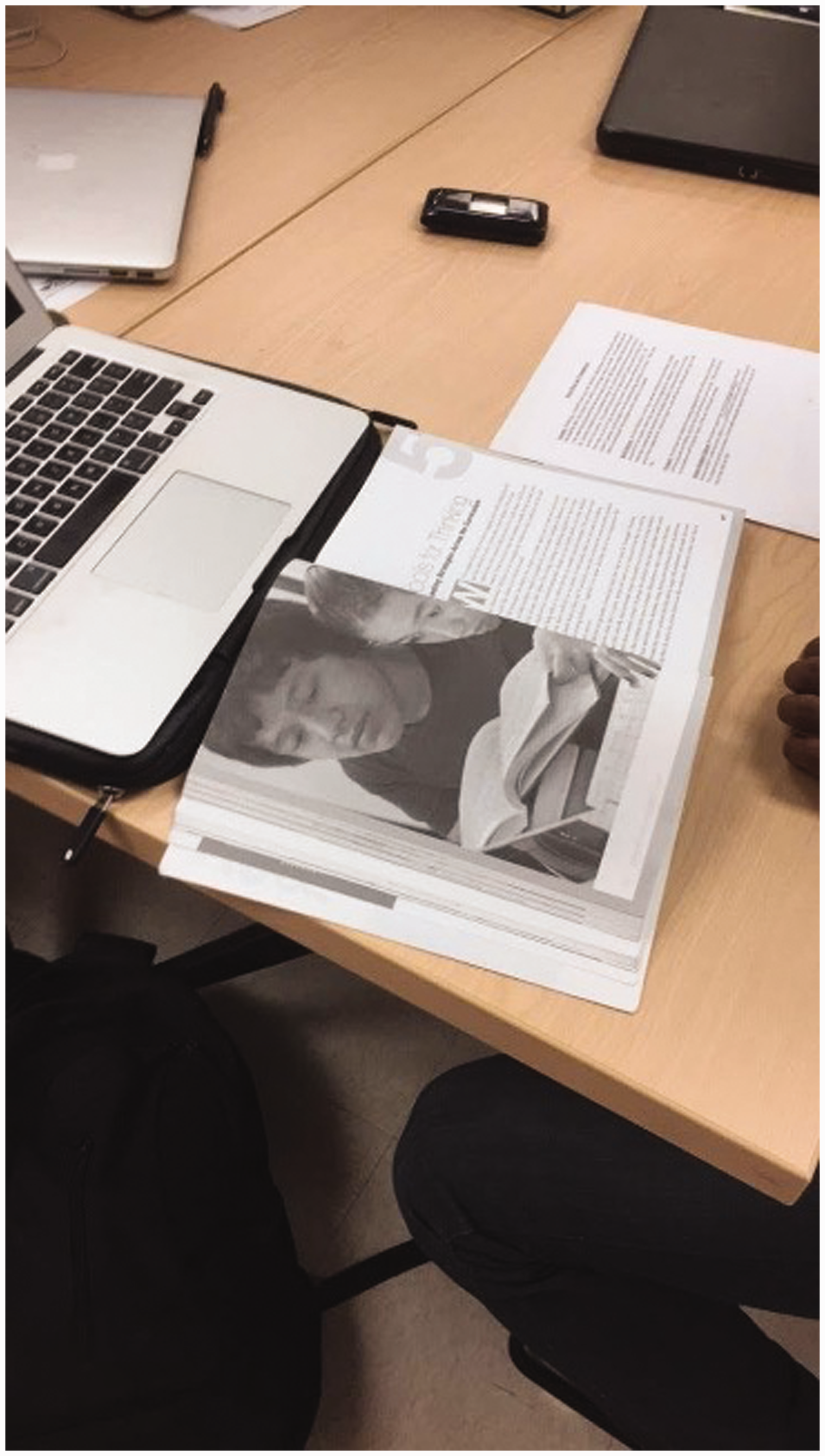
A Hawkeye critically synthesizes myriad texts in search of meaning.
The improver
The Improver begins with a general assumption that education is about improving things: improving reading, improving writing, and improving understanding. The Improver tends to maintain an openness about what it means to improve in these areas while also maintaining a belief that such improvement is possible for everyone. A good ELA teacher finds pathways of improvement for all students. Importantly, the Improver is just as interested in self-improvement as in the improvement of others. Thus, the Improver comes to class not just as a future teacher of reading and writing, but as a learner as well. The Improver senses personal knowledge gaps and expresses hesitancy in claiming a thorough knowledge of ELA as a discipline. The Improver understands ELA as encompassing reading and writing practices across many areas, which are typically imagined through the lens of personal experience as a student. One Improver will acknowledge a gap in knowledge about poetry, another a gap in knowledge about research, another about early American literature, another about spelling and composition, and so on, depending on their own self-efficacy in these areas. The Improver envisions a wide range of content to cover in the ELA classroom and wants to gain confidence in that full range in order to lead future students in a similar trajectory of constant growth and development.
Improvers recounted personal literacy practices in their reflections throughout the semester. Consistently, they cited numerous ways that they are being manipulated by software and offered concrete steps for improving their preparedness to disrupt this trend. Esmarelda balanced her desires for immediate information and privacy, stating, “What I consume can be influenced by sources that I am not even aware of. I think this is even more dangerous because I expect information and results instantaneously. That is scary. I need to get better at scrutinizing sources.” Lance similarly believed he needed to improve her fact-checking tactics, writing in response to Noble (2018), “Knowing that bots and AI’s are capable of creating content like this is scary. How can you tell if you’re reading genuine content or something that a bot created to interfere with digital platforms?” In response to the Google Search, Wallace acknowledged his tendency to offer personal information online with impunity: “Once something is out there, it’s forever. I’m guilty of over-posting pics, locations, everything. I need to step back and remember that it’s ‘Audience’ with a capital A, not just my friends and family. I have to change.” Improvers were highly self-reflective in their writings and did not shy away from critiquing their individual areas for growth. In fact, discussing their own digital goals seemed to serve as a starting point from which they readjusted their lenses on pedagogical improvement.
In collective responses to all four activities, Improvers outlined ways in which digital texts can position ELA teachers to elevate student learning. Responding to her group’s Hashtag Analysis, Kathy discussed how Twitter can improve literary discussions by democratizing students’ accessibility and visibility, writing, “It’s like Socratic Seminar but better, everybody participates and you really have to read everybody else’s posts to stay updated. It’s the ultimate channel for thinking deeper about issues not just in the book but what’s going on in life.” Following the Meme Analysis, Jimmie argued for the inclusion of memes as a way to bring more immediate significance to the work we do in ELA: “Language arts always seemed like we were thinking about the past, old literature, older authors, nothing super affecting us. Memes bridge that gap because students take content to that next level and connect dots to what is happening right now.” In response to her group’s Text Spies activity, Raquel expressed possibilities of improving students’ reading and writing skills by increasing their awareness of third parties actively observing and collecting their information online, calling digital texts a pathway by which, “We can bring elements relevant in students’ lives into the classroom as the future of literacy education, just like the web has changed from 1.0 to 2.0, so should we. What we think and write needs to be constantly publishable.” Maynard framed his reaction to the Google Search as a call for literacy teachers to hone their craft by talking openly with students about how invisible forces shape the information they receive: “The idea that search results can lead to extremely biased information on entire races, sexes, and groups of people is a social justice issue. Because we study what people write and its impact, we can lead this charge for students.”
In many ways, the dispositions of Improvers appear to combine characteristics from their peers in the Strategist and Hawkeye categories. Improvers appeared to recognize the ontological implications of digital texts; and yet, they simultaneously investigated particular ways of preparing themselves and their students to navigate ideological contexts. Following the Google Search, Floyd called for greater awareness of bot-driven propaganda as a way of improving his lesson planning for canonical dystopian literature such as Brave New World (Huxley, 1932), 1984 (Orwell, 1949), and Animal Farm (Orwell, 1946): “Double speak thought policing is happening today in real time. Bots push the same videos covering one view, there is a massive portion of other news that simply gets lost. It is vital to question the text and its contexts.” Buddy agreed, arguing that ELA education can be improved by seeking to understand our dynamic relationship with technology: “To me, literacy starts with understanding how you interact with the digital landscape and how that environment creates meaning beyond just the words on screen because they have impact and consequences. We should be teaching this every single day.”
Improvers stood out in their written reflections as well is in the initiative they took in various instances during class. Following a whole-class discussion over the articles by West (2019) and Strom and Porfilio (2019), small groups came up with learning objectives on ELA topics of their choice that synthesized the articles’ notions of critical pedagogy and technology-mediated operations. After groups shared their objectives aloud with the larger class, volunteers from each group wrote their objectives out on the white board. When challenged to improve the learning objectives of their peers, the students eagerly accepted. This exercise turned into a rotating workshop where Improvers took one-minute turns revising one another’s objectives (Figure 7). The activity culminated with a final discussion on the importance of providing students with clear, manageable expectations when featuring deep investigations of digital texts.
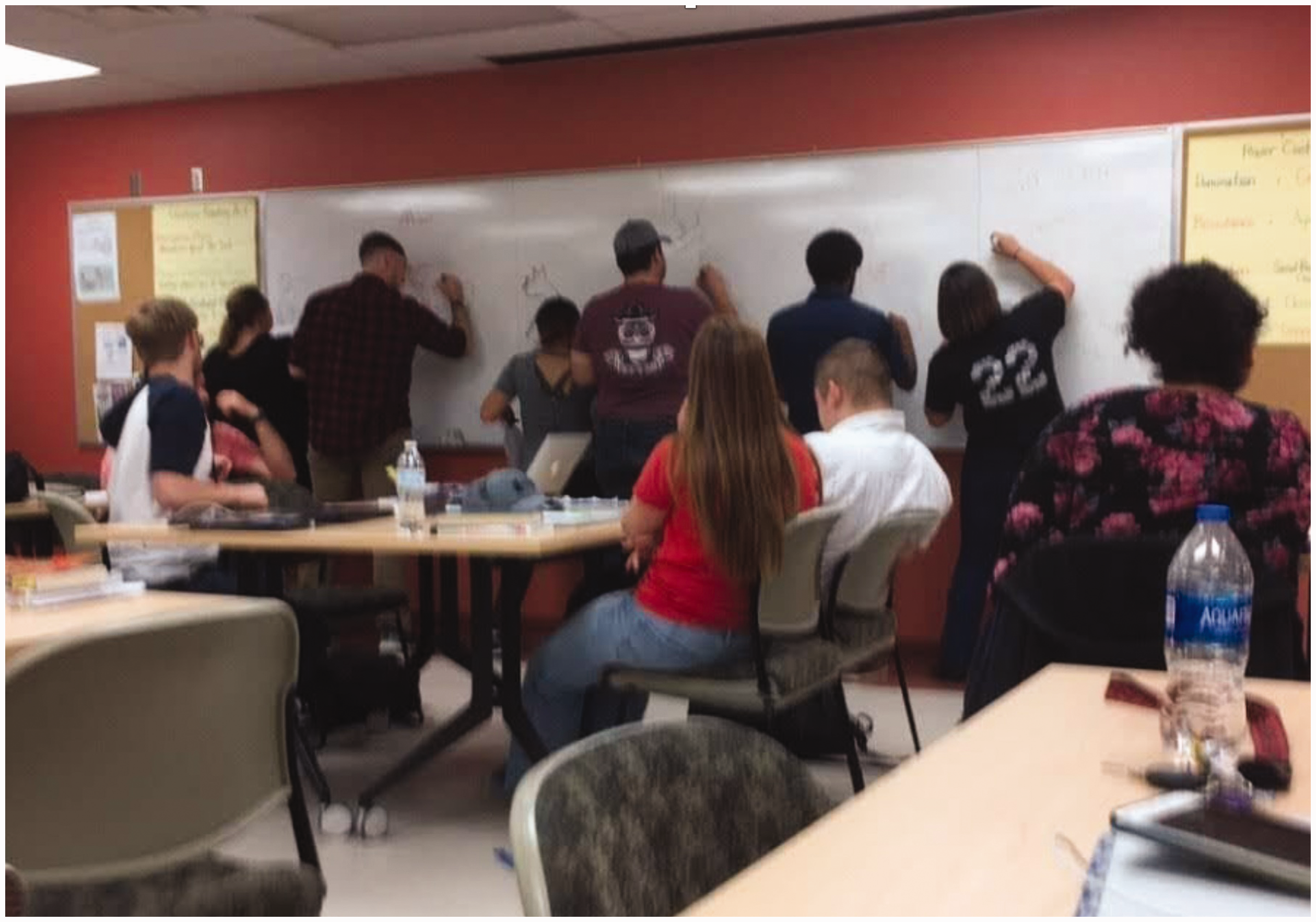
Improvers collaborate on enhancing instruction for students.
Discussion
Creating a typology of our preservice teachers proved to be an effective method for examining their various starting points in terms of how they initially conceive of literacy as well as the instructiveness regarding supports that help them look deeper into digital texts as meaning makers and developing practitioners. Whether our students seek to examine instructional techniques, sharpen their critical lenses, or gain a better understanding ELA (or some combination of all three), they all deserve a preservice experience that is both reflective and reflexive, an environment that affords them place and space to reinforce their passion for literacy and language while preparing them to share that passion with students in the near future. We recognize that some activities provided more impact than others for students and acknowledge that we have tremendous room for growth in our approaches to digital texts. Still, we believe that trial and error is a vital part of the process because our devices and texts have augmented theory and practice for ELA teachers in ways that require us to rethink our curriculum and instruction for authentic representations of teaching and learning in the digital age (Lynch, 2015). The typology and accompanying findings extend current knowledge about digital literacies by providing insight into how diverse teacher educators perceive the role of digital texts in delivering classroom instruction and affording opportunities for ontological discussions.
A glaring limitation with this work is the futility of attempting to position ourselves as teacher educators on the cutting edge of digital texts when they evolve faster than we can grasp them. As Noble (2018) explains, analyses investigating the ideologies that perpetuate software-driven texts are immediately outdated because of technology’s constant fluctuations and tech companies’ whirlwind of acquisitions, recreations, and mergers. Yet, despite our inability to perfectly conceptualize particular moments in time, we take up Noble’s (2018) scholarly pursuit of power and information, “communicating a series of processes that have happened, which provide evidence of a constellation of concerns that the public might take up as meaningful and important, particularly as technology impacts social relations and creates unintended consequences that deserve greater attention” (p. 10). This notion of accepted shortcoming means we must adopt empathetic, humble stances with our preservice teachers, a positionality in which we are always open to learning alongside our students in real time. This requires an attentive form of listening in conjunction with a nuanced arsenal of approaches that are not only unconventional, but are also almost certainly doomed to fail initially.
In the midst of these challenges, we see our work as contributing to ELA’s expanding interest in the phenomena of textual ideologies and literacy practices through ongoing revisions of belief statements along with the theoretically-underpinned revamping of our approaches to research and practice (NCTE, 2017). We are inspired by scholars such as Rice (2019), who argues that teacher educators must consider not only the devices we use and their affordances for classroom learning, “but also the identities that one must take up for the devices to live in us and for us to live in them. In examining how the devices embody or represent our identities, new and important questions emerge” (p. 34). These are the essential questions that drive our work in teacher education. Interrogations of who we are, who we are becoming, and what it all means now define the preparation of literacy instructors for those of us brave enough to venture down into the dark side of digital texts. It is in these hidden places, often overlooked in plain sight, that we hope to illuminate new and exciting truths about literacy and the teachers and learners who cohere around its myriad meaning-making practices.
Footnotes
Declaration of Conflicting Interests
The author(s) declared no potential conflicts of interest with respect to the research, authorship, and/or publication of this article.
Funding
The author(s) received no financial support for the research, authorship, and/or publication of this article.
