




Abstract
In recent years, educators have started to use innovative pedagogies in response to the changing trends of language learning towards developing great proficiency, as the conventional approaches could no longer improve proficiency due to the interactive nature of language skills. Therefore, it is believed that the Flipped Learning (FL) approach, as one of these new pedagogies, can be appropriately used to enhance language skills due to its hybrid nature. On the other hand, the existing literature on the efficacy of the FL approach has mostly ignored psychological factors like motivation, personality traits, and learning styles. Thus, the current study aimed to see which learning styles fitted better in the FL approach. Further, it intended to explore which language skill and in which learning style the amount of improvement could be significant. Forty Iranian EFL learners took the PET pre-test and were divided into their preferred learning styles. Then, they underwent the FL approach for a semester. The results of the paired samples T-Test indicated a significant positive improvement in the students’ performance in the post-test (t (39) = −7.698, p = .000). The results of the One-way ANOVA showed that there were significant differences among learning style groups in favor of the visual style, (F (4, 35) = 2.299, p = .034), and Mixed ANOVA results indicated that the most significant difference among skills was found between speaking and writing skills, (F (3, 105) = 8.018, p = .000).
Introduction
Advances in technology and the widespread use of new gadgets and tools along with the internet availability throughout the world have given rise to the blended learning approach to fulfill the needs and aims of today’s learners (Bryan and Volchenkova, 2016; Chuang et al., 2018; Turan and Akdag-Cimen, 2019), reduce the pitfalls of the traditional methods like lack of students’ engagement, critical thinking, problem-solving, and decision-making abilities (McLaughlin et al., 2014), and provide an active learning environment for maintaining motivation (Masie, 2006; Wu et al., 2019). The blended learning approach can be categorized in six models, and the flipped learning is a subset of one of these categories (Christensen et al., 2013).
The idea of flipped classroom was first developed by two rural chemistry teachers in 2007. They defined it as an instructional model in which instruction is delivered individually through videos (Bergmann and Sams, 2012). In the FL approach the students can study, anytime, anywhere, and at their own pace (Kim, 2017). In this strategy the class process is inverted and learning occurs beyond the class (Adnan, 2017; Bergmann and Sams, 2012). The shift of material consignment to the outside of the class and using the class time for higher-level activities like applying and analyzing the previously learned materials lie at the heart of the FL approach (Amiryousefi, 2017; Chuang et al., 2018; Han, 2015). The delivery of the content materials at home is done through electronic means. The teachers can create their videos, audios, and power-point presentations, or they can use the existing related materials available on YouTube, Khan Academy, and other online resources for the pre-class preparation. This way, the class time can be used to promote peer instruction (Mazur, 1997).
The FL approach has its roots in the constructivism theory. The advocates of the constructivism posit that learning occurs only when the learners are given the means and the time to develop their understandings (Marshall et al., 2011). Thus, instructional strategies such as the flipped learning in which students learn the basic concepts before coming to the class by watching the videos, listening to the audios, and reading the materials at home and using the class time for learners to explore the concepts more deeply in order to construct their own knowledge are in line with the core premise of the constructivist learning theories (Marshall et al., 2011; Rusche and Jason, 2011). The Cognitive Load Theory (CLT) also advocates the FL approach. According to CLT, the FL approach prevents working memory overload by allowing the learners to work at their own pace in the pre-class preparation stage. Thus, this strategy creates an optimal condition for learning (Clark et al., 2011).
In the quest to ensure a match between the teachers’ teaching styles and learners’ learning styles, nearly two decades ago Lage et al. (2000) introduced the term “inverted classroom” and found positive perceptions from students compared to the traditional economics classes. Since then, the FL approach has been implemented in different fields and contexts mostly in lecture-based subjects like engineering, mathematics, statistics, health and teacher education, and technology. The execution of the FL approach in foreign language teaching has gained more popularity recently (Cetin Koroglu and Cakır, 2017; Wang et al., 2018).
According to a recent systematic review by Turan and Akdag-Cimen (2019), 18 out of 21 research articles introduced the FL approach as an efficient teaching method in ELT. However, they revealed some challenges also reported in Karabulut-Ilgu et al. (2018), including extra workload for learners and teachers, the technology/internet related problems, and writing anxiety. Moreover, as these studies mainly concentrated on the efficacy of the FL approach compared to the traditional methods, they ignored psychological factors like motivation, personality traits, and learning styles in flipped learning environments (Goedhart et al., 2019; Kim, 2017). Therefore, lack in the literature is a study that considers students’ learning styles in relation to the FL strategy, as there is a widespread belief, especially among practitioners that tailoring teaching to the students’ learning styles would enhance learning outcomes. Recently, some attempts have been made. For example Chuang et al. (2018) investigated the individual traits, like self-efficacy, learner motivation, and epistemological beliefs that might affect learning outcomes in a flipped classroom. The results showed that language learners with a high level of motivation and beliefs showed significant positive improvement in post-tests. Their study suggested that in order for the FL approach to be more effective, multiple strategies should be employed to regulate learners with different personality traits to preview the online course content before the class. Kim (2017) investigated the association between learning styles, personality characteristics, and satisfaction from flipped learning classes. The results indicated that although learning and interaction enhanced, content understanding improved, and convenience in time and pace increased, some pitfalls were also raised including, heavy workloads, greater preparation time, and lack of motivation. The results further showed that while there were no significant differences between personality traits and satisfaction with the FL approach, participants with different learning styles significantly differed in their satisfaction with the FL course. Does a higher or lower satisfaction level mean that the FL approach can be more effective for some learning styles than the others? If so, which styles might benefit more from the FL approach?
On the other hand, with the changing trends of language learning towards developing great proficiency in English, many countries tried to optimize their education policies to respond to the globalized needs of the learners. In doing so, educators started to use innovative pedagogies as the conventional approaches could no longer improve proficiency due to the interactive nature of language skills. Therefore, educators can use the FL approach as one of these new pedagogies to enhance language skills due to its hybrid nature (Amiryousefi, 2017; Wu et al., 2019), but the literature in this regard is scarce. Some studies which investigated the impacts of the FL approach on EFL learners’ L2 speaking, L2 listening, and L2 writing indicated that the FL approach could improve these skills (Amiryousefi, 2017; Wu et al., 2019), but there is no evidence showing which language skills could improve more in a flipped environment.
Therefore, to fill this gap, the current study aimed to explore which learning styles fitted better in an FL model in the context of EFL classes. It further intended to evaluate the participants’ performance in four language skills of speaking, listening, reading, and writing in order to see which skill and in which style the greatest amount of improvement through the FL strategy has taken place.
Literature review
The bulk of studies conducted on the FL strategy are outside the EFL context due to the suitability of this strategy for lecture-based academic subjects such as engineering, mathematics, statistics, health and teacher education, and technology. These studies indicated that in comparison with the traditional approaches, the FL approach was more effective in improving the learners’ performance (Hew and Lo, 2018; Karabulut-Ilgu et al., 2018; Khanova et al., 2015; Lage et al., 2000; Lee et al., 2017; Lo et al., 2017; Pierce and Fox, 2012; Simko et al., 2019; Strayer, 2012).
Implementing the flipped classroom method in ELT became popular after 2014, and the number of the studies in this field increased rapidly in recent years (Turan and Akdag-Cimen, 2019). Although classifying studies based on the factors they investigated is difficult due to the overlap of variables, the researchers attempted to provide a division for better understanding the literature. Some of these studies investigated the students’ perceptions toward the FL approach (Ahmed, 2016; Evseeva and Solozhenko, 2015; Hung, 2015, 2017; Sun, 2017; Yang et al., 2018). Some studies focused on the students’ performances in the FL model compared to the traditional approaches (Hung, 2015; Kvashnina and Martynko, 2016; Yang et al., 2018). Some researchers concentrated on the effects of the FL strategy on students’ language skills (Ahmed, 2016; Amiryousefi, 2019; Hsieh et al., 2017; Hung, 2017; Wang et al., 2018; Wu et al., 2020). After the introduction of the FL approach as a viable tool in the field of ELT (Mehring, 2016), some researchers aimed to investigate the optimal conditions under which the FL approach could be more effective in EFL contexts (Alzain, 2015; Eryilmaz and Cigdemoglu, 2018; Fisher et al., 2019). Although scarce, the relationship between the psychological factors, personal characteristics, and the FL approach has gained the attention of some researchers recently (Eryilmaz and Cigdemoglu, 2018; Hao, 2016; Kvashnina and Martynko, 2016; Wu et al., 2019). These studies are discussed in detail below.
Flipped classroom, students’ perceptions, skill development, and performance
Evseeva and Solozhenko (2015), who explored the potential of the FL approach for both teachers and students, showed that the use of the FL approach in the learning process could improve students’ motivation and enhance their academic performance. Hung (2015) investigated the effects of flipping the classroom on learners’ attitudes, academic performance, and participation levels. The results showed that the FL groups outperformed the non-flipped group, developed more positive attitudes toward learning, and were more active during the learning process. Kvashnina and Martynko (2016) investigated the effectiveness of the FL approach in ESL teaching. They found out that despite the challenges, the FL approach could improve the students’ overall performance, enhance their motivation, and increase their autonomous learning skills. Similarly, Ahmed (2016) probed into the impacts of implementing the FL model on EFL learners’ writing skill and their attitude toward flipping. The results indicated that the FL approach could significantly enhance EFL learners’ writing skills and that the participants held positive attitudes toward flipping. Amiryousefi (2017) explored the effects of flipped learning on EFL learners’ speaking, listening, out-of-class participation, and engagement with course materials. Structured and semi-structured flipped learning groups’ performances were compared to the traditional group. Findings indicated that the FL approach could help EFL learners enhance their L2 speaking and listening and be more engaged with materials and activities outside of the class. Hung (2017) also investigated the impacts of integrating the student response system in a flipped classroom on learners’ speaking skills, satisfaction with the flipped learning experiences, and willingness to communicate. The results indicated that this integration improved learners’ willingness to communicate, speaking skills, and satisfaction with such learning experiences.
Sun (2017) intended to investigate the EFL learners’ perceptions of the content-based FL approach and factors affecting their perceptions. The findings showed that despite the students’ differences in their perceptions of the effectiveness of the FL approach, it could improve communicative skills, confidence, and content knowledge development. In an attempt to investigate the benefits of the flipped classroom in an oral training course that included extensive online written and verbal communication for the learning of a wide range of English idioms, Hsieh et al. (2017) found that the theory-based flipped instruction improved the participants’ motivation in using idioms in class, and increased their idiomatic knowledge. Yang et al. (2018) explored the effects of the FL approach on students’ performance and satisfaction with the FL model. Findings indicated that the FL group had a better performance in speaking due to more meaningful interactions in the class. A higher average rating on the amount of practice in class, required self-directedness, and stimulation of interest in the subject was obtained in the FL group. In a recent study, Wang et al. (2018) tracked the EFL learners’ oral proficiency development in a flipped classroom environment. Results indicated that learners who were exposed to the FL approach significantly outperformed the baseline group in oral proficiency in measures of fluency, complexity, accuracy, rate of progress, and time investment. It was revealed that the FL group learners had more positive attitudes toward the course.
Flipped classroom, psychological factors, and conditions
Alzain (2015) showed that in order to achieve positive results in the FL strategy, it is necessary to know its fundamentals including the culture of learning, identification of the content that students will learn outside of the classroom, the greater role of the teacher compared to the traditional classes. Hao (2016) intended to survey 7th-graders’ flipped learning readiness in their EFL classrooms through investigating the impacts of personal characteristics including gender, foreign language beliefs, perceptions of their English teachers, the availability of outside-school support and resources and how they use the Internet on their readiness levels. It was revealed that personal characteristics and individual circumstances can make a difference to the levels of the readiness dimensions. Similarly, Eryilmaz and Cigdemoglu (2018) tried to compare the effects of a sole FL implementation and the FL integrated with cooperative learning strategy in enhancing the EFL students’ performances, social anxiety, and computer anxiety. Although no significant difference between groups’ performances were observed, the integrated FL group had less social anxiety, but no significant change occurred at their computer anxiety level. Recently, Fisher et al. (2019) found out that the FL approach has positive and negative features that can influence and facilitate learning. They further found that in order to provide a deeper learning experience, flipped learning pedagogy should be implemented at the group level rather than the individual level, and the assumption that students will perform the preparatory stage is its Achilles’ heel. Wu et al. (2019) probed into the demotivational factors in the EFL writing and the impacts of the online flipped writing instruction on the EFL writing proficiency. The results indicated that the online flipped writing instruction improved the students’ writing proficiency and that the characteristics of the flipped instruction were observed not to cause demotivation in English writing. The results further showed that the participants had positive perceptions about the FL writing instruction and such learning experience improved cross-cultural observation.
Recently, Kim (2017) who investigated the association between learning styles, personality characteristics, and satisfaction from flipped learning classes showed that participants with different learning styles significantly differed in their satisfaction with the FL course. Thus, identifying students’ learning styles might play an important role in this area.
VARK learning style model
Oxford (2011) defined learning styles as general approaches that learners use in the learning of a subject, acquiring a language, or dealing with a difficult problem. The importance of learning styles in teaching has long been investigated but conflicting results have been obtained. Some researchers believe that acting based on students’ learning styles can positively affect the teaching process (Bhat, 2014). This is while some researchers believe that there is quite a bit of disconfirming evidence that learning styles provide a foundation for teaching (Cuevas, 2015; Husmann and O'Loughlin, 2018). As Liu and Todd (2014) stated, more studies are required to know that teaching to learning styles helps students in some way because it is difficult to prove that something does not exist. Thus, a number of researchers offered different learning-style models over the last three decades (Duff, 2004; Dunn and Dunn, 1978; Entwistle and Tait, 1995; Fleming, 2001; Kolb, 1984). Fleming’s (2001) model is the focus of our investigation. The VARK inventory was developed in 1987 by Neil D. Fleming. It is an acronym for Visual, Aural, Read/Write, and Kinesthetic preference modalities. In particular, VARK is a questionnaire that identifies people’s sensory modality preferences (Fleming, 2001). The validity and reliability of psychometric properties of VARK instrument have been proved (Fitkov-Norris and Yeghiazarian, 2015; Leite et al., 2010). It has also met the standards for a psychometric test (Fleming, 2001). By directly assessing how students prefer to learn, the VARK inventory provides a meaningful measure of learning styles (Fitkov-Norris and Yeghiazarian, 2015). However, the VARK inventory is not without its critics. An important criticism of this inventory is that it concentrates only on the way in which information is presented to the learners. Another criticism is number of possible styles which is limited to four possible styles. Thus, it is reductionist in these levels. The other limitation of the VARK inventory is assuming a degree of stability in learning styles and ignoring the possibility that people’s styles might vary according to the activities they are involved in.
Materials and methods
Aims and research questions
The present study aimed to explore which learning styles could benefit more from the flipped learning in the context of Iranian EFL classes. More specifically, it intended to compare the performance of different learning style participants who took part in an FL model in four language skills of speaking, listening, reading, and writing. It further aimed to explore in which skill and learning style the greatest amount of improvement through the FL strategy is observed. Therefore, the following research questions are set.
What is the effect of the FL model on Iranian EFL participants’ performance? Which learning styles benefit more from the FL model in the context of Iranian EFL classes? Which language skills benefit more from the FL model?
Participants
An initial sample of 40 students studying English as a foreign language in a private language institute in Iran participated in this study. To ensure homogeneity in addition to the placement criteria of the institute, the PET for schools proficiency test was run. As all the participants scored between 140 and 152 (M = 143.90, SD= 2.71), they were considered as homogeneous and their data were included for further analysis. The participants, who were native speakers of Persian, had about 5 to 6 years of experience in English learning in the language institutes and had similar backgrounds regarding formal English instruction at state schools (about 7 years). They were attending the language institute’s classes (twice a week for 90 minutes). In their textbooks all language skills were emphasized. Therefore, the teacher was expected to allocate a specific amount of time to practice all the materials included in the books. They were verbally announced in class, then information about the aims of the study, time devotion, and using their data for the research purpose was presented through written materials and all of them voluntarily consented to participate. Participants included 18 males and 22 females between the ages of 15 and 18.
Instruments
PET proficiency and pre-test
The Preliminary English Test (PET) is an English language examination supported by Cambridge Assessment English. It is an intermediate-level examination designed for learners mastering the basics of English and having practical language skills for everyday use. The test has reading, writing, listening, and speaking sections. There are two versions of the PET test: PET and PET for Schools. Both versions have the same type of questions. The PET for schools test which was used in the current study includes content of interest to school-age learners. In this study the PET test was used to select homogeneous students as well as to assess the participants’ language skills before starting the intervention. In other words it functioned both as a proficiency test and a pre-test. Regarding reliability, Cronbach’s alpha was satisfactory (
Fleming’s VARK learning style questionnaire
The VARK learning style inventory was developed by Fleming (2001). The acronym stands for visual, auditory, read/write, and kinesthetic styles. The learning styles include 1) visual learning style (learners with visual learning style mostly learn through observation); 2) auditory learning style (learners with auditory learning style prefer to learn by listening and oral presentation of the contents); 3) read/write learning style (learners with read/write learning style learn by note taking and reading); and 4) kinesthetic learning style (learners with kinesthetic learning style learn through experiments, physical activities, and object manipulation). People’s performances in different situations provided the basis for designing the VARK questionnaire items. There are 16 items and each item consisted of four options indicating one of the styles of learning. The preferred learning style of each respondent is the one in which she/he has obtained the highest score. If a person obtains similar scores in two or more styles, she/he will be identified as a learner with mixed learning styles. In addition to the acceptable reliability and validity measures of VARK obtained in the previous studies (Fitkov-Norris and Yeghiazarian, 2015; Leite et al., 2010), a satisfactory test-retest reliability of .79 was also obtained in the current study.
Post-test
After the implementation of the treatment, a researcher designed post-test was used to evaluate the effects of the intervention. The test was identical to that of the pre-test in the number of items, difficulty level, and time limits, but the items were selected based upon the materials covered during the intervention period. For example the reading section included texts similar in topic to passages presented through the FL model. The listening comprehension and speaking sections consisted of items and subjects that students got familiar during the semester. Regarding reliability, Cronbach’s alpha was satisfactory (
Procedures
In order to determine the students’ proficiency level as well as their performance in language skills, the adapted PET test was administered to the target participants at the beginning of the study. Then, the VARK questionnaire was administered to determine their learning styles. Based on the questionnaire, seven participants were identified as visual, eight as auditory, nine as read/write, six as kinesthetic, and ten participants were identified as mixed style learners.
After determining their learning styles, the participants were exposed to the teacher-made videos, audios, and other digital materials fitted within the FL model. Telegram instant messaging was used as the online platform for the participants to perform the preparatory work and in cases where the students couldn’t get access to it; other national instant messaging services were used. The teacher made a group and the students joined it. Each session at least two days before the class time the teacher shared the selected materials in that online platform and the students were expected to watch or listen or read the materials prior to the class. To ensure that they watch the materials the teacher asked them randomly to come to the front of the class and tell their ideas about the materials and sometimes the teacher presented some questions for them. The class time was allocated for doing the practices presented in their workbook, discussing the reading passages, analyzing the listening materials, and applying the grammatical points presented online in the speaking practices. Besides the teacher-made materials, the students were presented with available online materials in areas of interest on YouTube, Khan Academy, and other web-based resources. This process was continued for four months.
At the end of the program, they took a post-test to determine the effects of the treatment.
The present study aimed to see which learning styles benefited more from the flipped learning in the context of Iranian EFL classes in general and in particular to see the performance of members of each style taking part in an FL model in four language skills of reading, writing, listening and speaking. A one-group pretest-post-test design was used to examine the effects FL approach on students’ performance. Therefore, a paired sample T-test was used to answer the first research question. To investigate the effects of FL approach on learning styles’ performance (the second research question), a One-way ANOVA was used, and to explore the possible impacts of FL approach on language skills (the third research question), a mixed-design ANOVA was utilized.
Results
The results of the PET test (overall scores) to determine the participants’ proficiency levels and at the same time to assess their language skills are presented below. Table 1 shows the descriptive statistics of 40 participants in the PET test.
Descriptive statistics of the PET pre-test.

As it is evident from Table 1, all of the participants scored above 140 and below 152. This shows that they were at the B1 (intermediate) level according to the CEFR classification.
The above table shows the performance of the students as a general group, but for the purpose of the current study, the performance of each style participants should also be identified prior to the treatment. Table 2 presents the overall performance of each style in the PET test.
Descriptive statistics of learning style participants in pre-test.
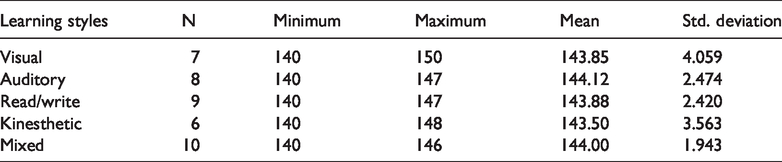
Table 2 presents the overall scores that participants of each style received in the pre-test, but in this study the performance of participants in each separate skill is also needed. Therefore, the results of the participants’ scores in skills of reading, writing, listening, and speaking are presented in Table 3. The mean scores and the standard deviations of the participants in the language skills indicated that the participants’ performances were close together in all skills.
Pre-test participants’ performance in language skills.

The teacher followed the FL model for four months and at the end of the program, the participants took the post-test to check the effects of the FL model on the students’ performances. As Table 4 indicates, there was a difference in the scores for the PET pre-test (M = 143.90, SD = 2.71) and the PET post-test (M = 146.53, SD = 2.76). To see if the observed difference was significant, the paired samples T-Test was run.
Paired samples statistics for the PET pre- and post-tests.

The results indicated that the difference was statistically significant, (t (39) = −7.698, p= .000). Therefore, the answer to the first research question is that the FL strategy had a significant effect on the students’ performance in the post-test.
The performance of the participants in each style should also be identified after the treatment. Table 5 presents the overall performance of each style in the post-test.
Descriptive statistics of learning style participants in post-test.
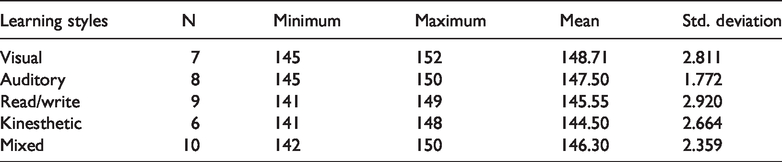
In comparison with the pre-test scores of each style (Table 2), it can be concluded that the mean scores had an improvement, but to check its significance, a One-way Analyses of Variance (ANOVA) with the Tukey HSD post hoc were conducted. The results indicated that there was a significant difference between the mean scores at p<.05 level for our 5 groups, (F (4, 35) = 2.299, p= .034; ηp2=.25). The partial eta squared showing the effect size indicates that 25% of variances in learning styles scores were due to the FL model as our treatment. From the results so far, it can be concluded that the FL approach could make a significant difference among our groups, but to see which groups’ means are different, the Tukey post hoc was run. The results are presented in Table 6.
Multiple comparisons of Tukey HSD post hoc test for PET post-test.
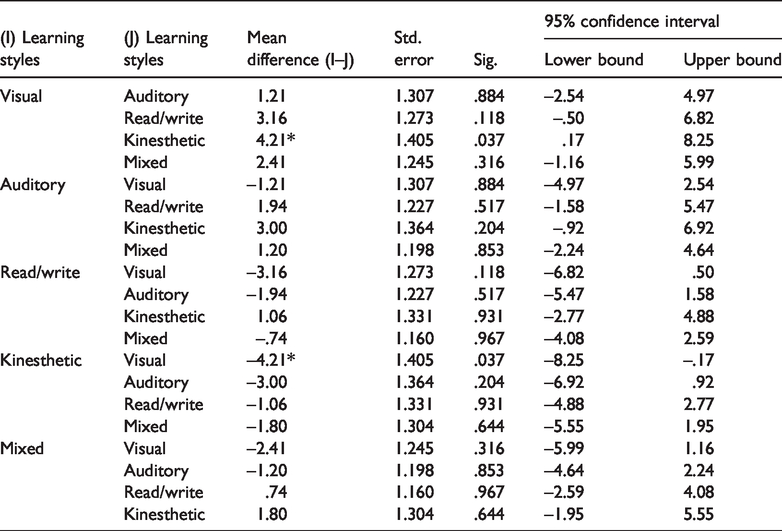
*indicates a statistically significant value. Generally, Sig < 0.05 indicates a statistically significant difference between two means. Therefore, according to Table 6, there were significant differences between the mean scores for the visual, kinesthetic, and kinesthetic, visual pairs (Sig=.037). It can be concluded that the FL model had the most amount of significant effects on the visual learning styles and the least amount of significant effects on the kinesthetic learning styles. Further, it can be inferred from Table 6 that the FL model did not have any significant effects on other learning style participants as they did not show significant values.
To answer the third research question, the performance of participants in each separate skill should be compared. Therefore, the results of the participants’ scores in skills of reading, writing, listening, and speaking are presented in Table 7.
Post-test participants’ performance in language skills.
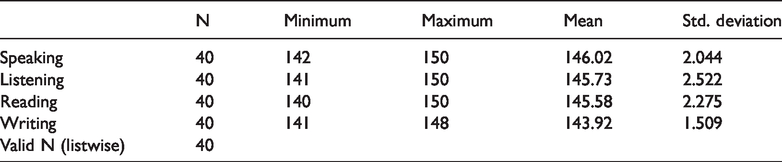
When comparing the pre and post-tests results in the four skills, an improvement can be observed (Tables 3 and 7), but to check its significance and at the same time to take into account the learning style variable, a mixed ANOVA was conducted. Table 8 describes the descriptive statistics of all skills and styles.
Descriptive statistics of style groups in language skills.
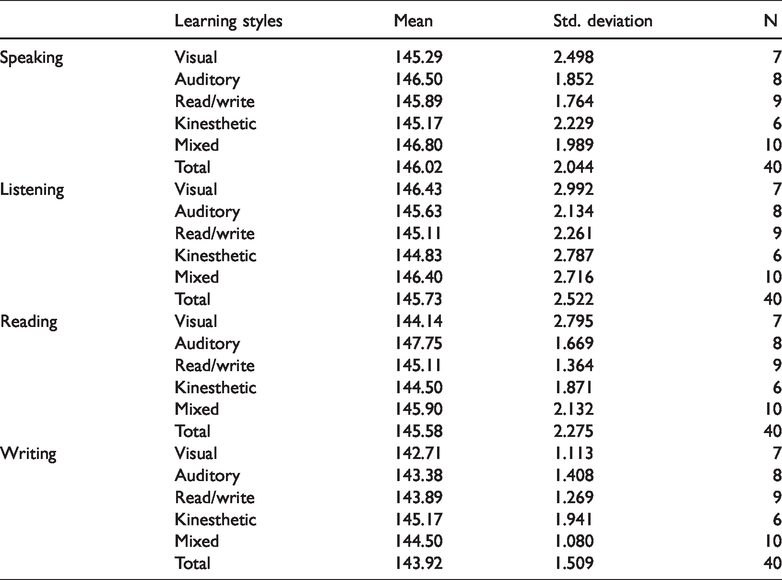
It can be understood from Table 8 that the auditory and mixed styles got higher mean scores than the other groups. To check the significance of these differences, the tests of within and between-subject effects should be considered. The results indicated that there was a significant difference between the mean scores at p<.05 level for language skills, (F (3, 105) = 8.018, p= .000; ηp2=.18). The partial eta squared showing the effect size indicates that 18% of variances in language skills scores were due to the FL model as our treatment. From the results so far, it can be concluded that the FL approach could make a significant difference among the skills mean scores, but to see the exact place of difference that shows which skills’ means are different, the Bonferroni pairwise comparison was conducted. The results showed that there were significant differences between the mean scores of speaking and writing (Sig= .000), listening and writing (Sig= .004), reading and writing (Sig= .003). In other words, speaking, listening and reading skills had a significant difference with the writing skill following the FL model in the post-test.
As mentioned earlier, the auditory and mixed styles got higher mean scores than the other groups. To see whether these differences were significant the between-subjects effects should be considered. The results indicated that there was not a significant difference between groups at p<.05 level for learning styles, (F (1, 35) = 2.159, p= .094). As the differences were not significant, it is not necessary to conduct the post hoc test.
Discussion
In this section the results obtained in the previous part are discussed concerning our three research questions. The first research question aimed to investigate the effects of the FL model on students’ performance before and after its implementation. The results of the T-Test indicated that there was a statistically significant difference between pre and post-test scores. Therefore, it can be concluded that the FL strategy had a significant effect on the students’ performance in the post-test for all our five learning style groups. In other words, after implementing this strategy, the students’ performance improved significantly. The results of the current study are in line with the previous studies that showed an improvement in students’ performance after implementing the FL approach (Hung, 2015; Kvashnina and Martynko, 2016; Yang et al., 2018). Therefore, the positive role of the FL approach in enhancing the students’ performance was corroborated in the current study.
The second research question aimed to examine the possible effects of the FL model on different learning styles. The results indicated that the participants’ performance before and after the treatment had a statistically positive change. Further, the results showed that 25% of this improvement was due to the new strategy that was implemented in the classroom. Moreover, as it is clear from the post hoc analysis, visual and kinesthetic styles had a significant mean difference. Visual learning style participants had the most amount of improvement and the kinesthetic style participants the least. In other words, the FL approach affected learning styles differently. The most amount of positive effect was observed on visual style and the least amount of positive effect was observed on kinesthetic style. The results of this part can provide empirical evidence in response to Goedhart et al. (2019) quest for further investigation as to why not all students agreed that the FL approach contributed to positive learning outcomes. Kim (2017) came to the same conclusion as the current study not for learning styles’ performance, but for learning styles’ satisfaction with the FL approach. He found that while assimilators got the highest satisfaction with the FL approach, divergers got the lowest. Therefore, the response to the question that whether a higher or lower satisfaction level means that the FL approach can be more effective for some learning styles than the others is that as learning styles’ satisfaction differed, their performance also differed in favor of visual and kinesthetic styles. This shows that taking students’ learning styles into account when implementing the FL approach is of paramount concern for educators. The results further indicated that although there were some differences between other learning style groups, the difference was not statistically significant to draw further analysis.
The third research question which took into account both the learning style and the language skill variables aimed to shed more light on the effects of the FL model on different learning styles and language skills. To be more specific, it intended to explore which skills and styles could benefit more from the FL model. This question aimed to take a deeper look at the data by mixing both the within and between-subject factors.
The results showed that the speaking skill got the highest and the writing skill the lowest mean score following the FL model. The results further indicated that the difference was significant. It was found out that 18% of the variances in the language skills were due to the FL model implementation. The results of this part are in line with Yang et al. (2018) who showed a significant improvement in the speaking skill of the FL group. The results of post hoc analysis indicated that speaking, listening and reading skills had a significant difference with the writing skill following the FL approach in the post-test. The speaking and writing skills showed the most and the least amount of improvement, respectively, and the other groups were in between. It can be inferred from Yang et al. (2018) and the results of the current study that the FL approach did not influence the language skills equally. Therefore, when implementing the FL approach, educators should be more selective. Taking a deeper look it was understood that the auditory and mixed styles got higher mean scores than the other groups, but this difference was not statistically significant to be analyzed in a more profound post hoc analysis.
To sum up, the results showed that the FL model had a significant positive effect on the students’ performance (research question 1). It was also found out that there were significant differences among our learning style groups in favor of the visual style (research question 2). The results indicated that the most significant difference was found between the speaking and writing skills. The speaking and writing skills showed the most and the least amount of improvement, respectively. It was also understood that the auditory and mixed styles got higher mean scores than the other groups, but the difference was not statistically significant (research question 3).
Conclusion
The objectives of this study were to explore which learning styles could benefit more from the flipped learning in the context of Iranian EFL classes. More specifically, it intended to compare the performance of different learning style participants who took part in an FL model in four language skills of speaking, listening, reading, and writing. It further aimed to explore in which skill and learning style the greatest amount of improvement through the FL strategy is observed. The research questions were successfully answered according to the results. The findings indicated that there was a statistically significant difference between pre and post-test scores. Therefore, it can be concluded that the FL strategy had a significant effect on the students’ performance in the post-test for all our five learning style groups. It was also found out that there were significant differences among our learning style groups in favor of the visual style and against the kinesthetic style. The results further indicated that the speaking and writing skills showed the most and the least amount of improvement, respectively.
It was also understood that the auditory and mixed styles got higher mean scores than the other groups, but this difference was not statistically significant. Unlike the results of the one way ANOVA in which the difference between the learning style groups were significant, the results of mixed ANOVA did not show any significant difference between the learning style groups. It can be concluded that when learning styles are explored as a single variable, the results are significant, but when learning styles and language skills are compared, the results do not show significant differences.
Implications
To be able to keep up with the rapid advances in technology, the subsequent change in the teaching methods, and at the same time to hold the students’ attention who are bored with the traditional book and pencil classes, teachers have to update themselves and use the latest strategies available. The FL strategy as one of these new strategies can be used to improve students’ performance. The results of the current study indicated that when it comes to styles, visuals showed the greatest amount of improvement. Maybe this is due to the fact that visuals preferred the FL approach due to its nature of providing more graphical materials. Teachers can identify their students’ learning styles prior to starting their classes, and provide suitable materials based on that. When it is not possible to do this, teachers can provide a wide range of materials including videos, audios, written materials, or even materials that combine videos, audios and written materials. This way, teachers can involve students with different styles.
Students can take advantage of the results of the current study in different ways. For example, they can identify their learning styles and act based on their preferences. They can ask teachers to provide materials which they like and matches their learning styles. At the same time, they can practice to extend their preferences in order to be able to take more advantage of the presented materials.
The findings of the current study can have a very influential and practical implication for material developers. These companies try to help organizations develop materials that conform to international standards, and organizations look for companies with a good track record of designing and developing high-quality education and learning materials that are user-friendly, attractive, and accessible. The results of the current study can help content development companies create a repertoire of personalized materials for each learning style, which has the potential to be commercialized. These companies usually develop materials based on an initial needs analysis that is informed by empirical data and determines the amount of discrepancy between what to be and what currently is to determine priorities for action, but most of these companies do not take into account learning style as a factor that might influence the way they design the materials. Therefore, the results of the current study can provide a reasonable justification to consider in their further analysis to develop better materials that train people for the right reasons and the right performance outcomes.
Footnotes
Declaration of Conflicting Interests
The author(s) declared no potential conflicts of interest with respect to the research, authorship, and/or publication of this article.
Funding
The author(s) received no financial support for the research, authorship, and/or publication of this article.
