




Abstract
Studies looking at the nature of technology adoption from a multi-dimensional perspective have remained below expectation especially in African countries. This study, therefore, sought to explore the nature of e-learning adoption in the University of Ghana using a multi-stakeholder approach. A quantitative survey approach was adopted for this study. The three major categories of stakeholders (students, instructors and e-learning administrators) responded to a questionnaire on the nature of their engagement with the Sakai Learning Management System of the University of Ghana. The data were analysed using the descriptive statistics. The analysis revealed that e-learning was yet to receive a university-wide adoption and again it was discovered that, the prevalent activity on the e-learning platform was “viewing marks and grades.” And some of the activities were less popular with the users of the e-learning system. For instance, “Detecting and fishing out cheating and plagiarism in students’ or researchers’ work” was the least popular activity on the e-learning platform. The originality of the study lies in the multi-faceted (student, lecturers/instructors and e-learning administrators) approach to the study of e-learning adoption in an African country. The study concludes with a discussion of implications and future research directions.
Keywords
Introduction
E-learning – which is also referred to as online learning, Open and distance learning (ODL) or web-based learning – describes electronic learning that utilizes electronic communication for teaching and learning (Oztekin et al., 2013). Higher learning institutions all over the world are adopting e-learning as the best means of delivering quality education to their students. It is becoming more popular as the most effective method of teaching and learning, disseminating information and knowledge in institutions of higher learning and organisations (Noh et al., 2012).
E-learning provides new possibilities for learning and leads to drastic changes in educational practice (Jia et al., 2011). For example, the concept of the traditional mode of education does not fall in line with the modern era of lifelong learning where the traditional roles of teachers and students are changing (Marold et al., 2000); hence, e-learning becomes the best option. Again, e-learning becomes mostly useful in situations where there are no other ways to teach students (Horn and Staker, 2011). For instance, in small, rural and urban schools which are unable to offer a broad set of courses with highly qualified teachers in certain subject areas; in the advanced courses where many schools struggle to offer on their campuses; in remedial courses for students who need to recover grades to be able to graduate; and with home-schooled and homebound students. Again, teaching in the traditional classroom is instructor-centric where the instructor mainly controls class content, including topic, course material, progress and discussions (Baloian et al., 2000). But the role of communication and interaction in the learning process is very important factors in contemporary educational paradigms (Brown and Smith, 2013). It is within this context that e-learning can and should contribute to the quality of education.
In light of these, numerous benefits of e-learning adoption, stakeholders in the educational sector of universities in African countries, particularly in Ghana, need to strive to adopt e-learning to complement and supplement teaching and learning.
Persico et al. (2014) assert that e-learning is a practice which encompasses different actors (students, faculty and administrators), and hence e-learning research should be conducted from the perspective of these stakeholders. The review of e-learning adoption research pointed to a gap in literature where most of the studies on e-learning adoption were conducted from a single stakeholder perspective (Aydin et al., 2015; Lee et al., 2009; Motaghian et al., 2013; Osgerby and Rush, 2015; Tagoe, 2012). For instance, Osgerby and Rush (2015) investigated the perceptions of undergraduate accounting students who used Twitter as a learning support tool. Again, Aydin et al. (2015) also studied some students’ practices and perceptions of studying using online systems. From the instructor’s perspective, Motaghian et al. (2013) also looked at factors that influence e-learning adoption and perceived usefulness; system quality and perceived ease of use were identified as adoption determinant factors. These single stakeholder approaches tend to provide only a one-sided view of e-learning adoption issues, and hence attempts have been made to use multiple stakeholders. Bhuasiri et al. (2012), on the other hand, focused on two groups of stakeholders in developing countries; Information Communication Technology experts and faculty and also identified perceived ease of use and organisational compatibility as factors that influence e-learning adoption. On the other hand, these studies did not look at the e-learning adoption from an institutional perspective taking into consideration all the stakeholders involved in adopting e-learning. There is, therefore, the need for studies which will look at e-learning from a multi-stakeholder perspective which will provide a more general viewpoint to the nature of e-learning adoption in higher learning institutions. Again, the different stakeholders may exhibit different tendencies in terms of the issues that influence their adoption of e-learning systems and these will provide interesting insights which will be worth studying.
In light of that, we principally desired to answer the research question: What is the nature of e-learning adoption in an African University? Our findings are derived firstly from the analysis of research literature on e-learning adoption in universities from developing countries and secondly from data gathered using a survey instrument administered to students, instructors and e-learning administrators. The organization of the paper echoes these two sources, followed by the presentation of an analysis and discussion that takes both into consideration.
Literature review
The review of e-learning literature focused on two major issues: (i) discussion of e-learning adoption in African countries, Ghana and University of Ghana in particular and (ii) the e-learning stakeholder perspectives of researchers. Therefore, to satisfy this purpose, the review focused on research papers on e-learning adoption in developing countries. Adoption in the context of this study refers to taking up and using e-learning systems for academic and educational purposes.
E-learning in universities in African countries
African countries predominantly belong to the group of developing countries. Nielsen (2011) asserts that low- and middle-income countries make up the developing countries group. Governments in African countries have increasingly shown interest to utilize the current ICTs and to widen participation in education in higher learning institutions (Namisiko et al., 2014a). This is evident from the study by Gakio (2006), who found out that 47% of 54 tertiary institutions from 27 African countries have set up educational technologies in their institutions. In a similar study, Isaacs and Hollow (2012) also discovered that 52% of 447 universities in Africa were using e-learning systems by the end of the year 2012.
The interest in e-learning can be attributed to the availability of web 2.0 technologies and Free Open Source Software (FOSS) (Namisiko et al., 2014b). The authors further assert that web 2.0 technologies that have broadened the needs of contemporary learners and widen the participation of education to include: RSS, Wikis, Tagging, Blogs and Podcasts. Free and open-source software such as Moodle, Dokeos, EFRONT and Claroline have facilitated e-learning in universities in African countries (Selim, 2007).
E-learning in Ghanaian universities
In Ghana, the traditional Face-to-Face (F2F) education which usually occurs in a classroom in which a teacher/instructor/lecturer teaches students in an interactive manner has been the norm (Asabere and Mends-Brew, 2012). In Ghana and other African countries, population increase and the disparity of the educational infrastructure and resources available have made tertiary institutions adopt and implement other educational models such as e-learning to act as a supplement for the large number of people who qualify for educational opportunities but cannot gain access to these universities (Tagoe, 2012).
Currently, some universities in Ghana have adopted distance learning strategies by locating lecture halls and classrooms at different locations and sites that are away from their main campuses through various business models. One of such models is the use of ICT through e-learning (Asabere and Enguah, 2012). The introduction of e-learning by these institutions has really helped to improve both workers and non-workers’ access to higher education in Ghana. The spread of ICT has greatly improved access to tertiary education by ushering in other new educational modes such as e-learning and mobile learning which are very beneficial; however, mobile learning is scarce in Ghana.
There are nine national public universities in Ghana: University of Ghana, Kwame Nkrumah University of Science and Technology, University of Cape Coast, University College of Education, University for Development Studies, University of Mines and Technology, University of Health and Allied Sciences, University of Energy and Natural Resources and University of Professional Studies-Accra. Whereas, there are about 50 private universities (National Accreditation Board, 2012). The National Accreditation Board is the certifying agency in Ghana for offering licenses and permits to all the universities to operate in the country. It is worth noting that almost all these institutions have adopted a form of e-learning in their curricula (Asabere and Enguah, 2012). Kwame Nkrumah University of Science and Technology, for instance, introduced “Moodle” – an open-source and course management e-learning system in the second semester of the 2005–2006 academic year (Serbe Marfo and Okine, 2011).
University of Ghana
The University of Ghana was founded as the University College of the Gold Coast by ordinance on 11 August 1948, for the purpose of providing and promoting university education, learning and research. The University has a mission of developing world-class human resources and capabilities to meet national development needs and global challenges through quality teaching, learning, research and knowledge dissemination. The University, which comprises of three campuses, offers academic learning and research through its four colleges, namely: the College of Health Sciences, the College of Basic and Applied Sciences, the College of Humanities and the College of Education. These colleges comprise of a number of schools, research institutes and centres, libraries, administrative offices and other support services (University of Ghana, 2014).
The College of Health Sciences, for instance, is made up of the school of Medicine and Dentistry, School of Public Health, School of Nursing, School of Pharmacy, School of Biomedical and Allied Health Sciences, Noguchi Memorial Institute for Medical Research and Centre for Tropical, Clinical Pharmacology and Therapeutics. The College of Education is made up of three schools namely: School of Information and Communication Studies, School of Education and Leadership as well as School of Continuing and Distance Education. The College of Humanities comprises the University of Ghana Business School, School of Law, School of Arts, School of Languages, School of Social Sciences, School of Performing Arts, among others, while the College of Basic and Applied Sciences is made up of the School of Physical and Mathematical Sciences, School of Biological Sciences, School of Agriculture, School of Engineering and the School of Veterinary Medicine (University of Ghana, 2014).
E-learning at the University of Ghana campus is not a new phenomenon. The University’s first attempt at using e-learning systems was in 2004, when the university introduced a web-based learning system known as the Knowledge Environment for Web-based Learning – now KEWL.NEXTGEN (KNG) (Dadzie, 2009). KNG is a free open source online course learning management software that was developed collaboratively by 12 African universities through a larger project called the African Virtual Open Initiatives and Resources (AVOIR). KNG has a number of modules available within it, and this ranges from simple assignment uploads and dictionary lookups to fully fledged survey tools and problem-based learning modules. Other important tools on this e-learning platform include Rubrics, Wiki, mailing lists, Groupware suite, events calendar and much more. One major advantage of KNG is the ability to be used within an institution quickly and easily by adopting minimal hardware and bandwidth to connect to the internet (Dadzie, 2009).
Unfortunately, only 27 lecturers at the University of Ghana used the KNG three years after its introduction. These lecturers were mostly from the faculty of Science and a few from the faculty of Arts. Unfortunately, only one lecturer from the Faculty of Social Sciences attempted to use it (Dadzie, 2009). Some lecturers in one way or the other have created online platforms to support their classroom activities. Such lecturers have online blogs and other websites where lecture notes and other course information are posted. The new e-learning system introduced by the university is the Sakai e-learning system.
The Sakai
The University of Ghana secured funding from the Chinese Government in 2012 through the Government of Ghana to provide e-learning resources. The project, which is popularly referred to as “Chinese phase 1 and 2”, is expected to serve the University with the needed resources for e-learning. The phase one of the project was to secure an information infrastructure backbone and more reliable internet connectivity, email and IP-based services to Faculty and Departments, and the university’s network called UGNet was also put in place. Phase two also aims at extending the UGNet to all regional centres of the Institute of Continuing and Distance Education as well as fully all computer laboratories and videoconferencing centres. Part of the phase two is to introduce an integrated Digital Mobile Learning Platform. Realizing the University had no institutionally approved learning management system, the Sakai was acquired to serve that purpose. This was as a result of the low adoption rate of the KNG. The Sakai was therefore acquired because it can work for the whole University (University of Ghana, 2013).
The Sakai is a learning management system that allows lecturers, students and researchers of the university to virtually move the physical learning environment online. It is currently being piloted in some departments and schools such as the Department of Adult Education, the Department of Distance Education and the Business School. It is expected to be rolled out completely by the 2015/2016 academic year and a lot more departments and courses are expected to be enrolled in the system.
The Sakai learning management system is an online learning platform that allows its users to be enrolled into various course pages (for lecturers and students) and project pages (for researchers). In these course and project sites, the lecturers, students and researchers have a variety of tools available to them that allow them to do most of the things which are done in the traditional learning and working environments online.
Users typically log into the Sakai system with their student or staff ID and pin. When logged in, users see and enter all the course or project sites that they belong to and use the tools which are made available to them by the instructors of the various courses or project sites. Users are also able to edit/customize their own profiles (University of Ghana, 2015).
Some of the tools that are available to lecturers and students in this system include an assignment tool that allows for giving, taking and submission of assignments online. Again, a Gradebook tool that allows for calculation, distribution and storage of grades to be done instantly. A forum tool that allows for discussions, creation of private or public groups and others. A lesson tool for putting together lessons and lesson materials. A syllabus tool for a summary of courses (course outlines). Tests and quizzes tool for taking all kinds of tests and examinations online. Also, a chat tool that allows for chatting between lecturers and students, among course mates and also between individuals. A resource tool for sharing course materials, such as slides, handouts and books. An announcement tool to also inform students about upcoming tests/events, change of times/venues for lectures, and any other information the instructors or Teaching Assistants may want to give to students. A presentation tool to make presentations online. The presenter may also move through the slides and viewers may navigate independently of the presenter. Also, a calendar tool to check important dates of deadlines, events and other activities pertaining to each course. Also, a drop box tool for sharing all kinds of files with colleagues. An email tool for sending emails to lecturers, course mates or individuals. Again, a polls tool to create surveys, distribute and collect data from course members. Finally, a “Turn it in” tool which will automatically detect and fishes out cheating and plagiarism in students” or researchers” work. Figure 1 shows a snapshot of the Sakai e-learning system interface.
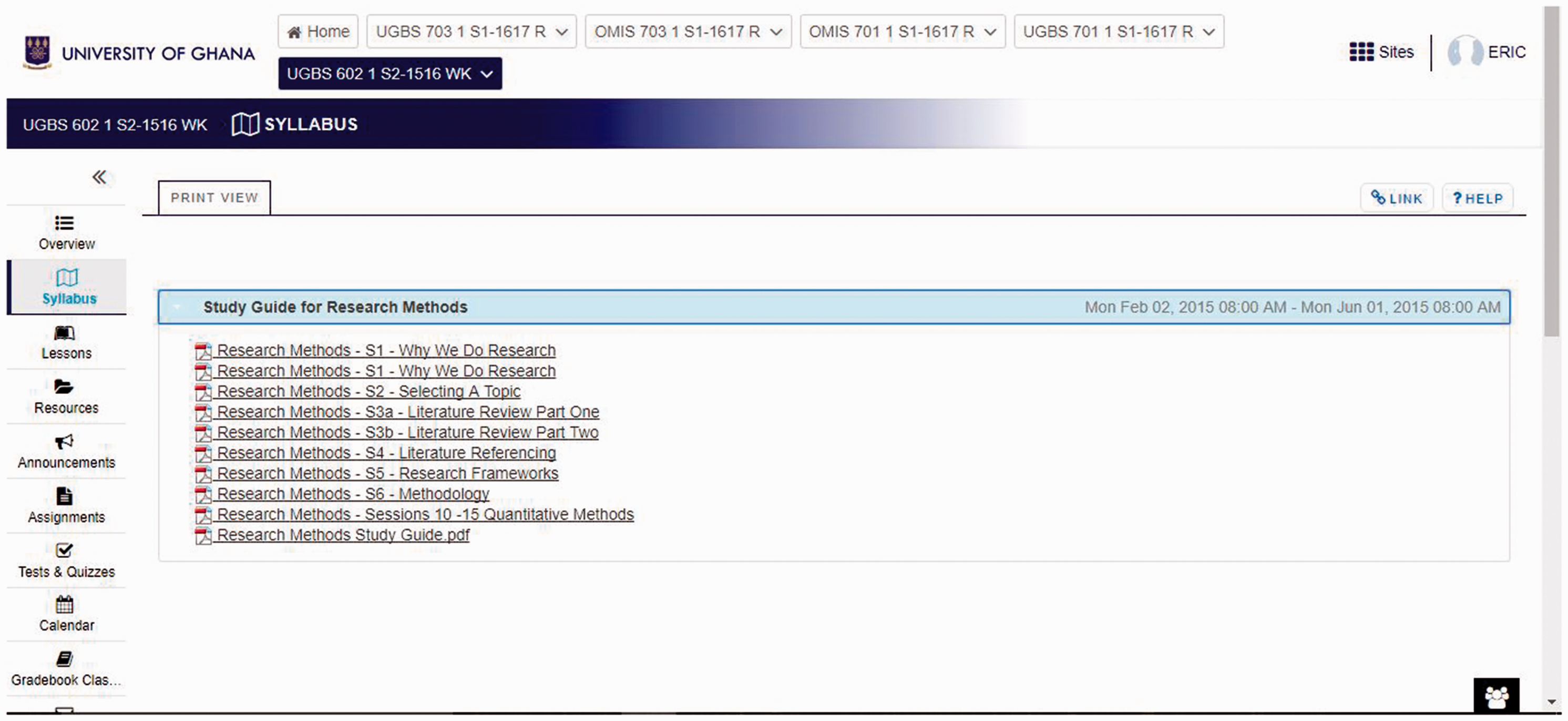
A sample interface of UG’s Sakai e-learning system.
Focus of e-learning literature
E-learning is a concept which encompasses different components which include students, faculty and e-learning managers (Persico et al., 2014). E-learning literature reviewed tend to focus mostly on a single stakeholder perspective, for instance, students’ perspective (Barker et al., 2013; Chokri, 2012; Klement and Dostál, 2014). On the other hand, some researchers combined two of the stakeholders in their research, for instance, students and faculty (Šolc et al., 2012), faculty and experts (Bhuasiri et al., 2012). Finally, Persico et al. (2014) was arguably the only paper reviewed that combined the three stakeholders. Table 1 outlines some e-learning research works and their perspectives.
E-learning papers and perspectives.
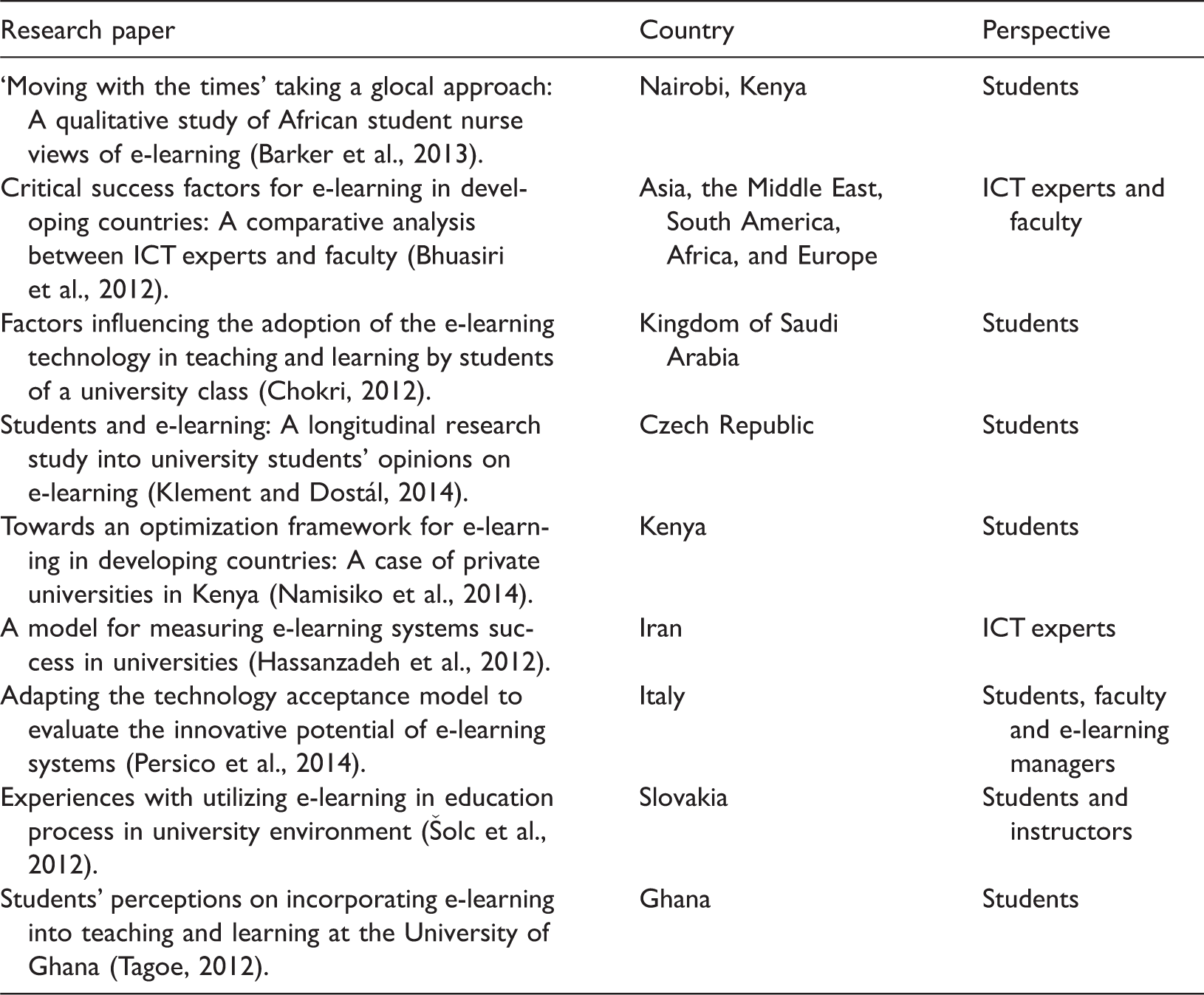
ICT: Information & Communication Technology.
Source: Author’s construction.
Thus, the findings from the issues examined revealed that most of the studies were conducted from a single stakeholder perspective, and the few which tried to combine multiple stakeholders did not include all the major stakeholders involved in the e-learning adoption and implementation. This makes the current study opportune and very relevant to fill the gap of e-learning adoption at the institutional level.
Methodology
The study employed the positivist paradigm that assumes an objective reality which is single and concrete and is independent of what is being researched. Distance or objective separateness existing between the researcher and the object of study is one of the main features of the positivist paradigm (Kaplan and Duchon, 1988).
The survey research which was used for this study adopted the descriptive and exploratory survey design. Survey research, particularly provides a quantitative or a numeric description of trends, attitudes or opinions of a population by studying a sample. Therefore, the researcher is able to make claims and generalize about a phenomenon from the results of a selected sample. The justification for choosing a quantitative approach as against a qualitative or mixed approach is that aside being fit for the study in context, it allows for the unearthing of conclusive evidence rather than just providing information (Zikmund, 2003).
The questionnaire comprised two parts to help elicit responses on the respondents’ demographic data, their e-learning usage and activities they perform with the e-learning systems. The questionnaire is attached as Appendix 1: Survey Instrument.
The population comprised the individuals in the University of Ghana whose activities involve the use of e-learning systems. The University of Ghana (2014) has a student population of 35,683 (with a male/female ratio of about 3:2). Also, included in this number are 3196 post-graduate students and 3596 students on modular or sandwich programmes. Senior Members engaged in research and teaching in total are 865 and a total of 128 Senior Administrative and Professional staff.
A purposive sampling technique was adopted in the administration of the questionnaire, thus only people who engage in e-learning on the University of Ghana campus were contacted. Four hundred and fifty sets of questionnaire were issued to individuals in the university whose activities employ the use of an e-learning system; 300 to the students, 85 to lecturers/instructors and 65 to e-learning administrators of the University of Ghana. These sample sizes were chosen in relation to their respective population sizes in the university in terms of e-learning usage.
Four hundred and thirty sets of questionnaire were received because some respondents opted to fill it later. However, efforts to recover the remaining proved futile. After close scrutiny, 417 were considered for the analysis. This is because 13 of the questionnaires returned were not acceptable for processing since they were defective. These were questionnaires that were not fully completed, those that were found to be filled by unauthorized individuals (people outside the target group) and those that showed lack of understanding of the questions. These data were analyzed using the descriptive statistics method and cross-tabulation to identify patterns and summaries.
Data analysis
The tool that was used for the analysis was the Statistical Package for the Social Sciences (SPSS version 20.0). The use of SPSS enabled us to detect the associations and relationships that exist between subjects and variables. In effect a total of 417 sets of questionnaire were used in the analysis after data screening and cleaning which represents a response rate of 92.7%.
This section discusses the demographic profile of the sampled respondents who took part in the study.
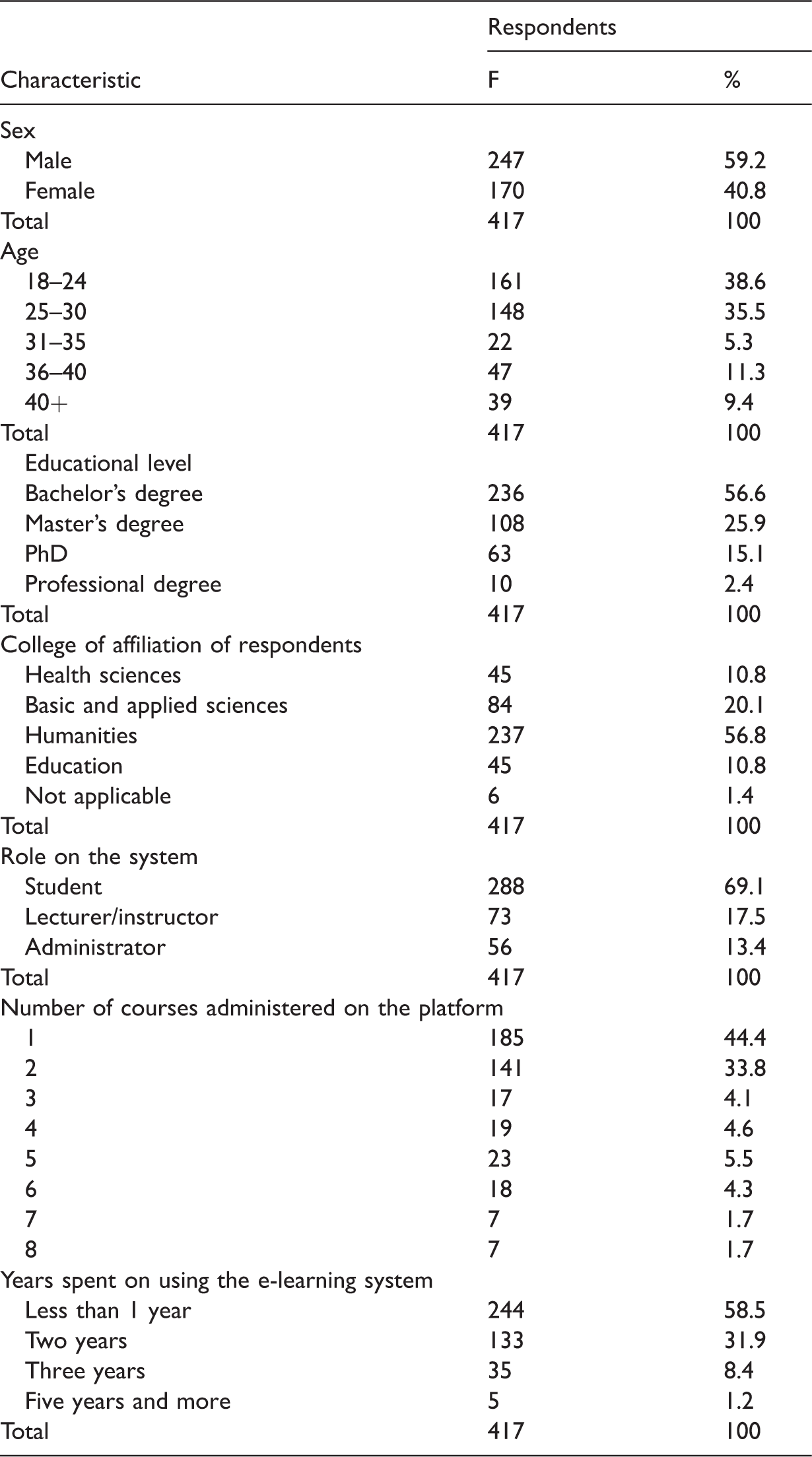
The respondents have been profiled according to their gender, age, educational qualification, their role on the e-learning platform and college of affiliation. This information is summarized in Table 2.
Demographic characteristics of respondents.
Source: SPSS analysis output.
Out of the 417 questionnaires obtained, 247 were males, signifying 59.2% and 170 were females signifying 40.8% of the total number of respondents used for this study. The analysis of the gender was done to ensure that the study was not skewed to any particular gender and to include views from both sexes so as to present a fair demographic result. It is fair to say that the ratio of men to women in this study is not biased and therefore does not affect the responses in any significant way.
The results show that most of the respondents (38.6%) were within the ages of 18 to 24, followed by those within the range of 25 to 30 (35.5%) and 36 to 40 (11.3%). The lowest number of respondents were those in the 31 to 35-year group (5.3%). With respect to the educational or academic levels of the respondents who took part in the study, the majority of them have a bachelor’s degree (56.6%), followed by those with a master’s degree and the least are those with PhD as presented in Table 2.
Furthermore, the college of affiliation of respondents in Table 2 indicates that the majority of the respondents are affiliated with the college of humanities (56.8%), followed by the College of Basic and Applied Sciences (20.1%), the College of Education (10.8%) and Health Sciences (10.8%); 1.4% of the respondents were not affiliated to any of the colleges. These were the administrators of the e-learning system.
Also, the role of the respondents on the e-learning system was assessed. Majority of the respondents (69.1%) use the system as students, 13.4% as administrators and 17.5% were instructors. Table 2 provides further elaboration.
The number of courses the respondents administered on the e-learning platform was also assessed. Some respondents (44.4%) indicated only a single course either offered or managed on the e-learning platform while 4.6% had four courses. Table 2 throws more light on this.
There was also an analysis of the number of years the respondents have spent using the e-learning system. A total of 244 of the respondents representing 58.5% have spent less than a year on the e-learning system, while 35 that is 8.4% indicated three years of usage. Elaborations are found in Table 2.
Discussion of finding
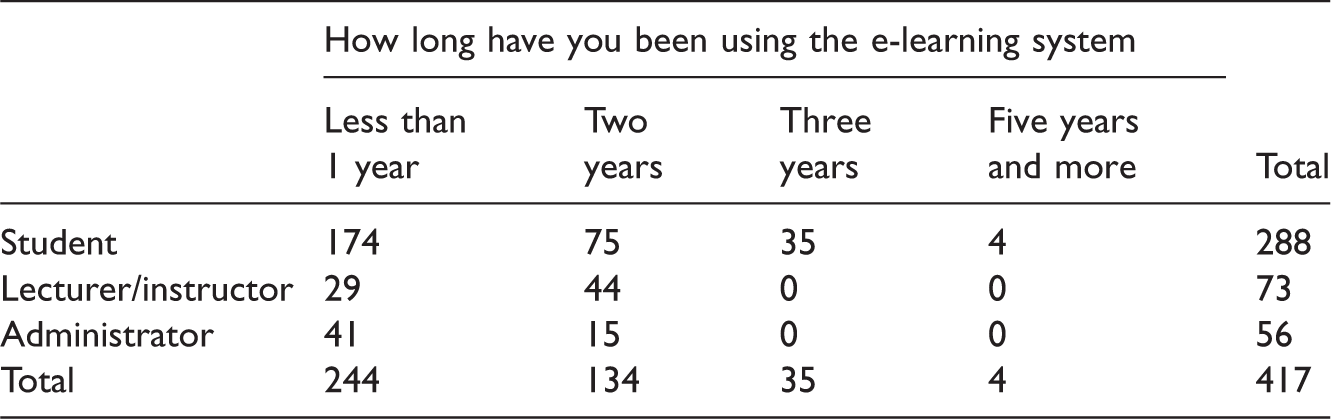
Eze et al. (2013) and Senyo et al. (2014) are some studies which looked at the nature of technology adoption at the institutional level. Eze et al. (2013), for instance studied the nature of the adoption of information technology (IT) by government-owned universities in Nigeria. In the quest to address the first research question of this study, a number of cross-tab analyses were done to determine the nature of e-learning adoption. The first cross-tabbing was based on the various stakeholders and the number of years on the e-learning system as shown in Table 3.
Stakeholders and period of using the system.
Source: Field survey, 2015.
The cross-tabbing of the various stakeholders and the period of their usage or interaction with the system revealed the following findings.
The majority of the stakeholders combined have used the system for less than a year with a frequency of 244. The students who are the majority of the respondents scored the highest frequency of 174 for using the e-learning system for less than a year. None of the instructors and administrators who answered the questionnaire had used the e-learning system for more than two years. This therefore affirms the assertion made by Macharia and Nyakwende (2010) that e-learning is still very much in its infancy across most of the African continent, although there is much enthusiasm amongst university administrators to fully develop e-learning systems.
View marks and grades Send and receive course announcements Upload assignments Download course materials Send/receive class announcements Discussions of topics with course mates and Instructors Organising lessons and lesson materials Taking all kinds of tests and quizzes online Sending emails to instructors, course mates or individuals Detecting and fishing out cheating and plagiarism in students’ or researchers’ work Doing presentations online
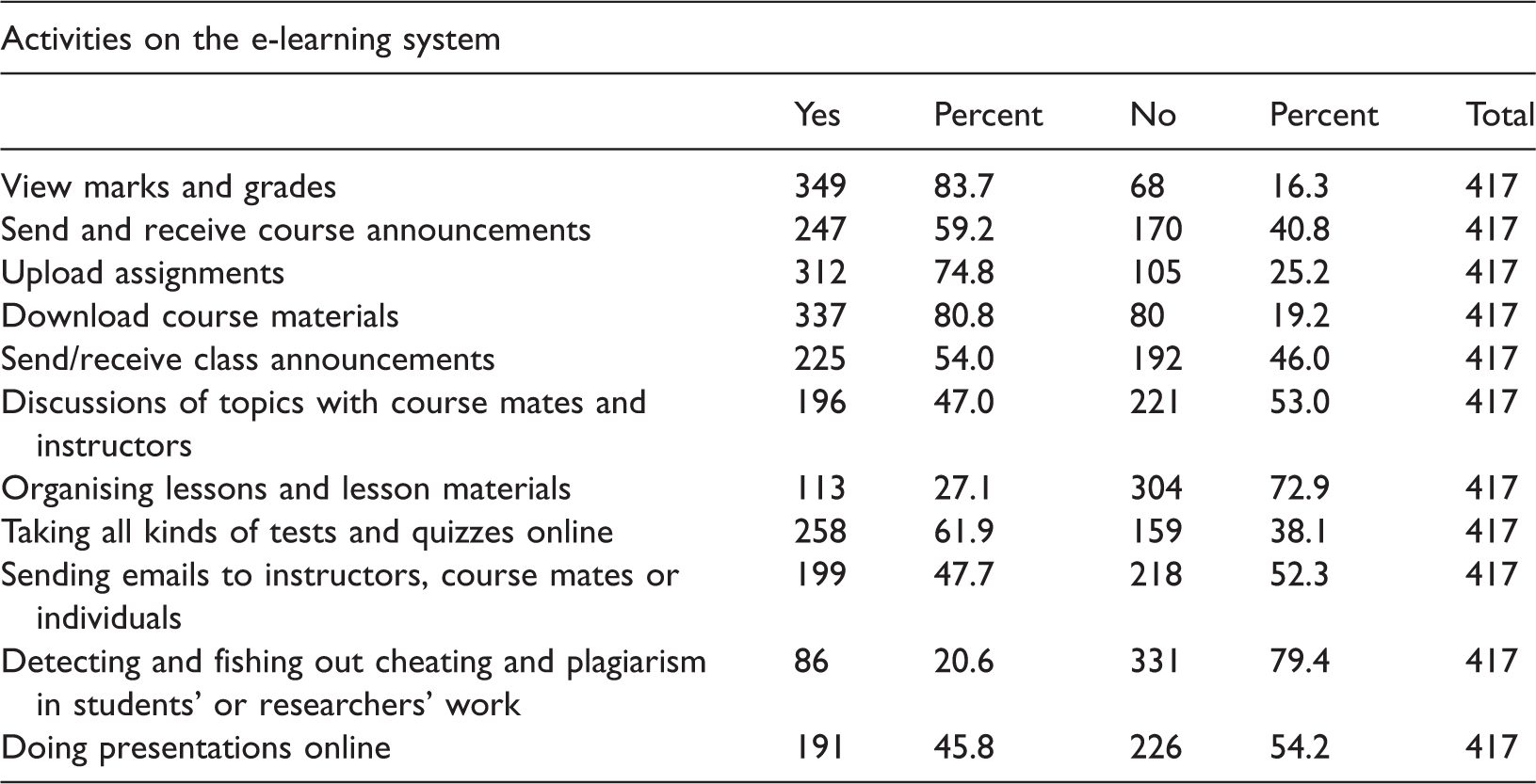
Table 4 illustrates how the respondents indicated their awareness and use of these functions on the e-learning platform.
Activities performed on the e-learning platform.
Source: SPSS Analysis output.
From Table 4, 83.7% of the respondents indicated that they are aware of the e-learning system being used for viewing marks and grades. In an e-learning report (University of Ghana-BSU, 2015), a student indicated that instructors marked their assignments online, give their comments and marks/grades and resend the work to the students.
Again, from Table 4, only 26% of the respondents indicated their knowledge and usage of the function of “Detecting and fishing out cheating and plagiarism in students’ or researchers’ work”. The administrators who should be more knowledgeable in all the various activities of the system were always in the minority in indicating their knowledge of most of the activities. This, therefore, shows that there should be enough training and orientation for the various stakeholders to keep them abreast with all the various activities on the e-learning system. Pituch and Lee (2006) in their study of the influence of system characteristics on e-learning use assert that the university administrators should prearrange some face-to-face class meetings and orientation programs prior to use of the e-learning system. They further suggest that, during these initial meetings, they should train all the users on how to use the e-learning system. This will help the users to be more receptive to the e-learning system.
Summary, conclusion and recommendation
This study investigated the adoption of e-learning in a university in an African country. Specifically, the nature of e-learning adoption. To this end, the research objective was to discuss the nature of e-learning adoption by the three-major stakeholders of the system.
To address this objective, there was a discussion on e-learning adoption in African countries, Ghana and then narrowed to University of Ghana and the Sakai Learning Management System. Again, the analysis section provided findings on the demographic survey of participants in order to address the research objective of determining the nature of e-learning adoption in an African university.
Three situations were revealed after rigorous cross-analysis of the data. The first finding indicates that e-learning is yet to be fully accepted university-wide as most of the users of the e-learning system in universities – students, instructors and administrators – have used the e-learning systems for less than a year. This was not surprising as e-learning is yet to be fully adopted university-wide in most African countries for which Ghana is one as postulated by Macharia and Nyakwende (2010).
Another finding which was evident was the popular activity on the e-learning platform. It was discovered that the prevalent activity on the e-learning platform was “viewing marks and grades.” The e-learning users in the University indicated that they are aware the e-learning system is used for viewing marks and grades. And some activities were less popular with the users of the e-learning system. For instance, “Detecting and fishing out cheating and plagiarism in students’ or researchers’ work” was the least popular activity on the e-learning platform.
The low patronage of the activities on the e-learning system was blamed on the orientation and training programs, if organized, which have not been sufficient for all the stakeholders of the e-learning system, especially the administrators of the system to keep them abreast with the various activities that could be carried out on the system.
Research implications
In terms of research, this study contributes to the body of knowledge on e-learning from a developing country’s perspective. This is an imperative contribution given the presence of cultural contrasts and societal peculiarities existing in diverse nations (Effah, 2012). The study also provides empirical support that, the adoption of e-learning can also be studied from a multi-dimensional perspective. Lastly, the study bridges the ostensible literature gap by providing a multi-facet (student, lecturer/instructor and e-learning administrator) perspective in studying the nature of e-learning adoption.
The study contributes to practice by drawing the attention of university administrators to specific adoption issues that either enable or hinder e-learning adoption. Thus, universities venturing into e-learning adoption have a fundamental understanding of the nature of adoption, a knowledge arguably not available previously to universities in African countries. Therefore, universities planning to adopt e-learning in Ghana can take a critical look at these issues to promote total usage.
In terms of policy, it is believed that creating a conducive ICT environment will positively influence the adoption of e-learning. The enabling environment in the form of legislation, ICT infrastructure (Tagoe, 2012) and policy (University of Ghana-BSU, 2015) will propagate the e-learning agenda, thereby stimulating economic growth and development. An e-learning policy will provide a systematic guideline on how well the various stakeholders will be integrated into the e-learning platform which will promote total usage. Again, the policy should be structured taking into consideration the different adoption determinants for the various stakeholders. This will provide a comprehensive policy which will lead to the full adoption of e-learning; hence, stakeholders will not only use the system to view grades but also perform other activities which are equally important in the system.
Recommendations for future research direction
Any research work inevitably is expected to encounter some basic limitations, and this study is no exception. Below are some limitations that have been identified in this study with suggested future research directions.
The study was limited to University of Ghana because of the ease of access to respondents and data that the researcher needed to gather, hence making it difficult for generalization of findings. Therefore, future studies should be carried out using more than a single university to provide for comparison and testing of findings.
Again, the result of the quantitative study might not be applicable in qualitative studies. Therefore, future studies should consider testing the determinants in a qualitative setting to lend more generalization of the findings as postulated by Eze et al. (2013) that qualitative methods help to generate rich insights.
Future studies should consider researching into mobile-enabled learning (m-learning) and e-learning in cloud computing since they are emerging trends in the educational sector.
Footnotes
Declaration of Conflicting Interests
The author(s) declared no potential conflicts of interest with respect to the research, authorship, and/or publication of this article.
Funding
The author(s) received no financial support for the research, authorship, and/or publication of this article.
Author Biographies
 .
.