




Abstract
There are two sides to a coin when it comes to implementing technology at universities; on one side, there is the university using technologies via the virtual learning environment that seems to be outdated with the digital needs of the students, and on the other side, while implementing technology at the university learning environment the focus is primarily on the technology more than the learning process students undergo. This paper looks at using soft systems methodology as a ‘potential approach’ towards (a) bringing the two sides of the coin together by working with different stakeholders at the university and (b) identifying the needs and requirements for a personalized learning environment that would satisfy the learning needs and styles of learners, thereby shifting the paradigm from institution/tutor-centric to a learner-centric approach. This paper also highlights some criticisms towards the existing e-learning system in place at universities, and the role a systems approach could play in the design of online learning environments.
Keywords
Background and introduction
In last five decades, research has been undertaken in the field of e-learning and e-learning systems design that has led to a complete transformation of all forms of education that we encounter now in the 21st century (Brown, 2000; Garrison and Anderson, 2003). The last three decades of e-learning could be summarized as follows: during the 1970s the focus was on corporate education and in-house training wherein the course content was designed in a top-down manner, managed by incorporating performance databases. In the 1980s the e-learning focus was on a personal level of education wherein learning systems provided users with self-tutoring capabilities. The 1990s, in particular the early part of that decade, focused on web-based e-learning for reasons such as easy authoring, easy development and delivery of learning contents, easy publication and sharing of contents and ease of creating learning communities (Nair, 2013; Tanaka, 2005). However, today there has been an increase in the use of different internet technologies for delivery of education to a wider community of learners around the world (Welsh et al., 2003) and this milestone can very much be attributed to Web 2.0 and the devices associated with it.
In this digital age, with the help of Web 2.0, learners with different learning styles are exposed to different social-software tools and services that enable them to not only create their own contents through their own learning experience but also to consume the contents derived from the experience of their peers, tutors and experts. However, the learning systems put in place at universities (the epitome of education and learning) are centralized in nature and carry with them a ‘one-size-fits-all’ approach. Acampora et al. (2011) argues that these ‘Learning Management Systems’ (LMSs) could be seen to be nothing more than launch pads for third-party content that the organization would purchase/outsource (from BlackBoard, etc.). The current generation of e-learning products is designed to help organizations(like universities) collect, organize, manage, maintain, reuse and target instructional contents that are a mere ‘digitized version’ of the contents used in a traditional classroom (Carr, 2012; Dehoney and Reeves, 1998; Ismail, 2002; Nair, 2013; Rivera and Rice, 2002; Schott et al., 2003; Wong, 2007). Hence, such products could be seen as mere content repositories and data sources by their creators and users respectively (e.g. teacher and students) (Nair, 2013; O’Neil et al., 2004).
However, when it comes to learning and the learning process, it tends to be optimum when it is assisted and personalized (Alonso et al., 2005; Apple, 2008; Escobar-Rodriguez and Monge-Lozano, 2012; Krumm, 2009). To give an example, in the olden days, the wealthy engaged tutors for their children, who thereby received efficient personalized education. Computers could be argued as potential survivors of the education system because they could be used to personalize learning and the learning experience (Alonso et al., 2005). Such systems could be stretched to design our learning according to our needs and wants, to record the progress we make and to tell us if part of our thought process is wrong so that it can be corrected in due time (Baker, 1993). Bennett et al. (2012) and Junco (2012) point out Web 2.0’s emphasis on active participation, user generation of content and collaboration that seems to fit well with the kinds of creative and critical activities associated with higher education (HE), with the ways students learn through exposure to multiple perspectives, and with the communication and teamwork skills graduates wants to develop.
Learning could be defined as a ‘process’ a student undergoes within a given learning environment. The infusion of technology in such an environment needs to be grounded on strong design principles, developed systemically and theoretically, keeping the learner and the process the learner goes through at the centre (Davies, 2012; Escobar-Rodriguez and Monge-Lozano, 2012; Garrett and Jokirvirta, 2004; Herrington et al., 2005; Hiltz, 1990; Ismail, 2002; Junco, 2012; Junco et al., 2012; Moskaliuk et al., 2012; Shieh, 2012). Hence it could be argued that the ‘systemic learning design’ could be used as a way for integrating technology into the existing learning process for creating a personalized learning environment (PLE). Systemic design of the learning environment could help eliminate some of the criticism of Web 2.0-based distributed learning systems, used within educational settings alongside traditional centralized LMS (Dickson, 2004; Garrett and Jokirvirta, 2004; Herrington et al., 2005; Jenkins et al., 2005).
The proposed ‘systemic approach’ is underpinned by systems thinking and adopts a soft systems methodology (SSM; Checkland and Scholes, 2003); this approach could help one to understand and clarify how some Web 2.0 powered technologies could be infused into the learning processes currently undertaken at the universities, which would in turn support formal/informal learning among learners(Checkland, 1981; Checkland and Scholes, 2003; Churchman, 1984; Gagne et al., 1988; Senge, 1990) and thereby enabling practitioners to address issues such as at what level, how and where appropriate technologies could be introduced within a learner-centric setting via the use of process modelling (UNESCO, 1981).
Personalized learning environment
The process of learning by nature is as ‘social’ as ‘cognitive’, as ‘concrete’ as ‘abstract’, all of which intertwined with ‘judgement’ and ‘exploration’ (Attwell, 2008; Kolb, 1984). Every learner throughout their lifetime undertakes this process ‘differently’ based on their own ‘learning preferences’. Universities for centuries have been the birthplace for imparting knowledge and learning, but with the onset of Web 2.0 and ubiquitous technologies, such as tablets, social platforms (like Facebook), etc., there is a change in the dynamics for gathering information and gaining knowledge, thereby making universities not the only source of information (Gunasekaran et al., 2002). Realizing this, universities are aggressively implementing learning technologies institution wide but these technologies, for example virtual learning environments (VLEs), fails to address the cognitive needs of different learners, giving the learners less autonomy over their own learning (Kearsley, 2000), because the learning technologies used at universities are institution-wide ‘centralized learning systems’. Such systems are ‘costly’ and ‘time consuming’ to implement, and these implementations tend to be ‘superficial’ in nature, creating a less engaging learning environment for their users. These learning systems act as data repositories and limit active learning (Nair, 2013). For students, these learning systems provide on-screen text to read or to download before/after their classroom sessions. For the university staff, they have to use such systems as a consequence of directives from senior managements and for working towards the institutions’ mission statements, but at the same time staff perceive the use of such Web tools with suspicion and hostility, which results in the technology-enabled pedagogic practices used in the design of online learning environment being flawed; herein, the focus is predominately on the use of technology for providing contents to the students (O’Neil et al., 2004) rather than looking at ways to actively engage learners with the learning material and/or technology to enable a personalized, enjoyable learning experience (Ravenscroft, 2001).
Twenty-first century students live in a media-rich, globally connected and technologically well-versed environment, making them creators and consumers of contents(text/audio/video) powered by Web 2.0 and other ubiquitous technologies. Each of these technologies act as a ‘vehicle’ for learners to interact with various types/level of technologies in the form of gaining access to informative materials, for collaborating with other learners and for sharing their experiences, all in all creating new learning opportunities for them to explore and for aiding/developing their own competencies (Acampora et al., 2011; Herrington, 2006). Students today would want to study in an environment which supports technologies that they use for day-to-day activities as a part of their university curriculum because these technologies have become an ‘integral part’ of their lives (more so as part of their identity), rather than attending traditional lectures wherein they are switched off from their digital environment, giving them the sense of sitting in an airplane cockpit (Jones et al., 2004). This digital disconnect (or divide) between students and university classroom expectations could be one of the reasons for less engagement in the classroom, lack of motivation, high level absenteeism and more. In order to reduce this and improve the learning/teaching experience of students/tutors respectively, it becomes quintessential to bridge the digital divide, even though arguably it cannot guarantee better performance, but some research (such as Apple, 2008; Escobar- Rodriguez and Monge-Lozano, 2012; Krumm, 2009) cites that an effective integration of personalized technologies into the current teaching practices at educational establishments could lead to high level of motivation and student achievements.
With the current technological advancements of Web 2.0 taking place, students are demanding a paradigm shift from a centralized ‘one size fits all’ approach to a much de-centralized ‘learner-centred’ systems approach (Fiedler and Valjataga, 2010; Wilson, 2008). In order to bridge the digital divide, different attributes of Web 2.0 provide all the necessary tools for creating an environment that is personalized, using the latest software/hardware to support the learning process at universities to enable students to create their own ‘PLE’ catered to each individual’s learning needs and wants (Ally, 2004).
A PLE could largely be described as a collection of tools (including devices/applications), social communities, online resources and services, all of which constitute an individual’s educational platform (as shown in Figure 1), which the learner (in Figure 1 the author looks at himself as a learner) could use to direct their own learning and develop their own competencies, together with extending their educational goals (Fiedler and Valjataga, 2010; Lombardi, 2007). A PLE could be perceived as a single user’s e-learning system (van Harmelen, 2006), which tends to adopt a learner-centric approach in contrast with the teacher-centric LMS put in place at universities.
An example of a personalized learning environment (PLE).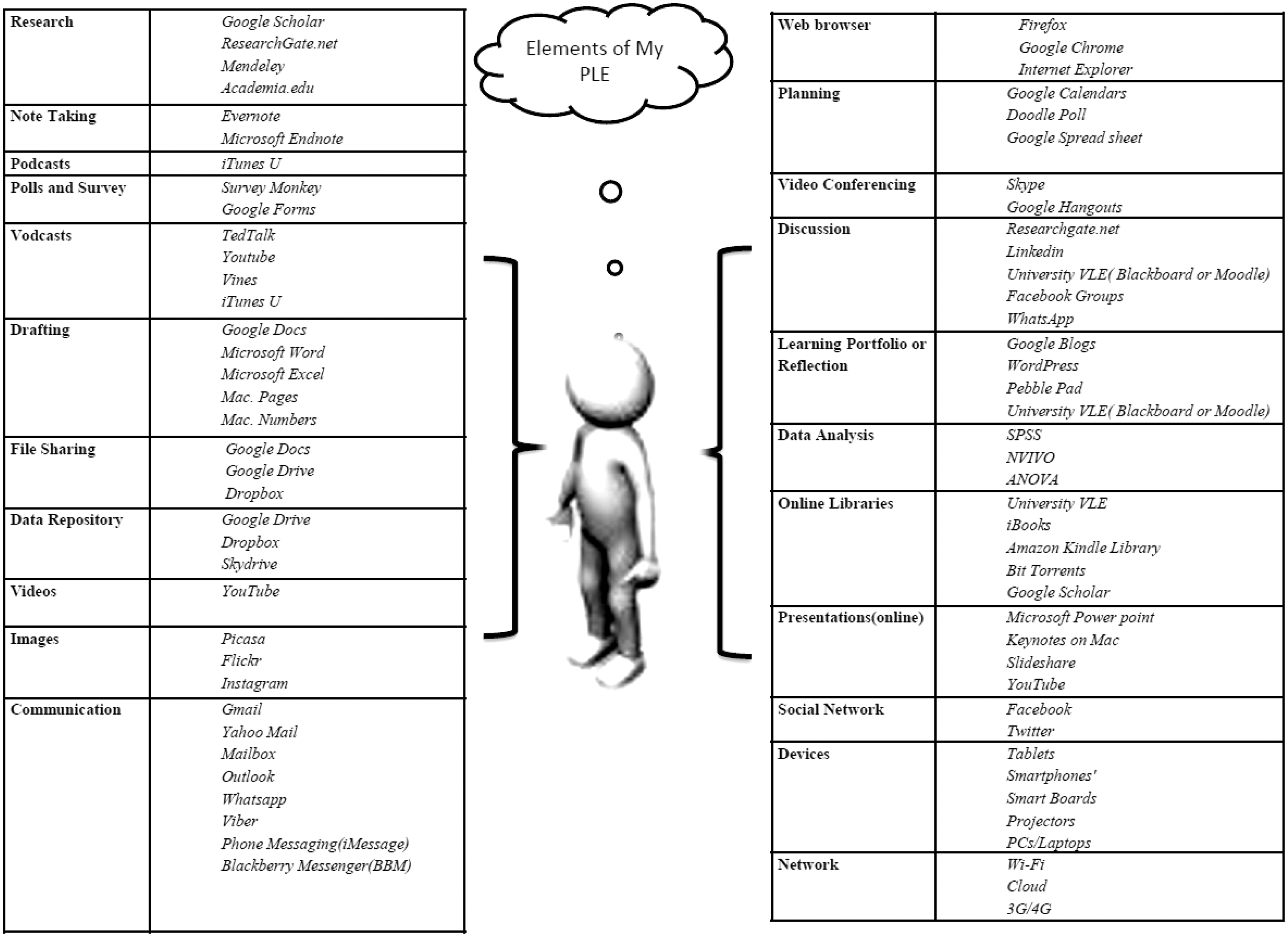
Based on Figure 1, the use of such/similar Web 2.0 tools within a pedagogically driven learning environment could enable and empower learners to generate/share/organize contents and communicate them with their peers/experts synchronously/asynchronously within the community of learners represented in the PLE network (Chatterjee et al., 2011; Wheeler, 2010). Such PLEs are expected to have a profound effect on the learning systems currently used for teaching and learning, on different pedagogic approaches adopted at universities, on the design principles of learning systems and on the instructional design models (Dick et al., 2005; Morrison et al., 2004; Yavuz, 2007) put in place to support learning/knowledge development. One of the reasons for the emergence and widespread interest of the PLE could be attributed to the changing tide of how people are using technology to learn, to meet social demands and to gain competencies to prosper within the society of which we are all a part (Attwell, 2007; Chatterjee et al., 2011; Garrison and Anderson, 2003).
One of the mission statements of the PLE is to recognize learning as a continuing process and the role played by individuals to organize their own learning, and to provide tools to support that process. This is accepting the fact that everybody uses different learning styles, different intelligences, put in different contexts, different subjects, different knowledge domains and responds to different individual learning aims and goals (Ally, 2004; Attwell, 2007; Nair and Singh, 2013; Wong, 2007).
The key to understanding the PLE does not lay in the understanding of a particular type of technology (e.g. for the use of social media in the classroom) so much as in understanding the thinking behind the underlying concept (Fiedler and Valjataga, 2010). Broadly speaking, the PLE is a highly integrated element of a user’s framework, using different tools for their personal use of the internet, and is not a separate space on the internet (Davis, 2004; Fiedler and Valjataga, 2010).
Dimensions of personalized learning environment space.
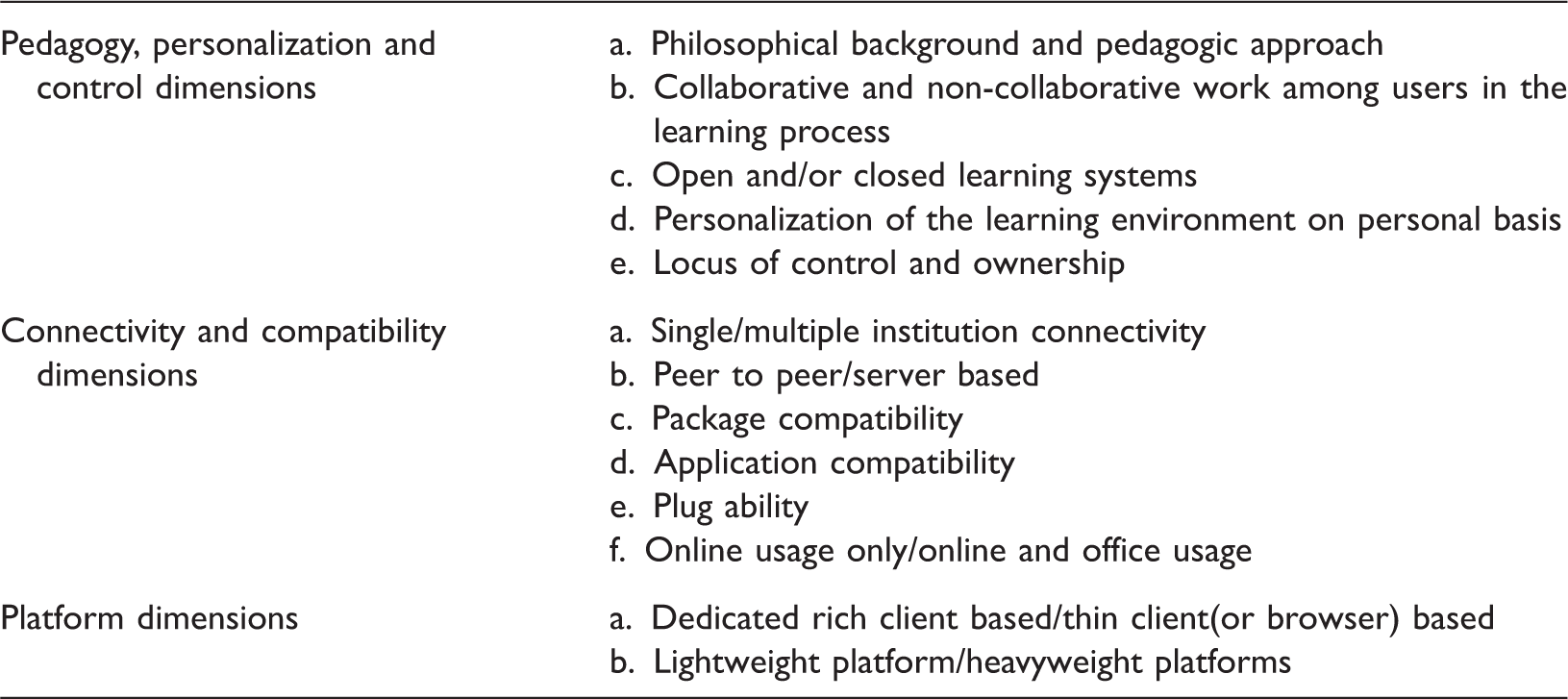
Overall, PLEs are a new approach to learning and are not solely technical solutions. They are pedagogically driven, technically facilitated conceptual solutions but the question still remains whether they can be institutionalized. If yes, then how? The answer to this could be explored through the lens of SSM powered by the systems approach backed by action research.
General theory behind the systems approach to the personalized learning environment
A system could be defined as a ‘complex-organized whole’. It is an assemblage of things or parts forming a complex unitary whole (Hopkins, 1985; Tsoi, 2004). The systems approach enables one to view any phenomenon as a system, as a whole (or holistically), to develop a thorough understanding about the human activity and the level of inter-relationships between people and a situation (which in our case is online learning), rather than looking at each of them in isolation (Checkland, 1981; Churchman, 1984; Fiedler and Valjataga, 2010). The PLE could be perceived as a system (or inter-connected multiple systems) working together in unison to motivate and support learners in taking control over their own content and the learning process (van Harmelen, 2006).
A systemic view of the PLE could help scrutinize the traditional patterns of control, role relationships, system dynamics, responsibilities in HE and ways of supporting learners/learning providers with tools to model learning activities within a learning environment (Checkland, 1981; Churchman, 1984; Senge, 1990).These learning activities could consist of all resources that an individual has access to at any point in time that they could turn to in order to satisfy their own learning needs and adhere to their learning preferences (Fiedler and Valjataga, 2010), thereby enabling learners to stimulate an exploration (implicit/explicit) of the digital realm in relation to particular learning activities and conscious shaping of their own PLE (Fiedler and Valjataga, 2010).
Arguably, a PLE is not a simple amalgamation of potential ubiquitous technologies, especially if there is no personal model for intentionally implementing learning activities run through learning systems that run outdated instructional design models (Fiedler and Valjataga, 2010). The systems approach to PLE has the potential to provide an enquiry-based thinking into the concept of PLE, which when underpinned by SSM could pave the way to achieving the right mix of PLEs that could be designed and developed in an action research-based university environment, taking into consideration the different ubiquitous tools students use today for learning and for their day-to-day activities. This could be put together within the existing learning systems at universities to create an effective, efficient and affective PLE. Before exploring SSM in detail, understanding the concept of action research in brief is essential:

Basic principles of action research
The systems approach is about holistic ‘thinking’ and action research is about ‘action’. Education and teaching are applied disciplines wherein research needs to be relevant to practice (Tsoi, 2004). It is essential for ideas, principles and methods developed in a research environment to be tested in practice in a closed/open environment. However, in a traditional university environment, it is difficult to get a new approach accepted and to be put into practice. As a result, many proposed methods are theoretically sound but unproven in practice. Under these circumstances, in order to bridge the gap between theory and practice, an action research-based approach could be adopted, wherein the researcher works closely with different stakeholders, by becoming deeply involved with the processes that take place in an organization (Peters and Robinson, 1984; Sanford, 1970). The four basic elements of action research (Checkland, 1981) are
Elements of action research = ∫ (plan, act, observe, reflect)
To conduct an action research, the researcher would start with conceptualizing and particularizing the problem. Several interventions are made and constant evaluations of the situation (perceived as a system) are made throughout the interaction with the situation. During/around the time of interventions, actual data and pertinent observations are collected in various forms. If a problem is identified, modifications of old/new strategies are carried out until a sufficient understanding of the problem is achieved. Through an iterative process, the researcher working with the practitioner in the host environment will act together on a particular cycle of activities that includes problem diagnosis, action interventions and reflective learning (Argyris and Schon, 1989; Checkalnd,1981; Sanford, 1970). The experience gained through this practice would help the researcher to develop and refine the theories, algorithms and methodologies (Argyris and Schon, 1989; Checkalnd,1981; Eden and Huxham, 1996); this in turn would help the practitioner to gain a better insight into the problem situation to act upon. One major advantage of the researcher and practitioner working together is that it helps the researcher overcome the problem of persuading practitioners to adopt new methodologies, methods and techniques. In order to devise a technique for adopting the concept of the PLE (using action research) in any learning environment, it becomes vital for all stakeholders to work together in cohesion to create a collaborative and engaging atmosphere for the design and development of a PLE.
Applying Soft Systems Methodology to the personalized learning environment
In our day-to-day lives, any problem could be classified as ‘hard’ or ‘soft’ (Checkland and Scholes, 2003). Hard problems are ‘structured’, ‘systematic’ and to some extent are ‘technologically oriented’. On the other hand, Soft problems are ‘unstructured’ and ‘socially’ and ‘politically oriented’ (Tsoi, 2004). In order to tackle soft problems, Checkland (1981) and Checkland and Scholes (2003) gave us the SSM, a systemic approach to tackle problems/issues, issues which cannot be clearly defined and are messy in nature.
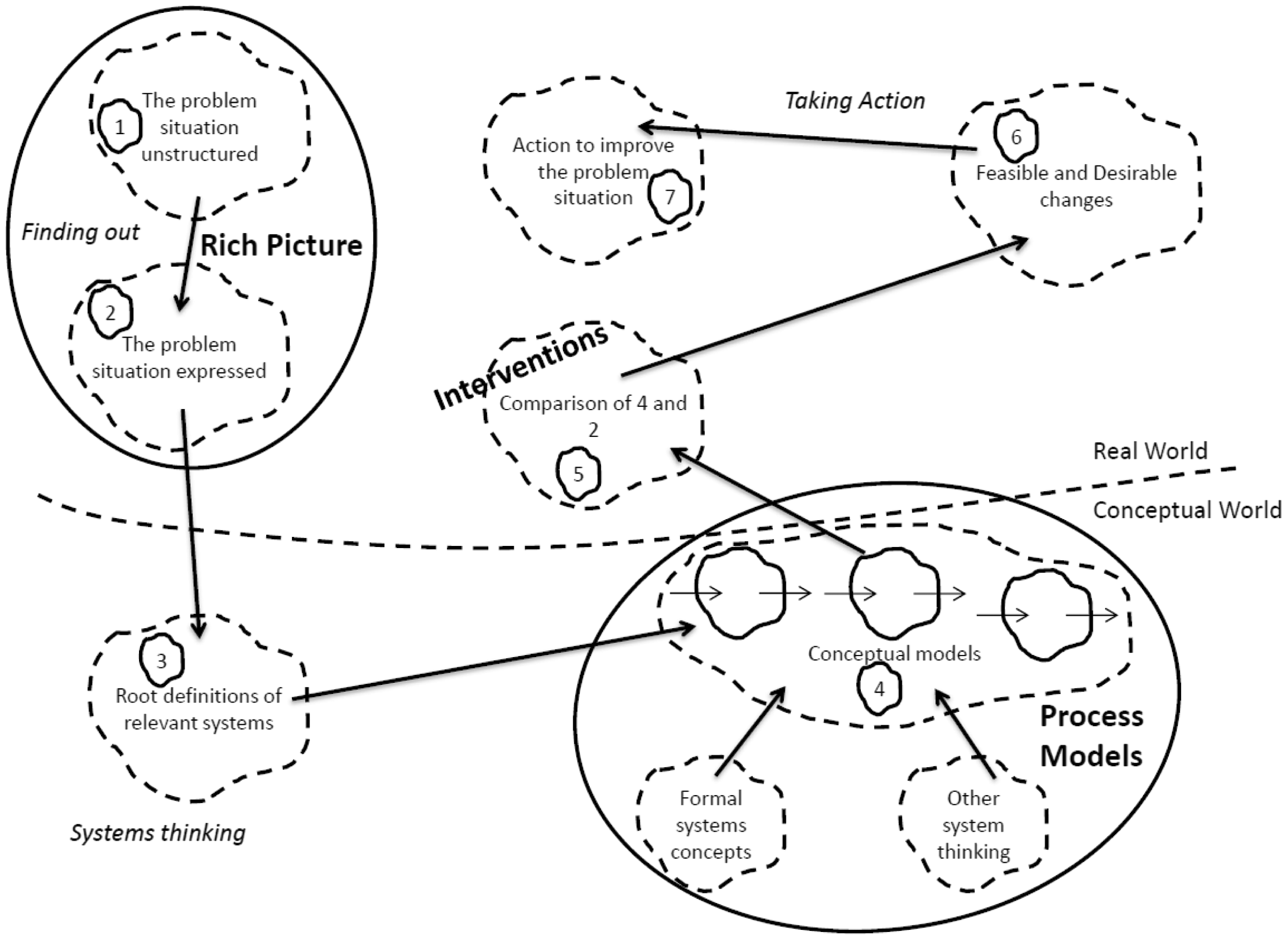
SSM is perceived as a learning cum inquiry process aiming to improve (or trying to solve any complex problematical) human situation. The distinctive feature of SSM represented by Equation (1) precipitated into seven stages to tackle soft problems engaging the researcher with key stakeholders, as a part of a development process to bring about change within the organization (such as universities implementing a PLE). As a methodology, SSM aims to bring about improvements in the area of social concern by activating the people involved in a learning cycle that would ideally be never ending (Checkland, 1981; Checkland and Scholes, 2003). SSM tends to be appropriate in complex situations that could be defined in terms of input and output. SSM is also viewed as an evolving methodology that has been steadily developed into a systemic process, articulated around the comparison between the real world problem situation and conceptual model of that situation, looking at relevant systems of purposeful activity. SSM has the potential to support individuals and groups to gain awareness and control over a range of intentional learning activities and their environment, eventually leading to their overall development as personal learners living in problem space.
SSM is a methodology and a method. The methodology is underpinned by action research and systems thinking. The method of implementing SSM is highlighted by seven stages as shown in Figure 2.
Adapted from Checkland and Scholes (2003).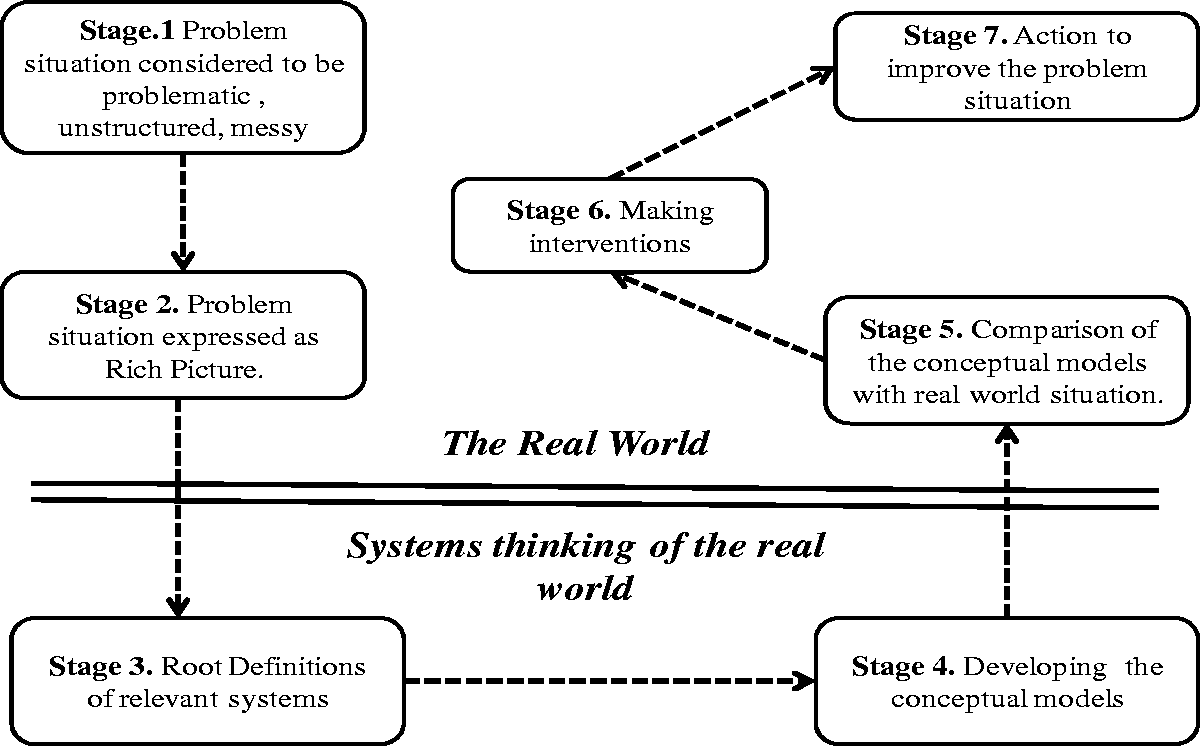
The different stages of implementing SSM (Figure 2) are explained in brief in the following sections, starting with Stage 1: identifying the problem situation.
Stage 1: problem situation
The first stage starts very much from the real world. This stage tries to explore and define the problem situation in some way or another. Here one would try to decide ‘what is that we are trying to explore?’. We do not define the problem here; instead, we try and make an attempt to assess the general area that could potentially be of interest to us, for example, ‘institutionalized PLE’. This stage could be treated as an arbitrary starting point and would shift as we open up the boundary of the problem situation to gather more information about the situation and also try to see the context holistically. This stage conducts a goal-free evaluation of the whole situation, wherein we are not particularly constrained by any formal definitions or organizational boundaries. We collect as much data as possible about the situation qualitatively, quantitatively or via both.
Stage 2: problem situation expressed as a rich picture
The problem situation ‘institutionalized PLE’ identified by Stage 1 is expressed as a ‘rich picture’ to gather a better understanding of the problem situation. Hence, the rich picture could be represented roughly as the learning environment at university, pointing out the key stakeholders and some key activities in that environment, and this situation has to be expressed in all its richness encompassing structures, processes, organizational climate, people, issues raised by people, key conflicts and more. According to Checkland and Scholes (2003), the best way to represent this is pictorially, and this is represented as a sample here in Figure 3.
A sample rich picture of the university environment.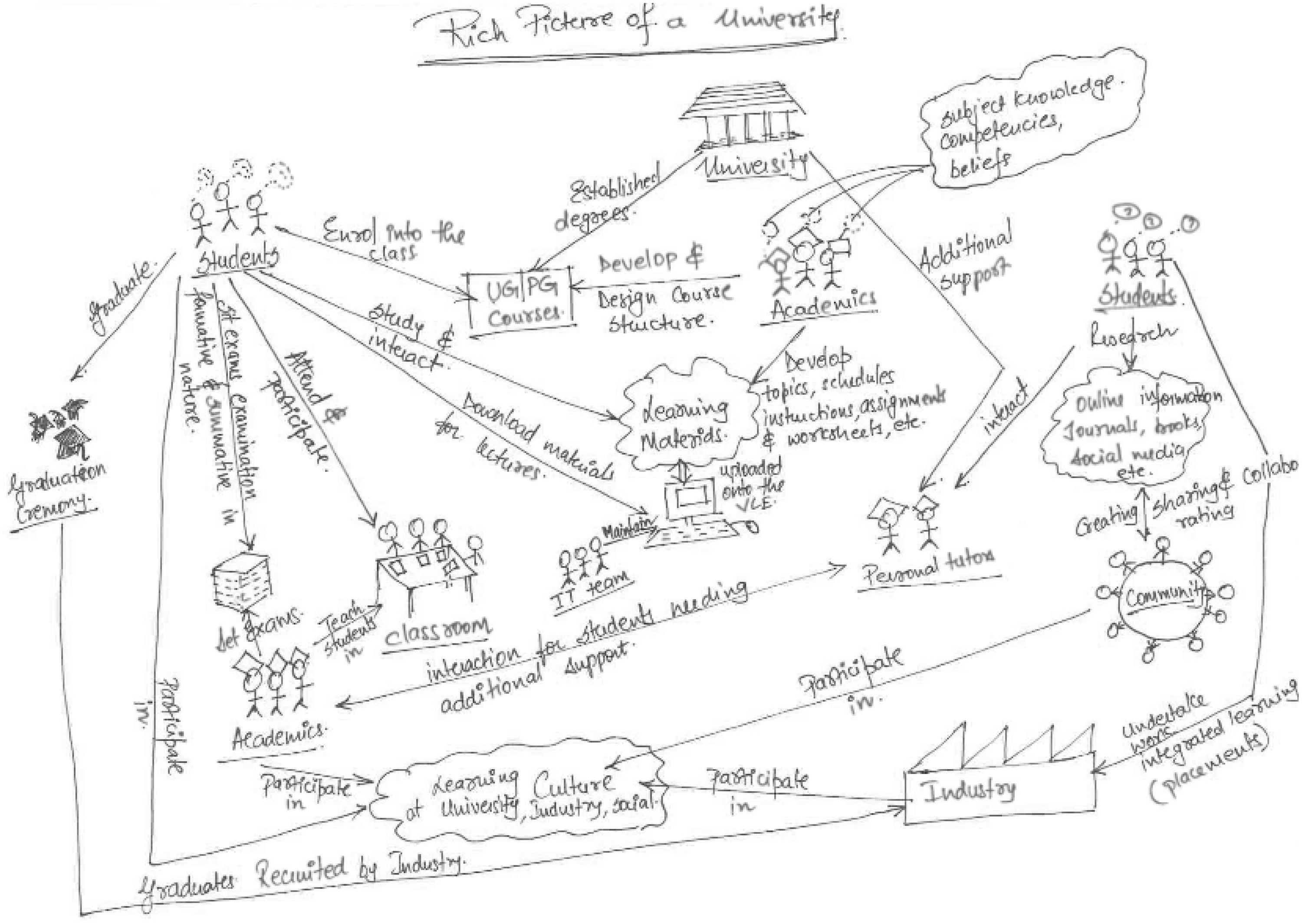
Stage 3: root definitions of relevant systems
Moving away from the real world, into the world of systems (as shown in Figure 4), it is from this stage everything about SSM grows and hence it is called as the ‘root definition’. Using the rich picture (Stage 2) one could derive multiple perspectives about the same problem, and in SSM this is known as ‘holons’. Holons are ‘plausible but relevant’ perspectives that could describe the real world activities using the rich picture. Each of these holons has the potential to provide a basis to evaluate any problem situation.
Based on the situation ‘institutionalized PLE’ being explored in this paper from Stage 1, some holons (plausible and relevant perspectives) that could be identified are as follows:
policy implications towards creating a PLE at universities; understanding a teacher’s belief towards a PLE-enabled classroom environment; students would accept a PLE at the beginning with enthusiasm but as time progresses their motivations would behave like a bell curve; the PLE would enable students to create their own community of learning; teacher/tutors can act as facilitators in real time; workload of teacher/tutors would vary according to the use of the PLE at universities; there is a need to provide scaffold for students to help them achieve the learning outcomes; the PLE could support online assessments at the universities; technological changes are volatile in nature, so it would be quite a task for technologists to keep the PLE updated; open access to the PLE could threaten the foundation of universities as we know it now, given economic changes.
With the help of the rich picture (Figure 3), many more perspectives could emerge. All these perspectives are valid and purposeful. Although many of the holons cited above may be un-discussable within the aim of ‘implementing institutionalized PLE’ or in some cases could be beyond the realm of understanding of the researcher, nevertheless they are all valid perspectives held by those who may be/are affected by the situation and will affect the relevance/success of the interventions made in the later stages. To give an example, if some teachers and the members of the senior management team are not comfortable using ubiquitous technologies (e.g. Facebook) for learning at universities because they belong/believe in the old school method, they would not support the implementation of the PLE at institutions and in such instances they might push to make the whole project (if undertaken) a failure.
The basis of SSM is not to address all the perspectives coming to light, thereby reducing the chances of making the whole process complex. SSM tells us to look at each arising perspective and address it separately, understanding its implications on the system holistically, and based on the derived understanding one could seek to re-integrate the new perspectives into the existing system to gather a more thorough understanding and thereby leading to make suggestions for future actions.
From the different perspectives identified in this stage, using the principles of action research and working collaboratively with stakeholders of the problem situation, we could choose some of the perspectives that could be deemed important, and put them through a more structured and rigorous model development process starting with mnemonic ‘CATWOE’.
According to Williams (2005), the model development process starts with the ‘T’ for ‘transformations’ in the CATWOE. The transformation for the chosen perspective determines what is actually getting transformed from the input to the output.
Elements of CATWOE, adapted from Williams (2005: 6).

CATWOE for ‘PLE for supporting online assessment at universities’.
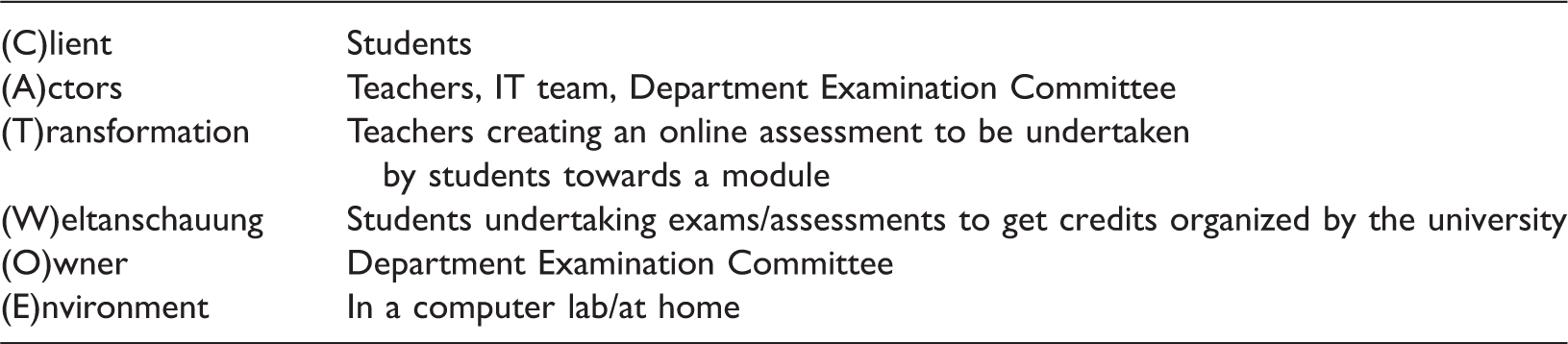
However for the same chosen holon, there could be different CATWOEs. The ‘Owner’ identified might not be the right owner; for example, the owner for the above chosen holon could be the ‘Dean of the school or the VC of the University’, similarly the other component of the CATWOE could change and we could have a totally different CATWOE, with a different root definition leading to a different conceptual model all together. This is one of the reasons why SSM is seen as an ‘iterative approach’, wherein one could try different things out and see the changes happening and the implications of those changes on the system as a whole. Hence, according to Checkland and Scholes (2003), it is advised to the keep the elements of the CATWOE roughly in scale. For any holon, if the elements of the CATWOE change so would the transformations taking place in the whole system. Therefore, creating a relevant system could be considered as one of the ‘arts’ of SSM. In SSM, the researcher has to constantly challenge their own assumption about (or self-reflection of) the situation in hand.
Stage 4: developing conceptual models
Once the root definition has been finalized, we can move into the next stage of developing the relevant conceptual models using the system’s concept. Holistically, every classroom at the university comprises different systems and, more importantly, inter-linking systems. For example, in a typical e-learning-based virtual classroom there are a string of systems that are associated with each other, such as those shown in Figure 5.
A pictorial representation of a system wherein transformation is taking place from input to output. Interlinked systems.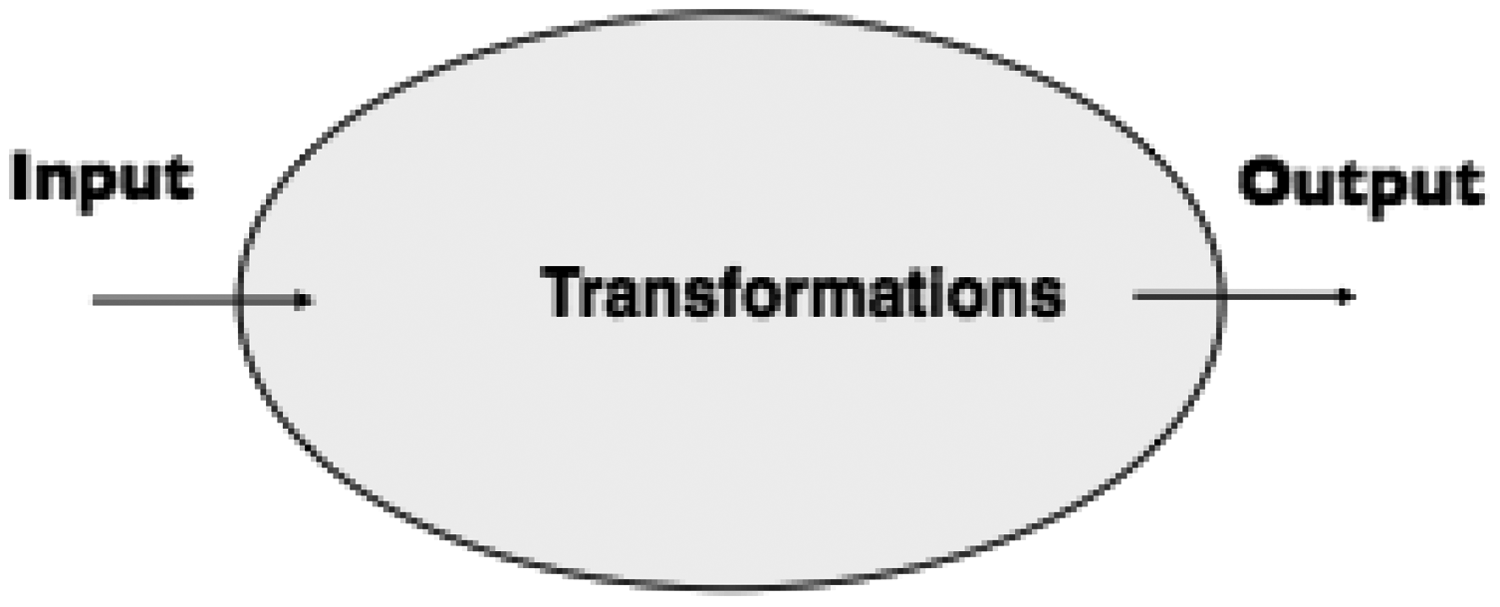
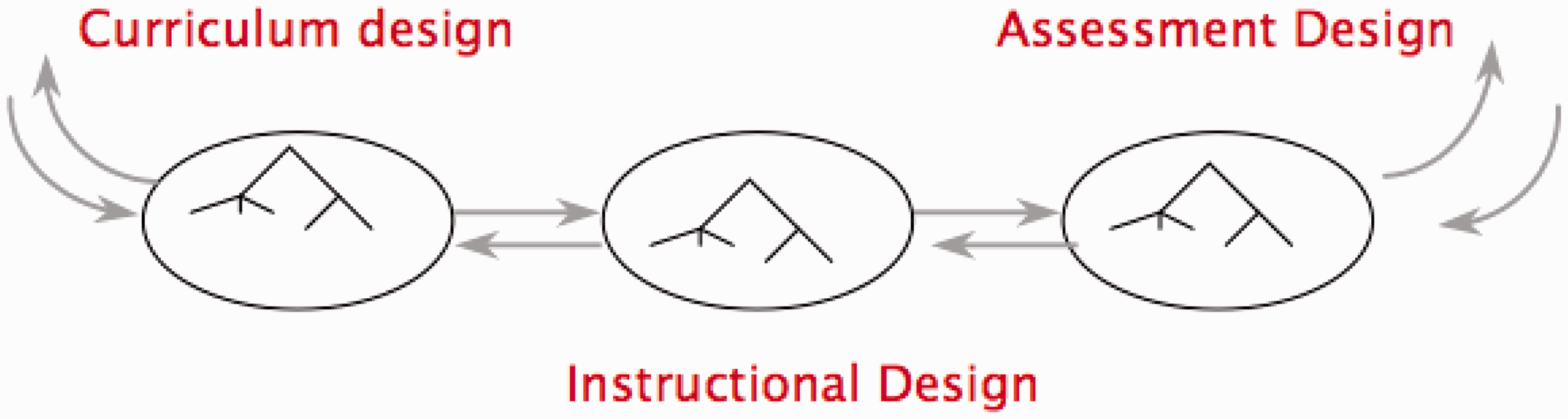
The conceptual models can be identified and derived (Figure 6) with the help of the rich picture (Stage 2 and Figure 3).
Various inter-linking systems identified from the rich picture.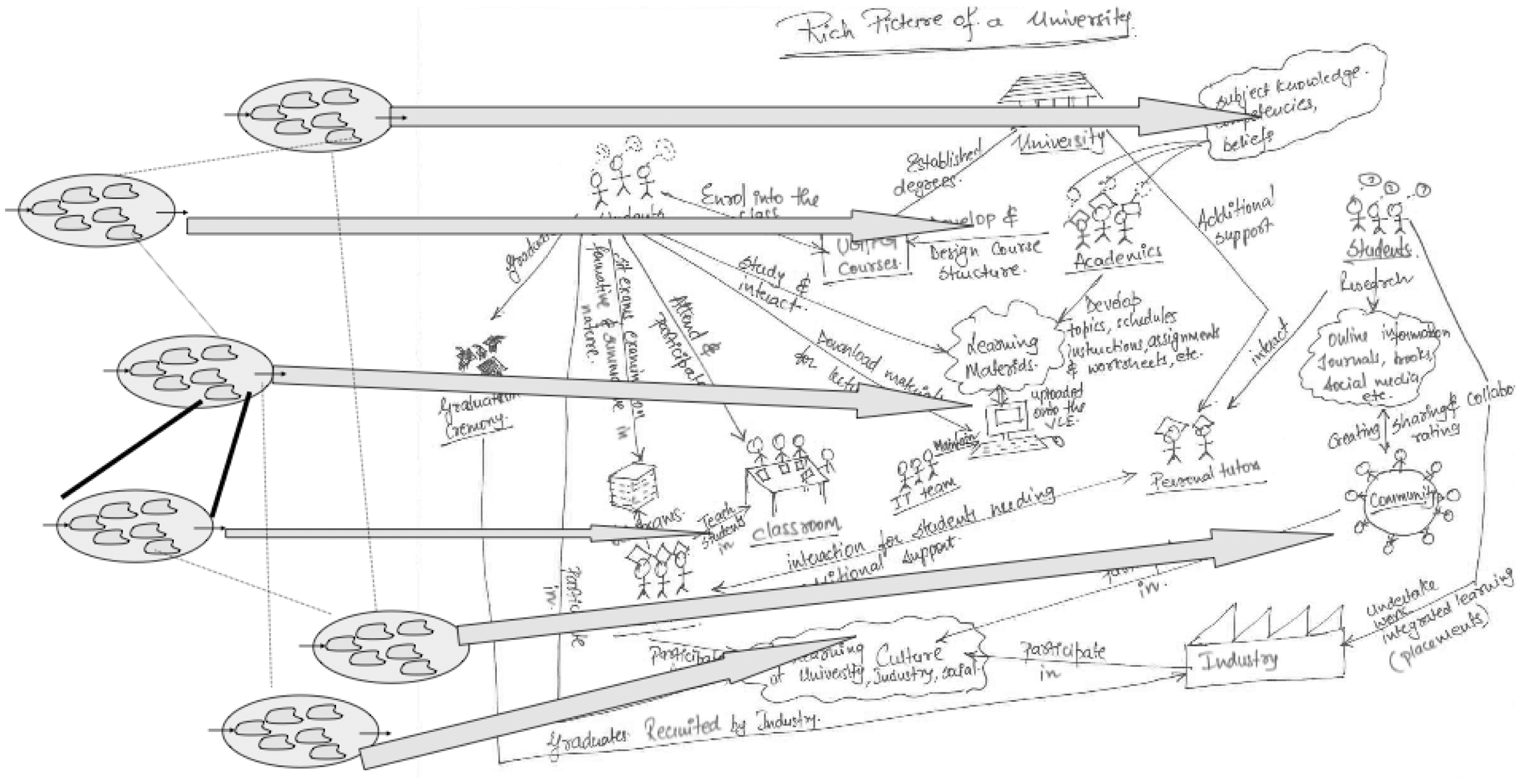
Steps to drawing the conceptual models.
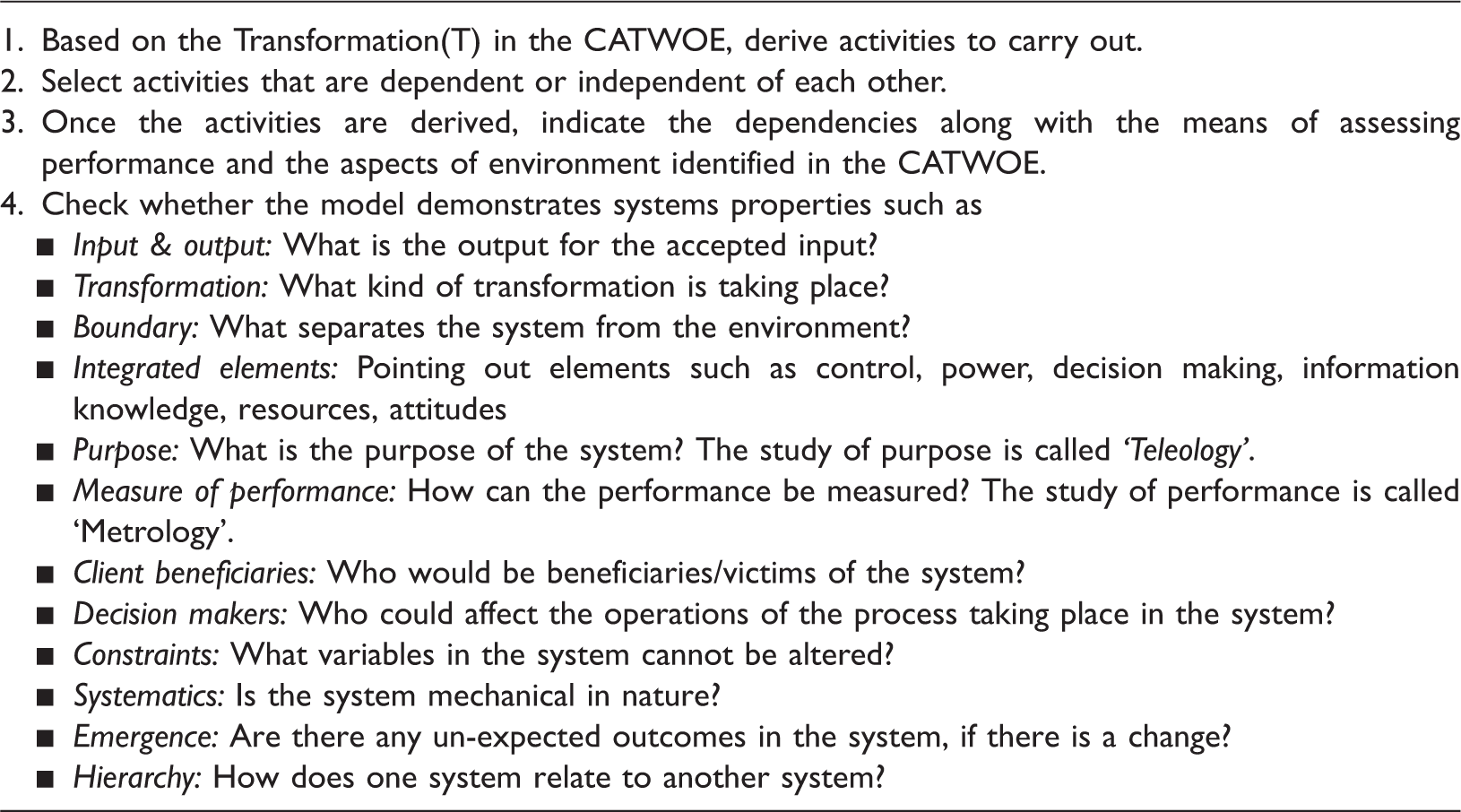
Based on the holon ‘PLE could support online assessments at the universities’ and Table 4 combined, we could undertake the same steps as follows.
Step 1. Based on the transformations (‘T’) in the CATWOE, derive activities to carry out the transformations.
For the holon selected, the transformation would be ‘creating an online assessment system’ to be implemented in a university.
Some of the activities that could be included are creating assessment questions, collecting and collating seminar synopsis documents, developing an online questionnaire, online simulations to carry out experiments, evaluating any additional resources required for students to complete the assessments, deciding on an appropriate platform to host the exam paper, identifying any potential problems that would arise, identifying who would be the right contact person to deal with the problem, deciding on the feedback mechanism, creating guidelines for students to undertake the exam, checking for any discrepancies in the examination process and creating a method to use plagiarism detection software.
Step 2. Select activities that are dependent or independent of each other.
Based on the earlier step we could take up some of the identified activities (Figure 7) for simplistic understanding. The chosen activities (or all the activities in Step 1) would to some extent be dependent or independent of each other at some point or another.
Activities identified.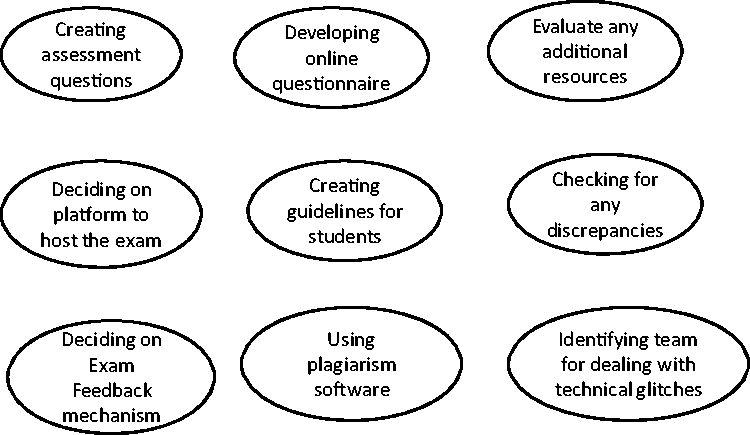
Step 3. Once the activities are derived, we could indicate dependencies (
Figure 8
) along with the means of assessing performance and the aspects of environment identified in the CATWOE.
Activity dependencies. A conceptual model is defined.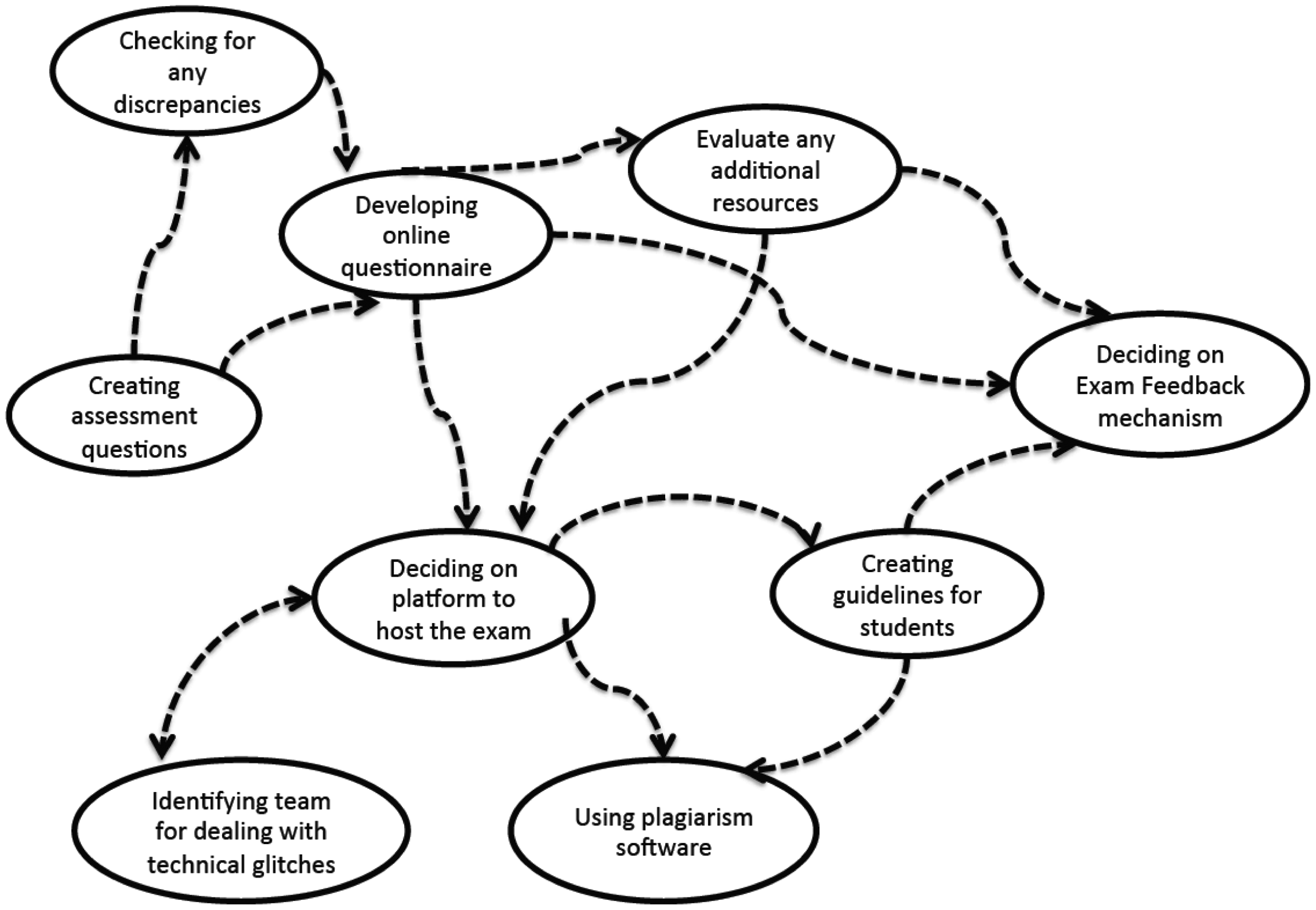
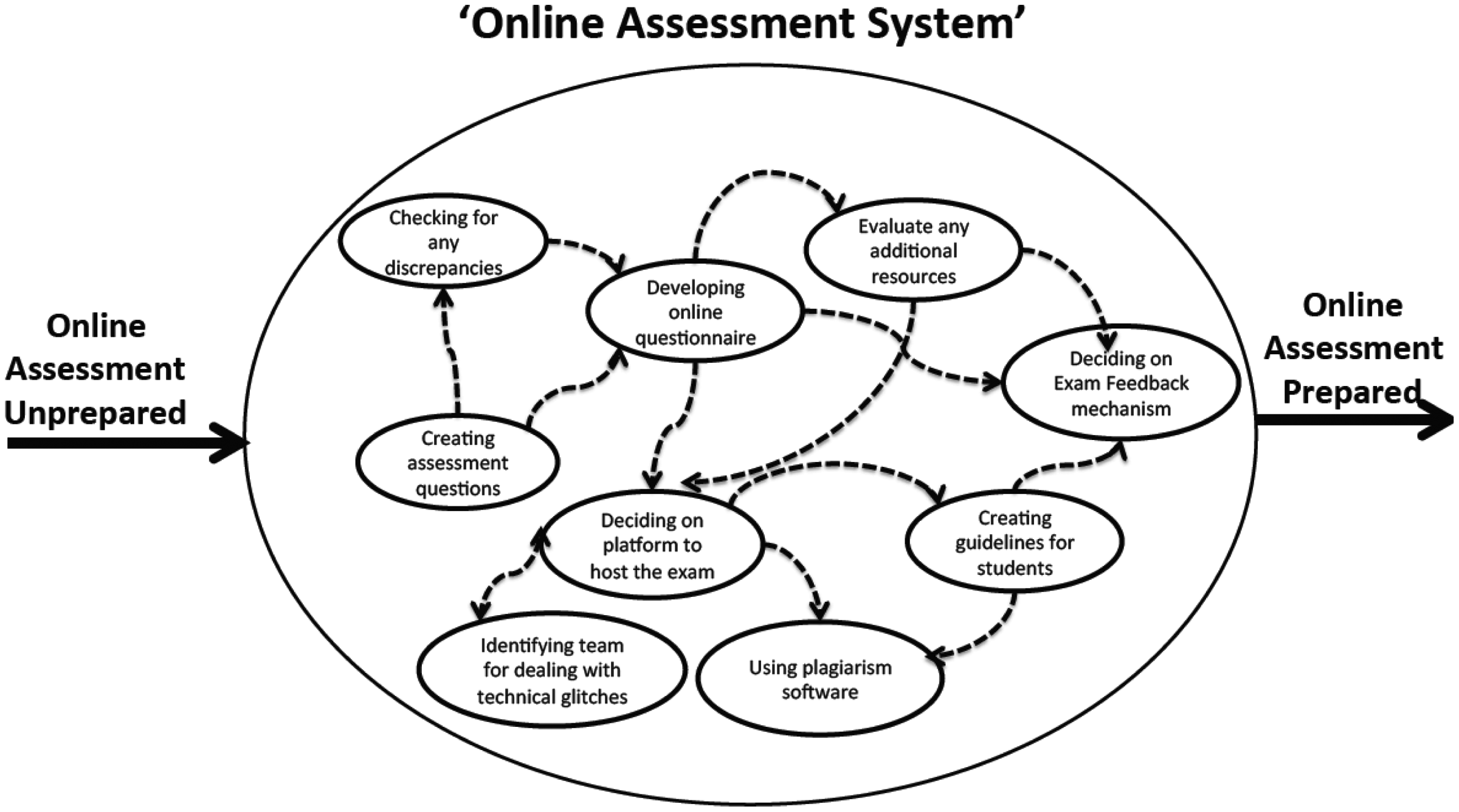
Step 4. Checking whether the model demonstrates system properties such as the ones highlighted in the Table 4 and using Figure 9 .
Following Step 4, we have by applying the systems constructs (from Table 4) defined the conceptual process model for an ‘online assessment system’. In the above system the activity of ‘Evaluate any resources needed’ could be further explored in the form of a sub-system to identify the right Web 2.0 tools that could be used to carried out the assessment. This is represented in Figure 10.
A sub-system.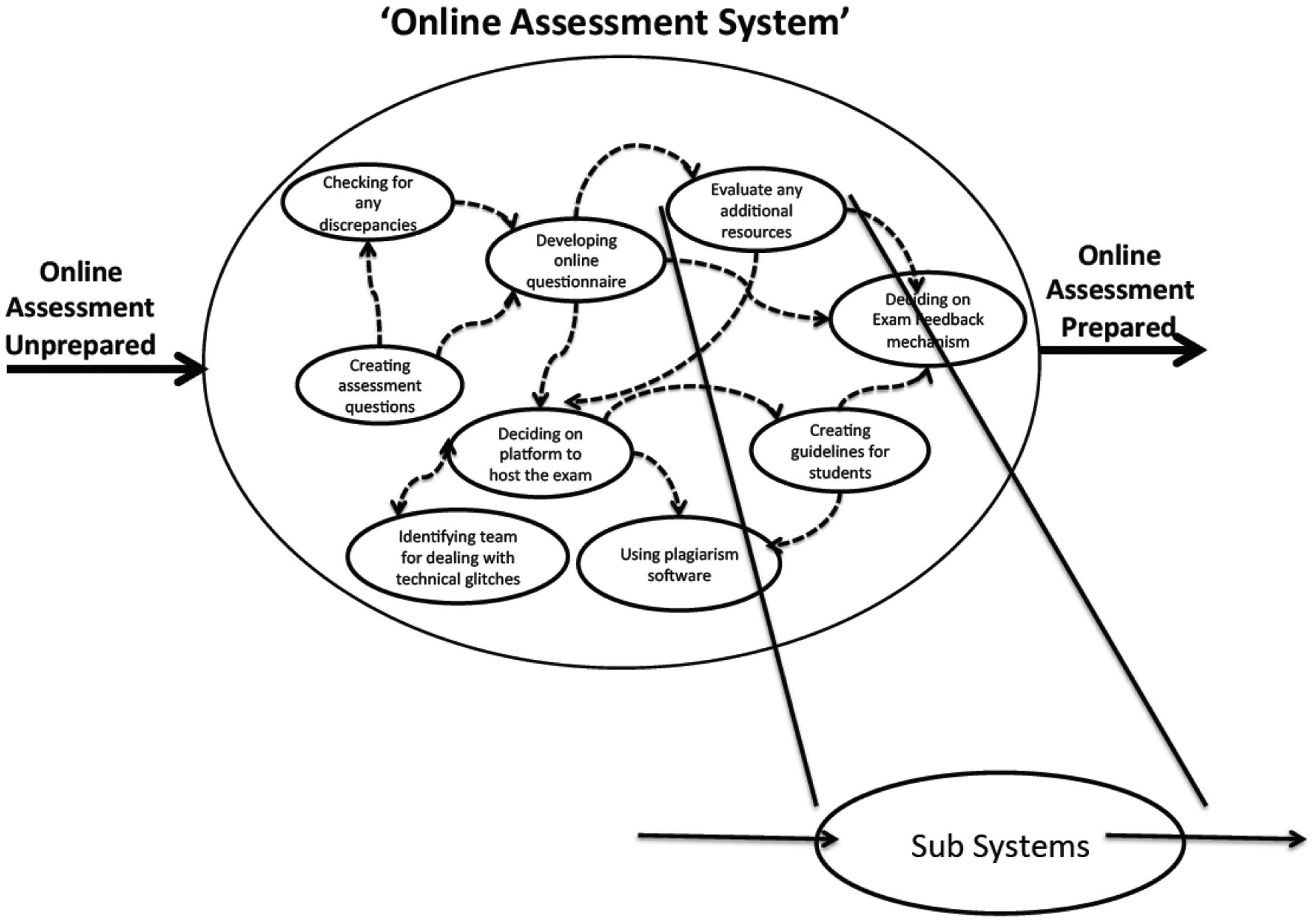
At this stage, a decision could be made about how and where to integrate appropriate technologies in to the system by looking at the process taking place within it, in order to create a PLE for conducting online assessment (Figure 11).
Integration of appropriate technology into the process undertaken by the system.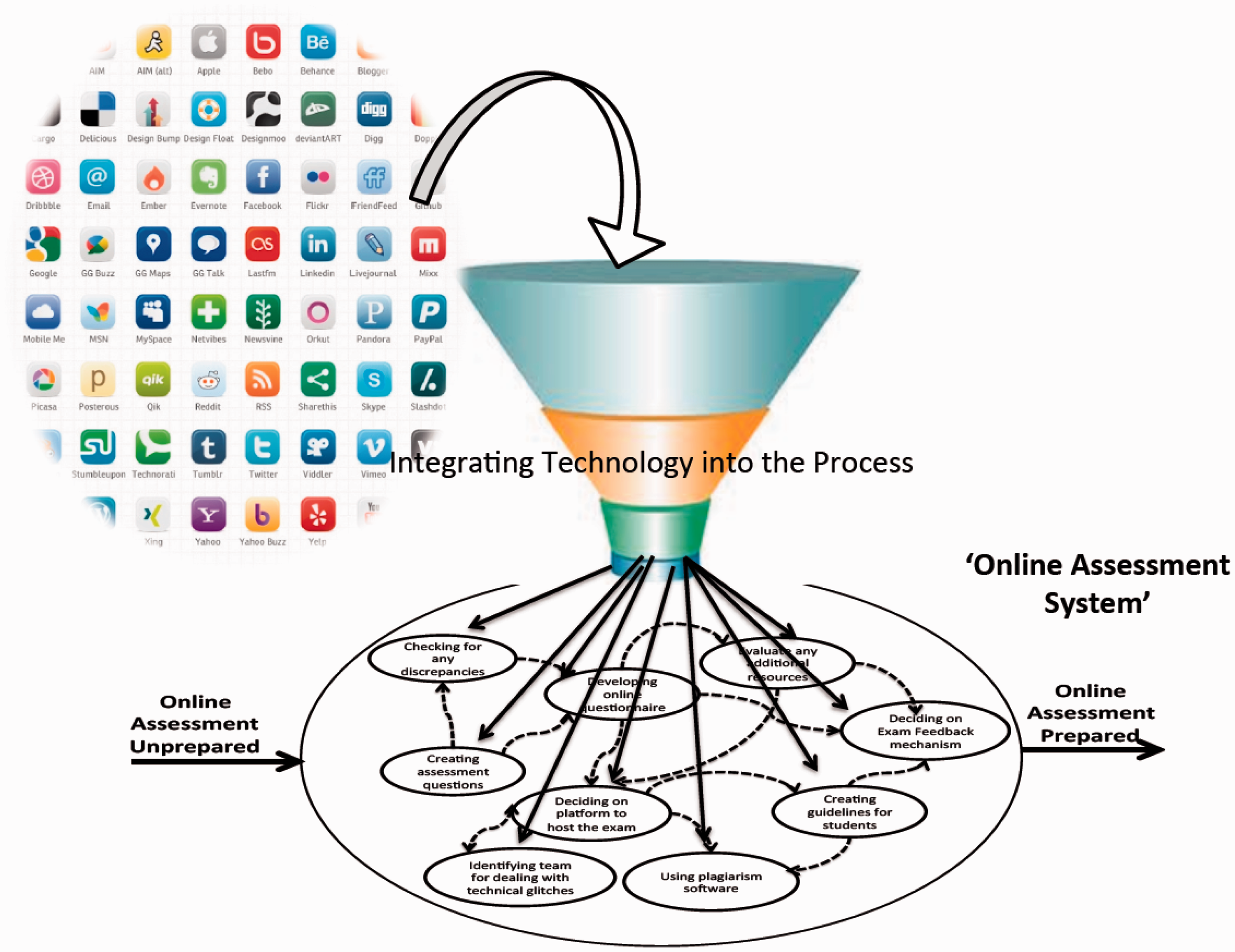
This whole process is very much conceptual in nature. During this stage, it is not the aim to make a model that would try to cover every aspect of the ‘real world’; rather, these process models could be perceived as relevant for conducting an ‘enquiry’ into the whole system with the purpose of defining and re-defining one’s own understanding of one of the organizational systems (such as the online assessment system at universities) that is being considered. Process modelling calls upon constant interaction with the problem situation (which is ‘PLE could support online assessment at universities’). This process at this stage is a ‘highly creative exercise’ wherein one has to make use of one’s abstract skills to develop conceptual models (Checkland, 1981; Williams, 2005). Using these skills, one tries to suspend reality to look at it from multiple perspectives to develop conceptual models such as the one represented in Figure 11. Following the development of the conceptual models, one could closely inspect the models to increase the rigour of the overall inquiry.
In this stage, an ‘iterative approach’ is to be adopted for running the same process using the different CATWOE processes, different holons and different scales (i.e. identifying any sub-systems; Checkland, 1981; Checkland and Scholes, 2003; Churchman, 1984; Williams, 2005). On doing so one would start gaining insights into the complexity of the problem situations in hand, by helping to find the multiples in any component of the CATWOE and what implications are holistically on the derived models. Running through several different CATWOEs and conceptual process models would help us to explore what ‘re-occurring themes’ are emerging or another way to look at what contradictions are arising from the conceptual models about the situation. Hence, using the principles of SSM multiple models from multiple holons could be designed, giving us multiple insights to the same problem situation, especially when working together with different stakeholders associated with the problem situation.
One more advantage of doing process modelling is that it enables the researcher to understand ‘control’ (Checkland, 1981; Checkland and Scholes, 2003), the ripple effect of changes that could arise in the system during the process of integration of appropriate technology into the perceived conceptual model derived for a ‘PLE that could support online assessments at universities’. With the assistance of the control function ‘monitoring’ of the whole system is also made available to the researcher. This could be represented as shown in Figure 12.
Control and monitoring system. Making interventions by comparison of both the worlds. Summary of Soft Systems Methodology (Checkland, 1981; Checkland and Scholes, 2003; Fuchs, 2004; Senge, 1990; Williams, 2005).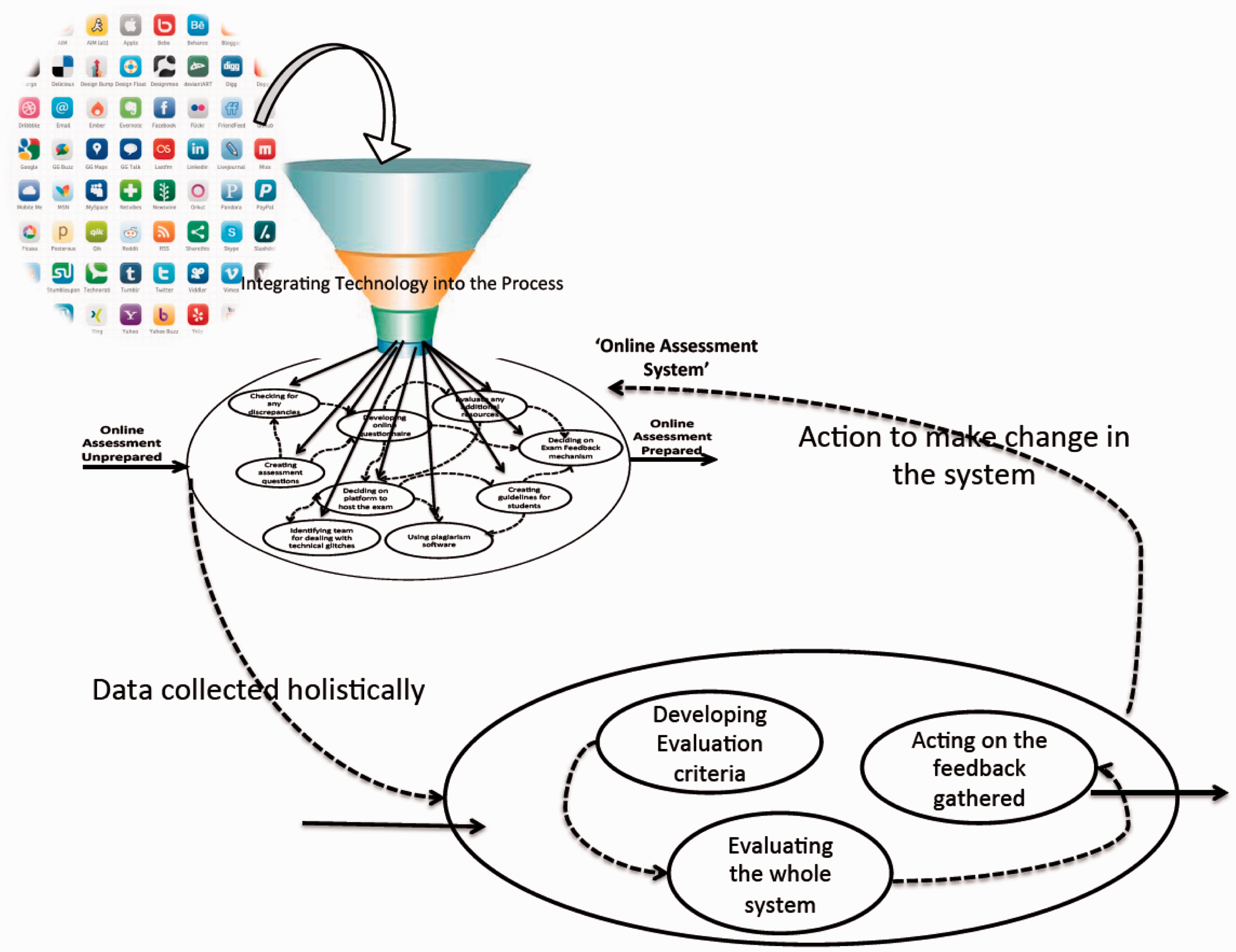
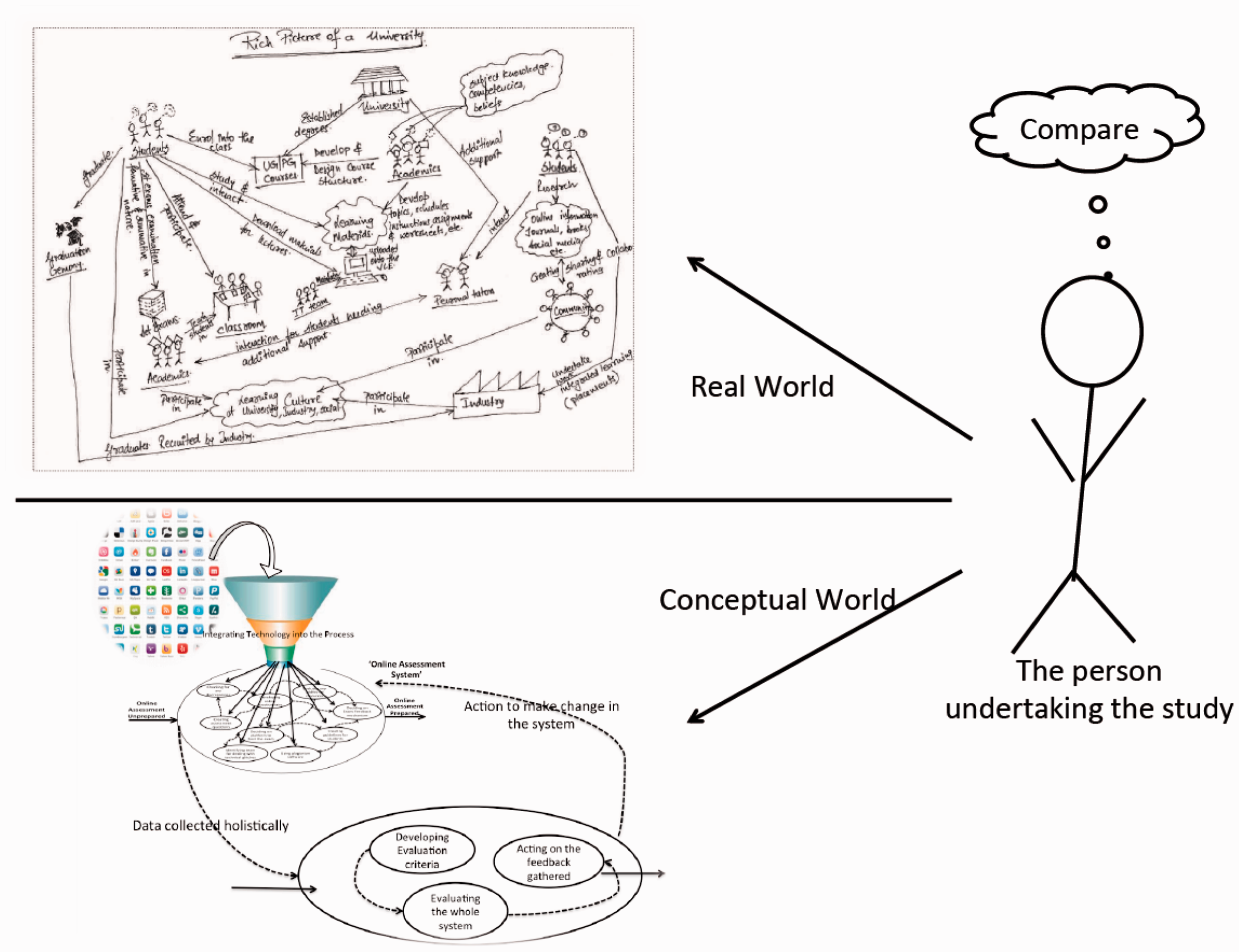
This stage overall would help us to promptly look at the learning process of the learners iteratively and, through the various insights gathered in the repetitive process, we could look at integrating appropriate technology into the learning environment that could pave the way for creating a PLE. By doing so we will be shifting the paradigm from a ‘technology-enabled learning’ to a ‘learning process-enabled technology integration’ wherein the focus will be primarily on the learning process and not on the technology.
From the next stage onwards the conceptual models developed in Stage 4 are compared with the real world from which insights could be drawn and ideas for improvements could be developed and determined. One could consider this as the real power house of the methodology (Williams, 2005).
Stages 5: compare the conceptual model to the real world
Some of the suggested ways to do this as per Checkland (1981) and Checkland and Scholes (2003) are (a) unstructured discussions; (b) structured questioning of the model using a matrix approach; (c) scenarios or dynamic modelling; (d) modelling the real world using the same structures as the conceptual models. Another way to do this as per Williams (2005) and one of the most commonly used techniques is to look at each components of the model asking the following questions.
Does it exist in the real world? How does it behave? How is its performance identified and measured? Is this process any good?
So for the holon ‘PLE could support online assessment at universities’ we could look at the conceptual model developed in the Stage 4 along with the CATWOE, the root definition worked at in Stage 3, and consider what actually happens in the real world. What is present? What is missing? What behaves similarly? What technologies are used or could be used? What is the behaviour/perception of the stakeholders towards the system? How is the system behaving for changing variables of the CATWOE? What does the evaluation of the system reveal upon comparison with the real world?
One of the common mistakes made at this stage is that people confuse reality with the model developed above. The purpose of this stage is to develop ‘insights’, in our case developing insights about the potential of ‘PLE supporting online assessment at universities’.
Stage 6: making interventions
From this stage on, the methodology tends to stop being systematic and starts swinging back-and-forth through all the seven stages of SSM in order to gain more thorough insight into the problem situation under consideration (Figures 10 and 11). On the basis of emergent insights possible interventions could be explored. Conducting interventions could be done in the following ways (Checkland and Scholes, 2003):
Running through the model again using different CATWOE processes, different perspectives and different scales (i.e. model sub-systems). Undertaking different systems analyses. Analysis of the ‘Owner’. Who fundamentally has the authority to take action? How do the various roles, norms and values present in the real world relate to the conceptual model? How is power expressed in the situation being studied?
These interventions could be considered as a learning process. It helps in getting an understanding of the following (Checkland, 1981; Checkland and Scholes, 2003):
the concepts and the constructs of the problem situation; how concepts and constructs could be applied in any given situation; the strengths and weaknesses of a rationale for using particular constructs and methods; some aspect of the situation from the application of concepts and constructs; the methods for applying the concepts and constructs; the results of applying the constructs and concepts in the way specified, in the particular situation, etc.; the imperatives for action.
Stage 7: action to improve the situation
Based on the analysis and insights developed from Stages 4–6, it is time to act, to create a change for finding a solution to the problem situation. It is at this stage where the methodology comes to a full cycle and may be the start of a new cycle.
Conclusion
The overall purpose of using SSM for the design and development of the PLE is to spark debate and discussion among the major stakeholders for working towards a way to bridge the digital divide between the university as an institution and its learners. This would enable academic institutions to develop learning environments to address the needs and styles of the learners in a learner-centric personalized manner. It should be noted here that SSM must not be viewed as a solution towards creating a PLE but could be perceived as a way for undertaking an ‘enquiry’ into creating one or something close to one.
The key feature of SSM is that there is no set end to the process of applying it to the learning environment. Hence, this would arguably help researchers shift the focus from attractive technological features used randomly to the learning-process-enabled technology integration applicable for learning environments at universities. This shift would be constantly scrutinized, acutely investigated and thoroughly debated upon among the stakeholders; this is fundamental for successful implementation of SSM grounded in action research and guided by systems thinking. By maintaining this process one is developing a way of continued commitment to discussion and learning within organizations working with relevant stakeholders. These mutual discussions would enable various researchers to think more about the learning process as a whole, while thinking about integrating technology into such an environment in any organization.
The bottom line is that SSM in general is not to be considered as a necessary set of stages for designing and developing a PLE but more along the lines of a pattern of thinking that would direct attention towards the understanding of complex human activities, interacting with complex internal and external factors, in a complex and messy environment.
Footnotes
Funding
This research received no specific grant from any funding agency in the public, commercial or not-for-profit sectors.