




Abstract
Many seniors remain unaware that certain medications may be harmful, despite high rates of polypharmacy and inappropriate medication use among community-dwelling older adults. Patient education is an effective method for reducing the use of inappropriate medications. Increasing public awareness and engagement is essential for promoting shared decision-making to deprescribe. The Canadian Deprescribing Network was created to address the lack of a systematic pan-Canadian initiative to implement deprescribing among older Canadians. The Canadian Deprescribing Network deliberately included patient advocates in its organization from the outset, in order to ensure a key strategic focus on public awareness and education. In this paper, we present the processes and activities rolled out by the Canadian Deprescribing Network as a blueprint model for engaging the public on deprescribing. Embedded within the structure of the network, the subcommittee on public awareness and engagement implements an action plan that includes needs assessments, population surveys, focus groups, deprescribing fairs, national stakeholders’ meetings, public lectures and monthly exchanges with community champions and seniors’ organizations. Educational materials and online media have been developed based on the answers to the questions: what information do seniors need about deprescribing? who should this information be delivered to? who needs to deliver the message? and how should seniors be engaged in deprescribing? In conjunction with seniors’ organizations, members of the Network have iteratively refined key deprescribing messages, disseminated information about deprescribing, engaged the press and created a grass roots-driven public awareness and education campaign across Canada. Over 3000 seniors and seniors’ organizations are involved, with over 25,000 educational tools being distributed across the country.
Keywords
Introduction
Medication use has increased quality of life and life expectancy over the last century. However, polypharmacy and the use of potentially inappropriate medications is associated with harm in older adults, including falls,1,2 fractures, 3 hospitalization 4 and frailty.5,6 Deprescribing has been proposed as the process for reducing medications, supervised by a healthcare professional with the goal of improving patient outcomes. 7 Research suggests that patients have an important role to play in driving the deprescribing movement. In the EMPOWER trial, receipt of a mailed educational brochure outlining the benefits and harms of chronic benzodiazepine use for insomnia prompted one in four community-dwelling older adults in Montréal, Canada to deprescribe their benzodiazepine within 6 months. 8 Similarly, a regional public awareness campaign about the benefits and harm of benzodiazepines and the availability of nonpharmacological alternatives produced a sustained 19% reduction in benzodiazepines over 2 years in South Australia. 9
Community-dwelling men and women across Canada rank medication side effects first among their concerns for healthy aging, tied only with fears about memory loss.10,11 As many medications incur cognitive side effects, the principle of ‘first do no harm’ dictates that seniors should have access to information that gives them the capacity to participate in informed shared decision-making during prescribing and deprescribing conversations. Findings from the EMPOWER trial revealed that after receipt of an educational brochure, 40% of community-dwelling individuals wished to discuss information about drug harm with their friends and family, while 62% broached the subject with their healthcare provider.8,12 Overall, 98% of participants appreciated the information about medication safety that was sent to them in the mail.
A national survey in Canada in 2016 reflects these findings. A total of 48% of the 2665 community-dwelling seniors surveyed in 2016 reported that they previously searched for information about medication harm. 13 Although less than 7% recognized the word ‘deprescribing,’ those who had heard it were 55% more likely to initiate a deprescribing conversation with their healthcare provider. As only two-thirds of community-dwelling older adults across Canada are aware that some medications can cause harm,11,13 there is a clear desire and pressing need for public engagement and media messaging regarding appropriate use of medication and deprescribing.
Public awareness, engagement and action around deprescribing is one of the top priorities of the Canadian Deprescribing Network. 14 The Canadian Deprescribing Network was established in 2015 with the goals of (1) reducing harm by curbing the use of inappropriate medications by 50% by the year 2020, and (2) promoting health by advocating for improved access to safer pharmacological and nonpharmacological therapies. 14 The vision was to engage key stakeholders representing patients, healthcare providers, decision-makers and researchers, to facilitate a multilevel ecological approach to reach these goals. Over the past 3 years, the Canadian Deprescribing Network has launched multiple strategies to deliver information about medication safety to seniors.
This paper describes the strategies employed by the Canadian Deprescribing Network to promote public engagement on deprescribing. We present our experience in the form of a blueprint for other individuals, organizations or countries who wish to prioritize patient engagement in medication safety initiatives. We recognize that there is no ‘one size fits all’ approach, but herein describe the principles and steps that are promoting impactful public engagement across Canada.
Principles of patient engagement
The World Health Organization’s 1978 Declaration of Alma Ata states that ‘… people have the right and duty to participate individually and collectively in the planning and implementation of their health care.’ 15 Since this time, organizations and societies have developed principles of patient engagement that converge to a variable degree on similar themes. The patient engagement framework created by Health Quality Ontario, for instance, has six guiding principles: partnership, learning, empowerment, transparency, responsiveness and respect. 16 The concepts of learning and patient empowerment align with the directions outlined by the Nursing Alliance for Quality Care’s guiding principles for patient engagement. 17 Specifically, the guiding principles highlight the need to share information in order to drive shared decision-making conversations. Furthermore, the principles acknowledge the diversity of each patient’s background, experience and level of health literacy.
Patient engagement lies at the core of shared decision-making. To fully participate in decisions regarding their health, patients must be armed with information about the benefits and risks of potential treatment options, and be able to express their values and preferences about the choice of treatment. 18 Both parties must understand which factors are important and relevant, in order for the process to qualify as shared decision-making. 19 The Canadian Deprescribing Network prioritizes patient engagement to support patients as active participants in the decision-making process around deprescribing. As such, the Canadian Deprescribing Network has produced a range of tools and public engagement activities (discussed below) that consider the needs of older Canadians and their caregivers.
Engaging patients through direct-to-consumer advertising has been a successful way for pharmaceutical companies to increase the uptake of new medications. 20 Surveys by the United States Food and Drug Administration highlight increased consumer-driven conversations about starting medications as a result of direct-to-consumer advertising. 21 Similarly, increasing public engagement and awareness about deprescribing represents an alternative method of direct-to-consumer education to help patients be more informed about the benefits and harms of prescription medications and supports them to be more engaged in shared decision-making.
As the Canadian Deprescribing Network targets community-dwelling consumers of medication, the public engagement strategy employs a wide definition of patient engagement to include all healthcare consumers. Healthcare ‘consumers’ encompass patients, families, unpaid carers or guardians of patients, users of health services, disabled people, members of the public who are the potential recipients of either health promotion or public health programmes, and those who pay for health services (e.g. as tax payers). 22
The process of public engagement
The following steps describe the processes rolled out by the Canadian Deprescribing Network to promote public engagement from the inception of the network through to present day.
Including patient advocates in planning meetings from the outset
In January 2015 a national stakeholders’ summit on safe medication management for older men and women across Canada was convened, bringing together 30 key stakeholders including policy-makers, healthcare providers, researchers, patients and patient representatives. 14 Patient advocates were members of the British Columbia Patient Voices Network, ensuring that the patient perspective was a focus from the outset. Patient advocates were considered essential because they can convey patient experiences, help define barriers to deprescribing, can advise on the needs of older Canadians, the best methods for outreach, and can help the network engage existing groups and individuals. Patient advocates were recruited through word of mouth, phone calls and snowballing techniques to determine and solicit interest. At the 2015 meeting, we asked the question ‘Who needs to do what when?’ to curb the use of inappropriate medications for community-dwelling older adults by the year 2020. Public awareness and engagement was identified as a key strategic directive to meet this goal.
Prioritizing public awareness and education as a strategic direction for the initiative
A strategic focus on ‘increasing public awareness, engagement and action on deprescribing’ was agreed upon by members of the initial stakeholders’ summit as one of the three key priorities of the network. 14 To this end, an initial action plan was created based on the recommendations that emerged from the brainstorming session at the meeting on how to increase public awareness, engagement and action around deprescribing. The action plan revolved around creating and compiling resources and messages to distribute to community seniors, surveying baseline awareness and conducting a needs assessment, refining the tools and resources for dissemination to seniors’ organizations across Canada, and then evaluating the impact of this public awareness campaign. 14
Embedding public representation among the members of the executive committee
When the executive committee for the network was created, members who were passionate about deprescribing and could represent each of the strategic directions were invited to serve. Importantly, along with healthcare providers, researchers and policy-makers, two people were included on the executive committee who represented consumers. These leaders would ensure patient advocates would make meaningful contributions by guiding the implementation of the public engagement action plan and ensuring that the network listened to and respected the patient’s voice in all its undertakings. These two individuals were appointed as co-chairs of the subcommittee on public awareness, engagement and action.
Forming a public awareness and engagement subcommittee
Each subcommittee of the network was mandated to deliver on its respective action plan. The goal of the public awareness and engagement subcommittee was to increase public awareness, engagement and action on deprescribing. Members for the subcommittee were invited by the co-chairs based on experience in patient engagement, extensive consumer-based knowledge of medication issues, knowledge translation, their connections to seniors’ organizations, and leadership among Canada’s aging population. Geographic representation was an important consideration in order to be inclusive of Canadian diversity across all provinces and territories in Canada. Members of the subcommittee agreed to meet by teleconference at least three to four times per year to discuss and guide implementation of the action plan. The co-chairs reported back to the executive committee on progress and the need for course correction.
Achieving consensus on the public awareness and engagement action plan
Throughout the course of the first year, the public awareness and engagement subcommittee invested time in refining the initial action plan and timeline to engage community-dwelling older Canadians in discussions about deprescribing and medication harm. Once established, the iterative process of receiving guidance from the public awareness and engagement subcommittee and trialing different public engagement activities occurred throughout 2016–2018. The following section describes the range of approaches and activities that were launched as a result of this process (Figure 1).
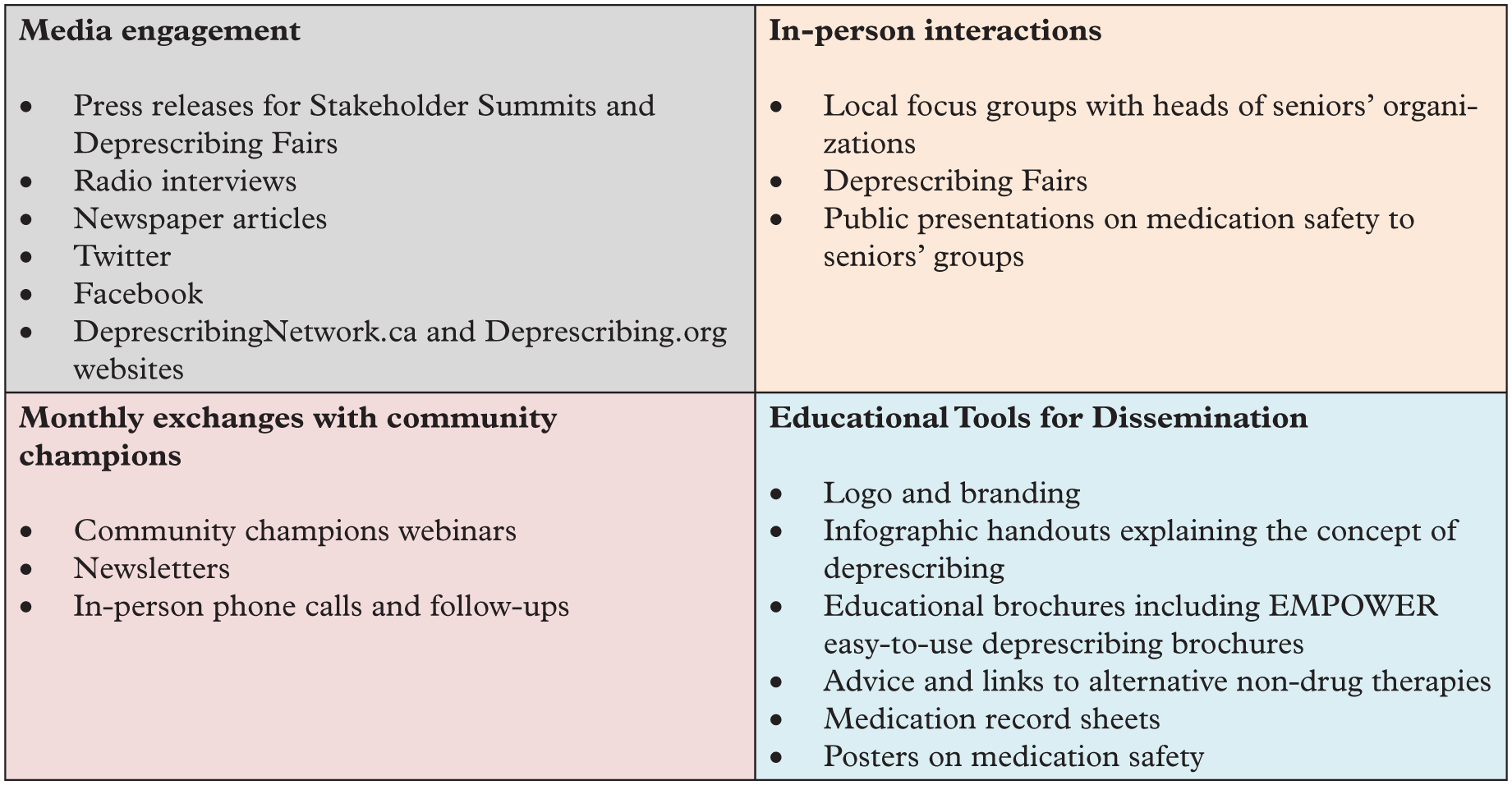
Public outreach activities to promote deprescribing.
Public engagement activities
Needs assessment
A pan-Canadian population survey of community-dwelling adults aged 65 years and older was conducted in 2016. The telephone survey provided baseline data and insight from 2665 community-dwelling older adults representing each province and territory across Canada. The survey was designed to ascertain what seniors know about medication harms and deprescribing, and to identify ways in which seniors access information about medication harms. 13 In addition to refining the needs assessment, the survey pointed to knowledge gaps and future opportunities for public engagement. Of the 48% of seniors who had actively sought information on medication harms, 36% of them referred to the internet or social media, 10% used newsletters, and 8% sought advice from family or friends. This highlighted the important role for creating an online library of evidence-based resources, in an easily accessible format. Likewise, it accentuated the need to create tools that could be incorporated into newsletters for seniors’ organizations. Additionally, it showed the value of engaging the public broadly to ensure that word of mouth from ‘family and friends’ could play a vital role. The survey reinforced that seniors were significantly more likely to initiate deprescribing conversations with their health care provider if they had sought out or been exposed to information on medication harms.
An in-person needs assessment occurred in tandem to the development of the survey during the second national stakeholder summit held in January 2016. The summit was convened to facilitate greater engagement with key stakeholders. Members of strategic national seniors’ groups were invited to attend including representatives from the National Pensioners Federation, the Consumers Association of Alberta, the Canadian Patient Safety Institute, the Canadian Home Care Association, and the Patients Canada Organization. Key deliverables from this engagement were (1) a pilot awareness campaign and call to action on the National Pensioners Federation website, which reaches over 1 million seniors across Canada; (2) targeted advice on the need for multiple, rapid and sustained small bursts of information on deprescribing to be published in monthly newsletters for seniors; and (3) input on the creation of a targeted public education website.
In addition, during the summit, another small-group brainstorming session was held, generating over 100 ideas for how deprescribing can be promoted and moved forward within Canada. Thematic analysis of these ideas produced three key questions to further guide the needs assessment: (1) What are the top-level priorities for Canadian seniors around medication safety? (2) What are the key messages that should be communicated regarding harmful medication use? and (3) What are the preferred methods of communication to reach community-dwelling older adults in Canada?
Building an inventory of seniors’ organizations and stakeholders
Canada is a large country with a heterogeneous group of seniors from diverse backgrounds. Geographic reach is important to ensure that activities to promote engagement in deprescribing can be achieved on a socially meaningful scale across Canada. The target population for engagement by the Canadian Deprescribing Network includes all community-dwelling older adults aged 65 years and older, and community organizations that provide services for community-dwelling older adults across Canada’s 10 provinces and three territories. Although polypharmacy and deprescribing may be relevant for persons of all ages, seniors were targeted because the network is funded by a federal grant aimed at improving medication management among older adults.
The need for systematic representation of different seniors’ groups from all walks of life became apparent during the second year of the network’s engagement strategy. Our informants reminded us that frail seniors live at home and may not have access to a computer to access online materials. Health literacy varies, as does language comprehension and the need for cultural adaptation and representation in educational materials. The Canadian Indigenous community approaches wellness in a holistic, land-based fashion. To capture these heterogeneous needs, a suite of information would need to be produced that could be delivered in many forms and contexts. The network decided to compile an inventory of over 1100 groups and organizations that represent a wide variety of seniors across Canada, including seniors’ clubs, community organizations, retiree associations, assisted-living facilities and homecare organizations by province and territory. The vision was to reach all of these organizations within a 3-year time span, with many organizations already being involved with the network in disseminating deprescribing messaging as detailed below.
Refining the key messages
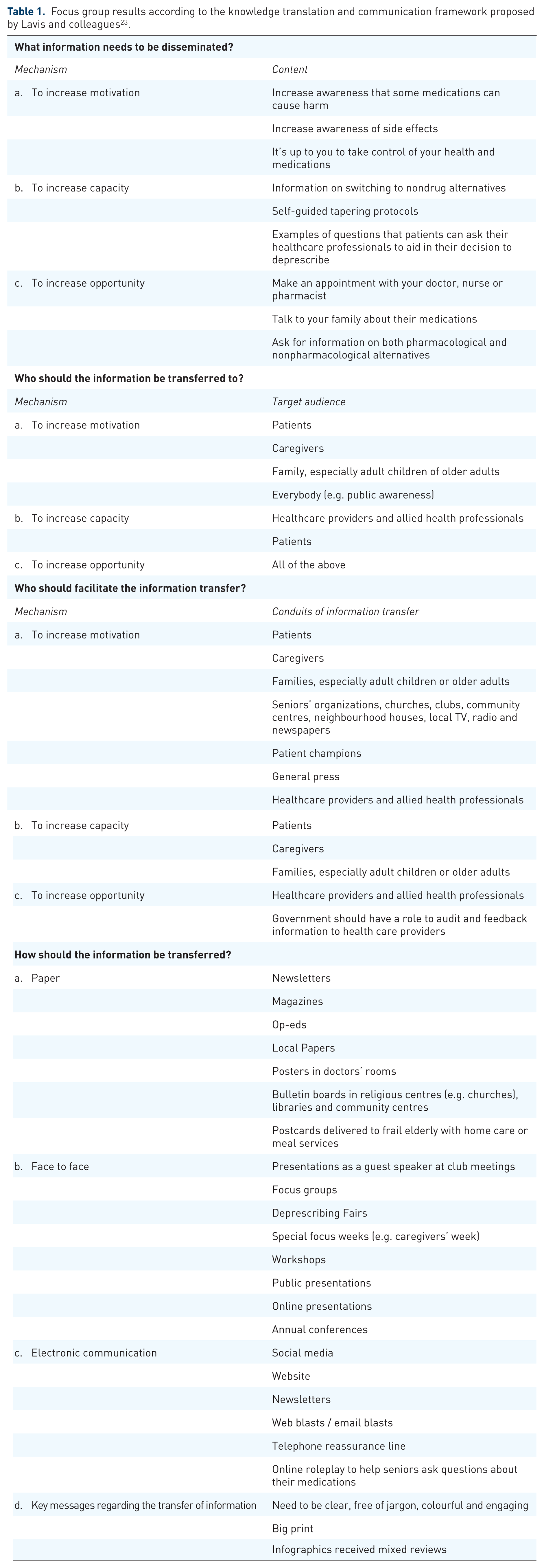
Between 2017–2018, a series of focus groups were held with community-dwelling older adults and representatives of seniors’ organizations from across Canada to shape the messages and tools to be disseminated, and to refine the methods for dissemination (Table 1). Focus groups were convened geographically, with invitees selected from the inventory of potential stakeholders in each region. Participants discussed the questions identified by the needs analysis and provided input about resources and tools as well as dissemination strategies for the key messages. Focus groups were held in an iterative fashion until data saturation occurred.
Focus group results according to the knowledge translation and communication framework proposed by Lavis and colleagues 23 .
The need for lay-person language was highlighted. A recurring topic of debate was whether or not to use the term ‘deprescribing’. Our survey indicated that only 7% of seniors were familiar with the term, although almost half had previously discussed medication harm with a healthcare provider. 13 The term deprescribing was viewed by many seniors as belonging to healthcare providers and medical specialists. Of more relevance to focus group participants was learning about polypharmacy in general, and the risks associated with specific medication classes or drug interactions. Seniors were interested in understanding how the benefits and harms of a medication can change over time as a function of age, sex, other disease conditions and concomitant medication use. An overarching theme that resonated with the majority of participants was ‘Is this medication really necessary for me?’ or more specifically, ‘Do I still need this medication?’.
Seniors were also interested in the concept of ‘risky’ medications, as opposed to learning about ‘inappropriate medications’, when we explained that sometimes the risk of harm could outweigh potential benefit. Drug classes from the American Geriatrics Society (AGS) Beers Criteria for Potentially Inappropriate Medication Use in Older Adults figured prominently in these discussions, such as the use of sleeping pills for insomnia, or antipsychotics for behavioural symptoms of dementia. 24 In all cases, the use of safer drug or nondrug therapies to treat symptoms was a topic that clamoured for attention.
The choice of words and the language used in our presentations and educational material evoked much feedback, as we developed materials in both of Canada’s official languages (English and French). Many terms such as ‘medication harm’ and even ‘deprescribing’ do not translate easily into French. Several iterations of key phrases were required before acceptability was reached. A professional communications specialist was eventually hired by the network to aid with the development of written educational materials for seniors. Consideration of font size and contrast was deemed important to increase readability.
Patients and caregivers were primarily identified as key recipients of education and information about deprescribing (Table 1). Engaging family members, especially adult children of older adults, was often highlighted, with the suggestion that younger family members may be engaged through social media more readily than older adults. There was frequent agreement that deprescribing education should be delivered to everybody as a public health topic, with some suggesting that governments should be involved in disseminating the message. This resonated with the population survey, where 60% of respondents suggested that deprescribing should be a federal government priority (unpublished data). 13
Participants also identified clinicians as targets for information, as healthcare providers are critical partners in deprescribing conversations. Additionally, many seniors did not comprehend why their healthcare providers would prescribe medications that might be unnecessary or harmful. Some seniors questioned their own role in medication management, insisting that it was up to their healthcare providers to advise them about what medications may no longer be necessary. Others welcomed the possibility of being better informed and appreciated receiving information about medication safety. There was concern raised that newly informed patients may find resistance from healthcare providers who are unable or unwilling to conduct a medication review focusing on deprescribing inappropriate medications. This highlights the need for developing both patient and healthcare provider education simultaneously, which is why the public awareness and healthcare provider awareness subcommittees collaborate on their communication plans.
Disseminating information about deprescribing
A number of methods were recommended, each with its own opportunities and challenges.
1. Traditional and social media.
Journalists and radio, TV and magazine reporters typically seek timely stories, connected to current events. Most of the media attention that the network garners has been linked to holding one of our national summits, or by partnering with government organizations that send out press releases about new national statistics on medication use. The network and its members have been mentioned in the press approximately 60 times since the 2016 National Stakeholders Summit. Reporters are particularly keen to present the personal side of deprescribing and, therefore, prefer to speak to persons with lived experience such as seniors who decide to taper a medication and feel better because of it. Having a public engagement strategy facilitates connections between seniors and reporters.
The English media across Canada provided greater coverage of the deprescribing movement initially (available at www.deprescribingnetwork.ca/news) with the French press becoming more involved as the Canadian Deprescribing Network increased efforts to engage with French-speaking seniors. These efforts were triggered by the population survey which identified that French-speaking respondents were less likely to be aware of deprescribing or the potential for medications to be harmful compared with English-speaking respondents. 13 The network strategically targeted the French press and held French-only events to foster this engagement.
In March 2016, the website www.deprescribing.org was launched by researchers at the Bruyère Research Institute, Ottawa and the Institut Universitaire de Gériatrie de Montréal, to host information about research initiatives and deprescribing resources. The website also highlighted their combined efforts to promote a new network for individuals interested in deprescribing initiatives. As the public engagement plan for the Canadian Deprescribing Network evolved, a second website www.deprescribingnetwork.ca, specifically designed for members of the public, was launched in June 2017.
Traditional media coverage has proven successful for driving people to the online presence of the Canadian Deprescribing Network, increasing website hits to both www.deprescribing.org and www.deprescribingnetwork.ca after large press stories. National media attention, especially in the United States, has pushed website visits, with approximately 3500 hits being received in response to an article printed in a top United States national newspaper and subsequent radio interviews. Both websites link to each other, as well as to other relevant websites and deprescribing content. Through each website, users are able to sign up for newsletters.
Twitter has also been a successful tool for engaging both the public and healthcare professionals. The twitter account @deprescribing was created in July 2013 by researchers at the Bruyère Research Institute to promote their Evidence-Based Deprescribing Guidelines research. It acts as a means of initiating conversations about deprescribing among clinicians, the public and researchers, and to facilitate knowledge mobilization about its guideline development research. At the time of publishing, @deprescribing has approximately 6500 followers. The twitter account @DeprescribeNet was created specifically for the Canadian Deprescribing Network in December 2016. To date there are approximately 1200 followers. Numerous members of the network representing public, patients, healthcare providers, policy advocates and researchers have twitter accounts; this has been an efficient way of extending reach and generating new conversations and hype about deprescribing.
Monthly newsletters are sent out to members of the network via email, and anyone who subscribes can receive a copy. The themed newsletters highlight recent research and media coverage, promote events, and tell success stories about deprescribing. The newsletter currently reaches approximately 1000 people each month. The network also adapts the content of the online newsletters to be published in other local newsletters, providing information about medication safety as relates to memory loss and falls. Seniors’ organizations include these stories in their own regular newsletters to members, thus increasing the reach of the network’s messages.
2. Deprescribing fairs
Between 2016–2018, six deprescribing fairs were held, reaching over 600 community-dwelling seniors and representatives of community organizations. Deprescribing fairs are large public events with multiple mechanisms for engaging older adults in discussions about deprescribing (for more information visit https://www.deprescribingnetwork.ca/2018-summit-on-medication-safety and https://www.deprescribingnetwork.ca/canadian-deprescribing-network). Bilingual museum walls highlight the history of the rise and fall of selected medications such as sedative-hypnotics, opioids, and nonsteroidal anti-inflammatory drugs. Interactive booths are staffed with health care providers available to provide advice about medications and nondrug therapies. The EMPOWER educational brochures and other patient resources along with games and quizzes are distributed to all attendees.
The deprescribing fairs held across Canada seem to be a successful method for promoting in-person interactions. Additionally, they provide a platform for inviting the press to learn more about the topic. Each of the deprescribing fairs generates significant attention in the media, resulting in both local and national newspaper articles. Additionally, local and national radio interviews were conducted with members of the Canadian Deprescribing Network to coincide with the large public events.
3. Other face-to-face interactions
Focus groups: Between 2017–2018, 10 focus groups were held across Canada in both official languages, engaging over 80 community-dwelling older adults and leaders of seniors’ organizations. As discussed above, focus groups play a pivotal role in refining the key messages for different patient groups. Additionally, focus groups provide an excellent opportunity to identify peer champions across Canada, who are willing to provide input into the development of patient educational tools and to advise on scale up and spread in their local area. Many focus group participants belong to organizations with newsletters or speaker series. At the end of each focus group, participants are asked what the network’s next steps might be, and for ideas how to facilitate public engagement.
Public lectures: In response to focus groups clearly identifying face-to-face communication as a preferred method of public engagement, the network began a series of public lectures to seniors and seniors’ organizations at the end of 2017. In addition to presentations already planned by members of the network, staff provided an additional 12 public presentations across Ontario and Québec within 6 months. These presentations have been in both of Canada’s official languages and have reached over 600 seniors and people who provide services to seniors. Furthermore, over 5000 printed brochures, fact sheets, postcards, and other tools have been distributed at these events (available here www.deprescribingnetwork.ca/useful-resources). Several of the participants have become enthusiastic peer champions for deprescribing, and have coordinated subsequent public events, where an additional 20,000 copies of patient education material have been distributed.
National stakeholders’ summits: In February 2018, a third national stakeholders summit was held. Over 30 different seniors’ organizations attended, ensuring representation of at least two organizations from each of Canada’s 10 provinces. People from seniors’ organizations were seated at tables with healthcare providers and policy-makers from the same province or territory to facilitate networking and to ensure that the patient’s voice was present in discussions about provincial ‘next steps’ to engage the public on deprescribing. This proved to be a success and led to the development of a group of community champions, engaged seniors from across the country who want to spread the word about deprescribing.
Community champions: The third national stakeholders summit in February 2018 generated significant excitement, interest and engagement from the seniors’ organizations present. Many participants asked how they could stay involved, learn more and implement the knowledge and tools within their organizations and local communities. An online group of ‘community champions’ was created to engage and empower seniors’ organizations to help disseminate information about medication safety, and to provide a safe space for seniors’ organizations to discuss their strategies among each other and get advice from the network. Seniors’ organizations from the national inventory, with whom the network had been in contact over the preceding 3 months were invited to join. An open invitation was sent out, and through snowballing, two-thirds of attendees were new, invited by others to join the network. Meetings are now planned for the rest of 2018. At each meeting, different organizations present how they have been successful in engaging their members on the topic of deprescribing. It is hoped this will encourage further engagement and will provide valuable lessons on implementation for both the participants and the network to learn from.
Reflections and lessons learned
A comprehensive and far-reaching suite of strategies for increasing public awareness and engagement has been developed and refined by the Canadian Deprescribing Network over the past 3 years. To achieve this, the network was guided by two theoretical frameworks. The first framework reflects work conducted by Milat and colleagues 25 for scaling up population health interventions. The second is the knowledge translation and communication framework proposed by Lavis and colleagues 23 and refined by Grimshaw and colleagues. 26 The framework for scale up is designed to increase both reach and adoption of public health interventions. The first step requires an assessment of the suitability of the intervention for scaling up. This, along with the second step, outlining a plan and vision for scale up, were completed by the network in the first 12 months: identifying patient advocates from the outset, prioritizing public awareness and education, embedding public representation, forming a public awareness subcommittee and creation of an action plan and timeline. In the second year, the network focused on the third step, which involved stakeholder consultation and engagement through focus groups, and the creation and refinement of educational materials. The network is currently in the fourth and final step, implementing the public awareness and education plan, and disseminating information to seniors across Canada.
Knowledge translation and communication theory proved pivotal in guiding the network’s public engagement needs assessment. This second theoretical framework allowed the network to identify key needs, messages and resources required by seniors to better understand the role they can play in deprescribing. Table 1 demonstrates how focus group output was thematically analyzed according to the questions: (1) What information needs to be disseminated? (2) Who should the information be transferred to? (3) Who should facilitate the information transfer? and (4) How should the information be transferred?
Receiving so much media attention is a bonus, as measured by website hits on the day of press coverage. However, we are sceptical about the effectiveness of media coverage to trigger long-term behaviour change, since newspaper articles and radio interviews only lead to short spikes in website hits. This highlights the importance of additional measures that build a sustainable, grass roots-led scale up approach. Face-to-face interactions through focus groups, deprescribing fairs and national stakeholder meetings help identify opportunities for partnerships with seniors’ organizations. The community champion initiative is an example that was requested, led, and perpetuated by the public for the public, promoting sustained and meaningful engagement with the network. Partnerships with other organizations are key. The network actively works with others that have overlapping goals and missions. In order to shift the societal culture of ‘a pill for every ill,’ broad culture change is required.
An important component that is often overlooked in deprescribing interventions is health literacy. 27 Although some domains of health literacy, such as access to services, and continuity of care cannot be addressed through public awareness and engagement campaigns, individual determinants such as knowledge and education can be targeted through public engagement messaging. The public awareness subcommittee has focused on creating materials for consumers that use plain language. Additionally, in collaboration with the health care provider subcommittee they have highlighted the need for healthcare providers to use plain language with minimal medical terminology. Future research is required to determine how interventions that profile health literacy levels can improve public awareness and engagement in deprescribing.
The Canadian Deprescribing Network is continuing to implement and evaluate its public awareness and education plan. The 2016 national survey provides a baseline upon which to measure changes in public awareness relating to deprescribing and awareness of medication harm. Furthermore, in addition to provincial level campaigns and research projects, the Canadian Deprescribing Network will continue to measure population-level medication use across Canada to determine the effect of increased public awareness. 14 The use of AGS Beers Criteria Potentially Inappropriate Medications in older adults across Canada has decreased slightly between 2011 and 2016, 28 and we remain positive that with increased public awareness and education the reduction in use of these medications will accelerate.
In parallel with public awareness and education, the network is increasing its outreach and engagement with healthcare providers and policy-makers, to ensure that all healthcare stakeholders are on the same page at the same time. Through the engagement of patients, healthcare provider organizations, and provincial and federal governments, the network continues ambitiously towards its goals of reducing harm by reducing inappropriate medication use and improving access to safer alternatives.
Footnotes
Acknowledgements
The authors would like to thank the members of the executive committee and the members of the public awareness, engagement and action subcommittee of the Canadian Deprescribing Network, because without their guidance, passion and enthusiasm for improving medication use in older adults, none of this work would have been achieved. We would also like to thank the small and hardworking team of dedicated employees that work tirelessly to promote public engagement on the topic of deprescribing.
Funding
This study was funded by a Partnership for Health System Improvement Grant from the Canadian Institutes of Health Research (201410PHE-PHE- 337814–96399) and a National Chair Award from the Fonds de Recherche de Santé du Québec (2016/2017–33087).
Conflict of interest statement
The authors declare that there is no conflict of interest.
